US to allow some imports of elephant trophies01:48
(CNN)Members of a new Trump administration pro-hunting council met Friday for the first time, drawing objections from other conservation groups that say hunting is not the answer to saving big game species.
Hunters and supporters of trophy hunting hold nearly every seat on the International Wildlife Conservation Council, which Interior Secretary Ryan Zinke created to advise him on “the conservation, wildlife law enforcement, and economic benefits that result from US citizens traveling to foreign nations to engage in hunting.”
Several members spoke in favor on Friday of trophy hunting in certain regions of Africa and Central Asia, saying it provides important funding for conversation efforts.
“Hunting is the crux of all of this. Without hunting, there is no other industry there,” said member Cameron Hanes, a member of the council who’s a bow hunter. “The messaging is what’s poor. To me, hunters haven’t done a very good job of it.”
Conservationists who oppose trophy hunting say the panel is one-sided.
“Noticeably missing from this council are qualified representatives of the broader conservation community with scientific credentials and direct experience with the management of successful conservation programs,” said Masha Kalinina of Humane Society International.
She spoke during a portion of the meeting reserved for public comment; her group is not represented on the council.
Peter LaFontaine, of the International Fund for Animal Welfare, said he had nominated a member for the council who was not accepted. The group is a “really strange way to focus on conservation,” he said.
The council includes the president of Safari Club International, a pro-hunting group that gives awards for trophy animal kills; an official from the National Rifle Association; several self-described hunters; and two hunting-oriented television personalities.
Members selected as their chairman Bill Brewster, a former Democratic congressman from Oklahoma. A 2014 profile of Brewster in the NRA publication American Hunter notes he has hunted in all 50 states.
“There is a conspicuous conflict of interest concern hanging over this council,” Kalinina said. The businesses of many members, she said, would benefit from relaxed regulations on hunting, such as imports of trophies like African elephants and lions.
Big-game trophy decision will be announced next week but will be very hard pressed to change my mind that this horror show in any way helps conservation of Elephants or any other animal.
Big-game trophy decision will be announced next week but will be very hard pressed to change my mind that this horror show in any way helps conservation of Elephants or any other animal.
This Friday, Secretary of the Interior Ryan Zinke is holding the first meeting of his newly-established International Wildlife Conservation Council. This “wildlife council” is nothing more than a thinly veiled attempt to promote the international sport trophy hunting industry under the guise of wildlife conservation. In fact, Secretary Zinke’s firing squad of council members holds deep ties with the National Rifle Association and other weapons and trophy hunting organizations.
There is not a single responsibility of this council that is truly focused on wildlife conservation. Instead, it’s all about making it easier to hunt and import trophies. But Secretary Zinke would like to have you believe that this group is dedicated to protecting international wildlife.
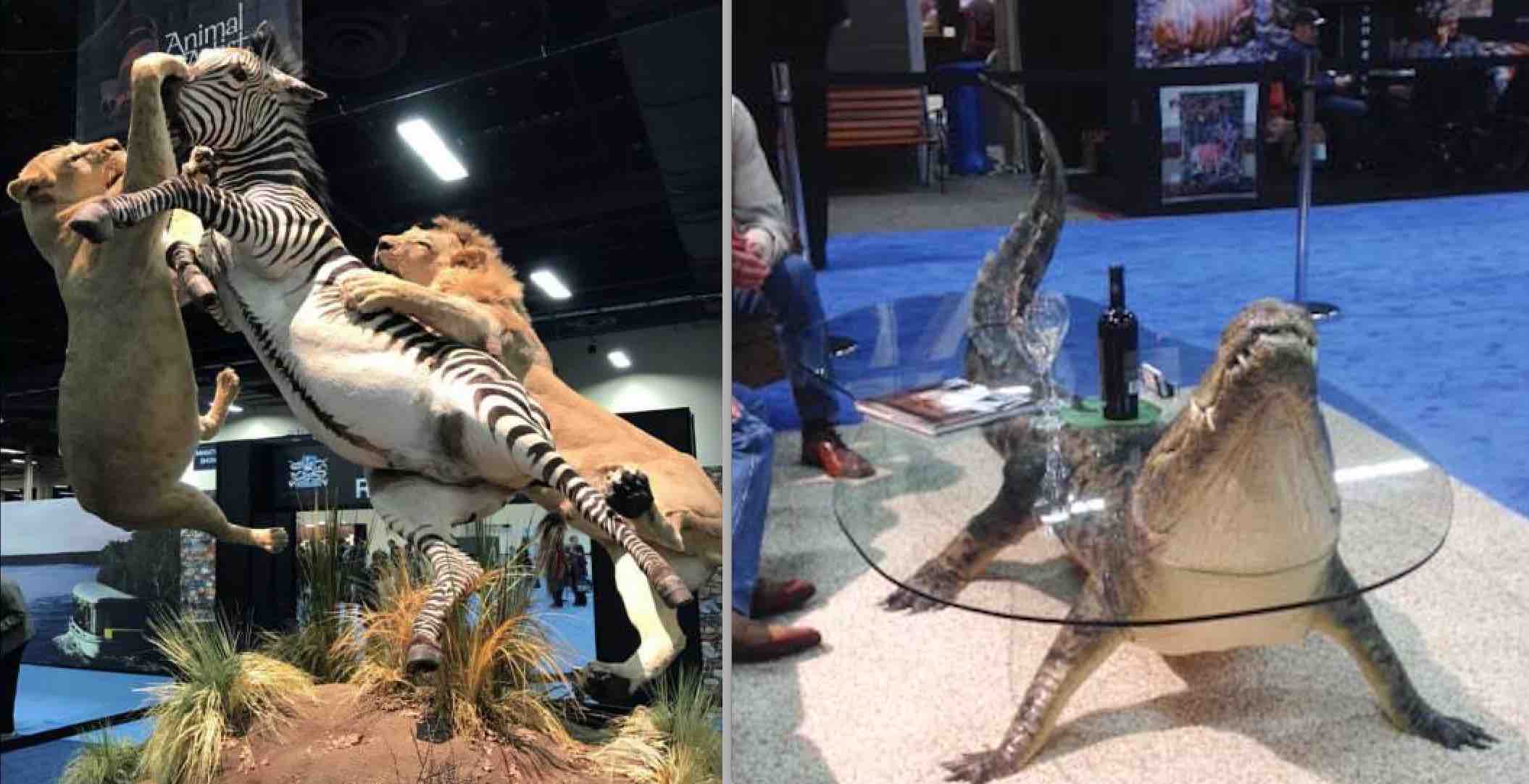
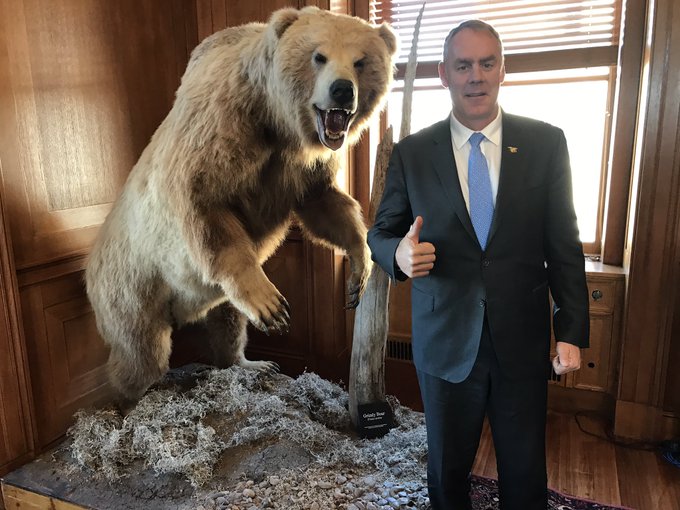
These photos are of actual council members that make up Secretary Zinke’s inner circle of advisors who would like to convince the American public that this…
…is the best way to further international wildlife conservation and law enforcement.
This killer council isn’t fooling anyone. Secretary Zinke is only interested in bringing together a cohort of hunting buddies to legitimize the killing of rare wildlife for the sake of entertainment – and to make it easier to collect these “trophies.”
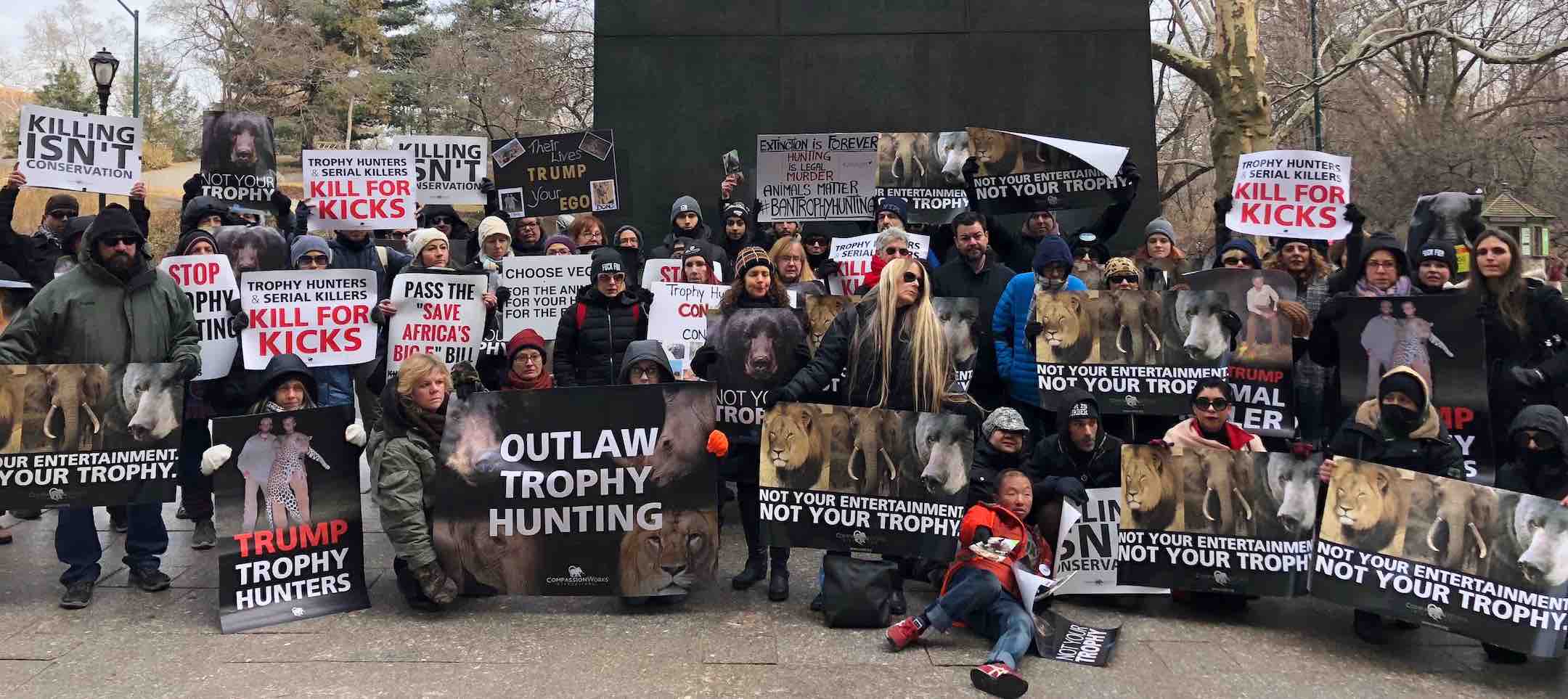
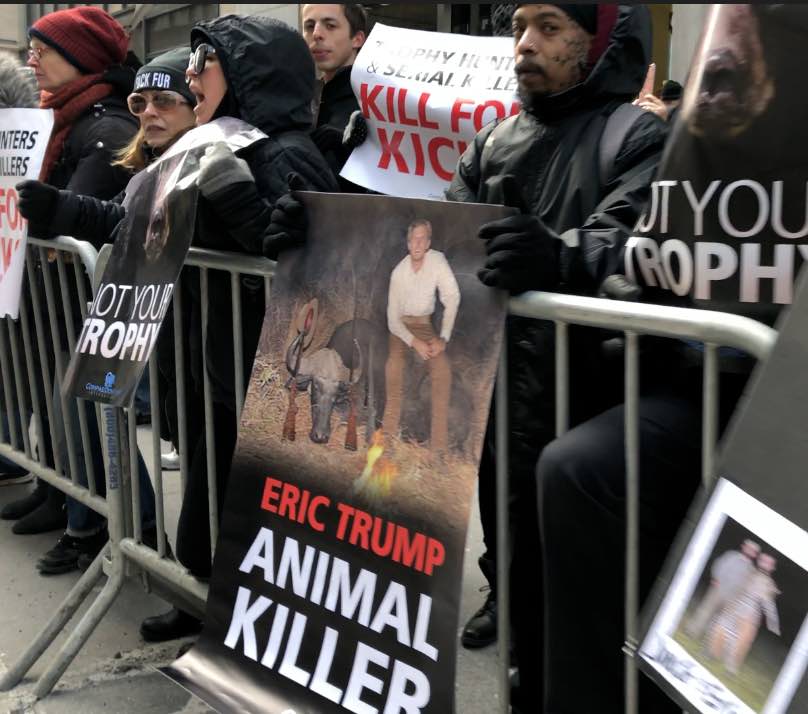
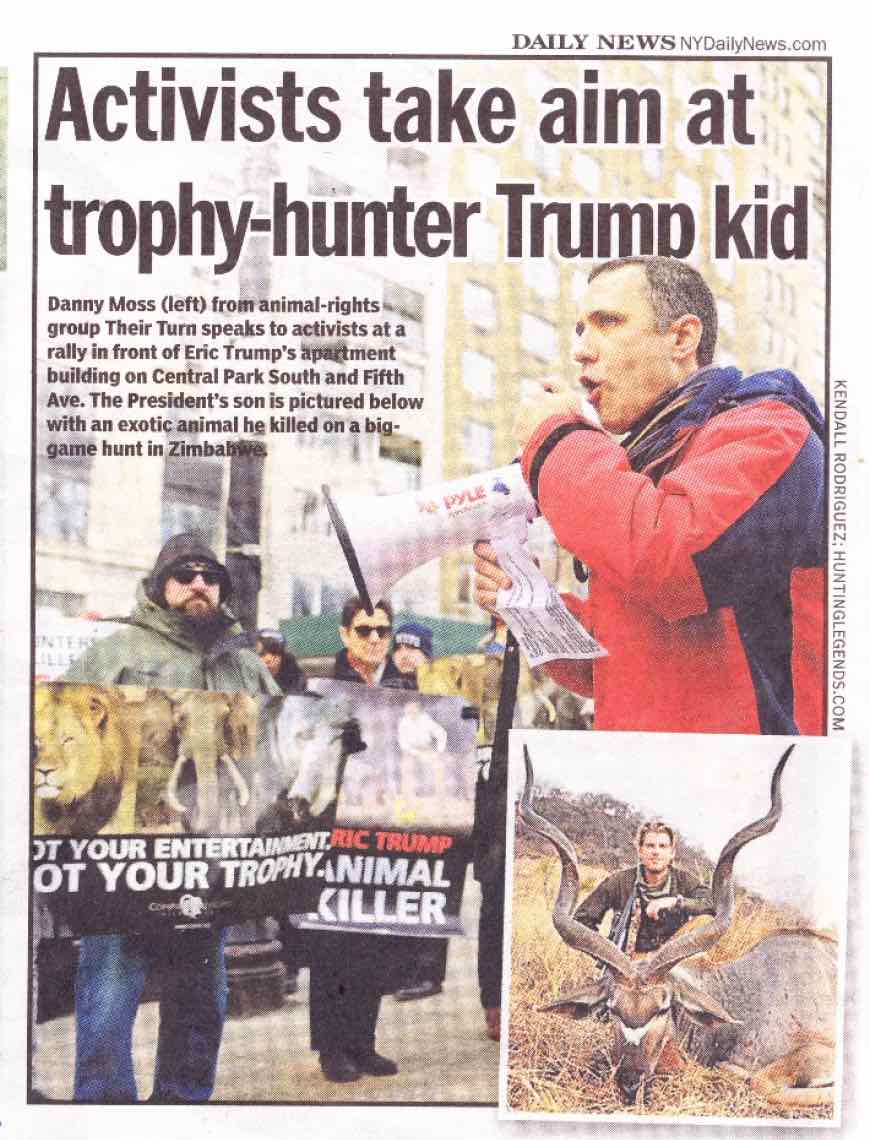
During the Worldwide Rally Against Trophy Hunting (WRATH), dozens of animal rights activists in New York City protested at the home and office of one of the planet’s most notorious trophy hunters — Eric Trump. Several broadcast and print media outlets reported on the event.
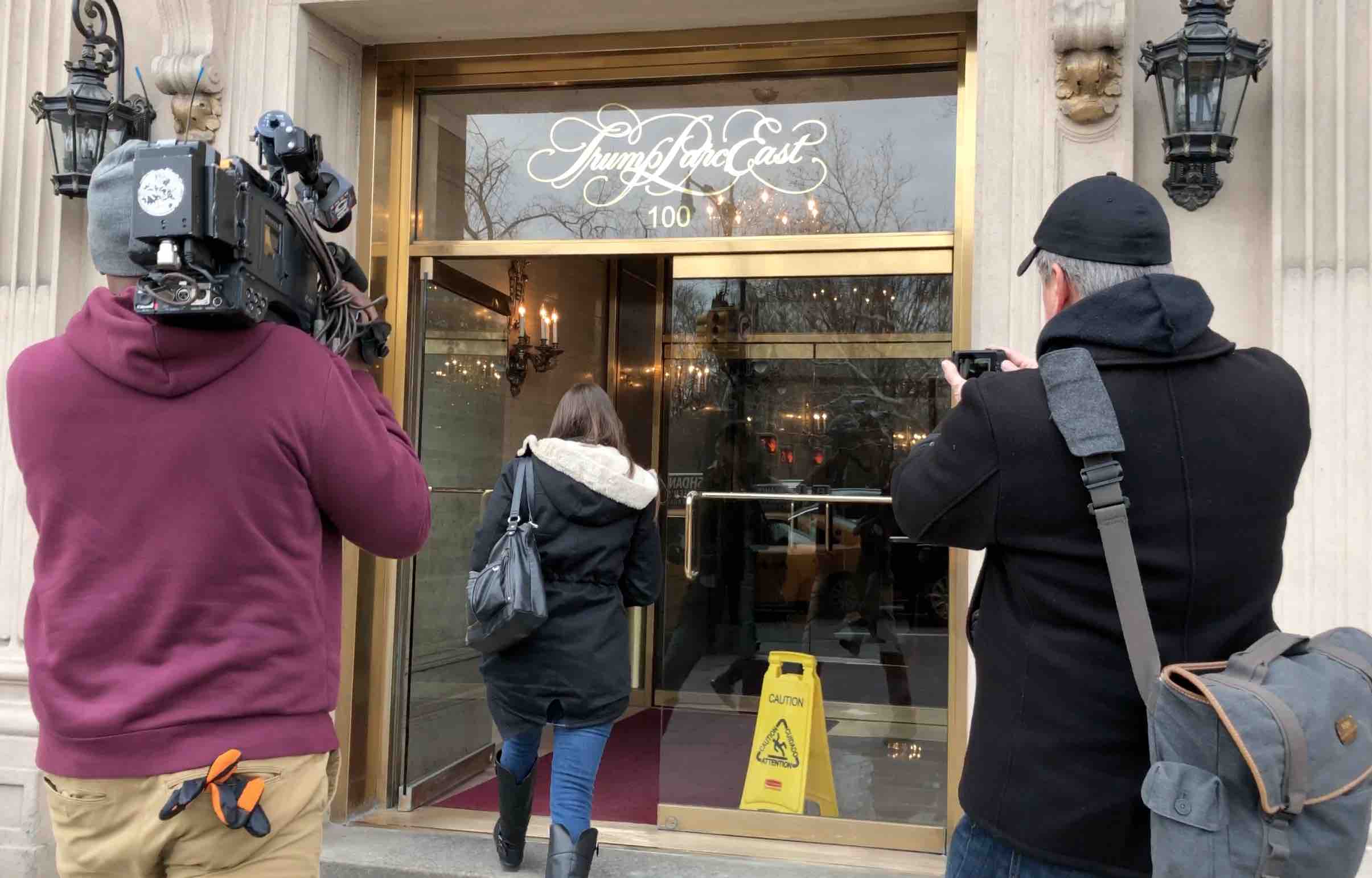
During the rally, Edita Birnkrant, the Executive Director of the animal rights group NYCLASS, entered Eric Trump’s apartment building to deliver a letter to his wife, animal advocate Lara Trump, encouraging her to dissuade her husband from trophy hunting. Two reporters followed her into the building with their cameras rolling.
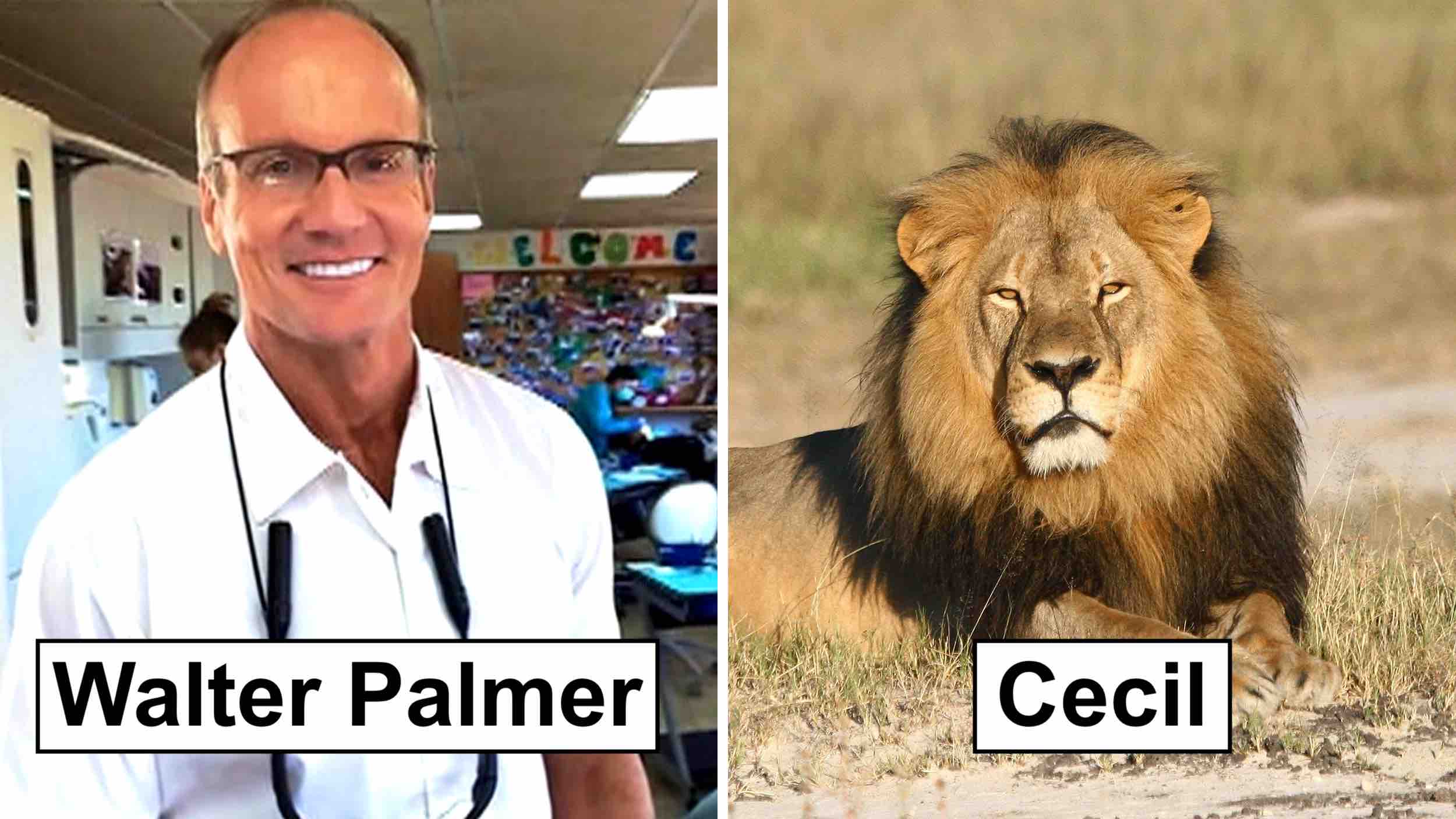
WRATH was created in 2016 by the animal rights organizationCompassionWorks International in response to the killing of Cecil, a beloved lion in Zimbabwe who was shot and beheaded by Walter Palmer, a trophy hunter from Minnesota. The death of Cecil sparked global outrage and triggered several weeks of public discourse around trophy hunting.
IN 2018, WRATH events took place in 32 cities in several countries around the world, including Australia, Ireland, Canada and Brazil.
WRATH is held to coincide with the annual convention of Safari Club International, a 50,000 member Texas-based pro-hunting organization that spends millions of dollars each year lobbying elected officials to support their mission. During the convention, organizers auction off hunts with endangered & threatened species. In 2018, a polar bear hunt was featured in the in promotional materials for the convention.
Trophy hunters justify the killing on the grounds that the money they spend helps to conserve the species and supports local community. Activists dispute that claim, arguing that most of the money spent by trophy hunters goes to the trophy hunting companies and to local government officials.
During the WRATH event in NYC, Nicole Rivard, a campaigner with Friends of Animals, told rally participants about pending trophy hunting legislation in the state of New York: “We cannot rely on fluid federal law to ensure that Africa’s big five do not go extinct. When it comes to trophy hunting, federal law is not protective at all. We have legislation – Save Africa’s Big Five bill – to stop trophies from entering New York. The state bill would ban the importation, possession, sale or transportation of the trophies of elephants, lions, leopards and black and white rhinos. New York is the busiest port of entry for African wildlife in the US. Let’s shut it down.”
Your Turn
Please follow CompassionWorks International on Facebook to stay apprised of the organization’s life-saving work.
WASHINGTON — Most trophy hunters consider displaying the head, hide or tusks of a kill just as important as bagging the big one. And advocates of this controversial sport wasted little time asking Interior Secretary Ryan Zinke to change some policies that would ensure hunters could bring exotic wildlife killed in other countries into the United States.
In a July letter, which HuffPost obtained last week as part of a Freedom of Information Act request, eight trophy hunting organizations urged Zinke ― who talks often about the hunting community’s contributions to conservation and was quick to outfit his office with taxidermied creatures ― to take swift action to right the perceived wrongs of the previous administration.
Conservation Force, a trophy hunting advocacy group based in Louisiana, spearheaded the July letter. In it, the nonprofit’s president, John J. Jackson III, and executives at several safari clubs and sport hunting advocacy groups called on Zinke to walk back several Obama-era regulations.
First, they asked the interior secretary to roll back a pair regulations that prevented U.S. hunters from importing the trophies of lions and elephants killed for sport in certain African countries. The organizations also petitioned the new administration to reform how the Endangered Species Act is applied to species outside the U.S., and to reject a petition calling on the U.S. Fish and Wildlife Service to list all African leopards as endangered under the ESA and restrict hunters from importing their parts. They also called for Zinke to revise seizure and forfeiture practices that they say “discourage lawful tourist hunting.”
The letter writers noted the groups’ members annually “contribute tens of millions of dollars to the conservation of wildlife and protection of habitat across the globe.” They warn that failing to implement the recommendations could hurt African economies, incentivize poaching and threaten the survival of iconic species.
“This is not an ideological issue to us,” Jackson told HuffPost. “It’s traditional conservation practices.”
He called the letter to Zinke an “emergency request” and “an urgent wish list.”
A little more than three months after the letter landed on Zinke’s desk, FWS started fulfilling that wish list — be it strategic or by coincidence.
FWS quietly began issuing trophy import permits for lions hunted in Zimbabwe and Zambia. And a few weeks after that, in mid-November, the administration lifted a 2014 ban on importing elephant trophies from those African countries. It determined that sport hunting of elephants there would “enhance the survival of the species in the wild,” a spokesperson for the FWS said at the time.
The decision sparked widespread public outrage, including from lawmakers on both sides of the aisle.
But then President Donald Trump tweeted that he was putting elephant trophy imports on hold ― reversing his own administration’s decision less than 15 minutes after FWS released an official announcement. He called trophy hunting a “horror show” and said he was unlikely to allow for such imports.
More than two months later, neither the administration nor the Interior Department has made an official announcement. But in an interview with Piers Morgan that aired Sunday, Trump indicated that the ban on importing elephant trophies will remain in place.
Jackson is among those who argues that expensive safari hunting is crucial to the conservation of big game species. He says the Obama administration failed to protect African species, interrupting the flow of money that groups in Africa use to fight poaching and protect habitat.
“If these elephants’ survival is dependent upon that revenue — those incentives to the government, to the local people — then any delay is detrimental,” he said. “We’re talking about hurting the species.”
Jackson said the Trump administration has not lived up to his expectations.
“We’re disappointed in the progress that’s been made so far,” he said. “Part of it is because of the president’s hold on the progress that had been made [by Fish and Wildlife].”
That Trump would side with the conservation community over gun rights and hunting advocacy groups is surprising. His sons Donald Trump Jr. and Eric Trump are avid big game hunters. In a photo that surfaced in 2012, Trump Jr. can be seen holding the tail of an elephant he shot and killed in Africa.
BARCROFT VIA GETTY IMAGES
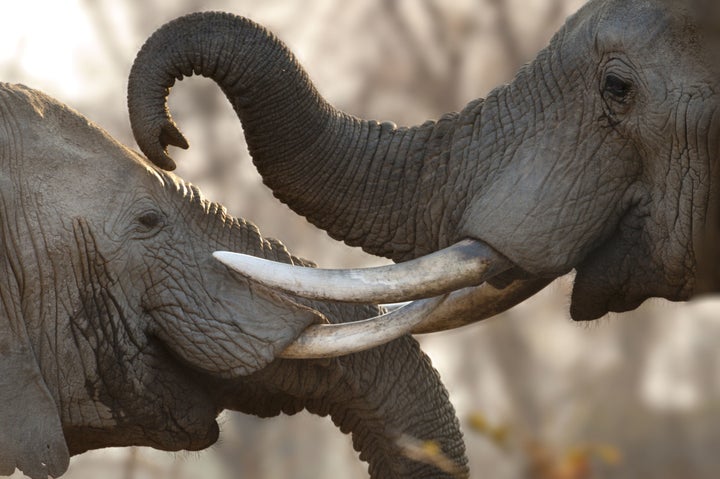
Bull African elephants sparring at South Luangwa National Park, Zambia.
Subscribe to the Politics email.
How will Trump’s administration impact you?
Jackson isn’t alone in his frustration. A day after Trump suspended his administration’s decision to allow elephant imports, the Safari Club sent out a “call to arms,” in which the group encouraged hunters to complain to Trump and Zinke and blasted “hysterical anti-hunters and news media outlets.”
Conservationists and animal rights advocates applauded Trump for stepping in.
“This is the kind of trade we don’t need,” Wayne Pacelle, CEO of The Humane Society of the United States, tweeted in November.
The Center for Biological Diversity and the Natural Resources Defense Council filed a lawsuit against the administration Nov. 20, seeking to clear up any confusion about where things stood and to block the Trump team’s effort to roll back the bans on importing elephants and lions. The government’s actions are “arbitrary and capricious,” the conservation groups wrote in their complaint.
It would seem that Zinke is letting Safari Club set Interior’s agenda on wildlife just like other industry representatives are setting the rest of Interior’s work, which is a travesty for wildlife and wild places.Tanya Sanerib, international program legal director at the Center for Biological Diversity
African elephants have been listed as threatened under the Endangered Species Act since 1978. African lions were listed in 2015. A provision of the law, which is intended to safeguard threatened species and the habitats critical to their survival, allows for sport-hunted trophies to be imported if the government determines that hunting will help safeguard the population. The FWS concluded that Zimbabwe, for example, had made strides to improve elephant management and anti-poaching efforts, according to a notice published in the Federal Register.
The decision on elephant trophies has raised questions about Zinke’s close relationship with the sport hunting community, in particular the Safari Club. The organization’s political action committees donated a collective $24,500 to Trump’s presidential campaign and Zinke’s 2014 and 2016 congressional bids, according to Federal Election Commission data.
“It would seem that Zinke is letting Safari Club set Interior’s agenda on wildlife just like other industry representatives are setting the rest of Interior’s work, which is a travesty for wildlife and wild places,” Tanya Sanerib, the international program legal director at the Center for Biological Diversity, told HuffPost via email.
The Trump administration has not yet moved to fulfill any other demands from the sport hunting groups.
But in his time at Interior, Zinke has worked to promote and increase opportunities for hunting and fishing. He installed a “Big Buck Hunter” arcade game in the cafeteria of Interior Department headquarters, which he said would highlight the contributions that hunting and fishing communities make to conservation. And in November he announced the creation of a so-called International Wildlife Conservation Council to advise him on “the benefits that international recreational hunting has on foreign wildlife and habitat conservation, anti-poaching and illegal wildlife trafficking programs.” Jackson told HuffPost he is among department’s nominees to serve on the council.
During his interview with Morgan, Trump said “a very high-level government person” was responsible for the “terrible” decision to lift the Obama-era ban, but he didn’t specify who that was. “I totally turned it around,” he boasted.
Neither the White House nor the U.S. Fish and Wildlife Service responded to HuffPost’s request for comment on which high-ranking official made the decision and on whether Trump is planning to keep the trophy import bans in place.
Read the full July 4 letter below. Along with Conservation Force, it was signed by representatives of the Dallas Safari Club, Dallas Safari Club Foundation, Houston Safari Club, African Safari Club, Wild Sheep Foundation, Grand Slam Club/Ovis and Chancellor International Wildlife Fund, Inc.
The “Draw of Bows” (Jan. 20, Conn. Post) highlighted one person’s morbid fascination with shooting arrows into deer following personal tragedies – explaining she and her spouse were at peace when they lured deer with corn, and then killed them. Afterward, they post Instagram photos of holding bloody dead deer.
Frankly, that’s horrifying.
Although a volunteer with the Department of Energy and Environmental Protection (DEEP) claims that “if people ever lose the desire to hunt, then (they) won’t be human anymore” that spurious argument is out-of-touch with what’s happening in Connecticut and across the country.
DEEP profits from hunter licensing and federal excise taxes on weapons and ammunition, which drives their arguments, but hunting has lost its appeal in our state for two decades – mirroring a country wide trend.
Fewer than one percent of Connecticut residents hunt. Nationwide, hunting has declined 16 percent since 2011 to 11.5 million, or 5 percent of U.S. residents, while wildlife-watching has increased to 86 million, or 35 percent of U.S. residents who observe and photograph birds, deer and other wildlife as opposed to shooting them to death.
Without new generations becoming licensed hunters, state agencies will be forced to talk about more than the interests of a shrinking minority who chase deer with bows and rifles.
Since it’s no longer acceptable to call hunting recreation, hunters invent social benefits to excuse the bloodletting. We hear about the need to defend wildflowers from over-browsing. We hear about heading off collisions between automobiles and deer. We’re told hunters feed the hungry. We hear that hunters protect our communities from Lyme disease.
There are substantive common sense arguments to show that limits to food and sheltering foliage causes animal populations to limit themselves. In truth, nature is being managed to death and it’s time for communities to call for ceasefires.
Let’s stop DEEP from catering to less than one percent of those who just like making wildlife dead.
A much more fitting title for Noah Comet’s editorial, “If you love deer, you must go hunting” would have been, “If you love driving blindly, pedal to the metal, you must shoot a deer before you hit one with your precious car.”
Indeed, the gist of the piece seemed to be: ‘Our monstrous automobiles are here to stay, so everything else best get out of the way–before we run them over. Come to think if it, as much as hunting is costly and barbaric, we might as well just shoot them first. We’ll say we’re doing them a favor.’
Nowhere does the editorial ask us to drive more defensively or dare to ask drivers to slow the heck down, before someone (or something, if you prefer) ends up dead.
But ironically and as much as I hate to admit it, I found myself agreeing with an occasional line. For instance, the notion that ‘there are too many deer’ is, as Mr. Comet rightly points out, a “ludicrous argument.” His line that, “Deer haven’t overpopulated; we have” says it all.
PUBLISHED: 05:54 EST, 18 December 2017 | UPDATED: 06:01 EST, 18 December 2017
A hiker has been shot to death in a hunting accident after he was mistaken for a wild boar in the south of France.
Jean-Louis Blanc, 59, was out walking close to the village of Taulignan, in the Drome department, when he was hit in the groin by a bullet.
The hunter, a local man aged 64, has been arrested by police and is facing manslaughter charges.
Accident: A 59-year-old man was shot dead by a hunter near the village of Taulignan, Drome department, after the 64-year-old mistook him for a wild boar
‘The hunter was in his 60s and was sure a boar was coming towards him through the undergrowth after his dog started barking,’ said a source close to the enquiry.
‘He pulled the trigger, and the result was this terrible accident. The hunter is now in custody.’
Paramedics attended the scene of the killing, which took place shortly after 3.30pm on Saturday, but Mr Blanc is thought to have died instantly.
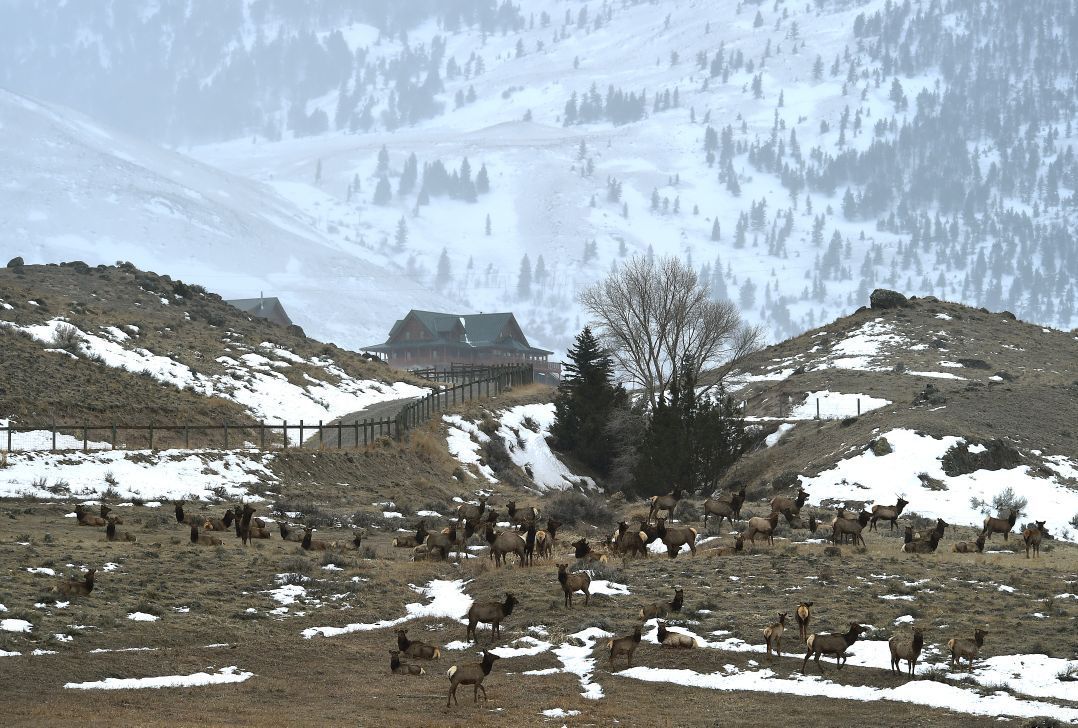
Some members of the Montana Fish and Wildlife Commission are concerned that extended elk hunting seasons are not having the desired effect and are pressuring some elk seven months of the year.
LARRY MAYER/Gazette Staff
Extended hunting seasons for cow elk are being questioned by some Montana Fish and Wildlife Commission members, sparking debate among wildlife managers about the proper steps to reduce the state’s ever-growing elk population.
“We think it’s time for cow-only elk hunting in the general season … in districts significantly over objective,” said Nick Gevock, conservation director for the Montana Wildlife Federation, at the commission’s meeting on Dec. 7.
“I totally agree,” said Dan Vermillion, of Livingston, who is the chairman of the Fish and Wildlife Commission.
Case in point
Vermillion pointed to Hunting District 580, on the east side of the Crazy Mountains, as an example of why Montana Fish, Wildlife and Parks should go to a cow-only elk hunt in specific areas. He said elk populations for the district are 200 percent over objective. The objectives are based on landowner tolerance.
The problem is that public access to hunt elk along the east side of the Crazy Mountains is limited because there’s only one public access to Custer Gallatin National Forest lands in that area. Some of the private land is leased to outfitters for hunts, or outfitted by landowners. Most outfitters are selling bull elk hunts, usually to out-of-state hunters, for about $5,000. There’s less interest in cow elk hunting by outfitted clients.
So going to a cow-only hunt in the area would essentially be a poke in the eye to outfitters, as well as a blow to their bottom line. It would also be a shot across the bow to landowners, demanding that public access to the elk be allowed or there will be consequences.
“At what point are we as a department going to either change the elk objective numbers or get serious about how to bring these numbers into objective?” Vermillion questioned.
+2
Reducing the number of cow elk in certain hunting districts, often mainly on private land, is the objective of shoulder season hunts.
Gazette Staff
It’s working
John Vore, FWP’s Game Management Bureau chief, said the department has been serious, using the shoulder seasons to reduce elk populations. Now in its second season, shoulder seasons allow elk hunting mostly on private land as early as August and continuing through February in some hunting districts.
Last year, Vore said the 10 hunting districts with shoulder seasons that lasted to Feb. 15 reached 95 to 96 percent of their total harvest objective, a figure that includes the harvest during the general and extended seasons. But hunting districts like 580, along with a few others, halt the season by Jan. 1, essentially cutting the late hunt in half, he said.
“Sixty percent of those hunting districts with long shoulder seasons met those criteria and met 96 percent of the harvest criteria” despite weather that wasn’t always conducive to hunting, Vore said.
“In order to harvest elk, and harvest a lot of elk, you need to have a season that runs later than the general season,” he added.
The suggestion of a cow elk-only season in some hunting districts didn’t sit well with commissioner Richard Stuker, of Chinook. He said bulls can cause a lot of damage, even on property where landowners allow public hunter access. He also said that raising the population objectives for the number of elk allowed in a hunting district isn’t the answer, either.
“Otherwise, in about five to 10 years we’ll be in the same boat” as elk numbers continue to climb, he said.
According to FWP’s mathematical calculations based on 80 percent of elk being counted, elk numbers have climbed from about 163,000 a year ago to an estimated 176,000 across the state, a nearly 8 percent increase. The actual number of counted elk — not every area is counted — last year was about 141,400 elk, up from almost 130,700. The objective the FWP wants to reach is around 92,000 elk, which would be a 47 percent reduction in the current elk population.
Relying on hunters to reduce elk populations isn’t easy. Last season, more than 113,500 elk hunters spent more than 1 million days afield to harvest 24,500 elk. Only about 12 percent of all hunters were successful, though, because some hunters took two elk.
+2
Only about 12 percent of Montana elk hunters filled their tags last season.
BRETT FRENCH, Gazette Staff
Legislative stick
Vermillion said the extended elk hunting season isn’t only defined by FWP, hunters and landowners. The Montana Legislature also swings a very large stick, one that is often aimed squarely at Fish, Wildilfe & Parks’ forehead.
“The department — unfairly in my opinion — gets beat up by the Legislature for not reaching those numbers,” Vermillion said.
That was one of the objectives of the shoulder seasons, to give landowners a way to thin elk herds outside of the general season. If landowners do not help out by allowing hunter access, and elk populations don’t decline after three years, then FWP would be able to say they tried but were blocked in their efforts by uncooperative landowners.
No matter the reason, Vermillion said not reaching the objectives means the Legislature will be holding FWP accountable.
beat up on all the time.”
Hunter harvest
Last season, hunts in the state’s 43 districts with expanded seasons increased the harvest of cow elk by 33 percent, Vore said.
“So it is a tool that does work,” Vore said. “But of course, it’s not going to work if we don’t use it.”
Commissioner Shane Colton, of Billings, said he thinks the population objectives for elk are set too low in some hunting districts.
“If we were to manage down to those numbers we would be shot in the streets by hunters, outfitters and landowners,” he said.
Colton called the numbers antiquated and said a “lot of subjectivity” went into establishing the figures.
“I’m still stymied by the idea that we’re hunting elk seven months of the year,” he said. “Who would’ve thought that would happen in Montana?”
He also chided FWP for pushing shoulder seasons as the answer, noting that one week an elk may be worth thousands of dollars to an outfitter and the next it’s “treated like a rodent” to be exterminated.
“I really struggle with the idea that this is where we’re at,” he said.
Backing off
Vermillion said he would have pushed FWP for an antlerless-only elk season in HD 580, east of the Crazy Mountains, if it weren’t for the creation of a group attempting to solve the public access issue in the area.
“It probably would have been suicide to do it,” he said, but Vermillion has disagreed with legislators and landowners on the topic before, putting himself in the hot seat when his commission appointment came up for renewal before the 2015 Legislature.
Even with the shoulder season hunts, Vermillion doesn’t see how some of the hunting districts can reach the objectives.
“The department will have to prove to me in August 2018 we should continue” shoulder season hunts, he said. August is when the department will finalize the seasons for 2019, which is also a year that the Legislature meets and will closely follow the third season of the extended elk hunts.
The dilemma
Vore told Vermillion and the other commissioners that FWP wants to use the shoulder seasons to “full effect” next hunting season, expanding the late season hunts out to Feb. 15 in hunting districts like 580.
Martha Williams, who is still in her first year as FWP director, said she has heard a lot of the same complaints as the commissioners, but she wants to learn more from the current course the department is on before recommending any changes.
“It’s not whether we revisit the objectives, but when,” she said. “I am paying attention,” but didn’t think it was prudent to make any changes now.
“We need to do something and figure something out or the Legislature will be telling us what to do,” Stuker said.
“I’m not naïve,” Colton said. “I understand why we have (shoulder seasons).
“But I don’t want the Legislature setting our seasons and quotas,” he added. “My preference would not be to expand (the shoulder seasons) all out to Feb. 15. But if we don’t, then the Legislature will say we were on track and you shot us down. It’s just an unfortunate situation for us to be in because there are other tools and other methods than a seven-month elk season that we now have.”
The missing hunter’s pick-up truck (Courtesy Skamania Co. Sheriff’s Office)
AA
STEVENSON, Wash. (AP) — Authorities have suspended the search for a 37-year-old elk hunter reported overdue for a week in the Gifford Pinchot National Forest.
Skamania County Sheriff Dave Brown said Saturday night that four days of search efforts haven’t turned up clues to help them locate Joel Presler, of Vancouver. He last had contact with his family on Nov. 11.
Authorities found his pickup truck Wednesday on a Forest Service road in the Forlorn Lakes area.
Nearly three feet of snow has piled up near the truck.
Presler was reported to have been in good health when he went missing and to have hunted in the area for years. Authorities don’t believe he would have hiked in and camped away from his truck.
The sheriff urged caution for family and friends who planned to search for him Sunday.









 Exposing the Big Game