HELP CHALLENGE THE UNCONSTITUTIONAL HUNTER HARASSMENT LAW IN PENNSYLVANIA‏

From the Committee to Abolish Sport Hunting/WILDWATCH.ORG

Jan Haagensen’s case challenging the hunter harassment statute in Pennsylvania will be either taken up by the Supreme Court of the US (SCOTUS) or not at the end of September. If SCOTUS takes up the case and rules in Jan’s favor, hunter harassment laws can be successfully challenged in every state.

To increase Jan’s chances of being heard, please go to this website: http://www.thepetitionsite.com/318/132/729/challenge-the-hunter-harassment-law-in-pennsylvania/ and take the action indicated by copying and pasting the text into the supreme court email form provided within the petition. Also, please sign the petition and pass along to others. On behalf of the hunted, we thank you!!!!

CHALLENGE THE HUNTER HARASSMENT LAW IN PENNSYLVANIA

Bowshot deer

IF YOU ASK THE HUNTER NOT TO SHOOT HER,

YOU WILL BE ARRESTED!

Read, spread the word, and TAKE ACTION!

Thanks to you, C.A.S.H. is able to publish information needed by activists and media. Thanks to you, C.A.S.H.org
is able to educate the public about the pro-hunter bias in our government. Our fervent wish is for the government to protect wild animals as individuals rather than exploit them as “natural resources.”

Early hunting season to begin for wood ducks, teal

Photo copyright Jim Robertson

Photo copyright Jim Robertson

Canada geese are currently being hunted in Tenn.

The Associated Press, September 9, 2013

Early hunting season for wood ducks and teal begins this week.

NASHVILLE, Tenn. (AP) – Early hunting season for wood ducks and teal begins this week.

According to the Tennessee Wildlife Resources Agency, the season runs from Saturday to Sept. 18 with a daily bag limit of four, not to exceed two wood ducks.

Hunters must have a valid state hunting license in their possession as well as a Tennessee Migratory Bird Permit.

Hunters aged 16 and older also must have a Federal Duck Stamp.

The early hunting season for Canada geese began Sept. 1. It continues through Sept. 15 with a daily bag limit of five.

More information on Tennessee’s waterfowl season can be found on the TWRA website at http://www.tnwildlife.org under the “for hunters” section.

Information on the 2013-14 late waterfowl seasons will be available in late September.

A Killer’s Backstory

Earl started killing when he was in grade school—first frogs, then rabbits and cats; then later, raccoons, coyotes and stray dogs, always seeking out targets on which to vent his frustrations. His classmates sometimes questioned his cruelty, and Earl sensed he was different. He was never able to muster a normal ability to feel compassion for others and failed to see the value of the sanctity of life—human or otherwise.

Any feelings of regret were only fleeting and self-serving. Remorse was outside his realm of emotions. Earl never thought, “Why did I do that?” but sometimes he wondered, “What have I got myself into now?” He depersonalized and objectified the victims he sought to control and found that any action could be justified. He became so adept at rationalizing and compartmentalizing that killing grew to be second nature; he could do it in his sleep. The problem with being so proficient at taking and possessing another’s life is that he got to where he couldn’t seem to not do it. For him, it was addictive.

Seized by a frenzied desire, each new project was all-consuming. A successful kill would only temporarily satiate the urge to possess—to have total control over something. His propensity toward violence was at first latent, then active, growing finally into his central preoccupation—his obsession. Yet he was able to fit into society by forming a façade, a mask that allowed him to blend in wherever he went. He watched how people reacted to things and acquired by rote the social skills he did not come by naturally.

One of Earl’s proudest moments was the day his father first asked him to join him for a hunt. As they lay in wait for their quarry, Earl was nearly overwhelmed with anticipation, feeling surges of excitement like he’d never known before. A powerful sense of adventure had been building all morning, starting well before dawn, when they loaded their rifles, ammo, hack saw, butcher knives and body bags into the truck. On the drive to the kill site, they chattered about the 4-point buck they were going to blast and bring home and where they would mount his head. Earl’s state of high arousal grew to an almost frenzied desire to kill. He knew that when he did, the reward would be sweet fulfillment of the kind of deep gratification that he sought. When they spotted “their” deer, his father told him not to feel sorry for it. But the pep talk was unnecessary–Earl felt nothing for the deer in his sights.

All he knew was an irresistible urge to possess it, body and spirit. To physically possess its remains and be the master and owner of all it ever was or will be. Pulling the trigger and taking its life was the ultimate possession; as satisfying as he always knew it would be.

Earl made his first human kill at age 15. He was an angry teenager and she was a ten year old neighbor girl in the wrong place at the wrong time…
________________________________________________________

The preceding was an excerpt from a novel in progress I’m working on—a piece of fiction based-on-fact…

Text and Wildlife Photography ©Jim Robertson, 2013. All Rights Reserved

Text and Wildlife Photography ©Jim Robertson, 2013. All Rights Reserved

United “Sportsmen” of Wisconsin Awarded $500,000 Grant to Promote Hunting

DNR awards $500,000 grant despite thorny questions

Group is lone bidder for award to promote hunting, fishing

Madison — A controversial $500,000 grant for promoting hunting and fishing was awarded Thursday by Natural Resources Secretary Cathy Stepp despite tough questions from the public and a committee meeting earlier in the day.

The United Sportsmen of Wisconsin Foundation, a group with close ties to GOP politicians and other conservative organizations but a scant track record, was the only applicant for the award.

Stepp awarded it to United Sportsmen late Thursday afternoon after the Sporting Heritage Committee that morning voted 4-1 in favor of the grant. The vote came after the group took public testimony that was entirely opposed to it.

In announcing her decision, Stepp released a finding by her legal counsel that United Sportsmen of Wisconsin met the criteria in state law for the grant and said in a statement that she had to award the money to United Sportsmen under a budget provision written by Republican lawmakers.

“I will be inserting clear and specific language within the grant contract to ensure that desired outcomes are met in an efficient and transparent manner with ample opportunity for public scrutiny. We will work to incorporate many of the concerns and ideas we heard during today’s hearing into the grant contract,” Stepp said.

United Sportsmen has been active in elections and lobbying over the past two years on behalf of conservative causes. But it has no history of doing the kind of training called for in the grant, though its board members have done so as part of other groups.

The grant was quickly approved in May in a session of the Joint Finance Committee on a motion written by Assembly Majority Leader Scott Suder (R-Abbotsford) and Rep. Dan LeMahieu (R-Cascade). The DNR posted the grant on an agency web page but did not put out a news release on it.

Its language prevented most established conservation groups, including the Wisconsin Wildlife Federation and state chapters of Pheasants Forever, National Wild Turkey Federation and Rocky Mountain Elk Foundation, from applying for the grant.

Lone no vote

Mark LaBarbera of Hazel Green, the sole member of the committee to vote against United Sportsmen, asked the group’s president questions about its finances, structure and qualifications, stressing that “people around here think this just doesn’t smell right.” Afterward, he said he wasn’t satisfied with the answers as given.

“I didn’t think we had a clear enough answer that I could vote yes so I had to vote no,” LaBarbera said.

LaBarbera asked United Sportsmen president Andy Pantzlaff if he could provide a copy of United Sportsmen’s letter from the federal Internal Revenue Service showing it had received tax-exempt 501(c)(3) status.Pantzlaff, who called into the meeting, said he could provide that with enough time.

As of Thursday, there was no entry on the popular website, GuideStar, that United Sportsmen had filed the annual reports that federally recognized tax-exempt groups are supposed to file with the IRS, though sometimes those reports can lag in being filed or posted to GuideStar. Pantzlaff didn’t respond to a reporter’s phone messages and email request for this information.

The drafting file for the budget bill shows that a lawmaker asked for a specific change to the grant motion so the group receiving the grant would not have to be recognized as a 501(c)(3) nonprofit.

In the legal memo released by Stepp, her chief legal counsel Tim Andryk noted that, “(United Sportsmen is) not required by the statute to be tax exempt or be a sec. 501(c)(3) organization as inquired about at today’s hearing, and thus a letter from IRS is not needed.”

In his statements to the committee by phone, Pantzlaff said his group would try to triple the grant amount by seeking private matching funds; not paying its board members; doing a national search for a full-time executive director; and hiring a full-time director of operations and part-time staffer to work on public policy.

The group would seek to train people who could serve as long-term mentors for people wanting to learn to hunt and fish, he said. The group also would bring programs such as the National Rifle Association’s Eddie Eagle gun safety program into schools to get youths interested in shooting sports.

“Failure is not an option,” Pantzlaff said. “We have to try something new and innovative.”

The grant will provide $200,000 this year and $300,000 in 2014. Thereafter, it will provide $450,000 in each two-year budget. The grantee will have to provide $150,000 of its own funds in matching dollars in each future two-year budget.

The state budget includes no requirement that the grant be put out to competitive bid in the future, but Scott Gunderson, the committee chairman and the No. 3 official at the DNR, said the DNR could do that and likely would.

Gunderson said conservation groups such as the Gathering Waters and River Alliance of Wisconsin also received grants from the DNR for specialized purposes with little or no competition.

Most of those testifying praised the purpose of the grant but questioned why more of the state’s many hunting and fishing groups weren’t able to apply. Ray Anderson, a retired DNR grants employee who now teaches hunter safety, said he was concerned by the process of the grant and the fact it excluded the National Wild Turkey Federation, a group that he belongs to.

“It would be prudent for the Legislature and the DNR to hit pause on this,” Anderson said.

The five-member Sporting Heritage Committee is composed of Gunderson; Rep. Al Ott (R-Forest Junction); LaBarbera; Sen. Neal Kedzie (R-Elkhorn) and Bill Torhorst of Oregon. Ott, the first committee member called upon to vote, initially passed, voting yes after all the other committee members had voted and he was called on a second time.

Though its foundation was legally established in January, United Sportsmen of Wisconsin was formed about two years ago and has been lobbying lawmakers in favor of sporting legislation such as the creation of a wolf hunt as well as bills to ease the way for a controversial open-pit iron mine in northern Wisconsin and to better enable development in wetlands.

The group also sponsored the Sportsmen Freedom Fest and Concert in Lake Delton with Americans for Prosperity and the NRA in October 2012, just ahead of the presidential election. In 2011, the group Citizens for a Stronger America reported in its tax filing giving $235,000 to United Sportsmen along with large donations to two social conservative groups: Wisconsin Right to Life and Wisconsin Family Action.

ryanwax

In Agreement With a Hunter, This One Time…To a Point

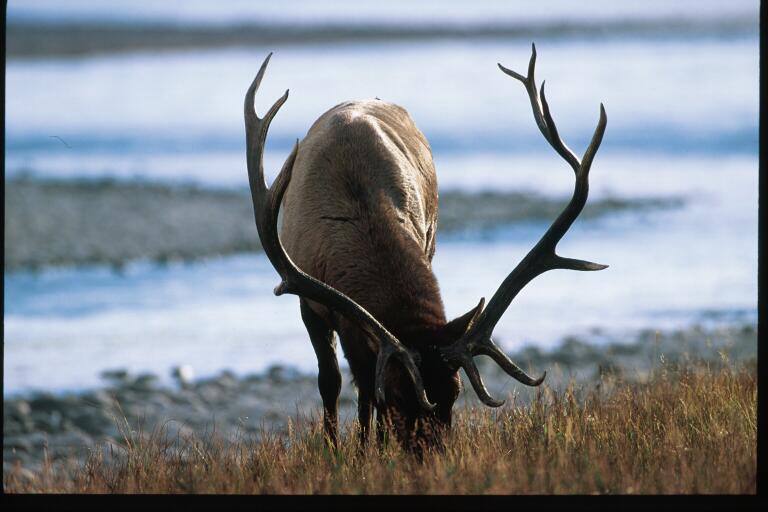
Here’s my letter to the Daily Astorian in response to their article, “Bowhunting and Elk.”

When they printed it, the newspaper simply titled the letter, “In Agreement.” But a more fitting title would have been: “In Agreement With a Hunter, This One Time…To a Point.”


Dear Editor,

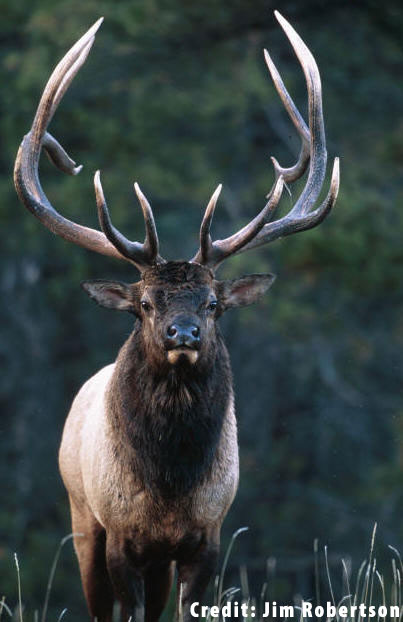
Although I don’t usually find myself in agreement with hunters on much of anything, I had to concur with the rifle hunter who stated last week that bowhunting’s 50 percent crippling rate is a calamity and absurdly unfair to elk (“Bowhunting and elk,” The Daily Astorian, Aug. 23). For every elk the average bowhunter kills, at least one escapes with an arrow painfully stuck in them.

However, I was disappointed that the rifle hunter’s main concern was for his chosen sport, not for the elk themselves. His final line, “It’s high time to care about elk seasons,” should have read, “It’s high time to care about elk.”

Jim Robertson

elk-000-home17300

Media Bias Promotes Hunting Agenda

This is a letter I sent to the Daily Astorian, a local paper on the Oregon coast:

Dear Editor,

Cannon Beach used to be a pretty peaceful place. It was a nice romantic getaway or a great place to bring the entire clan. Haystack Rock appears on more post cards and magazine covers than any other feature on the entire Oregon coast. Most people come to Cannon Beach to enjoy quiet walks, hoping for a glimpse of some of the native wildlife. It’s not the kind of place folks expect to run into cammo-clad hunters with shotguns or compound bows stalking area’s half-tame animals.

But when the town’s parks and community services committee wanted to limit the local hunting season to only one month, the Oregon state Department of Fish and Wildlife instead set FIVE seasons there, totaling 90 days (“Hunting dates for Ecola reserve are expanded,” Aug. 5). And although the town of Cannon Beach wanted to restrict hunting to bows and arrows and shotgun slugs, the ODFW informed them that buckshot would be allowed as well.

Now any hunter who wants to can blast a 700 pound bull elk with a shotgun. What a mess that will be for some sightseeing family to come across! And how many elk or deer, who were nearly out of range at the time they were shot at, will escape with gaping, bleeding, lead-filled holes in them?

This is just another example of state game departments pushing their weight around, defying the will of the people and town councils, not to mention the will of the wildlife. Who do game regulators think they are, God? Sorry, but I hear that position has already been filled.

Jim Robertson

……..Instead of printing that, here’s the letter they chose to print…….

Dear Editor,

I am writing in response to the article The Daily Astorian regarding the debate on the upcoming hunting season in the Ecola Creek Forest Reserve (“Expanded hunting season remains in Ecola Creek Forest Reserve,” Aug. 7).

I am proud to be an avid hunter, fisherman, and outdoorsman and was very upset to read some of the comments made during the city council meeting by Cannon Beach resident Jan Seibert Wahrmund.

The topic being discussed was the hunting area that borders the non hunting area. Wahrmund’s quote was, “Hunters don’t always know where they are. They may have been drinking.”

I understand that not everyone is pro hunting, and I respect their beliefs and opinions. But this comment is ignorant and offensive. To stereotype all hunters as beer-guzzling hillbillies who get drunk and shoot at everything that moves is unfair and misinformed.

Hunters and all outdoorsman are the biggest proponents for conservation and safety. Hunters are the reason that such strict game management laws are in place. A true hunter and outdoorsman has a great deal of respect for all wildlife and everything in its surrounding area.

Hunters and hikers can and always have been able to share the forest without issues. Hunting is a tradition that has been passed down through generations, and we are very passionate about it. It is much more than just harvesting an animal. It’s about enjoying the outdoors and wildlife, and time spent with friends and family.

I hope that Wahrmund takes the time to consider how offensive and misleading her comments were before the next time she “shoots off” her stereotyping and unfair opinions at a council meeting. On behalf of all responsible hunters, please consider how your actions affect others. Thank you.

Steve Honan

….My favorite line in his letter: “Hunters and hikers can and always have been able to share the forest without issues.” Hasn’t he heard about all the hunting accidents that happen each year?

elk-000-home17300


Anchorage sheep hunter rescued after Interior raft accident

Here’s one with a happy ending for all…

Sheep photo copyright Jim Robertson

Sheep photo copyright Jim Robertson

http://www.adn.com/2013/08/15/3025570/anchorage-sheep-hunter-rescued.html#storylink=cpy

The Associated Press August 15, 2013

FAIRBANKS, Alaska — A 56-year-old Anchorage man injured in a rafting accident near Delta Junction was rescued by the Alaska Air National Guard.

The Fairbanks Daily News-Miner reports Mike Vogel was on a sheep hunting trip Tuesday and rafting on the Gerstle River. He came out of the raft and was dragged behind it.

Vogel suffered broken ribs and a severed finger.

His hunting partner, 62-year-old Melvin Iler of Oregon, set up a fire and shelter for Vogel and then hiked 15 miles to the Alaska Highway, where he summoned help.

An Air National Guard helicopter found Vogel at 8:45 p.m.

He was taken to Fairbanks Memorial Hospital and treated for serious injuries.

The Air Guard says pilots had to contend with wildfire smoke limiting visibility to less than a mile.

Information from: Fairbanks (Alaska) Daily News-Miner, http://www.newsminer.com

IDA Action Alert: Tell Your Senator to Oppose The Sportsmen’s Act 2013 (S. 1335)

from: In Defense of Animals

The formula to protect wild animals from cruelty is simple: anything that the Safari Club International (SCI) supports MUST be opposed.

The SCI, an atrocious trophy hunter organization, is currently lobbying heavily for Selk-000-home17300 1335, sponsored by Sen. Lisa Murkowski (R-AK). If passed, the Act would make hunting and trapping a priority to be considered on federal lands–public lands that are owned and funded by us, the Public.

The bill would allow hunting and trapping in designated wilderness areas, allow “volunteers” to help in the killing of so-called “excess” animals on Federal land, including National Parks, increase the share of federal lands turned into shooting ranges, and legalize the transporting of bows through national parks and the importation of “trophies” from polar bears kills in Canada.

Please contact your Senator immediately and tell her/him to vote “NO” on the Sportsmen’s Act 2013 (S. 1335). The threats our wildlife face come from many directions- loss of habitat, trophy hunters, poaching, conflicts with humans and or human-based activities, as well as the hardships of living in the wild as predator or prey. The last thing we need right now is to open our national parks or wilderness areas that currently do not allow hunting to more killing.


Why YOU Should Care About the Heritage Conservation Council Advisory Committee

Hunters should realize that their God-given right to remain silent protects them from having anything they say used against them…, such as the information in this article in Outdoor “Life” magazine…


Hunting Access: Why You Should Care About the Heritage Conservation Council Advisory Committee

by John Haughey

It may appear to be nothing more than semantics, but a proposal to make the Wildlife and Hunting Heritage Conservation Council Advisory Committee a permanent advisory panel rather than one that must have its charter renewed every two years by Congress is a significant step in ensuring wildlife, habitat conservation, and hunting are priorities in federal land-management decisions.

The Wildlife and Hunting Heritage Conservation Council (WHHCC) advisory committee was created in 2010, replacing the Sporting Conservation Council, to advise the Interior and Agriculture departments on wildlife and habitat conservation, hunting, and recreational shooting issues on federal land.

In accordance with the Federal Advisory Committee Act, the WHHCC requires Congressional reauthorization every two years for it to continue operating. The committee was renewed for the 2012 and 2013 fiscal years, but rather than renew its charter for the 2014 and 2015 fiscal years, Rep. Robert Latta (R-Ohio) has proposed a bill that will make the panel a permanent advisory committee.

The Sportsmen’s Heritage And Recreational Enhancement (SHARE) Act introduced into the House by Latta and three co-sponsors on July 23 exempts the WHHCC from the Federal Advisory Committee Act’s two-year renewal stipulation by making it a “permanent” committee.

“Ensuring that sportsmen and sportswomen have an advisory capacity role across future Administrations is vital for all who enjoy the great outdoors throughout the nation to engage and provide consensus recommendations to federal agencies that will benefit from the Council’s vast experience and expertise,” Latta said. “I am confident that this legislation will serve to the betterment of current and future generations of hunter-conservationists.”

“This legislation will ensure that sportsmen are able to provide first-hand knowledge of the wildlife and hunting issues to the federal government,” agreed Rep. Bennie Thompson (D-Miss.), co-chairman of the Congressional Sportsmen’s Caucus.

The bill was referred to the House Natural Resources and Agriculture committee where it will be reviewed before introduction onto the floor.

Like its predecessor, the revamped committee would include members of state fish and wildlife agencies, bird and big-game hunting groups, representatives of Indian tribes, and leaders in tourism, hunting equipment, and farming industries.

Members would serve staggered terms of two, three, and four years. The committee would meet at least twice a year and file an annual report.

For more, go to:
— House Congressional Sportsmen’s Caucus -Sportsmen’s Priorities Moving in Congress

— New wildlife and hunting advisory committee proposed (Video)

— H.R. 2799: To establish the Wildlife and Hunting Heritage Conservation Council Advisory Committee to advise the Secretaries …;

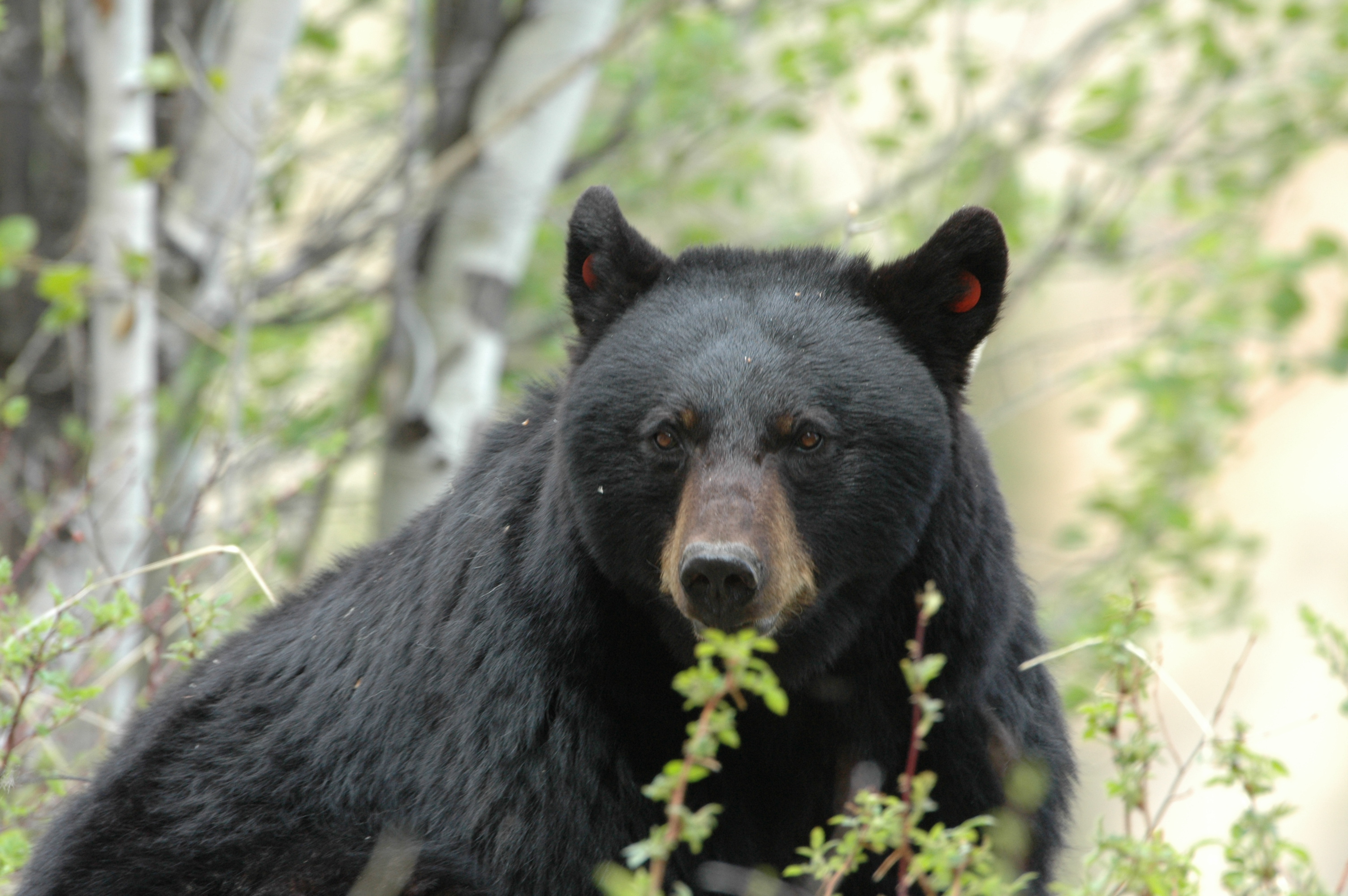
Today is Opening Day of “Bear Season” in Washington!

The first day of August: summer is at its peak, young birds have fledged and the wild berries are just now ripening up…

But on this very same day, demonic dimwits and narcissistic nimrods that enjoy making sport of murdering animals are out trying to end the life of a humble being whose only focus lately is filling up on fresh fruit.

That’s right; believe it or not, August 1st is the beginning of bear season across much of Washington! From today until November 15th, any loathsome scumbag with a bear tag and an unwholesome urge to kill can “bag” himself a bruin—just for the sport of it—in this presumably progressive state.

Sure, one or two people may be killed by bears in a given year, but over that same time period 50 will die from bee stings, 70 will be fatally struck by lightning and 300 will meet their maker due to hunting accidents. A person has about as good a chance of spontaneously combusting as being killed by a bear.

Meanwhile, tens of thousands of bears are killed by people each year, and no one is keeping track of how many are wounded, only to crawl off and die slowly without hospital care to pamper them back to health. 30,000 black bears are slain during legal hunting seasons in the US alone. Possibly another 30,000 fall prey each year to ethically impotent poachers seeking gall bladders to sell on the Chinese black market. Victims lost to that vile trade are eviscerated and left to rot, since bear meat is not considered a desirable taste treat. To make it palatable, backwoods chefs traditionally douse the flesh and offal with salt and grind the whole mess into sausage.

Why then, is it legal to kill bears when we have long since concocted a myriad of ways to turn high protein plant foods (such as soy, seitan or tempeh) into a perfectly scrumptious, spicy sausage, sans intestines? Unquestionably, the hunting of bears is nothing but a warped distraction motivated by a lecherous desire to make trophies of their heads and hides. But, dangerous and terrifying as they must seem to trophy hunters out to prove their manhood from behind the security blanket of a loaded weapon, they aren’t the “most dangerous game,” as the serial killer, Zodiac (an avid hunter who grew bored with “lesser” prey and progressed to hunting humans) divulged.

An irrational fear of bears dates back to the earliest days of American history and is customarily accompanied by obtuse thinking and quirky spelling. The most famous inscription (carved into a tree, naturally) attributable to Daniel Boone (that guy who went around with a dead raccoon on his head) bragged how he “…cilled a bar…in the year 1760.” The bears Boone killed (and there were many) in North Carolina and Tennessee were black bears, a uniquely American species that, like coyotes, evolved on the Western Hemisphere.

Every year a fresh crop of Elmers decides to play Daniel Boone and blast a poor little black bear with a musket ball (which, although extremely painful and traumatic, often isn’t enough to kill them outright). Others prefer the test of archery, savagely impaling innocent bears who are just out trying to find enough berries to get them through the winter.

Rachel Carson, whose 1962 book, Silent Spring, advanced the environmental movement, saw the brutality of hunting as a detriment to civilized society:

“Until we have the courage to recognize cruelty for what it is—whether its victim is human or animal—we cannot expect things to be much better in this world. We cannot have peace among men whose hearts delight in killing any living creature. By every act that glorifies or even tolerates such moronic delight in killing we set back the progress of humanity.”

The question is, how long will society continue to tolerate the moronic act of sport hunting?

————

This post contained excerpts from my book, Exposing the Big Game: Living Targets of a Dying Sport
http://www.earth-books.net/books/exposing-the-big-game

Text and Wildlife Photography ©Jim Robertson, 2013. All Rights Reserved

Text and Wildlife Photography ©Jim Robertson, 2013. All Rights Reserved