Concerned Blair County, Pennsylvania, residents have contacted PETA regarding the fates of fish and other aquatic animals whose lives hang in the balance as the lake at Lakemont Park, reportedly owned by Blair County, is drained so that sediment can be removed. According to news reports and eyewitnesses, the water level has already been dramatically lowered and the fish who remain are struggling to survive in the shallow water. Many other aquatic animals also call the pond home, including large turtles. All these animals face a horrifying death by suffocation or desiccation if they are not rescued. A group of local residents have banded together and appear willing to undertake all the work and expense necessary to relocate the animals to private ponds (state law prohibits relocation to state-owned waterways), but the agencies in charge have apparently refused to grant permission for the rescue to take place.
PETA contacted the Blair County Conservation District, whose representative claims that a plan is in place to remove the fish, but the representative refused to elaborate further regarding this plan or to explain whether a plan existed to help the turtles and other species. This is especially concerning since Pennsylvania Fish and Boat Commission officials apparently feel that allowing the fish to die and rot on site—or throwing the animals into a “dead hole”—is an acceptable plan!
These animals desperately need your voice now! Please contact decisionmakers and urge them to take immediate steps to ensure that the fish and other aquatic animals in the lake at Lakemont Park are treated humanely. Let them know that under no circumstance is it acceptable to allow these sentient animals to suffocate or desiccate, particularly when humane alternatives exist.
Take Action Now!
Fields with an asterisk(*) are required. First Name Last Name E-Mail Address
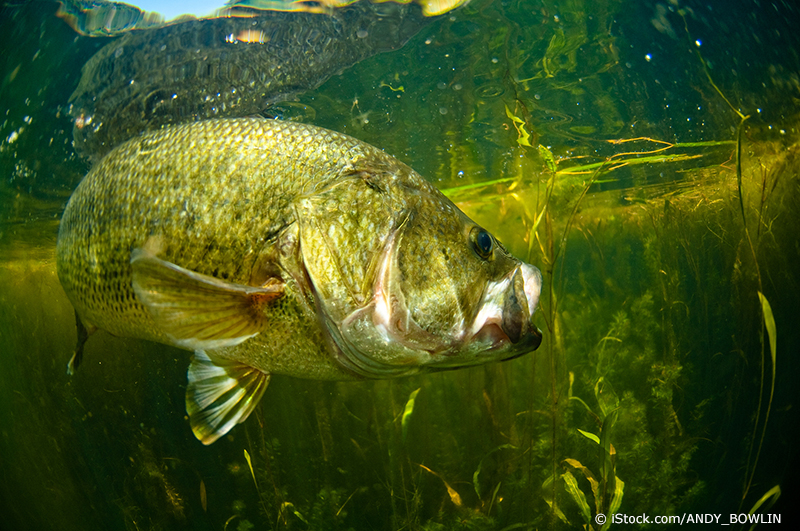
Whether or not fish feel pain has been debated for years. But the balance of evidence says yes. Now the question is, what do we do about it? (redbrickstock.com / Alamy)
When Culum Brown was a young boy, he and his grandmother frequented a park near her home in Melbourne, Australia. He was fascinated by the park’s large ornamental pond wriggling with goldfish, mosquitofish, and loaches. Brown would walk the perimeter of the pond, peering into the translucent shallows to gaze at the fish. One day, he and his grandmother arrived at the park and discovered that the pond had been drained—something the parks department apparently did every few years. Heaps of fish flapped upon the exposed bed, suffocating in the sun.
Brown raced from one trash can to another, searching through them and collecting whatever discarded containers he could find—mostly plastic soda bottles. He filled the bottles at drinking fountains and corralled several fish into each one. He pushed other stranded fish toward regions of the pond where some water remained. “I was frantic, running around like a lunatic, trying to save these animals,” recalls Brown, who is now a marine biologist at Macquarie University in Sydney. Ultimately, he managed to rescue hundreds of fish, about 60 of which he adopted. Some of them lived in his home aquariums for more than 10 years.
As a child, I too kept fish. My very first pets were two goldfish, bright as newly minted pennies, in an unornamented glass bowl the size of a cantaloupe. They died within a few weeks. I later upgraded to a 40-liter tank lined with rainbow gravel and a few plastic plants. Inside I kept various small fish: neon tetras with bands of fluorescent blue and red, guppies with bold billowing tails like solar flares, and glass catfish so diaphanous they seemed nothing more than silver-crowned spinal columns darting through the water. Most of these fish lived much longer than the goldfish, but some of them had a habit of leaping in ecstatic arcs straight through the gaps in the tank’s cover and onto the living room floor. My family and I would find them flopping behind the TV, cocooned in dust and lint.
Should we care how fish feel? In his 1789 treatise An Introduction to the Principles of Morals and Legislation, English philosopher Jeremy Bentham—who developed the theory of utilitarianism (essentially, the greatest good for the greatest number of individuals)—articulated an idea that has been central to debates about animal welfare ever since. When considering our ethical obligations to other animals, Bentham wrote, the most important question is not, “Can they reason? nor, Can they talk? but, Can they suffer?” Conventional wisdom has long held that fish cannot—that they do not feel pain. An exchange in a 1977 issue of Field & Stream exemplifies the typical argument. In response to a 13-year-old girl’s letter about whether fish suffer when caught, the writer and fisherman Ed Zern first accuses her of having a parent or teacher write the letter because it is so well composed. He then explains that “fish don’t feel pain the way you do when you skin your knee or stub your toe or have a toothache, because their nervous systems are much simpler. I’m not really sure they feel anypain, as we feel pain, but probably they feel a kind of ‘fish pain.’” Ultimately, whatever primitive suffering they endure is irrelevant, he continues, because it’s all part of the great food chain and, besides, “if something or somebody ever stops us from fishing, we’ll suffer terribly.”
Such logic is still prevalent today. In 2014, BBC Newsnight invited Penn State University biologist Victoria Braithwaite to discuss fish pain and welfare with Bertie Armstrong, head of the Scottish Fishermen’s Federation. Armstrong dismissed the notion that fish deserve welfare laws as “cranky” and insisted that “the balance of scientific evidence is that fish do not feel pain as we do.”
Despite the evidence that fish can suffer, animal welfare legislations and other legal protections often exclude them. (wonderlandstock / Alamy)
That’s not quite true, Braithwaite says. It is impossible to definitively know whether another creature’s subjective experience is like our own. But that is beside the point. We do not know whether cats, dogs, lab animals, chickens, and cattle feel pain the way we do, yet we still afford them increasingly humane treatment and legal protections because they have demonstrated an ability to suffer. In the past 15 years, Braithwaite and other fish biologists around the world have produced substantial evidence that, just like mammals and birds, fish also experience conscious pain. “More and more people are willing to accept the facts,” Braithwaite says. “Fish do feel pain. It’s likely different from what humans feel, but it is still a kind of pain.”
At the anatomical level, fish have neurons known as nociceptors, which detect potential harm, such as high temperatures, intense pressure, and caustic chemicals. Fish produce the same opioids—the body’s innate painkillers—that mammals do. And their brain activity during injury is analogous to that in terrestrial vertebrates: sticking a pin into goldfish or rainbow trout, just behind their gills, stimulates nociceptors and a cascade of electrical activity that surges toward brain regions essential for conscious sensory perceptions (such as the cerebellum, tectum, and telencephalon), not just the hindbrain and brainstem, which are responsible for reflexes and impulses.
Fish also behave in ways that indicate they consciously experience pain. In one study, researchers dropped clusters of brightly colored Lego blocks into tanks containing rainbow trout. Trout typically avoid an unfamiliar object suddenly introduced to their environment in case it’s dangerous. But when scientists gave the rainbow trout a painful injection of acetic acid, they were much less likely to exhibit these defensive behaviors, presumably because they were distracted by their own suffering. In contrast, fish injected with both acid and morphine maintained their usual caution. Like all analgesics, morphine dulls the experience of pain, but does nothing to remove the source of pain itself, suggesting that the fish’s behavior reflected their mental state, not mere physiology. If the fish were reflexively responding to the presence of caustic acid, as opposed to consciously experiencing pain, then the morphine should not have made a difference.
In another study, rainbow trout that received injections of acetic acid in their lips began to breathe more quickly, rocked back and forth on the bottom of the tank, rubbed their lips against the gravel and the side of the tank, and took more than twice as long to resume feeding as fish injected with benign saline. Fish injected with both acid and morphine also showed some of these unusual behaviors, but to a much lesser extent, whereas fish injected with saline never behaved oddly.
Testing for pain in fish is challenging, so researchers often look for unusual behavior and physiological responses. In one study, rainbow trout given injections of acetic acid in their lips responded by rubbing their lips on the sides and bottom of their tank and delaying feeding. (arc F. Henning / Alamy)
Several years ago, Lynne Sneddon, a University of Liverpool biologist and one of the world’s foremost experts on fish pain, began conducting a set of particularly intriguing experiments; so far, only some of the results have been published. In one test, she gave zebrafish the choice between two aquariums: one completely barren, the other containing gravel, a plant, and a view of other fish. They consistently preferred to spend time in the livelier, decorated chamber. When some fish were injected with acid, however, and the bleak aquarium was flooded with pain-numbing lidocaine, they switched their preference, abandoning the enriched tank. Sneddon repeated this study with one change: rather than suffusing the boring aquarium with painkiller, she injected it straight into the fish’s bodies, so they could take it with them wherever they swam. The fish remained among the gravel and greenery.
The collective evidence is now robust enough that biologists and veterinarians increasingly accept fish pain as a reality. “It’s changed so much,” Sneddon says, reflecting on her experiences speaking to both scientists and the general public. “Back in 2003, when I gave talks, I would ask, ‘Who believes fish can feel pain?’ Just one or two hands would go up. Now you ask the room and pretty much everyone puts their hands up.” In 2013, the American Veterinary Medical Association published new guidelines for the euthanasia of animals, which included the following statements: “Suggestions that finfish responses to pain merely represent simple reflexes have been refuted. … the preponderance of accumulated evidence supports the position that finfish should be accorded the same considerations as terrestrial vertebrates in regard to relief from pain.”
Yet this scientific consensus has not permeated public perception. Google “do fish feel pain” and you plunge yourself into a morass of conflicting messages. They don’t, says one headline. They do, says another. Other sources claim there’s a convoluted debate raging between scientists. In truth, that level of ambiguity and disagreement no longer exists in the scientific community. In 2016, University of Queensland professor Brian Key published an article titled “Why fish do not feel pain” in Animal Sentience: An Interdisciplinary Journal on Animal Feeling. So far, Key’s article has provoked more than 40 responses from scientists around the world, almost all of whom reject his conclusions.
Key is one of the most vociferous critics of the idea that fish can consciously suffer; the other is James D. Rose, a professor emeritus of zoology at the University of Wyoming and an avid fisherman who has written for the pro-angling publication Angling Matters. The thrust of their argument is that the studies ostensibly demonstrating pain in fish are poorly designed and, more fundamentally, that fish lack brains complex enough to generate a subjective experience of pain. In particular, they stress that fish do not have the kind of large, dense, undulating cerebral cortices that humans, primates, and certain other mammals possess. The cortex, which envelops the rest of the brain like bark, is thought to be crucial for sensory perceptions and consciousness.
Some of the critiques published by Key and Rose are valid, particularly on the subject of methodological flaws. A few studies in the growing literature on fish pain do not properly distinguish between a reflexive response to injury and a probable experience of pain, and some researchers have overstated the significance of these flawed efforts. At this point, however, such studies are in the minority. Many experiments have confirmed the early work of Braithwaite and Sneddon.
Moreover, the notion that fish do not have the cerebral complexity to feel pain is decidedly antiquated. Scientists agree that most, if not all, vertebrates (as well as some invertebrates) are conscious and that a cerebral cortex as swollen as our own is not a prerequisite for a subjective experience of the world. The planet contains a multitude of brains, dense and spongy, globular and elongated, as small as poppy seeds and as large as watermelons; different animal lineages have independently conjured similar mental abilities from very different neural machines. A mind does not have to be human to suffer.
Fishermen Michael and Patrick Burns practice humane fishing techniques on their vessel, Blue North. (Photo by Kevin J. Suver/Blue North)
Despite the evidence of conscious suffering in fish, they are not typically afforded the kind of legal protections given to farm animals, lab animals, and pets in many countries around the world. The United Kingdom has some of the most progressive animal welfare legislation, which typically covers all nonhuman vertebrates. In Canada and Australia, animal welfare laws are more piecemeal, varying from one state or province to another; some protect fish, some don’t. Japan’s relevant legislation largely neglects fish. China has very few substantive animal welfare laws of any kind. And in the United States, the Animal Welfare Act protects most warm-blooded animals used in research and sold as pets, but excludes fish, amphibians, and reptiles. Yet the sheer number of fish killed for food and bred for pet stores dwarfs the corresponding numbers of mammals, birds, and reptiles. Annually, about 70 billion land animals are killed for food around the world. That number includes chickens, other poultry, and all forms of livestock. In contrast, an estimated 10 to 100 billion farmed fish are killed globally every year, and about another one to three trillion fish are caught from the wild. The number of fish killed each year far exceeds the number of people who have ever existed on Earth.
“We have largely thought of fish as very alien and very simple, so we didn’t really care how we killed them,” Braithwaite says. “If we look at trawl netting, that’s a pretty gruesome way for fish to die: the barometric trauma of getting ripped from the ocean into open air, and then slowly suffocating. Can we do that more humanely? Yes. Should we? Probably, yes. We’re mostly not doing it at the moment because it’s more expensive to kill fish humanely, especially in the wild.”
**********
In some countries, such as the United Kingdom and Norway, fish farms have largely adopted humane slaughter methods. Instead of suffocating fish in air—the easiest and historically the most common practice—or freezing them to death in ice water, or poisoning them with carbon dioxide, they render fish unconscious with either a quick blow to the head or strong electrical currents, then pierce their brains or bleed them out. In Norway, Hanne Digre and her colleagues at the research organization SINTEF have brought these techniques onto commercial fishing vessels on a trial basis to investigate whether humane slaughter is feasible out at sea.
In a series of experiments, Digre and her colleagues tested different open-sea slaughter methods on a variety of species. They found that cod and haddock stored in dry bins on ships after harvest remained conscious for at least two hours. An electric shock delivered immediately after bringing fish onto a ship could knock them unconscious, but only if the current was strong enough. If the electric shock was too weak, the fish were merely immobilized. Some species, such as saithe, tended to break their spines and bleed internally when shocked; others, such as cod, struggled much less. Some fish regained consciousness about 10 minutes after being stunned, so the researchers recommend cutting their throats within 30 seconds of an electric shock.
In the United States, two brothers are pioneering a new kind of humane fishing. In fall of 2016, Michael and Patrick Burns, both longtime fishermen and cattle ranchers, launched a unique fishing vessel named Blue North. The 58-meter boat, which can carry about 750 tonnes and a crew of 26, specializes in harvesting Pacific cod from the Bering Sea. The crew works within a temperature-controlled room in the middle of the boat, which houses a moon pool—a hole through which they haul up fish one at a time. This sanctuary protects the crew from the elements and gives them much more control over the act of fishing than they would have on an ordinary vessel. Within seconds of bringing a fish to the surface, the crew moves it to a stun table that renders the animal unconscious with about 10 volts of direct current. The fish are then bled.
The Burns brothers were initially inspired by groundbreaking research on humane slaughter facilities for livestock conducted by Colorado State University animal science professor and internationally renowned autism spokesperson Temple Grandin. By considering the perspectives of the animals themselves, Grandin’s innovative designs greatly reduced stress, panic, and injury in cattle being herded toward an abattoir, while simultaneously making the whole process more efficient for ranchers. “One day it occurred to me, why couldn’t we take some of those principles and apply them to the fishing industry? Michael recalls. Inspired by moon pools on Norwegian fishing vessels, and the use of electrical stunning in various forms of animal husbandry, they designed Blue North. Michael thinks his new ship is one of perhaps two vessels in the world to consistently use electrical stunning on wild-caught fish. “We believe that fish are sentient beings, that they do experience panic and stress,” he says. “We have come up with a method to stop that.”
Right now, the Burns brothers export the cod they catch to Japan, China, France, Spain, Denmark, and Norway. The fact that the fish are humanely harvested has not been a big draw for their main buyers, Michael says, but he expects that will change. He and his team have been speaking with various animal welfare organizations to develop new standards and certifications for humanely caught wild fish. “It will become more common,” Michael says. “A lot of people out there are concerned with where their food comes from and how it’s handled.”
Meanwhile, the vast majority of the trillions of fish slaughtered annually are killed in ways that likely cause them immense pain. The truth is that even the adoption of humane slaughter methods in more progressive countries has not been entirely or even primarily motivated by ethics. Rather, such changes are driven by profit. Studies have shown that reducing stress in farmed and caught fish, killing them swiftly and efficiently with minimal struggle, improves the quality of the meat that eventually makes it to market. The flesh of fish killed humanely is often smoother and less blemished. When we treat fish well, we don’t really do it for their sake; we do it for ours.
**********
“I’ve always had a natural empathy for animals and had no reason to exclude fish,” Brown says. “At that park [in Melbourne], they didn’t have any concern that there were fish in there and they might need some water. There was no attempt to save them or house them whatsoever. I was shocked by that at that age, and I still see that kind of callous disregard for fish in people today in all sorts of contexts. In all the time since we discovered the first evidence for pain in fish, I don’t think public perception has moved an ounce.”
Lately, I’ve been spending a lot of time at my local pet stores, watching the fish. They move restlessly, noiselessly—leglessly pacing from one side of their tanks to another. Some hang in the water, heads tilted up, as though caught on an invisible line. A glint of scales draws my attention; an unexpected swatch of color. I try to look one in the eye—a depthless disc of obsidian. Its mouth moves so mechanically, like a sliding door stuck in a loop. I look at these fish, I enjoy looking at them, I do not wish them any harm; yet I almost never wonder what they are thinking or feeling. Fish are our direct evolutionary ancestors. They are the original vertebrates, the scaly, stubby-limbed pioneers who crawled still wet from the sea and colonized the land. So many gulfs separate us now: geographical, anatomical, psychological. We can understand, rationally, the overwhelming evidence for fish sentience. But the facts are not enough. Genuinely pitying a fish seems to require an Olympian feat of empathy.
Perhaps, though, our typical interactions with fish—the placid pet in a glass puddle, or the garnished filet on a plate—are too circumscribed to reveal a capacity for suffering. I recently learned of a culinary tradition, still practiced today, known as ikizukuri: eating the raw flesh of a living fish. You can find videos online. In one, a chef covers a fish’s face with a cloth and holds it down as he shaves off its scales with something like a crude cheese grater. He begins to slice the fish lengthwise with a large knife, but the creature leaps violently from his grasp and somersaults into a nearby sink. The chef reclaims the fish and continues slicing away both its flanks. Blood as dark as pomegranate juice spills out. He immerses the fish in a bowl of ice water as he prepares the sashimi. The whole fish will be served on a plate with shaved daikon and shiso leaves, rectangular chunks of its flesh piled neatly in its hollowed side, its mouth and gills still flapping, and the occasional shudder rippling across the length of its body.
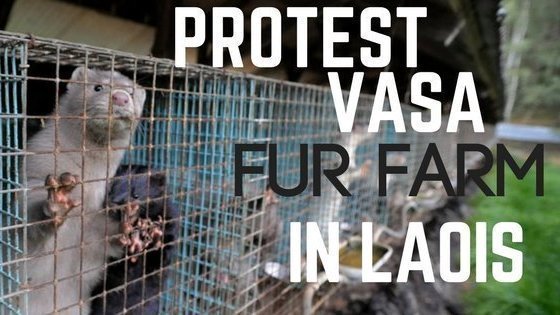
NOV 2, 2017 — A “Ban Fur Farming” demo will be held this Saturday 4th November, 11am to 2pm, outside ‘Vasa Ltd’ fur farm in Vicarstown, County Laois.
The protest is being organised by the National Animal Rights Association who point out that “over 50,000 mink are murdered on this farm every year – all for the sake of ‘fashion’.”
“These animals are suffering every single day, with no one to speak up for them,” NARA states. “Will you be their voice? Please join our campaign to shut down this hellhole once and for all!”
Footage filmed by ICABS at this fur farm – https://www.youtube.com/watch?v=BvX1O9GvsQ4 – shows mink desperately jumping against the bars of the cages that keep them permanenely trapped. After six months, the animals are dragged from the cages and gassed with Carbon Monoxide before the fur is pulled from their bodies. It’s time for the Irish Government to recognise the cruelty and ban this shameful industry.
Dear Minister Michael Creed / Taoiseach Leo Varadkar,
I support a total ban on fur farming and an immediate closure of Ireland’s fur farms.
In these hellholes, animals suffer a horrendous life of misery before being cruelly gassed to death. There is absolutely no justification for allowing this cruelty to continue.
Every Fourth of July and New Year’s Eve, Americans celebrate the birth of
our nation and the new year. Many people don’t realize the fireworks they
light or support by attending events promot…
KIRSCHNERSKORNER.COM
Every Fourth of July and New Year’s Eve, Americans celebrate the birth of
our nation and the new year. Many people don’t realize the fireworks they
light or support by attending events enable a harmful tradition that has no
place in a compassionate society.
When the fireworks end, here is the aftermath of their devastation:
1. *Increased reports of injuries and deaths to animals fleeing from
fireworks* (animals hit and killed by cars, birds flying into buildings,
and wild animals getting trapped, falling, and suffering from respiratory
ailments)
2. *Massive increases in stray animals at shelters* in the days that follow
as dogs and cats left outside often run and get lost
3. *Birds losing sight of their nests and never returning, leaving
offspring to starve to death*
4. *Frightened and sick domesticated animals*
Animals have much more acute hearing than humans. That’s one of the reasons
my dog used to shake uncontrollably, jump in the shower, and start digging
when he heard fireworks. This is him still hiding even after fireworks
ended because he was so scared.
Animal research indicates animals hear the sound of fireworks at twice the
decibel level as us—analogous to standing at the base of an airplane’s
engine as it takes off. *No form of entertainment can be worth subjecting
animals to such trauma. Take a moral stand. Refuse to attend any events
that light off fireworks. Animals should never suffer so people can
celebrate a holiday.*
A wolf is a highly intelligent and social sentient being. The amount of torture that trapped wolves are subjected to is immeasurable. Yet, despite massive public input in defense of wolves, the Montana state Fish, Wildlife and Parks Department (FWP) just added them to their long list of species that can be “lawfully” targeted by trappers. Ignoring record-breaking outcry, the FWP Commissioners have approved their wildlife agency’s extreme “bag limit” of two wolves tortured to death per trapper, in addition to the ones they’re already allowed to hunt. What this means is that each individual “sportsman” can legally kill THREE wolves – two by trapping and one by shooting.
Anyone who has seen the harrowing ordeal suffered by an animal caught in a leg-hold trap would be appalled and outraged that trapping is still legal in states like Montana. But trappers have no qualms about the cruelty they inflict. Just ask the vice president of the Montana Trappers Association:
“We trappers do cause pain and suffering to animals and apologize to no one.” Guys like this must have an over-inflated sense of entitlement to publically blurt out something this shallow, narcissistic and utterly absent of regret.
Not to suggest they’re psychopaths or anything, but grandiosity and the lack of remorse, guilt or empathy are all key traits of psychopathy…
If society were ever to practice pre-emptive incarceration based on a given person’s potential to do harm to others, trappers would be the first to go.
If you’re not happy about this, MONTANA’S GOVERNOR BRIAN SCHWEITZER would love to hear about it. He can be reached at: 406-444-3111 – or via Email: governor@mt.gov

/https://public-media.smithsonianmag.com/filer/d6/93/d6939718-4e41-44a8-a8f3-d13648d2bcd0/c3npbx.jpg)





 Exposing the Big Game
/https://public-media.smithsonianmag.com/filer/d6/93/d6939718-4e41-44a8-a8f3-d13648d2bcd0/c3npbx.jpg)