BANDA ACEH, Indonesia — A mother Sumatran tiger and her two cubs were found dead this week in a snare trap in Indonesia’s westernmost Aceh province.
Local people in Buboh, a village in South Aceh, discovered the tiger carcasses on Aug. 24 and reported them to authorities.
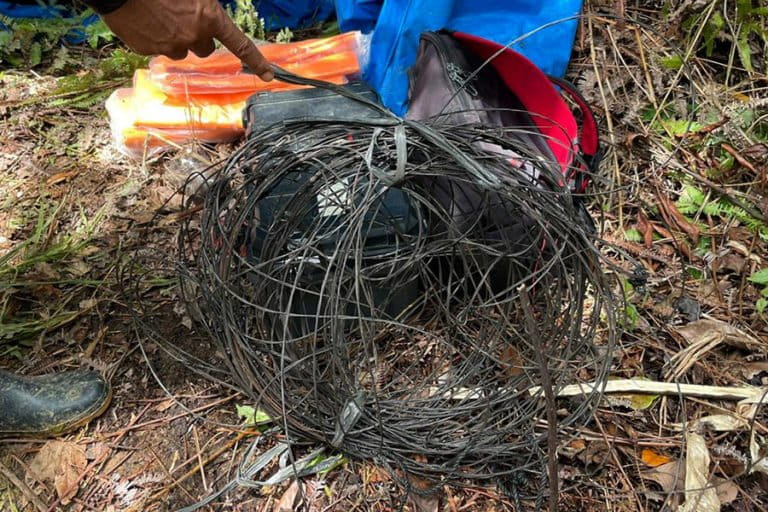
“The mother was entangled in the neck and left hind leg, while the left front leg was rotting,” Agus Irianto, the head of the Natural Resource Conservation Agency’s branch in Aceh, said on Thursday.
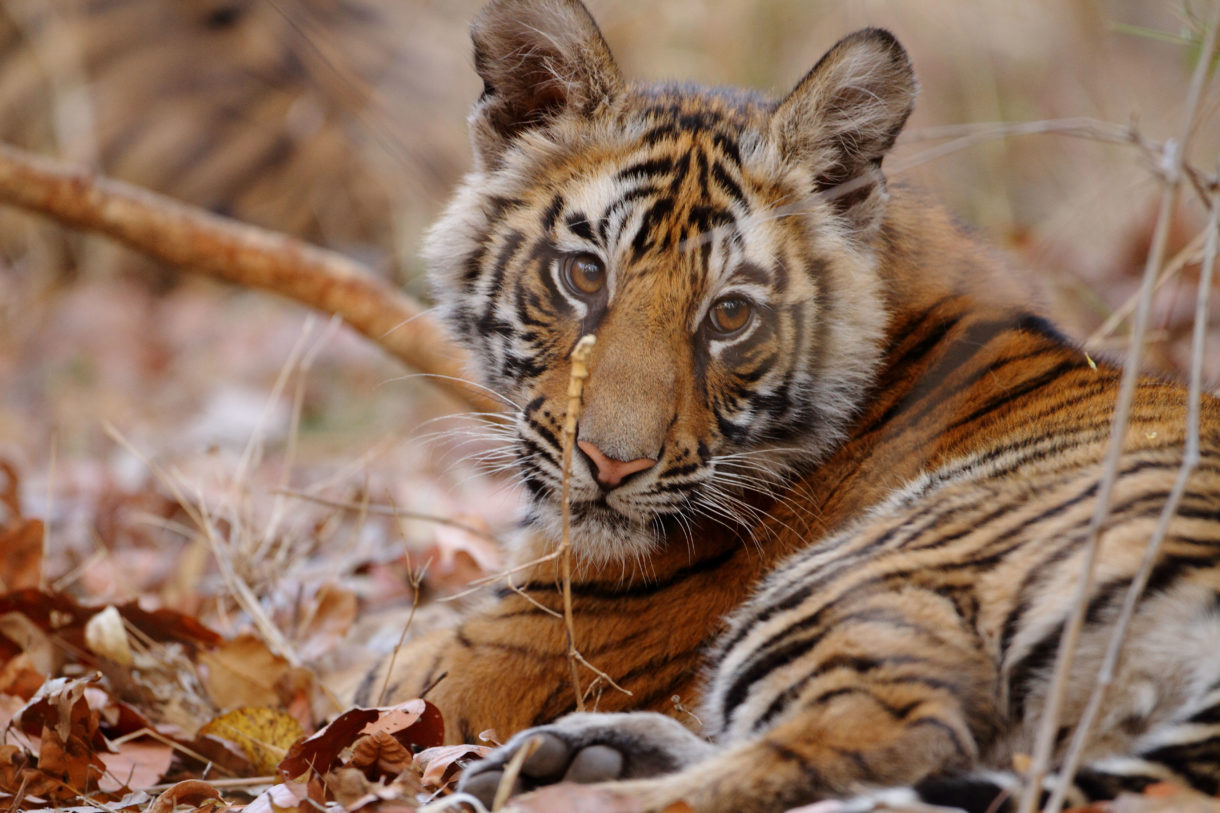
The Sumatran tiger (Panthera tigris sumatrae) is critically endangered, with only a few hundred thought to remain in the wild.
The species’ decline is largely due to the destruction of its rainforest habitat and poaching, with its body parts used in traditional Chinese medicine.
The incident follows the death of a female tiger in nearby Kapa Sesak village, also in South Aceh, in late June. It had apparently eaten a goat contaminated with poisonous chemicals.
Also this month, on Aug. 14, a male tiger, estimated to be seven or eight years old, was found dead in Pasaman, West Sumatra province.
The three dead tigers in Aceh. Image by Chandra.Steel wire from the snare traps in which the tigers were found. Image by Chandra.
Nevada, along with North Carolina, Oklahoma, Alabama and Wisconsin, are the only outliers without such a law, and that’s why we are excited to see the state finally move to pass one. Photo by Shivang Mehta/Alamy Stock Photo154SHARES
Nevada, one of the last remaining states without a ban on the ownership of exotic wild animals as pets, is now moving to pass a law to do exactly that.
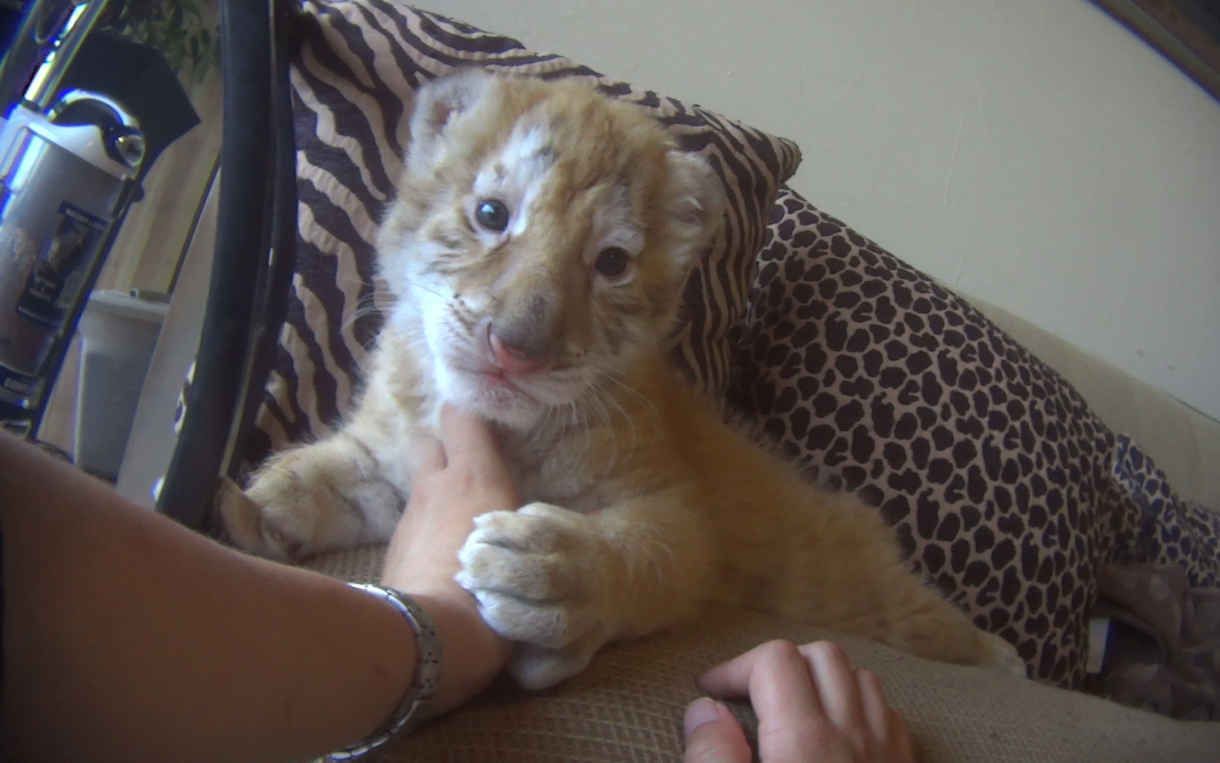
A bill, SB 344, recently passed the Senate and now awaits action in the Assembly. It would, among other measures, end the private ownership of animals like big cats, bears, hyenas, elephants, wolves and primates. The bill would also end the exploitation of wild animals, and particularly cubs, by unscrupulous roadside zoos and exhibits that offer up these animals for petting and photo ops.
As our investigations have revealed, animals in this industry are horribly mistreated. Jeff Lowe, one of the roadside zoo owners seen in the Netflix series “Tiger King,” smuggled tiger cubs into hotel rooms in Las Vegas for paying visitors to pet them and pose with them. The city eventually confiscated a tiger cub, a liliger cub (the hybrid offspring of a male lion and a female tiger) and a young lemur from him. The animals were underweight and suffering from several health conditions.
Ending such cruelty wherever it exists is an important priority for our organizations and to date 45 states have passed laws to protect citizens from those who exploit wild animals in this manner. Many of these states acted swiftly after one incident that remains raw in our nation’s collective memory: a suicidal man in Zanesville, Ohio, released nearly 50 big cats and other dangerous animals from his backyard menagerie in 2012, creating a major public safety hazard and a tragic situation for the animals who authorities were forced to shoot and kill.
Nevada, along with North Carolina, Oklahoma, Alabama and Wisconsin, are the only states with virtually no laws on this issue, and that’s why we are excited to see the state finally move to pass one. At the federal level, the Humane Society Legislative Fund is working to secure passage of the Big Cat Public Safety Act, which has been reintroduced in the House and Senate and previously passed the House. The bills would prohibit public contact with big cats like tigers, lions and leopards and ban keeping these animals as pets. Federal action is necessary because these animals may be moved across state lines for such activities.
The Nevada bill makes allowances for those who already own exotic animals as pets, permitting them to keep the animals so long as they meet some basic animal welfare and safety requirements, although they will be prohibited from acquiring new animals. Zoos and all U.S. Department of Agriculture licensed exhibitors can continue to keep animals like big cats, bears, etc., and can acquire more of these animals, but will be required to meet a few additional requirements, including creating emergency plans for the animals. The facilities should also have no USDA citations within the past three years for violations in which a dangerous wild animal’s health and well-being or the public safety was jeopardized.
These are commonsense requirements and ones most Nevadans support. Wild animals have very unique needs and suffer terribly at the hands of unqualified individuals. In the United States, wild animals have been found badly neglected and living in deplorable conditions in places ranging from junkyards to basements.
It often falls upon sanctuaries and animal protection organizations to clean up the mess these irresponsible owners create. Two years back, a tiger was rescued from a garage in Houston, and earlier this year authorities in San Antonio found a tiger cub freezing in a backyard during a historic winter storm. Both animals, Loki and Elsa, have since found forever homes at our Cleveland Amory Black Beauty Ranch. However, no organization has the capacity to continue rehoming the countless exotic pets that enter U.S. homes each day, and we need to tackle this problem at the root, by preventing irresponsible breeding and ownership.
Captive exotic animals also create a major problem for law enforcement authorities. In Nevada, for instance, in a well-publicized incident in 2012, a male and female chimpanzee escaped from a backyard cage in a residential neighborhood after the male chimpanzee ripped the cage from the concrete and then broke through a padlocked gate. Police responded to emergency calls with more than 20 squad cars as the chimpanzees ran amok, climbing into cars, pounding on vehicles, and banging on windows of homes. The male chimpanzee was shot and killed when he darted toward a crowd of onlookers.
There should be no debate over this issue: chimpanzees, elephants, tigers, leopards and wolves are not pets and they do not belong inside someone’s basement or garage or backyard. If you live in Nevada, please urge your lawmakers to pass SB 344 and get this law on the books without delay. It is time we stop this abuse for good, in Nevada and everywhere it exists.
The tigers, both female and about 18 months old, escaped from Sinka Zoo in the town of Singkawang, West Kalimantan late Friday after days of torrential rain caused a landslide and opened a tunnel allowing their exit.
A 47-year-old zookeeper was found dead with scratches and bite wounds on his body.
Authorities also found dead a cassowary, ostrich and monkey near the tiger cage.
Police and conservation officials were immediately dispatched to search for the tigers.
Nearby tourism attractions were ordered to close and locals were told to stay at home while police searched for the animals.
“We tried with a tranquilliser gun first but it didn’t work, so we were forced to shoot the tiger because it was already behaving very aggressively,” Sadtata Noor Adirahmanta, the head of a local conservation agency, told AFP.
“We were afraid it would escape to the nearest neighbourhood. Although we tried our best to catch it alive, our priority is humans’ safety,” he added.
Authorities are still looking for the other tiger in the jungle surrounding the zoo.
A cage with animal prey inside has been prepared in hope the escaped tiger will return to the zoo at her feeding time.
Sumatran tigers are considered critically endangered by the International Union for Conservation of Nature, with fewer than 400 believed to remain in the wild.
Tiger parts are widely used in traditional medicine — particularly in China — despite overwhelming scientific evidence they have no beneficial value.
MUSKOGEE, Okla. (AP) — A federal judge in Oklahoma has ordered the new owners of an Oklahoma zoo featured in Netflix’s “Tiger King” documentary to turn over all the lion and tiger cubs in their possession, along with the animals’ mothers, to the federal government.
U.S. District Judge John F. Heil III issued the order last week in the case against Jeffrey and Lauren Lowe and the Greater Wynnewood Exotic Animal Park based on claimed violations of the Endangered Species Act and the Animal Welfare Act.
“The Lowes have showed a shocking disregard for both the health and welfare of their animals, as well as the law,” said Acting Assistant Attorney General Jonathan D. Brightbill of the Justice Department’s Environment and Natural Resources Division.
Jeffrey Lowe’s attorney, Daniel Card of Oklahoma City, didn’t immediately respond to a message seeking comment.
The Lowes took over operations of the zoo, which was previously run by Joseph Maldonado-Passage — also known as Joe Exotic — and featured in Netflix’s “Tiger King: Murder, Mayhem and Madness.”
Maldonado-Passage is serving a 22-year sentence in a Fort Worth, Texas, federal prison for his conviction on charges that he participated in a murder-for-hire plot and violated federal wildlife laws. Maldonado-Passage has formally requested a pardon from outgoing President Donald Trump.
The new owners of an Oklahoma zoo featured in the hit Netflix documentary Tiger King have been ordered to surrender all tiger cubs and their mothers to the federal government.
The case was filed against Jeff and Lauren Lowe, owners of the Greater Wynnewood Exotic Animal Park.
They are accused of violating the Endangered Species Act and the Animal Welfare Act.
Mr Lowe is the former business partner of Joe Exotic, star of the hit show.
Exotic, real name Joseph Maldonado-Passage, is currently serving a 22-year sentence for his involvement in a contract killing plot and animal abuse.
“The Lowes have showed a shocking disregard for both the health and welfare of their animals, as well as the law,” said the acting assistant attorney general Jonathan D Brightbill of the Justice Department’s environment and natural resources division.
Both Jeff and Lauren Lowe appeared in Tiger King.
The court found that the pair’s “failure to provide safe conditions, proper nutrition, and timely veterinary care resulted in harm to a number of animals, including the death of two tiger cubs less than a week apart”.
The court rejected claims by the Lowes that they were not “exhibitors” under the Animal Welfare Act as the zoo was still under construction.
Joe Exotic has formally requested a pardon from US President Donald Trump, who is expected to pardon dozens of people in his final hours in office.
Americans today are more aware than ever before about the horrors that big cats endure in captivity at the hands of exhibitors and roadside zoo owners. Photo by the HSUS236SHARES
A bill that would prohibit public contact with big cats like tigers, lions and leopards and ban the possession of these animals as pets was swiftly reintroduced in the U.S. House today, suggesting that the measure is poised for early action in Congress.
The Big Cat Public Safety Act had already passed the House in the last Congress with nearly two-thirds of members supporting it but the session ended before it could be taken up by the Senate. It was reintroduced today by Reps. Michael Quigley, D-Ill., and Brian Fitzpatrick, R-Penn, the original sponsors of the bill, and we will be working with all of our might to ensure it becomes law.
Americans today are more aware than ever before about the horrors that big cats endure in captivity at the hands of exhibitors and roadside zoo owners like Joe Exotic, Tim Stark, Kevin “Doc” Antle and Jeff Lowe. Cub-petting activities offered by these ramshackle operations provide baby tigers, lions and other big cats for the public to pet, feed, play with and be photographed with. Some exhibitors haul big cat cubs to fairs, festivals, shopping malls and other random venues and charge people to interact with the babies.
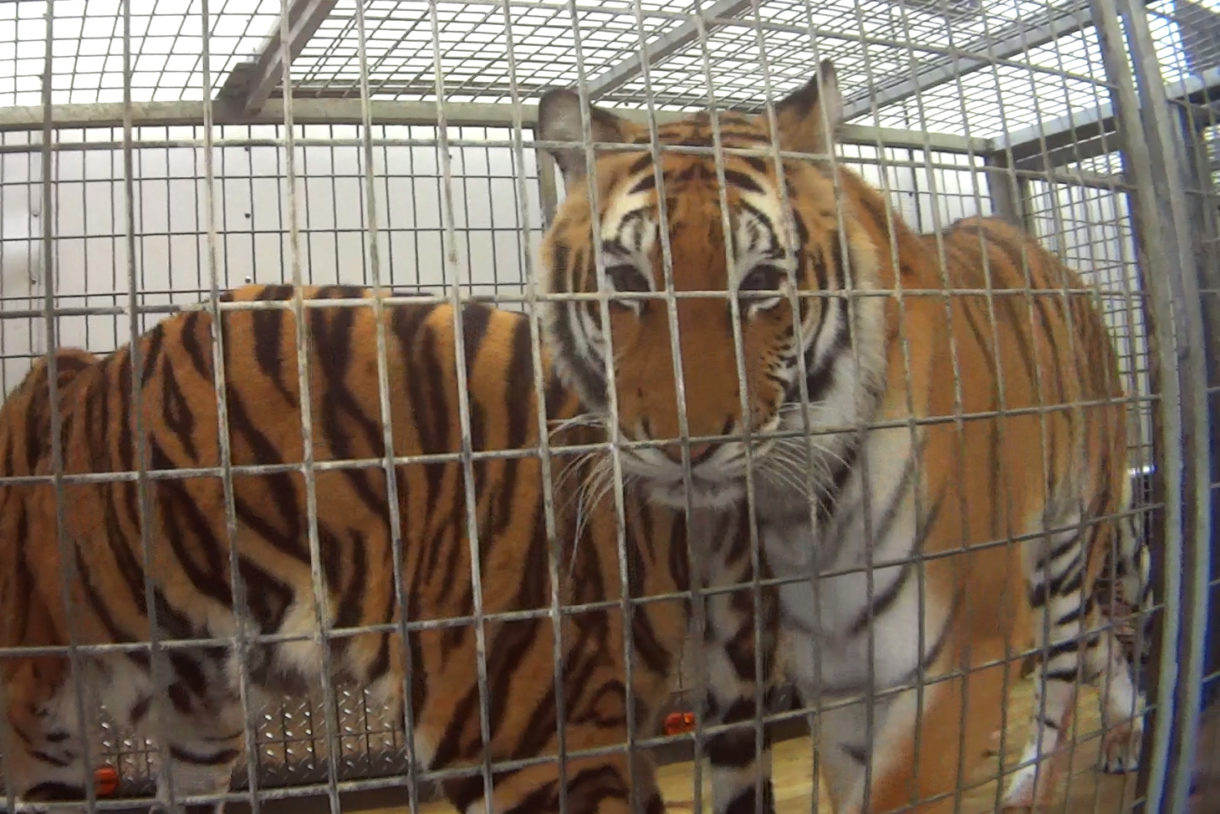
As Humane Society of the United States undercover investigations have revealed, these practices inflict cruelty and suffering on so many levels. Tigers are bred continually in order to provide a steady supply of infants. The cubs are torn from their mothers at birth. They are fed irregularly, constantly woken from their sleep, and physically abused when they resist being endlessly handled. When the cubs reach three to four months of age and are too big for public contact, they are typically warehoused at roadside zoos or pseudo sanctuaries, or sold as pets to make way for more infant cubs. This constant cycle of breeding and dumping big cats is why we have such a large surplus of captive big cats in the United States.
Conservationists have also long feared that tigers discarded from the cub petting industry may be feeding the illegal market for animal parts used in traditional Asian medicine.
The pandemic has provided yet another reason to ban cub petting. The coronavirus has been found in tigers, lions and snow leopards in captivity, leading the U.S. Department of Agriculture to issue a rare advisory to big cat exhibitors to discontinue hands-on encounters with wild cats in the interests of public safety and animal welfare.
There is neither doubt nor debate among a majority of Americans that we need the Big Cat Public Safety Act to become law. This is commonsense legislation and it is long overdue. No one needs a pet tiger or lion in their backyard or garage, and no one needs to take a selfie with one, especially at such tremendous cost to the animals and at such risk to human and animal safety. Please join us in urging your U.S. Representative to cosponsor and push for the passage of this bill without delay.
Sara Amundson is president of the Humane Society Legislative Fund.
By Shreya | Updated: Saturday, December 19, 2020, 12:43 [IST] Jaipur, Dec 05: The Forest department of the Rajasthan government on Saturday sounded a ”Red Alert” at all reserves, sanctuaries and parks in the state as incidents of hunting, poaching and animal traps have come to the fore. The order comes against the backdrop of a camera trap footage showing a Ranthambore tiger, T-108, with a wire snare around its neck. Representational Image Under the ‘Red Alert’, all forest officials have been directed to intensify search operations and seek local police assistance to nab hunters and criminals. International Tiger Day 2020: India has 70 per cent of global tiger population The department has cancelled leaves of all field officers, and directions have been issued for effective patrolling against illegal activities in protected areas. The order said reports had earlier been received from Ranthambore Tiger Reserve about animals such as cows and buffaloes getting caught in traps laid by hunters. “Recently, five hunters were arrested in Mount Abu for hunting a sambar deer, looking to which red alert is announced till February 2021,” it stated. The sub-adult Ranthambore tiger T-108 was spotted twice on camera traps – 12.50 am on Thursday and 6 am on Saturday – with a wire around his neck which looks like a trap. The department sought a permission to tranquillise the big cat from the NTCA on Friday. The tiger was tranquillised at 11 am on Saturday, and released in the wild at 11.45 am after removing the wire, officials said.
It’s all too likely that tigers discarded from cub petting feed the illegal market for animal parts used in traditional Asian medicine. Photo by the HSUS2.4KSHARES
The U.S. House has just passed a bill to prohibit public contact with big cats like tigers, lions and leopards as well as ban the possession of these animals as pets. The measure, which now awaits action in the Senate, has the potential to stop the endless cycle of breeding tiger cubs by those who charge the public to pet and take photos with the animals.
The Big Cat Public Safety Act, H.R. 1380, passed the House tonight by a vote of 272 to 114 (with 45 members not voting). Introduced by Reps. Michael Quigley, D-Ill., and Brian Fitzpatrick, R-Penn., it gathered momentum after the release of Netflix’s “Tiger King” series about notorious roadside zoo owner Joe Exotic, who bred big cats and charged the public to pet and take selfies with the cubs.
The series also featured other roadside zoo owners, including Tim Stark, Kevin “Doc” Antleand Jeff Lowe—all poster boys for why we desperately need the Big Cat Public Safety Act. Together, these men have been responsible for terrible and senseless cruelties against captive big cats in their care, including shooting tigers to death to make room for new big cats, beating a leopard to death with a baseball bat, and causing long-lasting physical and psychological harm to cubs by separating them from their mothers.
But they are hardly the only ones exploiting captive big cats in the United States; there are many more exhibitors around the country, including some we have investigated, who recklessly breed these animals and/or use baby tigers and lions for the public to feed, pet, play with, and take photos with. The animals’ own essential needs and wellbeing are typically ignored and they are physically abused when they resist being handled endlessly.
By the time the cubs are three to four months old and are too big for public contact, they are usually warehoused at roadside zoos or pseudo sanctuaries, or sold as pets. It’s all too likely that tigers discarded from cub petting also feed the illegal market for animal parts used in traditional Asian medicine.
In addition to ending this cycle of abuse, the Big Cat Public Safety Act will prohibit the private possession of big cats. Many will remember the 2011 incident in Zanesville, Ohio, when a mentally disturbed man set loose his menagerie of 50 wild animals before committing suicide. Authorities were forced to shoot and kill the animals, including dozens of big cats. It was a grim reminder of the severe public safety risks involved in allowing unqualified individuals to own dangerous wild animals as pets.
Since 1990, more than 400 dangerous incidents involving captive big cats have occurred in 46 states and the District of Columbia. Twenty-four people have been killed, including five children, and hundreds have been injured, with some even losing limbs or suffering other often-traumatic injuries. In many cases, as in Zanesville, the animals are shot and killed, often by first responders not trained to deal with such situations.
Thirty-five states now prohibit keeping big cats as pets. But to wipe this problem out for good, we need strong federal laws that will prevent unscrupulous people from forcing wild animals to spend their entire lives in abject misery while creating a public safety nightmare. We have supported the Big Cat Public Safety Act since its inception and we couldn’t be happier that the House has voted decisively to stop the abuse. We now urge the Senate to take up this bill without delay. Please join us in urging your U.S. Senators to cosponsor and push for the passage of S. 2561. No one needs a pet tiger or lion in their backyard or garage, and no one needs to take a selfie with one, especially at such tremendous cost to the animals. It’s time we stopped this madness for good.
Sara Amundson is president of the Humane Society Legislative Fund.
Footage captured at a zoo in Beijing, China shows a captive tiger walking in endless circles in his enclosure. A staff member told reporters that this type of behavior is actually common for animals who have been staying at the zoo for a long time.
Representatives with the zoo say that the Bengal tiger was later given “psychological counseling” after zookeepers noticed the strange behavior. However, the so-called “psychological counseling” that the animal was given did not seem very professional.
“We have taken the animal to receive behavior training. We also brought more food and toys for the tiger. It’s like “psychological counseling”,’ a zookeeper told reporters.
When tigers are in the wild, they usually cover a lot of ground and do a lot of exploring in their day to day activities, and that is what their instincts tell them to do.
Sun Quanhui, a senior scientific adviser at a non-profit organization called World Animal Protection China told the South China Morning Post that this is a common problem in Chinese zoos.
“Let’s just give the example of how beasts of prey are kept. In almost every Chinese zoo, we see them in cement cages or behind steel bars, which to some extent is considered maltreatment. Some are species that naturally live in groups, but they’re often isolated, which also causes them huge psychological distress.” Quanhui said.
Tigers are listed as Endangered on the IUCN Red List since 1986. As of 2015, the global wild tiger population was estimated to number between 3,062 and 3,948, but the number in captivity is far higher.
This month, a judge ruled in favor of Baskin’s Big Cat Rescue in her suit against the Greater Wynnewood Development Group, LLC, the company Joe Exotic once owned, giving her control of the G.W. Zoo in Oklahoma.
“While we again acknowledge it is truly time to pray for justice for George Floyd’s family as well as an end to systemic racism in America, we must address Carol [sic] Baskin’s treachery before it goes unchecked,” a tweet from an account run by Maldonado-Passage’s management team read.
His team released a longer statement on the website “Help Free Joe,” in which the “Joe Exotic Team” said it “prays for justice for George Floyd’s family as well as an end to systemic racism in America.”
A few lines later, the statement said Maldonado-Passage’s legal team is filing appeals while his media team drums up public support.
CNN has reached out to Maldonado-Passage’s attorney for comment and is waiting to hear back.
The court order that awarded Baskin control of the G.W. Zoo gives her 16 acres of land in Garvin County, Oklahoma, as well as several cabins and vehicles, court records show.
The zoo’s current owner, “Tiger King” supporting player Jeff Lowe, must vacate the premises within 120 days of the order and remove all the animals, too.
Lowe’s attorney told CNN that the judgment wasn’t unexpected, and Lowe’s currently focused on opening a new “Tiger King” park within the next 120 days.
CNN’s Jennifer Henderson and Hollie Silverman contributed to this report.
This month, a judge ruled in favor of Baskin’s Big Cat Rescue in her suit against the Greater Wynnewood Development Group, LLC, the company Joe Exotic once owned, giving her control of the G.W. Zoo in Oklahoma.
“While we again acknowledge it is truly time to pray for justice for George Floyd’s family as well as an end to systemic racism in America, we must address Carol [sic] Baskin’s treachery before it goes unchecked,” a tweet from an account run by Maldonado-Passage’s management team read.
His team released a longer statement on the website “Help Free Joe,” in which the “Joe Exotic Team” said it “prays for justice for George Floyd’s family as well as an end to systemic racism in America.”
A few lines later, the statement said Maldonado-Passage’s legal team is filing appeals while his media team drums up public support.
CNN has reached out to Maldonado-Passage’s attorney for comment and is waiting to hear back.
The court order that awarded Baskin control of the G.W. Zoo gives her 16 acres of land in Garvin County, Oklahoma, as well as several cabins and vehicles, court records show.
The zoo’s current owner, “Tiger King” supporting player Jeff Lowe, must vacate the premises within 120 days of the order and remove all the animals, too.
Lowe’s attorney told CNN that the judgment wasn’t unexpected, and Lowe’s currently focused on opening a new “Tiger King” park within the next 120 days.



 © JUSTIN SULLIVAN Sumatran tigers are considered critically endangered by the International Union for Conservation of Nature, with fewer than 400 believed to remain in the wild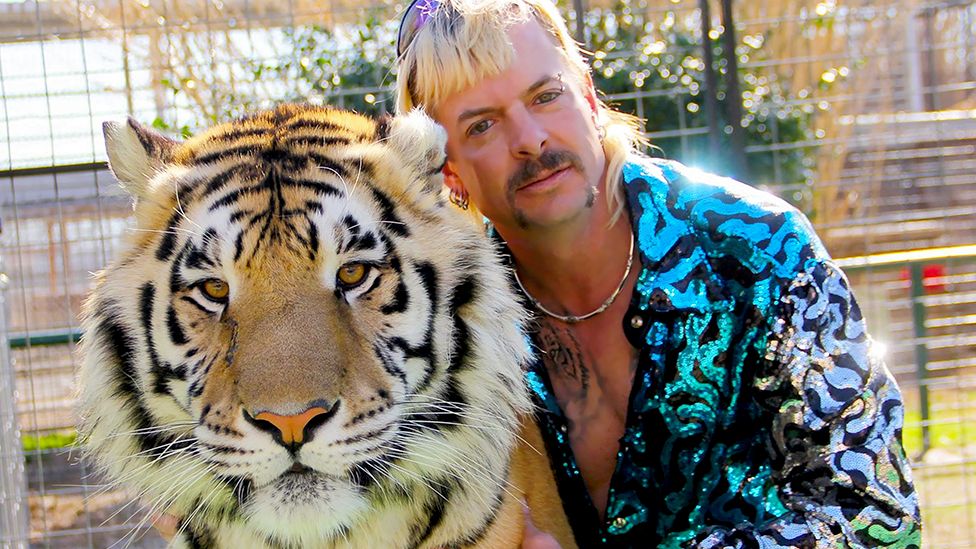

 Exposing the Big Game