Exposing the Big Game

Forget Hunters' Feeble Rationalizations and Trust Your Gut Feelings: Making Sport of Killing Is Not Healthy Human Behavior

Exposing the Big Game

COVID-19 kills Roy Horn, 75, of Siegfried & Roy, role model for “Joe Exotic”

https://www.animals24-7.org/2020/05/09/covid-19-kills-roy-horn-75-of-siegfried-roy-role-model-for-joe-exotic/?fbclid=IwAR1Eok8KbDUwI2AlUyoLj_2POsfhyEx0RQ8JpQUT3cZVjpErQALTaqZuLYc

Roy Horn & white tiger Mantecore.
(Beth Clifton collage)

Manicured image as “positive reinforcement” trainer & conservationist was,  like the Siegfried & Roy show,  largely illusory

            LAS VEGAS––Entertainer Roy Horn,  75,  whose illusion acts with longtime partner Siegfried Fischbacher famously featured white tigers,  pythons,  and elephants,  died on May 8,  2020 in Las Vegas,  his home for nearly 50 years,  from complications of COVID-19.

Siegfried & Roy show publicist Dave Kirvin told media that Horn died at the Mountain View Hospital in Las Vegas about a week after testing positive for COVID-19 infection.

Performing together since 1959,  Siegfried & Roy were the evident inspirations for a generation of white tiger breeders,  exhibitors,  and would-be media stars,  including “Joe Exotic” and “Doc” Antle,  featured in the six-part March/April 2020 Netflix “reality” series Tiger King:  Murder,  Mayhem,  & Madness,  directed by Eric Goode and Rebecca Chaiklin.

Roy Horn and Siegfried Fischbacher

Tiger act bought $10 million home in Las Vegas

Siegfried & Roy “toured Europe,  Japan and other venues,”  recalled New York Times obituarist Robert D. McFadden,  “ and were featured in a 1999 3D Imax movie, a 1994 television special,  and at Radio City Music Hall in New York.  They broke records for the longest-running act in Las Vegas,  and were among the most popular and highest paid performers on the Strip. They also wrote a book,  Siegfried & Roy: Mastering the Impossible (1992).

“Horn and Fischbacher,”  McFadden wrote,  “who were domestic as well as professional partners,  kept their menageries,  including dozens of exotic cats,  at a glass-enclosed tropically forested habitat at the Mirage [hotel and casino];  at Jungle Paradise,  their 88-acre estate outside of town;  and at Jungle Palace,  their $10 million Spanish-style home in Las Vegas.”

McFadden recalled that Horn and Fischbacher,  “acknowledging that their acts depended on some endangered species,  were prominent in various animal conservation efforts,  particularly for the white tiger,  native to Asia,  and the white lion of Timbavati,  in South Africa.  They raised many of their show animals from birth,  and said they were not exploited and were never tranquilized.”

Exhibit A for banning white tiger & lion breeding

But animal advocates,  while conceding that Horn and Fischbacher may have treated their animals much more kindly than most animal-using entertainers,  tend to have viewed those “conservation efforts” as mostly eyewash,  meant to burnish the Siegfried & Roy show image.

A nine-member coalition,  headed by People for the Ethical Treatment of Animals,  on May 19,  2017 formally petitioned the USDA Animal & Plant Health Inspection Service to initiate the federal rulemaking process to make breeding either white tigers or lion/tiger hybrids,  as Siegfried & Roy did to maintain their menagerie,  a violation of the Animal Health Protection Act of 2002 and the Animal Welfare Act of 1966.

Charged the petitioners to the USDA,  which has yet to act in response,  “Despite the known risks and lack of conservation value associated with breeding to create white tigers,  exhibitors like Siegfried & Roy continue to mislead the public into believing that they are a rare subspecies rather than a genetic anomaly.  Siegfried & Roy have had as many as 58 white tigers in their inventory at one time.  The pair continue to breed to create white tigers for exhibition at Siegfried & Roy’s Secret Garden at the Mirage in Las Vegas.”

(Beth Clifton collage)

Petition spotlighted “Joe Exotic” years before Netflix

The PETA-led petition to the USDA also described the activities of many other white tiger and lion/tiger hybrid breeders.

“In Oklahoma,  exhibitor Joe Schreibvogel,”  also known as Joseph Maldonado and now as Tiger King star ‘Joe Exotic,’  “sells white tigers,  ligers,  liligers,  and tiligers to private owners and exhibitors all over the country,”  the petition to the USDA alleged.

U.S. District Court Judge Scott Palk on January 23,  2020 sentenced “Joe Exotic” to serve 22 years in prison for having solicited the murder of Big Cat Rescue founder Carole Baskin in 2018.

Convicted of the murder plot in April 2019,  “Joe Exotic” was convicted at the same time of nine counts of violating the Endangered Species Act,  by shotgunning five tigers in October 2017 and by illegally offering tiger cubs for sale between November 2016 and March 2018.

The PETA-led petition also spotlighted “Bhagavan ‘Doc’ Antle,  also featured in The Tiger King,  whose South Carolina roadside zoo,  like the facilities formerly owned by “Joe Exotic,”  has a long history of Animal Welfare Act violations.

“Antle takes his experiments to a whole new level,”  the petitioners charged,  “by breeding to create hybrid white ligers.”

Roy Horn & his mother, circa 1950.

Siegfried & Roy act originated in post-World War II Germany

Horn and Fischbacher,  by contrast,  have been widely credited with helping to popularize “positive reinforcement” animal training,  but may also have done more to popularize and promote traffic in white tigers,  developing the market served by “Joe Exotic,”  Antle,  and others,  than all previous white tiger breeders combined.

Wrote McFadden,  “Roy Uwe Ludwig Horn was born on October 3,  1944,  in  Nordenham,  Germany,  near Bremen.  Like Fischbacher,  who was five years older and raised in Rosenheim,  a village in Bavaria,  Horn grew up in the turmoil of wartime and postwar Germany. While Fischbacher was drawn to magic,  Horn was taken with animals,  including his wolf-dog Hexe, and a cheetah,  Chico,  at a zoo in Bremen where the boy took an after-school job feeding animals and cleaning cages.”

Horn,  at age 13,  in 1957 became a cabin boy on a German cruise ship.

Roy Horn (left) with Chico the cheetah and Siegfried Fischbacher, 1966.

Cheetah named Chico

Continued McFadden,  “Fischbacher,  a steward,  was entertaining passengers with magic tricks,  and Horn caught his act.”

Recalled Horn to interviewers many years later,  “I told Siegfried if he could make rabbits come out of a hat,  why couldn’t he make cheetahs appear?”

Horn eventually smuggled the cheetah Chico aboard the ship in a laundry bag.  Siegfried developed an illusion routine featuring Chico,  performed at a variety of venues in Germany and Switzerland before mostly small crowds until in 1966 Princess Grace of Monaco saw them at a charity performance in Monte Carlo “and gave them a rave notice,”  recounted McFadden.

“A rush of publicity ensued.  Adding animals and tricks,  they were soon playing nightclubs in Paris and other European cities.  They made their Las Vegas debut at the Tropicana in 1967,”  McFadden continued,  “and by the early 1970s,  having made Las Vegas their base,  they were under contract at the MGM Grand.”

Money made the tigers go around

Moving to the Frontier Hotel in 1981, Siegfried & Roy during the next seven years performed before three million people there.

“In 1987,”  McFadden summarized,  “they signed a five-year $57.5 million contract with Steve Wynn,  owner of the planned $640 million Mirage casino-hotel,  a deal Variety called the largest in show business history.  It included $40 million more for a new theater for the show,”  plus the $18 million Secret Garden animal habitat.

Headliners at the Mirage from 1990 to 2003,  adding white tigers to the act in 1995 after purchasing a pair from the Cincinnati Zoo,  Siegfried & Roy at peak performed before 400,000 people a year,  generating $44 million in revenue.

Former Siegfried & Roy trainer Chris Lawrence was onstage with Roy Horn during 2003 attack.  (NBC News photo)

Birthday attack stopped the show

That ended abruptly on Horn’s 59th birthday in 2003.  Midway through a solo show with a seven-year-old white tiger named Mantecore,  the tiger refused to lie down on command.  Horn rapped Mantecore on the nose with his microphone.  Mantecore swiped at Horn’s arm.  Horn stumbled.  Mantecore seized Horn by the neck,  crushing his windpipe,  and dragged Horn off stage as Horn tried to beat him away with the microphone.

Forced to suspend the Siegfried & Roy shows,  the Mirage laid off 267 workers,  but continued to house the Siegfried & Roy animals,  including Mantecore,  at the Secret Garden.

Horn and Fischbacher contended that Mantecore “had been unhinged by a woman in the front row with a beehive hairdo,”  McFadden recalled,  and after Horn tripped,  “picked him up by the neck,  as a tigress might a cub,  attempting to carry him to safety.”

The USDA Animal & Plant Health Inspection Service,  however,  “discounted all such theories and called it a simple attack by the tiger,”  McFadden noted.

A white tiger at Big Cat Rescue.  (Beth Clifton photo)

“Treating the cats like props”

Former Siegfried & Roy trainer Chris Lawrence,  46,  in March 2019 gave a different explanation to The Hollywood Reporter.

“Many of the handlers thought that Roy was treating the cats more like props than he was respecting them for who they were,”  Lawrence told The Hollywood Reporter.

Lawrence claimed that he himself “actually talked Roy into using the tiger that would ultimately maul him and end the most successful stage show in the history of Las Vegas.”

Said Lawrence,  “What Roy did was,  instead of walking Mantecore in a circle,  as was usually done,  he just used his arm to steer him right back into his body,  in a pirouette motion.  Mantecore’s face was right in (Horn’s) midsection.  Roy not following the correct procedure fed into confusion and rebellion.”

Lawrence tried unsuccessfully to lure Mantecore away from Roy with raw meat,  but was knocked down,  along with Roy.

Bengali the tiger keeps on coming, with a red rubber ball rising like the morning sun behind him.  (Carole Baskin photo)

Oldest Siegfried & Roy tiger died at Big Cat Rescue

Siegfried & Roy,  with Mantecore,  performed only once more together,  for a cancer charity benefit in 2009.

Wrote Las Vegas Review-Journal reporter Mike Weatherford then,  “Siegfried Fischbacher and Horn were trying to figure out when and how to bow out gracefully even before the accident that put an abrupt end to their show.  The Mirage hit had been running for thirteen and a half years and 5,750 performances.  Horn had just celebrated his 59th birthday. Fischbacher had already passed 60.”

Mantecore died on March 19,  2014,  at age 17––old for a tiger,  but not nearly the oldest of the tigers Siegfried & Roy bred.

That tiger,  21 or 22 years of age,  either way one of the half dozen oldest tigers on record,  and one of two tigers within that elite half dozen to share the name Bengali,  died on May 31,  2016 at Big Cat Rescue on the outskirts of Tampa,  Florida.  Siegfried & Roy had sold him to a circus.  The circus retired him to Big Cat Rescue in 2000.  

(Beth Clifton collage)

Another former Siegfried & Roy tiger,  Sarmoti,  acquired at the same time,  died at Big Cat Rescue at age 20 in 2013.

Sarmoti,  Big Cat Rescue founder Carole Baskin told ANIMALS 24-7,  “is an acronym for Siegfried And Roy, Masters Of The Impossible.”

         (See A tale of two of the world’s oldest tigers, both named Bengali.)
Please help us continue our work for animals: 

http://www.animals24-7.org/donate/

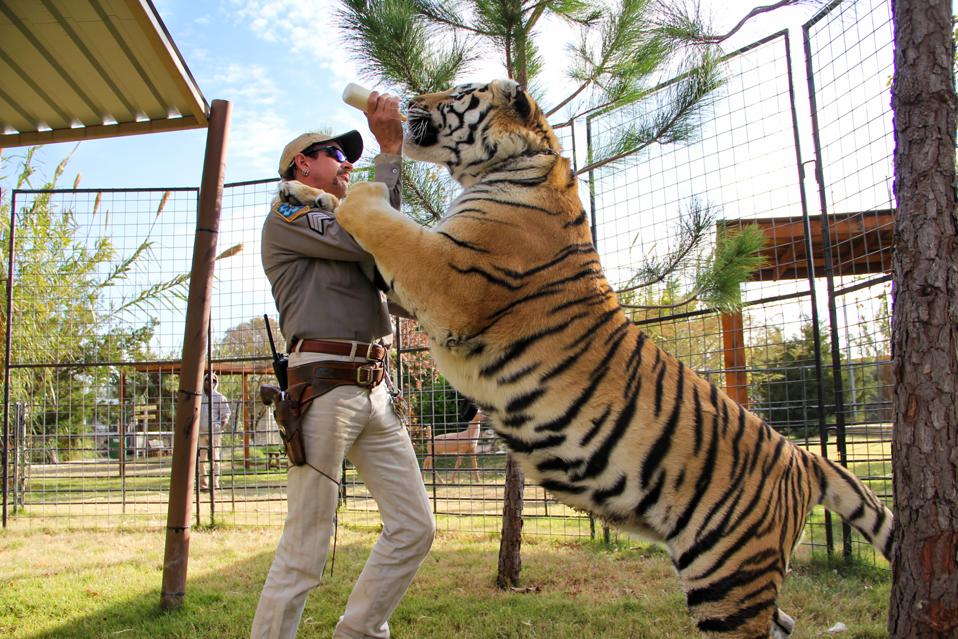
Joe Exotic killed over 100 tigers and would hit cubs if they misbehaved, reveals head zookeeper

Erik Cowei, the head zookeeper at Greater Wynnewood Exotic Animal Park, said that Exotic once killed eight tigers in a single day

https://meaww.com/joe-exotic-killed-tiger-king-hit-cubs-if-they-misbehaved-erik-cowie-head-zookeeper-netflix


                            Joe Exotic killed over 100 tigers and would hit cubs if they misbehaved, reveals head zookeeper(Netflix)

A former employee of Joe Exotic has revealed that the 57-year-old killed over 100 tigers, would hit cubs if they misbehaved, and feared most of his big cats while running the Greater Wynnewood Exotic Animal Park. Erik Cowie, the head zookeeper at the animal park — which is being run by a different owner — said that the tigers hated Exotic so much that “several of the big cats would have eaten him alive if given the chance.”

“Joe would often brag about being in a cage with 16 tigers, but in reality, it was more like two or three of them. I would take the mean ones out of the cage, the cats who didn’t like him,” Cowie told DailyMailTV.

He added, “There was a liger and we used to use Joe as bait in order to get her out of its cage, this big cat would try to attack Joe every time she saw him.” Liger is a hybrid offspring of a male lion and a female tiger.

Joseph Allen Maldonado-Passage, better known as Joe Exotic, is the central character of Netflix’s hit docuseries ‘Tiger King: Murder, Mayhem and Madness’. He is currently serving a 22-year sentence for plotting to kill animal rights activist Carole Baskin in 2017 and for more than a dozen wildlife violations, including killing five tigers.

However, in reality, he killed more than 100 tigers, according to Cowie.

He also recalled how Exotic was excited after killing five big cats to make space for other animals at the zoo as he told him, “Damn, Erik if I only knew it was going to be that easy.”

Cowie also shared that once Exotic killed a 27-year-old Siberian tiger named ‘Cuddles’ just because he was getting old. And once the central character of the Netflix original killed eight tigers in a single day. “They euthanized them and had a veterinarian sign off on them with excuses like they were too old, sick, etc. Most of the time a veterinarian wasn’t even around when things like that would happen, but he would write it down on a log, so he could be covered in case government inspectors wanted to check his books,” he alleged.

Cowie said Exotic was never emotionally attached to the animals as he didn’t spend enough time with them “to truly bond with them”, and that towards the end, he was too busy campaigning for governor or president.

“Joe only cared about them in a monetary way,” Cowie said, while mentioning a particular lion that used to hate Exotic so much it “would try to chew through the cage to get at him.”

“I learned a lot from Joe, mostly on not what to do,” he added.

In his interview, Cowie also disclosed that Exotic would hit cubs if they misbehaved with the zoo guests. “For one reason or another, a cub would become unruly so Joe would take the baby cub out of view of the people at the zoo and pop the cub in the nose and bring it back out,” he said, adding that this ruthless behavior made his job more difficult. “I then had to deal with a baby cub who had just been popped in the nose and then make sure it wouldn’t act up and bite some older women or child,” he said.

Cowie said that Exotic tried to keep his inumane behavior a secret by never allowing zoo guests to bring cameras. He had ordered his employees to check the guests’ belts to ensure they were not carrying any hidden camera as he feared PETA would send in a spy to get evidence against him.

“These animals trusted me and I let some of them down, for that I’ll never forget,” Cowie said, adding he regrets not revealing the truth earlier about Exotic killing over 100 cats.

“I love these animals dude. I’d sooner put myself under a bus than leave these animals. These animals are my children. They are the only reason why I’m out here. I’m just a guy who picks up poop with his hands and I’m good at cutting up cows to feed to the tigers,” said Cowie, who has been working at the park for eight years and wants to continue doing so.

However, his body is not cooperating with him in doing his dream job. “It’s a young man’s job, I’m old and my body has suffered because of it,” Cowie explained.

He also shared the since Exotic is not anymore the owner of the zoo, animals are doing well. The Oklahoma zoo, which has currently 117 tigers, is now taken care of by a new owner, Jeff Lowe.

‘Tiger King’ star Joe Exotic had sex fetishes, ordered burial of protesters at zoo, Jeff Lowe claims

aldonado-Passage, also known as “Joe Exotic,” had kinky sex fetishes and once ordered employees to bury the bodies of two protesters at his former zoo, current owner Jeff Lowe claims in a new interview.

Lowe assumed ownership of the Greater Wynnewood Exotic Animal Park in Oklahoma following Maldonado-Passage’s run in 2019. The Netflix series’ boisterous star is now serving 22 years behind bars for a failed murder-for-hire plot on his rival, Big Cat Rescue CEO Carole Baskin.

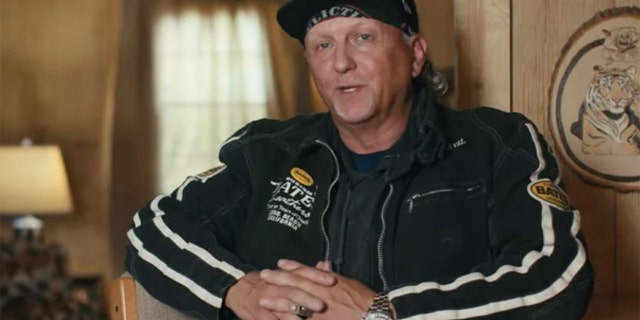
Lowe, who also appeared in the Netflix documentary, now claims in an interview with the Daily Mail that the series only showed a very small fraction of Maldonado-Passage’s questionable behavior. He alleged the cat enthusiast is guilty of burying his protesters on the zoo’s grounds in addition to indulging in a number of eyebrow-raising sex fetishes.

‘TIGER KING’ SPECIAL TO AIR ON FOX, FEATURE NEVER-BEFORE-SEEN FOOTAGE

Jeff Lowe of 'Tiger King: Murder, Mayhem and Madness'

Jeff Lowe of ‘Tiger King: Murder, Mayhem and Madness’ (Netflix)

Lowe claimed he stumbled upon “packages and packages of these whips and chains and bondage devices” belonging to Joe Exotic in his attic.

“We also found pictures of stuffed animals where the mouths and ends of the animals had holes cut out in them where they would use them as their own sex toy,” Lowe claimed.

The zoo owner provided the Daily Mail with photos of the stuffed animals, as well as online documentation of Maldonado-Passage soliciting sex in exchange for money with strangers online.

‘TIGER KING’ CAPTURED 34 MILLION US VIEWERS IN FIRST 10 DAYS: REPORT

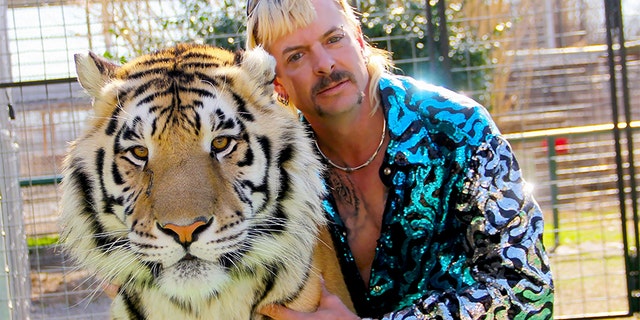
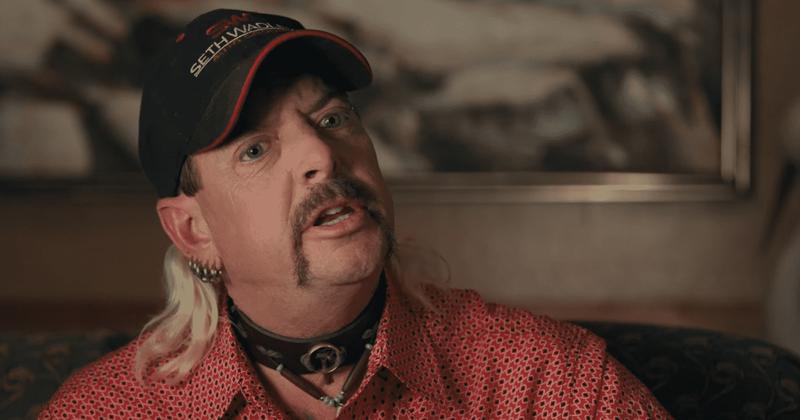
Joseph Maldonado-Passage, also known as "Joe Exotic," from the hit Netflix series 'Tiger King.'

Joseph Maldonado-Passage, also known as “Joe Exotic,” from the hit Netflix series ‘Tiger King.’ (Netflix)

“Joe was embezzling money from the zoo in order to pay all of these men to come have sex with him, he was only making $150 a week at the time. He was using the zoo as his own personal piggy bank,” Lowe alleged.

An attorney for Maldonado-Passage did not immediately respond to Fox News’ request for comment.

Furthermore, Lowe said he’s heard claims from other employees that Maldonado-Passage engaged in bestiality around the zoo.

The owner also claimed he’s learned there is a possibility of dead bodies buried on the zoo property.

‘TIGER KING’ STARS: WHERE ARE THEY NOW?

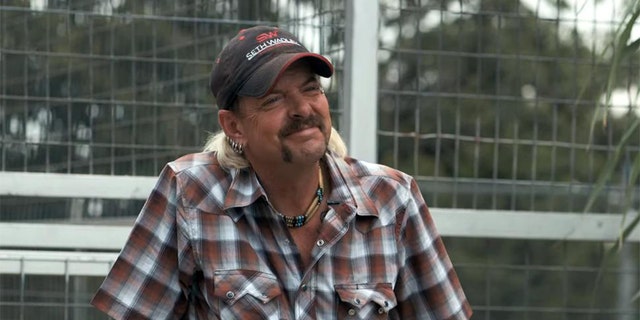
Joe Exotic is the main subject of Netflix's hit docuseries 'Tiger King.'

Joe Exotic is the main subject of Netflix’s hit docuseries ‘Tiger King.’ (Netflix)

“After Joe was arrested, four locals who didn’t know each other told me that there could be dead bodies buried on my property,” he said.

He claimed he was told by one employee that a co-worker once shot two protesters who attempted to climb the zoo’s fence. He claimed Joe allegedly instructed the employee to place the bodies inside of large tires and then burn them.

Lowe claimed the feds agreed to see how long Joe Exotic would be sentenced for before spending “the estimated $1 million to excavate and process the entire area” of the zoo.

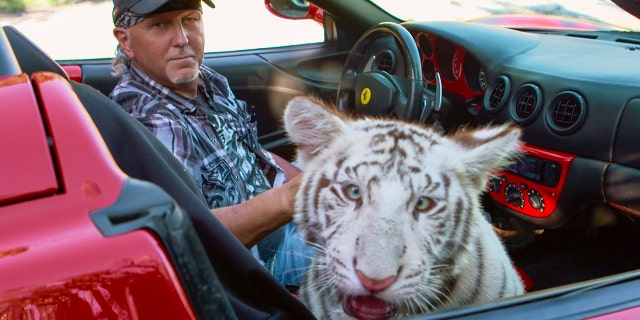
Jeff Lowe now owns the Greater Wynnewood Exotic Animal Park.

Jeff Lowe now owns the Greater Wynnewood Exotic Animal Park. (Netflix)

CLICK HERE TO GET THE FOX NEWS APP

Since landing in prison, Maldonado-Passage has filed a civil lawsuit against Lowe and a number of government agencies seeking $94 million for false arrest, false imprisonment, selective enforcement and the death of his mother, among other claims.

Tiger Queen

To think I almost watched an episode of the “Tiger King” at one time. I had added it to my Netflix list back when I’d heard only that it was a true crime documentay and guessed that it would reveal much about the way animals are abused when forced to perform. But I have long- since removed it from the list, after I started to get an idea that the rampant tiger abuse was not even the focus of the stupid show…

I was reminded of a time years ago when I took the chance to get near tigers by visiting a hollywood animal “trainer” or “wrangler” or whatever the heck they call them now at her property in rural Washington. She “owned” tigers, lions and I don’t remember what else–all kept in small, muddy outdoor enclosures, totally devoid of trees, bushes or any living vegetation. I’m guessing now, that she didn’t want to give the animals anything to hide behind.

When we went out to meet the tigers, one had knocked over its water bowl or for some reason she had to go into the pen with the tigers. One of them (playfully?) took a swipe at her and she responded by picking up a section of 2×4 and hitting the cat as hard as she could over the head, before hastily scrambling out of the fenced enclosure!

At that point it was clear that the animals weren’t at all happy there and wouldn’t hesitate to escape their confines if they had half a chance and freedom would not just end in them being shot like so many “big game” animals humans so proudly display on the walls of their dens or in their “trophy” rooms …

The Most-Watched Show in America Is a Moral Failure

NETFLIX
This article contains spoilers through all seven episodes of Tiger King.

At this particular moment, the most-watched show in America is a seven-part documentary series about a gay, polygamous zoo owner in Oklahoma who breeds tigers, commissions and stars in his own country-music videos, presides over what he describes as “my little cult” of drifters and much younger men, and ran for governor of Oklahoma in 2018 on a libertarian platform. He’s also currently serving a 22-year prison sentence for, among other charges, trying to arrange the assassination of his nemesis, an animal-sanctuary owner in Florida. And his business allies include another big-cat breeder—a yoga-loving guru in Myrtle Beach who runs what appears to be a tiger-themed sex sect.

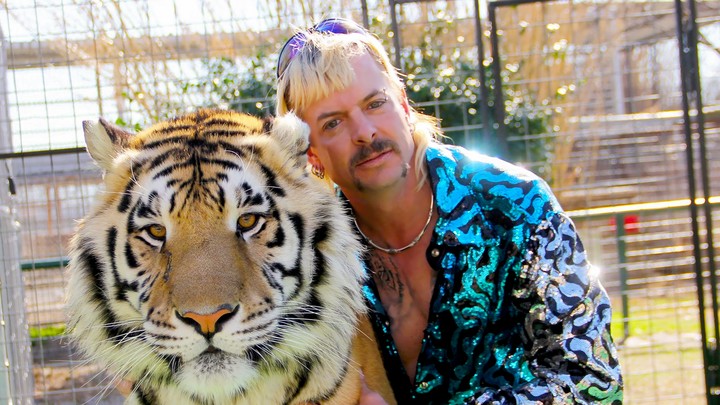
There are no heroes in Tiger King. Not Joseph “Joe Exotic” Maldonado-Passage, whose stripy mullet you’ve surely seen on social media, accompanied by a teal sequined jacket so ostentatious that the adult tiger he’s posing with looks like an afterthought. Not Bhagavan “Doc” Antle, who, one former employee alleges, coerces teenage girls working 100-hour weeks at his ranch to reach “his level of enlightenment” by sleeping with him. Not Carole Baskin, the owner of a Florida sanctuary for big cats, who Tiger King insinuates—in a strikingly unjournalistic way—might have killed her husband. And definitely not Eric Goode, the New York hotelier and animal-rights activist who co-directed the series, whose elevator pitch for it seems to have been “What if Christopher Guest, but real?” and whose disdain for the dentally challenged and leopard-print-festooned characters he captures is Tiger King’s most discernible emotion.

And yet, for the past two-plus weeks, Tiger King has consumed the pop-cultural imagination. It’s the stuff memes are made of, heavy on visual absurdity and light on meaning. The series is a carnival sideshow not unlike Joe Exotic’s central-Oklahoma park: You see the sign on the side of the road and you stop, not because you want to, necessarily, but because it’s there.

In that sense, Tiger King is also the latest and most acute iteration of a Netflix trend toward extreme storytelling; the more unfathomable and ethically dubious, the better. The point is virality—content so outlandish that people can’t help but talk about it. In 2018, the docuseries Wild Wild Country set the model, with its jaw-dropping chronicles of an alternative Oregon faith community whose antics allegedly included spiritual orgies, gun hoarding, electoral fraud, and mass poisonings. Last year’s Abducted in Plain Sight captured the appalling story of a teenage girl who was abused and kidnapped by a family friend, seemingly in full view of her parents. With its reality programming, too, Netflix has been courting eyeballs with simple insanity, via the hit dating series Love Is Blind and the upcoming Too Hot to Handle, a show in which ridiculously good-looking people are sequestered on an island to compete for a cash prize that diminishes every time they hook up, or even masturbate. The more scurrilous or degrading the concept, the more we watch.

This truism wasn’t news for P. T. Barnum, and it isn’t news now. But there’s still something wretched to me about the way Tiger King has managed to define a cultural moment in which empathy and communitarianism are so crucial. America right now, in the midst of a pandemic, is reliant on collective behavior, adhering to rules, and taking sensible precautions to avoid danger. Tiger King is the TV equivalent of licking the subway pole. Its characters have managed to construct whole worlds around themselves rather than curtail their worst impulses in any way. These characters are so colorful that they obliterate everything else around them. They’re any documentarian’s dream, and yet you can’t help but wonder what the directors hope to get out of giving showmen the mass exposure that they want. Who, in the end, benefits?

On its face, Tiger King is about a remarkable subculture in the U.S.: people who collect and (illegally) breed big cats. There are, the show reveals early on, more privately owned tigers living in America than there are existing in the wild, kept in independent “zoos” and parks across the country. (In 2003, authorities discovered that a man in Harlem was cohabiting with a 400-pound tiger named Ming, in the same apartment that his mother was using to babysit children.) If the people drawn to tigers have a shared quality, Tiger King emphasizes, it’s extroversion, which it illustrates in one scene with footage of Doc Antle riding an elephant into town while opining in voice-over about the “primordial calligraphy” of exotic animals.

Joe Exotic, for better or worse, is the show’s central character, and Tiger King sketches out a sparse biography that hints at, rather than elucidates, the forces that shaped him. The challenge seems to be that anything he says is stated in the service of inflating his own mystique, and the directors decline to press him or any of the other characters on the worst charges against them. There are some undeniable facts, such as how hard it must have been for Exotic to be a gay man in rural Oklahoma during the ’80s and ’90s. There’s also his history of releasing country songs he only lip-synchs to; his run for president in 2016 and for governor two years later; and his habit of filming virtually everything he does. There are a few private moments, too, including how he reacts after one of his employees is mauled by a tiger while at work. “I’m never gonna financially recover from this,” Maldonado-Passage sighs, while the rest of his employees try to tend to the victim’s severed arm. Hardest to endure is how he behaves at the funeral for his youngest husband, Travis, who accidentally shoots himself in the head. Dressed up in a dog collar, Exotic seizes the spotlight, singing, cracking jokes, and reminiscing fondly about his late partner’s testicles while Travis’s mother sobs.

Mostly, though, Exotic communes with tigers. He cuddles them while they’re riding shotgun in the front seat of his truck; he wrestles with them; he uses a steel hook to wrest newborn cubs from their mothers and then complains that the screaming babies are making too much noise. The visual impact of seeing humans and tigers so intimately connected is one of the defining qualities of Tiger King, and is also, the series suggests, why some people find tigers so appealing. There’s a taboo quality to the breach of natural laws separating humans and big cats that implies strength, virility, and power. No wonder, the show notes, so many male Tinder users have tiger selfies as avatars.

NETFLIX

Tiger King’s unified theory of tiger obsession falls short, however, when it reaches Carole Baskin, the owner of a Florida animal sanctuary devoted to big cats. This shortcoming might explain why the show takes such pains to portray her as a kook, and possibly even a murderer. Baskin is Exotic’s bête noire, a woman who has dedicated her career to trying to outlaw the breeding and personal ownership of exotic cats in the U.S. The show’s treatment of Baskin is where it indulges in its most egregious displays of false equivalence, as it tries to elevate her eccentricities to stand alongside those of Exotic and Antle. Baskin, Tiger King painstakingly lays out, is obsessed with animal print. The horror! Sometimes she wears flower crowns! She has an uncanny gift for search-engine optimization! She rides a bicycle! Her sanctuary relies heavily on unpaid volunteers! The show underscores all these facts, while making the most of the mysterious disappearance of Carole’s husband in 1997 and interviewing family members who seem convinced that she killed him. “There is absolutely no physical evidence at this time” implicating any one individual as a suspect, a police detective firmly and rather crushingly points out. Tiger King doesn’t care. It would much rather imply several times that she could have fed her husband’s corpse to tigers, had she been so inclined.

Baskin is interesting, too, because she’s a woman operating in a world characterized by gleeful misogyny. Exotic makes effigies of Baskin; he fills her mailbox with snakes (a strangely phallic gesture); he makes memes about her crotch, and videos in which he fantasizes about torturing her with a horse penis. He calls her a bitch so many times that the word loses all meaning. Jeff Lowe, one of Exotic’s business associates, who enters the series midway through, is a more limited character, but his treatment of women is still horrible enough to be noteworthy. (As his wife tells the camera about how she’s preparing for the upcoming birth of their child, Lowe remarks that she’ll immediately have to go back to the gym, and shows the directors glamour shots of the women he’s considering as nannies. Lowe, according to the show, also has a felony criminal record and a history of charges that include throttling his first wife.)

NETFLIX

The degradation in Tiger King starts to feel contagious after a while. Goode and his co-director, Rebecca Chaiklin, filmed the series over five years, and the longer they spend with their subjects, the more obviously things fall apart. One of Exotic’s ex-husbands, John Finlay, gives shirtless interviews that show off his abundant tribal tattoos—including a crotch adornment that reads privately owned joe exotic—and his undeniable lack of teeth. (Only in Episode 5 does Tiger King stop to note that meth has been a prevalent factor in Exotic’s world the whole time.) The interviews become more and more invasive. Travis’s mother is asked about her son’s death while she’s seemingly intoxicated. In Episode 7, one of Exotic’s zoo employees is so incapacitated that he passes out mid-interview. Exotic’s campaign manager is interviewed early on as a fresh-faced former Walmart manager enthusiastically crafting Exotic’s libertarian platform; a year or so later, he too has lost teeth, and appears considerably more disheveled than during his clean-cut canvassing days.

Exotic is the only one who appears unchanged, even as the plot makes its way toward his 22-year jail sentence for conspiring to have Baskin assassinated. The persona he’s crafted, you sense, is strong enough to survive anything, even prison. In that sense, there’s something undeniably Trumpian about him. No misfortune can shake his sense of self. No humiliation can shame a man who refuses to be shamed. The chaotic reactions that Exotic has sparked are irrevocable, and even now, he’s fast approaching cultural-legend status, as Hollywood stars spar on Twitter over who gets to play him in the already-approved miniseries. “Fuck yeah, roll the cameras,” is how the reality-TV producer Rick Kirkham described watching Exotic at his most idiosyncratic and badly behaved. Netflix obviously agreed. Why can’t the rest of us look away?

DIANE KEATON JOINS FIGHT TO STOP ANIMAL CRUELTY EXPOSED BY TIGER KING

VegNews.DianeKeatonParamount

The actress steps up her activism as board member of animal-rights group Social Compassion in Legislation to push for the passing of The Big Cat Public Safety Act, a law that would prohibit the ownership of big cats.

https://vegnews.com/2020/4/diane-keaton-joins-fight-to-stop-animal-cruelty-exposed-by-tiger-king


5,360 Shares    

After watching popular Netflix series Tiger King: Murder, Mahem, and Madness, actress Diane Keaton was inspired to take action to stop the animal cruelty depicted in the series. The docu-series follows the feud between Oklahoma roadside zookeeper Joe Maldonado-Passage (known as “Joe Exotic”) and Carole Baskin—owner of Florida sanctuary Big Cat Rescue who worked to shut down Exotic’s zoo—along with other eccentric characters classified loosely as “big cat people.” While Exotic and fellow Tiger King zookeepers claim that their work aids the conservation efforts of big cats, undercover investigations have proven otherwise.

This week, The Humane Society of the United States (HSUS) released never-before-seen footage of Exotic and his cohorts at his G.W. Zoo punching cubs in the face, dragging them by the tails, and engaging in other forms of abuse in the name of making profit from breeding and keeping the wild animals in captivity. Exploiting big cats for entertainment also poses dangers to humans, as seen by the brutal mauling of a zoo employee featured in Tiger King. “Now is the time to end animal cruelty,” Keaton said. “Exotic animals that are kept for private use are not only a public health issue but also endanger the lives of first responders.”

Keaton has long been a board member of animal-rights organization Social Compassion in Legislation (SCIL) and is stepping up her efforts to bring awareness to The Big Cat Public Safety Act, HR 1380 (BCPSA), legislation that would effectively end the ownership of big cats nationwide and prohibit the use of cubs for photo opportunities. “Too many animals suffer in roadside zoos in America. Tiger King did not show the abuses suffered off-camera,” Louise Linton, another prominent SCIL board member, said. “Bears, Big Cats, and many other exotic animals languish in ill-health, starvation, and abuse in tiny cages. There are ample transport vehicles and many sanctuaries awaiting these animals’ release.”

This week, Keaton and other SCIL board members (which include vegan actress Maggie Q) spoke with BCSA author Congressman Mike Quigley (D-IL) to establish a path toward effectively pushing the bill through Congress once the COVID-19 pandemic is under control.

“We are so fortunate to have our board members standing up and shining a light on the problem of personal ownership of these magnificent animals,” SCIL Founder and President Judie Mancuso said. “It is important for the public to understand that exploiters like Joe Exotic put profit over the welfare of the animals. They will breed and breed to keep the baby tiger photo ops rolling, but do not care what happens to those animals once they are sold to whoever is willing to pay for them or dispose of them before they get too big. Sanctuaries like the one run by Carole Baskin do not breed and do not allow the animals to interact with humans, which the show did not highlight enough.”

SCIL, Baskin, the HSUS, and others are urging citizens to voice their concerns about the suffering of big cats to their legislators by asking them to support The Big Cat Public Safety Act.

Photo Credit: Paramount Pictures

I’m A Real Tiger Keeper. Here’s What Disturbed Me About ‘Tiger King.’


“The way we treat wildlife matters. In the era of the coronavirus pandemic, we’re seeing the dire consequences of this right now.”
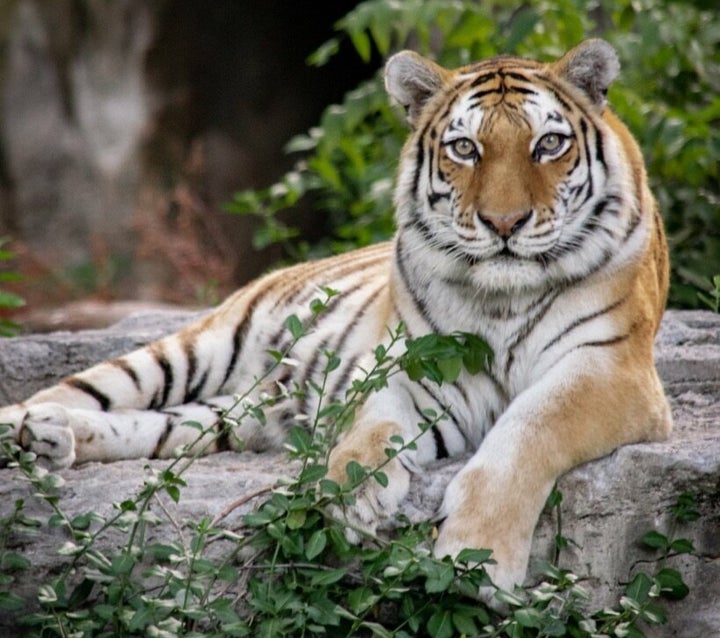
A female Amur tiger at the zoo where the author works. It's estimated that only 350-450 Amur tigers survive in the wild.

A female Amur tiger at the zoo where the author works. It’s estimated that only 350-450 Amur tigers survive in the wild.

I’ve worked as an animal caretaker at a renowned, AZA-accredited organization for over a decade now. It’s a unique job, and every day is different, but even in my world, it’s a weird time to be a tiger keeper.

I guess you might say that it’s never not a weird time to be a tiger keeper, but here in the age of COVID-19 and “Tiger King,” I find it especially odd.

The pandemic started to spread before I saw the Netflix documentary. When the mayor of our city issued a “shelter in place” order, the zoo that I work at closed to the public. For years, I’ve explained that I work in a 365-day a year occupation to kids by saying, “You don’t skip feeding your dog on Christmas, right?” Meaning just because the zoo is closed, keepers still need to come in.

The first morning of working in the closed zoo felt peaceful. I’m used to quieter days in the winter, but even then, the zoo functions like a small city, with various employees cleaning grounds, fixing infrastructure, hustling this way and that. The lockdown feels different.

Only “essential” staff are present, and carnivore keepers like myself typically work solo as a safety precaution. Sometimes I spend my entire shift without seeing another person. There’s a calmness in the solitude. It’s just me and the cats.

Outside, the world brimmed with a sense of impending doom, with rising coronavirus case counts and what seemed negative news 24 hours a day. Within the zoo’s walls, I pushed the anxiety out and focused on the gentle chuffs of our tigers.

The zoo is not immune to the workings of the outside world, and as COVID-19 escalated, things changed within it. Our department split into two teams, and our weekends rotated, with each team now working half of the week.

In theory, if one team becomes exposed to the virus, the other team could still function and step in. After all, you don’t skip feeding your tiger just because there’s a terrifying global pandemic, right?

It was painful to watch Joe’s rowdy staff call themselves ‘keepers,’ diminishing the occupation at a time when caretakers of all kinds are called upon to demonstrate extreme dedication to their particular cause.

Shortly after we split our routine, the texts started.

“Have you seen ‘Tiger King’?” friends asked as seemingly all of America binged the new docuseries.

The show tells the story of Joe Exotic and his uncouth roadside attraction contemporaries who own large exotic animals, like tigers.

I hadn’t seen it.

As many of my friends joked about working from home in their sweatpants and as comedians hosted late-night shows from their bathtubs, my job seemed to become even more intense. Despite what Joe preaches, wild animals are not pets, so I can’t exactly take my work home with me.

While on the job, I’ve been busy, to say the least, averaging 15,000 to 20,000 steps a shift lately. My co-workers and I maintain the animals’  habitats and make sure everyone has healthy diets, fresh water and plenty of enriching objects, foods and activities. Though the zoo’s pathways are vacant, our standards of care remain the same.

What we do at the zoo does not compare to the front-line work of health care, housekeeping, first responder and sanitation workers during the age of COVID-19. These individuals truly are heroes. Nonetheless, I am leaving my home every morning ― the only place I deem genuinely safe ― and going out into an increasingly perilous world.

At work, I inevitably cross paths with maintenance workers or horticulture staff from time to time, and it isn’t always possible to maintain a six-foot distance. Then, of course, there is the shift change between teams. Before I leave my building on my “Friday,” I wipe down everything I can with diluted bleach. I wipe door handles, locks, broom handles, countertops, the desk and keyboard, hose bibs and sink nozzles. But it still seems impossible to sanitize everything. It never really feels like enough.

When I get home from work each day, I go straight into my basement, where I am lucky enough to have a shower. I leave my zoo clothes downstairs, wipe my phone down with alcohol, shower and wash my hair before relieving my now teach-at-home husband from caring for our young son.

This is all to say, I’m not exactly in the position for a quarantine-TV binge.

Still, the texts kept coming.

“What do you think of ‘Tiger King’?”

In an effort to have an opinion to offer, I finally squeezed the show into my nightly meal-prep/dishwashing routine.

So, here’s what I think.

The animal abuse was appalling. Seeing Joe Exotic tear tiger cubs, only minutes old, away from their mother so that they could become props in his “cub petting” scheme is not a scene I will quickly forget.

But there was something else about “Tiger King” that bothered me. Something more subtle than the overt abuse and general craziness.

I took a pause, hearing this, as I peanut-buttered my sandwich to prepare for work the next day. I was prepping to leave my safe space, potentially risking the safety of my family, to care for the zoo’s animals. And, honestly, I wouldn’t have it any other way. My co-workers  and I are determined to guide the animals in our care through this uncertain era, no matter what comes of it.

Whether it’s a wet market in China or people like Joe Exotic and his friends illegally trading and breeding wildlife in our own backyard, the way we treat wildlife matters. We’re seeing the dire consequences of this right now.

Most animal caretakers have four-year degrees, or even graduate degrees,  and years of experience. We are working in two teams precisely because of the skill and expertise our job requires. If we all become sick with the novel coronavirus, the average (pardon the pun) Joe will not be able to step in and safely fill our shoes, despite Baskin’s claim that anyone could and would “just do that stuff for free.”

It was painful to watch Joe’s rowdy staff call themselves “keepers,” diminishing the occupation at a time when caretakers of all kinds are called upon to demonstrate extreme dedication to their particular cause.

As these weeks of sheltering in place have gone by, the weather has warmed up. More trees have budded out. The forsythia bloomed. There’s a muted murmur in the air — the spring chorus of American toads — adding an otherworldliness to the zoo’s vacant pathways. But the quiet no longer seems peaceful to me. It seems eerie.

I miss the energy ― the laughter and joy bubbling from families visiting the zoo, now unnervingly gone. I miss the chance to connect with guests and talk to them about what our zoo is all about ― the conservation and welfare of the diverse species, including tigers, in our care. I may not have always recognized it, but now it’s obvious: The visitors are an essential component of the zoo, too.

As we continue to be locked in our homes and to distance ourselves from friends and family and co-workers, many people have looked for the source of this pandemic. I have seen bats blamed for the coronavirus. Or pangolins. I’ve even heard snakes are at fault. But really, we humans are the ones to blame.

The intersection of humans, animals and the environment creates the One Health approach to disease control, and, let’s be honest, as a society, we’re kind of failing at it. Whether it’s a wet market in China or people like Joe Exotic and his friends illegally trading and breeding wildlife in our own backyard, the way we treat wildlife matters. We’re seeing the dire consequences of this right now.

It’s hard not to watch “Tiger King.” Everyone is talking about it and, while we patiently quarantine, no one really has any other plans. So, why not indulge in staring at the train wreck? But remember that for every Joe Exotic, there are hundreds of dedicated keepers leaving the safety of their homes and heading out into the pandemic to care for these remarkable animals in real and positive ways.

And when all of this is over, this tiger keeper, for one, can’t wait to welcome guests back to the zoo. None of us knows what a post-pandemic world will look like. But I sure hope that there will be a bright future for both humans andtigers.

Carolyn Mueller Kelly is a keeper at an AZA-accredited U.S. zoo with more than a decade of experience in animal care. Aside from her work with lions, tigers and bears, she loves to spend her time writing.

Did Netflix’s ‘Tiger King’ Forget About The Tigers?

EDITORS’ PICK|3,758 views|

The crazy, chaotic energy of Netflix’s Tiger King proved the perfect antidote to coronavirus anxiety, as 34 million people watched the series during its first ten days on the streaming platform.

Judging from the initial responses on social media, many viewers felt absolutely certain that Carole Baskin murdered her husband (as the documentary strongly implies), while Joe Exotic was hailed as a warped kind of hero, being the protagonist of Netflix’s story.

The series even sparked a semi-satirical #FreeJoeExotic campaign, prompting a reporter to ask President Trump if the titular Tiger King was to receive a presidential pardon; it’s a ridiculous question for the president to receive during a global pandemic, but to be fair, we live in ridiculous times.

Now that the initial shockwave has passed, and the world has had time to fully absorb the madness of the exotic animal trade, some are asking why the filmmakers chose to leave big cat welfare in the background, focusing on the eccentric personalities and unsolved murder-mystery.

It’s not a particularly difficult question to answer; any filmmaker rewatching those clips in the editing room, tasked with crafting a compelling narrative, would absolutely shift focus to the larger-than-life characters in this story. Tigers can’t possibly compete with the electric cast of crackpots featured in this series – they’re far too outrageous to waste.

From an animal rights perspective, there’s much to criticize about Tiger King, but I think it’s important to view the series as what it actually is – a story – rather than what it “should” have been. Tiger King is a sensationalist slice of entertainment, and doesn’t pretend to be anything else.

The plight of the lions and tigers cooped up in Joe’s cages, however, is rarely forgotten; the sight of the majestic creatures sitting forlornly in those tiny cages serves as a constant reminder that Joe and others are severely abusing them for profit. Watching newborn cubs being torn from their mother was disgusting, and it was clear that Joe didn’t give a damn about their welfare; these magnificent predators were treated like oversized plushies.

That being said, Carole Baskin, whatever you think of her, has good reason to be angry about her portrayal; not just the murder mystery thing (which has, inevitably, led to her being harrassed by lunatics), but the implication that Baskin was mistreating her tigers to the same extent Joe was, which is simply false.

Or at least, that’s currently the case. Because Baskin’s sanctuary, Big Cat Rescue, has a complicated history, like everything in Tiger King. As the documentary points out, Baskin used to be incredibly ignorant to the needs of these animals, and during the nineties, even offered a “bed and breakfast” experience that allowed guests to spend the night with a young wild cat in their cabin.

Clearly, Baskin has changed her priorities, having overhauled and reassembled the sanctuary long ago; it’s been a non-profit for years, Baskin now campaigning for a total ban of the private ownership of big cats, regardless of keeping conditions.

From an animal rights perspective, it doesn’t matter what Baskin’s motivations are, or what her history is, considering that she is currently advocating for big cat welfare. Clearly, the exotic animal market is rotten to the core, a wretched hive of scum and villainy – that’s why it made for such great television.

Big cat people, to put it mildly, are extremely weird. Many of them have a warped, Disney-esque perception of the animal kingdom, an infatuation devoid of real respect. Should one really cuddle creatures that are capable of tearing off limbs?

But there is an upside to Tiger King’s sensationalism; due to the documentary’s outrageous content, an extraordinary amount of people are now talking about it. Which means that many more people now understand how deeply immoral it is to own a tiger, pet a tiger, or to have a selfie taken with a cub.

This wasn’t the focus of the documentary, but it’s become part of the conversation, and those big cats desperately needed someone to shine a light on their deplorable living conditions.

Because the most extraordinary thing about this insane series, by far, is that (almost) all of what we saw was perfectly legal.

Our Endangered Species Need This Law to Survive.

By latest estimates, over 1 million species are in danger of disappearing globally. Much of this is due to biodiversity’s arch-enemy, climate change. But there is another culprit that is also picking off our earth’s beautiful animal species one by one – the lucrative and illegal wildlife trafficking trade. Many of these animals end up part of the tourism industry like the orcas and dolphins of SeaWorld to which Expedia still sells tickets. Other animals, on the other hand, are not so lucky.

Animals like lions, tigers, chimpanzees, gorillas, and many more are the targets of organized crime syndicates that trade in their flesh and bone, killing them in unsustainable numbers and selling them for souvenirs, trinkets, and “medicine.”

Passing this bill could help endangered animals. Sign to ask the U.S. Congress to do so.

It is paramount that governments like the United States create strong legislation that works against these organizations and the destruction they cause. One such remedy could be the Rescuing Animals With Rewards (RAWR) Act. The RAWR Act was introduced in May of 2019 and would empower the United States State Department to offer financial rewards in exchange for information that leads to the disruption of the multi-billion dollar wildlife trafficking trade. Since the bill’s introduction by U.S. Senators Susan Collins and Jeff Merkley, it has lingered in the Senate chamber. Meanwhile, the House acted swiftly and passed it in July.

Unfortunately, that wasn’t good enough to make it law. Now, in order to make it a reality, both the Senate and House will have to reintroduce the bill for the 2020 session. Last year’s delay in the Senate is worrying. This is a bill that could save millions of animal lives and help stem the global extinction crisis but it was allowed to fizzle out. Will there be movement this year?

It is more important than ever to strengthen our nation’s laws against trafficking and that’s why the RAWR Act is so crucial.

Tell Congress you support this important bill and that it must be reintroduced and passed this year without delay. Please sign the petition and tell them to do so today.

More than 80 tigers die after being removed from Thailand tourist trap

https://nypost.com/2019/09/16/more-than-80-tigers-die-after-being-removed-from-thailand-tourist-trap/

More then 80 tigers have died after they were rescued from a Thailand tourist attraction dubbed Tiger Temple, a report said.

A total of about 87 felines died from a virus they had contracted after being held at the The Wat Pha Luang Ta Bua Yanasampanno temple west of Bangkok, according to London’s Independent newspaper.

“When we took the tigers in, we noted that they had no immune system due to inbreeding,” said a senior official from Thailand’s department of national parks, wildlife and plant conservation.

The official said the animals were susceptible to the canine distemper virus.

While the tigers were living at the temple, monks charged admission for people to take photos with them and bottle feed their cubs.

But the tigers needed to be removed from amid allegations that they were being drugged and illegally bred.

Local media reports claim that as many as 87 of the 147 creatures taken from the temple have died.

During a raid of the temple, Thai officials found 40 dead tiger cubs in a freezer along with 20 glass jars containing baby tigers and tiger organs.

Also, a monk tried to flee with 700 vials of tiger skin and a suitcase full of tiger teeth.