ENGLEWOOD — The Coastal Wildlife Club will assist the state with gathering derelict crab traps.
The Florida Fish and Game Conservation Commission has authorized CWC turtle patrol volunteers to gather and remove crab traps that wash up onto Manasota Key during the sea turtle nesting season, which started May 1 and extends to Oct. 31.
“Traps and lines may obstruct the progress of nesting turtles and even entangle them,” the CWC stated in a press release Monday. Anyone who discovers a derelict trap on Manasota Key is asked to email the CWC at info@coastalwildlifeclub.org.
Since April 30, the CWC recovered and removed three blue crab traps and seven stone crab traps, two in the Sarasota County portion of Manasota Key and eight on the Charlotte side of the barrier island.
Details of the derelict crab trap programs and clean-ups can be found online at myfwc.com.
The FWC estimates 800,000 blue crab traps are permitted annually. The state estimates 30% to 50% of blue crab traps are lost to their owners.
The traps are valuable to the commercial crabbers.
“We don’t want to lose traps,” said Kelly Beall who with her husband, Jimmy, own and operate Peace River Seafood restaurant, seafood and fresh vegetable market on Duncan Road in Punta Gorda. Jimmy also is a commercial crabber with hundreds of traps set in Charlotte Harbor and the Peace River.
Often, Beall suggested, boaters will run over a commercial trap’s lines, separating the traps from their buoys.
A decade ago, Charlotte County Sea Grant agent Capt. Betty Staugler assisted the state in drafting its volunteer derelict trap clean-up procedures. Like Beall, Staugler suggested traps are valuable to commercial crabbers, especially since they use steel rebar to weigh their traps down.
Generally, Staugler said, commercial crabbers have a “good handle” of where their traps are located since they check them regularly, several times a week, whereas recreational crabbers may only check their traps once a week, twice a week or even longer.
The state has a rotating, two-year regional schedule for 10-day crab trap closures throughout the state. During that time, the FWC requires all commercial and recreational traps to be removed from the water. Abandoned and derelict traps are then pulled out.
“Traps may remain in the water during a closed season for many reasons,” the FWC states on its website. “They can move during storms, making them difficult to locate; they may be snagged by passing vessels and dragged to another area; or they may be illegally abandoned by their owners.”
But as much as wanting to clear abandoned and derelict traps from waterways, the FWC protects crabbers and their traps and their livelihoods.
Unauthorized tampering with crab traps, their lines and buoys, or trap contents can result in a third-degree felony charge, fines up to $5,000 and a permanent revocation of fishing licenses.


 For Immediate Release: July 16, 2020Contact: Randi Feilich, Project Coyote Southern Cal. Rep. (310) 498-2975,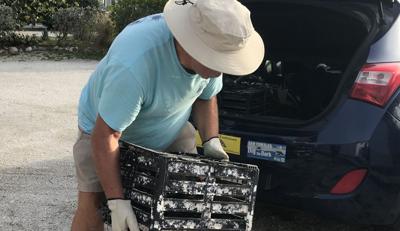



 Exposing the Big Game