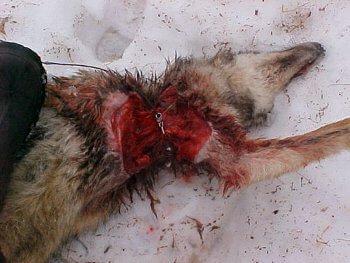
Britton-area man Mike Werner shot and killed this animal that may be a gray wolf. Officials with the U.S. Fish and Wildlife Service are investigating the case, according to a state conservation officer. (Courtesy photo)
A Britton-area man is caught up in a federal investigation after shooting an animal that may be a gray wolf.
Mike Werner said he was hunting coyotes by a slough near Clear Lake in Marshall County on Jan. 13 when he shot and killed what he thought was a bigger, dark coyote that came up behind him about 100 yards away.
Immediately after shooting the animal, Werner said he realized it was much larger than a coyote and resembled a wolf.
Officials with the U.S. Fish and Wildlife Service are investigating the case.
Casey Dowler, a conservation officer with the state Game, Fish and Parks Department in Marshall County, said the animal is being tested at a federal lab.
Dowler would not give anymore information on the case since there is an active federal investigation into the shooting of the animal.
GFP Conservation Officer Supervisor Mike Klosowski said harvesting, trapping or recreational hunting of wolves is illegal.
Klosowski said any case involving gray wolves falls under the management of the U.S. Fish and Wildlife Service. He said GFP has no wolf management authority at this time.
“So when we have an incident where a gray wolf is killed by a member of the public, we’d likely respond to the call, do a preliminary investigation then pass it off to Fish and Wildlife Service,” Klosowski said. “Then they would do any kind of prosecution on their end, or not prosecute on their end.”
Klosowski said gray wolf sightings are uncommon in northeastern South Dakota, but transient wolves do come through the state from time to time.
“To the east we have Minnesota. Northern Minnesota has a healthy population of gray wolves,” he said. “Then when you go out west near Yellowstone National Park, you have a very healthy population of wolves out there too.”
He explained that wolves are known to venture away from their pack to start their own pack in a new territory.
Although gray wolves have not established populations in South Dakota, the species is still illegal to kill in the state.
Klosowski said if the U.S. Fish and Wildlife Service were to prosecute someone for killing a gray wolf the case would go to court.
Knowing that wolves are protected under the Endangered Species Act and in South Dakota, Werner said he left the animal where it was shot and called the local game warden.
Werner said the animal had an old trapping injury on its foot, where it was missing a couple toes and part of its foot pad.
On another foot, the animal had a trapping device. Werner believes the animal was trapped and was able to break free of the chains that kept him immobilized.
Werner said if the lab testing results show the animal to be a dog-coyote hybrid, he will be able to take the animal home.
Officials with the U.S. Fish and Wildlife Service were unable to comment on the ongoing investigation.
STAR VALLEY, WYO – It was last weekend. Christy Stewart was with family walking her dog up Wickiup Knoll Trail outside of Afton same as she’d done almost every day for the past four years. Her dog, a 3-year-old Pyrenees named “Sage,” practically grew up on that run.
On Sunday, Sage died on that trail.
Sage
Out of sight for just minutes, the dog caught a scent of fresh meat used to bait a bobcat snare. It didn’t take long. Sage suffocated, hung in a trap just 20 feet off the trail.
Afton Game Warden James Hobbs investigated the incident and reported the trap, baited using a cubby set, was legal. It was not signed in any way that Stewart noticed, and that was her main complaint.
“To me, it’s common sense of not setting a snare so close to a popular recreation sight that would have avoided this nightmare. We all have our rights but there has to be a better way of avoiding senseless injury or death. Warning signs of “TRAPPING IN AREA” would be a good start,” Stewart said.
Stewart added that she wasn’t against trapping, per se, and is not interested in seeing laws changed in that regard. She just wants a heads up on any ongoing trapping so she or any other dog owner could be made aware.
“Nobody deserves a heartache like I have,” she said.
Trappers sometimes do not like to sign their traps for fear of vandalism from members of the public unsympathetic to the practice. Others don’t like to advertise where their traps are set to other trappers or opportunistic fur-gatherers.
Typical cubby set bobcat snare (Trapperman.com)
Lisa Robertson formed the advocacy group Wyoming Untrapped in 2012. WU is dedicated to creating a safe and humane environment for people, pets and wildlife through education, trapping regulation reform and compassionate conservation. The organization keeps the only statewide database of pet/trap conflicts.
WU has documented an escalation in incidents since fur prices began rising a few years ago. Recently, WU reported several trapping alerts in the last two months, including another snare trapping in Star Valley up Strawberry Canyon where a dog almost suffocated. Reports of traps near popular trails have also been reported in Shell and Ten Sleep.
“Traps are indiscriminate and deadly, causing pain and suffering to those who lose a beloved friend and family member,” Robertson posted on WU’s Facebook site.
With legal traps set so close to popular trails and little to no signage, and considering many dogs are allowed off-leash on the trails, Robertson said, “Basically, there are no safe areas for the public.”
This week is National Wildlife Refuge Week, a time to celebrate these wild and beautiful public lands. The stated mission of the National Wildlife Refuge System (NWRS) is to conserve land and water for the sake of “biological integrity, diversity, and environmental health.” These spaces are intended as sanctuaries where wildlife can thrive and all Americans can enjoy our great outdoors. Shockingly, however, more than half of all refuges allow the use of inhumane and dangerous traps. This is a clear violation of the NWRS’ mission and is a threat to the safety of wildlife, humans, and pets.
The Refuge from Cruel Trapping Act, sponsored by Representative Nita Lowey (D-NY) in the House and just reintroduced by Senator Cory Booker (D-NJ) in the Senate, would prohibit the possession or use of body-gripping traps within the NWRS. This bill would ensure that management of these protected lands aligns with the intent behind their preservation.
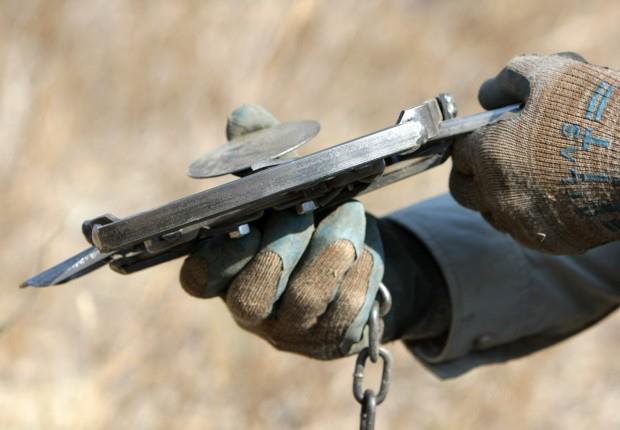
Body-gripping traps—such as snares, Conibear traps, and steel-jaw leghold traps—are inhumane and inherently nonselective, meaning they indiscriminately injure and kill nontarget animals, including endangered and threatened species and even pets. According to the US Fish and Wildlife Service, nontarget species trapped on refuges include river otters, rabbits, domestic dogs and cats, and birds.
What You Can Do:
In honor of National Wildlife Refuge Week, please ask your representative and senators to cosponsor the Refuge from Cruel Trapping Act!
Be sure to share our Dear Humanitarian alert with family, friends, and co-workers and encourage them to email, too. Thank you for taking action on behalf of wildlife!
Sincerely,
Cathy Liss
President
P.S. Follow us on Facebook and Twitter for updates on the action above and other important animal protection news.
The city of Maumelle, Arkansas, has reportedly decided to trap and kill coyotes with the misguided intent to control species numbers. A contractor hired by the city has reportedly set 10 steel-jaw and snare traps throughout the city, and victims will be killed. But lethal initiatives are 100 percent ineffective, as survivors simply breed in order to replace lost pack members while more coyotes move in from outlying areas for the available resources. And amazingly, news sources indicate that city officials are touting these traps as “humane”! However, animals caught in these traps (including the padded or rubber-coated variety) sustain horrific injuries in their frantic attempts to escape—even chewing or twisting off their own limbs. Killing also tears wild families apart, leaving orphaned young to starve, and traps endanger companion animals as well as protected wildlife. PETA has apprised Maumelle officials of the cruelty and futility of this plan and provided details regarding humane coyote control, but now it’s your turn.
Please contact the Maumelle mayor and city council and politely urge them to reverse this decision. Then forward this alert to everyone you know.
Take Action Now!
Fields with an asterisk(*) are required.
First Name
Last Name
E-Mail Address
Become a PETA First Responder (optional and available only to mobile users in the United States)
A grizzly bear has been photographed on the loose near the top of Togwotee Pass with a Conibear-style furbearer trap clamped to its paw.
While it’s unknown how long the bruin has been hobbled by the steel contraption, a photograph of the bear was passed along to Wyoming Game and Fish on May 31.
Moran resident and videographer Jim Laybourn is one person who has viewed the image of the caught bear, having run into a Dubois couple shortly after they snapped the photo.
“It’s firmly attached, most of the way up its paw, and there’s no way that it’s going to get it off,” Laybourn said. “It’s really disgusting to think about that animal struggling with the trap. It’s going to be a tough existence.”
Dan Thompson, Game and Fish’s large carnivore supervisor, was more optimistic that the grizzly would be able to free itself.
“I think there’s a high likelihood that the bear has since removed that trap, because it was a smaller trap,” Thompson said. “As strong as bears are, I would expect a grizzly to be able to remove it, I would think.”
Game and Fish personnel are monitoring the situation “vigilantly,” he said, but they have not laid eyes on the animal. If it is located, the bear will be immobilized and the trap removed.
The Dubois residents who photographed and reported the trapped bear, rumored to be a boar, declined to be interviewed for this story when reached through their employers at Jackson Hole Airport.
The couple, Laybourn said, were shaken up.
“I could tell by their reaction that it was really emotional for them,” he said. “They felt horrible about that bear, and I imagine I would, too.”
The Conibear trap observed on the grizzly’s paw is a quick-kill device that typically is used to trap beavers, muskrats and pine marten — all species that are not in season in Wyoming. Trapping of species classified as predators, such as red fox and coyote, is allowed throughout the year.
Employees of Wyoming Untrapped, a group that advocates for trapping reform, said the incident is evidence of the need for trapping bans in grizzly country.
“It’s frustrating that an endangered species has been caught and now we can’t find it,” said Kristin Combs, Wyoming Untrapped’s program director.
“It’s an example of why trapping is so indiscriminate and doesn’t have a place in modern wildlife management,” she said. “Now there’s a poor grizzly bear out there with a trap on its paw.”
If SB236 passes in this committee, it will go before the whole Montana House of Representatives. In order for SB236 to get on the ballot as a constitutional amendment, Senator Fielder will now need 70 of the 100 Representatives to vote for it.
SB236 reads as follows:
THE CITIZENS OF MONTANA HAVE THE RIGHT TO HUNT, FISH, TRAP, AND HARVEST WILD FISH AND WILDLIFE, INCLUDING THE USE OF CUSTOMARY MEANS AND METHODS. HUNTING, FISHING, AND TRAPPING BY CITIZENS IS THE PREFERRED MANNER OF MANAGING WILD FISH AND WILDLIFE AND IS SUBJECT TO NECESSARY AND PROPER MANAGEMENT AND CONSERVATION STATUTES ENACTED BY THE LEGISLATURE AND REGULATORY AUTHORITY DELEGATED BY THE LEGISLATURE TO A DESIGNATED PUBLIC AGENCY OR COMMISSION. THE RIGHT TO HARVEST WILD FISH AND WILDLIFE IS A HERITAGE THAT SHALL FOREVER BE PRESERVED TO THE INDIVIDUAL CITIZENS OF THE STATE AND DOES NOT CREATE A RIGHT TO TRESPASS ON PRIVATE PROPERTY OR A DIMINUTION OF OTHER PRIVATE RIGHTS.”
• Amending our constitution should not be taken lightly or rushed.
• The purpose of this bill is to enshrine trapping into our constitution. In 2004, we overwhelmingly voted to add to our Montana constitution the opportunity to preserve hunting and fishing forever more.
• Requiring the preferred method for wildlife management to be hunting, fishing and trapping shuts out the non-consumptive wildlife user. Wildlife watching is a significant financial contributor to our economy from residents and visitors, alike.
• The bill negates respectful coexistence, implementation of preventative non-lethal management tools and the intrinsic value and management needs for ALL wildlife.
• The goal of this bill is to eliminate any wildlife ballot initiatives and put the legislature in charge of wildlife and for them to determine who then manages wildlife.
• The intent of this bill is to put wildlife management further into the secreted hands of trappers rather than Montana Fish, Wildlife and Parks biologists.
• The motivation of this bill is consistent to Senator’s Fielder’s position on seizing control of our public lands.
Like Senator Fielder and her allie’s goal for our public lands, the goal of SB236 is not for the greater good or for wildlife. It’s for the control, personal gain and exploitation of them both.
Trapping uses lures, bait and takes advantage of animal’s basic needs for shelter, water, territory. In the same vein, SB236 attempts to lure supporters in.
Those that oppose are criticized including Democrats, our Governor and the wildlife managing agency, FWP. Regarding the Senate vote on SB236:
“I think they were under orders not to vote for it. Orders probably coming out of the governor’s office because his office and Montana Fish Wildlife and parks are lobbying hard against it to keep this issue from coming before the voters.” ~ Senator Fielder
For the record, 2 Republicans voted against SB236 in the Senate. We thank them and all who did, for whatever reasoning, they were right to do so!
Brooks Fahy has been working for decades to save wild animals from painful traps — and while he has seen hundreds of sad cases, there’s one coyote he’ll never forget.
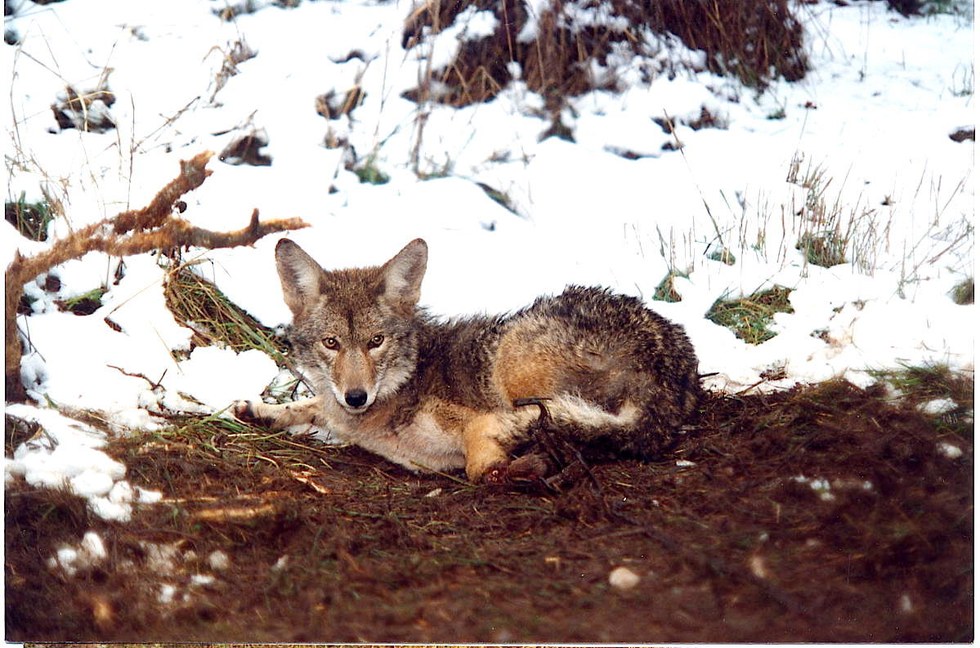
Fahy, who is the executive director of the nonprofit Predator Defense, received a call from a concerned citizen about an animal caught in a trap. After scouring the Oregon woods, he found the young coyote — his leg was badly pinched in a leghold trap.
Brooks Fahy/Predator Defense
“When I walked up on that coyote, he looked at me and then he looked down, like he was ready to accept his fate,” Fahy told The Dodo.
Animals caught in traps can wait days before they’re found and killed — sometimes for their meat or fur, other times just for recreation. Some animals caught in traps try to gnaw off their own limbs out of desperation. “Traps are notoriously nonselective, whether it’s an M44, a neck snare, a leghold trap, any animal that comes along could get caught,” Fahy said. Endangered species and even people’s beloved dogs can be injured or even killed because of indiscriminate traps.
The trap was set out by Wildlife Services, a branch of the USDA that kills tens of thousands of coyotes each year by trapping, shooting, snaring and poisoning them.
Warning: Graphic image below
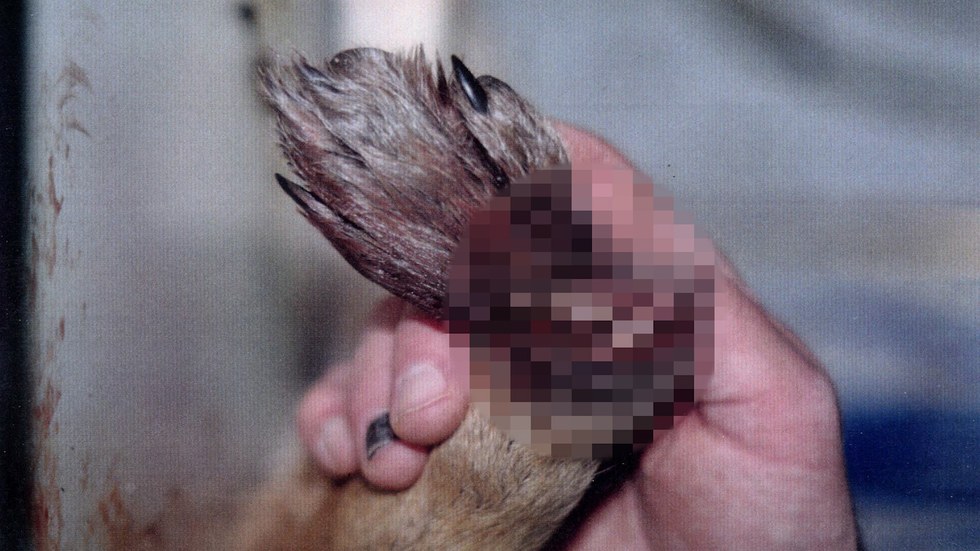
The coyote Fahy found seemed to be determined to stay alive. There were some puddles of melted snow near him, which he appeared to have been drinking from, Fahy said: “He had been in the trap a long time, a week minimum.”
Fahy also noticed a branch sticking up out of the ground beside him that was all chewed up.
“He’d been gnawing on it to relieve the pain,” Fahy said.
As Fahy got closer, he noticed paw prints in the ground and the vestiges of smaller animals. “There were these small bones around him — we realized that a mate was bringing him food,” Fahy remembers. “It’s gut-wrenching. It haunts me to this day.”
Fahy did everything he could to save the 2-year-old coyote’s life. Except for his terrible injury, he appeared healthy. “He was in his prime,” Fahy said.
But the coyote’s foot was completely ruined — the bones were jutting out through his skin. And the animal appeared to be exhausted from trying to survive. “When I picked him up and wrapped him in a blanket, I felt him completely relax in my arms,” Fahy said. “He had nothing left.”
Brooks Fahy/Predator Defense
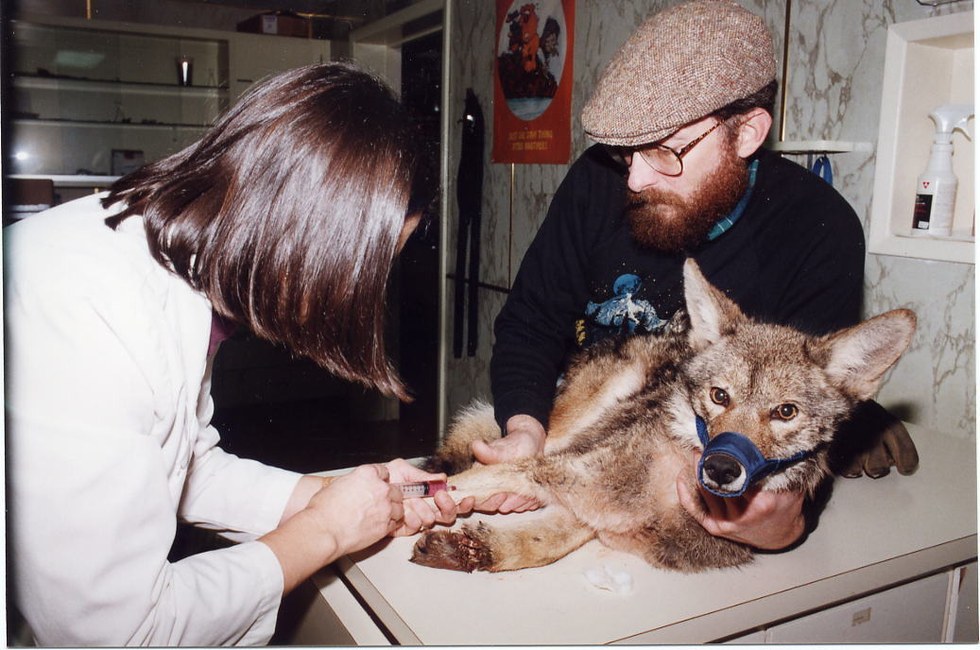
Fahy carried the young coyote a mile to his truck and then drove him to see a veterinarian. Sadly, the coyote was just in too much pain, so Brooks held him while the veterinarian euthanized him with an injection.
“I’ve dealt with hundreds of trapping cases. I’ve seen animals who have lost their teeth because they’re gnawing so hard on the trap, I’ve seen it all,” Brooks said. “But I think of this coyote every day.”
Fahy holds the coyote as he’s being euthanized.Brooks Fahy/Predator Defense
This coyote died in 1992. “Virtually nothing has changed,” Fahy said. “If anything, it’s gotten worse.”
Hundreds of thousands of coyotes like him have been killed since then, many of them by these painful traps. In 2016 alone, Wildlife Services killed 76,963 adult coyotes; over 19,000 of them were killed by leghold traps, foothold traps, leg snares and neck snares. And that doesn’t even count how many coyotes and other animals were killed through trapping by private citizens.
“The brutality of these traps cannot be overstated,” Adam M. Roberts, CEO of Born Free USA, said in a statement. “Steel-jaw leghold traps and Conibear traps slam shut with bone-crushing force, causing massive injury and trauma. Animals trapped in strangulation neck snares — designed to tighten around an animal’s neck as he or she struggles — also suffer in extreme agony for an unconscionable amount of time.”
“Steel-jaw leghold traps, snares, and Conibear traps can cause massive pain, injury and even death to anyone who crosses its path,” Jennifer Place, a program associate at Born Free USA who specializes in trapping issues, told The Dodo. “We have seen it happen too many times: a mountain lion cub caught in a leghold trap; a dog who breaks her teeth to the gum line in her panic to free herself from a trap; a boy rushed to the ER with a Conibear trap on his arm; a young man getting ensnared in a Conibear trap set near a park playground. These traps are cruel, archaic and terrifyingly indiscriminate, and they can be found anywhere.”
There are bills in the U.S. House of Representatives that could finally put some limits on trapping, Place added, like the Refuge from Cruel Trapping Act (H.R. 1438), which seeks to ban leghold traps and body traps in national wildlife refuges. “It is time to stop the further spread and use of these brutal devices,” she said.
Another bill introduced to the House this month is the Public Safety and Wildlife Protection Act (H.R. 1629), which aims to ban the import, export and interstate commerce of steel-jaw leghold traps and Conibear traps, the two most widely used traps in the U.S. And it’s expected that the Limiting Inhumane Federal Trapping (LIFT) for Public Safety Act, which seeks to ban traps on federal lands managed by the Department of the Interior and Wildlife Services, will be reintroduced.
People who have been fighting trapping for years are hopeful that some of the suffering could soon come to an end — but the public needs to know about what’s going on and to speak up for these animals.
“I’ve been doing this work for 40 years and I never cease to be amazed that this is still going on,” Fahy said. “We know through science that these species are self-regulating. It’s time we evolve as a society and stop thinking of animals as natural resources. It’s important for us to empathize with these animals, to feel the loneliness of an animal caught in a trap. They feel pain. They suffer. They want to live.”
A three-year-old Labrador retriever died and a 14-year boy was knocked to the ground when a cyanide device deployed by the federal government exploded in Pocatello, Idaho.
The Idaho State Journal reported the boy, who had been on a walk with his dog Thursday on a ridge near their home, watched his dog die. According to the Bannock County Sheriff’s Office, the boy was also “covered in an unknown substance” when the device known as an M-44 detonated. He was evaluated at a hospital and released.
“That little boy is lucky,” Sheriff Lorin Nielsen told the Pocatello newspaper. “His guardian angel was protecting him.”
The Idaho incident comes a few weeks after a gray wolf was accidentally killed by an M-44 on private land in Oregon’s Wallowa County. The controversial type of trap is used by the U.S. Department of Agriculture’s Wildlife Services crews around the country primarily to kill coyotes and other predators.
U.S. Rep. Peter DeFazio, D-Ore., introduced legislation as recently as 2012 to ban the trap.
DeFazio has said he would reintroduce a similar bill in Congress.
The wolf death was the first documented “incidental take” of its kind in Oregon involving the protected animal and the M-44, fish and wildlife officials said.
Federal Wildlife Services officials said there were 96 M-44 devices dispersed across Oregon as of last week and the agency was looking to remove devices that were near known wolf habitat. Oregon fish and wildlife officials have said the devices were not allowed in areas of known wolf activity.
A gray wolf was killed on private land in Wallowa County by a controversial cyanide device used by the U.S. Department of Agriculture
Oregon has long paid Wildlife Services to kill invasive species and specific predators. But Gov. Kate Brown’s’ recommended budget doesn’t include $460,000 typically set aside to pay the federal agency to kill animals in Oregon.
Bannock County officials described the device as “extremely dangerous to animals and humans.”
The department circulated photos of the trap. “If a device such as this is ever located please do not touch or go near the device and contact your local law enforcement agency,” officials said.
Government officials have said the number of deaths of domestic animals and non-target animals each year is low, and officials say they are conducting an “internal review” of the wolf death.
Wildlife Services killed 121 coyotes in Oregon in 2016 with M-44 devices, along with three red foxes, according to the government’s figures. No gray wolf was killed in the U.S. last year with the cyanide capsules, according to the government.
A Eugene nonprofit says the government isn’t being truthful about the number of pets and non-target animals – such as wolves – killed each year.
“Yesterday’s Idaho poisoning of a dog and the near poisoning of a child is yet another example of what we’ve been saying for decades: M-44s are really nothing more than land mines waiting to go off, no matter if it’s a child, a dog, or a wolf,” Brooks Fahy, executive director of Predator Defense, said in a statement.
“It’s time to ban these notoriously dangerous devices on all lands across the United States.”






 Exposing the Big Game
