|
|
|

|
|
|
http://www.northjersey.com/news/a-question-of-raccoon-cruelty-for-n-j-supreme-court-1.1691281
They are a ubiquitous and often an irksome part of suburban life in New Jersey, known for carrying rabies and tearing through garbage.
Now raccoons are at the center of a legal battle between animal rights activists and state regulators, one that may soon head to the New Jersey Supreme Court.

At issue is a Christie administration policy that allows the use of a controversial trap that led to the capture and killing of thousands of raccoons by fur trappers earlier this year.
The case hinges on whether “enclosed foothold traps” approved for use last year by the New Jersey Fish and Game Council are similar enough to steel-jaw traps that were banned 32 years ago by lawmakers because they were considered “inhumane and cruel.”
The new traps will be used again when raccoon season begins on Tuesday after an appellate panel sided with Fish and Game last month, saying there was a enough of a difference in the two traps to uphold the policy. A coalition of animal rights and environmental groups will appeal the decision to the state high court this month, their lawyer said.
The traps are very effective. Used for the first time during the previous raccoon trapping season from last November through this past March, the traps helped catch 12,600 raccoons — a 77 percent increase from the year before and the most in 25 years, according to state trapping data.
Enclosed foothold traps act similar to a mouse trap with a steel bar in a baited, two-inch-wide cylinder snapping down on a raccoon or opossums’ paw.
Opponents say they are essentially the same as the illegal jaw traps because they are excruciatingly painful to the animals that are caught in them.
“These traps snap on the animal just like the old ones did, and they suffer for days until the trapper comes around,” said Dante DiPirro, a lawyer representing the coalition.
“It causes the same exact kind of cruelty that the legislation intended to prohibit.”
No threat to dogs
Supporters of the trapping policy say the devices are more humane than the steel-jaw traps and are small enough to prevent dogs from being caught. They also argue that it will help contain a growing raccoon population.
“We are the most densely populated state, and we have some of the most densely populated pockets of wildlife,” said Ed Markowski, legislative coordinator for the New Jersey Federation of Sportsmen’s Clubs.
“When you put those together, you have a chance of some unpopular interactions.”
Animal rights and environmental groups have said policies like the raccoon traps and Governor Christie’s expansion of the black bear hunt this year are a capitulation to small, special interest groups whose activities are wildly out of character with an increasingly suburban state.
Hunting licenses, meanwhile, have dropped precipitously almost every year from a high of 186,774 in 1971, to 34,679 in 2015. Trapping licenses went from a high of 4,406 in 1980, to a low of 454 in 1992, but have slowly increased to 1,405 this year.
The raw-pelt value of all the raccoons caught during the 2012-13 season was $96,675 based on reported fur sales, according to a state report.
Still, state officials have argued that trapping is important to the state economy.
There is an “economic ripple effect” because trappers buy traps, supplies, gasoline, clothing, said Larry Hajna, a spokesman for the state Department of Environmental Protection, which oversees the council.
Trappers say their activities are more than just a money-making venture, where pelts sell for about $15 each.
They are preserving a heritage, they say, that goes back to the earliest days of North American settlements and is often passed down through generations.
Markowski of the sportsmen’s club federation said there is an important public health element to trapping: The raccoon population needs to be controlled to prevent the threat of rabies.
Indeed, raccoons account for 77 percent of animals diagnosed with rabies, according to the state Department of Health. And there have been some well-publicized attacks this year by rabid raccoons, including one involving a 6-year-old Elmwood Park boy in January and another on a 76-year-old Boonton man in July.
But the last time a human contracted rabies in New Jersey was 1997, said Donna Leusner, a health department spokeswoman. And that was from a bat. It was the first human case of rabies since 1971.
Definition of ‘jaws’
While the economic and health implications were mentioned in the appellate decision, the ruling came down to essentially what constitutes a banned jaw trap.
The three-judge panel said the new traps “are made of steel, but they do not operate as ‘jaws,’ having only one part that moves to ensnare the animal when the animal pulls on a lever with its paw.”
Like their fight to have a court overturn the bear hunt four years ago, animal rights groups have a high burden to challenge the trap ruling. The panel’s decision noted that the state Supreme Court has ruled that an agency’s determination must be upheld unless “it is plainly demonstrated to be arbitrary.”
Because of this the New Jersey Sierra Club is also pressing the Senate to pass a bill that would essentially ban the newer traps. The Assembly passed an identical bill overwhelmingly last month, but it has not gotten much traction in the Senate.
“It’s clear the citizens of New Jersey and the Legislature do not want these traps,” said DiPirro, the animal rights and environmental coalition lawyer. “The only way they could get away with this is to change the rules internally.”
Markowski said lawmakers should recognize that raccoons pose a constant threat to residents.

http://www.nelsonstar.com/news/399064261.html
. by Tom Fletcher – BC Local News
. Cranbrook Invermere Smithers posted Oct 28, 2016 at 11:00 AM
Bear-related incidents recorded in the past month by the B.C. Conservation
Officer Service:
. A grizzly bear caught in a wolf trap near the Palliser River west of
Invermere was freed by conservation officers, after the trapper reported the
situation.
“The adult female grizzly was successfully immobilized and the trap was
removed from her paw without any incident,” Deputy Chief Chris Doyle said.
. Conservation officers captured and relocated a female grizzly bear and its
two cubs at Cherryville in the South Okanagan after they were attracted into
someone’s yard by fruit left from trees. The bears were sedated and
relocated within their home range.
. Skeena district conservation officers are investigating after a mother
black bear and two cubs were shot and dumped near Granisle. Another
investigation involves the shooting of five black bears in separate
locations along a road near Fort Nelson.
. Bear conflicts have declined as winter has approached in B.C., but there
are still hotspots, including Kamloops where bear incident reports are the
highest in a decade.
Bears continue to be attracted mainly by exposed garbage, fruit and other
attractants. Province-wide, there were more than 3,000 calls to the COS
about bears in October, and 20,000 since April 1.
Pumpkins are another attractant, and Doyle reminded people who set out
Halloween pumpkins to remove them as soon as the festivities are over.
http://www.nelsonstar.com/news/399064261.html
<http://www.nelsonstar.com/news/399064261.html>
Conservation officers get thousands of bear conflict calls, investigate
mother bear and cubs shot and dumped
|
|
|
|
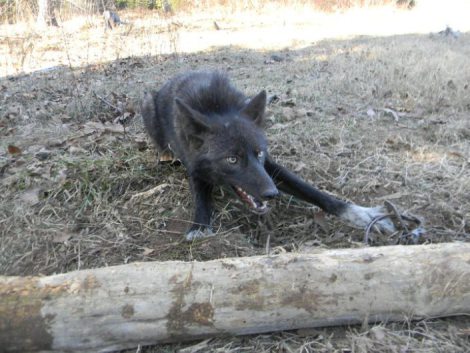
Coauthored by: Dwight Rodtka Predator Control Specialist, Alberta Agriculture (retired) and
Sadie Parr Executive Director Wolf Awareness Inc.
In Alberta, the grizzly bear has been listed as a Threatened species under Alberta’s Wildlife Act since 2010, and the provincial government has implementedmanagement measures to increase its numbers.
Hunting of grizzly bears is no longer allowed, and education promoting conflict prevention and coexistence among humans has been put into action.
However, there remains one important source of bear mortality which the government recognizes but has done little to eliminate: baited killing snares set for the capture of wolves and coyotes. Grizzlies are extremely susceptible to being caught in wolf or coyote killing snares. Although there are designated areas and seasons to protect grizzlies from falling victim to snares, these are quite ineffective in protecting bears.
As per the current Alberta Guide to Trapping Regulations, trappers are allowed to set out bait piles, usually including hunter kill scraps and road-killed animals. Snares set around bait stations are neither selective nor humane, and they kill or cripple whatever may be attracted to the bait pile. Snares are also commonly set on game trails with disastrous results.
“Non-target” catches are common, and often referred to as “by-catch”. Last winter, inSundre, Alberta, a minimum of fifteen cougars, several deer, a horse, and two eagles were accidentally caught in snares set for wolves and coyotes.
In another incident investigated by Dwight Rodtka, a retired Predator Control Specialist of 38 years for Alberta Agriculture, 12-15 wolf snares set in the Rocky Mountain House area, Alberta, captured and killed, within one week: a wolf pup, a deer, an adult black bear, and an adult grizzly bear.
Current legislation does not even require the reporting of nontarget species. Unfortunately, when bears are seeking the highest amount of calories in fall to ensure survival through the winter, a stage called hyperphagia, finding a bait pile is like hitting the jackpot. When snares are set, however, finding a bait pile also means death.
Snaring wolves is considered a recreational pursuit (i.e., trophy hunting) for trappers today and a source of income. Since 2007, the Alberta Wild Sheep Foundation and other private groups have funded bounties of $300 $350 per dead wolf.
Hundreds upon hundreds of wolves are killed every year for this bounty that also causes the by-catch death of grizzly bears and countless other animals. In this new millennium, Canada has returned to the old adage of “shoot, shovel, and shut up.”
Not only is the province intentionally allowing the squander of wolves and coyotes, both of which have important roles in maintaining balance and diversity in nature, but it is also blatantly allowing harm and death to threatened grizzly bears.
Alberta’s trapping regulations have established “seasonal snaring restrictions” in an effort to “reduce the potential for accidental harvest [KILLING] of grizzly bears”.
Unfortunately for the grizzlies, Alberta’s Trapping Regulations do not seem to take in account nor know about grizzly bear behavior, as snaring is allowed in many Wildlife Management Units when bears are still active.
Many units along the Eastern Slopes, Rocky Mountain Foothills, National Parks, and farmland are open for snaring from October 1 March 31. However, grizzlies commonly den in December and are often out on the landscape again in March. In other words, snaring occurs when bears may be at risk of being captured.
Dwight Rodtka lives in Wildlife Management Unit 324 where grizzlies are common. Each year, Rodtka sees 2-7 different grizzlies on his property, usually from March 19 to December 9. Clearly, grizzlies are exposed to killing snares for no reason other than the government’s desire to kill as many wolves and coyotes as possible.
Snaring wolves and coyotes in these wildlife management units where grizzly bears are active results in the loss of animals and the further endangerment of the species.

Ballot Initiative I-177 is a sensible measure to protect people, pets and wildlife from trapping on Montana’s wild public lands. Please vote yes on Nov. 8.
While trapping will still be allowed on private lands throughout the state, I-177 would ensure that Montana’s national forests, state parks and other public lands are kept free of cruel, archaic traps that injure and kill many animals by accident every year.
This measure would not limit hunting on public lands, contrary to the claims of its detractors.
Your yes vote will help save thousands of animals annually from these brutal traps. Let the world know that Montana cares about its wildlife by voting yes on I-177. Visit www.yeson177.org for more information.
Tags: cat, hunting, Jessamine county animal care and control, Trap, Williamsburg Drive
NICHOLASVILLE, Ky. (WTVQ) – Jessamine County Animal Care and Control say a cat has been released from a hunting trap after the animal was found on Williamsburg Drive dragging the trap behind it.
Officers were able to catch the cat and bring it to a local veterinarian who removed the trap. The cat then underwent surgery, losing two toes because of the damage the trap had caused.
The veterinarian says the trap was probably on the cat for somewhere between 24 and 48 hours.
The Kentucky Department of Fish and Wildlife is stressing that using a trap life the one that the cat was caught in is not a legal method to capture free roaming or feral cats.
U.S. press release:
Washington, DC – Today, U.S. Representative Earl Blumenauer (OR-03) introduced the Limiting Inhumane Federal Trapping (LIFT) for Public Safety Act, legislation to reign in unsafe and inhumane trapping on public lands and by public officials.
Countless pets and wild animals are injured and killed each year in body-gripping traps such as leg and foothold, Conibear, and snare traps. Despite the existence of viable non-lethal alternatives, body-gripping traps are used by federal agencies, state and local governments, private entities, and individual trappers to catch creatures for their fur, keep animals away from livestock and crops, and even for recreational purposes. Unfortunately, these traps often subject captured animals to excruciating pain for hours or even days, before they eventually die from dehydration, injuries, or predation, or when the trapper eventually finds them. Additionally, these traps are indiscriminate in their victims, and while intended for certain species or “problem animals,” they may capture – and even kill – companion animals if hidden along popular trails or waterways. Humans also risk being inadvertently caught in poorly placed traps, or attack from distressed captured animals they try to free.
“We’ve seen too many concerning examples of wild animals suffering and pets falling victim to body-gripping traps. It’s disgusting such inhumane traps are so widely used,” said Representative Blumenauer. “With many effective non-lethal methods that can be used in place of these cruel traps, the federal government should not and cannot continue to endorse their use.”
Wildlife Services, a federal agency notorious for its secrecy and use of inhumane animal management techniques, is responsible for the death or capture of thousands of animals per year in cruel body-gripping traps, often used as a first resort. Wildlife Services also advises and enters into contracts and cooperative agreements with state and local governments, as well as with private entities, to kill animals using these traps. Other federal agencies, too, allow or use body-gripping traps to control animal species – too often without attempting or requiring more humane and non-lethal control options first.
The LIFT for Public Safety Act acknowledges the inhumane nature of body-gripping traps and takes a two-pronged approach to severely restricting use of these traps to protect public safety and reduce animal suffering:
The legislation contains limited exceptions for certain lands, the protection of endangered species, and the control of invasive species, while promoting transparency and requiring use and documentation of non-lethal methods first.
|
|
||||||||||||||
Monitoring the quotas and reviewing over the years the reports, one can basically conclude this is the norm. Regions that go over quota are addressed and reinforced by having the quota increased. During the Commissioner’s hearing, FWP provided graphs depicting the increased trapping of River Otter as summation the River Otter population has increased and increasing the quotas are therefore justified. Yet what the graphs show us is more River Otter are killed, not that more exist, or existed over time.
FWP reports trapping is market driven. River Otter pelts sold for $63 on average to high of $127 in Montana this past season early on. However, unless the trappers aren’t interested the wildlife rarely catch a break. When trappers lose an interest in a species, FWP reportedly increases the quota to entice them.
FWP neglected to mention in their publicized cover sheet of numerous comments received supporting NRDC 24 hr trap checks that was denied public comment. Yet during the hearing, FWP acknowledged the comments were significant. Not on the agenda was the Dept of Livestock providing comment at length on their need to continue to use M44s and opposing any tools such as snaring being removed from their war on predation especially against coyotes even on public lands or in Grizzly habitat. Commissioner Wolfe asked to what extent are these deadly M44 (sodium cyanide) explosives used on public land? The answer remains unknown.
Short from ending trapping, it is hard to really find much winning given the cruel and unnecessary practice of trapping. Of the reported 480 comments FWP received, 54% opposed trapping and favored all proposals to limit trapping. From yesterday’s FWP Commissioners public hearing what was evident is the trappers remain in control and our wildlife is managed, or the lack thereof, in Montana, for trappers. What was further emphasized by Montana FWP and promoted by some Commissioners is trapping is a heritage to be protected in Montana. In contrast, we will continue to push for preservation and ethical treatment of wildlife for their intrinsic, economical and ecological value. Thank you Friends of Trap Free Montana Public Lands |
|||||||||||||||


 Exposing the Big Game