Seashore asked to ban predator hunting

Vote in Poll on lower right column here:
“A group of wildlife conservationists asked Cape Cod National Seashore officials to ban hunting for meat-eating predators such as coyotes and foxes on the 44,000-acre park. Do you support the ban or the hunters?”
                                                           …

Conservationists call on park leaders to prohibit coyote and fox hunting

By Mary Ann Bragg
mbragg@capecodonline.com
Posted Dec. 12, 2014

SOUTH WELLFLEET – A request from wildlife conservationists to ban coyote and fox hunting in the Cape Cod National Seashore will be considered by the agency’s managers in the next few weeks.

Predator Defense, a conservation group in Oregon, joined with backers, including about 30 people on Cape Cod, to ask Seashore officials in a letter Tuesday to ban the hunting of meat-eating predators within the Seashore’s 44,000 acres. The Seashore boundaries include public and private lands across the Cape’s six easternmost towns.

Meat-eating predators found in the Seashore would include Eastern coyote, red fox, river otter and fisher, and in the future, could include gray fox, bobcat and black bear, according to the Predator Defense letter.

The Seashore follows state hunting regulations except for banning all hunting from March 1 through Aug. 31 and allowing a spring turkey hunt, according to Seashore Chief of Natural Resource Management Jason Taylor. The Seashore also operates under a 2007 final environmental impact statement hunting program that manages traditional hunting practices with National Environmental Policy Act standards, such as minimizing the effect on wildlife populations and ecosystems.

“The EIS was fully vetted over multiple years, so I’m not sure why we’re talking about this now,” Taylor said Thursday. Taylor said he and Seashore Superintendent George Price would likely meet to discuss the letter within the next few weeks and craft a response. He said he supported the idea in the letter that predator species are important to maintain a balance within the ecosystem, but that the Seashore is experiencing an imbalance with too many animals because of humans feeding them or leaving trash behind.

In response, Brooks Fahy of Predator Defense and wildlife conservationist Louise Kane, of Eastham, said Thursday that the Seashore had no data to back up a claim of imbalance with coyotes.

“We’d like to meet with them,” Kane said.

For 2014, state regulations allowed coyote hunting Jan. 1 through March 8, and then from Oct. 18 through the end of the year. In 2014, red and gray fox hunting was allowed Jan. 1 through Feb. 28, and then from Nov. 1 through the end of the year. There are no daily or season hunting limits for coyotes or foxes, state records show.

The state’s trapping season in 2014 for coyote and fox was Nov. 1 through Nov. 30, and the trapping season for river otter is Nov. 1 through Dec. 15. The trapping season for fisher was Nov. 1 through Nov. 22.

Statewide, there are an estimated 10,000 coyotes, and they and fox are considered abundant throughout the state including on Cape Cod, according to state Division of Fisheries and Wildlife Chief of Information and Education Marion Larson. There is not a state estimate on the number of foxes, Larson said.

On Cape Cod, there are an estimated 200 to 250 coyotes at the end of the winter, before new pups are born, according to coyote researcher Jonathan Way of Barnstable. The coyotes in Massachusetts, called Eastern coyotes, are a hybrid of a coyote and a wolf, according to Way, and he refers to them as “coywolves.” Way was one of the backers of the Predator Defense letter.

The Seashore does not maintain population studies or harvest records on coyotes or other animals hunted under state regulations, Taylor said. “What we see is basically what we observe as we do the other work on the park,” he said.

State records show 24 coyotes and two red foxes were killed in the 2013-2014 season in Barnstable County. Larson said all hunters and trappers are required to report their harvests.

Way, though, said about 100 coyotes are killed each year on Cape Cod.

Coyotes have a natural ability to regulate their population size, and typically would have a pack of three or four adult animals and a territory of about 6 to 10 square miles, Way said. Killing through hunting disrupts the packs and territories and can lead to problems such as more pups being born and more predation of domestic animals, Way said.

“The national park is the ultimate place to have a setting where you can actually study them,” he said. “The population gets stable and they can actually act like a coyote.”

The concerns noted in the Predator Defense letter include that killing “top” predators such as coyotes can cause an overabundance of smaller predators. Hunting does not reduce predation, and killing coyotes for sport rather than to eat is unethical, according to the letter. Heavily hunted animals also show signs of higher stress, the letter stated.

— Follow Mary Ann Bragg on Twitter:@maryannbraggCCT. 

—Wildlife Photography ©Jim Robertson
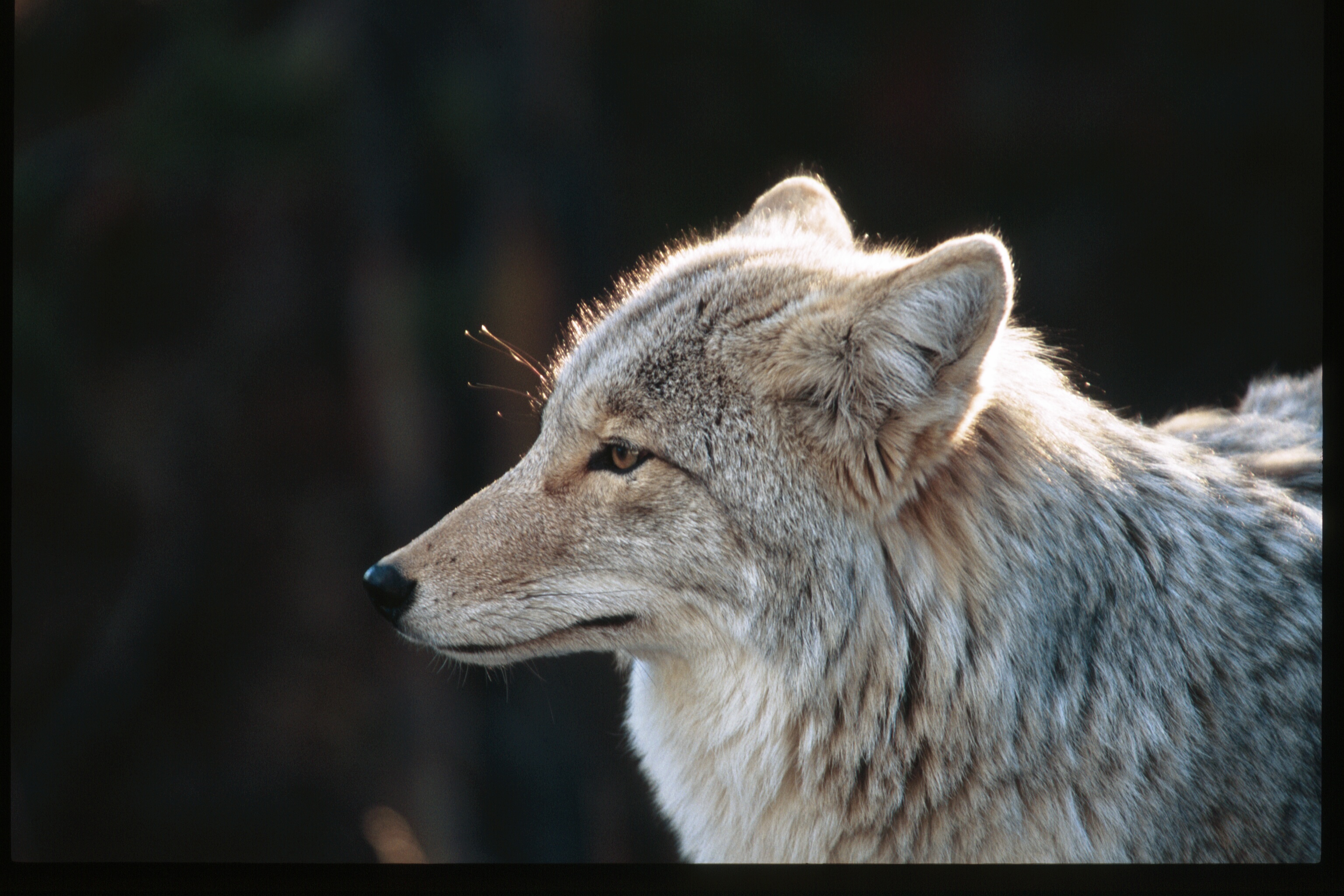
—Wildlife Photography ©Jim Robertson

Science and Sentiment Say Wolf Trophy Hunting Doesn’t Wash

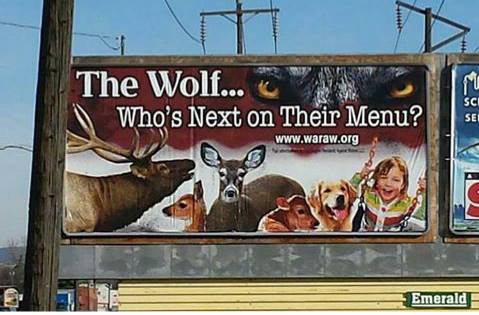
Anti-wolf billboard, Spokane, WA

Anti-wolf billboard, Spokane, WA

http://www.huffingtonpost.com/wayne-pacelle/science-and-sentiment-say_b_6278208.html?utm_hp_ref=green

W

Science and Sentiment Say Wolf Trophy Hunting Doesn’t Wash

 12/05/2014

If policy makers stick to their guns and continue allowing trophy hunters to kill  wolves in six states in the Great Lakes and Northern Rockies regions, they will be defying both science and, generally speaking, the will of voters.

Folks, the recent weeks of 2014 have brought us to a turning point. So let’s turn. It’s time to turn away from the past and catch up with the future in the way we manage predators in the wild.

The right decision now, after what we have learned, is to suspend trophy hunting and trapping programs for the small, recovering wolf populations just recently taken off the federal list of endangered species – with the knowledge that it’s the right thing to do on so many levels.

One compelling reason is science. Underlying the growing number of wolf hunts in the United States is the wrongheaded, but long-standing, belief that trophy hunting and trapping programs for wolves reduce the threat that wolves pose to cattle, sheep, and other free-ranging livestock.

Well, that theory is now in doubt. And it’s not just me who says so.

The first serious study of that theory has been released and it found just the opposite. When I say serious, I mean very serious science. Washington State University researchers dug into comprehensive statistics from 25 years of wolf “management” and found that shooting wolves indiscriminately may make things worse for farm animals. As well as for wolves.

That’s because when disrupted, wolf families adapt, move, split up, increase reproduction — and then they kill even more livestock.

Researchers found that shooting wolves indiscriminately reduces predation on cattle and sheep only when wolf populations are brought so low that, guess what, they end up protected again under the Endangered Species Act.

Wolf haters are having a hard time coping with the truth here. A spokeswoman for one Washington state group was quoted as criticizing the integrity of the 25-year statistical survey because it was sponsored by the state legislature.

Or here’s what a spokesman for Idaho’s wool growers told National Geographic: “The professor can say whatever he wants. We’re not going to just let wolves run wild.”

Well, folks, you can’t invoke science only when it suits you — as the trophy hunting lobby so often does. The science may not be the final word, but it’s an important set of facts to inform a final decision.

The other element to consider is our values: obviously, here we differ with the wool growers and the trophy hunters. But let’s face it, by all accounts, it appears their views are in the minority. The public wants more protection for wolves, in a world where we all are showing greater conscious consideration of animals.

In the first-ever plebiscite on the subject, voters in Michigan sided with wolves and against trophy hunting and trapping. Voters faced two separate votes on laws passed by the Legislature to permit wolf hunts, and both were repealed. The margins were overwhelming, 64-36 and 55-45, with one of the measures getting more than 1.8 million votes against wolf hunting, more votes than any of the statewide candidates for office received in their winning elections.

Let me add that Michigan has one of the most deeply rooted and publicly popular hunting traditions in the United States. But voters there, including hunters, understood that wolf haters were plain wrong — and that these ancient animals played a vital role in the wild ecosystem, and in fact were more valuable as a draw for tourists than as stuffed decorations in private trophy rooms. What’s more, nobody eats wolves, so the idea of killing them has no practical value, and responsible hunters don’t go for that, either.

Just as with the new science, there can be no quibbling with the meaning here.

The two pillars of good policy — independent and verified science and thoughtful electoral consensus — agree: Hunting wolves is not acceptable to the public and makes life worse for ranchers who raise cattle and sheep.

**

Sign up here to stay up to date on our work with wolves.

This article first appeared on Wayne Pacelle’s blog, A Humane Nation.

Killing 890 Wolves to Learn About Them: Something’s Wrong


By Marc Bekoff, Ph.D. on December, 02, 2014 in Animal Emotions

An “experimental” study performed under the guise of conservation involved killing 890 Canadian wolves (and other animals) using aerial gunning, trapping, and strychnine poisoning. This research and publication represents the moral failure of the Alberta government, participating universities, the Canadian Journal of Zoology, and the scientists, and it didn’t work.  Read More

Wolves Can’t Win…

…If they’re mean, they get shot and if they’re “too-friendly” they get trapped and have to spend they rest of their life stuck in an enclosure…

Too-friendly Eastern Wash. wolf still on the loose

SPOKANE, Wash. (AP) – Officials are still trying to trap a wolf that has to be moved from northeast Washington to prevent it from becoming too friendly with dogs, the Washington Fish and Wildlife Department said Monday.

“It can take some time to trap a wolf,” spokesman Craig Bartlett.

The wolf, known as Ruby Creek Wolf 47, may be wary because it was trapped in July 2013 and equipped with a radio collar. Tracking last summer showed the wolf hanging around homes near Ione and playing with pet dogs. It has not been aggressive to people or livestock, but there is potential for more serious problems.

To prevent the wolf from mating with dogs over the winter, the state Wolf Advisory Group decided in September to move it to the Wolf Haven sanctuary in Tenino.

The sanctuary has set aside an enclosure in an area away from public view, spokeswoman Kim Young told The Chronicle in a story published Friday.

It would be only the second time in Wolf Haven’s 32-year history that it has accepted a wolf from the wild.

“It’s pretty disheartening the Ruby Creek wolf has become habituated to dogs and being around people, that she now has to spend her life in captivity,” Young said.

“The challenge is that she has lived her entire life in the wild,” she said. “We do all that we can, but we are very aware that this is not the wild.”

Wolf Haven has 82 animals, including eight wolf-dog hybrids and two coyotes.

The sanctuary provides a home for displaced, captive-born wolves and also serves as a breeding facility for two types of highly endangered wolves – the Mexican wolf and the red wolf.

Wolf Haven monitors wolves by remote cameras to reduce stress to the animal by minimizing human presence.

copyrighted Hayden wolf in lodgepoles

Gap Brand Drops Fur After Customers Threaten Boycott

https://www.thedodo.com/fur-piperlime-gap-boycott-741787373.html

Just days after the retail giant Gap, Inc. was targeted for selling fur items in one of its upscale franchise chains, the company has vowed to stop selling fur at the store. Spokesperson Debbie Mesloh issued this statement regarding its brand Piperlime:

Your opinions and views matter to us. That is why, effective immediately, Piperlime will no longer sell real fur products, whether they are made by our company or not. This is an expansion beyond our existing policy of prohibiting real fur in our branded products. We are committed to the ethical sourcing of our products, which includes the humane treatment of animals. We are also committed to our customers and welcome your feedback.

The move comes in response to a Change.org petition that gained over 50,000 signatures. The petition urged Gap, which has previously touted its decision not to sell fur or angora in its stores, to uphold the same standard for its franchise brands. As of last week, Piperlime, a chain launched in 2006, wasn’t meeting those standards. When customers threatened to boycott, the tables were turned.

Brands’ decisions not to sell fur and angora reflect a growing shift away from the fur industry, which is widely known for its many inhumane methods. One 2011 survey from the RSPCA found that 95 percent of people reported that they would not wear real fur, while 93 percent wanted clothing to be clearly labelled as real or fake fur.

Despite this trend, fur has been making a comeback in recent years on fashion runways, thanks in large part to a powerful lobbying push from the fur industry. But not everyone’s buying into it. Many designers are joining the anti-fur bandwagon, including names like Stella McCartney, Tommy Hilfiger, John Bartlett, and Calvin Klein. See this page for more animal-friendly designers.

File

Roadblocks to Raise Funds for Victims of Hunting

An Alabama paper, the Gadsden Times, reported the other day that a goose hunter was critically wounded by friendly fire. Apparently the victim and his buddy were both carrying loaded shotguns when his buddy slipped and hit him point blank in the side. 

They followed that article up with news that there would be a roadblock set up to collect donations to help offset the victim’s hospital costs.

My first reaction mirrored that of a Facebook friend who succinctly commented, “Un-fucking-believable.” The nerve of stopping everyone on the highway to ask that they fund a hunter’s recovery from a hunting accident! 

Then the thought came to me: two can play at that game.

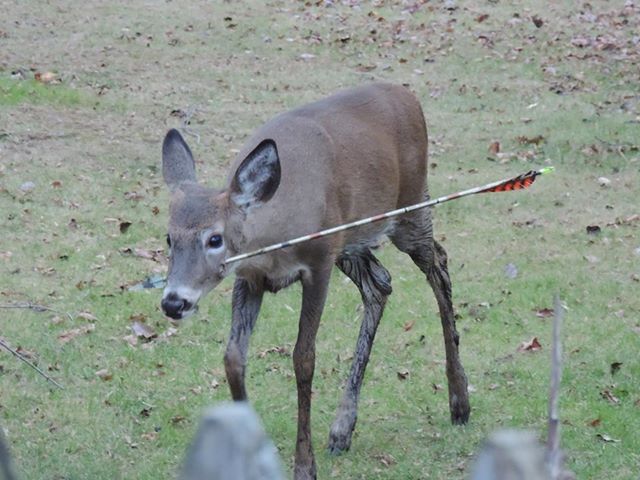
I propose we set up road-blocks—everywhere there is hunting going on—to collect funds for the wildlife victims of hunting. Whenever a goose is winged by a shotgun blast, a deer is crippled by an arrow, a bear escapes on three legs from a shoulder wound or an animal is found struggling in a trap, hunters would have to pay for their rehabilitation and return to the wild. 

I guarantee if hunters had to put their money where their mouths are, it would cut down on the prolonged animal suffering inherent in the sport of hunting.

1441225_10151990537383491_1309889797_n


Petition: Demand an end to trapping, hunting, and hounding Wisconsin wildlife

xVHAyLEawJsheWD-556x313-noPad

It is vital that you not only sign, but network this petition to summon support from all of your social network. Please help us – they are destroying our innocent family. We the human(e) citizens of the world, CHOOSE A LIVING WORLD and FUNDAMENTAL REFORM OF STATE AGENCIES TO A FIRST TIME DEMOCRACY IN FUNDING AND PARTICIPATION OF THE WILDLIFE LOVING PUBLIC (95% of us disenfranchised). Watch this video for incentive to act: https://www.youtube.com/watch?feature=player_detailpage&v=vWj8tYXdvtI

We the citizens of the world support Wisconsin in strengthening anti-cruelty laws to animals to INCLUDE WILDLIFE, who are as sentient as our cats and dogs. We declare that all wild animals have the right to exist, to not be harmed by humans, and fulfill their natural role in the natural world. We demand that Wisconsin democratize wildlife management by replacing killing license oligarchic funding and control of nature for killing with general public funds tied to fair representation for the humane public ( 90% who do not kill wildlife ) in our Natural Resources Board, staffing and humane education in our schools.

Hunters and trappers have lobbied to exempt wildlife, our natural commonwealth, from anti-cruelty laws. We want our wildlife safe from trapping, hunting, and hounding disruption of fragile ecosystems and a dying planet.

Wildlife creates the web of connection that supports human life. We are warned that ecosystems are at a tipping point of biodiversity collapse – and that we… more

http://www.thepetitionsite.com/takeaction/655/892/273/?taf_id=12618360&cid=fb_na


1,800 WA Sheep Moved, Wolves’ Fate Still Uncertain

http://www.spokesman.com/stories/2014/sep/02/stevens-county-ranchers-move-sheep-after-wolves/
September 2, 2014

Stevens County ranchers move sheep after wolves kill 24

By The Spokesman-Review

A Stevens County family moved 1,800 sheep off private grazing land over the weekend to protect their flock from wolves that have killed at least two dozen of the animals this summer.

Dave and Julie Dashiell decided to get their sheep to safety rather than wait for state wildlife officials to track down and kill up to four wolves from the Huckleberry Pack, which is at least six strong and hunts north of the Spokane Tribe reservation.

The ranchers tried everything to thwart the attacks, said Jamie Henneman, spokeswoman for the Stevens County Cattlemen’s Association, which is working on behalf of the Dashiells. They had a full-time herder, four guard dogs, range riders and extra help from state employees, but confirmed wolf kills kept mounting, Henneman said Monday.

“There’s a point where you’ve got to decide, do you leave and hopefully stay in business, or do you stick around until there’s just nothing left,” she said.

The Dashiells know of 24 sheep they lost to wolf attacks the past few weeks and fear the actual toll could be twice that number.

On Sunday they pulled their remaining sheep off rangeland they leased from Hancock Timber Co. northeast of Hunters in southern Stevens County. The animals were moved, with assistance from state employees, to a temporary pasture and soon will be trucked to their winter range, about six weeks earlier than planned, Henneman said.

The Washington Fish and Wildlife Department shot one of the wolves, an adult female, from a helicopter on Aug. 23 and set out traps in hopes of removing up to three others from the pack. But the agency pulled its traps before the Labor Day weekend to avoid conflicts with recreationists and grouse hunters.

The state responded quickly to assist the Dashiells once it was clear wolves were attacking the flock, said Donny Martorello, carnivore section manager for Fish and Wildlife.

When wolves start preying on domestic sheep, losses can add up quickly, Martorello said Monday. “The alarm bells went off for us,” he said, and the agency worked with the rancher daily on preventing more attacks.

Now that the Dashiells have removed the sheep, the state will re-evaluate what to do next, Martorello said.

“We’re certainly concerned about the behavior, the repeated depredations,” he said. “We did remove one wolf; we don’t know if we’ve broken that pattern of depredation, that prey-switching from natural prey to sheep.”

Henneman said the cattlemen’s association sees this as a case of the state falling short of protecting livestock producers.

“If this is the precedent – that Fish and Wildlife refuses to control their animals, that the rancher has to leave – we have a private property rights crisis here,” she said. “That means anyone that owns land out here … it means you’re going to get kicked out, the predator has precedence.”

Henneman also noted that other land and livestock owners in that area may be at risk from the Huckleberry Pack.

“As soon as that pack figures out that their 1,800 sheep are gone, they’re going to move on to the next site,” she said. “This is not the end to these troubles.”

Until recently the pack had spent most of its time on the Spokane reservation but now is more active north of the reservation. The Dashiells did not know the pack was that close until the attacks began, Henneman said.

Fish and Wildlife plans to reach out to neighboring livestock owners to discuss the pack and offer help to try to prevent more attacks. The agency also is evaluating compensation for the Dashiells for the sheep injured and killed by wolves.

———————–

At this time WDFW is not certain if lethal action will continue to be pursued. WDFW and stakeholders are meeting this afternoon and information from this meeting will be posted by WDFW Public affairs office under “Latest News” on their website’s homepage.    http://wdfw.wa.gov/index.html

WA Suspends Huckleberry Wolf Slaugher, but Only For the Weekend Grouse Hunt

Priorities. The state wolf trappers must have wanted the weekend off to hunt grouse… They can trap wolves anytime, but this weekend is opening day of grouse hunting!
August 29, 2014 at 12:03 PM

State suspends wolf hunt this weekend

SPOKANE  — The state Department of Fish and Wildlife (DFW) will suspend its hunt for three more members of the Huckleberry wolf pack until after the Labor Day weekend.

Hunters contracted by the state for the past week have been trying to kill a total of four members of the pack in order to protect a herd of 1,800 sheep the wolves have been preying upon. One wolf was shot and killed by a hunter in a helicopter on Aug. 22.

The state says at least 24 sheep have been killed in eight confirmed wolf attacks on the herd in southern Stevens County since Aug. 14.

Officials for DFW say they have suspended efforts to hunt or trap the wolves in order to avoid conflicts with Labor Day recreationists and grouse hunters.

598875_10151079569092823_924805190_n

URGENT: Speak Out Against Proposed Bobcat Fur Farm!

1560594_4506833524906_4474373351013131003_n

Action Alert here: http://www.peta.org/action/action-alerts/urgent-speak-proposed-bobcat-fur-farm/?utm_campaign=Montana+Fur+Farm&utm_source=PETA+E-Mail&utm_medium=Alert

Montana Fish, Wildlife & Parks (FWP) is currently taking public comments on its Schultz Fur Farm Environmental Assessment, which recommends the permitting of a bobcat farm near Roy, Montana, where bobcats would be captive-bred and then sold to the cruel fur industry. Comments are due by August 29, so your voice is needed immediately!

In the wild, bobcats roam vast natural territories that can span 25 square miles, foraging for food, raising their young, and frolicking with family members. These animals are highly sensitive and elusive beings who avoid human contact at all cost. If Larry Schultz’s farm is permitted, bobcats would spend the majority of their short lives in small wire cages commonly seen in the unscrupulous fur industry. Intensive confinement prevents animals from being able to take more than a few steps in any direction or feel the earth beneath their feet. Many animals go insane under these conditions and will mutilate themselves and cannibalize their cagemates. Reportedly, bobcats have killed their young on Schultz’s fur farm in North Dakota.

Please urge the FWP to deny Schultz’s permit. Remind the agency that fur farms are cruel to animals and bad for the environment. And please forward this alert widely!
Action Alert here: http://www.peta.org/action/action-alerts/urgent-speak-proposed-bobcat-fur-farm/#ixzz3AUFFxSfO