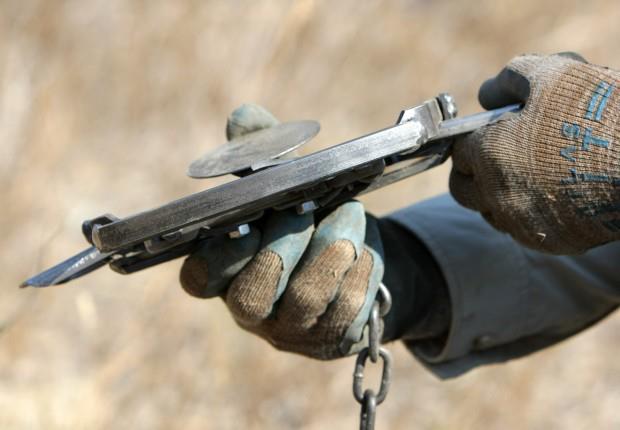
Video, How to Release you pet from a trap:
How to Free an Animal From a Trap
7

Video, How to Release you pet from a trap:
http://wtaq.com/news/articles/2014/may/12/cats-in-traps-fuels-new-animal-cruelty-debate/
Undated (KELO-AM) Animal rights groups are shocked by reports of traps in the Black Hills being baited with live cats.
State game officials have heard from hikers that have stumbled upon traps baited with small cats.
Sheri Kosel with South Dakotans Against Animal Cruelty says she was shocked and then disgusted by the stories. Kosel says there may be a loophole on traps in South Dakota’s first animal cruelty law passed by the legislature this year.
State Game officials and trapping groups are now both calling for a ban on baiting traps with live animals in South Dakota. Kosel says closing the loophole or a separate outright ban would be alright with her.

Three letters against trapping in Missoulian and BR Star

Wildlife Photography ©Jim Robertson, 2014. All Rights Reserved
 406-218-1170 FREE end_of_the_skype_highlighting

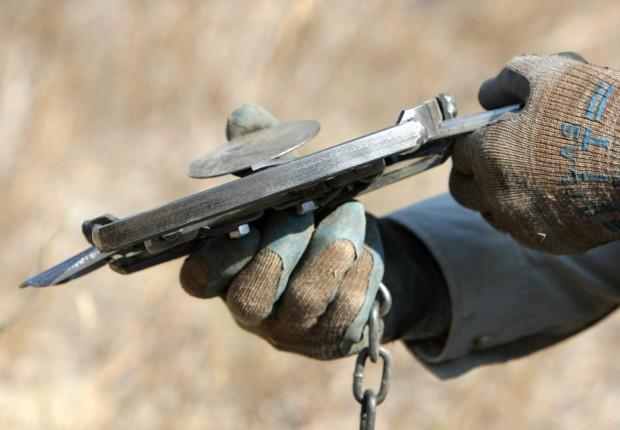
The Los Angeles City Council voted unanimously Wednesday to ban traps that snare or grip coyotes, bears, foxes and other animals in the city, deeming such traps inhumane.
Under the new rules, commercial trappers cannot use traps that grip or snare any part of the animal, with the exception of traps set for rats, mice and other small rodents. Angelenos are banned from using any trap “that maims or causes the inhumane death or suffering of any animal,” the rules state.
Commercial trappers can still do business using other kinds of traps, which can include cage traps that involve a locking door.
However, the Department of Animal Services will also put forward regulations to ensure that such traps are not used inhumanely — for instance, by leaving an animal caged for a long time in the summer heat.
All traps “can be inhumane through negligent care or use, but snares, bodycrushing and body-gripping traps are inherently inhumane,” a council committee focused on animal welfare wrote in a report. Besides banning snare traps, “the Department is requesting the authority to establish reasonable rules and regulations regarding the use of humane traps and the treatment of the trapped animals.”
Wildlife protection groups say banning snare traps will prevent needless suffering and keep other animals safe. Trapping sounds “safe” to people, but there’s no guarantee that the targeted animal is the one trapped and killed, said Randi Feilich, the Southern California representative for Project Coyote. Pets can also fall victim to the snares, she added.
“If you’ve ever seen an animal trapped in one of these traps, you would never, ever allow them to be used,” said Skip Haynes of the wildlife protection group Citizens for Los Angeles Wildlife.
Animal trapping groups did not speak at the Wednesday meeting, but Dan Fox, president of Animal Pest Management Services Inc., argued in an earlier letter to the council that cage traps were not effective in catching coyotes and that snare traps could be a humane option if used correctly. Experienced trappers consider whether other animals are in the area before setting traps, he wrote.
The new rules “will remove any efficient methods of trapping predator animals, and increase costs for residents without addressing the true issue” — people ignoring the existing rules, Fox wrote.
The ban was first proposed by Councilman Mitch O’Farrell and seconded by Councilmen Paul Koretz and Tom LaBonge.
“Mahatma Gandhi once said … a society can be judged by the way it treats its animals,” O’Farrell said before the Wednesday vote. “Colleagues, banning these cruel and sadistic torture devices to deal with our wildlife is the way to go.”

The Springfield bureau of Lee Enterprises reports (http://bit.ly/1iI5vfM) the Illinois House voted 91-20 Thursday in favor of the measure. It now goes to the Senate.
Illinois banned hunting of the nocturnal animal in 1972. Bobcats were on the threatened species list from 1977 to 1999.
But supporters say the population has made a comeback.
Republican state Rep. Wayne Rosenthal of Morrisonville is the bill’s sponsor.
He says the bobcat population is growing in rural, non-farming areas of western and southern Illinois.
The hunting and trapping season would occur sometime between Nov. 1 and Feb. 15. A hunter would be allowed to kill one bobcat per year.
http://www.seattlepi.com/news/article/Illinois-House-OKs-measure-to-allow-bobcat-hunting-5357469.php
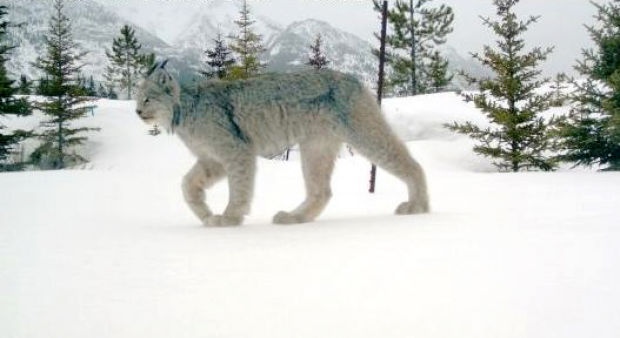
The Canada lynx is one of Idaho’s coolest cats and among the rarest of wild felines in the United States, but that hasn’t prevented them from being caught in recreational fur-trappers body-crushing traps and snares. At least three have been killed or caught by bobcat trappers in the last two years.
Because the lynx is protected as Threatened under the Endangered Species Act (ESA), any trapping is illegal. An agency permitting such trapping violates the ESA unless it has an approved plan that avoids or reduces “incidental take” or unintentional harm to the species. Idaho Department of Fish and Game lacks such a permit, and today, Western Watersheds Project and our allies sent the state a Notice of Intent to Sue if it doesn’t start protecting lynx and complying with the ESA in the next 60 days.
The threats to lynx from trapping just add to the issues this species is facing; the species is specially-adapted to feed on snowshoe-hares (video) and to survive in cold weather. With rising temperatures and reduced snowpack under climate change, the lynx is already losing important habitat. Accidentally killing them in traps is an unnecessary – and unacceptable – harm to the species already at risk.
WWP and our allies, Center for Biological Diversity and Friends of the Clearwater, will continue to press for full protection for lynx in Idaho and across the West.
 [They trap 1,000 pine marten per year. It’s like stocking a lake with trout so people can catch them. Trapping is just a sport there!]
Montana proposes for first pine marten transplant in 50 years
The agency plans to ask the Fish and Wildlife Commission at its April 10 meeting for approval to begin formally evaluating a translocation into the Belt Mountains of central Montana. Both the Big Belts and Little Belts have quality marten habitat, but current population estimates remain uncertain. An environmental assessment with input from conservation groups and the public would follow approval by the commission, the proposal said.
“They may be absent and it’s difficult to establish if there was a historical presence,” said Brian Giddings, statewide furbearer coordinator.
The Montana Field Guide describes marten as a housecat-sized weasel that typically lives in mature conifer or mixed wood forests. They generally run 21 to 26 inches long and 1.5 to 2.75 pounds. [The same kind of measurement jargon used for trout.] Males grow larger than females. They’re characterized by their light to dark brown fur, prominent ears and a bright orange or yellow throat patch.
Marten occupy much of western Montana, according to the field guide. FWP classifies them as a furbearer, and trappers routinely harvest more than 1,000 per year in the state.
Marten were planted in the southern half of the Big Belts in the 1950s, and the agency has received occasional reports of sightings, Giddings said.
“I’m a little surprised we haven’t picked up any marten in that area,” he said of FWP surveys. “We did have a report of one harvested in the Crazys back in the ’90s.”
Giddings added that beetle-killed trees in the mountain ranges could provide quality marten habitat. Marten like to hunt for animals like voles and shrews under downed logs, he said, and beetle-killed trees that fall provide microhabitats marten like.
The Belts appear to have suitable habitat to establish a self-sustaining population, according to the FWP proposal, but the isolated, island-like nature of the Belts geographically makes natural recolonization unlikely.
Kylie Paul, forest carnivore specialist for Defenders of Wildlife based out of Missoula, said her organization is definitely interested in the proposal. Paul typically works on projects with the marten’s larger cousins the fisher and wolverine. Depending on the details of the translocation, the proposal is one she thinks Defenders will endorse.
“Reintroductions can be really valuable for these midsized species,” she said.
Paul noted that research has identified two species of marten in Montana. One major detail she hopes FWP looks at is which species best fits the habitat in the Belts. Paul points to reintroductions of fishers to some areas of Montana as one indicator that such projects can work.
“Fishers reintroduced in the Swan and Cabinets have been pretty valuable for establishing a population,” she said. “Species occurring in their historic distribution is super valuable as a conservation tool and we generally support those kinds of efforts.”
Giddings stressed that approval from the commission represented the first step in the process. Details like where to transplant and where the source animals would come from would come down the road.
“It looks like it could be a good fit,” Giddings said. “Right now we’re asking for an endorsement to see how feasible it is.”
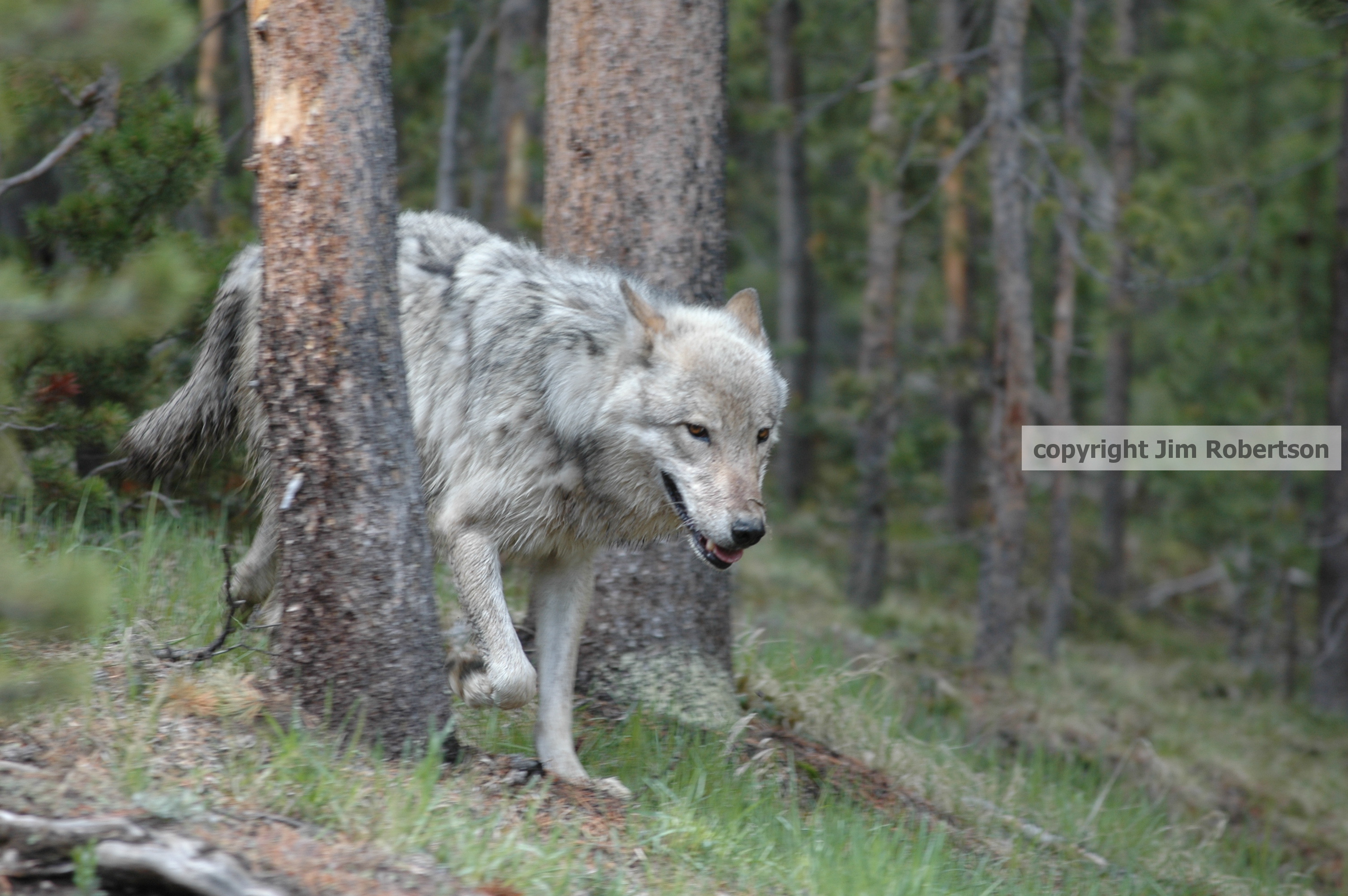
Year after year, Idaho demonstrates its intolerance for wolves. Idaho Department of Fish and Game, while tasked with preserving all of Idaho’s wildlife, continues to ratchet up hunting, trapping and snaring pressure on Idaho’s diminishing wolf population.
Around 600 wolves live in Idaho, which is also home to 83 times more coyotes, 33 times more bears, and four-to-five times more mountain lions than wolves. All of these species eat other animals to survive and all sometimes attack livestock. But Idaho reserves its special treatment for wolves alone.
Idaho’s wolf population has fallen consistently since 2009. Every year wolves have been under state management, Idaho has expanded, extended and loosened wolf hunting and trapping regulations. It’s an indefensible notion that “adequate regulatory mechanisms” are in place, as mandated by the Endangered Species Act for the oversight period under state management.
Idaho claimed it would manage wolves like any other species. No Idaho wildlife management authority can honestly defend this position.
Actions by Gov. Butch Otter and the state Legislature indicate they believe IDFG isn’t effective enough in killing wolves. The Wolf Control Board bill, “the wolf-kill bill,” was a priority the governor chose for his January State of the State address. Now, 400,000 taxpayer dollars for killing wolves is likely to be a recurring expense. Legislative sponsors and supporters repeatedly stated their intent to reduce Idaho’s wolf population to 150 wolves and 15 breeding pairs, the federal minimum.
As the state of Idaho and IDFG reach to further extremes to kill more and more wolves, these actions aren’t going unnoticed.
Far beyond the scope of wildlife management, these practices are quickly giving a black eye to Idaho’s reputation across the country. Idaho is not an island. It does not exist in a vacuum. If the state walks far enough out on a limb, the limb will break, bringing Idaho back to earth under an increasingly focused spotlight.
As fewer people take up hunting, those who enjoy Idaho’s nature in a nonconsumptive way steadily increase. IDFG’s one-dimensional revenue stream from hunting and fishing licenses and tag sales cannot keep pace with fiscal challenges. It’s time to realign economic realities with income-generating constituencies.
Recognizing the increasing difficulty of remaining solvent with growing bills, Director Virgil Moore commendably organized the 2012 IDFG Wildlife Summit to modernize the agency. Unfortunately, necessary innovations are still not forthcoming. Instead, the agency continues pursuing scientifically unsupportable programs, such as excessive and expensive lethal wolf removal and expanding trapping.
Recently, IDFG conducted its sixth costly wolf eradication action in the Lolo, killing 23 wolves from a helicopter, to artificially bolster a declining elk herd, even though IDFG has acknowledged the decline was precipitated by dramatic changes to habitat and vegetation that support elk.
This spring, IDFG hired a professional hunter/trapper to kill wolf packs in the same designated wilderness where wolves were originally reintroduced. IDFG has also declared another goal – reducing wolf populations by 60 percent in the same wilderness.
Remarkably, as this continues, Idaho’s statewide elk population of 107,000 has been growing since 2010. The presence of wolves equating to poor hunting opportunity is a fallacy. Wyoming, with the third largest wolf population in the West, reported their three largest elk harvests on record in the past four years, with 45 percent success in 2013. Hunters can coexist with wolves while maintaining a robust hunting tradition.
Efforts to kill wolves on Idaho’s wild landscapes, especially in designated wilderness – where wolves belong – will never yield the long-term results the agency desires. IDFG continues burning precious dollars on failing programs, while gaining increasingly widespread negative publicity as the black sheep of the nation. For the sake of our beautiful state and all of its wildlife, let’s hope that Idaho soon corrects course.
Garrick Dutcher is the program director for the Idaho-based national nonprofit organization Living With Wolves.
Read more here: http://www.idahostatesman.com/2014/04/01/3111241/back-off-wolf-crusade-and-dispel.html#storylink=cpy
Do you support I-169, which is the initiative that would ban trapping on public lands?
please go here and vote Yes: http://helenair.com/news/opinion/do-you-support-i–which-is-the-initiative-that/poll_acefc7c4-b5f5-11e3-adc6-001a4bcf887a.html
 Exposing the Big Game