Idaho: Year-round wolf hunting on private land approved

http://www.rgj.com/viewart/20140323/NEWS/303230055/Idaho-Year-round-wolf-hunting-private-land-approved

Mar. 23, 2014 8:58 AM
In this 1987 photo released by the Michigan Department of Natural Resources, a wolf stands in the snow near Ishpeming, Mich.

In this 1987 photo released by the Michigan Department of Natural Resources, a wolf stands in the snow near Ishpeming, Mich.  /  AP/Michigan DNR, Dave Kenyon

LEWISTON, IDAHO

    — Wolf-hunting season will be open 365 days a year on private property in northern Idaho’s Clearwater Region.

The Lewiston Tribune reports that the Fish and Game Commission made the rule change in the last week as part of the Idaho Department of Fish and Game’s 2014 Big Game Hunting Rules Package.

The commission also moved up the opening of wolf-trapping season in the Lolo and Selway zones.

The commission in 2012 approved year-round wolf hunting on private land in the Panhandle Region. Adding the Clearwater Region means wolf hunting on most private land from the Canadian border to the Salmon River is legal in Idaho.

Dave Cadwallader, supervisor of the department’s Clearwater Region at Lewiston, said the change likely won’t greatly increase the number of wolves killed in the region. He said it’s mainly to give private landowners the ability to kill wolves to protect property.

“It gives them an opportunity to help themselves if that is what they need,” he said. “In the end, I don’t think you are going to see an active hunting effort.”

He said the change in the Panhandle Region hasn’t resulted in a large increase in wolves being killed.

The season for hunting wolves on public land varies, but it typically runs from late August to March or June.

The start of wolf-trapping season also changed, moving from Nov. 15 to Oct. 10 in various Idaho hunting units. Cadwallader said the change is intended to kill more wolves in areas where elk herds aren’t doing well.

“A lot of trappers have told us some of the areas we are trying to focus on are extremely difficult to get to in November when the season opens up,” Cadwallader said. “This just facilitates some of that.”

But starting the trapping season earlier could put more pets at risks as people are still recreating in the area. Cadwallader said the agency is working to make the non-trapping public more aware their pets might come across traps. The department is working with trappers to reduce and prevent conflicts with pets, he added.

Another change is that wolf trappers will be able to use road-kill and other salvaged wildlife as bait for wolf traps.

Idaho House panel backs $2 million plan to kill wolves that prey on elk, livestock

http://www.therepublic.com/view/story/b0d0c545a3e9408e8e7b7352300d4e08/ID-XGR–Wolf-Panel

THE ASSOCIATED PRESS
February 17, 2014 – 6:08 pm EST

BOISE, Idaho — Idaho’s House will get to consider a measure seeking to shift $2 million in taxpayer money toward a panel that will oversee the killing of wolves that prey on livestock and elk herds. [Wolves eat elk, get over it.]

Republicans on the House Resources Committee voted Monday 14-4 for the disputed bill.

It’s being pushed by Gov. C.L. “Butch” Otter [the man is an insult to the entire weasel family], over objections labeling this a “funding mechanism for a war on wolves.”

With this cash infusion, Otter wants to target wolf packs blamed for killing too many cattle, sheep and elk. [When did elk become a domesticated species?]

Backers including the cattle and sheep industry pledged not to reduce Idaho’s wolf population, now roughly 680 animals, to levels triggering a renewed federal Endangered Species Act listing.

But foes branded it a “thinly veiled proposal aimed at the second extirpation of wolves in Idaho.”

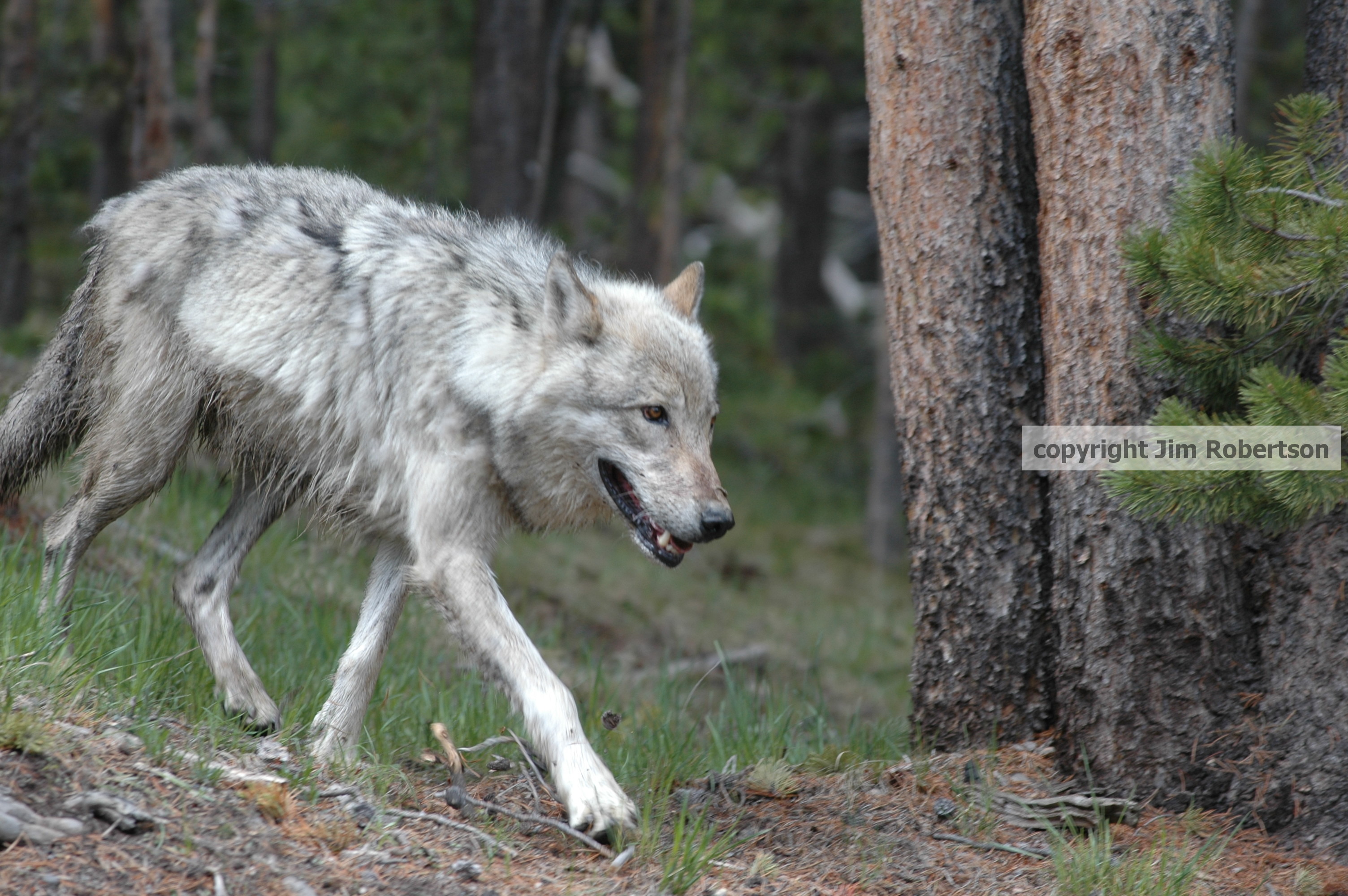
copyrighted Hayden wolf walking

Idaho Elk Hunters Want More Wolf Trapping

http://m.cdapress.com/news/outdoors/article_59dcd3c3-b13b-52dd-8ca8-cabf53002b54.html?mode=jqm

F4WM seeks new members

COEUR d’ALENE – A group of North Idaho elk hunters formed a foundation in 2011 that is designed to incentivize more winter trapping of gray wolves in528624c939a88_preview-620 the Idaho panhandle – and now they want to take it statewide

The Foundation for Wildlife Management, or F4WM, has created a website and Facebook page to generate interest in starting new chapters and recruiting new members.

“We are in a hardball fight for our hunting heritage in Idaho,” said former Idaho Department of Fish and Game Commissioner Anthony McDermott, who now sits on the board of the foundation.

According to McDermott, the mission of the foundation is to encourage the trapping of gray wolves in areas where the wolf predation is excessive.

“The foundation is totally focused on restoring the elk in our backcountry areas,” he said.

The board of the foundation has found that trapping the wolves is the best way to manage the predator. McDermott said wolves are smart animals that learn very quickly how to evade traditional hunters.

“This organization has figured out that trapping is the answer,” he said. “But trapping is also very expensive.”

So, the foundation offers up to a $500 reimbursement to a successful gray wolf trapper who can provide receipts for their expenses.

F4WM has 278 members in the Idaho panhandle area, and they just started another chapter in Lewiston last week. The organization has also attracted interest from people in Salmon, Challis, Riggins and the Bitterroot Valley.

Cost of membership is $35 annually and most of that money is used to reimburse wolf trappers.

In 2011 and 2012, the F4WM was able to reimburse 22 trappers, and paid 14 trappers so far this season.

For more information on how to join the organization go online to http://www.foundationforwildlifemanagement.org

Yes, Joe Namath Wore a Fur Coat to the Super Bowl

Still more backsliding?

Now I’m really glad I didn’t watch the Super Bowl. And let’s not forget what…I mean who the ball is made of.

From the Urban Dictionary,  Definition of fur hag:
Someone who wears a ridiculous amount of fur, and doesn’t care that it supports murder.

http://mashable.com/2014/02/02/joe-namath-fur-coat-super-bowl/

 By Annie Colbert1 day ago

Joe-Namath


Former New York Jets QB Joe Namath walks on the field before the NFL Super Bowl XLVIII.
 

Image: AP Photo/Mark Humphrey/Associated Press

New York Jets legend Joe Namath resurrected his famous flashy duds for Super Bowl XLVIII. Broadway Joe showed up on the sidelines in a fur coat reminiscent of his playing days.

The former quarterback often wore a full-length fur coat on the bench in the 1960s and ’70s — a practice that has since been banned by the NFL. The eye-catching duds had Twitter talking and wondering when the wrath of PETA will hit.

Petitions to the NFL

…should include one to Stop Joe Namath and other footballers from wearing fur!

Change.org

there are a number of petitions on Change.org asking the NFL to make changes to its current practices. Whether you’re rooting for the Seahawks or the Broncos, score your own touchdown by signing one (or all!) of them.

                                            NFL Teams: Pay Your Cheerleaders A Living Wage                                          

                                            NFL: Take Real Action on Domestic Violence                                          

                                            Stop punishing NFL players for using marijuana!                                          

                                            Revoke the Tax-Exempt Status of the National Football League                                          

Still can’t decide which petition to sign? You can always go for two.

The Change.org Team

What Motivates a Wolf Killer?

Text and Wildlife Photography ©Jim Robertson, 2014. All Rights Reserved

Text and Wildlife Photography ©Jim Robertson, 2014. All Rights Reserved

Killing a wolf is a crime against nature—and the motive depends on the kind of perpetrator. To a trophy hunter, a dead wolf is something to mount on a wall and brag about. By literally possessing the animal, they can relive their kill over and over, remorselessly boosting their flagging self-esteem every time they vacuously gaze at their victim’s lifeless body. For a fur trapper, a dead wolf is just a hide and a chance to play modern-day frontiersman. Although there’s no real frontier left, they consciously choose to revive a bloody, destructive lifestyle—partly for money, but mostly for a sense of identity.

But to a “wolfer,” the kind of person whose central preoccupation is hiring on to rid an area of each and every last wolf he can, a prime sense of greed is the motivating factor.

Sure, a guy like that, such as the wolfer contracted by the Idaho Department of Fish and Game to snuff out the Golden Creek and Monumental Creek packs in Idaho’s Frank Church Wilderness Area, must get an ego boost from being known as a “professional” wolf killer. He no doubt experiences some kind of perverse thrill every time he finds an animal desperately trying to free him-or-herself from one of his leg crushing traps. And he probably even gets off on hearing that his actions are upsetting a lot of empathetic wolf advocates who desperately want him to stop his atrocities. But the main reason the wolfer does the job he does is greed, pure and simple: a selfish lust for power, control and of course, money.

That may not seem like a lot to accuse him of in a country built on the spoils of selfishness and greed. Yes, he is surely evil incarnate, soulless and sick to the core, but as long as someone is paying him to “get the job done”… And who the hell pressed the state into hiring a hit man to eliminate established packs, tormenting individual wolves and disrupting nature’s time-tested order? Ask the Idaho trophy elk hunting syndicate.*

The wolves in the Frank Church Wilderness area weren’t after anyone’s cows or frightening school kids at bus stops, they were just doing what comes naturally to wolves. Killing off apex predators to make it easier for sport hunters has got to be the height of human arrogance.
________________________________
*syn-di-cate (noun) 5) an association of gangsters that controls an area of organized crime

TRUE cost of the season’s must have fur-trimmed Canada Goose coat

‘Chilling cruelty, unspeakable suffering and corporate denial’:  the TRUE cost of the season’s must have fur-trimmed Canada Goose coat

http://www.dailymail.co.uk/news/article-2544075/Revealed-Chilling-cruelty-unspeakable-suffering-corporate-denial-Is-TRUE-cost-seasons-Canada-Goose-coat.html#ixzz2rYM0Ypqk

By Laura Collins  23 January 2014

They have made America their new frontier, forging into the US clothing market to become one of the season’s most recognisable brands with sales of Canada Goose outerwear expected to top $30million this year alone.

In a high profile year in the States, Kate Upton has appeared on the front of Sports Illustrated in one of their fur trimmed, down jackets and nothing much else.

It isn’t the only firm to market such coats, yet Canada Goose has rapidly established itself as the label of choice for the well-known and the well-heeled braving the frigid weather blown in on the polar vortex.

But today MailOnline can reveal that allegations of chilling cruelty and unspeakable animal suffering have been repeatedly levelled at this family business turned multimillion dollar concern.

Scroll down for video

The real cost of a $600 coat: Campaigners claim the coyotes that are trapped and skinned for their fur to trim the hoods of Canada Goose coats can be in pain for days. It is unclear whether these images are from Canada Goose trappers but the firm does use the same leg holds

+11

The real cost of a $600 coat: Campaigners claim the coyotes that are trapped and skinned for their fur to trim the hoods of Canada Goose coats can be in pain for days. It is unclear whether these images are from Canada Goose trappers but the firm does use the same leg holds


Exhausted, alone and all out of fight, this Coyote awaits its inevitable fate having been caught in a trap by its right hind leg

+11

Exhausted, alone and all out of fight, this Coyote awaits its inevitable fate having been caught in a trap by its right hind leg


According to animal rights activists, behind every fur trimmed hood and down stuffed coat is a brutal reality of Coyotes trapped and left to suffer in the wilderness.

Many of today’s ethically aware consumers would never dream of buying a full length fur. But in an  odd quirk of the current trend for this style of garment those same shoppers pull on a coyote trimmed coat without a moment’s concern for the origins of that little flurry of fur.

Lindsay Rajt, Director of Campaigns for People for the Ethical Treatment of Animals (PETA) said:  ‘Canada Goose uses exclusively Coyote fur on the trim of their coats and those animals are trapped in a way that is just inherently cruel.’

As a company founded and grown in Canada, Canada Goose makes much of their support of North Canadian communities in which, their publicity states, Coyote trapping has been ‘a way of life for hundreds of years.’

According to a spokesperson for the firm: ‘The trapping of fur-bearing animals is strictly regulated by the provincial and territorial wildlife departments in Canada.

‘We purchase coyote furs from certified Canadian trappers, never from fur farms or endangered animals.

Kate Upton going 'Polar Bare' on the cover of Sports Illustrated's 2013 Swimsuit edition, wearing a smile, a white Canada Goose parka and not much else

+11

Kate Upton going ‘Polar Bare’ on the cover of Sports Illustrated’s 2013 Swimsuit edition, wearing a smile, a white Canada Goose parka and not much else


But PETA has dismissed the standards as ‘window dressing.’

Mr Rajt said: ‘The company’s reference to  AIHTS standards is meaningless and a way of placating and  silencing people with valid concerns.

‘Leg hold traps are still legal in  Canada. Mother animals will chew off their limbs in order to get back to their young. The trapped animal might be there for days before the  trapper comes and finds them, they are frightened and starving and in  pain during that time. And then they’re bludgeoned or strangled to death or shot.’

WARNING GRAPHIC CONTENT: Coyotes trapped for their fur


A trapped Coyote howls in pain, its right forepaw held tight in the jaws of a leg hold trap - legal under the AIHTS but cruel according to PETA

+11

A trapped Coyote howls in pain, its right forepaw held tight in the jaws of a leg hold trap – legal under the AIHTS but cruel according to PETA


Trapped Coyotes can struggle to get free for days until the hunter returns to check his traps. Mother animals separated from their young attempt to chew off their own limbs in a bid for freedom

+11

Trapped Coyotes can struggle to get free for days until the hunter returns to check his traps. Mother animals separated from their young attempt to chew off their own limbs in a bid for freedom


Ms Rajt revealed that PETA is this week appealing to Canada Goose to abandon their use of fur in favour of synthetic alternatives and to dump their use of real down stuffing.

She said: ‘PETA is reaching out to Canada Goose to urge the company to switch to innovative, synthetic fur like their top competitor Helly Hansen, which has been fur-free for many years.

‘Additionally, we are asking that Canada Goose dump down and opt for revolutionary synthetic technology like the one recently developed by The North Face – Thermoball, which mimics down but offers superior versality.’

Ms Rajt claimed: ‘We have been trying to meet with this company, we’ve been trying to engage with them since 2006.

‘The CEO originally agreed to meet with us in 2008 to discuss trapping  policies and methods but just never confirmed that meeting and then  failed to make himself available to any of our follow ups.

‘It is a challenging company for us to work with.’

Meg Ryan pictured last month in New York's West Village. Canada Goose's concerted effort to win the US market has seen it become a celebrity brand of choice

+11

Meg Ryan pictured last month in New York’s West Village. Canada Goose’s concerted effort to win the US market has seen it become a celebrity brand of choice


Andrew Garfield and girlfriend Emma Stone in their Canada Goose parkas on a shopping trip in New York

+11

Andrew Garfield and girlfriend Emma Stone in their Canada Goose parkas on a shopping trip in New York


Actress Clare Danes wearing her Canada Goose parka with its distinctive Coyote trim while braving the New York chill

+11

Actress Clare Danes wearing her Canada Goose parka with its distinctive Coyote trim while braving the New York chill


But according to a spokesperson for the company: ‘We’ve corresponded with PETA on numerous occasions and it quickly became evident that they were not interested in a constructive conversation.’

Canada Goose was founded in 1957 and has enjoyed remarkable success and rapid growth across the past decade when it started marketing it’s ‘truly Canadian’ ethos to Europe.

 ‘We’ve been trying to engage with this company since 2006…It is a challenging company for us to work with,’
PETA Director of Campaigns, Lindsay Rajt, on Canada Goose’s refusal to meet

Today the company employs more than 1000 people and sells its products in more than 50 countries across the world.

It continues to manufacture its coats in Toronto and Winnipeg but recently opened its first US Headquarters in Denver, Colorado. Last year it became the official sponsor of the Sundance Film Festival and US Equity firm, Bain, recently bought a majority stake in the hitherto entirely Canadian enterprise.

Canada Goose defend their practices


Real fur real suffering: Canada Goose President Dani Reese flanked by his company's distinctive outerwear. He says the company uses Coyote fur 'because it works'

+11

Real fur real suffering: Canada Goose President Dani Reese flanked by his company’s distinctive outerwear. He says the company uses Coyote fur ‘because it works’


The extreme weather outerwear is manufactured in Toronto and Winnipeg though US Equity firm, Bain, now owns a majority stakehold

+11

The extreme weather outerwear is manufactured in Toronto and Winnipeg though US Equity firm, Bain, now owns a majority stakehold


Founded in 1957 the family company Canada Goose now employs more than 1000 people and sells its garments in more than 50 countries

+11

Founded in 1957 the family company Canada Goose now employs more than 1000 people and sells its garments in more than 50 countries


Canada Goose President Danni Reiss is very clear in his assessment of the importance of the US market to his brand. He said, ‘The States is a market with one of the greatest potentials in the world. The US is growing faster than the overall company.’

Speaking in a corporate video Mr Reiss explained: ‘We use Coyote fur for a number of reasons. Number one, Coyote fur works – it’s functional, it provides warmth around the face in a way no synthetic fabric can. It does that in the coldest places on earth and it is important to realise that sometimes urban centres and cities can feel like the coldest places on earth.’

Coyote fur doesn’t freeze, doesn’t hold moisture, retains heat and is biodegradable.

Ms Rajt dismissed the necessity of real fur saying: ‘They actually do have some faux fur trim products and there’s a market for that. There’s no reason why they couldn’t switch completely.’

A spokesperson for Canada Goose said: ‘We understand PETA’s concerns and we respect the right of people to choose not to wear fur, however, we know PETA does not respect our ethical, responsible use of fur so further conversation won’t be productive.’

But Ms Rajt insisted: ‘I just don’t believe that  half the people wearing these coats understand what’s really involved in the making of them. And I just don’t believe that they would make that  same choice if it was an informed one.
Read more: http://www.dailymail.co.uk/news/article-2544075/Revealed-Chilling-cruelty-unspeakable-suffering-corporate-denial-Is-TRUE-cost-seasons-Canada-Goose-coat.html#ixzz2rYL8KOiR Follow us: @MailOnline on Twitter | DailyMail on Facebook

Stop Cruel Animal Traps in America by 2020!

525140_440817092654544_311118433_nhttps://www.causes.com/actions/1752223-stop-cruel-animal-traps-in-america-by-2020?conversion_request_id=2381843&ctag=09d44ab239cd00064c53385eb9814ef8af&ctoken=MLEjxS0ImRVakE02ScHkiK6eM07ignxPMzzi7vJUKqnWFjfXcN2DtRJEPzOCVXh84X8iuDGxXGYYhuoTR8oWdA%3D%3D&recruiter_id=46771178&uid=55991894&utm_campaign=activity_invitation_mailer%2Factivity_invitation&utm_medium=email&utm_source=causes

Sign the Petition to Jim Lane, Director of New Mexico Game & Fish Department, Fish and wildlife managers nationwide.

We ask that you and other Game & Fish Directors across America put a stop to the cruel, inhumane practice of animal trapping. We’re asking you to take a leadership role in this and let your fellow wildlife managers be aware:

1. Stop your own trapping Mr. Lane, you’re practicing animal cruelty. Your personal cessation of this activity will set an example for others to follow. You are unfit to manage wildlife so long as you torture animals.

2. We ask that you stop supporting the practice of trapping in the State Legislature of New Mexico when called to testify, and that your peers cease similar activity in their states.

3. Begin to phase out new trapping licenses. This practice will end.

4. Eliminate issuance of trapping licenses completely by 2015 in New Mexico. Ask your peers to follow your lead.

Signed,

Bold Visions Conservation

 https://www.causes.com/actions/1752223-stop-cruel-animal-traps-in-america-by-2020?conversion_request_id=2381843&ctag=09d44ab239cd00064c53385eb9814ef8af&ctoken=MLEjxS0ImRVakE02ScHkiK6eM07ignxPMzzi7vJUKqnWFjfXcN2DtRJEPzOCVXh84X8iuDGxXGYYhuoTR8oWdA%3D%3D&recruiter_id=46771178&uid=55991894&utm_campaign=activity_invitation_mailer%2Factivity_invitation&utm_medium=email&utm_source=causes

As you read this, hundreds of animals have their foot, shattered and mangled in a foothold trap, or are slowly choking to death in conibear traps.

Thousands of animals are suffering unthinkable pain and anguish, EVERY DAY. They’re frightened beyond hope, and in horrible pain. Their savior will show up in a day or two or three, to murder them, and finally end their anguish.The people whose job it is to manage wildlife for ALL PEOPLE use their position purely to help that very small population of trappers: it’s time they heard from the rest of us!

Please Sign the petition and visit the Bold Visions Conservation website:http://boldvisions.businesscatalyst.com/bold-visions-conservation—trapping.html

We need YOU and 250,000 other concerned people across the planet to take on this issue with us: wild creatures belong to the earth, not to the few deranged individuals that think animals are for killing, and for killing alone.

IT’S TIME TO QUIT LETTING THE BARBARIANS BE IN CHARGE!

Bold Visions Conservation is YOUR representative. We will fight these departments on your behalf, and we’ll fight with every resource available. We will start with the New Mexico Game and Fish Department, and use what we learn to work with groups across America to stop barbaric trapping, once and for all!

http://boldvisions.businesscatalyst.com/bold-visions-conservation—trapping.html


Conservationists Ask Court to Halt Wolf Extermination in One of Nation’s Premiere Wilderness Areas

http://www.thewildlifenews.com/2014/01/07/conservationists-ask-court-to-halt-wolf-extermination-in-one-of-nations-premiere-wilderness-areas/

POCATELLO, Idaho – A coalition of conservationists, represented by the non-profit environmental law firm Earthjustice, today asked a federal judge in Idaho to halt an unprecedented program by the U.S. Forest Service and Idaho Department of Fish and Game (IDFG) to exterminate two wolf packs deep within the largest forested wilderness area in the lower-48 states.

In mid-December 2013, IDFG hired a hunter-trapper to pack into central Idaho’s 2.4-million-acre Frank Church-River of No Return Wilderness to eradicate two wolf packs, the Golden and Monumental packs, in the interest of inflating elk populations for outfitters and recreational hunters. The U.S. Forest Service, which administers the wilderness, approved the extermination program by authorizing use of a Forest Service cabin and airstrip to support wolf extermination activities.

“A wilderness is supposed to be a wild place governed by natural conditions, not an elk farm,” said Earthjustice attorney Timothy Preso. “Wolves are a key part of that wild nature and we are asking a judge to protect the wilderness by stopping the extermination of two wolf packs.”

Earthjustice is representing long-time Idaho conservationist and wilderness advocate Ralph Maughan along with three conservation groups—Defenders of Wildlife, Western Watersheds Project, and Wilderness Watch—in a lawsuit challenging the wolf extermination program. The conservationists argue that the U.S. Forest Service’s approval and facilitation of the program violated the agency’s duty to protect the wilderness character of the Frank Church Wilderness. They have requested a court injunction to prohibit further implementation of the wolf extermination program until their case can be resolved.

Frank Church-River of No Return Wilderness ©Ken Cole

Frank Church-River of No Return Wilderness ©Ken Cole

“Idaho’s program to eliminate two wolf packs from the Frank Church Wilderness Area for perceived benefits to elk hunting is just the most recent example of the state bending over backwards to accommodate the wishes of people who hate wolves,” said Jonathan Proctor of Defenders of Wildlife. “Wilderness areas are places for wildlife to remain as wild as is possible in today’s modern world. If Idaho’s wildlife officials won’t let wolves and elk interact naturally in the Frank Church Wilderness, then clearly they will allow it nowhere. The U.S. Forest Service must immediately prohibit the use of national forest wilderness areas for this hostile and shortsighted wolf eradication program.”

The region of the Frank Church Wilderness where IDFG’s hunter-trapper is killing wolves is a remote area around Big Creek and the Middle Fork of the Salmon River. Even though this region hosts one of the lightest densities of hunters in the state, IDFG prioritized elk production over protection of the area’s wilderness character. The Forest Service failed to object to IDFG’s plans and instead actively assisted them.

“As someone who has enjoyed watching members of the Golden Pack and spent time in the area where these wolves live, I am startled that IDFG thinks it is acceptable to kill them off. If wolves can’t live inside one of America’s biggest wilderness areas without a government extermination program then where can they live?” asked Ken Cole of Western Watersheds Project. “The value of wilderness is not solely to provide outfitters elk to shoot,” Cole added.

acrobat pdfRead the Complaint acrobat pdfRead the Motion for a Temporary Restraining Order (TRO) acrobat pdfRead the Memo in Support of TRO and Preliminary Injunction

This is Not a Good Time to be a Montana “Furbearer”

Demand for fur has market at 30-year high, Montana trappers say

by Martin Kidston

The demand for fur is on the rise and prices are booming, providing a windfall to Montana trappers who say their industry has hit a 30-year high.

And market indicators suggest the demand – and the prices that follow – will continue to increase as buyers in China, Russia and Korea watch their incomes grow.

“Trappers are seeing an increase in their paychecks in the state of Montana,” said Toby Walrath, president of the Montana Trappers Association. “The market is strong and improving. It’s a good time to be a trapper right now.”

Montana trappers received $2.7 million in income in 2012 from the sale of raw fur, according to the Montana Trappers Association. This year’s state auction also paid out $230,000 for the pelts of prized species, including those monitored by state game officials.

Walrath, who heads the state organization from his Corvallis home, said the money brought in by trappers circulates beyond the trapping community. It extends to taxidermists, in-state furriers, hotels and sporting good stores, such as Wholesale Sports in Missoula, which now sells trapping supplies.

“The economic impact is pretty significant,” Walrath said. “I think it’s far more significant than people realize. There’s money to be made by lots of people.”

Walrath’s confidence in the industry has been backed by national reports. A recent story by National Public Radio said the retail fur industry held an estimated worth of $15.5 billion last year – an increase of 45 percent from 10 years ago.

The jump in prices is driven largely by overseas demand, where residents in China, Russia and Korea are seeing their incomes grow. Residents in wealthier countries like Canada, Sweden and Switzerland also remain buyers.

Fashion designers are driving the trade’s resurgence by incorporating more fur into their clothing lines. One British magazine reported that nearly 70 percent of fall collections included some form of fur.

Walrath’s own pelts have been fashioned into mittens and hats.

“In China, fur is a fashion statement, and they’re looking at the longer coats,” Walrath said. “In Russia, it’s more of a practical use than a fashion statement. In the U.S., fur is being used for525140_440817092654544_311118433_n trim around hoods on coats, cuffs on sleeves, and collars, things like that.”

***

Current estimates suggest Montana is home to 6,000 active trappers and houndsmen. Rising pelt prices provide most trappers with a supplementary income. For a few, Walrath said, fur sales may represent their primary income.

Trappers have several options when selling their furs. They may work directly with a furrier, or trust their pelts to a country buyer, who works on behalf of a national furrier looking for pelts of certain species, color and quality.

National and international auction houses also buy directly from trappers. Walrath said auction house representatives collect furs periodically from certain drop-off points across the state.

“The fur is shipped to that auction house, the buyers come, they bid and pay the money, and the house cuts the trappers a check,” Walrath said. “If you bring it to a state-sanctioned auction or an international auction, you’ll receive more money than if you go to a country buyer.”

In many cases, the furs harvested from Montana might be sold alongside pelts taken from mink ranches and fox farms. Whatever the offering, Walrath said, the buyers compete for the furs, driving up prices as they bid.

The larger auctions include those held by the North American Fur Auction, headquartered in Toronto, and Fur Harvester Auction Inc., based in North Bay, Ontario.

“You don’t really know what prices you’ll receive beforehand,” Walrath said. “Asking what a fur is worth is like asking what your house is worth, or what your car is worth. It depends on the quality, the season, how it was handled, and what’s in demand at that time.”

All states but one also claim an active trappers association, which hold annual fur sales. The sale hosted by the Montana Trappers Association attracts five to 10 national buyers each year.

***

Jim Buell, who lives in Gildford and serves as director of the National Trappers Association, said Montana trappers display their pelts at the state auction, and buyers name their price through a silent bid.

“The Montana Trappers Association holds a fur sale each spring, around the third week in March, and there are several fur buyers who attend that sale,” said Buell. “By that time, there’s usually a sale in Toronto, so local buyers can set their prices off the international market.”

Prices are increasing for bobcat pelts, as well as marten, Walrath said. Other articles, including mink and beaver, are flat. Beaver pelts are difficult to prepare, cutting into the price margin and driving up costs.

Walrath said the price of a pelt may also be set by where the animal was harvested. A raccoon fur from Montana, he said for example, will typically fetch a higher price than the same pelt taken from South Carolina.

“There’s a very high demand for furs, particularly muskrat, in China,” said Walrath. “They’re buying a lot of fur and they’re paying really good prices for it. There’s a big population of people there, and they have money to spend on that stuff.”
4