Feral Pigs Trapped and Sold to Canned Hunts

[As usual, no mention that the feral pigs situation is the result of humans introducing them onto game farms for hunting to begin with. Instead they blame the pigs.]…

Oklahoma weekend hunting news:

Feral hog hunting is becoming big business in Okla. The hogs continue
to overrun Okla. and they can be found in all 77 counties.
An Okla. hunter states that he would feel uncomfortable about shooting
a whitetail deer behind a high fence. But he has no ethical dilemma about
feral hogs. “All of them should be blindfolded and executed for crimes
against nature.”

The feral hogs have caused millions of dollars in property damage across
the state and can spread disease. The Okla. state Dept. of Agriculture
has cautioned hunters to wear gloves when cleaning feral hogs and to
cook the meat thoroughly.

There have been pastures uprooted by wild hogs and they frequently
destroy golf courses and ravage corn and hay fields. A pack of wild pigs
have even toppled the headstones of a rural cemetery. [Oh my.]

They have become such a menace that Okla. has even legalized hog
hunting from helicopters.

Wild pigs are good for one thing. They are fun to hunt a/w the owners
of a wild hog hunting company. The Okla. residents, both avid big game bow hunters, were looking to satisfy their hunting appetite when the big game season closed and so
they started hog hunting in Okla.
One of the co-owners states “What we enjoyed most about it was you
can do it year-round.”

They had so much fun hunting hogs that they decided to open their
hog hunting business.
The co-owner states “We were looking for ways to get involved in
the hunting business for several years because that is what we love to
do. It is our passion.”

They bought 120 acres in Okla. and put a fence around it. They are
now building a clubhouse so their customers will have something to do
between morning and evening hunts.

They buy feral hogs from Okla. trappers and keep around 300 on the
grounds. This number insures a good chance of success, but still feels
like a hunt. The co-owner of the business added “There are so many pigs in the
southern half of our state, we literally have people beating our door down
trying to sell pigs.”

They persuaded a friend, who used to chase hogs with them on his
visits to Okla., to give up guiding for bear, elk, and mountain lions in
Idaho and move to Okla. to manage the business.
The guide added that wild hogs are not the most difficult animal he has
ever hunted, but they are more challenging than most people think because
they are a lot smarter than people think they are.

He added “They are a lot harder to kill, especially for a bow hunter.
It is just the way God made them. They are a tough animal.” [Meaning, they suffer longer than most animals these psychos like to kill…]524958_3325028303604_654533903_n
Man suffers broken leg after stepping in a beaver trap

538458_532697610088640_841278349_n

[Interesting that the article is supposed to be about a man who suffered a broken leg in a trap, looking for a dog who might have been trapped, and all the Oregon ODFW has to say is that “it is illegal to disturb or remove the traps or snares of another person.” Fuck that!]

http://theworldlink.com/news/local/man-suffers-broken-leg-after-stepping-in-a-beaver-trap/article_81f809a6-68d8-11e3-a1f5-0019bb2963f4.html

WATCH WHERE YOU STEP
Man suffers broken leg after stepping in a beaver trap
December 19, 2013 10:08 am • By Tim Novotny, The World

COQUILLE — One young man recently learned the hard way that wandering off the beaten path can be dangerous.

Coquille Police say the man, whose identity they have not released, suffered a broken leg after accidentally stepping into a beaver trap. The trap was located in some marshy land near Sturdivant Park, along state highway 42.

Police Chief Janice Blue said the man’s dog had gotten loose and he was trying to retrieve it when the accident happened on Sunday afternoon.

Two vehicles with good Samaritans stopped after they spotted a shirtless young man hanging over the highway’s retaining wall. One of the drivers, who wishes to remain anonymous, said the man was screaming “Help me! Help me!”

They called 911 and tried to free the man, but were unable to get the trap loose. It took a firefighter with bolt-cutters to get the job done.

Chief Blue says the trap was one of the ones that were put there, by permission, by a trapper trying to solve a nuisance problem. Beaver dams have been causing flooding in that area, she said.

“The traps are in places where people would not normally be walking,” Blue said. “People should be aware, when entering marshy areas, that there could be traps.”

The incident coincided with the release of a warning from the Oregon Department of Fish and Wildlife.

They say trapping seasons are underway throughout the state and people need to be cautious when hiking. Pets can also become unwitting victims of these traps.

Traps set for coyotes, bobcats and raccoons are the types of sets most likely to inadvertently capture a dog. The organization UtahPAWS has tips on how to release pets from traps on their website: utahpaws.org/pet_safety.

The ODFW also cautions people that it is illegal to disturb or remove the traps or snares of another person.

If you see traps that you believe are illegally set, do not disturb the trap, but contact Oregon State Police. They can identify the owner of a legally set trap through a unique branding number required on each trap.

Most trapping seasons opened Nov. 15 or Dec. 1 and end Feb. 28 or March 31. A few seasons are open the entire year, but winter is the most popular time to trap.

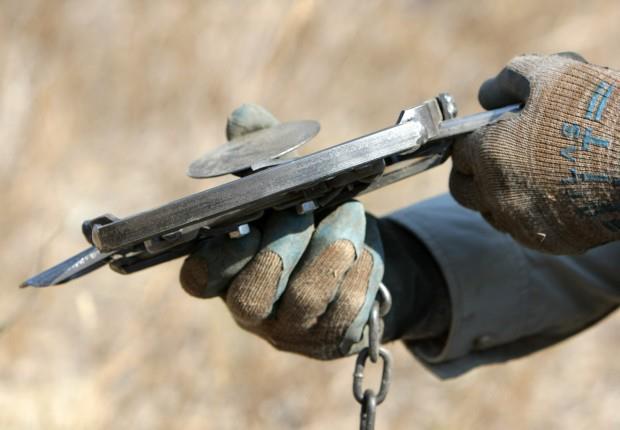
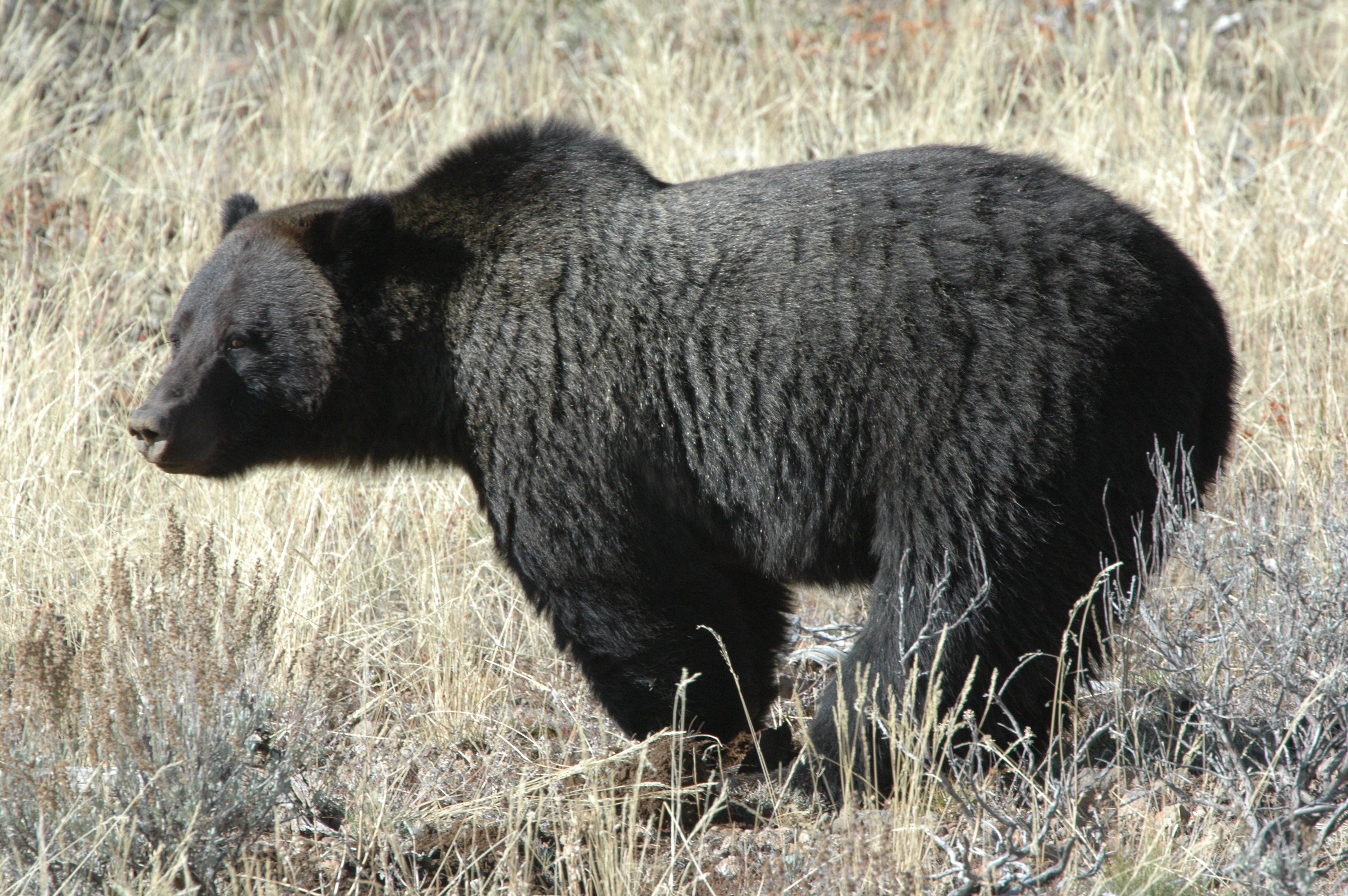
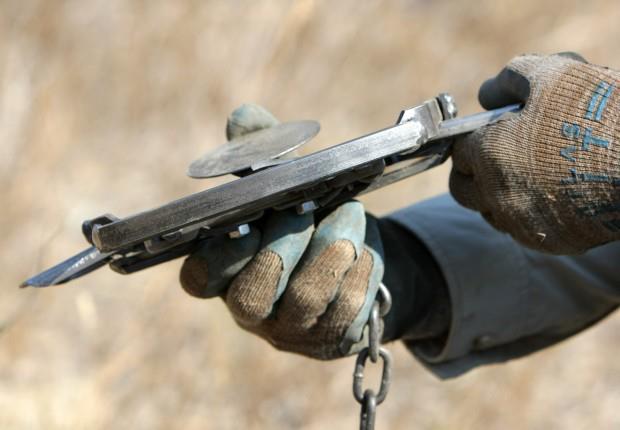
Grizzly bear caught in wolf trap

GREAT FALLS — A 4-year-old male grizzly bear was briefly

Photo Copyright Jim Robertson

Photo Copyright Jim Robertson

caught in a steel leg-hold wolf trap near the Rocky Mountain Front west of Dupuyer.

Fish, Wildlife and Parks grizzly bear management specialist Mike Madel says two men were checking wolf traps Tuesday afternoon when they discovered the bear with its foot in the trap. The bear had pulled the trap out of the ground, but the trap became entangled in a tree and some brush.

The trapper reported the accidental capture to state wildlife officials, who immobilized the 473-bear with a dart gun and removed the trap. Madel planned to relocate the bear, which was not seriously injured other than swelling of the toe joints.

Read more: http://billingsgazette.com/news/state-and-regional/montana/grizzly-bear-caught-in-wolf-trap/article_872d0ba0-21c2-5d5f-8b92-48166edfa702.html#ixzz2nsSxTl3v

Support H.R. 3513: Refuge from Cruel Trapping Act

Action Alert from All-Creatures.org

FROM

Born Free USA December 2013

ACTION

Tell your Congressional Representative to SUPPORT H.R. 3513 that would ban all body-gripping traps — such as snare, Conibear, and steel-jaw leghold — from being used or possessed on national wildlife refuges (NWRs). The brutality of these traps is shocking; they can crush limbs and organs, and animals often remain trapped for days, in massive pain, before dying.

Find and contact your U.S. Representative http://www.house.gov/

trap trapping wildlife refuge

INFORMATION / TALKING POINTS

Purpose: This bill would amend the National Wildlife Refuge System Administration Act of 1966 to prohibit the use or possession of body-gripping traps in the National Wildlife Refuge System.

Status: Referred to the House Committee on Natural Resources on 11/15/13.

Action: Please contact your U.S. Representative and urge him/her to support H.R. 3513. Tell your Representative that wild animals should not be exploited on the only lands in the United States set aside specifically for their protection. When the majority of the public visits refuges, they expect to be safe and to have the opportunity to view animals in abundance, without the fear of stepping into a body-gripping trap, or having to witness the pain and suffering of a trapped animal.

Talking Points for your letter:

  • Theodore Roosevelt established Pelican Island as the first refuge in 1903 as an “inviolate sanctuary” for the protection of the brown pelican. The original intent and purpose of subsequent refuges were clear: the protection of wildlife from exploitation and deliberate harm. Most Americans still view wildlife refuges as places where wild animals are protected from human interference. That is in fact the common definition of the word “refuge.”
  • A staggering 54% of the refuges within the National Wildlife Refuge System (NWRS) allow trapping on refuge grounds. These traps often do not kill the animal right away, which can remain in the trap for several days, either starving or slowly strangling to death.
  • Because traps do not discriminate, they jeopardize threatened and endangered species, such as the bald eagle, which are frequently caught in these traps.
  • The majority of people who visit refuges do so to observe wildlife and enjoy nature. Hikers, birdwatchers, campers, and photographers should not have to witness the maiming of the very wildlife they have come to see.
  • Trappers already have access to millions of acres of private and public lands outside the refuges for their activities.
  • The NWR system should be managed to carry out its stated mission — to protect wildlife and wildlife habitat and to offer people an opportunity to enjoy nature. Trapping should be disallowed on all refuges as the practice runs contrary to these goals.

Read the full text here.


Thank you for everything you do for animals!


Return to Action Alerts

Other information you may find useful for your activism

Find area codes Find zip codes

Wolves of the Alexander Archipelago need protection

http://www.adn.com/2013/12/06/3216465/compass-wolves-of-the-alexander.html

Compass: Wolves of the Alexander Archipelago need protection

By REBECCA NOBLINDecember 6, 2013

For thousands of years the distinctive image of black wolves roaming the snow-covered islands of the Alexander Archipelago has been an iconic part of Southeast Alaska’s natural history.

But even in this remote stretch of more than 1,000 islands and glaciated peaks, the Alexander Archipelago wolf has been no match for industrial logging, road building and overharvest.

There are two well-understood reasons that Alexander Archipelago wolves cannot coexist indefinitely with clearcut logging:

• The wolf population is directly tied to the health of the black-tailed deer, which in turn is directly tied to the health of the old-growth forests that offer protection from deep snows and promote a variety of under-story plants.

• As road density increases, so do wolf kills, both legal and illegal. In the Tongass National Forest, logging roads provide access for wolf hunters and trappers. Road density on much of Prince of Wales Island is already beyond sustainable levels.

Yet, the U.S. Forest Service continues to plan big timber sales in key wolf habitats, including the Big Thorne timber sale. That decision, now under appeal, would allow the clear-cutting of more than 6,000 acres on Prince of Wales Island that would accelerate an already sharp decline of the wolf population there.

As we approach the 40th anniversary of the Endangered Species Act next month, the ongoing threat of logging and road-building to the ever-more fragile status of Alexander Archipelago wolves is a stark reminder of the irreplaceable role the Act has played in protecting our nation’s most imperiled plants and animals and the ecosystems we share with them.

The first page of the law leaves no doubt about why lawmakers felt it was necessary:

“The Congress finds and declares that … various species of fish, wildlife, and plants in the United States have been rendered extinct as a consequence of economic growth and development untempered by adequate concern and conservation.”

It’s clear the Archipelago Alexander wolf now needs the help only the Endangered Species Act can provide. That’s why the Center for Biological Diversity, where I work, joined with Greenpeace in filing a petition two years ago asking the Fish and Wildlife Service to award the Act’s protections to the wolf.

And it’s why earlier this month the two conservation groups reminded the agency that it is now a full two years late on initiating a status review of the wolf.

During those two years the health of the wolf population on Prince of Wales Island has dramatically worsened, mostly due to ongoing large-scale logging of old-growth trees in the Tongass National Forest that began six decades ago.

Earlier this year the Center, Greenpeace and three allied organizations asked the Forest Service to cancel the Big Thorne timber sale. The resulting decision to put the sale on hold came after preeminent Alexander Archipelago wolf biologist Dr. David Person concluded the Big Thorne timber sale would be the “final straw that will break the back of a sustainable wolf-deer predator-prey ecological community on Prince of Wales Island.”

By Person’s accounts, the estimated wolf population in the area of the Big Thorne sale declined by about 80 percent just last winter.

All the facts point to the same conclusion: to survive, Alexander Archipelago wolves need the protection of the Endangered Species Act, which has prevented the extinction of 99 percent of the plants and animals it protects.

And the unbridled destruction of that natural ecosystem from clear-cutting is clear evidence of why the Endangered Species Act is so important to making sure we get that balance right again once we’ve disrupted it.

Rebecca Noblin is an Anchorage-based staff attorney and Alaska Director for the Center for Biological Diversity, where her work focuses on protecting imperiled plants and animals.

Read more here: http://www.adn.com/2013/12/06/3216465/compass-wolves-of-the-alexander.html#storylink=cpy

copyrighted wolf in water

Traps method of choice in WI wolf hunt

http://www.leadertelegram.com/news/daily_updates/article_fc4bbdbc-5c3d-11e3-963d-001a4bcf887a.html

MADISON (AP) — Traps have apparently become wolf hunters’ weapon of choice in Wisconsin.

New state Department of Natural Resources data shows hunters used traps to capture 174 of the 216 wolves taken between the wolf season’s Oct. 15 opener and Nov. 30. Hunters shot 41 wolves with a gun and killed one wolf with a bow.

Monday marked the first day of the season hunters could use dogs to chase down wolves. DNR large carnivore specialist Dave MacFarland said no hunters using dogs had registered any wolves as of Monday afternoon.

All but one of the state’s six wolf hunting zones have closed after hunters reached their kill limits in the areas. Hunters were 37 animals shy of their kill limit in the last open zone as of Tuesday morning.

538458_532697610088640_841278349_n

Denali wolves need a buffer from Hunting and Trapping

Compass: Denali wolves need a buffer of state land

By MARYBETH HOLLEMAN December 2, 2013

The recent news that wolf sightings by visitors to Denali National Park this past summer were the lowest on record is disheartening but not surprising. This is precisely what many scientists warned would happen in 2010, when the Alaska Board of Game eliminated the small no-take wolf buffer on state lands east of the national park.

And it is precisely what Gordon Haber, whose research on Denali’s wolves spanned 43 years, concluded: hunting and trapping of park wolves on these state lands often kills the alphas of the family group,1453351_1488724231352782_186999841_n thus causing the entire group to fragment and disintegrate–resulting in fewer park wolves, and fewer park visitors seeing wolves.

Along with Yellowstone National Park, Denali had been known as one of the best places in the world to view wild wolves, but no longer. Over 400,000 visitors come to Denali each summer–many of them Alaskans–contributing over $140 million to our state’s economy. Many cite their desire to see wolves as a primary reason for visiting the park. As Denali superintendent Don Striker says, seeing wolves in the wild is an “amazing, oftentimes transformative experience” for park visitors.

But when park wolves range across the park’s eastern boundary following the winter migration of prey, they’re killed by hunters and trappers. The three most-often-seen wolf family groups in Denali have been decimated by losses here, and visitor viewing success has consequently suffered.

Recognizing the economic value of wolf viewing in Denali, from 2000-2010 the state closed some of these lands to wolf take. But, as Haber warned, this small buffer wasn’t sufficient; in some winters, as many as nineteen park wolves were killed east of the buffer – 15 percent of the total park wolf population.

This prompted many organizations, including the Park Service, to propose at the 2010 meeting of the Alaska Board of Game–just a few months after Haber’s untimely death in a research flight crash–that the inadequate buffer be expanded. Instead, the Board eliminated the buffer and passed a moratorium on considering the issue again until 2016. Many predicted this would accelerate the already precipitous decline in park wolf numbers and viewing success–and it has.

Today, the numbers of wolves within the six-million-acre national park and preserve has declined from 143 in fall 2007 to just 55 in spring 2013 – a drop of more than half in six years. And, since the state removed the buffer in 2010, wolf-viewing success for the park’s 400,000 annual visitors has plummeted: from 44 percent in 2010 to just 4 percent in 2013. This downward spiral in wildlife viewing success may be unprecedented in the history of the entire national park system.

As Gordon Haber concluded, it’s not how many wolves killed, it’s which wolves are killed. In 2012, the last breeding Grant Creek female, from the park’s most-viewed family group, was trapped in the former buffer. The death of this one wolf left the survivors with no pups that spring, whereupon they abandoned their den site and fragmented, shrinking from fifteen to three wolves. Rather than visitors witnessing the fifteen-member family group attending new pups at the den site, they saw nearly none. Viewing success dropped by 50 percent that summer alone–all from the loss of one wolf.

Last week, in a letter to U.S. Secretary of Interior Jewell and Gov. Parnell, a coalition of Alaska citizens and organizations proposed a “win-win” solution: that the state transfer a permanent no-take wildlife buffer conservation easement east of the national park, in exchange for the federal government transferring a like-valued easement, or purchase value, to the State of Alaska.

This would fix the problem. It would allow Alaskans and visitors a better chance of seeing wild wolves, and would sustain and grow Denali’s valuable wildlife viewing economy for generations of Alaskans to come. Let’s hope the Governor and Interior Secretary can get together and solve this issue once and for all.

_______________

Alaska writer Marybeth Holleman is co-author with the late Gordon Haber of “Among Wolves: Gordon Haber’s insights into Alaska’s most misunderstood animal.”

Read more here: http://www.adn.com/2013/12/02/3207873/compass-denali-wolves-need-a-buffer.html#storylink=cpy

Map with known trap locations in Montana

From FootlooseMontana.org

The purpose of making trap locations available on this website is to warn people who may be recreating on public lands with companion dogs about the dangers of traps on public lands. Tampering with traps is illegal in the State of Montana

[But setting out the equivalent of indiscriminant land mines to clamp onto the foot or leg of anyone who happens along is perfectly legal. Also legal, according to Montana Trapping Regulations]: There is no trap check requirement in Montana.

Trappers may not check their traps for days at a time. Read the stories of animals we know suffered alone in traps for several days. How many other animals suffer consecutive cold nights struggling against steel jaws? You will not find out from trappers, who have no incentive to report inhumane abuses. Can you imagine your family dog or cat, scared and vulnerable, with its leg caught in a trap for four or five days—and bitter cold nights—at a time? [It happens far too often; I’ve seen it happen twice to two different dogs in different locations].

Unlike hunting, with specified bag limits and seasons, trappers may trap all year long and kill as much wildlife as they wish. Only five furbearer species—bobcat, fisher, river otter, swift fox and wolverine—are subject to quotas.  Every other animal in Montana—even endangered species—may be killed 365 days a year as incidental catch.

Trap locations noted on this map have been reported to Footloose Montana by people recreating on public lands. If you encounter traps on public lands, please call us at (406) 274-7878

Here’s the map: http://www.footloosemontana.org/trapping-season-2011-12/map/

Also see: https://exposingthebiggame.wordpress.com/2013/02/22/time-to-end-a-twisted-tradition/

538458_532697610088640_841278349_n

Jessica Lange to Governon: Halt wolf hunting in Minnesota

http://www.startribune.com/politics/statelocal/225371722.html

by Paul Walsh  September 26, 2013

The actress urges the governor to suspend the next wolf hunting season in the state; he said he can’t.

Jessica Lange

Hollywood actress and “Minnesota daughter” Jessica Lange is urging Gov. Mark Dayton to suspend the next wolf hunting season in Minnesota.

Lange cites the sharp drop in the state’s wolf population following the first of the newly reinstituted hunts last year and adds that hunters do this for no more than sport, fun or trophies.

“Nearly all Minnesotans believe the wolf is an asset that should be protected for future generations,” wrote Lange, who grew up in Cloquet, lived for a time in Stillwater and now counts a place in the woods near where she was raised as one of her homes.

In the letter released Wednesday by the Twin Cities-based advocacy group Howling for Wolves, Lange said the state’s reauthorization to resume the hunting of wolves was rushed by the Legislature and the Minnesota Department of Natural Resources (DNR) “to cater to particular groups, who for years had been clamoring for the chance to kill wolves.”

Dayton responded in a written statement, pointing out that he does not have the power to halt the hunt.

“Since Ms. Lange no longer lives in Minnesota, it is understandable that she is not familiar with all of the considerations in the Legislature’s decision to establish a wolf hunting season in Minnesota,” the statement began. “That decision was written into law; thus only the Legislature can change its terms.”

Maureen Hackett, founder and president of Howling for Wolves, said that Lange “contacted us and asked what she could do … to be of help to the wolf.”

Hackett said having Lange’s support for her group’s effort to halt the hunt is beneficial because “she’s a Minnesota daughter, so to speak … and lives in wolf country.”

The number of wolves that hunters can kill in Minnesota this fall will be slashed nearly in half, from 413 a year ago to 220. Also, only 3,300 hunters and trappers will be given permits this year to kill wolves, down from 6,000. The early season runs from Nov. 9 to Nov. 24.

The licensing reductions follow a survey last winter that estimated the state’s wolf population at 2,211 — a 24 percent decline from 2008, but a figure that didn’t include this year’s surviving pups.

In that first season since wolf hunting resumed in Minnesota, Lange contended that more than half of the wolves killed were less than 2 years old and almost a third were less than a year old.

“They were not problem wolves,” her letter said. “They were not in conflicts with people, livestock, or domestic animals. They were just wolves living wild and free in our North Woods.”

The state’s recent announcement of a nearly 25 percent drop in Minnesota’s wolf population “should compel action,” she said. “We haven’t had this few wolves in our state since 1988.”

Lange, whose Minnesota property is within one of the wolf hunting zones, also went after the “cruel methods” used to hunt and trap wolves, referring to “metal leg-hold traps that crush limbs, wire choke snares that cause painful brain bleeding, and bait like food and the calls of wolf pups in distress that lure adult protectors to their death.”

Wolf hunt: Montana’s longer season starts Sunday with bag limit now at five

copyrighted Hayden wolf walking

Montana’s general wolf hunting season opens Sunday and runs through March 15. The archery season is underway now and closes Saturday. Trapping runs from Dec. 15 to Feb. 28.

Written by Erin Madison Tribune staff writer Sep. 12, 2013

Hunters will have a longer season this year to pursue wolves and will be able to take more wolves compared to last year.

Montana’s general rifle season for wolves opens Sunday and runs through March 15. This year’s season is about a month and a half longer than last year’s. The archery season for wolves opened Sept. 7 and goes through Saturday. Trapping will begin Dec. 15 and run through Feb. 28.

This year, wolf hunters and trappers will be able to take a total of five wolves, whether through hunting or trapping. Last year, trappers were limited to three wolves. Hunters were limited to one wolf until a bill passed midway through the Legislative session boosting that number to three.

With a higher bag limit and longer season, George Pauley, wildlife management section supervisor for Montana Fish, Wildlife and Parks, expects more wolves to be harvested this year than last year.

“The population is larger than we want it to be,” he said.

[Well, same to you, buddy.]

Last year hunters and trappers took a total of 225 wolves in Montana.
• Montana wolf specialists counted 625 wolves, in 147 verified packs, and 37 breeding pairs in the state at the end of 2012. The count dropped about four percent from the previous year and marked the first time since 2004 that the minimum count declined.
• Last season the total hunting and trapping harvest was of 225 wolves. Hunters took 128 wolves and trappers 97.
• A total of 108 wolves were removed through agency control efforts in 2012 to prevent further livestock loss and by private citizens who caught wolves chasing or attacking livestock, up from 64 in 2011.

A history of wolf hunts in Montana

• 2009: During Montana’s first regulated wolf hunt, hunters harvested 72 wolves during the fall hunting season. As hunters approached the overall harvest quota of 75 wolves, FWP closed the hunt about two weeks before the season was scheduled to end.
• 2010: The hunting season was blocked by a federal court ruling in August 2010 that returned wolves to the federal endangered species list. In April 2011, the U.S. Congress enacted a new federal law delisting wolves in Montana and Idaho, and in portions of Washington, Oregon and Utah.
• 2011-12: The wolf hunting season ended with a total harvest of 166 wolves, 75 percent of the overall quota of 220 wolves. The season was initially set to end Dec. 31, but was extended to Feb. 15.
• 2012-13: This was the first time wolf trapping was allowed in the state. There was no statewide quota.

2012 wolf season details

• 128 wolves hunted, 97 trapped, 225 total
• 123 resident and three nonresident hunters harvested wolves
• 124 hunters took one wolf
• Two hunters took two wolves
• No hunter took three wolves
• 62 trappers took one wolf
• 13 trappers took two wolves
• Three trappers took three wolves
• One wolf was taken with archery equipment
• 18,889 wolf licenses were issued (18,642 resident and 247 nonresident)
• 2,414 trappers completed a wolf trapper education course
• 48 percent of wolves were harvested on federal land, 37 percent on private land and 3 percent on state land
• 117 females and 108 males were taken
• The largest harvested wolf weighed 120 pounds

The story continues here: http://www.greatfallstribune.com/article/20130912/LIFESTYLE05/309120003/Wolf-hunt-Montana-s-longer-season-starts-Sunday-bag-limit-now-five