And We Call Ourselves Civilized?

In agreeing with President Obama’s plan to strike Syria, Representative Nancy Pelosi was quoted as saying we must respond to actions “outside the circle of civilized human behavior.” Nice to hear that the U.S. Government thinks it has the moral authority to respond to such actions. While they’re at it, I can think of a whole lot of other actions which should be considered “outside the circle of civilized human behavior” that are desperately in need of responding to.

I’m referring, of course, to the innumerable abuses of non-human animals by humans—many that go on every day right here in the U.S. of A. I’m afraid if I were to try to list all the instances of human mistreatment of other animals which should fall outside the “circle of civilized human behavior,” the pages would fill the halls of justice, spill out onto the streets and overflow the banks of Potomac River in an unending tsunami of savagery.

So here’s just a partial list…

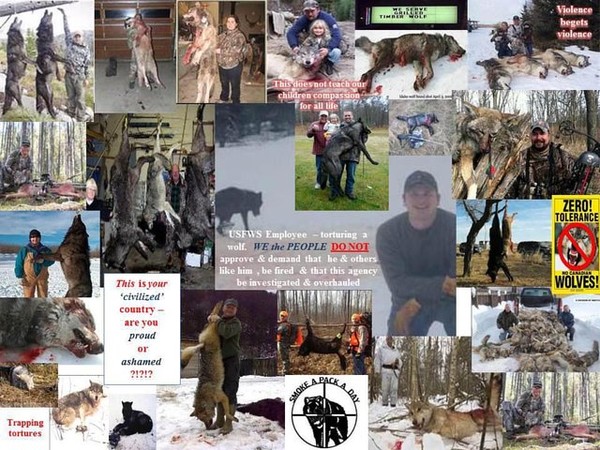
Wolf Hunting—No sooner did grey wolves begin to make a comeback in the Lower 48 than did the feds jerk the rug out from under them by lifting their endangered species protections and casting their fate into the clutches of hostile states. Now, hunters in Wyoming have a year-round season on them while anti-wolf fanatics in Montana have quadrupled their per person yearly kill quota.

Trapping—Only the creepiest arachnid would leave a victim suffering and struggling for days until it suits them to come along for the “harvest.” Yet “law abiding trappers” routinely leave highly sentient, social animals clamped by the foot and chained to a log to endlessly await their fate.

Hound-Hunting—“Sportsmen” not content to shoot unsuspecting prey from a distance of a hundred yards or more sometimes use hounds to make their blood-sport even more outrageously one-sided.

Bowhunting—Those who want to add a bit of challenge to their unnecessary kill-fest like to try their luck at archery. Though they often go home empty-handed, they can always boast about the “ones that got away”… with arrows painfully stuck in them.

Contest Hunts—Prairie dogs, coyotes, and in Canada, wolves, are among the noble, intelligent animals that ignoble dimwits are allowed to massacre during bloody tournaments reminiscent of the bestial Roman Games.

Horse Slaughter—After all that our equine friends have done for us over the centuries, the administration sees fit to send them in cattle trucks to those nightmarish death-camps where so many other forcibly domesticated herbivores meet their tragic ends.

Factory farming—Whether cows, sheep, pigs, chickens or turkeys, the conditions animals are forced to withstand on modern day factory farms fall well outside even the narrowest circle of civilized human compassion. To call their situations overcrowded, inhumane or unnatural does not do justice to the fiendish cruelty that farmed animals endure each and every day of their lives.

Atrocious conditions are not confined to this continent. Chickens in China (the ancestral home of some new strain of bird flu just about every other week) are treated worse than inanimate objects. Bears, rhinoceros and any other animal whose body parts are said to have properties that will harden the wieners of hard-hearted humans are hunted like there’s no tomorrow. And let’s not forget the South Korean dog and cat slaughter, or Japan’s annual dolphin round up…

Far be it from me to belittle the use of chemical weapons—my Grandfather received a purple heart after the Germans dropped mustard gas on his foxhole during World War One. I just feel that if we’re considering responding to actions “outside the circle of civilized human behavior,” we might want to strike a few targets closer to home as well. Or better yet, reign in some of our own ill-behaviors so we can justifiably call ourselves “civilized.”
Text and Wildlife Photography ©Jim Robertson, 2013. All Rights Reserved

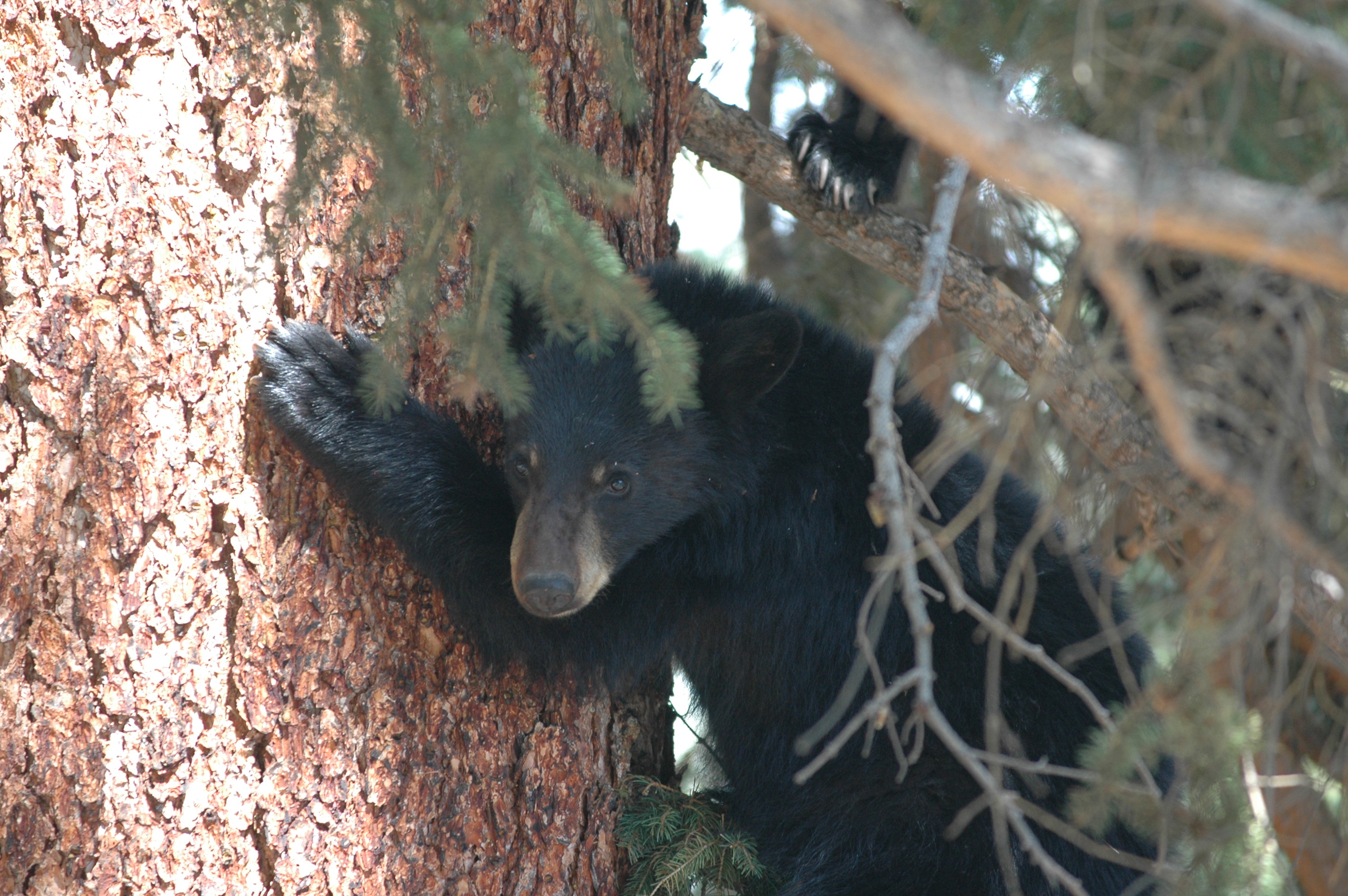
Text and Wildlife Photography ©Jim Robertson, 2013. All Rights Reserved

Public opinion differs on coyote hunting, trapping

Jim Robertson-wolf-copyright

State proposing 120-day hunting season, 100-day trapping period

By Nick Roth | Sep 06, 2013

Control is proposing a 120-day hunting and 100-day trapping season on coyotes.

The Department of Natural Resources and Environmental Control has presented its proposed regulations for hunting and trapping coyotes, and both supporters and opposition are making sure their voices are heard.

More than 50 people took the opportunity to express their opinions on coyotes and other proposed changes to the regulations at a public hearing Sept. 4 at the DNREC Building in Dover. Hunters are eager to legally kill what they consider an unwanted nuisance, while animal rights activists claim the non-native creature will not have a significant effect on Delaware’s ecosystem.

“Allowing the hunting and trapping of coyotes and the other animals is not only inhumane, it is irresponsible,” said Patricia Haddock, president of Delaware Votes for Animals. “This proposal could result in the unnecessary suffering and terrible deaths of adult animals and leave many young pups orphaned and unable to survive themselves.”

DNREC’s Division of Fish and Wildlife is proposing a hunting season of Nov. 1 through Feb. 28 and trapping season from Dec. 1 through March 10. Many hunters in attendance called the proposed regulations too conservative and lobbied officials to allow year-round hunting and trapping.

“I wholeheartedly recommend the elimination of coyotes,” said Dover resident Teddy Morwitz. “I am a dog person – I hunt with dogs – and I have had dogs killed and dragged off. Anything that can be done to reduce the population is wonderful.”

It is believed between 50 and 100 coyotes are present in Delaware, an estimation based partially on roadkill data that has found one to two coyotes are killed by automobiles annually. Comparatively, the Department of Transportation removes about 1,000 roadkill deer per year, said DNREC deer and furbearer biologist Joe Rogerson.

Rogerson said the presence of coyotes could have both positive and negative impacts on Delaware’s wildlife. The population of rodents, raccoons and red fox would likely decline, which could increase the population of the ground-nesting birds those animals prey upon, such as wild turkey.

“Predator/prey dynamics are very complex issues because we’re managing a very adaptive animal that has a very diverse diet, and landscape composition may be a factor,” he said.

Rogerson said he believes the deer population is productive enough to absorb the anticipated modest level of predation by coyotes.

Coyotes have also been known to feast on fruits, vegetables and livestock, which has many farmers also in support of the proposed regulations.

“Farming is important to my life and so is wildlife,” said farmer Ray Ellis. “These are fierce predators, and we do not need to let them establish. We need to do everything we can to eradicate them.”

DNREC is not trying to eliminate the animal from Delaware. Division of Fish and Wildlife Director David Saveikis said the regulations are meant to strike a balance among the various interests expressed.

“If these regulations are adopted or a modification thereof, there is always room to change them,” he said. “We intend, through the mandatory reporting, to track the coyote harvest, and if we find the regulations are not sufficient, we will change them.”

Many hunters strongly expressed their desire for more liberal hunting and trapping seasons, similar to those that exist in Maryland, Pennsylvania and Virginia. Some hunters also supported the idea of nighttime hunting of the animal.

Saveikis said nuisance coyotes could be addressed through a proposed secretary’s order that would authorize all private landowners to shoot coyotes that are considered a nuisance or depredating livestock or domestic animals. The order can be issued outside the regulations and is considered more responsive, Saveikis said. He said the department is waiting to see the final regulations before making a decision on the secretary’s order.

“I think it was important to realize that the combination of the secretary’s order and the proposed hunting and trapping seasons provide the tools for landowners to protect their property and effectively manage the coyote population,” he said.

Cathy Rash, vice president for Delaware Action for Animals, was strongly opposed to the hunting and trapping seasons because research suggests coyotes compensate for the loss of population by breeding at earlier ages and having larger litters.

“While we understand a few individual coyotes may be a nuisance to farmers, most are a valuable asset as having a natural predator helps keep smaller animals populations in check,” she said. “In the instance of nuisance coyotes, they should be dealt with on an individual basis instead of opening a trapping and hunting season on all coyotes.”

After listening to many animal welfare activists speak, Milton resident Ted Palmer described the cruel manner in which coyotes take down their prey.

“I hate the cruelty of animals [but] there is absolutely no comparison to what a coyote does to an animal,” Palmer said. “I’m tired of hearing about coyote puppies and how cute they are. They are cute, but they are a coyote and they need to be addressed as a coyote.”

Public comment will remain open until 4:30 p.m., Thursday, Sept. 19. Those wishing to submit comments may do so by emailing lisa.vest@state.de.us or sending comments to Lisa A. Vest, Public Hearing Officer, Office of the Secretary, 89 Kings Hwy., Dover DE 19901.

Maine’s bear hunting practices back in the crosshairs

Wildlife Photography ©Jim Robertson, 2013. All Rights Reserved

Wildlife Photography ©Jim Robertson, 2013. All Rights Reserved

Almost 10 years after failing to abolish baiting and other methods, animal-welfare activists want to revisit the debate: Are these cruel or are they viable wildlife management tools?

By  Deirdre Fleming dfleming@mainetoday.com Staff Writer

Bear hunters in Maine again find themselves in the sights of animal-welfare advocates who contend that some of their practices are inhumane.

Less than 10 years after Maine residents voted down a divisive referendum effort to abolish the use of bear hunting with bait, dogs and traps, the debate has re-emerged.

As hunters prepare for the first day of bear season Monday, sportsmen, politicians and animal-rights advocates are gearing up for a renewal of the referendum battle that spiked passions on both sides in 2004.

Bear-baiting involves placing food in the same location repeatedly for about a month before the season opens in hopes a bear will get in the habit of visiting the site regularly. Hunters also use dogs wearing radio collars to force a bear up a tree and keep it there until the hunter tracks it down electronically. Traps such as wire foothold snares are also used to hunt bears.

Supporters of banning the practices say they are cruel and give hunters an unfair advantage.

Opponents argue that the practices are vital to keeping the state’s bear population in check. If they are banned, the population will explode, and conflicts between bears and people will become commonplace, even in developed areas, they say.

Maine has one of the largest black bear populations in the lower 48 states, according to the Department of Inland Fisheries and Wildlife, and is the only state to allow all three controversial practices.

A coalition led by the Maine chapter of the Humane Society of the United States, called Mainers For Fair Bear Hunting, is behind the ballot initiative. It aims to collect as many as 80,000 signatures next month to get a referendum question on the 2014 ballot. The Secretary of State’s Office is still drafting language on the referendum question.

In 2004, voters rejected the referendum question seeking a ban on the three hunting practices by a margin of 53 percent to 47 percent. Each side spent more than $1 million on the campaign.

Those backing a ban on the practices said last week they think they’ll win this time.

“This is a last resort (after trying several times without success in the Legislature). But with the additional 10 years of experience, we’re confident we can win on the ballot,” said Katie Hansberry, director of the Maine chapter of the Humane Society.

Maine hunters expected the issue to resurface, and that it would involve another expensive ballot fight.

“I think we knew they’d be back,” said David Trahan, director of the Sportsman’s Alliance of Maine. “(The Humane Society is) a nationwide group. And (it) raises a lot of money.”

MAINE A FOCAL POINT

Proponents say the three controversial bear-hunting methods give hunters an unfair advantage and that trapping or shooting a bear over bait is inherently cruel.

Maine is a focal point in the debate over bear-hunting practices because it is the only state where all three are allowed.

Robert Fisk, director of the Maine Friends of Animals, which led the 2004 effort to ban the hunting practices, said the public is more familiar with the issues today, and that gives ban supporters an advantage.

“I believe we have an excellent chance of winning this time. The opposition’s alarmist strategies and scare tactics that were prevalent in 2004 can be exposed this time around. People are much more aware of animal protection issues than they were 10 years ago,” Fisk said.

Proponents say they have data and experiences from other states where the Humane Society successfully banned the use of these bear hunting methods, and that much of the Maine public was educated on the issue in 2004.

More: http://www.onlinesentinel.com/news/maines-bear-hunting-practices-back-in-the-crosshairs_2013-08-25.html


Dogs caught in wolf traps set on Forest Service land

http://methowvalleynews.com/2013/08/07/dogs-caught-in-wolf-traps-set-on-forest-service-land/

By Ann McCreary

Two dogs in the Poorman Creek area were inadvertently caught last week in leg hold traps set for wolves, until the owner of one of the dogs found them and set them free.

The traps were located on U.S. Forest Service land near Second Mile Road at the end of Poorman Creek Road west of Twisp. They were set by Washington Department of Fish and Wildlife (WDFW) officials in an ongoing effort to capture and place radio collars on Lookout Pack wolves, said Scott Becker, WDFW wolf biologist.

Becker said this week the traps have been removed from that area and wildlife officials are “re-evaluating some of the trapping protocols right now. We don’t want another incident like this to happen in the future.”

Wildlife officials have confirmed that at least three pups were born this spring to a pair of wolves that have been monitored for more than a year in the Lookout Pack territory, Becker said. Efforts to collar at least one of the adults will continue, he said.

The incident involving the dogs occurred last Thursday (Aug. 1). Andy Floyd, who lives on Second Mile Road, said his dog and a neighbor’s dog followed his wife on a morning run on nearby Forest Service land, but did not return to the house with her. Concerned, Floyd began looking around the neighborhood for his dog.

Floyd said a neighbor heard a dog “barking and yipping just over his fence on the Forest Service land not 100-300 feet away.” Floyd investigated and found the neighbor’s dog with a front paw caught in a trap by the side of a Forest Service road.

“I tried getting the trap off but could not do it by myself. I ended up getting my neighbor to … use most of our strength to get the trap off,” Floyd said. In the process, Floyd said, the dog nipped his wrist. He returned the dog to its owners, Carolyn and Glenn Schmekel, who took the dog to a veterinarian.

Residents’ concerns

Floyd later found his dog caught in another trap further along the road. He said the dog had been missing for about two hours. With the help of someone camping nearby, he was able to open the trap and release his dog, which bit Floyd’s hand and slightly broke the skin. Floyd said his dog has been limping, but is recovering.

Carolyn Schmekel said she was upset that the traps were placed near the Second Mile homes without notifying area residents, and called Becker last week at WDFW to express her concerns. Fish and Wildlife officials had placed a sign on a tree in the vicinity of the traps warning about bringing dogs in the area, but did not speak to residents bordering the Forest Service land.

“This is an extension of our back yard,” Schmekel said in an interview this week. “If you’re going to have traps this close to people’s homes that have dogs and kids, we need to be informed of it.”

Floyd expressed similar concerns. “The lack of communication really frustrated me. I understand it’s good to tag the wolves because of potential problems … but what really bugged me is the traps were so close to the houses and they didn’t tell us.” He said he did not notice the sign about traps until after the dogs had gotten caught.

Schmekel said her dog was probably trapped for about 30 minutes. It had a bruised front leg but was otherwise unhurt, although the incident resulted in a $66 vet bill.

Signs posted

news-wolf-trap-post2Becker said wildlife officials sometimes talk personally with people living in the vicinity of traps, but didn’t realize that residents in the Second Mile Road area had “free ranging” dogs when they set several traps along the nearby Forest Service road. “We ended up pulling those traps out of there,” he said.

“Most traps are located away from any residences at this point,” Becker said. “No matter where we trap, because we trap on public land, there is potential” for dogs to inadvertently get caught. “Wherever we put traps we put signs at the beginning or end of the road to warn people there are traps for wildlife. We try to do everything we can with signs.”

Traps are often placed along roads on public lands because “wolves are just like people – they use roads and trails to do most of their traveling,” Becker said. Signs placed in the vicinity of traps warn about bringing dogs into the area, describe how to open the trap, and advise covering the dog’s head with a jacket or something similar to avoid being bitten while releasing the animal.

Becker said the leg hold traps are baited with scent to attract wolves, and are outfitted with a transmitter to alert wildlife officials when they are tripped.The traps are located in places that allow the trapped animal to move into the shade, and have offset jaws covered with rubber to minimize injury to the animal.

A WDFW biologist checks the traps every morning, and during the evening as well during warm weather, Becker said. The biologist was making the rounds of a dozen traps in the Lookout pack territory last Thursday morning when the dogs got trapped, and arrived while Floyd was still looking for his dog.

When a wolf is captured, wildlife officials tranquilize it, attach a radio collar and ear tags, and take measurements, Becker said.

Why Are TV Networks Airing Reality Shows That Glorify Stupidity And Cruelty To Animals?

Where I live we don’t get television reception, so my viewing time is spent the old fashioned way: watching DVDs from Netflix. On those occasions when I find myself flipping channels somewhere that has cable, the rapidly-spreading spate of “reality” wildlife blow up tv t-shirtsnuff shows gets me so worked-up I feel like pulling a John Denver and blowing up the TV. But that would do little to slow the scourge of brainless, conscienceless drivel plaguing our society like a pandemic super-bug.

Clearly, cooler heads than mine are needed to combat this ever-growing menace. Therefore I hereby relinquish the pulpit (temporarily) and turn it over to Justin Forte, who, ever since nimrod networks started cropping up across the cable TV wasteland, has been asking the question…

Why Are T.V. Networks Airing Reality Shows That Glorify Stupidity And Cruelty To Animals?

Guest Rant by Justin Forte

What is it with television networks showing these stupid reality shows about bumpkins and glorifying killing and exploiting wild animals lately? It is beyond disgusting! All you see any more on most networks is one brain-dead reality show after another! Networks like Discovery, Animal Planet, TLC, and The History Channel are supposed to show programs that raise IQ levels not lower them! All you see on these networks and several other TV networks anymore are garbage shows that glorify trapping, torturing, and killing wildlife for profit and entertainment!

If it isn’t that, the networks show other reality shows of people acting like brain-dead yuppie idiots or people craving attention for doing ordinary stuff that other people do all the time that they think they should be on TV and get a medal for doing! WTF?

It is really sad, disgusting, and disturbing that the media has gone so low and is force feeding this garbage to the masses, and our society is suffering for it! Personally, I would love to see a social study experiment conducted to show the negative effects these reality shows are having on our society. I think these brain-dead reality shows glorifying animal killing and stupidity is dumbing down the masses and I think it is high time we stand up to the networks airing this garbage before they turn us all into brain-dead idiots and zombies from all this lousy programming they keep airing!

One of the best things we can do to put an end to these lousy reality shows that glorify animal killing and stupidity is to start complaining to these networks by calling, emailing, and sending letters of outrage over their programming. Another is to boycott the networks that show them. Cut the networks off from their ratings and they will begin to lose money, then we will be able to force them to bring back intelligent programming and entertainment like they used to show before they started showing the garbage they are showing now.

410557751_d3027a6344

Otters—a Pinnacle of Evolution

As is often the case, I awoke this morning to the sensation of our cat walking gingerly across my head. Sleek and silky, with luxuriant dark fur, Winnie reminds me of the river otter I saw yesterday afternoon crossing the road and heading upstream into our backyard beaver pond system.

I’d been hoping the otter I have been seeing in the waterways nearby would find our ponds, which are fed by several small streams flowing out of the surrounding hills. Though the ponds turn a light brown this time of year from the clay-rich soil leaching from their banks, they support a healthy variety of life, from frogs, fish and crawdads; to ducks, herons, kingfishers and osprey; to beaver, muskrat, raccoon, mink…and now otter.

A descendant of the diverse weasel family, the river otter is a pinnacle of evolution if ever there were one. While their kin adapted to every other habitat in North America—the ermine and pine marten, to the snowy north woods; fisher, the ancient forests; mink, the riparian zones; badger, the arid plains; and wolverine, the mountainous high country—river otters are masters of inland waterways and freshwater lakes. To those who know them, “otter” is synonymous with the word “play.” Among the most spirited of species, they clearly enjoy themselves in the water, delighting in games with each other like tag and hide-and-go-seek. They also enjoy snow sports: otter “slides” are a familiar sight on snowy slopes along frozen rivers in winter.

Like every other fur-bearer on the continent, otters were nearly decimated during the mindless fur trade era. Unbelievably, otters are still killed in traps set by nineteenth century throw-backs even today. Others are shot by selfish humans unwilling to share aquatic resources that otters had adapted to hundreds of thousands of years before Homo sapiens reached the Western Hemisphere.

The threat of human greed is even more pervasive for sea otters, who have all but lost their ability to move about on land, giving themselves and their terrestrial origins up to their oceanic habitat. Unlike commercial fishermen, they don’t sit out the storms in a cozy home or a dry shack heated by an oil furnace; they spend day and night floating among the coastal kelp beds.

River otter are more than welcome to stay as long as they like here in our beaver ponds. Hopefully we’ll get an occasional glimpse of them swimming fluidly by, or moving on land with their trademark weasel-esque, undulating lope. I’m just glad Winnie is lighter afoot when she tip-toes across my head in the morning.

DSC_0068

Cost to Shoot a MT Wolf: $19.00. Add a Dollar if You Want to Let it Struggle for Two Days in a Trap

Although the kind of sick fucks who get a kick out of killing wolves in Montana would pay ten times that amount, their “game” departments are handing out wolf tags like candy—so much for the notion that hunting licenses raise a lot of money for wildlife.

But, as evidenced by the article below, the mainstream media would not judge or condemn anyone who gets a thrill from killing non-human animals. Instead, their informative yet dispassionate reporting legitimizes the ongoing atrocity of wolf hunting…

MT: Changes in store for Montana’s 2013-14 wolf hunt

Posted on July 26, 2013 by TWIN Observer

Written by Tribune Staff

Montana’s Fish & Wildlife Commission recently approved regulations for the upcoming wolf season.

For the 2013-14 seasons, hunters will have the opportunity to pursue wolves throughout Montana beginning Sept. 7 for archery hunting, Sept. 15 for the general rifle season and Dec. 15 for trapping. The archery only season will close Sept. 14, and the general season will end March 15. Wolf trapping season ends Feb. 28

Wolf hunting licenses cost $19 for residents and $50 for nonresidents. License sales should begin by Aug. 5. Montana trapping licenses are currently on sale for $20 for residents and $250 for nonresidents.

New prospective wolf trappers must attend a mandatory wolf-trapping certification class to use a Montana trapping license to trap wolves and can sign up at fwp.mt.gov. Trappers who successfully completed a wolf trapping certification class in Montana or Idaho in the past do not need to retake one this year.

There is no statewide hunting harvest or trapping quota, but each wolf harvest must be reported. There is, however, a quota of two wolves in Wolf Management Unit 110 near Glacier National Park; four wolves in WMU 313 and three wolves in WMU 316, which borders Yellowstone National Park. Additionally, hunters and trappers are limited to taking only one wolf per person in WMUs 110, 313 and 316.

FWP urges hunters to avoid harvesting wolves with radio collars that provide researchers and managers with important scientific information.

The combined maximum hunting and trapping bag limit is five wolves per person. A hunter can purchase up to five wolf hunting licenses but can harvest only one wolf with each license. The use of electronic calls by wolf hunters is allowed.

Trappers must check their traps every 48 hours and immediately report any unintended animal caught in a trap, including domestic animals. Wolf traps must be set back 1,000 feet from trailheads and 150 feet from roads, the commission will consider in August a new measure that requires additional setbacks along more than 20 specific roads and trails popular among hikers and other recreationists in western Montana. If approved, the locations will be posted on FWP’s website.

Montana wolf specialists counted 625 wolves, in 147 verified packs, and 37 breeding pairs in the state at the end of 2012. The count dropped about 4 percent from the previous year and marked the first time since 2004 that the minimum count declined.

Last season the total hunting and trapping harvest was of 225 wolves. Hunters took 128 wolves and trappers 97.

Delisting allows Montana to manage wolves in a manner similar to how bears, mountain lions and other wildlife species are managed, guided completely by state management plans and laws.

7d547853b294cf28b7b6c4ff5a69dda1

(At Least) Michigan’s first wolf hunt will no longer include trapping

By Keith Matheny
Detroit Free Press staff writer

Michigan’s first-ever wolf hunt this fall and winter will no longer include trapping, after the state Natural Resources Commission rejected the use of steel-jaw leg traps on private and public land as part of the hunt.

The commission, for the second time in two months, approved a wolf hunt on July 11 for three zones of the Upper Peninsula. The second approval came in light of the passage of Public Act 21, a bill by Republican state Sen. Tom Casperson of Escanaba allowing the commission to designate animals as game species — a bill critics say was designed specifically to circumvent a petition drive to put the wolf hunt to a public vote.

The hunt approved in May allowed steel-jaw leg traps. But trapping was removed in the second approved hunt.

“The primary reason was just looking at starting conservatively with our approach in how we move forward with implementing public harvest of wolves as a management tool,” said Adam Bump, the Michigan Department of Natural Resources’ fur-bearing animal specialist.

But Jill Fritz, state director of the Humane Society of the United States, which is spearheading a second petition drive to try to repeal Casperson’s bill, suspects a different motive for dropping trapping from the hunt.

“It’s to make it more public-friendly, because they know Michiganders are horrified by the thought of this still-recovering species writhing and dying in traps,” she said.

Wolves were all but eradicated in much of the country by the 1930s. Michigan and other Great Lakes states lost almost all of their wolves by the end of the 1950s.

In 1973, Congress enacted the Endangered Species Act and officially protected the wolf that same year, sparking a resurgence in the wolf population. Michigan’s Upper Peninsula was known to have three wolves as recently as 1989. The population today stands at 653 wolves. The wolves have made an even more substantial recovery in Wisconsin (834 wolves) and Minnesota (3,000).

The U.S. Fish and Wildlife Service removed wolves from the federal endangered species list in January 2012, and several states, including Michigan, began planning for wolf hunting seasons.

Wisconsin and Minnesota established their initial wolf hunts last year, and trapping proved by far a more effective means of harvesting wolves than firearms hunting. In Minnesota, wolf takes by rifle were about 4% successful, compared with about 25% through trapping.

Michigan’s season will begin Nov. 15 and run through December, or until 43 wolves are harvested. Bump said the number was established with firearm hunting in mind.

“Our expectation is even with just hunting we will be able to achieve our targeted harvest,” he said.

Tony Hansen, spokesman for the Michigan United Conservation Clubs, said the coalition is disappointed that trapping was removed.

“It’s a viable, effective and scientific method to control wildlife populations,” he said.

Bump said the DNR will continue to use traps as necessary to take problem wolves throughout the year, and trapping will be reconsidered as part of the hunt in future years.

“The department’s position is trapping is a humane and effective wildlife management tool,” he said.

Nancy Warren, an Ontonagon County resident and Great Lakes regional director of the nonprofit National Wolfwatcher Coalition, is opposed to trapping — and the hunt in general.

The state is establishing the hunt to reduce conflicts between wolves and humans, such as wolves coming into towns or preying on cattle or pets. But Warren said the state’s own data on wolf depredations show the vast majority are occurring on one farm in her county, whose owner, John Koski, has been criticized for his actions and inaction that may contribute to wolf attacks on his livestock.

“When you take that farm out of the equation, there is no need for a wolf hunting season in this unit,” she said. “The truth is, some people want a hunting season; they want to kill wolves out of hatred, and they are using this as an excuse.”

Wolf hunting licenses go on sale starting Aug. 3 until Oct. 31, or when 1,200 licenses are sold. The licenses are $100 for Michigan residents and $500 for nonresidents and are available at authorized license agents, a number of DNR offices statewide or online at http://www.michigan.gov/huntdrawings.

copyrighted wolf in water

Who got Caught in Wolf Traps in Idaho

From the High Country News: April 29, 2013 P 3

What got caught in wolf traps in Idaho 2011-2012.

123 Wolves trapped

143 Number of people setting traps

557:111 greatest number of traps set and foot hold traps set

45:33 White-tailed deer caught and released alive

45:1 Coyotes caught and released alive

9:3 Lions caught and released alive

39:22 Others caught and released alive. Bobcats, geese, skunks, raccons, golden eagles and ravens.

$37,115 to $1,256,966 Estimated monetary value of ONE Northern Rockies wolf, based on tourism revenue.

$38.25: $333.50 Idaho residential tag and Non- resident tag

Based on a survey of 460 people who took the Idaho wolf trapper course and purchased a 2011-2013 license.

copyrighted Hayden wolf in lodgepoles

America’s Top 10 Threats to Trapping; or, The enemy of my enemy is my friend

525140_440817092654544_311118433_n

http://www.ussportsmen.org/trapping/americas-top-10-threats-to-trapping-2/

Posted on August 22, 2012

Courtesy of the U.S. Sportsmen’s Alliance/ http://www.ussportsmen.org.

There are many forces in America working to end trapping and wise wildlife management. Here are a few of those anti-trapping groups:

1- Sierra Club—this group’s board of directors has let America know it opposes any and all trapping—period. The official Sierra Club statement reads: “The Sierra Club considers body-gripping, restraining and killing traps and snares to be ecologically indiscriminate and unnecessarily inhumane and therefore opposes their use.” This position earns this group a No. 1 spot.

2- PETA—best known for being wackos, this group opposes fur, trapping and anything non-vegan. PETA also wanted to “trap” and euthanize problem hogs in Florida to prevent them from being hunted.

3- Humane Society of the United States—this radical animal rights group lists trapping as wildlife abuse. This group is currently being sued for violation of federal racketeering laws.

4- American Society for the Prevention of Cruelty to Animals (alias ASPCA)—states openly on its website that “The ASPCA is against the use of leg-hold or body gripping traps to capture wild animals because of the pain and distress that they cause.” The group also opposes hunting.

5- Defenders of Wildlife—this group opposes wolf hunting and trapping, and launched an aggressive on-line campaign to skew an Idaho wolf trapping survey in its favor. D o W reported it had 39,000 followers overwhelm the Idaho Game and Fish Commission’s website.

6- Born Free USA—this radical animal rights group labels trapping as “barbaric” and has a trapping victims fund to help cover veterinarian costs for animals—including wildlife—caught in traps. It distributes a free “How to Organize an Anti-Trapping Campaign” booklet through its Animal Protection Institute group.

7- In Defense of Animals—opposes trapping and has created a “furkills” website to promote the group’s propaganda—and to collect funds. The group also encourages followers to create a display in their local public library to display leaflets, posters, and books about the cruelty involved in trapping or leg-hold traps.

8- Animal Welfare Institute: Opposes trapping and is pushing the Refuge from Cruel Trapping Act in Congress to end trapping on national wildlife refuges. Filed a lawsuit in 2008 to stop coyote and fox trapping in Maine under the guise of protecting Canada lynx.

9- Center for Biological Diversity: has campaigns underway to stop wolf trapping and hunting in Montana, Wyoming and Idaho, and another in New Mexico to save Mexican gray wolves. Some of the group’s “urgent letters of action” also includes requests for donations to end trapping.

10- Footloose Montana—works to oppose wolf trapping and the management of these large predators in Montana while other wildlife species, like elk, dwindle in numbers at the hands, or paws, of wolves. Also works to end trapping on public lands.

As you can tell, trappers and hunters need to work together to overcome these radical forces…