Impossible to Imagine

To those of us who care deeply about wildlife issues and the abuse of non-humans, it seems that no matter how many horrors you hear about, there’s always something else happening to animals somewhere we’re shocked to learn. Even after writing a book against hunting and trapping, I guess there are still places my mind doesn’t want to go.

That’s how I felt when I read the article, “Montana, Idaho trappers catching more than just wolves,” in the Ravalli Republic, which I mentioned in yesterday’s blog post, “Stop the Spread of Psychopathy—End Hunting and Trapping.”
Text and Wildlife Photography ©Jim Robertson, 2013. All Rights Reserved

Text and Wildlife Photography ©Jim Robertson, 2013. All Rights Reserved

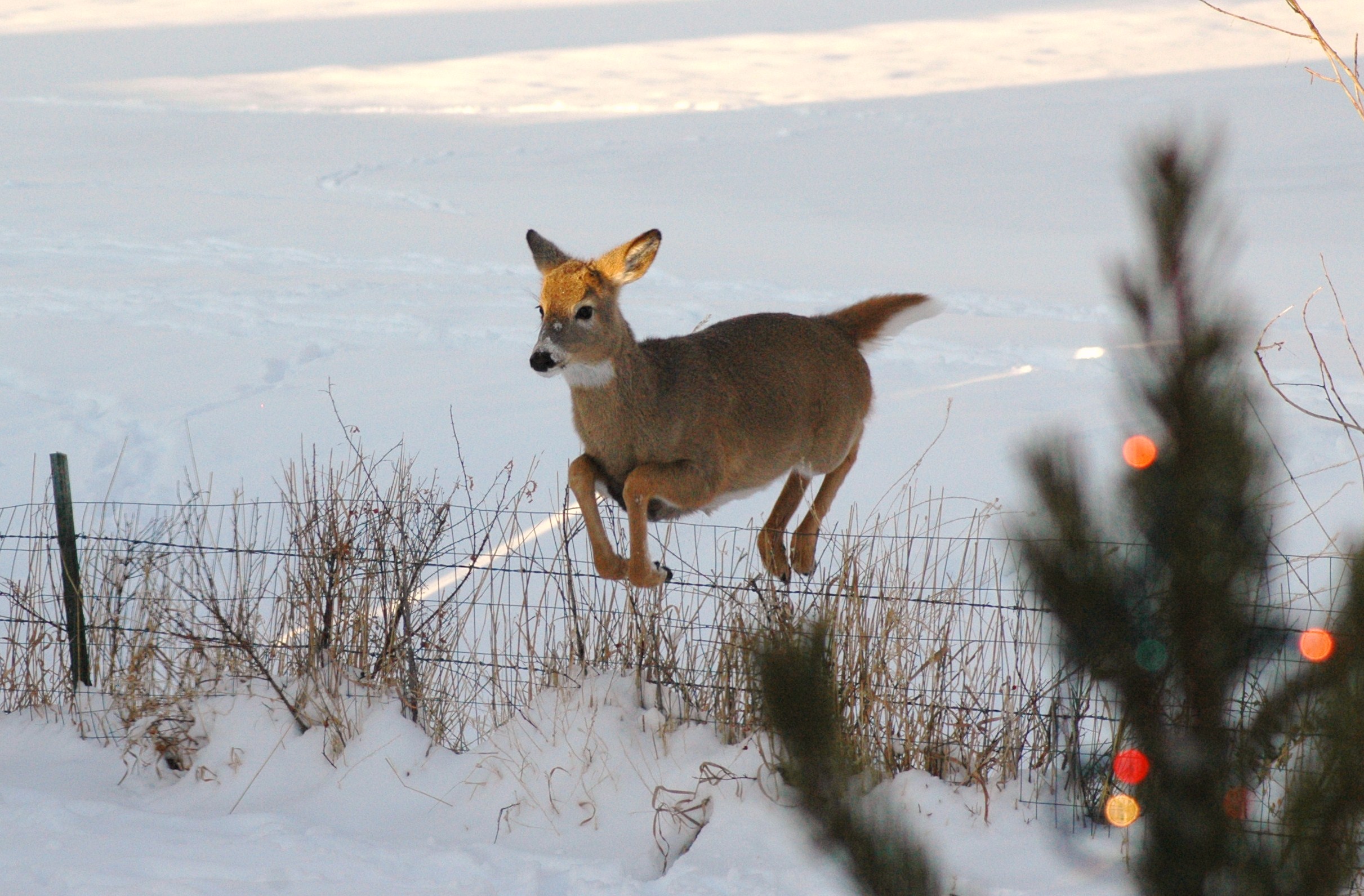
For a few years my wife and I lived in a house surrounded by a small field on a forested hill above Washington’s Willapa River valley. The field was once an upper pasture of a now long-defunct dairy. We were happy to see it returning to nature. Sword ferns, wildflowers and Douglas fir trees were starting their advance across the expanse of grass, finding soil churned up by moles for their seeds to take root.

Common wildlife there included black-tailed deer, black bear, raccoons, coyotes, field mice and the red-tailed hawks attracted by the latter. Meanwhile, our feeders attracted everyone from squirrels and chipmunks to a varied assortment of birds—Steller’s jays, juncos and chestnut-backed chickadees, as well as flocks of band-tailed pigeons and American goldfinch, the Washington state bird.

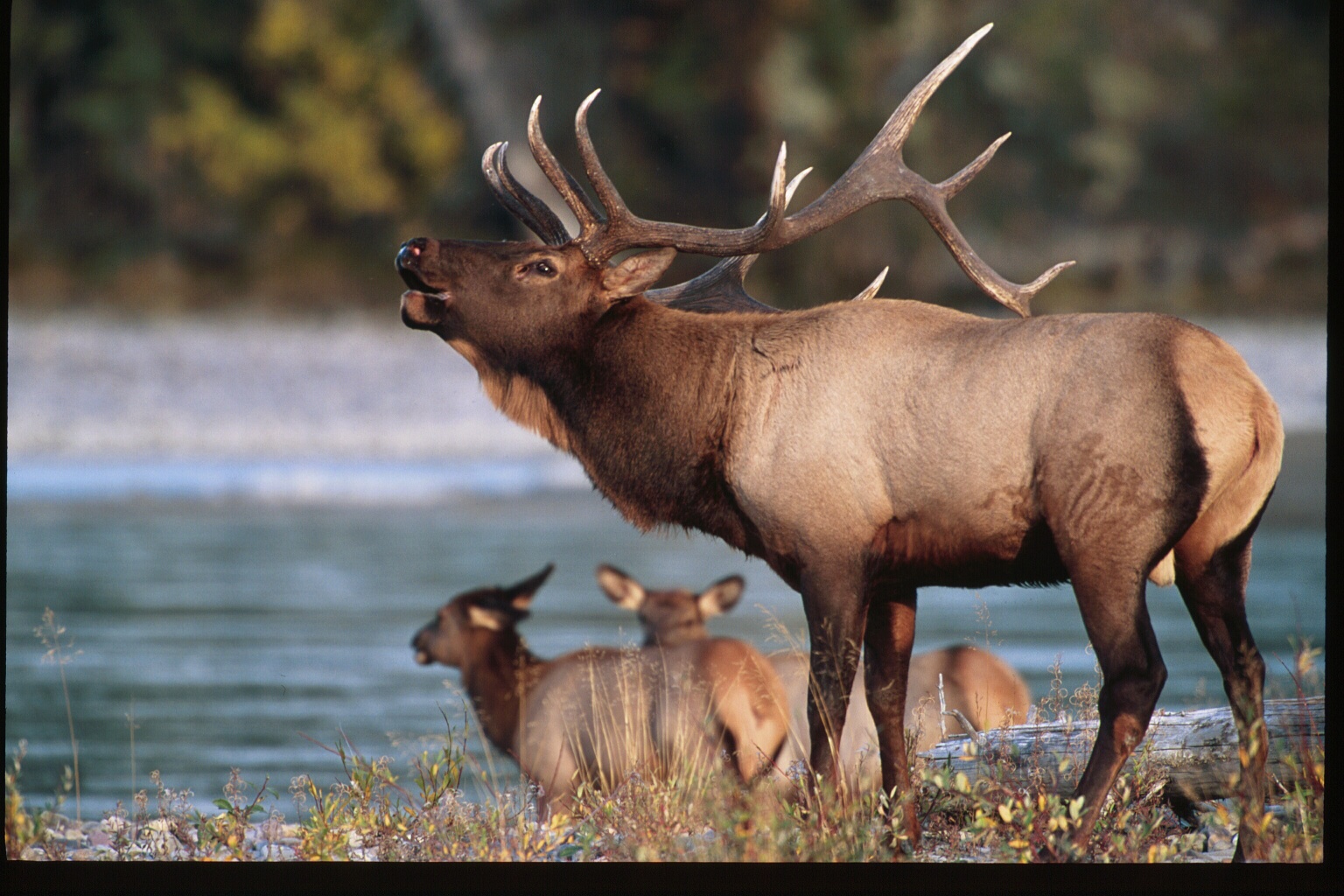
But it was always a special treat to wake up to the sight of the local elk herd bedded down in the upper corner of the field, less than 50 yards from the house.

People often panic at the thought of 20 or 30 large animals competing with their cows for pasture grass, but elk are anything but sedentary grazers—they’re always on the move. Sticking together as a group, they make a circuit around their range through forests and across rivers to find themselves in a new place every day for a week or two, before starting the circuit anew. It was always sad to see them move on from the protection of our posted private property, yet you could almost predict to the day when they’d show up again.

But there was one lone elk cow who seemed to shadow the herd, always a few days behind. We saw her far more often than the herd, and we soon figured out that she was staying nearby in the surrounding forest rather than migrating over the miles-long circuit like the rest of her kind. The reason became obvious—she had a pronounced limp as though barely able to use her right front leg.

When we got a good look through binoculars we saw that her foot was in fact missing! What the hell could have happened to cause that? My first thought was that she caught her leg in some overgrown barbed wire, a familiar threat since “livestock growers” almost never remove unnecessary fencing when they finally quit the business.

Asking around to the locals, their standard reaction was a snicker and a half-assed guess that someone must have shot it off during hunting season. Either scenario seemed remotely possible, but not necessarily all that probable, considering the horse-like size of the animal in question. One bullet or a strand of barbed wire shouldn’t do that much damage.

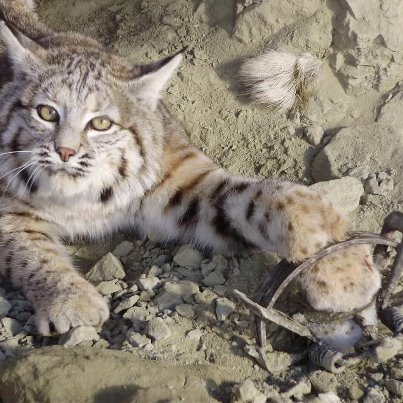
Twice over the years I’ve found dogs caught in steel-jawed foot-hold traps in other parts of the state (one of them had to have his lower leg amputated) and I started to wonder if the elk might have stepped into a trap set for coyotes (whom the locals hate with extreme prejudice).

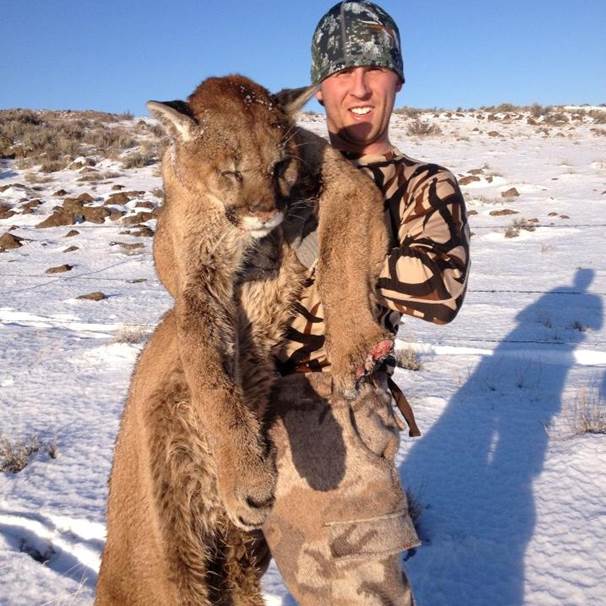
I knew that smaller mammals, as well as hawks and eagles, were often unintended victims of trapping; but the thought of an animal as large as a deer or elk being caught in a trap was just too hard to get my mind around. It wasn’t until I read the following lines in “Montana, Idaho trappers catching more than just wolves,” and then saw a photo of a hunter-killed cougar who had earlier lost his toes in a trap, that I suddenly knew for sure—that’s how she lost her foot!: “Trappers reported capturing 45 deer. Twelve of those died. They also captured 18 elk and four moose. One of the elk died.”

The article goes on to quote the Idaho Department of Fish and Game’s state “game” manager, looking out for his cronies while objectifying the animals, “No one wants to catch a deer. It costs them a lot of time.” I don’t even want to try to imagine what an ungulate like that goes through to try to escape a trap—even before seeing an approaching trapper.

Traps are often compared to landmines set for any passing animal. But the difference is that while a landmine blows an appendage off instantly, a steel-jawed trap works its evil slowly—the more its victim struggles to escape, the more damage is done.

In the case of the elk, escape meant not only catching up with the rest of the herd, but also getting away from anyone who might happen by. If determined enough, an animal as powerful as that could eventually pull herself free of a trap’s steel jaws, but freedom would likely come at the expense of a foot.
Text and Wildlife Photography ©Jim Robertson, 2013. All Rights Reserved
Text and Wildlife Photography ©Jim Robertson, 2013. All Rights Reserved

Stop the Spread of Psychopathy—End Hunting and Trapping

In light of the rise in violent crime, many have pondered the question: “How do I know if my neighbor is a psychopathic serial killer?” Well, unfortunately, it’s not easy. Unless of course you happen to live in any number of rural areas across the country where hunters are required to wear blaze orange—then the psychopathic serial killers stand out like a bunch of sore thumbs.

Okay, so maybe it’s a bit hyperbolic to compare hunters to serial killers. Yes, they both obsess on and stalk their victims, whom they objectify and depersonalize in their single-minded quest to boost their self-esteem, and the kills made by both hunters and serial killers are followed by a cooling off period, but serial killing usually has a sexual component to it.

Let’s hope hunters aren’t literally getting off on their exploits.

Maybe a better comparison for a hunter would be to a mass murderer: the inadequate type who snipes with a hunting rifle at innocent passers-by from a clock tower, or fires an AR-15 at cars from an embankment over a freeway.

Either way, the plain fact is cruelty to animals often leads to the killing of people. The perpetrators of the Columbine mass school shooting in Colorado honed their slaying skills by practicing on woodpeckers with their hunting rifles. David Berkowitz, the self-proclaimed “Son of Sam” serial killer, who habitually took sport in shooting lovers in parked cars along the streets of New York City, began his criminal career by shooting his neighbor’s dog.

Why does the public put up with these people in their midst?

The mainstream media downplays the behavior of serial animal killers as though hunting was just another “sport” to report on; like they were covering some Boy Scout Jamboree. They repeat by rote hunter/”game” department jargon like the animals were inanimate objects, using emotionally void terms such as “crop” for deer or “wolf harvest” for the unnecessary torture and murder of sentient beings vastly more admirable than their pursuers.

Worse yet are the noxious spread of anything-goes anti-wolf/anti-wildlife websites and chat rooms now widespread in social media. Consider the following comments made in response to a hunter showing off the cougar he killed (photo below)…

February 11 at 8:34am – “Nice cat bud.”

February 11 at 8:34am via mobile – “Colter! I had no idea you were into cougars.”

February 11 at 8:39am via mobile – “Hahahaha only old hairy ones like this one!!”

February 11 at 8:51am via mobile – “Good cat man congrats.”

February 11 at 9:15am via mobile – “That’s a nice cat bud!”

February 11 at 10:25am via mobile – “Thanks! Damn fun hunt.”

February 11 at 4:39pm – “what did you do, shoot its paw off!”

February 11 at 5:25pm via mobile – “It had been stuck in a trap at some point. Either chewed it off or pulled it off.”

In other words the poor cougar suffered, possibly for days, in a trap, before being shot by a trophy hunter. “Non-target” species like cougars often end up in traps set for other undeserving animals.

The Ravalli Republic reports (in typical mainstream media passionless fashion) in their article, Montana, Idaho trappers catching more than just wolves

In the first year that wolf trapping was allowed in Idaho, trappers captured a total of 123 wolves.

But according to a survey by the Idaho Fish and Wildlife Department, those same trappers in 2011-2012 also inadvertently captured 147 other animals, including white-tailed deer, elk, moose, mountain lions, skunks and ravens.

Trappers reported that 69 of those animals died as a result.

Trappers reported capturing 45 deer. Twelve of those died. They also captured 18 elk and four moose. One of the elk died.

The same number of coyotes ended up in traps as deer. Trappers reported that 38 were killed. Mountain lions also took a hit. Nine were captured and six died.

“There are a heck of a lot of people out there trapping furbearers,” said the Montana Fish, Wildlife and Parks wildlife management chief. “And there also are a lot of people trapping coyotes, which aren’t even regulated.”

Meanwhile, Idaho allows trappers to use wire snares that collapse around an animal’s neck as it struggles to free itself.

The Idaho Department of Fish and Game’s state wildlife game manager vacuously adds, “No one wants to catch a deer. It costs them a lot of time.”

Any society that looks the other way when people murder animals for fun does so at its peril. Marine biologist, Rachel Carson, author of Silent Spring, had this to say about the growing problem:

“Until we have the courage to recognize cruelty for what it is—whether its victim is human or animal—we cannot expect things to be much better in this world. We cannot have peace among men whose hearts delight in killing any living creature. By every act that glorifies or even tolerates such moronic delight in killing we set back the progress of humanity.”

It doesn’t get much more cruel or moronic than this…

cougar kill

Wolf-Murder by Numbers

Here are the totals of wolves murdered in the tri-state area, not including those who were victims of our taxpayer-funded assassins—the hit men from the federal “Wildlife Services” agency. (Note: all three of these states share a border with Yellowstone National Park)…

Latest Posted Idaho Wolf Hunt Kill total (current season): 169
Latest Posted Idaho Wolf Trapping Kill total (current season): 76
Final Posted Montana Wolf Hunt Kill Total (most recent season) 128
Final Posted Montana Wolf Trapping Kill total (most recent season): 97
Wyoming Wolf Kill Total (current season): 74 (Note: as of March 1st Wyoming’s season has been extended indefinitely)
Regional Total Reported Killed This Season: 544
Regional Total Reported Killed Since Delisting: 1,089

Meanwhile, a new National Park Service report for 2011 shows that the 3,394,326 visitors to Yellowstone spent $332,975,000 in communities surrounding the park. This spending supported 5,041 jobs in the local area.

(Michigan State University conducted this visitors’ spending analysis for the NPS. The report includes information for visitor spending at individual parks and by state. It can be downloaded at http://www.nature.nps.gov/socialscience/products.cfm#MGM click on Economic Benefits to Local Communities from National Park Visitation 2011.)

Needless to say, most people who visit national parks want to see the wildlife unmolested. They are not there to hunt; the money they spend reflects their strong interest in the quiet enjoyment of nature. Pro-hunting factions like to boast about the money their bloodsport brings to local communities. I don’t know if anyone has taken a survey on how much those kill-happy cowboys add to the communities around Yellowstone, but you can bet your boots it’s nowhere near $332,975,000.
One thing I know for sure is that the number of dollars spent by Yellowstone visitors is going to drop as the wildlife they went there to see continues to disappear.

Yellowstone wolf photo ©Jim Robertson. All Rights Reserved

Yellowstone wolf photo ©Jim Robertson. All Rights Reserved

Washington Another Hostile State Wanna-be

It’s clear from the irrational outbursts at a recent WDFW public meeting on wolves that Washington wants to join the ranks of the hostile, hateful anti-wolf states. At least the eastern Washington cattle ranchers do.

Here are some excerpts from an article in an eastern Washington newspaper, the Wenatchee World entitled, “Wolf management will include lethal removal, state officials say.”

(My comments are within parenthesis.)

OKANOGAN — State wildlife officials assured Okanogan County residents Thursday that some problem wolves that kill livestock will be trapped and euthanized this year.

(Is that a threat or a promise?)

“The lethal side of management is controversial, but it is a very real part of management,” Dave Ware told a standing-room-only crowd that included many cattle ranchers. The state Department of Fish and Wildlife game division manager added, “We’re trying to be more aggressive, and we’re trying to be more responsive.”

(By “responsive” he was no doubt speaking to bloodthirsty cattle ranchers, not those who suggest that wolves have their place and should be allowed to live in the state.)

Ware said his agency has also created a wildlife conflict section to stay on top of problem wolves, and has hired someone in Northeast Washington whose only focus will be on wolf conflicts.

(Sounds like some kind of a bounty hunter).

And, they will share radio-collar information about where the wolves are with ranchers who have cattle in the area.

(I knew there was a reason I hated those burdensome radio collars wolves are forced to wear; while the public is led to believe they are for “research purposes,” those collars can actually be used against the wolves by giving their locations to their sworn enemies.)

Still, more than 200 people who crowded into the Okanogan County PUD auditorium for Thursday night’s wolf meeting weren’t satisfied.

(In other words, they were out for blood.)

Some told Wildlife officials they plan to manage wolves their own way — by shooting them on sight.

(You don’t get much more hostile than that.)

An Okanogan County commissioner told them the county is interested in giving jurisdiction over the wolves to the Colville Tribes. Tribal officials last year issued nine permits to kill wolves on the Colville Indian Reservation.

(The Colvilles were the first in the state to initiate a hunting season on wolves.)

Ware said if problem wolves are located east of Highway 97 — where wolves are federally delisted — they’ll consider trapping and killing them.

(Meanwhile, the feds are planning to delist wolves elsewhere across the country—see below.)

It’s a decision that will still be made by Fish and Wildlife Director Phil Anderson, he said, but added, “Lethal removal is going to be part of that management.”

(Of course, “lethal removal” is standard practice for “wildlife managers”).

Ware also said he’s expecting the federal government to include the rest of Washington in the area where wolves are no longer protected.

(No comment).


Text and Wildlife Photography ©Jim Robertson, 2012. All Rights Reserved

Text and Wildlife Photography ©Jim Robertson, 2012. All Rights Reserved


TIME TO END A TWISTED TRADITION!

Unless a severe blow to the head or some congenital brain disorder has rendered them incapable of feeling empathy, anyone who has witnessed the harrowing ordeal suffered by an animal caught in a leg-hold trap should be appalled and outraged that trapping is legal in a society that considers itself civilized.

The continuation of this hellish violation in a country governed by the people suggests that either most folks have brain damage, or the majority of the voting populace is blissfully unaware of the terrible anguish someone caught in a trap goes through.

They must never have heard the cries of shock and agony when an animal first feels the steel jaws of a trap lock onto his leg. They must never have looked into the weary eyes of a helpless captive who has been stuck for days and nights on end…

525140_440817092654544_311118433_n

Sidestepping the indisputable cruelty issue, pro-trapping factions try to perpetuate the myth that this demonic practice is “sustainable,” but time and again entire populations are completely trapped out of an area, often within a single season. The winter after I found wolf tracks in Alaska’s Katmai National Park, all seven members of a pack who had filled a niche in and around that preserve were killed by trappers. Though wolves are extinct or endangered in most of the US, but 1500 are permissibly “harvested” in Alaska each year.

Leg-hold traps are now banned in 88 countries and a few enlightened US states. Yet in most states, as in Canada, this twisted tradition is not only legal, it’s practically enshrined as a sacred human right. Compassionate people everywhere must add their voice to the rising call to end this gratuitous torture for good.

__________________________________________

Text excerpted from the chapter “Time to End a Twisted Tradition” in the book, Exposing the Big Game: Living Targets of a Dying Sport.

Photo Copyright Jim Robertson

Photo Copyright Jim Robertson

It’s Official: Montana Hates Wildlife

To the casual observer, it would surely seem that Montana hates its wildlife.

Not only does the state continue to escalate its attack on wolves by prolonging its hunting and trapping season and increasing the per hunter quota even as the number of wolves there drops, but now their state legislature is proposing to eliminate free-roaming wild bison altogether, outside the confines of Yellowstone National Park.

The same Montana politicians who just rushed through a bill to expand the state’s ongoing wolf hunting and trapping are now considering new lethal bills to:

•prohibit reintroduction of wild bison into Montana;

•establish a year-round hunting season for bison, with virtually no limitations;

•authorize private landowners to shoot on sight any bison that wandered onto their property;

•order state officials to exterminate or move any wild bison that migrate into Montana.

The grizzly bear is soon to come off the federal Threatened Species list, and thereby lose federal protection. You can bet that states like Montana, Idaho and Wyoming—those few places fortunate enough to still support the bears in their wilderness areas—are planning to add trophy hunting of grizzlies to their long hit list of “big game” species as soon as (in)humanly possible.

But to hear them tell it, Montanans don’t hate all wildlife. They love having out of control populations of ungulates around to “harvest” between shopping trips to WalMart. As long as their Fish, Wildlife and Parks department provides them with huntable populations of “surplus” elk, deer and pronghorn, those token other species—the wolves, grizzly bears and bison—can stay in the national parks, “where they belong.”

Photos Copyright Jim Robertson

Photos Copyright Jim Robertson


Montana: Love the Place, Hate the Politicians

In a variation of the old adage, “Love the country, hate the people,” my new motto for my former and possibly future home state is, “Love the place, hate the politicians—especially the wildlife policy makers.

Though I have a lot of like-minded friends back there, they are mostly “new-comers” from other states who have moved there because of their love for the land. They don’t share the self-centered patrician attitude of many of the Montana “natives,” so they tend to appreciate the wildlife more.

But the Montana state legislators think they know who their constituents are—and they’re not the wolves or us wolf advocates. In their zeal to fast-track a proposal to expand their already out-of-control wolf hunt, the Montana State Senate on Thursday suspended its rules so it could take initial and final votes on the same day on a measure that already had overwhelmingly cleared the House. The Senate backed it 45-4, and now the unbelievable piece of anti-wolf legislation will soon be sent to the governor’s desk for his signature. (It must be quite a challenge for the evil, pointy-tailed office-bearers to hold a pen with those cloven hooves of theirs).

The following is an AP article entitled, “Legislature gives quick OK to expanded Montana wolf hunt” (my parenthetical asides are added when necessary or appropriate):

House Bill 73 lets the Department of Fish, Wildlife and Parks increase the number of wolves one hunter can take, allows for electronic calls, and removes a requirement to wear hunter orange outside general deer and elk season. (The one bright side: more hunting accidents.)

The measure also prohibits the state wildlife agency from banning wolf hunts in areas around national parks. (Parks like Yellowstone, where wolves are used to seeing appreciative, peaceful people and are therefore deceitfully and easily killed by the malicious ones waiting just outside the park boundaries). Its swift passage would allow the changes to take effect during the hunting season that’s currently under way…

The department last month abandoned efforts to shut down gray wolf hunting and trapping in an area north of Yellowstone National Park, a move originally promoted by concerns that too many wolves wandering out of the park were dying. (“Dying”… Is that what the AP thinks happened to them? Or, are they just being pleasant? What they meant was, “…too many wolves wandering out of the park and being stuck in a trap and/or shot to death by bloodthirsty wolf-haters!”)

Lawmakers wanted to make sure such a regional closure doesn’t come up again.

Gov. Steve Bullock on Thursday indicated support for the legislation, noting it had been backed by Montana Fish, Wildlife and Parks. (Not surprising that MFWP gave it their cloven-hooved stamp of approval).

Fish, Wildlife and Parks said it already has prepared rule changes that will allow the legislation to immediately impact what remains of the wolf hunting season ending Feb. 28.

Hunters and trappers so far this season have killed fewer than 200 wolves. Wildlife officials are hoping to reduce the animals’ population from an estimated 650 wolves to around 450. The goal is to reduce wolf attacks on (non-native) livestock and help some elk herds that have (allegedly) been in decline due to wolf attacks (read: natural predation).

Wildlife advocates have argued that the state is being too aggressive (read: violent, hostile, destructive, belligerent, antagonistic, bellicose) against a species only recently restored to the Northern Rockies after it was widely exterminated last century.

But no one spoke against the expanded wolf hunt on the Senate floor.

“These creatures are hard to hunt, and we need to allow our wolf hunters the best chance of getting into them while the season is still ongoing,” said Sen. Larry Jent, D-Bozeman (“getting into them”—how sick is that kind of talk?)

Sen. Fred Thomas, R-Stevensville, argued it doesn’t go far enough to limit wolf numbers. He said the FWP is going to have to start allowing snare trapping of the wolves, a controversial practice the wildlife commission banned with its trapping regulations. (Even the MFWP isn’t willing to descend into that level of hell.)

“While this bill will do some things, it is not the big answer,” Thomas said. “If you really want to get after this, you have to authorize snaring.”

So sayeth the elected official from the great state of Montana. No, I wouldn’t feel any more fairly represented there now than the wolves are.

Text and Wildlife Photography ©Jim Robertson, 2013. All Rights Reserved
Text and Wildlife Photography ©Jim Robertson, 2013. All Rights Reserved
Save the Animals—For Their Sake, Not Mine

Anthropocentricism is so deeply imbedded into the human psyche that these days it’s even hard to find a wildlife-related action alert which doesn’t focus on how some group of people might benefit from the continued existence of a given species. The well-being of the individual animal—let alone its species—so often takes a back seat to the ways humans benefit or profit from them.
Take wolves, for example. When Montana’s wildlife lawmakers were considering closing a few small areas around Yellowstone to wolf hunting and trapping, the primary reasons given by most wolf proponents for wanting the exclusion zones had to do with the value wolves have as tourist attractions and as part of a scientific study. To the majority of those who testified, the facts that the wolves themselves are sentient beings and/or are essential elements in nature’s design—who don’t deserve to be shot on sight as vermin—seemed secondary to the ways in which watchers and biologists were affected by the wrongful deaths of Yellowstone wolves.

Similarly, a petition to force Facebook to remove the page, Wolf Butchering, Cooking, and Recipes reads, “To protect the Wolves, and the Sensitivities of Native Americans. It is offensive, and a discrimination against the Religious Beliefs of Native Americans.” Of course I signed the petition, but I did so for the sake of the wolves, not because of anyone’s purported religious beliefs. I’m against cannibalism as well—for the sake of the victims of such barbarity, not because the culinary choice is considered a cultural taboo. At the same time, I don’t want migratory waterfowl habitat set aside just so I can go bird watching, or to save the whales so I can go whale watching. It’s about them, not about our perception or enjoyment of them.

As we’ve all heard, ad nauseam, “sportsmen” help wildlife by hunting—or so they would have us believe. As James McWilliams blogged in a timely post entitled Hunting, Land Conservation, and Blood Lust, “This land preservation defense of hunting is a common one. Get enough people who like to blow away animals on board and you can prevent undeveloped land from becoming a Walmart,” dispelling this myth with, “The vast majority of conservation-driven hunting policies are designed not to improve the quality of a particular ecosystem but to improve the quality of the hunt.”

Westerners didn’t know okapis or orangutans even existed until around a century ago. Were the lives of such unutilized and therefore unappreciated animals meaningless up until the day they were “discovered”? You or I may never get the chance to see a black rhino or a snow leopard, but that certainly doesn’t diminish their intrinsic value.

Text and Wildlife Photography ©Jim Robertson, 2013. All Rights Reserved

Text and Wildlife Photography ©Jim Robertson, 2013. All Rights Reserved
Stop Bear Snaring and Wolf Trapping Adjacent to Denali

copyrighted-wolf-argument-settled
Please Tell the Board of Game to Vote “Yes” to Stop Bear Snaring and “Yes” to Create a No-Trapping Buffer Zone Adjacent to Denali!

Dear Wildlife Supporter,

The Alaska Board of Game will meet in Wasilla from February 8 – 15, 2013 to vote on proposals governing wildlife management regulations for the Central and Southwest regions of Alaska.

The BOG has many, many proposals to consider at this meeting – there are many worthy proposals to support and even more that need to be opposed. However, AWA is focusing on two crucial issues: bear snaring (Proposal 105) and protecting Denali’s wolves (Proposal 86).

You may review all of the proposals online via the link below and make additional comments on as many as you choose.

E-mail comments on the proposals are due to info@akwildlife.org by 5:00 pm on Friday, February 1, 2013, and we will deliver them to the Board of Game prior to the start of the meeting. (The BOG does not accept comments via e-mail.)

Comments should specifically state “support” or “oppose” and the proposal number(s) on which you are commenting.

Comments also may be faxed or mailed so they are received by the Board of Game before February 7.

Comments:

ATTN: Board of Game Comments
Alaska Department of Fish and Game
Boards Support Section
P.O. Box 115526
Juneau, AK 99811-5526

Fax comments to:
(907) 465-6094

The current BOG proposal book is available in pdf format online at: http://www.adfg.alaska.gov/index.cfm?adfg=gameboard.meetinginfo. Proposal numbers 45 through 126 (pages 62 – 198) are scheduled to be considered at this meeting.

We are asking you to please comment in support of the following two proposals:

Proposal 105 (page 158), submitted by AWA, would ban grizzly and black bear snaring in the Southwest and Central regions.

* Scientists overwhelmingly agree that bear snaring is indiscriminate, cruel and not biologically sustainable.

* Bear snaring is an extremely controversial method of killing animals. The BOG tarnishes Alaska’s image for residents and non-residents alike by insisting on continuing its war on predators. Bear snaring has never been allowed in Alaska since statehood until the BOG approved an experimental program in 2008.

* Because bear snaring is indiscriminate, females with dependent cubs and cubs themselves are at risk. Bears have one of the lowest reproductive rates and it is for this reason modern scientific management principles discourage the harvest of females.

* Enforcement will be a nightmare for the Alaska State Troopers, who are already stretched thin.

* There are the dangers to other consumptive users, hikers and their pets who may come upon a situation where one bear is caught while its siblings or mother remain free in the area, creating the very real possibility of severe injuries or fatalities.The baited traps also create food-conditioned bears, and animals which learn to associate food with humans are a danger to our communities.

* Bear snaring is archaic, cruel and should be banned.

* Living bears have a very high value as a tourism draw and a source of revenue. They are almost always cited as one of the “big three” species visitors come to Alaska to see.

Proposal 86 (page 126) would re-establish a no-trapping buffer zone adjacent to Denali National Park. This proposal would provide crucial protection for wolves that wander across the Park boundary onto state land in search of prey or mates, where they are targeted by several recreational trappers.

* Wolf populations (and therefore viewing opportunities) have declined significantly in the Park due in part to trapping along the east and south Park boundary. The most recent official survey (Spring 2012) found a total of only 70 wolves in nine packs in the six million acre park – one of the lowest populations in decades.

* Several hundred thousand visitors annually travel to Denali to view wolves and other wildlife. Two or three recreational trappers targeting wolves habituated to the sight and smell of humans should not be allowed to negate visitors’ viewing opportunities (nor the millions of dollars they spend in the state).

* The loss of only one wolf to these trappers can result in a huge impact on viewing opportunities in the Park. Last spring the alpha female of the Grant Creek pack was trapped and killed just outside the Park boundary. The pack produced no pups last year, and subsequently dispersed. For years the Grant Creek pack had offered hundreds of thousands of Park visitors the best, most frequent opportunities to view wild wolves.

[Note: a six year moratorium on submitting proposals to re-establish a Denali buffer zone was enacted by the BOG in 2010. A request to the BOG in January to rescind its moratorium was met with a quick, unanimous refusal to even consider the matter. It is not known how the BOG will deal with Proposal 86 at the February meeting.]

Please take the time to speak out on behalf of Alaska’s wildlife. Our bears and wolves need your support.

As ever, thank you for your support and for your commitment to Alaska’s wildlife.

Best regards,
Tina M. Brown
President
Alaska Wildlife Alliance

PS: We will of course let you know the outcome of these and other proposals after the conclusion of the BOG meeting.

Alaska Wildlife Alliance
P.O. Box 202022
Anchorage, AK 99520
info@akwildlife.org
http://www.akwildlife.org

Hunting Is Not a Sport, It’s Sadism

I know I’ve said it many times before, but allow me to reiterate: hunting is not a sport, it’s sadism. Football, baseball, basketball and hockey are sports. Bicycle racing, marathon running, pole vaulting and shot putting are other examples.

I went skiing yesterday; skiing is both an outdoor activity and a sport. It tests one’s skill and promotes quick reactions and good balance. Skiers can challenge themselves by going faster, taking steeper runs or skiing heavier, untracked snow.

Boxing, karate, and tennis all qualify as sports; each one pits two people—perhaps not equally matched, but equally willing—in a friendly contest of skill or chance. Granted, the human hunter without weapons is not as equally suited for survival as any non-human animal. Every last squirrel, rabbit or mallard would laugh at the efforts of an un-armed human hunter.

To compensate for being the obvious underdog, sport hunters are the most ruthless, cunning, conniving and—especially in the case of bowhunters or trappers—the most barbaric and monstrous creatures to ever walk the earth. Today’s hunters who want a challenge can opt for lower-tech, less accurate equipment like bows and arrows or black powder rifles. But that just increases the chance that their living targets will get away only wounded, rather than killed outright. If they want to call it a sport, hunters should arm the animals to at least allow them a fighting chance.

The key element clearly lacking in the so-called “sport” of hunting is that both sides are certainly not equally willing. Serial killers may consider stalking and killing their victims a sport, but any sane member of society would have to disagree.

It’s high time we sane members of society take a firm stand for the non-human victims of hunting and demand an end to killing in the name of sport.

574922_10150775941916188_960382052_n