Exposing the Big Game

Forget Hunters' Feeble Rationalizations and Trust Your Gut Feelings: Making Sport of Killing Is Not Healthy Human Behavior

Exposing the Big Game

Bubbas Gone Wild: Alligator hunting permits sell out within minutes

http://www.wapt.com/news/central-mississippi/jackson/alligator-hunting-season-permits-go-on-sale/34155224

Alligator hunting permits sell out within minutes

JACKSON, Miss. —Within 20 minutes of going on sale Tuesday, the 920 alligator hunting permits offered by the state were sold out.

Alligator hunting season does not begin until the end of August, but the process to get a permit began at 9 a.m. Tuesday.

Hunting Show Too ‘Politically Incorrect’ For Canadian TV

 http://www.breitbart.com/sports/2015/07/05/hunting-show-too-politically-incorrect-for-canadian-tv/

Ammoland recently published a story on the Beaseley brothers’ hunting show Canada in the Rough, which airs in 27 countries but can’t find a television station or broadcaster willing to air it in Canada.

According to Ammoland, Canada In The Rough “ran on Global TV for eight years until the day Keith Beasley received a telephone call from a Global network executive telling him that the network would no longer sell him airtime for Canada in the Rough.”

And Keith Beasley claims the reason behind the cancellation is simple: “Canada in the Rough shows hunting and firearms ownership in a positive light.”

The Beasley brothers said:

It had nothing to do with ratings, and it had nothing to do with what we were. It had everything to do with our content. Our content was guns and hunting. And just like that, the Canadian hunting landscape changed on a dime, and we’ve never recovered from it.

Ammoland paraphrased the Global TV rationale: “Hunting is politically incorrect [and the network no longer] had the courage to continue televising this Canadian outdoor heritage activity.”

So, programs that show hunting as a conservation and subsistence practice, which are the things hunting ultimately boils down to, cannot be shown, even in a country where people travel from all over the world to hunt.

Why? Because political correctness dictates it.

Protect Imperiled Elephants and Wolves

From HSUS.org…

On June 16, the House Appropriations Committee will vote on a harmful federal bill that would protect ivory traffickers and open up trophy hunting and commercial trapping of wolves. Some members of Congress slipped language into an annual spending bill that would block the U.S. Fish and Wildlife Service from cracking down on the illegal ivory trade. Approximately one African elephant is poached every fifteen minutes, putting the species on a path toward extinction in our lifetime.

This language would also force the removal of gray wolves from the Endangered Species Act, resuming the mass killing of wolves in the Great Lakes. The best available science shows that gray wolves, which only occupy a tiny portion of their historic range, need to maintain their federal protections.

TAKE ACTION
Please make a brief, polite phone call to your U.S. Representative today You can say: “I’m a constituent and I would like you to protect wolves and elephants. Please oppose any Interior Appropriations riders that allow the illegal ivory trade in the U.S. to continue unchecked and that remove federal protections for endangered gray wolves.”

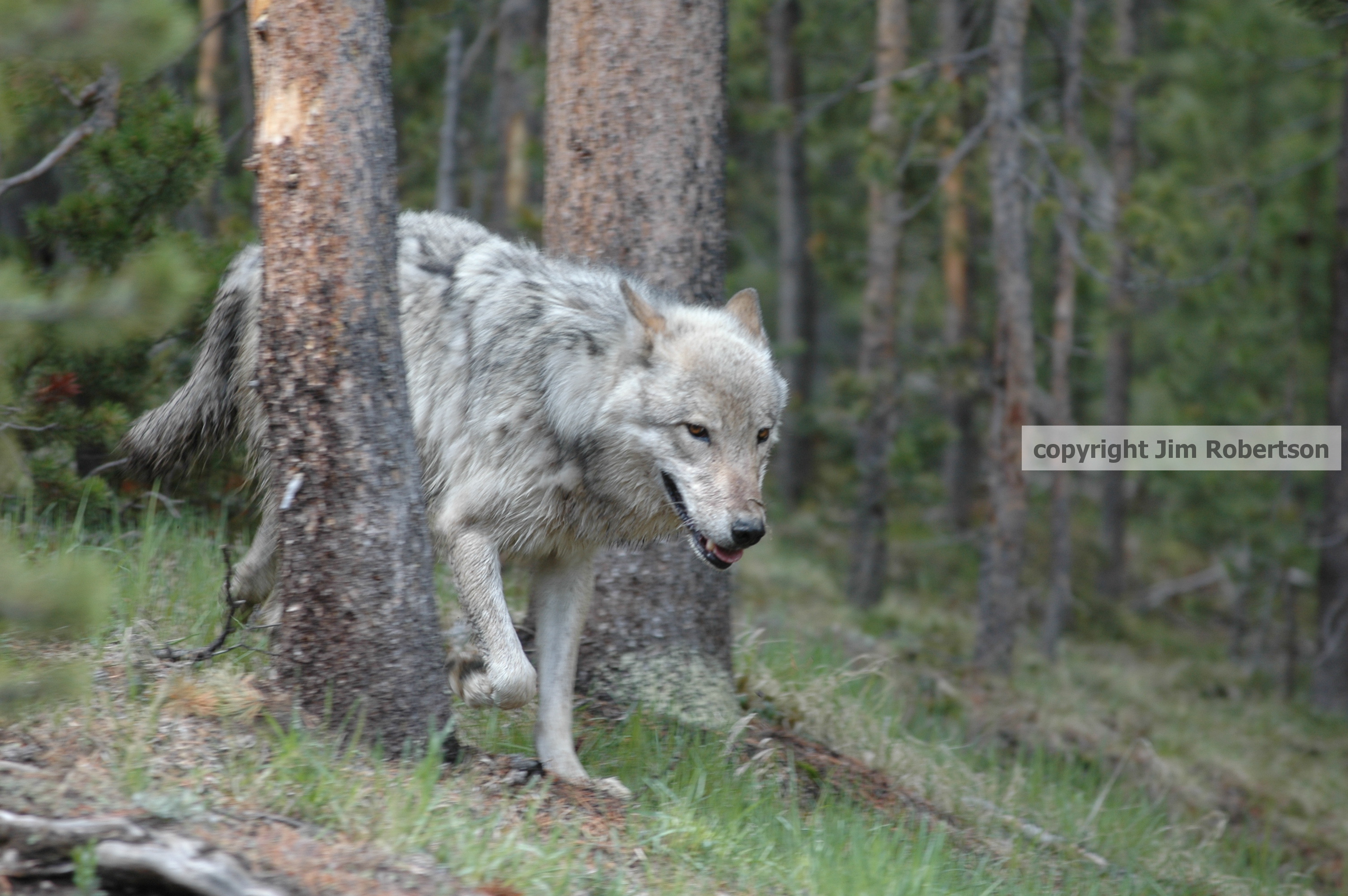
copyrighted Hayden wolf in lodgepoles

Editorial: Veto bobcat hunting bill

http://chicago.suntimes.com/editorials-opinion/7/71/666314/editorial-veto-bill-allow-bobcat-hunting-illinois

Written By Sun-Times Editorial Board Posted: 06/07/2015, 03:39pm
(AP Photo/The Wildlife Center, Alissa Mundt)

If lawmakers can’t tell the different between a saber-toothed tiger, which preyed on elephants and rhinos, and a bobcat, which eats mice and rats, it’s no wonder the Legislature passed a foolish bill to allow bobcat hunting in Illinois.

EDITORIAL

Gov. Bruce Rauner should veto the bill before lawmakers start comparing the shy, elusive bobcats to marauding dragons.

Bobcats have only recently recovered from the overhunting that put them on Illinois’ threatened species list, but they are not back in large numbers. Unfortunately, that didn’t stop the Legislature from voting to allow bobcat hunting again for the first time in 40 years.

One lawmaker during the debate compared bobcats to the fearsome saber-toothed tiger. Another lawmaker called bobcats ferocious. To hear the debate, laments the Humane Society of the United States, you wouldn’t know there’s no record of a bobcat killing a human — ever.

The bobcats, though, are at risk — of being caught in leghold traps that can cause them to suffer for hours or of dying in other painful ways.

The real reason people want to hunt bobcats is because they make good trophies and their valuable spotted pelts can be sold on the international market. That’s not a good enough reason to put the species in jeopardy again. People in other countries can make their mittens out of something else.

At first the House of Representatives voted to reject this law, but then flip-flopped and passed it narrowly. They had it right the first time.

Let’s hope Gov. Rauner knows the difference between a saber-toothed tiger and a bobcat and vetoes this bill.

Stop Trophy Hunters from Killing Bears in Florida

Petitioning Governor Rick Scott

Urgent: Stop Trophy Hunters from Killing Bears in Florida!

34,049
Supporters

Bears are facing imminent danger as the Florida Fish and Wildlife Conservation Commission (FWC) considers a proposal that would open a trophy hunt on Florida’s still-recovering population of black bears for the first time in over 20 years.  As a Florida resident, I have always valued the abundant and diverse wildlife that this state has to offer, and I need your help to keep Florida’s bears protected.

Florida bears were only recently removed from the endangered species list, and the majority of Floridians oppose this hunt.  The FWC doesn’t even know how many bears there are in the state – the last statewide population count was 13 years ago!

If this hunt is approved at the FWC’s June 24th meeting, hundreds of bears could be slaughtered as early as this October.  Once approved, it is also possible that the FWC will allow incredibly cruel and barbaric killing methods, including hounding — where bears are chased by packs of radio-collared dogs so that houndsmen can easily shoot bears off of tree branches, and baiting — where bears are lured by piles of doughnuts and other pastries, and shot while they’re gorging themselves.

Despite hearing from thousands of residents opposed to this trophy hunt, the FWC blatantly ignored those voices.  In fact, the FWC Commission Chair blew off the opinions of anyone who didn’t agree with him, condescendingly stating: “[t]hose people don’t know what they’re talking about… They think we’re talking about teddy bears.”  Don’t let them silence you!

Governor Rick Scott appoints the FWC wildlife commissioners, and has the power to put a stop to this misguided, scientifically indefensible trophy hunt. Florida is one of the nation’s top tourist destinations, and Governor Scott needs to know that the public doesn’t want to visit a state that promotes cruelty.

Please join me in asking Florida Governor Rick Scott to call off this hunt and show that Florida values its wildlife and the voices of its residents.

Letter to
Governor Rick Scott
I am writing to ask you to please call off the trophy hunt of Florida’s black bears.
Bears are facing imminent danger as the Florida Fish and Wildlife

Rhinos In Mozambique Likely Extinct, Expert Says; Elephants May Be Next

http://www.huffingtonpost.com/2013/05/02/rhinos-mozambique-extinct_n_3200840.html

JOHANNESBURG — Mozambique’s rhinoceros population was wiped out more than a century ago by big game hunters. Reconstituted several years ago, the beasts again are on the brink of vanishing from the country by poachers seeking their horns for sale in Asia.

A leading expert told The Associated Press that the last rhino in the southern African nation has been killed. The warden of the Great Limpopo Transfrontier Park – the only place where the horned behemoths lived in Mozambique – also says poachers have wiped out the rhinos. Mozambique’s conservation director believes a few may remain.

Elephants also could vanish in Mozambique soon, the warden of the Great Limpopo Transfrontier Park, Antonio Abacar, told AP. He said game rangers have been aiding poachers, and 30 of the park’s 100 rangers will appear in court soon.

“We caught some of them red-handed while directing poachers to a rhino area,” Abacar said.

A game ranger arrested for helping poachers in Mozambique’s northern Niassa Game Reserve said on Mozambican Television TVM last week that he was paid 2,500 meticais (about $80) to direct poachers to areas with elephants and rhinos. Game rangers are paid between 2,000 and 3,000 meticais ($64 to $96) a month.

While guilty rangers will lose their jobs, the courts serve as little deterrent to the poachers: killing wildlife and trading in illegal rhino horn and elephant tusks are only misdemeanors in Mozambique.

“Their legal system is far from adequate and an individual found guilty is given a slap on the wrist and then they say `OK. Give me my horn back,'” said Michael H. Knight, chairman of the African Rhino Specialist Group of the International Union for the Conservation of Nature’s Species Survival Commission.

A meeting of the group in February reported there might, possibly, be one white rhino left in Mozambique and no black rhinos at all, Knight said.

According to Abacar: “We have already announced the extinction of the rhino population in Limpopo National Park.”

But Bartolomeu Soto, director of Mozambique’s transfrontier conservation unit, told the AP, “We believe we still have rhinos, though we don’t know how many.”

Mozambican news reports have said the last 15 rhinos in the park were slaughtered in the past month, but park officials said those reports were wrong. Soto said the misunderstanding had arisen over Abacar’s statement to journalists that he had not seen a rhino in the three months since he was put in charge of the large park.

The only official figure available for rhino deaths is that 17 of their carcasses were found in the park in 2010, Soto said. He said officials believe poaching must be taking place because rhino horn and elephant tusks carried by Asian smugglers are regularly seized at Mozambique’s ports, although at least some of the contraband could be from animals killed by Mozambican poachers in neighboring South Africa. This week a person was arrested at the airport of the capital, Maputo, in possession of nine rhino horns, Soto said.

The price of rhino horn has overtaken the price of gold as demand has burgeoned in Asian countries, mainly China and Vietnam, where consumers wrongly believe that the horn – made of the same substance as fingernails – has powerful healing properties. Chinese traditional medicine prescribes it for everything from typhoid, infant convulsions and fever to an antidote for poison and to relieve arthritis and cure possessions by the devil. Syndicates from Vietnam, China, South Korea and Thailand have been identified as being involved in the trafficking.

Knight said rhinos first vanished from Mozambique around the turn of the last century, in the age of the big white hunters, when the animals also nearly disappeared in South Africa, now home to 90 percent of Africa’s estimated 20,000 white rhinos and 4,880 black rhinos.

In 2002, leaders of Mozambique, South Africa and Zimbabwe agreed to establish a transfrontier park straddling their borders and covering some 35,000 square kilometers (13,514 square miles) of the best established wildlife areas in southern Africa with South Africa’s famed Kruger National Park and Zimbabwe’s Gonarezhou National Park. It is funded by several international wildlife organizations and the European Union.

Soto said some 5,000 animals of various species were moved from South Africa to Mozambique, including the first 12 rhinos to roam in Mozambique in a century.

In 2006, South Africa removed some 50 kilometers (30 miles) of fence between Kruger and Limpopo National Park. Soto said the entire 200 kilometers (125 miles) of fence was not removed because Mozambique still is working to resettle some 6,000 people living in the park.

A second phase was to include two other Mozambican parks, allowing the transfrontier park to extend over 100,000 square kilometers (39,000 square miles) that would make it “the world’s largest animal kingdom,” according to the South African Peace Parks Foundation.

Those plans now are in danger, as is the Great Limpopo Transfrontier Park. Knight said South African officials are even discussing rebuilding their fence with Mozambique.

South African officials say their country has lost 273 rhinos to poachers so far this year. They say most have been killed by Mozambicans who cross into Kruger Park. Poachers killed 668 rhinos in South Africa last year.

The slaughter continues with the number of deaths increasing even though South Africa has declared war on rhino poachers and for two years has deployed soldiers and police in Kruger, a vast park which is the size of Israel.

Soto said Mozambique’s government has been working since 2009 on a comprehensive reform of environmental laws involving consultations with all stakeholders. He said he expects the draft legislation to be presented to parliament soon. It includes criminalizing the shooting of wildlife and would impose mandatory prison sentences on offenders.

But it will come too late to save the last of the rhinos in Mozambique.

___

Associated Press writer Emmanuel Camillo contributed to this report from Maputo, Mozambique.

1467436_10151678631130496_1400231111_n

World Bank approves grant to boost hunting in Mozambique

11140266_10152676869137554_1328208644784607162_n
 
Bloomberg/Sunday Times
May 27, 2015

The World Bank’s International Development Association approved a $40 million grant to Mozambique to fund conservation efforts, including strengthening the country’s program of selling the rights to hunt wild animals.

The IDA approved the grant in November 2014 for a project known as MozBio, run by the Mozambican government, which aims to improve revenue collection from tourism in conservation areas. Of the funds, $700,000 is earmarked to help develop sport hunting in the southern African country.

“Hunting, when properly regulated and when revenues are distributed to communities in and around parks, is an important financing tool for governments working on the sustainable management of their parks and natural assets,” Madji Seck, a World Bank spokeswoman in Washington, said.

“Hunting blocks in Mozambique have played the role of protected areas, hosting important fauna and flora that are under very high threat in unprotected zones.”

A study released this week showing that Mozambique’s elephant population has dropped by almost half in five years because of rampant poaching, including in national parks, underscores the urgent need for the country to upgrade its conservation network.

Mozambique estimates its elephant population has dwindled to 10,300 from just over 20,000, the Wildlife Conservation Society said in a statement Tuesday.

Mozambique’s conservation areas consist of seven National Parks, 10 National Reserves, 17 controlled hunting areas and two Community Reserves, according to a World Bank document outlining the funding project. While revenue from tourism to the parks trebled to $3 million in 2013 from the previous year, that’s not enough to finance the areas, according to the bank.

Attempts to stimulate income from tourism by allocating part of the funding to developing hunting could backfire, according to critics of the practice.

“Nothing will turn away tourists faster than knowing that the beautiful and majestic animals they have come to watch might be met with a bullet,” Ashley Fruno, a spokeswoman for animal rights group PETA, said.

Victory! Another Major Airline Bans Hunting Trophies

by  May 19, 2015

http://www.care2.com/causes/victory-another-major-airline-bans-hunting-trophies.html#ixzz3b4fUmKGx

Victory! Another Major Airline Bans Hunting Trophies
In more good news for wildlife, things just got a even harder for sport hunters looking for a way to transport their trophies home.

Emirates Airlines, the world’s largest international airline, just announced that hunting trophies will no longer be allowed and that the change would be effective immediately.

In a statement, the airline said the ban will be applied to all trophies, whether or not they’re from species protected by Convention on International Trade in Endangered Species of Wild Fauna and Flora (CITES), and it will include trophies from species that aren’t currently threatened with extinction.

It further said, “This decision is to support international governments, intergovernmental and non-governmental organizations, that are managing wildlife population towards sustaining the task to eliminate illegal trade and transportation of hunting trophies worldwide and saving wildlife heritage.”

The announcement comes just weeks after South American Airlines (SAA) announced it would no longer transport trophies from rhinos, elephants, lions and tigers in an effort to protect wildlife being targeted by sport hunters and the illegal wildlife trade.

Tim Clyde-Smith, a representative for SAA, told the media that at the time that, “The vast majority of tourists visit Africa in particular to witness the wonderful wildlife that remains. We consider it our duty to work to ensure this is preserved for future generations and that we deter activity that puts this wonderful resource in danger.”

Despite conservation efforts, Africa’s iconic wildlife continues to be targeted at an alarming rate by poaching and sport hunting that has put the future survival of a number of species in jeopardy.

Now it won’t matter whether or not hunters have the required permits, since they’re not getting their trophies on flights from either of these airlines. Not only does this send a message that sport hunting isn’t supporting conservation, but it will make it harder for anyone trying to move illegal items by claiming they’re from legal hunts.

Conservationists are cheering the latest change in policy from Emirates Airlines and hope other companies will follow the ethical lead these two airlines have set.

“This is a bold move by the world’s biggest international carrier,” said Dr. Elsayed Mohamed, Middle East Regional Director for the International Fund for Animal Welfare. “Emirates have taken an important and responsible step in showing they are serious about wildlife conservation. We value their decision and look forward to other national airlines in the Gulf region to follow their lead.”

Delta Airlines, which TakePart previously reported is the only carrier based in the U.S. with direct flights to South Africa, is also being pushed to make a similar change in policy, but so far the airline hasn’t budged.

Read more: http://www.care2.com/causes/victory-another-major-airline-bans-hunting-trophies.html#ixzz3b4e0J9Z5