
The Apex of Arrogance
3

Jack, AL, United States (4E Sports) – The Alabama Dog Hunters Association, headed by Don Knight, plans to court its 10,000 members to back a proposed amendment that would enshrine the right to “hunt, fish and harvest wildlife” in the state’s constitution.
Knight is worried that animal-rights groups around the country are intent on restricting his cherished pastime by pushing measures that, for instance, would forbid the use of dogs to pursue game.
“They’re just nipping away at it any way they can,” said Knight.
Both chambers of the state legislature voted overwhelmingly earlier this spring to place the question on the November ballot. The effort, if it succeeds, would strengthen an amendment passed in 1996.
Similar efforts, which have been promoted by the National Rifle Association and sportsmen’s groups in recent years, are unfolding in eight other states, while 17, including Alabama, already have such constitutional guarantees.
A proposed amendment to create a constitutional right to hunt and fish also will appear on the November ballot in Mississippi while similar bills were introduced or carried over in Indiana, Missouri, West Virginia and four other states this year.
Some animal-rights organizations say fears of outright hunting bans are unfounded.
The amendments “are largely an overreaction to efforts that seek to curb abusive or unsporting practices,” such as using dogs to corner and tree bears, or baiting animals with food, said Michael Markarian, chief program and policy officer at the Humane Society of the U.S. “Eliminating bear baiting doesn’t mean there’s no bear hunting.”
In Maine, a ballot proposal this fall would prohibit bear hunting with bait, dogs or traps.
In California, two laws tightening hunting restrictions were signed in the past two years: one banning bear and bobcat hunting with dogs, the other use of lead ammunition.
The second law is aimed at protecting condors and other wildlife that sometimes scavenge carrion with lead fragments in it.
And a lawsuit filed by conservation groups in North Carolina last year seeks to ban coyote hunting in a region of the state populated with endangered red wolves, which are sometimes mistaken for coyotes.
Data from the U.S. Fish and Wildlife Service show that hunting-license sales peaked in the early 1980s, then began to steadily decline. Researchers point to a variety of reasons, including urbanization, the shrinking availability of land for hunting and the rise of more-protective views toward wildlife.
However, the agency’s most recent national survey, conducted every five years, found that the number of hunters increased by 9% between 2006 and 2011.
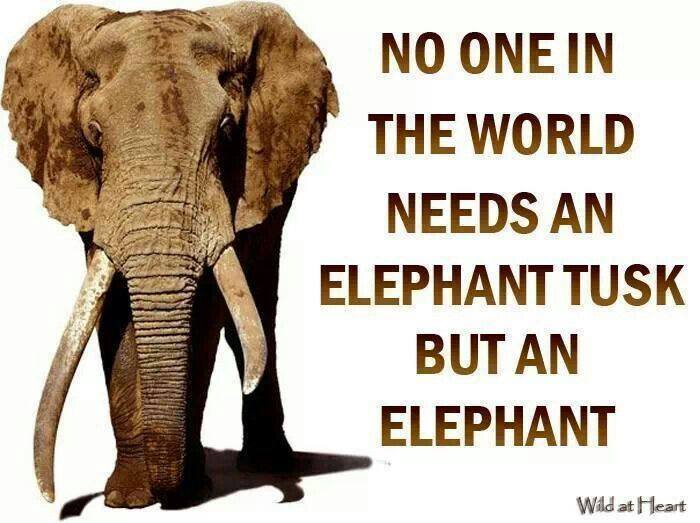
Experts believe that 35,000 elephants were killed last year for their tusks, which are made into useless trinkets and decorations. That’’s one elephant killed every 15 minutes, on average.
Regional extinctions of elephants are a danger within the next decade if we don’t act now.
The U.S. Fish & Wildlife Service has proposed strong new protections for elephants, including a ban on sales of non-antique ivory in the United States. But some special interest groups are trying to weaken the new rules.
We need to ensure that the rules protecting elephants stay as strong as possible.
Wildlife crime, including ivory trafficking, is increasingly linked to organized crime, militancy and destabilization in fragile democracies in Africa and around the world. The United States is part of the problem, with unenforceable regulation of our domestic ivory markets and a large amount of illegal ivory being smuggled past our borders each year.
The rest of the world is watching to see what actions we take. Just as several countries followed our ivory crush in Denver with similar efforts, these new rules could provide the momentum for a worldwide trade ban.
IFAW, in partnership with Dr. Jane Goodall, IFAW Honorary Board Member Leonardo DiCaprio, and a lineup of businesses, NGOs, and concerned individuals, has written an open letter to President Obama asking him to stay strong for elephants and implement the proposed rules without weakening them.
You can help save elephants. Ask President Obama and Dan Ashe, Director of the U.S. Fish & Wildlife Service, to stand strong for elephants.

Petition Posted by Serenity Manziesii
Target: Prime Minister Nawaz Sharif of Pakistan
Goal: Stop issuing special permits to wealthy hunters allowing them to poach endangered houbara bustard birds
The houbara bustard is a rare bird found in northern Africa and the Middle East. Each Spring the bustards migrate through Pakistan where for many decades Arab dignitaries and royalty have traveled to hunt them. The birds’ meat is highly sought after as an aphrodisiac. Although bustards are internationally protected Pakistani officials have been known to grant “special” permits to wealthy hunters. Conservationists say the bustards’ population is declining by as much as 29% every year largely because of poaching.
In January, 2014 Prince Fahd bin Sultan of Saudi Arabia went on safari in Pakistan. He and his hunting party were given permits to kill as many as 100 bustards in designated areas. But apparently that wasn’t enough for the Prince. A forest officer in Pakistan claims the Prince’s hunting party poached more than 2,100 bustards and traveled to protected areas including wildlife reserves to do so.
Although this represents an especially terrible violation of the law, permitting certain wealthy hunters to poach bustards has greatly contributed to the species’ decline. The birds face extinction if action is not taken to protect them. Call on the government of Pakistan to stop issuing hunting permits for endangered houbara bustards.
PETITION LETTER:
Dear Prime Minister Sharif,
Each year Arab dignitaries and royalty travel to regions of Pakistan to hunt rare houbara bustards. Poaching the birds for their prized meat has nearly driven them to extinction. Pakistani law forbids the hunting of bustards, but permits are occasionally issued to wealthy individuals. Such was the case with Prince Fahd bin Sultan of Saudi Arabia.
The Prince and his party were granted permits to hunt as many as 100 bustards in specially designated areas. But instead the Prince allegedly poached nearly 2,000 of the protected birds himself and hunted nearly two weeks on protected land. While the Prince broke the law and acted with contempt for the natural world it is likely his actions will go unpunished.
Wildlife experts say the houbara bustard’s population is shrinking by some 20-29% each and every year largely because of poaching. Issuing permits to dignitaries like the Prince makes a mockery of wildlife conservation laws and all but ensures the extinction of these endangered birds. I must insist that Pakistan end its practice of issuing permits to hunt the houbara bustard.

Victoria Falls — ZIMBABWE has projected revenue from safari hunting to increase significantly this year following the ban on wildlife hunting in neighbouring Botswana and Zambia.
Hwange-Gwayi-Dete Conservancy Chairman, Langton Masunda, said the country was expecting revenue from the sector to top $60 million up from $45 million last year.
The forecasts are anchored on spill over business from the two neighbouring countries.
Botswana and Zambia have banned hunting to replenish dwindling numbers of wildlife in the two countries.
“We are expecting a 30 percent more in revenue than in the previous hunting season because of the spill overs from the Botswana ban,” Masunda said.
The conservancy is located in Matabeleland South, the heart of wildlife hunting and conservancy which is home to the Hwange National Park, the biggest wildlife animal sanctuary in the country.
It is home to the Big Five including the lion, elephant, buffalo, leopard and lion.
At the moment, he said hunting was concentrated on big animals like elephants because of easy visibility since small prey was less visible because of the thick vegetation.
Meanwhile, the Safari Operators Association of Zimbabwe President, Emmanuel Fundira, nonetheless warned the country might miss its revenue targets if Government did not resolve an impasse in the Save Conservancy.
One of the biggest conservancies in the country, it is at the centre of ownership wrangle between local people and foreigners operating in the area.
The locals want to be parceled pieces of land in the area under the indigenisation policy drive.
“The impasse also resulted in safari business missing last year’s projected targets of $60 million,” said Fundira.

I support the death penalty for serial killers, the type, like Ted Bundy, who acted out his fantasies of killing, mutilating, making trophies of and perhaps even eating parts of his innocent victims—just to boost his floundering self-esteem.
People like that have forfeited the right to enjoy nature’s beauty and be a part of this wondrous living planet. Bundy’s multiple escape record and subsequent violent recidivism proved that the only way to stop his ilk from killing and killing again is to humanely end their lives once and for all.
The same goes for the trophy hunter who enjoys killing elephants, giraffes, lions, elk, sheep or wolves with equal fervor. His (or her) bloodlust is never satisfied, even after they’ve committed a “Trifecta” of murders or crossed the “Big 5” African “game” species off their hit list.
Adding insult to injury, their grandiose egos compel them to broadcast their crimes across the internet, posing sadistically with their beautiful, rare, innocent victims while grinning psychopathically—showing off their vacuous viciousness. Like a serial killer who finds further fun in terrorizing their victims’ families from prison, trophy hunters get an added thrill from knowing that their grotesque, morbid, distressing photos victimize and terrorize still others who happen upon them.
The only way to rid the world of the menace of serial killers—whether their victims are human or non-man—is to execute them (as quickly and painlessly as possible, for we are not barbarians).
First, of course, we’ll have to change to laws to be consistent.


Hunters and the SCI have began a colossal lobbying program emailing and telephoning, meeting every US House representative to now try and OVERTURN the Elephant Trophy Hunting ban from Zimbabwe and Tanzania into the United States. We’re not going to allow them to win. We need YOU on our side TODAY.
Please contact the USFWS TODAY and inform them politely there is to be no ban overtur…n of Tanzania and Zimbabwe trophy Elephants.
TAKE ACTION TODAY AND STOP PRATS LIKE THIS BELOW FROM KILLING MORE ELEPHANTS FOR THE FUN OF IT.
Contact USFWS here TODAY – http://www.fws.gov/duspit/contactus.htm
Dear Hunting Community.
Attack us as much as you wish, you’ll never defeat us.
Signed truly
International Animal Rescue Foundation Africa..
Donate below;
SIGN – http://www.thepetitionsite.com/524/858/168/stop-the-legal-hunting-of-african-elephants/
SIGN – http://forcechange.com/117089/urge-the-end-of-elephant-imports/
THANK YOU FOR TAKING ACTION


by Kathleen Stahowski April 21, 2014
One woman (sporting a Safari Club International cap), one gun, one dead giraffe. One pump-my-ego photo posted and then shared hundreds of times on animal rights Facebook pages, generating thousands of sad or angry comments.
Many–distressingly many–of the responses to these vile, celebratory trophy photos are vile and violent themselves. When the killer is a woman, the comments can also be terribly misogynistic: ”Stupid brainless b*tch!” “This fat ugly b*tch should be shot!” “Shoot this b*tch!”
Another woman, another gun, another dead giraffe. Another ain’t-I-somethin’-special photo–this time, she’s grinning from atop her trophy’s body. Thousands of Facebook shares and more than 14,000 comments: “I hope someone puts a bullet in her head the weak pathetic b*tch!” “…the dirty tramp!” “Hope she dies by gang giraffe rape!” Other comments included epithets so vulgar and repugnant that I won’t even hint at them with missing letters.
What’s going on here? I mean, I get it: I’m as revolted by the gratuitous killing of animals as anyone, and I, too, struggle with feelings of contempt for these conscienceless, ego-driven killers. But responding to violence with still more violence–even if it’s just rhetorical–proves only that animal advocates can sink to a shamefully base level themselves. As for responding to speciesism with sexism–I’m at a loss. Yes, I’ve seen the comments that call into question the manhood of male trophy hunters, comments suggesting that their big, powerful guns are stand-ins for their own minuscule personal endowment. But I’m aghast at the misogynist, verbal violence directed toward women: gang giraffe rape?!? OMG.
I don’t fault the animal rights Facebook pages dedicated to posting trophy photos–they graphically remind us that callous indifference to animals is a strong, wide current running through our ocean of humanity; that people with enough money and little enough conscience are eager to lay waste to the lives of sentient others–aided and abetted by safari and hunt providers pursuing their own trophy–the cash cow. Pages like Stop Trophy Hunting Now! and Animal Shame (and probably many more) remind us that we have so much work to do combatting speciesism, and inspire us to get a move on because animals are dying.
But other than considerable Facebook traffic and abundant ill will vigorously expressed in feeding frenzies of anger, what is gained by the commentary of outrage? Preliminary research offers some indication:
One study assessed whether individuals felt calmer or angrier after ranting on an Internet site, and whether people who frequent rant-sites are more likely to have problems related to anger. The second study evaluated how people reacted emotionally to reading and writing rants online—whether they became more or less happy or angry.
“The two studies seem to indicate that both reading and writing on rant-sites tend to be unhealthy practices, suggesting persons with maladaptive expression styles”… ~from Science Daily
It appears that not much of value is gained–neither for animals nor our own emotional well-being.
I don’t typically peruse these commentary threads–they’re too distressing and life’s too short. But as a relative Facebook newbie (just over six months–late to the party again!) who just recently stumbled upon these two trophy photos via Facebook, I’m discovering the depth of malice that members of my own species are willing to express toward others. I find that I actually don’t know how to end this post because I don’t know where to go with sentiments like, “Hope she dies by giraffe gang rape!”
But here’s what I hope: I hope for more than an onslaught of online words from the multiple thousands who express their public sorrow at an animal’s death or spew their anger at the killer. I hope these many animal defenders are also acting constructively for animals–no matter how small or large those actions might be. Imagine the difference we could make! From simply speaking up for justice when the opportunity arises to going vegan–and everything in between–actions speak so much louder than words, no matter how vehemently those words are delivered.
Speciesism will be vanquished not by impassioned quips posted to photos, but by passionate acts of conscience and courage.
 Exposing the Big Game