Sport Hunter Who Murdered Mother Cougar Lauded by Press

Hunter kills cougar, rescues newborn kittens

Posted 5:26 p.m. yesterday

More on this
Baker City Herald

By JAYSON JACOBY, Baker City Herald

BAKER CITY, Ore. — The mistake was unavoidable, but Todd Callaway didn’t stop to worry about his reputation as a hunter whose integrity is beyond reproach.

He just wanted to save the three cougar kittens.

And he did.

Callaway, 64, is both a hunter and a retired wildlife biologist for the Oregon Department of Fish and Wildlife’s (ODFW) Baker City office.

When he realized that the cougar he shot and killed on Thursday was a lactating female, he immediately started following the animal’s tracks in the snow, hoping to find its den and, possibly, kittens.

He found the den.

His flashlight beam showed three tiny kittens, each weighing about two pounds.

Callaway, who was hunting in the Lookout Mountain unit east of Baker City, called his former employer, ODFW.

The three kittens were taken to Baker City, where first a local veterinarian, and then Justin Primus, ODFW’s assistant district wildlife biologist, cared for them.

“(Primus) fed them every four hours,” said Brian Ratliff, the district wildlife biologist.

Ratliff estimates the kittens (also known as cubs) — two females and one male — are about two weeks old. Although their eyes were open, they were still covered with a film and the kittens were in effect blind, he said.

The kittens almost certainly would not have survived even one day without their mother, Ratliff said.

Cougars can have litters at any time of the year. Bearing young during winter can actually be advantageous for the cats, Ratliff said, because their main food source — deer — tend to be concentrated during winter, making it easier for the mother to find her own meals while nursing her kittens.

On Friday, Primus drove the three kittens to The Dalles, where he met another ODFW employee who transported the trio to the Oregon Zoo.

The kittens’ final home, though, will be the North Carolina Zoo in Asheboro, N.C., said Michelle Schireman, who has worked at the Oregon Zoo for 18 years and who also serves as the species coordinator for cougars for the Association of Zoos and Aquariums.

Schireman said she works closely with ODFW veterinarian Colin Gillin in cases when animals are orphaned.

Gillin called her on Thursday after learning that the kittens had been rescued in Baker City.

Schireman, through her work with the Association of Zoos and Aquariums, said she’s also in touch with zoos across the country and knows which facilities are looking for particular species.

In the case of the North Carolina Zoo, it had two male cougars in its exhibit, both about 18 years old.

One of the cougars died recently, and the other is in poor health, Schireman said.

“I had been in touch with the zoo and they were willing to take as many as three cubs,” Schireman said.

“Whenever possible I try to keep siblings together.”

She said the three kittens are in good health, and she expects they will be flown to North Carolina within a month or so.

“We’ve been feeding them every four hours, and when I came in for the early morning feeding today they looked really good,” Schireman said Monday.

Callaway was not allowed to keep the adult cougar because state law prohibits hunters from killing a female cougar that is accompanied by kittens that still have spots.

An Oregon State Police officer warned Callaway but did not issue a citation.

Ratliff said that’s not surprising because Callaway’s mistake was not only inadvertent, but also basically impossible to avoid.

The reason, Ratliff said, is that because the kittens are so young they had never left the den, which means there were no small cat tracks in the snow to alert hunters to the presence of kittens.

As for the adult female, it’s impossible at a distance to distinguish between a male and a female cougar, much less to determine that a female is lactating, Ratliff said.

Callaway said the cougar was running when he shot it.

After shooting the adult cougar, Callaway “did everything perfectly,” Ratliff said. “He did more than a lot of hunters would have done.”

Schireman said that during her 18-year tenure at the Oregon Zoo she has helped place 105 orphaned cougar cubs, counting the three from Baker County.

A majority of those animals were rescued in a state other than Oregon, she said.
http://www.wral.com/hunter-kills-cougar-rescues-newborn-kittens/13299097/
“Endangered” Hunter Auctioned off to Save Species

Believing the spin that “hunters are an endangered species,” trophy-hunter hunting group, the Sahara Club, a conservation group dedicated to preserving the hunter herd for future generations of trophy-hunter hunters to harvest, auctioned off asuccessful anti-hunt chance to hunt an aging, expendable hunter to raise funds for their cause. Taxidermy services will also be awarded to the winning bidder. Proceeds will be used to enhance hunter habitat for the species known taxonomically as Homo huntsman horribilis and will go towards funding more logging roads to allow access for their trucks and four-wheelers, as well as building more conveniently located gas station/mini-marts, taverns and mobile home parks.

Biologists blame a long history of inbreeding for the decline in hunter fertility and viability. When asked about the ethics of hunting down and killing this unfortunate individual, a Sahara Club spokesman stated, “Overall I think it will be a good thing. While it may bad for this individual hunter, it is in the interest of conservation of the hunter species.” If the auction idea proves to be a success, the group plans to hold similar events for loggers, ranchers, commercial fishermen and other resource extractors also said to be endangered species by industry spin doctors.

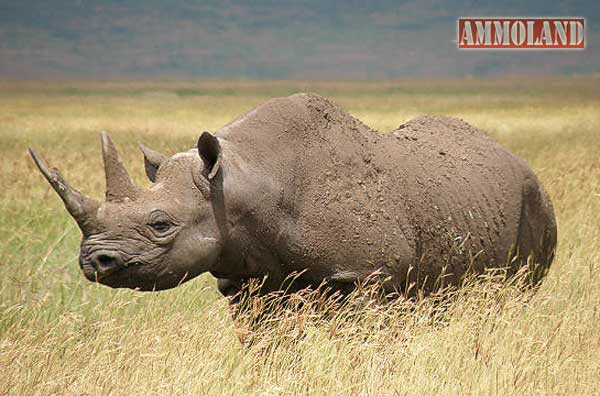
Individuals chosen to be hunted down and harvested can thank the Safari Club for recently coming up with the idea of auctioning a rhino trophy hunt on an endangered black rhinoceros.

______________________

(This has been another installment in EtBG’s “Headlines We’d Like to See.”)


Black Rhino Auctioned for $350K in the Name of Conservation

black-rhino

http://www.psychologytoday.com/blog/animal-emotions/201401/black-rhino-auctioned-350k-in-the-name-conservation

by Marc Bekoff

Should we kill in the name of conservation? Individual animals are not disposable commodities

We live in a troubled and wounded world in which humans continue to dominate and to relentlessly kill numerous nonhuman animals (animals).

A Texas hunting club recently auctioned off an endangered black rhino purportedly to save other black rhinos and their homes in Namibia. The Dallas Safari Club says, “Namibian wildlife officials will accompany the auction winner through Mangetti National Park where the hunt will occur, ‘to ensure the correct type of animal is taken.'” This is not a very comforting thought.

This sale, in which an animal is objectified and treated like a disposable commodity, raises many questions about how we try to save other species. One major question is, “Should we kill in the name of conservation?” People disagree on what is permissible and what is not. My take and that of compassionate conservation is this is not an acceptable trade-off. (Please see “Ignoring Nature No More: Compassionate Conservation at Work”, Ignoring nature no more: The case for compassionate conservation, and a Forbes interview for more on compassionate conservation.) The life of every individual matters.

The world is in dire need of healing and we must revise some of the ways in which we attempt to coexist with other animals. Some of these methods center on heinous ways of killing them “in the name of conservation” or “to foster coexistence”. Compassionate conservation stresses that the life of every individual matters and trading off an individual for the good of their own or another species is not an acceptable way to save species. And, there doesn’t seem to be much evidence that it works in any significant way.

Black rhinos do indeed find themselves trying to avoid humans out to kill them, but in Namibia only 10 rhinos have been killed since 2006. Of course, this is 10 too many, but far fewer than have been killed in neighboring South Africa where around 1000 were killed in 2012 alone.

“To destroy nature is not to conserve nature. To mount the head of a wild animal in your trophy room is not conservation, it is repugnant.”

The above quotation comes from an essay in examiner.com called “Must conservation of wildlife including killing wildlife”. It was based on a 60 Minutes report titled “Hunting animals to save them?” While it dealt with wildlife ranches in Texas where people can pay a small fortune to kill various animals in canned hunts, it does raise important questions about killing in the name of conservation. Some other valuable snippets worth deep consideration include:

“If we want to conserve a population of, for instance, people native to a particular section of our country, would we kill a few to conserve the others? Isn’t that saying the group is more important than the individual? Isn’t it saying the individual gives up his or her rights to life because he or she belongs to a particular group, a particular species?”

“Each life—human animal and nonhuman animal—is an individual with an individual personality. Take a group of purebred puppies, for example—they may all look the same but they aren’t. They are their own individual beings with individual traits and personalities. Wildlife are individuals with their own individual traits and personalities. To say one is more deserving to live than another, in the name of conservation, bastardizes the word.”

Killing animals to save others sets a bad example and a regrettable precedent and is not the way to foster peaceful coexistence. When people say they kill animals because they love them this makes me feel very uneasy. I’m glad they don’t love me.

Cruelty can’t stand the spotlight and it is important that news about the sorts of activities discussed above be widely disseminated and openly discussed. That major media is covering them is a step in the right direction.

Bob Barker Says Dallas Safari Club’s Black Rhino Auction Is A ‘Cheap Thrill’

http://keranews.org/post/bob-barker-says-dallas-safari-club-s-black-rhino-auction-cheap-thrill

By

Credit The Price Is Right/Facebook
Bob Barker recently returned to “The Price Is Right” to celebrate his 90th birthday.

Bob Barker, the legendary game show host, has chimed in on the Dallas Safari Club’s black rhino auction that’s taking place this weekend. He wants the club to call off the event.

The club hopes to raise as much as $1 million to protect the rare black rhino by auctioning off the right to hunt one. But the auction has kicked up international controversy. Club members have been receiving death threats, and the FBI is investigating. (Update: On Saturday, the rhino hunt permit was sold for $350,000, the Associated Press reported.)

Friday afternoon, PETA released a letter from Barker, who hosted “The Price is Right” for 35 years. He’s also an animal rights advocate. (You remember his classic sign-off, right?: “Help control the pet population. Have your pets spayed or neutered.”)

The rhino to be hunted is an old bull that’s past the point of helping sustain the herd. This is the sixth such auction in Namibia, but the first to be held outside the country. The Dallas Safari Club says 100 percent of the money raised will go toward conservation efforts.

But in his letter, Barker says it is “presumptuous to assume that this rhino’s life is no longer of any value.”

“The rhino that your organization reportedly has in its crosshairs is an older ‘non-breeding’ male who has apparently been deemed expendable,” Barker wrote. “As an older male myself, I must say that this seems like a rather harsh way of dealing with senior citizens.”

Barker continues:

“Just because you’re ‘retired’ doesn’t mean you don’t have anything more to offer. In fact, I personally feel that I’ve accomplished a great deal since I quit my day job. Surely, it is presumptuous to assume that this rhino’s life is no longer of any value. What of the wisdom that he has acquired over the course of a long life? What’s the world coming to when a lifetime’s experience is considered a liability instead of an asset?

The Safari Club’s executive director, Ben Carter, recently spoke with KERA about his group’s efforts. Listen to that conversation here.

Here’s Barker’s full letter, provided by PETA:

I am writing to ask you to call off your planned auction of a chance to kill an endangered black rhino in Namibia. The rhino that your organization reportedly has in its crosshairs is an older “non-breeding” male who has apparently been deemed expendable. As an older male myself, I must say that this seems like a rather harsh way of dealing with senior citizens.

I can certainly sympathize with this animal’s plight (and I would think that many of your older members could as well). How many seniors have been written off simply because they have a certain number of birthdays under their belts? But just because you’re “retired” doesn’t mean you don’t have anything more to offer. In fact, I personally feel that I’ve accomplished a great deal since I quit my day job. Surely, it is presumptuous to assume that this rhino’s life is no longer of any value. What of the wisdom that he has acquired over the course of a long life? What’s the world coming to when a lifetime’s experience is considered a liability instead of an asset?

There are only about 5,000 black rhinos still alive in Africa. What kind of message does it send when we put a $1 million bounty on one of their heads? These animals are endangered for that very reason: money. What makes you any better than the poachers who kill rhinos to feed their families? At least, they are honest about their less noble motives. You try to dress up greed under the guise of “conservation.”

True conservationists are those who pay money to keep rhinos alive—in the form of highly lucrative eco-tourism—as opposed to those who pay money for the cheap thrill of taking this magnificent animal’s life and putting his head on a wall.

If you want someone’s head to go on a wall, pick mine. I will happily send you an autographed photo to auction off instead. My mug may not fetch as much money as that of a dead rhino, but at least we’ll all live to enjoy another sunrise in our sunset years.

Sincerely,

Bob Barker

“Wish Someone Dead Foundation” Grants Child’s Homicidal Request

The Wish Someone Dead Foundation, a new nonprofit organization dedicated to countering the animal-unfriendly efforts of the group, Hunt of a Lifetime (which was founded in 1998, after the Make a Wish Foundation ceased granting wishes involving the use of firearms or other weapons designed to cause injury), has awarded 7 year old leukemia victim, Gerald Watkins, a chance to fulfill his lifelong dream of offing a trophy hunting scumbag. The charitable group plans to fly the boy to Zimbabwe, outfit him with a sniper rifle and plenty of ammunition and line him up with a professional assassin who will instruct him in the fine art of dispatching a camo-clad nimrod with one clean shot.

Although society generally frowns on children (outside the military) being trained to kill other people, the raw deal this young terminal patient has been dealt in life seems to justify an exception to the rule. And besides, the target Gerald has chosen to eliminate—Philippe de Sade—couldn’t be more deserving. In one African safari, De Sade shot and killed species including elephants, hippos, buffaloes, lions, cheetahs, leopards, giraffes, zebras, hartebeest, impalas, pigs, the not-so-formidable 30-pound steenbok and even a mother ostrich on her nest. No wait, that was Teddy Roosevelt, musing in his autobiographical, African Game Trails. But this De Sade guy is a pretty murderous a-hole too…
______________________
(This has been another installment in EtBG’s “Headlines We’d Like to See.”)

HuntingTrophiesJamieKripke600

Hunting by any other name is still hunting

Photo Copyright Jim Robertson

Photo Copyright Jim Robertson

http://azstarnet.com/news/opinion/column/guest/gordon-douglas-hunting-by-any-other-name-is-still-hunting/article_e1a4bc49-0854-5519-b67d-9cfb26fa6d47.html

By Gordon Douglas Special to the Arizona Daily Star

It’s hard not to chuckle at how hard some people have to work to not say something. A great example is Gerry Perry’s Dec. 23 guest opinion, “Hunting benefits Arizona.”

He extols the virtues of “harvesting nature’s surplus” and “reconnecting with nature’s ecosystems in a meaningful way.” You’d almost think he was talking about catching apples falling from a tree or hiking a wilderness. What he’s desperately avoiding are the words shooting, killing, wounding or suffering. That “meaningful connection” he’s talking about is going into an ecosystem, finding an animal and killing it.

Even the use of the word hunting is basically a way to avoid describing the actual intent of the activity. Photographers, naturalists and those who enjoy observing wildlife all “hunt” for wild animals. What sets “hunters” apart is killing the animals once they find them.

He notes game may be killed for food, but does not acknowledge that many animals are not eaten but are killed for trophies, so the hunter can brag “I killed that,” or are just killed for the fun of it. Those of us who eat meat recognize it is necessary to kill animals for that purpose, but we call the place for that a slaughterhouse, not a chicken collection center or cattle aggregation area.

[Ok, here the article’s author lacks insight into his own complicity in killing farmed animals–he doesn’t have to eat meat. But read on; he makes some great points in the next few paragraphs…]

He correctly points out how hunters provide funding for wildlife management. What he doesn’t say is that through this funding mechanism hunters essentially control how wildlife is managed.

Public lands and their wildlife are operated as a shooting preserve for hunters. Rather than a responsibility of all Arizonans, game animals are looked at as the private property of hunters to be exploited to the maximum extent possible. Natural predators are usually reduced or eliminated, since the value of animals is measured in the number of targets and carcasses for hunters.

He lauds hunting as making it possible to bring back many species from near extinction, which is a mind-boggling reversal of reality. The species were nearly made extinct by hunting. Species are not saved by killing; they are saved by not killing. Animals can be saved for their intrinsic value, instead of bred to be slaughtered for pleasure. The endangered species act was not passed so we could shoot pandas.

A few other items carefully avoided in the piece are the number of people accidentally killed or wounded in hunting accidents, the number of children killed or wounded in accidents from hunting weapons carelessly left in homes, and the general gun carnage in our nation fueled in part by the fanatical resistance of many hunters to any sort of reasonable restrictions on guns of any type.

Hunting involves the use of lethal weapons, and that always carries a tragic price.

Much money is indeed spent on hunting, but this money would be spent in other ways if not for hunting. These other ways could well provide even more significant benefits to our state.

America has a centuries-old hunting tradition. In all likelihood that tradition will continue into the foreseeable future. But in the mean time, let’s stop playing word games, honestly face what we are doing, and recognize the costs as well as benefits.

Idaho Wildlife Officials Hire Hunter to Kill Wolves

528624c939a88_preview-620

BOISE, Idaho (AP) — State wildlife officials have hired a hunter to eliminate two wolf packs in a federal wilderness area in central Idaho because officials say they are eating too many elk calves.

Fish and Game Bureau Chief Jeff Gould tells the Idaho Statesman that hunters are having a difficult time getting into the Frank Church-River of No Return wilderness, so the agency hired hunter-trapper Gus Thoreson of Salmon to kill the wolves in the Golden and Monumental packs.

The U.S. Forest Service allowed the state agency to use an airstrip and cabin in the Payette National Forest as a base.

Fish and Game paid $22,500 for aerial killing of 14 wolves in the Lolo area in 2012. Gould said Monday he didn’t know how much the agency would end up paying for Thoreson’s salary and expenses.

_______________________

Make no mistake, Idaho officials and their constituents aren’t concerned about elk for the elk’s sake. They want ’em all for themselves–especially the big-antlered, trophy ones. Here are headlines for a couple more articles on the subject, linked from the same page:

Hunters Bemoan Idaho Elk Numbers, Blame Wolves

Elk Hunters Face Tougher Test with Wolves in Woods

ST. MARIES, Idaho (AP) — Calob Wilson sat on the tailgate of his dad’s pickup, dangling a rack of antlers on his knees. Read more: http://magicvalley.com/news/local/idaho-wildlife-officials-hire-hunter-to-kill-wolves/article_c6d2a9c4-6733-11e3-8002-0019bb2963f4.html


Cancel the upcoming show “Amazing America with Sarah Palin”!

Cancel the upcoming show "Amazing America with Sarah Palin"

  • Petitioning Jeff Paro

This petition will be delivered to:

CEO, InterMedia Outdoors
Jeff Paro
President, InterMedia Outdoors
Willy Burkhardt


Regarding your upcoming show “Amazing America with Sarah Palin”—America has already been “amazed” by Sarah Palin and her lack of compassion, and her complete relish of the animals she kills with unabashed fevor!  

Palin has taken advantage of her half-governesship, by glamorizing the killing of iconic wolves from aircraft.  As half-governor she offed a bounty for every left, front wolf paw surrendered—the wolf is a necessary predator for a healthy ecosystem; she lobbied for years to get the endangered polar bear kicked off of the Endangered Species List — despite the impossible challenges facing the polar bear to even survive — loss of habitat, starvation, and drownings.  She failed at her attempts to doom the polar bear in the USA, so she continues to trophy hunt in Canada.  

Her last attempt at exploiting animals with a show on TLC, “Sarah Palin’s Alaska”, evoked criticism from many including distinquished writer Aaron Sorkin, who labeled her actions, “jaw-dropping mean”.   The show was not renewed after just one season — so why are you at InterMedia Outdoors, going to repeat history and subject the public to more of the offensive, cavalier disregard for animals and viewers, by allowing this callous woman air time?  

We the signed, will boycott all of the sponsors of “Amazing America with Sarah Palin”, and we will give them all written notification of our intent.

Please sign petition here: http://www.change.org/petitions/cancel-the-upcoming-show-amazing-america-with-sarah-palin?share_id=wQTGUAUBMD&utm_campaign=friend_inviter_chat&utm_medium=facebook&utm_source=share_petition&utm_term=permissions_dialog_false

Now The Weather Channel is Promoting Hunting!

When did the phrase “How’s the weather” become synonomous with “Have you killed anything today?” Ever since the Weather Channel got into the act of promoting hunting, along with Time Magazine, the History Channel, Discover, etc., etc. Where’s it all going to end?

When I lived beyond a snow covered road in the North Cascades, the U.S. Forest Service decided to put in a snowmobile snow park near my cabin. I objected, of course, and when a snowmobile enthusiast asked me why I told him because the area will soon become overwhelmed by snowmobiles. He said, “If it gets that busy with snowmobilers, I’ll sell quit sledding.”

That scenario parallels the ongoing promotion of hunting. How many hunters will become frustrated and disillusioned with hunting when it gets so popular no one can stand it anymore?

17 Animals You Didn’t Know People Could Hunt – weather.com

http://www.weather.com

Bored of hunting quail and deer? Try taking down an elephant or even a grizzly. Take a look at 25 exotic animals that can be hunted, at your own risk…
Time to Arm the Bears! http://www.armthebears.com/
Bear