
A Savage Beast
Image
5


Shane and Tanya Flowers look over a trophy elk waiting to be processed at their business, Project Meats, last week. Hunting season keeps professional game processors working just about around the clock.
The large walk-in coolers at Project Meats have been crowded the last few weeks with harvested elk and deer on their way to the dinner table.
Even more elk and deer are piled on the loading dock, waiting their turn on the butcher block….
Published November 27, 2013/
FoxNews.com
The leader of a pro-hunting group in Utah said he has received death threats from animal rights advocates after voicing support for a hunter who posted a picture of herself earlier this month smiling next to the carcass of a male lion during a hunting trip to South Africa.
Jason Fackrell, the founder of Hunters Against PETA, told KSL.com that one comment said, “I wish to have some money to kill you myself.” Another comment, the station reported, talked about killing Melissa Bachman, the hunter who posted the picture.
Fackrell described the torment he faced. He said he had to move, had his contact information posted online by hackers and has seen family members threatened in the past.
He expressed his dismay that about “90 percent of the population eats meat, but it’s OK to threaten the life of a human being that kills an animal.”
He has not reported the recent threat to the FBI, the report said. But highlighted what he sees as a double standard.
“I’ve never seen hunters threaten the lives of animal rights activists because they don’t like hunting, so there definitely is a double standard.”
PETA responded to KSL.com’s report and said it opposes violence. The report noted that PETA is not connected to the alleged threats on Fackrell.
Meanwhile, more than 375,000 people signed a petition to ban Bachman, the host of “Winchester Deadly Passion,” from gaining entry again into South Africa.

by Gary Francione
Melissa Bachman, who is the host of a hunting show called Deadly Passion, announced on her Facebook page on November 1 that she had killed a lion in South Africa and she posted this picture:
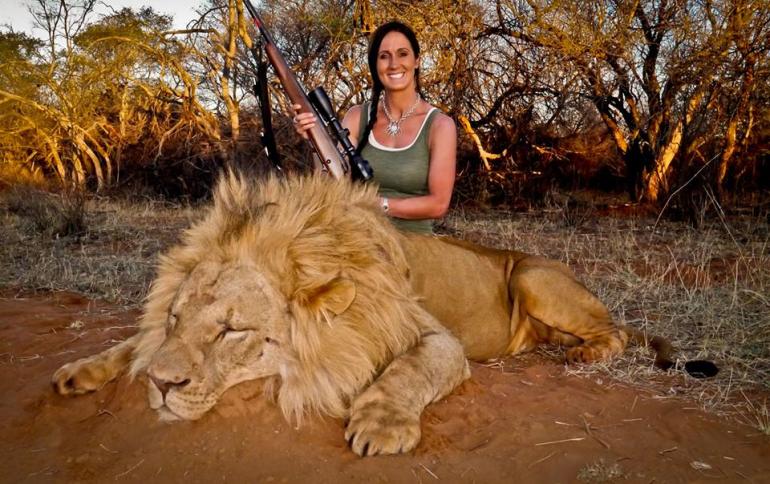
The response was remarkable. According to one story, “Bachman found herself the target of vicious death wishes and obscenity-laced insults on Monday as critics on Twitter, YouTube and other social networks blasted the Minnesotan for her boastful hunting escapades.” According to another story, “More than 250,000 people have signed an online petition demanding that South Africa deny future entry to Melissa Bachman, a big game hunter whose smiling photo with a dead lion has sparked considerable outrage.”
And, to no one’s surprise, the large animal welfare charities are rushing to create a fundraising campaign with a petition to have lions listed as endangered under the Endangered Species Act (U.S.)
I posted something about this on my Facebook page, and I had to delete the comments and close the thread because of the horribly misogynist and violent comments that were being made.
People are angry that Bachman killed the lion unnecessarily. There was no need, no compulsion for her to do so. She did not kill the lion in self defense. She killed the lion because she enjoys killing animals.
And most of us think that that’s terrible; we don’t think that we should make animals suffer and die just because we derive some pleasure from it.
Or do we?
We kill and eat about 56 billion land animals not counting fish. There is no necessity; no compulsion. We do not need to eat animals to be optimally healthy and animal agriculture is an ecological disaster.
The best justification we have for imposing suffering and death on those billions of animals, many of whom have had lives far more hideous than the lion Bachman slaughtered, is that they taste good.
So how exactly does this distinguish those of us who consume animals from Bachman?
That’s a rhetorical question: there is no coherent moral distinction between her and most of us. The fact that Bachman kills “charismatic species” and the rest of us just kill chickens, pigs, cows, and fish is completely irrelevant.
The Bachman matter is no different from the moral schizophrenia that we saw in the matters of Michael Vick, Mitt Romney, and Kisha Curtis.
On the positive side, every time one of these cases erupts, we reaffirm our belief in the widely shared moral intuition that it’s morally wrong to impose suffering on or kill animals without a good reason. Ironically, we already believe everything we need to believe to reject animal exploitation altogether. It’s just a matter of coming to see there is no morally relevant difference between shooting a lion for fun or eating a steak because you enjoy it. In both cases, we have taken a life for no good reason.
Let us hope that these episodes of moral schizophrenia cause the light to go on at least for some who make the decision to put their morals where their mouth is and go vegan.
Gary L. Francione Professor, Rutgers University
©2013 Gary L. Francione
Just FYI, so you know this is out there…
Non Native Wolves Illegally
Introduced, Says Whistleblower
Former USFWS Official Speaks of Malfeasance, Misappropriated Funds, and Transplanting Wrong Subspecies to Yellowstone
11/04/13
BY QUINCY ORHAI
Half a century after the last native Northern Rocky Mountain Timber Wolf, Canis lupus irremotus, was said to be hunted to extinction locally by public and private efforts, the U.S. Fish & Wildlife Service, in 1995, under then Director Mollie Beattie, presided over the introduction of the Canadian Gray Wolf, Canis lupus occidentalis, into the Northern Rocky Mountain eco-system.
According to whistleblower Jim Beers (former USFWS Chief of National Wildlife Refuge Operations), after Congress denied funding for his agency to carry out the Northern Rockies Wolf Recovery Project, the agency acted illegally as it brought the Canadian wolves into the Yellowstone ecosystem.
Speaking in Bozeman in May 2010, at the Gran Tree Inn, before Congress on wolf recovery issues in 1998 and 1999, and in October 2013 to the Montana Pioneer, Beers insisted that, after Congress denied USFWS funding for wolf recovery, the agency illegally expropriated Pitman-Robertson funds (federal excise taxes required by law to be distributed to the states as reimburse-ments), helping themselves to tens of millions of dollars.
When contacted by the Montana Pioneer for this article, Beers further stated, “The General Accoun-ting Office verified that at least $45 to $60 million was taken, diverted, by USFWS from P-R funds.”
Beers went on to say that the Pittman-Robertson excise taxes, by law, could only be used by State wildlife agencies for their wildlife restoration projects. “These funds were then used primarily…to pay bonuses to top USFWS managers that had no right to such funds [and] to trap wolves in Canada, import them, and release them into Yellowstone National Park.”
Beers, a 32-year veteran USFWS biologist, whose job included overseeing the Pitman-Robertson funds, alleges that the agency misapprori-ated monies for the trapping and transportation of Canadian wolves into the U.S. To conceal its misuse of the funds spent on the project, the true number of wolves imported, and the subspecies brought in, USFWS intentionally did not file mandatory paperwork, according to Beers, that would have established a paper trail. Or, he speculates, somehow that paperwork mysteriously disappeared.
Beers also alleges USFWS failed to file an appropriate and accurate Environmental Impact Statement. In recent comments to the Montana Pioneer, he elaborated, saying, “The EIS was and remains a document of lies, misinformation and woefully incomplete coverage of the matter.”
In print and in public speaking engagements, Beers has claimed the Wolf Recovery Project deliberately dismissed established wolf science and research, including known wolf depredation impacts on livestock and wildlife, and ignored the dangers parasites and diseases carried by wolves present to wildlife, livestock, pets, and humans.
The Canadian Gray Wolf, introduced into Yellowstone Park by USFWS 18 years ago, is widely described in scientific literature as thirty to fifty percent larger than the said-to-be extinct local native timber wolf. The initial 14 and subsequent transplanted wolves were captured in Canada, although wolves that were more genetically similar were available from surplus populations in Minnesota, as reveal-ed by the Smithsonian Institution, in a scholarly work titled: Physiological Basis for Establishing a Northern Rocky Mountain DPS [Distinct Population Segment Area].
The importation of Canadian Gray Wolves was criticized at the time by American biologists who believed the larger wolves would kill more elk, a position many now say has proved correct, and that the introduction of a non-native sub-species was of questionable legality when the smaller-sized native populations were beginning to recover naturally, on their own, positions similar to those advanced by the Farm Bureau’s of Idaho, Wyoming and Montana.
Although the official position of the government is that native wolves were locally extinct, according to Dr. Ralph Maughan, professor emeritus of political science at Idaho State University, with specialties in natural resource politics and public opinion, USFWS reported 48 native wild wolves in Montana in 1994, the year before the controversial introduction of the Canadian Gray Wolf into Yellowstone National Park—mostly timber wolves traveling down from Canada.
On his website, The Wildlife News, Maughan writes: “It’s reasonable to assume that without reintroduction, wolves would have naturally reestablished themselves in most of Montana [under the protection of the Endangered Species Act], but migration would have been slow with a lot of wolves up north before they made it to Yellowstone and Wyoming. Because these wolves were fully ‘endangered,’ rules governing them would have been a lot more strict than with those finally reintroduced in 1995.”
However, the larger and more aggressive central and northern Alberta, Canada wolves USFWS introduced here eliminated any survival chance of native wolves [as a result of competition or elimination], as USFWS knowingly violated the Endangered Species Act, according to Maughnan.
It was and is common scientific knowledge that the native male wolf (Canis lupus irremotus) of the Northern Rockies averaged 90 to 95 pounds at maturity. The wolf USFWS brought in as a replace-ment was a noticeably larger wolf (Canis lupus occidentalis) from north-central Alberta, with mature males topping 140 pounds, and some specimens weighing up to 175 pounds.
According to the Smithsonian study, the native wolf, which local residents claimed existed in small pockets in wilderness areas in the 1990s, generally roamed an area of about 100 square miles, hunting alone or in small groups of 4 or 5 at most. The non-native Canadian gray wolves USFWS introduced to the region typically hunted 300 or more square miles back in their home range, with packs often numbering 20 or more.
Under the direction of Mollie Beattie, USFWS developed the Environmental Impact Statement for the reintroduction of wolves. That EIS made a number of assumptions about bringing wolves back to Yellowstone and the Northern Rockies. Almost none of those assumptions has proven to be correct, according to Toby Bridges of the Montana Chapter of Sportsmen for Fish and Wildlife. Writing in 2010, on the group’s website, Bridges says: “Instead of getting just the 150 wolves Montanans agreed to back in the mid 1990s, the state is now home to likely 1,000 to 1,200 wolves… This year a minimum of 43,500 elk will be eaten alive or killed and left behind by wolves in the Northern Rockies…”
Bridges also states that “The U.S. Fish and Wildlife Service manipulated science, and replaced the native wolf of this region with a totally non-native…larger…and more aggressive wolf, and has consistently underestimated wolf numbers by half or one third of actual numbers.”
According to USFWS, “As of December 31, 2012, the most recent minimum wolf population size determined for Montana was 625 wolves in 147 packs, 37 of which were confirmed breeding pairs.”
Those numbers are inaccurate, says Bridges, because for the annual wolf count USFWS typically ignores wolf sightings by anyone except agency biologists, who are understaffed. Also, wolves typically are active in timbered areas where they are impossible to count from the air, says Bridges. Thus, the deceptive wording of the report: “minimum wolf population size determined.”
Norm Colbert, a veteran wildlife tracker who lives near Nye, Mont., in the area of the Rosebud wolf pack, told the Pioneer in February 2012 that at least several wolves comprised the nearby local pack, based on his repeated sightings of tracks and wolf related activity, while the official count listed the Rosebud pack as having consisted of only two wolves, a discrepancy, accoridng to Colbert’s estimates, that may fall 300 percent short of the actual number of wolves in the pack.
According to Bridges, writing on LoboWatch, in an article titled Voodoo Math Still Haunts Montana Wolf Control: “Other well respected wolf biologists have claimed that ‘real wolf biology’ and ‘real wolf reproductive rates,’ and allowing for natural and man induced mortality, puts the current wolf population somewhere much closer to the 2,000 mark. The sportsmen of this state, based on the degree of damage done to elk and other big game populations, say it’s even higher—perhaps as many as 3,000 wolves.”
One thing is clear to local ranchers losing livestock, and to local big game guides losing elk-hunting clients—the northern Yellowstone elk herd has declined by 80 percent from the 19,000 elk of 1995 (according to a Feb. 2013 aerial survey by the Montana Department of Fish, Wildlife and Parks and the National Park Service), that 1995 number of elk having been part of the justification for bringing wolves to Yellowstone in the first place.
What was not made clear at the time of the Canadian Wolf introduction, according to wolf critic Bridges, writing on Lobo Watch, was that “The reality of living with wolves is that wolves are extremely non-discriminating predators, killing just about anything that gets in front of them—the young, the healthy, the pregnant and the prime…the sick and weak.”
Bridges charges that “agenda driven biologists” within wildlife agencies avoid acknowledging that each “average” wolf accounts for the loss of some 25, or so, big game animals (or head of livestock) annually, just for sustenance, that each “average” wolf also kills just about as much game, known as “surplus killing,” without eating the kill, and that wolves are the primary carrier of the Echinococcus granulosus tapeworm, a parasite that infects game, pets, and humans with Hydatid cysts “that in turn makes these living things sick and weak.”
In the recent documentary film Crying Wolf, Exposing the Wolf Reintroduction to Yellowstone National Park, David Allen, President of the Rocky Mountain Elk Foundation, takes the issue a step further, stating, “The Northern Yellowstone elk herd was the showcase herd in the world…I believe that the reintroduction of wolves is, in many ways, an assault on the sportsmen and hunting culture. The North American model of wildlife conservation is built around the sportsman, since the days of Teddy Roosevelt. We have the most bountiful, successful wildlife resources in the world.”
With Crying Wolf, filmmaker Jeffrey King depicts the introduction of non-native Canadian gray wolves into the Northern Rockies ecosystem as destroying the livelihood of back-country residents by deva-stating free range ranching. According to the ranchers interviewed in the documentary, it is fast becoming uneconomical to raise livestock in areas where wolf packs range, and big game hunting and guiding opportunities and occupations are quickly disappearing from the rural Northern Rockies.
Veteran wolf biologist, John Gunson, formerly with the Alberta Fish and Wildlife Division, and also featured in Crying Wolf, echoed the concerns of sportsmen regarding elk hunting, saying, pointedly, “Really, there isn’t any room for harvest by man if you have a healthy wolf population.”
Regarding the introduction of wolves to the Northern Rockies, Ed Bangs, former Northern Rockies Wolf Recovery Coordinator for the U.S. Fish and Wildlife Service, is quoted as saying the following on the Montana Fish, Wildlife and Parks website, separating wolf science from wolf ideology: “Wolves and wolf management have nothing to do with wolves. I think the folks who didn’t like them still don’t like them, and the folks who did like them still do. Wolves are mainly a symbolic issue that relates to core human values…I think the only reason wolf reintroduction finally happened was that people with different values moved to Montana and diluted the strong agricultural influence. Plus, the economy changed from straight agriculture and natural resource consumption to areas such as tourism.”
US hunter criticised over picture with dead lion in South Africa
theguardian.com, Friday 15 November 2013
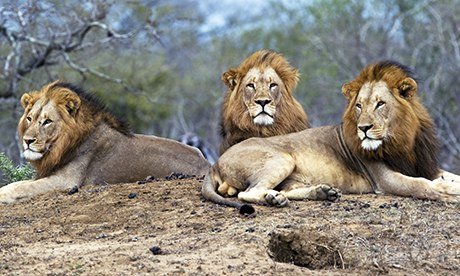
An American TV presenter has been condemned for tweeting a picture of herself standing over a dead lion and boasting that she hunted it on safari in South Africa.
More than 3,500 people signed an online petition calling for the self-declared “hardcore hunter” Melissa Bachman to be banned from returning to South Africa.
The Minnesota-based celebrity posted a photo of herself smiling next to the body of an adult lion after a hunt at the Maroi conservancy in the northern Limpopo province. The caption read: “An incredible day hunting in South Africa! Stalked inside 60 yards on this beautiful male lion … what a hunt!”
The style is a familiar one for Bachman, who has previously been photographed with what appears to be the carcass of a bear. She is no stranger controversy, having been removed as a contestant on the National Geographic show Ultimate Survival Alaska last year after more than 13,000 people signed a petition criticising the inclusion of the “heartless trophy hunter”.
Her lion tweet has provoked another angry backlash. One Twitter user, Gaye Davis, asked: “If it was beautiful why kill it?” Tim Flack, a South African, commented: “People like @MelissaBachman hunting lion in SA is everything that’s wrong with our hunting industry.”
A petition on Change.org urges the South African government to bar Bachman from the country. It says: “Melissa Bachman has made a career out of hunting wildlife for pure sport. She is an absolute contradiction to the culture of conservation, this country prides itself on. Her latest Facebook post features her with a lion she has just executed and murdered in our country.”
Supporters of hunting in South Africa argue that it raises funds from wealthy tourists which are then ploughed back into conservation efforts.
Lourens Mostert, game farm manager at the Maroi conservancy, confirmed that a lion was killed and said the hunt was legal. “If it isn’t right to hunt these lions, why does out government legally give us permission?” he told the Times newspaper. “This is not the only lion that has been hunted in South Africa this year.”
The barrage of criticism prompted Bachman to make her Twitter account private. Her personal bio reads: “I’ve been an avid hunter my entire life & now I’ve turned my passion into a career as a TV producer, host and writer. I’m a hardcore hunter doing what I love!”
Stephen Hume: B.C.’s promotion of grizzly hunt is ideological, not scientific
Killing of a threatened species to satisfy a marginal industry makes no sense
By Stephen Hume, Vancouver SunNovember 7, 2013
A new scientific study reports that grizzly bear mortalities exceed government targets in half the areas where hunting is permitted. This earns another “ho hum” from provincial wildlife authorities.
So what’s new? When the province’s own habitat specialist first raised concerns with methodology in estimating grizzly populations and mortality rates, his bosses suppressed the study.
The province estimates 15,000 grizzlies inhabit British Columbia. Mind you, grizzly estimates seem to be whatever it takes to justify trophy hunting. In 1979, there were 6,600 grizzlies. Then, when trophy hunting was on the agenda, there were almost 17,000.
The debate over grizzlies is not a discussion of scientific evidence that contradicts hunting policy, it’s an emotional argument over lifestyle choices by trophy hunting proponents who are not really interested in science.
Presumably this why the government is comfortable saying wildlife managers don’t share the new study’s conclusions before they’ve even analyzed its evidence — although, of course, they promise to review it.
The study by six biologists from Simon Fraser University, the University of Victoria and the Raincoast Conservation Foundation reported by Larry Pynn is only the latest that will wind up gathering dust on the shelf where the provincial government puts documents it wants to forget. It has been preceded by reports from some of the world’s leading grizzly experts.
These studies gather dust not because the evidence is unconvincing but because provincial politicians are not interested in evidence-based decisions. They want justification for providing feedstock for a hunting industry that’s in steep decline.
Thirty years ago, there were almost 175,000 licensed hunters in B.C. Today, hunters’ numbers have fallen by more than half.
Clearly social values are changing.
Once, people would kill everything they could. Archival photographs record orgies of killing that most of us today — even the most ardent hunters — would find repugnant and slightly mystifying.
But values do change. Today serious anglers embrace the catch-and-release ethos, hunters accept limited-entry lotteries and poachers are reviled.
Those original values have changed, in part, because of increasing scarcity. On Vancouver Island, for example, the black-tailed deer population is less than 20 per cent of what it once was — not because of overhunting but because of habitat loss and alteration. Steelhead runs are in trouble. So are native cutthroat trout. Moose are scarce in some regions.
So as hunting effort must increase with growing scarcity, and opportunity for success decreases, fewer hunters opt to buy licenses.
Finally, a growing sense that animals have rights, too, informs changing attitudes toward the killing of wildlife, particularly among young citizens. The idea of killing large animals like grizzly bears for pleasure or personal vanity rather than for food is perceived as abusive.
The response of provincial fish and game management has not been to adapt to change, but to promote hunting in the face of falling numbers. Its service plan calls for the selling of an additional 20,000 hunting licences by 2014.
The grizzly bear trophy hunt, which the province doggedly supports in the face of overwhelming public approbation, represents ideology, not wildlife science or public will.
Industrial strategy is presented as an exercise in sustainable management based on science, even though the managers acknowledge they have already reached their own conclusions before they examine unwelcome scientific evidence to the contrary.
But let’s be clear, the opposition to trophy hunting of grizzly bears is not an issue with hunting, it’s an issue with purpose.
Most British Columbians don’t oppose sustainable harvesting of wildlife for food. Most support, for example, the goals of the B.C. Wildlife Federation, which advocates for habitat that will sustain healthy populations available for harvesting by hunters and anglers.
The opposition is to the killing, for purposes of personal vanity, of a threatened species that has already been extirpated from most of its North American range in the interests of a marginal industry dominated by a few businesses.
Write about this and one immediately is subjected to scurrilous comments from trophy hunters who don’t want “their” bears taken away. But B.C.’s wildlife doesn’t belong exclusively to hunters or outfitters. Fish and game belong to everyone, including the almost 90 per cent of British Columbians who want grizzly bears protected, not slaughtered in the service of narcissists and egomaniacs.
We live in a democracy. In democracies, majorities rule — or should rule. So if you care about grizzly bears, you know what to do. Start telling your elected representatives that if they won’t act on your behalf on this file, you’ll elect somebody who will.
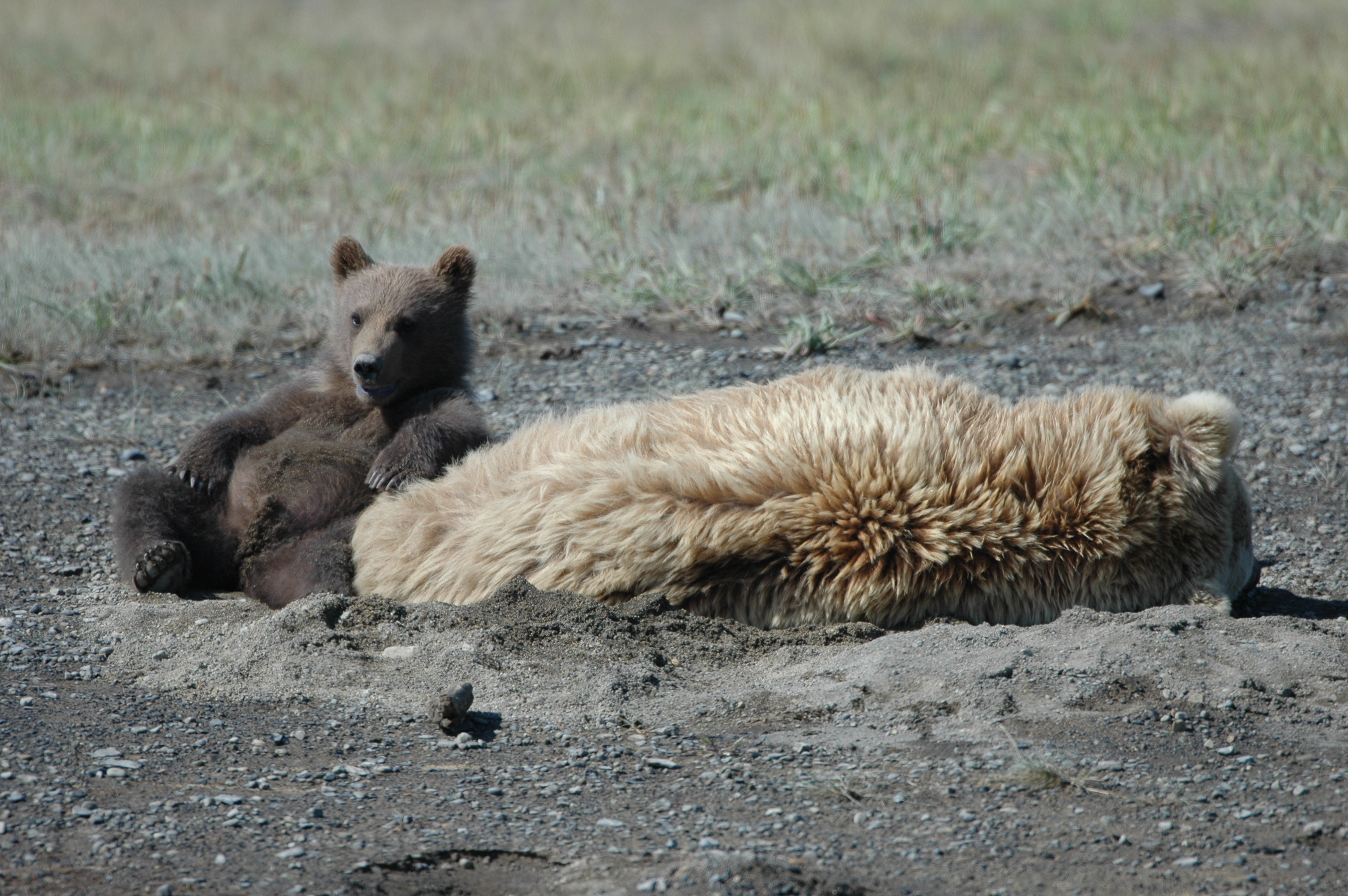
Photo of bears in the wild co Jim Robertson
[He won’t just donate the money without the chance to kill something, of course.]
From Mountain Lion Foundation: Big Game Hunter Pays $13,500 to Participate in Nebraska’s First Ever Exclusive Lion Hunt
Spouting the standard propaganda about hunters being the biggest conservationists, Tom Ferry, of Ponca, Nebraska, paid $13,500 to become the winning bidder of one of the first two mountain lion permits issued by the Nebraska Game and Parks Commission.
Mr. Ferry, a Big Game Hunter, has killed animals for sport in Africa, Canada, New Zealand, Russia, and across the United States. He has approximately 150 trophy mounts commemorating his exploits at his home including those of mountain lions killed in Arizona and Utah.
“I just thought it would be nice to hunt mountain lions in Nebraska during the state’s first season,” Ferry said.
Ferry will be one of only two people permitted to hunt cougars during Nebraska’s first lion hunting season (January 1st through February 14th) in the Pine Ridge Hunting Unit. Last week, 15-year-old Holden Bruce of Franklin, Nebraska, was selected in a drawing for the other permit. Both hunters will be allowed to hunt with dogs.
The auction, held Wednesday night at a special Nebraska Big Game Society function, reflected the small participant turnout experienced in last week’s statewide lion hunting lottery with only 70 bidders.
Before the auction, Nebraska Game and Parks Director, Jim Douglas, also presented former State Senator LeRoy Louden, who shepherded Nebraska’s lion hunting bill through the Legislature, with an honorary mountain lion hunting permit so he can accompany the remaining 99 lottery winners when they commence their hunt during Nebraska’s second lion hunting season (February 15th through March 31st).
Game and Parks officials say the objective for allowing mountain lion hunting is to provide hunters opportunities while allowing a slight to moderate reduction in mountain lion population.
Mr. Ferry seemed to sum up the Department’s draconian position towards Nebraska’s wildlife. “They have a saying in Africa,” he said. “And it’s true here, too: If it doesn’t pay, it doesn’t stay.”
Local OKC weekend hunting news:
Oklahoma’s deer muzzleloader season opened Sat. and will run thru Nov. 3rd statewide.
Archery deer season remains open thru Jan. 15th. Up to now, more than 12,000 deer have been harvested by bow hunters and youth gun hunters this season a/w state wildlife officials.
A big game biologist for the Okla. Dept. of Wildlife Conservation states “With the recent onset of cooler weather, deer will be moving longer in the mornings and earlier in the evenings. Hunters need to find natural food sources (for deer) like oak trees that are dropping acorns or persimmon trees.”
The bear muzzleloader season also opened Saturday and runs thru Nov. 3rd in some SE Okla. counties. Bear archery season ended Oct. 20th with a total of 27 bears taken by bow hunters.
Almost all of these bears were killed during the first few days of the three-week season.
[Note that this article, from pro-hunting news source, actually used the word “Killed” for once, instead of the traditional hunter favorite for murdered, “harvested.” Yet the article below, about elk hunting “prospects” uses the word “harvest” 6 times and never mentions even once that successfully hunted animals are “killed.” Of course, “murdered” is right out. Never do they say, “dispatch,” “assassinate,” “slay” or “snuff out.” How about, shoot? That’s a relatively benign-sounding word for what they do. How many times do you suppose they resort to that word? I counted exactly 0. How often did they resort to the word, “bombard”? 0. “Open fire”? 0. “Lay waste to”? 0. What about something humane, like say, “euthanize” or “finish off”? 0. They speak of hunting “opportunities” 4 times, but they never use the words “liquidate,” “eliminate,” “gun down,” “execute” or “do away with” once. Surprisingly, the even the word “destroy” is never used. But “Harvest” appears six times. .
I hate to break it to hunters and their apologists, but the word “harvest” is not considered a synonym of “kill” in any English dictionary.]
From the Washington State Department of Wildlife:
Elk hunting prospects good statewide,
2012 harvest best in years
OLYMPIA – After a strong harvest in 2012, Washington Department of Fish and Wildlife (WDFW) game managers are again forecasting good elk hunting opportunities statewide when the 2013 modern-firearm general season opens Saturday (Oct. 26) in Eastern Washington and next Saturday (Nov. 2) in the western part of the state.
Dave Ware, game manager for WDFW, said last year’s elk harvest was the best since at least 1997.
“Our elk harvest has consistently been between roughly 7,000 and 8,800 animals,” said Ware. “But last year, Washington hunters took 9,162 elk, both bulls and cows. It was definitely our best season since at least 1997 when we moved to our current and more reliable method for determining harvest numbers.”
Ware said the last few years have been good statewide for calf recruitment and adult survival, adding that all of the state’s major herds are at or above population management objectives. As such, he predicts good opportunities throughout Washington’s elk country.
“News across the state is pretty good, especially for Eastern Washington elk tag holders,” said Ware. “The Yakima Elk Herd’s productivity began declining several years ago, so we backed off our antlerless tags. Productivity has since increased, and, based on last year’s calf survival, I think hunters can expect to see good numbers of spikes in 2013.”
News is similar in the Blue Mountains, if not better.
“Our surveys indicate we’re seeing 40 percent survival on spike elk in the Blues, which is excellent,” said Ware. “A more typical number we expect to see is 20 percent post-hunt survival. This means there are plenty of elk escaping hunters, due in part to steep terrain. It looks like we should have very good numbers of spike bulls available in the Blue Mountains again this year.”
The Colockum Elk Herd is also above WDFW’s management objective and increasing. That should mean increased antlerless tag opportunities in the future, especially with the temporary decline in habitat conditions resulting from this summer’s catastrophic wildfires that swept across the Colockum and L.T. Murray wildlife areas, as well as surrounding lands.
“The effects of the fire shouldn’t affect the 2013 season much,” said Ware. “The new, green grass growing on burned landscapes is like candy to elk, so hunters might want to look in and around burned areas close to timbered cover. As always, scouting is important, and so is the ability to adapt to different access options and/or elk distribution and behavior caused by fires and post-fire flooding. Hunters should also be mindful of the true-spike regulation in place in these GMUs.”
Ware also mentioned the Selkirk Elk Herd, which is comprised of many small bands of elk spread out throughout the state’s northeastern corner. Numbers appear to be stable, said Ware, but scouting is especially key to success in this part of the state due to vast habitat and small, roaming bands of elk.
“Hunter success has held strong over the last several years in Northeast Washington,” Ware said.
In Western Washington, the St. Helens Elk Herd continues to be the state’s largest, despite hoof disease affecting an undetermined minority of the total population.
“Hunters should be aware that if they follow basic techniques for caring for game, animals infected with hoof disease appear to pose no threat to human health based on all of those examined so far,” said Ware.
WDFW is investigating potential causes and solutions to address elk hoof disease in Southwest Washington and is asking hunters to report any hoof deformities they encounter via the department’s website. http://wdfw.wa.gov/conservation/health/hoof_disease/.
“Elk numbers remain very high, and we expect good hunter success,” said Ware. “With some private timber lands going into fee access, it will become increasingly important to plan ahead, scout, and develop alternatives going forward. Still, there is plenty of access available.”
Ware said WDFW is continuing to seek a range of solutions to maintain free or inexpensive access on private timberlands in Western Washington.
Meanwhile, Southwestern Washington’s Willapa Hills Elk Herd is at objective and should offer good opportunities for three-point or better Roosevelt elk bulls, Ware said. Some hunters may be frustrated by a lack of drive-in access in places, but Ware said those willing to walk behind closed gates – where legal – stand the best chances of encountering and harvesting elk…

Text and Wildlife Photography ©Jim Robertson
 Exposing the Big Game