A “Special” Time of Year

It’s Saturday morning, in elk country on the last weekend in October. The air is crisp and trees are slowly shedding their golden leaves. Autumn can be a special time of year, but not for everyone. A week from today is opening day of elk (murdering) season. Since first light the peace of the morning has been desecrated by the repeated blasts of hunters, sighting-in their rifles—or warming up their itchy trigger fingers.

To say that hunters ruin it for the rest of us would be an understatement. Their noises, actions and attitudes not only irk those of us who enjoy living peacefully near wildlife habitat, they cause overwhelming stress to the animals who know they could be the next target.

When I hike through the forest, I try to use the same routes, respectfully leaving unexplored certain areas where deer and elk are likely to be bedded. The hunter’s outlook is just the opposite, purposely tromping through every corner of the woods in hopes of scaring up any animal who might call it their home.

During the fall, elk should be bugling loudly, competing with other bulls and rounding up their harems.  Meanwhile, the cow elk try to stay out of harm’s way as much as possible, yet feel reproductive stirrings of their own.

All are distracted enough already. The last thing they need right now is a bunch of Elmers out trying to “harvest” their flesh—or their head to mount on the wall to boost their fragile Fuddly egos.

Text and Wildlife Photography ©Jim Robertson, 2013. All Rights Reserved

Text and Wildlife Photography ©Jim Robertson, 2013. All Rights Reserved

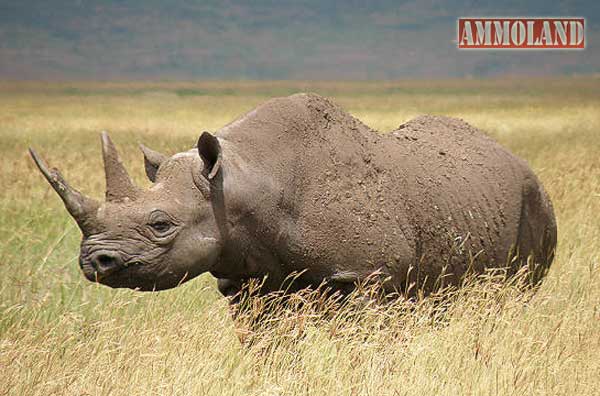
Safari Club A-Holes Auction Permit to Kill a Rhino

[And finally, this article, the last of today’s series on anti-animal A-holes (brought to you by good folks at “Ammoland”), needs no introduction…]

black-rhino

Rhino Permit to be Auctioned at Dallas Safari Club Convention
Published on Friday, October 11, 2013

DALLAS, TX – -(Ammoland.com)- —Through an historic collaboration between  governments, one hunter will have a chance to hunt a black rhino, help manage  and conserve the species, and import a rare trophy to the US in 2014.

The Dallas Safari Club (DSC) has been selected by the Government of the  Republic of Namibia to auction a special hunting permit with all proceeds  earmarked for rhino conservation in that country.

The US Fish and Wildlife Service has promised full cooperation with a  qualified buyer.

DSC will sell the permit during its annual convention and expo Jan. 9-12 in  Dallas.

An unprecedented sale price is expected.

“This fundraiser is the first of its kind for an endangered species,” said  DSC Executive Director Ben Carter, “and it’s going to generate a sum of money  large enough to be enormously meaningful in Namibia’s fight to ensure the future  of its black rhino populations.”

The Government of the Republic of Namibia approved the permit in accordance  with CITES provisions to generate crucial funding for rhino conservation  initiatives including anti-poaching efforts—while at the same time managing the  black rhino population within Mangetti National Park, where the hunt will take  place.

Science has shown that removing certain individual animals can help rhino  populations grow.

Black rhinos commonly fight to the death. In fact, the species has the  highest combat mortality rates of any mammal. Approximately 50 percent of males  and 30 percent of females die from combat-related injuries. Extremely aggressive  bulls are known to be population-limiting factors in some areas. Selectively  harvesting these animals can lead to population increases and greater  survival. [This is total b.s., by the way. Don’t these people have any faith in nature whatsoever?]

Rampant and indiscriminate poaching is threatening rhino populations across  Africa. Rhino horn has high black-market value, especially in Southeast Asia,  for ornamental uses and folk remedies, although medical research has disproved  actual benefits.

The Conservation Trust Fund for Namibia’s Black Rhino will receive 100  percent of the hunting permit sale price. Both DSC and contracted auctioneer Ed  Phillips of Houston offered to forego their customary sales commissions to  support the special cause.

Louisiana conservation attorney John J. Jackson, III, helped facilitate the  auction item and proceeds will be channeled through his Conservation Force, a  501(c)(3) nonprofit public charity, for income tax deduction purposes.

The winning bidder may hire his or her qualified outfitter or guide to lead  the hunt, which will be accompanied by Namibian wildlife officials.

About Dallas Safari Club (DSC) Desert bighorns on an  unbroken landscape, stalking Cape buffalo in heavy brush, students discovering  conservation. DSC works to guarantee a future for all these and much more. An  independent organization since 1982, DSC has become an international leader in  conserving wildlife and wilderness lands, educating youth and the general  public, and promoting and protecting the rights and interests of hunters  worldwide. Get involved at www.biggame.org.

Read more: http://www.ammoland.com/2013/10/rhino-permit-to-be-auctioned-at-dallas-safari-club-convention/#ixzz2iO32pdcv

Enthusiasts Encourage More Women To Give Hunting A Shot

http://www.npr.org/2013/10/18/236366868/enthusiasts-encourage-more-women-to-give-hunting-a-shot

by   October 18, 2013 fromWPRN                

Tara Heaton (left) and Crystal Mayfield with guide Fred Williams at a women's antelope hunt in Wyoming. Before the event, both women had hunted almost exclusively with male relatives, not other women.

Tara Heaton (left) and Crystal Mayfield with guide Fred Williams at a women’s antelope hunt in Wyoming. Before the event, both women had hunted almost exclusively with male relatives, not other women.         Irina Zhorov/Wyoming Public Media


The departure time for Wyoming’s inaugural Women’s Antelope Hunt was set for 5:30 a.m. — but that was before a snowstorm hit. By 6 a.m., the electricity is still out, wind and snow are howling and antsy women in camouflage are eating eggs by candlelight.

Marilyn Kite, Wyoming’s first female state Supreme Court justice and one of the people who dreamed up the hunt, is among them.

“We’ve found it to be just great recreation, lots of fun, and the camaraderie of it is why you do it, really,” Kite says. “But we also really like the meat.”

Women still make up only a small percentage of all hunters, but that number has increased significantly in recent years. Now, organizations like the Wyoming Women’s Foundation want to encourage more growth through mentorship.

The group says hunting is an important way to teach self-sufficiency and economic independence — and taking meat home is a part of that, Kite says. “There’s a lot of young women who are single mothers, who are trying to provide for their families,” she says. “And [hunting is] certainly one way to do it.”           

 Just to show how outnumbered women currently are in hunting, most of the guides on this women’s hunt are men. One of them, Fred Williams, says women who try hunting usually do really well with the sport.

“I think women tend to be actually better hunters because they tend to be a bit more patient, and oftentimes are a much better shot, because they tend to be a bit more focused,” Williams says.

By 10 a.m., conditions outside have improved and the hunt is on. Williams and his team of two set off for a private ranch to look for antelopes.

Tara Heaton, a Navy veteran, already has some experience hunting, but she says this is different. It gives her an opportunity to meet “different women from around Wyoming, and more hunters, because a lot of my friends growing up weren’t hunters,” she says.

Heaton is partnered with Crystal Mayfield, a single mother. Before today, both women hunted almost exclusively with their fathers and brothers.

As the three drive through the snow, they spot some antelopes in the distance. They park and start stalking them on foot.

Williams has Mayfield load a bullet in the chamber and they proceed quietly through a snow-covered field strewn with cottonwoods and cows. When they reach a rise overlooking the grazing antelopes, Williams preps Mayfield for her shot. She takes aim, shoots — and misses.

In fact, both women miss their shots today. The 35 mph winds don’t help. But on the drive back to the ranch, Mayfield says she’s not upset. Even missing is easier in the company of women, she says.

“When I missed that shot, I didn’t feel like a loser when I went and told [Heaton] that, ‘Oh, I missed it,’ ” she says. “I didn’t feel like she was going to be like, ‘Oh, you’re a huge loser.’ … My brother easily would have been like, ‘Oh, I can’t believe you missed that. You’re stupid.’ “

As is typical in Wyoming, the next day is sunny, wind-free and beautiful. Both Heaton and Mayfield get their antelopes, and all but two of the 34 participating women come away with a kill.

One first-time hunter says she can’t wait to teach her son how to hunt

Girl Kills Two Bucks, Asks “What Now?”

“Some guys think, you know, ‘OK, well, you’re a girl, you can’t kill a deer.’ You know, I can say, ‘Yeah, I’ve killed two of them. What now?'” – Magan Hebert
[An ominous question if there ever was one.]

For Some Girls, The Ultimate Goal Is To Kill A Buck

by Tamara Keith

December 09, 2010
Looking at Magan Hebert in her orange-and-blue cheerleading uniform, you’d never guess that she could shoot a rifle and kill a deer with a single shot.

Her hair is teased up and pinned back into a pouf. Her cheekbones and eyelids are defined with bold, colorful sweeps of makeup.

Magan, 15, of Wayne County, Miss., defies the typical image of a hunter — a man wearing camouflage, holding a gun.

But an increasing number of girls now hunt. According to the latest data from the U.S. Fish and Wildlife Service, there are some 300,000 female hunters under the age of 16. From 1991 to 2006, the number of girls who hunt in this country nearly doubled.

‘I Like To Cheer. I Like To Hunt.’

On a recent Saturday morning, Magan is headed to a cheerleading competition at her high school in Waynesboro. She sings along with the car stereo on the drive over.

Magan Hebert cheerleading

Magan, especially in her cheerleading uniform, defies the typical image  of  a hunter.

Courtesy of Marcy Hebert

“I like to cheer. I like to hunt,” she says. “I get really good grades in school. I keep an A.”

Magan is tiny — one of the girls at the top of the pyramid who flips through the air like a rag doll. And on this day, she lands every stunt. But the team comes in second place out of two. Magan is quiet on the drive home. Maybe she’ll have better luck hunting deer on Sunday.

Magan started hunting when she was in the fourth grade. Her dad hunts every spare minute he can get.

“He would ask, like, every time he went if we wanted to go,” she says, reflecting on how she got into hunting. “One time I was like, ‘Yeah, I want to go.’ I just thought it would be pretty cool, you know, and I just loved it.”

For Magan’s mom, Marcy Hebert, it was a bit of a surprise that her little girl wanted to hunt.

“She wanted to do it, as a matter of fact, before my son did,” Marcy says. “Of course, a lot of the girls up here hunt.”

“I started shaking when I put the gun up, so [Dad] had to hold it steady for me,” Magan says.

But she did it. She hit the doe in the shoulder. Marcy couldn’t believe it. Magan was hooked.

“I just like the peace and quiet,” Magan says, explaining the appeal.

She says she likes it when she sees a mother deer playing with her fawns. “I think it’s cute. ‘Cause, you know, you can’t kill them yet. But when they grow up, it’s really good food. I don’t know. I just like it.”

The family gets almost all the red meat it needs for a whole year during hunting season.

Hunting And Texting

It’s still way before dawn and freezing cold when Magan and Marcy load into the truck and head out to the spot where the family hunts. It’s in a private, wooded area. They have a stand — a small, slightly elevated shack with slits for windows. There’s a feeder off in the distance that occasionally spreads corn and protein pellets on the ground.

Among hunters, baiting is controversial. It’s illegal in some states but standard practice in Mississippi.

Marcy lights a propane camp heater inside the stand, but it’s still cold.

Magan shown with the first deer she killed

Magan killed her first deer when she was 10

Courtesy of Marcy Hebert

“Basically, what you watch for is — at the edge of the tree line, you watch for movement,” Marcy says.

The sun is rising in the sky. The frost is melting off the grass. Magan and Marcy haven’t seen a thing.

Magan flips open her phone and updates her Facebook status: “Sittin’ in the stand, freezin’, waitin’ for the deer to come out,” she taps out on the small keys.

She’s texting, too, and occasionally nodding off. And Marcy says this is how it goes: sitting side by side in the quiet, staring out at trees and grass, hoping to see a deer and breaking the boredom with text messages.

“A lot of times we’d text back and forth, sitting in the stand,” Marcy says. “That’s how I learned how to text, was sitting in a deer stand with her.”

A little before 9 a.m., they give up.

They go back to the house empty-handed, and Magan’s little brother is gloating. He has killed a deer — his second one of the weekend.

“Like, every time he goes hunting — almost every time — he kills something,” Magan says, clearly a little bit jealous.

It’s been five years since the last time she got one. That’s partly because she hasn’t had as much time to hunt now that she’s on the varsity cheerleading squad. But partly, it’s luck: catching the right deer, walking into the right spot at the right time.

“I want to get a buck,” she says. “I don’t care how big. I just want a buck.”

Getting Her Buck

In the afternoon, they go back out, hoping for that buck. They wait and wait. And then, “Shhhh,” Marcy says as she spots a deer. “It’s a spike.”

A spike, a young buck, walks into a clearing near the feeder. He’s about 120 pounds, with just two small antlers. Magan starts texting excitedly.

“You’d better put the phone down and put the gun up,” Marcy whispers firmly.

Magan picks up the gun and releases the safety. She is tense. She takes several deep breaths as she gets the deer in her sight.

There’s a long silence. Then a single gunshot. The sound reverberates around the stand.

Marcy Hebert, with Magan

Magan’s mother, Marcy Hebert, says Magan was interested in hunting before her brother was.

“You got him, you got him,” Marcy says.

The deer runs about 50 feet before collapsing. The shot is clean, and fatal, just behind the front leg. Magan has her buck.

“Some guys think, you know, ‘OK, well, you’re a girl, you can’t kill a deer,’ ” Magan says, reflecting on her triumph. “You know, I can say, ‘Yeah, I’ve killed two of them. What now?’ You know? Not a lot of people can say that.”

Mother and daughter come out of hiding in the deer stand, grab the lifeless spike by the legs and hoist him into the back of the truck. It takes all the strength they have to get it in. They close the truck gate and drive home.

There are bragging rights in the bed of that truck — and there’s venison. Within the hour, Magan’s dad will butcher the deer, filling a cooler with the meat.

What Really Motivates a Hunter?

Whenever an anti asks a hunter why they like to kill animals the answer (unless the hunter is exceptionally evil or unrepentant) is some variation of, “I don’t actually enjoy killing, I do it for the meat”…or, “to control their population”… or some other variation of those validations they think will sound plausible or palatable.

But the truth is not nearly so toothsome—they do it because they get off on taking and possessing another’s life.

You don’t have to lurk in those dark, seedy hunter chat rooms, Facebook pages or message boards to learn how hunters really think or how they view the animals they lust after. One need only pick up a Washington State Department of Fish and Wildlife game regulations handout, available at any sporting goods store or rural mini market, and read the following featured article by a WDFW Wildlife Program Assistant Director:

Sportsmanship Evolves through Five Stages of Hunting

by Nate Pamplin

In hunter education, we talk about the five phases that hunters commonly pass through and how our definition of success in the field evolves over time. I think that discussion is valuable, because it provides an important perspective on our approach to the sport.

In the first stage of the five-step progression, most new hunters are primarily focused on bagging their first game animal. My first big game animal was a small ‘forked-horn’ sitka black-tailed buck on Kodiak Island, Alaska–and I couldn’t have been more proud.  

In phase two, the goal shifts to filling bag limits. The definition of a good day for a hunter in this phase would be taking all four forest grouse allowed, not just two.

The third stage is what is called the “trophy phase,” where success is derived by harvesting an animal with a large rack or trophy score. A hunter in this phase may pass immature animals waiting for the opportunity to harvest a trophy for the wall.

A fourth phase is limited-weapon phase, when hunters who have had success with modern firearms put down their rifle to pursue game through traditional implements that present more of a challenge.

Finally, we arrive at the fifth stage–the sportsman phase. Here, hunters find satisfaction in all aspects of hunting, whether sighting-in their rifle with their friends, waiting on a stand for a buck to pass by, or recounting hunting stories with family and friends over a bowl of venison stew.

An important aspect of the sportsman phase—and I’d advocate for every phase—Is sharing the rich tradition of hunting with others.

I ask you to consider your role in promoting the hunting heritage in Washington. Have you introduced hunting to a colleague from work who may have never been hunting before? Have you invited your niece to the shooting range? Do you have time to volunteer with a local hunter-education team? Did you mail a thank-you note to the landowner who afforded you access to their

Text and Wildlife Photography ©Jim Robertson

Text and Wildlife Photography ©Jim Robertson

ranch last fall?

Hunters don’t have to move through every stage of the sport before entering the sportsman phase. All of us share a passion for Washington’s hunting heritage, and it’s important we all do our part to keep this tradition alive during the coming season.

….

It’s uncanny how much the statement above mirrors this quote by another trophy taking expert on the subject—the prolific serial killer, Ted Bundy, who told the authors of The Only Living Witness, from his cell on death row:

“At each stage of the process the individual’s feelings would be different. And when he’s 15 it’d be a much more mystical, exciting, experience…than when he’s 50. And when—even within that given hunting expedition—the feeling of sighting the animal would be different than shooting it or showing it to your buddy. Or putting it in the trunk and taking it home and butchering it and having it for dinner…And that’s the way some guys may approach killing their fellow human beings.”

NBC Sports Network Cancels NRA-Sponsored Elephant Hunting Show After Host Compares Critics To Hitler

[Interesting that the network cancelled the show because the host dared to mention Hitler, not because he shot an elephant twice in the face and then celebrated its death over champagne… Why he thinks we only care about elephants and not the hunting of ducks, deer, rabbits, etc. is beyond me. Not all anti-hunters are “animal racists,” as he put it, or species favoritists, as I call it. Many of us don’t want to see the hunting of any non-human animals.]

 September 29, 2013  1:41 PM EDT ››› SOPHIA TESFAYE

Photo by Lord Mountbatten

NBC Sports Network has announced that it has canceled the hunting show Under Wild Skies after host Tony Makris compared critics to Hitler.

Controversy began after the show aired an episode in which an elephant was shot in the face twice by host Makris. Makris, who has longstanding ties to the NRA, celebrated the killing of the elephant with a bottle of champagne.

Following days of outrage and a petition calling for NBC to cancel the show, Makris took to NRA News on September 26 to respond to critics by claiming they advocated for a form of “animal racism.” Makris said the following about critics who argued that elephants not be targeted:

MAKRIS: The nice ones will come up and go, you shoot elephant? Why? And I said well, the short answer is because hungry people eat them and because I’m a hunter. You know, I’m not an elephant hunter. I’m a hunter. I hunt all things. And they go, well nobody should shoot an elephant. I said, why? And they go they’re so big and kind and gentle and smart and I said, okay, let me ask you a question. Should I be able to shoot birds? Well, I guess that’s okay. Ducks? Yeah. Pigeons? Oh, they’re flying rats, okay. Rabbits? Well rabbits are cute. But yea. Squirrels? That’s nothing but a rat with a tail — with a fuzzy tail. And I said, well deer eat all my mother’s roses in Long Island and I go– so I can shoot all of those, but not an elephant? No. Do you realize that if you subscribe to that philosophy you are committing a very unique form of animal racism?

CAM EDWARDS, HOST: [laughter]

MAKRIS: And now they’re shocked. And they said but they’re so big and special and they’re smarter. And I went, you know, Hitler would have said the same thing.

On September 28, NBC Sports Network announced in a statement to Deadspin that Under Wild Skies has been canceled due to Makris’ comments:

Under Wild Skies will no longer air on NBC Sports Sports Network due to the program’s close association with its host, whose recent comments comparing his critics to Hitler are outrageous and unacceptable. NBCSN will continue to air all of our other quality outdoor programming.

BEING VEGAN – If I Were a Lion

September 21, 2013 | Filed under: Being Vegan | Posted by: Paul Graham
Las Vegas Informer

If I were a lion, people would often refer to me as “The King of the Beasts.”  We have been a part of stories, legend and lore from the very beginning.  We are majestic.  We have complex systems between us and are very social when we are resting, enjoying lots of head rubbing, touching, licking and purring.  We live in groups that we call “prides” of around 15 lions. Over the past 50 years or so life has become very difficult for us.  Most believe that our numbers are half of what they used to be, but our numbers are even lower than that.  There are only between 15,000 and 20,000 of us lions left in Africa, which is our primary habitat.  It is estimated that if things remain as they are, we all will be gone in as little as 20 years.

If I were a lion, I would be facing many challenges like habitat loss, conflict with humans, a smaller prey base, climate change and hunting.  We are allowed less and less to roam free.  The weather is simply not what it used to be and droughts are forcing us into smaller and smaller areas.  Men continue to hunt us, whether there are laws against it or not.  Trophy hunters from America killed over 500 of us last year alone.  Others hunt and kill us and sell our bones openly to Chinese markets for medicinal purposes. They can’t even prove that it helps people but people will buy it anyway. Pieces of us can be found cooked and served in restaurants throughout China and other places.  Because so many of us being killed are males, it is throwing off our entire system and is causing others in our prides to die as well.  It is the small-mindedness and great greed of men that are killing us off by the day.  When we are gone, who will they begin to hunt and come after?  Maybe they will begin to hunt each other.

If I were a lion, I could be captured and find myself in a zoo or circus.  They say that were are in the zoos for educational purposes, but what are people really learning?  To see how unhappy we are to be confined in such small areas and actually face the taunts of the people who are supposed to be there to learn about us and appreciate  us?  To pace back and forth, wanting every day to be back in the wild with our pride and the way things are supposed to be.  We are not meant to be caged.  Often times we are not treated well and when we grow old we can sometimes be sold to private parties for more captivity, experimentation or even to be eaten as part of some exotic dinner.  In the circus we are kept in even smaller cages where there is no room to even roam, just to lay and think about this miserable existence.  We are paraded out in front of people to put on a show.  What most don’t see or know about is how they beat and prod us to get us to do what they want.  Why do people bring their young to see a magnificent lion reduced down to this as some sort of cheap spectacle?  Then we are forced back to that small cage with not enough food or water and no protection from the elements. Why is this even allowed?

If I were a lion, I can see that the end is near.  While we have lived and thrived for centuries upon centuries, we are now going away primarily at the hands of men.  We have survived many things over the course of time, but we cannot seem to stem the tide on our own as every day we are being picked off one by one.  What will the day be like when no one will be able to say that a Lion King exists anymore?  People will tell their children about these remarkable creatures who used to roam this Earth.  “Why did they die Mommy…did they have to die?” No, we do not have to die.  We are not dying just on our own, we in fact are being killed…murdered for the pleasure and profit of men.  If I were a lion, I would need your help.  Help keep these hunters and poachers away and to protect our lands and habitats. Make the laws and back them up. Please allow us to do what we have always done.  Let us go from the cages of zoos, circuses and amusements we are kept in.  Back to the wild or at least a sanctuary.  It is not too late to change this, but if the kind and compassionate do not act…it will be.  And then we will be gone from this Earth only to be found in your story books forever more.

01bfb39948b2f313b238ba43f926ea25

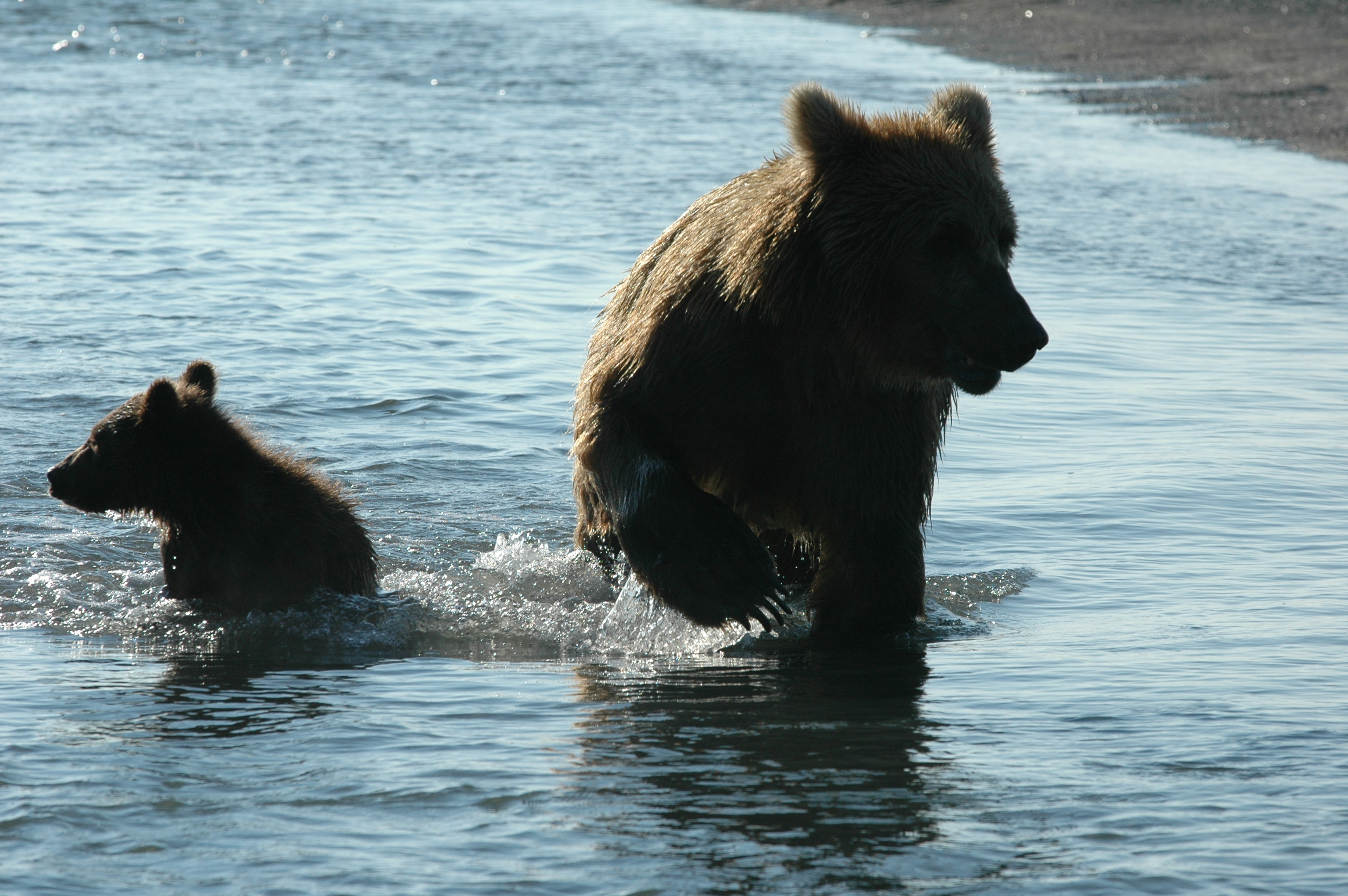
NHL Player’s Grizzly Shootout

September 5, 2013 Elana Pisani

(WILDLIFE/ANIMAL CRUELTY) CANADA — Another celebrity joins the likes of GoDaddy CEO Bob Parsons, the Trump sons, and musician Ted Nugent in their lack of civility and sense of entitlement when it comes to wildlife. Hockey player Clayton Stoner is in the news after pictures of him with a grizzly bear corpse he had hunted and killed was posted on social media sites. Stoner held the grizzly bear’s severed head and paws while smiling and posing for the camera. Although Stoner, who plays for the Minnesota Wild, had a legal permit for hunting, his actions and his attitude toward wildlife is appalling to animal rights activists and he makes no apologies. Read the full article for Stoner’s statement and sign the petition to ban grizzly bear hunting in British Columbia. — Global Animal

photo copyright Jim Robertson

photo copyright Jim Robertson

Time to Say, “Enough!”

…it took two hours after hooking the alligator using a crossbow before they could shoot it with a shotgun. It took four hours more to get it into the boat, but Brockman said it was too heavy to do with just the three of them, so they just waited in the middle of the river for the sun to rise. “We killed the alligator at 4 a.m.,” he said.
How is this shit even legal? Don’t non-humans have any rights at all? It’s time to reign in hunter behavior and say, “Enough!”
And why is NBC “News” glorifying it?…
Mississippi hunters catch record-breaking ‘gators
By Simon Moya-Smith, Staff Writer, NBC News

It’s only been three days since the start of Mississippi’s alligator hunting season, yet a pair of parties have already submitted two record-breaking ‘gators, state wildlife officials announced Monday.

Dustin Brockman of Vicksburg, Miss., ventured with his brother and friend into the Mississippi River by motorboat early Saturday night and emerged with a 727-pound record breaker that was 13 feet, 4.5 inches long.

The previous weight record was 697.5 pounds, according to Ricky Flynt, program coordinator with the Mississippi Department of Wildlife, Fisheries, and Parks.

“We chased him for about two hours,” Brockman said. “Then we got a shot on him.”

Brockman said that it took two hours after hooking the alligator using a crossbow before they could shoot it with a shotgun. It took four hours more to get it into the boat, but Brockman said it was too heavy to do with just the three of them, so they just waited in the middle of the river for the sun to rise.

“We killed the alligator at 4 a.m.,” he said. “We waited until 6:30 (a.m.) before I called three or four more guys to help us load it into the boat.”

And just one hour prior to Brockman’s epic catch, a hunting party led by Beth Trammell of Madison, Miss., hooked a 13-foot, 5.5-inch alligator near Redwood.

The Trammell party, which included six people, broke the previous weight record with their 723.5-pound catch and held the markbefore Brockman broke it 60 minutes later.

“It took about four hours to get it in the boat,” said Trammell. “We had to flag another boat down to help us out it was so big.”

Trammell said that when they had the hefty alligator hooked, their poles were bent like “candy canes.”

Mississippi Department of Wildlife, Fisheries, and Parks

Dustin Bockman of Vicksburg, Miss., and his team pose with the alligator they caught near the Big Black River in Claiborne County. The alligator is 13-feet and 4.5 inches in length and weighs 727 pounds.

The current length record, which has yet to be broken, is 13 feet, 6.5 inches. That alligator was captured on the Pascagoula River in 2008, according to the Mississippi Wildlife, Fisheries and Parks department.

Brockman, who had never hunted alligator before this weekend, said the majority of the hunting occurs at night when it’s easier to spot the reptiles’ eyes with a flashlight.

“It’s a lot easier to find them because their eyes reflect,” he said. “In the daytime, if they’re lying on a bank underneath the tree, you ain’t going to see them.”

Brockman said he plans to use the gator’s skin for a gun strap and a picture frame and will eat the meat after providing some to his friends.

Mississippi Department of Wildlife, Fisheries, and Parks

Beth Trammell of Madison, Miss., and her team pose with their catch Sept 1. The alligator is 13-feet and 5.5 inches and weighs 723.5 pounds. It broke the previous record of 697.5 pounds.

“We’re going to cook it for sure,” he said. “I got a bunch of people who want some, and there’s plenty for me and everybody else.”

Trammell said she plans to get the meat back from the processor as early as Friday.

“We’ll eat the meat,” she added. “I think my brother in law is going to get the head mounted.”

And the Trammell party will be back out on the water this weekend, hoping to catch another record breaker…

Anchorage sheep hunter rescued after Interior raft accident

Here’s one with a happy ending for all…

Sheep photo copyright Jim Robertson

Sheep photo copyright Jim Robertson

http://www.adn.com/2013/08/15/3025570/anchorage-sheep-hunter-rescued.html#storylink=cpy

The Associated Press August 15, 2013

FAIRBANKS, Alaska — A 56-year-old Anchorage man injured in a rafting accident near Delta Junction was rescued by the Alaska Air National Guard.

The Fairbanks Daily News-Miner reports Mike Vogel was on a sheep hunting trip Tuesday and rafting on the Gerstle River. He came out of the raft and was dragged behind it.

Vogel suffered broken ribs and a severed finger.

His hunting partner, 62-year-old Melvin Iler of Oregon, set up a fire and shelter for Vogel and then hiked 15 miles to the Alaska Highway, where he summoned help.

An Air National Guard helicopter found Vogel at 8:45 p.m.

He was taken to Fairbanks Memorial Hospital and treated for serious injuries.

The Air Guard says pilots had to contend with wildfire smoke limiting visibility to less than a mile.

Information from: Fairbanks (Alaska) Daily News-Miner, http://www.newsminer.com