Trophy hunting removes ‘good genes’ and raises extinction risk

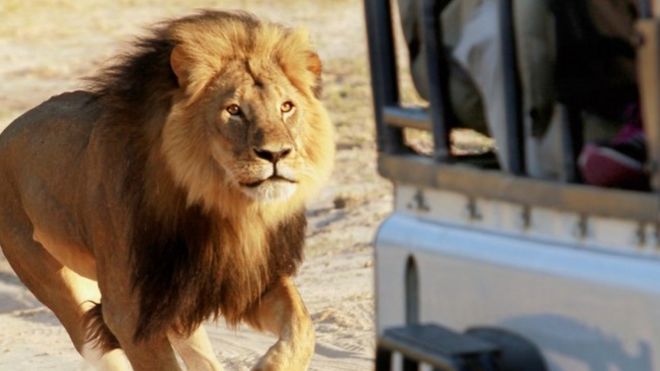
Cecil the lionImage copyrightGETTY IMAGES
Image captionCecil the lion, killed in 2015, was a major attraction at a national park in Zimbabwe. His black-fringed mane was an identifying characteristic

Hunting animals that stand out from the crowd because of their impressive horns or lustrous manes could lead to extinction, according to a study.

Research predicts that removing even 5% of high-quality males risks wiping out the entire population, for species under stress in a changing world.

Animals prized by trophy hunters for their horns, antlers or tusks usually have the best genes, say UK scientists.

Removing these could push a species over the edge, they warn.

There is intense global debate over trophy hunting. Some argue that it should be banned or restricted, while others say it can provide valuable revenue for conservation.

Dr Rob Knell of Queen Mary, University of London, who led the research, said the assumption that so-called selective harvesting is not especially threatening to a population of animals does not take into account recent work.

”Because these high-quality males with large secondary sexual traits tend to father a high proportion of the offspring, their ‘good genes’ can spread rapidly, so populations of strongly sexually selected animals can adapt quickly to new environments,” he said.

”Removing these males reverses this effect and could have serious and unintended consequences.”

Human hunting is different from natural predation in that big-game trophy hunters target large animals, usually males.

They may be awarded prizes for killing animals with exceptionally large antlers, horns or manes.

And illegal poaching of animals such as elephants for the ivory trade also targets animals with the biggest tusks.

Using a computer simulation model, the scientists were able to predict the impact of selectively targeting males on the basis of their secondary sexual traits.

”If the population is having to adapt to a new environment and you remove even a small proportion of these high quality males, you could drive it to extinction,” said Dr Knell.

”You’re removing the genes from the population that would otherwise allow the population to adapt.”

In the past, human hunting has led to the extinction of many animals, from the zebra-like Quagga, which was once common in Southern Africa, to the Tasmanian tiger of mainland Australia and Tasmania.

Hunting is still legal in many countries; trophy hunting takes place over a larger area in Sub-Saharan Africa than is conserved in national parks.

In the US and Canada, there is also a lucrative trophy hunting industry, for the likes of deer and big-horn sheep.

Some argue that revenue from trophy hunting can support conservation efforts and local livelihoods.

The scientists said age restrictions that allow males to breed before being removed could reduce the impact of trophy hunting.

This is already recommended with some species, such as lions.

“When properly regulated trophy hunting can be a powerful force for conservation which is why we’re suggesting a different management approach as opposed to calling for a ban,” said Dr Knell.

The study is published in Proceedings of the Royal Society B: Biological Sciences.

B.C. to end grizzly bear trophy hunting after this season

By Lisa Johnson, Bethany Lindsay, CBC News Posted: Aug 14, 2017 3:00 PM PT Last Updated: Aug 15, 2017 7:12 AM PT

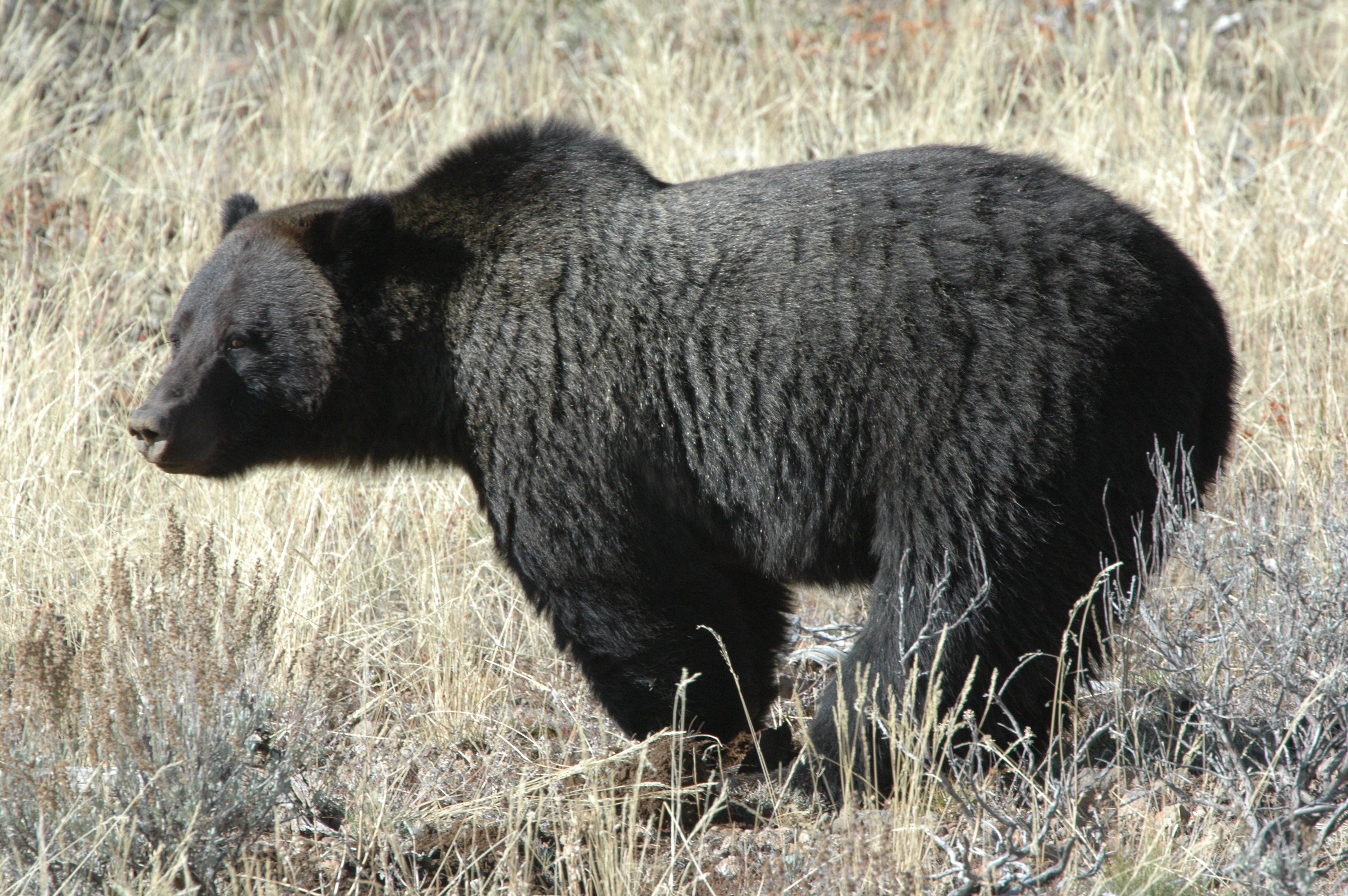
About 250 grizzly bears are killed in B.C. each year by hunters, according to the provincial government. Hunting the bears for meat will still be allowed outside the Great Bear Rainforest.

About 250 grizzly bears are killed in B.C. each year by hunters, according to the provincial government. Hunting the bears for meat will still be allowed outside the Great Bear Rainforest. (Mathieu Belanger/Reuters)

Related Stories

B.C’s new NDP government is ending the province’s controversial grizzly bear trophy hunt, saying British Columbians can no longer stomach the killing of grizzlies as trophies.

The ban will take effect Nov. 30, 2017, throughout the province — after this year’s season, which opens Tuesday in the Peace River region, and later elsewhere.

“It is time,” said Natural Resources Minister Doug Donaldson on Monday.

About 250 grizzlies are killed annually by hunters in B.C., a number Donaldson said is “sustainable” for the population estimated at 15,000 bears, but he said public opinion on the practice has turned.

“It’s not a matter of numbers, it’s a matter of society has come to the point in B.C. where they are no longer in favour of the grizzly bear trophy hunt.”

Grizzly bear buffaloberry bush

A grizzly bear eats buffaloberries. (Alex Taylor/Parks Canada)

The ban will also end all grizzly bear hunting in the coastal region known as the Great Bear Rainforest.

He said the ban isn’t taking effect before this season because there wasn’t time to give notice after the protracted B.C. election, which took place May 9 but didn’t produce a new government until mid-July.

Hunt for meat to be allowed

It’s not clear how many bears would be spared from hunting as a result of the ban.

Hunting bears for meat will be allowed, outside of the Great Bear Rainforest, and neither Donaldson nor ministry staff could say how many of the 250 grizzlies killed on average per year are killed for trophies.

When asked how hunting would be policed, Donaldson said the exact regulations would be determined following consultations with guide-outfitters and others between now and Nov. 30.

“There’s not going to be any loopholes,” he said.

“Hunters will no longer be able to possess the hide or the head or the paws of the grizzly bear.”

It’s not yet clear what hunters will be expected to do with those bear parts, but they would not be leaving the province, he said.

Bear 164

The grizzly bear trophy hunt has been controversial for years in British Columbia. (Dave Gilson/CBC)

The announcement shouldn’t be a surprise for those in the industry, said Donaldson.

“They knew this commitment was in our platform and they knew we were going to act on this commitment.”

Activists worry about ‘loophole’

The grizzly trophy hunt has long been the target of activists and conservationists, who applauded the NDP decision to end to all grizzly hunting in the Great Bear Rainforest.

But those same voices questioned the logic of allowing hunters to kill grizzlies for meat in the rest of the province.

Those critics include housing developer and art philanthropist Michael Audain, chairman of the Grizzly Bear Foundation. In March, the foundation released an 88-page report that included a recommendation to end the trophy hunt.

“My first reaction is one of delight,” Audain said Monday after the news was announced.

“At the same time, I must confess that we do have some concerns about whether the issue of packing the meat out … could become a bit of a loophole.”

Those concerns were echoed by Chris Genovali, executive director of the Raincoast Conservation Foundation.

“Virtually no one legitimately hunts grizzlies for food; killing these bears is strictly a trophy hunt,” Genovali said in a written statement.

Hunting guides disappointed

Meanwhile, B.C. Green Party Leader Andrew Weaver suggested the NDP’s measures don’t fully address the concerns of environmentalists or local hunters, who want to harvest all parts of the bears.

“I’m not sure how this will appease the concerns of anyone. It appears to me that the NDP were trying to play to environmental voters in the election campaign without thinking through their policies,” Weaver said in a written statement.

Mark Werner of the Guide Outfitters Association of B.C. said he was disappointed that his group wasn’t consulted extensively during development of the new regulations. He argued that the true threat to grizzly populations isn’t hunting.

“If you want to do something great for grizzly bears, let’s work on habitat. Shutting down small businesses in this province isn’t going to help grizzly bears,” Werner said.

With files from Rafferty Baker and Ash Kelly

http://www.cbc.ca/news/canada/british-columbia/plan-to-end-grizzly-trophy-hunting-in-bc-announced-1.4247060

The B.C. government has announced plans to end the controversial grizzly bear trophy hunt, following up on a campaign promise made before the election.

Calling all animal lovers: Trump’s sons are proud murderers of endangered species

CnxlOqgW8AATJy5_1_.jpg

Some people are posting this picture as a joke. Don Jr. bringing down an elephant (under highly controlled hunting) and cutting off its tail is kind of ironic. But it’s really just sick, down to the clean knife above.

Don Jr. made his big debut tonight and some say he made a big splash and helped “humanize” his father.  But he and his disgusting brother, Eric, deserve nothing but scorn for the series of wild animal kills that spread across Twitter tonight.

I was not aware of their depravity towards animals until tonight. The folks calling Don Jr. “Patrick Bateman” on Twitter were spot on.

From The Daily Beast:

Back in 2012, photos surfaced of the elder Trump’s sons, Donald Trump Jr. and Eric Trump, proudly posing with the carcasses of dead animals they hunted while on a big-game hunting expedition in Africa. The photos showed Donald and Eric posing with a lifeless cheetah, Donald clenching a knife along with the bloody, sawed-off tail of an elephant, and the pair posing next to a crocodile hanging from a noose off of a tree.

Here are Trump’s sons holding up a dead cheetah, all smiles:

How quickly the press forgot about Donald Trumps spoiled kids being exotic animal killers but I didn’t.

I guess this is the dead croc:

View image on Twitter
Horrible people doing horrible things,

More Daily Beast:

The Trump boys were hunting in Zimbabwe—the same country where Cecil was killed—and though Zimbabwean animal conservation groups looked into the incident, the hunt was deemed perfectly legal. Once the photos went viral online, Donald Trump Jr. tweeted (and then deleted): “Not a PR move I didn’t give the pics but I have no shame about them either. I HUNT & EAT game.”
Later, Donald Jr. clarified his thoughts on the big-game hunt in an interview with Deer & Hunting magazine in August 2012.

“I think what made it sort of a bigger story and kind of national and even global news was that I didn’t do what a lot of other people do, which is immediately start apologizing for what I am and that I’m a hunter and all this,” Donald Jr. told Deer & Hunter. “I kinda said, ‘No, I am what I am. I did all those things. I have no regrets about it.’”

Wednesday, Jul 20, 2016 · 12:16:27 PM PDT · kat68

CORRECTION: It has been noted several times in the comments that the Trump kids are holding up a dead leopard, not a cheetah. Apologies for the mistake. I relied on the news story instead of my own eyes.

Young Tumps Go a-hunting Again

Trump brothers’ hunting trip a cautionary tale on animal rights

https://cruxnow.com/commentary/2016/08/13/trump-bothers-hunting-trip-cautionary-tale-animal-rights/

Donald Trump’s sons are going hunting again.

Evidence of their previous exploits have made the rounds on the internet.

One of the most disturbing images was that of Donald Jr. posing for a photo with an elephant tail in one hand and a knife in the other. Most Americans are against big game trophy hunting (86 percent disapprove, with nearly 60% claiming it should illegal), but this photo provoked particular outrage.

And how could it not? Elephants are some of the most sophisticated and interesting creatures God has made. Everyone knows about their amazing memories and intelligence, but did you know they recognize themselves in a mirror, thus proving self-awareness? That they develop deep friendships, not only with each other, but sometimeswith other animals?

Did you know they even mourn their dead, returning to the grave-sites of deceased relatives and friends to handle their bones?

For the last couple generations, animal activists have blamed religious traditions as bearing particular responsibility for ideas and practices which could lead to treating these animals as mere things to do with as we please. But this couldn’t be further from the truth, and even animal activists like Peter Singer now see religious traditions as allies in the fight for animal protection.

This is not surprising when we consider that gross mistreatment of animals took place long before religion was on the scene in the development of Homo sapiens, and it is driven today mostly by what Pope Francis calls the secular “use and throw-away culture.”

There is no sense in which our secular culture formed the Trump boys to understand that these creatures are gifts from God, and that God limits our use of them to such that it fits within a divine plan.

No, instead animals are understood to be mere things or products bought and sold in a marketplace. If you’ve got the money-as the Trumps surely do-then you can even use elephants and throw them away.

I’ve tried to raise awareness about how the Roman Catholic moral tradition critiques contemporary practices when it comes to how we treat animals, but I’ve focused mostly on how we eat. The one good thing to come of the Trump bros killing these animals is that it has raised cultural awareness with regard to a different set of practices.

It is interesting to note that the Church has, over the centuries, fairly consistently condemned sport hunting of animals as against God’s plan for creation. Recall that in the first pages of the Bible, all animals (human and non-human) in Eden were vegetarian, and animals were brought to Adam “because it was not good man should be alone.”

After sin enters the world, God gives limited permission to eat animals in Genesis 9, but early Christians understood that this permission did not extend to other practices. Recall, for instance, that Christians were forbidden from attending the Roman games when animals were slaughtered merely for the blood-thirsty entertainment of the crowd.

In Jerome’s commentary on Psalm 90, he equated Esau’s sinfulness with his being a hunter, and claimed that in “the Holy Scriptures we do not find any saints who are hunters.” St. Cyril of Jerusalem specifically called sport hunting “the pomp of the devil,” and urged fellow Christians to avoid even watching it, much less participating in it.

The Catechism of the Catholic Church teaches that Catholics may use animals for things like food and clothing, but with two important restrictions. First, we must treat animals with kindness. Second, we must never “needlessly” cause them to suffer or die.

Whatever one thinks about the broader discussion of how we treat animal protection, and more complex questions about the morality of our eating habits, the morality of sport hunting is cut and dried. Because it is done for entertainment, and not anything remotely resembling need, it is immoral. Period. End of story.

The Catholic Church is a powerful witness to the protection of vulnerable and voiceless life in other moral and legal contexts. We should also honor the parts of our tradition and teaching, which call us to be a voice for the vulnerable and voiceless animals killed by the likes of the Trump brothers.

Stop the Massacre of Grizzly Bears in British Columbia, Canada. Stop the Grizzly Bear Hunt

Photo Copyright Jim Robertson

Photo Copyright Jim Robertson

People come to BC to hunt the grizzly bears on the estuaries where they are feeding, this is not sport. They shoot the eating bears from boats, take a paw or two and the head and leave the rest to rot on the estuary. Grizzly bears are already threatened in BC. The First nations People are against this hunt, the majority of the people in the province are against this hunt but the BC Liberal Government headed by Christie Clarke refuses to deal with the issue. The Guide and Outfitters Association of BC, the B.C. Wildlife Federation, Ducks Unlimited and the Canadian Wildlife Federation are in fact powerful pro-hunting political lobby groups. The government of BC & Ms Clark is afraid to stand up to them because the Liberal Party will lose much needed cash in the form of political donations from these organizations. The solution is to get as many names as possible and contact the Premier of the Province of BC and demand that she stop the Grizzly Bear Hunt.

Sign the Petition: https://secure.avaaz.org/en/petition/Stop_the_Massacre_of_Grizzly_Bears_in_British_Columbia_Canada_Stop_the_Grizzly_Bear_Hunt/?siRxqdb

The economics and ethics of trophy hunting

BY JUDITH LAVOIE, MARCH 2014, FOCUS ONLINE
Studies call into question BC Liberals’ plans to expand bear hunting.
The magic of watching black bears overturning rocks and scooping up crabs on a Tofino beach, the once-in-a-lifetime excitement of seeing a Spirit Bear near Klemtu or witnessing the awe-inspiring power of grizzlies feeding on salmon in the Great Bear Rainforest are vignettes of BC that both tourists and residents carry close to their hearts.
So it is not surprising that a study by the Center for Responsible Travel at Stanford University in Washington concludes that live bears are worth more in cold, hard cash than dead bears. Not surprising, that is, to anyone except BC’s provincial government.
Instead of boosting the profitable business of bear viewing, the government is looking at extending the length of the spring black bear hunt and is re-opening the grizzly hunt in three areas of the Kootenays and one in the Cariboo—all formerly closed because of over-hunting.
Another indication of where provincial sympathies lie came during the first week of the spring sitting of the Legislature, when government introduced changes to the Wildlife Act—changes that will allow corporations, not just individuals, to hold guide outfitting areas, making it easier for a group of people to jointly purchase territories and reducing liability for individual owners. Assistant guides will no longer have to be licensed, allowing guide outfitters more flexibility during peak periods, something the industry says will reduce red tape.
Forests, Lands and Natural Resource Operations Minister Steve Thomson said in the Legislature, “Proposed amendments to the Wildlife Act will help provide the guide outfitting industry, an industry that generates $116 million in economic activity each year, with additional business certainty.”
What he didn’t note is that bear viewing is far more lucrative for BC. In 2012, the Center for Responsible Travel found that bear viewing in the Great Bear Rainforest generated 12 times more in visitor spending than bear hunting and 11 times more in direct revenue for the BC government than bear hunting by guide outfitters—$7.3 million for bear viewing and $660,500 for non-resident and resident hunting combined. As for jobs, bear-viewing companies in the Great Bear are estimated to seasonally employ 510 people while guide outfitters generate only 11 jobs.
Despite such statistics and a growing antipathy to allowing well-heeled hunters to slaughter top predators for the sake of a rug on the floor or head on the wall (a 2013 poll found 88 per cent of BC residents opposed trophy hunting, up from 73 per cent in 2008), the government seems determined to expand the hunt.
Russ Markel of Outer Shores Expeditions, a company that takes tourists to wild areas of BC’s coast on a wooden schooner, feels trophy hunting adversely affects bear tourism, so expanding hunting could adversely affect his—and government—revenues. Markel can’t keep up with the demand for trips now, but an incident near Bella Coola last May left tourists shaken. “It was a horrible situation. People used the area for bear viewing and so the bears got used to it and then some random guy with a rifle turned up and a bear was killed,” he said.
The Guide Outfitters Association of BC, however, states: “Guide outfitting and wildlife viewing have co-existed for two decades and can continue to do so…It is important we separate the emotion from the science.”
But the science is not settled and there is long-standing controversy over the accuracy of population estimates and veracity of kill numbers.
Grizzly bears are listed federally as a species of special concern. Yet in BC, between 2001 and 2011, out of an estimated population of 15,000 bears, more than 3500 animals were killed, including 1200 females, according to a Raincoast Conservation Foundation study. More than 2800 of those animals, including 900 females, were killed by trophy hunters. Others were killed by poachers, accidents or conservation officers.
A Ministry of Forests, Lands and Natural Resource Operations spokesman said in an email that the decision to re-open hunts is based on the best available science and is focused on areas where increasing grizzly populations can sustain a conservative hunt. A recent peer-reviewed study, co-authored by two provincial wildlife biologists, re-affirmed that grizzly populations are being sustainably managed.
But Raincoast Conservation senior scientist Paul Paquet scoffs at such claims. “Regional kill rates for sub-populations that are being hunted are much higher and not sustainable,” said Paquet, who co-authored a paper showing that, over the last decade, kills frequently exceeded targets.
As for black bears, the province estimates there are 120,000 to 160,000 black bears in BC and the harvest in 2012 was 3876—a number based on a sample survey of hunters—which is well below the sustainability level, said the ministry spokesman.
Raincoast Conservation executive director Chris Genovali questions the numbers and said kill numbers could be much higher. “They shouldn’t be considering extending the season when they have no reliable or accurate estimate of the number of black bears in BC. That’s disturbing,” he said.
NDP environment critic Spencer Chandra Herbert is also uncomfortable with government numbers. “Government does not have the evidence to back up what it’s doing because it has cut about 25 percent of the folks who would be out counting bears, looking at habitat issues, and enforcing poaching laws,” he said. But Chandra Herbert stopped short of committing the NDP to ending the trophy hunt. “We would actually do the science,” he said.
Growing awareness of the trophy hunt is fuelled by media pictures of slain bears and anyone picking up a hunting magazine is bombarded by images of jubilant hunters trying to make the animal they have just blown out of existence appear lifelike.
Barb Murray of Bears Matter, a group spearheading a petition asking the province to end the hunt, said, “We have wealthy people from the US and China coming to BC to kill our biggest and best.”
As pressure mounts for a close look at the ethics and rationale of trophy hunting, many question government’s insistence on continuing and expanding the hunt. Is it a leftover from the Liberal’s 2001 decision to immediately scrap an NDP-imposed moratorium on grizzly hunting or pressure from interest groups?
“Given widespread public disapproval for this ethically and culturally unacceptable trophy hunt, current provincial management of grizzlies seems to be driven more by bad political science than good biological science,” said Genovali.
Change may lie in the hands of First Nations. In 2012, Coastal First Nations banned trophy hunting in the territories of nine member nations—an area covering most of the Great Bear Rainforest—but the province continues to claim jurisdiction.
Heiltsuk tribal councillor Jess Housty hopes the recent economic study will bring change. “Last fall we learned the science used to justify the bear hunt is deeply flawed. Now we see the economics are completely backwards,” she said.
Coastal First Nations are trying to educate hunters, including approaching them in the field. “If the Coastal First Nations’ Bears Forever campaign has taught trophy hunters anything, I hope it’s that 9 out of 10 British Columbians support the Nations on the front line and that their unethical and unsustainable practice of killing bears for sport will no longer happen in the shadows,” Housty said.
The First Nations campaign complements Raincoast Conservation’s effort to buy up guide-outfitting licences, which, so far, has eliminated trophy hunting in about 30,000 square kilometres of the BC coast.
Another tactic is pressure on other countries. In 2004, after intense lobbying from NGOs, the European Union banned importation of grizzly bear parts and the ban stands today, despite challenges by the federal and provincial governments.
Meanwhile, Barb Murray of Bears Matter is pinning her hopes on local pressure. “The senseless killing of grizzly bears is morally indefensible and has no place in modern wildlife management practices and policies. Killing these magnificent creatures for sport and bragging rights does not, in any way, contribute to the conservation of the species or increased safety for humans,” says the petition going to Premier Christy Clark.
http://www.focusonline.ca/?q=node/691

Photo Copyright Jim Robertson

Photo Copyright Jim Robertson

Wyoming man’s trophy display shows passion for hunting

http://trib.com/lifestyles/recreation/wyoming-man-s-trophy-display-shows-passion-for-hunting/article_b79ae5fd-e079-5ada-ba80-d00c53e971c6.html

By EVE NEWMAN Laramie Boomerang Casper Star-Tribune Online
12 hours ago  •  By EVE NEWMAN Laramie Boomerang

By EVE NEWMAN Laramie Boomerang

LARAMIE — It’s called the trophy room, and it sits on the west side of the longtime west Laramie business, The Boardwalk.

Inside, more than 50 trophies of all shapes and sizes are mounted on the wall and displayed in cases, along with saddles, antique guns, American Indian artifacts and family heirlooms. The room is open to visitors who pass through the store.

Owner William “Rob” Vogel, an Albany County native, has run the family business for more than 45 years. The trophy room is his museum of memories, and it shows off his passions for hunting and history.

“Some of my most fond memories of my younger life were getting out. No telephone, no cars, no nothing,” he said. “I have a lot of good memories.”

Vogel, 63, was born in Rock River, where his father, Bud, served as mayor and ran a lumberyard and motel. His grandfather homesteaded near Arlington, where his grandmother was the postmistress.

The Vogels moved to Laramie in the 1960s and opened The Boardwalk in 1967, remodeling the original building and constructing additions as they expanded. Inside, custom woodwork adorns the rafters and doors. A back room with one wall made of logs reflects the teenage Vogel’s desire to live in a log cabin, his wife, Crystal, said.

Today, the Vogels sell and repair saddles and tack, repair shoes and boots and run a Western-themed gift shop.

In the trophy room, a collection of rifles dating back to the 1800s hangs on one wall. One belonged to Vogel as a child living on a Rock River ranch. His mother gave him five bullets at a time, and he had to make them count.

“I couldn’t just shoot them all up. There were a lot of jackrabbits around the ranch, and they’d just eat you out of house and home. I had to shoot a couple of jackrabbits,” he said.

His first antelope is mounted high on the wall near the entrance. He got that one when he was 16, hunting with his grandfather.

Vogel said he enjoys hunting antelope. Another half dozen antelope trophies are prized for their size or unique horns.

“It’s something there’s a lot of, and they’re a lot of fun to hunt,” he said. “You see them within 20 feet of your vehicle when it’s not hunting season, and then when it comes to hunting season, then they’re a long ways out there.”

One display case shows a couple beavers and a muskrat.

“I got the beaver and the muskrat right here on the Laramie river north of town,” Vogel said.

Another display shows a coyote fighting a badger. Vogel and his father created them to show authentic Western scenes.

“That’s one thing you see in Wyoming. That was one of our first scenes that we put together,” he said.

On the wall one can also see black bear, mule deer, elk, caribou, buffalo and wolverine. A Dall sheep and a bighorn sheep both came from hunting trips to British Columbia.

A moose from Canada represents one his most memorable hunts. He shot the bull about 15 miles from a hunting camp in northern British Columbia after tracking it for two days.

“We were out in the middle of the boonies,” Vogel said.

He returned the following day with four pack horses to bring the moose back to camp. It yielded more than 500 pounds of meat in addition to the trophy. Vogel spent the whole day loading the animals and headed for camp that night in calf-deep snow that had started at noon and was still coming down.

On the way back, the pack horses were acting up, so he retraced his steps to see what was bothering them.

“We went through a little park, and I went to my back mule and was looking around, and I saw what looked like little flickers of things,” he said.

It was a pack of wolves.

Wolf permits were easy to come by in Canada, and Vogel shot the lead male first, hoping it would disperse the rest.

“He was a big boy. I saw him and thought that would run them off, and it didn’t run them off,” he said.

Then he shot the alpha female and the rest left. Those two wolves, one black and one white, are now on display at the back of the trophy room.

One of the newest trophies in the room is a European skull mount of an antelope, taken just a few years ago. A photo above the mount shows Vogel with a group of friends. In this photo, Vogel is sitting in a wheelchair.

When he was 36, a motorcycle accident left him paralyzed. It didn’t take his ability to hunt, though, thanks to a device that mounts to his wheelchair and steadies the rifle.

“I still hunt antelope. I like target shooting a lot,” Vogel said.

Vogel said his trophies aren’t the biggest you’ll ever see, but that’s because he’s never done a hunt just for the size of the antlers.

“They were all meat hunts. My moose is a good moose, but he’s not gigantic,” he said.

The trophies also honor his father, who grew up hunting to feed his family.

“My father, he always wanted that kind of stuff and he was never able,” Vogel said, referring to the trophies. “He hunted to survive.”

Five Year Old Mississippi Girl Among Kids Hooked on Killing

Youth get hooked on hunting

Nov. 16, 2013

1117youth01.jpg

[This is like something out of the movie Exorcist.]
Payton Heidel, 5, of Yazoo City harvested a 9-point deer on the opening weekend of youth deer season.  /  Special to The Clarion-Ledger

Written by
Brian Albert Broom

For many Mississippi hunters, the start of deer season is possibly the most anticipated day of the year. But when youth season opens, it is often an event that produces memories that last a lifetime.

Last weekend’s youth season opener didn’t exactly start as planned for Hays Heidel of Yazoo City. Heidel said he and his daughter, Payton Heidel, 5, had practiced together before the season to get her comfortably shooting reduced recoil ammunition in her 7-08 rifle. But when the big day came, she wasn’t very cooperative.

“She said she didn’t want to get up because she would be grouchy,” Heidel said.

Heidel let her sleep, but as he was having a cup of coffee and looking over a lake on his property, he saw a doe in the distance. Heidel woke his daughter again, but this time, she was ready.

Sneaking within shooting range, Heidel got his daughter set up for a solid shot and with the crosshairs on the doe, Heidel gave her the OK.

“As soon as I clicked off the safety she shot the deer. POW!,” Heidel said. “She about scared me to death.”

The practice paid off and the two were soon following a blood trail. “When she saw the deer she threw her hands up and hugged my leg,” Heidel said. “To see that little girl’s smile — she was tickled to death to see that deer.”

The following afternoon, Payton Heidel made a repeat performance and harvested a 9-point. Heidel thinks he has a hunter for life and added, “I wouldn’t have it any other way.”

Glen Lewis, 6, of Brookhaven, also had success. Lewis had also been practicing shooting with his father, Keith Lewis, and when the time came he knew what to do.

Lewis said his son dropped his first doe with a 115-yard shot and the excitement went into overdrive. “Oh my word,” Lewis said. “I think he called every family member we know.”

Lewis said since then, his son has asked to go hunting every afternoon. “He’s got deer fever now,” Lewis said. “He’s hooked, definitely.”

According to Lann Wilf, Deer Program Leader for the Mississippi Department of Wildlife, Fisheries and Parks, most areas of the state experienced a good level of success.

“Countless does were taken, lots of first deer and several bucks,” Wilf said. “Some places knocked it out of the park.”

As productive as the past week has been, Wilf said the coming gun season could be one of the best in years.