Exposing the Big Game

Forget Hunters' Feeble Rationalizations and Trust Your Gut Feelings: Making Sport of Killing Is Not Healthy Human Behavior

Exposing the Big Game

Interior Secretary Ryan Zinke’s Hunting And Fishing Revival

https://www.nraila.org/articles/20170912/interior-secretary-ryan-zinkes-hunting-and-fishing-revival

TUESDAY, SEPTEMBER 12, 2017

Interior Secretary Ryan Zinke's Hunting And Fishing Revival

Interior Secretary Ryan Zinke is leading a revival. It’s not the kind that occurs under a big tent full of folding chairs, fiery sermons, and hallelujahs, but the kind that occurs when hunters, fishermen, and outdoorsmen in general feel liberated from the shackles of an overbearing federal government; when they experience anew the freedom to take their guns and gear into America’s wild places and fish and hunt the way their fathers and grandfathers fished and hunted before them.

Zinke set the tone for this revival on his first day as Interior Secretary. He did so by repealing the Obama administration’s lead ammunition ban—a ban which served as a last slap in the face to hunters and fishermen everywhere.

The Obama-era ban was contained in National Fish and Wildlife Service’s Director’s Order 219. The order came from Director Dan Ashe and required regional directors to work with state-level agencies to begin phasing out the use of lead ammunition on federal land. This included requiring the “Assistant Director, Migratory Birds, in consultation with National Flyway Councils and individual states, … [to] establish a process to phase in a requirement for the use of nontoxic ammunition for recreational hunting of mourning doves and other upland game birds.”

The Obama administration avoided calling the order an all-out ban by fashioning it so that its implementation occurred over a period of time rather than all at once.

On March 3, 2017, Breitbart News reported that Zinke had repealed the ban and that the repeal was one of his first actions as interior secretary.

The reason Zinke made this one of his top priorities upon taking office is that he understands that hunters and fishermen are a crucial part of wildlife conservation: They preserve a balance in nature whereby fish and wildlife are kept at sustainable levels, rather than being able to overpopulate and ruin food supplies and habitat. And he also understands that hunters and fishermen bring a tremendous amount of money into the U.S. economy annually.

On Sept. 1, 2017, Fox News published a column by NRA-ILA’s Chris W. Cox, in which Cox observed:

Zinke knows that America’s hunters and anglers are the backbone of successful fish and wildlife management in the United States. In 2016 alone, $1.1 billion in hunter and angler excise revenues was invested by the 50 state fish and wildlife agencies to fund wildlife projects benefiting all wildlife—game and non-game species alike.

Crucially, Zinke also acknowledges the role hunting and fishing play as traditions in America. For example, a childhood in a state like Kentucky is marked by the time a son and his father spend getting ready for hunting season. They plan the hunt, tend the food plot, build the tree stand, study the movement and habits of the deer, then go out on opening day intent on bringing home food the family can eat and stories the father and son will share for the rest of their lives.

Cox put it this way:

[Zinke] also understands … within our own local communities, hunting and angling is an important tradition that’s often passed down through the generations and enjoyed by the entire family, helping to forge lifelong support of wildlife conservation and the full appreciation of our fish and wildlife resources.

In short, Zinke’s convictions about the importance of hunting and fishing mean more opportunities for outdoorsmen. This is seen via announcements like the Department of the Interior’s Aug. 9, 2017, announcement that Secretary Zinke was expanding “hunting and fishing opportunities at 10 national wildlife preserves.”

This expansion will result in responsible conservation practices, money for the U.S. economy and traditions that link generations together over time.

Wild horses escape the chopping block in spending bill

 https://www.washingtonpost.com/news/animalia/wp/2018/03/22/wild-horses-escape-the-chopping-block-in-spending-bill/?utm_term=.be701aadc7c2
 March 22 at 2:52 PM 

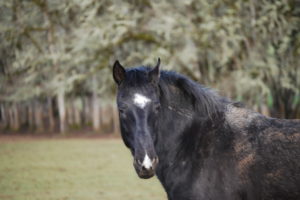
Wild horses run south of Garrison, Utah. (Jim Urquhart/Reuters)

Among the winners in a $1.3 trillion spending bill congressional leaders agreed to Thursday: wild horses.

Negotiators said nay to a House proposal to allow the culling of tens of thousands of horses and burros that roam the West or are held in government-funded corrals and ranches. Proponents of the idea, including its sponsor, Rep. Chris Stewart (R-Utah), described “humane euthanization” as a last-ditch tool for controlling an escalating equine population that is degrading public land and causing horses to starve.

But the proposal was vigorously opposed by wild horse advocacy groups, which have long resisted efforts to limit the federally protected animals that have become symbols of the American West. The groups accuse the Bureau of Land Management, which manages the wild horse and burro populations, of bowing to demands from cattle ranchers who view equine herds as competitors on grazing land.

“We are thrilled that Congress has rejected this sick horse slaughter plan,” Marilyn Kroplick, president of the animal rights group In Defense of Animals, said in a statement that claimed horse lovers had “jammed Congressional phone lines with calls and sent tens of thousands of emails” to make their case.

The 1971 Wild Free-Roaming Horses and Burros Act gave the animals federal protections, and it also permitted the interior secretary to sell or euthanize older and unadoptable animals. But for much of the past three decades, Congress has used annual appropriations bill riders to prohibit the killing of healthy animals and any “sale that results in their destruction for processing into commercial products.”

In July, however, the House Appropriations Committee voted to remove Interior Department budget language banning culls. Stewart said at the time that the proposal would not permit horse sales for commercial processing — including for meat. The last U.S. horse slaughterhouse closed in 2007, but meat-processing plants in Mexico and Canada slaughter tens of thousands of domestic American horses each year for export to Europe and Asia. A Senate proposal retained the protections.

Although the spending bill negotiated this week keeps horses off the chopping block, it does not put forward solutions to what people on all sides of this heated issue agree is a problem. About 46,000 wild horses and burros are in corrals that cost the BLM nearly $50 million to maintain each year, and 73,000 others run free in western states. That’s nearly three times the 27,000 animals the bureau says the land can sustain. Horse advocacy groups say that reducing the free-roaming herds to that figure would risk their extinction.

Adoptions, which have been the bureau’s primary tool for shrinking the population, totaled just 3,517 in 2017. Among other proposals, horse activists have called for wider use of contraception, which skeptics say would be impractical for large-scale reductions.

Neither the BLM nor Stewart’s office responded to requests for comment on the spending bill. In a New York Times column in December, the lawmaker described himself as a horse lover but lamented the funding for corralled horses, saying it would total $1 billion over the animals’ lifetimes.

“That’s $1 billion we could otherwise spend on defense, education, job training or any other worthy cause,” Stewart said. “But the alternative for these horses is starving in the wild.”

The House passed the spending bill Thursday, and the Senate has until midnight Friday to give its approval and avoid another government shutdown. But the battle over the nation’s wild horses will continue. The Trump administration’s fiscal 2019 budget calls for doing away with the usual rider that prevents their sale or killing in favor of allowing the bureau to use a “full suite of tools” to manage the herds.

Read more: 

Wild horses could be sold for slaughter or euthanized under Trump budget

Rumor has it the government is going to kill 45,000 horses. Here’s the reality.

This gorilla doesn’t like getting his hands muddy, so he walks like a human, zoo says

Could a bear break into that cooler? Watch these grizzlies try.

Conservation groups sue to overturn trophy hunting decision

(CNN)Several animal conservation groups are challenging in court the Trump administration’s recent decision to consider big game trophy import applications on a case-by-case basis.

The groups — which include the Center for Biological Diversity, Humane Society International and Humane Society of the United States — said Tuesday that they are asking a federal court in Washington, DC, to rule that the US Fish and Wildlife Service did not follow the proper process to make its March 1 decision, which withdrew a series of Endangered Species Act findings that apply to some African elephants, lions and bontebok, a type of antelope.
The groups also say the decision violates the Endangered Species Act.
Justice Department spokesman Wyn Hornbuckle told CNN that the department is reviewing the amendment complaint.
Tuesday’s filing amends a lawsuit the conservation groups filed in November, when the FWS, under Interior Department Secretary Ryan Zinke, announced it would accept applications on elephant trophy imports from Zimbabwe and Zambia.
In November, President Donald Trump then ordered that decision be blocked and called trophy hunting a “horror show.”
In December, a federal appeals court ruled in a separate trophy hunting case brought by proponents of the practice, including Safari Club International, ordering FWS and the Department of Interior to reconsider past decisions on trophy imports.
And a few days after the March 1 decision, Zinke told Congress no applications have been approved under the case-by-case guidelines.

Born Free USA Sues Administration Over Lack of Transparency on Newly Appointed Council that Promotes Trophy Hunting

http://www.bornfreeusa.org/press.php?p=6340&more=1

Leading nonprofit animal rights organization files complaint against the U.S. Fish and Wildlife Service over neglected Freedom of Information Act (FOIA) request regarding the recently formed International Wildlife Conservation Council (IWCC)

Washington, D.C. — Born Free USA, a global leader in animal welfare and wildlife conservation leading the charge against the outdated and brutal sport of trophy hunting, today filed a complaint against the U.S. Fish and Wildlife Service. The suit, filed over a neglected Freedom of Information Act (FOIA) request about the newly formed International Wildlife Conservation Council (IWCC), also argues that the council was formed under the guise of conservation with no balanced perspectives on the negative impact of international trophy hunting.

The IWCC, which was announced on November 8, 2017, was created, to “… advise the Secretary of the Interior on the benefits that international recreational hunting has on foreign wildlife and habitat conservation, anti-poaching and illegal wildlife trafficking programs, and other ways in which international hunting benefits human populations in these areas.” Born Free submitted a FOIA request seeking information related to the duties of the IWCC, the circumstances under which it was established, and under what criteria its members were to be selected. To date, the U.S. Fish and Wildlife Service has not provided a single piece of information, ignoring a deadline imposed by the law and its own self-extended deadline.

“In creating the IWCC to advise on the ‘benefits’ of Americans going abroad to hunt, the Department of the Interior is operating under the premise that trophy hunting has significant benefits for wildlife conservation,” said Prashant Khetan, CEO and general counsel for Born Free USA. “In truth, trophy hunting does virtually nothing to aid conservation efforts. It appears this administration is set on pushing a pro-hunting agenda, apparent not just in the aims of the IWCC, but also evident in its membership. The vast majority, if not all, of the IWCC members represent pro-hunting organizations.”

The IWCC will hold its first public meeting this Friday, March 16, just days after the administration lifted trophy hunting bans put into place during President Obama’s tenure.

The FOIA submitted by Born Free was an active step towards finding out more about the IWCC’s formation and purpose. According to the complaint, “… the members of the IWCC have now been made public, which includes officers of Safari Club International and National Rifle Association. Given these entities’ close relationship with Secretary Zinke, including support during campaigns, it is perhaps not surprising that FWS [U.S. Fish and Wildlife Service] has been pushing a pro-hunting agenda, including the creation of the IWCC. It also is not surprising that FWS has chosen not to be transparent about the IWCC prior to its first public meeting.”

“We will have a representative in attendance who, with several other groups, intends to read a statement to the IWCC challenging its purpose,” Khetan said. “In addition, we reached out to our base for their comments/questions about the IWCC and, in a span of days, received over 600 responses, which we collated and submitted on their behalf – the central theme being that hunting does not constitute compassionate conservation. We believe, and have the facts to support the idea, that killing is not conservation. The species that will be most affected, including lions, elephants and white rhinos, are already in such decline that hunting them under the guise of conservation is no longer a valid excuse.”

About Born Free USA
Born Free USA, a national 501(c)(3), believes that every individual animal matters. Inspired by the Academy Award®-winning film Born Free, the organization works locally, nationally, and internationally on the conservation frontlines, in communities, classrooms, courtrooms, and the halls of Congress, to end wild animal cruelty and suffering, and protect threatened wildlife.

Launched in 2002, Born Free USA was inspired by Virginia McKenna and her (late) husband Bill Travers, who, along with their son, Will, founded The Born Free Foundation (UK) in 1984. Their experience in Kenya filming the classic 1966 Academy Award®-winning film Born Free, the story of Joy and George Adamson’s fight to successfully return Elsa the lioness to a wild and free life, launched the couple’s “compassionate conservation” movement, aimed at keeping wildlife in the wild. This movement continues to motivate millions of followers and activists across the globe. In 2007, Born Free USA merged with the Animal Protection Institute.

To support Born Free USA and make a donation, visit http://bit.ly/WildlifeDonation.

Follow or friend us at: www.bornfreeusa.orgwww.twitter.com/bornfreeusawww.facebook.com/bornfreeusawww.instagram.com/bornfreeusaorg.

Conservation groups oppose pro-hunting slant of new Trump admin panel

US to allow some imports of elephant trophies 01:48

(CNN)Members of a new Trump administration pro-hunting council met Friday for the first time, drawing objections from other conservation groups that say hunting is not the answer to saving big game species.

Hunters and supporters of trophy hunting hold nearly every seat on the International Wildlife Conservation Council, which Interior Secretary Ryan Zinke created to advise him on “the conservation, wildlife law enforcement, and economic benefits that result from US citizens traveling to foreign nations to engage in hunting.”
Several members spoke in favor on Friday of trophy hunting in certain regions of Africa and Central Asia, saying it provides important funding for conversation efforts.
“Hunting is the crux of all of this. Without hunting, there is no other industry there,” said member Cameron Hanes, a member of the council who’s a bow hunter. “The messaging is what’s poor. To me, hunters haven’t done a very good job of it.”
Conservationists who oppose trophy hunting say the panel is one-sided.
“Noticeably missing from this council are qualified representatives of the broader conservation community with scientific credentials and direct experience with the management of successful conservation programs,” said Masha Kalinina of Humane Society International.
She spoke during a portion of the meeting reserved for public comment; her group is not represented on the council.
Peter LaFontaine, of the International Fund for Animal Welfare, said he had nominated a member for the council who was not accepted. The group is a “really strange way to focus on conservation,” he said.
The council includes the president of Safari Club International, a pro-hunting group that gives awards for trophy animal kills; an official from the National Rifle Association; several self-described hunters; and two hunting-oriented television personalities.
Members selected as their chairman Bill Brewster, a former Democratic congressman from Oklahoma. A 2014 profile of Brewster in the NRA publication American Hunter notes he has hunted in all 50 states.
“There is a conspicuous conflict of interest concern hanging over this council,” Kalinina said. The businesses of many members, she said, would benefit from relaxed regulations on hunting, such as imports of trophies like African elephants and lions.
The issue of trophy hunting was cast in the spotlight in November, when the Fish and Wildlife Service under Interior Secretary Ryan Zinke decided to overturn an Obama-era ban on importing elephant trophies from Zimbabwe and Zambia to the US.
After the issue made headlines, President Donald Trump announced he was putting the decision “on hold” to review the “conservation facts.” He later called trophy hunting a “horror show.”
Earlier this month, the Department of Interior reacted to a court order by saying it will consider big game trophy imports from several African countries on a “case-by-case” basis.
The department has not yet issued any trophy permits under that policy, Zinke told Congress at a hearing this week.

More on Zinke’s “wildlife council” (from DOW)

This Friday, Secretary of the Interior Ryan Zinke is holding the first meeting of his newly-established International Wildlife Conservation Council. This “wildlife council” is nothing more than a thinly veiled attempt to promote the international sport trophy hunting industry under the guise of wildlife conservation. In fact, Secretary Zinke’s firing squad of council members holds deep ties with the National Rifle Association and other weapons and trophy hunting organizations.

There is not a single responsibility of this council that is truly focused on wildlife conservation. Instead, it’s all about making it easier to hunt and import trophies. But Secretary Zinke would like to have you believe that this group is dedicated to protecting international wildlife.

IWCC

These photos are of actual council members that make up Secretary Zinke’s inner circle of advisors who would like to convince the American public that this…

Stuffed Cape Buffalo Head (c) CC Lord Mountbatten

…is the best way to further international wildlife conservation and law enforcement.

This killer council isn’t fooling anyone. Secretary Zinke is only interested in bringing together a cohort of hunting buddies to legitimize the killing of rare wildlife for the sake of entertainment – and to make it easier to collect these “trophies.”

Give today! Your urgent donation will help us fight back against Secretary Zinke and this administration’s war on wildlife.

Sincerely,

Jamie Rappaport Clark
President, Defenders of Wildlife

Everything to Know About Trump’s New Trophy Hunting Council

(C) Elizabeth Heyd

In early November—the same week the Trump administration announced its disastrous decision to allow elephant and lion trophy imports from Zimbabwe and Zambia—the administration decided to create an advisory committee, the International Wildlife Conservation Council (IWCC), to advise Trump on how to enhance trophy hunters’ ability to hunt internationally.

Yup, that means the administration now has a council dedicated exclusively to promoting the killing of more imperiled species, like elephants and lions, for sport. The council’s mandate includes counseling Trump on the economic, conservation, and anti-poaching benefits of trophy hunting, of which there are very few. Sadly, Trump doesn’t want advice on the many drawbacks of trophy hunting.

The committee’s duties are similarly biased. They include “educating” the public about trophy hunting; ensuring federal programs support hunting; making it easier for U.S. citizens to import trophies; ending trophy import bans and suspensions (despite the fact our country heavily favors them, as shown recently), and using the pretext of “regulatory duplications”  to eviscerate protections for foreign species under both the Endangered Species Act and the Convention on International Trade in Endangered Species (CITES) (even though the U.S. law and the global treaty do different things).

Many conservation groups—including NRDC, World Wildlife Fund, Humane Society, Center for Biological Diversity, the Wildlife Conservation Society, and the International Fund for Animal Welfare—urged the administration to abandon this dangerous proposal. Many also urged the council to, at the very least, include members from the conservation community. Instead, the Department of Interior went ahead with this flawed idea.

Even more shocking, all but one of the 16 discretionary members the administration chose, hunt foreign species that are subject to import permits, represent an organization that promotes hunting of such species, guide hunts for such species, or is a “celebrity hunter” who  glorifies hunting of such species. Yes, I’m talking about people that head the NRA and Safari Club International. This insanely biased membership ensures that all committee decisions will benefit hunters  at the expense of iconic species already on the brink.

Oh, did I mention that we, the public, will pay for these members to travel to Washington, D.C. twice a year for meetings?

The IWCC was created under a statute called the Federal Advisory Committee Act, which was promulgated to ensure that advice by the various advisory committees is “objective and accessible to the public.” The law states that advisory committees must also be “essential,” “in the public interest,” “fairly balanced in terms of the points of view represented” and “not be inappropriately influenced by . . . any special interest.” Clearly, the administration forgot to read the law when they formed this committee as it violates each and every requirement!

The first meeting of this council is scheduled for March 16 from 9:30 am-4:30 pm. While advance RSVP is required—the council is clearly trying to shield its actions from the public eye—we will keep everyone posted on what occurs.

Unfortunately, there’s one thing we all know without attending: this council spells disaster for elephants, lions and other imperiled foreign species that we all treasure.

Trump’s Wildlife Protection Board Stuffed With Trophy Hunters

(AP) — A new U.S. advisory board created to help rewrite federal rules for importing the heads and hides of African elephants, lions and rhinos is stacked with trophy hunters, including some members with direct ties to President Donald Trump and his family.

A review by The Associated Press of the backgrounds and social media posts of the 16 board members appointed by Interior Secretary Ryan Zinke indicates they will agree with his position that the best way to protect critically threatened or endangered species is by encouraging wealthy Americans to shoot some of them.

One appointee co-owns a private New York hunting preserve with Trump’s adult sons. The oldest son, Donald Trump Jr., drew the ire of animal rights activists after a 2011 photo emerged of him holding a bloody knife and the severed tail of an elephant he killed in Zimbabwe.

The first meeting of the International Wildlife Conservation Council was scheduled for Friday at the Interior Department’s headquarters in Washington. Council members aren’t being paid a salary, though the department has budgeted $250,000 in taxpayer funds for travel expenses, staff time and other costs.

Trump has decried big-game hunting as a “horror show” in tweets. But under Zinke, a former Montana congressman who is an avid hunter, the Fish and Wildlife Service has quietly moved to reverse Obama-era restrictions on bringing trophies from African lions and elephants into the United States.

Asked about the changes during a congressional hearing Thursday, Zinke said no import permits for elephants have been issued since the ban was lifted earlier this month. The Fish and Wildlife Service said permits for lion trophies have been issued since October, when imports from Zimbabwe and Zambia were first allowed, though they could not immediately provide a number for how many.

A licensed two-week African hunting safari can cost more than $50,000 per person, not including airfare, according to advertised rates. Advocates say money helps support habitat conservation and anti-poaching efforts in some of the world’s poorest nations, and provides employment for local guides and porters.

In a statement last year, Zinke said, “The conservation and long-term health of big game crosses international boundaries. This council will provide important insight into the ways that American sportsmen and women benefit international conservation from boosting economies and creating hundreds of jobs to enhancing wildlife conservation.”

But environmentalists and animal welfare advocates say tourists taking photos generate more economic benefit, and hunters typically target the biggest and strongest animals, weakening already vulnerable populations.

There’s little indication dissenting perspectives will be represented on the Trump administration’s conservation council. Appointees include celebrity hunting guides, representatives from rifle and bow manufacturers, and wealthy sportspeople who boast of bagging the coveted “Big Five” — elephant, rhino, lion, leopard and Cape buffalo.

Most are high-profile members of Safari Club International and the National Rifle Association, groups that have sued the Fish and Wildlife Service to expand the list of countries from which trophy kills can be legally imported.

They include the Safari Club’s president, Paul Babaz, a Morgan Stanley investment adviser from Atlanta, and Erica Rhoad, a lobbyist and former GOP congressional staffer who is the NRA’s director of hunting policy.

Bill Brewster is a retired Oklahoma congressman and lobbyist who served on the boards of the Safari Club and the NRA. An NRA profile lauded Brewster and his wife’s five decades of participation and support for hunting, and his purchase of a lifetime NRA membership for his grandson when the boy was 3 days old.

Also on the board is Gary Kania, vice president of the Congressional Sportsmen’s Foundation, a group that lobbies Congress and state governments on issues affecting hunters and fishermen.

Zinke described the purpose of the council as representing the “strong partnership” between federal wildlife officials and those who hunt or profit from hunting. Council paperwork said the panel’s mission was “to increase public awareness domestically regarding conservation, wildlife law enforcement, and economic benefits that result from United states citizens traveling to foreign nations to engage in hunting.”

In its charter, the council’s listed duties include “recommending removal of barriers to the importation into the United States of legally hunted wildlife” and “ongoing review of import suspension/bans and providing recommendations that seek to resume the legal trade of those items, where appropriate.”

In a letter this week, a coalition of more than 20 environmental and animal welfare groups objected that the one-sided makeup of the council could violate the Federal Advisory Committee Act, which requires government boards to be balanced in terms of points of view and not improperly influenced by special interests. The groups said they nominated a qualified representative, but Zinke didn’t select him.

“If Trump really wants to stop the slaughter of elephants for trophies, he should shut down this biased, thrill-kill council,” said Tanya Sanerib, a spokeswoman for the Center for Biological Diversity. “The administration can’t make wise decisions on trophy imports if it only listens to gun-makers and people who want to kill wildlife.”

Interior Department spokeswoman Heather Swift said the makeup of the council fully complies with the law.

“There are members on the council that represent all areas of conservation and varying opinions,” Swift said.

CONNECTIONS TO TRUMP

Among Zinke’s appointees is Steven Chancellor, a longtime Republican fundraiser and chairman of American Patriot Group, an Indiana-based conglomerate that includes a company that supplies Meals Ready to Eat to the U.S. military.

According to Safari Club member hunting records obtained in 2015 by the Humane Society, Chancellor has logged nearly 500 kills — including at least 18 lions, 13 leopards, six elephants and two rhinos.

In early 2016, records show Chancellor filed for a federal permit to bring home the skin, skull teeth and claws from another male lion he intended to kill that year in Zimbabwe, which at the time was subject to an import ban imposed by the Obama administration.

Later that same year, Chancellor hosted a private fundraiser for then-candidate Trump and Mike Pence at his Evansville, Indiana, mansion, where the large security gates leading up the driveway feature a pair of gilded lions.

Chancellor did not respond to a phone message seeking comment on Thursday.

In the fight to win approval for imports of lions from Zimbabwe, Chancellor was represented by Conservation Force, a non-profit law firm in Louisiana. It was founded by John Jackson III, a lawyer and past Safari Club president who also has been appointed to the advisory council by Zinke.

Chris Hudson, a lawyer and past president of the Dallas chapter of the Safari Club, also was appointed. He made headlines in 2014 when the club auctioned off a permit for $350,000 to kill an endangered black rhino in Namibia. Hudson later joined with Jackson in providing legal representation to the winning bidder, who sued Delta after the airline refused to fly the rhino’s carcass back to the United States.

‘HUNTING LIFESTYLE’

Appointees include professional hunters. Peter Horn is an ex-vice president of the Safari Club International Conservation Fund and a vice president for high-end gun-maker Beretta. He runs the company’s boutique in Manhattan, where well-heeled clients can drop as much as $150,000 for a hand-engraved, custom-made shotgun.

Horn wrote in his 2014 memoir that he co-owns a hunting property in upstate New York with Trump Jr. that has a 500-yard range “put together” by Eric Trump.

The AP reported last month that the Trump sons were behind a limited-liability company that purchased a 171-acre private hunting range in the bucolic Hudson Valley in 2013, complete with a wooden tower from which owners and their guests shoot at exploding targets.

Horn did not respond to a message seeking comment.

Trump Jr. also is friendly with another member of the advisory council — hunting guide and TV show personality Keith Mark. He helped organize Sportsmen for Trump during the 2016 presidential campaign and recently posted photos on his Twitter page of himself with Trump Jr. and Zinke, standing before an array of mounted big-horn sheep and a bear.

“I see the world from a hunting lifestyle,” Mark told the AP, adding that he has no preconceived agenda for his service on the conservation council. “It’s the most pure form of hands on conservation that there is. I will approach all decision-making with my background.”

Also named to the board is Cameron Hanes, a celebrity archer who advocates for trophy hunting. In a podcast last month, he said hunting allows animals such as elephants to “have value.”

But while supportive of African trophy hunting as an aid to conservation, he said he is more interested in North American wildlife management and sees the council as a way to represent hunters’ interests. He said he hopes to take Zinke out to the archery range.

“We’re trying to make that happen,” he said. “If you have somebody’s ear, you want to tell them what’s important to you.”

Hanes also said he knows Trump Jr. and has been speaking with him about hunting for “quite a while.”

EXTREME HUNTRESS

Also on the council is Olivia Opre, a TV personality and former Miss America contestant who received Safari Club’s top prize for female hunters, the Diana Award.

Opre, who co-produces a competition called Extreme Huntress, has killed about 90 different species on six continents, bringing home some 150 animal carcasses. Many are stuffed and mounted in her house, she told the British newspaper The Telegraph in 2016.

“I’m tired of hearing the words ‘trophy hunter’,” she told the paper. “We’re helping to preserve wildlife; we hunt lions because we want to see populations of wildlife continue to grow.”

Opre, who did not respond to messages seeking comment, has previously recounted killing a hippo, buffalo, black rhino and lion, all in Africa.

She said in the NRA’s Women’s Leadership Form newsletter published last year that she and another Diana Award winner, Denise Welker, had “shed tears over her appreciation for life in all its forms.”

Welker also has been appointed to the conservation council. She shot and killed an African elephant from just five paces away, according to a blog post on the Safari CIub-affiliated site, Hunt Forever. Included was a photo of a smiling Welker posing next to the carcass of the big bull, a large bullet hole visible between its eyes.

She also has hunted animals across the U.S., in Mexico, New Zealand and Cameroon, posting photos of herself with a dead leopard, eland and Greenland musk ox, according to a post she wrote on Hunt Forever three years ago.

On the website scout.com, Gayne Young wrote that he hunted elephants with Denise, her husband, Brian, and hunter and tracker Ivan Carter in Botswana in 2013.

Carter — a British citizen who runs a non-profit anti-poaching initiative alongside his guide business — also was appointed to the conservation council. He is a Rhodesian-born professional hunting guide who resides in the Bahamas. On social media postings, he has said banning elephant imports does not reduce how many elephants are hunted, and wrote an article after the infamous shooting of Cecil the Lion in Zimbabwe declaring that anti-hunting forces were on the march.

“This event and the subsequent events have been the ‘Twin Towers’ of the hunting world — our 9-11,” he wrote in a 2016 article, deploring airlines’ move to stop accepting hunting trophies as air cargo. He proposed fighting back in a war of public opinion, with hunters as infantrymen, organizations like Safari Club International as generals and the pro-hunting media as “a machine gun that can spew thousands of bullets into the opposition’s fighting force.”

In an interview with AP on Thursday, he described himself as a conservationist first and a hunter second. He said he did not have a problem with the council’s membership skewing toward trophy hunters.

“They are what makes the wheel turn in the form of bringing big dollars” to conservation, he said. Without trophy-hunting revenue, the governments of African nations will turn over conservation land to private interests for development, he said.

“The business model doesn’t work with the closure of lion and elephant imports,” he said.

The Fish and Wildlife Service declined to provide information on Thursday on whether any appointees to the advisory committee had applied for or received import permits for animal trophies over the last year. Agency spokesman Gavin Shire suggested filing a Freedom of Information Act request for copies of the permits, a process that can take years.

ANIMAL EXPERTS

One of two non-hunters named to the board is Terry Maple, a former director of the Atlanta zoo. Legally importing rare live animals also requires government permits issued by Fish and Wildlife. Maple helped write “A Contract with the Earth,” a book by Newt Gingrich making the politically conservative case for environmentalism.

The other is Jenifer Chatfield, a zoo and wildlife veterinarian professor who has family ties to the exotic animal trade.

The book “Animal Underworld: Inside America’s Black Market for Rare and Exotic Species” accused her father, John Chatfield, of diverting zoo animals to the private market, where they would become pets or stock private hunting ranches.

In one 1997 instance — reported by the AP — the elder Chatfield ended up in possession of endangered lemurs and pronghorn antelopes that were to have gone to a zoo in Indiana. Simultaneously, Chatfield listed lemurs and pronghorn antelope for sale in a publication called “Animal Finders.”

An investigation of the zoo director’s activities resulted in his expulsion from the American Zoological Association. Chatfield denied any wrongdoing at the time. He did not respond to a request for comment from the AP on Thursday.

The Chatfield family since has moved to Dade City, Florida, where they operate a facility housing nearly 200 exotic animals that state business records show Jenifer partly owns. In 2013, Florida Fish and Wildlife officials cited the farm for improperly storing kangaroos after one escaped, then died after being tranquilized and shocked by sheriff’s deputies. According to the state’s report, Chatfield initially denied that the kangaroo was his — but accepted responsibility after the fish and wildlife inspector proposed DNA testing. The inspector noted that Chatfield was unable to say how many kangaroos he currently had.

Though Jenifer Chatfield is a part owner of the exotic animal facility and was present at the time of the kangaroo escape, state wildlife officials did not cite her for a violation along with her father.

She did not return messages seeking comment.

Pearson reported from New York.

Follow Associated Press investigative reporters Biesecker at http://twitter.com/mbieseck , Pearson at http://twitter.com/JakePearsonAP and Horwitz at http://twitter.com/JeffHorwitz

Trump’s cave to elephant and lion hunters

Editorial:  http://www.chicagotribune.com/news/opinion/editorials/ct-edit-elephants-africa-trump-trophy-20180307-story.html

“I watched him beating his bunch of grass against his knees, with that preoccupied grandmotherly air that elephants have. It seemed to me that it would be murder to shoot him. At that age I was not squeamish about killing animals, but I had never shot an elephant and never wanted to.”

— George Orwell, “Shooting an Elephant”

Well, some people do want to shoot elephants, for reasons that are all but impossible to fathom. Their meat doesn’t appeal to Western palates; they aren’t so abundant that their numbers must be reduced; and taking part in a guided hunt costs tens of thousands of dollars. But the Trump administration, after some delay, has sided with the shooters against the prey.

Elephants are unusually intelligent creatures with rich social lives and elaborate means of communication. They are also under unending siege. In the past three decades, the number in Africa has plummeted by two-thirds, leaving just 400,000. About 20,000 are killed each year for their tusks.

Some African governments allow them to be taken by trophy hunters. One of those sportsmen is Donald Trump Jr., who in 2012 was photographed holding the bloody tail of a slain elephant.

Under President Barack Obama, the U.S. Fish and Wildlife Service tried to discourage this macabre pastime by outlawing imports of elephant trophies from specified countries. African elephants are listed as “threatened” under the Endangered Species Act, and the law says their body parts may be brought in only if “the killing of the trophy animal will enhance the survival of the species.”

In Zambia and Zimbabwe, the agency was not convinced that the governments’ policies served the purpose of conserving elephants. So Americans who wanted to shoot an elephant so they could bring back its head to hang on the wall were out of luck.

Last year, the agency announced it would lift the ban. But the decision sparked furious criticism, even from some conservative commentators — and prompted President Donald Trump to block it temporarily.

The president tweeted that he would be “very hard pressed to change my mind that this horror show in any way helps conservation of Elephants or any other animal.”

Now, however, his administration has quietly given its sanction to the practice — not just for elephants but also for lions. Instead of forbidding trophies from Zambia and Zimbabwe, the FWS said it would grant permits on a case-by-case basis, under criteria it has yet to state.

How Trump squares this step with his previous objections is hard to guess. The latest FWS move followed a ruling from a federal appeals court that the Obama administration failed to use required procedures in issuing its ban. But that verdict didn’t require abandoning the policy. The agency could have started over and followed the rules as spelled out by the court.

The biggest threat to these beasts is not legal trophy hunting but killing by poachers who want to harvest their tusks for the ivory trade. The good news is that progress has been made in suppressing that commerce. Last year, China said it would stop all sales of ivory, and Hong Kong moved to ban them all by 2021. The black-market price has dropped sharply since 2014, reflecting a decline in demand.

But legal trophy hunting doesn’t help, because it gives a sheen of legitimacy to the whole business of slaughtering elephants for their body parts. In January, Trump proudly said, “I didn’t want elephants killed and stuffed and have the tusks brought back.” It’s not too late for him to stop it.

Harmful provisions in Congress’s spending bill would strip protections for wolves, reopen horse slaughter plants

By Kitty Block

  • Updated 
wolf
 

Photo: Alamy

As Congress works to finalize its FY18 spending bill to fund the federal government, key protections for animals are under attack.

Some members, beholden to special interests, are attempting to reopen horse slaughter plants in the United States, authorize the killing of thousands of healthy wild horses and burros, strip Endangered Species Act protections for Great Lakes wolves, and repeal a rule to prevent cruel and unjustified methods of killing grizzlies and wolf pups on National Park Service lands in Alaska.

It’s a tired old Washington story: attaching measures that could never pass on their own merits to important spending bills that must be approved frequently, as this one has to be, in order to keep the government running. Every year, it’s the same special interests with the same outrageous proposals, literally seeking to harm millions of animals with a few strokes of the pen or the keyboard. And every year, our program experts and the Humane Society Legislative Fund team dig in to hold the line, keeping a close eye on these harmful riders scattered through the House and Senate versions of the bill, and gearing up to defeat them.

You too can do your part to ensure that these provisions do not pass.

  • Allowing horse slaughter plants to reopen: While the Senate Agriculture Appropriations bill includes language that would keep horse slaughter plants from operating in the United States, the House Appropriations Committee failed to include this “defund” language, which has been in the annual spending bill for most of the last several years. The defund language effectively bans horse slaughter for human consumption by preventing the U.S. Department of Agriculture from using funds to inspect these facilities. Allowing slaughter plants to open will costs millions of taxpayer dollars each year—a move that is both fiscally irresponsible and in conflict with our values as a nation.
  • Authorizing the slaughter of thousands of healthy wild horses and burros: The House Interior Appropriations bill contains an amendment to allow the Bureau of Land Management to kill thousands of healthy wild horses and burros. In all but one year since 1994, Congress’s final appropriations bills have included language to prevent this. Thankfully, the Senate bill includes that protective language but the House version is a problem.
  • Removing ESA protections for gray wolves in the Great Lakes: Both chambers’ versions include language to remove federal Endangered Species Act protections for gray wolves in Michigan, Minnesota, Wisconsin, and Wyoming. Further, the provision would bar judicial review of the action. This language overrides a federal appeals court ruling last year that maintained protections for wolves in the western Great Lakes region.
  • Blocking the implementation of a rule to prevent hunting grizzlies and wolf pups on National Preserves in Alaska: The House bill blocks implementation of a federal rule to prevent inhumane and scientifically unjustified hunting methods on National Preserves—a category of National Park Service land—in Alaska. These practices include luring grizzly bears with bait to shoot them at point-blank distance and killing wolf, black bear, and coyote mothers and their babies at their dens. Last February, Congress repealed a similar rule that protected predators on 76 million acres of National Wildlife Refuges in Alaska. These issues are best left to robust regulatory processes, with input from the public, land managers, and scientific experts, rather than being subjected to the political whims of Congress.

Please act immediately to let your members of Congress know that you want this spending package to protect animals at risk from malicious legislation. Urge them to reject these harmful provisions in the spending bill, and to maintain vital animal welfare protections that most of the American public supports. Remind them that it’s a spending bill, not an opportunity for the defenders of cruelty.

Protect America’s horses and wildlife >>

The post Harmful provisions in Congress’s spending bill would strip protections for wolves, reopen horse slaughter plants appeared first on A Humane Nation.

Related Stories