Exposing the Big Game

Forget Hunters' Feeble Rationalizations and Trust Your Gut Feelings: Making Sport of Killing Is Not Healthy Human Behavior

Exposing the Big Game

Kate McKinnon crashes ‘Saturday Night Live’ cold open as Greta Thunberg with a message for Trump

USA TODAY

After scenes of families debating the impeachment inquiry over their holiday dinners, Kate McKinnon hilariously crashed the “Saturday Night Live” cold open as Greta Thunberg.

As Aidy Bryant (dressed as a snowman) was wrapping up the segment with jokes about the dinner-table debates, McKinnon appeared as the Swedish climate-activist teenager, who said she also had a “Christmas message.”

“In 10 years, this snowman won’t exist,” McKinnon warned, gesturing to Bryant’s character. “Santa, reindeer, the North Pole, all of it, gone. The ice caps will melt and the elves will drown.”

She continued, “So, merry maybe our last Christmas to all. And Donald Trump, step to me, and I’ll come at you like a plastic straw comes at a turtle. I can’t believe I”m saying this to a 70-year-old man, but grow up!”

More ‘SNL’:‘Saturday Night Live’ imagines film about Kellyanne Conway, her husband in ‘Marriage Story’ spoof

The skit comes after Thunberg made headlines for being named Time magazine’s “Person of the Year,” which prompted a negative reaction from President Donald Trump.

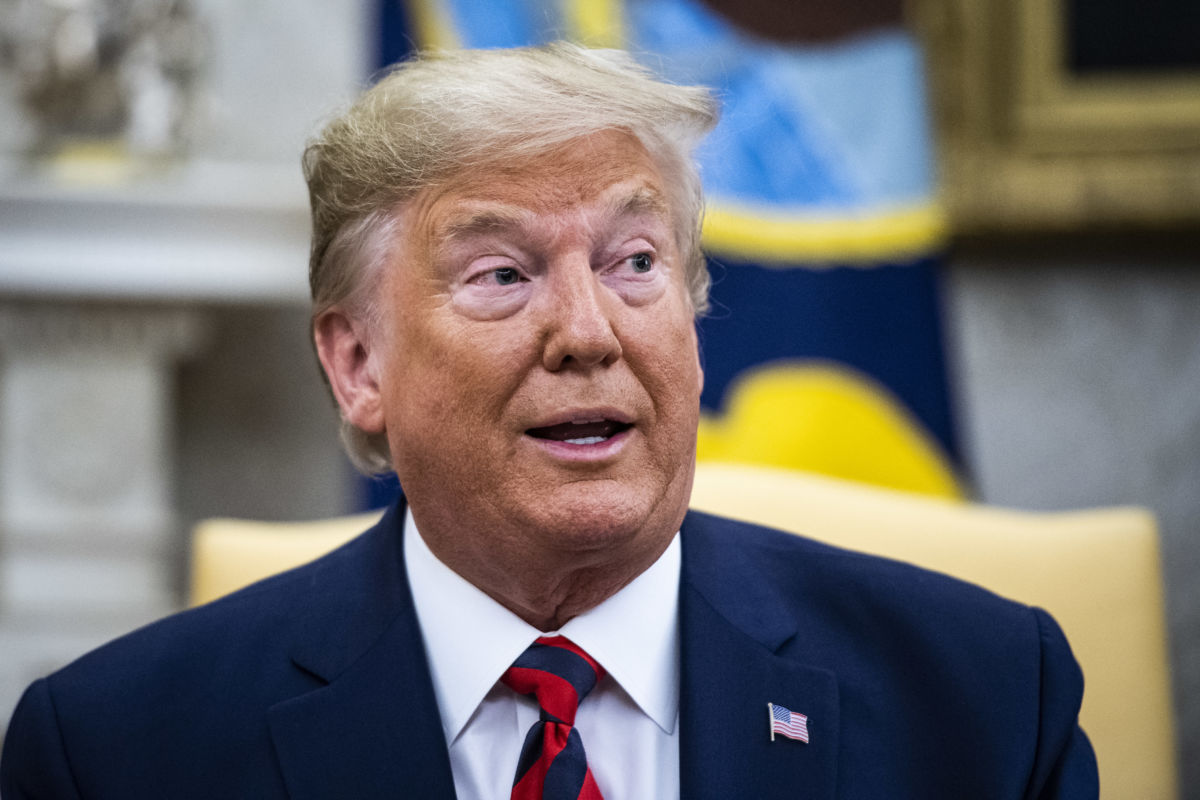
“So ridiculous,” Trump tweeted. “Greta must work on her Anger Management problem, then go to a good old fashioned movie with a friend! Chill Greta, Chill!”

Thunberg responded swiftly, changing her Twitter profile to read: “A teenager working on her anger management problem. Currently chilling and watching a good old fashioned movie with a friend.”

The teen has received an outpouring of praise and support since she earned the coveted title from Time.

Former first lady Michelle Obama had words of wisdom to share with Thunberg and took to Twitter to share her support.

“.@GretaThunberg, don’t let anyone dim your light. Like the girls I’ve met in Vietnam and all over the world, you have so much to offer us all. Ignore the doubters and know that millions of people are cheering you on,” Obama tweeted early Friday.

Leonardo DiCaprio posted a video on Instagram of Thunberg and congratulated her on the honor, including Time’s description of why she was selected. Actress Alyssa Milano, meanwhile, bashed Trump for his reaction.

Contributing: David Jackson, Leora Arnowitz

Previously:Melania Trump responds to POTUS attack on Greta Thunberg; she says she communicates ‘differently’

Trump mocks 16-year-old Greta Thunberg a day after she is named Time’s Person of the Year

Commentary by Captain Paul Watson:

GRETA THUNBERG HAS MASTERED THE ART OF MEDIA AIKIDO WITH A BRILLIANT RESPONSE TO ANAL TANGERINUS AND HIS BIZARRE TWEETS.

In response to Greta being named Time magazine’s Person of the year, the President angrily attacked her because he wanted to be Man of the Year.

But the “Man” who failed to be is furious that a 16 year old Swedish girl got the goden egg that he so desired and tweeted:

Donald J. Trump

@realDonaldTrump
So ridiculous. Greta must work on her Anger Management problem, then go to a good old fashioned movie with a friend! Chill Greta, Chill!

Greta, not to be intimidated by a narcissistic sociopath intent upon ushering in all the perils of unaddressed climate change by opportunistic world leaders like himself responded brilliantly.

Without hesitation she replied on her Twitter profile with: “A teenager working on her anger management problem. Currently chilling and watching a good old fashioned movie with a friend.”

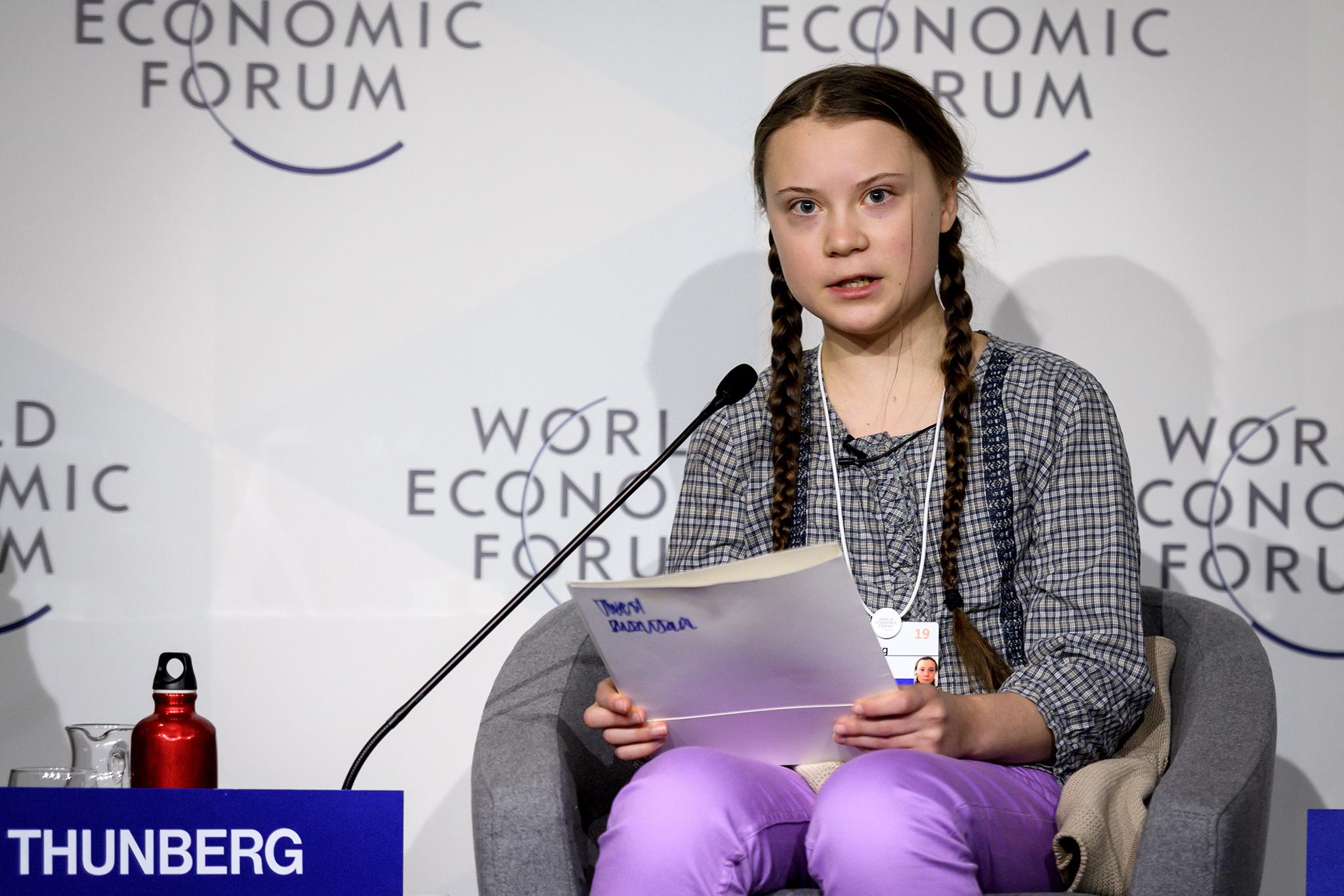
This young lady was born to be a leader and what she has done has been incredibly stunning. She skipped school to cross the Atlantic twice by sail, she addressed the United Nations, she toured North America including Standing Rock and the Tar Sands in Canada, she told Prime Minister Justin Trudeau he was not doing much, she stared down the President of the United States and just recently addressed the Climate Change Conference in Spain.

And I don’t thing she has (in the immortal words of Captain John Paul Jones) even begun to fight.

I can honestly say that over the last 50 years of activism I have ever met or seen someone so focused and unrelenting with her message. I have had the privilege of speaking with her and what impressed me was her courage, her passion, her commitment and her exceptional mind.

Over the next 50 years as humanity slides towards a future most cannot even comprehend or imagine, her vision hopefully will help to navigate us towards a safe harbor.

She is an incredible leader today and she will be an exceptionally inspiring leader in the years to come.

I wonder if that good old fashioned movie she will be watching with a friend will be “Soylent Green”.

WASHINGTONPOST.COM
In a morning tweet, the president said the Swedish climate activist needs to work on anger management and suggested she see a movie with a friend.

Trump’s EPA Re-Approves ‘Cyanide Bombs’ Deadly to Coyotes, Foxes and Feral Dogs, other Wildlife

Coyote pictured at Yellowstone National Park. Hanna May / Unsplash

Wildlife advocacy groups cheered when the Trump administration reversed its decision to approve the use of deadly predator traps known as “cyanide bombs” in August. But now the administration has reversed course again. The Environmental Protection Agency (EPA) published an interim decision Thursday and approved their use with added safety measures.

“This appalling decision leaves cyanide traps lurking in our wild places to threaten people, pets, and imperiled animals,” carnivore conservation director at the Center for Biological Diversity Collette Adkins said in a joint press release from wildlife groups. “The EPA imposed a few minor restrictions, but these deadly devices have just wreaked too much havoc to remain in use. To truly protect humans and wildlife from these poisonous contraptions, we need a nationwide ban.”

They became especially controversial after one of them injured a young boy in Idaho in 2017 and killed his dog. Idaho then prohibited their use on public lands, according to the joint press release, and Oregon and Colorado have also issued temporary bans, Time reported. When the EPA opened a public comment period on reauthorizing the use of the traps at the end of 2018, “an overwhelming majority” of the 20,000 comments it received opposed them. Environmental groups credited this public outcry with the EPA’s decision in August to reverse its initial approval of the traps.

But the livestock industry supports the use of the traps and praised the EPA’s new authorization.

“We sincerely appreciate USDA and EPA working together to ensure livestock producers have access to effective predator control, while also increasing public awareness and transparency,” American Sheep Industry Association President Benny Cox said in the EPA announcement. “Livestock producers face heavy losses from predators, amounting to more than $232 million in death losses annually. We are particularly vulnerable during lambing and calving, where we see the worst predation.”

  1. Prohibiting the use of traps within 600 feet of a residence, except with the landowner’s permission
  2. Extending the buffer zone around public roads from 100 to 300 feet
  3. Placing two elevated warning signs within 15 feet of the traps.

But wildlife advocates say the restrictions do not go far enough to protect humans or animals.

“Tightening up use restrictions is turning a blind eye to the reality of M-44s,” Predator Defense Executive Director Brooks Fahy said in the press release. “In my 25 years working with M-44 victims, I’ve learned that Wildlife Services’ agents frequently do not follow the use restrictions. And warning signs will not prevent more dogs, wild animals, and potentially children from being killed. They cannot read them. M-44s are a safety menace and must be banned.”

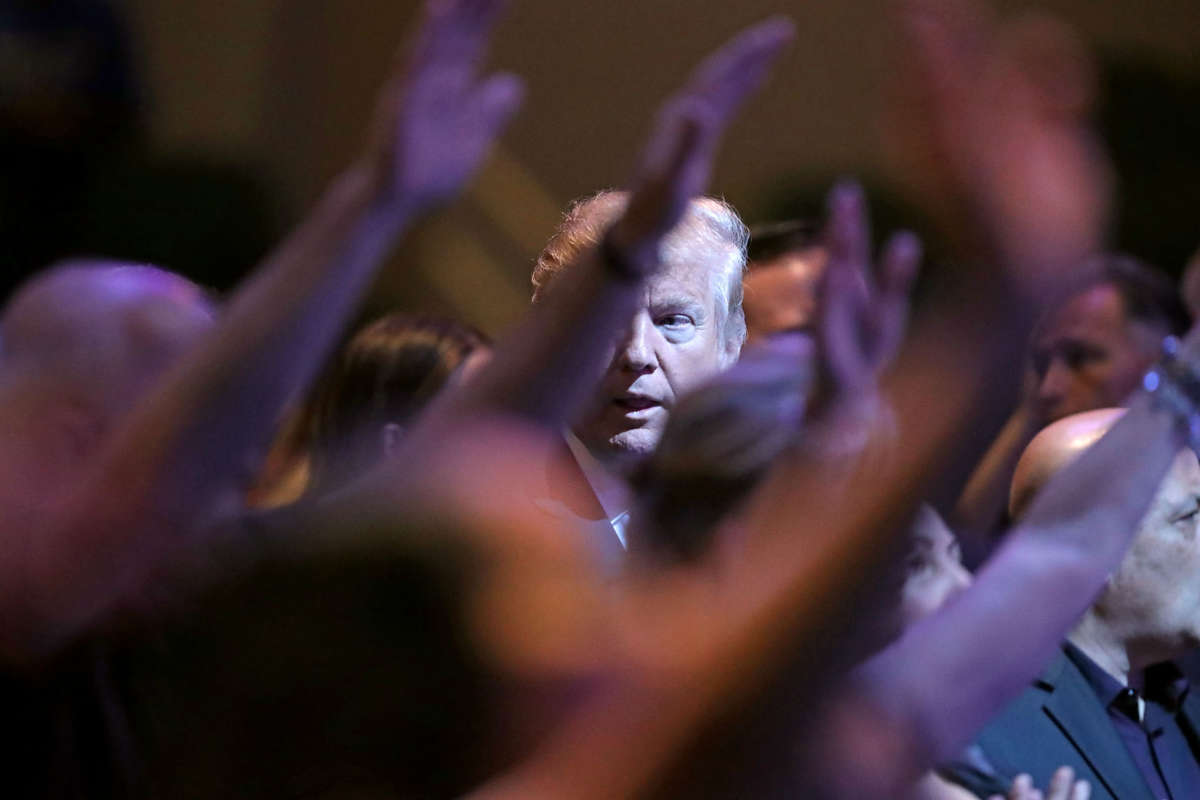
Many Evangelicals Excuse Anything Trump Does — Because He’s the “Chosen One”

Energy Secretary Rick Perry is the latest Trump official or acolyte to prostrate himself, using cult-like terms, before the president. Trump is, in Perry’s worldview, a man tagged by God to occupy his leadership role. In this, the energy secretary is echoing Secretary of State Mike Pompeo – who has averred Trump may have been chosen by God to defend Israel against Iran – and Sarah Huckabee Sanders, Trump’s erstwhile press secretary, who also argued that God had played a role in Trump’s election. Perry is also mimicking ex-Congresswoman Michele Bachmann, who has argued that Trump is the most “godly, Biblical president” in her lifetime. He is following in the footsteps of Jerry Falwell Jr.’s Liberty University, which produced a movie in 2018 titled The Trump Prophecy that likewise argued President Trump had been chosen by God.

And, of course, Perry is also echoing Trump himself, who earlier this year embraced the notion that he was indeed The Chosen One, and subsequently tweeted about his own “great and unmatched wisdom.”

There is something utterly baffling about this notion, that, in the year 2019, in a country that prides itself on its democratic culture and its intellectual institutions, and that has a constitutionally mandated separation of church and state, medieval visions of governance are being touted by much of the U.S. leadership. The country has had its fair share of fundamentalist and fanatic political leaders, but at no previous point in its history has the divine right to rule been seriously proposed as a governing principle by those in positions of power. After all, presidents are supposed to be elected; the divine right to rule of kings is something that was (or so we thought) put to bed centuries ago.

Some evangelists aver that Donald J. Trump is a modern-day version of the ancient Persian king Cyrus, the autocratic nonbeliever who is used by God to fulfill his design – conquering Babylon and freeing the Jews from bondage. Cyrus, as king, is a man who exists outside of, above, ordinary moral law; a daring emperor constrained by nothing and no one. In many ways, Cyrus is a Nietzschean figure 2,500 years before Friedrich Nietzsche. Secretary of State Pompeo, an evangelical Christian with a taste for “End Times” philosophy, frequently references Cyrus’s story.

Trump himself, who has left a trail of sexual assault allegations in his wake over the decades, has shown scant religious sensibilities throughout his life. When it proved politically expedient during the presidential campaign, he claimed to belong to a church in Manhattan, but the church itself put out a statement that he was not an active member.

As president, however, Trump has demonstrated a feral talent for wooing the religious right and keeping them on his side through one scandal after another after another. He has done so by appointing dozens of extremist judges who will, over the coming decades, work to restrict or end access to abortion, break down the walls that separate church from state, limit LGBTQ rights, allow for an increasing number of carve-outs so that religious groups and individuals don’t have to adhere to anti-discrimination laws, dilute science teaching in schools, and so on.

At the start of this month, Trump hired the Florida-based prosperity gospel televangelist Paula White onto his White House staff. It was an illuminating moment. White, who has a grand talent for self-promotion and an instinct for what Trump would term “the art of the deal,” believes that far from siding with the meek and the downtrodden, God rewards believers monetarily. More shockingly, prosperity gospel advocates also argue that God particularly likes those who already enjoy financial success.

The prosperity gospel is an extreme version of what the German sociologist Max Weber wrote about in his 1905 classic The Protestant Ethic and the Spirit of Capitalism. Weber theorized that Calvin’s theory of predestination, in which believers could not know for sure whether they were lucky enough to be assigned to heaven or unlucky enough to be heading to hell, created an extreme state of angst. Unsure of their place in eternity, Calvin’s followers looked for any and every earthly hint as to whether they were among God’s favored ones. Monetary success, in this anxious milieu, soon became seen as a sign of divine favor.

But whereas Calvin’s puritan followers accumulated wealth without ostentatious spending – thus, Weber argued, providing a surplus of money that could be invested and that would eventually sow the seeds of early capitalism – the prosperity gospel is about bling and kitsch. It is about showing off and strutting one’s financial stuff.

Nearly 100 years ago, the Mississippi bluesman Robert Johnson was alleged to have made a pact with the devil at the crossroads outside of the little town of Clarksdale – a pact that traded Johnson’s soul in exchange for the ability to create soul-shatteringly good music. Trump’s own such crossroads pact, signed at his tower where Central Park south meets Central Park west, is with religious preachers such as White. He doesn’t necessarily believe what he’s signed onto here, but since it comes with tremendous political benefits, he’s perfectly happy to indulge in this marriage of convenience. And, truth be told, White’s peculiar version of Christianity suits him to a tee. For the real estate tycoon with a fetish for all things gold, the prosperity gospel is the perfect religious expression: It’s hucksterism gussied up as religion. And it lends itself to cultist hero-worship.

Those who thrive financially — in this rendition of the gospel, regardless of the methods by which they attain wealth — deserve praise and adulation. Perry saying that Trump has been chosen by God is really no more or less sycophantic than the parade of cabinet members early in Trump’s presidency who lavished the sorts of praise on him that one might expect to hear in a fully ripe dictatorship.

In an article on the Christian Broadcasting Network’s site about whether Trump is a modern-day Cyrus, I find this comment: “I love this president as he navigates through the anti-christ DEMONcrats. As Christian’s [sic], we better stand by this man placed by our GOD.THINK ABOUT IT, WE’RE ON THE VERGE OF KILLING ROE VS WADE AND THE SLAUGHTER OF BABY HUMAN BEINGS!!!!!”

If that’s the calculus, Trump’s myriad moral failings mean nothing. To those that adhere to this worldview, they don’t care if the president mocks a disabled journalist or the Gold Star family of a veteran killed in action. Trump swears in public, boasts of sexual assault and even says that he could shoot someone dead in broad view without losing the support of his base. Yet, to such believers, all of these are simply the imperfections of a man ordained by God to rid the U.S. of abortion and secularism and the other great sins of the modern age.

Which brings me back to Rick Perry. Perry’s up to his eyeballs in the Ukraine scandal. But instead of coming clean, he has, like so many other high officials, unquestioningly followed Trump’s orders and refused to comply with congressional subpoenas to testify.

The rule of law and the constitutional order are under direct, sustained assault from the executive branch. And so long as senior figures such as Perry look at Trump and see something akin to a biblical prophecy adapted for the modern age, they will continue to side with a lawless president over the constitutionally guaranteed authority of the U.S. Congress.

Trump Takes Steps to Implement Withdrawal From Paris Climate Accord

The Trump administration notified the United Nations Monday that it would withdraw the U.S. from the historic Paris climate agreement, starting a year-long process to leave the international pact to fight the climate crisis. The United States — the world’s largest historic greenhouse gas emitter — will become the only country outside the accord. Trump’s announcement of the withdrawal came on the first day possible under the agreement’s rules. From Middlebury, Vermont, we speak with Bill McKibben, co-founder of 350.org. “The decision of the United States to be the only country on Earth … unwilling to take part in a global attempt at a solution to the greatest crisis we’ve ever faced — there’s a lot to be ashamed of in the Trump years and a lot of terrible things that have happened — it’s pretty hard to top that,” says McKibben.

TRANSCRIPT

JUAN GONZÁLEZ: The Trump administration has formally notified the United Nations that it will withdraw the U.S. from the historic Paris climate agreement, starting a year-long process to leave the international pact to fight the climate crisis. The U.S., the world’s largest historic greenhouse gas emitter, will become the only country outside of the agreement. The 2015 agreement aims to limit global temperature rise to less than 1.5 degrees Celsius, a target that would prevent the worst effects of catastrophic climate change. Secretary of State Mike Pompeo announced the news Monday, tweeting, quote, “Today we begin the formal process of withdrawing from the Paris Agreement. The U.S. is proud of our record as a world leader in reducing all emissions, fostering resilience, growing our economy, and ensuring energy for our citizens. Ours is a realistic and pragmatic model.”

The announcement comes as the effects of the climate crisis are already being felt around the world, from the wildfires raging in California to extreme drought in parts of Central America to a worsening monsoon season in South Asia. Last week, a new study published in Nature Communications warned that 300 million people are at risk of being displaced due to rising sea levels by 2050. According to the report, global sea levels are expected to rise between two to seven feet, and possibly more, wiping some coastal cities off the map.

AMY GOODMAN: The U.S. withdrawal from the climate accord was declared on the first day possible under the accord’s rules and will take a year to take effect, meaning the process will conclude the day after the 2020 presidential election.

Well, for more, we’re joined via Democracy Now! video stream by Bill McKibben, co-founder of 350.org. His latest book, Falter: Has the Human Game Begun to Play Itself Out? He’s joining us from Middlebury, Vermont, where he lives.

Bill, welcome back to Democracy Now! Can you talk about the significance of the formal pulling out of the U.S. climate agreement, Pompeo and Trump announcing?

BILL McKIBBEN: Well, look, this has been coming for a year since Trump announced his initial decision. In some sense, it’s no surprise. Mike Pompeo is the congressman who took more money from the Koch brothers than any other member of Congress, which is not an easy sweepstakes to win. I mean, this is, in one sense, what was expected. In another sense, it’s deeply historic. When people look back, if they’re able to, and write the story of this time, the decision of the United States to be the only country on Earth — let’s be clear, the only country on Earth — unwilling to take part in a global attempt at a solution to the greatest crisis we’ve ever faced — there’s a lot to be ashamed of in the Trump years and a lot of terrible things that have happened — it’s pretty hard to top that.

JUAN GONZÁLEZ: And, Bill, you’ve said that the decision to withdraw is the greatest success of the, quote, “denial machine” that the fossil fuel industry launched 30 years ago. Could you elaborate on that?

BILL McKIBBEN: Sure, sure. We now know, from great investigative reporting, that the fossil fuel industry knew everything there was to know about climate change in the 1980s. Exxon was the biggest company on Earth. They had great scientists. Their product was carbon. Of course they were going to study it. And their scientists told them, with uncanny accuracy, what the temperature and the CO2 concentration would be in 2019. Understanding that this was a threat to the world, but also a threat to their business, they took the second more seriously than the first and began this decade-long process of climate — decades-long of climate denial and delay and obfuscation, setting in motion all these kind of fake think tanks and so on and so forth.

That’s what came to a head with this withdrawal from Paris. It was the ultimate conclusion of all that work at disinformation. From one point of view, it was extremely successful: The fossil fuel industry had its most profitable years in the last three decades. On the other hand, we’re now missing half the sea ice in the summer Arctic. The Great Barrier Reef is half-dead. You know, the oceans are 30% more acidic. California is on fire more weeks than not. We’re in deep, deep trouble. And the idea that we’re just going to put our hands over our eyes, over our ears or over our mouth at this point is about as depressing as it’s possible to get.

JUAN GONZÁLEZ: And, Bill, I wanted to ask you, in terms of the direct effects that people are feeling here of climate refugees, about — I wanted to ask you about the situation in Central America. The immigration battle has not paid much — few few people have paid attention to the ongoing crisis in Central America, the drought that has now been really affecting that region since about 2014, and it’s continued to get worse, to the point that the World Food — the U.N.’s World Food Program recently said that levels of food insecurity that have not been previously seen in the region exist there. You could argue that many of the people coming from Honduras, from Guatemala and from El Salvador, where the dry corridor of that region is, are, in effect, the first real climate refugees that we’re seeing coming into the United States.

BILL McKIBBEN: Juan, I’m so glad you brought that up. I mean, I got arrested at an immigration protest in August, just because I wanted to draw attention precisely to the link that you’re describing. If you go look at a map, Central America is one of the few places on the planet where there are big oceans on both sides of a narrow strip of land. The oceans are warming much faster than the land surface. That’s where most of the heat is going. And that means that those who are close bordered to them, especially on both sides, are dealing with some very powerful and freakish effects. The droughts are extraordinarily deep in the highlands of Honduras, Guatemala, and that’s one of the things that’s driving people north to the border, just as the huge drought in Syria a decade ago helped set the stage for the trauma, turmoil and refugees we’ve seen there.

Here’s how to put this in perspective. The U.N. estimates that we could see a billion climate refugees in the course of this century. And that’s a number that may have gone up in the last week or so. This very scary new study on sea level rise is one that everyone should be paying attention to. It’s not about, in this case, an increase in the rate at which the sea level is rising. It’s about a recalibration of how high most of the world’s coastal cities are. It turns out that the radar was — satellite data was misleading people, and many of these cities and regions are much lower to the ocean than people had thought. And when you look at the maps of where we’re going to be by 2050, they show things like almost all of the Mekong Delta in Vietnam underwater. That’s one of the most important rice-growing regions on the planet, if not the most — well, one of them, anyway. This is truly terrifying to look at those pictures and to realize just how fast this is coming now.

AMY GOODMAN: And then you have, with the mass protests against inequality in Chile, the Chilean president announcing he’s canceling COP, and Madrid now taking up the responsibility of the December U.N. climate summit. The significance of this, Bill McKibben?

BILL McKIBBEN: Well, you know, it was probably inevitable that Chile was going to cancel this, because, at some level, dealing with climate change is about dealing with justice and equity, and those may have been concepts that the Chilean government were not too eager to have people focusing on too much right now.

The U.N. process is going to limp forward, but, you know, it does it without the active participation of the U.S. — in fact, with the U.S. really trying to sabotage the process. We’re the world’s biggest economy. It’s pretty hard to ask China and India to take up the slack here to provide the leadership the U.S. should be providing. But, essentially, that’s what people are doing. To some degree, they’re living up to it. The Chinese are installing renewable energy at a breakneck pace. But we need — I mean, look, as you know, it’s not like the Paris climate accord was an amazing document. At best, it offered us the possibility of keeping enough momentum going to maybe begin to catch up to physics at some point. That momentum has been broken now by the Trump administration and by its handlers in the fossil fuel industry.

So now we’re in — you know, we’re in a place where we’re relying on civil society, on mass movements, to do what they can to reset the zeitgeist and to do it quickly. Thank heaven for the young people who have come forward in the last year. Thank heaven for everybody rallying behind them. We’re going to need a lot more of that in the year to come.

AMY GOODMAN: And we will be broadcasting, of course, from the U.N. climate summit in Madrid, as we do every year. Juan?

JUAN GONZÁLEZ: Yeah, Bill, I wanted to ask you about the response of corporate America, specifically the automobile makers, General Motors, Toyota and Fiat Chrysler. They’ve sided now with President Trump in his continuing battle with California over auto emission standards. Your take on that?

BILL McKIBBEN: It is shortsighted in the extreme. They’re playing the same game as everybody else, trying to get another year or two out of their business model, which at the moment is selling people ever bigger SUVs, and so they’ve been willing to side with the Trump administration to try and make sure we don’t really do anything about fuel economy. It’s obviously shortsighted. It’s obvious that they’re opening up the door even wider for the Europeans, for Tesla Motors, for all the people who are actually working on the next generation of mobility, not to mention the people who are working on bike paths and bus lanes.

But the problem is not that we won’t get there eventually, Juan. The problem is that this is a time test. Look, the scientists in the Intergovernmental Panel on Climate Change a year ago, in their last report, pretty much gave us a deadline. They said that if we hadn’t made fundamental transformations in our energy economy by 2030, then our chances of meeting even the modest targets we set at Paris were essentially nil. That means we don’t have four-year presidential terms to waste. It means we don’t have five-year product development cycles to waste. It means everybody has to be going as hard as they can right now.

AMY GOODMAN: And yet, corporate America is divided, Bill, and if you can talk about this? On the one hand, you have General Motors, Toyota, Fiat Chrysler siding with the Trump administration against California. But then you have this slew of other automakers, including Ford, Honda and Volkswagen, which have sided with California’s right to set pollution limits. Why this division?

BILL McKIBBEN: Well, it pretty much reflects who’s most scared of Trump and who’s furthest along in coming up with cars that can meet emission requirements. Look, all the automakers know better. They were all embarked on a course of lower emissions since the Obama administration. General Motors, Toyota, those people are just trying to suck up some more gravy for a few more years. And it’s a disgrace. But the same disgrace is happening in the utility industry. It’s happening in agribusiness. It’s happening everywhere where everyone is trying to maintain their business model just a little while longer. That just a little while longer are the years that will break the climate system of the planet.

AMY GOODMAN: Let’s stick with California for a minute. On Sunday, Trump threatened to pull federal funding for the wildfires raging across California. In a Twitter exchange with Governor Newsom, Trump tweeted, “Every year, as the fire’s rage & California burns, it is the same thing-and then he comes to the Federal Government for $$$ help. No more. Get your act together Governor. You don’t see close to the level of burn in other states…” Governor Newsom responded, “You don’t believe in climate change. You are excused from this conversation,” Newsom said. Last year Trump suggested California’s forest floors should be cleaned, claiming Finland prevents fires by raking forest areas. So, your recent piece in The Guardian, Bill, is headlined “Has the climate crisis made California too dangerous to live in?” Your response to what’s happening? And what exactly do you mean?

BILL McKIBBEN: Well, first of all, don’t blame writers for headlines. The piece didn’t say that people needed to leave California. What it did was quote a remarkable story in the San Francisco Chronicle in the day that the fires were raging at their worst in Sonoma. And the piece in the Chronicle was just a straight-ahead news story, said that, you know, experts were now beginning to worry that areas of California had become too dangerous to inhabit. We’ve had one wildfire after another now, year after year after year, and they’ve gotten bigger and more dangerous. And the reason is pretty clear. It’s gotten so hot and so dry in California that it just turns to tinder. California has always had wildfire, but not like this. And there’s a study coming out today indicating that just the dryness alone is making these kinds of big combustible wildfires four or five times more likely around the world. One’s heart goes out so much to people who, year after year, have to live through this kind of fear, anxiety and tension, in a place where, you know, a generation ago, we still thought of California as the kind of ideal of ease and relaxation and chill. It’s not that anymore, at least not in the months every year when people are smelling the smoke in the air.

AMY GOODMAN: Well, Bill McKibben, we want to thank you so much for being with us. Bill is co-founder of 350.org, his latest book, Falter: Has the Human Game Begun to Play Itself Out?, speaking to us from his home in Middlebury, Vermont.

And by the way, on Friday night, I will be one of the moderators of the first-ever Presidential Forum on Environmental Justice. Senators Elizabeth Warren and Cory Booker, also Tom Steyer and other candidates will be taking part in the forum at South Carolina State University in Orangeburg. Democracy Now! will be live-streaming and broadcasting the presidential town hall starting at 6 p.m. Eastern. Tune into democracynow.org.

When we come back, an undocumented mother from Honduras who’s recovering from stage IV oral cancer is fighting imminent deportation in Georgia. She’s been locked up in an immigration jail since being arrested for a minor traffic violation in August. We’ll speak to the person at the forefront of her fight, of the fight for her to be released. It’s her son, Yale Ph.D. student, DACA recipient. Stay with us.

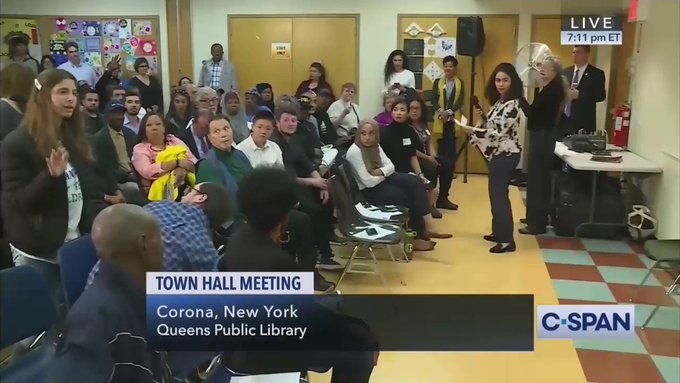
It turns out that the ‘wack job’ who disrupted AOC’s town hall last night was a far-right plant job

NEW YORK, NY - OCTOBER 03: U.S. Rep. Alexandria Ocasio-Cortez (D-NY) takes questions during a town hall meeting at the LeFrak City Queens Library on October 3, 2019 in the Queens borough of New York City.  The event focused on her A Just Society legislation, which targets poverty, affordable housing, and access to federal benefits. (Photo by Drew Angerer/Getty Images)

A woman who disrupted a town hall set up by New York Rep. Alexandria Ocasio-Cortez on Thursday night turns out to be a part of a far-right conservative group known for these kinds of tactics. Rep. Ocasio-Cortez held a town hall meeting in Corona, New York. During the town hall a young woman stood up and began speaking anxiously about climate change, becoming more and more agitated, as she nihilistically rambled about how “we got to start eating babies.” She took off her jacket to reveal a T-shirt emblazoned with the phrase “Save the planet. Eat the children.” Video of this interaction was sent around the internets and conservatives everywhere pointed to it as proof that Rep. Ocasio-Cortez and her supporters were unstable, unrealistic, and to use our current president’s description, “wack job(s).”

Donald Trump Jr.

@DonaldJTrumpJr

Seems like a normal AOC supporter to me. https://twitter.com/realsaavedra/status/1179908480322289664 

Ryan Saavedra

@RealSaavedra

One of Ocasio-Cortez’s constituents loses her mind over climate change during AOC’s townhall, claims we only have a few months left: “We got to start eating babies! We don’t have enough time! … We have to get rid of the babies! … We need to eat the babies!”

Embedded video

24.6K people are talking about this

That led to this exchange.

Alexandria Ocasio-Cortez

@AOC

Better than being a criminal who betrays our country. https://twitter.com/realdonaldtrump/status/1179931107111907333 

Donald J. Trump

@realDonaldTrump

AOC is a Wack Job! https://twitter.com/donaldjtrumpjr/status/1179913243151785989 

86.6K people are talking about this

Rep. Ocasio-Cortez had initially tried to plead for compassion for the woman, like any decent human being might when confronted with someone who seems to be very obviously in crisis both mentally and emotionally.

Alexandria Ocasio-Cortez

@AOC

Hey everyone!

We had a fabulous town hall tonight & I’ll be highlighting some moments from it.

At one point I was concerned there was a woman in crisis & want to ensure we treat the situation compassionately.

Let’s not mock or make a spectacle. &let’s work on Medicare for All!

Alexandria Ocasio-Cortez

@AOC

This person may have been suffering from a mental condition and it’s not okay that the right-wing is mocking her and potentially make her condition or crisis worse. Be a decent human being and knock it off.

13.4K people are talking about this

Now, the Washington Post reports that a Twitter account handled by the “LaRouche PAC—which was founded by conspiracy theorist Lyndon H. LaRouche Jr.” took credit for the woman’s actions. You see, according to the Post, LaRouche Jr.’s death didn’t bring an end to his fringe conspiracy theories or the small but intense cult around him. When LaRouche died in February of this year, one description of LaRouche’s acolytes under him, sticks out.

Mr. LaRouche was said to exert strong control over the personal lives of his disciples. In interviews over the years, many former members likened him to a cult leader who was obsessed with their sexual desires and challenged their mental toughness.

Cult much? The “LaRouchians” have continued forward, and today they’ve made a splash, proving that while there isn’t much evidence for mythical “radical-left” Trump and others proclaim, there is a ton of evidence pointing to an unhinged far right. Having a woman interrupt an event to use our climate change crisis to mock their political adversaries with statements like, “Even if we would bomb Russia, we still have too many people, too much pollution, so we have to get rid of the babies. Just stopping having babies is not enough, we need to eat the babies,” is nihilistic, unbalanced, and humorless.

It’s interesting that the far right, with Trump and Republicans in tow, seem to always be guilty of the exact charges they dish out: conspiratorial, nihilism, corruption, lawlessness, and an unwillingness to be held accountable for their actions that may ultimately destroy our country’s democracy.

Trump mocks teen climate activist

U.N. GENERAL ASSEMBLY

Updated 

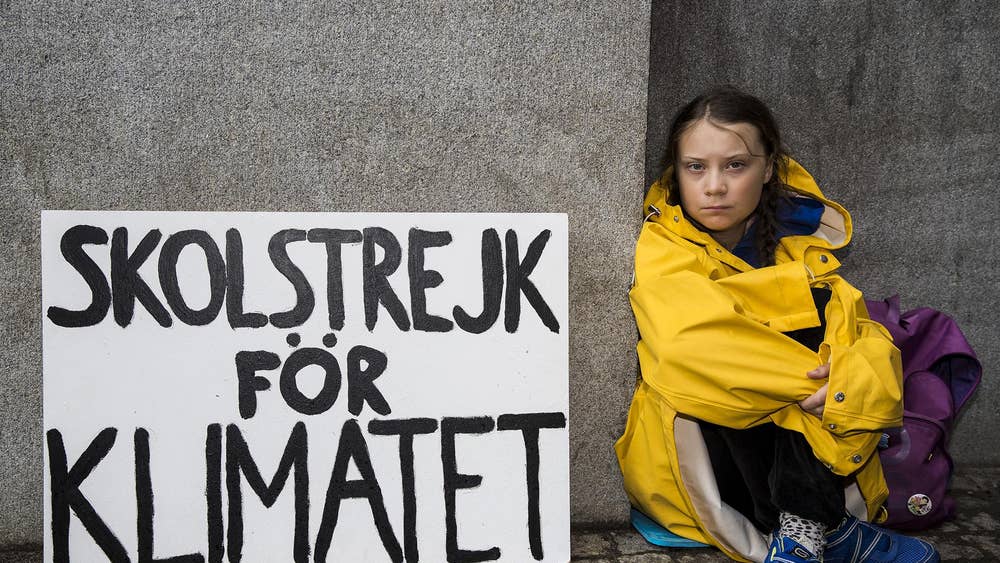
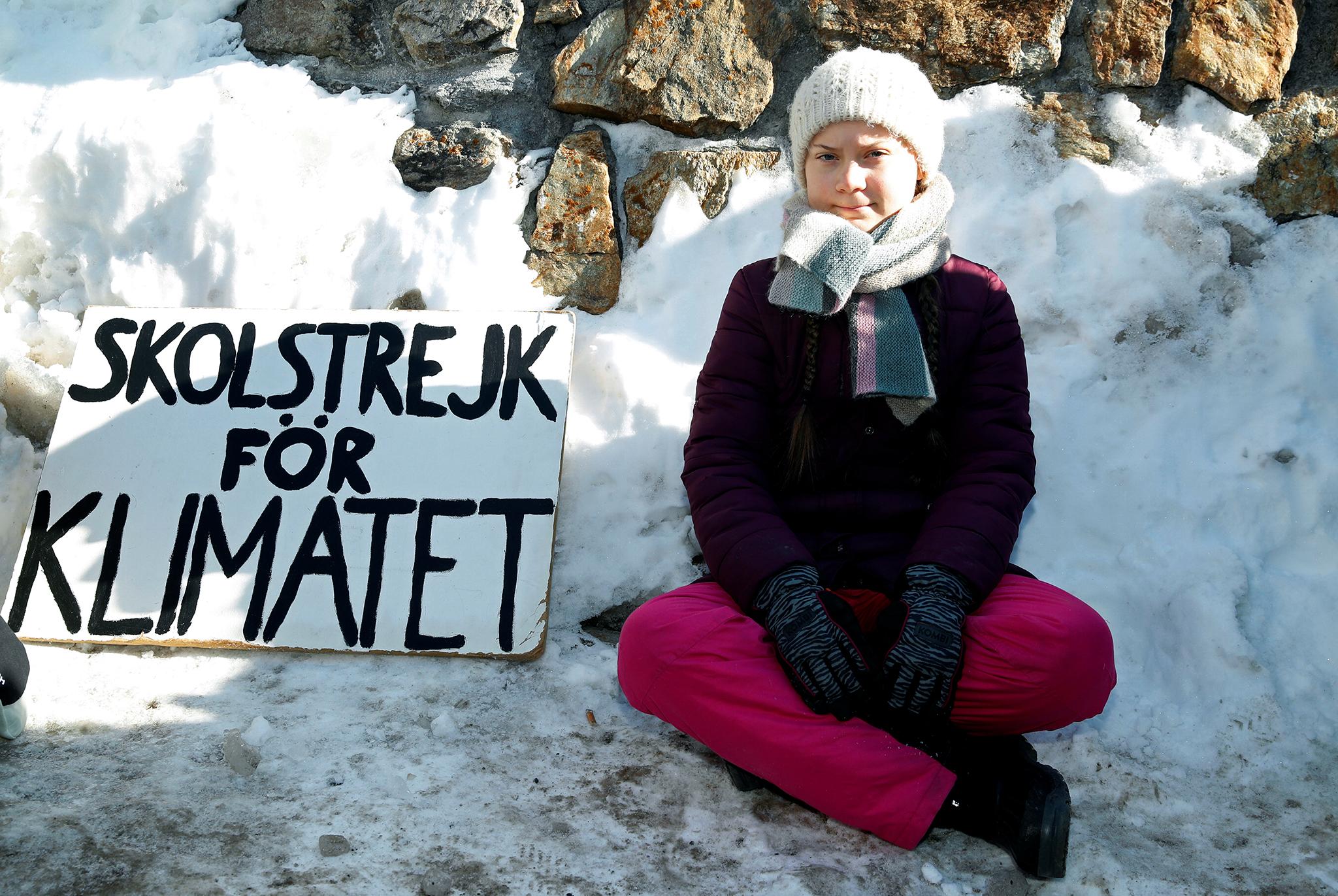
President Donald Trump mocked 16-year-old climate activist Greta Thunberg on Twitter late Monday.

Posting a fatalistic statement the Swedish teen had made earlier Monday at the United Nations’ special meeting on climate change, Trump tweeted: “She seems like a very happy young girl looking forward to a bright and wonderful future. So nice to see!“

Trump briefly attended the Climate Action Summit in New York but left after 14 minutes. The president has consistently expressed skepticism about the notion of man-made climate change, and his administration has declined to make the issue any sort of priority.

Thunberg acknowledged Trump’s tweet on Tuesday, changing her Twitter biography to read, “A very happy young girl looking forward to a bright and wonderful future.”

Thunberg has developed an international following for her persistent efforts to get the international community to combat climate change, particularly winning support among young people. Trump’s tweet contained one of her quotes from her U.N. remarks Monday: ”People are suffering, people are dying, entire ecosystems are collapsing. We are in the beginning of a mass extinction and all you can talk about is money and fairytales of eternal economic growth.”

Thunberg did not mention Trump or any other leaders by name in her remarks, but she did scold the world’s leaders.

“You are failing us,” she said to the assembled leaders. “But the young people are starting to understand your betrayal. The eyes of all future generations are upon you. And if you choose to fail us, I say: We will never forgive you.“


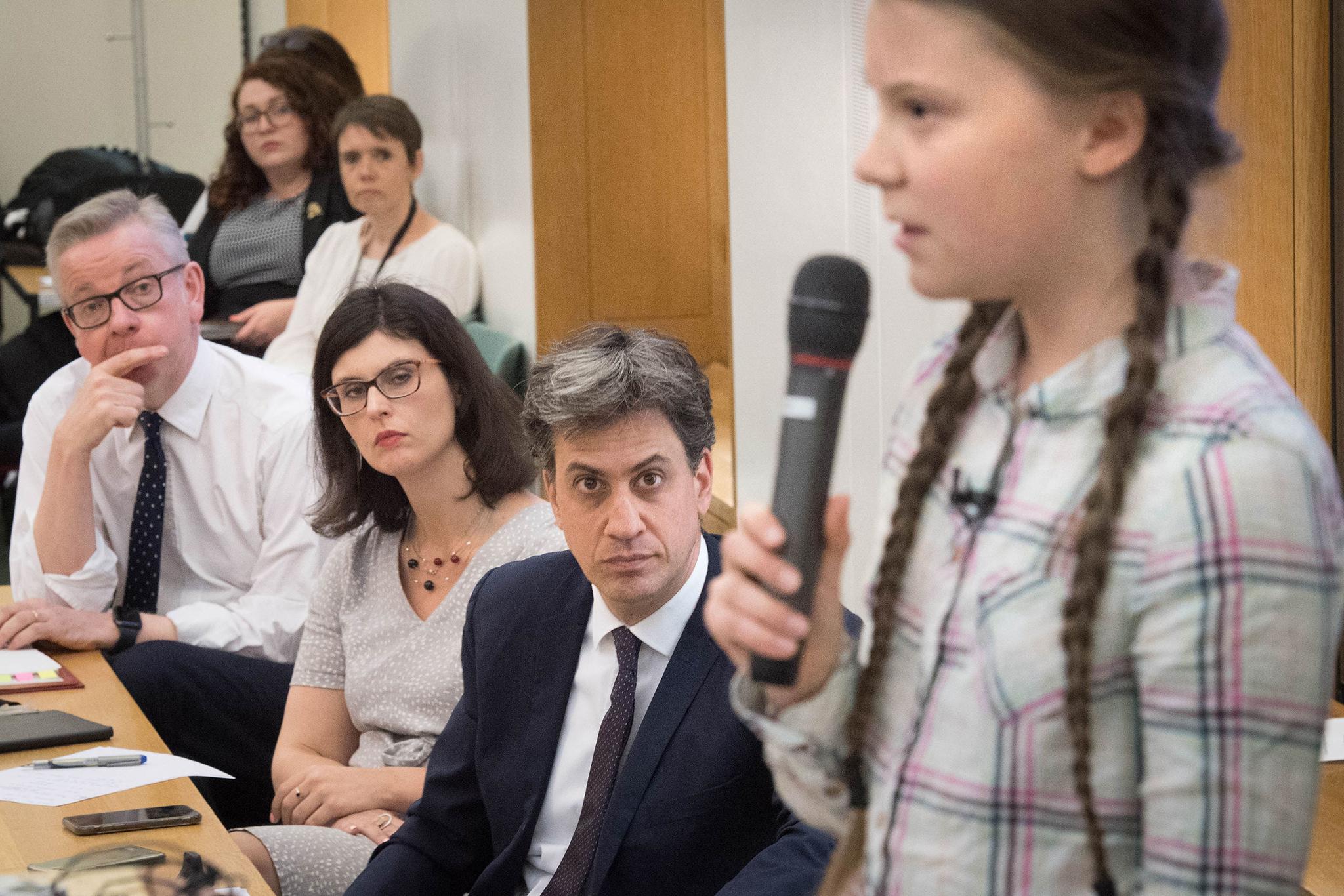
Last Wednesday, Thunberg addressed a congressional committee in Washington. “I want you to listen to the scientists,” she said. “And I want you to unite behind the science. And then I want you to take real action.”

Trump was not alone Monday in mocking Thunberg. On Fox News, Michael Knowles referred to Thunberg as “a mentally ill Swedish child who is being exploited by her parents and by the international left,” then doubled down and called her “mentally ill” a second time. The network subsequently apologized for his remarks.

Abbey Marshall contributed to this report.

Greta Thunberg glares at Donald Trump arriving at United Nations after scolding international politicians over climate change

https://www.independent.co.uk/environment/climate-change/greta-thunberg-trump-glare-united-nations-climate-change-a9117476.html?utm_medium=Social&utm_source=Facebook&fbclid=IwAR3YLMOxMzn29Z1K4IuEEHMr3PAqwTrRTZRkTrzKvabQSYfgf1htRpecpcI#Echobox=1569267470

The 16-year-old activist’s reaction to the world’s most powerful climate change denier seems to speak volumes

A clip showing climate activist Greta Thunberg giving Donald Trump an ice-cold glare has gone viral, just after the Swedish 16-year-old told the United Nations that the leaders of the generations before hers had stolen her childhood and her dreams.

The video of Ms Thunberg shows her standing in the United Nations lobby in New York, just as Mr Trump arrived.

Cameras captured the moment in which the 16-year-old’s expression changes from a slight curiosity to what looks like steely anger as the American president walked by.

Ms Thunberg had just delivered a speech to the United Nations in which she called for urgent action on climate change.

“How dare you continue to look away, and come here saying that you are doing enough, when the politics and solutions needed are still nowhere in sight,” she told the United Nations.

She continued: “You say you ‘hear’ us and that you understand the urgency. But no matter how sad and angry I am, I don’t want to believe that. Because if you fully understood the situation and still kept on failing to act, then you would be evil. And I refuse to believe that.”

Mr Trump, for his part, has challenged the idea that climate change — which is supported by the vast majority in the scientific community, of which the American is not a member  — exists, and has openly mocked the idea, on one occasion suggesting it was a Chinese hoax.

Since taking office, Mr Trump has overseen an expansive effort to destroy his predecessor’s policies aimed at slowing the rate of climate change, including by easing up on restrictions for greenhouse gas emissions and bringing up new oil and gas leases.

Trump to Snub Climate Summit for Religious Freedom Meeting at UN

Donald Trump is set to attend the United Nations headquarters during Monday’s key summit on the climate crisis – but will be there to take part in a meeting on religious freedom instead.

A senior UN official confirmed to the Guardian that the White House has booked one of the large conference rooms in the New York headquarters on Monday so that the president can address a gathering on religious freedom.

The move is likely to be seen as a blatant snub to the UN climate summit, to be held in the same building on the same day. Leaders from around the world, including the UK prime minister, Boris Johnson; France’s president, Emmanuel Macron; and India’s prime minister, Narendra Modi, are expected at the summit as part of a major UN push to heighten the response to the escalating climate crisis.

“No one was really expecting the president to come to the climate summit,” the official said. It’s understood that senior UN staff have realistic expectations of Trump and do not expect him to engage on the climate crisis, even for a summit held in his home town. Trump has vowed the US will withdraw from the landmark Paris climate agreement.

“He’ll clog up the whole system,” said Mary Robinson, former Irish president and ex-UN high commissioner for human rights. “He won’t go to the climate summit and he wants the distraction factor, I suppose.”

Even if Trump were to attend it is unlikely he would have been called to the podium to speak. Representatives from about 60 countries are expected to address the UN on Monday on the further commitments they are making to slash greenhouse gas emissions and deal with the flooding, storms and other impacts of global heating.

The speakers will outline “only the best plans, only the most committed leaders will be on the stage”, according to Luis Alfonso de Alba, the UN’s special envoy for the climate summit.

Still, Trump’s presence in the UN building, at a time when climate protests swept around the world on Friday, will prove provocative. “Not participating and yet showing up at the building is throwing down a gauntlet,” said David Waskow, director of the International Climate Initiative at the World Resources Institute.

“It’s most importantly a snub to the young people pleading for action on climate change. Donald Trump has made very clear internationally and domestically he has no interest in the science or this issue. It’s up to the rest of the world to get on with its business.”

The Guardian has contacted the White House for comment.

Lion trophy approved for import into U.S., stirring controversy. Here’s why that matters.

Advocates question how this action benefits lions in the wild—a requirement under U.S. rules.

A FLORIDA TROPHY hunter has permission to import what is thought to be the first lion trophy from Tanzania since January 2016, according to the Center for Biological Diversity, an Arizona-based nonprofit that advocates for endangered species.

In that year, two subspecies of African lions were listed as threatened under the U.S. Endangered Species Act, meaning that those lions can be killed for trophies only if it can be shown that the hunts would enhance the survival of the species in the wild.

In May, the U.S. Fish and Wildlife Service, the agency that oversees trophy hunting imports to the United States, approved a hunter’s application to import the skin, skull, claws, and teeth of a lion killed in Lukwati North Game Reserve, a hunting concession leased from the government and run by Tanzanian safari operator McCallum Safaris. That’s according to records obtained from a Freedom of Information Act request submitted by Tanya Sanerib, international legal director for the Center for Biological Diversity. (See more from FOIA: We asked the government why animal welfare records disappeared.)

The hunter, whose identity could not be confirmed by National Geographic, originally applied to import a lion trophy from Tanzania in November 2016. It’s unclear exactly when he killed the lion. Nor is it clear whether the trophy has been imported. The permit to do so, issued by the Fish and Wildlife Service, expires in May 2020, a year after it was issued.

African lions have disappeared from 94 percent of their historic range, and populations have halved, to fewer than 25,000 since the early 1990s, according to the nonprofit Wildlife Conservation Network. The main causes of the decline are retaliatory killings of lions that attack villagers and depletion of their prey animals. Tanzania is home to 40 percent of Africa’s lions.

Sanerib, who calls the country a “stronghold” for lions, worries that the decision by the Fish and Wildlife Service could be a signal that the Trump administration will “open the floodgates” for future Tanzanian trophy imports for lions and other species, including elephants. The news of this approval of a lion import comes on the heels of a decision last week to allow a U.S. hunter to import a black rhino trophy killed last year in Namibia.

According to Laury Marshall Parramore, a spokeswoman with the Fish and Wildlife Service, “Legal, well-regulated hunting as part of a sound management program can benefit the conservation of certain species by providing incentives to local communities to conserve the species and by putting much-needed revenue back into conservation.”

Sanerib says she’s concerned about the lack of detail in the Fish and Wildlife Service’s determination that this hunt enhances lion conservation in Tanzania. She claims that the service didn’t do due diligence when approving the import permit. As part of her FOIA request, she says she obtained emails in which the service asked general questions of Tanzanian government officials, such as whether they were monitoring trophy hunting.

“Those are not the basic questions that I think that our government should be asking before we approve these types of practices. We should be way down in the weeds, getting all of the details to ensure that these programs are actually going to enhance the survival of species.”

“Organizationally, we’re opposed to trophy hunting—we don’t think we should be killing threatened and endangered species,” Sanerib says. “But if we are going to do it, if it is going to happen, Fish and Wildlife Service needs to follow the law, and they really need to ensure—and this is their own regulatory requirements—that this program has all the adequate safeguards to ensure that it’s going to be sustainable for the lion population.”

The Fish and Wildlife Service did not respond to a request for specific information about how this hunt benefits lions in Tanzania and for reaction to Sanerib’s concerns.

The lion decision is particularly troubling given Tanzania’s history of mismanaging trophy hunting, Sanerib says. In 2017, Hamisi Kigwangalla, Tanzania’s minister for natural resources and tourism, revoked hunting concession lease permits that previously had been issued to companies for a low set fee, citing a need for greater transparency about the process. The government then began auctioning off concession leases instead. But according to biologist Craig Packer, who had studied lions in Tanzania since the late 1970s, only undesirable concessions were put up for auction, a move he calls a “halfhearted” effort to reform.

Kigwangalla did not respond to a request for comment.

In 2015, Packer was barred from entering the country after he characterized the nation’s trophy hunting industry as corrupt. Trophy hunters are supposed to target only older male lions, thought to be less crucial to reproduction, but Packer says there was no accountability or oversight by Tanzania to ensure that this was happening. As trophy hunting declined in popularity, Packer says, concession operators charged hunters fees so low that they couldn’t possibly be providing enough revenue to maintain roads, hire rangers, and prevent illegal farming or grazing in the hunting reserves.

Whether this particular trophy import is good or bad depends on whether the hunt was shown to have a conservation benefit, Packer says. If the U.S. is rewarding responsible hunting operators, it will incentivize others to follow suit. “As long as the sport hunters are showing that they’re making a positive impact, good on them,” he says. “It would be great if the system is actually forcing some kind of reform.” But, he adds, the Fish and Wildlife Service “has no way of confirming whether Tanzania’s well-meaning policies are really being implemented.”

Representatives from the Tanzania Wildlife Authority, which implements the country’s Wildlife Conservation Act, the Tanzania Wildlife Research Institute, an organization under the Ministry of Natural Resources and Tourism that conducts wildlife research, and the Tanzania Tourist Board did not respond to requests for comment about how the country manages its trophy hunting.

John Jackson, a member of the International Wildlife Conservation Council, an advisory group to the Secretary of Interior, is the Florida hunter’s attorney. Jackson welcomes more frequent trophy imports from Tanzania and says the U.S. Fish and Wildlife Service has been “too slow” to issue these permits—a pace Jackson calls “inexcusable.” Since 2016, he says, many hunting operators have had to surrender their lands because of a lack of revenue, which leaves the animals in those lands unprotected. More frequent trophy hunts would allow concession operators to afford anti-poaching safety measures. “Hunting is the single most important mechanism to save lion,” he argues.

Jackson disagrees that Tanzania’s trophy hunting is mismanaged. As home to about 40 percent of Africa’s lions, he says, the country has “managed to save more lions than anybody else.”

“I wish there was another country equal to it,” he says. “It’s easy to criticize people, but it’s much more important to work with them and support them.”

Sanerib says Tanzania deserves credit for having a “phenomenal system” of protected areas but that its lion conservation success has been despite trophy hunting rather than because of it.

Elephants too?

The U.S. Fish and Wildlife Service’s findings for lions also could apply to elephants, Sanerib says. In 2014, the Obama administration effectively banned trophy imports of elephants from Tanzania because of a poaching crisis in the country and concerns about the management of its trophy hunting industry. Sanerib says this lion trophy import decision may indicate that the Trump administration plans to overturn that ban.

In 2017, the service reversed the ban on elephant trophy imports from Zimbabwe. “So we have some history—some very recent history—to point to as evidence of them, I would say, leaping before they take a look,” Sanerib says. (After President Trump tweeted his dissatisfaction with the Zimbabwe decision, the service reversed course and decided to evaluate applications on a case-by-case basis. Since then, no elephant trophies are known to have been imported from Zimbabwe.)

Anna Frostic, the managing wildlife attorney for the Humane Society, says the decisions to issue lion and black rhino trophy import permits indicate that there are more to come. She says the Fish and Wildlife Service “is making these decisions behind closed doors and without the input of independent scientists and the public.”

“The issuance of this one lion trophy import from Tanzania will likely be replicated and applied to the more than 40 other applications for Tanzania lion trophies that are pending,” she says.

Even though Tanzania is a stronghold for lions, she says the fact that overall lion numbers are dwindling means this potential new pattern is “extremely concerning.”

“The decision to legitimize that type of activity,” Frostic says, “is not only unethical and scientifically unjustifiable but is unlawful” based on the decision’s merits and because of the service’s lack of transparency in its decision making.