Why kill turkeys to celebrate Thanksgiving?

http://www.psychologytoday.com/blog/animal-emotions/201311/slaughtering-sentience-theres-no-reason-eat-turkeys

Millions of turkeys are horrifically raised and killed as mere tokens, but why?

November 28, 2013 by Marc Bekoff, Ph.D. in Animal Emotions

Many of you have heard this question over and over again, “Why kill turkeys to celebrate Thanksgiving?” They say repetition is boring conversation but I feel it’s essential to ask this question repeatedly, because there really

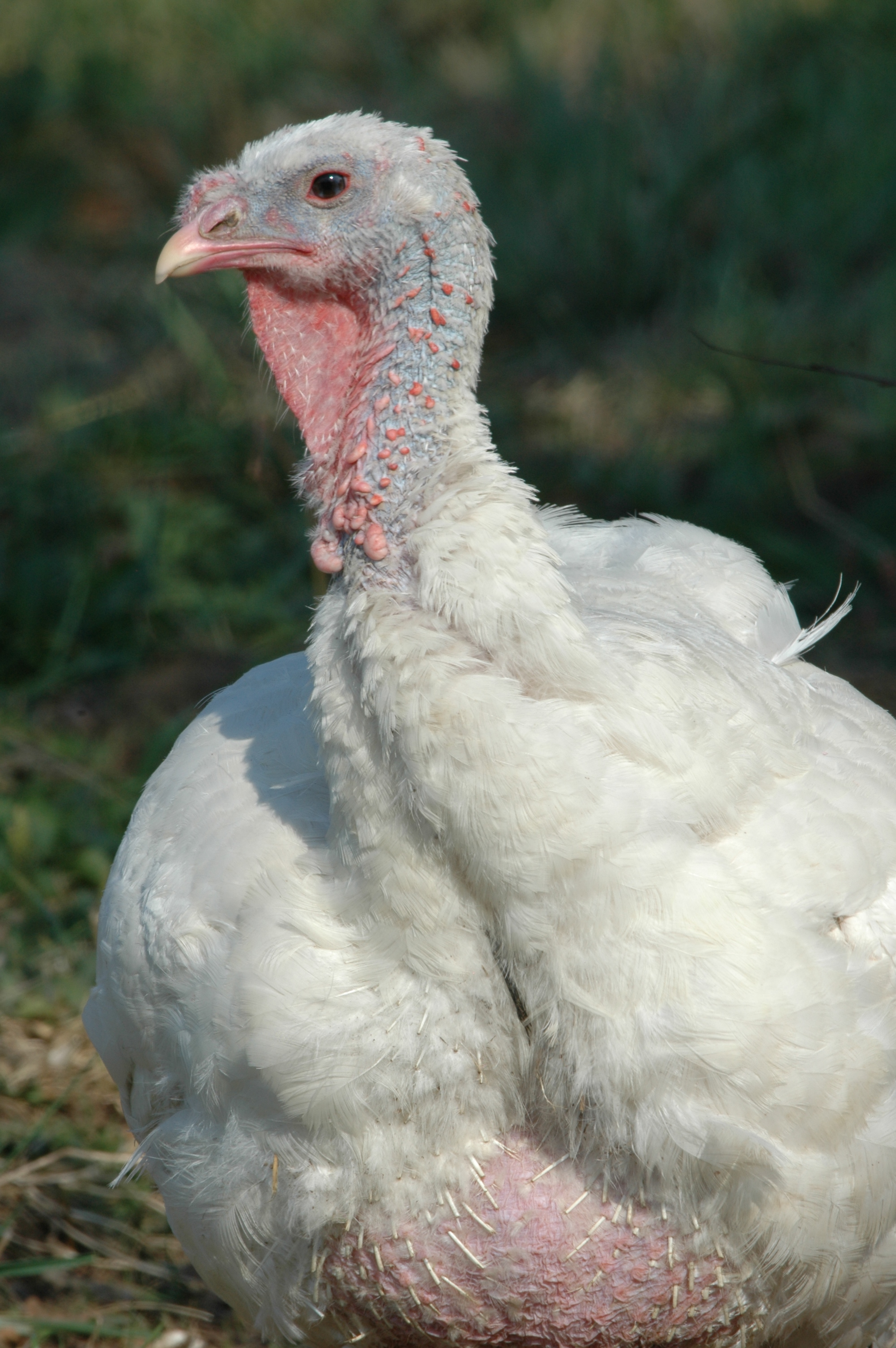
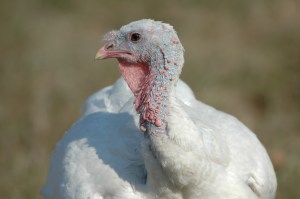
Photo by Jim Robertson

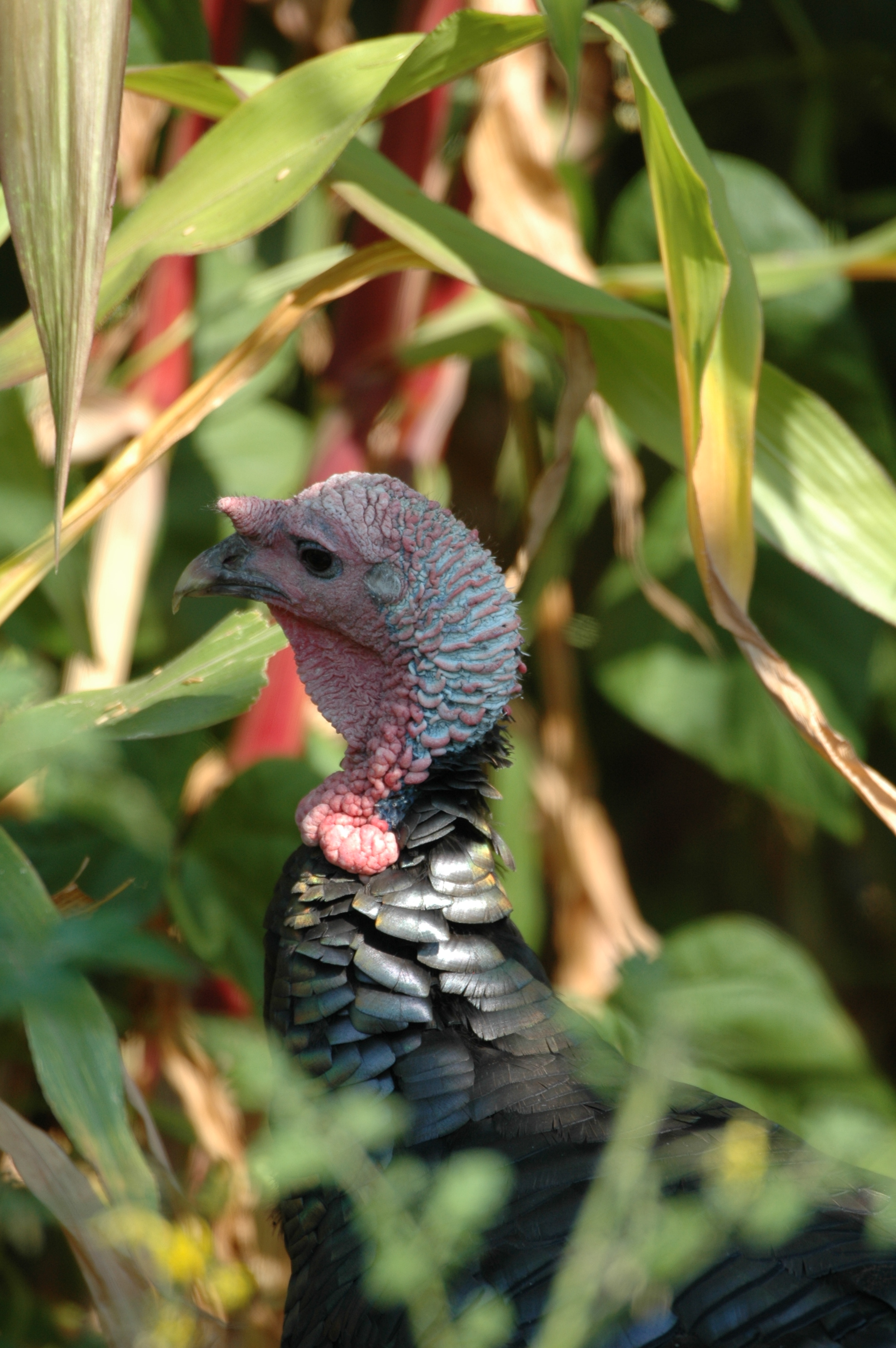
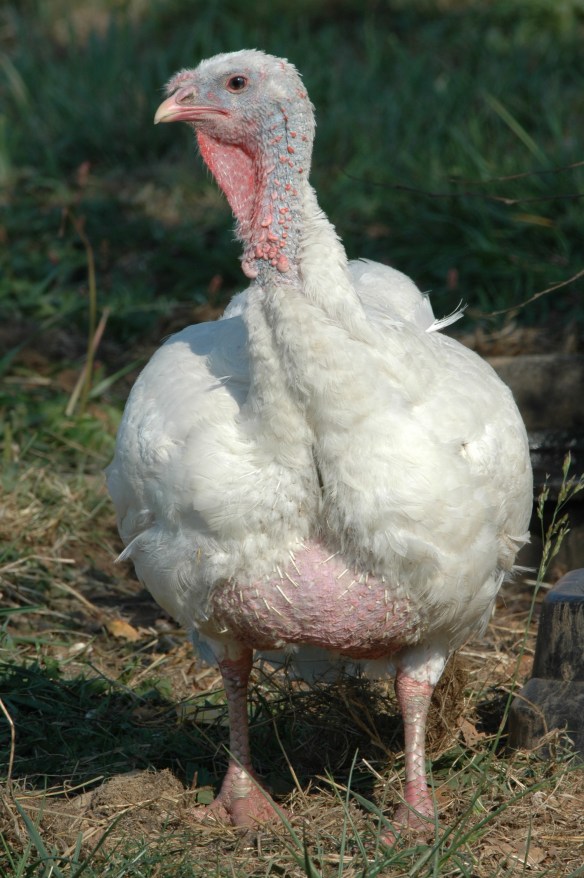
Photo by Jim Robertson

is no reason at all to slaughter and to eat these fascinating sentient beings in the name of a holiday, and turkeys surely are sentient beings (see also). Dr. Ian Duncan, a world-renowned expert on the behavior of food animals notes, based on detailed scientific research, “It is indisputable that poultry are capable of feeling pain. All poultry species are sentient vertebrates and all the available evidence shows that they have a very similar range of feelings as mammalian species. Poultry can suffer by feeling pain, fear, and stress.” More information about the lives of turkeys can be found here.

Turkeys are also very smart and have distinct personalities. People used to write off fish as being unfeeling “lower” animals but we now know, also based on solid scientific research, that they are sentient and feel pain (see also). The more we study other animals the more we learn about how complex their lives are, even for animals previously thought to be unfeeling creatures.

There’s no reason to consume pain and misery: Would you kill and eat your dog?

Holidays should be times for deep reflection. So, please reflect on these facts. More than 45 million turkeys are killed every Thanksgiving. More than 300 million are killed annually. Before they are mercilessly slaughtered individuals are kept in the most inhumane conditions, on the floors of dark, filthy sheds, houses of horrors, where they walk through their own excrement, breathe ammonia-filled air, and are cramped together so tightly they can’t move or get away from one another. As a result there are numerous fights among normally peaceful individuals and they suffer from massive injuries and a wide variety of diseases that humans consume.

Furthermore, when one eats a turkey carcass they are eating a genetically engineered animal and also consuming pain and misery. To keep turkeys from injuring one another their toes and beaks are cut off with hot blades with no anesthetic or analgesic, and when their throat is slit many are still conscious. We know chickens feel empathy and there is every reason to believe that turkeys do too. I know no one would treat their dog like turkeys are treated from birth to their heinous road to death.

There are numerous very tasty non-animal alternatives and even if you don’t think they’re as yummy as a dead bird is it really asking too much to give up something that isn’t a necessary part of your diet? I don’t think so.

Animals shouldn’t be used as token objects of joyous festivities

In order to make changes in the way we live, including who, not what, we eat, we occasionally need to leave our comfort zones. By not turning a blind eye to the incredible suffering that turkeys experience and choosing to forgo eating them, you can add more compassion to the world. You can even adopt a turkey. I urge everyone to try to make this incredibly simple change right now, for this coming holiday and for future celebrations in which animals are consumed as mere token objects of the festivities. I can’t imagine you wouldn’t feel better about yourself. Thank you very much for trying.

Marc Bekoff’s latest books are Jasper’s story: Saving moon bears (with Jill Robinson; see also), Ignoring nature no more: The case for compassionate conservation

Thanksgiving Celebration—Eat Lots, Drink Lots, Respect Little, Care Less

It’s a special morning of a special day, but out in migratory bird habitat there’s a massacre going on. Though nearly every family across the country has a turkey thawing out in preparation for a gluttonous banquet a little later in the day,

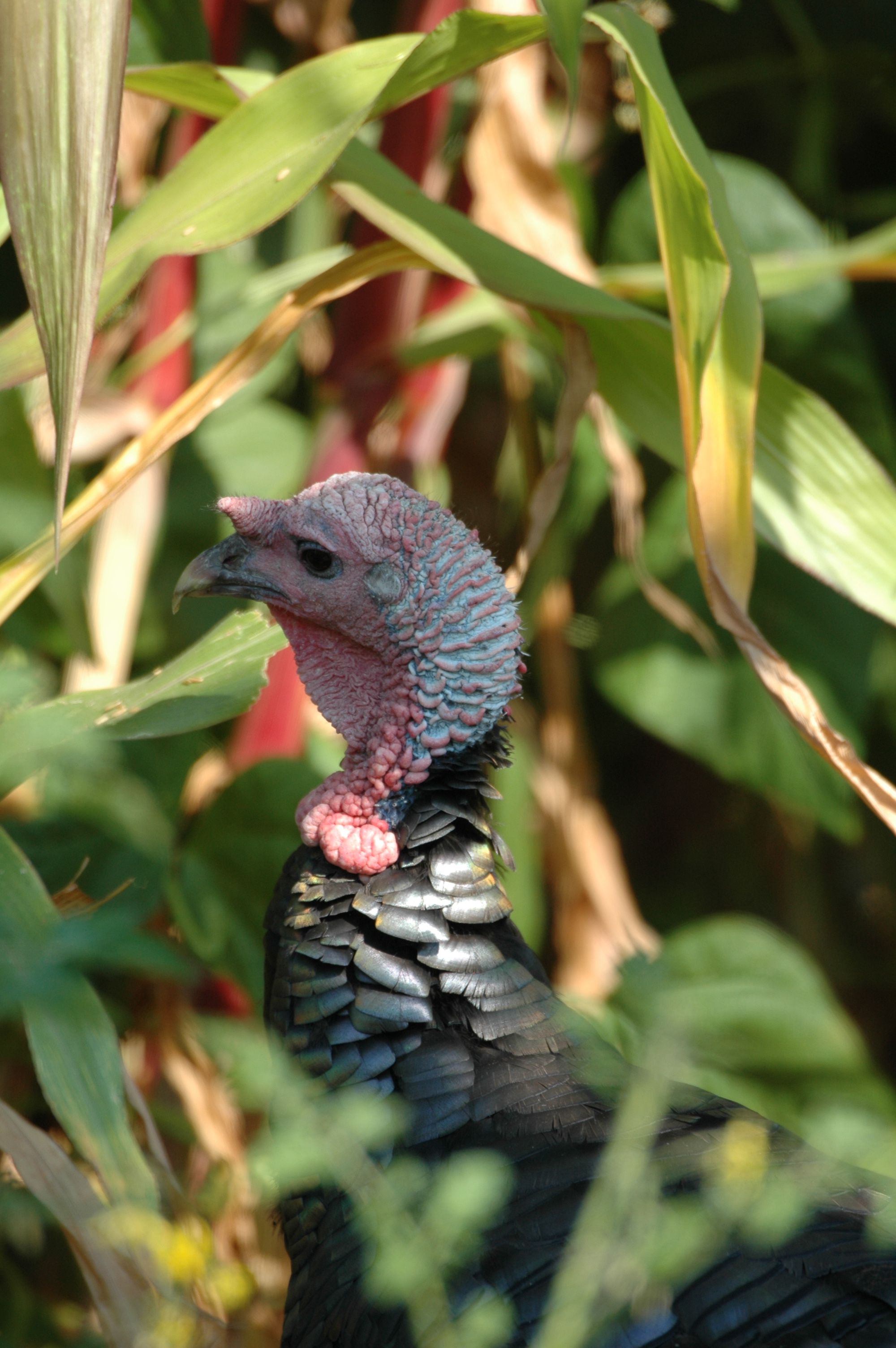
Text and Photography ©Jim Robertson, 2013. All Rights Reserved

Text and Photography ©Jim Robertson, 2013. All Rights Reserved

recreational meat-pursuers are ringing in the season by blasting away into flocks of wintering geese to make up for the fact that their sacrificial bird-of-the-day came from a grocery store.

Never mind that the poor being was raised in a windowless barn, crowded-in with so many other turkeys that their wings wither away to virtual stumps of appendages, their natural coloration was bred out of them anyway.

Can’t afford your own tormented Thanksgiving turkey this year? Not to worry, chances are some abattoir has donated hundredsDSC_0277 of frozen carcasses to your local food bank, in hopes of promoting their own animal industry. Here on the coast, turkeys were donated by a thriving seafood “processing” plant.

Non-human life has very little value in today’s world. Heck, a Montana wolf hunter can go out and mow down a loyal dog walking practically at her beloved master’s side and not face any legal consequences. The value of mass-produced birds is measured by the pound. No charge for their stark white feathers; they come off the body easily and can fetch a penny or so a pound at the pillow factory.

But the mighty hunters out in the tidelands currently shooting up a storm won’t be satisfied until they kill something themselves. There’s nothing like a hands-on blood bath to get you in the mood for a feast, I guess. Some folks haven’t come far from Plymouth Rock; at least they phased out witch burnings.

Text and Wildlife Photography ©Jim Robertson, 2013. All Rights Reserved

Text and Wildlife Photography ©Jim Robertson, 2013. All Rights Reserved

Condemning the USDA’s Decision to Slaughter Wild Turkeys

http://freefromharm.org/animal-cruelty-investigation/weighing-in-on-the-usdas-fish-wildlifes-decision-to-slaughter-wild-turkeys/#sthash.fWYeWk8O.dpuf
By Robert Grillo  –  August 15, 2013
Upon discovering a story entitled Feds round up wild turkeys on Staten Island for slaughter, I felt compelled to comment. Please consider leaving a comment as well:

Let’s call this practice what it is: a transparent form of speciesism. In other words, if you’re another species, and you get in our way or become a “nuisance” to us, we’re going to massacre you — not because we have to, but just because we can.

Might makes right. That’s the underlying premise for treating other species like trash, killing them off when they get in our way, destroying their habitat so we can play golf, breeding more so we can use them for target practice, taking away the babies of others so we can view them in captivity for our own amusement, breeding billions of others through artificial insemination so we can destroy their lives in their youth in a slaughterhouse, emptying our oceans of trillions of sentient life forms so we can buy a can of tuna, and then subjecting millions of others to needless pain and suffering in lab experiments intended to find cures for the diseases caused by eating them. We create all of our own conflicts with animals. We create a staged competition with other species to use as a pretext for destroying their lives, “for our own protection,” of course. I rescue and raise chickens and other birds that come from a kill shelter.

The germaphobe chicken keepers in this comment string have got things a little twisted. They blame the victim, not the perpetrator. They blame the birds for defecating. They excuse themselves for a much more egregious offense: buying and using them for their eggs and flesh directly from the hatcheries — the cruelest industries on earth — which creates the problem in the first place. Think for a moment how that victim blaming serves us. Voltaire famously wrote that “If we believe in absurdities, we shall commit atrocities.” What a prophetic statement to describe the utter selfishness and sociopathic age we live in.

turkey-factory-farming

Remember, Tuesday Is Soylent Green Day

As with Christmas, Thanksgiving has become a rather hedonistic holiday these days. You’d have to pin your ears back, with empty cornucopias held tightly against them, to hear even a faint reference to the giving of thanks through the din of loud chatter about seemingly more important things like football, where to get the best deals on Black Friday, or how to deep fry a turkey. But any thanks you heard would be to “the lord above,” rather than to the victims of the decadent feast.

Completely lost in the hype of “tradition” and “Turkey-day” is any mention of giving even a passing “thank you” to the birds who suffered more indignities than space would allow me to mention here. Indignities that include the fact that turkeys on factory farms receive less than three square feet of personal space. And after they hatch, their beaks are cut off—a standard practice for chickens as well. No anesthesia or painkiller is used for either species. This process, which is known as “debeaking”, has been compared to having the ends of your fingers sliced off. It deprives birds of one of their most important sources of sensory input.

A debeaked bird cannot eat properly or explore his or her environment fully, nor can they preen themselves or their flockmates.  They may also experience acute and chronic pain in their beak, head, and face. In addition to being debeaked, turkeys also have the ends of their toes and their snoods cut off, often with nothing more than a pair of scissors (and as with debeaking, performed without anesthesia).

According to Liberation BC, both chickens and turkeys on modern factory farms have been genetically engineered and pumped with antibiotics; as a result they grow much faster than ever before. For example, in the 1960’s, it took a turkey 32 weeks to reach slaughter size, but now it takes only 13-16 weeks. In the 1950’s, it took a chicken 84 days to reach five pounds. Today, it takes 45 days, meaning that they are not even old enough to cluck yet when they die.

And PETA adds, their unnaturally large size also causes many turkeys to die from organ failure or heart attacks before they are even 6 months old. According to an investigative report in the Wall Street Journal on the miserable conditions on turkey farms, “It’s common in a rearing house to find a dead bird surrounded by four others whose hearts failed after they watched the first one ‘fall back and go into convulsions, with its wings flapping wildly.

Factory farm operators walk through the shed to kill the slow-growing turkeys (so that they don’t eat any more food), such as those who fall ill because of the filthy conditions or become crippled under their own weight.

In Canada, turkeys and chickens can legally be transported for up to 36 hours without food, water, or rest, and there are no limits as to the length of the journey. They are transported in open-air crates, resulting in high mortality as the birds are exposed to all sorts of weather.  Each bird is worth so little, however, that it is cheaper overall for the industry to use open-air crates.  Every year in Canada, 2 million broiler chickens and 20,000 turkeys are already dead when they arrive at slaughterhouses.  An additional 8 million broiler chickens and 200,000 turkeys arrive so diseased or injured that they are considered “unfit for human consumption”.
The surviving birds are handled roughly at the slaughterhouse, where they are unloaded by forklift and dropped onto a conveyor belt. With thousands of birds to be processed every hour, there is no reason for employees to stop and pick up the individual birds who miss the belt and fall to the ground.

When it comes time to slaughter the birds, they are hung by their feet on a moving rail and dragged through the stunning tank, an electrified water bath meant to stun and immobilize them. These are often set lower than is necessary to truly render the birds unconscious out of concerns that high voltage might damage the carcass and therefore diminish its value.

They are then carried past the tank to have their throats cut either by a mechanical blade or a plant employee. Often, struggling birds are cut improperly. As a result they are moved, fully conscious, to the scalding tank, where they are boiled alive.  Estimates place the number of affected birds at about one in twenty; at any rate, this occurrence is so common that the industry has a term for it: “redskins.”   …

Clearly, nobody gives much in the way of thanks to the “most important guest” at the table (as a recent Safeway ad described the turkey carcasses they were selling). You’d be damned lucky to overhear even a cursory mention of the miserable existence their edible “guest” underwent prior to the killing and plucking process. There is scarcely a sign that the hundreds of millions of Americans who gorge on the bodies of 45 million turkeys each year give a whit about whether these amazing and impressive birds had—prior to “harvest”—a life that allowed even a modicum of the freedom they would have experienced before the grossly over-populated human world made them their food-slaves.

Appropriately, I watched the timeless 1970s movie Soylent Green last night. Set in 2022, the film opens with a slide show of earlier eras, back when the Earth was covered with forests and open fields, and there were only a few scattered settlements of people who travelled in horse-drawn wagons.

As the images pass quickly by, we see the first automobiles (tail pipes spewing toxic carbon gases), followed by a massive blacktop parking lot jam packed with Model Ts. The pictures begin to flash almost more rapidly than we can focus, but we catch glimpses of factories with smokestacks billowing and crowds of people barely able to

move without trampling one another. (Come to think of it, what we are witnessing looks a lot like the inside of an average modern-day poultry barn, where Thanksgiving turkeys are forced to live out their lives in intense confinement.)

The first scene of action takes place in a cramped little New York City apartment, the dwelling of the film’s two main characters, Thorn, a semi-corrupt detective, and his elderly room-mate and research partner, Sol, who is constantly going on about the good old days—a world that Thorn can’t possibly envision or relate to.

They are among the lucky few; most people sleep on the stairways or in the hallways or anywhere they can find shelter from the oppressive heat caused by an out of control greenhouse effect. We overhear a program on their worn out old TV which is an interview with the governor of New York, touting a new food product called “Soylent Green,” ostensibly made from the ocean’s plankton. (Everyone in that day and age knows that the land is used up, but they’re told the oceans can still provide for them).

Food in this depressing, human-ravaged world comes in the form of color-coded wafers, distributed under strict government supervision. Hordes of people stand in line for their ration of Soylent yellow or blue made from soy, or other high protein plants grown behind the fortress-walls of heavily guarded farms.

Signs remind the throng that “Tuesday is Soylent Green day.”

The multitudes are exceptionally unruly on Tuesday. Brimming with anticipation, they can’t wait to obtain a ration of the special new product. When they get out of hand, “scoops” (garbage trucks fitted with backhoe-like buckets on the front) are called in to scoop them up and haul them off…

Spoiler Alert:

To make a long story short, by the end of the film, Thorn learns that the oceans are dead and the actual ingredients of Soylent Green are something a bit harder to stomach than plankton. In the final scene, a mortally-wounded Thorn is carried away on a stretcher as he desperately tries to tell skeptical onlookers, “Soylent Green is People!” “They’re making our food out of people. Next thing, they’ll be breeding us like cattle for food!”

Could it ever happen? Could the human race ever stoop so low? If the scenario seems too hard to swallow­, consider this: the conditions animals are forced to endure on today’s factory farms would have seemed unimaginable to people living a hundred years ago.
­­

The Last “Traditional” Thanksgiving

In the beginning, God created turkeys…well, that’s not exactly true—turkeys evolved in North and Central America somewhere in the neighborhood of twelve million years ago, during the Miocene/early Pliocene epoch—but it makes for a good story.

Turkeys are intelligent, highly social and easily distressed when isolated or kept from their familiar surroundings. Adults can differentiate between friends and possible foe, and have been known to go into attack mode to drive off outsiders. Benjamin Franklin described the turkey as “a Bird of Courage, and would not hesitate to attack a Grenadier of the British Guards who should presume to invade his Farm Yard with a red Coat on.”

Their size, showy feathers and territorial disposition make turkeys an easy target for anyone with a weapon and an unwholesome urge to kill. Native Americans have a long history of feasting on turkeys that began well before the first Thanksgiving—the California turkey was hunted to extinction over 10,000 years ago. Meanwhile, modern human’s industrialized abuse of turkeys is nothing short of barbaric. Man has become so proficient at playing God with the turkey that nowadays the once proudly feathered bird is hardly recognizable. The vast majority of domesticated turkeys are bred to have white feathers because their pin feathers are less visible to the feaster when the carcass is “dressed” (glib jargon meaning butchered and mechanically plucked).

Any compassionate creator would be appalled by the unimaginable scale of institutionalized abuse of turkeys on factory farms or even on pseudo “free range” feel-good farms. Yet, each year turkeys are depicted—appearing at ease or even pleased with their plight—in inane commercials meant to soothe any holiday shopper who may have inadvertently stumbled onto the ugly truth about the suffering and cruelty inherent in the meat industry.

If you’re feasting on the flesh of one of the 45 million turkeys slaughtered this Thanksgiving season, please take a minute to consider the unnecessary suffering your meal caused and make this your last “traditional” Turkey-kill Day. Next year, try celebrating the life of the turkey while you feast on Tofurky or Field Roast, cranberries, candied yams, mashed potatoes, dressing, pumpkin pie and all the other tasty non-animal fixin’s. You may end up stuffed, but at least a bird won’t have to be.

Text and Wildlife Photography ©Jim Robertson, 2012. All Rights Reserved

.

Earth to Ryan: ALL Life is Life

I was going to lay off Paul Ryan for a while, until I read his statement in an interview with a Pennsylvania news station: “I stand by my pro-life record in Congress. It’s something I’m proud of.” I just find it anomalous that a diehard bowhunter claims to be “pro-life.” Either he’s lying about championing life, or he doesn’t understand that humans aren’t the only animals imbued with it.

Since his congressional record leaves no doubt about his militantly “pro-life,” right-wing, anti-abortion stance (he opposes the procedure even in cases of rape or incest), it must be that he considers only human life worthy of the L-word. Apparently all others don’t measure up to the status of having life, in his opinion. It may come as a shock to someone so used to depersonalizing and objectifying certain beings while pursuing their favorite lethal hobby, but whether human or non-human, all life is life.

When I think of the term “pro-life,” I think of pro-wildlife (and therefore, anti-hunting); pro-animal life (humans being animals, they’re included here); pro-animate life; pro-the-living. But I fail to see how a human ovum fertilized through an act of incest or violence rates higher than a fully aware, fully functioning adult deer, elk or turkey.

Text and Wildlife Photography ©Jim Robertson