


The 20 percent price cut is part of a strategy to take plant-based meat mainstream.By Kelsey Piper Feb 2, 2021, 11:35am EST0
https://www.vox.com/future-perfect/2021/2/2/22260454/impossible-foods-burger-plant-based-meat
/cdn.vox-cdn.com/uploads/chorus_image/image/68757369/1170742968.0.jpg)
Finding the best ways to do good.
In the past few years, meatless meat products have taken off among consumers. But the meatless meat market is still only about 1 percent of the meat market. One of the biggest reasons: Plant-based meat products are considerably more expensive.
There are signs, though, that that’s changing. Impossible Foods products on grocery store shelves should get about 20 percent cheaper in upcoming weeks, the company announced Tuesday morning. The company will suggest to retailers that prices drop to $5.49 (from $6.99) for a two-patty package and $6.99 (from $8.99) for a 12-oz. package of ground Impossible beef in the US (actual prices will vary by location and by retailer).
The announcement follows a similar price cut Impossible Foods made for restaurant distributors at the start of the year, and it’s the latest attempt by plant-based meat makers to cut into meat’s big price advantage.
The pandemic has only underscored the importance of cutting into that price advantage and making meatless meat a mainstream alternative to factory-farmed meat. Slaughterhouses, long notorious for their terrible working conditions, have been coronavirus hotspots, in some cases because they responded to the coronavirus crisis by telling employees not to take any sick leave for any reason. And then there are the larger-scale problems that the pandemic reminded the world of: It is a public health hazard to raise animals for food in crowded conditions that can incubate and rapidly spread disease, and our farming practices risk starting the next global pandemic.
In light of those problems, consumers have shown greater interest in plant-based offerings. More and more traditional food companies have launched plant-based meat brands, more and more fast food and casual dining restaurants have added menu options, and major players in the field have raised a lot of money.
Having won the first battle — getting consumers interested enough to try plant-based foods, and investors interested enough to fund them — plant-based meat companies are setting their sights on a bigger challenge: getting plant-based meat products as cheap as animal meat products are. The plant-based meat industry has to be bigger to compete with animal products on price — and competing on price is a key component of getting bigger as an industry.
One pound of factory-farmed beef burgers at the Walmart near me costs just $2.80/pound. To give every person access to plant-based alternatives and to meaningfully transition away from factory farming, plant-based alternatives have to get just as cheap — without cutting any of the same corners.
Plant-based meat is still a long way away from the rock-bottom prices of animal meat. But Impossible Food’s 20 percent price cut is one more step toward making plant-based meat a reliable alternative to factory-farmed animal meat.
Meat in America is shockingly, unprecedentedly cheap.
The average price for a meat alternative sold in a grocers’ meat department in the US last year was $9.87/pound. The average price for beef? $4.82/pound. Chicken is even cheaper, at $2.33/pound.
That’s a big difference, and might go a long way toward explaining why even as consumer interest increases and the flavor profile of plant-based meats gets closer and closer to the flavor profile of animal meats, plant-based meats still make up only a very small share of sales.
“The animal industry has optimized its processes for a century,” Dennis Woodside, the president of Impossible Foods, told me.
“The most processed cheap forms of chicken are just insanely cheap, relative to historical standards and relative to other food products on the market,” Lewis Bollard, who researches farm animal welfare at the Open Philanthropy Project, told me last summer. “The chicken industry has managed to cut all their corners, they don’t pay their environmental bills, they don’t pay for a lot of the public health hazards they cause. They have managed to produce a product that is just artificially cheap and hard to compete with.”
But optimization is just one part of the story. The other is that the meat industry has accrued a lot of political power that they’ve leveraged to make meat cheap — and to make Americans eat a lot of it.
Animal agriculture is heavily subsidized by the federal government. That said, neither Bollard nor Zak Weston, a researcher at the Good Food Institute, thinks direct monetary subsidies were the main reason meat was so cheap.
More important are invisible forms of subsidization like not enforcing worker’s rights, exempting factory farms from animal cruelty laws, not requiring companies to engage in environmental cleanup, and not restricting risky practices — like antibiotic overuse — that impose costs on the whole world.
“It’s not the case that plant-based meat is weirdly expensive or labor intensive or something,” Weston previously told me. “The animal protein industry has spent decades wringing incredible efficiencies out of every part of the program. Animal meat gets to externalize a lot of its negatives — externalities like health care, ecological, worker welfare, animal welfare.”
In other words, if the animal meat industry were held accountable for the costs their products and their workings inflict on society, meat would be much more expensive.
Impossible’s 20 percent price cut is large in absolute terms, but price parity is still a long way away.
Nevertheless, industry experts are optimistic.
“We were thinking about cost reductions and getting to the cost structure of commodity ground beef from the very beginning,” David Lee, chief financial officer of Impossible Foods, previously told me. “We knew that if we had the best product at the same cost, then consumers would vote with their stomachs.”
In the past few years, they’ve already made progress. Last year, Impossible Foods slashed prices for restaurants by 15 percent. Now, they’re cutting recommended retail prices by 20 percent. Companies were wary of sharing with me specific figures on their costs, but based on Securities and Exchange Commission filings, Bollard estimates that Beyond’s cost of production has fallen from $4.50/pound in mid-2019 to $3.50/pound in mid-2020.
At a few outlets, such as Dunkin’, Beyond Meat’s Sausage Sandwich sells for the exact same price as the meat sausage sandwich. Beyond Meat executive Charles Muth says that Beyond’s products do much better when they’re listed at the same price as meat.
“The thing we like to say here,” Muth said last year, “is we’re changing the way consumers and shoppers think about what they eat. We don’t want pricing to be a barrier when they’re considering that. We’d like to take pricing out of that conversation as best as we can.”
There’s no single brilliant secret to making a mass-manufactured product cheaper. Instead, experts told me, it’s a matter of relentlessly making every element of the supply chain, the manufacturing process, and the distribution process work slightly better.
When a company is big enough, it can make ingredient purchases at scale, get expensive equipment that’s only worthwhile if it’ll be used to make an enormous number of products, have distribution centers in lots of different parts of the world to minimize transportation costs, and negotiate better deals for its supplies. There’s the potential for a virtuous cycle where lower costs recruit more consumers, who make further cost savings possible.
It’s those savings from scale that drove Impossible Foods’ latest price cuts. “Over the last year, we’ve more than doubled our production,” Woodside said. “The more that we are selling, the better utilization we have of our manufacturing lines, the better prices we get from our supplies, the more suppliers we can bring into the plant-based ecosystem.”
And while the ultimate goal of every plant-based foods expert I’ve spoken to is price parity with animal meat, price cuts make a big difference even before they reach that point. Cheaper plant-based meat means options for more consumers and more restaurants. It also means less demand for animal products at a time when prices are high, animal welfare is ignored, and Congress is investigating coronavirus outbreaks at slaughterhouses. There’s a long road ahead, but a 20 percent price cut is a substantial step forward.


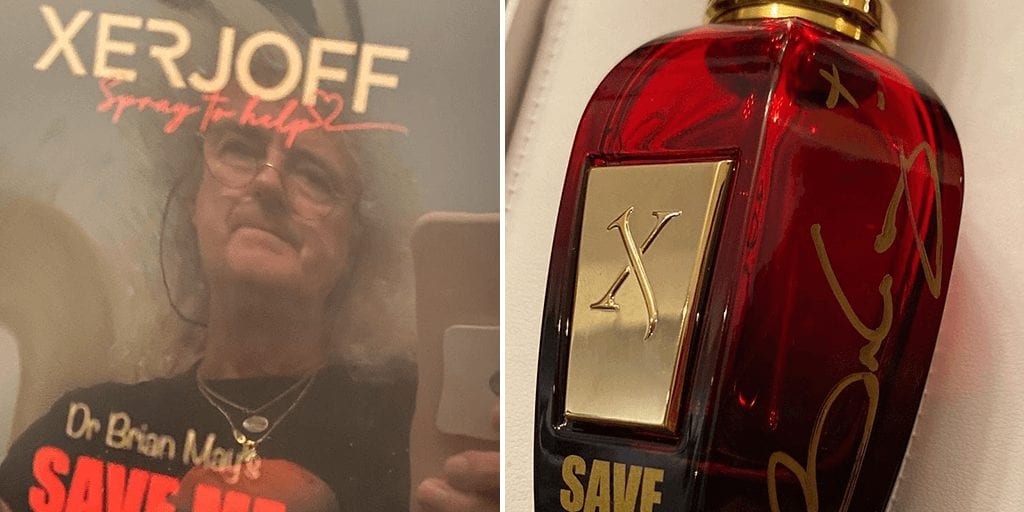 Image: @brianmayforreal / Instagram
Posted byMohsina Dodhiya
The limited-edition perfume will be sold in a blood-red bottle and all money raised will be sent to Brain’s Save Me Trust, which works for wildlife protection.
Today, Queen legend Brian May is launching his own badger-scented perfume to raise funds for the protection of wildlife.
The legendary musician has teamed up founder of the Xerjoff perfume company, Sergio Momo to develop the new fragrance, which is named after the 1980’s hit Save me.https://www.instagram.com/p/CJxrQ2bBblK/embed/captioned/?cr=1&v=13&wp=675&rd=https%3A%2F%2Fwww.totallyveganbuzz.com&rp=%2Fnews%2Fbrian-may-perfume-protect-wildlife%2F#%7B%22ci%22%3A0%2C%22os%22%3A5858.504999894649%7D
The limited-edition perfume will be sold in a blood-red bottle and all money raised will be sent to Brain’s Save Me Trust, which works for wildlife protection.
Taking to Instagram to make the announcement, May wrote: “What’s all this?!!
“Something I hope you will all love!
“The launch of the amazing SAVE-ME perfume! To benefit wild animals. Through the kindness of Sergio Momo – founder of Xerjoff !!!!
“Limited edition coming soon!”https://www.instagram.com/p/CJuqa6mBSfr/embed/captioned/?cr=1&v=13&wp=675&rd=https%3A%2F%2Fwww.totallyveganbuzz.com&rp=%2Fnews%2Fbrian-may-perfume-protect-wildlife%2F#%7B%22ci%22%3A1%2C%22os%22%3A5878.934999927878%7D
SAVE-ME
The ingredients of the perfume include pink pepper, jasmine, chamomile, mimosa, ylang-ylang, and musk.https://www.instagram.com/p/CJq-Izhr2qe/embed/captioned/?cr=1&v=13&wp=675&rd=https%3A%2F%2Fwww.totallyveganbuzz.com&rp=%2Fnews%2Fbrian-may-perfume-protect-wildlife%2F#%7B%22ci%22%3A2%2C%22os%22%3A5893.954999977723%7D
Speaking about the new launch, the Sun reported an insider, who said: “A lot of effort has gone into it and Brian did a lot of smellings before he was happy.
“The scent has deliberately earthy overtones — a hint of clean badger fur, some sandalwood, and something a bit limey.
“It’s surprisingly refreshing and hopefully will fly off the shelves.”
The Rock & Roll Hall of Famer and Mono will host an official presentation online to promote Save Me at shop.livescale.tv today at 6 pm UK time.https://www.instagram.com/p/CJq-LZ7L60I/embed/captioned/?cr=1&v=13&wp=675&rd=https%3A%2F%2Fwww.totallyveganbuzz.com&rp=%2Fnews%2Fbrian-may-perfume-protect-wildlife%2F#%7B%22ci%22%3A3%2C%22os%22%3A10944.094999926165%7D
Activist May
May, who regularly speaks out about animal-rights, participated in the Veganuary challenge in 2020 and later urged people to give the lifestyle a shot especially in the wake of the coronavirus outbreak.
In an interview, with NME, he spoke about the connection between eating animals and pandemics such as COVID-19. May said: “If you want to get deep into it, I think we should be looking again at whether we should be eating animals. That’s a central issue here.
“This pandemic seemed to come from people eating animals… It’s becoming more well known that eating animals is not the greatest thing for our health.
“But to go vegan was just a decision, and I haven’t been preachy about it. But now, we’ve seen more of the effects of how eating animals has brought us to our knees as a species. I think it’s time to re-examine our world in a way that doesn’t abuse other species.
“Whether we will see that happen, I don’t know. But I think I will start to be a bit more preachy about veganism because to me it is the way forward, in so many ways.”


NEWSPosted: Nov 27, 2020 / 08:55 PM CST / Updated: Nov 27, 2020 / 09:00 PM CSTjavascript:false
https://www.ozarksfirst.com/local-news/family-raises-turkey-daughter-befriends-it-before-it-can-be-eaten/?utm_source=newsfore&utm_medium=email&utm_campaign=2113&tqid=1.y0NHd1GhUBH68_NM7xB7w5NmpWumozetYxipbR
CENTRE HALL, CENTRE COUNTY, Pa. (WTAJ) — Six-year-old Maci Neff found an unlikely friendship in a turkey named Via.
It all started back in March, at the beginning of the pandemic.
“So the plan was we were going to hatch them, raise them, and then they were going to be dinner,” said Maci’s mother, Kayla.
But it didn’t take long for that plan to change.
“It was night time and we heard a crack, and it was Via’s egg,” Maci said.
The moment Via hatched, “It just started with instant snuggles on the couch when she was very tiny and then I don’t know their little relationship they just bonded,” Kayla said. “It as almost as if via looked at Maci as mom and their relationship just kept going and now they just like to hang out.”
“Whenever they lay on the couch together and watch TV, wasn’t very normal,” laughs Kayla.
But who’s to say what’s normal in 2020? If you want to play Barbie’s with your pet turkey or take her on the trampoline, nothing is off limits.
Maci has now fallen in love with turkeys. She said they have a great personality. Especially Via; they even talk to each other. Maci said she understands Via’s gobbles.
“The pandemic was terrible when it all started but for my daughter, something really great came out of it and she built this awesome relationship with her pet,” Kayla said.
All that time staying home from school at the beginning of the pandemic and then throughout the summer ended up teaching Maci some expected lessons.
“She has learned responsibility, she’s learned kindness, respect of animals,” Kayla said.
It’s a little bit of light in year unlike any other.
“I hope that turkey lives a long time,” Kayla said. “She will never be thanksgiving dinner.”


 Exposing the Big Game