


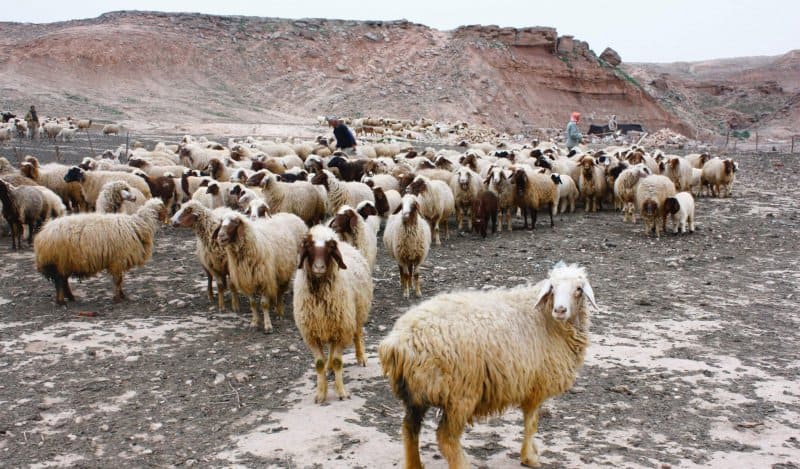
To feed 9 billion people by 2050, and keep planet Earth from overheating, will mean massive and radical food changes – and not just in the way food is grown.
To contain global temperatures to no more than 2 °C above the average for most of human history will require humanity to change its diet, contain its appetite and reform the entire system of food production and distribution.
This is the verdict of the latest study of the challenge set in Paris in 2015, when 195 nations promised to limit global warming – driven by profligate use of fossil fuels and by the conversion of forest, grassland and wetlands into commercial use – to “well below” 2 °C by 2100.
Researchers report in the journal Sustainability that they looked at 160 studies and analyses of global agriculture and food systems and most closely at the world’s smallholders and markets that sustain as many as 2.5 billion people, mostly in the developing world.
Small farmers account for about a third of global agriculture’s greenhouse gas emissions, but these include also many of the people most vulnerable to the coming climate crisis, which is likely to put harvests at hazard on a global scale.
Agriculture, together with forestry and changes in land use, accounts for a quarter of all the carbon dioxide, methane and oxides of nitrogen that fuel global warming.
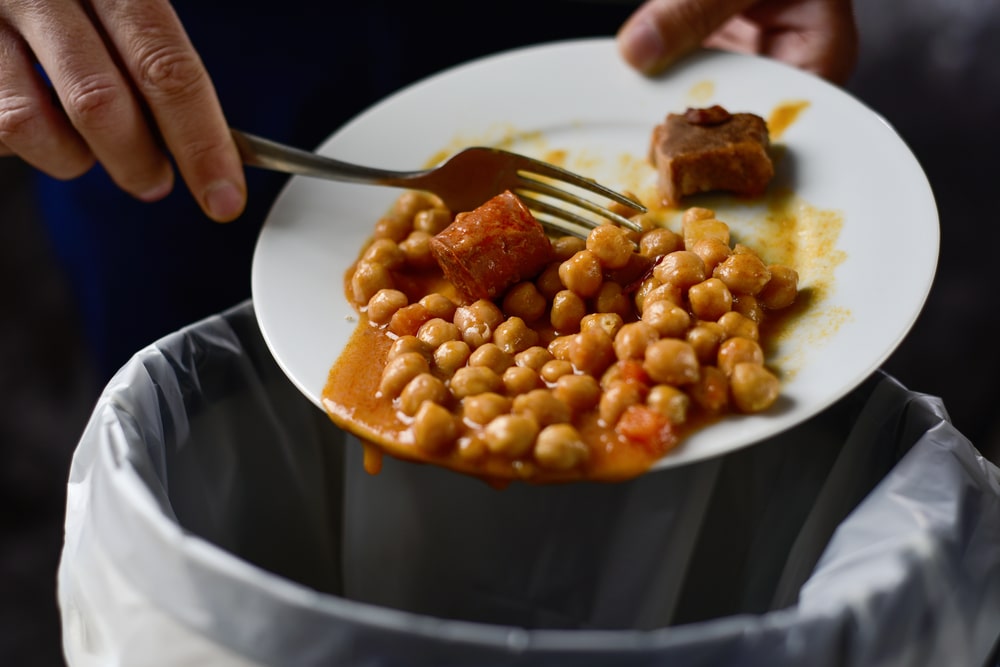
Just on its own, the action of growing grain, fruit and vegetables or feeding grazing animals accounts for no more than 12% of global warming, but a third of all the food that leaves the farm gate is wasted before it arrives on the supper table.
This is enough to provide 8% of the world’s emissions, and if just one fourth of the waste could be saved, that would be enough to feed 870 million people for a year.
Agronomists, crop researchers, climate scientists and ministry planners know of many steps that can be taken to reduce the greenhouse impact of agriculture: even under the most hopeful forecasts, these are likely to be deployed slowly.
The researchers see reductions in food loss as a “big opportunity” that will benefit farmers and consumers as well as reduce emissions. A more challenging problem is to change global appetites: the meat and dairy business accounts for about 18% of all human-triggered emissions, counting the clearance of forests and the impact of changes in the way land is used to feed the demand for meat, milk, butter and cheese.
A shift to plant-based diets would save on land and water and deliver more and healthier meals and permit more forest restoration.
“If you think about the two degree increase, efforts need to go beyond the agriculture sector,” said Anna Maria Loboguerrero, of the climate change, agriculture and food security programme of CGIAR, once known as the Consultative Group for International Agricultural Research, who led the study.
“This means reducing emissions by stopping deforestation, decreasing food loss and waste, reducing supply chain emissions and rethinking human diets, if we really want to get on track to that target.”
The researchers acknowledge that what they propose will constrain farm choices and increase costs. But a second study reports once again that the health benefits of immediate, dramatic cuts in carbon dioxide emissions will save lives, improve human health, and offset the immediate costs of containing planetary heating and adapting to the climate crisis.
“The global health benefits from climate policy could reach trillions of dollars annually, but will importantly depend on the air quality policies that nations adopt independently of climate change,” they write in the journal Nature Communications.
And Mark Budolfson of the University of Vermont, one of the authors, said: “We show the climate conversation doesn’t need to be about the current generation investing in the further future. By making smart investments in climate action, we can save lives now through improved air quality and health.”
A millennial perspective on why the way we farm and how we consume food must be part of the conversation when it comes to the climate crisis

“A unique opportunity to address climate change can be found in our agriculture sector,” writes Kruger, “an area which must be made sustainable if we’re going to survive.” (Photo: PeopleImages/iStock)
This week, a petition signed by more than 100,000 people was delivered to Congress, outlining issues that should be addressed in Representative Alexandria Ocasio-Cortez (D-NY) and Senator Ed Markey’s (D-MA) Green New Deal. This petition shows overwhelming support for the Green New Deal, and calls for more attention to be brought to how our food system can be reformed to combat climate change. With the food and farming sector being the United States’ largest employer, and the country being one of the highest contributors toward climate change, citizens are calling for action to be taken to protect our world.
As someone in their mid-twenties, I have grown up seeing how climate change is actively impacting me and my community. Here in California, I expect droughts in the summer and extreme wildfires or mudslides in the fall; learning from a young age to always conserve water because the next shortage is just around the corner. Young activists from all across the U.S. have seen similar changes in their home states, and we recognize that our future depends on action being taken to stop the climate crisis before it is too late.
“Disinvestment from factory farms is necessary, not only from a climate standpoint, but from a larger human and environmental health perspective as well.”
A unique opportunity to address climate change can be found in our agriculture sector—an area which must be made sustainable if we’re going to survive. Climate scientists have identified agriculture as one of the largest contributors to climate change. This an opportunity to shift agricultural practices away from the large scale, conventional farms that currently dominate our food system to a regenerative, locally-focused, small-scale system that values the welfare of the land and those who work it. CFS has identified several focus points that should be implemented with the passing of the GND resolution to cut back greenhouse gas emissions and create a healthier, more sustainable food system.
1. Invest in regenerative, local agriculture
The future of agriculture lies in the shifting of practices away from large scale monocultures towards small and medium-sized diversified farms. We must wean away from the mass amounts of toxic chemical pesticides and fertilizers being used, and instead integrate regenerative practices such as cover cropping, the use of compost, and the implementation of hedgerows as alternatives that not only add nutrients into the soil, but provide many other ecosystem services. Among these, regenerative agriculture protects biodiversity, including the native bees and pollinators that are currently being decimated by conventional agriculture. Our “Regenerating Paradise” video series covers many practices currently being practiced in Hawai’i—including several that can be implemented nationwide—to reduce carbon emissions and protect our soils. Implementing these practices can sustain our food production all while sequestering carbon, protecting pollinators, and promoting on-farm biodiversity.
Switching to these regenerative agriculture practices will not be easy, but it will be beneficial. Despite research showing the vast benefits that come from cover cropping and other regenerative practices, farmers have been slow to start implementing them. Government and university grants, technical assistance, and further research should be funded to help promote these practices, transition farms, and aid the continuous education of farmers and farmworkers. This investment will have far-reaching effects on farms—preserving native pollinator habitat, sequestering carbon, and providing climate-smart food to local communities.
2. Cut meat consumption and shut down environmentally-harmful animal factory farms
Disinvestment from factory farms is necessary, not only from a climate standpoint, but from a larger human and environmental health perspective as well. Large scale animal operations pollute the water, lead to a higher risk of disease in humans, and contribute large amounts of methane and other greenhouse gases into the air. Cutting back meat consumption, purchasing meat from local sources, and shifting toward plant-based sources of protein are all ways that individuals can help. More people than ever, especially young people, have recognized the harmful impacts of meat consumption and we are turning toward a flexitarian diet, vegetarianism, and veganism as a way to cut back on our carbon footprint. The government has the opportunity to support this effort on a larger scale by providing financial support and technical assistance to ranchers to help them transition to pasture-based and integrated livestock operations that reduce livestock’s impact on climate change and help sequester carbon in the soil.
CFS’s recently launched EndIndustrialMeat.org, a website that highlights some of the negative impacts that come with factory farming, including the vast amount of carbon released into the air and heavy metals being drained into the ground; serious consequences that disproportionately affect rural populations and disadvantaged communities. The GND’s goal to secure clean air and water, healthy food, and a sustainable environment for all communities mean that shutting down these harmful operations is imperative.
3. Reverse the trend of consolidation within the agriculture sector
For decades now, there has been increasing consolidation of seed, livestock, and other agriculture-related companies. These mega-corporations have purchased vast quantities of land and set the rules for how a farm has to run, undercutting disadvantaged farmers and farmworkers, and wrecking rural communities. GND policies can be used to break up these mega-farms, and empower local communities to take back the food system. Breaking up these predatory mega-farms would not only reinvigorate the economies of rural areas, but it would also give these communities access to the healthy, climate-friendly food necessary to slow the rate of climate change.
The growth of small and medium-sized farms would allow farmers and farmworkers to set fair wages and provide safe and humane conditions for themselves and a future for their children. Doing so would not only allow current farmers to continue their operations, but also would open the door for young farmers to have access to the land, resources, and funds needed to operate for a viable, sustainable farm.
4. Support young and disadvantaged farmers
Finally, we must utilize the GND to support disadvantaged and young farmers, paving the way for a climate-friendly food future. For a long time, people have been turning away from farming, instead opting for job opportunities found in cities. For the past several years, there has been a renewed interest in working the land in a regenerative, holistic manner. We must support these new farmers, along with the farmworkers who have been subjugated to the abuses of industrial agriculture, to forage a community-focused, regenerative food system.
The principles of equity and justice outlined in the GND must guide our transition away from industrial monocultures, and toward a food system that supports and uplifts disadvantaged groups, providing the economic assistance and infrastructure needed to improve these communities, and ultimately improving our economy as a whole. Likewise, many young and disadvantaged farmers have limited access to the equipment and mentorship needed to run a successful farm enterprise. Having grants and training programs available to take on the huge costs of tractors, land, and resources necessary to start a farm should be central to the Green New Deal.
Young people have paved the way for the Green New Deal and our future depends on immediate action being taken to stop climate change. Not only will this resolution allow for the huge changes needed to prevent climate change, but will allow for new opportunities for farmers. While the challenge ahead of us won’t be easy, there are many things that can be done to mitigate current greenhouse gas emissions that aren’t being implemented. The GND is an opportunity to reform our way of farming to allow for huge cuts to current emissions, all while creating a more equitable food system.


 This story is part of Degrees Of Change, a series that explores the problem of climate change and how we as a planet are adapting to it. Tell us how you or your community are responding to climate change here.
A quarter of the world’s greenhouse gas emissions come from putting food on the table. From the fossil fuels used to produce fertilizers, to the methane burps of cows, to the jet fuel used to deliver your fresh asparagus, eating is one of the most planet-warming things we do.
And as climate change gets worse, we’re seeing more flooding rains, more heat waves, and more droughts—indicating that this problem in part created by our eating habits is turning round to endanger the future of food.
Science writer Amanda Little examines that future in her new book The Fate of Food: What We’ll Eat in a Bigger, Hotter, Smarter World, and explores innovative ways that farmers are adapting too, from aerial farms and aquaculture to robotic weed pickers. The message is clear: There might be a way out of this, if we rethink how we put food on the table. Read an excerpt from The Fate of Food.
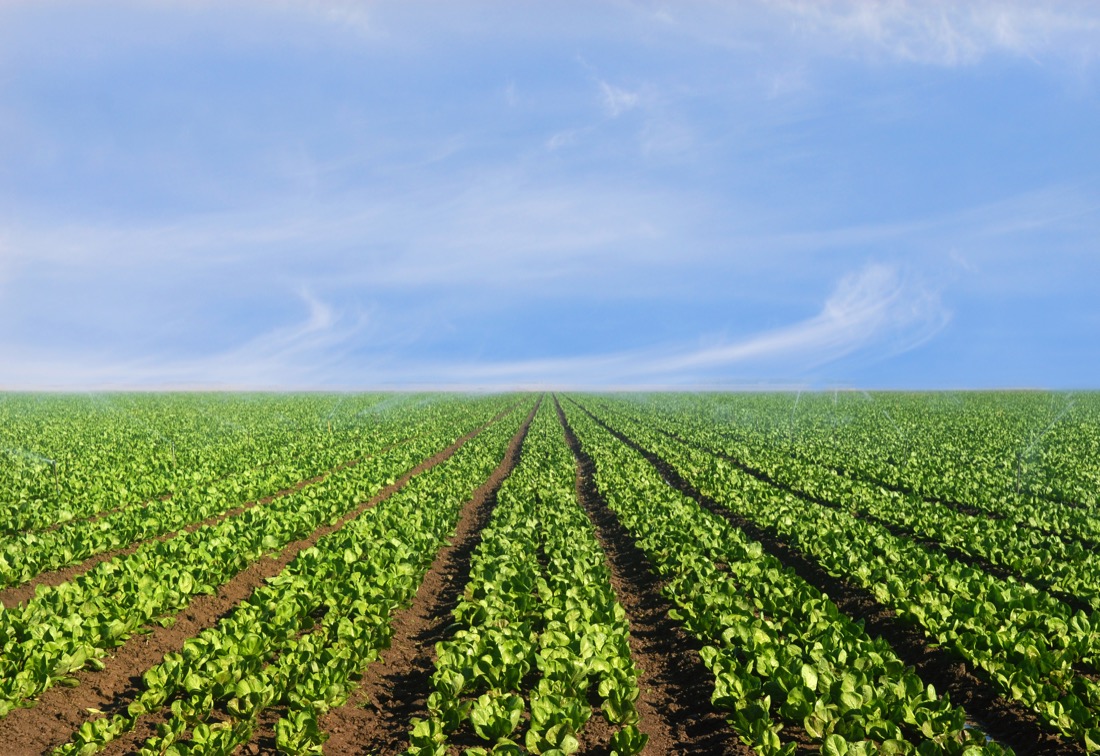
We’ll also be examining the solutions to our carbon-hungry food chain. Stefano Carpin of the University of California Merced is designing a smarter way to water crops, by surveying fields with drones to figure out where to water, and then sending in fleets of robots to send squirts of water from irrigation tubes. He’s currently designing the system for California’s warming vineyards.
Food waste is another significant problem—40% of food goes wasted in this country. Julie Goddard of Cornell University is designing smart packaging that can keep foods fresh, all without the addition of preservatives, which consumers increasingly prefer to avoid. We’ll talk about all those solutions and more in this chapter of Degrees of Change.
David Church in Jacksonville, Florida: What about plant-based meat alternatives? They’re highly processed. I think that would take up a lot of resources.
Amanda Little: Beyond Meat, which is a leading brand in plant-based proteins, runs its pea proteins through a simple process of heating cooling and pressure to create this fibrous structure. So it does take processing, but it’s more sustainable and humane than conventional meats. A University of Michigan study compared the production of Beyond Burger to a ¼ lb US beef burger. It took 99 percent less water, 93 percent less land, and about half the energy. According to the study, the production of a Beyond Burger emits 90 percent fewer greenhouse gas emissions.
Ed Whitehouse in Mount Pleasant, Michigan: What is the time frame for lab-grown meat be rolled out and affordable?
The timeframe generally ranges from “a couple years” to “five to ten years.” The startup Finless Foods, a producer of cultured tuna, said they’ll have a product ready for market in 2020, but then shifted to: “we’re not giving public timelines anymore.” Another producer of lab-grown sausage has said they’ll have a market-ready product by 2021 and the Israeli startup Future Meat Technologies has referenced roughly the same timeframe. The biggest brand in cell-based meat, Memphis Meats, has been careful not to give a rollout date — they say they want to achieve optimal quality as well as cost. The cost of cultured meats has come down dramatically the recent years, but it’s still in the hundreds of dollars per pound. There’s little doubt that with economies of scale, cell-based meats will be cost-competitive with, or cheaper than, conventional meats, it’s just a question of when.
 nielswadsholt@nielswadsholt
1. How much does our food choices impact climate change vs. other life style choices like flying?
2. Is it better to eat imported meat substitutes than locally produced meat?
3. Can food be climate positive (e.g. better than neutral)?
Amanda Little: Many of us meat-eaters generate more planet-warming emissions from eating than we do from driving or flying. Broadly, food production accounts for about a fifth of total greenhouse gas emissions annually. Upshot: agriculture contributes more than any other sector, including energy and transportation, to climate change.
There have been claims that you can produce a “climate-positive” hamburger, but the data is vague and the farming practices behind such burgers are very rarely implemented. But there great strategies for climate-positive progress in agriculture, that range from better fertilizer management (chemical fertilizers evaporate into the air, producing nitrous oxide, a potent greenhouse gas) to reforesting unused or poorly used pasture and farmland. See this excellent report by The Nature Conservancy, “Natural Climate Solutions.”
 Alissa Farina@FarinaAlissa
1. What is the relative environmental impact of different levels of animal product elimination? (Just beef, beef + pork, beef + pork + chicken, pescatarian, vegetarian, vegan)
Amanda Little: Let’s compare beef to fossil fuels: if you give up one 5-ounce steak and eat beans instead, that’s the equivalent of saving about 2/3 of a gallon of gas. More excellent deets [in this Washington Postarticle] Yet another fascinating WaPo piece by Tamar Haspel offers a calorie-for-calorie analysis of the carbon impact of veggies vs. meats. Broccoli, for example, has a higher carbon cost per calorie than chicken and pork. Haspel says: “Beef and lamb are still way worse than anything. Substituting chicken or pork for beef is, from a carbon perspective, almost as good as substituting a plant food.”
Alissa Farina@FarinaAlissa2. Are there any veggies that are surprisingly bad for the environment? Are there any veggies with env impact similar to an animal product?
3. Which favorite beverage is the best/worst for the environment: beer, wine, coffee, tea?
Amanda Little (question 2): Yes. Asparagus! If it requires jet fuel. And many other air-freighted vegetables and fruits. Check out this National Geographic piece: “The Surprisingly Big Carbon Shadow Cast By Slender Asparagus” which gives a breakdown of fruit and veggie carbon costs.
FDA (totally not in thrall to Big Dairy): we’re going to ban calling almond milk “milk”; Missouri State legislature (totally not in thrall to Big Ag): hold my beer.
Also prohibited: “veggie hot dog”; “tofu dog.” The fact that beef-based hot dogs are not made from dogs is not a problem, apparently.
The law would also prohibit the use of “burger” or “dog” in relation to vat-grown, cell-based food, which is made of meat. The statute reserves these appelations for foodstuffs derived from “slaughtered livestock.”
The bill, which passed in January and goes into effect now, was celebrated by thoroughly disinterested party Mike McCormick, president of the Mississippi Farm Bureau Federation: “This bill will protect our cattle farmers from having to compete with products not harvested from an animal.”
The bill has been challenged by the Good Food Institute and the American Civil Liberties Union along with other parties, who argue that it places restrictions on speech that are unconstitutional thanks to the First Amendment. The parties had been in settlement talks, but these have broken down, so litigation is now resuming.
In 1980, the Court supplied the rules for First Amendment protections on commercial speech that are still applied today. Those rules are called the “Central Hudson” test, because they were laid out in Central Hudson Gas & Electric Company v. Public Service Commission of New York.
Here are the rules: First, commercial speech “must concern lawful activity and not be misleading.” Supporters of Mississippi’s law might argue that the term “plant-based burger” is misleading, while opponents argue that consumers know perfectly well what a veggie burger is.
“There’s nothing misleading about the name of a veggie burger, or vegan hot dog, or seitan bacon,” Almy, a lawyer on the Missouri case, told me. “The packages clearly disclose that this is plant-based food that has the taste or texture of this familiar food.”
Even if the speech concerns lawful activity and is not misleading, the government can still regulate it. But it has to meet the following standards: The government must have a “substantial interest” at stake, the regulation must “directly and materially advance the government’s substantial interest,” and “the regulation must be narrowly tailored.”
The way most of humanity eats is bad for us and bad for the environment, a new report contends. And the authors are proposing a new diet that addresses both.
A three-year research project published in the Lancet Wednesday outlines what a panel of nutrition, agriculture and environmental experts believe is the best way to eat for our own health and the planet’s — and it looks very different from what most people eat. Big changes are necessary, the report contends.
It recommends a plant-based diet, based on previously published studies that have linked red meat to increased risk of health problems. It also comes amid recent studies of how eating habits affect the environment. Producing red meat takes up land and feed to raise cattle, which also emit the greenhouse gas methane.
“The food we eat and how we produce it determines the health of people and the planet, and we are currently getting this seriously wrong,” said one of the report authors professor Tim Lang of the City University of London, U.K.
“We need a significant overhaul, changing the global food system on a scale not seen before in ways appropriate to each country’s circumstances.”
The diet that they propose focuses on eating lots of vegetables, getting most protein from plant-based sources like lentils and other pulses, eating more soy and nuts, and for Canadians anyway, much, much less red meat. Eggs should be limited to fewer than about four a week, the report says. Dairy foods should be about a serving a day, or less.
READ MORE: What an early draft tells us about Canada’s new food guide
“It is a substantial shift from what we are currently eating here in Canada,” said Jess Haines, an associate professor of applied nutrition at the University of Guelph.
However, she said it’s not that different from what’s in the current Canada Food Guide.
Some people recommend eating a “Meatless Monday,” she said. With the tiny amounts of red meat in this diet — maybe one burger or steak a week.
“It certainly wouldn’t just be a Meatless Monday. It might be Meat Monday,” quipped Haines.
The diet set out in the paper contains about 2500 calories a day, which registered dietitian and owner of Wellness Simplified, Amanda Li, said is likely more suitable for a man.
Here’s what a day eating the paper’s “healthy reference diet” might look like, with examples from a few different cuisines, as the dietary guidelines are meant to be applied around the world.

Oatmeal with peanut butter and a banana could be the basis of breakfast under the Lancet-recommended diet, thinks one dietitian.
iStock / Getty Images Plus
A North American-style breakfast could be oatmeal, said Li, with two tablespoons of peanut butter and a whole banana mixed in. You could eat two small containers of flavoured fat-free Greek yogurt.
A Middle Eastern breakfast would start with a cup of coffee with milk and sugar, said registered dietitian Sarah Hamdan, who operates Nurtured Mama Nutrition in Ottawa. It could include a toasted sandwich made with a slice of pita bread, three pieces of halloumi cheese, some sliced tomatoes and parsley. It could finish with a clementine.
For a Chinese-style breakfast, you could drink a glass of sweetened soy milk and eat one serving of steamed rice noodles with soy sauce and sesame paste or peanut butter, Li suggested.

A fattoush salad would be a good addition to a healthy Middle Eastern lunch that fits these dietary guidelines, according to dietitian Sarah Hamdan.
iStock / Getty Images Plus
For a North American lunch, Li suggests a salad bowl. Using romaine lettuce and field greens as a base, she’d add bell peppers, a cup of corn, roasted sweet potatoes, two and a half ounces of chicken breast, some feta cheese and pecans and a slice of bacon — with a dressing that includes oil.
This would make a “hefty” salad that could be recreated at a salad bar if you prefer to eat outside of the home.
READ MORE: With mock meat on the rise, here’s how to survive on a vegan diet
A Chinese lunch could be a bowl of congee — a rice porridge — with fish, green onions and ginger as a garnish. You could dip a piece of fried dough into the congee, and wash it down with Hong Kong Style milk tea, she said.
A Middle Eastern lunch that fits the recommended diet might be three-quarters of a cup of mujadara — a dish that’s mostly lentils, with a tiny bit of rice and olive oil, Hamdan suggested. It would be served with fattoush salad and half a cup of plain yogurt.
According to research presented in the report, of major world regions, the Middle East and North Africa likely come the closest to eating the reference diet already, though people there would likely still have to make changes. “There is definitely less of a focus on meat in that part of the world, for sure,” Hamdan said.

Mapo tofu would be a healthy Chinese dinner option that would fit the dietary guidelines, said dietitian Amanda Li.
iStock / Getty Images Plus
For dinner, Li thinks an Indian meal would be a good fit in this diet. She recommends cooking a cup of chickpeas in a garam masala spice with ginger, garlic and oil, for a chana masala-style dish. You could serve it on top of two cups of brown rice to get in your whole grains and have some steamed vegetables like broccoli on the side.
A Middle Eastern dinner could be based around mulukhiyah, a stew of a green vegetable called Arab’s mallow in English, along with some chicken and spices, served with rice, Hamdan suggested.
A Chinese dinner, Li said, could be mapo tofu — a spicy dish made with lots of tofu and a little bit of minced pork — cooked with peanut oil. It would be served with rice, three cups of steamed Chinese greens like gai lan or bok choy, and a bowl of pork bone soup, which she says actually contains very little meat, as it’s mostly flavoured by the bones.
For dessert, she recommends a persimmon fruit and a small bowl of sweet walnut soup if you’re following a Chinese menu.
For North Americans, two Oreo cookies are a good choice, she thinks, as they don’t include eggs or dairy and will round out your added sugar allotment for the day.
Hamdan would also include snacks of an apple and some mixed nuts in her daily diet.
“I don’t think it’s hard for people to follow this way of eating,” Li said. “It’s very realistic in my opinion.”
She recommends increasing your intake of plant-based protein gradually, incorporating it bit by bit into your dishes. Adding tofu to your beef stir fry would be one example.
“If I was going to give a major recommendation to follow this diet from this journal article, it would be recommending just choosing one meal of the day to go completely plant-based.”
– With files from AP


 Vegan festival feeds Montreal’s ever-growing demand for plant-based food
 What an early draft tells us about Canada’s new food guide
 Exposing the Big Game