The climate crisis and the end of the golden era of food choice

https://www.vox.com/the-highlight/2019/6/17/18634198/food-diet-climate-change-amanda-little

What’s for dinner in a hotter, drier, more crowded world?

Imagine waking up in a world that has become so hot and so crowded that most of what you eat has disappeared from the grocery store altogether.

Or imagine eating only genetically engineered foods or a diet of exclusively liquid meal replacements.

These are scenarios that Amanda Little, an environmental journalist and professor at Vanderbilt University, envisions in her new book, The Fate of Food. Heat, droughts, flooding, forest fires, shifting seasons, and other factors, she argues, will radically alter our food landscape — what we eat, where it’s made, how we pay for it, and the choices we have. If we’re going to survive, she says, we’ll have to reinvent our entire global food system to adapt to the changing climate.

As Little puts it: “Climate change is becoming something we can taste.”

How could this affect the average person? Can we rely on technology and human ingenuity to bail us out? And what could our diets look like in five or 10 or 20 years? A transcript of my conversation with Little, edited for length and clarity, follows.

Sean Illing

The world is getting hotter, more crowded, and drier. Is our global food production system prepared for these changes?

Amanda Little

Yes and no.

The big paradox of our food future is this decline in arable land on the one hand, and increasing population on the other.

The Intergovernmental Panel on Climate Change has reported that the planet, given current trends, will reach a global warming threshold beyond which farming as we know it “can no longer support large human civilizations.” That’s terrifying.

But we also have to remember that this narrative of “We’re running out of food!” is as old as civilization. For millennia, there have been predictions that humans will outstrip their own edible resources — and for millennia, we’ve figured out ways to adapt and survive. The stakes are higher now than ever, but the potential solutions are also greater.

Sean Illing

What’s the threshold of global warming beyond which our current agricultural practices will break down? And how close are we to that threshold?

Amanda Little

The IPCC’s time frame is midcentury, so about 30 years from now. But disruptions in food supply are already evident almost everywhere. Right now, soy and corn farmers in the Midwest, for example, can’t plant their grains because massive storms have caused their fields to flood.

In recent months and years, extreme weather events have damaged or destroyed olive groves in Italy, vineyards in France, citrus and peach orchards in Florida and Georgia, apple and cherry orchards in Wisconsin and Michigan, avocado farms in Mexico, coffee and cacao farms in dozens of equatorial nations. There has been severe damage to dairy and livestock operations the world over.

Sean Illing

A lot of this feels abstract for people who haven’t been directly impacted by these issues, or have and don’t know it. How will this affect the average American, who can still walk into a grocery store and choose between 30 different brands of cereal or bread?

Amanda Little

Most of us are so displaced from the sources of our food that we’re experiencing these disruptions for now only as subtle fluctuations in the quality and price of our foods. The massive damage to corn and soy farms in the Midwest this spring will simply result in slightly higher costs of corn and soy.

Let’s take a more local example: I live in Nashville, Tennessee, and one of the greatest pleasures of that region are Georgia peaches. Peach trees have been blooming earlier from warmer winters, and then become vulnerable to devastating freezes that can kill off harvests and cause the fruits that do grow to be smaller in size and have degraded texture and flavor.

Those near-term effects are subtle but by midcentury may be far more significant. And if you live in India or China or parts of the Middle East and southeastern Africa, the challenges of drought, flooding, and shifting seasons are not degraded peach quality but full-blown famine. There are currently tens of millions of people in at least half a dozen subsistence-farming countries facing famine.

Sean Illing

Which foods might we lose?

Amanda Little

The most climate-vulnerable foods include those that are most fickle, needing very specific conditions to grow well, like coffee, wine grapes, olives, cacao, berries, citrus and stone fruits — as well as those that are most water-intensive, like almonds, avocados, and the alfalfa and pasture that feed cattle.

This is when some consumers start to stand up and listen: Yes, your chardonnay and strawberries are on the line.

Sean Illing

So what’s the role of technology and innovation in our food future? Will human ingenuity save us?

Amanda Little

Technology alone can’t save us, but judicious applications of technology can. I say in the book: Human ignorance and ingenuity got us into this mess, and ingenuity combined with good judgment can get us out of it.

Sean Illing

Let’s talk about some of those solutions. Your book is a kind of tour through different areas of food innovation, everything from genetic engineering to vertical farming to lab-based meats. What would you say is the most promising area of research, the one that gives you the most optimism about our ability to adapt and thrive moving forward?

Amanda Little

The weeding robot developed by a startup named Blue River Technology blew my mind. The bot can distinguish between a baby weed and a baby crop, and can annihilate that weed with incredible precision, radically reducing the use of herbicides on fields.

I watched the maiden voyage of this robot a couple years ago on a field in Arkansas. Instead of dumping billions of gallons of weed killer like glyphosate on fields, as is done in conventional agriculture, this bot was delivering tiny sniper-like jets of herbicide, making decisions in fractions of milliseconds as it was dragged down a field behind a tractor. It was staggering to see the machine make mistakes and become smarter as it learned which plants to kill and which to protect.

The bigger picture is even more exciting: Robotics can be applied to fungicides, insecticides, and even fertilizers, reducing agrochemicals in large-scale farming by 90-plus percent. It’s a future of plant-by-plant rather than field-by-field farming, which means you don’t have to do 1,000 or 10,000 acres of corn; you can intercrop fields with a variety of crops.

In other words, robotics may help us bring diversity to large-scale food production, borrowing from the lessons of agroecology.

Sean Illing

This is what you mean when you call for “third way” agriculture — this kind of past-future approach to food production?

Amanda Little

Part of what drove me to write this book was the realization that sustainable food is politicized, elitist, and riddled with misperceptions. On one hand, you have a pro-technology camp saying, as Bill Gates did a few of years ago, “Food is ripe for reinvention!” On the other, you have sustainable food advocates saying, “I want my food de-invented, thank you very much. Let’s go back to preindustrial agriculture.”

There’s a deep distrust of technology as applied to food — understandably, because industrial agriculture is so flawed. But as someone observing this debate for years, I wondered: Why must it be so binary? We need a synthesis of the two approaches.

We need a “third way” that borrows from the wisdom of traditional food production and from our most advanced technologies. Such an approach would allow us to grow more and higher-quality food while restoring, rather than degrading, public health and the environment.

Sean Illing

What will our diets look like in five or 10 or 30 years? What will we eat, and how will we grow it? Or will we grow it at all?

Amanda Little

The hope is that our diets will actually taste and look a lot like they do today. We’re living in a golden era of food diversity and accessibility. Ideally, we’ll continue to have this kind of abundance and diversity in food choices. But the provenance of those foods — where and how they’re grown — may change pretty radically.

You’re already seeing that in the realm of meats, all these plant-based alternatives coming online, like Beyond Meat, with its massive IPO recently.

In the book, I investigate “cell-based” meats, a.k.a. lab meats, where meat tissues are grown from cell biopsies taken from animals. Any kind of animal or fish protein — beef, duck, tuna — can be grown without the animal, essentially. I ate lab-grown duck meat that tasted as advertised: meaty, ducky. Years from now, these products will be ever harder to distinguish from animal-derived meats, and very possibly a part of mainstream diets.

Take another example: vertical farms growing aeroponic fruits and vegetables without soil or sun, using radically less water in urban areas. Will they taste exactly like the tomatoes grown your organic backyard garden? Possibly close. And loads of research is going into the use of genetic editing tools like CRISPR to adapt staple crops and even heirloom fruits and vegetables to new environmental pressures, so that they can become heat-tolerant, drought-tolerant, able to withstand invasive insects. These are not so much efforts to develop freaky Frankenfoods, but to help our food systems survive the new normal.

None of this means that in the future you won’t be able to eat organic, soil-grown crops or the craft meats you love today. It means that human innovation, which marries new and old approaches to food production, may be redefining sustainable food on a grand scale.
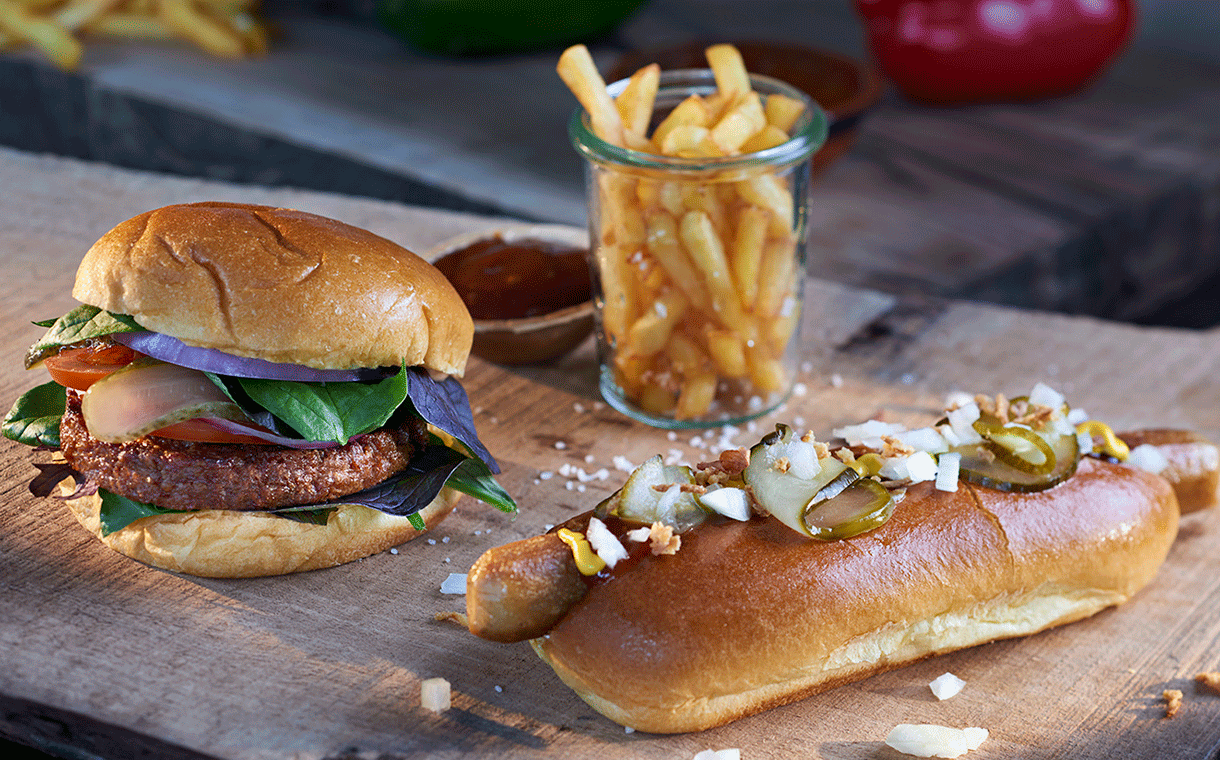
DuPont launches new solutions for plant-based meat alternatives


DuPont launches new solutions for plant-based meat alternatives

[DuPont makes food?]

DuPont Nutrition & Biosciences has announced the launch of a new egg white replacement system for plant-based meat alternatives.

The Grindsted Plant-Tex solutions have been introduced as food manufacturers see more opportunities through an increase in plant-based meat alternative offerings – a market that offers “tremendous potential”, according to DuPont.

The company quoted research suggesting that 37% of Americans are trying to eat more plant-based foods and 46% of Europeans claim to consume meat alternatives at least once a week.

According to DuPont, a growing change in consumers’ mindsets toward a healthier and more sustainable lifestyle is driving purchases of plant-based foods high in protein with meat-like texture, taste and juiciness.

Plant-Tex is cholesterol- and allergen-free and has no ingredients of animal origin. It is said to increase food safety by natural elimination of risk of bird flu or salmonella.

The Plant-Tex range consists of MA1201 for burger patties, MA1301 for cooked sausages and MA1110 for cold cuts.

“We are proud to push the boundaries for high-quality, plant-based solutions for meat alternatives,” said Elisa Vimercati, regional product manager Europe at DuPont Nutrition & Biosciences.

“Plant-Tex delivers best-in-class results for taste and texture. It will definitely help customers to meet and exceed end-consumer expectations for quality and taste.”

Linda Yvonne Friis, global business development manager at DuPont Nutrition & Biosciences, added: “With characteristics similar as egg white, ease of use in production by adding directly into the mix, Plant-Tex makes both formulation and production process easier.

“Today we offer our system only in Europe, Middle East and Africa but in 2020 we are planning to make it available worldwide.”

Last month, DuPont announced the creation of DuPont Nutrition & Biosciences, which combines its Nutrition & Health and Industrial Biosciences divisions into one unit.

Most “Meat” Will Be Meat-Free Or Lab-Grown By 2040, Experts Predict

LOUIS HANSEL/SHUTTERSTOCK

By 2040, most “meat” will come from alternative sources and not dead animals. That’s according to a report led by AT Kearney, a global consultancy firm.

The basic conclusion, based on interviews with industry experts, is that 60 percent of “meat” eaten in two decades’ time will be either lab-grown (35 percent) or plant-based (25 percent).

Alternative “meats” range from traditional meat substitutes (think: tofu, seitan, mushrooms, and jackfruit) to insect protein (mostly mealworms and crickets) to novel vegan meat replacements, which use hemoglobin and binders to imitate the sensory profile of meat. Cultured meat (aka clean meat, cell-based meat, and slaughter-free meat) is newer to the scene and – at least for the time being – more exclusive, costing $80 per 100 grams as of 2018. It is grown in a lab and only requires a single cell extracted from a living animal, but the end product is identical to conventionally produced meat.

As of 2018, the combined market for plant-based meat alternatives stood at $4.6 billion. That’s projected to grow 20-30 percent per annum for the next several years. Cultured meat, on the other hand, is not currently commercially available and is only just starting the process of being accepted by global food regulators, with the US Department of Agriculture (USDA) and Food and Drug Administration (FDA) agreeing to regulate cultured meat jointly for the first time last year.

Nonetheless, the report’s authors predict cultured meat will win out in the long-run, securing 35 percent of the market by 2040. In comparison, vegan meat will be “more relevant in the transition phase towards cultured meat”. Traditional meat substitutes and insect protein, they say, are less likely to see growth “as they lack the sensory profile to convince average consumers”.
More than a third of US land is used for pasture. mark reinstein/Shutterstock

One obvious benefit of alternative meats is that they are more sustainable than regular meat. The Food and Agriculture Organization of the United Nations (FAO) estimates close to half (46 percent) of the world’s harvest is dedicated to livestock feed. In comparison, 37 percent of agricultural production is food humans consume directly.

Calorie-wise, a lot gets lost in translation – 1 kilogram of chicken meat, for example, requires 3 kilograms of grain. Considering that 1 kilogram of meat equates to the same number of calories as 1 kilogram of grain, 46 percent of world harvest adds less than 7 percent to the world’s available food calories. In comparison, 1 kilogram of vegan meat and 1 kilogram of cultured meat require 1.3 and 1.5 kilograms of arable crops respectively, equalling a 70 and 75 percent calorie conversion rate.

Right now, two big problems are cost and consumer appeal. A 100-gram beef burger costs about 80 cents, whereas a 100-gram vegan meat burger will cost you $2.50 and a 100-gram burger made of cultured meat costs $80. But as technology improves and it becomes possible to produce these foods en masse, costs will likely fall. A 100-gram burger made of cultured meat could cost just $4 by 2031. As for consumer appeal, studies have shown people in Western countries, China, and India are most open to the idea.

One more benefit of vegan and lab-grown meat: they are cruelty-free. ebenart/Shutterstock

As the report authors point out, the benefits of alternative meat aren’t just environmental. As well as being cruelty-free, they offer advantages as far as product design goes (you could replace fatty acids with omega, for example) and have lower Salmonella or E.coli risks, unlike conventional meat. What’s more, there is not the same level of epidemic risk (e.g. bird flu) and production does not require large-scale use of antibiotics, which experts warn could be a huge contributing factor to antibiotic resistance.

And if all goes well, it might not just be “fake” meat we see on the market – but plant-based and cultured seafood, leather, silk, egg white, milk, and gelatin too.

What will it take for the UK to reach net zero emissions?

https://www.theguardian.com/environment/2019/jun/12/what-will-it-take-for-the-uk-to-reach-net-zero-emissions

We will have to change almost everything, from our homes to our meals

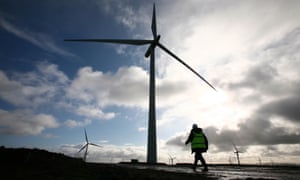
Whitelees windfarm on Eaglesham Moor in East Renfrewshire.
 Whitelees windfarm in East Renfrewshire. Onshore wind is now cheap form but there are few new projects.
Photograph: Graham Hamilton/Epicscotland

The net zero carbon target will require sweeping changes to almost every aspect of British life, affecting our homes, food and the way we get around, as well as jobs and businesses across the board. Ministers hope there will be health benefits and improvements to the natural environment along the way, as well as helping to stave off the global climate emergency.

On some of the key areas where rapid change is needed, however, the signals so far have been mixed.

Energy

The UK must wean itself off gas.
Pinterest
 The UK must wean itself off gas. Photograph: Alamy

Phasing out coal use and bringing more renewable energy on stream are the key planks of the government’s strategy. Gas has become an increasingly important source of fuel in the last three decades, particularly for domestic heating, but to reach net zero it will have to be phased out too.

Support for renewable energy has been reduced and in some cases scrapped by the government. Onshore wind is now one of the cheapest forms of energy, but the withdrawal of subsidies and stricter planning rules have resulted in a dearth of new projects, though offshore wind is continuing to make progress.

The number of new solar installations plunged by 94% in April, according to Labour, after the government’s withdrawal of support. Chris Hewett, the chief executive of the Solar Trade Association, says: “Solar and wind are now the lowest cost forms of power generation in the UK, yet there is no route to market and government is continuing to subsidise the fossil fuels it is aiming to phase out.”

The number of jobs in renewable energy in the UK fell by about a third, from 36,000 in 2014 to 25,000 in 2017, according to the union Prospect.

Carbon capture and storage will be needed if we are to continue to use any fossil fuels. A long-running £1bn competition to build the first large-scale demonstration project for the technology was scrapped by George Osborne, but the government says that smaller projects not requiring taxpayer assistance could start to develop.

Controversially for some, the Committee on Climate Change says fracking is compatible with a net-zero target – but only if the gas produced displaces gas which would otherwise have been imported.

Transport

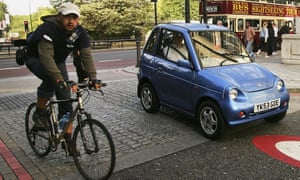
The government has slashed support for electric vehicles.
Pinterest
 The government has slashed support for electric vehicles. Photograph: Scott Barbour/Getty Images

There are only about 210,000 electric vehicles in the UKAbout 1% of households use an all-electric car and about 2% hybrids, so tens of millions of cars will have to be replaced. Public transport, walking, cycling and ways of working that avoid travel will also be part of the solution.

Darren Shirley, the chief executive of the Campaign for Better Transport, says: “In the coming weeks the government should commit to restarting the programme of rail electrification, outlining further incentives to rapidly grow the market in electric vehicles in the UK, and start work on publishing a national strategy for buses with investment to grow the network and green the bus fleet to be published by 2020.”

The government has pledged to phase out diesel and petrol cars by 2040, but that target should be brought forward to 2030, according to the CCC.

The government has slashed support for electric vehicles, resulting in slower take-up. A lack of charging points is also hitting demand. There are about 8,500, but they are not spread evenly across the country, and some towns have few or none.

The CCC notes that the number of flights we take can continue to grow at least in the short term provided emissions come down in other areas, but campaigners say the decision to allow Heathrow’s expansion will blow away any chance of reducing the UK’s overall transport emissions.

Buildings

Measures to insulate the existing housing stock were scrapped by the government.
Pinterest
 Measures to insulate the existing housing stock were scrapped by the government. Photograph: Newscast/UIG via Getty Images

All newly built homes – of which the UK needs a record number to solve the housing crisis – were meant to be zero emissions from 2016 under plans from the Labour government in 2006. Those plans were scrapped in 2015 on cost grounds, and now there are few requirements for new-build houses to incorporate energy-saving features or renewable generation.

Government policy is key to making the built environment, which accounts for roughly 40% of the UK’s carbon footprint, more climate friendly, says Juliet Barfield, an architect at Marks Barfield. “The government must regulate if we want to bring down emissions.”

Repurposing and refurbishing existing buildings is nearly always preferable to demolishing and rebuilding, unless the existing construction is dangerous or of such poor quality it cannot be remedied. Concrete is one of the most commonly used construction materials, but associated emissions are sky-high. If the global concrete industry were a country, it would be the world’s third biggest emitter. Alternative materials from timber to wool are not widely used, and while innovators are working on ways to bring down emissions from concrete – using additives from coffee grounds to beetroot, for instance – it remains a significant source of carbon.

When new buildings are needed, a long-term vision – at least 50 years, for the lifetime of a building – and resisting cost-cutting temptations are also important. Barfield notes that high ceilings make buildings more liveable and easier to adapt in future, as well as having benefits in ventilation and light that help in designing ways to reduce energy use. BMany architects, however, come under pressure to reduce ceiling height to squeeze in more rooms, which limits the building’s future potential.

Less than 1% of Britain’s housing stock each year is newly built, and old homes tend to be leaky, draughty, costly to heat and inefficient. The government scrapped measures, such as the “green deal” policy, to insulate existing housing stock. Cash-strapped local authorities lack the resources to offer the insulation needed, even though it would save residents money and improve their health. The CCC recommends turning down heating to 19C in winter, but that may be of little comfort to people in unsuitable and uninsulated homes.

Industry

It is not clear what will replace the emissions trading scheme that covers heavy industry after Brexit.
Pinterest
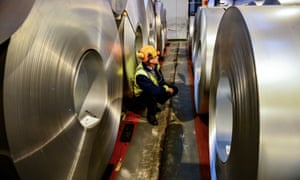
 It is not clear what will replace the emissions trading scheme that covers heavy industry after Brexit. Photograph: Ben Birchall/PA

Heavy industries such as steel and chemicals currently come under the EU’s emissions trading scheme. Companies are awarded a certain number of allowances to emit carbon dioxide, some free and some paid for, and the most efficient can sell any spares to laggards, who are supposed to be spurred by the additional cost to mend their ways. The system has suffered many setbacks in its nearly 15 years of operation, but it is still one of the main ways in which industry is held to account for its contribution to global heating.

It is not yet known what, if anything, will replace emissions trading after Brexit, when manufacturers and other heavy industries are likely to come under increasing economic pressure if trade is disrupted. Manufacturingoutput has already come under pressure from the prospect of a no-deal exit, but losing manufacturing in the UK will not reduce carbon emissions overall, but will increase reliance on imports.

Farming, land use and food

The UK must reduce its meat consumption
Pinterest
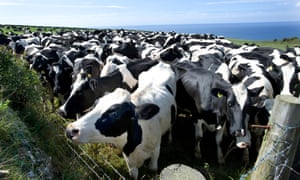
 The UK must reduce its meat consumption Photograph: Alamy Stock Photo

More than a tenth of greenhouse gas emissions comes from agriculture and this proportion is rising as other sectors have been able to reduce emissions faster.

Growing more trees is the key plank of the government’s strategy on land use, along with better soil management. Michael Gove, the environment secretary, has set out plans for the UK’s first soil strategy since the “dig for victory” campaigns of the second world war. Soil is one of the world’s biggest carbon sinks, but can also be a major source of carbon depending on the farming techniques used.

Details of the strategy are still to come, and when it comes to tree planting farmers face some uncertainty. There are benefits under the common agricultural policy for planting new and maintaining existing trees, but these can be complex and hard to access. The government has promised £50m for rural tree planting in England to meet its target of 10m new trees across the countryside. The UK is one of the least wooded countries in Europe, with 10% of land forested in England, 15% in Wales, 19% in Scotland and only 8% in Northern Ireland.

Urban trees can also be a vital way of reducing carbon, cleaning air and reducing the impact of climate change by providing shade and health benefits. The government has put up £10m for 130,000 new trees in towns and cities in the next two years. There is no national policy, however, and some local authorities and landowners such as Network Rail have embarked on tree-cutting programmes without clear oversight of the environmental costs and benefits.

Our heavy consumption of meat is taking a toll on our health as well as the planet, and farmers can help reduce emissions from livestock, for instance by improving their diet so they produce less methane. Ultimately, however, meat consumption must be reduced. Moving from a high-meat to a low-meat diet would cut emissions by 35%, the CCC found.

Biodegradable food waste must not be sent to landfill, where it rots to produce methane, after 2025, according to the CCC. Food waste should be avoided as far as possible to bring down agricultural emissions. Unavoidable food waste, treated properly with anaerobic digestion, can be a source of natural gas to be used for heating or electricity generation, displacing fossil fuels.

Tim Benton, the dean of strategic research at the University of Leeds, says food will only increase in importance as a source of greenhouse gases. He says: “When you have reduced everything else – energy, transport, and so on – the thing you’re left with is food.”

A ‘just transition’

When the UK first made its “dash for gas”, it was in the context of closing coal mines and the aftermath of the miners’ strike of the 1980s. Hundreds of thousands of workers in traditional coal-mining areas lost their jobs and the devastation is still keenly felt across swathes of the UK. The recent and enduring memory of that loss and upheaval should act as a warning of how not to engineer a transition to a new form of economy, trade unions believe.

Sue Ferns, Prospect’s senior deputy director general, says: “We need a just transition for all the workers affected and this means we need to work proactively to ensure that the damage inflicted on coal communities in the 1980s is not repeated.”

The 9th National Animal Rights Day will be celebrated on Sunday June 2, 2019

,in 30 cities around the world!


Protesters solemnly holding out dead animals

Join Karen Davis and United Poultry Concerns at the 9th National Animal Rights Day (NARD) NYC! Karen will speak “For the Birds – From Exploitation to Liberation. How Do We Get There?”

http://upc-online.org/activism/190529_the_9th_national_animal_rights_day_will_be_celebrated_on_sunday_june_2_2019.html

Date:
Sunday, June 2, 2019 starting at 11:30am.

Place:
Union Square Park @ 17th Street between Broadway and Park Avenue South in Manhattan.

Call to Action:
NYC folks- we are just a few days away from the Ninth Annual National Animal Rights Day, which began in New York City 9 years ago!

Come join us as we stand in solidarity with 30 other cities around the world to commemorate the BILLIONS of animals who are killed at the hands of humans every year and honor them in their death in a respectful, silent and powerful ceremony. Following the ceremony there will be motivational speakers, performers, free vegan food, raffle prizes, and more to help educate the public about how we can protect our planet and change the world for animals starting with living a cruelty-free lifestyle. For more information about our mission and past events, please check out our website at www.thenard.org.

Gravestone for 64 billion land animals and one trillion water animals

Photo courtesy of Mary Finelli of www.fishfeel.org


[Meanwhile] Fur real? The City Council aims to ban fur in the name of animal rights; what’s next?

Fur real? The City Council aims to ban fur in the name of animal rights; what’s next?
How about leather shoes? (OPREA FLORIN/Getty Images/iStockphoto)

City Council Speaker Corey Johnson wants to ban fur clothes for sale in the five boroughs of New York City, excepting used apparel and that “sourced exclusively from used fur” (how will Department of Consumer Affairs sleuths ever tell?) and, of course, fur worn for religious reasons (rest easy, Hasidim).

We don’t mind private citizens making a stink over mink, pounding the table over sable or putting a pox on fox. We get those who are revolted by wearing dead animal products. Hell, it’s respectable to live life as a vegan.

But it is rich indeed for city government in the name of animal rights to outright ban the sale of fur, an important piece of an important New York industry, while allowing sale, on a scale that dwarfs the fur industry, of cow leather and sheepskin (and no, the leather on your Chinese-made shoe is not produced under conditions regulated by federal authorities).

And while allowing sale by the tons, in supermarkets and restaurants, of meat and eggs and dairy from animals that, we suspect — though no animals were interviewed in the making of this editorial — would rather not be exploited. Including veal, which comes from calves.

The slope is slippery because, let’s be honest, lots of animals bleed on it.

Johnson and the Council enjoy the symbolism of a fur ban, but they wouldn’t dare go after the many other ways humans benefit from inexpensive and plentiful protein and, well, just plain tasty food. Would they?

Fake meat: Don’t go bacon my heart, say butchers

Sausage dummies are pictured at the international meat industry fair IFFA in Frankfurt am Main, western Germany, on May 6, 2019. — AFP pic

FRANKFURT, May 12 — Slicing through juicy cuts of pork belly alongside rarer delicacies of ox brain and sheep intestine, young butchers at a Frankfurt trade hall cast a suspicious eye towards the so-called fake meat products on display.

Puzzlingly, for the butchers, the fake meat seems to be popular.

“As a butcher, it just can’t be that we have to get into plastic!” said Paolo Desbois, an 18-year-old French butcher, referring disparagingly to the synthetic burgers, sausages and nuggets at the IFFA meat industry convention.

The concept that animals are meat—and plants are not—never used to challenged.

But increasingly plant-based protein products are trying to muscle in on the meat market.

Derived from sources like soy, peas or beans, the synthetic products are being manufactured without using animals.

And Desbois, who placed second in a young butchers competition at the convention, feels they undermine “the essence of the profession”.

“It’s just not possible to work with synthetic meat,” he said.

Another budding elite butcher from Switzerland, 20-year-old Selina Niederberger, agreed.

“As a butcher, I’m for real meat. I think a lot of people would see it the same way,” she declared.

Non “real” meat products have been making headlines lately, backed by investors with an appetite for supplying plant-based burgers and sausages to the trendy diet-conscious masses.

The celebrity-backed vegan burger start-up Beyond Meat, for example, made a sizzling Wall Street debut on May 3 when it more than doubled its share price.

Backed by Hollywood star Leonardo DiCaprio and Microsoft founder Bill Gates, the firm and its competitors aim to turn plant-based foods mainstream and capture a huge potential market.

Ethical concerns

Whether meat substitutes will ever be able to 100 percent replicate the taste, colour, smell and texture of a freshly chopped up slaughtered animal is debatable.

But some young butchers suspect their growing popularity will inevitably have a transformative effect on their trade.

“It’s just shifting with the world and working with it rather than against it,” said 19-year-old British butcher Lennon Callister.

Trade skills are “what sets butchers apart from supermarkets,” he argued, but accepted consumers are starting to look at food differently.

Josja Haagsma from the Netherlands, who won the young butchers competition, agreed that synthetic meats were changing opinions.

“It makes you think about how you can use meat and how you can change it, how you can use more vegetables,” she said.

“Maybe the next generation” will be the ones pressed to apply their knives and creativity to the task, Haagsma said.

Vegetables used to be considered a side dish, at best, for carnivore connoisseurs.

But in increasingly health conscious societies, where governments warn about the dangers of consuming too much red meat, plant-based products are widening in appeal.

Alongside ethical concerns over animals bred for the dinner table and green advocates urging the public to eat less meat to save the environment, the scope for more no-meat products is growing.

‘They aren’t sausages!’

“It’s very important that we think about it, that we consume less” but “good quality meat,” said Haagsma.

“You can use organic meat and homegrown cows, and not the cows from the big companies,” she said.

The growing numbers of people turning to plant-based meat alternatives include vegans, who shun all animal products, and flexitarians, who advocate moderate consumption of meat.

One sign of their expanding popularity? Silicon-valley company Impossible has linked up with Burger King to offer a plant-based version of its signature Whopper.

Nestle and Unilever are also aiming to cement their presence in the sector.

The move by big conglomerates into the sector has made young butchers note that changes are on the way.

“There’ll be less of this mass-produced stuff, which is also really, really bad for the climate,” said 23-year-old German Raphael Buschmann.

However, while recognising environment-conscious citizens are rethinking their diets, Buschmann predicted a limit to the industry changes.

Vegetarian sausages would not be added to his displays any time soon.

“They aren’t sausages,” he said. “That’s just the way it is.” — AFP

Tyson Chicken recalls almost 12 million pounds of frozen chicken


Photo credit: MGN

EDITOR’S NOTE: This release is being reissued as an expansion of the March 21, 2019 recall, which consisted of 69,093 pounds of frozen, ready-to-eat chicken strip products. The scope of this recall expansion now includes more information and an additional 11,760,424 pounds of product.

Tyson Foods, Inc., a Rogers, Ark. establishment, is recalling approximately 11,829,517 million pounds of frozen, ready-to-eat chicken strip products that may be contaminated with extraneous materials, specifically pieces of metal, the U.S. Department of Agriculture’s Food Safety and Inspection Service (FSIS) announced today.

The frozen, ready-to-eat chicken strip items were produced on various dates from Oct. 1, 2018 through March 8, 2019 and have “Use By Dates” of Oct. 1, 2019 through March 7, 2020. The chart contains a list of the products subject to recall.

The products subject to recall bear establishment number “P-7221” on the back of the product package. These items were shipped to retail and Department of Defense locations nationwide, for institutional use nationwide and to the U.S. Virgin Islands.

The problem was discovered when FSIS received two consumer complaints of extraneous material in the chicken strip products. FSIS is now aware of six complaints during this time frame involving similar pieces of metal with three alleging oral injury.

Anyone concerned about an injury or illness should contact a healthcare provider.

FSIS is concerned that some product may be in consumers’ freezers. Consumers who have purchased these products are urged not to consume them. These products should be thrown away or returned to the place of purchase.

FSIS routinely conducts recall effectiveness checks to verify recalling firms notify their customers of the recall and that steps are taken to make certain that the product is no longer available to consumers. When available, the retail distribution list(s) will be posted on the FSIS website at www.fsis.usda.gov/recalls.

Consumers with questions about the recall can contact Tyson Foods Consumer Relations at 1-866-886-8456. Members of the media with questions about the recall can contact Worth Sparkman, Public Relations Manager, Tyson Foods, Inc., at Worth.Sparkman@Tyson.com (479) 290-6358.

Consumers with food safety questions can “Ask Karen,” the FSIS virtual representative available 24 hours a day at AskKaren.gov or via smartphone at m.askkaren.gov.

The toll-free USDA Meat and Poultry Hotline 1-888-MPHotline (1-888-674-6854) is available in English and Spanish and can be reached from 10 a.m. to 6 p.m. (Eastern Time) Monday through Friday.

Recorded food safety messages are available 24 hours a day. The online Electronic Consumer Complaint Monitoring System can be accessed 24 hours a day at http://www.fsis.usda.gov/reportproblem.