Beyond Meat preps for IPO as rivals take bite out of food industry

https://www.theguardian.com/business/2019/apr/28/beyond-meat-wall-street-debut-public

Startup is the latest ‘unicorn’, with a valuation of about $1.2bn, to go public as its competitor launches the Impossible Whopper
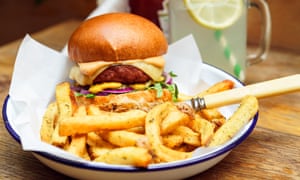
In 2018, Beyond Meat brought in a net revenue of $88m, and lost $30m.
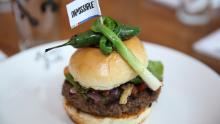
 In 2018, Beyond Meat brought in a net revenue of $88m, and lost $30m. Photograph: George Whale

Wall Street is going vegan. At some point in the next four weeks, Beyond Meat, a pioneering plant-based meat alternative startup, will debut on Wall Street at a valuation of about $1.2bn. And in the meantime its rivals are cutting deals with some of the biggest names in food.

Beyond Meat is the latest in a series of “unicorns” – private companies valued at over $1bn – to go public. And this one is edible.

The company, based in El Segundo, California, was founded 10 years ago by tech entrepreneur Ethan Brown. It found early backing from legendary Silicon Valley financiers Kleiner Perkins Caufield & Byers – and later from Bill Gates and Leonardo DiCaprio – before it brought its first product, a chicken-free “chicken”, to market in 2013.

Now the company is going public, at a pivotal moment for meat-like products created from plant-based protein, mainly yellow peas, which are being used to create a new wave of burgers (which actually “bleed” with beet juice), together with poultry and sausage substitutes that taste far closer to the real thing than their predecessors.

The benefits of eating less meat from both ethical, environmental and health standpoints, have never been greater. And the business community has spied the potential for big profits.

Even giant meat companies such as Tyson, the world’s second largest processor of chicken, beef and pork, are backing meat alternative startups. It is investing in cultured meat maker Future Meat Technologies, which grows meat from cells.

Memphis Meats, another company developing cultured meats, boasts the vast Cargill grain company among its investors, alongside Gates, again, and Sir Richard Branson.

Wall Street’s interest doesn’t stem from a new found love of veganism. US meat production totalled 52bn lb in 2017, poultry production totalled 48bn lb. Beef exports alone are worth over $7bn a year.

The goal of Beyond Meat’s Brown is to recreate meat with plant-based inputs. “We don’t want you to walk away from meat, we’re just taking animals out of the equation,” he said in an interview with CBS, citing figures that show 70 million Americans are reducing their intake of meat.

In a letter written by Brown included in Beyond Meat’s IPO prospectus, Brown insists: “We do not face a binary decision to eat or abandon meat.”

He describes livestock as “a bioreactor consuming vegetation and water and using their digestive and muscular system to organize these inputs into what has traditionally been called meat”. Beyond Meat, he says, does the same, without the animal.

So far, Beyond Meat is consuming cash. In 2018, it brought in a net revenue of $88m, and lost $30m. A year earlier, revenues were nearly $33m, and the company made a loss of $30m.

But that could change fast if alternative meat products can take just a small bite out of the $1.4tn global meat market, or mirror the success of non-dairy milk products – which in the US is now 13% of the size of the traditional dairy milk business.

As consumers increasingly turn to plant-based meat alternatives, the only limit for growth maybe the availability of plant-based protein to make products from.

Just five years since the launch of its debut product, Beyond Meat products are now available at 30,000 outlets in the US and overseas, from Whole Foods and TGIF in the US to Tesco and All Bar One in the UK.

According to Dan Altschuler Malek, a venture capital partner at New Crop Capital, an early investor in Beyond Meat, the meat, dairy, egg and seafood sectors are a trillion-dollar market ripe for large-scale disruption.

“We believe the global food system is broken and one of the contributors is animal agriculture which has caused significant damage to the environment,” said Malek. “At some point, the planet will hold 9 billion-plus people, and the reality is there are not enough resources to sustain current levels of protein consumption.”

Beyond Meat, Malek says, is the third generation of plant-based products. The first was for vegans who, for philosophical reasons, sacrificed pleasure for beliefs in refusing animal proteins. The second generation developed products with taste and flavor. In the third generation, companies like Beyond Meat looked to develop products that are good enough on their own to consume without any sense of loss or substitution.

“That’s a seamless transition for the consumer and that’s what the third generation of producers are doing. Manufacturing technology has played a large part. Now we have a convergence that fulfill the promise of great taste and texture for consumers.”

Ultimately, Malek believes, we may begin to detach from the need for plant-based protein to resemble meat products. But now it’s still early days and consumers still want something that they already know.

“You can’t make them jump across two axes, simultaneously, switching ingredients and switching flavor. Eventually we’ll get to a place where products don’t need to resemble chicken or beef or lamb. They will simply be delicious and plant-based.”

And moneyspinning.

Burger King plans to roll out Impossible Whopper across the United States

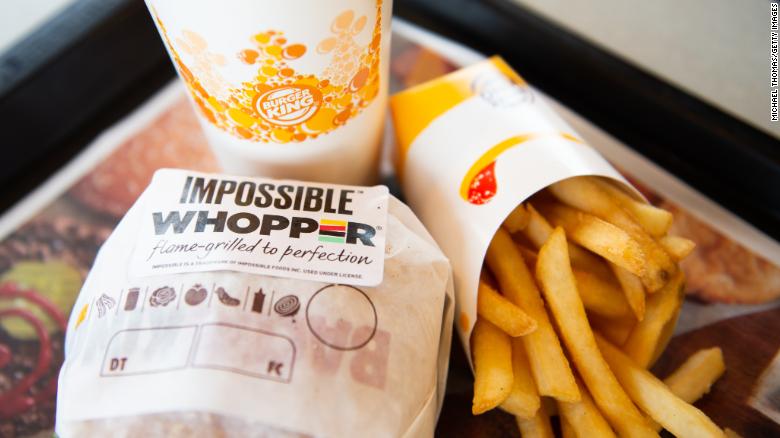
New York (CNN Business)Burger King’s test of a vegetarian version of its signature Whopper was such a success, the chain is planning to roll the Impossible Whopper out nationally this year.

On April 1, Burger King started testing the vegetarian burger, using a plant-based patty from Impossible Foods. The test took place in St. Louis and “went exceedingly well,” a spokesperson for Restaurant Brands International (QSR), Burger King’s parent company, said. The spokesperson added that the sales of the Impossible Whopper are complementary to the regular Whopper.
That’s exactly what Burger King wants.
With the Impossible Whopper, Burger King is primarily targeting meat eaters who seek more balance in their diet. The new product is designed to “give somebody who wants to eat a burger every day, but doesn’t necessarily want to eat beef everyday, permission to come into the restaurants more frequently,” Chris Finazzo, president of Burger King North America, told CNN Business when discussing the initial test.
Burger King started testing out the Impossible Whopper in St. Louis.

The Impossible Whopper is supposed to taste just like Burger King’s regular Whopper. Unlike veggie burgers, Impossible burger patties are designed to mimic the look and texture of meat when cooked. The plant protein startup recently revealed a new recipe, designed to look and taste even more like meat. That version is being used in Burger King’s Impossible Whoppers.
The company plans to expand to more markets “in the very near future” before making the sandwich available nationally by the end of the year. Burger King had about 7,300 US locations at the close of last year.
There’s public interest in plant-based protein because of concerns about animal welfare and the environmental impact of factory farming, and because some consumers are interested in reducing their consumption of meat for health reasons.
And the interest appears to be growing. The global market for meat substitutes is forecast to grow from an estimated $4.6 billion in 2018 to $6.4 billion by 2023, according to research firm MarketsandMarkets.
Beyond Meat, Impossible Food’s primary competitor, thinks that the potential is bigger. In an SEC filing detailing plans for the 10-year-old company’s IPO, Beyond Meat projected that over time the plant based-meat market could reach $35 billion in the United States. Beyond Meat plans to start trading in early May.

‘BOYCOTT JIMMY JOHNS’ TRENDS AFTER CEO’S HUNTING OBSESSION EXPOSED

https://raisevegan.com/boycott-jimmy-johns-trends-after-ceos-hunting-obsession-exposed/

by  | April 27, 2019

There should be no doubt in how fiendish an act hunting can be. Nonetheless, many people find their cup of tea in the ruthless “sport.” Just recently, CEO of Jimmy John’s, Jimmy John Liautaud’s hunting obsession was exposed on Twitter, and a new hashtag has been making its rounds on the internet reading, #BoycottJimmyJohns. Read on to know more about ‘Boycott Jimmy Johns’ hashtag that went viral on Twitter.

Boycott Jimmy Johns
Photo by Loïc Fürhoff on Unsplash

You might also like:

‘Boycott Jimmy Johns’ Trends After CEO’s Hunting Obsession Exposed

The CEO of the gourmet sandwich chain, Jimmy John Liautaud, has a hunting obsession and the fact is quite well documented. Years back, a website allegedly revealed the CEO’s images with him posing with killed “trophy” animals like a leopard and an elephant.

More recently, Twitter user Yossarian317 posted a macabre image which features the sandwich chain’s CEO posing with two thumbs up, sitting on the corpse of a huge elephant he allegedly hunted and killed. The tweet garnered some 28k re-tweets and 22k likes.

Twitter user Yossarian317 tweeted the post with the caption:

“Owner of Jimmy Johns celebrating the killing of a beautiful animal. Remember next time you want a sub. Please retweet!”

Credit: @yossarian317/ Twitter
‘Boycott Jimmy Johns’ Trends After CEO’s Hunting Obsession Exposed

And within a blink of an eye, twitter outpoured their aghast and anger on the image with comments flooding in. A user wrote:

Credit: @tarastrong/ Twitter

“Despicable, unfathomable, disgusting. The owner of @jimmyjohns. Sorry about your tiny penis, Jim. I’m sure glad there’s lots and lots of other sandwich places.”

Credit: @RobWoodson26/ Twitter

Another user said: “Will never go to Jimmy Johns again!”

Credit: @LeilaniMunter/ Twitter
‘Boycott Jimmy Johns’ Trends After CEO’s Hunting Obsession Exposed

“Do we start a #BoycottJimmyJohns trend??,” added another user.

How Can Killing be Fun?

Hunting as a sport is unfortunately still enjoyed by many. Some hunting instances take place on private enclosed lands where enforcing the law can be difficult. Hunters reportedly pay to kill native and exotic species in what it is called a “canned hunt.” Do you find anything exciting or sporty in succumbing animals to death in enclosed lands where they can’t escape? I don’t.

Animal rights activist groups like PETA are encouraging people to boycott Jimmy Johns, like the trending hashtag, and are referring to sandwich shops like Subway, which does not support trophy hunting. What do you think? Going vegan is surely an all-in-one boycott to every single animal abuse happening on earth. Let me know your views in the comments.

I lectured about the public health dangers of industrial farming. But what I saw went beyond my fears

.. Visiting one was far worse than I imagined

APRIL 20, 2019 6:00PM (UTC)
Excerpted and adapted from “Our Symphony with Animals: On Health, Empathy and Our Shared Destinies” by Aysha Akhtar. Published by Pegasus Books. © Aysha Akhtar. Reprinted with permission.
https://www.salon.com/2019/04/20/i-studied-factory-farms-for-years-visiting-one-was-far-worse-than-i-imagined/?fbclid=IwAR0qzRUvQyipHFsAthJ1yyp_6dvahNy_eu9-yAUpqy_nYjQbcqh1jn4wkoI
I was giving a talk at a conference in Oklahoma about the public health dangers of industrial animal farming, or “factory farming” as it is commonly called. Each year, more than 64 billion animals are raised and killed for food globally. In the United States alone, 1 million animals are slaughtered every hour. Largely because of increased demand for cheap animal products, intensive animal operations have replaced most traditional farming practices world- wide. The transformation of animal agriculture is so dramatic that it has been dubbed the “livestock revolution.” This unprecedented change in the human relationship with animals has led to not only more animal suffering than ever before in human history but also to devastating harms to human health.

At the conference, I presented data showing how animal agriculture (and the resultant high consumption of animal products) causes more greenhouse gas emissions than the entire transportation sector. It also pollutes our land and water and increases our risks of cancers, obesity, strokes, and infectious diseases like salmonella, E. coli, and bird flus. Throughout my presentation, a solemn-looking woman with short, auburn hair and glasses kept shaking her head in disagreement. When I ended my talk and opened the floor for questions, the woman went on the attack. She disputed everything I said. There are no environmental hazards, no infectious disease risks, no animal welfare problems.

“Have you ever visited one of these farms?” she demanded, with evident anger.

I told her I had not because these places are not open for the public’s viewing. But my data came from reputable studies published by institutions like the Johns Hopkins Bloomberg School of Public Health and the Food and Agriculture Organization of the United Nations. The evidence is so strong, the American Public Health Association called for a moratorium on factory farms.

The woman, Jean Sander, was dean of the Oklahoma State University’s Center for Veterinary Health Sciences. “You need to visit our farms,” she replied. “They are nothing like what you say.”

Three months later, I take Jean up on her offer. The farms are worse than anything I’ve read.

On a dismal morning in late November, I meet Dr. Sander at the parking lot of a Sonic fast food restaurant in Bristow, Oklahoma. After we greet each other and complain about the weather, I get into her car. We head out to visit an egg-laying farm about a half hour away. This farm is not the place Jean initially set up for my visit. She was originally going to take me to see a “broiler” farm, where chickens are produced for meat, which is contracted by Tyson Foods. The Tyson chicken facility is one of Oklahoma’s largest.

But a few days before my flight to Tulsa, the Tyson facility manager backed out. He informed Jean that an undercover investigation at a chicken facility in Tennessee recently caught the attention of news reporters. As a result, he was not letting any outsiders in his buildings. The undercover investigators videotaped farm employees beating sick chickens with spiked clubs. Like the Oklahoma facility, the one in Tennessee was also contracted by and supplied chickens to Tyson Foods.

The only reason I am being allowed in is because of Jean. Her affiliation with Oklahoma State University, one of the largest agricultural schools in the country, has placed Jean in a position to know many of the animal farm managers in Oklahoma. They view her as an ally. And thanks to my connection with Jean, they must have seen me as nonthreatening. Even so, it took months for Jean to find facilities that would open their doors to us.

Herbert Wendell walks up to us and shakes our hands with fervor. With his ruddy cheeks and cheerful welcome, he immediately reminds me of my father-in law. Herbert comes from a family of crop farmers and was the first to move into animal agriculture. In 1957, he bought one chicken that started his egg-laying business. Since then, the number of chickens has grown to about thirty thousand.

After a few minutes of greeting, Jean hands me a disposable coverall, pair of booties, and gloves. They are meant to keep us from inadvertently introducing infectious agents into the facility as part of a biocontainment plan—methods that clearly don’t work, given how often bird and swine flu epidemics sweep across industrial farms in the United States. Jean and I cover ourselves. We then follow Herbert and his granddaughter inside the nearest of the two animal sheds and . . . oh my god!

I hide my face so the others don’t see me gag. I’m worried I’ll offend Herbert if I vomit.

With great effort, I swallow the bile pooling at the back of my throat and straighten up. Slowly, my other senses kick in. Touch first. Flies land on my face. I swat ineffectually at my forehead, nose, ears. Next comes sound. Not the individual noises of calls, clucks, and squawks. But a roar. A singular shout.

Jean tells me that the standard of practice used to be to allow 54 square inches per bird in a cage. Now they’re moving to 60 to 65 square inches per bird as an animal welfare gesture. Sixty-five square inches is about two-thirds the dimension of a single sheet of letter-sized paper. A hen is forced to live her entire life in the space of my laptop screen, but this is considered, by the agricultural industry, as progress.

As we walk down the rows, I breathe through my mouth to somewhat ease the stench. The birds scurry and climb on top of one another to hide near the back of the cages. They’re terrified of us. I’m scared too. Scared that they will crush one another, which Herbert tells me, has happened. Up closer, I see raw, red exposed areas on most of the birds, where their feathers rubbed off against the wires entrapping them. I can’t imagine how painful that must be.

Since birds crowded like this commonly go mad and peck one another to death, these birds were debeaked, a practice whereby workers grab baby chicks in one hand and thrust their beaks between hot, steaming blades. Workers cut off anywhere from one-third to two-thirds of chicks’ beaks while they’re fully conscious. The industry calls this “trimming their beaks.” But slicing chickens’ beaks off with a heated blade or a scissor device, as is frequently done, is not like trimming your nails. Birds’ beaks are sensitive, highly innervated and able to feel pain and other sensations. It would be like having your toes cut off without anesthesia. Not only do chickens rely on their beaks for many functions, having their beaks severed causes them immense, acute, and, often, lifelong pain.

As we walk about, Herbert describes how the facility functions. Conveyer belts run along the span of the building, automatically collecting the eggs that fall under the chickens. Trenches alongside the cages hold feed pellets. It’s all mechanized. No human hand need ever touch a bird until the time of her death. This, then, is a chicken’s life. To huddle in a cage cowering on top of another for one and a half years until someone kills you.

Jean reminds me this is a small facility. Average-size farms house 100,000 birds. The largest may contain 200,000. I am so overwhelmed by the smell of filth and fear, I can’t fathom what those larger factories must be like.

Maggots. Hundreds, thousands of maggots squirming about the ground. I jump and lift my legs. Squashed maggots are stuck on the bottom of my bootie-covered sneakers. As I hop on each leg to inspect my feet, I slip.

And down I go.

When I look back at this moment, the image that comes to mind is a scene in the movie Poltergeist (the original, of course), when the earth beneath the haunted family’s house erupts and releases the screaming skeletons and gaping skulls buried beneath. In the downpour of a raging storm, the mother desperately tries to rescue her children trapped inside the house. As she runs into their backyard screaming for help, her foot slips along the edge of a large, muddy pit. She slides into a pool of death.

Qdoba’s Impossible Meat tacos and bowls are 100% meatless

All 730 Qdoba locations will offer Impossible Meat’s plant-based beef alternative.

Do you like the idea of a plant-based Impossible Burger, except you’re not a fan of burgers? Your best bet might be Qdoba. The Mexican food chain announced this weekthat its trial of Impossible Meat at a few of its Michigan locations was a major success, and it will expand to its 730 locations nationwide by the end of May.

It’s been an incredible month for Impossible Foods and its competitors in the plant-based meat industry.

Impossible Foods, which makes the Impossible Burger and other plant-based meat products, announced just two weeks ago it was partnering with Burger King to offer plant-based Whoppers. Early reviews — and sales — look good. Burger King joined White Castle, which sells Impossible Foods sliders, and Carl’s Jr., which sells burgers from Impossible Foods’ competitor Beyond Meat. Last week, Mexican food chain Del Taco announced it would sell Beyond Meat, too.

Now, Qdoba has joined them. The plant-based meat alternative is featured in two entrees — the Impossible Bowl and the Impossible Taco — or you can order it in anything else in place of beef.

The rise of plant-based foods is actually a big deal

There’s a lot wrong with our food system — from animal cruelty to antibiotic resistanceto its contributions to climate change. But people really like meat, and efforts to curb these problems by convincing people to switch away from meat haven’t worked well. There are about as many vegans and vegetarians as there were 20 years ago.

That’s where plant-based meat alternatives can step in. Products like veggie burgers, fake chicken, and soy and almond milk are growing in popularity and market share — and even better, they’re getting tastier and harder to distinguish from animal meat.

Beyond Meat founder Ethan Brown told my colleague Sigal Samuel that 93 percent of consumers who buy Beyond Meat also buy animal meat — and he’s fine with that. It’s a sign these products, far from being a just-for-vegans eccentricity, are going mainstream.

With the surge of consumer and restaurant interest in plant-based foods has come a surge in investment from titans of the meat industry. Last fall, Perdue Farms announced it was looking into its own plant-based products. Tyson Foods announced in February it was launching a plant-based product line. Since 2016, Tyson has also made investments in plant-based and lab-grown meat research and operations, putting money into the cell-based meat startups Memphis Meats and Future Meat Technologies Ltd. and in the plant-based meat startup Beyond Meat.

It’ll probably be a long time before these alternatives can replicate the experience of a steak — though engineers are hard at work on it. In the meantime, they’re finding their niche with burgers and ground beef. Restaurants and consumers, going by the recent surge of interest, are increasingly getting on board.

Help animals = Help the earth

Factory farming is one of the leading causes of global warming and environmental damage

SHARE

https://www.humanesociety.org/resources/help-animals-help-earth

The HSUS

We live in a pivotal moment. Billions of animals and people around the world are affected by global warming and environmental damage. If we don’t start making small changes now, the consequences will be anything but. Millions of animals already die each year in climate change-fueled hurricanes and wildfires; it’s estimated that 50% of all the world’s species could go extinct by the year 2100. The primary culprits to this widespread destruction are among the most unexpected.

Factory farming is an alarming contributor. Did you know …

… that factory farms are one of the largest sources of powerful methane emissions, which have 86 times the global warming effect of carbon dioxide? Altogether, the food we eat makes up nearly 30% of our total greenhouse gas footprint—more than all of the emissions from cars, buses and airplanes combined!

… that confined farm animals generate 500 million tons of manure annually? On most factory farms, chemical-laced feces and urine are funneled into massive waste lagoons, making them a major source of water pollution and contamination that threatens approximately 119,948 miles of rivers and streams and 450,892 acres of lakes, reservoirs and ponds in the U.S.

… that animal agriculture is a leading cause of deforestation? Nearly 80% of the world’s agricultural land is used to raise livestock or to grow feed for livestock. More than two million hectares of tropical forest are cleared each year for animal agriculture—an area the size of the state of Massachusetts. In the U.S. alone, 10 billion animals are raised for dairy, meat and eggs each year.

It’s up to us to protect our planet. This Earth Day, pledge to make one (or all!) of three small changes to your lifestyle and eating habits that will have a lasting impact on the future of our environment. By committing to help animals, you’ll help our planet too—not just on Earth Day, but every day of the year.

How will you choose to change the world?

Even the smallest changes can make a big difference. 

  • Commit to reducing or replacing meat in your diet, whether by participating in Meatless Mondays eliminating meat from one meal per day. If every American ate a plant-based diet just one day a week, it would be the equivalent to cutting 500,000 cars’ worth of greenhouse gas emissions!

Pledge to Reduce Your Greenhouse Gas Footprint

  • Take action on state and federal legislation that cracks down on factory farming and promotes a more humane food system. Mass confinement has profound effects on animal welfare, human health and the environment; several states now have laws banning extreme confinement of farm animals. (Text EARTH to 30644* to receive text message updates so you know when it’s time to act!)

Pledge to Help Us Crack Down on Factory Farming

  • Be savvy with your support and consider buying directly from more humane producers who reject the factory farm model. Not all farms are created equal! If you consume meat, eggs or dairy, take the time to understand how different farms and suppliers treat their animals and the land. Make sure you know the meaning of different labels on meat, eggs and dairy, such as “free-range,” “grass-fed” and “pasture-raised.”

Pledge to Be a Compassionate Shopper

How will you choose to change the world?

This Earth Day, commit to reducing your meat consumption, advocating for higher standards in factory farming and shopping smart to help animals and in turn, help our planet.

Take the Pledge

*Message and 

International Respect for Chickens Day May 4 – Please do an ACTION for Chickens in May!


Hen with her wing covering her chick


Please visit our International Respect for Chickens Day webpage and see what YOU can do to help chickens Saturday May 4th through the month of May and –needless to say – every day!

http://upc-online.org/respect/190419_please_do_an_action_for_chickens_in_may.html

  International Respect for Chickens Day  


“Cockadoodledoo! We need you!”

Rhubarb the rooster crowing
UPC Sanctuary Rooster Rhubarb photo by Davida G. Breier

United Poultry Concerns <http://www.UPC-online.org>
April 18, 2018

The “Easter” Chick – A Lost Soul

By Karen Davis, PhD, President, United Poultry Concerns
This article originally appeared March 28, 2018.

*Easter Egg Hunt and Egg Gathering*

The association of a hen’s egg with Easter and Spring survives ironically
in the
annual children’s Easter Egg Hunt, for the origin of this ritual has been
largely forgotten.

Traditionally, the finding of eggs was identified with the finding of
riches.
The search for eggs was part of farm life, because a free hen sensibly lays
her
eggs in a sheltered and secluded spot. Today’s children hunt for eggs that
were
laid by a hen imprisoned in a mechanized building, most likely in a wire
cage.
The widespread disappearance of the home chicken flock in the 1950s ended
the
gathering of eggs laid by a hen in the place she chose for her nest.
Historian
Page Smith writes in *The Chicken Book*, “My contemporaries who have such
dismal
memories of chickens from the unpleasant chores of their youth had
experienced
already the consequences of putting living creatures in circumstances that
are
inherently uncongenial to them.”

Wilbor Wilson provides the background to this change in *American Poultry*
*History*. He writes: “As the size of poultry ranches increased, the chore
of egg
gathering became drudgery instead of pleasure. Rollaway nests with sloping
floors made of hardware cloth offered a partial solution, but the number of
floor eggs increased when the hens did not readily adopt the wire-floored
nests.
This changed with development of the cage system which left the hen no
choice.”

*The Hen as a Symbol of Motherhood*

In our day, the hen has been degraded to an “egg machine.” In previous eras
she
embodied the essence of motherhood. The First Century CE Roman historian and
biographer Plutarch wrote of the mother hen in *De amore parentis* [
*parental*
*love*]: “What of the hens whom we observe each day at home, with what care
and
assiduity they govern and guard their chicks? Some let down their wings for
the
chicks to come under; others arch their backs for them to climb upon; there
is
no part of their bodies with which they do not wish to cherish their chicks
if
they can, nor do they do this without a joy and alacrity which they seem to
exhibit by the sound of their voices.”

In Matthew 23:37, the mother hen is evoked to express the spirit of
yearning and
protective love: “Jerusalem, Jerusalem, how often have I wished to gather
your
children together, even as a hen gathers together her chicks.”

The Renaissance writer Ulisse Aldrovandi wrote of mother hens in the 16th
century:

They follow their chicks with such great love that, if they see or spy at
a
distance any harmful animal, such as a kite or a weasel or someone even
larger
stalking their little ones, the hens first gather them under the shadow of
their wings, and with this covering they put up such a very fierce
defense
– striking fear into their opponent in the midst of a frightful clamor,
using
both wings and beak – they would rather die for their chicks than seek
safety
in flight. . . . Thus they present a noble example in love of their
offspring,
as also when they feed them, offering the food they have collected and
neglecting their own hunger.

*The Role of the Rooster*

The family role of the rooster is nowadays less well known to most people
than
the motherhood of the hen. The charm of seeing a rooster with his hens
appears
in Chaucer’s portrait of Chanticleer in *The Canterbury Tales*:

This cock had in his princely sway and measure
Seven hens to satisfy his every pleasure,
Who were his sisters and his sweethearts true,
Each wonderfully like him in her hue,
Of whom the fairest-feathered throat to see
Was fair Dame Partlet. Courteous was she,
Discreet, and always acted debonairly.

In ancient times, the rooster was esteemed for his sexual vigor; it is said
that
a healthy young rooster may mate as often as thirty or more times a day. The
rooster thus figures in religious history as a symbol of divine fertility
and
the life force. In his own world of chickendom, the rooster – the cock – is
a
father, a lover, a brother, a food-finder, a guardian, and a sentinel.

Aldrovandi extolled the rooster’s domestic virtues:

He is for us the example of the best and truest father of a family. For
he not
only presents himself as a vigilant guardian of his little ones, and in
the
morning, at the proper time, invites us to our daily labor; but he sallies
forth as the first, not only with his crowing, by which he shows what
must be
done, but he sweeps everything, explores and spies out everything.

Finding food, “he calls both hens and chicks together to eat it while he
stands
like a father and host at a banquet . . . inviting them to the feast,
exercised
by a single care, that they should have something to eat. Meanwhile he
scurries
about to find something nearby, and when he has found it, he calls his
family
again in a loud voice. They run to the spot. He stretches himself up, looks
around for any danger that may be near, runs about the entire poultry yard,
here
and there plucking up a grain or two for himself without ceasing to invite
the
others to follow him.”

A nineteenth-century poultry keeper wrote to his friend that his Shanghai
cock
was “very attentive to his Hens, and exercises a most fatherly care over the
Chicks in his yard. . . . He frequently would allow them to perch on his
back,
and in this manner carry them into the house, and then up the chicken
ladder.”

Have you herd? It turns out cows have feelings, too.

WHY WE WROTE THIS

Throughout the 20th century, animals were viewed as tools to be exploited. But in recent decades a shift has occurred, as people have begun to recognize cats, dogs, and even cows as sentient creatures.

Yves Herman/Reuters
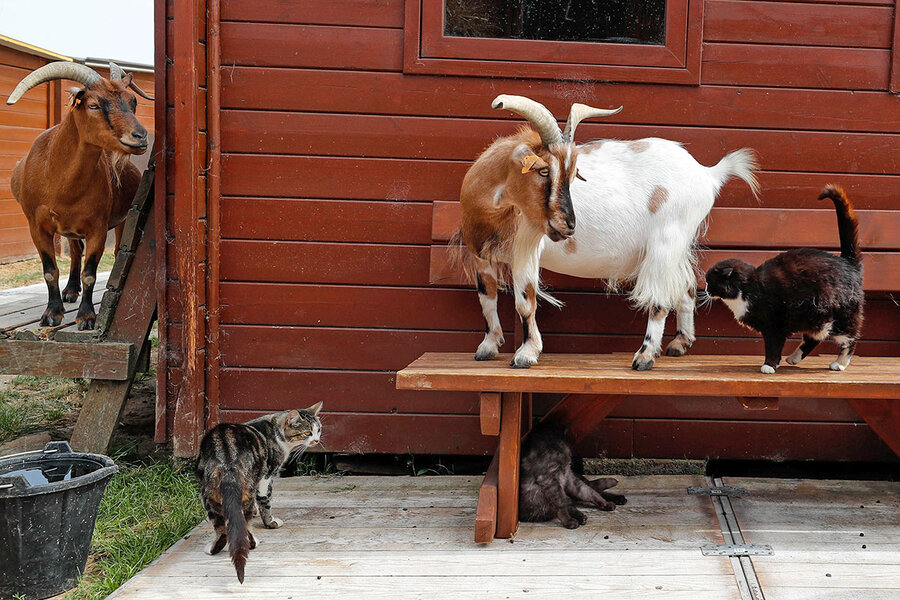
Cats and goats live together at the association Les Petits Vieux, a home for dozens of older animals, including dogs, cats, pigs, and goats, in Chièvres, Belgium. Over the past quarter century, people’s perceptions of animals have been shifting.

Moxie had cared for her son for just one day three years earlier. But she could immediately sense his presence.

The retired dairy cow had just arrived at VINE Sanctuary, a farm animal rescue mission in Springfield, Vermont, just as her son, Maddox, had. She and her son were among the hundreds of cattle, chickens, sheep, and others that had, one way or another, slipped free from an industrial apparatus and wound up at this wooded hillside sanctuary.

“When [Maddox] came in sight,” the sanctuary’s co-founder, pattrice jones, recalls, “Perhaps it was scent – she looked up and made this rumbling low moo. As soon as she made that sound, he stopped. They walked very slowly and carefully closer together, and then they touched noses.”

A generation ago, animal behaviorists would have dismissed such questions as unobservable, and therefore outside the bounds of science. Today, a shift is underway, as scientists and society alike begin to recognize a role for nonhuman animals’ inner mental states.

Is our political divide, at heart, really all about abortion?

A particularly “mechanistic view of animals” has prevailed throughout the West, says Emory University primatologist Frans de Waal. “And I think we are basically abandoning that view, and that has obvious moral implications.”

Professor de Waal’s bestseller published in March, “Mama’s Last Hug: Animal Emotions and What They Tell Us about Ourselves,” argues directly for the existence of animal emotions, and for animals’ humane treatment.

“That’s a very old obsession in the West – and in our religion of course – that we have souls and animals don’t have souls,” says Professor de Waal. “There’s many people who accept evolutionary theory, but they always make an exception for the human mind.”

This exclusionary view, he says, is becoming increasingly untenable. For one thing, humans and mammals, in addition to sharing the same biology associated with emotions, also often share some of the same basic facial expressions.

Stories of animal minds exceeding human expectations usually attract popular attention. “I think there’s a desire from most people,” says Lori Gruen, a philosopher at Wesleyan University who specializes in animal ethics, to recognize that “there’s not such a great divide between us and them.”

‘An underground railroad of sorts’

The goats and chickens sunning themselves together in the hay at VINE Sanctuary, along with the roughly 500 other residents – including cattle, sheep, doves, parrots, geese, emus, and a few alpacas – represent the charmed few, ambassadors for a radically different way of life for domesticated animals. The animals mingle freely at the 106-acre facility, half of which is set aside as a refuge for local wildlife. Goats offer rides to chickens, alpacas lounge by the hay bales, and sheep and cows approach a strange reporter for head scratches.

“Just like us, animals like to make friends with people of other species,” says Mx. jones, who identifies as non-binary and prefers the gender-neutral title Mx.

But overall, Mx. jones is wary of describing the networks that deliver the animals, which Mx. jones describes as “an underground railroad of sorts.”

“There have been many kinds of people who are close to the [meat and dairy] industry who will find ways to bring animals to the sanctuary,” Mx. jones says.

Mx. jones links animal liberation inextricably with feminism, noting how learning about standard dairy practices – forcibly impregnating cows and taking away offspring after one day – was all it took to go vegan.

“It was gut-wrenching to realize that I had been participating in such sexualized violence,” Mx. jones says.

A shift in thought

Scientists were not always so dismissive of animal emotions. Indeed, Charles Darwin published an entire book in 1872 detailing the continuity of emotional expressions between humans and animals.

“Humans thought less of animals in the 20th century than we did before the 20th century,” says Kristin Andrews, a philosopher at York University in Toronto.  

“As we industrialized more and more, we lived farther and farther away from those animals, and that allowed us to forget that they are minded and feeling beings,” she says.

“Humans were probably happy to accept behaviorism,” she says. “We were being told that [animals] don’t feel anything.”

In the study of human psychology, behaviorism began to lose its preeminence in the 1960s, with the advent of the so-called cognitive revolution, which began to systematically study phenomena like memory and attention. In animal behavior, the shift away from behaviorism began in the mid-1990s.

“We sort of lost track of [animal emotions] for a century,” says Professor de Waal.

“In the early 2000s, chimps were still being used in research,” says Dr. Gruen. “And I would often talk to other philosophers and activists and those who were in the chimp world that maybe in our lifetimes we could stop it. And then it stopped,” she says. “It stopped way before I thought it would stop.”

Dr. Andrews suggests that factory farms will soon follow. “It’s too expensive for the industry to keep all these animals alive, and they’re putting a lot of money into fake meat, into lab meat and all sorts of alternative proteins,” she says. “I’m really optimistic about that piece.”

On their terms

When we compare animal emotions with our own, are we losing something? Alexandra Horowitz, a psychologist who specializes in canine cognition and behavior, cautions against anthropomorphizing animals’ inner lives.

“It seems to me presumptuous in the extreme to assume that [cows’] emotions are exactly like ours,” says Dr. Horowitz, author of several books including the 2017 bestseller “Being a Dog” and “Our Dogs, Ourselves,” scheduled for release in September 2019. “I’d rather that the cow show me, without my prejudgment, what that emotion is.”

Dr. Gruen agrees. “We tend to ignore differences,” she says. “When we try to assimilate all other animals into sort of a human framework … we’re missing out on a whole range of other things that are not just beautiful and wondrous, but valuable.”

But Dr. Horowitz also says the growing recognition of the inner lives of animals is cause for hope. “Now that we’re tending to [nonhuman animals] at all really, as opposed to seeing them as nuisances or just as functionaries for our purposes, it could change. I think it’s an act of desperation to hope for that, but that’s where I think we are.”

An earlier version of this article misidentified pattrice jones. Mx. Jones identifies as non-binary and prefers the gender-neutral title Mx.

The Coming Obsolescence of Animal Meat

A collage of chicken nuggets
DAN KITWOOD / GETTY IMAGES
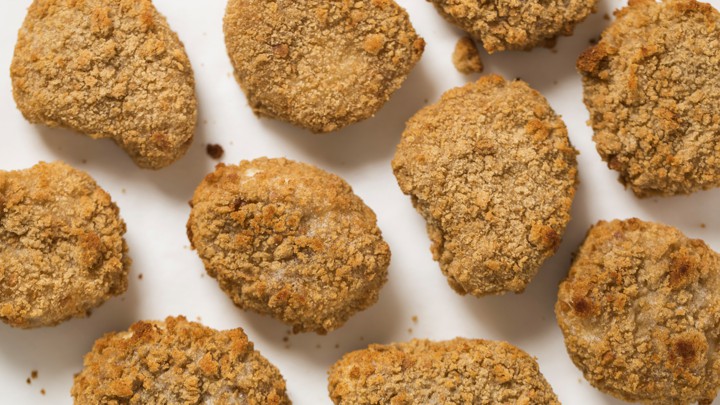
SAN FRANCISCO—The thought I had when the $100 chicken nugget hit my expectant tongue was the one cartoon villains have when they entrap a foreign critter and roast him over a spit: It tastes like chicken.

That’s because it was chicken—albeit chicken that had never laid an egg, sprouted a feather, or been swept through an electrified-water bath for slaughter. This chicken began life as a primordial mush in a bioreactor whose dimensions and brand I’m not allowed to describe to you, for intellectual-property reasons. Before that, it was a collection of cells swirling calmly in a red-hued, nutrient-rich “media,” with a glass flask for an eggshell. The chicken is definitely real, and technically animal flesh, but it left the world as it entered it—a mass of meat, ready for human consumption, with no brain or wings or feet.

This meat was what most of the world calls “lab grown,” but what Just, the company that makes the nugget, and other Silicon Valley start-ups want me to call “cultured meat” or “cell-based” meat, or better yet, “clean meat.” The argument is that almost all the food we eat, at some point, crosses a laboratory, whether in the course of researching flavors or perfecting packaging. So it is not fair to single out this particular product as being associated with freaky science. (Yes, I raised the point that all meat is technically cell-based, too, and no, this did not persuade anyone at the start-ups.)

“Every big brewery has a little room in the back which is clean, and has people in white lab coats, and they’re not ‘lab-grown’ beer,” argues Michael Selden, the co-founder of a cell-based-fish start-up, Finless Foods. “But we’re for some reason lab-grown fish, even though it really is the exact same thing.”

Regardless of what you call it, Just and others say it’s coming. Just, which was called Hampton Creek until last year, started out making vegan “eggs” and mayonnaise, then revealed in 2017 that it had also been working on cultured meat. The nugget was served to me to demonstrate that Just isn’t vaporware, in Silicon Valley parlance, or in this case, vapor-poultry. There’s a there there, and it’s edible.

Just has been mired in turmoil in recent years, as board members resigned and former employees complained of shoddy science. (CEO Josh Tetrick calls the claims “blatantly wrong.”) Because of what the company said are regulatory hurdles, Just missed its goal of making a commercial sale of the chicken nuggets by the end of 2018. The Atlantic ran a somewhat unflattering profile of  Tetrick in 2017, implying that the company is more style than substance.

Tetrick seemed eager to prove this magazine wrong. He told me he tries not to get too down about bad press. A couple of years ago, “we were pretty much just selling mayonnaise,” he said. But now the plant-based Just Egg, which was practically a prototype when the Atlantic article came out, is in grocery stores, and as of this week, you can order it at Bareburger and the mid-Atlantic chain Silver Diner.

Cultured chicken is, too, now on the horizon—that is, if people are willing to eat it. And if Just can ever make enough of it to feed them.


Tetrick is hawklike and southern, which, when combined with his conservational tendencies, lends him young–Al Gore energy. He’s nostalgic for chicken wings even though he’s vegan and does not eat them. When I visited Just a few weeks ago, he showed me a photo of wads of meat and fat in a bowl. They are chunks of Japanese beef that the company hopes to grow into a cultured version by scraping off samples within 24 hours of the animal’s demise. This product wasn’t ready for me to taste yet, but it’s important, in Tetrick’s view, to be a little bit aspirational. “If my team cannot see where we want to go, they’re never gonna go there,” he said.

“There” is a world in which cultured meat is inexpensive and everyone eats it, even if those same people have never heard of tempeh. Living, breathing, belching livestock is responsible for 15 percent of global greenhouse-gas emissions, about on par with cars. But Tetrick thinks that for many Americans, flavor and price rule the shopping cart, not environmentalism.

“I was born in Birmingham, Alabama, so imagine one of my friends who doesn’t care about any of the shit that I’m doing now,” he said, while perched on a bar stool in front of Just’s test kitchen. This hypothetical friend goes to a Piggly Wiggly to buy burgers. Except—oh wait!—next to the animal-based patties wrapped in clear plastic, he sees a Just burger patty for less money. “That, to me, is what it’s gonna take in order to break the dam of a habit,” Tetrick said.

Animal meat is a habit that many young Americans are ready to abandon. A quarter of 25-to-34-year-old Americans now say they are vegans or vegetarians, prompting The Economist to proclaim 2019 “the year of the vegan.” Burger King this month introduced a Whopper made with a plant-based Impossible patty. True, chicken grown in a bioreactor like Just’s is still animal, not vegetable; but without the factory-farming component, some vegetarians and vegans might be inclined to love their chickens and eat them too.

I am the ideal customer for this, because I enjoy meat-like flavors but don’t appreciate the more carnal elements of meat. I’m sure the Wrangler-clad Texan Council will revoke my Texanship for saying this, but I have never had a rare steak. I’ve never eaten something and thought, I wish this would make more of a murdery mess on my plate. And yet, I have no interest in passing up barbecue or Tex-Mex when I visit home or in telling my first-generation immigrant parents that I no longer eat meat. I would like a protein-rich substance that reminds me of my childhood and injects a robust, savory essence into my salad. I do not, however, care if that substance was ever technically alive.

Because frankly, life for many mass-bred animals is no life at all. In her book Big Chicken, Maryn McKenna describes seeing 30,000 birds crammed into a hot shed, some with bellies rubbed raw and legs twisted underneath them. Or, behold this description of the chicken-slaughtering process in a 2017 New Yorker story about Case Farms in Canton, Ohio:

At the plant, the birds are dumped into a chute that leads to the “live hang” area, a room bathed in black light, which keeps the birds calm. Every two seconds, employees grab a chicken and hang it upside down by its feet. “This piece here is called a breast rub,” Chester Hawk, the plant’s burly maintenance manager, told me, pointing to a plastic pad. “It’s rubbing their breast, and it’s giving them a calming sensation. You can see the bird coming toward the stunner. He’s very calm.” The birds are stunned by an electric pulse before entering the “kill room,” where a razor slits their throats as they pass. The room looks like the set of a horror movie: blood splatters everywhere and pools on the floor. One worker, known as the “backup killer,” stands in the middle, poking chickens with his knife and slicing their necks if they’re still alive.

(In response to the New Yorker story, Case Farms issued a statement that read, in part, “Our employees and growers share a committed responsibility to ensure the well-being and humane handling of all animals in our care.”)

Just’s process, meanwhile, is much more clinical. The company takes live cells from biopsies that don’t require the death of the chicken. It then isolates the cells that are most likely to grow, and gently nurtures them in tank-like bioreactors in a soup of proteins, sugar, and vitamins.

Across the bay from Just, in Emeryville, California, Finless Foods is attempting to perform this same procedure on fish. It’s not as far along as Just: Finless Foods has only 11 employees, to Just’s 120. Its office looks even less like a traditional workplace, with mismatched desks that early employees picked up from a used-furniture store. Its largest bioreactor only holds a liter of fish meat, while Just expects that in the “near term,” its bioreactors will have a capacity of hundreds to thousands of liters.

Finless Foods’ Michael Selden rattled off an assortment of environmental and social injustices that motivate the need for cultured meat, from microplasticsin our oceans, to greenhouse gases from shipping, to what he calls “environmental imperialism”: “The way that we get our food is very much just sort of like, we take what we want,” he told me. “If you live in San Francisco and you eat bluefin tuna, that bluefin tuna almost definitely comes from the Philippines. And we basically have fishing fleets in the Philippines that are, like, destroying local ecosystems to feed us.”


Whether Americans are sufficiently distraught over the state of Filipino ecosystems to replace a dinnertime staple remains to be seen. But for now, these companies have bigger challenges to getting to market.

For Finless Foods, a major hurdle is texture. It aims to make cultured bluefin tuna, which in animal form glistens like raspberry jam and springs back like a wet sponge. “I will not say we’ve fully solved that problem, because I’d be totally lying,” Selden said. The few journalists who have tasted the product were served a carp croquette that one reporter described as having “a pleasant aftertaste of the sea, though not fish as such.” Selden is looking into 3-D printing as a potential path to creating a sashimi-like simulacrum.

Similarly, when I asked Tetrick when his nuggets would actually be on sale, he glanced at Andrew Noyes, Just’s PR guy. “I know Andrew loves when I give timelines,” he said coyly. “I drive him crazy. It’s more likely than not … between now and the end of the year that we’re selling outside of the United States.”

Before that happens, the bioreactors needs to get larger, and there have to be many, many more of them, without sacrificing quality. Tetrick estimated that there would need to be 25 to 100 culturing facilities just to fulfill America’s demand for meat. These companies are also searching for a way to reduce the cost of the “media”—the vitamin slush the cells incubate in—potentially by reusing it.

Finally, the Just employees told me, they need the U.S. government to figure out a way to regulate the product, so people can rest assured that it’s not going to make them ill.

Al Almanza, the former acting deputy undersecretary for food safety at the U.S. Department of Agriculture, agrees that there aren’t enough data yet for food inspectors to know what’s normal or abnormal—and thus potentially unsafe—in a cultured-chicken plant. But he also says that regulators would probably expedite approval for Just if the company reached a scale at which it could sell its cultured meat, which it hasn’t yet. (The USDA did not return a request for comment.) And while Just argues that its process is better, from a food-safety standpoint, than animal slaughter, we only have the company’s word to go on at this point.

“Unless you have a perfectly sterile facility, with a cleanroom, and the bioreactors are being operated by robots, you’re at risk of some kind of contamination,” says Ben Wurgaft, a writer and historian who’s writing a book about laboratory-grown meat.

The U.S. Cattlemen’s Association has argued that only beef that’s been raised and slaughtered should be labeled “beef.” Just fervently hopes that when labeling rules do come down, it will be allowed to call its product “meat,” rather than “lab-grown meat,” for the good of public relations, if not fairness. “Back in Alabama, where all my old friends drive pickup trucks, imagine if Tesla put out a really fast, really affordable pickup truck, but Tesla couldn’t call it a pickup truck,” Tetrick said. “On the back, they had to say, like, ‘Electric mobility transport wheeler,’ or some godforsaken name. My friends do not want to drive that, because it fucks with their identity, unfortunately.”


On my visit to Just’s office, I asked Josh Hyman, the company’s chief of staff for research and development, whether the concept of cultured meat ever weirds anyone out.

“Yeah! I think it does,” he said as he prepared to fry up my $100 nugget from its frozen state. “Till you explain it.”

This is what Tetrick calls the “cultural component,” or letting “the consumer know this is a positive thing and they should eat it for dinner.”

As I chewed my nugget, I realized that though its taste asymptotically approached chicken, it was not, alas, chicken. It was crunchy, thanks to the fried, breaded coating; it was flavorful, thanks to the salt and spices inside; and its innards were creamy, which frankly is an improvement on the graininess of most processed nuggets. But it lacked the gamey animal kick that screams “chicken.”

We like meat to taste a certain way, but I realized that if I had never before had chicken, I might prefer this. ​Why is gaminess a virtue, anyway? Some people relish traditions such as hunting and fishing and the more visceral experiences with meat they provide. But if Just and similar companies are successful, future generations might only know chicken to be a pleasant, meat-esque paste, with no bones and skins to speak of. In fact, our entire notion of animal products might become unhinged from animals. The idea that human gustatory pleasure necessarily involves the inhumane farming of other creatures might come to be seen as outdated and gauche. A “real” chicken sandwich might be viewed, in some quarters, as barbarous as poaching. That is, if the bioreactor thing gets worked out.

Several Just employees have culinary backgrounds, and Hyman presided in front of the tasting table like a proud chef. There was heating up and cooling down of a pot of oil to reach the perfect temperature for my nugget. Noyes, who lived in D.C. before moving out West, shifted warily and remarked a few times that we were running “behind schedule.”

After serving me the nugget, Hyman scrambled up a custard-colored mung-bean egg substitute—the Just Egg, which comes in a squeeze bottle. It was fine; I don’t love scrambled eggs. Then he fed me a dairy-free rum-raisin ice cream that was one of the best desserts I’ve ever had.

Finally, he served up a breakfast sandwich made with a firm, plant-based “egg” patty. The patty had a pleasing earthiness, offset perfectly by a glop of spicy, stringy pimento cheese. Even at 3 p.m., after a full lunch, it was objectively tasty. If I had been hungover, it would have been heaven.

“Is this real cheese?” I asked.

“No,” Hyman said.

“What is it?” I asked.

He smiled. “We’re not allowed to say.”

Meghan Markle ‘Wants To Raise Baby Vegan But Queen Says No’ Say Reports

According to an unnamed ‘royal insider’, the Duchess of Sussex wants her child to eschew animal products. But reports say the move has created tension between her and her husband’s grandmother
Meghan Markle and Prince Harry (Photo: Instagram/Kensington Palace)

Meghan Markle wants to raise the baby she is expecting with Prince Harryas a veganaccording to reports.

But media outlets have claimed that the Queen has put her foot down – saying she will not allow it.

Vegan baby?

“Meghan wants her baby to be raised a vegan,” an unnamed ‘palace insider’ reportedly told Woman’s Day.

But another source reportedly revealed to the publication: “It’s created tense discussions between Meghan and Harry, who doesn’t want to upset his grandmother.

“He’s hoping Meghan will settle once the baby comes and he’s putting this latest polarising idea down to heightened emotions while being pregnant.”

Is Meghan vegan?

The Royal Family famously engages in multiple behaviors that cause animal suffering – including hunting and shooting. According to media reports, Prince Harry has ditched some hunts in a bid to appease Markle.

But there is no evidence to suggest that Markle is herself is actually vegan. Instead, it appears she is flexitarian – she revealed in a 2016 interview that she eats a ‘part-time plant-based diet’. She said: “When I’m filming, I’m conscious of what I eat.

“I try to eat vegan during the week and then have a little bit more flexibility with what I dig into on the weekends. But at the same time, it’s all about balance.”

Vegan fashion

She refuses to wear fur and often opts for vegan fashion choices – last year Markle spotted wearing a pair of animal-free Adidas Stan Smith trainersmade by Stella McCartney.

Another fashion choice she opts for is vegan leather trousers. In an interview the former Suits actor did with Good Housekeeping magazine, the star spoke about her penchant for the fabric.

She said: “My wardrobe for my part in Suits isn’t like Working Girl – dressing for work doesn’t have to be so on-the-nose these days…personally, I love cropped pants in vegan leather, a great fitted blazer and a button-down [shirt].”

Kensington Palace has so far declined to comment.

https://www.plantbasednews.org/post/meghan-prince-harry-wantraise-baby-vegan-queen-says-no