New Exploration of the Ethical Boycott of Animal Products 

To coincide with World Vegan Month, the Oxford Centre for Animal Ethics has published a new book exploring why people give up meat and dairy.
<https://gallery.mailchimp.com/e8078cc8a96065221b73d9ab6/images/8326ba85-1398-417e-be7f-df40866f41cb.jpg>
The protest against meat eating may turn out to be one of the most significant movements of our age. In terms of our relations with animals, it is difficult to think of a more urgent moral problem than the fate of billions of animals killed for human consumption.

Ethical Vegetarianism and Veganism outlines three principal considerations that lead people to modify their diet. The first concerns the morality of killing sentient beings when it isn’t strictly necessary, the second concerns the abuse and cruelty that animals often endure during farming, and the third explores the human and environmental costs, including animal agriculture and climate change.

The book argues that vegetarians and vegans are not only protesters, but also moral pioneers. It provides 25 chapters which stimulate further thought, exchange, and reflection on the morality of eating meat.

A rich array of philosophical, religious, historical, cultural, and practical challenge our assumptions about animals, and how we should relate to them.

Published by Routledge, the book provides global perspectives and insights from 11 countries: US, UK, Germany, France, Belgium, Israel, Austria, the Netherlands, Canada, South Africa, and Sweden.

The volume is edited by the directors of the Centre, Andrew Linzey and Clair Linzey. They comment: “The aim of the Centre has always been to pioneer ethical perspectives on animals through academic research, teaching, and publication, and this is our contribution to what has now become a world-wide movement for moral change.”

Please recommend the book to your university or college library.

Further information (including special discounts on hardback, paperback, and eBook versions) is available <https://oxfordanimalethics.us6.list-manage.com/track/click?u=e8078cc8a96065221b73d9ab6&id=8df0755a87&e=8cb4ff7382> here.

To request a review copy, see <https://oxfordanimalethics.us6.list-manage.com/track/click?u=e8078cc8a96065221b73d9ab6&id=93b34642e0&e=8cb4ff7382> here.

Andrew Linzey is the director of the Oxford Centre for Animal Ethics. He has written or edited twenty books, including Animal Theology and Why Animal Suffering Matters.

Clair Linzey is the deputy director of the Oxford Centre for Animal Ethics and co-editor of the Palgrave Handbook of Practical Animal Ethics and The Routledge Handbook of Religion and Animal Ethics.

Copyright © 2018 Oxford Centre for Animal Ethics, All rights reserved.

Remembering Dear Turkeys – Two Short Videos Show Different Worlds

*The Sheds Were Already Empty*

Thanksgiving Tragedy: A Visit to a Turkey Farm
<https://www.youtube.com/watch?v=lI7Sf0HxWmM>

A group of UPC activists in Northern California wanted to go to a turkey
farm a
few days before Thanksgiving to pay their respects to the birds destined for
slaughter. When they arrived, they were heartbroken to find they were too
late,
the sheds were empty, and there was nothing but a sprinkling of white
feathers
and silence. Please watch and share this important video and witness the
reality
of this heart wrenching holiday:

__________________

*UPC Hosts Happy Thanksgiving for Turkeys: CBS Channel 9 Eyewitness News
(1994)*

UPC Thanksgiving Dinner for Turkeys
<https://www.youtube.com/watch?v=VX5hYIaR7cY>

Forty people attended a festive Thanksgiving celebration at UPC in honor of
Wanda and Willow, two rescued factory farm turkey hens adopted from Farm
Sanctuary. Washington, DC’s CBS channel 9 provided excellent coverage of our
dinner as did local radio stations and The Potomac Almanac newspaper. Allan
Cate
read aloud to an entranced audience including Wanda, *’Twas the Night
Before*
*THANKSGIVING*, by Dav Pilkey, giving thousands of TV viewers a chance to
see a
turkey enjoying herself in friendly company. PSYeta president Ken Shapiro’s
son,
Joel, contributed a wonderful story about three turkey gobblers who got
away!

As for us –

*”We feasted on veggies *
*With jelly and toast, *
*And everyone was thankful *
*(The turkeys were most!).”*

For more information see: ‘Twas the Night Before Thanksgiving
<http://www.upc-online.org/merchandise/humane_child.html#night_before_thanksgiving>


United Poultry Concerns is a nonprofit organization that promotes
the compassionate and respectful treatment of domestic fowl.
Don’t just switch from beef to chicken. Go Vegan.
http://www.UPC-online.org/ http://www.twitter.com/upcnews
http://www.facebook.com/UnitedPoultryConcerns

View this article online
<http://upc-online.org/turkeys/181121_turkeys-two_short_videos_show_different_worlds.html

Filmmaker Kevin Smith for Adopt a Turkey

Watch Kevin and Harley Quinn Smith for AAT
This viral video has already appeared in media outlets ranging from Page Six to Men’s Health, raising awareness around Adopt a Turkey and the unnecessary slaughter of 46 million turkeys for Thanksgiving alone. The Smiths’ words and our shared vision are inspiring an impassioned dialogue about the health benefits of a vegan diet and the need to break the chain of unhealthy, unsustainable traditions.

Let’s make this Thanksgiving our most successful season in changing hearts and minds while raising vital funds for Farm Sanctuary’s continued rescue, education, and advocacy work on behalf of turkeys and farm animals just like them.

We’re honored to have Kevin and Harley Quinn on our team as spokespersons this year as we are reaching more people than ever with the 33rd annual Adopt a Turkey Project.

Thank you for putting compassion first this Thanksgiving and every day!

Love,

Farm Sanctuary
Harley Quinn Smith for AAT

WE HAVE 12 YEARS TO SAVE — OR LOSE — OUR ONLY HOME

Pull on the seat-belt in your gas-guzzling car, folks, and strap in for the worst ride of our lives.

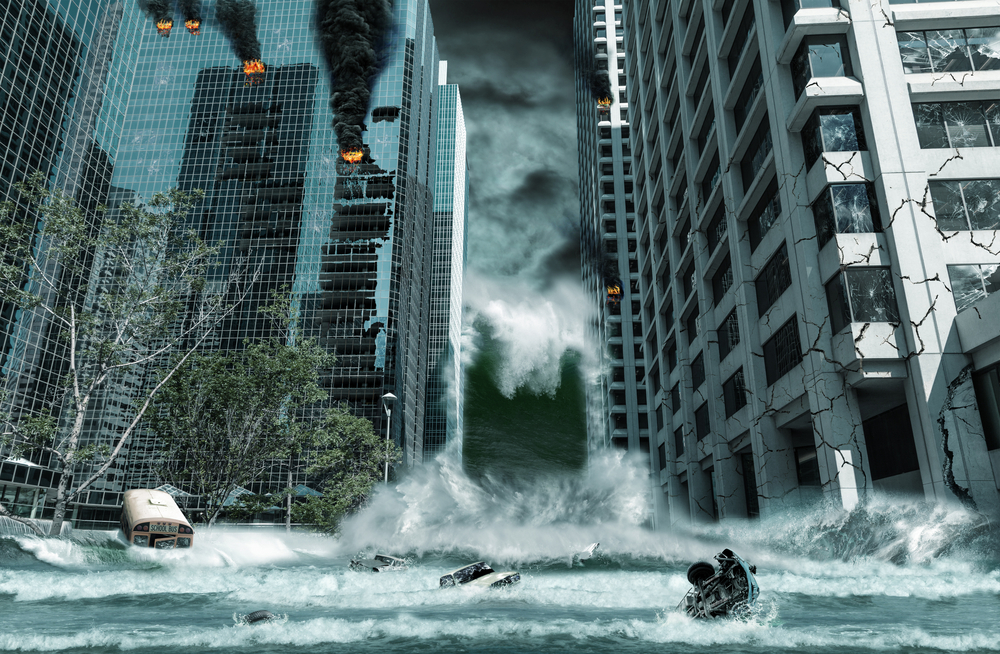
This fall, the United Nations Intergovernmental Panel on Climate Change (IPCC) released a critical report warning that humans have about 12 years — until 2030 — before global warming reaches a catastrophic level.

The report concludes, frighteningly, that the world can’t allow global temperatures to warm past 1.5 degrees Celsius, or there will quite literally be hell to pay. And unless we take drastic action, we’re already all set to get there.

Consider this your all-hands-on-deck, siren-blaring warning that we need to act comprehensively to mitigate climate change now — or forever hold our peace.

The IPCC predicts an increased risk of devastating climate-related risks to health, livelihoods, food, water, security, and economic growth.

As sea levels and global temperatures rise, low-lying communities will disappear and heat-related deaths will increase, along with diseases like dengue fever and malaria. Areas that cease to be inhabitable by humans will fuel an accelerated refugee crisis, while resources like agriculture and crops will be decimated in key areas impacted by climate change.

That’s just a few of the highlights of the Ten Plagues-like punishment we’ll get for endangering our planet. We’re facing a pretty grim future — and that’s even if we manage to cap the rise at 1.5 degrees, which we’re not on track to do.

For those of us who are pretty young like me, our golden years may be anything but.

Before you slip quietly into your doomsday bunker or start praying that someone invents interstellar space travel, there’s an urgent message of hope: We’ve got a little bit of time to save the only home planet we’ve got. And it’s going to take all of us to do it.

While dire, the report also contains some critically useful recommendations.

Governments, companies, indigenous peoples, local communities, and individuals all have a critical role to play to solve this crisis. We can and must act quickly and collaboratively on a local and global scale before it’s too late. Acting alone or failing to cooperate, the IPCC report emphasizes, will fall short.

The Paris Climate Agreement isn’t going to be enough — we need massive, World War Two-level mobilization. The victory will be that we get a living, healthy planet.

The report also highlights the need to consider justice and equity as we consider solutions.

Some nations, like the United States, are leading contributors to greenhouse gas emissions and other accelerants of climate change. Others contribute less to emissions but are more vulnerable to catastrophic damage. A number of low-lying nations (on whose approval the Paris Agreement depended) will literally be underwater if temperatures rise beyond the IPCC’s limit.

The point being: The countries that have contributed the most to climate change need to contribute the most to fixing it — and to helping those who suffer most to adapt.

What can you do, right here, right now, besides giving up meat, your car, or plastic bags and straws?

Urge your local or state government to commit to 100 percent renewable energy in the next decade. Get your community and your state to ban the use of fracking and other fossil fuel production that will drive us to doomsday that much quicker, not to mention the other dangerous risks to people’s health.

Call on the federal government to implement the recommendations of the IPCC report, and commit to working with the rest of the world to act swiftly.

And if you vote, remember the planet when you do.

The ideal diet to combat climate change: Plant-based diets better for planet, study says

By LISA DRAYER IS A NUTRITIONIST, AN AUTHOR AND A CNN HEALTH AND NUTRITION CONTRIBUTOR.

Sean Gallup/Getty Images
Fresh fruits and vegetables lie on display at a Spanish producer’s stand at the Fruit Logistica agricultural trade fair on Feb. 8, 2017, in Berlin, Germany.

(CNN) – You may be aware that a plant-based diet can make you healthier by lowering your risk for obesity, heart disease and Type 2 diabetes. Now, a study suggests there’s another good reason to regularly eat meatless meals. By filling your plate with plant foods instead of animal foods, you can help save the planet.

The study, published last week in the journal Nature, found that as a result of population growth and the continued consumption of Western diets high in red meats and processed foods, the environmental pressures of the food system could increase by up to 90% by 2050, “exceeding key planetary boundaries that define a safe operating space for humanity beyond which Earth’s vital ecosystems could become unstable,” according to study author Marco Springmann of the Oxford Martin Programme on the Future of Food at the University of Oxford.

“It could lead to dangerous levels of climate change with higher occurrences of extreme weather events, affect the regulatory function of forest ecosystems and biodiversity … and pollute water bodies such that it would lead to more oxygen-depleted dead zones in oceans,” Springmann said.

“If the whole world, which continues to grow, eats more like us, the impacts are staggering, and the planet simply can’t withstand it,” said Sharon Palmer, a registered dietitian nutritionist and plant-based food and sustainability expert in Los Angeles who was not involved in the new research.

Sustaining a healthier planet will require halving the amount of food loss and waste, and improving farming practices and technologies. But it will also require a shift toward more plant-based diets, according to Springmann.

As Palmer noted, “research consistently shows that drastically reducing animal food intake and mostly eating plant foods is one of the most powerful things you can do to reduce your impact on the planet over your lifetime, in terms of energy required, land used, greenhouse gas emissions, water used and pollutants produced.”

How a meat-based diet negatively affects the environment

It might come as a surprise, but Springmann’s study found that the production of animal products generates the majority of food-related greenhouse-gas emissions — specifically, up to 78% of total agricultural emissions.

This, he explained, is due to manure-related emissions, to their “low feed-conversion efficiencies” (meaning cows and other animals are not efficient in converting what they eat into body weight) and to enteric fermentation in ruminants, a process that takes place in a cow’s stomach when it digests food that leads to methane emissions.

The feed-related impacts of animal products also contribute to freshwater use and pressures on cropland, as well as nitrogen and phosphorus application, which over time could lead to dead zones in oceans, low-oxygen areas where few organisms can survive, according to Springmann.

For an example of how animal foods compare with plant-based foods in terms of environmental effects, consider that “beef is more than 100 times as emissions-intensive as legumes,” Springmann said. “This is because a cow needs, on average, 10 kilograms of feed, often from grains, to grow 1 kilogram of body weight, and that feed will have required water, land and fertilizer inputs to grow.”

In addition, cows emit the potent greenhouse gas methane during digestion, which makes cows and other ruminants such as sheep especially high-emitting.

Other animal foods have lower impacts because they don’t produce methane in their stomachs and require less feed than cows, Springmann explained. For example, cows emit about 10 times more greenhouse gases per kilogram of meat than pigs and chickens, which themselves emit about 10 times more than legumes.

Like animals, plants also require inputs from the environment in order to grow, but the magnitude is significantly less, Springmann explained.

“In today’s agricultural system, we grow plants to feed animals, which require all of those resources and inputs: land, water, fossil fuels, pesticides, herbicides and fertilizer to grow. And then we feed plants to animals and care for them over their lifetime, while they produce methane and manure,” Palmer said.

Adopting more plant-based diets for ourselves could reduce the greenhouse gas emissions of the food system by more than half, according to the Nature study. A mainly plant-based diet could also reduce other environmental impacts, such as those from fertilizers, and save up to quarter use of both farmland and fresh water, according to Springmann.

Palmer explained that “legumes [or pulses], such as beans, lentils and peas are the most sustainable protein source on the planet. They require very small amounts of water to grow, they can grow in harsh, dry climates, they grow in poor nations, providing food security, and they act like a natural fertilizer, capturing nitrogen from the air and fixing it in the soil. Thus, there is less need for synthetic fertilizers. These are the types of protein sources we need to rely upon more often.”

Flexitarian: The healthy compromise for you and the planet

Experts agree that if you are not ready to give up meat entirely, a flexitarian diet, which is predominantly plant-based, can help. This diet includes plenty of fruits, vegetables and plant-based protein sources including legumes, soybeans and nuts, along with modest amounts of poultry, fish, milk and eggs, and small amounts of red meat.

Vegetarian and vegan diets would result in even lower greenhouse gas emissions, but a flexitarian diet “is the least stringent that is both healthy and would reduce greenhouse gas emissions enough for us to stay within environmental limits,” according to Springmann.

Palmer said that “although vegan diets, followed by vegetarian diets, are linked with the lowest environmental impacts, not everyone is interested in taking on those lifestyles. But everyone can eat more of a flexitarian diet. It doesn’t mean that you have to give up meat completely, but you significantly reduce your intake of it.”

Registered dietitian nutritionist Dawn Jackson Blatner described it this way: “A flexitarian is really someone who wakes up with the intention of being more vegetarian. It’s different from vegetarian in that there is some flexibility.”

More: https://www.wsls.com/health/the-ideal-diet-to-combat-climate-change

New Film Stars Cattle Farmer Who Gave Cows To Sanctuary And Turned Vegan

He couldn’t live with the guilt of sending sentient individuals to slaughter anymore
A cow on a farm
Wilde say he felt terrible guilt sending cows – who had become his friends – to slaughter (Photo: 73 Cows)

A new film tells the story of a Derbyshire farmer who gave his cows to a sanctuary because he could no longer justify killing sentient individuals.

Short film 73 Cows features cattle former farmer – and vegan – Jay Wilde, who discussed how ‘soul destroying’ his profession was, but how difficult it was to break out of his family farming tradition.

His – and wife Katja’s – story made headlines when he initially revealed that he’d given away the animals and turned to vegetable farming, supported by The Vegan Society.

A betrayal

In the film, Wilde opens up about how he became friends with the animals, then felt as though he was betraying them when he took them to slaughter – what he describes as a ‘terrifying’ experience for the animals.

He also talks about the pressure he – and other farmers experience – being ‘locked into’ the farming tradition, as well as the positive reactions from veggies and vegans when he gave up cattle farming.

He also experienced negativity from locals and other farmers – who branded his facility the ‘funny farm’ (an old-fashioned derogatory reference to a mental health hospital) as a consequence of relinquishing his livestock.

The film is available to watch on Vimeo

An amazing story

Speaking to Plant Based News about the documentary, filmmaker Alex Lockwood said: “I first came across Jay Wilde’s story when my wife showed me an article she’d read about him in the national news.

“The story instantly struck a chord with me. I thought it was such a great subject that I assumed it probably would have already been covered by another filmmaker and so I didn’t do anything about it at first.

“After a few weeks I was still drawn to the story and so contacted Jay and Katja on the off-chance. Luckily, it turned out that they hadn’t yet been approached by any filmmakers other than press and were happy to have me document their story.”

Sharing the story

Lockwood believes the Wildes were open with telling their story as a favor to him, rather than to bring attention to themselves. “Jay and Katja are both incredibly humble people and would never seek out the limelight,” he told PBN.

“In fact, Jay couldn’t even bring himself to watch the film until the Raindance premiere (to my relief, he enjoyed it).

“In my opinion, the more exposure Jay and Katja can get, the better, as they are in the process of transitioning to vegan farming and it’s not without its challenges. What they have done is incredibly brave, and it would be wonderful if they could get as much support as possible to start something amazing.”

Farmer Jay Wilde and his cows
Jay Wilde got to know the animals as individuals (Photo: 73 Cows)

Challenges

Making the film had its challenges: Lockwood had no budget, and financed it himself. There were also issues with bad weather and snow preventing filming, with shoots having to be canceled.

“Also, the cattle couldn’t be released for Spring until the adverse weather conditions we were experiencing had settled and were suitable for the cows and filming, and so our final shoot at the sanctuary was delayed by a few months,” says Lockwood.

“In addition, when the day arrived to release the cows, the truck drivers refused to be filmed due to the stigma attached with taking farm animals to sanctuaries and for fear of repercussions.”

Despite all this, the filmmaker adds that seeing Wilde with the cattle, knowing they were free because of a decision he had taken, made the wait worthwhile.

Farmer Jay Wilde
Farmer Jay Wilde (Photo: 73 Cows)

Vegan?

Lockwood himself says he is vegan ‘for the most part’ but not yet 100 percent there. “To me, being vegan is about taking ongoing steps and continually reminding and educating yourself about the things you consume,” he said.

“Making this film and talking with Jay and Katja about the process of dairy farming has opened my eyes to the reality of how dairy products end up on our shelves.

“If people watch the film and decide that they want to make a change in how they consume animal products then that would be amazing.”

Human conflict and compassion

Ultimately though, the filmmaker says he was initially drawn to the film as it is a ‘great story of human conflict and compassion’.

“Jay is a wonderful subject and ultimately the film has a very uplifting and inspiring message,” he said.

“I really feel that for some people, a tone of this nature is more powerful for inspiring change and questions.”

You can follow the Wildes and their story on Facebook

https://www.plantbasednews.org/post/new-film-cattle-farmer-cows-to-sanctuary-turned-vegan?utm_source=sumome&utm_medium=facebook&utm_campaign=sumome_shares

The Effects of Meat Consumption on Climate Change and What Needs to Change in Liberia

 0
Arthur R.M. Becker

Shifting diets away from meat could slash in half per capita greenhouse gas emissions related to eating habits worldwide and ward off additional deforestation which is a major contributor to climate change. The Environmental impact of meat production varies because of the wide variety of agricultural practices employed around the world.


By Arthur R.M. Becker


All agricultural practices have been found to have a variety of effects on the environment. Some of the environmental effects that have been associated with meat production are pollution through fossil fuel usage, animal methane, effluent waste, and water and land consumption. Meat is obtained through a variety of methods, including organic farming, free range farming, intensive livestock production, subsistence agriculture, hunting, and fishing.

The 2006 report Livestock’s Long Shadow, released by the Food and Agriculture Organization (FAO) of the United Nations, states that “the livestock sector is a major stressor on many ecosystems and on the planet as a whole. Globally it is one of the largest sources of greenhouse gases (GHG) and one of the leading causal factors in the loss of biodiversity, while in developed and emerging countries it is perhaps the leading source of water pollution. A 2017 study published in the journal Carbon Balance and Management found animal agriculture’s global methane emissions are 11% higher than previous estimates based on data from the Intergovernmental Panel on Climate Change.Some fraction of these effects is assignable to non-meat components of the livestock sector such as the wool, egg and dairy industries, and to the livestock used for tillage. Livestock have been estimated to provide power for tillage of as much as half of the world’s cropland.

According to production data compiled by the FAO, 74 percent of global livestock product tonnage in 2011 was accounted for by non-meat products such as wool, eggs and milk.Meat is also considered one of the prime factors contributing to the current sixth mass extinction. A July 2018 study in Science asserts that meat consumption will increase as the result of human population growth and rising individual incomes, which will increase carbon emissions and further reduce biodiversity.

In November 2017, 15,364 world scientists signed a Warning to Humanity calling for, among other things, drastically diminishing our per capita consumption of meat

Consumption Trends

Changes in demand for meat in Liberia may change the environmental impact of meat production by influencing how much meat is produced. It has been estimated that global meat consumption may double between 2000 to 2050, mostly as a consequence of increasing world population, but also partly because of increased per capita meat consumption (with much of the per capita consumption increase occurring in the developing world). Global production and consumption of poultry meat have recently been growing at more than 5 percent annually. Trends vary among livestock sectors. For example, global per capita consumption of pork has increased recently (almost entirely due to changes in consumption within China), while global per capita consumption of ruminant meats has been declining.

The effects of meat consumption in Liberia like many other countries contributes significantly to the emissions driving climate change. It has been estimated that livestock production contributes:
• 14.5% of overall greenhouse emissions;
• Significant amounts of particular gases (5% of anthropogenic CO2 emissions; 44% of anthropogenic methane emissions; and 53% of anthropogenic nitrous oxide emissions);

Sources of emissions include:
• Direct sources such as enteric fermentation by ruminants (39% of emissions) and manure (26%)
• Indirect sources such as the production, processing and transport of animal feed (which accounts for 45% of sector emissions).

Wider environmental problems include the degradation of grazing land due to problems such as overgrazing, as well as pollution from animal waste and runoff from pesticides/fertilisers used to grow feed crops.

Climate change potentially affects quality and availability of fodder and feed and may accelerate degradation of grazing land (e.g. because of increased drought or flood risk) as well as the threat of disease (e.g. because of warmer temperatures). At particular risk are arid and semi-arid grazing systems in vulnerable regions such as sub-Saharan Africa.

What needs to Change in Liberia?

If the effects of meat consumption is this challenging to causes of global warming and climate change the following need to change, through Climate SMART Animal.

Farming/Agriculture in Liberia:

• Breeding more productive animals;
• Improving diets so that animals produce more protein with less feed and lower emissions;
• Better manure management (e.g. composting);
• Better herd management to improve output, including better herd health management with less reliance on antibiotics;
• Better management of grassland (e.g. sowing improved varieties of pasture, rotational grazing)
• Public Awareness raising;
• Climate SMART Animal Farming/ Agriculture policies introduced and implemented;
• Trainings on Climate SMART Animal Farming for local farmers

We need to act now in a collective and global way to ensure that the impacts of Climate Change associated with meat consumption is robustly tackled by every person and every nation through the meaningful strategies and Climate SMART change behavioral patterns/trends we employ.

We are hopeful that Liberia and other countries will choose some of these best practices associated with Climate SMART Animal Farming or agriculture; as these steps recommended will help mitigate the herculean challenges associated with tackling the impacts of Climate Change due to the effects of meat Consumption.

Every steps counts in tackling Climate Change, and that first step begins with everyone and every country of which Liberians and Liberia is of no exception.

Arthur R.M. Becker is Project Officer for Multilateral Environmental Agreements (MEAs) Environmentalist & Junior Climate Change Negotiator at the Environmental Protection Agency (EPA) of Liberia

Jane Goodall and Alec Baldwin Discuss Importance of Plant-Based Diet at Global Climate Action Summit

Jane Goodall and Alec Baldwin Discuss Importance of Plant-Based Diet at Global Climate Action Summit

This year’s Global Climate Action Summit in San Francisco got pretty heated (no pun intended). Between California Governor Jerry Brown calling President Donald Trump a “liar, criminal, fool” and protestors rallying outside against fossil fuel extraction, despite the governor signing into law the state’s commitment to 100 percent clean energy by 2045 this week, the event was certainly not lacking in high emotion. But on a cooler note, actors Harrison Ford and Alec Baldwin and everyone’s favorite primatologist, Jane Goodall, were also present at the Summit, and Baldwin and Goodall sat down for a chat on the importance of plant-based diets in regards to forests and the fight against climate change.

And although a primatologist and an actor may seemingly have little in common, the two celebrities have one very important commonality — they are advocates for the environment and promote ditching meat for the sake of the planet.


Goodall and Baldwin both ditch meat from their diets and credit environmental concerns as reasoning for it. And they are absolutely right that eliminating animal products from your life has a humongous positive effect on not only your health and the livelihood of animals, but on the environment and world as a whole as well.

Animal agriculture is a leading contributor to climate change, being responsible for more greenhouse gas emissions than the entire transportation sector (cars, planes, trains, etc.) combined. In fact, a recent study revealed that animal agriculture is more harmful to the environment than fossil fuel extractors like Shell and Exxon Mobil (so maybe those protestors at this year’s Summit should have been carrying anti-meat, egg, and dairy signs instead…). Going plant-based just for one year has the potential to cut your carbon footprint in HALF, while giving you a myriad of health benefits (vegan diets are free of cholesterol, antibiotics, etc. and chock-full of vitamins and nutrients) and saving the lives of so many innocent animals. If everyone adopted a plant-based diet, then yes, we could certainly meet the goals of the Paris Climate Agreement and keep our planet’s temperature from rising those two more dangerous degrees.

To learn more about the connections between our diets and the environment, be sure to check out the fact-filled, image-rich Eat for the Planet book!

And please remember to share this with your network as a reminder that going plant-based can literally help save the world!

Image Source: eatforclimateweek/Instagram