11 Grisly Requests From PETA President’s Will

Ingrid Newkirk’s unique will details the PETA founder and president’s final will and testament. Unlike most wills, Newkirk’s does not dwell on money or property. It does designate the bestowing of gifts to others, albeit in rather gruesome, unexpected, and pointed ways.

Ingrid E. Newkirk

Newkirk wants to continue her fight for animals even in death. Her instructions call attention to the suffering of animals in a number of areas, including in the meat industry, in the skins trade, in laboratories, and in circuses, hunts, and other forms of animal-based “entertainment.” If Newkirk’s plans for her remains seem gross to you, it’s time to realize how disgusting it is to do such things to other animals—and it’s time to go vegan.

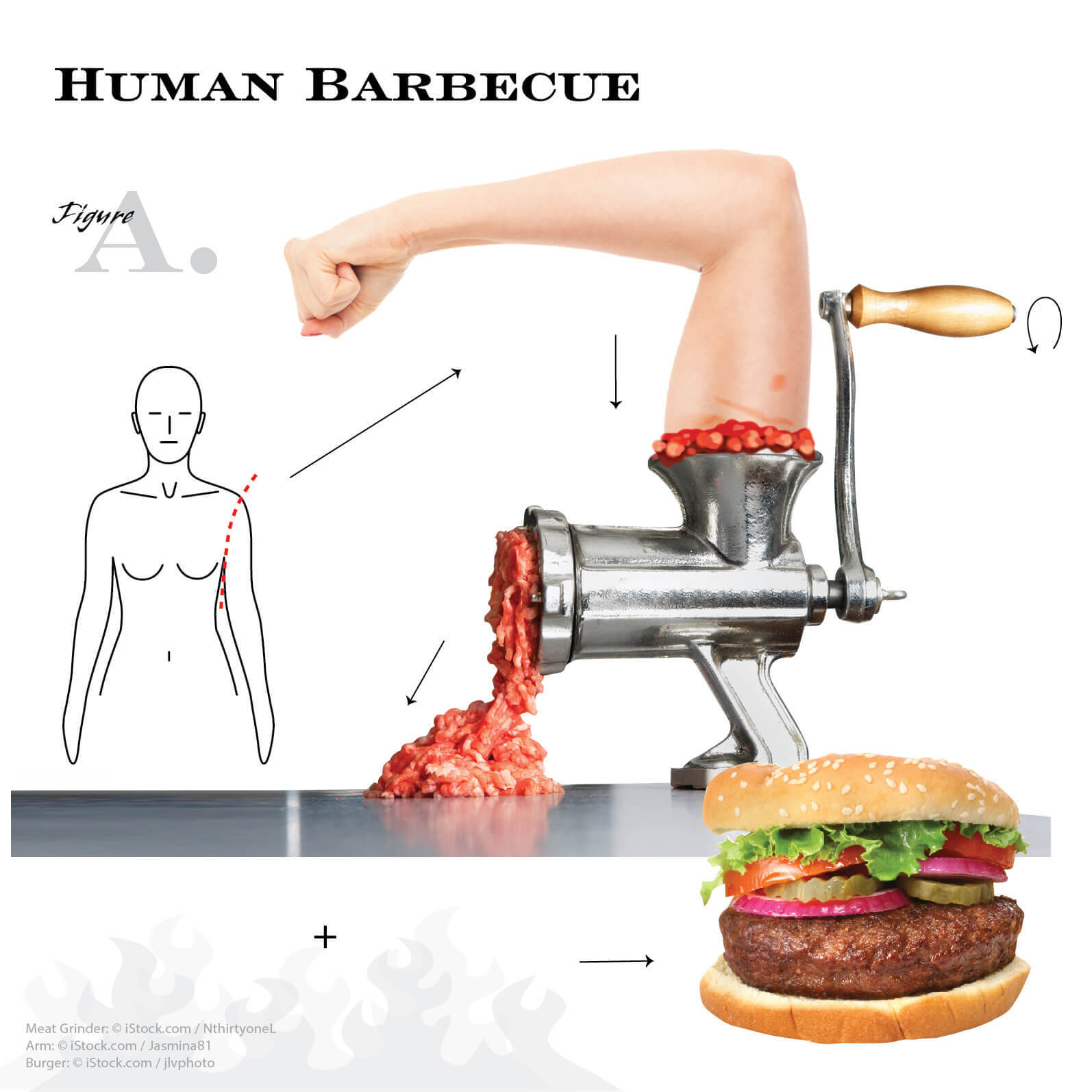
1. Carve out and sear some of my flesh for a human barbecue.

Newkirk always says that when it comes to feelings, “a rat is a pig is a dog is a boy.” If you wouldn’t carve out a chunk of a person’s flesh and throw it on the grill, why would you do the same to any other living being

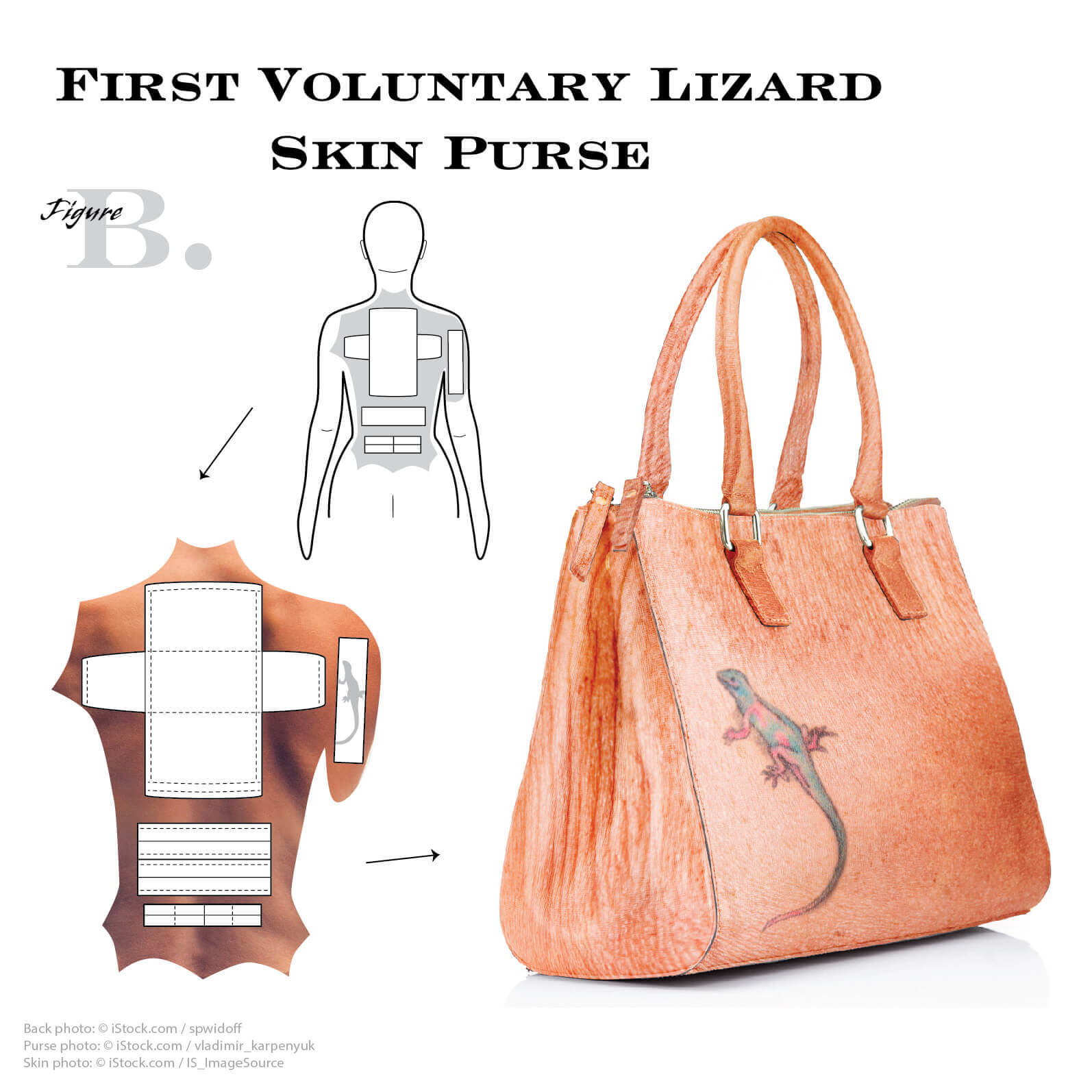
2. Peel off my skin for the first voluntary lizard-skin purse.

No animal has ever willingly given his or her skin for a leather handbag, so Newkirk and her lizard-skin tattoo could be the first—and hopefully the last, considering the number of vegan leather options available.

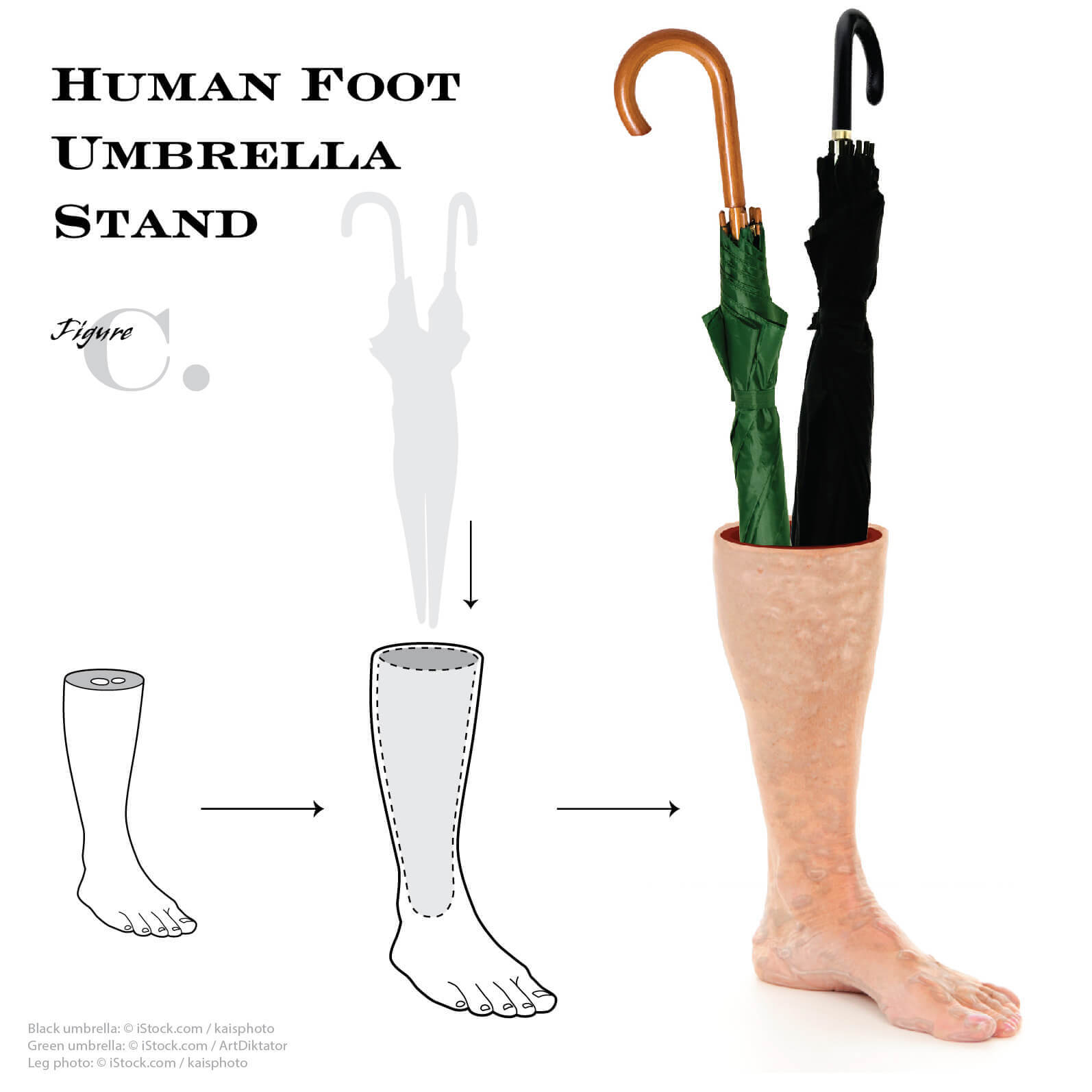
3. Dismember my legs and fashion them into human umbrella stands.

As a child, Newkirk encountered a number of elephant-foot ornaments and tiger rugs in Delhi. It’s creepy and wrong to use body parts as household decorations.

4. Scoop out and mount an eyeball to watch over the Environmental Protection Agency (EPA).

When it comes to animal testing, the EPA has been one of the worst offenders. Newkirk wants to keep her eye on the agency until it gives up its cruel practices and chooses to use the range of more accurate non-animal methods available.

5. Deliver my pointing finger to Ringling Bros. and Barnum & Bailey Circus.

Newkirk will thus cement the “Greatest Accusation on Earth” against Ringling for the extreme suffering endured by the circus’s captive elephants, big cats, and other animals.

6. Vacuum-pack my liver for use in a human foie gras dish for the French.

Foie gras is a nasty business where grain is forcibly pumped down ducks’ and geese’s throats several times a day in order to fatten their livers. Newkirk wants to appeal to French shoppers to stop supporting this cruelty.

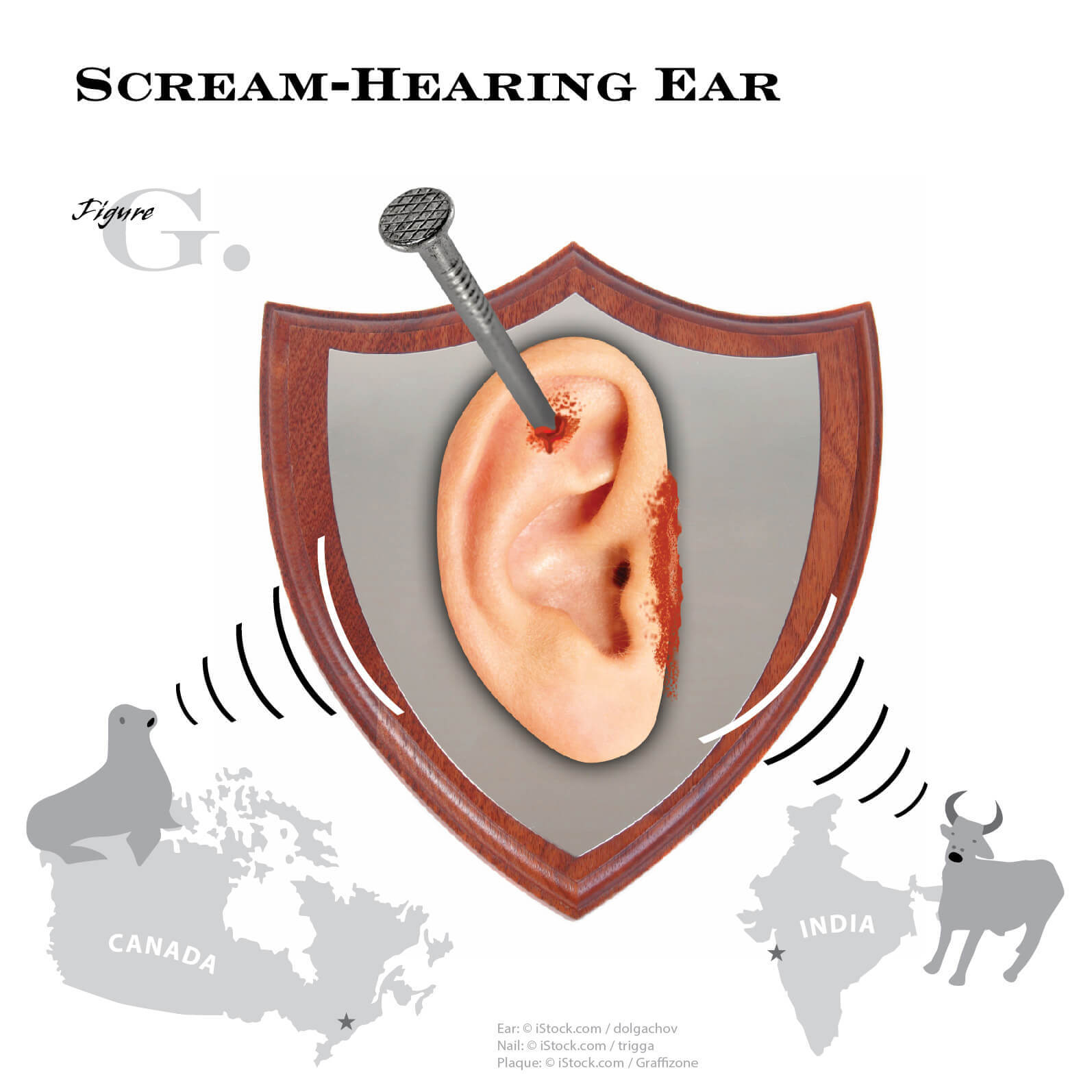
7. Chop off my ears and fashion them into human hearing aids.

PETA will send one of Newkirk’s ears to the Canadian Parliament to encourage its members to hear the screams of animals who are skinned alive for the fur trade. Her other ear will go to the Deonar slaughterhouse in Mumbai to remind the world that the animals’ blood-curdling screams don’t stop at the slaughterhouse walls.

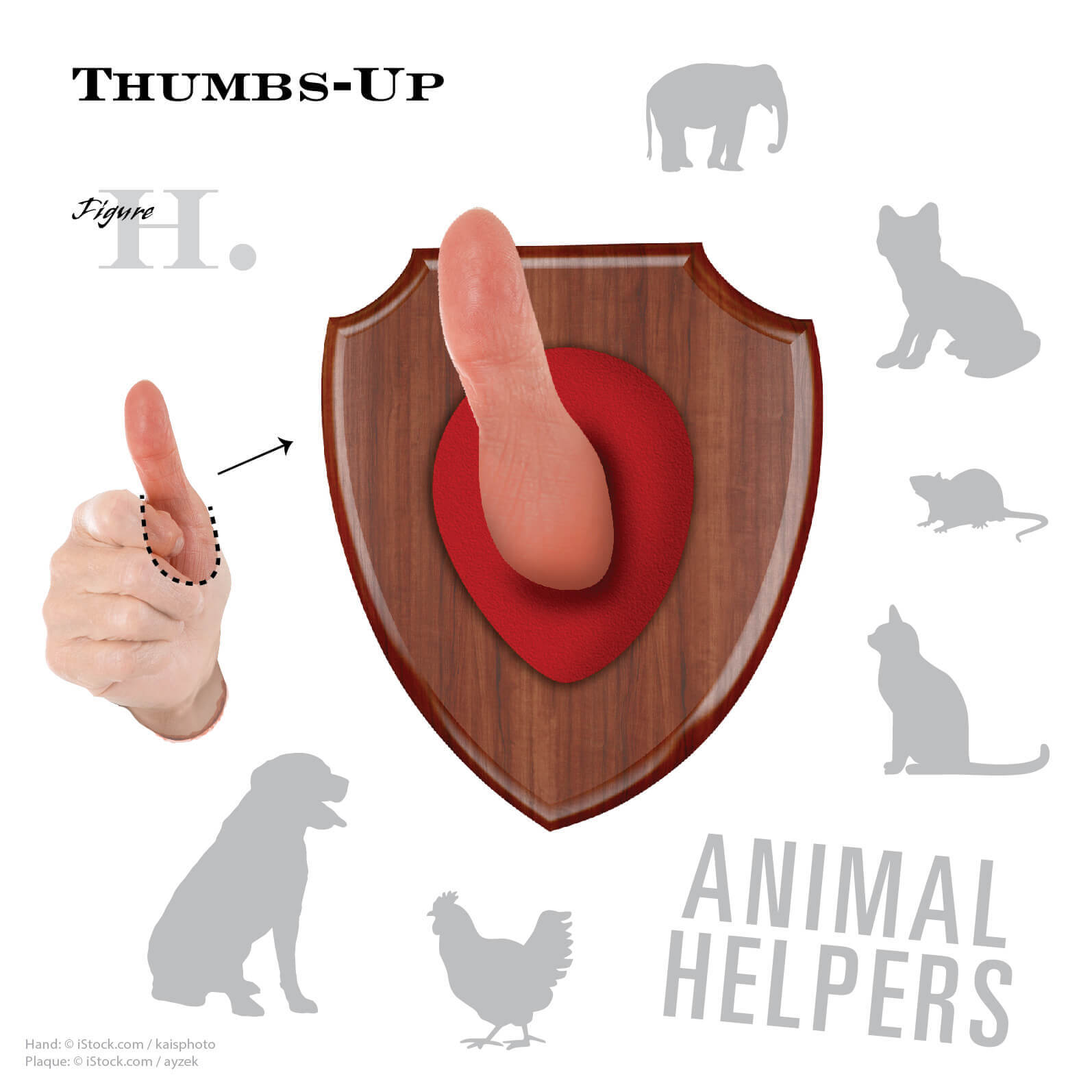
8. Sever a thumb and mount it as a “thumbs-up” plaque.

Newkirk wills her thumbs-up award to the greatest champion of animal rights in the year following her death.

9. Mount my other thumb to create a thumbs-down plaque.

Conversely, Newkirk wants her thumbs-down awarded to whoever most egregiously frightens or harms animals in the year after her death. Animal abusers beware.

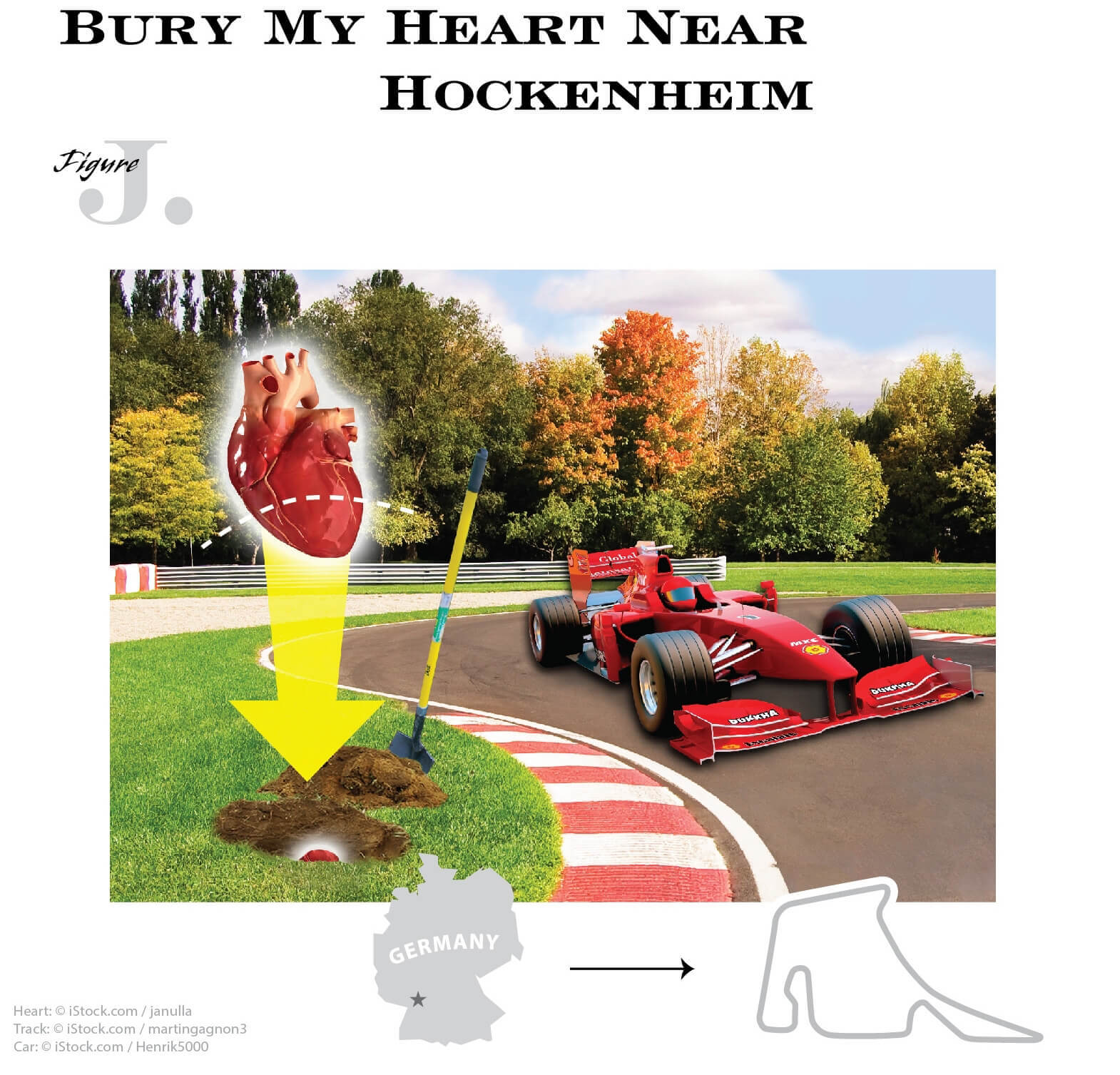
10. Bury a piece of my heart at the Hockenheim race track.

Newkirk is a huge fan of Formula 1 racing and in particular of Michael Schumacher, who helped write letters for PETA campaigns in the past. Schumacher is a racer with a heart for animals, and Newkirk would like a piece of her heart buried at the track where this multiple world champion won the 1995 German Grand Prix.

ingrid-will-10

11. PETA can use the rest of my body in ANY way that draws attention to animal suffering.

Newkirk wants PETA to use her additional body parts however it can to raise awareness of cruelty to animals. At the end of the day, it should be no worse to watch a human body go through these processes than to watch a suffering animal. We’re all animals, but humans have the ability prevent the unnecessary deaths of other animals just by making kind choices.

IEN.jpg

Which gruesome instruction shocked you the most? Let us know on Facebook and Twitter and tell us how we should use the rest of Newkirk’s body to raise awareness for animals!

In Defense of PETA: Compassion in a Callous Time for Human History

 http://altdaily.com/features/news/121-opinion36/7652-in-defense-of-peta-compassion-in-a-callous-time-for-human-history

Written by Jesse Scaccia on 11 March 2015.

Last week Ringling Brothers, the most successful, long-running circus in the history of North America, announced that they would be ceasing the use of their signature attraction, elephants, by 2018. Ken Feld, the president of Ringling’s parent company, Feld Entertainment, told the New York Times, “There’s been, on the part of our consumers, a mood shift where they may not want to see elephants transported from city to city.”
Transported, of course, is something of a euphemism; these mythical beasts of the jungle are beaten to submission by nasty little weapons called bullhooks. The ‘mood’ Mr. Feld is claiming has shifted is nothing of the sort. What has changed is awareness: enough people know what the animals are put through, and with that knowledge comes a moral clarity that what’s happening is, without question, wrong.
Meet the mood shifters.
**
Daphna Nachminovitch and Laura Brown sat on the floor and let their faces be licked by the kind of puppies PETA’s critics will have you believe they are eager to kill. We were in PETA’s now infamous shelter, located at 501 Front St. here in Norfolk. Unlike many of the shelters I’ve visited across the country, PETA’s animal care units are spacious, calm, and well-attended with toys, food, and clean bedding. It’s also the only shelter I’ve ever been to that sits on the fourth floor of an office building, with cut out windows between the dogs, kittens, and bunnies and the employees working a few feet away.
petaa111
Brown & Nachminovitch.
According to Nachminovitch, Senior Vice President of Cruelty Investigations, in 2014 alone PETA spent more than $1,000,000 on companion-animal services in Virginia and North Carolina. This included visiting and tending to more than 5,500 backyard dogs in 65 cities; helping more than 1,500 indigent families keep their animals by providing free medical services; custom-building and delivering 285 doghouses (6,138 total doghouses since the program’s inception in 1998); behavioral counselling for more than 2,500 people to help them keep their animals; and providing euthanasia services for more than 500 animals belonging to loving guardians desperate to alleviate their animal companions’ suffering.
“I don’t think people have a good idea of what we do here,” said Brown, a shelter specialist. “We’re here 12 hours a day, and on emergency pagers after that.”
Rachel Bellis works in cruelty investigations and, like many PETA employees, regularly takes a break to play with the animals. “Every animal is an individual. Every animal is looked at,” she said. “I’ve never worked with more compassionate and dedicated people in my life.”
It hasn’t been all puppies and kittens at PETA of late.
A recent incident that brought fresh attention–including an act by the Virginia General Assembly–to PETA’s shelter program was presented by the Pilot like a scene from a Stephen King story: “A little girl’s pet Chihuahua disappeared from her family’s mobile home on Virginia’s Eastern Shore…” What happened broke a number of PETA protocols: the dog was taken without speaking to the owner; the animal was euthanized prior to going through established processes, including not keeping the dog alive for 5 days, per state law. PETA since fired the contractor who violated these rules and has publicly apologized.

“It’s too complicated for a short sentence,” Ingrid Newkirk, president of PETA, told me when asked about PETA euthanizing animals at all. “That is what is happening, people want a soundbite and they reduce it to kill shelter or no kill.”

In order to understand the euthanizing at PETA, one must hold what might appear to be two contradictory concepts in their head at the same time: that one of the most prominent animal rights organizations in the world euthanizes animals, and that they do so while purporting that these acts strengthen, not dismiss, their ethical integrity.

In Newkirk’s own words:

“We weigh the situation from the animal’s perspective as best we can, as you would in any situation where you’re trying to help and abate suffering. Every animal we evaluate. If it’s an animal that is unlikely to be adopted, given that most people want small, fluffy, house-broken, and pleasant animals, or if the animal is crushed in an accident, or kept in a way that has made the animal unsocial or aggressive, or if the animal is on his or her last legs, or the time has just come, then euthanasia is a godsend. It’s a blessing. It’s a way to provide the most peaceful, traumaless exit. It’s a privilege to be able to give it to them.”

PETA, of course, did not cause the animal overpopulation problem. According to the Virginia Department of Agriculture and Consumer Services, in 2013, the total number of animals who entered VA shelters was 242,087, with 64,727 euthanized and 4,417 unassisted deaths. An unassisted death is the epitome of euphemism: these are animals under the care and custody of shelters they depend on to keep them from suffering and dying slowly, in pain. PETA’s spay/neuter program has serviced over 112,000 local animals over the past 10 years. Do some simple math and you realize that PETA has kept millions of animals off of our streets, out of our shelters, and never setting paw in clinics where euthanizing, sadly, must occur.

“We’d be hypocrites if we didn’t [euthanize],” Newkirk said. “We can’t ignore the animals around our office.”
The unnecessary death of the Chihuahua outshines, and to some, nullifies the major victories, like the big news about the elephants.

“If we’re fighting so hard to stop needless killing of even mice, why on earth would we wish to see anything but happiness and a loving home for any dog, or cat, or bird?” asked Newkirk. “It’s thoughtlessness that plays a role, and the nastiness and absolute bulling. Our poor girls who are out there helping out in the snow in the frigid weather… if people could see what they were doing, they’d be ashamed.”

**

Amanda Kyle, a field worker for PETA, was holding Soup, a Maltese mix who had been adopted from the Humane Society in Portsmouth, then two years later given up with the arrival of a new baby. When Soup was passed on to PETA she suffered from kidney disease, horribly matted-over genitals, urinary tract infection, fleas, ear and nasal infections, and rotten teeth (all but 3 teeth had to be removed). Like many animals left for PETA to take care of, without a miracle, there would be no happy ending for the likes of Soup. petta2Soup settled into Kyle’s lap. One of the lucky ones, Kyle had adopted her.”The vet gave her three months. I wanted her to feel joy,” Kyle said. “She was thrown away on Christmas eve. And this dog had been adopted and then abandoned, a ‘happy’ number for the shelter (whose priority is adoption statistics.)”The relationship between PETA and local shelters is a complicated one.

“I think of PETA does a lot of great things, there’s no question about it,” said Rob Blizzard, executive director of the Norfolk SPCA, which adopted out 770 animals last year. “I’ve been a big fan of their organization for years. I even had them in my will of charities I would leave money to. The question everyone’s asking is, why, with the huge amount of resources they have, isn’t more of an investment being made in those animals? It’s not that they’re not doing a lot of wonderful things, it’s that all of these animals being accepted, we just are not seeing the aggressive effort to adopt them out.”
At some point, it’s something of a numbers shell game–the Norfolk SPCA took in less than half the animals in 2014 it did in 2011, leaving one to wonder where our society expected those unaccounted for or turned away animals to end up. At some point, it’s something of a game of semantics–the Norfolk SPCA euthanizes around 5% of the animals it takes in.
“PETA has and will continue to make an effort to get adoptable animals adopted through our own doors and through transfers to other facilities, mostly the Virginia Beach SPCA,” said Nachminovitch. “Animals for adoption are routinely advertised online, via social media (on PETA’s pages and others’), in print publications, fliers, and more.”
PETA also makes a habit of taking on other city’s problem animals. Last year PETA accepted 249 feral cats from the City of Portsmouth. Up until recently the outgoing answering machine at a Portsmouth Police Department phone line dedicated to animal care instructed citizens to call PETA for help with feral cats.
**
Elsewhere in this building PETA employees are devoting their lives to protecting animals who are being sprayed with perfume and make-up products in their eyes and mouths; animals involved in experiments (in one test series alone PETA saved the lives of 4 million animals); animals used for entertainment (like the elephants who will no longer be beaten or paraded through the streets); and the billions of animals tortured and bloated full of antibiotics and growth hormones in the factory farming industry.
The scenes that play out in the factory farming industry are more horrifying than anything Stephen King ever wrote. Sweet little animals, tortured by the billions, because they don’t have the voices to speak for themselves, because they don’t have the hands to free themselves, because their don’t have the complicated collection of facial muscles to form frowns of distress that humans can recognize. They are tortured by the billions because they taste good.
To call the notion that people who work at PETA don’t actually love animals absurd is to give it too much credit. Like any organization of its size, PETA isn’t perfect, of course, and an amount of thoughtful criticism is not just expected, but helps them evolve. But what’s said about PETA is something very different. It’s a singular rancor, a vulgarity, a beguiling hatred that many in our society exhibit toward the group. It’s so intense–so screaming and pounding–that one gets the sense it is a din meant to distract from something else. It’s my junior psychologist interpretation that the maniacally intense pronouncements toward PETA are a projection of the way factory-farm supporting people subconsciously judge themselves.
Anti PETA by DelphiMember200
PETA, according to the Internet.
I offered this theory to Newkirk, who responded: “A friend of mine said, ‘How can you talk about killing dogs when your breath smells of dead animals, when your coat is made of dead animals, when you have shelves of products tested on animals… how can you talk about no kill?’ I do believe it’s a defensive reaction. Don’t tell me what to do, I’ll tell you what to do.”
The mood, as Mr. Feld from the circus might put it, has been slower to evolve surrounding some of the other issues that PETA advocates for, such as the humane treatment of the pigs that become the best part of a BLT, the cows that become our Big Macs, and the chickens that become our Chick fil A. What happens to these animals on the route to our plates is, to any moral being, sinfully inhumane. You, reading this, know it; you don’t need me to give you details or link to articles. The fact that the factory farming industry is an abomination against the supposedly evolved stature of our species has reached the collective consciousness, if it has not yet shifted the mood.

“It is always possible to wake someone from sleep, but there is no amount of noise that will wake someone who is pretending to be asleep,” wrote Jonathan Safran Foer in his spellbinding book, Eating Animals.

To recognize the central nobility of PETA’s work is to also acknowledge the central immorality of an industry, and food lifestyle, that can feel intractably interwoven with the way we see our country and ourselves.
It’s so much easier to hate than it is to go through the process of evolving, which is really, really hard.
*
When conversation turned to the euthanasia process, three of the four PETA employees gathered for the interview started to cry.
“It’s a big overdose of anesthesia,” said Brown. “We treat the animals like they’re our own. It’s the most precious gift I could give someone. I stand outside the door hearing people cry with their animals. I couldn’t image us not being there. Not just turning the animal away but the people away. We’re right there with them, grieving with them.”

Brown also does fieldwork for PETA, finding animals who are being abused, and helping them. They conservatively estimate that last year PETA employees put in over 25,000 hours in the field, where they regularly find animals humans have allowed to wallow at the doorstep of death. There can be love in death, and death in love. The nasty things people say about PETA affect Brown sometimes.
“You can’t help but take it personally,” she said. “But we’re laser focused on the animals. Throw at us what you want, and we’re still going to do the right thing for the animals. Of course it hurts. It’s scary to think about our services being limited. Even if you can’t be respectful of us… Don’t criticize us for those numbers when those are your numbers as well.”
Your numbers, my numbers, all of our numbers. In a perfect world there would be public money put toward rehabilitating every animal with behavioral problems, but that’s hard to imagine in a society that doesn’t rehabilitate its abused human children. In a perfect world there is money for surgeries for every sick animal, but that’s also hard to imagine in a country where so many vehemently oppose health care for all humans. These animals don’t get saved by leaving a comment online calling PETA the devil and then going back to daily life. Many of them, in fact, are beyond saving, it’s just that other facilities don’t have the guts–or moral certitude–to do it themselves.
*
We walked to the room where the animals spend their last final conscious moments on earth. “This is sacred territory,” a sign above the table reads. “Leave your stress and troubles at the door. In here, only the animals we serve matter.”
petttta4

“Those animals stay with me. I have memories, and nightmares,” Brown said. “We’re there speaking for all of them.”

All the anger toward PETA, and the “kill vs. no kill debate,” is also a nightmare. The solutions to this problem are every pet being spayed or neutered; in no one ever getting a pet from a breeder or pet store as long as there are animals in shelters; in a sea change of compassion that recognizes the humanity of these animals–all animals–who love us so damn much.

“If all of the energy targeted toward PETA was put toward solving the crisis…” said Nachminovitch, “it’s the animals who would actually benefit.”

When I asked Newkirk what three words she would want to come to mind when the average person thinks of PETA, she said, “Kindness, kindness, kindness.”
And the mood continues to shift, mirroring the lived compassion of humans, the glow of soul we share with all of the animals whose pain we recognize, and soothe.
Anyone interested in fostering or adopting is encouraged to contact PETA at adopt@peta.org This email address is being protected from spambots. You need JavaScript enabled to view it. .

Go Vegan or Die

10959824_10152683692271188_8744564479023804055_n

On the tip of one my K2 Apache Outlaw skis is a sticker of a skull and crossbones with the shocking statement, “Go Vegan or Die.” That sentiment might seem mean-spirited unless taken as fair warning about the very real health risks associated with eating meat—such as the greatly increased risk of cancer.

Like the anti-smoking campaign slogan, “Quit Smoking or Die,” “Go Vegan or Die” is simply good advice for people seeking longevity. (Stone-age meat-eaters seldom lived past 30, after all.)

There’s also a less-charitable motive for the slogan on the sticker. Anybody who has been the victim of thoughtless mockery from a meat-eater for the selfless act of eschewing animal flesh would be tempted to use the slogan, “Go Vegan or Die,” as would anyone frustrated by the results of their futile attempts to help others see that animal slaughter is cruelty and humans can live quite happily on a plant-based diet—sans the complicity in causing animal suffering.

Indeed, “Go Vegan or Die” could be a message to Homo sapiens that if they don’t want to exceed their carrying capacity, and ultimately join the list of species headed for extinction, they must change their murderous ways.

Displayed on the left-hand column of the home page of my wildlife photography site, “Animals in the Wild,” is a kill counter that continually adds to the ever-growing list of animals slaughtered for the sake of human hedonism.

If you ever need a starkly chilling reminder of why someone might utter the shocking slogan, “Go Vegan or Die,” stop in for a visit and watch how fast the numbers fly…

………………………………

Animals Slaughtered:

Number of animals killed in the world by the fishing, meat, dairy and egg industries, since you opened this webpage.

1,516,838 marine animals
773,503 chickens
38,123 ducks
20,966 pigs
14,444 rabbits
11,646 turkeys
8,983 geese
8,680 sheep
5,815 goats
4,921 cows / calves
1,095 rodents
1,062 pigeons / other birds
388 buffaloes
270 dogs
67 cats
67 horses
51 donkeys and mules
34 camels / camelids

View in real-time here.

Last Train to Delusionville

10615414_311553309030149_2346944286901096966_n

This article brings up a lot of great points, but I would argue that it isn’t just the vegans, it’s the animals themselves, who are the last fair game for socially-acceptable persecution…

         ……

People Hate Vegans, Freud Could Explain Why

How much your meat addiction is hurting the planet

http://www.washingtonpost.com/blogs/wonkblog/wp/2014/06/30/how-much-your-meat-addiction-is-hurting-the-planet/

June 30, 2014

The environment doesn’t appreciate our meat obsession.

The average meat-eater in the U.S. is responsible for almost twice as much global warming as the average vegetarian, and close to three times that of the average vegan, according to a study (pdf) published this month in the journal Climatic Change.

The study, which was carried out at Oxford University, surveyed the diets of some 60,000 individuals (more than 2,000 vegans, 15,000 vegetarians, 8,000 fish-eaters, and nearly 30,000 meat-eaters). Heavy meat-eaters were defined as those who consume more than 3.5 ounces of meat per day—making the average American meat-eater (who consumes roughly four ounces per day) a heavy meat-eater. Low meat-eaters were those who eat fewer than 1.76 ounces. And medium meat-eaters were those whose consumption fell somewhere in between.

The difference found in diet-driven carbon footprints was significant. Halve your meat intake, and you could cut your carbon footprint by more than 35 percent; stick to fish, and you could cut it by nearer to 50 percent; go vegan, and the difference could be 60%.

The variations were so drastic that the study’s authors suggested that countries should consider revising their definition of a sustainable diet. “National governments that are considering an update of dietary recommendations in order to define a ‘healthy, sustainable diet’ must incorporate the recommendation to lower the consumption of animal-based products,” the study says.

The livestock industry is responsible for roughly 15 percent of global carbon emissions. And the resources necessary to produce even the smallest amounts of market ready meat—like, say, a quarter pound hamburger—are staggering.

The good news is that while Americans might still eat more meat than mother nature would prefer, they are scaling back, and especially so with the most environmentally unfriendly kind—per capita beef consumption has fallen by 36 percent since its peak in 1976, according to data from the USDA. The bad news is that the rest of the world appears to be headed in the opposite direction. Global demand for meat is expected to grow by more than 70 percent by 2050, largely driven by burgeoning middle classes in the developing world.

More: http://www.washingtonpost.com/blogs/wonkblog/wp/2014/06/30/how-much-your-meat-addiction-is-hurting-the-planet/

“Don’t eat any animals under any circumstances;…

…it is always wrong and misguided and thoughtless and cruel.”  –  Susie Duncan

https://www.goodreads.com/author_blog_posts/7898756-where-is-jay-leno-when-we-need-him-three-stories

Three Stories and a Great Quote from Susie Duncan

1) descriptionUnlikely friendship of a dog and an owl … Okay! So, why can’t humans simmer down and be nice and stop eating other species? AND stop warring with one another? AND stop worrying and start being happy and looking out for each other? These photographs at the above link are exceptional – enjoy! LIFE as it was meant to be lived…by all!

Don’t eat any animals under any circumstances; it is always wrong and misguided and thoughtless and cruel.

description

2) Urgent: Ask Indiana Legislators to Oppose ‘Canned Hunting’ Bill! This state has gone so damned low that it is not to be believe; they may have already voted as they are running crazy, mean-spirited legislation through like crazy!

description

3) ODD HEADLINE? “American gored by bull in Spain out of intensive care“: not just a double preposition, but also sounds like the bull gave a bit of a gore to a rotten person just to teach a lesson in humane-ness, doing so from that spirit of concerned “intensive care” for the brat’s soul?????? Like a parental swat? Where is Jay Leno when we need him?

Why Do Right-Wing Adherents Engage in More Animal Exploitation and Meat Consumption?

http://spot.humaneresearch.org/content/why-do-right-wing-adherents-engage-more-animal-exploitation-and-meat-consumption

Why Do Right-Wing Adherents Engage in More Animal Exploitation and Meat Consumption?

Submitted on Jan 26, 2015 (Original item from 2014)

Even though a number of studies have established a link between right-wing ideology and meat-eating, there is a dearth of literature addressing why those with right-wing beliefs are more likely to consume animals. Recognizing the gap, this study of Dutch and Belgian adults begins to address the question of why, and finds that people with right-wing beliefs tend to staunchly oppose any movement that threatens traditions, or perceived human superiority. Though it is only an initial foray into right-wing psychology and its tendency towards animal exploitation, the authors establish a strong link between the two and encourage further inquiry.


Abstract:


When it comes to right-wing ideology, past research has identified two “dispositional dimensions” that are the primary lenses through which adherents see the world: Right Wing Authoritarianism (RWA), defined by a strong belief in cultural traditions, submission to authority, and aggression towards disobedience; and Social Dominance Orientation (SDO), a desire for your group to be dominant, and belief that there is a fundamental inequality among social groups. At the beginning of their paper, the authors note that “Few studies have investigated relations between social-ideological orientations and exploitative attitudes and behaviors toward animals. […] Yet existing evidence reveals positive associations between right-wing ideologies such as RWA and SDO, and attitudes toward the exploitation of animals as objects for human benefit.” Even though it is established that having a right-wing orientation means that a person is more likely to self-identify as a meat eater and consume meat in their daily life, there is little evidence as to why this is the case. In this study, researchers hypothesized that the link between meat-eating and right-wing beliefs is caused primarily by “a sense of threat from increasingly popular non-exploitive ideologies toward animals (i.e., veg(etari)anism),” as well as “human supremacy beliefs.”


Conducting two separate surveys with Dutch and Belgian adults respectively, researchers established the link, finding that “those higher (vs. lower) in RWA or SDO demonstrate greater acceptance of animal exploitation and greater animal consumption.” However, more importantly, they were able to “reveal that right-wing ideologies predict animal exploitation and consumption through two psychological processes: the perceived threat that animal-rights ideologies pose to the dominant carnist ideology, and the belief in human superiority over animals.” Even when researchers replicated their first study with a second group, sampling a greater proportion of non-meat eaters, and controlling for the possibility that meat-eaters simply like the taste of meat, researchers still found that the basis of meat-eating for right-wing respondents was ideological in nature. Again, they found that for right-wingers, meat-eating behavior was “clearly ideological in nature, referencing power, might, and greater ‘rights’ over animals, plus an active push-back against movements advocating for the under-powered (i.e., non-human animals).”


Through this study, the authors hope to inspire further inquiry and note that their work indicates that it is “increasingly clear” that right-wing thought has “much broader implications” for the propagation of meat-eating. Given the strength of ideological beliefs, it might be wise for animal advocates to undertake further research into how their messages target and impact right-wing adherents. Furthermore, if right-wing ideology is such a strong predictor of a steadfast belief in the rightness of consuming animals, it may be more effective to target meat-eaters who do not disagree with veganism/vegetarianism on such fundamental, visceral grounds.


Original Abstract:

Despite the well-documented implications of right-wing ideological dispositions for human intergroup relations, surprisingly little is understood about the implications for human–animal relations. We investigate why right-wing ideologies – social dominance orientation (SDO) and right-wing authoritarianism (RWA) – positively predict attitudes toward animal exploitation and meat consumption. Two survey studies conducted in heterogeneous community samples (Study 1, N=260; Study 2, N=489) demonstrated that right-wing ideologies predict greater acceptance of animal exploitation and more meat consumption through two explaining mechanisms: (a) perceived threat from non-exploitive ideologies to the dominant carnist ideology (for both SDO and RWA) and (b) belief in human superiority over animals (for SDO). These findings hold after controlling for hedonistic pleasure from eating meat. Right- wing adherents do not simply consume more animals because they enjoy the taste of meat, but because doing so supports dominance ideologies and resistance to cultural change. Psychological parallels between human intergroup relations and human–animal relations are considered.


http://www.sciencedirect.com/science/article/pii/S0191886914

http://spot.humaneresearch.org/content/why-do-right-wing-adherents-engage-more-animal-exploitation-and-meat-consumption

Pope Potpourri: Don’t Breed Like Rabbits/Will the Pope Go Vegan?

http://www.cbsnews.com/news/pope-francis-walks-back-remark-about-catholics-breeding-like-rabbits/

Pope change his mind on breeding “like rabbits”?

Pope Francis leads his Wednesday general audience in Paul VI hall at the Vatican, Jan. 21, 2015. REUTERS

ROME — During his weekly general audience in St. Peter’s Square, Pope Francis sought Wednesday to clarify remarks he made earlier in the week which suggested Catholics should limit the number of children they have, if they can’t afford to take care of them properly.

Aboard the papal plane from Manila to Rome on Monday, the Pope spoke of his disapproval of a woman who was expecting her eighth child.

“Does she want to leave seven orphans?” asked the pontiff, wondering aloud whether she was trying to tempt god by undergoing an eighth birth by cesarean section.

Using the colorful language that has become his hallmark, the Pope said being a good Catholic did not mean people should breed “like rabbits,” and added that there were many church-approved ways to limit births without resourcing to contraceptives, which are banned by the Catholic Church.

Wednesday, he seemed to pull back from that statement. Speaking of his recent trip to the Philippines, where he presided over the largest mass in history, he said “it gives consolation and hope to see so many numerous families who receive children as a real gift of God. They know that every child is a benediction.”

He called “simplistic” the belief that large families were the cause of poverty, blaming it instead on an unjust economic system. “We can all say that the principal cause of poverty is an economic system that has removed the person from the center, and put the god of money there instead.”

Mons. Anthony Figueiredo, a theologian and Director of the North American Pontifical College in Rome, said the two statements are not contradictory.

“When the Pope speaks on the plane, he is speaking as a pastor to ordinary people,” said Figueiredo, who is a CBS News consultant. “When he comes back, he wants to speak as Pope.”

The Monsignor said that while some Popes have put doctrine first, Francis puts the person first.

“It’s a risky business, there is no doubt about it; because when you begin with the person, everyone has their own way of hearing it.”

Putting Pope Francis squarely into any category can be difficult.

Speaking to reporters during Francis’ trip to the Philippines, Archbishop of Manila Luis Antonio Tagle said that when he’s asked whether the pope is a liberal or a conservative, he responds simply: “he is who he is.”

__________________________________________

Will the Pope Go Vegan? | Posted January 20, 2015 | 11:35 AM

I jest not. Never having been one to adhere to any organized religion, in fact I have an utter contempt for them, I find myself nonetheless more than a little happy to hear Pope Francis has made global climate change a top concern. According to the Associated Press