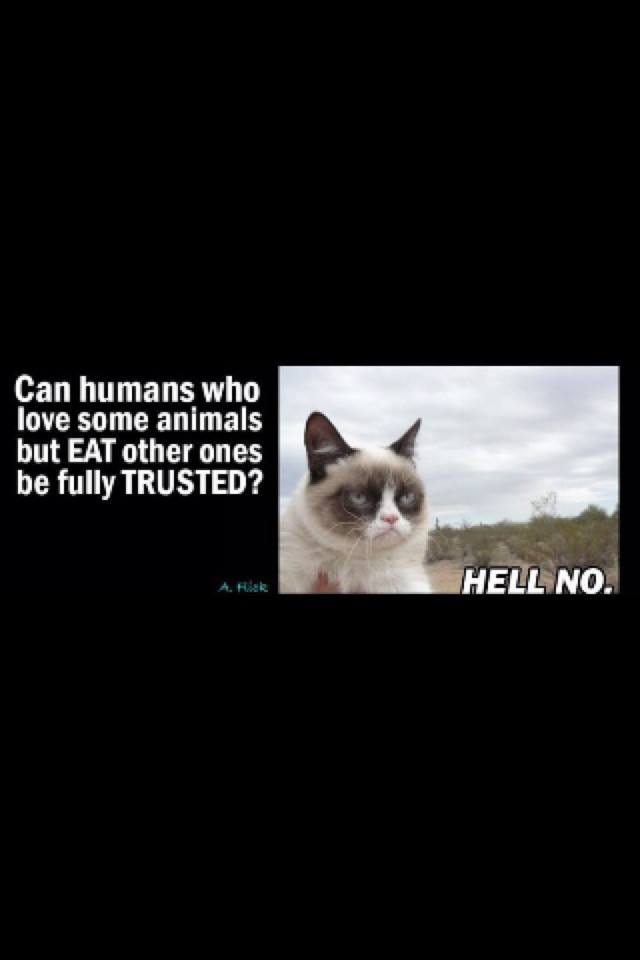
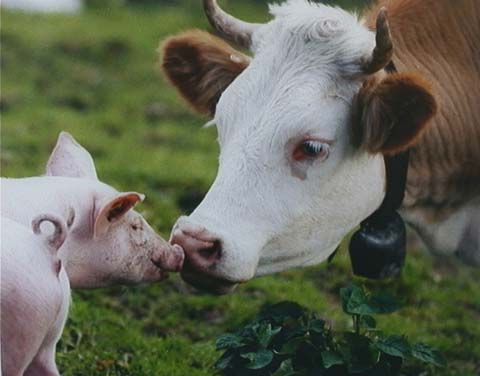
What Would Happen to All the Animals if Everyone Went Vegan?

Dr. Will Tuttle: Educator & Author
November 20, 2013

OneGreenPlanet

Those of us eating a plant-based diet often find our food choices causing more questions and consternation during the upcoming weeks than during the rest of the year. One of the perennial concerns I’ve found people have is that if everyone went vegan, what would happen to all the animals—chickens, turkeys, pigs, and cows? If we stopped eating them, wouldn’t they just take over the Earth, threatening our survival?

For years this question irked me because it seemed patently ridiculous, and worse, would be used to justify the cruelty of eating animal foods. Now, though, whenever I hear this question, I see it as an opportunity to deliver a brief meditation on how our world can be healed.

Imagining the world gradually going vegan is imagining the most positive possible future for our species, for the Earth, and for all living beings. First of all, as we reduce the number of animals we are eating, that will send a message to agribusiness to forcefully inseminate fewer female pigs, turkeys, cows, fishes, and other animals, so fewer animals will be imprisoned, and there will be less mutilation, killing, violence, terror, and suffering. It also means there will be lower demand for GMO corn, soy, alfalfa and other feed grains, and thus less deforestation, monocropping, and pollution. As this continues, there will be more food to feed starving people, and also monocropped land can be returned to being critically-needed habitat for wildlife, whose populations are being decimated by the habitat loss caused by grazing livestock and growing feed grains.

As the vegan trend continues, streams will come back and run cleaner. More birds, fish, and other animals will be able to thrive, there will be far less toxic pesticides and fertilizers needed, and the oceans, which we are devastating, will begin to heal. As studies continually demonstrate, livestock production is the main driving force behind global warming, and this also will decrease. In addition, by eating less animal-based foods, people will be healthier physically as they eliminate the toxic fat, cholesterol, and animal protein that drive obesity, diabetes, arthritis, cancer, kidney disease, heart disease, and drug use. People will become healthier emotionally and spiritually, also, as they cause and eat less misery, and our culture, as its level of violence decreases, will become healthier as well.

As forest, rainforest, and prairie communities come back to life, along with riparian and ocean communities, the devastating mass extinction of species that is going on right now will slow down. To raise and slaughter hundreds of millions animals daily for food on this planet, we are forcing hundreds of species of animals and plants into extinction every week. Because of our appetites for a few species of birds, mammals, and fish, we are destroying the Earth’s genetic diversity, and it seems absurd to be unconcerned about these tens of thousands of species, but to care only about the few that we’re eating. In any event, the animals we imprison today for food lived freely in nature for millions of years and could do so again. The animals that we most intensely enslave for food and products, such as turkeys, ducks, geese, chickens, and fish, are all doing just fine in the wild (aside from being hunted and having their habitat destroyed). They would continue to do so, and this is also true for pigs, sheep, and goats, which even today have substantial wild populations. There is no reason to think that the animals we are eating and using wouldn’t be able to return to their natural lives living freely in nature—they already are!

Cows are the only possible question—their progenitors, the aurochs, were forced into extinction in the 1600s, but it is certainly conceivable that cows could be reintroduced into central Asia and Africa where they lived for millions of years, and with time would return to the ecological niche they inhabited before cruel human enslavement tore them from their ancestral homelands.

So, it’s a refreshing question to ponder. It’s remarkably uplifting and heartening to reflect on “what will happen if we all stop eating meat, dairy products, and eggs?” Contemplating this, we see clearly that there’s nothing stopping us from creating a heaven on this beautiful and abundant Earth – nothing except the culturally mandated, deeply-ingrained, and deluded habits of routinely abusing animals for food. Each one of us can question this, and I hope the next time you hear this question, you’ll welcome it enthusiastically!

We can all discuss this question a few times during the holidays, and by doing so, pull back the curtain to reveal the positive future we can create together. There is no action more powerful anyone can take to subvert the dominant paradigm of exploitation and inequality than to shift to a plant-based diet for ethical reasons. By going vegan, and spreading the vegan message creatively, we take the most effective action to create a world where peace, abundance, sustainability, freedom, and universal joy are not just possible but natural.
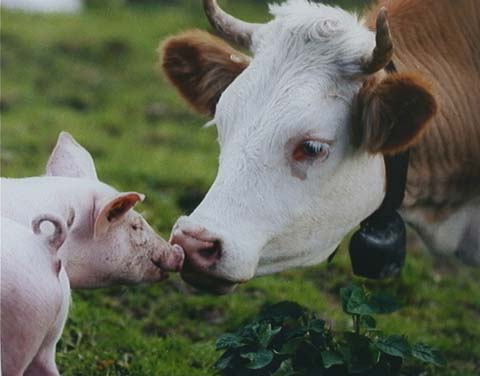
524958_3325028303604_654533903_n

It’s All the Same To the Victim

Lately we’ve been hearing from a lot of holier-than-thou types quick to make a distinction between sport and subsistence hunters. Truth is, there’s not all that much difference between the two. Sport hunters and pseudo-subsistence hunters are often such close kin they’re practically kissin’ cousins. I know a lot of hunters, but I’ve never met one who didn’t boast about “using the meat.” By the same token, I’ve never met anyone who openly admitted to being just a sport hunter.

There are a lot of needy poor folk out there these day, including myself, but I don’t know anyone who really needs to kill animals to survive. Like sport hunters, subsistence hunters do what they do because they want to, they enjoy the “lifestyle.” If one thing differentiates the two, it’s that meat hunters have an even stronger sense of entitlement.

But, everyone has a right to feed themselves and their family, don’t they? Well, does everyone—all 7 billion humans and counting—have the right to subsist off the backs of other animals when there are more humane and sustainable ways to feed ourselves? How many self-proclaimed “subsistence” hunters are willing to give up all their modern conveniences—their warm house, their car, their cable TV or their ever-present and attendant “reality” film crew—and live completely off the land like a Neanderthal? Not many I’m sure—at least not indefinitely.

It’s unclear what makes some folks believe they have the right to exploit wildlife as an easy source of protein, but animal flesh is by no means the safest or healthiest way for humans to get it. While a steady diet of decaying meat slowly rots your system, millions of vibrant people have found a satisfying and healthy way to eat that doesn’t involve preying on others.

Text and Wildlife Photography ©Jim Robertson, 2013. All Rights Reserved

Text and Wildlife Photography ©Jim Robertson, 2013. All Rights Reserved

Some Thoughts on Melissa Bachman and the Lion

http://www.abolitionistapproach.com/thoughts-melissa-bachman/#.Uo–277Tly0

by Gary  Francione

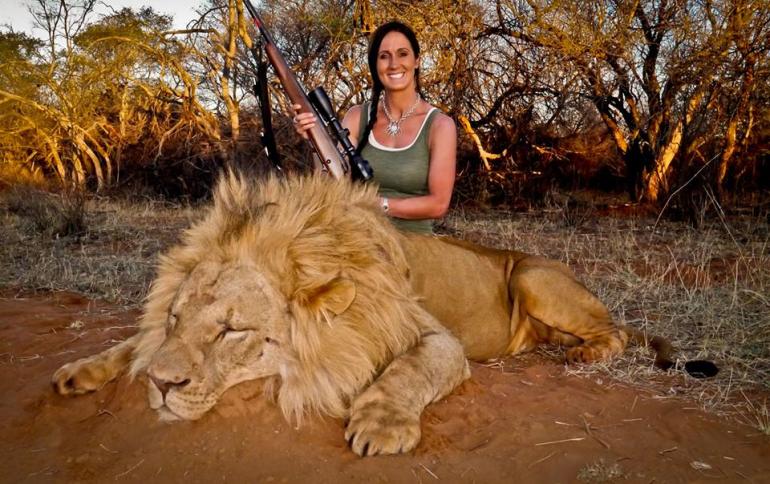
Melissa Bachman, who is the host of a hunting show called Deadly Passion, announced on her Facebook page on November 1 that she had killed a lion in South Africa and she posted this picture:

melissalion

The response was remarkable. According to one story, “Bachman found herself the target of vicious death wishes and obscenity-laced insults on Monday as critics on Twitter, YouTube and other social networks blasted the Minnesotan for her boastful hunting escapades.” According to another story, “More than 250,000 people have signed an online petition demanding that South Africa deny future entry to Melissa Bachman, a big game hunter whose smiling photo with a dead lion has sparked considerable outrage.”

And, to no one’s surprise, the large animal welfare charities are rushing to create a fundraising campaign with a petition to have lions listed as endangered under the Endangered Species Act (U.S.)

I posted something about this on my Facebook page, and I had to delete the comments and close the thread because of the horribly misogynist and violent comments that were being made.

People are angry that Bachman killed the lion unnecessarily. There was no need, no compulsion for her to do so. She did not kill the lion in self defense. She killed the lion because she enjoys killing animals.

And most of us think that that’s terrible; we don’t think that we should make animals suffer and die just because we derive some pleasure from it.

Or do we?

We kill and eat about 56 billion land animals not counting fish. There is no necessity; no compulsion. We do not need to eat animals to be optimally healthy and animal agriculture is an ecological disaster.

The best justification we have for imposing suffering and death on those billions of animals, many of whom have had lives far more hideous than the lion Bachman slaughtered, is that they taste good.

So how exactly does this distinguish those of us who consume animals from Bachman?

That’s a rhetorical question: there is no coherent moral distinction between her and most of us. The fact that Bachman kills “charismatic species” and the rest of us just kill chickens, pigs, cows, and fish is completely irrelevant.

The Bachman matter is no different from the moral schizophrenia that we saw in the matters of Michael Vick, Mitt Romney, and Kisha Curtis.

On the positive side, every time one of these cases erupts, we reaffirm our belief in the widely shared moral intuition that it’s morally wrong to impose suffering on or kill animals without a good reason. Ironically, we already believe everything we need to believe to reject animal exploitation altogether. It’s just a matter of coming to see there is no morally relevant difference between shooting a lion for fun or eating a steak because you enjoy it. In both cases, we have taken a life for no good reason.

Let us hope that these episodes of moral schizophrenia cause the light to go on at least for some who make the decision to put their morals where their mouth is and go vegan.

Gary L. Francione Professor, Rutgers University

©2013 Gary L. Francione

Animal Agriculture: The Real Inconvenient Truth

http://www.mfablog.org/2013/11/animal-agriculture-the-real-inconvenient-truth.html

By Ari Solomon
1461780_624520054271903_1498249114_n.jpgLast week, one of the largest storms in recorded history made landfall in the Philippines. Super Typhoon Haiyan spanned 300 miles and had winds that topped 200 miles per hour. With thousands dead and entire towns destroyed, this was an unmitigated tragedy.
Naderev Sano, commissioner for the Philippines climate change commission and head of the Philippines delegation to the UN climate, recently made an appeal in Warsaw urging the world to take action on climate change, which scientists believe is to blame for fueling these super storms.
Since 2006, when the UN released its groundbreaking report Livestock’s Long Shadow, the world has been made aware of the fact that there is no greater contributor to climate change than animal agriculture. In fact, it was discovered that raising animals for food creates more greenhouse gases than all the transportation in the world combined.
Whether you’re looking to improve your health, safeguard animals from unnecessary cruelty or help halt the horrific effects of climate change, there is no better choice than adopting a delicious vegan diet. To get started, visit ChooseVeg.com.

Relative Radicalism

All things are relative, and that includes radicalism. Do I go too far, or not far enough? That depends on who you ask. Ask a hunter, and I’m an extremist “anti”; in the eyes of the everyday meat-eater, I’m a vegan food Nazi.

But to an actual radical—one of the die-hard few who won’t be happy until every cage is empty, every cattle ranch is bankrupt, every mink is freed and every fur farm burned to the ground—well, I’m probably considered too fuckin’ nice. It’s not that I don’t want to see every hog farm abandoned, every layingcage_1 hen liberated, every trap melted back into pot metal, every trophy hunter prosecuted and every meat-eater veganized.

I guess I just don’t have that much faith in humanity.

I can’t get past the feeling that the only way all this human evil’s gonna end is when the species goes completely under, due to, say, a pandemic, major drought, storms or food shortage—the kind of things we’re likely to see as the climate keeps changing for the worse.

I’m not saying we shouldn’t try to do everything humanly possible (within reason) to stop the coming global train wreck, but meanwhile, I’m going to continue to secretly hope Mother Nature will hurry up and get her shit together to make right her biggest mistake. She’s been an overly permissive parent to the spoiled species Homo sapiens thus far, letting them get away with uncontrolled, selfish misbehavior.

It’s about time for her to rein in the over-intelligent, under-compassionate, over teched, under-ethical killer ape, even if she has to throw out the baby with the bath water.


The Fate of Human Decency is on Your Plate

Well, I tried to hold true to my promise to swear off philosophizing, but I come across too many issues that need addressing to stay on that wagon for very long. The latest thing that got me thinking was a Facebook poster that read:

“I went to Subway today to get my favorite sandwich. The guy in front of me ordered a different sub. I was pissed because he didn’t get the same sub as me, even though it didn’t affect me in any way.
“This is what people sound like when they say gay marriage affects them.”

While I get it, and agree with the analogy in that context, I couldn’t help but think about the scenario in a literal sense. Ordering a Veggie Delite (hold the mayo and cheese) at Subway, I find myself getting pissed if the guy in front of me is ordering a Cold-Cut Combo sub. Not because it directly affects me, but because of the multitudes of sentient animals who endure miserable lives and horrible deaths to appease such hedonistic humans’ thirst for blood (and flesh and tissue and animal fat, etc.).

The sacred right to personal choice should be limited by the rights and interests of others. It’s not like I care whether someone’s food choices are unhealthy—hell they can smoke, drink or overeat to their heart’s content—as long as no one else suffers for their actions. And factory-farmed animals being served at fast-food restaurants suffer unimaginable conditions. Enslaved for life, a pig raised for bacon or sausage has no semblance of the kind of existence nature intended. The same goes for cows confined on feed lots, and chickens or turkeys de-beaked and crowded into windowless barns.

On a related note, last night I watched the Spielberg flick, Lincoln, and had a similar thought: although it’s inspiring to see how far we’ve come as a country in terms of accepting racial equality, we still have a long way to go in applying the notion of “equal under the law” to all of our fellow Earthlings. In order for society to truly stop living off the backs of the enslaved, the concepts spelled out by Thaddeus Stevens in the 13th amendment—that though all are not always equal in all things, they should be treated equally under the law—must apply to both human and non-human animals alike.

Just some food for thought next time you feel entitled to a meat-lover’s combo submarine sandwich. Every time you order from Subway, the “fate of human decency” is in your hands.

524958_3325028303604_654533903_n