HOW TO BEAT A VEGAN IN ANY ARGUMENT

: Your step-by-step guide to justify killing animals and destroying the planet.
Step 1: REMIND THEM THAT OUR ANCESTORS ATE MEAT- No vegan is aware of this, but one thing they are aware of is that if humans have been doing something for thousands of years, it must be acceptable. After all, there’s nothing worse than moral progress!

Step 2: BECOME A PLANT RIGHTS ACTIVIST- Everyone knows that cutting the throat of live animals and cutting vegetables is the same thing. Vegans aren’t aware of the fact that plants feel pain too, and make sure to raise your voice whenever a vegan cuts a carrot.

Step 3: ASK THEM WHAT THEY’D DO IF THEY WERE STRANDED ON A DESERT ISLAND- Vegans routinely get stuck on desert islands and have to eat animals of desert for survival.

Step 4: REMIND THEM THAT EATING MEAT ISN’T ILLEGAL – If politicians think killing animals is okay, then it must be!

Step 5: SHOUT “UMM CHICKEN” REPEATEDLY- Vegans have never heard of this product. This will disorientate the vegan.

Step 6: POINT AT YOUR CANINE TEETH-
we know that if you have a body part capable of doing something, that means it’s okay to do whatever it/they can be used for. For consistency, make sure to sexually assault someone and then point at your penis when the police questions you why you did it.

Step 7: TELL THEM THAT WE NEED TO EAT ANIMAL PRODUCTS TO SURVIVE- Many vegans are unaware of the fact that they are actually dead, much like Bruce Willis’ character in ‘The Sixth Sense’.

Step 8: TELL THEM THAT MEAT IS TASTY- vegans aren’t aware of this, since none of them have ever eaten meat in their entire lives. Just tell them meat is yummy,they will definitely start killing animals for meat.

Step 9: TELL THEM VEGAN FOOD TASTES LIKE SHIT- It’s a well known fact that not a single one of the 20,000 edible plant species on earth or the spices and other products derived from them are even slightly appetising.

Step 10: REMIND THEM THAT THEY USE ELECTRICITY AND MOBILE PHONES- Being involved in a justice movement is hypocritical if you use electricity or mobile phones. Be sure to also tell racial equality campaigners, women rights and gay rights activists and anti child abuse campaigners that their cause is pointless for the same reason.

Step 11: CALL THEM PUSSY AND WEAK- we all know the one who cares for the weak and voiceless is pussy and weak by heart, tell them that killing the weakest animals remorselessly is what makes us strong.

Step 12: REMIND THEM THAT YOUR SITUATION IS JUST LIKE A LION’S – tell them you eat meat because you wanna be a lion! Let them know about that one time you stalked your prey down in a jungle with your canine teeth and flawless strength of your jaws and limbs to feed your family who was dying of hunger.

Step 13: MAKE THEM AWARE OF HOW YOU EATING MEAT AND ANIMAL PRODUCTS ACTUALLY BENEFITS THINGS- Finally, make the vegan aware of all the good eating meat, cheese, milk, eggs, fish, etc. does for animals, the environment, and other humans. Seeing as veganism helps none of those things, this will make the vegan realise which is the cause REALLY worth fighting for.

Step 14:- MAKE THEM AWARE THAT WE ARE OMNIVORES BECAUSE WE CAN MAKE WEAPONS TO HUNT ANIMALS- many vegans aren’t aware that even if we are not biologically and naturally capable of hunting animals, we can use weapons to kill them,so that makes us omnivores, for consistency make sure to kill your neighbour’s dog with a weapon and tell them that you did it because you are an omnivore.

STEP 15- LET THEM KNOW THE FARM ANIMALS ARE RAISED BY US SO ITS OK TO TAKE THEIR LIVES AWAY- for consistency kill your own children and tell the police that you did it because you brought them into existence, police will definitely understand you.

Step 16- TELL THEM ITS YOUR PERSONAL CHOICE – it’s a well known fact that its a personal choice to cut the throats of the animals just to eat them.

Step 17- TELL THEM VEGANS ARE ANNOYING AND THEY SHOULDN’T ACT AS IF THEY ARE SUPERIOR TO EVERYONE ELSE- Despite the fact that they do live by a higher ethical standard, they shouldn’t feel superior just because they don’t take lives of the animals. Let them know killing animals is what makes us superior.

Step 18- TELL THEM ITS THE SURVIVAL OF THE FITTEST- Its a well known fact that the strong prey on the weak and nature is cruel, for consistency make sure to kill little kids and then tell the police “its survival of the fittest,the strong prey on the weak and tell them nature is cruel”.

Step 19- FINALLY SHUT THEM UP AND TELL THEM TO STOP FORCING THEIR BELIEFS DOWN YOUR THROAT- we all know that forcing knives against the Throats of animals is better than forcing our beliefs down someone’s throat who isn’t comfortable with hearing the truths.

Paul McCartney wishes you ditch meat for his 78th birthday

Paul McCartney wishes you ditch meat for his 78th birthdayImage: Paul McCartney

‘I want justice for all those who have died and suffered’

Sir Paul McCartney turns 78 on June 18 and before he blows the candles, he wants a birthday present.

He wants his fans to ditch meat.

Banner

In a guest blog post for animal rights group PETA (People for the Ethical Treatment of Animals), the Beatles legend wrote: “All I’ve ever wanted for my birthday is peace on Earth – including for animals.

“That’s why this year, I’m urging fans to watch a video I hosted for PETA, titled ‘Glass Walls’. We called it that because if slaughterhouses had glass walls, who would want to eat meat?”

The 12-minute clip starring McCartney was shot 10 years ago to expose the extent of animal suffering within slaughterhouses. It contains real-life footage of cows, chickens, sheep and other animals who are abused on factory farms across Europe and around the world.

“The video debuted exactly 10 years ago. Since then, the public has finally got a peek at what happens inside the meat trade, and the demand for vegan food is sky high,” he continued in his blog.

The ongoing pandemic has brought the spotlight back on the perilous nature of the meat industry and the dangers associated with it. Crowded and filthy factory farms, abattoirs, and meat markets put each human being on the planet at risk by providing a breeding ground for deadly pathogens like the ones behind COVID-19, SARS, bird flu, and more.

Public Health England states: “Many (60 to 80% [of]) emerging infections are derived from an animal source.”

According to experts, the COVID-19 outbreak originated in a wet market in Wuhan, China, where humans had direct contact with live animals and dead animal flesh.

“Whether you’re worried about diseases that spring from slaughterhouses, the animals who suffer terribly and needlessly, or the catastrophic impact of the meat industry on our environment, please watch this short video and share it with your friends. Thank you,” McCartney added in his post.

‘You’ve got to change things at some point’

McCartney is a passionate animal activist and has advocated vegetarianism for 45 years after ditching meat along with his partner the late Linda McCartney more than 40 years ago.

In  April, on a call with US radio host Howard Stern on Sirius XM, McCartney said it was high time wet markets were banned: “I think it makes a lot of sense…when you’ve got the obscenity of some of the stuff that’s going on there and what comes out of it, they might as well be letting off atomic bombs. It’s affecting the whole world.”

Comparing the markets to slavery he said: “I understand that part of it is going to be, ‘People have done it forever. This is the way we do things.’ But they did slavery forever, too. You’ve got to change things at some point.”

‘Saying nothing is not an option’

Standing for equal rights & justice, the former Beatles star has also spoken out against racism following the death of George Floyd.

Sharing a post on Instagram, he said: “I know many of us want to know just what we can be doing to help. None of us have all the answers and there is no quick fix but we need change.

“We all need to work together to overcome racism in any form. We need to learn more, listen more, talk more, educate ourselves and, above all, take action.”

Banner

Recalling how The Beatles stood up against racism during the band’s 1964 U.S. tour, he said: “I feel sick and angry that here we are almost 60 years later and the world is in shock at the horrific scenes of the senseless murder of George Floyd at the hands of police racism, along with the countless others that came before.“All of us here support and stand alongside all those who are protesting and raising their voices at this time. I want justice for George Floyd’s family, I want justice for all those who have died and suffered. Saying nothing is not an option.”

It’s Time to Rethink Our Food Choices

United Poultry Concerns <http://www.UPC-online.org>
June 7, 2020

JUNE 6, 2020

UPC President Karen Davis’s Letter to the Editor appears in the printed and
screen versions of Virginia’s *Eastern Shore Post* this week.

Dear Editor:

The coronavirus pandemic focuses our attention on the link between
cleanliness
and avoidance of disease. As much as possible, people are sanitizing their
hands, social distancing, and covering their faces to prevent the virus from
spreading. Yet most people consume products from chickens and other animals
who
have spent their life in polluted, overcrowded facilities.

Infectious microbes are drawn to population density, dirt, and weakened
immune
systems – the perfect conditions in which to spread in animals and humans
alike.

One of the worst things we do to animals in industrial farming is to prevent
them from practicing hygiene.

When chickens come to our sanctuary from a confinement facility, their
first act
in being placed on the ground is to take a dustbath. They instinctively
want to
clean their skin and feathers with particles of earth. This, for them, is
comparable to a waterbath for us.

Forcing animals to live in filth and breathe air rife with pathogens is an
experience they would not choose on their own.

Recognizing the importance of hygiene and staying healthy, we need to
remember
that the same link between health and hygiene applies to other species.
Animals
in nature would never survive if they carried the load of diseases and
immunological weaknesses that characterize modern farmed animals.

Let us think carefully about our food choices. A plant-based diet free of
animal
products is increasingly desirable and obtainable in today’s society. While
providing an opportunity for a more peaceful world, it is also an
intelligent
food safety choice.

A plant-based diet will not sacrifice jobs or hurt the economy. As long as
people exist, the same amount of food will be produced and consumed. Just
because we stop eating animal products doesn’t mean we stop eating.

Karen Davis, President
United Poultry Concerns, Machipongo

*Eastern Shore Post:*
It’s Time to Rethink Our Food Choices
<https://www.easternshorepost.com/2020/06/06/its-time-to-rethink-our-food-choices/

COVID-19 and animal laws

 Daniel Dylan

Thursday, May 14, 2020 @ 3:10 PM | By Daniel Dylan

https://www.thelawyersdaily.ca/articles/19053/covid-19-and-animal-laws-daniel-dylan?category=opinion
Daniel Dylan

It is of urgent importance and necessity — as we are all now of course doing — to stem the ravaging tide of COVID-19 transmissions and the unimaginable death toll witnessed both locally and globally that COVID-19 has caused. Part of this effort involves taking measures such as quarantining, restricting travel, self-isolating, social distancing, practising impeccable hand and face hygiene and funding emerging scientific and medical research to develop therapeutic treatments and vaccines.

With the exception of vaccines, these are mostly short-term measures (if they can be called that, as we do not know how long this pandemic will last), but among the most profound long-term measures we can take to improve our own and non-human animal lives and welfare is to stop consuming non-human animals as food.

While there are ethical reasons for not eating non-human animals and practising veganism (which will be dealt with in article two), the overwhelming health and environmental benefits a vegan diet can reap to prevent further coronavirus transmissions in the future is one of the simplest long-term measures anyone can take. Moreover, doing so would likely pave the way for better than the already weak non-human animal laws in Canada.

As is commonly known, COVID-19 is a zoonotic disease, which means it is a coronavirus that originated in non-human animals and eventually migrated to human animals. Bats are a common carrier of coronaviruses, for example, and pangolins, the most trafficked species in the world, also tend to act as intermediaries for coronavirus transmissions.

Although over 500 different coronavirus strains were discovered in the last 10 years, it is unclear to scientists, ecologists and epidemiologists where exactly COVID-19 emerged, but there appears to be a general consensus that sometime in November 2019, COVID-19 saw significant transmission from non-human animals to human animals in a wildlife market in Wuhan, China.

On Feb. 11, for various reasons owing to geographic, species and demographic neutrality and simplicity, the World Health Organization (WHO) labelled that particular strain of coronavirus “COVID-19.” In fact, in 2015, the WHO published a list of emerging diseases (mostly derived from non-human animals) that were deemed likely to cause epidemics; however, COVID-19 was not among them. I am not faulting the WHO for not including COVID-19 on that list; only pointing out that emerging diseases and their origins are generally known and monitored among the global human animal health community.

Nevertheless, what COVID-19 and some of the other viruses that were included on that list have in common is that they often originate in public and private food markets in which live or recently slaughtered wild non-human animals are purveyed. In fact, United Nations Food and Agriculture Organization suggested that over 70 per cent of new human diseases in recent decades originated in non-human animals and has only been accelerated by human animals’ quest for more non-human animal sourced food.

The WHO, the U.S.’s Centers for Disease Control and Prevention and the Public Health Agency of Canada historically have, for numerous years, issued similar warnings about potential pandemics based on the dietetic consumption of non-human animals.

The Canadian Food Inspection Agency (CFIA), the federal body responsible for regulating the safety of non-human animals and their byproducts for human animal consumption in Canada, has also authorized certain countries to import meat into Canada. CFIA writes on its website that during the COVID-19 pandemic it is “taking action to preserve the integrity of Canada’s food safety system, while safeguarding its animal and plant resource base.” It is not clear what this means.

In totality, CFIA’s greatest efforts are typically devoted to ensuring that non-human animals are fit for human animal consumption and the agency does little else to protect the daily lives and welfare of non-human animals themselves. In all fairness, however, it is not explicitly within CFIA’s mandate to do so.

Above all else, however, it is the demand for “meat” that fuels supply — locally and globally. Simply put, if the demand were to decrease or even disappear, an absence of supply would naturally follow. Surely then the possibility of future pandemics would decrease.

Not consuming foreign non-human animals, however, exists in the larger context of domestic non-human animal food consumption. Canada is one of the largest producers and exporters of dead cow meat (“beef” is a euphemism) in the world, for example. According to the Canadian Cattlemen’s Association, the body that represents Canadian “beef” producers, Canada produces approximately 1.3 million tonnes of dead cow meat annually and in 2018 exported $2.75 billion worth or 398,580 tonnes of dead cow meat, representing 38 per cent of domestic slaughter. The remaining 901,420 tonnes were consumed by Canadians.

If foot-and-mouth disease, the Walkerton E. coli outbreaks and even the H1N1 and SARS viruses are indications, given these numbers, the possibility of pathogen and virus transmission exists in domestic contexts despite whatever regulatory precautions CFIA might take.

As more information about COVID-19, the devastating effects it is having, and other infectious diseases and the possibility of future epidemics or pandemics emerge, it will be interesting to see if Canadians will either become vegan or at least demand improved laws respecting the treatment and importation of non-human animals into Canada. Doing so would likely pave the way for better than the already weak non-human animal laws in Canada, which I will explore in part two.

This is part one of a two-part series.

Daniel Dylan is an assistant professor at the Bora Laskin Faculty of Law, Lakehead University, in Thunder Bay, Ont. He teaches animal law, contract law, evidence law, intellectual property law and Indigenous knowledge governance.

Interested in writing for us? To learn more about how you can add your voice to The Lawyer’s Daily, contact Analysis Editor Yvette Trancoso-Barrett at Yvette.Trancoso-barrett@lexisnexis.ca or call 905-415-5811.

$100,000 Of Vegan Food Gifted To Health Workers And The World’s Most Vulnerable

https://www.veganfirst.com/article/100000-of-vegan-food-gifted-to-health-workers-and-the-worlds-most-vulnerable-


    • VeganFirstDaily


21st May 2020

Mýa Quote:

“When will we say ‘enough is enough’ and decide that eating animals is just not worth it?”
Alicia Silverstone quote:

“Killing animals is unethical and obsolete, and it’s killing us too. We need to take pandemics off the menu.”

An international campaign group best known for challenging the Pope and the President of the United States to go vegan for a month in return for $1 million to charity is donating $100,000 in vegan food and supplies across the nine countries where it operates, plus Ethiopia.


Million Dollar Vegan was established to raise awareness of how the rearing and consumption of animals affects the environment, both farmed and wild animals, and human health – including the global risks of zoonotic diseases and antibiotic resistance. It is backed by many leading doctors and scientists.


Launched in the first week of May, and rolling out across ten countries throughout May and beyond, Million Dollar Vegan is working with Ammucare.org and Getmoksha.com in India to provide vegan ration for a month to 200 slum-dwelling families and street children in Krishna Nagar, Mohammadwadi in Pune. This will be an ongoing program for the month of May. They will also be partnering with other local organizations and restaurants to deliver food to those in need across Mexico, Brazil, Argentine, Ethiopia, the US, UK, Italy, France and Spain.

picture credit: Ammucare.org


Through its relief efforts, Million Dollar Vegan aims to actively support and care for those most in need during the COVID-19 pandemic, whilst at the same time raising awareness of how pandemics emerge and spread in order to try and prevent another, perhaps more devastating, outbreak in the future. In this, they are backed and guided by experts including Dr. Michael Greger (public health expert and author of Bird Flu: A Virus of Our Own Hatching), Dr. Neal Barnard (President of the Physicians Committee for Responsible Medicine), Dr. Peter Li (Associate Professor of East Asian Politics), Dr. Aysha Akhtar (neurologist and author of Animals and Public Health), Dr. T Colin Campbell (Professor Emeritus of Nutritional Biochemistry, Cornell University), Dr. Ariel Kraselnik (cardiologist), and Professor Aaron Gross (University of San Diego, co-author of Eating Animals).


The campaign is also backed by many well-known names including Hollywood actress and activist Alicia Silverstone, American singer-songwriter Mýa, Brazilian TV-star Luisa Mell, Argentinian rapper Cacha, and Indian popstar Anushka Manchanda — as well as renowned public health experts, educators and scientists.


According to the Center for Disease Control and Prevention, three-quarters of emerging infectious diseases come from animals. [1]


Says Dr. Kraselnik: “Flu pandemics will continue, if we insist on stacking animals up for our consumption.”


Says Dr Neal Barnard: “Getting animals off our collective plate would go a long way toward preventing future pandemics, and would improve our health and our environment at the same time.”


While scientists make the connection between pandemics and our treatment of animals, nutritionists and doctors are also sharing research that indicates eating plant-based foods may help strengthen and support our immune systems. One study found that within two weeks of a fruit- and veggie-deficient diet, immune function plummeted. [2]


Says Dr. Campbell, of the Centre for Nutritional Studies: “A Whole-Food Plant-Based (WFPB) diet can prevent, perhaps even reverse, the chronic degenerative diseases which make older individuals more susceptible to COVID-19 while simultaneously increasing immunity by inactivating the COVID-19 itself.”


Million Dollar Vegan says there has never been a more important time for people to re-evaluate their relationship with animals, to make the switch to a plant-based diet, and to join their global campaign to #TakePandemicsOffTheMenu. 


Says Naomi Hallum, Director of Million Dollar Vegan: “The coronavirus pandemic – like many others before it – is creating tragedies for families all over the world. None of us want this to happen ever again but to prevent future outbreaks, there are some difficult lessons we must learn. If we continue to stress wild animals by decimating their habitats and capture and cage them in markets – and if we continue to mass produce domesticated animals inside squalid factory farms and transport them long distances – there will be no avoiding a future pandemic.

picture credit: TravelandLeisure.com

“COVID-19 is a stark reminder that all life on Earth is connected and that if we wish to preserve our own lives, we must also strive to preserve the lives of others.”
Additional information on historic zoonoses

Our long history of exploiting animals for their meat, milk, eggs and skins means there is also a long history of serious illness and widespread deaths in people: Tuberculosis is thought to have been acquired from the domestication of goats; whooping cough from domesticated pigs; typhoid from domesticating chickens; leprosy from water buffalo; and the cold virus from cows or horses. [3]

The 1918 flu pandemic killed 50-100 million people and originated in birds. [4] More recently, the SARS virus – thought to have originated from another live animal market [5] – spread to over 8,000 people worldwide and cost the global economy an estimated $40 billion. [6] Then came H1N1 “swine flu” – believed to have originated in pigs – which infected around 60.8 million people. [7] This was followed by MERS, another deadly coronavirus, which emerged straight out of an industrializing camel sector in the Middle East. [8] And then in 2013, the H7N9 “bird flu” emerged from poultry, sickening more than 1,500 people and killing roughly 40 percent of them. [9]

Scientists agree that about 75 percent of emerging infectious diseases are of animal origin. [10]


READ: Australian Scientists Create Biodegradable Plastic From Cotton Waste

Farmed Animals Culled En Masse as COVID-19 Outbreaks Halt Meat and Dairy Production

April 29, 2020

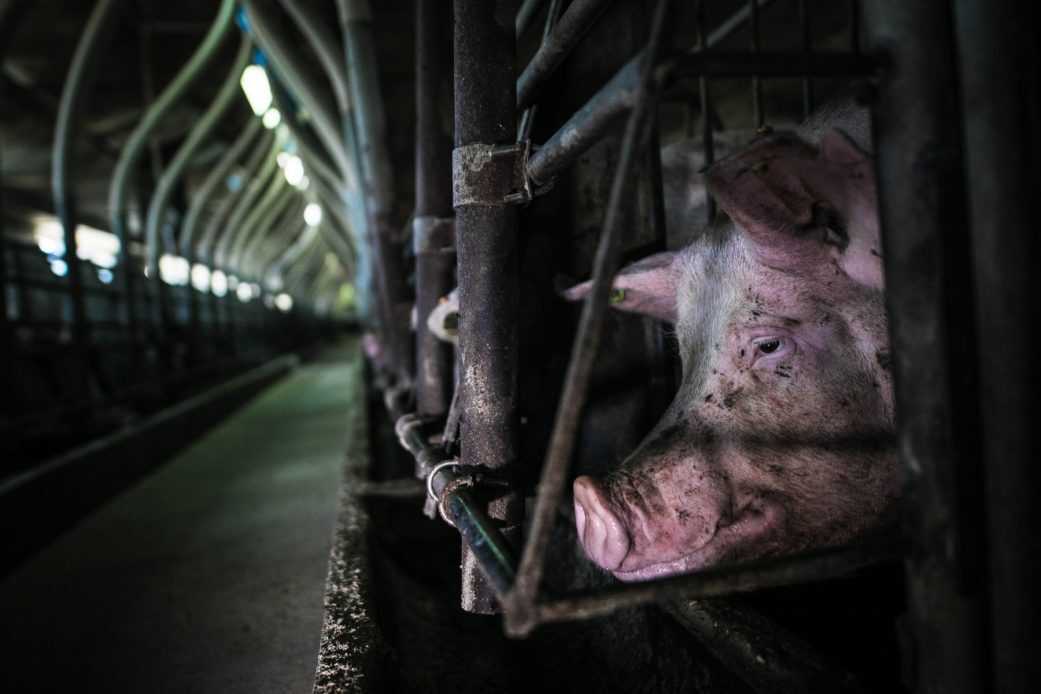
With COVID-19 closures impacting meat and dairy supply chains, the industry faces a choice: stay open and risk the lives of its employees, or shut down and force farmers to cull millions of animals.

Reading Time: 3 minutes

Since the start of April, many of the world’s biggest meat processing companies—JBS USA, Tyson Foods, Smithfield Foods, and Cargill—shut down over 20 slaughterhouses and packing facilities across the U.S. and Canada, in response to the growing numbers of staff infected with COVID-19. While producers pushed to keep slaughter lines running, these facilities became hotbeds for the virus. In Canada, one Alberta Cargill plant is now responsible for the biggest outbreak in the country, with one in four cases of the virus in the province linked to the facility.

Subsequently, meat plant closures are interrupting supply chains, leaving many farmers with too many animals that they are now killing, or will soon kill, en masse. One report by the Des Moines Register on the closures quotes U.S. Sen. Chuck Grassley, who estimates that the country’s pork industry has about 100,000 pigs who should be sent to slaughter each day but now have nowhere to go. “Apply that over 10 days, and with a million pigs, you’ve got a big problem.”

The Guardian reports that at least two million animals have already reportedly been killed on farms in the U.S., “and that number is expected to rise.”

Similarly, due to closures of restaurants, hotels, and schools, dairy and egg producers are also seeing interruptions in their supply chains. As a result, dairy producers are dumping milk, and chicken producers are trashing eggs across the U.S. and Canada. One recent New York Times article called the amount of waste “staggering.” The article cites Dairy Farmers of America, estimating as much as 3.7 million gallons of milk being dumped by farmers each day. And, “a single chicken processor is smashing 750,000 unhatched eggs every week.”

Other media reports throughout April described producers gassing pigs and chickens and aborting piglets. A recent report by Reuters details how Iowa farmer Al Van Beek had nowhere to ship his pigs in order to make room for the 7,500 piglets he was expecting from his breeder sows. “He ordered his employees to give injections to the pregnant sows, one by one, that would cause them to abort their baby pigs.”

On April 28th, The National Pork Board published a document entitled COVID-19: Animal Welfare Tools for Pork Producerslisting permitted methods of mass euthanasia. These include gunshot, manual blunt force trauma, electrocution, carbon dioxide, and “in times of constrained circumstances,” like right now: ventilation shutdown plus.

According to the American Veterinary Medical Association, “ventilation shutdown involves closing up the house [barn/ shed], shutting inlets, and turning off the fans. Body heat from the herd raises the temperature in the house until animals die from hyperthermia. Numerous variables may make the time to death of 100% of animals in the barn subject to a range of times.” The plus included by the National Pork Board means adding carbon dioxide and/or simply turning up the heat.

This week, President Donald Trump signed an executive order, forcing U.S. slaughterhouses to remain open, deeming meat production “critical” despite concerns for worker safety. There are, however, questions about the capabilities of the order, and it is yet to be seen how it may be enacted.

No such order has been made in Canada, and so culling of farmed animals has begun, along with the dumping of milk and dairy. One farmer on Prince Edward Island reportedly killed 270 pigs last week, disposing of their bodies in a landfill. According to a tweet by Alberta Pork: “Some reports suggest more than 90,000 #pigs are likely to be disposed of by #farmers.”

Dr. Sylvain Charlebois, professor of food distribution and policy at Dalhousie University, puts estimates of dumped dairy at “anywhere between 50 to 160 million litres, across Canada.”

For the animals, this is a no-win situation, as they would have been exploited and killed one way or another. The waste of animal products, money, and other resources, as well as the unnecessary strain on the environment, only add insult to injury. What this unique situation especially illuminates though, is the glaring fragility and unsustainability of our current food system, as well as the lack of forethought, care, and compassion for those animals bound to be food.