

The public has one last chance to tell the Washington Fish and Wildlife Commission the concerns about upcoming hunting rule change proposals in person at the commission’s March 17-18 meeting in Olympia.
The most notable proposed changes include the elimination of several special elk areas in and around Grays Harbor County, increasing the bag limit for white-fronted and white geese to address their growing abundance, and allowing the restoration of points to hunters who draw a permit for a damage hunt but are not called on to participate in a hunt.
The meetings are set to commence at 8 a.m. both days, with a public comment starting each session. There will also be a public comment period after each presentation, each featuring a different segment of proposed hunt rules changes. The meetings will be held in Room 172 of the Natural Resources Building at 1111 Washington St. SE in Olympia; a complete agenda is available at http://wdfw.wa.gov/commission/. All the proposed changes are available for review at http://wdfw.wa.gov/hunting/regulations/seasonsetting.
Some areas of interest for local hunters include a10:40 a.m. presentation Friday about the elimination of several elk areas, including the Tri Valley, South Bank, Chehalis Valley and Willapa, meaning the land within those areas will be reabsorbed into their respects Game Management Units and fall under the same rules governing those units. Following that at 11:05 a.m. will be a discussion of general deer seasons and deer and elk special permits.
The migratory bird hunting presentation will be at 1:40 p.m., where the public can hear about proposed bag limit changes for several species of geese, among other changes.
Final action by the commission on the proposed recommendations is scheduled at a public meeting April 14-15 in Spokane.
The commission will also be briefed on a few other topics, notably the Willapa Bay salmon management plan and its adaptive management objectives, scheduled for 11:45 a.m. Saturday. Also among the briefings will be in-season management of Puget Sound salmon fisheries and bird dog training at two units of the Snoqualmie Valley Wildlife Area.
Prior to the regular meeting, the commission will have its annual meeting with Gov. Jay Inslee March 16 at 3 p.m. in the Governor’s Office.
Wildlife managers also will provide an update on the status of wolves in Washington and actions the department took in 2016 to implement the state’s Wolf Conservation and Management Plan.
In addition, the commission will be briefed on a petition the federal National Oceanic and Atmospheric Administration received calling for a protection zone for southern resident killer whales off the coast of San Juan Island.

Wildlife Services, an Agriculture Department agency, killed animals from 335 species during its most recent fiscal year. The majority were birds, including these.

Until recently, I had never had any dealings with Wildlife Services, a century-old agency of the United States Department of Agriculture with a reputation for strong-arm tactics and secrecy. It is beloved by many farmers and ranchers and hated in equal measure by conservationists, for the same basic reason: It routinely kills predators and an astounding assortment of other animals — 3.2 million of them last year — because ranchers and farmers regard them as pests.
To be clear, Wildlife Services is a separate entity, in a different federal agency, from the United States Fish and Wildlife Service, whose main goal is wildlife conservation. Wildlife Services is interested in control — ostensibly, “to allow people and wildlife to coexist.”
My own mildly surreal acquaintance with its methods began as a result of a study, published this month in the journal Frontiers in Ecology and the Environment, under the title “Predator Control Should Not Be a Shot in the Dark.” Adrian Treves of the University of Wisconsin and his co-authors set out to answer a seemingly simple question: Does the practice of predator control to protect our livestock actually work?
More: http://www.nytimes.com/2016/09/18/opinion/sunday/americas-wildlife-body-count.html?_r=2

AUG 16, 2016 — Wildlife Services killed 578 geese in King County and 287 on Lake Washington in 2015. Shooting has become their preferred method of killing, but they also conducted two round-ups on Lake Washington where they gassed to death geese and their goslings. The numbers for 2016 will not be available until next year.
In a report to members of the Interlocal Agreement, Wildlife Services stated that they hazed and harassed 3,892 geese in King County. The techniques used included “working dogs, boats, paintballs, and firearms.”
In a decreasing trend, egg addling dropped to just 292 eggs. Clearly, egg addling is not a priority. It is obviously much easier to shoot geese or round them up and gas them instead of addling eggs to prevent their development.
Exact details concerning Wildlife Services killing in the Puget Sound area and Washington State Parks continues to be either non-existent or sketchy at best.
The report also stated “2015 represented the 29th year of Urban Waterfowl Management efforts in the greater Seattle area.” In a vicious cycle of killing, year after year, geese continue to be killed in our parks. And of course, few if any members of the Interlocal Agreement will take any responsibility for the killing. They seem to think that they are not responsible for the killing even though they have all collectively paid for it under the agreement.
Members of the 2015 agreement included: Washington State Parks, Seattle, Bellevue, Kent, Kirkland, Mountlake Terrace, Renton, SeaTac, Woodinville, Port of Seattle – Seattle-Tacoma International Airport, Tacoma MetroParks, Tukwila, and the University of Washington.
Data released by the United States Department of Agriculture shows that Wildlife Services destroyed over 2.7 million animals in 2014. It is time to stop the war on wildlife!

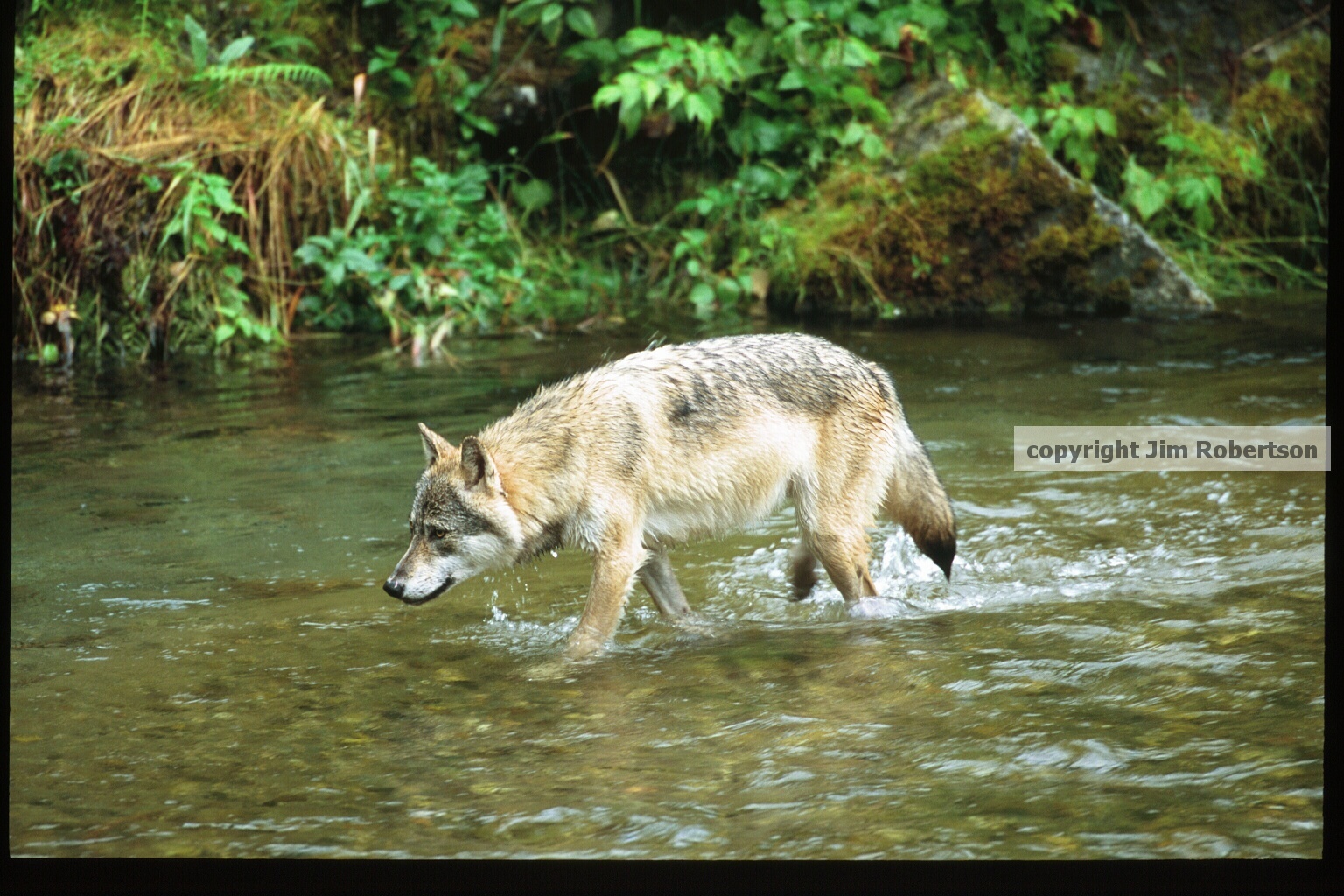
Just recently this question arose once again when the Canadian Journal of Zoology (CJZ) published a research article by Dave Hervieux, Mark Hebblewhite, Dave Stepnisky, Michelle Bacon and Stan Boutin titled “Managing wolves (Canis lupus) to recover threatened woodland caribou (Rangifer tarandus caribou) in Alberta” that presented the outcome of an “experiment” in mass killing in which 890 Canadian wolves suffered and died using aerial gunning, trapping and poisoning with strychnine. The strychnine also killed other animals who were not part of the study. Minimum “collateral damage” that was deemed acceptable by the researchers and the CJZ included 91 ravens, 36 coyotes, 31 foxes, 8 marten, 6 lynx, 4 weasels and 4 fisher. (For more on how wolves are highly stressed when hunted please see “Wolves: Hunting Affects Stress, Reproduction and Sociality.”)
Part of the methods section of this paper reads as follows (references can be found in the link above):
Wolf packs were located from a helicopter and one or more wolves per pack were captured using net-gunning techniques and fit with a VHF radio collar. Using a helicopter, we then subsequently attempted to lethally remove all remaining members of each pack through aerial-shooting throughout the winter (sensu Courchamp et al. 2003; Hayes et al. 2003), with the radio-collared wolves removed at the end of winter. Wolf captures were conducted according to Alberta Wildlife Animal Care Committee class protocol No. 009 (Alberta Sustainable Resource Development 2005)
Furthermore,
We also established toxicant bait stations, using strychnine, to augment aerial shooting and to target wolves that could not be found or removed using aerial-shooting. Strychnine is permitted for use in Alberta for the purpose of predator control (authorized by Government of Canada Pest Management Regulatory Agency following specific provisions outlined in Alberta Fish and Wildlife Division’s ‘Standards’.
It’s important also to note that this mass killing did not work — not that it would even be remotely justified if it did. As stated in the abstract of the research paper, “Although the wolf population reduction program appeared to stabilize the Little Smoky population, it did not lead to population increase.”
When I told some colleagues and friends about this study they were incredulous and aghast. Cloaked in a lab coat and under the guise of conservation biology, this egregious study raises serious questions about oversight and approval of lethal research involving wild animals. It is hard to imagine any other scientific investigation of a wild mammal being organized around the principle of mass killing. The inhumane methods used to experimentally “euthanize” the wolves are of the type used years ago and widely abandoned as unethical because of their inhumaneness. And, of course, the wolves were not euthanized, which suggests they were killed to end interminable pain and suffering.
The approach demonstrated in this paper reflects exactly why animal care committees were created to provide oversight on research methods and to avoid research being conducted and published that clearly fails to meet even minimum ethical standards. This research and publication represents the systematic moral failure of the Alberta government, participating universities, the Canadian Journal of Zoology, and individual scientists who carried out the study.
Of course, the main question at hand is, “How did this study ever get approved and conducted?” This question must be aired and discussed openly and widely. One colleague asked me, “How can these researchers sleep at night?” Frankly, I have no idea. I also pondered why a study like this can be approved, conducted and published in a peer-reviewed journal, yet people get furious, as they should, when a dog is shot, trapped or poisoned.
I was sickened when I learned about this so-called study, and remain incredulous that it was conducted. Simply put, this reprehensible study sets an unethical, inhumane and horrific precedent that must be universally opposed.
This essay was written with Dr. Paul Paquet who works with the Raincoast Conservation Foundation.
Follow Marc Bekoff on Twitter: www.twitter.com/Marc Bekoff
A Stevens County family moved 1,800 sheep off private grazing land over the weekend to protect their flock from wolves that have killed at least two dozen of the animals this summer.
Dave and Julie Dashiell decided to get their sheep to safety rather than wait for state wildlife officials to track down and kill up to four wolves from the Huckleberry Pack, which is at least six strong and hunts north of the Spokane Tribe reservation.
The ranchers tried everything to thwart the attacks, said Jamie Henneman, spokeswoman for the Stevens County Cattlemen’s Association, which is working on behalf of the Dashiells. They had a full-time herder, four guard dogs, range riders and extra help from state employees, but confirmed wolf kills kept mounting, Henneman said Monday.
“There’s a point where you’ve got to decide, do you leave and hopefully stay in business, or do you stick around until there’s just nothing left,” she said.
The Dashiells know of 24 sheep they lost to wolf attacks the past few weeks and fear the actual toll could be twice that number.
On Sunday they pulled their remaining sheep off rangeland they leased from Hancock Timber Co. northeast of Hunters in southern Stevens County. The animals were moved, with assistance from state employees, to a temporary pasture and soon will be trucked to their winter range, about six weeks earlier than planned, Henneman said.
The Washington Fish and Wildlife Department shot one of the wolves, an adult female, from a helicopter on Aug. 23 and set out traps in hopes of removing up to three others from the pack. But the agency pulled its traps before the Labor Day weekend to avoid conflicts with recreationists and grouse hunters.
The state responded quickly to assist the Dashiells once it was clear wolves were attacking the flock, said Donny Martorello, carnivore section manager for Fish and Wildlife.
When wolves start preying on domestic sheep, losses can add up quickly, Martorello said Monday. “The alarm bells went off for us,” he said, and the agency worked with the rancher daily on preventing more attacks.
Now that the Dashiells have removed the sheep, the state will re-evaluate what to do next, Martorello said.
“We’re certainly concerned about the behavior, the repeated depredations,” he said. “We did remove one wolf; we don’t know if we’ve broken that pattern of depredation, that prey-switching from natural prey to sheep.”
Henneman said the cattlemen’s association sees this as a case of the state falling short of protecting livestock producers.
“If this is the precedent – that Fish and Wildlife refuses to control their animals, that the rancher has to leave – we have a private property rights crisis here,” she said. “That means anyone that owns land out here … it means you’re going to get kicked out, the predator has precedence.”
Henneman also noted that other land and livestock owners in that area may be at risk from the Huckleberry Pack.
“As soon as that pack figures out that their 1,800 sheep are gone, they’re going to move on to the next site,” she said. “This is not the end to these troubles.”
Until recently the pack had spent most of its time on the Spokane reservation but now is more active north of the reservation. The Dashiells did not know the pack was that close until the attacks began, Henneman said.
Fish and Wildlife plans to reach out to neighboring livestock owners to discuss the pack and offer help to try to prevent more attacks. The agency also is evaluating compensation for the Dashiells for the sheep injured and killed by wolves.
———————–
At this time WDFW is not certain if lethal action will continue to be pursued. WDFW and stakeholders are meeting this afternoon and information from this meeting will be posted by WDFW Public affairs office under “Latest News” on their website’s homepage. http://wdfw.wa.gov/index.html
For twenty-some years I lived in a remote cabin in Washington’s North Cascades mountains. My place was the last human inhabitance on a gravel forest service road that dead-ended at the Lake Chelan Saw-tooth Wilderness boundary. Almost no one drove out that way and far fewer ever stopped in to visit, so I was surprised one autumn morning when a truck drove down my long, dusty driveway.
It turned out to be a young hunter who frantically explained that he just shot his father in law (mistaking him for a deer) and asked to use my phone. I told him I was sorry, but the nearest telephone was at my neighbor’s, two miles downriver. He raced off to call for an ambulance, but it was too late. Like so many hunting accidents, this one proved fatal for the victim.
It’s a sad story that’s played out again and again—a woman hiking a well-used trail on August 1st is shot and killed by a bear hunter; a forest worker is fatally shot by a nimrod who heard “rustling in the bushes;” an unpopular Vice President blasts his partner in the face with a shotgun—yet the perpetrators are almost never charged with manslaughter or any lesser crimes. As long as they are “lawfully” hunting, the shooting of their fellow sportsmen, or an innocent bystander, is acceptable.

Photos Copyright Jim Robertson
Since today is Memorial Day, this post is dedicated to those—of all species—who gave their lives (so far this year) in the ongoing and senseless war on wildlife. It would take far too long and would be nearly impossible to amass a list of all the non-human losses. In addition to the thousands on record as successfully “harvested,” an incalculable number of animals are wounded, only to crawl off and die, their deaths never reported. Therefore, this victims list, compiled by the Committee to Abolish Sport Hunting, is limited to humans:
May
NY: Teen shot by brother while turkey hunting in Yates County
KS: Youth killed in Pott County hunting accident
ME: Son shoots father in eye while turkey hunting
April
FL: Florida man mistakes girlfriend for hog, shoots her
TX: Rabbit hunter accidentally shoots pregnant girlfriend
March
AZ: A case of simple varmint hunting gone terribly wrong…
FL: Officials: Hunter Sees Turkey, Accidentally Shoots Man
FL: Boy fatally shoots grandfather in Hardee County hunting accident
WV: Hunting Accident Claims Life
ID: Rupert Man Killed in Hunting Accident
LA: Cadaver Dogs Used in Search of Missing Man
OK: 11-Year-Old Welch Boy Killed In Apparent Hunting Accident
FL: Man shoots foot instead of snake
February
NY: Train hits, kills man hunting rabbits
FL: Wildlife officer finds body of hunter reported missing in Tampa Bay area
IL: Illinois hunter killed by father in likely accident
MN: Boy, 16, shot in hunting accident
OR: Hunter found slumped over fence east of Sandy
IA: Man Accidentally Shoots Himself Twice
WY: Fatal shooting under investigation
LA: Fort Polk soldier dies in hunting accident in Kisatchie
TN: Madison County boy accidentally shoots friend while hunting;
January
PA: Hunter accidentally shoots companion at Fawn gas station
AL: Citronelle man fatally shot in hunting accident
TX: Menard High School football player shot in ‘freak accident’
PA: Hunter shot Pa. man with arrow
OH: Human Remains Found During Search for Missing Hunter in Vinton County
IL: Hunter fatally shot in Knox County
IL: Sheriff: Father accidentally shoots, kills son
CA: Sacramento man dies during squirrel hunting expedition in Butte Co.
CA: Body of missing hunter found near Boulevard
CA: Body of missing hunter discovered in El Dorado County
VA: Mechanicsville man shot in hunting accident
OH: ODNR Identifies Man Shot to Death on Game Lands
IA: Harlan man dies in hunting accident
VA: Three hunters shot on last day of deer season
NE: Man Accidentally Shot While Hunting Raccoons
WI: Waukesha County Hunter Found Dead
NC: Deer hunter shot by minor outside Clarkton
AL: Local hunter falls from tree stand
MO: Two duck hunters die in accident on Truman Lake
 Exposing the Big Game