Exposing the Big Game

Forget Hunters' Feeble Rationalizations and Trust Your Gut Feelings: Making Sport of Killing Is Not Healthy Human Behavior

Exposing the Big Game

Washington’s Wolves Need Your Help

https://act.biologicaldiversity.org/onlineactions/ONAuW3rLGkGYPfYMS-9d4g2?sourceid=1005699
Wolf

The U.S. Fish and Wildlife Service wants to strip federal Endangered Species Act protection from wolves in almost all of the lower 48 states — including Washington. This could be a devastating blow, returning us to the days when wolves were shot on sight, killed in traps and relentlessly persecuted.

To make matters worse: Washington’s wildlife agency has sent a letter to the Trump administration supporting this plan and claiming that it will protect the state’s wolves if they lose federal protections.

We know that’s not true.

The agency has a long history of gunning down wolves within state borders anywhere federal protections don’t apply. If wolves lose these protections in the rest of the state, the agency will expand its atrocious wolf-killing program.

But there’s something we can do.

The proposal to delist wolves has been slammed as fundamentally flawed by a panel of scientists, who found that it contains misleading statements and erroneous scientific interpretations.

Washington’s Governor Jay Inslee has made science a hallmark of his administration and in the bills he’s championed to protect Washington’s environment. We can call on Gov. Inslee to stand up for scientific integrity and rein in his rogue wildlife agency.

Urge Gov. Inslee to officially tell the Service that he opposes removing federal wolf protections.

For the greatest impact, add a few sentences of your own at the start of our form letter.

Newhouse heads bipartisan contingent in seeking to delist gray wolf as endangered

Newhouse heads bipartisan contingent in seeking to delist gray wolf as endangered

U.S. Rep. Dan Newhouse (R-WA) this week headed a bipartisan contingent in supporting the U.S. Fish and Wildlife’s proposed rule to delist the gray wolf from the Endangered Species Act (ESA) in the contiguous United States.

“The gray wolf should be considered a success story of the Endangered Species Act,” Rep. Newhouse said on Tuesday.

Because gray wolves now are found across the United States and globally, their populations should be managed in America at the local level by individual states, wrote Rep. Newhouse and 33 other bipartisan members of Congress in a May 28 letter sent to U.S. Department of the Interior Secretary David Bernhardt and Margaret Everson, principal deputy director of the U.S. Fish and Wildlife Service (USFWS).

“State and local governments, tribes, and other stakeholders are best suited to develop effective, local management plans for gray wolf populations,” the members wrote. “We should be empowering them to do so — not hindering them with unscientific, burdensome federal regulations.”

Among the 33 members joining Rep. Newhouse in signing the letter were U.S. Reps. Cathy McMorris Rodgers (R-WA), Tom Emmer (R-MN), Greg Walden (R-OR), Ken Calvert (R-CA), Sean Duffy (R-WI), Mark Amodei (R-NV), Bill Flores (R-TX) and Collin Peterson (D-MN).

Rep. Newhouse and his colleagues wrote that a USFWS 2013 review determined gray wolf recovery goals had been achieved, but the agency’s proposed rule to remove them from the ESA was stalled by objecting environmental groups.

Now, according to their letter, “We cannot let scientific findings fall victim to politically motivated attacks. As the proposed rule demonstrates, the gray wolf is a success story of the ESA.”

The lawmakers want the USFWS proposed rule finalized swiftly, they wrote.

“Federally delisting the gray wolf will allow Washington state to implement the comprehensive wolf management plan that will give relief to farmers, ranchers and communities that are affected by growing wolf populations,” Rep. Newhouse said.

WDFW investigators assure rancher shooting wolf was lawful

Northeastern Washington wolf
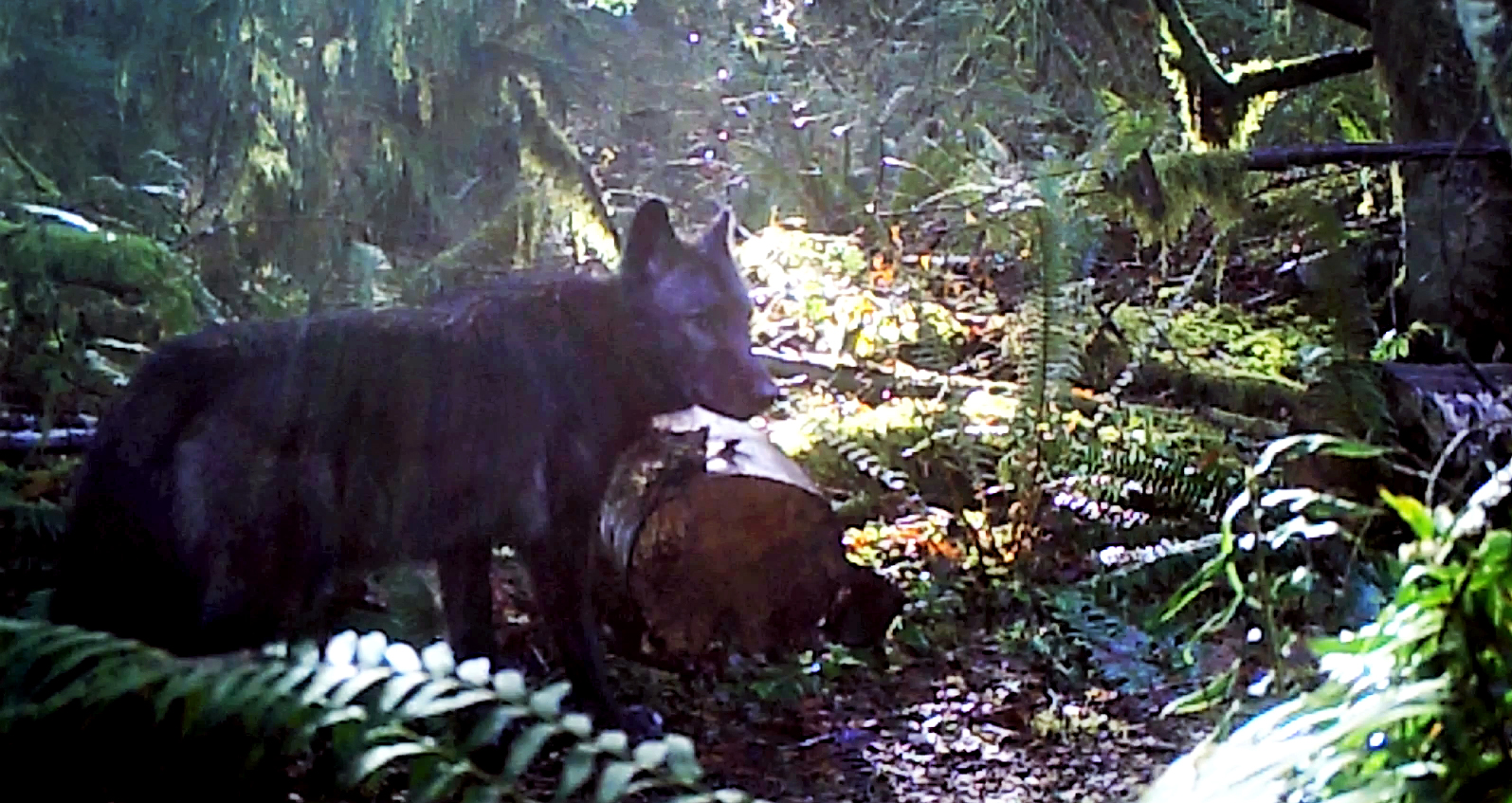
A northeastern Washington state wolf in a photo taken by a trail camera. State wildlife officials have determined that a rancher was justified in killing a wolf as it headed toward three calves that were in a fenced area.

An Okanogan County rancher who shot and killed a wolf as it approached three newborn calves was promptly cleared by Washington Fish and Wildlife investigators, according to records released Tuesday.

The rancher shot the young male wolf the morning of April 29. The reports, released in response to a records request by the Capital Press, were redacted to withhold the names of the rancher and investigators, as well as the exact location.

The shooting occurred east of Highway 97, where wolves are not federally protected, but are a state protected species. The unjustified killing of a state endangered animal is a gross misdemeanor, punishable by up to a year in jail and a $5,000 fine.

“I could tell (the rancher) was very tense, and I assured (him) that we were present to document what had occurred, and we were there to advocate for his personal and property rights as much as the rights of wildlife,” according to one investigator’s report.

Another investigator noted that only five days earlier, Fish and Wildlife Director Kelly Susewind had issued a memo directing department employees to “maintain public safety as a priority.”

The investigator said he “wanted to make prompt decisions to alleviate any fear the family had.”

“I informed (the rancher and his wife) that it was a justified act and did not want them to stress about a delayed finding or decision,” he wrote.

Washington law allows livestock owners to kill without a permit one wolf that is attacking their domestic animals. The law does not apply to the western two-thirds of Washington, where wolves are protected by the federal Endangered Species Act.

The rancher told investigators he was home with two young children when he saw an animal near the house moving toward the fenced pasture between 8 and 9 a.m.

Three calves born the night before were near the fence. The rancher said he keeps newborn calves in the pasture closest to his house to protect them from predators.

The rancher said he wasn’t sure whether it was a wolf or coyote and yelled to scare it away. The animal continued toward the pasture. The rancher fired the only round in his rifle.

The bullet went over one cow, the rancher said. An investigator noted the bullet also would have passed a children’s jungle gym in the backyard.

Investigators found an entrance wound near the wolf’s heart and lungs.

The distance from the home’s back porch to the carcass was approximately 280 yards, according to measurements taken by the Fish and Wildlife investigators. The carcass was 56 yards from the pasture’s fence.

“Once in with the cattle, it may be difficult to shoot the animal actively attacking a calf,” one investigator wrote. “No charges were filed against the RP. Case closed.”

Fish and Wildlife investigators noted that the family had reported wolves around their ranch last fall and photographed one with a trail camera. A driver delivering a package reported seeing two pups on the property last fall.

UPDATED: Rep. Shea’s secret group discussed sending severed wolf tail and testicles to environmental activist

Bosworth suggested sending severed wolf parts to environmental activist Kierán Suckling. - GARY KRAMER/USFWS PHOTO

Gary Kramer/USFWS photo
Bosworth suggested sending severed wolf parts to environmental activist Kierán Suckling.

This article has been updated to correct who sent the screenshot with Suckling’s address information, link to the response from Redoubt News, and include the statement from the source who leaked the Signal messages.

By now, Rep. Matt Shea (R-Spokane Valley) and his allies definitely know the name Kierán Suckling. As executive director of the Center for Biological Diversity, Suckling has repeatedly been at the opposite side of some of the most heated controversies in Shea’s world. It was Suckling’s group who was battling Cliven Bundy, the cattle rancher who’s defiance led to an armed standoff in 2014. When right-wing militants occupied the Malheur National Wildlife Refuge, it was Suckling who showed up to counterprotest. And lately, it’s been Suckling’s group that has been pushing litigation to protect wolves in Washington state.

“Since the ’90s, we have been exposing the connection between anti-environmentalists and the militias and the white supremacist movement,” Suckling says. “These are part and parcel of the same world view.”

Rep. Matt Shea hates wolves, and he’s not too fond of being tied to white supremacists. (Though that didn’t stop him from linking to a white nationalist website to slam a journalist he disliked.)

And so perhaps it’s not surprising that when Shea’s allies discussed targeting specific individuals with the state legislator on the private messaging app Signal, Suckling’s name came up.

The plan being brainstormed? Send the guy severed wolf parts.

Last month, Guardian journalist Jason Wilson wrote a story based on some of these leaked Signal messages, as Shea’s allies reveled in detailed fantasies of violence against local Spokane residents. The revelations sparked bipartisan condemnation in the Washington state Legislature.

Among other moments, Three Percenter Anthony Bosworth — the guy who Shea feted with a “2016 Patriot of the Year” award and sent down to the Malheur National Wildlife Refuge as a “security specialist” to “de-escalate” the standoff — discussed targeting alleged “antifa” members by confronting their parents, their workplaces, their landlords and targeting their “safe spaces”… “while they’re out on the streets rioting.”

“If we can catch a few of them alone and work him over a little bit,” Bosworth wrote, according to the Guardian. While Shea was not quoted directly encouraging violence, he offered to help run background checks for those who were.

In the Spokesman-Review, Bosworth characterized his comments as mere angry venting. The Spokesman reported that many of the comments were made in the lead-up to Nov. 4, 2017, which right-wing groups incorrectly believed would be a day of far-left violence. But previously unpublished chat messages obtained by the Inlander showed that discussions of targeting political opponents continued after the rumored “Antifa Civil War” date fizzled without an incident.

The discussion about targeting Suckling begins on Dec. 12, 2017. Bosworth, using the screen name “Scout,” wants to send Suckling a message.

The image that Anthony Bosworth suggested sending to Suckling, along with severed wolf parts. - SIGNAL SCREENCAP

Signal screencap
The image that Anthony Bosworth suggested sending to Suckling, along with severed wolf parts.

Bosworth posts a picture of a skull and crossbones along with “смерть,” the Russian word for death. The image was the symbol of the Revolutionary Insurrectionary Army of Ukraine (1918), an anarchist guerrilla force that fought against both the Communist Reds and the establishment Whites in the Russian Civil War. Shea’s group had discussed using the symbol as a calling card.

“As far as I’m concerned we can send one of these and a wolf tail to Suckling,” Bosworth writes to the group. “Suckling would make sure it made national news.”

One of the other group members — Jay Pounder, the source who leaked the Signal conversations to the Guardian — posts a screenshot of Suckling’s address and contact information.

“OK, do we have anybody up north to get us a tail?” Bosworth responds.

A redacted version of Suckling's address and contact information, shared in the group with Shea. - SIGNAL SCREENCAP

Signal screencap
A redacted version of Suckling’s address and contact information, shared in the group with Shea.

Pounder then floats the name of Cope Reynolds, a Three Percenter and a gun rights activist who, like Suckling, is based in Arizona. (If you’re assuming Reynolds uses the Confederate flag as his Facebook banner image, you’d be correct.)

“Well, if Cope crossed a wolf he’d smoke it himself,” Bosworth responded.

“These transplanted wolf packs can be traced back through DNA,” Bosworth writes. “Get me the testicles off a North Idaho wolf and I’ll send it to him.”

A dozen minutes later on Signal, Shea — using the screen name Verumbellator — gives Bosworth a warning. To be clear, he doesn’t warn Bosworth that he shouldn’t cut the tail and testicles off a North Idaho wolf corpse to send to environmental activist along with a skull and crossbones.

Instead, he warns Bosworth that they shouldn’t talk about this stuff electronically, and instead they should do it face-to-face.

“This is not something to put out electronically,” Shea writes. “We need to meet f2f.”

(Shea is frequently cautious about information security, once telling a crowd that there are “private investigators that work for the Republican establishment, that actually use technology to hack into your phone.”)

“Roger,” Bosworth responds. And with that, he drops the subject.

It’s possible, of course, that Shea met Bosworth to discourage him from sending a threatening package. But Suckling is skeptical: Why would Shea want to take the conversation offline to tell Bosworth he shouldn’t threaten Suckling.

Either way, Suckling says, he’s never had anyone deliver him anything resembling a wolf tail and testicles. But he argues that just the fact that it was discussed is revealing. In an email, he explained:

“Threatening to mutilate a wolf and mail its bloody body parts is outright psychotic. But it won’t scare the Center for Biological Diversity, it makes us fight harder for the endangered species and people Matt Shea has declared war on. He’s a textbook example of how racism, sexism, homophobia, religious intolerance, animal abuse, and anti-environmentalism go hand in hand. Shea should resign or be impeached immediately. His paranoid self-dealing authoritarianism has no place in American democracy.”

Shea’s legislative assistant, Rene’ Holaday, responded to a request for comment with this statement:

“Thank you for writing to the office of Rep. Matt Shea. Rep. Shea is out of town on a Missions trip serving the Lord, and won’t be back for several more days.”

As Shea rarely speaks to the local reporters, instead preferring to bash them from a distance after the story has come out, the Inlander does not anticipate the state representative agreeing to answer questions when he returns. If he does, we will update the story.

Bosworth has so far not agreed to a phone interview with the Inlander, but in an email sent Tuesday morning, he offered the following statement:

“Here’s what I have to say about Wolves and Fine Cigars , ‘smokem if you got them'”

The eco-terrorists can stick that in your pipe and smoke it.

Suckling, meanwhile, acknowledges he’s been arrested in civil disobedience actions before, including chaining himself to trees and occupying politician and developer offices, but stresses that these actions were nonviolent.

In that vein, no evidence has surfaced to suggest that Bosworth, Shea or the other members of the Signal chat undertook any of the violent or threatening tactics discussed. Still, the chats are rife with fantasies about violence and destruction toward various individuals and businesses.

“When the Patriot Revolution starts I know what store I’m burning to the ground,” Bosworth writes in a Signal message, linking to a search for “Antifa” products at Walmart.

And Bosworth has become violent in the past, including allegedly getting into a fistfight at a funeral.

Kierán Suckling, director of the Center for Biological Diversity. - COURTESY OF KIERÁN SUCKLING

Courtesy of Kierán Suckling
Kierán Suckling, director of the Center for Biological Diversity.

Suckling says his group has been the victim of arson and violence before.

“We’ve had the militia show up at our office and try to get inside,” Suckling says. “We’ve had a truck [torched] in our parking lot. We’ve had people beaten up over the years.”

He says he won’t be dissuaded by the tactics of Shea and his allies.

“We have to push on and never let this thing deter us from saving endangered species,” Suckling says. “If there’s anything worth dying over it’s stopping the mass extinction that’s going on with this planet right now.”

But not, to Suckling at least, worth killing over.

UPDATE:

As of Wednesday morning, Bosworth sent the Inlander link to a post by Redoubt News, a far-right blog that champions the patriot right. It notes that the first version of the Inlander blog incorrectly identified who shared Suckling’s contact information, and also accuses Pounder of using “willing, radical, left-wing extremists to further his own personal grudges against Matt Shea and his friends” and of “using extreme violent rhetoric himself.” It does not, however, provide any proof that the Guardian‘s source had used that rhetoric, nor does it provide any clarity for why Shea wanted to meet Bosworth face-to-face to discuss his wolf-package proposal. (Pounder denies using the incendiary rhetoric quoted by Redoubt News.)

On Wednesday, Pounder released a lengthy statement on Facebook explaining why he leaked the Signal messages. He denies that he was trying to set Shea up — instead, he says that he gradually became disillusioned with the Shea organization and eventually decided to speak up.

Dear Friends,

Right now we face an unprecedented threat to the public safety and security of the Pacific Northwest and that is all due to the threat of Christian Identity Politics, what is that you ask? Check out this article from Christianity Today’s Editor in Chief Mark Galli: https://bit.ly/2DHGxyC

Why this is important and relevant right now, I’ll start in with a scripture… because this week I’ve read many times and it keeps speaking to me;

2 Chronicles 16:7-9: “At that time Hanani the seer came to Asa king of Judah and said to him: “Because you relied on the king of Aram and not on the LORD your God, the army of the king of Aram has escaped from your hand. 8 Were not the Cushites[b] and Libyans a mighty army with great numbers of chariots and horsemen[c]? Yet when you relied on the LORD, he delivered them into your hand. 9 For the eyes of the LORD range throughout the earth to strengthen those whose hearts are fully committed to him. You have done a foolish thing, and from now on you will be at war. 10 Asa was angry with the seer because of this; he was so enraged that he put him in prison. At the same time Asa brutally oppressed some of the people.”

Consider that last verse, “Asa was angry with the seer because of this; he was so enraged that he put him in prison. At the same time Asa brutally oppressed some of the people.”

Well as some of you have read and heard that a series of articles and chats that I was privy to that I released several NW media outlets regarding the activities of a State Rep Matt Shea that I used to be involved with several years ago.

I want to make it evidently clear. I parted ways with State Rep Matt Shea due to his headlong full barrel decent into the world and ideologies of Christian Identity politics and Dominionism. I feel that at the time I followed proper Biblical protocol in addressing what I was seeing and hearing from Matthew and what at that time I considered “my people”. He may differ in opinion. While I volunteered with him, I was caught up in the ideas of identity politics and didn’t know it until God showed me what true freedom and liberty are really about.

I thought I was on the side of what was right, I thought that God was going to use us to save and help the community in the Pacific Northwest to give glory to His name and help bring about a restoration of faith and hope should things get really bad in the world.

Yes, did I say things that I am not proud of because I thought that I was doing God’s will? Yes.

Have I ever done anything illegal? No.

Are they attempting to smear me on alternative media sites with false statements and negative information? Yes, but I forgive them.

Have I gone to those individuals I sinned against and asked forgiveness of them for my words and made it right? Yes I did that a long time ago.

I have because it’s the Biblical thing to do and I know it was the right thing to do. Doing the right thing is incredibly hard to do, but forgiveness is divine and grace is amazing for all that accept it.

Does Matt and his associates believe they are doing the right thing in God’s name? Yes, but in my opinion, this couldn’t be further from what we know to be Christ’s great commission.

In my opinion, Matthew, the Church at Marble Community Fellowship near Northport WA and anyone tied to his spiritual ideology are focused on one thing and one thing; The sheer use of raw power and fear to achieve their political and spiritual ideology that only Christians should lead the United States of America. This is Christian Identity Politics and Dominionism in its purest form and it is dangerous. It’s also idolatry to put politics before the Lord. I am going to reference the following statement by a quote by the aforementioned article on this;

“Yes, a nation is better served by laws influenced by Christian ethics, and yes, we are obliged by love to persuade others of the wisdom of Christian ethics; but we cannot “insist on our own way” (1 Cor. 13:5) by forcing unbelievers to submit to our morals. Yes, borders should be secure, but they can go hand in hand with a generous immigration policy. Yes, every nation is graced with favor from God but also is subject to God’s judgment.”

The focus of Christian Identity politics is to force people to subscribe under pain of death (according to Matt’s Biblical Basis For War and the Remnant Resolves) to the belief in Christianity and should you not, you are the enemy and are demonized for being an “atheist”, “communist”, “Pegan”, “Social Justice Warrior”, “leftwing liberal”, “Benedict Arnold” who must associate with “Antifa” and should be put to death under the Dominionistic / Christian Identity ideology.

Once I uncovered this, I could not and would not stand for those ideals. That is why I released the chats. No one should be subjected to those types of ideals. God loves all.

Why have I kept quiet about this you might ask? Well out of heavy safety concerns for my family and those I hold dear. I had hoped the local media would be able to bring about the truth and that anyone reading this would have already seen and understood that this behavior and ideology is wrong.

By bringing this to the forefront I beg that you all read and understand that this isn’t Christianity. I also hope that by being more public with my statement on this, should anything happen to me or my family or those I hold dearest, those in this movement would be held severely accountable for their actions. We don’t anticipate this, God is sovereign, but this is a rebellion against their theology and now I have gone against “Asa”.

Have I contacted legal counsel should I need it? Yes. I hope to never have to bring any lawsuits against anyone for harassment or physical intimidation. God is sovereign.

My God, our God is a God of love and forgiveness and wants all of you to know that you are loved, and he doesn’t want to kill you if you don’t believe in him. He is not going to bring about civil war and he certainly isn’t going to come on the clouds and bless the USA should the entire sitting body of the government be Christian in belief. Is there a deeper conversation to be had about faith, grace and redemption and what that means, sure, but those conversations are best left for quiet private conversations and to allow the Holy Spirit to work in the hearts of those being talked with.

It is not for us to judge race, creed, ethnicity, sex, orientation or belief. It is for us to love our neighbor and to show them Christ’s love. Everyone is our neighbor and we are instructed to love our neighbor as yourself and not force our neighbor believe like we believe. Once we realize that, then we can allow the holy spirit work and bring about true freedom and spiritual liberty. This cannot and should not be done through force of action or threat of death.

Do I still love Matthew, his associates, Barry and Anne Byrd and the rest of the Marble fellowship people? Yes, absolutely I do, but I still struggle daily with doing this. We are called to love your enemy and pray for those who persecute you (Matt 5:44). I don’t view these people as my enemy but because I am human I have to work each day to love the sinner and hate the sin. I grieve the fact that they would rather demonize someone who doesn’t believe like them rather than engaging in a dialog that could lead to an extraordinary moment. I believe that through pain/struggle, comes healing and restoration and that is what our region and our country needs most right now. We don’t need anger, we don’t need hate, we don’t need division. This has to stop.

In closing, I hope that as you have read this statement you understand that I am not the same man who thought he was serving the right cause, but now stand in front of you begging you to see that the leadership in Olympia represented in the Spokane Valley area is on a path that will spiritually destroy people and soul of this region. Left unchecked it will also physically destroy it someday as well if their plan is enacted.

Some will read this and view this as a political stunt. It isn’t, it’s so much bigger than just the man in office. Yes, this does have major political ramifications, but this is about the soul of the area. Christian Identity Politics and Dominionism has no place in our region, it does not fulfill the great commission. It does not encourage healthy dialog between groups who believe differently. It does not encourage those without a voice to speak up and it certainly doesn’t bring people together to work towards better communities. It goes against everything this country was founded on.

Know that what you feel is right, this isn’t ok. Go with your heart, do what’s right and know that you are loved by the King of the Universe who has a plan for your life despite whatever your background may be.

Special Note: This will be my only statement on this situation, I will take no media inquiries nor answer any questions or engage in nonproductive dialog regarding this post. Any and all threats regarding this post, attempts at physical intimidation, veiled threats to my business ventures will all be forwarded to my council for consideration and prosecution should the need be.

The Future of Wolves in Washington: Will they ever be just another critter in the woods?

[Article by contributing writer Melissa Grant,wildlife/outdoor enthusiast and pet trainer/owner of Miss Lola’s Academy for Wayward Dogs]

Out here in the Snoqualmie Valley we fancy ourselves as outdoor wildlife savvy people. We chuckle when we hear of hikers being afraid of animals on the trail. We’ve even been known to openly scoff at those who come unprepared for close encounters of the wild kind. We know how to handle ourselves when it comes to bears, coyotes or even cougars!

In 2015 a lone wolf was killed on I-90 and people thought its presence was a fluke. Well, another was seen on camera on the North Fork in 2018. So, valley residents, are you ready for wolves in the Snoqualmie Valley?

Last week the statewide wolf specialist, Benjamin Maletzke, with the Washington Department of Fish and Wildlife was the guest speaker at the monthly Upper Valley Elk Management Groups meeting.  He was there to tell us about the Gray Wolf Conservation and Management 2018 annual report.

Like the previous year the plan’s objective are to:

  • Restore self-sustaining wolf populations
  • Maintain healthy ungulate populations
  • Manage wolf-livestock conflicts
  • Develop public understanding and promote co-existence

But while the plan’s objectives remain the same, some of the wolf numbers have changed. Last year there were at least 122 wolves in the state, making up 22 packs with 16 breeding pairs. This year Washington was home to at least 126 wolves, 27 packs and 15 successful breeding pair. (This is a minimum count, so the number in Washington is likely higher).

This year four wolves were lethally removed for wolf-caused livestock deaths. In 2017 three were removed for the same offense. According to the report, the WDFW spent $1,217,326 on wolf management activities during the 2018 fiscal year, compared to $1,272,314 last year.

Six new packs formed – one very close to the Teanaway Pack, the closest one to the Snoqualmie Valley; one pack disbanded; and the first wolf pack of the modern era was confirmed in Western Washington. In 2017 a lone wolf was found and collared in Skagit county. In 2018 the same wolf was found to be traveling with another wolf (a pack is two individuals traveling together) and the Diobsub Creek pack was born, named for the area in which they spend their time.

Some of this new information got me asking Ben questions about the likelihood that someday we might have wolves in the Snoqualmie Valley. His reply was unsurprising to me, but might surprise others:

It is possible. Just outside of the residential development in the valley is a large expanse of managed forest, state and federal lands with deer and elk.  I don’t know exactly where we might see wolves settle in the future, but I think that wildland is a possible area”

The Valley is a large area. The school district counts the valley as being from Ames Lake to the Pass, 400 sq. miles. So, how many wolves would live here with us? 25? 50? I couldn’t ask him to definitively predict the future, but asked him to opine based on the space, average pack and territory size. Said Maletzke,

If wolves settled there, they would be in packs that occupy around 300 – 350 sq. miles.  The packs don’t overlap in their use of space and the average pack size in Washington is around 4 wolves/pack.”

 Oh, ok so using my rudimentary math skills, I can see the number would be much less than 50 and probably closer to 4.

During the meeting someone asked about an incident in June in which a Forest Service worker doing a research survey was treed by a pack of wolves and was rescued by a DNR helicopter.

At the time the coverage was sparse, but basically told a tale of a woman who happened upon a wolf rendezvous site (home or activity sites where weaned pups are brought from the den until they are old enough to join adult wolves in hunting activity), felt unsafe when she heard the wolves, tried to scare them off with bear spray and then climbed the tree to escape.

Maletzke said the woman heard the wolves barking at her when she first went into the area, but didn’t know that was their way of telling her to go away. When asked if it was fair to say that she went in with good intentions and good tools, but maybe not complete information on what to look for, how to behave etc.? He replied:

I think your interpretation is correct.  Similar to domestic dogs or horses, animals have warning signs that can tell you if you are in their space (pinning ears, baring teeth, barking, or growling.) In this instance the woman happened to be working near a rendezvous site where the pups were. The wolves wanted her to leave so they barked at her. Instead of leaving, she climbed a tree to feel safe and called for assistance. If a similar occurrence happened it would be best to just hike out of the area.”

Trust me, I am not one to throw stones. While I would hope I’d do the right thing given the same circumstances, I have yet to confront a pack of wolves, which led me to my next question. Is this the only human/wolf encounter of its kind you know of in the state in recent years? The answer to that was thankfully: “Yes, that I know of.”

He gave out some great pamphlets at the meeting about Washington’s Wolves (you can get yours at http://westernwildlife.org/gray-wolf-outreach-project/) and to me it looked like the advice for a wolf encounter is basically the same as for a bear encounter. He agreed. So if you are lucky enough to see one of these creatures – or just hike in an area where they might be – the advice is to:

  • Stay calm and do not run
  • Stand tall and make yourself look larger
  • Slowly back away and maintain eye contact
  • Keep dogs on leash
  • Carry bear spray
  • Hike in groups

An encounter would be extraordinarily rare as wolves generally fear and avoid people. The risk to human safety is low.

Wolf – part of the Naneum pack.

I do know another concern people have is the risk to our domesticated animals. What about dogs, cats and livestock? What can we do to keep them safe? For dogs he said to keep them on leash when hiking, always good advice. As far as livestock goes what doesn’t work is-

Leaving carcasses or bone piles in the back of the pasture, leaving garbage and food rewards out, not cleaning up afterbirth during a calving operation.  This stuff can lure carnivores in from a long way away. Sanitation can help avoid these interactions with carnivores.”

He suggested taking a look at their website here for more information on protecting livestock.

I must admit I welcome the idea of wolves in the valley. So, I was pretty easy to convince they wouldn’t be a problem. I’ve done a fair bit of research and reading on wild carnivores in the past and am convinced they are not any more of a problem than our bears and cougars. In fact, I think they are an important part of a healthy ecosystem and would do our valley a world of good. If you are unconvinced or just curious you can read the wolf report with the link provided above or watch it on YouTube below.

Let us know if you agree with Ben that wolves are just another critter in the woods or believe they should never be allowed back in the area.

You can also contact Benjamin Maletzke, Statewide Wolf Specialist Washington Department of Fish and Wildlife at benjamin.maletzke@dfw.wa.gov

There is an online reporting tool if you would like to report a wolf sighting or you can call 1-877-933-9847.

Location of WA State Wolf packs

WDFW gives update on latest wolf numbers, including new pack in Western Washington, but not all are thrilled by count

http://www.spokesman.com/stories/2019/apr/06/wdfw-gives-update-on-latest-wolf-numbers-including/

Sat., April 6, 2019, 5 a.m.

1 / 3

The male member of the new Diobsud Creek pack in Skagit County. (Washington Department of Fish and Wildlife / Courtesy)

Washington’s wolf population continued to grow in 2018, with a pack documented west of the Cascade crest for the first time.

A minimum of 126 wolves, 27 packs and 15 breeding pairs were counted by the Washington Department of Fish and Wildlife during their annual winter survey.

The population increased 3 percent from last year, a lower growth rate than previous years. But as wolves fill the habitat in northeast Washington, Ben Maletzke, WDFW statewide wolf specialist, said that overall population growth will slow.

“The number of wolves isn’t going to significantly change in that area (northeast) probably for the foreseeable future,” he said.

The next big jump in wolf numbers will come when more packs establish themselves in the western portion of the state.

Agency staff presented the wolf report to the WDFW Commission, a governor-appointed supervisory body, Friday in Olympia.

The big news was the pack west of the Cascades.

A single male, originally captured in Skagit County in 2016, traveled with a female wolf through the winter in the North Cascades meeting the state’s criteria for the formation of a pack. Biologists named the pack the Diobsud Pack.

Biologist also confirmed the presence of wolves in the south Cascades, although no pack activity has been documented yet.

In 2017, there were a minimum of 122 wolves, 22 packs and 14 successful breeding pairs documented statewide.

Wolf numbers grew despite the fact that in 2018 six wolves were killed legally by tribal hunters, four were killed by WDFW in response to livestock attacks and two apparent human-caused deaths remain under investigation.

Meanwhile, wolves killed at least 11 cattle and one sheep, and injured an additional 19 cattle and two sheep.

Overall, only five of the 27 known packs were involved in livestock depredations, Maletzke said.

“Eighty-one percent of them are doing good things,” he told the commission.

In an emailed statement, Conservation Northwest called the discovery of a pack west of the Cascades a “milestone” and “indication of the continued recovery of wolves in our state.”

Not everyone was thrilled, though, and some questioned the department’s methodology.

Jake Nelson, a rancher on the Lone Ranch grazing allotment in Ferry County, lost two calves and one cow to wolf attacks last year. He received monetary compensation from the state. He questioned the overall number of wolves and WDFW’s reported number of wolf attacks on livestock.

“I would have to argue with those numbers,” he said.

He knows ranchers who believe they lost 10 or more cattle to wolves in 2018.

Jay Shepherd, a founder of the Northeast Washington Wolf-Cattle Collaborative, agreed that the overall number of wolf depredations seemed low. The WDFW report only lists confirmed depredations, not probable ones.

“It could well be there were 11 confirmed,” he said. “That still seems low. But confirmed and probables combined were through the roof.”

It will only be worse in 2019, Nelson said.

“We have more wolves. We have more confirmed packs now. We have a whole bunch of packs that are habituated cattle killers,” he said. “I look for it to be a lot worse than last year.”

A number of wolf-related bills were brought forward during this year’s legislative session hoping to reduce conflicts in 2019.

A proposal that passed the house and is currently in the Senate would directWDFW to develop different management plans for wolves in different regions of the state, with more support to control wolves in the part of the state where they are rapidly multiplying.

The bill would also direct the state to spend nearly $1 million over the next two years on nonlethal ways to keep wolves from killing livestock in northeast Washington, where the majority of the state’s wolves live.

The numbers reported by WDFW are a minimum count. In 2018, researchers at the University of Washington, using scat-sniffing dogs, said the number of wolves in the state could be closer to 200.

During the commission meeting, staff said the methods used by UW and WDFW are “apples and oranges.”

“There are more wolves out there,” Donny Martorello, the department’s top wolf specialist, told the commission. “We know this is the minimum.”

Wolves are protected by state endangered species rules in the eastern third of the state, while they remain federally protected in the western two-thirds of the state.

According to the state’s wolf recovery plan, wolves can be delisted after 15 successful breeding pairs are documented for three consecutive years, or after officials document 18 breeding pairs in one year.

Under either scenario, the pairs have to be distributed evenly throughout the state’s three wolf management areas.

Meanwhile, two environmental groups have filed a lawsuit against WDFW alleging, among other things, that the agency is not using the latest science to make wolf management decisions and is in violation of the state’s environmental policy act.

Chris Bachman, the wildlife program director at the Spokane-based Lands Council, celebrated the news and said it was an indicator that wolf populations were reaching a healthy level. However, he didn’t go as far as saying that northeast Washington had reached capacity.

He said lethal removal of wolves that have attacked cattle remains an issue. He believes how the National Forest and ranchers interact need to change. Right now, he said, cows are being put into a forest with limited forage, which forces them to disperse and makes them an easier target.

“We need to be changing what we’re doing on the ground with livestock in the forest,” Bachman said after attending Friday’s meeting. “We can ride WDFW all we want about having to go in and lethally remove wolves, but Forest Service policy has to be adjusted.”

 WDFW News Release: Washington’s wolf population increases for 10th straight year


WDFW NEWS RELEASE

Washington Department of Fish and Wildlife

600 Capitol Way North, Olympia, WA 98501-1091 

April 4, 2019

Contact: Donny Martorello, 360-790-5682

Ben Maletzke, 509-933-6086 

Washington’s wolf population increases for 10th straight year

OLYMPIA – The recovery of Washington’s wolf population continued in 2018 as numbers of individual wolves, packs, and successful breeding pairs reached their highest levels since wolves were virtually eliminated from the state in the 1930s.

The Washington Department of Fish and Wildlife (WDFW) today published its annual year-end report, which shows the state has a minimum of 126 individual wolves, 27 packs, and 15 successful breeding pairs – male and female adults who have raised at least two pups that survived through the end of the year. A year ago, those numbers were 122, 22, and 14, respectively.

In 2018, for the first time, WDFW documented the presence of a pack west of the Cascade Crest. A single male wolf in Skagit County, captured in 2016 and fitted with a radio collar, has been traveling with a female wolf through the winter, thereby achieving pack status. Biologists chose the pack’s name – Diobsud Creek.

“We’re pleased to see our state’s wolf population continue to grow and begin to expand to the west side of the Cascades,” said WDFW Director Kelly Susewind. “We will continue to work with the public to chart the future management of this important native species.”

Information and survey findings are compiled from state, tribal, and federal wildlife specialists based on aerial surveys, remote cameras, wolf tracks, and signals from radio-collared wolves. As in past years, the annual count provides estimates of the minimum numbers of wolves in the state, because it is not possible to count every wolf.

Virtually eliminated from the state by the 1930s, Washington’s gray wolf population has rebounded since 2008, when WDFW wildlife managers documented a resident pack in Okanogan County. Most packs occupy land in Ferry, Stevens, and Pend Oreille counties in the northeast corner of the state, but the survey revealed increasing numbers in Washington’s southeast corner and the north-central region.

Although the 2018 annual count showed a modest increase in individual wolves, the upturn in new packs and breeding pairs in those areas set the stage for more growth this year, said Donny Martorello, WDFW wolf policy lead.

“Packs and breeding pairs are the building blocks of population growth,” Martorello said. ‘It’s reassuring to see our wolf population occupying more areas of the landscape.”

State management of wolves is guided by the department’s 2011 Wolf Conservation and Management Plan, which establishes standards for wolf-management actions. 

Since 1980, gray wolves have been listed under state law as endangered throughout Washington. In the western two-thirds of the state, they are classified as endangered under the federal Endangered Species Act.

As required for all state-listed species, WDFW is currently conducting a periodic status review of the state’s gray wolf population to evaluate the species’ listing status, Martorello said.

“The state’s wolf management plan lays out a variety of recovery objectives, but the ultimate determination of a species’ listing status is whether it remains at risk of failing or declining,” Martorello said.

The 2018 annual count reflects the net one-year change in Washington’s wolf population after accounting for births, deaths, and wolves that have traveled into or out of Washington to form new packs or join existing ones. In 2018, two wolves dispersed with one forming the Butte Creek pack in southeastern Washington while the other wolf traveled through Oregon down to Idaho.  


WDFW also recorded 12 wolf deaths during 2018. Six (6) were legally killed by tribal hunters; four (4) were killed by WDFW in response to repeated wolf-caused livestock deaths; and two (2) other mortalities apparently were caused by humans and remained under investigation at year’s end.

Ben Maletzke, WDFW statewide wolf specialist, said the 2018 annual report reinforces the profile of wolves as a highly resilient, adaptable species whose members are well-suited to Washington’s rugged, expansive landscape. He said their numbers in Washington have increased by an average of 28 percent per year since 2008.

“Wolves routinely face threats to their survival – from humans, other animals, and nature itself,” he said. “But despite each year’s ups and downs, the population in Washington has grown steadily and probably will keep increasing by expanding their range in the north and south Cascades of Washington.”

Maletzke said the 2018 survey documented six packs formed in 2018 – Butte Creek, Nason, OPT, Sherman, Diobsud Creek and Nanuem – while one pack, Five Sisters, disbanded due to unknown causes.

With funding support from state lawmakers, WDFW has steadily increased its efforts to collaborate with livestock producers, conservation groups, and local residents to minimize conflict between wolves and livestock and other domestic animals, Maletzke said. 

WDFW used several strategies last year to prevent and minimize conflicts, including cost-sharing agreements with 31 ranchers who worked with WDFW to protect their livestock. State financial and technical assistance helped to support the use of conflict prevention measures which included range riders to check on livestock, guard dogs, lighting, flagging for fences, and data sharing on wolf movements.

Maletzke said five of the 27 packs known to exist in Washington last year were involved in at least one livestock mortality. WDFW investigators confirmed wolves killed at least 11 cattle and one sheep and injured another 19 cattle and two sheep. WDFW processed five livestock damage claims totaling $7,536 to compensate producers for direct wolf-caused livestock losses and one indirect claim for $5,950, which compensates the producer for reduced weight gains and other factors associated with wolf-livestock interaction.

Consistent with the Wolf Plan and the department’s Wolf-Livestock Interaction Protocol, WDFW used lethal measures to remove individual wolves from three packs after non-lethal measures failed to deter them from preying on livestock. WDFW euthanized two members of the OPT pack, and one member apiece from the Togo and Smackout packs.

Contributors to WDFW’s annual report include the U.S. Fish and Wildlife Service, the U.S. Department of Agriculture’s Wildlife Services program, the Confederated Colville Tribes and the Spokane Tribe of Indians.

The report will be reviewed with the state Fish and Wildlife Commission when it meets April 5-6 in Olympia. That meeting and a discussion about the report will be broadcast live at https://wdfw.wa.gov/. The survey report will be posted on WDFW’s website by April 5 at https://wdfw.wa.gov/species-habitats/at-risk/species-recovery/gray-wolf

WDFW photo of the male member of the new Diobsud Creek pack in Skagit County:

Wolf population chart available at:

U.S. plans to lift protections for gray wolves, angering wildlife activists

U.S. wildlife officials plan to lift protections for gray wolves across the Lower 48 states, re-igniting the legal battle over a predator that’s running into conflicts with farmers and ranchers as its numbers rebound in some regions.

The proposal would give states the authority to hold wolf hunting and trapping seasons. It was announced Wednesday by acting Interior Secretary David Bernhardt at a wildlife conference in Denver.

Wolves had previously lost federal protections in Montana, Idaho and Wyoming, where hunters and trappers now kill hundreds of the animals annually.

Wildlife advocates and some members of Congress reacted with outrage to the latest proposal and promised to challenge any final decision in court.

Jamie Rappaport Clark, a former director of the U.S. Fish and Wildlife Service now with the group Defenders of Wildlife, warned of an “all-out war on wolves” if the plan advances.

“We don’t have any confidence that wolves will be managed like other wildlife,” she said.

But government officials countered that the recovery of wolves from widespread extermination last century has worked and they no longer need the Endangered Species Act to shield them.

“Recovery of the gray wolf under the Endangered Species Act is one of our nation’s great conservation successes, with the wolf joining other cherished species, such as the bald eagle, that have been brought back from the brink,” U.S. Fish and Wildlife Service spokesman Gavin Shire said in an emailed statement.

Agriculture groups and lawmakers from Western states are likely to support the administration’s proposal.

Further details were expected during a formal announcement planned in coming days.

Long despised by farmers and ranchers, wolves were shot, trapped and poisoned out of existence in most of the U.S. by the mid-20th century.

They received endangered species protections in 1975, when there were about 1,000 left, only in northern Minnesota. Now more than 5,000 of the animals live in the contiguous U.S.

es and Northern Rockies regions.

Protections for the Northern Rockies population were lifted in 2011. State officials and government biologists say the region’s wolves have continued to thrive despite pressure from hunting. The animals are prolific breeders and can adapt to a variety of habitats.

Wildlife advocates want to keep federal protections kept in place until wolves repopulate more of a historical range that stretched across most of North America.

Since being reintroduced in Yellowstone National park and central Idaho in the mid-1990s, the Northern Rockies population has expanded to parts of Oregon, Washington and California.

Those states so far have not allowed hunting, despite growing pressure from ranchers whose livestock herds have been attacked.

The Fish and Wildlife Service has argued for years that gray wolves have recovered in the lower 48 states, despite experts who contend they occupy only about 15 percent of the territory they once roamed. Agency officials insist the recovery of wolves everywhere is not required for the species no longer to be in danger of extinction.

John Vucetich, a wildlife biologist at Michigan Technological University, said most wolf experts probably would agree the species is not at imminent risk. But said he dropping federal protections was a premature move.

Many people “still find it difficult to live with wolves,” primarily because they kill livestock as well as deer and elk that people like to hunt, Vucetich said. If wolves are returned to state management, he said, “I do worry that some of the states could be overly aggressive and that wolves could fare worse than their current condition.”

The government first proposed revoking the wolf’s protected status across the Lower 48 states in 2013. It backed off after federal courts struck down its plan for “delisting” the species in the western Great Lakes region states of Michigan, Minnesota and Wisconsin.

Fish and Wildlife Service officials disclosed to the AP last year that another scientific review of the animal’s status had been launched.

Shire declined to disclose the agency’s rationale for determining the species had recovered, but said members of the public would have a chance to comment before a final decision in coming months.

Ryan Yates, director of congressional relations for the American Farm Bureau Federation, applauded the federal agency’s plan and said many farmers and ranchers have lost livestock to wolf kills since the species was granted legal protections. The farmers and ranchers will respect state regulations aimed at managing wolf populations, he said.

“Some people like them, some people don’t, but the law’s the law,” Yates said.

Lawmakers in Congress frustrated with court rulings maintaining protections for wolves have backed legislation to forcibly strip protections in the Great Lakes region and beyond. A similar effort by lawmakers ended protections for Northern Rockies wolves.

Flesher reported from Traverse City, Michigan. Associated Press writer Gillian Flaccus contributed from Portland.

Wolf Advisory group meeting Tuesday, Wednesday

http://www.spokesman.com/stories/2019/feb/07/wolf-advisory-group-meeting-tuesday-wednesday/#_=_

Thu., Feb. 7, 2019, 4 p.m.

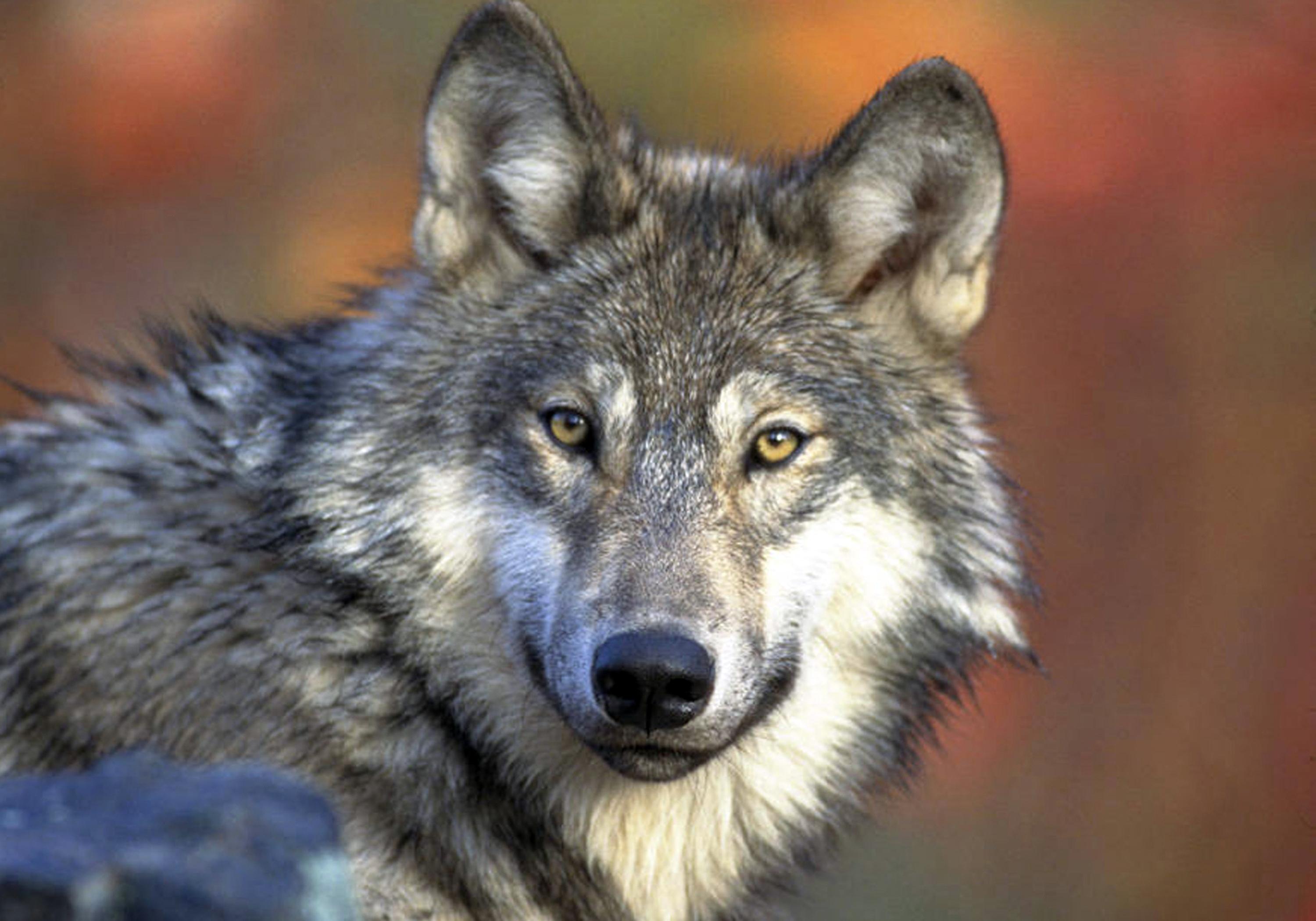
FILE - This April 18, 2008 file photo provided by the U.S. Fish and Wildlife shows a grey wolf. A federal report says gray wolves killed a record number of livestock in Wyoming in 2016, and wildlife managers responded by killing a record number of wolves that were responsible. The report released by the U.S. Fish and Wildlife Service found that wolves killed 243 livestock, including one horse, in 2016 in Wyoming. As a result, wildlife managers last year killed 113 wolves that were confirmed to be attacking livestock. (AP Photo/U.S. Fish and Wildlife Service, Gary Kramer, File) ORG XMIT: LA112 (Gary Kramer / AP)
FILE – This April 18, 2008 file photo provided by the U.S. Fish and Wildlife shows a grey wolf. A federal report says gray wolves killed a record number of livestock in Wyoming in 2016, and wildlife managers responded by killing a record number of wolves that were responsible. The report released by the U.S. Fish and Wildlife Service found that wolves killed 243 livestock, including one horse, in 2016 in Wyoming. As a result, wildlife managers last year killed 113 wolves that were confirmed to be attacking livestock. (AP Photo/U.S. Fish and Wildlife Service, Gary Kramer, File) ORG XMIT: LA112 (Gary Kramer / AP)

The Washington Wolf Advisory group will discuss what to do once wolves are delisted in the state during a meeting on Olympia, Tuesday and Wednesday.

The WAG, which is made up representatives from various interest groups across the state, will also discuss communication between the department and stakeholders: including data sharing, how and when the department makes decisions and staff response time to incidents.

The meeting will be held at the Meetinghouse at Priest Point, 3201 Boston Harbor Road NE, Olympia. There will also be an open-house style public comment period on Feb. 12 from 11:00 a.m. to 12:45 p.m. prior to the WAG work session.

For more information visit wdfw.wa.gov/about/advisory/wag/.

Wolf shot, killed near Sprague Lake about 40 miles from Spokane

http://www.spokesman.com/stories/2019/feb/08/wolf-shot-killed-in-adams-county-in-area-with-no-d/

UPDATED: Fri., Feb. 8, 2019, 10:50 p.m.

This February 2017  photo provided by the Oregon Department of Fish and Wildlife shows a gray wolf of the Wenaha Pack captured on a remote camera on U.S. Forest Service land in Oregon's northern Wallowa County. In an area where no documented wolf packs roam, a rancher shot a wolf, Monday. (Oregon Department of Fish and Wildlife)
This February 2017 photo provided by the Oregon Department of Fish and Wildlife shows a gray wolf of the Wenaha Pack captured on a remote camera on U.S. Forest Service land in Oregon’s northern Wallowa County. In an area where no documented wolf packs roam, a rancher shot a wolf, Monday. (Oregon Department of Fish and Wildlife)

A ranch employee shot and killed a wolf chasing cattle near Sprague Lake on Monday, about 40 miles southwest of Spokane where there are no documented packs.

He was checking on cattle in northeastern Adams County near the end of Sprague Lake, when he saw cattle running from three wolves.

When he yelled at the wolves, two stopped and retreated. The third, an adult female, continued the chase, said Donny Martorello, the wolf policy lead for the Washington Department of Fish and Wildlife.

The employee then shot and killed the wolf. One of the owners of the ranch, who wished to remain anonymous due to safety concerns, said the ranch hasn’t had problems with wolves in the past.

“The wolves are going to have to learn to live with us,” the rancher said. “We’re going to do our best to get along with everything, but we run a ranch. We have thousands of heads of cattle.”

The shooting has been deemed lawful by a preliminary investigation, according to Martorello. Although the Washington wolf plan does not allow private citizens to kill wolves, a subsequent WDFW commission rule allows for the killing of wolves caught in the act of attacking cattle, Martorello said.

“In areas of Washington where wolves are not listed under the federal Endangered Species Act, WAC 220-440-080 states the owner of domestic animals (or an immediate family member, agent, or employee) may kill one gray wolf without a permit issued by the WDFW director if the wolf is attacking their domestic animals,” according to a WDFW news release.

The caught-in-the-act rule has been used twice before, once in summer 2017 on the Smackout Pack and once in November 2017 on the Togo Pack, Martorello said.

The Center for Biological Diversity claims the killing is illegal and unnecessary.

“The shooting of this wolf is outrageous and saddening, and part of a troubling pattern of wolf-killing in Washington,” Amaroq Weiss, the center’s West Coast wolf advocate, said in an emailed statement. “A shot fired over the wolf’s head could have instead scared it away.”

The state’s 2011 Wolf Conservation and Management plan defines attacking “as biting, wounding, or killing; not just chasing or pursuing.”

Martorello said the WAC supersedes the wolf plan. The WAC does not define what attacking means.

“Washington state law allows people to shoot wolves that are caught in the act of attacking livestock or pets,” Chase Gunnell, communications director of Conservation Northwest, said in an email. “As difficult as situations like this are, we support this policy as a reasonable component of responsible wolf conservation and management.”

Martorello said the ranchers check on their cows daily. The cows in question were in an 800-acre pasture and the ranch runs a controlled calving operation.

The state wolf plan guidelines define a wolf pack as two or more animals traveling together in the winter, Martorello said. Agency officials will be following up to see if they can document additional tracks or sightings (either in person or by camera).

“It’s very suggestive of a formation of a pack,” he said.

In 2014, a wolf killed sheep near Lamont, south of Sprague.

Chris Bachman, wildlife program director at the Spokane-based Lands Council, said the Sprague area is not great wolf habitat.

“It would seem that it’s just sort of a fluke pass-through,” he said. “It’s really hard for me to imagine that area would become a territory that a pack would stay in.”

Turnbull National Wildlife Refuge is close and boasts both great habitat and a great prey source.

However, for the past two years there have been five cameras set up throughout the refuge to document elk, said Mike Rule, Turnbull’s wildlife biologist. No wolves have been spotted.

“You would just think that if there was one or two or three running around on a regular basis, someone would have seen one,” he said. “It could be in the near future we may end up seeing something here. As of now, nothing.”

If a pack is confirmed, Bachman said the Lands Council and others groups would hope to work with ranchers to put in place nonlethal deterrents such as fladry and fox lights.

According to the latest WDFW estimate, there are a minimum of 122 wolves, 22 packs and 14 successful breeding pairs statewide. That estimate was reported nearly a year ago.

That number is likely much higher. University of Washington researchers, using scat-sniffing dogs, said the number of wolves in the state could be closer to 200.

That minimum number has been criticized by wolf activists and ranchers alike. In the winter, WDFW staff fly in airplanes counting wolves to come to the minimum count.

“What we do know is tried and trued methodology that we’ve adopted from U.S. Fish and Wildlife Service and from other Western states,” Martorello said.

But as the number of wolves grows, the agency may consider a different methodology.

“As the numbers increase, it’s more challenging to count every wolf,” he said.

For several years, Hank Seipp has independently tried to confirm the existence of wolves in the West Plains area. In 2016 and 2017, he caught wolves on trail cameras on Mount Spokane. He’s placed numerous trail cameras throughout the Cheney and Sprague areas but hasn’t seen a wolf, although he has found paw prints and scat he believes came from wolves.

He said ranchers in the area need to stop disposing of dead cattle in open pits. That disposal method is common throughout the West Plains. Seipp hopes ranchers in the area can be reimbursed for the cost of preventive practices.

“Do they have the financial ability to do this? No,” he said. “And the community should be stepping up.”

WDFW’s lethal removal policy allows killing wolves if they prey on livestock three times in a 30-day period or four times in a 10-month periodThat policy was developed in 2016 by WDFW and its 18-member Wolf Advisory Group, which represents the concerns of environmentalists, hunters and livestock ranchers.

The policy also stipulates that cattle producers must have employed at least two proactive deterrence techniques. Lethal control is allowed in the eastern third of the state where wolves are protected by state endangered species rules. Wolves remain federally protected in the western two-thirds of the state.