Exposing the Big Game

Forget Hunters' Feeble Rationalizations and Trust Your Gut Feelings: Making Sport of Killing Is Not Healthy Human Behavior

Exposing the Big Game

Washington wolf population likely larger than estimates, researcher says

A University of Washington researcher told a state Senate committee that it’s possible the state’s population of wolves is closer to 200 animals, compared to 122 the Washington Department of Fish and Wildlife estimated.

The number of wolves in Washington state is likely much higher than previously thought, according to a University of Washington researcher who spent two years studying the animals using scat-sniffing dogs.

Samuel Wasser said his dogs detected 95 wolves in one area of Stevens and Pend Oreille counties, in the rural northeast corner of the state, during the 2016-17 season. That approached the total number of wolves wildlife officials estimated for the entire state.

The state Department of Fish and Wildlife a year ago estimated Washington had a minimum of 122 wolves, grouped in at least 22 packs, and 14 successful breeding pairs.

RELATED: Wolves making faster comeback than expected in Washington state

Wasser told a state Senate committee last week that it’s possible the population of wolves is closer to 200 animals.

State wolf managers also addressed the panel, saying Washington’s wolf population has grown on average 30 percent per year.

“We are seeing a wave of recovery,” said Donny Martorello, head of wolf policy for the Department of Fish and Wildlife. “This is indicative of adequate protections, available habitat and suitable prey base.”

Washington also has fewer conflicts between wolves and cattle than many other states, he told the Senate Agriculture, Water, Natural Resources and Parks Committee.

The question of how many wolves roam the state is important because it determines whether wolves are considered a protected species under state and federal law.

Wolves are a state endangered species throughout Washington, where they were all but wiped out early in the last century but started returning from neighboring Idaho and Canada after the turn of the new century. They also remain federally protected in the western two-thirds of the state, where killing wolves is prohibited.

According to Washington’s wolf recovery plan, wolves can be delisted after 15 successful breeding pairs are documented for three consecutive years, or after officials document 18 breeding pairs in one year.

RELATED: Bill would ship problem wolves to Bainbridge Island
Most likely, the state will document 18 breeding pairs in one year before they document 15 successful pairs over the course of three years, Martorello said.

In any event, those who wish for the removal of all wolves will not get their wish, the wildlife department’s director, Kelly Susewind, told the committee.

“Wolves are doing quite well. They’re here. They’re here to stay,” Susewind said.

The return of the wolves is problematic in ranching areas because they sometimes prey on livestock. To the dismay of some conservation groups, that has prompted the state to track and kill several wolf packs in recent years.

While many urban residents support the return of wolves, livestock producers on the front lines — in the lightly populated northeastern part of the state — are wary.

A state lawmaker from that rural area, where Wasser conducted his study, this week introduced a bill in the Legislature to create a wolf sanctuary in the heavily residential Seattle suburb of Bainbridge Island. Republican Rep. Joel Kretz’s bill was in response to the legislator from Bainbridge Island introducing a bill to ban the killing of wolves.

“I’m sure the gray wolves will seek to placidly co-exist with the dogs, cats, horses, sheep, people and other peaceful animals of the island,” said Kretz, of Wauconda.

His bill also said the state can kill wolves only after “four dogs, four cats or two children have been killed.”

Wasser and his team used dogs to sniff out scat of different animals. By analyzing the excrement, biologists can determine whether an animal is malnourished, pregnant or stressed.

Wasser’s team is also looking at how wolves and smaller predators, such as coyotes and bobcats, interact. Preliminary findings indicate wolves are avoiding coyotes.

RELATED: Washington ranchers struggle to keep cattle safe in wolf territory

Preliminary analysis of the scat composition shows wolves have been eating mostly deer, followed by moose and elk. Coyotes and bobcats have been eating mostly snowshoe hares.

Washington is a good place to study wolves because the animals haven’t spread to all areas of the state, Wasser said. Studying areas where wolves are not widely found, such as south of Interstate 90, and observing how the ecosystem responds will shed light on the interaction between wolves and other predators.

The environmental group Conservation Northwest welcomed Wasser’s findings on wolf numbers.

“Wolf recovery is progressing well in Washington,” the group said. “Despite a few high-profile events, the rate of wolf mortality is much lower here than in Rocky Mountain states.”

The group said it hopes to soon see wolves confirmed in Washington’s South Cascades, as well as new areas of the North Cascades.

Tongue-in-cheek bill would ship problem wolves to Bainbridge Island

A Washington state representative from Bainbridge Island wants to stop the state from killing wolves. In response to her legislation, an eastern Washington lawmaker now wants to send the wolves to Bainbridge Island to live.

Conservationists focused on wolf recovery know it can be one of the state’s most controversial topics, and dueling wolf bills now show the divide between politics east and west of the Cascades.

The first bill was proposed by Rep. Sherry Appleton, D-Bainbridge Island. It reads, “The department may not authorize the killing of gray wolves”. HB 1045 would make it illegal for the state to kill wolves for attacking livestock and instead force their relocation.

Rep. Joel Kretz, R-Wauconda, lives in wolf territory and filed a bill in response. HB 1639 would create a wolf sanctuary on Bainbridge Island so problem wolves can live there instead and locals can benefit from “the largely untapped wolf tourism industry.”

“It’s a response to a really insulting bill,” Kretz said.

Kretz says his constituents are constantly plagued with the challenges of wolf recovery and a bill that would ban killing wolves could ruin their rural economy.

“The big impact is the stress on the cattle. I had a rancher sell 200 of his best cows a summer ago because they had been harassed all summer long. They came in, I have pictures, they were two for 300 pounds on your way. They are skin and bones. They don’t have a calf by their side. And they’re not pregnant. They are crazy for being run all summer long,” he said.

Kretz Introduces Bill to Create Wolf Sanctuary on Bainbridge Island

[Fine by me…]
file photo

Olympia, WA – Seventh District State Representative Joel Kretz of Okanogan County says it’s time to “share the love” of Eastern Washington predatory wolves with the folks in Puget Sound, who want to protect the critters.

A legislator representing Bainbridge Island has introduced legislation that would prohibit the lethal removal of gray wolves. In response, Kretz introduced House Bill 1639, which would create the state’s first gray wolf sanctuary on Bainbridge Island.

“If that’s the kind of legislation that someone from Bainbridge Island is going to be running to impose on us who actually have wolves, maybe it would help broaden her mind a little bit to experience the benefits of wolves. So what better place than Bainbridge Island?

Kretz bill also provides guidance on when the state may use lethal removal of wolves on the island, specifically limiting such removal only after four dogs, four cats or even two children have been killed.

His message is simple: If Westside legislators who live on a protected island hundreds of miles away from wolves want to prohibit Eastern Washington ranchers and farmers from protecting their families and property, maybe it’s time to share those wolves.

“With this bill, we can deliver ‘em right to them. I’ve had lots of offers from the 7th District. If you need my stock trailer, I’ll bring a load of wolves.”

The measure is awaiting a hearing in the House Rural Development, Agriculture and Natural Resources Committee.

Press release provided by the Washington State House Republicans.

Mediator works to find common ground on Washington wolves

By Jason Nark, Special To The Washington Post.

Published: December 7, 2018, 10:28 PM

One summer, over a decade ago, biologists discovered that gray wolves — once driven to near-extinction in the continental United States — were breeding again in Washington. The sound of howling wolf pups was welcome news for conservationists, but not for the state’s $700 million cattle industry.

When some wolves began to prey on livestock, age-old tensions were resurrected. Some members of that first pack were poached, despite federal protections. Ranchers whose forefathers believed a good wolf was a dead one now had to contend with government officials and conservationists who had other opinions.

Fortunately, there was someone to call for help: Francine Madden and her Washington, D.C.-based nonprofit, the Center for Conservation Peacebuilding. In a city full of fascinating but oddly narrow areas of intellectual expertise, Madden’s is particularly niche: Her job is to make peace between humans who are fighting over wildlife.

On a warm October morning, I meet Madden at the National Zoo. The 48-year-old — today wearing cowboy boots a shade lighter than her brown hair — grows animated when she talks about her job, slapping my arm often to drive home a point. A curse or two slips out, though not when a pack of fourth-graders bounds down a path toward a hillside enclosure beside us.

“Is that a fox?” one boy asks.

“No, it’s a wolf,” another shouts.

The kids all howl at the wolf, then sprint off. Madden cracks a smile. “Honestly, I’m surprised when someone doesn’t have an opinion on wolves,” she says, hands waving excitedly. “When I see a wolf, my mental image of them is an animal that’s wearing this social, cultural and historical baggage, like a baggage cart at the airport we’ve loaded up. Think about it: ‘Little Red Riding Hood,’ ‘Peter and the Wolf,’ the Bible, the wolf in sheep’s clothing. The wolf’s had a lot of human emotion poured into it.”

Indeed, wolves have been trapped, shot and poisoned en masse for centuries, “pursued with more passion and determination,” the U.S. Fish and Wildlife Service notes, “than any other animal in U.S. history.” By the mid-1970s, gray wolves were among the first animals to make the endangered species list.

Then, in the 1990s, the U.S. government embarked on a controversial plan to boost the American wolf population with Canadian wolves. And as the wolf population of Eastern Washington state grew, ranchers and environmentalists began baring fangs. By 2015, things had gotten so bad that Washington’s Department of Fish and Wildlife hired Madden as a “third-party neutral,” charged with deflating hostilities among factions within the state’s Wolf Advisory Group. “When I took this case, I wanted it,” Madden says, “because wolves are the Middle East of wildlife conflict.”

What qualified Madden for this job? In addition to graduate degrees in science and policy from Indiana University, she had spent time as a Peace Corps volunteer in Uganda. There, conservation efforts had helped increase the population of mountain gorillas — who occasionally terrorized villagers, who, in turn, resorted to poaching. Madden helped conservationists and villagers agree on a solution: create teams that could respond quickly to gorilla attacks. In the years since, she has gone on to mediate invasive-species conflicts in the Galapagos and around the globe.

In Washington, Madden spent 350 hours interviewing 80 people about wolves before she led advisory group meetings. She found anomalies in the narrative: a hunter who described seeing a wolf as a “religious experience”; environmentalists who supported, or at least were neutral about, the idea of a wolf hunt. Wolves, she found, were a proxy for other fears, such as fading traditions and a loss of control to Seattle progressives. “Sometimes,” she says, “a dispute has surface-level issues, and that can be taxes or climate change or, in this case, wolves. But it’s all about identity.”

Madden asked combatants to steer their hybrids and pickup trucks to local bars. Grab a beer, she asked them, or a veggie burger. And don’t talk about wolves. At least not right away. “The first time I saw her, to be honest with you, I felt like this is a lot of kumbaya, no way a cowboy is going to sit through this,” rancher Molly Linville told me by phone from her 6,000-acre spread in Douglas County. “I still don’t know how it worked. It all still feels like magic to me.”

In the end, Madden spent 200 days in Washington and 7,000 hours on the phone. (For 3 1/2 years of work, the state paid her nonprofit, with a staff of two, more than $1.2 million.) Conservationists eventually agreed that wolves could be culled if they preyed on livestock. For their part, ranchers agreed to try nonlethal methods, too.

Washington Wildlife Agency Issues Kill Orders for Two More Wolf Packs

For Immediate Release, November 7, 2018

Contact: Noah Greenwald, (503) 484-7495, ngreenwald@biologicaldiversity.org

https://www.biologicaldiversity.org/news/press_releases/2018/washington-wolves-11-07-2018.php?fbclid=IwAR3RmhlDUSRvnx4BtVqlhT7E-W0H4erFqocVY8q7-UicKUkQtqbvbkQwKOE

OLYMPIA, Wash.— Washington Department of Fish and Wildlife Director Kelly Susewind today authorized the killing of wolves in the Smackout pack in Stevens County and the remaining wolves of the Togo pack in Ferry County. The Department already has been trying since Oct. 27 to kill the last adult and pup of the Old Profanity Territory pack in Ferry County.

“We’re devastated that Washington officials are killing still more endangered wolves when science shows it won’t reduce livestock loss or improve tolerance for these misunderstood animals,” said Noah Greenwald, endangered species director at the Center for Biological Diversity. “Three kill operations going at once on an endangered species by a state wildlife agency is very disturbing. They’re wiping out pack after pack, mostly at the behest of one livestock owner.”

Since 2012 the state has killed 21 state-endangered wolves, 17 of whom were killed for the same livestock operator, a longtime, vocal opponent of wolf recovery. The ongoing kill operation to kill the OPT pack’s father wolf and only remaining pup, as well as the kill order issued today for members of the Smackout pack, are on behalf of the same individual.

In September the Department killed the father wolf of the Togo pack, leaving his mate to fend for their two pups on her own. In October the Department killed the breeding female of the Old Profanity Territory pack and a five-month-old pup from the pack, leaving the breeding male on his own to provide for the sole remaining pup.

Both kill actions made it more likely the adults would attack more livestock, since livestock are easier prey than deer or elk for a lone wolf to successfully hunt. In both instances that proved to be the case, and even though it was the Department’s own actions that set these packs up for more conflict, the Department intends to eradicate both wolf families.

“Washingtonians overwhelmingly support wolf recovery,” said Greenwald. “Restoring these beautiful, intelligent animals will result in some loss of livestock, which is why the state compensates ranchers for their losses. But wildlife officials should not continue to kill this still endangered species.”

Smackout pack wolf

Smackout pack wolf photo by Carter Niemeyer. This image is available for media use.

The Center for Biological Diversity is a national, nonprofit conservation organization with more than 1 million members and online activists dedicated to the protection of endangered species and wild places.

www.biologicaldiversity.org

More press releases

Washington Fish and Wildlife targets 2 more wolfpacks

Wolfpacks in Stevens and Ferry counties have been attacking cattle; state authorizes killing wolves.

Don JenkinsCapital Press

Published on November 7, 2018 9:50AM

The Washington Department of Fish and Wildlife confirmed Sept. 7 that wolves in the Togo pack attacked this calf. The calf survived but was euthanized to end its suffering. Fish and Wildlife issued a permit Nov. 7 allowing the rancher to shoot the pack’s remaining three wolves if caught in a private fenced pasture with cattle.

COURTESY PHOTO

The Washington Department of Fish and Wildlife confirmed Sept. 7 that wolves in the Togo pack attacked this calf. The calf survived but was euthanized to end its suffering. Fish and Wildlife issued a permit Nov. 7 allowing the rancher to shoot the pack’s remaining three wolves if caught in a private fenced pasture with cattle.

Washington Fish and Wildlife Director Kelly Susewind today authorized the killing of wolves in two packs attacking cattle in the northeast corner of the state. The orders come as the department continues to try to remove the rest of a third wolfpack.

The department plans to kill one or two wolves in the Smackout pack in Stevens County. Susewind also gave permission to a rancher in Ferry County to shoot the remaining three wolves in the Togo pack in Ferry County if the wolves enter a private fenced pasture with cattle.

Fish and Wildlife is continuing an effort to remove the remaining two wolves in the Old Profanity pack, also in Ferry County, the department’s wolf policy coordinator, Donny Martorello, said Wednesday. The department killed wolves in the pack in September and resumed targeting the pack Oct. 26 because of depredations on cattle continued.

Fish and Wildlife won’t immediately undertake removing the Togo pack because it’s occupied with the two other packs, but may in the coming weeks, according to the department.

Fish and Wildlife shot one Togo pack wolf in early September, but the pack has continued to attack cattle. The wolf already had been wounded by the rancher, who said he was approached by the wolf and shot in self-defense.

The department protocol calls for removing one or two wolves initially and waiting to see whether wolf depredations on livestock stop.

Fish and Wildlife won’t start the lethal-removal operation against the Smackout pack, or allow the shooting of Togo pack wolves, until Thursday at the earliest. The early morning directives today give environmental groups one day to go to court to challenge the order.

The notice is fallout from a lawsuit by environmental groups challenging an order last year to kill wolves. A Thurston County Superior Court judge dismissed the lawsuit, but said the department should give time for courts to review future lethal-removal orders.

The Smackout pack has killed four heifers and injured one calf on private land since Aug. 20, according to Fish and Wildlife. Four of the attacks occurred between Oct. 14 and Nov. 1.

Fish and Wildlife considers lethal removal after a pack attacks three times in 30 days or four times in 10 months. The department policy calls for ranchers to do whatever they can to prevent the attacks and for wildlife managers to conclude that the attacks will continue unless the state intervenes.

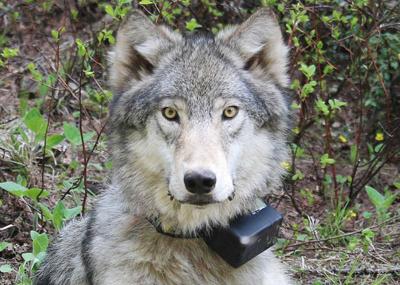
The Smackout pack has four or five adult wolves, according to recent surveys by the department. The pack includes one female wolf that had been trapped and fitted with a radio collar that transmits her location. The department has not seen evidence that the pack produced pups this year.

The Togo pack has attacked cattle at least six times in the past 10 months, according to Fish and Wildlife. Two of the attacks were confirmed after the department shot one of two adults in the pack. The department confirmed the first attack Sept. 7, but held off restarting lethal removal because the department was concerned that killing the last adult would doom the pups given their size at the time.

Fish and Wildlife confirmed Oct. 26 that the pack had attacked another calf. The latest depredation indicates the pack will continue to prey on livestock, according to the department.

Fish and Wildlife said in a statement today that it did not expect the lethal-removal operations to harm the state’s overall recovery objectives. The goal is to have wolves established and regularly reproducing at least as far west as the Cascades. Washington wolves now are mostly confined to Eastern Washington, particularly in four northeast counties.

The wolf population in the eastern one-third of Washington is more than three times the recovery goal for that region, according to Fish and Wildlife.

As the wolf population has grown in that corner of the state, so has attacks on livestock. The department has removed wolves before, dating back to 2012, but has never had three lethal-removal operations active at the same time.

Fish and Wildlife approves killing of remaining two wolves in the old Profanity Peak pack area

UPDATED: Fri., Oct. 26, 2018, 10:31 a.m.

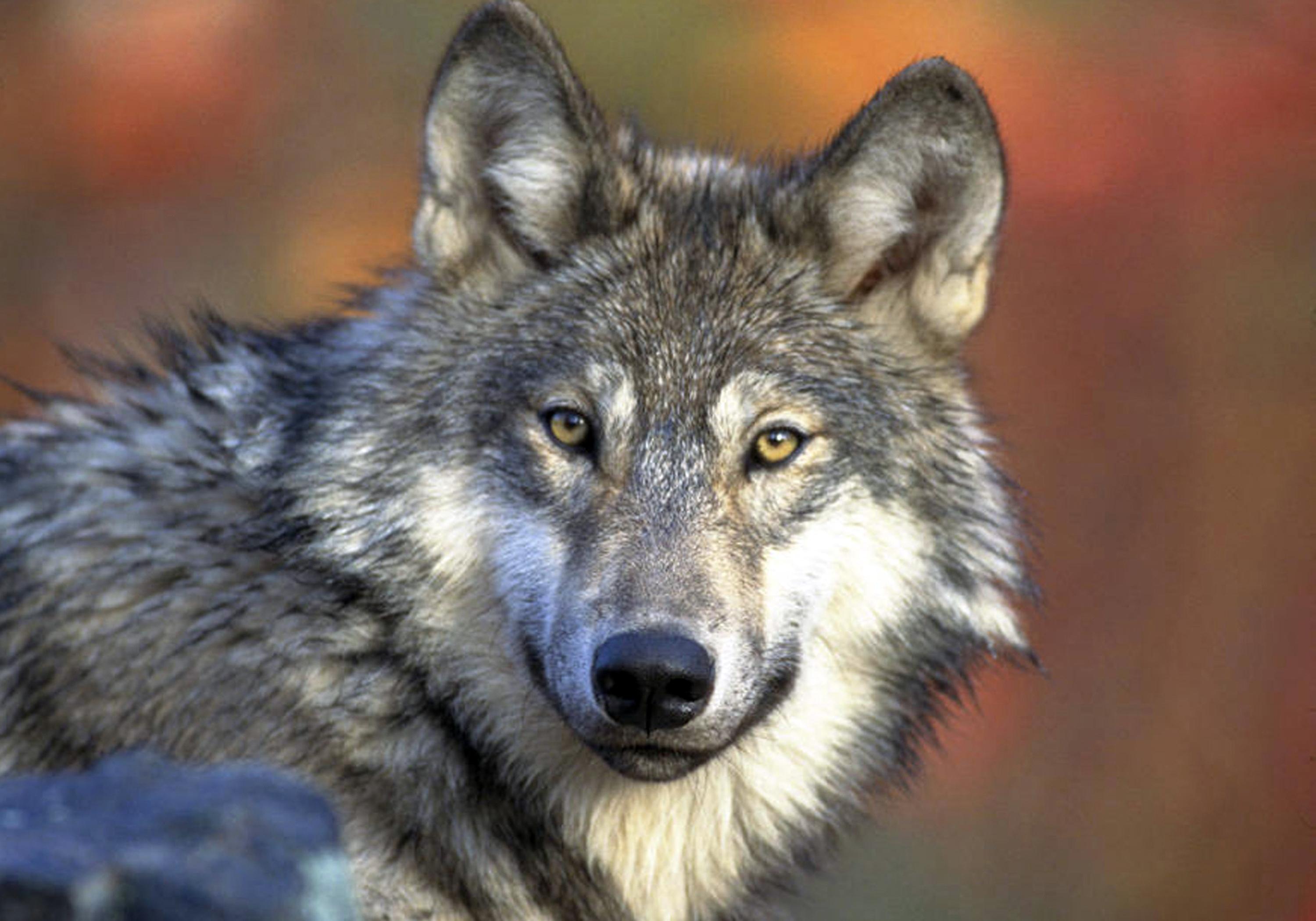
FILE - This April 18, 2008 file photo provided by the U.S. Fish and Wildlife shows a grey wolf. The final two members of a wolf pack occupying the old Profanity Peak Pack area will be killed, according to a Washington Department of Fish and Wildlife news release. (Gary Kramer / AP)
FILE – This April 18, 2008 file photo provided by the U.S. Fish and Wildlife shows a grey wolf. The final two members of a wolf pack occupying the old Profanity Peak Pack area will be killed, according to a Washington Department of Fish and Wildlife news release. (Gary Kramer / AP)

The final two members of a wolf pack occupying the old Profanity Peak Pack area will be killed, according to a Washington Department of Fish and Wildlife news release.

The kill order comes after members of the pack, which the department dubbed the Old Profanity Territory pack, killed or injured at least 16 cattle. The most recent was on Tuesday, according to the release.

WDFW killed a member of the pack on Sept. 16 following documented depredations. Per agency policy WDFW then monitored the area to see if lethal removal was effective. Despite two depredations in early October WDFW refrained from killing more wolves due to concerns about whether the range riding and other nonlethal deterrents were being implemented effectively.

The livestock in question are on a federal grazing allotment. Per allotment rules the producer was supposed to have his cattle off the land on Oct. 15. However, because of the “dense timber and rugged terrain” 10 percent of the producer’s cattle remain on the federal land.

In an interview Thursday Jay Shepherd, the wolf program lead for Conservation Northwest and one of the founders of the Northeast Washington Wolf-Cattle Collaborative, said in past years wolf-cattle conflicts had usually tapered off by now.

“It’s a weird year,” he said. “It just keeps going.”

WDFW must wait eight court hours between the announcement of a lethal action order and the execution of the order. In the past environmental groups have used that time to challenge the kill order.

Despite losses of roughly a dozen wolves a year from selective state-authorized lethal control, plus poaching, vehicle collisions and other human-related causes, Washington’s wolf population has grown each year. A minimum of 122 wolves, 22 packs and 14 successful breeding pairs was reported by the WDFW this winter.

This story will be updated throughout the day.

The full news release is copied below:

WDFW Director Kelly Susewind today reauthorized department staff to lethally remove the remaining two wolves from a pack that has repeatedly preyed on cattle while occupying the Old Profanity Territory (OPT) in the Kettle River Range of Ferry County.

On Sept. 28 the department initiated an evaluation period to determine whether removing two wolves from the OPT pack last month has changed the pack’s behavior and reduced the potential for recurrent wolf depredations on livestock.

The Wolf Conservation and Management Plan and the department’s protocol indicate that a post-removal evaluation period should consider any depredations that take place after one or more wolves are removed from a pack.

The department documented two wolf depredations to calves found in the allotment between Oct. 5-7, and determined that the depredation by the OPT on Oct. 5 likely occurred after the removal period.

That incident would have supported a decision to remove more wolves at that time, but the Director sustained the evaluation period to consider the details and complexities of the situation in the field.

The U.S. Forest Service allotment where the affected producer grazes his livestock is large and lies entirely within the territory of the OPT pack. After the Oct. 5 depredation, the department took additional steps to document the range-riding operation on the allotment to make sure it is as effective as it can be.

However, the department documented another wolf depredation to livestock on Oct. 23, bringing the total to 16 wolf depredations by the OPT pack.

The affected producer was scheduled to remove his livestock from the U.S. Forest Service allotment by Oct.15. In practice, about 90 percent of the livestock are usually removed by that date. Due to the dense timber and rugged terrain, it may take several weeks longer to round up all the cattle on the allotment.

The producer is transporting a portion of his cattle to private grazing lands west of the Kettle Crest and another portion out of state. The private grazing lands west of the Kettle Crest are within the OPT pack territory, although they are at a lower elevations and on the periphery of the pack territory, which may reduce the likelihood of wolf depredations in these areas this winter.

There are also several other allotments with cattle within the OPT that are in a similar situation in terms of removing them from Forest Service grazing allotments.

The livestock producer who owns the affected livestock has continued to employ non-lethal methods to deter wolves from preying on his herd. Strategies used include contracting range riders to monitor his herd, removing or securing livestock carcasses to avoid attracting wolves to the rest of the herd, and removing known sick and injured livestock from the grazing area until they are healed.

Washington Department of Fish and Wildlife seeks Wolf Advisory Group candidates

http://www.spokesman.com/stories/2018/oct/19/washington-department-of-fish-and-wildlife-seeks-w/

 Fri., Oct. 19, 2018, 3:10 p.m.

Washington’s Wolf Advisory Group is looking for new candidates to serve on the citizen committee that advises the department on wolf recovery and management.

There is one vacancy on the 18-member WAG, according to a Washington Department of Fish and Wildlife news release.

Terms last for three years.

WDFW Director Kelly Susewind will appoint members to the group from the applications and nominations the department receives to fill positions that become vacant within the next year.

“This advisory group has been extremely helpful in advising the department on the challenging issue of recovering and managing gray wolves in our state,” Susewind said in a news release. “We are looking for candidates who can work cooperatively with others to develop management recommendations that reflect a diversity of perspectives.”

However, Washington’s wolf policy has been attacked by both ranchers and conservation groups this year after wolves were credited with several cattle attacks and WDFW shooters killed members of the Togo Pack and wolves inhabiting the old Profanity Peak Pack area.

Ranchers and some northeast Washington politicians argued that the state waited too long to kill wolves which had documented cattle depredations while some conservation and environmental groups questioned whether the state can legally kill wolves.

WAG members represent the interests of environmentalists, ranchers, hunters and agriculture. New members must be available to meet as early as February 2019. The group meets four times a year.

Applications and nominations must be submitted in writing and address the following items:

  • The applicant or nominee’s name, address, telephone number, and email address;
  • People or groups making nominations must also submit their own names and contact information;
  • The candidate’s relevant experience, organizational affiliations, and reasons why they would be an effective advisory group member;
  • Familiarity with Washington’s Wolf Conservation and Management Plan and current wolf recovery status and management issues; and
  • Experience in collaborating with people who have different values.

The deadline for submissions is 5 p.m. Nov 30, 2018. Applications and nominations may be emailed to Donny.martorello@dfw.wa.gov or sent to Martorello at the Washington Department of Fish and Wildlife, P. O. Box 43200, Olympia, WA 98504-3200

Wolves — keystone predators — topic of talk

181011 BMLT Gray_Wolf The Spokesman-Review.jpg

A female wolf from the Minam pack outside La Grande, Ore., after she was fitted with a tracking collar.

Wildlife biologist Mark Vekasy will discuss the dangers and benefits of reintroducing wolves in the Blues from 7-9 p.m. on Oct 18 at the Walla Walla Public Library, 238 E. Alder St.

The presentation is an opportunity to learn about the role of the wolf population in the Blue Mountains.

Wolves have been endangered across the West for decades because of various factors, including loss of habitat and extermination by livestock owners concerned for the safety of their animals.

Currently, the whole Northwest is home to only 122 gray wolves. Since these animals are keystone predators, their absence affects the entire ecosystem.

Vekasy is assistant district wildlife biologist for the Washington Department of Fish and Wildlife’s third district.

District 3 covers southeast Washington and the Blue Mountains north of the Oregon border and extends to the Snake and Columbia rivers.

Vekasy has worked in and around the District for more than 10 years, first as a biologist with the Hells Canyon Bighorn Sheep Initiative in lower Hells Canyon and currently as a District biologist based in Walla Walla.

Mark has a bachelor’s degree in biology and a master’s degree in zoology and has been working in wildlife research and management for more than 30 years on a variety of game and nongame species.

This free event is open to all ages.

For more details, contact Lauren Platman at lauren@bmlt.org or bmlt.org/.

Judge rejects effort to temporarily halt killing of wolves

Gray wolf (File photo)

AA

SPOKANE, Wash. (AP) — A Washington state judge on Friday rejected efforts to temporarily block the killing of wolves that are preying on livestock in Ferry County.

Thurston County Superior Court Judge Carol Murphy turned down a request from a conservation group for a temporary restraining order to block the killing.

The Center for Biological Diversity contended that killing wolves ignores science, causes long-term environmental harm and goes against the wishes of the great majority of state residents.

“We’re disappointed this kill order remains in place but we’re hopeful the courts will eventually stop this tragic string of state-sanctioned wolf killings,” said Amaroq Weiss, wolf advocate for the center.

She said Washington had a “trigger-happy approach to wolf management.”

It was not immediately clear when the wolf hunts would begin.

The state Department of Fish and Wildlife on Wednesday approved killing one or more members of a new wolf pack that had attacked cattle near the Canadian border in northeast Washington. Wolves had killed a calf and injured five others on federal grazing land in Ferry County since Sept. 4, the agency said.

The new wolf pack has been dubbed the Old Profanity Territory Pack because the attacks occurred in an area once occupied by the Profanity Peak pack. The Profanity Peak pack was killed by the state in 2016 for preying on cattle.

Wolves were killed off in Washington early in the last century. But the animals started returning to the state early in this century from Idaho and Canada. There are at least 122 wolves in 22 packs in the state, according to the latest annual survey.

The agency contends that killing off some or all of the new pack will not harm recovery efforts.

Wolves are protected as an endangered species throughout the state. But a protocol developed by the agency and others to reduce conflicts between wolves and livestock allows the state to kill wolves if officials confirm a certain number of livestock attacks within a certain time period.

The state has killed a total of 19 wolves in recent years, including a member of the Togo pack earlier this month.