Exposing the Big Game

Forget Hunters' Feeble Rationalizations and Trust Your Gut Feelings: Making Sport of Killing Is Not Healthy Human Behavior

Exposing the Big Game

Response to massive cormorant kill

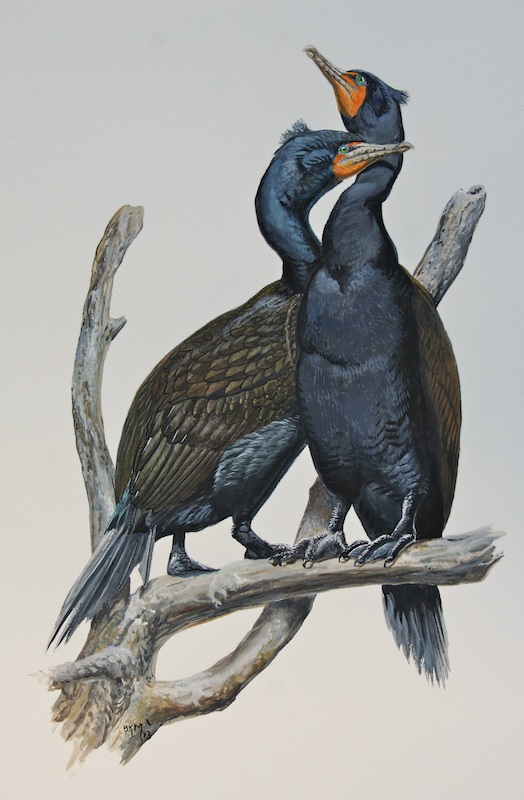
Painting Courtesy Barry Kent MacKay

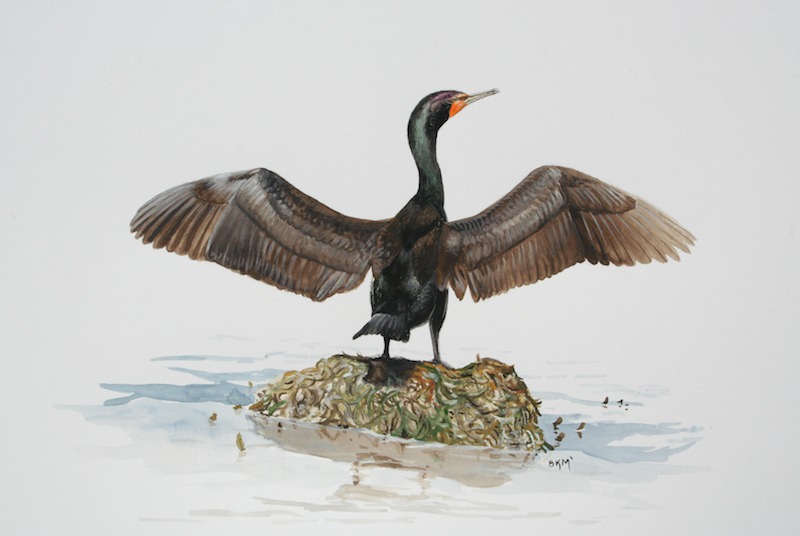
Painting Courtesy Barry Kent MacKay


Comment period still open, until the 19th…send to e-mail address shown:

Sondra Ruckwardt U.S. Army Corps of Engineer, District, Portland Attn: CENWP-PM-E/Double-crested Cormorant draft EIS P.O. Box 2946 Portland, Oregon 97208-2946 USA. cormor…@usace.army.mil Response to Double-crested Cormorant Management P

Response to Double-crested Cormorant Management Plan to

 Reduce Predation of Juvenile Salmonids in the Columbia River Estuary


by Barry K. MacKay Aug 16

I am writing on behalf of Born Free USA in response to the “Double-crested Cormorant Management Plan to Reduce Predation of Juvenile Salmonids in the Columbia River Estuary”, hereafter referred to as “the Plan”.   We oppose the “Preferred Alternative”.

As the title suggests, the Plan is designed to enhance smolt survival by killing a large number of cormorants.   The Plan discusses a multiplicity of anthropogenic factors influencing smolt survival, but then has simply scapegoated cormorants – one species in a complex ecosystem.  The Plan assumes that if more smolt leave the Estuary, more adults will return to spawn thereby enhancing the salmon populations.  Our position is that this approach – based on the assumption that each predator removed results in an increase in the species equal to the number of individuals not consumed – reflects a long outdated approach to ecology and wildlife management in which no positive role is assigned to the predator.  But in fact, in a naturally-evolved predator-prey relationship, it is the number of prey that determine the number of predators.

Recent media coverage, reporting on the current presence of cormorants and other predators, suggests that the numbers of Sockeye and Chinook  Salmon taken in 2013 broke all previous records.  Yet, there appears to be no empirical evidence provided in the plan that demonstrates having the largest take of two Salmonid species is related to having a large cormorant population which the Plan alleges is having a deleterious effect?

While the Plan examines the various Salmonid populations in the Columbia River, showing  some populations increasing and some in decline, it fails to identify what Salmonid populations cormorants feed on and whether the consumption enhances, reduces or has no significant effect on the overall carrying capacity of the River for the different Salmonid populations.

I argue that such a simplistic approach to a complex system will have ecological consequences not considered in the Plan and with no guarantee that the Plan’s assumed outcome will indeed become a reality.

There are multiple human activities that affect Salmon, including fish farming, an increase in numbers of sea lice within the oceanic environment, acidification, dams and the results of various forms of land use.  The singular and accumulative effects of these impacts are not well understood.  Nor is there any real consideration of the need to modify such activities to mitigate negative impacts on Salmonids and other species.  Instead, simplistically, blame is attributed to the cormorants.  Given the enormity of the anthropogenic  changes to the river ecosystem, the simplistic notion that more salmon leaving the estuary means more salmon returning and the singular blame of one (or a few) predatory species reduces the credibility of the Plan and calls into question the management approach.

Wildlife managers tend, too often, to operate under the inherent assumption that when apex predators are reduced or removed from a region, prey species of concern will not be consumed and will survive and be part of and contribute to their respective populations.  This assumption is not based on empirical evidence or peer reviewed science but is presented as a “logical assumption”.

Dating back over a century, study after study has demonstrated that Double-crested Cormorants are rarely responsible for declines in fish species, exclusive of highly contrived situations, such as a diurnal hatchery release, or when the fish are confined by some construction.  In most cases the species of fish that are of concern typically are “game” or “commercial” species, or “forage” fish they consume (see, for example: http://www.aou.org/committees/docs/ConservationAddn) since they are of the greatest interest to commercial fishers and anglers.  Indeed, the Columbia River Estuary appears to be an example of an ecosystem that sustains a large cormorant population where at least two Salmonid species, the Sockeye and Chinook  Salmon populations are currently on the increase.

Yet cormorants are, for a variety of reasons, irresistibly attractive as scapegoats, and “traditional” reasons for blaming them are often complex, as discussed by Linda Wires in her book, The Double-crested Cormorant: Plight of a Feathered Pariah (Yale University Press, 2014) and by Richard King, in his book, The Devil’s Cormorant A Natural History (University of New Hampshire Press, 2013).

Wildlife managers single out the Double-crested Cormorant as the “villain” with no consideration of its role as an apex predator.  No weight is given to the possibility that Cormorants can enhance or maintain fish species by removing ill or genetically compromised fish, predators and competitors, or even contribute to ecological health by transferring nutriment from aquatic to terrestrial environments as is true of “sea” birds generally.  It seems likely that the species has had a role in making newly emerged islands more fertile, thus enhancing biodiversity.

The nineteenth century lethal approach to wildlife management, however politically expedient, did not then and does not now effectively resolve the concern for the decline in some species, in this case a decline in specific Salmonid at the smolt stage.  Such management approaches divert resources from efforts which, while perhaps more complex to explain, are more likely to actually work.

The decline in some Columbia River Salmonids has coincided with the decline in a variety of fish and other species of wildlife native to the region, including a variety of other seabird species.  The species involved are diverse.   But they do share a common food source, the herring (Clupea) and other small oceanic fish species such as Sand Lances (Ammodytes).

According to Iain McKechnie, a coastal archaeologist with the University of British Columbia, the archaeological record indicates that for the past 7,000 years herring population levels have been robust and steady, but now are in decline.  Herring are consumed by seabird populations including wintering loons, Western Grebes and other species that may nest in salt or fresh water, leading to the theory that, depending on the species, their decline is at least to a variable degree the result of documented and unprecedented declines in herring populations, and those of other small fish species that occurred in the region in much greater numbers than now

But the system is far more complicated than that.  For example, one of the Alcids that is increasingly rare, the Marbled Murrelet, is famous for being Old Growth forest dependent.   Thus a decline in Old Growth forests is generally cited as a causative factor in the decline in Marbled Murrelet.  This is not to suggest that the decline in Old Growth forest habitat is the only factor contributing to the decline in murrrelets, since it also apparently has a high dependence on viable herring stocks.

What is overlooked, I fear, is the effect not only of the loss of Old Growth forest on Salmonids but also the loss of all forests in the vast, Columbia River drainage, including the Snake River.  This river is 1,240 in lenth, fed by networks of other lakes, ponds, artesian wells, rivers and streams, which in turn are fed by variable amounts of precipitation and snow and glacial melt, themselves influenced by suites of other factors ranging from local to global in scope.

I mention these variables to emphasize the changing and dynamic nature of the environment and to demonstrate that no single factor can be attributed to the decline in Salmonids but that it involves s suite of interacting factors.

For example, when I visited the upper reaches of the Columbia River basin last year, I noted that the trees in the region have been influenced by heavy infestations of Mountain Pine Beetle which are considered “natural processes”.  Parks Canada writes, “Mountain pine beetle (Dendroctonus ponderosae Hopk., hereafter referred to as MPB) and fire are major natural disturbance agents for lodgepole pine ecosystems in western North America”.  This natural disturbance potentially impacts the ecosystems, including the Columbia River and may contribute to a suite of factors that impact the Salmonid populations.

Numerous other influences contribute to Salmonid survival during the sea-going stage, including a large variety of anthropogenic factors, many of relatively recent origin.  Among these one of outstanding concern is fish farming.  Areas of concern about salmon farming include the risk of escaped domestic fish interbreeding with wild Salmonids, the transference of disease associated with such contrived and intensive concentrations of fish, and the presence of artificially enhanced population sizes of sea lice (see http://www.farmedanddangerous.org/scientific-case/sea-lice-research/).

There is a relatively new potential threats as we can see from the fates of other species.  In nearby Puget Sound, north of the Columbia delta, the production of oyster larvae went from a peak of 7 billion in the 2006 – 07 season to less than a third as many by 2009, with similar catastrophic declines in shellfish up and down the coast.   These coincide with indications of stunted growth in Alaskan king and tanner crabs.  Evidence suggests the cause is likely increased acidification of the water.   A senior scientist of the National Oceanic and Atmospheric Administration’s Pacific Marine Environmental Laboratory and the University of Washington, Richard A. Feely, has predicted that in about 36 years some fifty to 70 percent of the water will be corrosive (see http://www.pmel.noaa.gov/pubs/PDF/feel2899/feel2899.pdf).

Such acidification will destroy the ability of small marine organisms with calcium-based shells or other calcium-dependent physiological components to survive, which, in turn, can deplete the foundation of food chains that end up with Salmonids, as well as whales, seals, cormorants and other species that may or may not be scapegoated.

The degree to which smolt survival is key to ultimate population goals is similarly unclear from the Plan.  It is of particular concern as it is not only smolt survival that contributes to the fishery, but also other events in the marine environment.   Positive fisheries management, which has resulted in the declines in fishery catch, seems to have led to increased populations of Salmonid populations overall.

The Plan’s calculations on smolt survival in the lower Columbia lacks empirically derived estimates. The estimates in the Plan are based on unpublished, non-peer-reviewed and non-accessible data.  Why would the authors of the Plan not access the arguably more reliable data set, provided by Passive Integrated Transponder tags (PIT tags)?

The following questions must be asked:  If the purpose of the Plan is to enhance smolt survival, which smolt species are targeted for enhancement?  Where are the scientific papers that demonstrate a carrying capacity of the river and estuary that can support a greater number of smolts and adults should they return as the Plan assumes?  Given that there are other Salmonid predators such as terns, sea lions etc, why focus on cormorants?   Indeed, are all opportunistic piscivorous species common in the region to be targeted.

There is a vast range in the amount of consumption of Salmonid smolts by cormorants in the Columbia River from year to year (see http://www.birdresearchnw.org/final%20esi%20dcco%20benefits%20analysis.pdf ) and yet fish biomass per cormorant, times the number of cormorants, is presumably more consistent.  Thus opportunistic consumption would be tied to availability.  The fewer smolt consumed, the more of other fish species which may be displacing competitors or predators of smolts.

As in any opportunistic predator-prey interaction, it is important for wildlife managers to know what species are consumed when smolt consumption is lower to make up the equivalent aquatic biomass consumed.

It appears, at the very least, to be possible that within a given population size of cormorants, consumption by the birds of predatory or competitive species within the overall Salmonid smolt habitat adjoining the Sand Island colony may be at least neutral, and possibly positive, in affecting Salmonid smolt survival.  Certainly the range of species documented as being consumed by cormorants is vast, with numbers of individuals of given species determined by accessibility, thus availability.

The positive role of predators was very poorly, if at all, understood in the 19th century.   We should do better in the 21st.

And yet I read that cormorant predation of smolt is comparable to the number of smolt lost to a dam.  This contention totally ignores the difference between impacts of man-made devices such as dams on species verses natural ecological processes.  Cormorant consumption of smolt is far more, and differently, selective, with said selectivity possibly benefiting smolt survival overall.  Losses from dams are far more random than losses to predation by any species.

As well, the authors of the Plan admit that reduction of nesting cormorants may be counterbalanced by arrival of more Double-crested Cormorants, with no particularly significant decrease in the amount of consumption of whatever the cormorant is preying upon.

Cormorants prey on individual smolts, on individuals of species that would prey upon smolts, on individuals of species that would compete with smolts for resources, and on individuals of species whose presence or absence would have a neutral effect on smolt survival.   That’s inevitable.

I would further argue that what cormorants prey upon and in what number would also be a function of the number and availability of smolts relative to other species and that there remains an unanswered question as to what has been or is the limiting factor in cormorant numbers.  Removing cormorants from the nesting site would not reduce consumption of whatever is being consumed.  If it is food availability that limits cormorant numbers, there should be some indication of it (and none is given) as demonstrated by such indicators as reduced cormorant recruitment, a decline in mean weight of adult birds, etc.

Thus reducing nest site carrying capacity, as proposed, literally by making nesting a fatal option for a percentage of the cormorant population, will not necessarily, or even likely, reduce cormorant predation of any species (smolt, smolt competitors, smolt predators, or neutral species) any time soon, or ever, given the likelihood of compensatory mortality and subsequent immigration from other locations, which will counterbalance the losses from management action.

Such a Draconian action as the massive destruction of so many individuals of a native species is completely unsupportable given that cormorants have never been demonstrated to be responsible for, nor even implicated in, the loss of a single fish species or significant population of a single fish species anywhere.

Many government regimes talk about “sustainable” consumption of renewable resources, and then proceed to do no such thing.  The current take of Columbia River Salmonid species by commercial or recreational fishers cannot be called “sustainable” so long as it is deemed necessary to augment the population with the addition of hatchery-raised smolts .  The “average” number of Chinook Salmon sub-yearlings released into the environment may annually be around 75,000,000 (half way between the low of 50,000,000 and the high of 100,000,000 given).

What is more to the point, though, is the admission that even  though some Salmonid species numbers are on the rise, there has been a steady decline in Salmonids overall “since the late 19th century”, due to various anthropogenic factors that are, as we indicate above, increasing, both in number and in kind.  Thus what Salmonids are experiencing is not different, in kind, than the losses of herring and other species in the Pacific region, as indicated above.   The loss of major Salmonid stocks from the Okanagan River system, for example, had nothing whatsoever to do with cormorants (or Caspian Terns, sealions or other Pinnipeds, Orcas, mergansers or other natural predators).

Historically there were some ten to sixteen million Salmonids breeding in the Columbia River system.  With fewer than two million anadromous Salmonids (not all Salmonids are anadromous) returning to spawn currently, there are millions not accounted for.

When Salmonids fail to recover after the killing of thousands of cormorants what other natural predator will be targeted as a causative factor impacting the Columbia River Salmonds?  We can only speculate, and the Plan does not even do that.   It is not as if fish declines only occur where there are cormorants.  Freshwater  Atlantic Salmon, once found in Lake Ontario, were completely exterminated when cormorants were absent from the environment.  There is certainly no dearth of candidate causations for Salmonid decline, and fish stock decline of species that are not eaten by cormorants are certainly widespread and widely documented.

In Toronto, near where I am based, we have the largest Double-crested Cormorant colony in eastern North America, and it is managed, but without any lethal culling. While the Plan states non-lethal procedures to reduce cormorant smolt predation have been tried and failed, the Plan does not acknowledge that the killing of cormorants in other jurisdictions has also been tried and failed.  The Plan is lacking in any scientific studies showing that cormorants negatively impact the fish biomass.

Because I do not think a case for reducing cormorants has been made in the first instance, I am reluctant to advocate for dispersal procedures, since I would prefer to focus on preventing known anthropogenic detriments to fish stock declines.   That said, hazing techniques to prevent establishment of nesting (or, in other terms, to lower the capacity of the environment in question to accommodate nests) does work and has the added advantage of being relatively humane and possibly of not removing non-target species (such as Brandt’s Cormorants).   Hazing also has the benefit of being socially more acceptable, because it is more humane, than culling.  Uet there is no indication in the Plan that a well-thought out hazing regime has been adequately tried.

I have long witnessed a scenario, now at play in the Plan, whereby a wildlife management agency assures itself that simply by removing “X” number of cormorants from a breeding colony (with “X” always being a significant percentage of the number present) a reduction to “Y” will occur, with “Y” always being a number that meets whatever the objective is, usually either to protect a given fish stock or age class within a given fish stock, and/or vegetation at risk, and/or other species dependent on that vegetation within the colony.   It never works because the population is fluid and other birds will simply replace those removed, making culling a permanent management strategy.

Lastly, I would like to address the Plan’s concern over the perceived threat of the Double-crested Cormorant to the local, endangered subspecies of the Horned Lark.  After a life devoted professionally and otherwise to an appreciation of wild birds and dedicated to their survival, with species always valued over individual, I’m naturally concerned about the survival of an endangered local race of the Horned Lark.   I believe that endangered species legislation in both our countries is correct and valid to the degree that it addresses survival at the taxon level, thus giving the subspecies consideration equal to that of the species.  The last thing I would want would be to champion a common species at the expense of an endangered species or subspecies.

But I think it is disingenuous in the extreme to suggest that the activities of Double-crested Cormorants, in any way have a negative impact on the strigata race of the Horned Lark.  There is nothing about the habitat requirements of the lark, which all literature sources I have referenced suggest are similar to the several subspecies I am familiar with, including those that nest in my home province of Ontario.   In fact, I respectfully suggest that it discredits the document overall to imply that the Horned Lark is at risk from the presence of the Sand Island cormorant colony, or would be compromised by hazing and other non-lethal, non-culling procedures.

I strongly urge rejection of the “Preferred Alternative” as the case that reducing the number of cormorants on Sand Island will result in enhanced Salmonid smolt survival has not been made.  Do not scapegoat the cormorants for the excesses of our own species.

Sincerely,

Barry Kent MacKay

Senior Programme Associate

Born Free USA

Peace for geese

By Christie Lagally, Columnist
Thursday, August 14, 2014 9:04 AM
Our relationship with Canada geese in the Puget Sound region has a convoluted history. The resident population of geese was originally transplanted here as goslings by the government in the late 1960s as hunting stock. With the mild climate, the fledglings formed a non-migratory population that now lives in the Puget Sound region year-round.

Unfortunately, geese living and defecating in waterfront parks is an annoyance for some. So around 1998, the U.S. Department of Agriculture’s Wildlife Services (USDA-WS) began conducting region-wide geese roundups by suffocating the birds with carbon dioxide or shooting them on Lake Washington.

Videos and eyewitness sightings of the roundups motivated local residents to demand an end to geese killing, and in 2004, the Seattle Parks and Recreation announced it would no longer use lethal control. However, Wildlife Services did not stop killing geese on behalf of King and Pierce county municipalities, according to reports obtained under a Freedom of Information Act request.

Each year, local cities sign onto an Interlocal Agency Agreement to collectively pay for USDA-WS services. This year’s agreement included Bellevue, Kent, Kirkland, Mountlake Terrace, Renton, Tukwila, Woodinville, the Port of Seattle, Seattle Parks, Tacoma MetroParks and the University of Washington (UW). Most participants pay $2,230 per year to have USDA-WS conduct surveys, addle eggs (to prevent development) and kill geese. USDA-WS Washington state director Roger Woodruff explains that the fees collected for these services, around $25,000 per year, covers all costs for these services.

The UW, Seattle and Bellevue, among others, report that they do not request lethal control, but all the agreement signatories pay for lethal control regardless of whether it is done within their jurisdiction. In 2013, 1,159 geese were killed in King County.

Non-lethal control

According to Woodruff, the geese population in our region soared in the late 1990s, when the agency ramped up lethal control. He says that egg addling is only minimally successful because much of Seattle’s shoreline is privately owned where USDA-WS cannot reach the eggs, and that culling prevents bird strikes at local airports.

However, according to the Federal Aviation Administration’s (FAA) Bird Strikes database, in 1998 and 1999 (at the height of the geese population), there were two strikes involving Canada geese each year at the local airports. By 2004 and 2005, after years of killing geese, the average number of Canada goose strikes was still two per year. Even today, while many cities shun lethal control, only one Canada goose bird strike occurred in 2013. These strikes caused only minor or no damage to the aircraft and no human injury.

Animal advocates maintain that lethal control is cruel and unnecessary and should not be funded by taxpayers. When gassed, geese are corralled into metal boxes, where they struggle and gasp for oxygen. Eyewitnesses report the geese break their necks and wings in a desperate struggle for their lives.

Advocates encourage the use of a wide range of non-lethal alternatives, including expanded egg addling, modifications to park landscaping and harassment of geese with trained dogs and other deterrents. Certain cities do use some of these methods.

Feces-cleanup equipment, such as Naturesweep, can be purchased for park cleanup. For population control, OvoControl (a birth control-laced bird feed) and male goose vasectomies could be used.

Unfortunately, Interlocal Agreement signatories have shown little innovative spirit to implement new solutions. Bellevue, Seattle and UW report never having tried OvoControl, citing concerns about delivering the right dose or feeding non-target species, such as rats.

However, scientists at the USDA National Wildlife Research Center collaborated to develop and test OvoControl. Studies on Oregon geese populations have shown the product is successful at population control and is cost-effective.

The drug is administered during breeding season and would mitigate the problem of not being able to addle eggs on private property. With some ingenuity, a geese-specific feeder could be used to ensure the OvoControl does not reach non-target species.

Similarly, a Bronx Zoo study showed that vasectomies in resident goose populations reduce egg viability from 90 to 12 percent. Perhaps this kind of permanent solution for resident geese could be sustainable for decades.

Petitions circulating

For 15 years, geese management in King County has been a revolving door of human-goose conflicts. When agencies pay only $2,230 per year, it is not surprising that USDA-WS services are not sustainable and geese conflicts continue to occur. UW reports having to continually clean up geese feces at significant cost, but it continues to rely on USDA-WS.

A local group, Peace for Geese, is asking cities to stop killing geese and focus only on humane alternatives. As a matter of humane justice, taxpayer funds should be used for non-lethal, region-wide, sustainable, innovative solutions to geese population management. A petition is available asking cities to make this shift, and Peace for Geese is asking you to sign.

Hopefully, Puget Sound citizens will demand that our cities stop killing urban wildlife and implement long-term, humane measures for our resident geese.

To learn more, visit the Peace for Geese Project on Facebook and sign the petition at www.change.org/petitions/puget-sound-area-officials-stop-killing-canada-geese.

CHRISTIE LAGALLY is the editor of “Living Humane,” a news site on humane-conscious lifestyles at livinghumane.com. To comment on this column, write to CityLivingEditor@nwlink.com.

– See more at: http://citylivingseattle.com/Content/News/Urban-Dwellings/Article/AMONG-THE-ANIMALS—Peace-for-geese/22/169/90245#sthash.Y0HTvXPx.xTIlZ2P5.dpuf

All That Is Necessary for the Triumph of the Geese Killers is for Us to Do NOTHING

http://narn.org/blog/2014/08/all-that-is-necessary-for-the-triumph-of-the-geese-killers-is-for-us-to-do-nothing/

The public appears to  have entered an era of indifference to the plight of Canada geese trying to coexist with humans.  The major newspapers and news stations are utterly uninterested in running any geese stories.  Not “newsworthy enough”.  This kind of don’t-give-a-shit atmosphere is EXACTLY what communities and law enforcement and the USDA like best of all: prime goose-slaughter conditions.
The lone standouts: City Living Seattle will be running an article by Christie Lagally, it looks as if the Woodinville Weekly will do one, and you may also see letters to the editor by Diane Weinstein. Please, when you do, comment and write your own letters; let editors know this is a subject that still matters a LOT to a LOT of noisy, articulate, persistent people.  Allowing, by our apathy, the slaughter of Canada geese for reasons of selfishness and convenience is dangerous, not least because it allows an abusive mindset to grow. We do not need even ONE new USDA killer to be offered a job, one that will then need to be justified by more goose killing.
geese
The petition for the geese on Change.org, asking Puget Sound area officials to stop killing geese has 1,300 signatures and is growing very slowly.  1,300 people against gassing geese families??  Even Ms. Glass-All-Empty here knows THAT isn’t true.  Have you signed? Have your friends? Have your family members?  You know how the whole situation would change if half a million names were on that petition?! Please, share the link as widely as possible.
Silly you. Did you think you could take a nap? You can’t EVER nap. Because the Other Side never sleeps.

Once-extinct on Olympic Peninsula, fisher population rebounds

538458_532697610088640_841278349_nBy LYNDA V. MAPES  The Seattle Times
August 11, 2014 – 1:04 pm EDT

SEATTLE — Once locally extinct, fishers are bounding all over the Olympic Peninsula.

First released into Olympic National Park in 2008 in an effort to repopulate the native carnivore, they now range from Neah Bay to Ocean Shores, from Port Townsend to Olympia, preliminary data from remote cameras and hair snags confirm.

It’s a spectacular turnaround for an animal believed to be locally extinct for at least 80 years. Over-trapping of fishers for their luxuriant, lush brown coats and loss of the big, old-growth trees in which fishers like to lounge and den caused populations to plummet. The state closed the trapping season for fishers in the 1930s.

The National Park Service with other partners began a relocation effort in 2008, in an effort to bring the animals back. From 2008 to 2010, 90 fishers were moved from central British Columbia to the Sol Duc and Elwha Valleys.

The population today isn’t known, and the question remains as to whether births are keeping pace with losses, building a population that is self-sustaining over the long term.

But the indications from a monitoring effort by federal, state and tribal biologists so far are promising. “I’m cautiously optimistic,” said Patti Happe, chief of the wildlife branch for Olympic National Park.

Tracking in such remote, wild country is tricky. The batteries in radio collars initially fitted to the animals are all dead by now, so biologists in 2013 began utilizing remote, motion-triggered cameras pointed at survey stations, including hair snags, baited with chicken drumsticks. The hair samples allow scientists to analyze fisher DNA to track the growing family tree of the initial, founder population.

Some of the new kits have ranged as far as 43 miles from their mothers’ home territory, and cameras have found fishers using habitat where the radio-collared animals were never tracked, documenting that the fishers continue to gain ground.

Sharp toothed and clawed, fishers are related to minks, polecats and martens. They hunt the small mammals that are abundant in the Olympics.

The cameras mounted to detect fishers also documented a menagerie of teaming wildlife in the Olympics: Some 43 species of animals in 2013 were captured on camera in more than 37,000 images, from spotted skunks to coyotes, cougars, bobcats, raccoons, black-tailed deer, elk, flying squirrels, mountain beavers, snowshoe hares, mice and wood rats. Black bear were the single most frequently spotted animal.

Fishers do face perils in their new home. Cougars, bobcats and coyotes take their toll. Several fishers were apparent road kill, including one carcass recovered along Highway 101 on the outskirts of Port Angeles.

Two fishers were released from live traps by a licensed trapper seeking bobcats.

But with an abundant source of food in the forests, fishers are expected to do well. Wolves are now the only mammal still missing from the original suite of life in the Olympics, after being shot and trapped to local extinction in the early 1900s. Wolves are slowly recolonizing Washington wild lands but are not yet known to have reached the Olympic Peninsula.

Fishers once occupied coniferous forests at low to middle elevations throughout much of the Western U.S. The goal of the relocation program is to restore fishers to the Olympic National Park within 10 years.

Radio-tracking initiated in the first phase of the project documented the fishers’ far-ranging travels, including one female released in the Elwha Valley at Altair campground in January 2008. She was the first animal set loose in a public event, where school children cheered as she sprang to freedom from her carrying box.

Biologists followed her “on the air” thanks to her radio collar for 2½ years, from the Elwha Valley to the northeastern portion of the Olympic Peninsula. She settled down in the upper Dosewallips in the summer of 2008, making it home until March 2009.

After a two-month walkabout in the southeastern Olympics, she cruised back down to the lower Elwha, back where she first sprang from her box. There she stayed through June 2010.

She went off the air in 2014, when the batteries on her collar died. But she is perhaps still out there, rewilding her bit of the Olympics.


Information from: The Seattle Times, http://www.seattletimes.com

WDFW fence out wildfire displaced wildlife, call for more hunting

Wildlife Photography ©Jim Robertson, 2014.

Wildlife Photography ©Jim Robertson, 2014.

(What the WDFW are essentially saying is, ‘Never mind that the deer just went through hell escaping a terrifying catastrophic wildfire, let’s kill them before winter so no human is inconvenienced.):

WDFW NEWS RELEASE
Washington Department of Fish and Wildlife
600 Capitol Way North, Olympia, WA 98501-1091

http://wdfw.wa.gov/

Aug. 7, 2014

Contact: Jim Brown, (509) 754-4624 ext. 219

WDFW assesses habitat affected by wildfires,
helps landowners fence out displaced wildlife
 

OLYMPIA – State wildlife managers are working with Okanogan landowners to protect their crops from deer displaced by area wildfires and are assessing the fires’ damage to wildlife habitat.

In addition to burning hundreds of homes, the Carlton Complex fire has scorched tens of thousands of acres of habitat used by wildlife, including mule deer, wild turkeys and western gray squirrels. The fire, which is still burning in some areas, has damaged 25,000 acres within five wildlife area units managed by the Washington Department of Fish and Wildlife (WDFW).

“A fire of this magnitude will have both short and long-term effects on wildlife populations and the landscape and that will have implications for hunting and grazing in the area,” said Jim Brown, WDFW regional director. “This is not a problem with easy answers.”

The burned area is home to a local mule deer population, which lives there year-round, and supports thousands of migratory deer during the winter. Some of the areas may still provide winter habitat depending on weather throughout this summer and fall.

Even if conditions are ideal, however, there will be too many deer for the area to support this winter and possibly for several years to come, said Scott Fitkin, WDFW district wildlife biologist in Okanogan County.

“We know we need to take steps to reduce the size of the herd,” Fitkin said. “That effort will focus initially on minimizing conflicts between deer and agricultural landowners.”

WDFW is working with local property owners to stop deer from moving into orchards, hay fields and pastures to seek food and cover. The department is helping landowners replace a limited number of fire-damaged fences and seek state and federal emergency funding.

“We expect more issues to arise as migratory deer return to the area this fall, but we are taking steps now to minimize those problems,” said Ellen Heilhecker, WDFW wildlife conflict specialist in Okanogan County.

WDFW likely will increase the number of antlerless deer permits issued this fall and winter, reaching out first to youth and senior hunters and hunters with disabilities. The department will directly contact hunters who already applied for deer permits in the area, so a new application process is unnecessary, Fitkin said.

The agency plans to draw deer and other wildlife away from agricultural lands with feed this summer and fall. WDFW is considering a feeding program for deer this winter.

“Winter feeding is not a long term solution,” Fitkin said. “At best, it’s a stop-gap measure until the deer population and habitat are back in balance.”

Sustained supplemental feeding is neither efficient nor beneficial to wildlife and often creates problems, he said. Feeding concentrates animals, making them more vulnerable to predators, poaching and disease, such as hair slip, which is already a concern for deer in the region. Having so many animals clustered in one area also causes damage to the land and can hinder restoration efforts.

In the winter, deer prefer to eat shrubs and bitterbrush, which WDFW plans to re-seed on department lands within the burned area. However, it will take many years for shrubs and bitterbrush to re-establish in the damaged area. Likewise, western gray squirrel habitat could take several years to recover. In some areas, ponderosa pine and Douglas fir tree stands sustained significant damage.

WDFW will work with other government agencies on restoration activities such as timber salvage and weed control. The agency also has located alternate wildlife units in Okanogan County with suitable forage for emergency livestock grazing. This grazing will be offered to department permit-holders first, then to others if enough land is available.

Like other public land managers, WDFW likely will close roads in some wildlife units due to hazardous trees, said Dale Swedberg, WDFW’s Okanogan lands operations manager. That could reduce access for hunting in the burned areas this fall.

“We’re developing contingency plans in anticipation of what happens during the remainder of the fire season, fall green-up and winter severity,” Swedberg said.

Hunters and others should check WDFW’s wildfire webpage at wdfw.wa.gov/wildfires for updates on conditions and access on WDFW lands. Information on wildlife and restoration efforts in the affected area also can be found on the webpage.


This message has been sent to the WDFW All Information mailing list.
Visit the WDFW News Release Archive at: 
http://wdfw.wa.gov/news/

Audubon Action Alert: Stop Cormorant Slaughter

Audubon logo | ACTION ALERT
STOP CORMORANT SLAUGHTER
arrow pointing at letter
Double-crested Cormorant with eggs

A Double-crested Cormorant protects its eggs on East Sand Island.

Tell the Army Corps of Engineers that you oppose the plan to kill 16,000 cormorants.

Take Action

Dear Jim,

The Army Corps of Engineers is planning to kill 16,000 Double-crested Cormorants—more than 25 percent of the entire western North American cormorant population—in a misdirected effort to reduce avian predation on endangered salmon. The cormorants live and nest on East Seal Island, a globally-significant Important Bird Area (IBA) in Oregon’s lower Columbia River estuary. While cormorants do prey on salmon, the fish are endangered because of dams, pollution, habitat loss, and an array of other factors—not because of the cormorants.

Write to the Army Corps of Engineers today to oppose their plan to kill 16,000 Double-crested Cormorants.

According to the Audubon Society of Portland, which is closely tracking this issue, “It is time for the US Army Corps to do a ground-up review of its entire approach to managing birds in the Columbia Estuary.” Audubon opposes the Corps’ Alternative C, which emphasizes lethal control, and favors Alternative A, no action, until such time as the Corps and its partners can review and rebuild their strategy for management of avian predation on fish on a regional scale. Such a strategy needs to be based on sound science, fully employ and evaluate non-lethal measures of reducing avian predation, and consider a full range of alternatives beyond manipulation and control of native wildlife.

Send your public comments to the Army Corps today to oppose their plan to kill thousands of cormorants at East Sand Island!

Cormorant culling causes concerns

Painting Courtesy  Barry Kent MacKay

Painting Courtesy Barry Kent MacKay

Thursday, July 31, 2014 1:36 pm

A plan to kill 16,000 double-crested cormorants on East Sand Island has some residents on the North Coast scratching their heads.

Although still in the proposal phase, the plan drew many to an open house in Astoria last week to ask questions of the federal agencies involved.

“I can’t believe in this day and age we can’t come up with an alternative solution to killing things,” said Tommy Huntington of Cannon Beach.

The Alternative C plan is the preferred option of the U.S. Army Corps of Engineers to stem the ravenous consumption of juvenile salmon and steelhead each year. A final decision won’t be reached until after a public comment period and a review process are completed by the end of this year.

“I don’t want them to shoot the birds anymore than anyone else,” said Nancy Holmes of Seaside, explaining that she believes many people feel the same way.

The Army Corps released its plan to reduce the East Sand Island colony to 5,600 breeding pairs June 12. A public comment period has been extended to Aug. 19 after organizations advocated for more time. The federal agency, which manages hydropower dams and dredges the Columbia River, is required by the Endangered Species Act to come up with a management plan to control the burgeoning seabird population.

There were about 100 breeding pairs on the island in 1989, according to officials, but it has grown to 14,900 breeding pairs today. Dredge spoils were dumped there in the 1980s creating a perfectly flat and sandy location for the birds to nest.

The colony is estimated to have consumed about 11 million young salmon and steelhead annually over the past 15 years. Endangered and threatened wild stocks as well as hatchery fish are scooped up mostly in May by the seabirds as they head for the Pacific Ocean.

Since 1997 the Army Corps has done research on juvenile predation by the black birds. In 2008, they began to try out nonlethal methods to move nesting away from the mouth by hazing with lights, reducing nesting habitat and scaring them off. The available habitat is about 11 acres on the western portion of the island. In 2011, researchers began focusing on reducing that by putting in barrier fences and forcing birds from the nondesignated areas. They eventually restricted it to 4.4 acres, reducing 75 percent of prime nesting area. The federal agency even marked cormorants with satellite transmitters and banded hundreds of adults to provide information about where they moved during the restrictive period.

The Army Corps presented four options for reducing the colony to a size that would lessen the impact on endangered and threatened fish. A federal Biological Opinion of endangered Columbia River stocks requires the Army Corps to manage predation as one of three federal agencies that oversee hyrdoelectric dams on the river.

Alternative C was considered to be the best solution by the agency. The three other options did not include killing the cormorants, but forms of hazing and removal of nesting habitat.

“We feel it’s the one that gives us the most certainty of achieving the requirements that have been put upon us by the Biological Opinion,” said Joyce Casey, chief of the agency’s environmental resources branch in Portland. “It’s the most cost effective and it’s the one that has the best likelihood of not moving the problem somewhere else.”

The proposed plan includes land- and boat-based hazing and taking a limited amount of eggs, all with an “adaptive management” approach over four years. About 20 percent would be killed each year with 5,230 being taken the first year. The agency will have to file an annual depredation permit with the U.S. Fish and Wildlife Service for the “take levels.” The killing would take place on and off the island within the 15.5 mile foraging range around the island.

“It’s not a great plan,” said Holmes, adding that she’s at least glad that an adaptive management strategy is being used.

Huntington said he acknowledges the strong feelings that fishermen have about fish runs being consumed, but that the management plan shouldn’t have to be one or the other.

“You have to kill one to save the other one?” Huntington said. “It doesn’t make any sense.”

The federal agency also has to take into consideration the Caspian terns, brown pelicans and other birds on the island. The total number of nesting birds is about 60,000.

Casey said the preferred option also provides a balance because the agency wouldn’t have to eliminate all cormorant habitat on the island. With Alternative C, she said inundation of part of the nesting site will create habitat for shorebirds searching for food in the shallow water.

The Army Corps is also in the process of reducing habitat for Caspian terns on the island by about a third. The terns accounted for about 5.5 million juveniles consumed annually between 2000 and 2009.

URGENT CALL TO ACTION: Oppose the Planned Killing of 16,000 Cormorants Along the Columbia River

http://www.seashepherd.org/news-and-media/2014/07/07/call-to-action-oppose-the-planned-killing-of-16000-cormorants-along-the-columbia-river-1602

Cormorants are being targeted simply because they eat salmonCormorants are being targeted simply
because they eat salmon
Photo: Sea Shepherd
The U.S. Army Corps of Engineers has announced plans to shoot thousands of double-crested cormorants in the Columbia River Estuary beginning next year.

Much like California sea lions at the Columbia River, cormorants are being targeted simply because they eat salmon. Federal officials are claiming that these seabirds, protected under the Migratory Bird Treaty Act, eat too many juvenile salmon, as well as steelhead, as the fish migrate through the river estuary to the Pacific Ocean. The proposed cull program would claim the lives of 16,000 cormorants over the course of four years, with killing taking place during the birds’ nesting seasons. Oil will also be spread over cormorant eggs to suffocate the eggs and ensure that they do not hatch. While the Army Corps emphasizes the increase in the East Sand Island double-crested cormorant population in recent years, populations of these birds in general have been declining and the sustainability of this large-scale cull is questionable at best.

Sea Shepherd’s Dam Guardians were on the frontlines along the Columbia River and at the Bonneville Dam in 2012 and 2013, documenting the hazing, trapping and cruel branding of sea lions by the Oregon and Washington Departments of Fish & Wildlife for the “crime” of eating salmon. If any of the branded sea lions are determined to be eating “too many” salmon, they are killed – and the federal government has allowed these states to kill up to 92 federally protected sea lions each year until June 2016. It is important to note that “too many salmon” might constitute just one salmonid. The sea lion cull continues, despite the fact that they consume only 1-4% of the salmon, while fisheries are typically allowed to take 10-12%.

USDA bird hazer sets off explosives at the Bonneville Dam, May 2013USDA bird hazer sets off explosives at the
Bonneville Dam, May 2013
Photo: Sea Shepherd
The Army Corps reports that non-lethal methods – including “hazing with lights, reducing nesting habitat, and using human presence to flush double-crested cormorants off potential nesting sites” – have been tested. Sea Shepherd has documented bird hazers from the USDA harassing cormorants along the river, frightening the birds with explosives.

Just as the taxpayer-funded culling of sea lions at the Bonneville Dam will not solve the problem of a declining salmon population, nor will the shooting and killing of cormorants – set to cost up to $1.5 million each year of the four-year cull. The scapegoating of these innocent animals redirects the public’s focus from the real problems at the Columbia – overfishing, a polluted river filled with toxins, and the dam itself.

CALL TO ACTION: Though Sea Shepherd does not currently have Dam Guardians on the ground, we remain dedicated to protecting the animals who call the Columbia River home and exposing the true threats to this endangered salmon population. Please join us in speaking out against the planned killing of 16,000 cormorants for the “crime” of eating salmon. Here are ways you can help:

1) Attend one or both of the upcoming public meetings scheduled by the Army Corps of Engineers to discuss the proposed cull to show that you stand with the cormorants and the sea lions, as well as the salmon:

July 10 from 2:30pm to 5:30pm PT
Matt Dishman Community Center
77 N.E. Knott St.
Portland, Oregon

July 24 from 3pm to 6pm

Best Western Lincoln Inn
555 Hamburg Ave.
Astoria, Oregon

2) Submit public comments against the cull:

Email: Cormorant-EIS@usace.army.mil

Mail:

Sondra Ruckwardt
U.S. Army Corps of Engineers, Portland District
Attn: CENWP-PM-E / Double-creasted cormorant draft EIS
P.O. Box 2946
Portland, OR 97208-2946

The deadline for public comments is August 4, 2014.

First sea lions. Now cormorants. Where and when will it end?

Dam Guardians
Visit our
Dam Guardians
site for more information.

Obama: Western wildfires have a lot “to do with climate change”

james1

While I’m generally no hardline presidential apologist, I do have to praise Obama for acknowledging that the record-setting Carlton Complex wildfire, along with other ongoing western blazes, can be attributed to climate change.

“A lot of it has to do with drought, a lot of it has to do with changing precipitation patterns, and a lot of that has to do with climate change,” the USA Today quoted the president as saying during a recent visit to Seattle.

Unfortunately since then, the media has been silent about the president’s statement, omitting it in any subsequent article about President Barack Obama signing a federal emergency declaration for the areas affected by the wildfires. The declaration authorizes the Federal Emergency Management Agency and the Department of Homeland Security to coordinate disaster relief and help state and local agencies with equipment and resources.

That’s good news for this particular weather event, but it hardly trumps the fact that the planet is sure to experience this scale of catastrophic wildfire again and again in the future.

Perhaps the reason we’re not hearing about the climate change connection has to with the results of a recent survey revealing that Americans are more skeptical of climate change than others polled across the globe.

According to an ABC News article, when asked if they agreed with the statement, “The climate change we are currently seeing is largely the result of human activity,” just 54 percent of Americans surveyed said yes. Although this number indicates a majority, the United States still ranked last among 20 countries in the poll.

Meanwhile, China topped the list, with 93 percent of its citizens agreeing that human activity is causing climate change. Large majorities also agreed in France (80 percent), Brazil (79 percent), Germany (72 percent) and other countries.

Similarly, 91 percent of those from China agreed with the statement, “We are heading for environmental disaster unless we change our habits quickly.” Only 57 percent of Americans thought so — again, last among 20 nations surveyed.

‘Mother Nature is winning here’: Wildfire destroys about 100 homes in central Washington

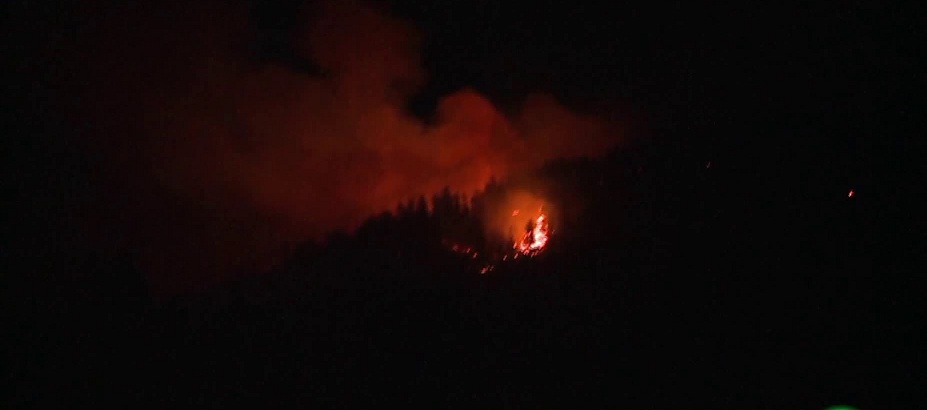
As  you’ve probably heard by now, Washington’s scenic Methow Valley, up in the North central portion of the state, is on fire. Big time. The title of the attached U.S. News article, “Mother Nature is Winning Here,” hit the nail on the head. What started out two days ago as 4 small fires covering 18,000 acres has mushroomed almost overnight to a monstrous 240,000 acre inferno, capable of gobbling up any town that tries to stand in its way.

photo Copyright Jim Robertson

photo Copyright Jim Robertson

I lived in the  Methow for 20 some years, in a cabin in the heart of the Lake Chelan Sawtooth range, nestled on the eastern edge of the North Cascades mountains. My wife grew up in the valley; my brother and his wife still live there.

It was there that I learned to really respect the power of wildfires. I was working on a trail crew for the U.S. Forest Service. When we were sent on “controlled” burn on the Gold Creek Ridge near the now infamous town of Carlton I saw just how quickly an out of control fire can spread.

Being a “controlled” burn, it was planned for the spring when conditions aren’t nearly as dry as they are this time of year. We were using drip torches to set off slash piles. One big pile was next to the edge of a flagged “unit,” next to an unlogged slope. The guy working on that pile got carried away, so a couple of us went over to help keep his fire from spreading. We started frantically pulling slash off the unburned slope and tossing it out of reach of the flames. But the effort was too late; one worker who stopped to take a break saw the flames reach across the flag line behind us. He yelled, “Get out of there, you guys.” We turned to see the fire move over our fire line and into the brush and trees outside the unit. Luckily we hurried out of the fire’s path. Within seconds, the flames reached the crowns of the trees and the fire shot uphill and blackened the entire slope before we could even think about trying to get ahead of it and slow its progress…

fire3

‘MOTHER NATURE IS WINNING HERE’: Wildfire destroys about 100 homes in central Washington

By NICHOLAS K. GERANIOS and GENE JOHNSON, Associated Press

PATEROS, Wash. (AP) — A fire racing through rural north-central Washington destroyed about 100 homes, leaving behind smoldering rubble, solitary brick chimneys and burned-out automobiles as it blackened hundreds of square miles in the scenic Methow Valley.

Friday’s dawn revealed dramatic devastation, with the Okanagan County town of Pateros, home to 650 people, hit especially hard. Most residents evacuated in advance of the flames, and some returned Friday to see what, if anything, was left of their houses. There were no reports of injuries, officials said.

A wall of fire wiped out a block of homes on Dawson Street. David Brownlee, 75, said he drove away Thursday evening just as the fire reached the front of his home, which erupted like a box of matches.

“It was just a funnel of fire,” Brownlee said. “All you could do was watch her go.”

Next door, the Pateros Community Church appeared largely undamaged.

The pavement of U.S. Highway 97 stopped the advance of some of the flames, protecting parts of Pateros.

Firefighters poured water over the remnants of homes Friday morning, raising clouds of smoke, steam and dust. Two big water towers perched just above the town were singed black by the flames. The fire consumed utility poles from two major power lines, one feeding Pateros and the other feeding the towns of Winthrop and Twisp to the north.

Gov. Jay Inslee said about 50 fires were burning in Washington, which has been wracked by hot, dry weather and lightning. Some 2,000 firefighters were working in the eastern part of the state, with about a dozen helicopters from the Department of Natural Resources and the National Guard, along with a Washington State Patrol spotter plane.

Inslee said that the state was rapidly training about 1,000 additional National Guard troops and active duty military could be called in as well.

“This, unfortunately, is not going to be a one-day or one-week event,” he said.

The Methow Valley, about 180 miles northeast of Seattle, is a popular area for hiking and fishing. Sections of several highways were closed.

“There’s a lot of misplaced people, living in parking lots and stuff right now,” said Rod Griffin, a fly-fishing guide who lives near Twisp. “The whole valley’s in disarray.”

He described long lines for gasoline, with at least one gas station out of fuel, and said cellphone towers must have been damaged as well because there was very little service.

In Brewster, 6 miles to the south, a hospital was evacuated as a precaution. The smoke was so thick there Friday it nearly obscured the Columbia River from adjacent highways. The smoke extended all the way to Spokane, 150 miles to the east.

Jacob McCann, a spokesman for the fire known as the Carlton Complex, said it “ran quite a bit” Thursday and officials were also able to get a better handle on its size. It blackened 260 square miles by Friday morning, up dramatically from the prior estimate of 28 square miles.

“Mother Nature is winning here,” Don Waller, chief of Okanogan County Fire District 6, told The Wenatchee World newspaper.

The county sheriff, Frank Rogers, said his team counted 30 houses and trailers destroyed in Pateros, another 40 in a community just outside the town at Alta Lake, and about 25 homes destroyed elsewhere in the county of about 40,000 people.

More: http://www.usnews.com/news/us/articles/2014/07/18/growing-wildfire-empties-washington-town