End the “Lethal Take” of Columbia River Sea Lions

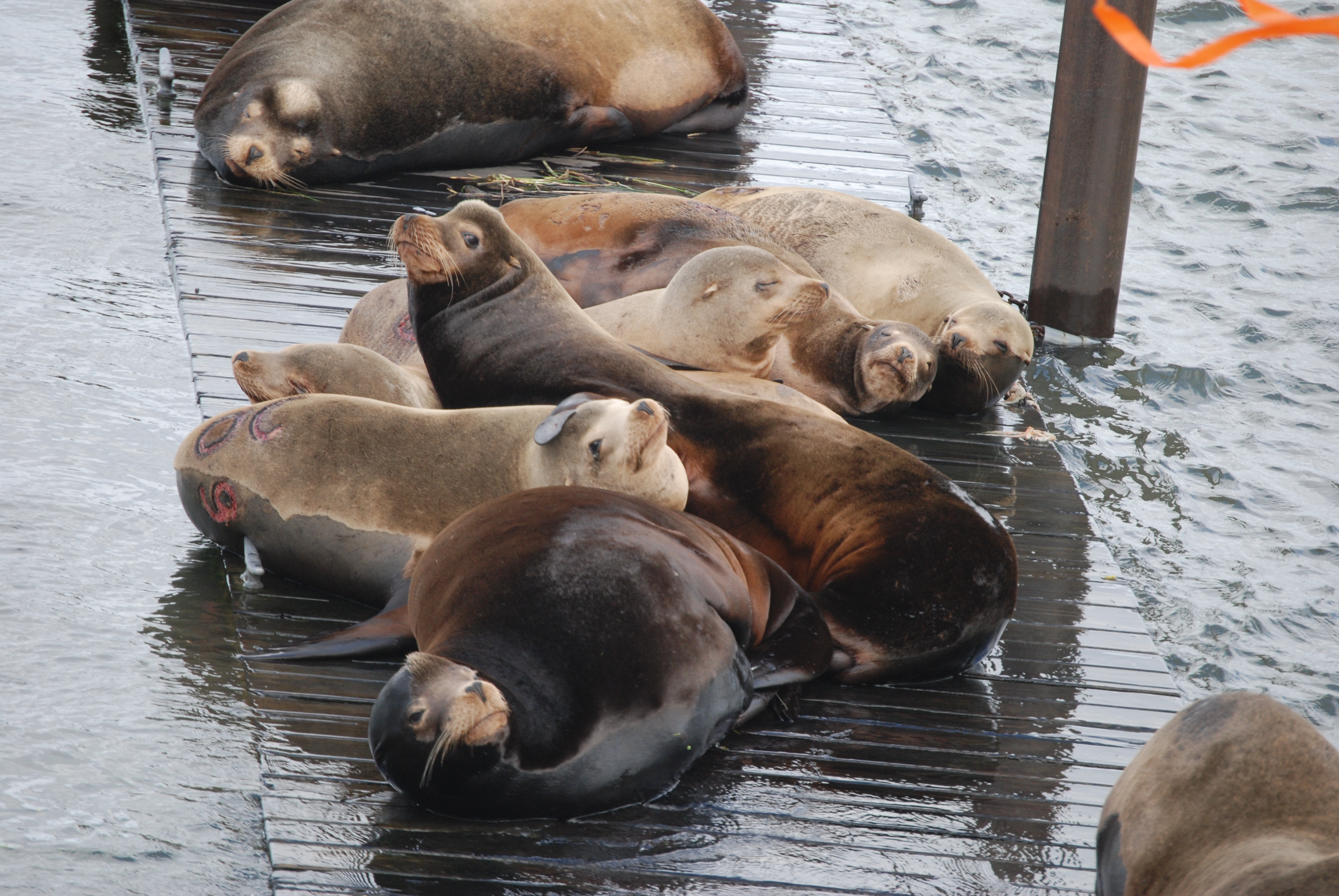
Sea lion Defense Brigade reports that a lot of young animals were seen in Astoria’s east mooring basin this weekend with fresh brand burns, and bleeding scars on their backs. ODFW claims this hot branding does not hurt sea lions, but the burns on their backs and the pain in their eyes tell a different story.

Please contact NOAA :Donna Wieting, and ask her to end the “Lethal Take” of the Columbia River sea lions for eating fish. Director, Office of Protected Resources
NOAA
Phone 301 713-2332 begin_of_the_skype_highlighting 301 713-2332 FREE  end_of_the_skype_highlighting
Fax 301 427-2520
Email: donna.wieting@noaa.gov
1315 East-West Highway,
Silver Spring MD 20910
Thank you, for taking action for the Columbia River sea lions.


littleboyc09


Take the Pledge: Boycott Columbia River Salmon


10177328_858615524154229_3705218634339822816_n

Meanwhile, this bumper sticker is a common sight on rigs owned by commercial salmon fishermen in the area:

DSC_0128

And shot sea lions are a common sight on beaches off the Oregon/Washington coast:

dsc_0224

_____________________

From Sea Lion Defense Brigade:

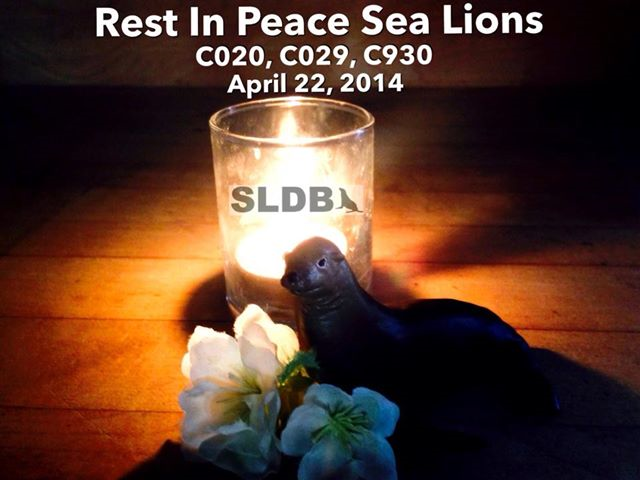
In loving memory of the 3 sea lions KILLED this week at Bonneville Dam by the Oregon Department of Fish and Wildlife.

These scapegoated sea lions had nothing to do with the decline of salmon and were taken from their friends and family way too soon.

Humans have many food options, sea lions do not.

Rest in Peace C020, C029 and C930.
We serve in your memory.SLDB

Female wolf spayed in Washington

The wolf was impregnated after encountering a domesticated sheep dog


 By Rich Landers

The saga of wolf recovery in Washington has taken a strange twist.

A large domestic guard dog that took a month-long romp on the wild side in Pend Oreille County forced Washington Fish and Wildlife officials to capture and spay an endangered female gray wolf Saturday.

The wolf was one of two females in the new Ruby Creek Pack that biologists have been tracking with GPS collars since July.

The unusual action came after biologists learned an Akbosh sheep dog climbed a 7-foot-tall fence from its yard near Ione and disappeared with the two female wolves for more than a month during February when wolves go into heat.

“If there had been a male wolf in the group, the dog would have been killed instantly,” Martorello said.

Biologists easily tracked the GPS signal and used a helicopter to shoot tranquilizers and capture the wolves. One female was pregnant; the other was not, he said. Both were released in the Pend Oreille River area.

“Spaying (the pregnant wolf) was a better alternative than trying to go out and kill all the pups after they’re born,” he said.

The dog had run off with the wolves for about a week in early January, but biologists were able to monitor the wolves and tell the dog’s owner when they were back near the home. The homeowner was able to call the dog in.

“We were already suspicious,” Martorello said. “Dogs and wolves usually don’t mix.”

Wildlife officials advised the dog owner to restrain the dog for the rest of the winter. While dogs can come into heat throughout the year, wolves generally come into estrus only in January and February, Martorello said.

“But when those females came back in a few days, one must have been in estrus because that big, intact dog climbed a seven-foot orchard fence and took off with them from mid-January through February,” he said.

copyrighted wolf in river

Wolf populations in Northern Rockies states Down 6%

April 5, 2014 by 

Associated Press

Gray wolf numbers in the Northern Rockies have declined about 6 percent from 2011, according to the U.S. Fish and Wildlife Service. Congress removed the wolves from the federal endangered species list in 2011. A state-by-state breakdown of year-end 2013 minimum wolf count and percentage change over two years:

–Idaho: 659 wolves; down 14 percent

–Montana: 627 wolves, down 4 percent

–Oregon: 61 wolves; up 110 percent(asterisk)

–Utah: 0 wolves; no change

–Washington: 38 wolves; up 46 percent(asterisk)

–Wyoming: 306 wolves, down 7 percent

–NORTHERN ROCKIES TOTAL: 1,691 wolves; down 6 percent

(asterisk)includes wolves only in eastern portion of state

Source

copyrighted wolf in river

Bring Out Your Dead

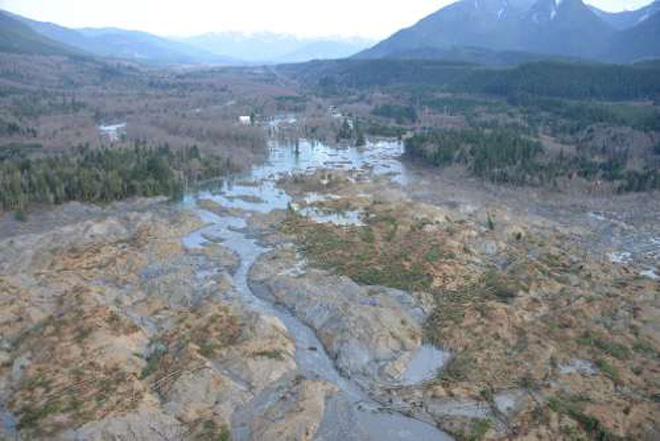
There’s a point reached in every search and rescue effort when you realize that you’re no longer searching for survivors, you’re looking for bodies. The Malaysian jet searchers surely reached it long ago, while the rescuers in the tragic Oso mudslide are still grappling with it. Today they began using cadaver-sniffing dogs, which must have been an ominous sign for those on the scene. I know as long as there’s still the slightest chance of finding someone alive they must keep searching. The thought of anyone floating the Pacific or trapped for days in the dark is enough to spur people on beyond the usual bounds of reasonability.

I grappled, and then reached the point of realization on day four of a search for a missing trail worker, ironically also in that same area. I was working on a trail crew on the Darrington district for the U.S. Forest Service where I not only experienced the anguish of not being able to find someone, but also frustration with a disorganized search party, led by an overly bureaucratic Forest Service and local sheriff’s department.

It was my first day out with this particular trail crew. I hadn’t yet had the chance to

Text and Photograph©Jim Robertson, 2014.

Text and Photograph©Jim Robertson, 2014.

meet the victim we would soon frantically be looking for. Her name was Jill; I remember because we yelled it over and over the first night we searched for her. She was only 18 and not very skilled in outdoor survival.

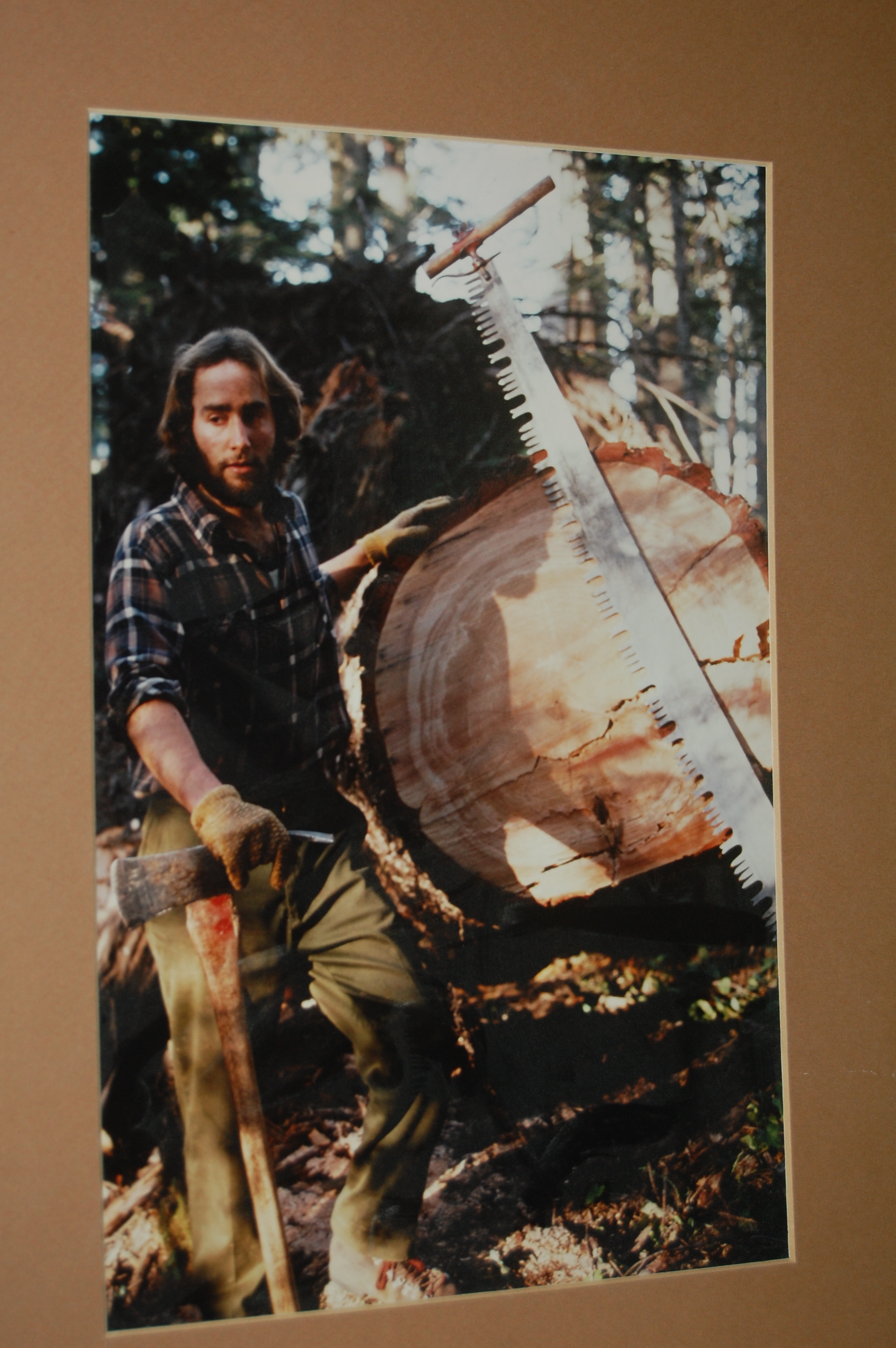
Our assignment that day had been to split into two groups and teach the wilderness rangers about clearing trails while they told us what they knew about wilderness ethics. The group I was in hiked up the Suiattle River in the Glacier Peak Wilderness area, sawing out blown down trees with a cross cut saw as we went. The other group, that included Jill, was to hike up the Sulfur Mountain trail to the snowline, cutting out blow-downs as they went.

That group was led by a gung ho wilderness ranger who was more interested in a race to the top of the mountain for a view than with staying together. They skipped past the logs across the trail and hastily made for the mountaintop. When Jill had to rest, exhausted, she told them, “You guys go on without me,” and they did just that.

The climb up to the view took a couple of hours and Jill probably got hungry or tired of waiting. Deciding to head down to camp, she must have accidentally taken an animal trail that led down toward a steep ravine—or at least that’s what we surmised later. She wasn’t there when her group returned down from their single-minded climb and she never made it back to camp. My group was about to have dinner when they burst into camp and asked if we’d seen Jill. We abandoned our meals and started up the switchbacks yelling her name but heard no reply.

Long story short, we searched for four days, over the same ground, all the while staying well clear of the steep ravine—as per the search leaders’ orders. At the morning meeting on the third day I told the sheriff I had been with a couple of volunteers and their bloodhound called in from Canada the day before. The dog had tried to drag us toward the steep mountainside that led to the ravine above Sulfur Creek, so we should be searching there. Since I was a nobody, the sheriff ignored me and ordered yet another search of the same territory, down the gentler slope to the Suiattle River, that we had covered several times already.

By the fourth day, the wilderness ranger who had abandoned Jill in the first place announced, “I really have the feeling we’re going to find her today.” No matter how I tried to share in his enthusiasm, I couldn’t help but think to myself, “We’re looking for a body now.” Anyone injured out there would have a hard time surviving so many cold nights without help. It was only then that climbers with ropes and gear were called in to check the ravine. Soon we heard the radio call to return to basecamp and abandon the search.

We weren’t told if Jill was alive or dead, just that we should stay in basecamp for “debriefing.” After several hours of waiting, we finally saw a helicopter heading our way, dangling a body bag. Those who knew her burst into tears. The morbid sight was a bit easier for me to take; by then I had known for a while that we were on a body recovery mission. During the debriefing we were told that she died instantly from the fall; I just have to trust that that was true. At least she was found; the news from Oso tells us, “Grim reality: some slide victims may not be found.”

Jill’s father later tried to sue those responsible, but learned that you can’t sue the federal government. In typical Forest Service fashion, the wilderness ranger who left Jill alone on the mountainside was not fired, but promoted to conceal any wrongdoing on his part.

140326_usgs_slide_07

One More Wolf in Washington

copyrighted wolf in river

http://www.komonews.com/news/local/Washington-state-wolf-population-grows-by-1-249141411.html

Washington state wolf population grows by 1

By PHUONG LE Associated Press Published: Mar 8, 2014

SEATTLE (AP) – Washington’s wildlife agency reported Saturday that its annual survey tallied 52 endangered gray wolves living in the state at the end of 2013, one more than in 2012. The count’s results come as conservation groups urge the state to pull support from a federal effort to roll back protections for the predators.

The state Department of Fish and Wildlife also found five successful breeding pairs in 2013, the same number as reported in the 2012 count.

The wolf population has been a controversial topic since the predators returned to the state much faster than expected in the past several years. In 2008, there were only a handful of wolves. In March 2013, there were an estimated 50 to 100 animals in 10 confirmed packs, all in central and eastern Washington.

Farmers and hunters in the West blame the returning gray wolf population for killing livestock and reducing elk herds.

Wolves are listed as endangered throughout Washington under state law and as endangered in the western two-thirds of the state under federal law.

But federal wildlife officials want to remove wolves from the endangered species list across much the Lower 48 states, including the western portion of Washington.

State wildlife managers support federal delisting of the wolves, saying it would give the state more control over managing conflicts between wolves and livestock.

Phil Anderson, director of the Washington Department of Fish and Wildlife, has said federal restrictions hamper the state’s ability to resolve those conflicts in the western part of the state.

On Thursday, several conservation groups sent a letter asking Anderson to rescind the agency’s support for federal delisting.

“Wolves are just beginning to recover in Washington and face continued persecution. Federal protection is clearly needed to keep recovery on track,” Amaroq Weiss, with the Center for Biological Diversity, said earlier this week.

Suzanne Stone of Defenders of Wildlife expressed concern for the safety of the wolf population.

“The stability of Washington’s wolf population is good news, but the population is still incredibly vulnerable during these early stages of recovery in Washington and wolves have a long way still to go,” she said.

Stone expressed hope that Washington wouldn’t let anti-wolf sentiment come over the border from Idaho and affect wolf management practices.

“We hope Washington is observing the tragic example being set in Idaho, where wolves are treated like vermin,” she said.

Dog Left Out in March Must Fend Off More Than the Cold

copyrighted wolf in water

One year after wolf attack, dog fends off cougar at Carlton home

One year after wolf attack, dog fends off cougar at Carlton home

[Automatic response? track down and kill the predators.]

by admin on Mar 6, 2014
By Ann McCreary

It’s been a tough year for Shelby, a wolf-husky hybrid dog owned by John Stevie of Carlton. In March 2013 the dog was attacked by a gray wolf just outside her home, and early Monday morning (March 3) she was attacked again — this time by a cougar.

The unlucky dog has been lucky enough to survive both attacks.

Stevie had let Shelby out at about 4 a.m. Monday and soon heard the dog crying, said Sharon Willoya, Stevie’s girlfriend.

“We both raced to the door and she came running in. She wouldn’t let us touch her at first because she was frightened. We finally got her calm and noticed she was bleeding,” Willoya said Tuesday (March 4).

The 68-pound dog had cuts on her shoulder and chest, and required more than a dozen stitches, Willoya said.

Stevie reported the attack, and Washington Department of Fish and Wildlife (WDFW) enforcement officers arrived with hounds a few hours after the attack. They tracked the cougar into a boulder field, but because it was a dangerous situation for the dogs, they left, said Capt. Chris Anderson, WDFW regional enforcement supervisor.

Wildlife officials returned Tuesday morning, found new tracks near Stevie’s home, tracked the cougar and treed it. The cougar, a healthy female, was shot and killed.

Willoya said wildlife officials found evidence that the cougar had “bedded down” not far from the house. “They think when Shelby came around the house, the cougar was there,” she said.

Stevie’s dog made news last year when she was attacked by a wolf on the deck of Stevie’s home at the foot of McClure Mountain. The dog received puncture wounds and lacerations to its head and neck in the attack.

Stevie subsequently took Shelby with him to Olympia, where Stevie testified before the Legislature in favor of a bill allowing citizens to shoot wolves that are attacking pets or livestock. Gray wolves are currently protected as an endangered species under federal and state law.

The cougar killed on Tuesday is the sixth cat shot by wildlife enforcement officers in the Methow Valley since December following attacks on domestic animals. At least four other dogs have been attacked, including a dog killed on Christmas day.

Cougars have also attacked cats, goats, sheep, chickens and calves.

Anderson said a hunter killed a cougar last week in the Pearrygin game management unit north of Winthrop. That brings the total number of cougars killed by hunters in the Methow Valley this winter to six.

Because of the high number of cougar incidents this winter, WDFW has issued special permits allowing hunters to use hounds to hunt cougars in the Methow Valley. Three permits have been issued for the Gardner game management unit, and two have been issued for the Pearrygin unit. Each permit allows one cougar to be killed.

So far, none of the special permit holders has taken a cougar, Anderson said.

“There are different theories bouncing around” about why the valley has seen so many cougar incidents, Anderson said.

“The general feeling is it’s probably because of the weird winter we’ve had,” Anderson said. “Normally we have cats that are visible because they follow the deer herds. Without snow the deer were really spread out and so the cats were spread out more, and that’s why people were seeing them in all parts of the valley.”
a

See more posts related to Cougars in the Methow Valley.

“Kill ‘Em All Boyz” Are “Ethical Hunters” Once Again

Ever since a friend sent me an article from back in 2006 about the poaching ring4cbfbced5cc75_image who gave themselves the narcissistic name the “Kill ‘Em All Boyz,” I’ve been wondering when they would be back in the Washington state “game” department’s good graces and be allowed to hunt again.

I found the answer in an October 20, 2008 article by the Daily Astorian entitled “Tip alerted WDFW officials to poaching gang” which reported that Micky Ray Gordon, ringleader of the “Kill ‘Em All Boyz” (who pleaded guilty to pleaded guilty to charges of first-degree animal cruelty, illegal hunting with hounds, second-degree criminal trespass and third-degree malicious mischief and was sentenced in ‘08 to 13 months in prison, following a seven-month undercover investigation by the Washington Department of Fish and Wildlife) would be eligible to purchase a hunting license again after only five years of suspension.

The other poachers were given even more lenient sentences, with even shorter
suspensions before they could hunt again. According to the article, “Brian Hall, 20, pleaded guilty to second-degree criminal trespass, third-degree malicious mischief and second-degree hunting with dogs. He was sentenced to 30 days in jail and $1,500 in fines, and will not be eligible to purchase a hunting license for two years. Adam Lee, 21, pleaded guilty to hunting with a suspended license and was sentenced to 30 days in jail and $1,850 in fines. And Joseph Dills, 23, pleaded guilty to a variety of charges, ranging from second-degree big-game hunting to using bait to hunt for bear. His total penalties amounted to 65 days in jail and $2,050 in fines.” At their press time, “Dills [was] pending trial in Lewis County on charges of committing other hunting violations.”

The article also states that this “case has provoked outrage among the hunting community in Southwest Washington and Northwest Oregon, in part because of the nature of the crimes but also because Gordon and his gang were initially referred to as “hunters” and not “poachers.” That sentiment was echoed by a comment I received earlier today from a hunter who piously stated, “Please remember. These are poachers, not to be confused with legal, ethical, ‘pay for conservation’ hunters.”

Well, they can go out and buy a hunting license now, just as legally as anyone. Does that make them different people? Are they “ethical” hunters again now that they’re
1800308_664612120267816_1839536551_nallowed to re-up their annual hunting licenses and bear, elk, deer, cougar,
bobcat, etc., etc. tags? How do these former poachers’ mindsets differ from the
average hunters? Is it just a matter of how many they killed at one time; or
the fact that they were not playing fair by the law-abiding hunters?

Poachers or not, it’s all ends the same for the animals they killed.

________________________
Anyone who witnesses a wildlife violation call WDFW’s toll-free Poaching Hotline at (877) 933-9847

“Kill ‘Em All Boys” Ringleader Gets 13 Months in Prison for Poaching and Animal Cruelty

Prosecutors obviously saw the potential for this hunter/poacher’s behavior to lead to cruelty against humans–Washington state officials also suspended his nursing license.

http://www.komonews.com/outdoors/news/30924359.html

Poaching group leader gets 13 months in prison

Mick Gordon poses with slain cougar

By Dan Tilkin and KATU Web Staff

Oct 13, 2008   Story Updated: Oct 30, 2013

CATHLAMET, Wash. – The man considered the ringleader of a group of poachers who called themselves the “Kill ‘Em All Boys” was sentenced to a year and a month in prison Monday for illegally killing wildlife.

Mick Gordon, pictured below, pleaded guilty to charges of first-degree animal cruelty, hunting black bear, cougar, bobcat and lynx with dogs, second-degree criminal trespass and third-degree malicious mischief.

Washington Fish and Wildlife officers said the group used a device they called “the permission slip,” which is a metal bar used to break locks blocking access to prime poaching territory on timber company lands. They even had a videotape made of the bar in use because they wanted to sell the contraption on eBay.

Undercover officers infiltrated the group as part of the investigation. Later wildlife officers seized trophy heads and guns from Gordon’s garage.

Gordon, a registered nurse, was also accused of torturing one of his hunting dogs with a shock collar as well as not giving it care for porcupine wounds; the dog eventually died.

Prosecutors on Monday asked for an exceptionally long sentence, saying Gordon had “run amok.”

“I’m deeply sorry for what I’ve done,” Gordon told the judge. “It’ll never happen again”

Judge Michael J. Sullivan called Gordon an aberration.

“When I look at you and what you’ve done here, which seems to be a highly organized crime spree, I just don’t know how to put those two together,” the judge said.

The sentence was much stiffer than normal. In other recent animal cruelty cases, defendants received sentences of about 3.2 months on average.

Washington state officials have also suspended Gordon’s nursing license.

According to state health department documents, Gordon told an undercover officer he put a shock collar on a child’s neck, turned it to its highest setting and shocked the child. He also told the officer he despised his bed-ridden, elderly patients.

WA State granting cougar hunts using hounds

http://www.komonews.com/news/local/State-granting-cougar-hunts-using-hounds-246699781.html

TWISP, Wash. (AP) – The state Department of Fish and Wildlife has issued five special permits in the Methow Valley allowing hunters to use dogs to track and kill cougars in response to numerous problems this winter.

The Wenatchee World reports the permits are a result of numerous sightings and incidents in which cougars have killed livestock and pets in the Twisp and Winthrop areas.

Wildlife officer Cal Treser says the permits are called public safety cougar removal permits, and they’re issued when areas experience numerous complaints. Hunters with hounds are drawn by permits and allowed to hunt in specific areas.

So far this winter, a dog was seriously injured and two goats and a sheep have been killed by cougars.

In 1996, Washington voters banned cougar hunting with the help of hound dogs, but since then lawmakers have gradually and increasingly made exemptions.

snrsslion