Exposing the Big Game

Forget Hunters' Feeble Rationalizations and Trust Your Gut Feelings: Making Sport of Killing Is Not Healthy Human Behavior

Exposing the Big Game

Washington state sounds alarm over rising coronavirus cases

Volume 20%

This video will resume in 14 seconds

Health officials in Washington are warning that the coronavirus is spreading more widely throughout the state, an increase likely driven by transmissions that took place over Memorial Day weekend.

In a report issued Saturday, the Washington State Department of Health pointed to two distinct hot spots, both of which are showing worrying signs of increased spreading.

Confirmed COVID-19 cases are rising fastest in four counties east of the Cascade Mountains, mostly rural and agricultural areas that were spared from the first substantial outbreak in Washington.

Both cases and the rate at which tests are coming back positive are increasing in Yakima, Spokane, Franklin and Benton counties. Projections in three of those counties show they are at risk of recording hundreds of new cases a day by the end of the month; Yakima County is already recording cases at that rapid rate.

The outbreaks east of the Cascades are now comparable to the worst days of the coronavirus epidemic in King County, home to Seattle, in mid-March. Though they are much more sparsely populated, there are as many cases per capita now in the eastern counties as there were in Seattle during the height of its outbreak.

King County has a population 2.25 million and has recorded 8,611 coronavirus cases, according to state health department figures, or a little under four cases per 1,000 residents. Yakima County, population 250,000, has recorded 5,129 confirmed cases, a per capita ratio five times higher than King County.

The state health department also said it was concerned about a growing number of cases confirmed in western Washington. Models maintained by epidemiologists at the University of Washington show the estimated reproductive threshold — the average number of people someone infected with the virus infects — rising above the 1.0 threshold needed to keep cases on the decline.

Washington, the state that suffered the first confirmed coronavirus case back in January, is now beginning to reopen its economy. In a statement Saturday, Gov. Jay Inslee (D) said the new report was cause for concern.

“The report estimates cases and deaths will soon increase substantially if COVID-19 continues to spread at current levels,” Inslee said. “This data will force us to look for some creative solutions and strengthen our strong local – state partnerships to address the disease activity.”

He asked Washingtonians to wear masks more vigilantly and to continue practicing social distancing.

“This is not the time to give up on efforts to protect ourselves, our families and our communities. We are still in the middle of a pandemic that is continuing to infect and kill Washingtonians,” Inslee said.

In a statement, Kathy Lofy, Washington state’s health officer, said the increased number of cases was likely a result of Memorial Day weekend festivities about three weeks ago. That stretch of time would give people a sufficient period in which to get sick, develop symptoms and progress to a state in which they seek treatment for their illness.

Lofy said the new cases are not indicative of any spread at protests over the murder of George Floyd, an unarmed black man who was killed by police in Minneapolis. The protests that have been especially large in Seattle, Tacoma and other western Washington towns.

Any new cases among protesters probably have not had time to manifest in substantial ways yet and likely would not show up for at least another week.

After about a month at a stable plateau, the number of confirmed coronavirus cases across the country has started to rise. More than 20,000 new cases have been identified on each of the last four days, according to the COVID Tracking Project. Doctors confirmed nearly 24,000 cases on Thursday and more than 26,000 cases on Friday.

States that raced to reopen their economies, such as Texas, Florida, Arizona and the Carolinas, are seeing substantial increases. But so too are states such as Washington, where restrictions have been lifted more slowly.

More than 2,066,000 people in the United States have been diagnosed with the coronavirus. More than 115,000 have died, by far the highest total of any country in the world.

Letter: Stop using rusted traps

This letter is for the inhumane people of Aberdeen who are putting out 100-year-old, rusted, barbaric rat traps for stray cats.

I have now found three. One nice bay laying in the alley in the rain starved, his paws mangled, dead, trap still clamped to his paws.

Two others in a bush, the other caught in a tree. They were not strange, they were nice, big, healthy boys neglected by their owners and left to run loose.

I was able to rescue them, but they were in bad shape. It took me 45 minutes and tools to get one out of the rusted trap.

If this is your way, you have lost your way. If you have issues with cats, dogs, squirrels, rabbits — call the city. Those who put out traps deserve a front-row seat in hell.

Remember: people who hate cats will come back as mice in their next life.

Susan M. Schaeffer

Aberdeen

CHAZ changes name to CHOP to better reflect the demonstrations’ message


Volume 90%
5
VIEW ALL PHOTOS
The Capitol Hill Autonomous Zone or CHAZ is now being called CHOP by protesters. (KOMO News)

SEATTLE – Gaining national attention with a growing audience, what was once known as the “Capitol Hill Autonomous Zone” has been rebranded and renamed – “Capitol Hill Organized Protest.”

Without a leader and with more voices chiming in, some of the protesters that have been pushing for police reform and advocating for Black Lives Matter at the now-abandoned East Precinct say it’s a move to get the movement back on track.

“That name, “CHAZ,” we didn’t actually come up with,” said protester Maurice Cola.

“We’re not sure if it was detractors or people trying to push a false narrative, but they definitely came in with that name, came with the signs and they had nothing to do with our movement so far.”

Before “CHAZ” was born, it was just one week ago when protesters and police faced off at 11th and E. Pine with the crowd later being dispersed through the use of flash bangs and pepper spray. Seattle Police say some protesters were throwing things like rocks, bottles and incendiary devices at officers.

Now “CHOP,” Cola says what’s happening on Capitol Hill was never about seceding from the United States. He also says Facebook pages popping up under the name “CHAZ” had been done without protesters knowing.

CHAZ changes name to CHOP
Volume 90%
KOMO News Video – Cole Miller

In the nearly week it’s been around, intrigue and crowds continue to grow, many coming out to see it for themselves. From a co-op that’s been getting larger to people now selling t-shirts, Cola and others have expressed concern that the message is getting drowned out.

“We’re noticing a lot of tourists coming in and some of the narratives are getting lost with all the extra added energy,” said Cola. “We’re trying to keep the focus. This is not Coachella.”

The biggest question remains is – how long will this go on? At this point, it’s anyone’s guess. Cola says talks with the city haven’t amounted to much.

Cole Miller

@ColeMillerTV

What once read “Welcome to CHAZ” has been tweaked to read “CHOP.” The guy who reworked this welcome tells me it’s a rebrand to “re-centralize the focus back to the movement”

View image on Twitter

Cole Miller

@ColeMillerTV

Looks like the stage is nearly set for some live music tonight at . At 11, hear from one of the protesters about that name change and his take on how talks have gone with the city about what comes next

Embedded video

28 people are talking about this

“We’ve definitely had communication but as far as actual progress, no,” Cola said. “The conditions of them actually being supportive, no. They’re allies with the national narrative but they’re not friends on the front.”

Throughout Saturday, the gathering remained peaceful.

Some say ‘Black Lives Matter’ message hijacked by emergence of ‘CHAZ’


Volume 90%
As protesters continue to gather outside of the East Precinct in what’s now being called the “Capitol Hill Autonomous Zone,” there’s concern among some who have visited that the message behind Black Lives Matter has been hijacked. (Photo: KOMO News)

As protesters continue to gather outside of the East Precinct in what’s now being called the “Capitol Hill Autonomous Zone,” there’s concern among some who have visited that the message behind Black Lives Matter has been hijacked.

The African American Community Advisory Council, which works with Seattle Police to facilitate discussion with officers and those they serve, came out to “CHAZ” Thursday evening in support of Chief Carmen Best. Multiple women spoke from the group, saying African Americans helped to build the precinct.

“Black lives do matter but there are also black lives that are police lives,” one of the woman said at the intersection of 12th and E Pine. “They feel the same way that you do.”

Throughout their attempts to convey their opinion to the crowd, they were met with boos and others grabbing microphones, talking over them.

Those women also stated that protest’s core belief has been lost.

“The thing is, you have hijacked this! You have taken the meaning away!”

Tempers flared for a few minutes before things came to an end.

“Not everybody is going to have the same opinion!”

Cole Miller | Differing opinions at CHAZ
Volume 90%
KOMO

KOMO News spoke with the AACAC Chair, Victoria Beach, afterwards.

“We support our chief of police,” said Beach. “We feel she’s been thrown under the bus. It was a cowardly move for the mayor to open up that street to all of the mayhem.”

Beach compared what she’s seen at “CHAZ” to that of a festival, name dropping Burning Man, rather than a movement aimed for police reform.

“We’re going to keep our voices loud and clear. We’re going to be heard,” said Beach. “How are we going to be heard if that’s happening? How are we going to come to the table and talk?”

Not long after they spoke, a rolling garage door at the East Precinct rolled up and nearly two dozen officers on bikes pedaled out. They were met by chants and expletives from protesters. The remaining officers inside eventually closed the door and protesters then went to the corner of 12th and E Pike to setup an enhanced barricade to keep them out.

For much of the night, the entirety of the gathering remained peaceful.

KOMO News reached out to Seattle Police to see why those officers were at the precinct but we have not heard back.

Seattle law enforcement experts urge police to take back CHAZ before it’s too late

Law enforcement officials are urging the Seattle Police Department to retake control of the East Precinct after hundreds of demonstrators overtook Monday the six-block area that surrounds it.

Officers effectively abandoned the area during violent clashes with demonstrators calling to defund the police.

Demonstrators have since set up occupancy in that section of downtown Seattle and have renamed it “Capitol Hill Autonomous Zone” (CHAZ).

SEATTLE ‘AUTONOMOUS ZONE’ HAS ARMED GUARDS, LOCAL BUSINESSES BEING THREATENED WITH EXTORTION, POLICE SAY

The portion of downtown Seattle that the protesters are now occupying.

The portion of downtown Seattle that the protesters are now occupying.

“It can’t continue like that,” Jim Fuda, a law enforcement expert and the director of law enforcement services for Crime Stoppers –­ which works with SPD –­ told Komo news.

“Some action is going to have to be taken. Is there federal laws broken? Does the FBI need to come in? But at some point, arrests and these people are going to have to be removed, if they don’t move.”

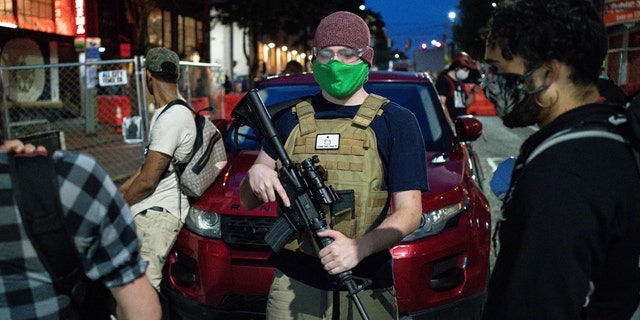
A volunteer works security at an entrance to the so-called "Capitol Hill Autonomous Zone" on June 10, 2020 in Seattle, Washington. The zone includes the blocks surrounding the Seattle Police Departments East Precinct, which was the site of violent clashes with Black Lives Matter protesters, who have continued to demonstrate in the wake of George Floyd's death. (Photo by David Ryder/Getty Images)

A volunteer works security at an entrance to the so-called “Capitol Hill Autonomous Zone” on June 10, 2020 in Seattle, Washington. The zone includes the blocks surrounding the Seattle Police Departments East Precinct, which was the site of violent clashes with Black Lives Matter protesters, who have continued to demonstrate in the wake of George Floyd’s death. (Photo by David Ryder/Getty Images)

Photos of the area show protesters have remained peaceful –­ pitching tents, painting, watching outdoor movies and holding gatherings with music and speeches –­ but police have also said they have received numerous complaints about armed guards surrounding the perimeter and asking residents who live in the area to show ID.

Police have also alluded to the potential extortion of local businesses and citizens.

placeholder

Despite concessions by the city, including a 30-day ban by Mayor Jenny Durkan on officers deploying tear gas to disperse large crowds, as well as police officers shuttering the Third Precinct and retreating from the area, protesters have not shown signs of allowing police back in.

People sit in Cal Anderson Park in the so-called "Capitol Hill Autonomous Zone" on June 10, 2020 in Seattle, Wash. (Photo by David Ryder/Getty Images)

People sit in Cal Anderson Park in the so-called “Capitol Hill Autonomous Zone” on June 10, 2020 in Seattle, Wash. (Photo by David Ryder/Getty Images)

“Where are the rest of the citizens and their need for service?” Fuda said, pointing to the fact that police have limited their activity completely and are only responding to 911 calls.

The SPD is working on a strategy to negotiate with protesters but has been unable to identify the leaders of the group.

Michael Solan, president of the Seattle Police Officers Guild, told Fox News’ Laura Ingraham on Wednesday that the occupy-style demonstrations have gone too far and “is absolutely unreasonable activism.”

“We lost a precinct, now, what’s next? Are we going to lose another precinct? The city council has removed our ability to have less lethal ammunition for us to properly protect those facilities and protect ourselves,” Solan said.

When a woman said she saw a wolverine on a Washington state beach, a wildlife official didn’t believe her

A wolverine was spotted on May 23 by Jennifer Henry in Long Beach Peninsula.

(CNN)When a woman told a wildlife official she thought she’d seen a wolverine on the beach of Washington state’s Long Beach Peninsula they didn’t believe her.

The elusive creatures live in remote mountainous areas and any sightings — let alone on a beach — are rare, according to the Washington Department of Fish and Wildlife (WDFW).
Then she showed them a picture. In the May 23 snap, a furry animal with distinctive markings appears to be eating the carcass of a marine animal that washed ashore.
Jeff Lewis, a mesocarnivore conservation biologist with the WDFW, told CNN about the encounter and that he confirmed the animal was indeed a wolverine. There are only around 20 of the mammals in the entire state, according to WDFW. They are usually roaming in the remote mountainous areas of the North Cascades not on the sandy beach.
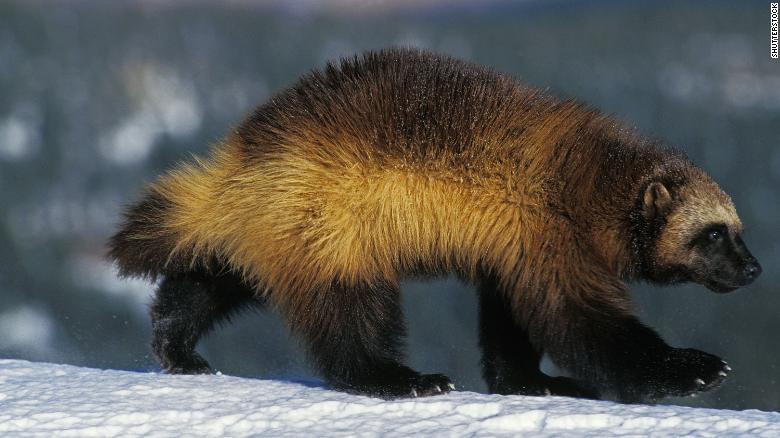
A stock photo of a wolverine.

The mysterious wolverine is the largest terrestrial member of the weasel family and it can resemble a small bear with a bushy tail. The animal is stocky with short, rounded ears, small eyes, and large feet that are useful for traveling through snow, according to WDFW.
Scientists believe there are only 300 of the species left in the contiguous US, according to the Center for Biological Diversity, a non-profit animal conservation organization. Due to trapping and habitat loss the wolverine population has been dramatically shrinking, according to the center.
“It’s special and noteworthy,” Lewis said about the sighting. “Before we had to take people for their word. It’s easier to document this now since everyone has a phone and a camera.”
A wolverine was spotted on May 20 by Jacob Eaton in Naselle.

A wolverine was also seen on May 20, walking down a road in Naselle, a town east of Long Beach Peninsula, Lewis said. An observer captured two pictures of it and submitted them to Lewis for confirmation.
“Given the oddball nature of these observations,” Lewis said. “It seems likely this is the same animal.”
While the animal does look like it is on the smaller side, Lewis said, it is normal for wolverines to strike out on their own. The age and gender of the animal are unknown. He added that juveniles disperse to find new homes away from relatives.
“I worry about this one because it is in an area way more densely populated then where it is used to,” he said. “My concern about it most is it can get hit in the road or someone might shoot it.”
Lewis said he hopes more people are able to document the animal’s travels which will give researches more insight into its unusual movement. Also if hair is left behind by the furry animal that will help researches collect DNA on it. Residents can submit photos by calling their regional wildlife office. Lewis said the animal isn’t a threat to humans.
People do not need to worry about it,” he said. “Just enjoy seeing it go by.”

Bear spotted running across all lanes of I-5 in Pierce County


The bear was spotted along I-5 between Dupont and Lakewood. (Photo: Wash. State Patrol)

LAKEWOOD, Wash. – Question: Why did the bear cross Interstate 5?

That’s what state troopers are asking after they spotted a black bear run across all lanes of I-5 at around 8 a.m. Sunday.

The bear was last seen west of I-5, about halfway between Lakewood and Dupont, and now troopers are asking motorists in that area to be on the lookout for the furry critter.

Trooper Ryan Burke

@wspd1pio

Be careful if you’re north I-5 near milepost 122! The bears are out today! Troopers on scene now attempting to avoid close contact.

77 people are talking about this

Agents with the state Department of Fish & Wildlife also have arrived on scene and are attempting to locate the bear.

Trooper Ryan Burke sent out a tweet asking drivers in that area to be careful because “the bears are out today!”

To which one commenter replied, “He’s looking for an Arby’s,” and another opined, “Be careful, it’s not wearing a mask!”

What you should know about Washington’s murder hornets

Despite a swarm of worried calls, officials say humans don’t need to panic just yet.

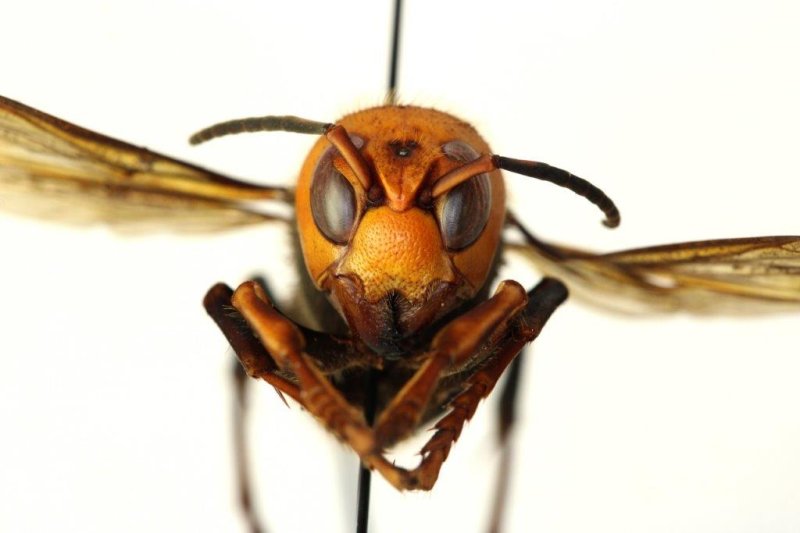
Asian giant hornet perched on human finger

An Asian giant hornet from Japan is held on a pin by Sven Spichiger, an entomologist with the Washington State Department of Agriculture, May 4, 2020, in Olympia. The insect, which has been found in Washington state, is the world’s largest hornet, and has been dubbed the “murder hornet,” a reference to its appetite for honeybees and a sting that can be fatal to some people. (Ted S. Warren/AP)

ADVERTISEMENT

In the hours after the New York Times published an article Saturday about an invasive hornet with a potentially lethal sting, the Washington State Department of Agriculture didn’t see too many emails from concerned residents. But by the time public engagement specialist Karla Salp checked her phone after a virtual church service Sunday morning, she realized it was going to be an all-hands-on-deck type of day.

“It’s been just totally insane here,” Salp said Monday. “I’ve worked here since 2015 and this far exceeds anything that I have ever dealt with in communication. We just had another outreach person start today, bless her heart … so she’s definitely experiencing a little bit of baptism by fire.”

The New York Times first covered the Asian giant hornet’s presence in Washington in December, but the Department of Agriculture has been sharing identifying information with the public at least since publishing a revised invasive species pamphlet in October. The first of two dead detected specimen in Washington state was reported late last year near Blaine in Whatcom County.

But the most recent news of “murder hornets” has captured international attention and monopolized the waking hours of insect, forestry and agriculture professionals in the ground zero state of Washington.

There are plenty of reasons to fear this hornet: It’s big, it turns its preferred forest floor habitat into landmines of underground hives, it can sting multiple times, and it can deliver seven times as much toxin per sting as a honeybee and can pierce a bee suit. About 50 people die in Japan from Asian giant hornet stings every year, hence the nickname.


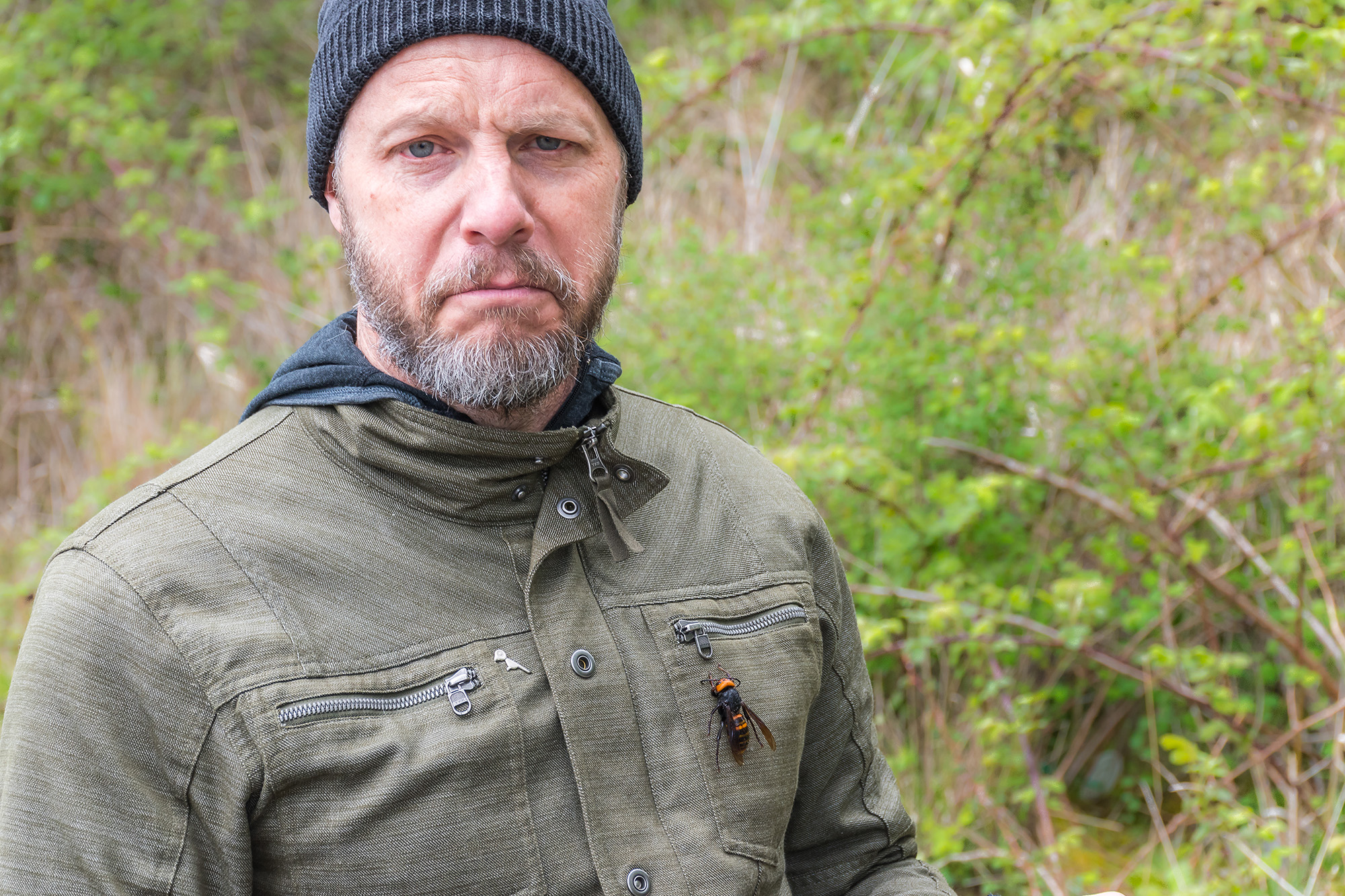
Entomologist Chris Looney, of the Washington State Department of Agriculture, with a dead Asian giant hornet for scale.

Entomologist Chris Looney of the state Department of Agriculture, with a dead Asian giant hornet for scale. (Department of Agriculture)

Entomologist Chris Looney of the state Department of Agriculture, with a dead Asian giant hornet for scale. (Department of Agriculture)

Salp and others say they appreciate the hundreds of emails, calls and sighting reports; The department hosts an Asian Giant Hornet Facebook group that nearly tripled in size after the New York Times article dropped. But those involved in the study and eradication of these hornets in Washington state say that for most people the panic far outweighs realistic concerns, at least for now.

So far, none but the original two specimen reports have turned up positive identifications. Salp says the most popular species misidentified as Asian giant hornets are European hornets (which aren’t known to exist in Washington); cicada killers; yellow jackets; or bumblebees. The Department of Agriculture offers education around bumblebee identification to prevent people from killing them in error.

With most Americans sheltering during the pandemic, the murder hornet has clearly struck a nerve.

Todd Murray, director of the Agricultural and Natural Resources Extension Program Unit at Washington State University, says he thinks the “murder hornet” nickname is driving interest. “Note to self: Stick ‘murder’ in front of it and it sure gets attention,” Murray says.

He and his colleagues are fielding a couple of dozen media requests a day. “It’s interesting because in the entomology community, there’s some strong feelings about the stigma around wasps and hornets,” he says, ”so there’s been backlash within our own community about the term.”

‘We don’t need to freak out’

With only two confirmed hornet sightings, only a few groups of people have reason to be afraid right now, experts say. “We don’t need to freak out, you know, but it is a serious concern for our state,” Salp says.

“This isn’t an issue that we need to panic about, especially in light of the pandemic,” adds Murray. “But I think there’s a benefit of being aware of what it’s like to live in a global economy, a global environment, where we have people and products constantly moving across the world. And we are bound to get hitchhikers like this one ⁠— and in Washington state it’s become all too common for new insects to be introduced. Early detection is really critical.”

To the best of the state’s knowledge, the hornet hasn’t been seen outside of Whatcom County: The two sightings that were verified were near Blaine. A hive was also eradicated in Nanaimo in British Columbia after a specimen was discovered in August 2019. “If you live outside of those areas, I would have less concern, but still have an awareness and then definitely be thinking about your connection to those areas” says Justin Bush, executive coordinator with the Washington Invasive Species Council. For instance, if you live along Interstate 5, that could be a pathway for accidental hornet trafficking by semitruck or RV. “But naturally, if they fly, the spread is a little bit slower than that,” Bush says.

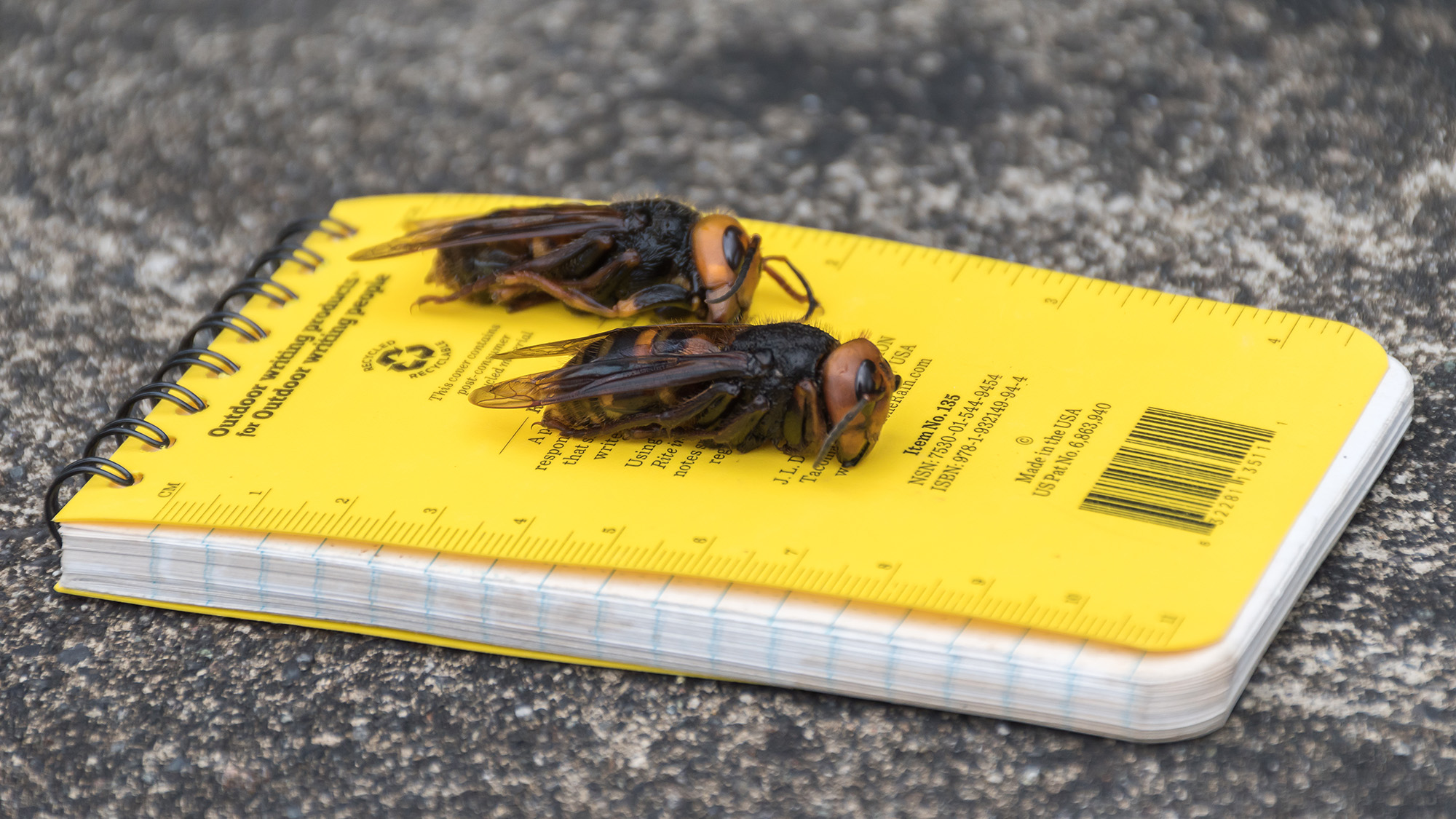
Asian giant hornets on a field notebook.
Dead Asian giant hornets rest on a field notebook. (Washington State Department of Agriculture)

Murray says that he would definitely be aware if he were in Blaine in semiforested conditions or where forest meets open fields.

Salp says Washington’s honeybees and the beekeepers and farmers who depend on them for honey and pollination have more serious reasons to be alarmed. The Asian giant hornets’ appetite for honeybees is enormous. The hornets take over beehives, chewing off the bees’ heads before feeding on their bodies. “They will defend that hive as their own, and if you try to approach or get them out of your hive yourself, you have a very high probability of being stung,” Salp says. The hornets can chew through more than 40 bees a minute and destroy a hive in 90 minutes.

With American honeybees already disappearing at an alarming rate, the invasive hornet further endangers the $20 billion sector of the U.S. farming industry that honeybees support. (A 2014 state report found bees in 2012 “added billions of dollars in harvest value to Washington’s economy, including nearly $3 billion from tree fruit and berries. The bees themselves added nearly $4 million from honey sales, but their chief value is as pollinators.”)

Murray says beekeepers are likely to be the first people to encounter the hornets this year if there’s an active population, but that might not be clear until late summer or early fall, when the hornets engage in their bee-killing sprees.

Ann Potter, a conservation biologist and insect specialist with the Washington Department of Fish and Wildlife, says she’s not aware of the hornets’ impacts on insect species other than honeybees, “but certainly there must be…. It’s unlikely to feed on only one species.” She notes that the European honeybees raised by beekeepers may be more vulnerable to hornets than also-declining native bees because they live in large colonies. (Japanese honeybees, on the other hand, protect themselves by cooking the Asian giant hornets alive.)

People allergic to wasp, bee, or hornet stings are vulnerable as well: Asian giant hornets carry more venom per sting than local bees and wasps. According to the Cleveland Clinic, about 2 million Americans are allergic to these types of stings, and approximately 50 people die every year from allergic reactions from them.

However, anyone who works or enjoys outdoor recreation should at least be aware and able to identify and report the giant hornets, Salp says ⁠— “not because Asian giant hornets are going to come after you, but [because] if you see them, we definitely want to know about it.”

“We don’t know how they’re going to interact with [our] environment,” Murray says. “We really don’t want this hornet to establish here in the Pacific Northwest because we really don’t know exactly how much it will impact our ecology and agriculture and, honestly, our daily life.”

Don’t panic — yet

Murray says he would be more concerned if people submitted sightings of the hornet over a much broader area than where they’ve been spotted, but he says there’s no reason to think it’s present elsewhere in the state yet. That means 2020 will be a critical year for trapping hornets and educating the public.

“The challenge is we don’t really know exactly how widespread it is for sure,” Salp says. Washington is home to vast amounts of the deep forest habitat the hornets prefer, and they are excellent fliers. Murray says some data show the hornets can forage up to 5 miles from their nesting site.

Europe has been dealing with the invasion of a similar species called the yellow-legged hornet since at least 2004: Thought to have arrived in bonsai tree shipments, the hornets have yet to be eradicated. Murray says honey production has decreased by up to two-thirds in Europe.

The only way to eradicate the bees, Salp says, is to track them back to their hives through live trapping, tagging and release because the colonies are almost always underground.

Murray says he’s “pretty optimistic” the hornet can be eradicated because the state was able to note its presence in December with the public’s help. “If we ignored this problem, each year that we get generation turnover, it would be likely significantly more difficult and very expensive to try and eradicate this,” he says.

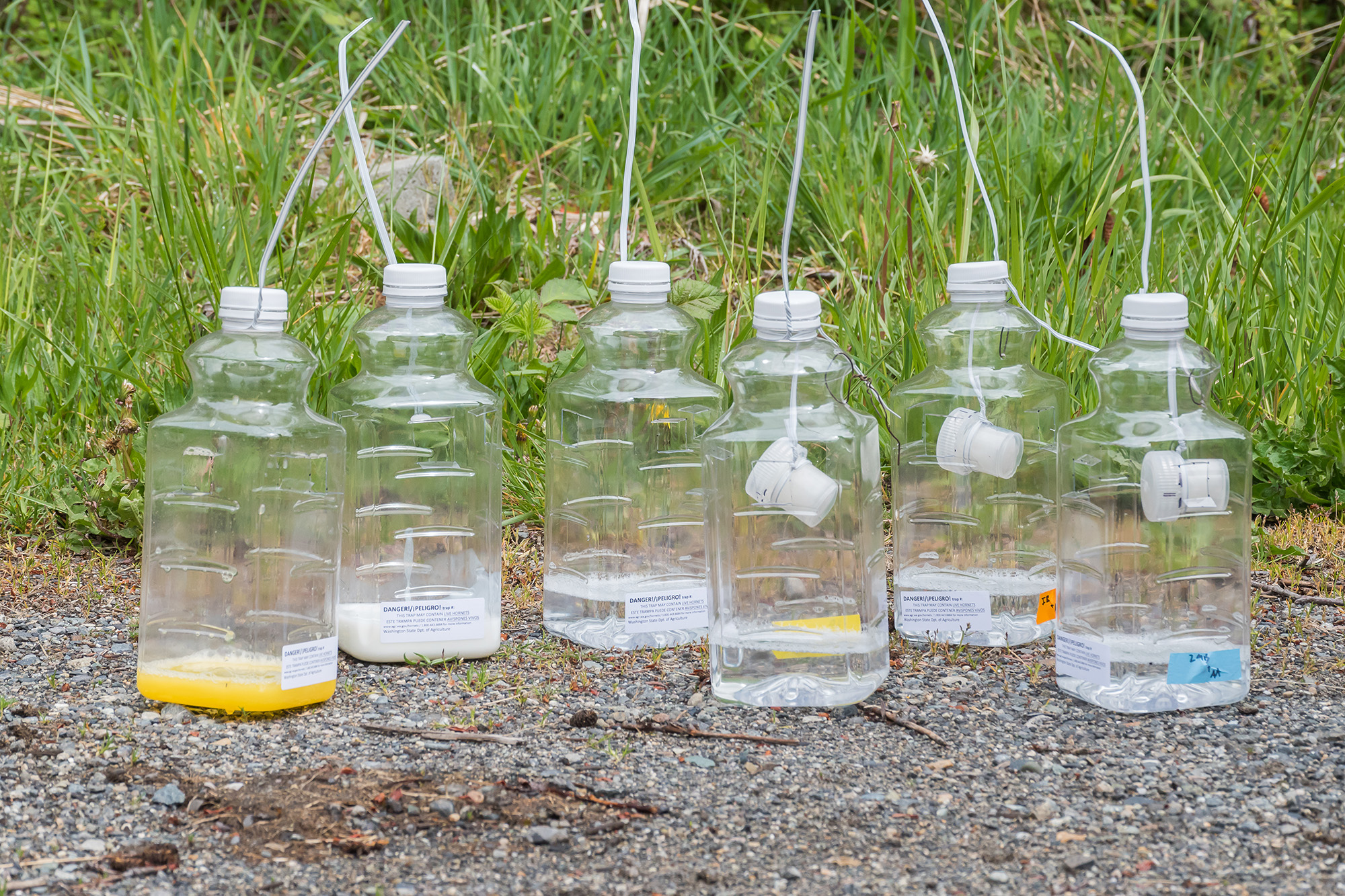
Asian giant hornet traps
Asian giant hornet traps can help people document specimens safely. The Department of Agriculture doesn’t want people to attempt to trap live hornets. (Washington State Department of Agriculture)

For people hoping to help the department take advantage of this critical window, Salp says the public should make sure to share and reference information only from reliable sources like Washington State University or the Department of Agriculture. They should submit possible sightings to the department via its web app with complete identifying information. Murray says if you see a live one, run and note your location for later. The Washington Invasive Species Counci’s Bush recommends sending photos, a GPS location and contact information in case someone with the state needs to follow up.

“With invasive species, especially ones that are relatively new [and high priority], a high percentage [of identifications] are going to be inaccurate,” Bush says. “And that’s OK, because the 1% or less than 1% [of IDs] that are accurate could help avoid millions if not billions of dollars of impact, that could potentially not be reversible.”

Murray says identifying an Asian giant hornet is easy. The Pacific Northwest is home to few large, flying insects. “The person that first detected it saw it come into a hummingbird feeder and it sure was obvious on its own. Some of our native beetles might get that large, but these look strikingly different.”

People in Whatcom, Skagit, San Juan, Jefferson and Clallam counties can also sign up for volunteer trapping, which Bush says is best done in June and July. The Department of Agriculture got state and federal funding for the trapping project, but there’s still limited capacity, Salp says. The pandemic is complicating tracking efforts as well. In-person trainings in Western Washington were canceled. There were also plans for specimen drop-offs at WSU, but now samples can be taken only by mail until stay-at-home restrictions are lifted.

“Between the beekeepers, the volunteers and our own staff, the project is moving forward — [but] this is all frankly kind of one big experiment,” Salp says. “The more folks that we have out there helping trap for them, the greater our chances of finding them and then eradicating them.”
Useful resources: 

⁠— How to identify Asian giant hornets

⁠— How to trap Asian giant hornets

⁠— How to submit Asian giant hornet sightings to the Washington State Department of Agriculture

Invasive ‘Murder Hornets’ Have Appeared in the United States and Officials Worry They’re Here to Stay


Invasive Asian giant hornets (Vespa mandarinia) have been spotted in the United States for the first time.

Invasive Asian giant hornets (Vespa mandarinia) have been spotted in the United States for the first time.
Washington State Department of Agriculture
MAY 2, 2020 4:17 PM EDT

If you thought 2020 couldn’t get any worse, Asian giant hornets have appeared in the United States for the first time.

Asian giant hornets, which some researchers refer to as “murder hornets” according to the New York Times, had never been seen in the U.S. until December, when the Washington State Department of Agriculture (WSDA) verified four sightings of the hornets near Blaine and Bellingham, Wash. Canada also reported sightings of the insects in British Columbia the fall of 2019, per the WSDA.

Asian giant hornets are the largest species of hornet in the world. They attack and destroy honeybee hives, entering a “slaughter phase” where they literally decapitate bees and take the hive as their own, using the thoraxes from the dead bees to feed their young, according to the WSDA. Just a few hornets can decimate a honey bee hive in a number of hours.

If the hornets continue spreading through the state, officials worry they could have a devastating affect on Washington state’s — and the U.S.’s — bee population. The many crops that rely on bees for pollination would then be seriously affected. Officials don’t know how the insects got into the U.S., but they’re bracing for the hornets to start emerging soon, as they become active in April, according to a press release from Washington State University (WSU). The hornets are at their most destructive in late summer and early fall, per the release.

“At this time, Washington State Department of Agricultural has implemented an aggressive outreach and trapping campaign,” Rian Wojahn, the eradication coordinator for the WSDA, told TIME in an email. “Local beekeepers and other agencies are also helping get information out and using our trapping protocols to deploy traps.”

Wojahn said that while it’s unknown how much damage the hornets could do to the U.S. honeybee industry, a similarly invasive hornet in Europe ended up reducing beehives by 30 percent and honey yield by up to two-thirds. The WSDA will implement “an aggressive eradication campaign this summer,” he continued.

Asian giant hornets are usually 1.5 to two inches long, have black and yellow stripes on their abdomen, and have a large orange or yellow head, according to the WSDA. They don’t usually attack people or pets, but might if they are threatened, the WSDA continued. Their stingers are longer than a honey bee’s, more toxic and they can sting multiple times. Multiple stings can also kill a human even if they’re not allergic, according to the WSU release. The New York Times reports reports that in Japan, the hornets have been known to kill up to 50 people a year.

Inslee orders all restaurants, bars shut down because of coronavirus


6
VIEW ALL PHOTOS
Tyler Baldwin mops the floor after closing for the night at the Taproom at Pike Place, Sunday, March 15, 2020 where he works as a bartender in Seattle. (AP Photo/Ted S. Warren)

OLYMPIA, Wash. — All bars, entertainment and recreational facilities have been ordered by the state to close across Washington and restaurants will be limited to take-out or delivery orders only, Gov. Jay Inslee said Sunday night.

The order goes into effect at 12:01 a.m. Tuesday morning, an Inslee spokesperson said, though King County has chosen to enact its ban immediately.

Gov. Inslee Press Conf. on COVID-19 Update

“Given the explosion of COVID-19 in our state and globally, I will sign a statewide emergency proclamation tomorrow to temporarily shut down restaurants, bars and entertainment and recreational facilities,” Inslee said in a press release announcing the new order. “Restaurants will be allowed to provide take-out and delivery services but no in-person dining will be permitted. The ban will not apply to grocery stores and pharmacies. Other retail outlets will have reduced occupancy.”

Retail outlets include gas stations, banks, hardware, stores and shopping centers.

Governor Jay Inslee

@GovInslee

King County will shut down these establishments immediately. As the largest population center and current epicenter of this outbreak, they must act with even greater urgency. I applaud @kcexec’s decision.

We will hold a joint press conference with more details tomorrow. 5/6

Governor Jay Inslee

@GovInslee

We’re in this together, Washington. How each of us responds matters.

And I know we’re up for the challenge.

My full statement: http://bit.ly/SocialDistancingWA 
6/6

View image on Twitter
1,986 people are talking about this

The closure is in effect until March 31 for now.

“Hopefully it’s just a couple weeks, but we don’t know,” said Grace Jurado, General Manager of Red Mill Burgers.

Red Mill Burgers was already planning to make changes to its restaurant operations before Inslee’s announcement Sunday night. The Red Mill Burgers Totem House location in Ballard is now temporarily closed. Starting Tuesday, the locations in Phinney Ridge and Interbay will have limited hours and only take to-go orders without cash, Jurado said.

“We were trying to get ahead of the curve on it, but I’m happy that right now – it’s allowing us to at least stay open for to-go orders,” she told KOMO News on Sunday night.

Inslee orders all restaurants, bars shut down in state in wake of coronavirus

Inslee also increased a ban on gatherings over 250 people down to a ban of over 50 people, and all gatherings under 50 people are prohibited unless previously announced criteria for public health and social distancing are met.

“We are at a critical moment in this crisis,” said King County Executive Dow Constantine. “We are leaving the phase of COVID-19 outbreaks in concentrated areas of the county, and entering the phase of potentially rapid and widespread infection.”

He suggests just assume the new coronavirus is already widespread.

“It is time, right now, for people to assume that they and everyone they meet is infected, to avoid any unnecessary interactions that might lead to further infection, and to wait and monitor to see if they have in fact been infected so that they can isolate and recover without presenting a risk to others,” Constantine said.

Seattle Mayor Jenny Durkan says a recent study by the Institute for Disease Modeling found that if the Puget Sound region didn’t take any mitigating steps for the virus, that by early April the Puget Sound region could have as many as 25,000 cases of COVID-19, and 400 deaths. But with strong to extreme social distancing efforts, we can limit future infections to between 1,700 and 4,800 in the region with 30-100 deaths, depending on their effectiveness, the study found.

“The study underscored the importance of social distancing in saving lives, preventing the further spread of the virus, and relieving pressure on the health care system and first responders,” Durkan said.

‘Your actions could kill someone’

The announcement comes hours after Inslee had stern words Sunday for those who are ignoring the state mandates to avoid large crowds and practice strong social distancing as the new coronavirus continues to spread:

“Your actions could kill someone. Stop it.”

Governor Jay Inslee

@GovInslee

Most Washingtonians are helping slow COVID-19’s spread by practicing strong social distancing.

To those of you that can be but are choosing not to: Your actions could kill someone.

Stop it.

10.4K people are talking about this

Inslee’s tweet praised most Washingtonians for adhering to the recommendations, designed to slow the widening outbreak. Two more deaths were announced Sunday afternoon in King County, bringing the county’s total to 37 and the statewide total to 42 with 769 total cases.

The deaths include a woman in her 60s who died at Franciscan Medical on March 14 and a woman in her 70s who died on March 12. Both were residents of Life Care Center of Kirkland.

Of the 37 deaths reported in King County, 29 are associated with Life Care. As of Saturday, 47 staff members tested positive for coronavirus, 24 tested negative, one test came back inconclusive, and five tests are still pending. Eighteen additional employees will be tested Saturday.

So far, more than 9,000 people who tested for coronavirus came back with negative results.

“Although the laboratory test is becoming more broadly available, there are limitations in the health care industry’s capacity to obtain samples from people as rapidly as we would like,” Public Health Seattle & King County wrote in a press release. “In addition, people do not always need to be tested for clinical care purposes since there is currently no medication to treat COVID-19.”

EvergreenHealth Hospital ER Doctor hospitalized with coronavirus

An emergency room doctor with EvergreenHealth hospital, which is treating several COVID-19 cases, has been hospitalized himself due to the coronavirus infection, hospital officials and the American College of Emergency Officials said Sunday.

Hospital officials say the doctor is in critical but stable condition. His name is not being released due health privacy laws.

“I am deeply saddened by this news, but not surprised,” ACEP President Dr. William Jaquis said in a statement. “As emergency physicians, we know the risks of our calling. We stand united with our colleagues and our thoughts and prayers for a full and speedy recovery are with each of them and their families.”

Jaquis says it’s unclear whether the doctor picked up the virus at the hospital or via community spread.

Don’t overstock on supplies

Inslee also praised most state residents for buying supplies responsibly but noted that those that are overbuying are “putting their friends and neighbors at risk.”

“Grocers say consumer overstocking – not a disrupted supply chain — is the main reason their store shelves are empty of many supplies and food items, especially hand sanitizer, disinfectant wipes, toilet paper, and plastic gloves,” according to a Department of Health Press Release.

Officials say they want to assure everyone once shoppers return to the normal pace of purchases there will be an adequate supply. They added that water supplies are fine and there is no need to overstock bottled water.

“These are very difficult decisions, but hours count here and very strong measures are necessary to slow the spread of the virus,” Inslee said. “I know there will be significant economic impacts to all our communities and we are looking at steps to help address those challenges.”

CDC: Avoid gatherings over 50 for 8 weeks

Officials across the country curtailed many elements of American life to fight the coronavirus outbreak on Sunday, with health officials recommending that groups of 50 or more don’t get together and a government expert saying a 14-day national shutdown may be needed.

Governors were closing restaurants, bars, and schools as the nation sank deeper into chaos over the crisis. Travelers returning home from overseas trips were stuck in line for hours at major airports for screenings, causing them to be crammed into just the kind of crowded spaces that public health officials have been urging people to avoid.

As Americans struggled to come to terms with how to change their daily habits, the Centers for Disease Control and Prevention issued a dramatic recommendation: Because large events can fuel the spread of the disease, it said gatherings of 50 people or more should be canceled or postponed throughout the country for the next eight weeks. It added that, at any event, proper precautions should be taken, including making sure people are washing their hands and not getting too close.

But in a sign of the difficulty of striking the right balance, the statement from the CDC also said the recommendation does not apply to “the day to day operation of organizations such as schools, institutes of higher learning, or businesses.”

Blood supply in jeopardy of collapse

Health officials say that the local blood supply is in jeopardy of collapsing with multiple blood drives closing and more than 2,500 donations lost amid coronavirus concerns.

“New donors are needed now to step-up and save a life, and for donors to make this a generous and consistent habit,” Public Health Seattle & King County said. “All types of blood are needed for cancer treatment, trauma cases and many other situations. The process only takes an hour and actual donation time is about ten minutes.”

“Donating blood is a safe activity, and there is no risk of contracting coronavirus from the blood donation process,” health officials added.

Inslee said the coronavirus outbreak has now spread to 15 counties in Washington state, where 70% of the state’s population lives.

First vaccine trial begins in Seattle Monday

A clinical trial evaluating a vaccine designed to protect against the new coronavirus will begin Monday in Seattle, according to a government official.

The first participant in the trial will receive the experimental vaccine on Monday, the official said, speaking on the condition of anonymity because the trial has not been publicly announced yet. The National Institutes of Health is funding the trial, which is taking place at the Kaiser Permanente Washington Health Research Institute in Seattle, the official said.

Public health officials say it will take a year to 18 months to fully validate any potential vaccine.

Starbucks implements “To-Go” model in its stores

Starbucks is implementing a “to go” model for at least two weeks to encourage social distancing and help contain the spread of coronavirus.

The policy will apply to all company-owned stores in the U.S. and Canada. The Seattle-based coffee giant will close in high-social gathering locations, including malls and university campuses. Communities with high clusters of COVID-19 cases will also temporarily close or have reduced operating hours.

Other changes include pausing all use of seating, including both in the café and patio areas. Customers may still walk up and order at the counter, through the “order ahead” feature in the Starbucks app or drive-through.

Pike Place Market member tests positive for COVID-19

A member of the Pike Place Market community has tested positive for new coronavirus, according to a Market spokesperson.

“The individual spent time in a very specific area of the Market and that area has been closed and is undergoing a deep cleaning,” says spokesperson Madison Bristol. “We are following the cleaning regimen advised by public health officials.”

Market officials have notified everyone at the market who came in contact with the person so they can evaluate their exposure risk and any need to self-quarantine, Bristol said.

“Currently, the risk to the public is low to Market visitors, according to county officials,” Bristol said, adding that the Market remains open.

Sounders support staff member tests positive for COVID-19

Seattle Sounders FC announced Sunday that the club has learned a member of the organization’s support staff has been confirmed to have COVID-19.

So far it’s the only known case in the organization and the person is in an “appropriate isolation protocol,” according to the team.

The person did work the Sounders’ March 7 match against Columbus but did not interact with the general public. His symptoms didn’t surface until 4 days after the match and experts don’t believe he has posed a risk to the general public, team members or visiting team members.

Seattle food truck struggles to stay open as virus forces customers to work from home

Veronica Weaver is among many local food truck operators feeling the pinch of the coronavirus.

“We go from working five days a week to maybe working one to two days or maybe none at all,” she said.

That’s because the coronavirus outbreak is causing people to work at home, meaning many offices are empty.

“I go to a lot of the big corporations like Microsoft and Expedia and now those locations are shut down to us,” Weaver said.

Less business means the trucks stay parked and charging while Weaver continues to lose money.

“We’re down 80 to 90% of our revenue during this time,” she said.