Exposing the Big Game

Forget Hunters' Feeble Rationalizations and Trust Your Gut Feelings: Making Sport of Killing Is Not Healthy Human Behavior

Exposing the Big Game

Comment period reopened for grizzly restoration proposal

Comment period reopened for grizzly restoration proposal

Draft plan for N. Cascades still under review

If you’ve never commented about the possibility of reintroducing grizzly bears into the North Cascades, or have already commented but have something more to say, now’s the time.

The National Park Service (NPS) and the U.S. Fish and Wildlife Service (USFWS) said last week that they are reopening the public comment period on the Draft North Cascades Grizzly Bear Restoration Plan/Environmental Impact Statement (Draft EIS) for 90 days, through Oct. 24.

The action revives an on-and-off process that began in 2014 under the Obama administration, to consider if and how grizzlies should be reintroduced to an area that was once their native habitat and which now supports only a few of the animals.

A draft EIS on the restoration plan was released in early 2017, followed by public comment periods and public meetings, including one in Winthrop in February 2017. More than 126,000 comments and correspondence have been received on the draft EIS. The overwhelming majority supported the reintroduction proposal. In late 2017, the process was put on hold.

In August 2018, the Department of the Interior, NPS and USFWS said they intended to further evaluate input about the proposal, which meant that completion of a final EIS was further delayed. At that time, the federal agencies did not provide a timeframe for further evaluation.

Fourth District Congressman Dan Newhouse said last week, in a press release, that “I remain opposed to the transfer of grizzly bears to the North Cascades on behalf of my constituents, who would be directly affected. Introducing an additional apex predator to an area that is populated by families and livestock is extremely concerning, but I am glad the Department of the Interior is seeking real, local public comments on this issue. I encourage the people of Central Washington to make their voices heard loud and clear so the Administration will end this misguided proposal once and for all.”

Long-time habitat

A study by the NPS, released in 2018, turned up a significant body of evidence showing that grizzly bears roamed the North Cascades for thousands of years.

The EIS proposes three alternatives for re-establishing a population of 200 grizzly bears in the North Cascades Ecosystem (NCE), which includes 9,800 square miles in Washington state and another 3,800 square miles in British Columbia. The area includes the Okanogan-Wenatchee National Forest (including the Methow Valley Ranger District), North Cascades National Park, Ross Lake National Recreation Area, Lake Chelan National Recreation Area and Mt. Baker-Snoqualmie National Forest.

In addition to the three proposals to restore grizzlies to the North Cascades, the draft EIS includes a required “no action” alternative that would maintain the status quo.

Although the actual number of grizzlies in the NCE is not known, it is “highly unlikely that the area contains a viable grizzly bear population,” the original draft EIS stated. There have been only four confirmed detections of grizzly bears in the greater NCE in the past decade, all of which occurred in British Columbia and may comprise only two bears. There is no confirmed evidence of grizzly bears in the U.S. portion of the NCE since 1996, according to the draft EIS.

The alternatives, as summarized in a newsletter from FWS and NPS, are:

• Alternative A – Continuation of Existing Grizzly Bear Management (no action).

• Alternative B –  Ecosystem Evaluation Restoration. NPS and FWS would implement an ecosystem evaluation approach to grizzly bear restoration, providing for release of up to 10 grizzly bears at a single remote site on NPS or U.S. Forest Service lands in the NCE over two consecutive summers. The bears would be monitored for two years to evaluate habitat use and instances of conflicts with humans. In the fourth year a decision would be made regarding how restoration would proceed during subsequent years. That could involve repeating the release of an additional 10 bears, or a decision to transition to Alternative C.

• Alternative C – Incremental Restoration. Five to seven bears would be released into the NCE each year over a period of five to 10 years, with a goal of establishing an initial population of 25 grizzly bears. Bears would be released at multiple remote sites on national park and forest lands, After an initial population of 25 grizzly bears has been reached, additional bears would likely be released every few years. This alternative would be expected to achieve the goal of 200 grizzly bears within 60 to 100 years.

• Alternative D – Expedited Restoration. The lead federal agencies would expedite grizzly bear restoration by releasing additional grizzly bears into the NCE over time, until the restoration goal of 200 bears is reached. This alternative would be expected to achieve that goal within about 25 years.

How to comment

Comments previously submitted on the Draft EIS during the public comment period that was open from Jan. 12, 2017, through April 28, 2017, will be considered. You can view the Draft EIS online, and offer comments on it, at parkplanning.nps.gov/grizzlydeis. You can also mail or hand-deliver comments to: Superintendent’s Office, North Cascades National Park Service Complex, 810 State Route 20, Sedro-Woolley, WA 98284.

Comments will not be accepted by fax, email, or any other way. Bulk comments in any format (hard copy or electronic) submitted on behalf of others will not be accepted.

Goat sacrifice to begin at Olympic National Park

Goat sacrifice to begin at Olympic National Park

(Beth Clifton collage)

284-page “management plan” garbles history,  all but ignores climate change,  & says nothing about goats as puma prey

            OLYMPIC NATIONAL PARK,  Washington––An estimated 625 to 675 mountain goats whose ancestors have peaceably roamed the icy upper reaches of Olympic National Park,  Washington,  for 14 years longer than the 80-year-old park has existed are to become sacrificial scapegoats during the summer of 2018,  and over the next three to five years,  to ecological misconceptions written into the Wilderness Act of 1964,  enshrined as National Park Service policy.

One such misconception is that “introduced” species are inherently harmful to “native” species,  even if the “introduced” species thrive as “native” just 100 miles away,  among essentially  the same suite of other animals and plants.

(Beth Clifton collage)

“Untrammeled by man”?

Another misconception is that what is now Olympic National Park,  attracting 3.4 million visitors in 2017,  ever fit the Wilderness Act criteria of being “an area where the earth and its community of life are untrammeled by man,  where man himself is a visitor who does not remain.”

The 3.4 million visitors have approximately the same cumulative ecological impact as a year-round community of 9,000 people.  And the mere existence of more than 200 sites in the park where archaeological artifacts have been found,  mentioned often in the newly published 284-page Mountain Goat Management Plan/Final Environmental Impact Statement, points toward frequent,  if not necessarily continuous use of the habitat by Native Americans for thousands of years.

Native American activities,  as well as logging,  hunting,  and ranching by settlers,  helped to shape the habitat and balance of species into which mountain goats were released in 1925-1929 by forest rangers who hoped to attract trophy hunters.

(Beth Clifton collage)

“Move half & shoot the rest”

Co-produced by the National Park Service,  U.S. Forest Service,  USDA Wildlife Services,  and the Washington State Department of Fish & Wildlife, the Mountain Goat Management Plan/Final Environmental Impact Statement recommends “the relocation of the majority of mountain goats [now present in Olympic National Park] to U.S. Forest Service lands in the North Cascades forests,  and the lethal removal of the remaining mountain goats in the park.”

What that means,  specifically,  is that efforts are to be made during the next several summers to capture 325 to 375 mountain goats by luring them into “clover traps,”  meaning stockades baited with clover,  netting them through the use of net guns,  sedating them,  flying them in helicopter slings to waiting trucks,  and then trucking them overnight to release points in habitat which,  although technically “native” for the goats,  none have ever seen before.

(Beth Clifton collage)

Goats to be moved to “huntable” habitat

The habitat in the North Cascades differs little,  in matters of concern to mountain goats,  from the habitat in Olympic National Park.  But despite the ambitions of the rangers who released the first dozen mountain goats in what is now Olympic National Park,  hunting has not been allowed in the park since it was created by an act of Congress in 1938.

Only those few mountain goats who may have descended into the Olympic National Forest,  surrounding Olympic National Park,  during hunting season,  will have had any prior experience of being hunted other than by pumas,  their main natural predator.

In the North Cascades the mountain goats may be hunted.  Indeed,  the major argument for translocating them in the Mountain Goat Management Plan is that the native mountain goats in the North Cascades have been hunted to scarcity,  and have had difficulty recovering “huntable” abundance.

(Beth Clifton)

Doublespeak

Meanwhile back in Olympic National Park,  mountain goats who become wary enough to evade capture during the early phases of the attempt to extirpate them are eventually to be shot.  Some may be gunned down from trails,  others from helicopters.

Says the Mountain Goat Management Plan about when and how the decision to stop capturing goats and start shooting them is to be made,  “The determination about whether it is no longer safe to capture more mountain goats,  from a human and mountain goat safety standpoint, would be made by a consensus of the project leaders,  consulting veterinarians,  and the capture contractor,  and would be based on the rate and type of capture-related mountain goat mortalities and environmental conditions.

“Ceasing operations would also be based on capture efficiency. When it takes approximately three times as long to safely capture a mountain goat, as compared to the hours during the initial capture operation phase during the first year, capture operations would cease.”

(Beth Clifton collage)

No remains to be left where visible

The Mountain Goat Management Planstipulates that the remains of mountain goats are not to be left within 325 feet of trails,  partly to avoid attracting dangerous scavenging wildlife into proximity to humans,  partly to avoid having Olympic National Park visitors see dead mountain goats and began objecting to the “mountain goat management plan.”

Along the way,  the Mountain Goat Management Plan argues that reducing Olympic National Park biodiversity by removing mountain goats is to be done to protect the native biodiversity of plants,  though the major ecological role of mountain goats––like that of other herbivores––is depositing plant seeds in new habitat, along with the fertilizer that the seeds need to grow.

(Beth Clifton collage)

Goats originally persecuted as campground nuisance

“The original need to manage this exotic species,”  the Mountain Goat Management Plan inaccurately claims,  “was an ecological concern related to the impacts that mountain goats impose on natural resources at the park,  particularly sensitive vegetation communities (NPS 1995; Houston, Schreiner, and Moorhead 1994).”

NewspaperArchive.com demonstrates that this is fiction.  The first public complaints about the presence of mountain goats in Olympic National Park surfaced in 1969,  and concerned salt-seeking goats licking and chewing clothing that visitors hung out to dry in campgrounds.

Four goats were translocated from Olympic National Park to the nearby Gilbert Pinchot National Forest in 1972,  but the first mention that all of the goats should be removed as a “non-native” species came only after that,  as did the first suggestion that the goats might be harming native plants.

Ranger explains safe behavior around mountain goats in Olympic National Park.

407 goats moved,  1981-1989

More goat translocations followed,  but primarily to rebuild populations elsewhere that had been hunted out.  Acknowledges  the Mountain Goat Management Plan,  “The park implemented a series of live capture operations from 1981 to 1989,  translocating 407 mountain goats to other mountain ranges throughout several western states.  An additional 119 mountain goats were legally harvested during sport hunting seasons outside the park,”  the Mountain Goat Management Plan notes,  “and three known mountain goats were illegally harvested [poached] in the park between 1983 and 1997.”

Protecting the safety of Olympic National Park visitors continued to be the main argument made for mountain goat removal before the mid-1990s,  though the first and only serious injury attributed to mountain goats before 1999 came in August 1975.

Goats kill one,  injure two,  in 80 years

Then,  according to the Port Angeles News,  “Daniel Hanify,  17,  was watching goats climbing on the rocks above him on Mt. Angeles when one goat apparently started rocks tumbling.  One large rock struck Hanify on the head.”

Hanify suffered a skull fracture,  but was able to walk to the nearest road,  with the help of two friends,  to be driven to meet a helicopter that flew him to Olympic Memorial Hospital.

A visitor suffered a non-fatal goring in 1999.  Then,  the Mountain Goat Management Plan mentions,  “Safety concerns were increased in 2010 when a visitor,”  63-year-old Robert H. Boardman,  “was fatally gored by a mountain goat while hiking on a park trail.”

Thus,  in 80 years,  fewer visitors have been killed or badly injured by mountain goats in Olympic National Park than typically die and are injured in the worst several vehicular accidents in the park and on park access roads each and every tourist season.

(Ashley Rawhouser/National Park Service photo)

Goats blamed,  not global warming

Discussion of the possible mountain goat impact on rare native plants began to be raised with increasing frequency after 1977.

Says the Mountain Goat Management Plan,  “Through herbivory and wallowing behaviors, mountain goats have directly and indirectly affected the vegetation in the Olympic Mountains.  Changes in the relative abundance of plant species have been observed as a result of mountain goat herbivory; this has altered competitive interactions among plant species.  As the mountain goat population on the Olympic Peninsula increased prior to live capture operations in the 1980s, changes in vegetation were substantial, and the status of rare plant populations became a concern.”

Not even mentioned,  however,  are the major climatic effects on park vegetation caused by global warming,  beginning to become visible during the same years,  and having an accelerating impact today,  as the year-round icepack retreats to higher elevations,  less precipitation falls,  stream temperatures warm,  and the risk of wildfires increases.

(Beth Clifton collage)

Population fluctuations

After nine years of more-or-less continuous translocations of mountain goats,  the Olympic National Park population had been reduced from a peak estimate of more than 1,000 to 389,  according to a July 1990 survey.

“Live capture operations were halted in 1990 for several reasons,  including employee safety,  animal safety,  and changing Department of the Interior rules concerning helicopter landing techniques,”  the Mountain Goat Management Plan says.  “Subsequent surveys were conducted in 1994, 1997, and 2004.  A survey conducted in 2011 revealed that the population started increasing between 2004 and 2011.  Most recently,  a 2016 survey revealed that the population has continued to increase to an estimated 625 mountain goats,  with an 8% average annual rate of increase from 2004 to 2016.  At this growth rate,  there could be approximately 725 mountain goats on the Olympic Peninsula by 2018.”

Puma at Big Cat Rescue.  (Beth Clifton photo)

Pumas

Significantly,  though discussing the population of a prey species without mentioning the species’ major predators would appear to be nonsense,  the Mountain Goat Management Plan includes no statement of the relative abundance of pumas in Olympic National Park,  and there appears to be no recent puma population assessment for the park in any other context.

To what extent pumas might suffer from no longer having mountain goats to hunt is also not discussed.

(National Park Service photo)

Contraceptive use rejected

The Mountain Goat Management Planrejects any use of contraceptives to reduce and suppress Olympic National Park goat numbers.

“Although fertility control has been demonstrated to be effective in controlling individual animal fertility,”  the plan states,   chiefly because “Where fertility control has been successful, it has limited population growth,  but has not eliminated wild ungulate populations.”

Continues the Mountain Goat Management Plan,  “Chemical agents, such as immunocontraceptive vaccines (e.g., native PZP or GnRH vaccines),  require repeated doses to the same animal,  to be highly effective at suppressing fertility.  Due to the remote, rugged, and extreme terrain where the mountain goats reside,  helicopter darting during the summer months would be necessary to either capture or vaccinate the goats.  This would require several months of flying each year.  In the Olympic Mountains, such a program would be costly, impactful, and not effective for eliminating goats or their impacts because it would be impossible to treat a sufficient number to significantly impact population dynamics. In addition,  over time,  goats would learn to avoid helicopters.”

(Beth Clifton collage)

“Wilderness values”

Finally,  says the Mountain Goat Management Plan,  echoing the language used in lawsuits against U.S. government agencies by opponents of using immunocontraceptives to stabilize wild horse populations,  “The use of fertility control adversely affects wilderness values because it is not a natural process.  Fertility control as an authorized management action would have a negative effect on the untrammeled and natural qualities of wilderness character because it would be an intentional manipulation of the biophysical environment.”

Beth & Merritt Clifton
Animals 24-7

In particular,  “If all goats were to be indiscriminately darted from the air,  this would be an adverse effect on the undeveloped quality of wilderness character.  Noise from helicopters would disrupt the natural soundscape and area closures to visitors may need to be in effect during darting operations. Most concerning is that these actions would need to take place on a regular basis to be effective until all exotic goats are eliminated.”

All of which will also be true of helicoptering mountain goats to trucks and then using gunners aboard helicopters to shoot the 300-plus who are expected to evade capture.

Mountain goat eradication is a high-flying balancing act in Olympic National Park

In an effort to protect visitors and rare plants, the park is relocating the hoofed invaders.

Derrick Halsey, clutches a mountain goat kid as they land at the staging area for goat relocation. Halsey is one of the helicopter team members known as a “mugger” who is dropped off as close as possible to animals who are netted or sedated from the air, and prepares them for flight.

In early July, the loud whirring of a helicopter punctured the quiet of Washington’s Olympic National Park as wildlife specialists scoured meadows, forests, ridgelines and mountaintops for flashes of white fuzz: mountain goats. The cherry-red aircraft kicked up dirt and debris as it lowered two goats, dangling in slings, toward a waiting truck, their feet bound and their vision obscured by blue blindfolds. During a brief landing, one of the specialists — commonly known as “muggers” — stepped out, with a kid no more than 6 weeks old calmly cradled in his arms.

It sounds like a dramatic scene from a wilderness reality show, but it’s not: It was just another day in an extensive effort to eliminate mountain goats from the Olympics — where they are not native, damage endemic plants and even killed a person — and hand some over to Washington state to boost populations in the North Cascades Range, where mountain goats have declined after decades of overhunting. The project — which cost more than half a million dollars just this year — illustrates the lengths to which national and state agencies are willing to go to restore a single strand in the complex web of these human-altered ecosystems.

Outdoor recreationists are generally excited to see mountain goats in the Olympics. They’re more majestic than marmots and pikas and other alpine creatures, and less terrifying than bears. A few days before the start of this year’s relocation effort, a man posted on a Facebook group for hikers, saying he wanted to see the mountain goats before they got moved. When I asked why, he replied, “The goats represent the wild in Mother Nature.”

But mountain goats are not native to Olympic National Park: Hunters from Alaska introduced about a dozen of them in the 1920s. At one point, the population ballooned to over 1,000, causing “ecological mayhem,” as they grazed on rare alpine plants and eroded the landscape, said Patti Happe, the wildlife branch chief for the park. Before the translocations began, there were about 725 goats on the Olympic Peninsula.

Not only have they destroyed native plants, but mountain goats have also become aggressive after growing too accustomed to humans: In 2010, a male goat mauled and killed a 63-year-old man hiking near Hurricane Ridge. The goats have become habituated to people and are drawn to them partly because humans provide something the animals need — salt. Olympic National Park lacks the natural salt deposits that would otherwise sustain the goats, leaving them dependent on the makeshift saltlicks that hikers produce when they pee on the trails.

To keep humans safe and restore balance in mountain goat populations, wildlife biologists decided to physically relocate the Olympic Peninsula goats, starting with 115 translocations last year. The animals were all radio-collared and ear-tagged so they can be identified and tracked in their new environs. Approximately 70% of adults and half the children survived the first year — which is within the natural range of survival, said Jace Taylor, a wildlife biologist not involved in the Olympic project who has overseen mountain goat translocations in Utah.

It’s still too early to say whether the project is achieving wildlife managers’ larger goals, in part because scientists don’t yet know if the relocated goats are breeding in their new home. Happe said the project will be a success if those moved to the North Cascades help boost populations there, and if goats in the Olympics are completely eradicated. Unfortunately, many mountain goats evade capture; one woman involved in the project described them as “escape artists.” That means the majority of the Olympic goats will be killed after the translocations are over. In addition, some animals have died during capture or in transit.

And some of the relocated goats may already be accustomed to humans, which could endanger hikers in the North Cascades. I recently saw a sign there warning people of the dangers of salt-craving mountain goats. It’s not easy to reverse habituated behaviors, says Richard Harris, a wildlife manager at Washington’s Department of Fish and Wildlife overseeing the translocations. Perhaps over time, if human visitors leave them alone and urinate in locations the goats can’t reach, their degree of habituation might decay, ultimately benefiting both species. Still, “all wild animals are potentially dangerous to people,” Harris said. “People need to use their heads.”

But despite the expense — and the trauma for the goats — “rectifying the balance is something we should be doing when we have an opportunity to improve upon mistakes made by our predecessors,” says Harris. “To the degree that we can capture an animal and move it to a place where it’s native, give it a home, and allow it to return to its natural state within the North Cascades — I think that is worth spending money on.”

Wudan Yan is an independent journalist based in Seattle. Email High Country News at editor@hcn.org or submit a letter to the editor.

The Climate Crisis Has Made Breathing Smoke Normal in Pacific Northwest

You can’t accuse Grace Stahre of not working to turn climate change around. She’s fought the fossil fuel industry in court, on the streets, in kayaks and on social media. She has rallied to stop new coal terminals and helped pass a moratorium on new gas pipeline infrastructure. And she has lobbied for investment in renewable energy in Seattle, Washington, the city she calls home.

Stahre knew an increase in wildfires for the Pacific Northwest was predicted as a major consequence of climate change 20 years ago. What she didn’t know is how quickly wildfires would bring catastrophic climate change to her doorstep.

Summers used to be what drew people to live in this pocket of North America, with its alpine wilderness, high country trails with hidden lakes, rugged coastlines and beaches full of high-tide treasures.

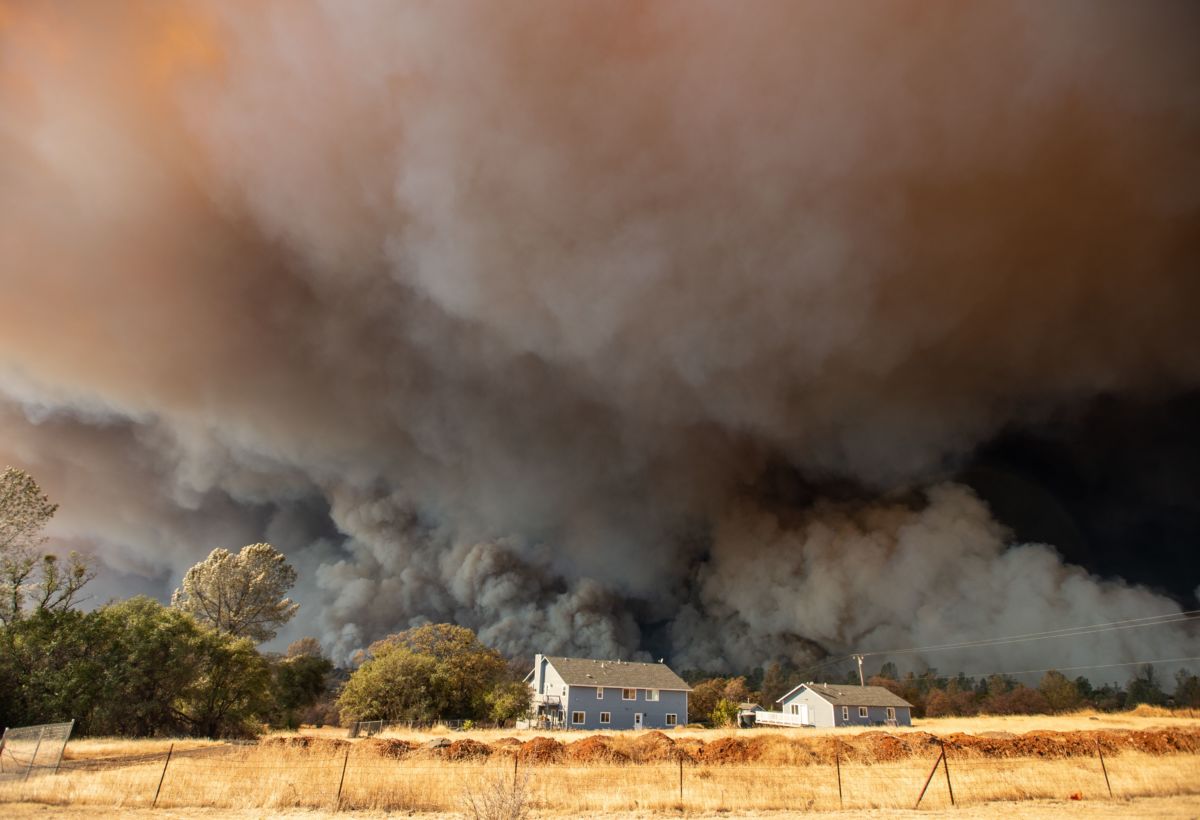
In 2018, summer wildfires blanketed the state and region again, getting an early start from fires in eastern Washington, British Columbia, Oregon and California. A total of 1,874 fires were reported in Washington State, according to Janet Pearce, a spokesperson for the Washington State Department of Natural Resources. For several days, Seattle’s air quality was worse than Beijing’s. A third of August had unhealthy air quality, and half the month was thick with smoky haze. Only five days were reported “good” by the Puget Sound Clean Air Agency.

Smoke contains particulate matter — toxic chemicals from burning homes and structures. Fine particulates can remain in the atmosphere for up to two weeks depending on the weather. Large particulate matter can be coughed up. But particulate matter that is less than 2.5 micrometers in diameter goes deep into the lungs. People are impacted differently depending on their immune system and sensitivity. For children with developing lungs, people who exercise hard outdoors, and those with respiratory illness, asthma or chronic obstructive pulmonary disease, a single exposure can be lethal.

For the last two summers, Stahre kept her children indoors when air quality was unhealthy. “Being able to breathe,” she says, “is one of the most precious aspects of life, and I want my children to be able to breathe their entire lives and take a full breath and not have to think that their parents were irresponsible for keeping them around wildfire smoke year after year.”

The Stahre family originally considered turning their home into a fortress against wildfire smoke, unhealthy air and extreme heat. But fully adapting one’s home for a changing climate comes at a steep price. Quotes for an air filtration system and heat pump ranged between $30,000 and $40,000. Instead the family is going to “wait and watch” and install a filter on the ducted part of their home, while researching standalone filtration options for other rooms.

What they’re doing is called “climate adaptation,” says Nate Matthews-Trigg, a health researcher with Washington Physicians for Social Responsibility. “Climate adaptation in the climate change and health field,” he says, “are ways people can change their behavior or their local environment to reduce the impacts of climate change.”

Climate Adaptation and Climate (In)Equity

Research shows creating clean air spaces is an adaptation people should take if they can, says Matthews-Trigg. It can be as simple as setting up a room in the house with an air purifier to reduce airborne particulate pollution, as the Stahre family is doing.

The majority of advice being promoted by health departments does not come with subsidies or financial aid and the measures proposed by local authorities — such as the 300 fans with filters that the Puget Sound Clean Air Agency plans to distribute to “highly impacted communities” who face chronic or economic barriers to mitigating the effects of unhealthy air quality on their lives — come nowhere close to protecting the most vulnerable residents from the chronic effects of unhealthy air.

Kurtis Robinson, a wild land firefighter and president of the Spokane chapter of the NAACP in Eastern Washington, says if you look at “air quality dynamics,” the lack of access to resources is front and center for communities of color, impoverished and underserved communities: “They’re already dealing with a lack of affordable housing, the long-term effects of redlining and racial covenants.”

To address the disparity, the state needs to enact what Robinson calls “distinct action” to ensure resources are “readily available” for all. “Number 1 is moving the resources to make air conditioning, air filtration and retrofitting affordable across the board,” Robinson told Truthout. Climate adaptation with retrofits and clean air spaces for all becomes a “human right not a right of privilege,” he added.

At the same time, it’s a heavy lift to get the conversation to a point where legislatures and government embrace the reality of climate change and the need for equitable climate action. Inertia is baked into the system, says Robinson. In the case of catastrophic climate change, it will take an elevated sense of urgency to address the swiftly moving train of wildfires, drought, sea level rise and hurricanes.

Environmental and forest sciences professor at the University of Washington, Phillip S. Levin, told Truthout that Black, Latino and Native American communities nationwide face 60 percent greater vulnerability during wildfires compared to other communities. Levin says metal roofs are often recommended for those that live in areas prone to wildfires, because they can withstand fire. However, he acknowledges that these aren’t an option for many homeowners or those who rent, because “if we don’t consider the social, economic and political context in which fires occur, then we won’t necessarily allocate our resources to the most vulnerable.”

How Quickly Will Washington Adapt to the Wildfire Climate Crisis?

Most of the messaging about wildfire smoke from Washington’s Department of Health and local health partners urge individual behavior changes. “Get inside, close windows, make sure indoor air is clean, reduce physical activity.” Fliers show who is most sensitive: babies and children; people over age 65; people with health conditions like asthma, chronic obstructive pulmonary disease or emphysema; and pregnant people. Pamphlets advise going somewhere with clean air or air conditioning if your own home can’t provide it: a library, mall, community center or neighbor’s house. The Washington Smoke Blog, a collaboration between county and federal agencies and local tribes, shares information for Washington communities affected by wildfire smoke.

Julie Fox, an epidemiologist with the state Department of Health, admits “this puts a lot of burden on the public to think about how to change their daily activity and living space to reduce smoke exposure.” Asked if the department thinks summer wildfires are the new norm, Fox says, “What I’m hearing is we might not have reached the new norm yet. Things could get worse.”

As for masks, they don’t work for everyone, especially children and people with health conditions, say health professionals. The public has shown a lot of interest in specialized masks like N95 and N100, which are common in hospitals and certain workplace settings, says Meredith Li-Vollmer, a risk communication specialist with Public Health Seattle and King County. But there’s limited research on whether they work outside occupational settings. In fact, there’s some evidence that for certain health conditions, “masks can actually make it worse for people to breathe because you have to breathe through a filter,” says Li-Vollmer.

Family physician Kristen Knox, who has barricaded herself inside during the last two summer wildfire seasons because of her own asthma, says that what she hears from her patients is they’re fearful.

While children and those with respiratory illness are most at risk from smoke, Knox warns, “We’re all at risk.” Even “driving isn’t a safe thing to do unless you can recycle the air in the car and it’s air conditioned and filtered,” she adds. She recommends HEPA filters that can be attached to the dashboard or in the space between the seats.

Clean Air Facilities in City-Owned Buildings and Community Centers

The City of Seattle, for its part, recognizes wildfires as an emerging threat of climate change, and plans to retrofit all city buildings over time. Two community centers in the city’s international district and Rainier Beach neighborhoods, both home to low-income communities and communities of color, will be open as “cleaner air facilities” beginning in July. The city is also upgrading filtration in three buildings at the Seattle Center. Each building will have an air filtration system to reduce pollutants. Around 12 percent of Seattle’s residents have income below the poverty level. This means the three Seattle Center and community center buildings have the capacity to hold between 7.3 percent and 10.6 percent of the below-poverty population and 0.8 percent to 1.2 percent of the entire Seattle population. Of course, such stopgap measures are not enough when air becomes so unhealthy it becomes impossible to breathe for sensitive populations and challenging for everyone else. Julia Reed, a senior policy adviser in the mayor’s office, says if the smoke situation intensifies, the city will respond as it does to any other natural disaster, and may open city buildings as 24-hour shelters.

A Drought Emergency and Record-Breaking Heat

A drought emergency was declared for much of Washington in May by the governor. Low snowpack left many areas of the state with lower-than-normal water reserves. A hot, dry spring absorbed much of the snow that did accumulate. Seattle broke heat records in May with three days of 83-degree temperatures in a row, and again in June with several days of 90 degrees or more. The state capital, Olympia, reached 87 degrees, one degree higher than its previous 1989 record. Much of Eastern Washington saw temperatures in the mid-90s for several weeks in June.

Due to the efforts of Hilary Franz, the commissioner of public lands, the legislature allocated $50 million for fire suppression and prevention. Pearce said the amount would have been “unheard of in the past.” The money will be used to hire 30 more wild land firefighters in addition to 44 the state already has, and to combat forest health issues.

Climate models indicate wildfire smoke could increase 200 percent to 600 percent by mid-century in the West.

Katharine Hayhoe, the director of the Climate Science Center at Texas Tech University, remarked in 2018 that “climate change loads the diceagainst us by taking naturally occurring weather events and amplifying them.” In an interview with The Guardian, she said, “Wildfires in the western U.S. now burn nearly twice the area they would without climate change.”

Youth Climate Strikers at City Hall Underscore Urgency of Crisis

On Friday, June 21, youth climate strikers stood outside Seattle City Hall, chanting, “When the air we breathe is under attack, what we do? Stand up. Fight back!” They held signs that read, “Our Planet Is on Fire. Smoke Knows No Borders.”

Lydia Ringer, a youth organizer with the #FridaysforFuture climate change campaign, says the ongoing Friday strikes are necessary because “we need to act now. It’s our futures that are on the line.” Ringer wants the state to wean itself from fossil fuels within 10 years. Her mother, a first responder, was in Paradise, California, last summer helping the community cope after devastating wildfires. “She flies all over the country dealing with fires,” says Ringer, “and she’s only going to be dealing with them more and more as climate change intensifies.”

Large wildfires burn more than twice the area in the United States as they did in 1970, with the average wildfire season 78 days longer, according to a report by the Center for Climate and Energy Solutions, an independent nonprofit focused on solutions to climate change. Projections show “an average 1 degree Celsius temperature increase would increase the median burned area per year as much as 600 per cent in some types of forests,” the report concludes.

Climate change has been the focus of Governor Inslee’s presidential campaign. His request for a climate debate during the 2020 presidential campaign season was rejected by the Democratic National Committee. He recently released the fourth piece of his climate change policy, Freedom from Fossil Fuels. In it he outlined plans to transition the U.S. economy off fossil fuels, hold polluters accountable, and end corporate welfare.

Meanwhile, Stahre says she’ll continue to press the state and city for more rapid climate action. She believes Washington should declare a climate emergency, not just a drought emergency, and invest whatever it takes to get off of fossil fuels and reverse the decades of warming baked into the system. She knows another summer season of wildfires is not only likely for 2019, but for 2020 and beyond. By July 10, the state had already responded to 900 fires, according to Pearce with the state department of natural resources.

“This is life on the West Coast because we failed to act,” Stahre says, “and this will be our life for the foreseeable future unless we come up with some incredible technology that allows us to pinpoint those wildfires and nip ’em in the bud like we’ve never been able to before. But that’s not something I see on the horizon right now.”

WDFW Director Susewind to take online questions from Eastern Washington

(PRESS RELEASE/WDFW)

Washington Department of Fish and Wildlife (WDFW) Director Kelly Susewind and his Eastern Region Director Steve Pozzanghera will take questions from the public in an online broadcast from 6 to 7 p.m. on Monday, July 8, 2019.

“Our Eastern Region is a large area with a wide variety of terrain, habitat and species,” said Susewind. “I understand and care that the concerns of people living and recreating in this area may be different from those in other parts of the state. It’s a chance for me to hear what is on the minds of the public and our customers here.”

This is the second digital open house held by the Director on a regional level. The Department’s Eastern Region spans Asotin, Columbia, Ferry, Garfield, Lincoln, Pend Orielle, Spokane, Stevens, Walla Walla, and Whitman counties. Members of the public can watch and ask questions from links on the department’s website, wdfw.wa.gov<http://www.wdfw.wa.gov>, or at https://player.invintus.com/?clientID=2836755451&eventID=2019071000.

Susewind and Pozzanghera will share updates on a few local issues, such as concerns about encounters with bears, wolves and cougars; prescribed burn efforts;
the change to anterless deer hunting in northern counties; the current white sturgeon fishing season, and results of the joint northern pike suppression effort on Lake Roosevelt.

Last fall, Susewind, who has been in the role for approaching a year, held a series of in-person open houses across the state in Spokane, Ephrata, Selah, Montesano, Ridgefield, and Issaquah. Since then, he’s also held three digital opens houses that allow public to ask questions and get updates from the convenience of their own home.

The Washington Department of Fish and Wildlife is the state agency tasked with preserving, protecting and perpetuating fish, wildlife and ecosystems, while providing sustainable fishing and hunting opportunities.

Persons with disabilities who need to receive this information in an alternative format or who need reasonable accommodations to participate in WDFW-sponsored public meetings or other activities may contact Dolores Noyes by phone (360-902-2349), TTY (360-902-2207), or email (dolores.noyes@dfw.wa.gov<mailto:dolores.noyes@dfw.wa.gov>). For more information, see https://wdfw.wa.gov/accessibility/reasonable_request.html.

Did Washington State Fish and Wildlife internal directive lead to killing of Snoqualmie Valley cougar?

[Article by contributing writer, North Bend resident and wildlife enthusiast, Melissa Grant]

On April 5th 2019, a Capital Press headline read, “WDFW Director: When in doubt, remove the cougar.” This memo came shortly after a March Washington State Department of Fish and Wildlife (WDFW) Commission meeting in Spokane. New director Kelly Susewind – WSU grad with a degree in geological engineering and longtime Department of Ecology employee – took over in January 2018 after the former director resigned. To many, the new director’s ‘remove the cougar’ stance sounded like a change that could result in the killing of more animals.

Less than a month later – in our own backyard – that directive claimed one of its first victims.

The audio transcript of that March Commission meeting made it clear that many were concerned about cougar populations. Most notably, one group claimed that cougars and wolves were responsible for the deaths of 25,000 deer annually in NE Washington. They also went on to claim these predators were responsible for DFW funding shortfalls. If you believe their numbers and follow their extrapolations, you can see how the cougars are costing the state a fair bit of money in lost hunting permits. Apparently, they and the other meeting attendees convinced Susewind the problem was statewide and the memo was distributed to wildlife & enforcement programs on April 24th.

The very next day, on social media, a story started unfolding. In the comments of a wildlife story, a local man was telling a tale of losing his goat to a cougar. “I had my 130lb goat plucked off by a cat 30yards from my back door.”  Some tried to help by sharing links and tips for protecting livestock. Others offered contact info for the local DFW bear and cougar specialist. It was clear from his response he didn’t think much of the Department or want their advice. “lol. WDFW has been here tracking this mother and 3 cubs for 8 years. Who is this ‘specialist’? Do they have experience hunting and hunting predators?” He said he also had a second goat taken in early February. Like the three men at the commission meeting, he seemed convinced the reason for the attacks was simple: loss of deer. Furthermore, the WDFW had been at his house that very day looking and he was disgusted by the “spiel” he had heard about responsibility.

It was clear this man wasn’t inclined to change his mind and a quick look at his Facebook page showed he had very poor husbandry, leaving his goats susceptible to attack. But what effect did the memo have on his two previous encounters with DFW officers? There were enough details to submit a public records request for both goat depredation incidents.

Soon after there was a Digital Open House with the WDFW director and other staff on May 13th. Armed with a copy of the memo and having studied department reports on cougars, four questions were put into the queue for consideration:

  • A recent incident in the Snoqualmie Valley involved a resident with poor husbandry losing two of his livestock in three months. One call involved multiple officers, according to some accounts. What is the cost per call? How much taxpayer money is spent on repeat offenders?
  • How are you solving repeat problem situations with large predators outside of killing animals? What if people don’t follow recommendations given by officers? Will you be following up with citations, fines and long-term solutions?
  • There are recommendations in WDFW 2018 Game Status and Trend Report to avoid/minimize conflict and interactions with large carnivores through outreach, education, better husbandry and an emphasis on personal responsibility.  However, the director’s memo regarding dangerous wildlife of April 24th excludes all references to these things. Is there a general trend towards de-emphasizing personal responsibility?
  • WDFW manages fish and wildlife. Why does it suddenly sound like it is just helping remove or eliminate wildlife and carnivores? Where does responsible management play a role?

Two and a half hours later, these questions were either not asked; asked but significantly changed; or answered with what can only be described as blather.

Giving them the benefit of the doubt, the questions were resubmitted to the director. Game Division Manager Anis Aoude replied on May 17th. The answer to the third question stood out as somewhat reassuring: “The Director’s memo that you mention was not intended to de-emphasize personal responsibility.  It was intended to stress that human safety should be paramount when making decisions related to large carnivores.  Our employees will still be emphasizing that good animal husbandry is the best way to avoid livestock depredation.  They will also continue to provide technical assistance and suggestions along those lines.”

That answer coupled with point two on the memo – “When public safety is threatened or when livestock have been killed despite an owner’s efforts to protect the stock, staff will make every reasonable effort to removing the offending animal(s)” – seemed to suggest that the memo didn’t mark a statewide change in policy after all.

However, getting the reports from the local goat incident a few days later would again call into question what that memo actually meant for our state’s animal residents.

The first report was dated February 3rd and told a tale of a goat killed by a small or juvenile cat. The DFW officer searched the property, found the kill site and questioned the owner as to the whereabouts of the goats that previous night. He was told that the goats “roam free during the day and loiter around the barn at night”. They added they were not secured in the barn and had not done so for a “long time”. The officer continued his search, found a gap under the fence a cat could climb under and noted that the fence could have easily been jumped over as well. He informed the owner of his findings, gave advice to secure the goats at night and suggested adjustments be made to the fence.

The second report was dated April 26th – two days after the memo was issued. On the 25th, the owner contacted the DFW again to say his remaining goat had been killed by a cougar. The officer then contacted his supervisor who told him to give the owner permission to tie the carcass to a tree and shoot the cougar if it came back. Late that night the owner called, saying he’d shot at two cougars – killing one. In the morning after speaking with the officer from the prior incident who had noted the property’s inadequate fencing, several officers headed to the residence.

Once at the residence, the officers walked the property, took photos and found the deceased cougar and goat. Karelian Bear dogs arrived to look for a wounded cougar, but none was found.  The dead cougar was a 50-60lb sub-adult female. The officer’s supervisor recommended not issuing a written warning for negligent feeding, poor fencing and husbandry practices “due to the Directors memo” even though the report noted, “no effort was made to better his fences.” The reporting officer also noted he “would have told him not to kill cougar and put up an electric fence if not for the director’s memo”.

So, does Washington State have a cougar problem? In some areas perhaps, but experts say that hunting practices may partially be to blame for this problem. Many incidents involve juvenile cats that were either alone or with another similarly aged animal. Orphaned cubs – left alone without a mother – often resort to preying on humans and livestock out of desperation. Thus, hunters who kill a mother cougar may be inadvertently causing this issue.

Calling for increased hunting pressure on cougars is unwarranted. There is no evidence that decreasing a cougar population will decrease interactions, as research has shown in multiple states. There is no evidence that an increased cougar population leads to more problems.

According to the WDFW’s 2018 Longterm Funding Plan, department funding comes from six main sources: federal, user fees, state and local contracts, state bonds and license plates. User fees alone are approximately 23% of the DFW’s spending, with a major portion of that coming from hunting and fishing licenses.

WDFW’s mission statement is: “To preserve, protect and perpetuate fish, wildlife and ecosystems while providing sustainable fish and wildlife recreational and commercial opportunities”. Sounds a bit like they must try and serve two masters simultaneously. Perhaps that meeting back in March tipped the scales towards the consumptive users’ needs – aka hunters and fishers. How else do you explain how an issue in the northeast corner of Washington affected policy in the Snoqualmie Valley?

Residents in Eastern Washington have been making themselves heard on the subject of cougars. If you want your opinion to be considered, you must also make your point of view known. You can contact the Director at:

Kelly Susewind: Director’s Office PO Box 43200, Olympia, WA 98504-3200 | 360-902-2200 | director@dfw.wa.gov

Real-life Bambi and Thumper spotted in small Washington town

An adorable friendship is blossoming in the town of Loomis, Washington. Meet the deer and bunny who resemble Bambi and Thumper.

LOOMIS, Wash. — Perhaps the movie wasn’t the end for Disney’s Bambi and Thumper. A small herd of deer and their rabbit companion have been spotted in Loomis, Washington.

KING 5 viewer Darlene Wilbourn said the animals visit her mother’s yard every day. In the heartwarming video, you can see the bunny follows a few of the deer around as they lay in the sun.

There doesn’t seem to be any other bunnies as part of the group, but the deer don’t seem to mind. One deer chews peacefully as the bunny sits between its front legs. Another deer even appears to touch noses with the smaller animal.

It seems that Disney’s duo has come to life in Washington.

Share your photos and videos with KING 5 on our Facebook page, or by tagging your Twitter and Instagramposts with #k5spring.

Breaking news: Washington governor signs historic law to end cage confinement of egg-laying hens

https://blog.humanesociety.org/2019/05/breaking-news-washington-governor-signs-historic-law-to-end-cage-confinement-of-egg-laying-hens.html

May 7, 2019

Washington Gov. Jay Inslee has just signed into law the strongest protections for egg-laying hens ever passed in any state legislature. This historic win will benefit approximately eight million hens each year, freeing them from cage confinement by the end of 2023. The measure builds upon our previous work in states like California and Massachusetts where voters have passed transformational ballot measures against the cage confinement of farm animals in recent years.

Washington’s new law phases out the production and sale of eggs from caged hens, regardless of where the eggs were produced.

In a typical cage facility, each bird has less space than the dimensions of an iPad on which to live her entire life. While cage-free does not equal cruelty-free, this measure will significantly reduce the birds’ suffering. In addition to banning cages and requiring more space per bird, the law also mandates that hens be provided with vital enrichments, including scratch areas, perches, nesting and dust bathing areas.

The HSUS has spearheaded the passage of this law and others in a dozen states — from Florida to Ohio to Arizona — to eliminate extreme confinement. These successes bolster the work we have done with some of the largest food corporations in recent years, both in the United States and globally, to end cruel cage confinement practices by their suppliers. As a result, lawmakers and corporations are increasingly realizing that the future is cage-free.

In Washington, we partnered with Democratic and Republican legislators, key stakeholders in the agricultural sector, and other leading animal protection groups to ensure the bill’s success. It is a remarkable illustration of how good people in all walks of life can come together to create lasting and transformational change for animals. The HSUS will continue to work with lawmakers, non-government organizations, volunteers, donors and other members of the public to continue paving the way toward this more humane reality.

Let’s take a moment to celebrate today’s remarkable win for animals. But let’s also keep in mind that billions of farm animals around the world are still suffering in cruel cages. The laws in Washington, California and Massachusetts set a great precedent for other states and countries to follow, and further support corporate policy commitments reforming how farm animals are raised. Let’s keep the momentum going as we work toward the day when no farm animal is locked in a cage.

Cormorants on the Astoria Bridge add new twist to management issues

Counting cormorants

James Lawonn with the Oregon Department of Fish and Wildlife counts cormorants on the Astoria Bridge.

Double-crested cormorants nesting on the Astoria Bridge could come with a high cost to the state and more frequent maintenance interruptions for motorists.

The birds, seasonal visitors to the North Coast, have just begun to return to the estuary for breeding and nesting. No one knows how many will decide to settle on the bridge this year, but it was clearly a popular spot last year, as birds from the region’s largest colony continued to be hazed off East Sand Island downriver.

The number of double-crested cormorants nesting on the bridge jumped from a dozen pairs in 2004 to around 1,700 pairs last year, according to monitoring reports cited by the Oregon Department of Transportation.

The leaps coincide with the beginning of lethal management of a massive double-crested cormorant colony on East Sand Island. The birds abandoned the island several times after the U.S. Army Corps of Engineers began shooting thousands of adult birds and destroying nests and eggs in 2015 to protect runs of young salmon.

The Audubon Society of Portland called a mass exodus in 2017 a “catastrophic collapse.”

Fish and wildlife researchers have since questioned the value of cormorant management in saving salmon. They say it was clear after each dispersal that cormorants were resettling on the bridge and farther upriver — areas where they could potentially impact even more salmon.

Cormorant droppings have accumulated on the bridge in layers so thick they have made it difficult for state inspectors to evaluate the structure. The droppings are also very corrosive, reducing the life span of the bridge’s protective steel coating.

“The potential expense we’re facing is a real worry to us,” said Department of Transportation spokesman Lou Torres.

Costly painting

The state repaints the Astoria Bridge every 20 years, a lengthy but necessary maintenance that has shut down lanes during busy summer months.

Work on the span only just concluded in 2018 and more work is planned in 2021 on the under truss, where many of the cormorants appear to nest.

“We’re really trying to get prepared for that,” Torres said.

Hazed birds flock to bridge

Cormorants rest below the Astoria Bridge.

He estimates it could cost around $80,000 to pressure-wash the bridge to complete required inspections. But that cost could quickly increase to $6 million if environmental agencies require the state to set up containment structures during pressure washing so bird waste does not simply get pushed into the Columbia River.

If cormorants continue to nest on the bridge in such high numbers, the state may also have to paint the bridge more often, every 15 years as opposed to every 20.

Under that scenario, Torres said, “We’re not going to have a lot of years where we’re not painting.”

Either way, the Department of Transportation is weighing its options as 2021 approaches. The department anticipates it will need to begin a hazing program to dissuade cormorants from nesting on the bridge. How to remove them is still an open question.

Several years ago, the state hired a company that set up noise cannons on the Interstate 5 Columbia River Bridge in Portland to disturb thousands of starlings that had colonized the bridge and whose accumulated droppings on the bridge, catwalks and roadways posed health and safety hazards.

The Army Corps does not link the movement of double-crested cormorants farther upriver to management actions on East Sand Island. The agency blamed attacks by eagles for the birds’ departures in 2016 and 2017.

Army Corps spokesman Jeff Henon suggested the birds may not have nested in large numbers on the bridge before because of the billowing containment structures that were around in 2014 during painting and maintenance. When the state moved on to other portions of the bridge and the containment structures were no longer necessary, the birds moved in.

But Torres noted that the bulk of that work was not in areas where birds usually nested and, besides, the number of nesting birds on the bridge during the spring and summer climbed steadily between 2012 and 2018.

“The numbers tell the story there,” he said.

The Army Corps did not shoot any adult birds last year, but did destroy eggs. This year, the agency plans to modify the island’s terrain, creating intertidal wetlands and further reducing nesting habitat to keep double-crested cormorants at the lower levels identified in a federal management plan.

But it’s not as though the cormorants’ relocation onto the Astoria Bridge and deeper into the estuary should have been a surprise.

Studies funded by the Army Corps before management of the cormorants even began indicated it was likely some of the birds would move into the estuary if they were hazed off East Sand Island.

Feasting on salmon

Though further investigation is needed, available evidence suggests the cormorants that have been nesting upriver only recently immigrated from somewhere else — their most likely origin being East Sand Island, said James Lawonn, avian predation biologist with the Oregon Department of Fish and Wildlife.

Past research on Caspian terns, also seasonal inhabitants of East Sand Island managed by the Army Corps, indicates birds that nest farther up in the estuary eat even more salmon than those nesting near the river’s mouth, where more types of food are available. It’s possible cormorants that nest upriver could eat three times more young salmon.

Hazed birds flock to bridge

A lone cormorant takes flight under the Astoria Bridge.

Now the state and other partners are looking into the impact of new cormorant colonies in the estuary on the survival of young salmon.

To Lawonn, how many cormorants are using the Astoria Bridge is a major piece of the puzzle.

One evening at the end of March, Lawonn set up a scope near the Port of Astoria’s West Mooring Basin near the bridge.

He wasn’t sure how many cormorants he would even see. It was still early in the season.

Double-crested cormorants appear inclined to return to nesting grounds where they have experienced success, but they also aren’t afraid to quest elsewhere for better options if they are running into trouble.

He wondered if birds that found safe and suitable nesting on the bridge would choose it first over East Sand Island, bypassing habitat where they had been hazed and shot at by humans and harried by eagles for the past several years.

The Army Corps will not begin monitoring East Sand Island for double-crested cormorants and nesting activity until the end of April or beginning of May.

Even as Lawonn trained his scope down the bridge’s length, the dark, snaking forms of cormorants on support structures at the base of the bridge caught the sinking sunlight and gleamed.

Lawonn counted over 650 double-crested cormorants that evening. A few days later, he counted 943.

Bald eagles are taking trash from a Seattle landfill and dumping it into suburban yards

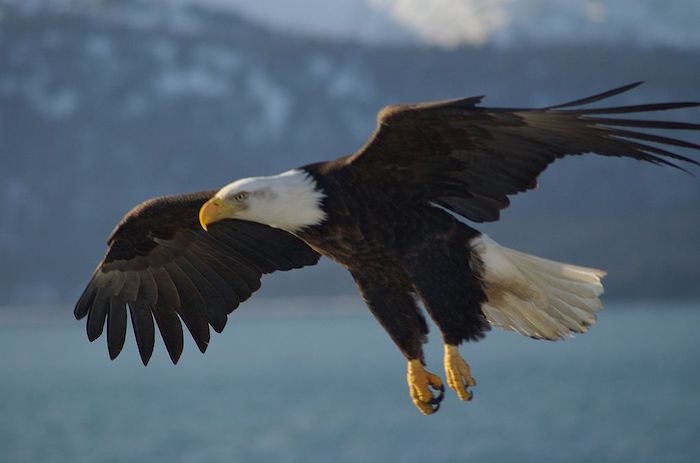
It is raining trash in the suburbs of Seattle. Or, rather, bald eagles – around 200 of them – are dropping trash into people’s yards every day, and the suburbanites are not happy.

The trash – including a blood-filled biohazard container that landed in one lucky resident’s yard – is coming from a nearby landfill that takes in two tons of fresh trash a day. The bald eagles pick out the juicy morsels of food found in the landfill, and then discard the junk that they don’t want in the nearby neighborhoods.

According to Popular Mechanics:

The main issue is the open-air landfill in the area, the Cedar Hills Regional Landfill in King County. That landfill was supposed to have been closed years ago, but a proposed expansion has kept it open. In fact, that expansion is meant to keep the landfill exposed until 2040…

Many of the residents want the county to cancel the proposed expansion and finally close the landfill. In the meantime the residents are hoping to implement some sort of anti-eagle measures at the landfill, although it’s not entirely clear what those would look like.

There’s something almost poetic about the American national bird reminding people that the trash they throw in a landfill doesn’t simply disappear. In a way, these birds are a visceral demonstration of the usually hidden consequences of extreme consumption. We create too much trash, and that much trash creates consequences. That could mean eagles dropping biohazard containers in your front lawn, or it could mean nearly 20 tons of plastic washing up on one of the most remote beaches in the world.

Image: by Carl Chapman from Phoenix, usa – Eagle ShotsCC BY 2.0Link