Hearing set on NOAA plan for Makah whale hunts

Makah tribal members process a gray whale after it was harpooned and towed ashore in Neah Bay in this file photo from May 1999. (Peninsula Daily News)Makah tribal members process a gray whale after it was harpooned and towed ashore in Neah Bay in this file photo from May 1999. (Peninsula Daily News)

NEAH BAY — The Makah Tribe would hunt from one to three Eastern North Pacific gray whales annually over 10 years under a federal proposal announced Thursday that could go into effect in 2020, federal and tribal officials said.

The National Oceanic and Atmospheric Administration (NOAA) recommendation threatens to renew divisions between anti-whaling and animal-rights advocates and the coastal tribe, whose last sanctioned whale hunt was in 1999.

“We never ceased continuing to move forward with our efforts,” Tribal County member Patrick DePoe said Thursday. “We’ve been on pause for quite some time. It’s a good feeling to see things starting to happen.”

NOAA has recommended that the federal Marine Mammal Protection Act (MMPA) moratorium that prohibits killing whales and other marine mammals should be waived to allow Makah tribal whaling.

The proposal will be reviewed and commented on at a hearing in front of Administrative Law Judge George A. Jordan at a 9:30 a.m. Aug. 12 at the Henry M. Jackson Building in Seattle.

NOAA’s report and outline of the hearing process will be published today in the Federal Register.

“To waive the MMPA to actually kill whales, that’s a new one,” said Joyce resident Margaret Owens, who with her husband, Chuck, founded Peninsula Citizens for the Protection of Whales.

“We don’t consider the killing of any gray whales acceptable, and we are particularly sensitive about our resident group of 30. We are back into saving whales, which we never did stop.”

Jordan will make a recommendation to Chris Oliver, assistant administrator of NOAA’s National Marine Fisheries Service.

If Oliver approves the waiver, the Makah would apply for a five-year renewable whaling permit with NOAA Fisheries to allow the hunt to proceed, NOAA spokesman Michael Milstein said Thursday.

After 10 years, the waiver would expire.

“We’d have to essentially re-examine everything and assess how things proceeded and see if we would propose a new waiver,” Milstein said.

The tribe, recognized as an aboriginal subsistence whaling group by the International Whaling Commission, would not need permission from the IWC if the waiver is approved, DePoe said.

In May 2007, the International Whaling Commission granted the Makah a harvest quota of up to 20 whales over five years, with no more than five in one year.

The agency’s proposal was announced almost 20 years to day when, on May 17, 1999, Makah whalers hunted and killed an Eastern North Pacific gray whale for the first time in more than 70 years, an event closely chronicled by national media.

The tribe asserted its right to whale under the 1855 Treaty of Neah Bay, under which the Makah ceded thousands of acres of land to the U.S. government.

The tribe applied for the waiver in 2005 to hunt 20 gray whales every five years.

Under NOAA’s recommendation, Makah whalers could hunt up to three Eastern North Pacific gray whales in its usual and accustomed whaling areas on even- numbered years and one on odd-numbered years.

NOAA estimates the population of Eastern North Pacific gray whales is 27,000.

The Eastern Northern Pacific whales would be harpooned, then dispatched with .50-caliber rifles, as the gray whale was in 1999.

Milstein said Makah whalers would hunt in a way that the approximately 192 whales in the Pacific Coast Feeding Group (PCFG) gray whales — including 30 “resident” whales that feed close to Clallam County’s shores and the 200 whales in the endangered Western North Pacific (WNP) gray whale population — would not be harmed.

The WNP population inhabits waters off Russia and visits waters in the the tribe’s usual and accustomed areas.

“Even-year hunts would occur during the migration season (Dec. 1 of an odd-numbered year through May 31 of the subsequent even-numbered year) to reduce risk to PCFG whales,” according to NOAA’s report.

“Odd-year hunts would occur during the feeding season (July 1 through Oct. 30 of odd-numbered years) to reduce risk to WNP whales,” according to the report.

The risk of striking WNP whales during even-numbered years is one in 170 years, Milstein said.

At that time of year, they are off the Russian coast, Milstein said.

If a Western North Pacific whale were struck at any point, hunting would cease, then would resume after further measures were examined to eliminate the risk to that population, Milstein said.

The risk to PCFG whales, a subset of the Eastern North Pacific whales, would be minimized by setting a limit of 16 whales struck with a harpoon over the course of the 10-year waiver period, Milstein said.

PCFG whales have been photo-identified between June 1-Nov. 30 during two or more years between Northern California and Northern Vancouver Island.

If the PCFG population falls below 192, all whale hunting would cease until that number increases to above 192, Milstein said.

The number of strikes, or whales that can be harpooned, would be limited.

Three Eastern North Pacific gray whales could be harpooned during even-year hunts and two could be struck during odd-year hunts.

Sixteen PCFG whales could be struck over 10 years.

DePoe said the tribe revised its waiver application to protect Pacific Coast Feeding Group and Western North Pacific whales.

“We are doing what we need to do to be responsible stewards of our environment,” DePoe said.

DePoe was a high school student in May 1999 when he stood on the beach at Neah Bay and helped haul in the 30-foot gray whale that was killed off Cape Alava.

“That feeling you had, that overwhelming sense of pride in who you are, that cultural, spiritual component that you feel at the moment, it was amazing,” DePoe recalled.

Whaling is ingrained in Makah culture, he said.

“With the anniversary itself and the length of time it has taken to get to this point, this is emotional, it’s very emotional,” he said.

But Owens said in an email that the plan “allows Makah hunters to specifically target our local whales in the coastal near-shore every other summer.”

She said that under NOAA’s proposal, Makah tribal whalers “have full permission” to kill a resident whale.

“There will be much heartbreak and community distress as whales are harpooned, shot and dragged up on the beach year after year.”
Newhouse praises U.S. Fish and Wildlife proposal to delist gray wolf

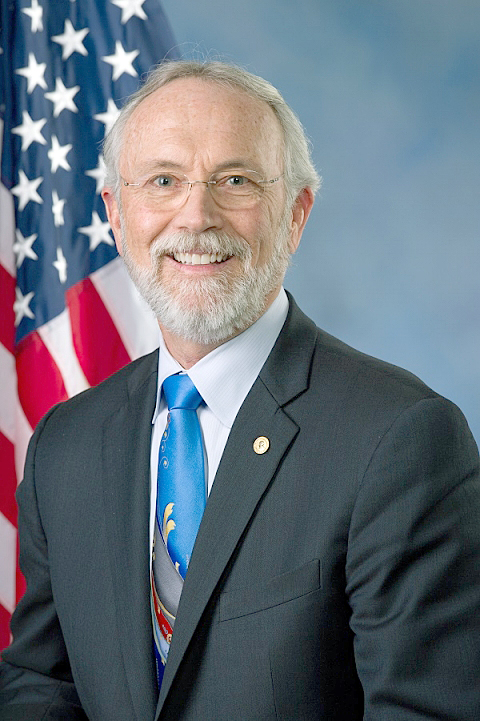
U.S. Rep. Dan Newhouse

U.S. Rep. Dan Newhouse

WASHINGTON, D.C. – Rep. Dan Newhouse (R-WA) released the following statement after U.S. Fish and Wildlife Service (FWS) announced that FWS will soon propose a rule to delist the gray wolf in the lower 48 states and return management of the species back to the states and tribes.

FWS intends to publish the proposed rule in the Federal Register in the coming days, opening a public comment period on the proposal.

“The best available science shows that the gray wolf has successfully recovered from the danger of extinction and no longer requires federal protection,” said Rep. Newhouse. “We can see in Washington state that the wolf population is growing quickly while being effectively managed by the Washington Department of Fish & Wildlife in the eastern third of the state. I applaud the U.S. Fish and Wildlife Service’s for moving forward with a proposal to delist the wolf in the lower 48 states in order to return management to the states.”

Rep. Newhouse was an original cosponsor of H.R. 6784, the Manage Our Wolves Act, which the House passed on November 16, 2018.

Trump Administration Seeks To Take Gray Wolf Off Endangered Species List

The U.S. Fish and Wildlife Service will propose lifting protections on the gray wolf, seen here in 2008. The species’ status under the Endangered Species Act has been contested for years.

Gary Kramer/U.S. Fish and Wildlife Service/AP

The U.S. Fish and Wildlife Service will seek to end federal protections for the gray wolf throughout the lower 48 states, Acting Secretary of the Interior David Bernhardt announced Wednesday.

In a statement, the Fish and Wildlife Service said it will propose a rule to remove the gray wolf from the endangered species list and “return management of the species to the states and tribes.” That means states would be able to make their own rules about hunting and culling of gray wolf populations.

“Recovery of the gray wolf under the Endangered Species Act (ESA) is one of our nation’s great conservation successes, with the wolf joining other cherished species, such as the bald eagle, that have been brought back from the brink with the help of the ESA,” a Fish and Wildlife Service spokesperson said in a statement.

The proposed rule will be published in the Federal Register in the coming days. A public comment period will follow.

In 1978, the U.S. Fish and Wildlife Service classified the gray wolf as an endangered species throughout the contiguous U.S., except in Minnesota, where the wolf population was classified as threatened. The gray wolf was dropped from the endangered list in Idaho and Montana in 2011. There are now more than 5,000 gray wolves in the Lower 48, up from about 1,000 in 1975, according to The Associated Press.

The protected status of the gray wolf has been contested for years. Many farmers and ranchers see the species as a menace.

There is disagreement about how fully the gray wolf population has recovered. Conservation groups say the gray wolf is found in just a small portion of its former territory.

The Center for Biological Diversity says that gray wolf numbers have only recently recovered in certain regions, and the proposed rule would be dire for their prospects elsewhere. “The proposal will also all but ensure that wolves are not allowed to recover in the Adirondacks, southern Rockies and elsewhere that scientists have identified suitable habitat,” the organization said Wednesday.

Jamie Rappaport Clark, a former director of the Fish and Wildlife Service now with the Defenders of Wildlife, told the AP that protections were needed to prevent “an all-out war on wolves” in states that would allow them to be hunted.

“We don’t have any confidence that wolves will be managed like other wildlife,” she said. “We’re going to fight this in any way possible.”

Study: killing cormorants tripled losses of salmon & steelhead

Study: killing cormorants tripled losses of salmon & steelhead

(Beth Clifton collage)

“This goes down as one of the really significant failures in wildlife management in recent decades.”

PORTLAND, Oregon––Cormorant massacres at East Sand Island,  near the mouth of the Columbia River between Oregon and Washington,  not only did not save any salmon and steelhead from predation in 2015 through 2017,  but may have tripled predation losses,  according to new research by Oregon Department of Fish & Wildlife avian predation biologist James Lawonn.

“The U.S. Army Corps of Engineers killed 5,576 cormorants and destroyed 6,181 nests in an effort to prevent the birds from eating an estimated 12 million young salmon each year,”  summarized Karina Brown for Courthouse News Service and Willamette Week on February 5,  2019.

Double-crested cormorant.
(Sally Fekety photo)

“Little to no gain”

Lawonn,  however,  told Brown that he expects “expects little to no gain” in salmon and steelhead survival as result of the killing,   ordered by the U.S. Army Corps of Engineers and executed by USDA Wildlife Services

Explained Brown,  “That’s because cormorants are now living farther upriver—still in huge numbers.  And where they live makes a difference.  Cormorants who live closer to the ocean choose from an extensive menu of ocean fish that form huge schools in the Columbia estuary,  such as anchovies,  herring and smelt.  Upriver, they eat a far higher proportion of salmon and other freshwater fish.

“None of the estimated 16,000 birds who fled East Sand Island in 2017,  amid the USDA Wildlife Service gunfire,  “were tagged or radio-collared,  so there is no data to show exactly where they went.  But last year,  a sudden surge in cormorants nested on the Astoria-Megler Bridge,  seven miles upriver from the island,  and at other upriver spots.”

Bridge cormorant colony “will likely double”

Some cormorants had nested at the Astoria-Megler Bridge,  spanning the Columbia River,  since 2004,  “but only in very small numbers,”  Brown specified,  paraphrasing Lawonn.

“Now there are 1,750 breeding pairs on the bridge,”  Brown wrote,  “and based on available habitat,  the colony will likely double.”

Altogether,  the Columbia River estuary cormorant population has recovered to about 10,000 nesting pairs,  “a number comparable to the original average of 12,000 pairs on East Sand Island before the Corps of Engineers project,”  Brown assessed.  “Other spots upstream have become new homes for 750 breeding pairs.”

Bob Sallinger.  (Facebook photo)

Feds knew killing cormorants would not help

That the cormorant massacres would do little or nothing to conserve salmon and steelhead was no surprise to Audubon Society of Portland conservation director Bob Sallinger.

The outcome should also have been no surprise to the U.S. Army Corps of Engineers and other agencies involved in the killing,  Sallinger contended in an unsuccessful 2015 lawsuit,  based on a suppressed and ignored study by U.S. Fish & Wildlife Service biologist Steve Haeseker.

(See Feds hid data showing that killing cormorants will not help salmon & steelhead.)

Cormorant catching a fish.
(Beth Clifton photo)

“One of the worst things I’ve seen”

“We think this goes down as one of the really significant failures in wildlife management in recent decades,”  Sallinger told Brown.  “It’s without question one of the worst things I’ve seen in my 25 years of wildlife advocacy.”

“This was never about protecting salmon,” emphasized Sallinger.  “This was always about scapegoating birds to avoid the real challenges that the Corps of Engineers needs to face up to. And the result has been a stunning failure,  whether you care about birds or fish.”

Sallinger and many other conservationists have long blamed salmon and steelhead declines in the Columbia River estuary on the many upstream dams blocking the Columbia,  the Willamette,  and other spawning rivers.

(Beth Clifton photo)

Dams & hot water

“The U.S. Army Corps of Engineers has refused to do what’s necessary to modify those dams to protect salmon,”  Sallinger has often said,  “and that is why salmon are continuing to decline. Killing wildlife is not going to change that situation.”

Several reports indicate that global warming is also a major and growing factor.  Effects of elevated water temperature have been found by at least one recent study to be contributing to the premature deaths as many as half of the adult sockeye salmon returning to the Columbia River and tributaries to spawn.

(Beth Clifton photo)

Feds blame eagles

The U.S. Army Corps of Engineers,  meanwhile,  denied to Brown that shooting thousands of cormorants and smashing their nests had anything to do with their 2017 exodus from East Sand Island.

Instead,  wrote Brown,  “The Corps blames eagles for the birds’ mass abandonment of the island.”

“The management plan has been very successful in reducing the amount of salmon eaten by birds on East Sand Island,”  contended U.S. Army Corps of Engineers biologist Kris Lightner.  “We just don’t know about the estuary as a whole.”

(Beth Clifton collage)

“Pure scapegoating”

Responded Oregon State University wildlife ecology professor Dan Roby,  who was hired by the Corps of Engineers to study the potential effects of rousting cormorants from East Sand Island,  but whose advice was ignored,  “If there is a place in the Columbia River estuary where it would be best for cormorants to nest – and by best,  I mean their effect on salmon and steelhead survival – it would be East Sand Island.”

Brown published her exposés of the failure of the cormorant killing to help salmon and steelhead on the same day that ANIMALS 24-7published Why killing predators won’t bring back the salmon,  examining and exposing schemes pursued by a variety of state and federal agencies to try to recover salmon and steelhead by killing gulls and California sea lions.

Beth & Merritt Clifton

All of this,  said Sallinger,  “is a continuation of a very unfortunate pattern of killing wildlife to protect other wildlife––pure scapegoating.”

River Of Elk Stream Across Eastern Washington Road: Video

River Of Elk Stream Across Eastern Washington Road: Video


https://patch.com/washington/across-wa/river-elk-stream-across-eastern-washington-road-video

ELLENSBURG, WA – Hundreds of elk were caught on camera crossing a rural road outside Ellensburg recently, appearing like a furry, brown river flowing across the snowy high desert landscape.

A Puget Sound Energy worker filmed the elk as they crossed a road near the Wild Horse Wind and Solar facility, about 15 miles east of Ellensburg.

Two types of elk live in Washington. The larger Roosevelt elk live mainly on the Olympic Peninsula and west of I-5. The elk in the video are likely Rocky Mountain elk, whose range stretches across the state, from the woods and mountaintops of the Cascades to the grassy deserts that stretch east to Idaho.

Winter is primarily a food-finding season for elk. After the mating “rut” in fall, elk seek out shrubs and grasses to eat before elk calves are born in spring.

https://www.facebook.com/plugins/video.php?href=https%3A%2F%2Fwww.facebook.com%2Fpugetsoundenergy%2Fvideos%2F1977469172556387%2F&show_text=0&width=560

Subscribe

Groups threaten to sue unless feds reassess how salmon fishing harms orcas


FILE – In this Aug. 7, 2018, file photo, Southern Resident killer whale J50 and her mother, J16, swim off the west coast of Vancouver Island near Port Renfrew, B.C. The younger whale later died. (Brian Gisborne/Fisheries and Oceans Canada via AP, file)

AA

SEATTLE (AP) — Two conservation groups say the federal government is violating the Endangered Species Act by failing to consider how salmon fishing off the West Coast is affecting endangered killer whales.

The Arizona-based Center for Biological Diversity and the Washington state-based Wild Fish Conservancy on Tuesday notified President Donald Trump’s administration that they intend to file a lawsuit within 60 days unless officials reevaluate whether the fishing further jeopardizes orcas that frequent the inland waters of the Pacific Northwest.

The population “southern resident” orcas is down to 74 — the lowest number in decades. No calf born in the last three years has survived as the orcas struggle with a dearth of their favored prey, chinook salmon, as well as pollution and vessel noise.

The conservation groups note that commercial and recreational fishing claimed more than 200,000 chinook off the Pacific Coast last year.

Another sea lion confirmed shot and killed in Puget Sound

Seal Sitters MMSN Co-Investigator Lynn Shimamoto responds to a dead California sea lion in West Seattle. (Photo Copyright: Robin Lindsey, Seal Sitters MMSN)

AA

Following another necropsy, a 10th sea lion has been confirmed to be shot and killed in Puget Sound, according to the Seal Sitters Marine Mammal Stranding Network.

The group, which responds to reports of stranded or dead sea lions, noted on their blog Sunday morning that the shot sea lions now totals 10.

Sixteen dead sea lions have been reported throughout King and Kitsap counties, some of whom suffered “acute trauma,” which can be caused by a number of incidents, including human interaction (boating collisions or shooting), or animal attacks (killer whales or sharks). The latest confirmed shooting death was a sea lion found in West Seattle on Friday.

The Seal Sitters Marine Mammal Stranding Network noted in an earlier post that the number of sea lions shot recently is six times higher than the yearly average between September and November, worrying that the “high season” for violence against the animals is still to come.

Killing sea lions remains illegal under the Marine Mammal Act. The punishment for killing one can be up to a year in prison and a $25,000 fine. Laws recommend that a minimum distance of 100 yards is best for keeping sea lions safe.

The Seal Sitters join NOAA and the Sea Shepherd Conservation Society in trying to stop the violence. NOAA is reportedly working on developing guidelines to encourage fisherman to use nonviolent methods to deter sea lions, while also investigating the recent slayings.

“We are concerned about a number of recent reports of marine mammal deaths caused by gunshots in the greater Seattle area,” Greg Busch, assistant director of NOAA Fisheries’ West Coast Office of Law Enforcement, said in a statement last week. “All marine mammals are protected by the Marine Mammal Protection Act and OLE investigates all reported unlawful takes of sea lions.”

Two organizations, Marine Animal Rescue and Sea Shepherd Seattle, offer rewards for any information leading to an arrest in the shootings.

If you have a tip for investigators, NOAA’s hotline is 800-853-1964. If you see a dead marine mammal offshore, or one that’s alive or dead on the shore, report it to Seal Sitters at 206-905-SEAL.

SeattlePI reporter Zosha Millman can be reached at zoshamillman@seattlepi.com. Follow Zosha on Twitter at @zosham. Find more from Zosha here on her author page.

Five Midterm Votes That Could Have an Outsize Impact on Climate Change

Image
A rally in support of Initiative 1631, which would establish a carbon tax in Washington State, in Lacey, Wash., this month.CreditCreditTed S. Warren/Associated Press

Want climate news in your inbox? Sign up here for Climate Fwd:, our email newsletter.

WASHINGTON — This is the era of deregulation in the nation’s capital: President Trump is rolling back Obama-era climate change regulations that would have cut planet-warming pollution from smokestacks and tailpipes, and he has vowed to withdraw the United States from the Paris climate agreement, the 2015 accord under which nearly every nation pledged to limit greenhouse gas pollution.

At the state level, though, advocates and lawmakers around the country are fighting back.

In some states, questions of climate change policy are on the ballot. While advocates generally agree that national programs, rather than state and local efforts, will be required to tackle global warming, there are a handful of policies on five midterm ballots that could have an outsize impact on the nation’s greenhouse gas pollution, and the direction of national policy.

Image
Gov. Jay Inslee, left, gathered signatures for a carbon tax proposal in Seattle in June.CreditPhuong Le/Associated Press

Voters in Washington State will decide next week whether to pass the country’s first tax on carbon dioxide pollution.

Passage of the measure, known as Initiative 1631, would be seen as a bellwether that could resonate around the country and even the world, as climate scientists and economists push a carbon tax as the central solution to climate change.

Its rejection would most likely be seen as a sign that carbon taxes are not politically viable in the United States.

“If it passed, it would be the first time voters in the U.S. approve a price on carbon,” said Gene Karpinski, president of the League of Conservation Voters. “That would be unprecedented, and it would be huge.”

The Washington governor, Jay Inslee, has already tried and failed twice to pass the nation’s first tax on planet-warming carbon dioxide emissions. But both backers and opponents of the idea see his current push as more likely to gain traction, partly because, this time, the plan includes specific guidelines on what to do with the revenue. Funds from the tax would go toward programs to reduce global warming, like the development of wind and solar energy.

“It’s definitely got momentum,” said Thomas J. Pyle, president of the Institute for Energy Research, a pro-fossil-fuel think tank that opposes carbon taxes and that supplied the Trump administration with its energy policy blueprint. “If it passes, it will give advocates a glimmer of hope that they can replicate it.”

The measure would impose a tax of $15 per ton of carbon dioxide pollution in Washington starting in 2020, with the cost increasing $2 a year after that, until the state meets certain emissions targets.

Opponents of the measure, including oil companies like BP and the industrial conglomerate Koch Industries, have poured $28 million into the fight, the most money that has ever been spent to campaign on a ballot initiative in the state, according to data compiled by the state’s Public Disclosure Commission.

Image

Aubrey Dunn, the departing New Mexico land commissioner. His successor will regulate methane leaks from oil and gas operations. CreditKris McNeil/New Mexico State Land Office, via Associated Press

In New Mexico, a race to become the state’s next public lands commissioner is drawing attention from national environmental groups and one of the country’s largest oil companies.

At stake is a job with the authority to regulate the emissions of methane, a powerful planet-warming greenhouse gas that leaks from oil and gas operations and is more than 25 times as potent as carbon dioxide in trapping heat in the atmosphere.

In New Mexico, methane leaks are a big deal. Leaks from oil and gas operations in and around the state have created the nation’s largest methane cloud, about the size of Delaware, over the state’s Four Corners region.

Voters will choose between Stephanie Garcia Richard, a Democrat who has vowed to crack down on leaks of methane, and Patrick Lyons, a Republican who was commissioner of public lands from 2003 until 2010. He has the backing of the oil industry, including a $2 million contribution by Chevron to the political action committee supporting his campaign.

The winner will oversee the use of New Mexico’s nine million acres of public land that have been designated for generating revenue for the state, largely through the leasing to oil and gas companies.

“The New Mexico land commissioner is the most powerful land manager in the country,” said Demis Foster, executive director of Conservation Voters New Mexico. “They oversee more lands like this than anywhere else and we have the largest methane cloud possibly on Earth.”

“And the oil companies that leak that methane want Pat Lyons to be their landlord,” Ms. Foster added.

Mr. Lyons’ campaign manager, Deborah Bransford, pushed back on that criticism. Mr. Lyons has pledged to rein in methane leaks on oil and gas wells, she noted. He has not endorsed the tougher measures, notably fines for methane leaks, proposed by Ms. Garcia Richard.

Regarding donations to Mr. Lyons’ campaign from national oil companies that oppose methane regulations, Ms. Bransford said: “We can’t control where they donate the money. But they certainly understand that Commissioner Lyons is supportive of the industry and is willing to work with them.”

Image

The Boulder Solar project in Boulder City, Nev.CreditDavid Walter Banks for The New York Times

Voters in two of the nation’s sunniest states will vote on whether to ramp up the use of renewable electricity sources, particularly solar power. In both states, the ballot initiative would require electric utilities to produce 50 percent of their electricity from wind and solar by 2030, up from current requirements of 25 percent by 2025 in Nevada, and 15 percent by 2025 in Arizona.

Twenty-nine states and Washington, D.C., already have such programs, known as Renewable Portfolio Standards, although only a handful — those in California, Hawaii, New York, New Jersey and Vermont — are as ambitious as those proposed in Nevada and Arizona.

Passage of the initiatives is far from certain. Last year, Gov. Brian Sandoval of Nevada vetoed a bill that would have increased the state’s renewable energy mandate to a less-ambitious 40 percent by 2050. And in Arizona, electric utilities have campaigned against the measure, citing the cost.

Some policy experts say the mandates for more renewable power will drive down the cost, leading to a market-driven spread of cleaner energy.

“When you get this kind of ambitious investment from states, it drives down costs across the country,” said Dallas Burtraw, an expert in electricity policy at Resources for the Future, a nonpartisan Washington research organization focused on energy and environment economics. “We’re already seeing this as a result of the state programs in place, and growing the club of states with these very ambitious mandates will take this further.”

In Colorado, the boom in fracking, or hydraulic fracturing, has led to a surge in oil and natural gas production and millions of dollars in new tax revenue. It has also raised fears that the process has poisoned residents’ water.

Next week, Coloradans will vote on a regulation designed to scale back how much fracking would be permitted. While the proposed rule would not go as far as the outright bans on fracking in Maryland, New York and Vermont, oil and gas companies fear that, if enacted, the Colorado proposal could spread to other states, curtailing the national oil and gas boom that was precipitated a decade ago by breakthroughs in fracking.

For more news on climate and the environment, follow @NYTClimate on Twitter.

Coral Davenport covers energy and environmental policy, with a focus on climate

PLANS FOR CARIBOU SOW CONFLICT IN NORTHWEST

FEDERAL GOVERNMENT HAS PROPOSED TO DESIGNATE 600 SQUARE MILES IN IDAHO, WASHINGTON AS CRITICAL HABITAT

https://www.cdapress.com/archive/article-61e00162-7b30-5487-8c45-b48fb0108abe.html

Plans for caribou sow conflict in Northwest

FILE – In this November 2005 file photo provided by the British Columbia Forest Service are part of a Southern Selkirk caribou herd moving north through the Selkirk Mountains about three miles north of the Washington state border into Canada. Woodland caribou are struggling to survive in the United States, precariously occupying one remote area of the Northwest. The federal government has proposed designating about 600 square miles in Idaho and Washington as critical habitat in an effort to save this last U.S. herd. (AP Photo/British Columbia Forest Service, Garry Beaudry, File)

COOLIN – Woodland caribou, rarely-seen creatures that with their antlers stand as tall as a man, are struggling to survive in the United States, precariously occupying one remote area of the Northwest as a final toehold in the Lower 48.

The federal government has proposed designating about 600 square miles in Idaho and Washington – roughly half the size of Rhode Island – as critical habitat in an effort to save this last U.S. herd of fewer than 50 animals.

But the plan has touched a raw nerve in this deeply conservative region, where the federal government is already viewed as a job destroyer because of restrictions on logging and other activities.

A recent public meeting on the habitat proposal drew a crowd of 200 angry people, several of whom excoriated government officials for allegedly trying to destroy their local lifestyle.

“Please leave northern Idaho alone,” Pam Stout, a local tea party activist, told federal biologists.

“We belong here too, not just the animals,” added resident Scott Rockholm.

Other speakers were less polite, accusing government officials of a land grab, raising allegations of United Nations conspiracies or telling the federal government to get out of a region that is mostly federal land.

But it’s not that simple.

Federal endangered species law requires that critical habitat be set aside for the caribou, and environmental groups went to court to force the U.S. Fish and Wildlife Service to comply.

This is one of the few places left in the United States that still contains all of the species that were present when Lewis and Clark traveled through 200 years ago, including caribou, said Terry Harris of the Kootenai Environmental Alliance.

“I don’t think we want to lose that,” Harris said.

Under the proposal, 375,000 acres of high-elevation forest land in the Selkirk Mountains, including portions of Bonner and Boundary counties in Idaho and Pend Oreille County in Washington, would be designated as critical habitat. Nearly all of the land is already owned by the federal and state governments, with about 15,000 acres in private hands in Idaho.

Under a critical habitat designation, any activities that require federal approval or money would be scrutinized for their impact on the caribou.

This has alarmed residents who snowmobile, hunt and chop wood in the thick forests of northern Idaho’s lake country, or who have businesses that rely on forest access.

“Our economy revolves around that national forest,” said resident Lee Pinkerton. “Without it, we have to find a new way to make a living.”

Snowmobiling is a particularly popular activity here, drawing lots of tourists in winter. Operators worry that the region’s trail system will be reduced to help caribou.

Bob Davis, a resort owner and 30-year resident of the area, said previous restrictions on snowmobiling already cut that business by 70 percent.

“Snowmobilers don’t go where they are not wanted,” Davis said. “These people will ride someplace else.”

Federal biologists Ben Conard and Bryon Holt spoke at the public meeting, telling the crowd that the critical habitat designation would be mostly unnoticed.

“To the average person, you are not going to see a difference,” Conard told the audience, drawing guffaws from skeptics.

Federal approval has already been required for many activities ever since the mountain caribou were first listed as an endangered species in 1984. The Fish and Wildlife Service declined to designate critical habitat at that time, fearing that would help poachers locate the animals. Those concerns have now faded.

But while the designation won’t immediately lead to road closures or land restrictions, the federal officials acknowledged that some activities could ultimately be curtailed if they are found to hurt the caribou.

“We are trying to re-establish an animal that is native to the United States,” Holt said.

Coolin is located on the shores of Priest Lake, about 80 miles north of Spokane, Wash., in the thick, wet forests of the southern Selkirk Mountains. Such forests produce the lichen that are the animals’ only food source in winter.

Woodland caribou used to be found across the northern tier of the United States, but these days are found only here and in Canada.

The southern Selkirk herd moves across the border between the U.S. and Canada. But only one or two caribou are typically spotted each year on the U.S. side. Last year none were spotted.

“Why do we need 375,000 acres of critical habitat if we have no caribou?” wondered resident Pat Hunter.

Locals also complain that the caribou are being eaten by grizzly bears and wolves that are also protected species in the area.

Environmental groups say the designation is long overdue.

Harris said people who argue that there are too few caribou to warrant the designation are missing the point.

“The issue of too few caribou is precisely the reason for the critical habitat designation,” Harris said. “That’s the problem this is intended to solve.”

There is no evidence that reintroduced wolves are eating many of the animals, he said.

Instead, the Fish and Wildlife Service blames the caribou decline on the loss of contiguous old-growth forests due to logging and wildfires, plus the building of roads and recreational trails that fragment habitat and help predators move into caribou range.

But many local leaders are determined to prevent the critical habitat designation.

Bonner County Commissioner Cornel Rasor told the crowd that his goal in calling the meeting was to start the process of derailing the proposal.

“We’re trying to change the direction of the ship of state,” he said.

After a public comment period, the federal government will announce its decision on the critical habitat proposal this fall.

Plans for caribou sow conflict in Northwest

FILE – In this November 2005 file photo provided by the British Columbia Forest Service are part of a Southern Selkirk caribou herd moving north through the Selkirk Mountains about three miles north of the Washington state border into Canada. Woodland caribou are struggling to survive in the United States, precariously occupying one remote area of the Northwest. The federal government has proposed designating about 600 square miles in Idaho and Washington as critical habitat in an effort to save this last U.S. herd. (AP Photo/British Columbia Forest Service, Garry Beaudry, File)

Six caribou in North Idaho and Washington – the last in the continental U.S. – will be relocated to Canada

Sat., Nov. 3, 2018

 (Shutterstock)
(Shutterstock)

Caribou, the Grey Ghosts of Idaho and Washington’s forests, will no longer roam the Lower 48.

After decades of work reintroducing the large ungulates into Idaho and Washington, Canadian wildlife officials decided to relocate the six remaining survivors in the United States farther north into Canada.

There, Canadian biologists hope to breed the animals in captivity at a pen north of Revelstoke, British Columbia, deep in the Canadian brush, the Canadian Broadcasting Corporation reported Friday.

Bart George, a wildlife biologist for the Kalispel Tribe, hopes the breeding project is successful and that the caribou population grows to a point where it could “spill over into the U.S.”

In 2009, George said the South Selkirk caribou herd had 46 animals and was “climbing at a pretty good rate every year.”

But wolves started to filter onto the landscape about that time, George said.

“That’s been our primary source of mortality that we’ve known about,” George said.

Logging roads and increased snowmobiling access also played a role . But in terms of direct mortality, cougars and wolves were the primary culprits.

“Predation is obviously the No. 1 factor,” George said. “That was kind of the straw that broke the camel’s back at this point. All those other issues are concerns, but we don’t really understand how snowmobiling would affect the animals in the long term, other than we know it disrupts animals in the winter.”

He added, “Of the six collared animals that we collared in 2013, two were killed by wolves, one killed by cougars and one by an unknown mortality.”

In April, an aerial survey of the South Selkirk Mountain caribou herd found only three surviving members, all female. Over the summer one of those animals was killed by a cougar, George said.

Biologists and managers have known the animals were in trouble since 2012, George said. However, little was done.

“We really didn’t mobilize until it was too late,” he said.

Other herds in the range have “blinked out” in recent years. Full-scale recovery efforts began only recently, with Canada starting to control its wolf population in 2014 and maternal pen projects and population augmentation efforts starting only a year ago.

Canadian wildlife agencies have removed about 20 wolves since 2014.

Deep snow delayed the Kalispel Tribe’s maternal pen project and the enclosure was never used.

“We could potentially use that site in the future as a release site,” George said.

Although mountain caribou were listed as an endangered species in the U.S. in 1983, the U.S. Fish and Wildlife Service and the states of Washington and Idaho are not actively involved in the maternal pen project or controlling the caribou predators even though the caribou range extended south into Idaho and Washington.

“This is what extinction looks like, and it must be a wake-up call for wildlife and habitat managers in both Canada and the United States,” said Joe Scott, Conservation Northwest’s international programs director, in a news release. “While it comes as no surprise given the long decline of the only caribou herds that still roamed into northeast Washington and northern Idaho, today’s news marks the tragic end of an era.”

The South Selkirk caribou herd was the only one living in both the United States and Canada. It ranged through the high country along the crest of the Selkirk Mountains near the international border. The remaining 14 or so herds are all in Canada. It’s estimated that fewer than 1,400 mountain caribou are left in North America.

Known as Grey Ghosts because of how rarely they are seen, the South Selkirk caribou differ from caribou that wander the tundra farther north. These caribou use their wide feet to stand on top of deep snow and eat lichen that grows high in old-growth forests.

The mountain caribou have struggled as old growth forests have been thinned by logging and other industrial activities, George said. With thinner forests, the caribou have become more susceptible to predation.

Thinned forests have led to other problems, including vehicle strikes on Highway 3 in British Columbia.

The U.S. Fish and Wildlife Service wrote its first recovery plan for mountain caribou in the early 1980s and it was reworked in 1994. Working with Canadian agencies and First Nations, caribou from other regions were trapped and released in the area with some positive results.

But those positive results didn’t last, and, despite the Kalispel Tribe’s efforts, starting in 2012 the population has only declined.

“We talked about it, and we did a bunch of hand-wringing for the next six years until we ended up this position,” George said.