Makah Whaling – Whales Must Be Protected in U.S. Waters

Makah Whaling – Whales Must Be Protected in U.S. Waters

March 11, 2015 

http://www.seashepherd.org/commentary-and-editorials/2015/03/11/makah-whaling-whales-must-be-protected-in-us-waters-692

Commentary by Sea Shepherd Founder, Captain Paul Watson

Gray WhaleGray Whale
Photo courtesy of Wiki media commons.

Sea Shepherd Legal (SSL) will make a presentation on April 27th in Seattle at a hearing to be held by NOAA Fisheries on the proposal by the Makah Tribe to kill gray whales in the waters off Washington state. SSL’s position is that this permission should not be granted and that whales must be protected 100% in U.S. waters.

SSL is also exploring legal avenues of opposition to this proposal. Tradition and culture must never be a justification for the killing of whales and dolphins or for violating international conservation law.

In 1998, Sea Shepherd exposed documents released under the Freedom of Information Act that exposed negotiations between the Makah and the Japanese whaling industry that would have sold meat from the “traditional” hunt to the Japanese market.

As Makah Tribal Elder Alberta Thompson said at the time, “This is not tradition. It was part of our culture to weave baskets and to pick berries in the mountains. It was part of our culture to speak our language. No one want to weave baskets or to speak Makah. What they want to do is to kill a whale with an anti-tank gun – and that has never been a part of Makah culture.”

Sea Shepherd Legal is a 501(c)(3) entity, operating separately from Sea Shepherd Conservation Society.

Makah tribe grey whale hunt question reopened by NOAA report

Washington Bills Undermine Advancements for Wildlife

Wildlife Photography ©Jim Robertson

Wildlife Photography ©Jim Robertson

Two new bills seek to underhandedly undermine voter-approved advancements for wildlife that set Washington apart from its anti-wildlife neighbors. Both the hound hunting of cougars and the baiting of black bears were banned by the citizenry of  in Washington, but could once again threaten wildlife if these bills are passed. Please take action on these two Human Alerts:

https://secure.humanesociety.org/site/Advocacy?cmd=display&page=UserAction&id=6771&autologin=true&s_src=sh_aa6771

Washington: Protect Cougars from Trophy Hunters

A terrible bill has been introduced that will allow for the expanded hound hunting of cougars. This cruel and unsporting practice was rightfully outlawed by voters in 1996.

Under this proposal, counties can authorize a hound hunt based on public safety complaints of cougar sightings. The existing law already allows for citizens to protect themselves if they feel threatened by a cougar. Despite the fact that seeing a cougar does not constitute a threat and cougar kittens are extremely vulnerable to attacks by packs of dogs, proponents of the bill want to bring back the trophy hunting of cougars with hounds. This program was in place from 2004 until 2011, and resulted in widespread, guided recreational hound hunts offered by hunting clubs throughout eastern Washington.

TAKE ACTION
Please call your state senator today to stop this dangerous proposal. Look up your legislator’s phone number. You can say: “I am a constituent, and I am calling to ask you to please oppose SB 5940.”

After making your call (please do not skip that crucial step!), fill in and submit the form below to send a follow-up message. Legislators receive a lot of email; be sure to edit your message so it stands out.

And:  https://secure.humanesociety.org/site/Advocacy?cmd=display&page=UserAction&id=6777&autologin=true&s_src=sh_aa6777

Washington: Protect Bears from Cruel and Unsporting Baiting

Washington’s bears need your help from being shot over bait stations packed with greasy, sugary junk foods. Bear baiting is cruel and unsporting, and Washingtonians rightfully outlawed it in 1996.

A bill has been introduced that would allow any land owner or tenant to place a bait station on their property. Baiting stations, full of high-calorie junk food, lure bears in for an easy kill. While the bill sponsor wants landowners to kill bears who have caused damage to timber plantations and livestock, the truth is baiting attracts all bears. The result will be killing random bears, orphaning new born cubs, and unnecessarily putting people in dangerous proximity to human-food habituated bears.

After hibernation, bears are in a state of starvation because they have not fed for many months. Sadly, mother bears, who wake up with newborn cubs, are drawn to bait stations because they must urgently obtain thousands of calories for the whole family’s survival.

Mother bears may strip bark from trees to obtain sugary sap. While girdling trees has some negative economic consequences for the owners of industrial timber lands, the harm is small and can be mitigated. Likewise, livestock growers can employ many non-lethal solutions to prevent the minuscule threat of predation by bears on their domestic animals

Landowners who bait bears will create unwanted human-bear conflicts. That is because baits are covered in human scents, and bears will learn to associate baits with humans. When that happens, the neighbors of bear baiters may be exposed to human-habituated bears, and they can be dangerous. There is a reason why voters prohibited bear baiting almost 20 years ago.

TAKE ACTION
Please call your state representatives’ offices today, and urge opposition for SHB 1838.. Look up your legislators’ phone numbers. You can say: “I am a constituent, and I am calling to ask you to please oppose SHB 1838.”

After making your call (please do not skip that crucial step!), fill in and submit the form below to send a follow-up message. Legislators receive a lot of email; be sure to edit your message so it stands out.

See sample letters here: https://secure.humanesociety.org/site/Advocacy?cmd=display&page=UserAction&id=6771&autologin=true&s_src=sh_aa6771

and here: https://secure.humanesociety.org/site/Advocacy?cmd=display&page=UserAction&id=6777&autologin=true&s_src=sh_aa6777


Protect WA Cougars from Trophy Hunters

https://secure.humanesociety.org/site/Advocacy

A terrible bill has been introduced that will allow for the expanded hound hunting of cougars. This cruel and unsporting practice was rightfully outlawed by voters in 1996.

Under this proposal, counties can authorize a hound hunt based on public safety complaints of cougar sightings. The existing law already allows for citizens to protect themselves if they feel threatened by a cougar. Despite the fact that seeing a cougar does not constitute a threat and cougar kittens are extremely vulnerable to attacks by packs of dogs, proponents of the bill want to bring back the trophy hunting of cougars with hounds. This program was in place from 2004 until 2011, and resulted in widespread, guided recreational hound hunts offered by hunting clubs throughout eastern Washington.

TAKE ACTION
Please call your state senator today to stop this dangerous proposal. Look up your legislator’s phone number. You can say: “I am a constituent, and I am calling to ask you to please oppose SB 5940.”

After making your call (please do not skip that crucial step!), fill in and submit the form below to send a follow-up message. Legislators receive a lot of email; be sure to edit your message so it stands out. 

Capital Press: Bird flu strikes game bird farm in Washington

http://www.capitalpress.com/Washington/20150129/bird-flu-strikes-game-bird-farm-in-washington

by Don Jenkins

Capital Press

Published:January 29, 2015

<!–

–>

Highly pathogenic bird flu has broke out game bird farm in Okanogan County in north-central Washington.

A 5,000-bird game flock in Okanogan County has been infected with highly pathogenic bird flu, according to the Washington State Department of Agriculture.

It’s the largest avian influenza outbreak to date in Washington, where three non-commercial flocks in other parts of the state had previously been infected, apparently by migrating birds. Wild birds and a captive falcon that died after eating wild duck also tested positive for bird flu.

“There’s no real way to predict where it might crop up,” WSDA spokesman Hector Casto said.

The owner of the flock in Riverside, near Omak, reported this past weekend to the WSDA that about 40 pheasants and 12 turkeys had died.

The Washington State University laboratory in Puyallup confirmed the birds had been sicked by highly pathogenic bird flu, as opposed to a less contagious and less lethal low pathogenic strain.

Samples have been sent to a U.S. Department of Agriculture in Ames, Iowa, to pinpoint the strain. So far, three different highly pathogenic bird flu strains have been found in Washington since mid-December.

Castro said the flock has been quarantined and will be destroyed. WSDA plans to establish a larger quarantine zone around the game farm to restrict the movement of birds and poultry products. The WSDA has not released the name of the flock’s owners.

Castro said the flock tested negative for bird flu in November, but that was before bird flu first appeared in the region. Bird flu was confirmed Dec. 1 in a British Columbia, Canada, poultry farm near the Washington border. Between Dec. 1-19, 11 B.C. commercial poultry operations and an 85-bird backyard flock fell victim to the virus.

Highly pathogenic bird flu was confirmed last week in a 145,000-bird Foster Farms turkey farm in Stanislaus County, Calif., the first U.S. commercial operation to be infected.

Backyard flocks also have been infected in Oregon and Idaho.

The Oregon Department of Agriculture on Wednesday lifted a quarantine in place since mid-December around the premises where a backyard flock in Winston in Douglas County was infected in mid-December.

WSDA last week lifted a quarantine in Benton and Franklin counties around where two backyard flocks were exposed to the virus in early January.

A quarantine remains in place where a non-commercial flock in Clallam County was infected.

WSDA and USDA officials have take samples from birds at 32 places inside the quarantine zone, and all tested negative for bird flu, Castro said.

Field reports: Asotin County men charged in elk case

http://www.spokesman.com/outdoors/stories/2015/jan/11/field-reports-field-reports-asotin-county-men/

Evidence in a Blue Mountains trophy elk poaching case is confiscated by Washington Department of Fish and Wildlife police officers Sabo and King.  (Washington Department of Fish and Wildlife)
Evidence in a Blue Mountains trophy elk poaching case is confiscated by Washington Department of Fish and Wildlife police officers Sabo and King. (Washington Department of Fish and Wildlife)

POACHING – Two Anatone, Washington, men have been charged in the November illegal killing of two trophy-class bull elk in Asotin County.

Richard Kramer, 39, and his son, Jonathan Kramer, 22, face multiple charges in the cases, which were made with the help of tips from the public, according to Washington Department of Fish and Wildlife police.

The unlawful hunting charges involve spotlighting, trespassing, and wasting game.

Officer Matt Sabo had reported that the two bulls were killed within about 100 yards of each other near the intersection of Weissenfels Ridge Road and Kiesecker Road, and both had their heads removed and backstrap meat taken. One of the elk’s hindquarters were also taken with the rest of the meat left to waste.

They are set to appear in Asotin County District Court on Wednesday.

Washington offers only a few hunting tags for coveted branch-antlered bull elk in that area through a lottery drawing each year.

More: http://www.spokesman.com/outdoors/stories/2015/jan/11/field-reports-field-reports-asotin-county-men/

Victory! Woodland Park Zoo is Closing its Elephant Exhibit

Victory! Woodland Park Zoo is Closing its Elephant Exhibit

In a victory for captive elephants, Seattle’s Woodland Park Zoo announced this week that it will finally be closing its controversial elephant exhibit. Now advocates for the zoo’s two remaining residents remain concerned about plans to relocate them to another zoo instead of a sanctuary.

The zoo has faced serious criticism for its elephant program over the years, with elephant advocates, and organizations including In Defense of Animals (IDA) and Friends of Woodland Park Zoo Elephants, arguing that the elephants there all suffer from both physical and psychological problems as a result of captivity and being kept in an inappropriate climate in an outdated enclosure that’s too small for them. Last year, the zoo appeared on IDA’s list of the Ten Worst Zoos for Elephants for the seventh time.

Despite the ongoing issues and a scathing investigation by the Seattle Times, the zoo continued to defend its program and announced a misguided plan last year to modify the facility, which was built in 1989, and add yet more elephants – one of two options which were presented by an Elephant Task Force.

Scrutiny and criticism only heightened this summer after the death of Watoto, the zoo’s only African elephant who had been on display there for more than four decades.

Her tragic death left behind two Asian elephants – Bamboo, 47, and Chai, 35 – whose advocates renewed calls to have them moved to a sanctuary.

Those calls were followed by even more trouble this fall when the U.S. Department of Agriculture (USDA) cited the facility for violations of the Animal Welfare Act that concern housing for locking Bamboo and Chai outside with no access to shelter and using a system that left them isolated from each other.

Thankfully the zoo has changed its tune with its announcement and recognized that its plan to expand was, in the words of the zoo’s President and CEO Dr. Deborah Jensen, “not realistic in the foreseeable future.”

While many people, including Mayor Ed Murray and City Council Member Sally Bagshaw, are applauding the long overdue move to close the exhibit, Bamboo and Chai’s advocates have raised concerns that the zoo will stubbornly squander the chance to do the right thing by moving them to another zoo, which will not do anything to improve their lives or welfare.

The zoo hasn’t chosen where the two will go yet, but it did say in a statement that they would both be moved to another zoo sometime next year that is accredited by the Association of Zoos and Aquariums.

While the zoo is insisting that the elephants come first, it still says that sanctuaries don’t share its mission of education and conservation and that elephants need to be on display to get the public to care.

But it’s not Bamboo or Chai’s job to make us care about wildlife or conservation, or to ensure we have a population of captive elephants in zoos. It is their job to be elephants and after all this time confined in Seattle for the public to see, the least the zoo could do is recognize that and allow them to go to an environment where they can live out their days doing whatever they want.

“They have earned the right to retire to a warm, sunny location where they can be on elephant time and do elephant things,” said Lisa Kane, a member of Friends of Woodland Park Zoo Elephants told the Seattle Times.

The organization, which plans to urge local officials to intervene, added in a statement:

The Mayor and City Council have the authority to approve or disapprove the disposition of the animals in the zoo. We are asking that they use their authority to require that Bamboo and Chai go to a facility accredited by the Global Federation of Sanctuaries like PAWS―anything less goes against science and their constituents’ values.

 TAKE ACTION!

Please sign and share the petition urging Seattle officials to step in and do the right thing for Bamboo and Chai by ensuring they’re moved to a sanctuary where they can live out their days in peace.

Read more: http://www.care2.com/causes/victory-woodland-park-zoo-is-closing-its-elephant-exhibit.html#ixzz3Joqnld00

Bowhunter accidentally stabs himself with arrow

574922_10150775941916188_960382052_n

VANCOUVER, Wash. (AP) – A bow hunter accidentally stabbed himself with an arrow while hiking in the Gifford Pinchot National Forest about 14 miles northeast of Mount St. Helens.

The Columbian reports the man was walking through rough terrain Tuesday when an arrow fell out of his quiver and it somehow pierced a calf muscle.

The Volcano Rescue Team says rescuers began hiking to the injured man, but because of the remote forest location a helicopter was dispatched to airlift him to a hospital.

574922_10150775941916188_960382052_n

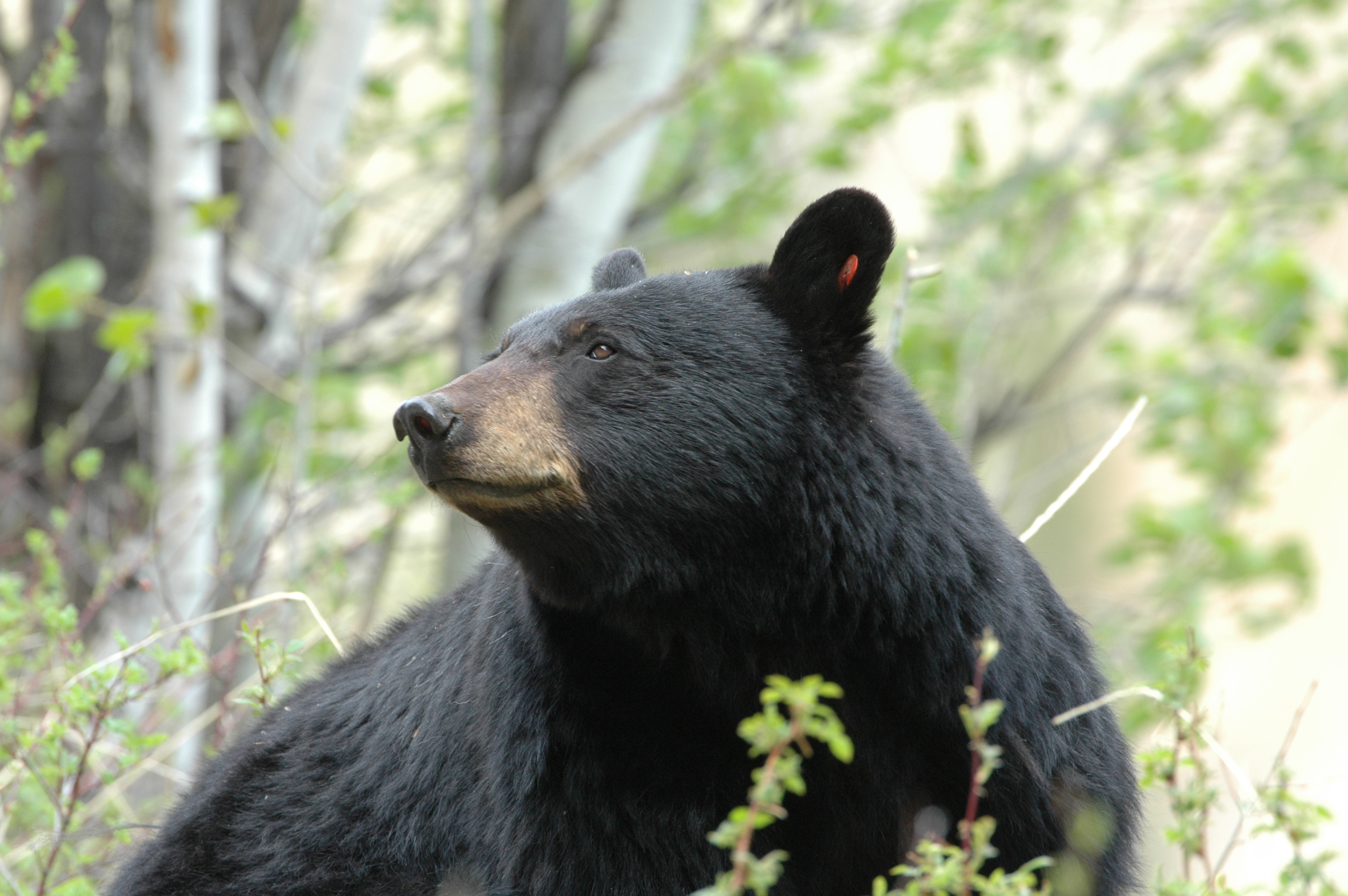
Black bear released into wild after PAWS rehab

http://www.komonews.com/news/local/Hungry-Bear-Gets-Taste-Of-The-Wild-273117731.html

MONROE, Wash. – An underweight black bear that was rehabilitated after living off a Redmond family’s bird feeder was released into the wild Thursday afternoon.

The Albertson’s in Monroe served as the meeting spot for a caravan into the Cascades where the bear was released. She let out a growl, which wildlife agents say is a good sound as it shows the bear is still afraid of people even after 3 months in captivity.

In June, officers used a doughnut to lure the 1-year-old bear when they realized she was underweight, and brought her to PAWS for rehabilitation.

“She came in somewhere around 45 pounds when she should have been way up close to 100 pounds,” PAWS Director Jennifer Convy said.

Naturalists reintroduced the bear to her native diet of skunk cabbage and berries, and discovered she doesn’t like radishes or watermelon.

Fish and Wildlife officers drove 60 miles from the PAWS office in Lynnwood into a remote mountainous area along the Cascades.

Officers fired a non-lethal bean bag shot at the animal and shouted, “Get out of here bear!” They say it’s their tough love way of teaching her to stay away from people.

Less than eight seconds after the trap opened the bear had vanished into the wild.

It cost PAWS roughly $3,000 to feed and care for the bear. The organization is holding its annual Big Paws Walk Fundraiser September 6, 2014 at Marymoor Park, which helps raise money for the rehabilitation of wild animals.

Photo Copyright Jim Robertson

Photo Copyright Jim Robertson

Aerial Hunter Killing Washington Wolves

1920332_613143138754489_331154733_n

Hunter Hired by Washington State Kills 1 Wolf

One wolf has been killed by a hunter hired by Washington, a state where the animals have been regaining a foothold in recent years after being hunted to extinction in the early 1900s.

The state Department of Fish and Wildlife said hunters were back out Monday, targeting three more wolves in the Huckleberry Pack to protect sheep in rural southern Stevens County.

Wolves from the Huckleberry Pack this month have killed 22 sheep and injured three more, despite preventive measures, the agency said.

Environmental groups oppose the hunt.

Wolves began moving back into the state in the early 2000s from Idaho and Canada, and they are protected under state and federal law. The state exterminated an entire pack of wolves to protect a herd of cattle in mountainous Stevens County in 2012.

The most recent hunt is designed to protect a herd of 1,800 sheep owned by Dave Dashiell of the town of Hunters, located about 50 miles northwest of Spokane.

“Unfortunately, lethal action is clearly warranted in this case,” said Nate Pamplin, the agency’s wildlife program director, on Monday. “Before we considered reducing the size of the pack, our staff and Mr. Dashiell used a wide range of preventive measures to keep the wolves from preying on the pack.”

Non-lethal activities are continuing, he said.

Amaroq Weiss of the Center for Biological Diversity said the hunt proves the state prefers to kill the wolves.

“The department has never been interested in making sure sufficient non-lethal conflict measures are in place,” Weiss said. “They have wanted to gun for these wolves from the start.”

The state could have used rubber bullets or paintball rounds to harass the wolves, but instead resorted immediately to airborne snipers, she said.

On Saturday, crews found five dead and three injured sheep that were attacked Friday night or early Saturday morning, the agency said. Investigators confirmed that wolves were responsible for all of the attacks.

On Saturday evening, a marksman contracted by the Department of Fish and Wildlife killed one member of the pack from a helicopter. The agency has authorized killing three more wolves from the pack, which contains about a dozen wolves.

Wolves were driven to extinction in Washington in the early 1900s by a government-sponsored eradication program on behalf of the livestock industry. Their population has grown to at least 52 wolves today.

Some ranchers and hunters vehemently oppose the return of the wolves, saying the animals prey on livestock and deer populations.

[Deer populations? Excuse me, but yes, wolves do prey on deer–always have–long before humans started claiming them all as a “game” species. Hunters claim to be keeping the deer from overpopulating and starving, but at the same time they get upset if a natural predator returns to its historic place and does part of the job for them.]

The current situation in Stevens County meets all of the agency’s conditions for lethal removal, Pamplin said. That includes repeated wolf kills; the failure of non-lethal methods to stop the predation; the attacks are likely to continue; and the livestock owner has not done anything to attract the wolves.

[It seems to me, 1,800 sheep in one place should be considered doing something to attract wolves (not to mention cougars and coyotes). The obvious non-lethal answer: phase out the sheep.]

more: http://abcnews.go.com/US/wireStory/hunter-hired-washington-state-kills-wolf-25118910

Feds to Consider Translocating Bears to North Cascades National Park

biologicaldivesity.org

August 21, 2014

Contact: Noah Greenwald,

One Month After Center Files Petition to Expand Grizzly Bear Recovery Feds Take Action

WASHINGTON— The National Park Service this week took an important step toward recovering grizzly bears in the North Cascades in Washington state. The agency says it is beginning a three-year process to analyze options for boosting grizzly bear populations in the area, including the possibility of translocating bears and developing a viable population.

“We’re happy to see the Park Service begin the long-overdue conversation about bringing grizzly bears back to the North Cascades,” said Noah Greenwald, endangered species director with the Center for Biological Diversity. “Grizzlies have lost more than 95 percent of their historic habitat in the lower 48 states so we welcome any step that brings them closer to returning to some of their ancestral homes.”

In June, the Center petitioned the U.S. Fish and Wildlife Service to begin returning grizzly bears to vast swaths of the American West. The petition identified more than 110,000 square miles of potential grizzly bear habitat, including parts of Washington, California, Colorado, New Mexico, Arizona and Colorado.

Today, there are roughly 1,500-1,800 grizzly bears in the continental United States, most of them in and around Yellowstone and Glacier national parks. The grizzly populations remain separated from each other, which impedes genetic exchange and limits their ability to expand into new areas.

The Northern Cascades ecosystem includes about 9,800 square miles in the United States and 3,800 square miles in Canada. A grizzly bear has not been spotted on the U.S. side since 2010.

“The Northern Cascades has the potential to host a viable grizzly bear population,” Greenwald said. “The same could be said for many spots scattered throughout the West. If grizzly bears are ultimately going to have a thriving, healthy population no longer threatened by extinction, they’ve got to be given a chance to return to some of the places they were driven out of years ago.”

The Park Service says it will develop its “environmental impact statement” for grizzly bears in the North Cascades in conjunction with the Fish and Wildlife Service.

Photo Copyright Jim Robertson

Photo Copyright Jim Robertson