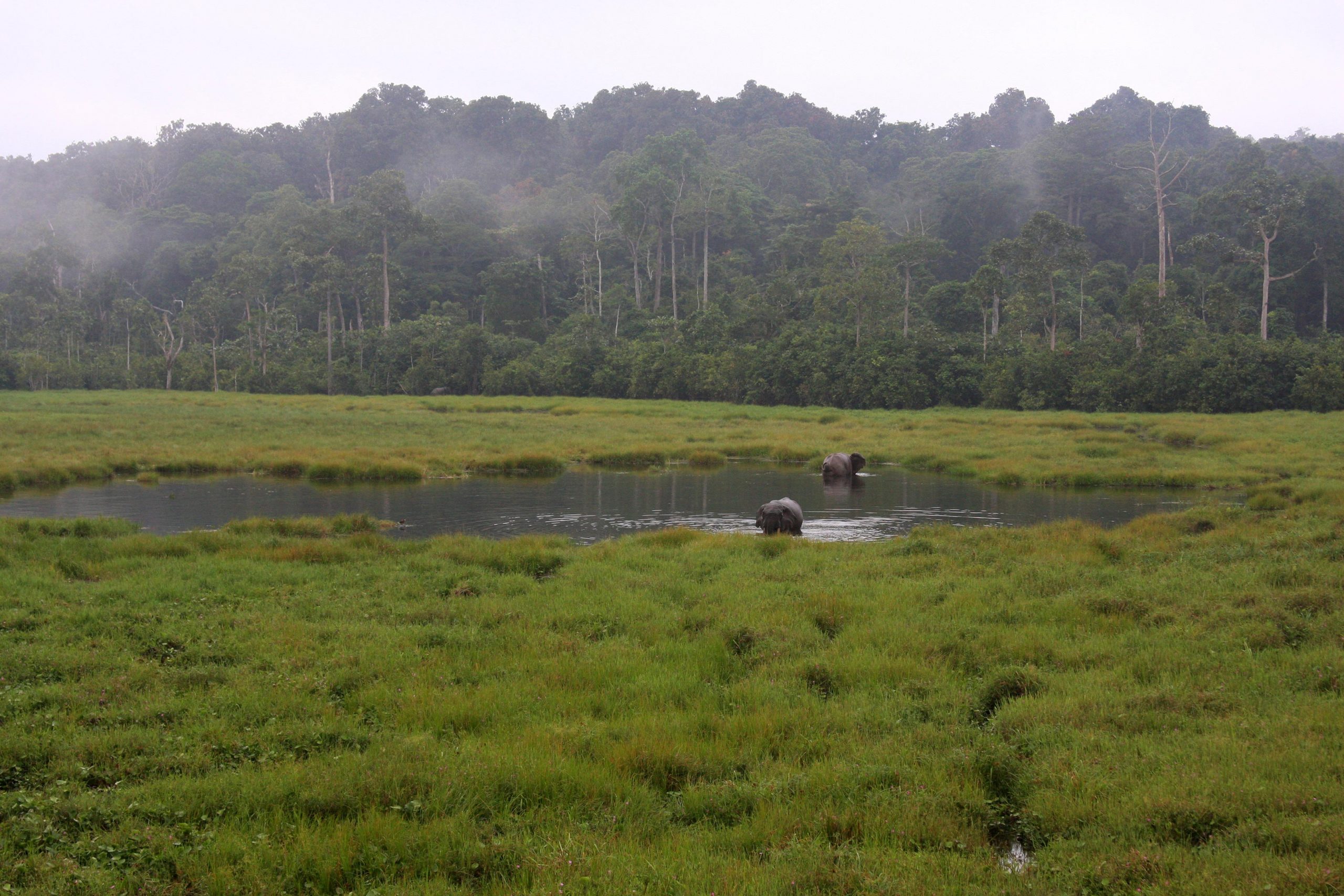
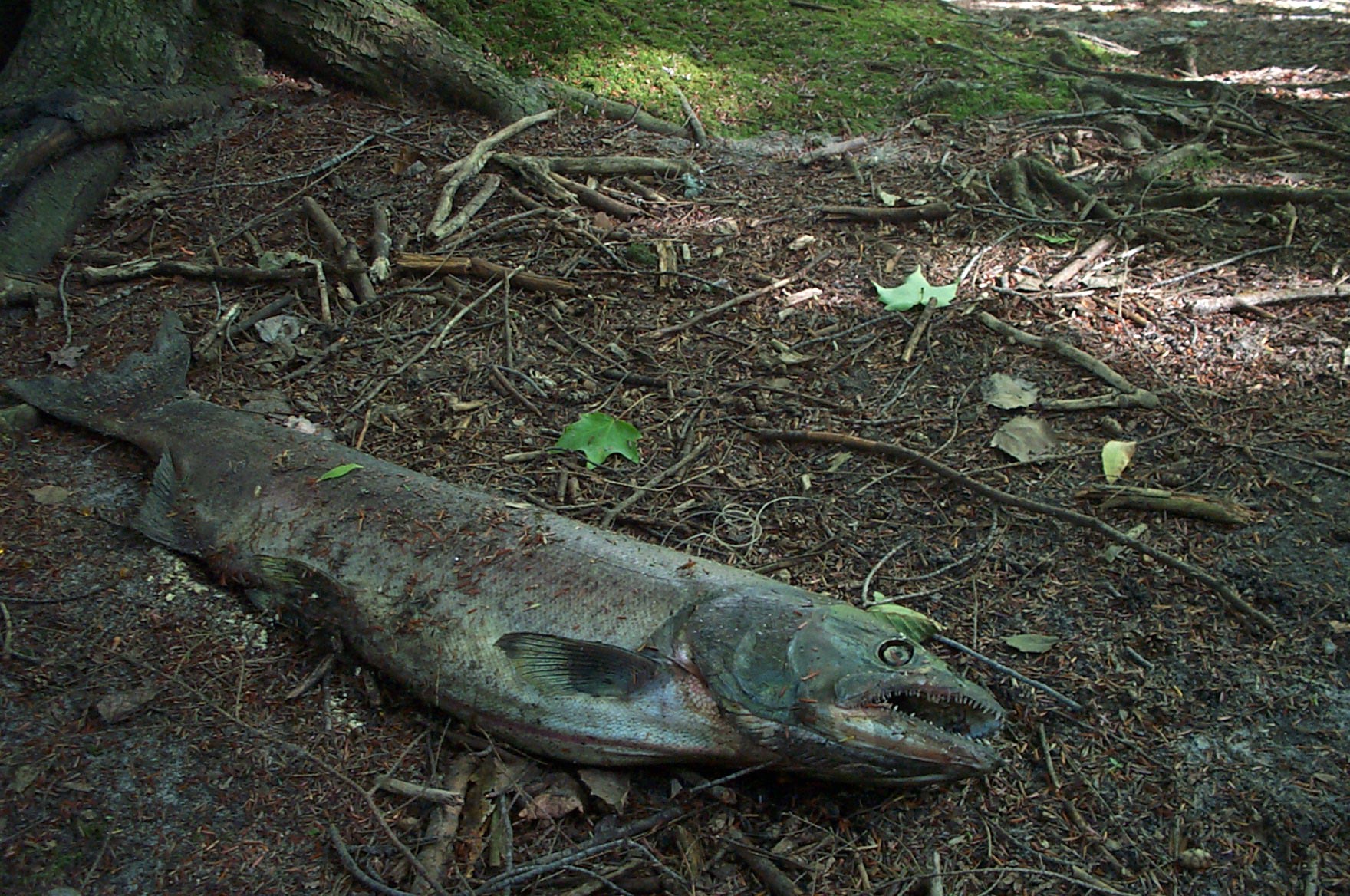
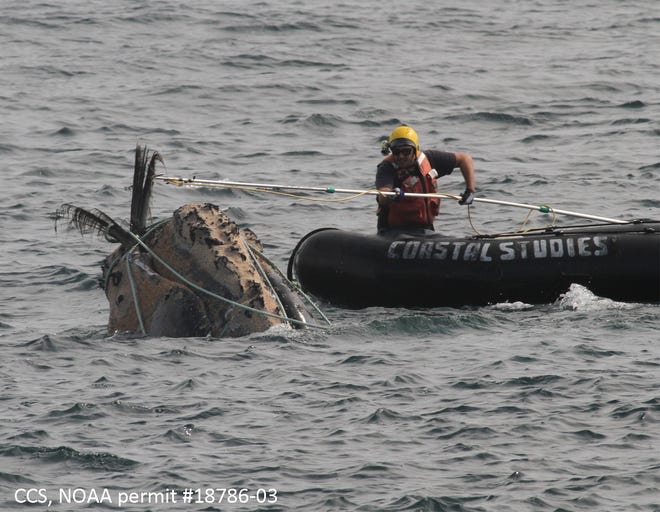
The Whale Entanglement Prevention Act introduced on Feb. 10 proposes that trap fisheries such as the crabbing industry use ropeless gear by Nov. 1, 2025, to stop the injury or accidental death of endangered marine life.click to enlarge
Photo By Jayson Mellom
GEAR CONTROVERSY Dungeness crab fishermen say they oppose new legislation that would mandate ropeless gear because it’s not effective and it’s overpriced.
Authored by Assemblymember Rob Bonta (D-Oakland) in collaboration with Social Compassion in Legislation and the Center for Biological Diversity, Assembly Bill 534 argues that crabbers use antiquated trapping gear that needlessly harms marine life.
California Coast Crab Association President Bejamin Platt said the industry has been against ropeless gear because it’s not cost-effective—the current price for the gear is more than $1,700.
“This is a particularly expensive gear type that no fisherman could afford and its incredibly slow and inefficient compared to what we do,” Platt said.
Dungeness crab fisherman typically use circular steel traps that are submerged onto the seafloor. The traps are attached to lines marked by floats on the sea’s surface that fisherman can pull to retrieve their traps.
The legislation proposes crabbers use ropeless gear with wireless technology that summons the trap back to the surface. However, several start-ups are still in the gear prototype testing phase.
Platt said that the fisherman have less than a minute to pull a pot from the ocean, rebait it, and put it back in the water.
“This [ropeless] gear, which every prototype that we’ve seen so far takes from eight to 10 minutes for each pot to be called back. It’s an electronic signal that has failed 20 percent of the time. So if I’ve got a 400-pot permit on my boat and I lost 20 percent of my gear every time I went out to try this gear, I would lose 80 pots. I’d be out of business within a couple of trips,” he said.
Platt said mandating ropeless gear will mean the end of the Dungeness crab fishery.
The Dungeness crab industry has taken its own steps to reduce the potential for entaglements. On March 2020, Fish and Wildlife approved the Lost or Abandoned Dungeness Crab Trap Gear Retrieval Program, a practice that Platt said many ports in the state already participate in.
At the end of every season, fishermen go out into ocean and look for abandoned or lost traps and return them to the owner, who pays a fee for its return. If the owner refuses to accept a crabpot’s return, their permit allocation is reduced. The industry also created a best practicies guide, which calls for reducing the length of the buoy lines attached to traps.
AB 534 is the Center for Biological Diversity’s latest move in its pursuit to eliminate entanglements. In 2017, the organization sued the California Department of Fish and Wildlife for failing to prevent commercial Dungeness crab gear from entangling, injuring, and killing humpback whales, blue whales, and sea turtles in violation the Endangered Species Act.
The parties settled the lawsuit the following year and created the Risk Assessment Mitigation Program (RAMP), which looks at data and analyzes where/when entanglement risks are higher to dictate the start or closure of Dungeness crab fishing seasons. Center of Biological Diversity Oceans Legal Director Kristen Monsell told New Times that while the RAMP regulations are a good first step, it doesn’t eliminate the risk to marine life entirely.
“Those regulations only apply to commercial Dungeness crab gear. We know that whales and sea turtles are getting tangled up in other fishing gear,” Monsell said. Δ
Shy giant’s journey back from the brink of extinction has received less attention than its charismatic cetacean cousin https://www.youtube.com/embed/swRans1O4Ds?embed_config={%22adsConfig%22:{%22adTagParameters%22:{%22iu%22:%22/59666047/theguardian.com/environment/article/ng%22,%22cust_params%22:%22sens%3Df%26si%3Df%26vl%3D0%26cc%3DUS%26s%3Denvironment%26inskin%3Df%26se%3Dseascape-the-state-of-our-oceans%26ct%3Darticle%26co%3Dashifa-kassam%26url%3D%252Fenvironment%252F2021%252Ffeb%252F18%252Fthe-new-humpback-calf-sighting-sparks-hope-for-imperilled-right-whale%26br%3Df%26su%3D0%26edition%3Dus%26tn%3Dfeatures%26p%3Dng%26k%3Dwildlife%2Cworld%2Ccetaceans%2Cfishing%2Ceurope-news%2Cwhales%2Canimals%2Cspain%2Cenvironment%2Cmarine-life%2Cfishing-industry%2Cconservation%26sh%3Dhttps%253A%252F%252Fgu.com%252Fp%252Fgb88t%26pa%3Df%22}}}&enablejsapi=1&origin=https://www.theguardian.com&widgetid=1&modestbranding=100:39World’s most endangered right whale spotted off Spanish island – videoSeascape: the state of our oceans is supported by
It was a memorable finale to a day out on the Atlantic: a four-metre whale calf gliding past the boat as the divers returned to the Spanish island of El Hierro in the Canaries. Their incredible luck, however, would be made clear hours later, as researchers around the world clamoured for more details after seeing the 47-second video of the encounter online.
The divers had unwittingly stumbled across a North Atlantic right whale – one of the world’s most endangered whales. What made the December encounter extraordinary was that the recently born calf, which appeared to be alone, was spotted thousands of miles away from the species’ usual haunts along the eastern seaboard of Canada and the US.
“When I realised what it was, my hair stood up on end,” says Natacha Aguilar, a marine biologist at the University of La Laguna in Tenerife. “This is a species that has been considered extinct on this side of the Atlantic for about 100 years. And all of a sudden this newborn calf appears in El Hierro.”
This is a species that has been considered extinct on this side of the Atlantic for about 100 years
Natacha Aguilar, marine biologist
More than a dozen volunteers sprang into action, combing the area for any sign of the calf or clues as to how it had ended up in the archipelago long after centuries of whaling wiped out all traces of the species from European waters.
A handful of sightings in European waters over the years had been linked to whales with a penchant for transatlantic journeys. But Aguilar was tantalised by another – albeit more unlikely – possibility. “It could suggest that the species could be starting to recolonise the north Atlantic on the European and African side.”
The sighting was a bright moment for scientists tracking a species that has long been in the spotlight for all the wrong reasons. Since 2017, records show that 47 North Atlantic right whales have been found dead or seriously injured – a devastating blow to a species that has dwindled to fewer than 400 members.
Most of these incidents have been linked to interactions with humans. As North Atlantic right whales turned up snarled in fishing lines, nursing deep wounds from ship strikes or reeling from ocean noise, fear began to set in that the species would be the first great whale to become extinct in modern times.
A North Atlantic right whale swims with a fishing net tangled around her head off Daytona Beach, Florida. Photograph: NOAA/Alamy
It was an unnerving turn for a species that just over a decade ago had been a symbol of resilience. Having been nearly hunted to extinction by whalers – right whales were easy targets as they move slowly, linger in coastal areas and float when killed – the species was the first whale to be protected by law, in 1935.Advertisementhttps://041e63b42a80c08ee9d3e2dca6ecb6b2.safeframe.googlesyndication.com/safeframe/1-0-37/html/container.html
Safeguarded from commercial whaling, their numbers began to slowly increase, galvanising hope that the risk of extinction had been staved off.
Further optimism came from another species that had forged a remarkable comeback after as much as 90% of their population was wiped out by whaling: humpback whales, whose numbers have now climbed into the tens of thousands.
“Humpback whales are one of the greatest conservation success stories of the 20th century,” says Chris Johnson of the WWF’s Protecting Whales and Dolphins initiative. “It’s not perfect but they’ve bounced back.”
“Are North Atlantic right whales the new humpback? I would say yes,” says Johnson. “In that we can succeed at this, too. But it’s going to take all of us. There are important decisions that we need to make in the next few years if we’re going to have species like the North Atlantic right whale around.”
A North Atlantic right whale in the Bay of Fundy, Canada. The whale can be easily identified by the white calluses on its head. Photograph: Brian J Skerry/NG/Getty
Central to saving these whales are the ships that ply the routes off the east coast of North America, as well as the fishers who harvest its waters, rich in lobster and snow crab. Data from US officials suggests that more than 85% of right whales, which can reach the length of a city bus and weigh as much as 70 tonnes, have been entangled in fishing gear at least once.Advertisement
As a result, debate over how best to protect the whales has often been drawn out, wasting precious time for a species on the brink of extinction. “We can’t lose a single whale a year right now,” says Heather Pettis, a scientist at the New England Aquarium, Boston, US. “They really need some immediate action.”
The push for protections has been further complicated by a warming ocean. “This is climate change in action,” says Moira Brown of the Canadian Whale Institute. “You have the most endangered large whale in the north Atlantic having to go further afield to find food because the Gulf of Maine is warming up.”
This search for food has been blamed for the whale’s increased presence in Canada’s Gulf of St Lawrence, an area teeming with ship traffic. It’s a bitter twist on an earlier conservation victory: in 2003, shipping lanes were rerouted in the nearby Bay of Fundy to avoid an important area for the whales.
“When we think of climate change, we think of things happening like the glaciers melting over 100 years,” says Brown. “This has happened in a decade. The pace is phenomenal.”
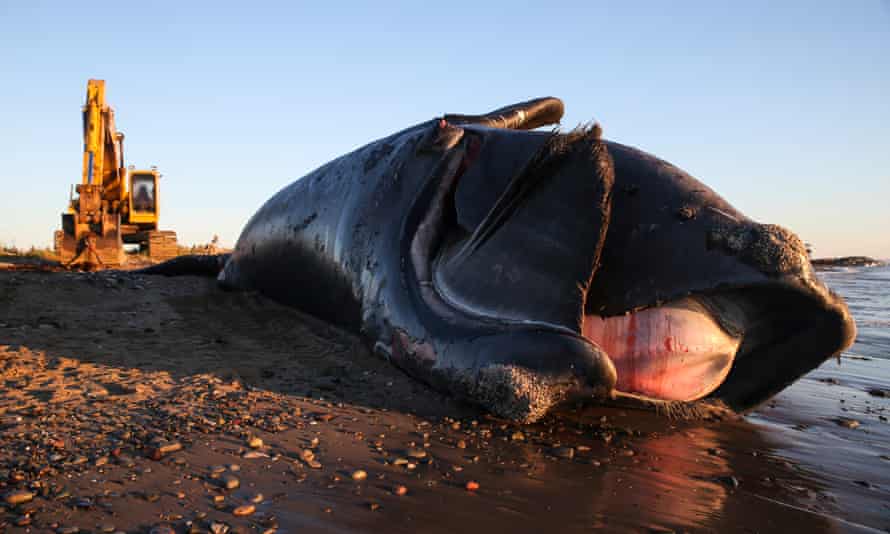
A 9-year-old North Atlantic right whale lies dead on a beach in New Brunswick, Canada after being towed onto the shore. The whale was known to researchers who said it had endured at least one vessel strike and three entanglements in fishing gear. Photograph: Nathan Klima/Boston Globe/Getty
The overlapping threats facing the whales hint at the complexity of the conservation issues involved, four decades after a groundswell of support pushed the International Whaling Commission to impose a moratorium on commercial whaling, says Greenpeace’s Willie Mackenzie.Advertisement
“Directly shooting them in the head with a harpoon is obviously a bad thing,” says Mackenzie. “But if we’re talking about ship strikes or fishing interactions, what’s the answer? You don’t get as many fish? You shouldn’t buy as much stuff? It’s not a direct cause and effect thing that people can understand very simply.”
He ascribes some of the success of the earlier campaign to imagery, whether it was the blood-soaked horror of commercial whaling captured by Greenpeace, or the awe-inspiring acrobatics of whales. The same strategy is now complicated by the fact that many of the species most at risk today are shyer and less well-known.
There’s a PR job here – humpbacks are really good at it and right whales not so much
Willie Mackenzie, Greenpeace
“There’s a PR job here and humpbacks are really good at it and right whales not so much,” he says, citing images of humpbacks spectacularly leaping out of the water or slapping their tails on the surface. “If you want to show people the majesty of a whale, that’s the picture you have to show them because they’re not going to be very excited about a black lump in the ocean or a really distant picture of something deep diving.”
Around the Canary Islands, more than six weeks after the North Atlantic right whale was spotted, researchers continue to search for clues. “Right now, there’s not much hope that it will appear again,” says Aguilar. “A newborn of that age is dependent on the mother. Maybe they’ve reunited and are still in the area. But if it is still not with its mother and has not been adopted by another whale, then it has died.”
Still, she is quick to characterise the sighting as a “historical moment” for the region. “It was a moment that gave me shivers and made me want to cry,” she says. “To have a whale considered extinct appear in the Canary Islands, it’s proof that nature, if we take care of it, has an enormous capacity to recover.”
By Sophie Yeo19th January 2021The world’s largest animals are unusually good at taking carbon dioxide out of the atmosphere.S
Seeing a whale stranded on a beach often provokes a strong reaction. It can make people curious – beached whales can do strange things, like explode. It can also be upsetting to witness a creature so magnificent in water reduced to lifeless blubber on land. What rarely registers, however, is the lost opportunity for carbon sequestration.
Whales, particularly baleen and sperm whales, are among the largest creatures on Earth. Their bodies are enormous stores of carbon, and their presence in the ocean shapes the ecosystems around them.
From the depths of the ocean, these creatures are also helping to determine the temperature of the planet – and it’s something that we’ve only recently started to appreciate.
“On land, humans directly influence the carbon stored in terrestrial ecosystems through logging and the burning of forests and grasslands,” according to a 2010 scientific paper. “In the open ocean, the carbon cycle is assumed to be free of direct human influences.”
But that assumption neglects the surprising impact of whaling.
Whales are not only valuable in death. The tides of excrement that these mammals produce are also surprisingly relevant to the climate
Humans have killed whales for centuries, their bodies providing us with everything from meat to oil to whalebone. The earliest record of commercial whaling was in 1000 CE. Since then, tens of millions of whales have been killed, and experts believe that populations may have declined from anywhere between 66% and 90%.
The bodies of whales, among the largest creatures on Earth, are huge stores of carbon (Credit: Alamy)
When whales die, they sink to the ocean floor – and all the carbon that is stored in their enormous bodies is transferred from surface waters to the deep sea, where it remains for centuries or more.
In the 2010 study, scientists found that before industrial whaling, populations of whales (excluding sperm whales) would have sunk between 190,000 to 1.9 million tonnes of carbon per year to the bottom of the ocean – that’s the equivalent of taking between 40,000 and 410,000 cars off the road each year. But when the carcass is prevented from sinking to the seabed – instead, the whale is killed and processed – that carbon is released into the atmosphere.
Andrew Pershing, a marine scientist at the University of Maine and an author of that study, estimates that over the course of the 20th Century whaling added about 70 million tonnes of carbon dioxide into the atmosphere. “This is a lot, but 15 million cars do this in a single year. The US currently has 236 million cars,” he says.
But whales are not only valuable in death. The tides of excrement that these mammals produce are also surprisingly relevant to the climate.
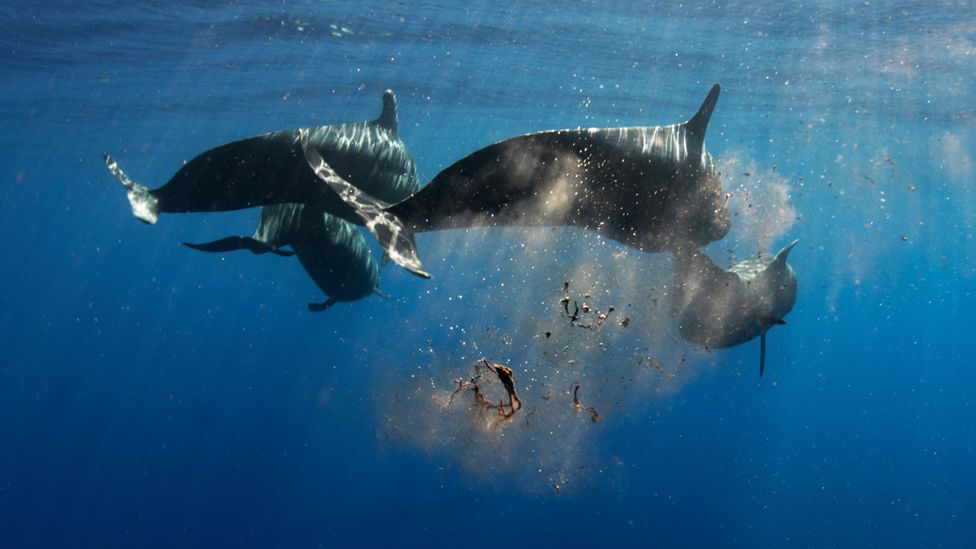
Whales feed in the deep ocean, then return to the surface to breathe and poo. Their iron-rich faeces creates the perfect growing conditions for phytoplankton. These creatures may be microscopic, but, taken together, phytoplankton have an enormous influence on the planet’s atmosphere, capturing an estimated 40% of all CO2 produced – four times the amount captured by the Amazon rainforest.
“We need to think of whaling as being a tragedy that has removed a huge organic carbon pump from the ocean that would have been having a much larger multiplying effect on phytoplankton productivity and the ocean’s ability to absorb carbon,” says Vicki James, policy manager at Whale and Dolphin Conservation (WDC).
Whale poo is a powerful fertiliser for the ocean’s phytoplankton, which have a large potential to capture carbon (Credit: Alamy)
The ocean’s missing whales have had some unexpected impacts, too.
For instance, as whale populations declined, the orcas that predated them turned to smaller marine mammals like sea otters. The otters subsequently declined, leading to the spread of sea urchins, which munched away the kelp forests around the North Atlantic – with a knock-on effect on marine carbon sequestration.
The beauty of restoring whale populations is that there is plenty of space in the ocean – space once filled with whales
What this means is that restoring whale populations to their pre-whaling numbers could be an important tool in tackling climate change, sequestering carbon both directly and indirectly, and thus helping to make a small dent in the enormous volume of CO2 emitted by fossil fuels every year.
There have been various other proposals for how to achieve this reduction, including tree-planting and stimulating phytoplankton blooms by adding iron to the ocean, a form of geoengineering known as iron fertilisation. But tree-planting requires a scarce resource: terrestrial land, which may already be in use as another valuable habitat or farmland. The beauty of restoring whale populations is that there is plenty of space in the ocean – space once filled with whales.
The resulting plumes of whale poo would also vastly outstrip the potential of ocean iron fertilisation. It would take 200 successful blooms per year to match the potential of a fully restored whale population, according to Pershing’s study.
Marine phytoplankton capture carbon dioxide through photosynthesis, acting as a carbon sink (Credit: Alamy)
And, unlike with risky geoengineering techniques, the benefits would not just accrue to the climate, but to the whole ecosystem.
“Whale carcasses provide a unique habitat for deep sea species, many of which are only found on these ‘whale falls’. Research has shown that a single skeleton can provide food and habitat for up to 200 species during the final stages of decay,” says WDC’s James.
This study found that, when you add up the value of the carbon sequestered by a whale during its lifetime, alongside other benefits like better fisheries and ecotourism, the average great whale is worth more than $2m (£1.48m), with the entire global stock amounting to over $1tn (£740bn).
The economists behind this study are now working on a project to transform this price tag from theory into reality, through a mechanism known as carbon offsetting. The idea is to persuade carbon emitters to pay a certain amount of money to protect whale populations, rather than invest in reducing their own emissions, helping them to achieve a neutral carbon footprint.
“What you’re doing is valuing the service from the whales, because they’re sequestering carbon dioxide,” says Thomas Cosimano, one of the economists who co-authored the IMF paper. “It doesn’t mean that whales aren’t doing other things. This is just a benchmark we can use to establish a lower bound on what the value of the whale would be.”
With the carbon-capturing potential of whales quantified, economists are devising an offsetting scheme centred on whales (Credit: Alamy)
It’s a complicated scheme, but it’s not beyond the realms of possibility: the team has been working on a similar carbon-market-based approach for protecting elephants from poachers in the central tropical forests of Africa, which is expected to be in place by the end of the year.
Already, a Chilean charity called the Fundación MERI is figuring out the foundations for a whale-based carbon market, installing early-warning acoustic buoys that will monitor the locations of whales and generate alternative routes for ships. It is believed to be the world’s first project to protect whales because of the carbon storage that they provide.
The IMF study concludes that whale protection must now become a top priority in the global effort to tackle climate change.
“Since the role of whales is irreplaceable in mitigating and building resilience to climate change, their survival should be integrated into the objectives of the 190 countries that in 2015 signed the Paris Agreement for combating climate risk,” the authors write.
Later this year, the UN climate conference will take place in Scotland, a country whose coasts regularly host species like minke and humpback whales. With a carbon market for whales now a real possibility, perhaps it’s time to put these creatures on the agenda.
The nutrients produced by whales when they poo has been found to fertilize the interior of forests around the world.
Big animals have the power to change the face of our planet: they sculpt woodlands, power ecosystems and can even help to fertilize the interior of rainforests.
Conservation is working to prevent the largest animals on Earth from sliding into extinction — and saving them could be more important than we ever realized.
Humans have been altering the environment for tens of thousands of years. One of the starkest consequences of this is the loss of many large animals, known collectively as megafauna, from much of the planet.
When people spread out of Africa and first arrived in places like the Americas, Australia, New Zealand and Europe, the land was dominated by some truly huge animals.
Giant ground sloths and armored glyptodons roamed across the savannas of South America, huge mammoths and cave bears were trampling around the chilly landscapes of Europe, while truly enormous wombat-like diprotodons and moas were to be found across much of Australia and New Zealand.
These species had a significant impact on the habitats in which they lived, and when they were driven to extinction, they left an ecological hole. But this wave of extinction is not over.
Those large animals that did survive the first round are now facing a similar threat. Elephants, rhinos, and some species of whales are all balancing on the edge of extinction.
It is only relatively recently, however, that we have begun to understand just how wide reaching the influence of these animals is on the natural world. Once we know more, it could change the way we go about protecting them.
Big animals are influencing environments such as the Amazon not only on national or international scales, but even global ones. Credit: Neil Palmer/CIAT/CIFOR
Ken Norris, Head of Life Sciences at the Museum, has published a piece with colleagues that raises the question of how conservationists could think more globally.
“These big animals are iconic in a conservation sense and we are not arguing that we shouldn’t conserve them in their own right,” explains Ken. “But there are also a lot of fundamental things these animals do ecologically, and we are only just beginning to understand the really massive scales on which they operate.
“Currently we are not conserving those systems at scales large enough to protect and restore these key ecological roles. That is the point.”
Large animals, such as elephants and whales, are often referred to as ecosystem engineers. This is because as they go about their day-to-day business, these huge animals alter their environment in such dramatic ways that they help to create and maintain entirely new habitats.
Elephants, for example, are so big that they will regularly push down trees to get to food from the upper branches, and as a result open up woodlands that allow understory plants to thrive in the sunshine. They are also known to help sustain entire rainforests as they spread the large seeds of fruit trees over vast distances before depositing them in little piles of natural fertilizer.
In the depths of the African rainforest, elephants create and maintain huge forest openings known as bais, which are then used by an array of other species from bongo antelopes to gorillas. Credit: Michelle Gadd/U.S. Fish and Wildlife Service
But these big animals have an impact on a much larger scale even than this.
“We didn’t realise until a few years ago just how important large animals are to large scale earth system processes,” explains Ken. These are the systems in which nutrients are cycled through the environment on a global scale.
“For example, there is research we cite which shows how important nutrients from the oceans are for massive biomes like the Amazon. You wouldn’t realize it, but there is a nutrient pump that exists which comes from the ocean up the rivers and onto the land.”
Animals such as whales and fish poop nutrients into the water. These nutrients help to fuel the plankton, which make their way into smaller fish. The fish are then either eaten by seabirds which in turn deposit their own poop on land, or feed larger migratory fish.
These fish then travel up the river systems and deep inland through the vast network of waterways. They will then be eaten by predators such as birds of prey and big cats, or simply die in the rivers, and as a result spread these nutrients that originated in the oceans over the land and deep within the forests.
“In recent years, some people have estimated how degraded those nutrient systems are because of the loss of large animals, and the impact has been massive,” explains Ken. “They estimate that certain nutrient pumps may have declined by over 80%, in part because of the removal of large animals such as whales.”
Migratory fish that originated in the oceans can be found spread across the forest floors, distributing nutrients far inland and feeding the forest. Credit: anttler (CC BY-NC-ND 2.0)
Global cooperation
When it comes to protecting nature, conservation movements have tended to focus on saving specific species in particular locations.
Recently, scientists have been thinking more broadly. For example, transboundary conservation initiatives have been created which straddle multiple countries. But Ken and his colleagues argue that, while this is undoubtedly moving in the right direction, if we want to take into account the scale at which these nutrient cycles operate, we need to think bigger still.
“There are some examples of this emerging, but we are still not up at the necessary levels of scale,” says Ken. “For example there is one of these transboundary conservation initiatives in the north west US and the west of Canada called Y2Y, where they have reintroduced wolves but conservation at these scales may still not be large enough.
“We need to be looking at ecosystems such as the Amazon which are millions of square kilometers.”
This might seem like an impossible challenge, but environmental initiatives of this scale have been achieved before, such as when the world’s governments came together to agree to fix the hole in the ozone layer or the international ban on whaling.
“It is an enormous challenge to reinstate these systems, but the impacts of not doing anything about it could be really severe,” says Ken. “We simply don’t know enough about this.
“We know that losing big animals is ecologically problematic at these massive scales, but we don’t know the exact impacts of losing them. How long have we got to sort out those issues, and what could be done about them?
“This is really a call to get people thinking about these problems and issues.”
The National Ocean and Atmospheric Administration released a much-anticipated plan on Wednesday that it says will reduce North Atlantic right whale mortalities from entanglement in fishing gear by 60%.
The right whale is the most endangered great whale on the planet, with around 360 individuals remaining, including less than 100 breeding-age females.
The new plan achieves the 60% mortality reduction through new seasonally closed areas, increases in the number of pots connected to a buoy line and requirements to add more weak links that allow a whale to break vertical lines and hopefully shed lines and pots.
New closures include an area south of Nantucket where right whales are congregating year-round but had been subject only to voluntary speed reductions.
NOAA will be holding public hearings on the draft environmental impact statement for the new whale plan, and public comments will be taken until March 1, with an eye toward having new regulations in place for the beginning of the new fishing year on May 1.
The North Atlantic population size has been lower, with an estimated 270 individuals in 1990. The population rebounded to 481 by 2011.
Since then, however, the species has been in decline. Recently, as right whales have migrated into new territory in Canada in search of food, the number of dead right whales caught in fishing gear or hit by vessels has shot up. Particularly hard hit were females, leading some researchers to worry that the species could reach functional extinction — too few females to rebuild the species — within a decade or two.
Scientists have determined that less than one right whale per year, on average, can die of human-induced causes. But that number has been exceeded every year, particularly since 2017 when 17 right whales died, including 12 in Canada and five in the U.S.
NOAA reported that there were only 22 calves born from 2017 to November 2020, with 31 mortalities over that same period. An additional 13 right whales are considered to have life-threatening injuries. Ship strikes were once the leading cause of right whale death, but that has changed, with entanglements causing 85% of mortalities between 2010 and 2015.
The NOAA plan resembles one that was passed by an advisory group, the Atlantic Large Whale Take Reduction Team, over a year ago that also sought a 60% reduction in mortalities, including a 50% cut in the number of vertical lines in Maine and a 30% cut in Massachusetts, the two leading states in landings and effort for the lobster fishery. Maine subsequently withdrew from that multi-state agreement, and NOAA then took over the plan.
Environmental groups, scientists and animal rights activists worried that NOAA was going too slow as right whales continued to die and inch closer to extinction. Many also saw the measure as just an intermediate step bridging to the development of affordable and effective technology that would remove much of the vertical lines that ensnare whales by having gear buoys resting on the bottom until summoned by a signal from the fishing boat on the surface.
“After such an unprecedented delay, this new rule will help stem the surge of right whale deaths we’ve seen over the last several years,” said Erica Fuller, senior attorney at the Conservation Law Foundation. “Ropeless fishing is the only solution that protects whales and fishermen, and the rule expands that practice. However, NOAA must end its reliance on weak rope as a solution and get emergency protections on the water immediately while this rule is finalized.”
Sharon Young, the field director for marine wildlife protection for the Humane Society of the United States, worried that the fishing industry and others might think this was the solution.
“It’s a step in the right direction, however, there will still be a lot of risk-prone lines in the water that will entangle whales, and what we need to work towards is line-free fishing,” Young said. “By no means does this fix the problem of fatal entanglements in a declining species.”
The whales in the group seem to sing a unique song.
Researchers said that the blue whale song that crackled through the team’s underwater recordings was unlike any they had heard.Credit…Robert Baldwin/Environment Society of Oman
Weighing up to 380,000 pounds and stretching some 100 feet long, the blue whale — the largest creature to have ever lived on Earth — might at first seem difficult for human eyes and ears to miss.
But a previously unknown population of the leviathans has long been lurking in the Indian Ocean, leaving scientists none the wiser, new research suggests.
The covert cadre of whales, described in a paper published last week in the journal Endangered Species Research, has its own signature anthem: a slow, bellowing ballad that’s distinct from any other whale song ever described. It joins only a dozen or so other blue whale songs that have been documented, each the calling card of a unique population.
“It’s like hearing different songs within a genre — Stevie Ray Vaughan versus B. B. King,” said Salvatore Cerchio, a marine mammal biologist at the African Aquatic Conservation Fund in Massachusetts and the study’s lead author. “It’s all blues, but you know the different styles.”
The find is “a great reminder that our oceans are still this very unexplored place,” said Asha de Vos, a marine biologist who has studied blue whales in the Indian Ocean but was not involved in the new study.
Dr. Cerchio and his colleagues first tuned into the whales’ newfound song while in scientific pursuit of a pod of Omura’s whales off the coast of Madagascar several years ago. After hearing the rumblings of blue whales via a recorder planted on the coastal shelf, the researchers decided to drop their instruments into deeper water in the hopes of eavesdropping further.CLIMATE FWD:: Our latest insights about climate change, with answers to your questions and tips on how to help.Sign Up
“If you put a hydrophone somewhere no one has put a hydrophone before, you’re going to discover something,” Dr. Cerchio said.
A unique blue whale song
The song of the northwest Indian Ocean blue whale population, sped up 20 times to be more audible to human ears.Listen
A number of blue whale populations, each with its own characteristic croon, have long been known to visit this pocket of the Indian Ocean, Dr. Cerchio said. But one of the songs that crackled through the team’s Madagascar recordings was unlike any the researchers had heard.
By 2018, the team had picked up on several more instances of the new whales’ now-recognizable refrain. Partnerships with other researchers soon revealed that the distinctive calls had been detected at another recording outpost off the coast of Oman, in the Arabian Sea, where the sounds seem particularly prevalent. Another windfall came later that year when Dr. Cerchio learned that colleagues in Australia had heard the whales crooning the same song in the central Indian Ocean, near the Chagos Archipelago.
Data amassed from the three sites, each separated from the others by hundreds or thousands of miles, painted a rough portrait of a pod of whales moseying about in the Indian Ocean’s northwest and perhaps beyond.
Using acoustic data to pin down a new population is, by nature, indirect, like dusting for fingerprints at the scene of a crime. But Alex Carbaugh-Rutland, who studies blue whales at Texas A&M University and was not involved in the study, said the results “were very sound, no pun intended.”
Not much is known about blue whale songs, although most researchers think that they help males woo their mates, as is the case with closely related species.Credit…Robert Baldwin/Environment Society of Oman
The researchers ruled out the possibility that the songs could be attributed to other species of whales. And side-by-side comparisons of the new blue whale tune with others showed convincingly that the northwestern Indian Ocean variety was distinct, Mr. Carbaugh-Rutland said. “I think it’s really compelling evidence,” he said, drawing a comparison to linguistic dialects.
Genetic samples would help clinch the case, he added. But blue whales, which spend most of their time far from shore, are difficult to study. Whaling in the 19th and 20th centuries also culled hundreds of thousands from their ranks; an estimated 10,000 to 25,000 blue whales are thought to remain.
Not much is known about blue whale songs, although most researchers think that they help males woo their mates, as is the case with closely-related species. That can make any modifications to a cetacean melody fairly high stakes, Dr. de Vos said: “If two populations can’t talk to each other, over time, they’re going to grow apart.”
Eventually, populations with different takes on a tune might splinter into subspecies, with their own behaviors and quirks. There’s not yet evidence to show that has happened with these blue whales, nor much information on what might have driven them apart from their southerly kin. But even if the whales in this new group don’t yet formally occupy a new branch on the tree of life, they are worth getting to know.
“What things like this show us is that there are different populations, with different adaptations, with potentially different needs,” Dr. de Vos said. To conserve the world’s blue whales, she said, “there’s not one single protection measure that’s going to work.”
Updated 2:27 AM ET, Sun December 13, 2020Pictured here is 16 year-old Millipede and her newborn baby. Images taken under NOAA Research Permit 20556-01.
(CNN)The year is ending on a positive note for North Atlantic right whales, a critically endangered species, with the spotting of two newborn calves.The right whale is one of the rarest marine mammals in the world, according the National Oceanic and Atmospheric Administration (NOAA), and there are fewer than 400 of them left in the world, Jessica Powell, a marine mammal biologist for NOAA Fisheries, told CNN.One of the babies, spotted on December 4 off the coast of Cumberland Island, Georgia, was born to Chiminea, who is believed to be 13 years old and is a first time mom. The second calf, found off Vilano Beach in Florida three days later, was born to 16-year-old Millipede.The right whale’s calving season begins in mid-November and runs through mid-April.Content by TUMS®These Firefighters Know HeatWhen hungry heroes get heartburn, TUMS® is here to save the day.”With a population at such low levels, every individual counts, and it is great to see these two new calves at essentially the beginning of the calving season,” Jamison Smith, the executive director of the Blue World Research Institute (BWRI) who captured photos of the babies using drones, told CNN.”It gives us hope that there will be more over the next few months. This species needs all the help they can get so that we might be able to show our grandkids a right whale in the future rather than just tell stories about them.”Millipede and her newborn baby. Images taken under NOAA Research Permit 20556-01.The leading cause for whales’ deaths and injuries involve human interaction, including vessel strikes and entanglement in fishing gear, Powell said. It is illegal for anyone, including boats, drones, surfers, and swimmers, to approach whales within 500 yards without a research permit.close dialog
The day’s biggest stories in 10 minutes or less.Sign up and get access to videos and weekly student quizzes.Sign Me UpNo ThanksBy subscribing you agree to ourprivacy policy.“It’s a species that is struggling and it’s essentially all hands on deck to try and save these whales,” Powell said. “We advise folks anywhere in the southeast to be really cautious when on the water during the calving season, to look out for calves, slow down around them, and give them space. Whatever we can do to give these whales a fighting chance.”This species of whale has also been experiencing an unusual mortality event (UME) over the past three years, according to NOAA. Since 2017, at least 32 dead and 13 seriously injured whales have been documented by the organization.In November, biologists mourned the loss of a North Atlantic right whale calf who was discovered dead on the shore of a barrier island off North Carolina. Preliminary reports indicated that the animal died during birth or shortly after, according to Powell, but scientists are waiting for pathology results to confirm the cause of death.
See rescuers save huge group of whales after mass stranding 01:13
(CNN)Sri Lankan rescuers have returned 100 whales to sea after a mass beaching on Monday, the country’s navy has said.Scores of short-finned pilot whales began coming ashore at Panadura, 25 kilometers (15 miles) south of Colombo, on Monday afternoon, and authorities were mobilized to help them back to sea.Locals joined officials from Sri Lanka’s navy and coast guard in tending to the whales.Sri Lanka’s Marine Environment Protection Authority (MEPA) told AFP news agency that it was the largest single pod of whales stranded in the South Asian country.A dead pilot whale on a beach on Sri Lanka’s western coast after the mass stranding.”It is very unusual for such a large number to reach our shores,” MEPA chief Dharshani Lahandapura told AFP, adding that the cause of the stranding was not known.Rescue teams worked through the night with assistance from the navy, coast guard, lifeguards, and residents.
Do you want the news summarized each morning?We’ve got you.Sign Me UpBy subscribing you agree to ourprivacy policy.The death of four whales is being investigated. The navy said that the whales might have followed one whale off course and become stranded.In September, nearly 500 whales beached in Tasmania, Australia, in that state’s largest ever beaching. At least a third died during rescue attempts.Whales are highly social animals and travel in pods, but the causes of mass strandings are not clear.
The islands see around 800 long-finned pilot whales killed every year as they often swim in close proximity to the shoresBy Akshay Pai Published on : 02:57 PST, Jul 19, 2020(Getty Images)
Animal rights activists have called for a ban of the Faroe Islands’ annual whale hunt, which they termed as an “insane blood sport” and which sees the waters turn a dark red as hundreds of the mammals are slaughtered.
The Grindadràp, which means slaughter in Faroese, has been practiced in the islands for more than a 1,000 years, as per some estimates, and involves the killing of schools of long-finned pilot whales that often swim in proximity to the islands’ shores.
The hunt involves the whales being surrounded by boats, who then drive them into a bay or to the bottom of a fjord, where they are killed by people lying in wait with knives. After the slaughter, the waters turn red, with pictures of the same shared around the world in recent times as calls to ban the “cruel” and “unnecessary” practice have increased in recent years.
It initially appeared as if the Grindadràp would not go ahead this year because of the coronavirus pandemic, but AFP reported that the hunt began this week with the killing of around 300 of the mammals.
Concern had been raised about fisherman proximity after the territory, located in the North Atlantic between Norway and Iceland and comprising of 18 islands, had logged 188 cases of Covid-19 despite having a population of just 55,000. However, on July 7, Fisheries Minister Jacob Vestergaard gave his approval for the hunt on the condition that people avoid large gatherings.
The Grindadrap is more than a 1,000 years old (Hulton Archive/Getty Images)
NGO Sea Shepherd, a non-profit marine conversation organization based in Washington state, said 250 long-finned pilot whales and some Atlantic white-sided dolphins were killed on Wednesday, July 15, off Hvalba, a village on the southernmost island of Suduroy.
“252 long-finned pilot whales and 35 Atlantic white-sided dolphins were killed in Hvalba last night after the huge pod was found off Sandvik,” they said in a statement. “This is the first organized Grindadràp hunt of 2020 with the meat from the hunt distributed first to the approximately 70 hunt participants from the boats and those killing on the beach – and then the remainder to villages on Suðuroy with all recipients then free to sell their share of the meat if they so wish.”
Sea Shepherd successfully managed to disrupt the hunt in 2014 but has since been banned from Faroese waters after legislation was passed to authorize Danish military vessels to stop them with force.
ORCA, another non-profit environmental conservation organization dedicated to protecting marine life, similarly condemned the practice and called it an “insane blood sport.”
“To the beautiful family of pilot whales that were brutally murdered in the Danish #FaroeIslands, we are so deeply sorry… We will keep fighting to end this insane blood sport. RIP beautiful family…” they tweeted. “Please Boycott the Faroe Islands! #GrindStop #Denmark #StopKillingWhales”
The Faroese have repeatedly defended the hunt by stating that it is sustainable since they catch just 800 whales out of the 100,000 that call the islands their home. But concerns have been raised about how these whales are killed.
Alastair Ward, a Cambridge University student who photographed the event in 2018, told the BBC that the hunt was not carried out humanely. “The squealing from the whales was horrible. They were putting hooks on ropes in their blowholes to pull them in and then hacking at them with knives,” he said. “They didn’t die in a very humane way.”If you have a news scoop or an interesting story for us, please reach out at (323) 421-7514
By Kitty Block and Sara Amundson July 10, 2020Entanglement in fishing gear and vessel strikes are largely to blame for the decline in right whale populations, as is climate change. Photo by the National Oceanic and Atmospheric AdministrationIn late June, the body of a dead North Atlantic right whale calf was found floating off the coast of New Jersey—a victim of two boat strikes, according to a preliminary analysis by the National Oceanic and Atmospheric Administration. While this would have been a sad story no matter what animal was involved, it is particularly concerning that this was a young right whale with many reproductive years ahead of him. There are just 400 of these mammals surviving in our oceans, and the death of even one could have deadly ramifications for the entire species.Yesterday, the International Union for Conservation of Nature escalated the urgency around saving right whales by uplisting their status on its red list from “endangered” to “critically endangered”—meaning that these animals are now just a step away from extinction.The numbers are indeed alarming. Since 2017, only 22 North Atlantic right whale calves have been born. At the same time, 31 North Atlantic right whales have died and an additional 10 have been presumed dead due to the serious nature of injuries they’d sustained, bringing the total to 41 dead right whales in the past three years.This plight of North Atlantic right whales is entirely attributable to human actions. These native American marine mammals make their home along the eastern shores of the United States and Canada, and the reason their numbers went down in the first place is because they were easy targets for whale hunters for centuries. These mammoth animals are slow-moving and live close to the coast, which made them the “right” whales to hunt.While whaling is now banned in U.S. and Canadian waters, it has been replaced by new threats. As the IUCN said in its release announcing the uplisting, entanglement in fishing gear and vessel strikes are largely to blame for the decline in right whale populations, as is climate change, which pushes the whales’ main prey species further north during summer where they are more exposed to accidental encounters with ships and are also at high risk of entanglement in fishing gear.The Humane Society family of organizations has been sounding the clarion call to these countries for many years now on saving right whales. We’ve taken the fight to court, and in April we won a lawsuit in federal court, brought along with our coalition partners, that challenged the U.S. government’s failure to protect right whales from deadly entanglements in fishing gear. In 2013, as the result of a legal petition we filed, the United States mandated that large ships slow down while passing through key right whale habitats. This resulted in reducing deaths from lethal ship strikes, which until recently was the leading cause of death for the species. We also successfully petitioned to expand their designated critical habitat protections in key feeding areas and in the southeastern United States where female right whales birth their young.The Humane Society of the United States and Humane Society International have exhorted Canada to close more risk-prone fisheries during months of high use in order to protect right whales from dying after getting entangled in fishing gear. Last year, Canada announced comprehensive protections, altering fishing season dates and designating specific shipping areas with a seasonal slow speed requirement. This year, the country announced further restrictions regulating fishing and shipping in a larger area after a whale has been spotted nearby. But given that most right whales are killed in Canadian waters, the country needs to do more to prevent unnecessary deaths.We also need the United States to take more concrete steps if we are to save this important species. We need NOAA to urgently issue overdue regulations that would restrict and regulate where and how fishing gear could be set along the U.S. coast. This will help ensure less risk-prone rope is in the water during right whales’ migration up and down the coast. And we desperately need to ensure that funding for conservation efforts makes it into Congress’s Fiscal Year 2021 spending package.As Congress works in coming weeks on its annual appropriations process, the Humane Society Legislative Fund is pushing for additional funding for vital research for monitoring right whale populations. We also continue to urge Congress to provide funds to the John H. Prescott Marine Mammal Rescue assistance grant programs, which funds the country’s marine mammal stranding response network. This network responds in emergencies to injured marine mammals, including entangled or injured right whales, and could make a crucial difference in helping this species survive.We continue to press for the passage of the SAVE Right Whales Act (S. 2453/H.R. 1568), introduced by Senator Cory Booker, D-N.J., former Senator Johnny Isakson, R-Ga, and Reps. Seth Moulton, D-Mass. and John Rutherford, R-Fla. The bill authorizes $5 million per year for research on North Atlantic right whale conservation over the next 10 years.Your support to help save these North American marine mammals is crucial. Please contact your Senators today and urge them to support this important bill. The IUCN uplisting of right whales is a grim reminder that there is no time to lose.Sara Amundson is president of the Humane Society Legislative Fund.The post Right whales are now ‘critically endangered’—just a step away from extinction appeared first on A Humane World.Related StoriesSpending bills move up in Congress, with provisions for gray wolves, non-animal testing methods and ending wildlife marketsSpending bills move up in Congress, with provisions for gray wolves, non-animal testing methods and ending wildlife markets – Enclosure


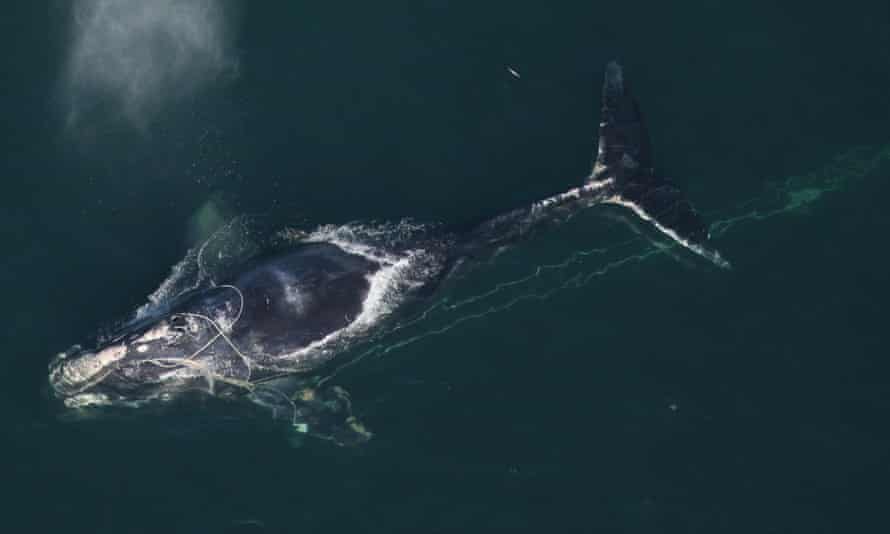
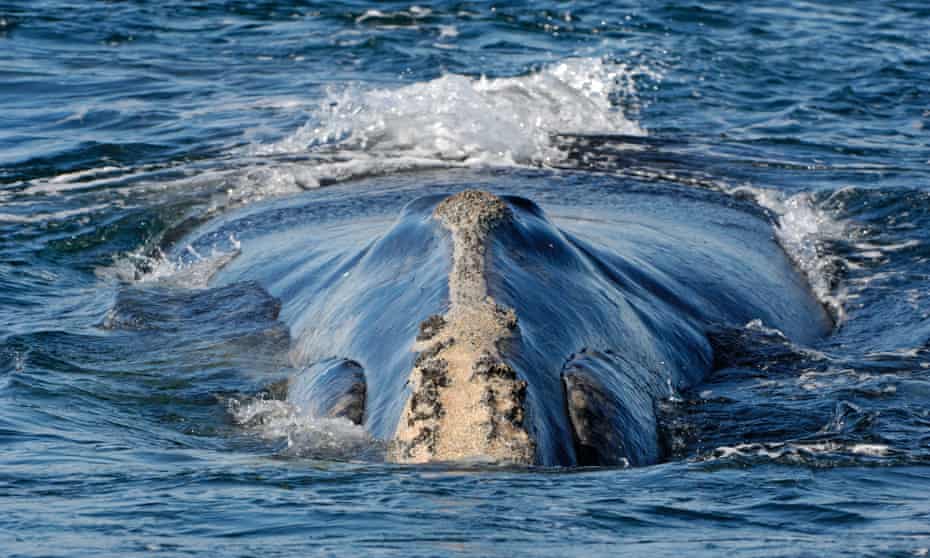


 Pictured here is 16 year-old Millipede and her newborn baby. Images taken under NOAA Research Permit 20556-01.
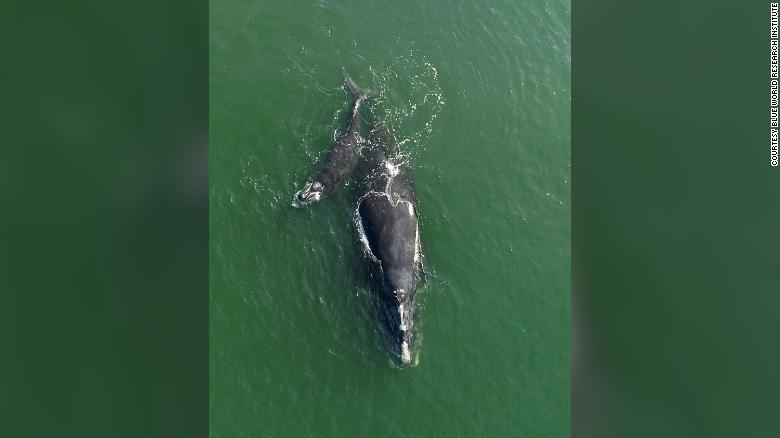 Millipede and her newborn baby. Images taken under NOAA Research Permit 20556-01.The leading cause for whales’ deaths and injuries involve human interaction, including vessel strikes and entanglement in fishing gear, Powell said. It is
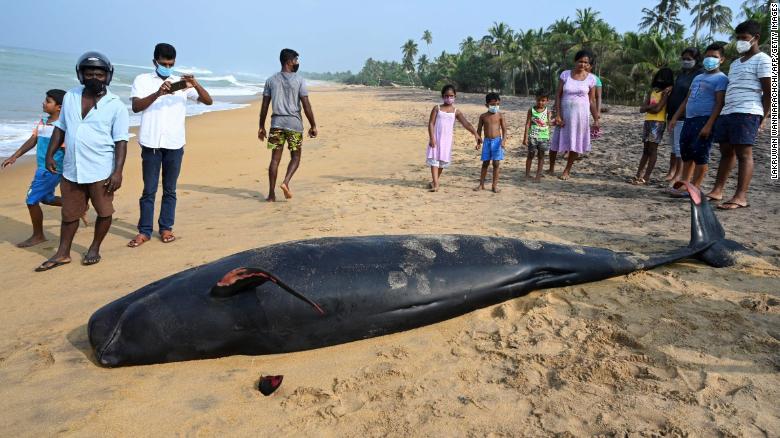 A dead pilot whale on a beach on Sri Lanka’s western coast after the mass stranding.”It is very unusual for such a large number to reach our shores,” MEPA chief Dharshani Lahandapura told AFP, adding that the cause of the stranding was not known.Rescue teams worked through the night with assistance from the navy, coast guard, lifeguards, and residents.
 (Getty Images)
 Exposing the Big Game