Earthrace Conservation, applauds International court verdict on Japanese whaling

Pete Bethune, Earthrace Conservation, applauds International court verdict on Japanese whaling.

The International Court of Justice in The Hague today (Monday, 31 March 2014) found in favor of Australia and New Zealand in the court case against Japan’s so-called Research Whaling in Antarctica.

Earthrace Conservation founder Pete Bethune, who was at the court for the original case in June 2013 and today to hear the verdict, said, “I am absolutely thrilled. Today will go down in history as a great day for whales, for conservation and for justice.”
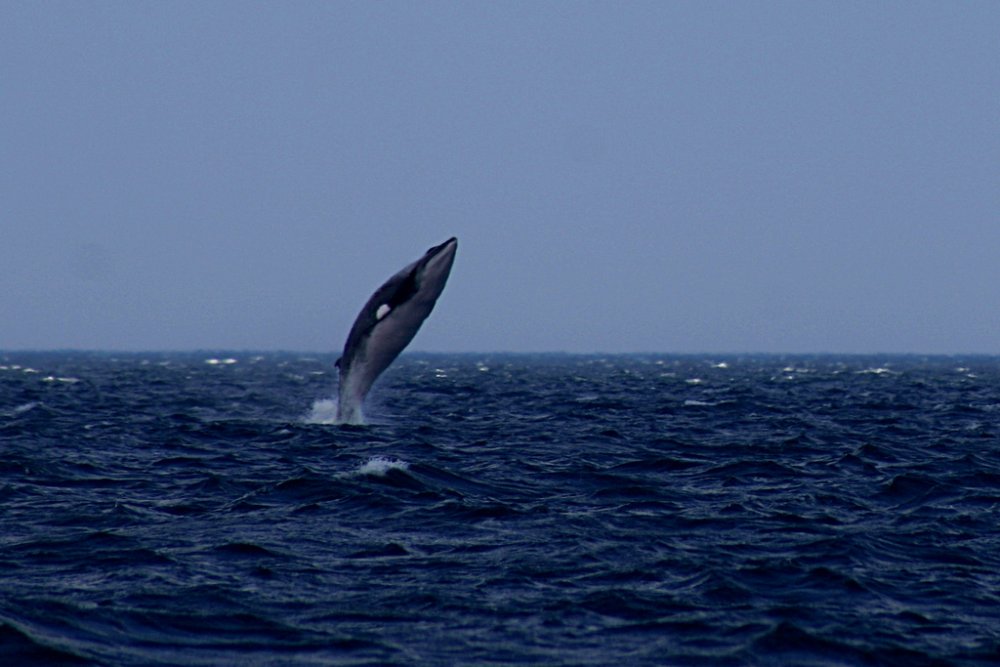
Minke%20whale%20creative%20commons%20Smudge9000%20on%20flickrHe said, “The verdict makes Japan’s Research Whaling program, which has killed many thousands of whales in the name of science, illegal. It also halts any likely copycat programs from the likes of Russia and Korea which had the decision favored Japan had been expected to introduce research whaling programs of their own”.

Bethune had his boat, the Ady Gil, destroyed when it was run over by a Japanese security vessel in Antarctica in January 2010. He then spent five months in a maximum-security prison in Japan after he illegally boarded the vessel that had nearly taken the lives of himself and his crew.

This period saw such intense public outcry over research whaling, that the Australian government announced it was taking Japan to the International Court of Justice. Bethune remembers the day when he heard the news in prison. “I went down to meet my lawyer, and the first thing she said to me was Australia had taken the court action against Japan over whaling. I burst into tears. I was optimistic that any decent judicial system would find against Japan, and to finally see it become a realityis amazing.”

Bethune always felt that Japan’s case was weak. “They used a loophole in the original IWC regulations that allowed for nations to conduct their own research-whaling program”, he said.

“Japan argued the court had no jurisdiction to decide what legitimate research was, and that Japan could choose its research programs as it liked. They also presented some of their research findings, although none but the most one-eyed would accept them as being valued by the Scientific-community”.

The verdict is binding for all three countries and cannot be appealed. Japan has little choice now but to cease their whaling program in the Southern Ocean Whale Sanctuary.

Bethune spoke to several senior Japanese delegates after the verdict was announced and says they indicated that while they were very disappointed with the outcome, they would abide by the ruling and not go back to Antarctica.

According to Bethune, the one drawback with the court case is it only addressed Japan’s scientific whaling program in Antarctica. The verdict has now made this illegal, but it still leaves Japan free to continue with research whaling in the Northern Pacific.

Bethune said, “I have no idea why Australia and New Zealand left the Northern Pacific out of their case. If the research program in Antarctica is illegal, then by definition so is the program in the Northern Pacific but it will require another court action to make this illegal also.”

Bethune now feels that his actions back in 2010 were not in vain and hopes that in some small way what happened to him contributed to today’s verdict.
“I lost my boat, spent five months in prison for peacefully protesting against what has now been confirmed as illegal activities, and was paraded around in Japan as a dangerous criminal which was difficult to take at the time. If all that was even a small part of the means to this happy ending, then I’m bloody happy to have gone through it all.”
Stop the Apocalypse—Now

It all started (or should I say, ended) back in 1998 when the Makah tribe was preparing to hunt a grey whale off the Washington coast. Like many people who grew up during the 1960s and ‘70s, I was taken with the idea of returning to a more primitive lifestyle, in “harmony with Nature” as I believed the American Indians surely were. I even spent a summer in the southeast Oregon desert, studying “Aboriginal life skills” of the Paiute people of the Northern Great Basin. It was the same survival course (taught by the same instructor) that Jean M. Auel later took as research for her “Clan of the Cave Bear” book series.

But I began to think that not all tribal people are cut of the same loincloth as the Makah made preparations to kill their NMFS quota of five whales to use for ceremonial and unspecified “commercial purposes.” You may remember the media frenzy surrounding the issue and the animal activists, including Captain Paul Watson at the helm of a Sea Shepherd ship, as well as devoted land protesters whom my wife and I supported and joined whenever we could. Unfortunately, despite months of protests and pleading, the tribe’s rag-tag whaling crew (aided by the federal government) was successful in killing a young female whale with a bullet from a highly untraditional high-powered 50 caliber rifle.

Sadly, “Yabis” (as a Makah elder and lone whale hunt detractor named the whale) could not be saved. The media, of course, defended the kill to the death, comparing the tribe’s right to shoot a whale with their own right to eat unlimited hamburgers. They did their darnedest to convince readers that the road to political correctness was through backing the tribe’s revival of their cultural tradition of killing whales. And besides, who wants to give up their hamburgers anyway?

Well, I for one. I finally saw the hypocrisy of objecting to hunting while continuing to eat farmed animals. From then on we vowed not to be complicit in the unnecessary taking of lives—150 billion a year, at last count. Up until then I had been a meat eater and an occasional fisherman. But from that moment on, I hung up my rod and reel and swore off meat and dairy, never once looking back.

Yet, I know dyed-in-the-faux-shearling vegans whose solid anti-animal abuse stance melts away like a sno-cone on a hot summer day at the first hint that an animal abuser is of aboriginal decent (not that any human being is really “native” to the America’s—some just arrived sooner than others). I may seem obstinate, but I don’t believe a prayer, a chant or any other song and dance makes an animal suffer less or end up any less dead if they were killed by a Native American.

Yet, some people buy into the notion that the mistreatment of a non-human by a native is some sort of spiritual event. Whether elk or bison, fish or whales, a killing that would normally be frowned upon is a joyous occasion when perpetrated by a tribal member. While anyone who holds to their ideals is somehow considered a “racist,” it’s the animal advocate who looks the other way as certain people do the killing who’s the real discriminator.

Shocking as it sounds, the Yellowstone bison are equally exploited fenced-in on a ranch on reservation land as they would be anywhere else in Montana; a deer or elk ends up every bit as injured or dead when shot by a tribal hunter as by the average American sport hunter; tribal gill nets do as much damage to a struggling salmon as those set out by non-Indian commercial fishermen, and a 50 caliber bullet rips into a whale with the same destructive force, no matter who pulls the trigger.

Yes, I used to be a meat-eating fisherman. I changed my ways after allowing myself to absorb facts like, “humans slaughter 6 million animals per hour!” and “20,000 more will die in the time it takes you to read these sentences!” That’s a Holocaust of farmed animals every 60 minutes! And that’s not counting fish, lobsters, shrimp, oysters, clams, krill or other sea life.

Call me a zealot, but when you realize there’s an apocalypse of animals happening right now, you want it stopped, once and for all, and by all—no exceptions.

Text and Wildlife Photography ©Jim Robertson, 2013. All Rights Reserved

Text and Wildlife Photography ©Jim Robertson, 2013. All Rights Reserved

Court Finds Feds Violated Endangered Species Act in Pacific Northwest When Authorizing Navy Sonar

Southern Resident killer whale with calf

Photo by NOAA

[I can relate to the severity of this is of particular issue since my hearing has been permanently damaged by loud anthropogenic, electronic and/or mechanical noises. Over the years I’ve developed tinnitus–a permanent ringing in the ears which can increase in volume and potentially drive the sufferer crazy or even suicidal. I can imagine that this is the kind of thing that’s happening to marine mammals, who depend on their sensitive hearing for navigation and communication, when they strand themselves onshore.

There are no tests that I know of to show whether whales and dolphins are suffering from tinnitus-like hearing damage, so the navy will likely ignore this problem as long as they can get away with it.

I’ve found dolphins, sea lions and whales stranded on the beaches of Washington and Oregon, and it’s certainly possibly that these strandings are the result of the navy’s ungodly loud and disruptive sonar testing.]

———————————–

http://switchboard.nrdc.org/blogs/zsmith/court_finds_feds_violated_enda.html

A federal court has found that the government violated the Endangered Species Act when permitting Navy training activities in the Northwest Training Range Complex—a California-sized training area extending from Washington’s border with Canada down to Northern California.  The decision requires the National Marine Fisheries Service (NMFS) to reassess its permits to ensure that the Navy’s training complies with the Endangered Species Act’s requirements for the area’s endangered Southern Resident killer whales, blue whales, humpback whales, fin whales, sei whales, sperm whales, and Steller sea lions.  The government can no longer ignore science—that is developing at a brisk pace—showing that the Navy’s use of sonar is more harmful to whales and dolphins than previously thought.

The Navy’s use of mid-frequency active sonar can kill, injure, and disturb marine mammals.  The Navy and NMFS accept this fact, projecting 650,000 instances of injury and harassment to whales, dolphins, and porpoises over five years of activities in the Pacific Northwest.  Sonar has caused or been associated with multiple stranding events of whales and other marine mammals around the world.  NRDC and other concerned organizations (InterTribal Sinkyone Wilderness Council, Center for Biological Diversity, Friends of the Earth Friends of the San Juans, and People for Puget Sound) challenged the Fisheries Service’s permitting of the Navy’s activities in the Pacific Northwest in January 2012.  With its ruling yesterday afternoon, the court found that the agency’s approval of the Navy’s activities ignored the best available science showing that marine mammals are far more sensitive to sonar that can cause hearing loss and other injuries.

As we’ve seen over the past decade in permit approvals, the Navy and NMFS have been working overtime to minimize the nature and extent of harm to marine mammals caused by the Navy’s use of sonar—twisting, turning, dodging, and simply ignoring evidence right before them.  Now, the science is catching up and exposing these machinations for what they always were: “ends justify the means” attempts to let the Navy continue with business as usual, unencumbered by any serious obligation to protect whales and dolphins from significant harms.  NRDC and our allies will continue to call on this agency to find ways to minimize harm to marine mammals from the Navy’s training.  This court ruling should remind NMFS that its preeminent obligation is to endangered species under the Endangered Species Act, not to applicants seeking to conduct harmful activities regardless of the consequences.

Save the Wolves: Support the Rights of All Animals

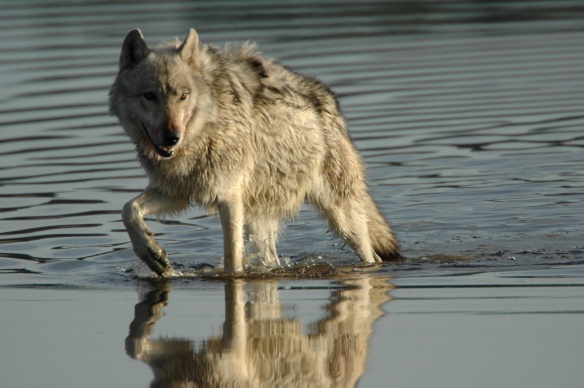
Make no mistake, I love wolves as much as just about anyone; yet some people practically worship them, putting them above any other species except perhaps whales and dolphins. To be sure, wolves are sacred, but there are folks who think of them as hyper-sentient—the great Northern furred land-dolphin, if you will.

I’m not for a minute denying wolves’ intelligence or adherence to an almost human-like social caste system, but I can’t get behind campaign slogans such as “Real hunters don’t hunt wolves.” I call bullshit on that. Real hunters hunt wolves, coyotes, elk, deer, prairie dogs, pigeons, pronghorn, bears, cougars, raccoons— anything and everything that moves or has ever moved. Hell, they’d probably hunt whales and dolphins if it weren’t for the Federal Marine Mammal Protection Act. Most hunters just want a target and a trophy, they don’t really care what species it is.

Granted, some hunters are more sadistic than others, just as some serial killers revel in their victims’ suffering, while others dispatch their prey as quickly as possible—they’re only interest: harvesting a trophy corpse to have around, for whatever morbid reason. The most sadistic hunters are probably fueled by the fact that there are people out there who adore wolves while state laws still consider delisted wolves “property” like every other non-human animal.

Serial killers have been known to derive sick pleasure from taunting the families of their victims, calling them from prison to recount their murders. The same kind of thing likely goes on in the minds of sadistic wolf hunters who boast and post photos of their kills, knowing that some sentimental environmentalist or animal rightsists might come across one and be hurt or outraged by it. They’d love to know that one of us broke down, burned out or resorted to lethal action because of their post (as long as they weren’t on the receiving end of the action).

The wolf situation is unique among modern-day animal atrocities, in that it’s as yet perfectly “legal” for hunters and trappers to film themselves in action. In sharing them online, they’re banking on the fact that the general public is unmoved and apathetic. But I’d like to think that if factory farmers readily shared footage of their routine acts of animal abuse online, there would be a lot more vegans in this world.

For now, the only way anti-wolf sadists can be stopped is by eliminating them from the world of the living. But if you happen to reside in one of those backward states that have yet to implement a death penalty for wolf hunting, the best advice is to just ignore them like you would the taunts of any other bully. Meanwhile, keep petitioning Facebook and other social media outlets where their death porn appears. As long as animals, including wolves, are seen only as “property” by the powers that be, the people who run Facebook will feel entitled to allow anti-wolf evil to be spread throughout their pages and posts.

Eventually common decency will prevail and violent anti-wolf/anti-animal sites will come under serious scrutiny, just as misogynistic sites recently have. We need to step up the pressure on Facebook and let them know that freedom of speech does not give one the right to victimize. Be sure to sign this petition and pass it on: http://www.change.org/petitions/facebook-executives-ban-sadistic-pages-of-wildlife-torture

Meanwhile, let’s fight for the rights and personhood of all animals, not just a chosen few.

Text and Wildlife Photography ©Jim Robertson, 2013. All Rights Reserved

Text and Wildlife Photography ©Jim Robertson, 2013. All Rights Reserved

More Unsolicited Sentiments from a Compassionate Misanthropist

Yesterday’s blog post, “Man I Wish You Were Never Born,” took to task the whole of the human race for the fact that Homo sapiens doesn’t just kill other animals to fill their bellies, they destroy them in droves out of spite, to eliminate the competition…or just for fun. That post received across-the-board praise from readers committed enough to the cause to take a sober view of the only species ever to fly to moon, invent a god or cause a mass extinction.
But do I dare take it a step further and examine the origins of the overexploitation of non-humans when doing so means questioning the nearly universally-held tenant that certain groups of people shall remain blameless, even genetically incapable of wrongdoing? Well, just to prove that I’m an equal opportunity misanthrope and my compassionate misanthropy is colorblind, I’m going to come right out and say that contrary to popular belief, the hunting practices of stone-age people were extremely cruel and often had a staggering impact on wildlife populations.

Ever since the first hominid shunned our primate predecessor’s plant-eating lifestyle and sank its teeth into the flesh of another animal, our hairy fore-bearers have been scratching their heads, and armpits, trying to devise deadlier weapons than their neighbors. The simple, sharpened stick, later recognizable as the spear, reigned for over a hundred centuries before the atlatl propelled the human predator to a higher level of planetary destruction. With that new technology, localized over-hunting—then early mass extinctions—followed the spread of Homo sapiens to every corner of the earth. Later, of course, gunpowder unleashed a firestorm the likes of which the world had never known.

So, why bring this up? Why not let people have their illusions about their peaceful origins and the notion that any humans were ever harmonious in their animal exploitation? Because belief in fantasy only fuels the case for hunting and delays the day we finally move beyond it as a species.

Harvard biological anthropologist Richard Wrangham and author Dale Peterson address revisionist history in their 1996 book, Demonic Males: Apes and the Roots of Human Violence. In a chapter titled “Paradise Imagined” they write: “Many of us who…absorbed the ideas of anthropologists like Margaret Mead, find deeply comforting their evocation of paradise and their notion that human evil is a culturally acquired thing, an arbitrary garment that can be cast off like our winter clothes.” The chapter goes on to challenge this fallacy with examples of human ill-behavior throughout the ages and concludes with: “To find a better world we must look not to a romanticized and dishonest dream forever receding into the primitive past, but to a future that rests on proper understanding of ourselves.”

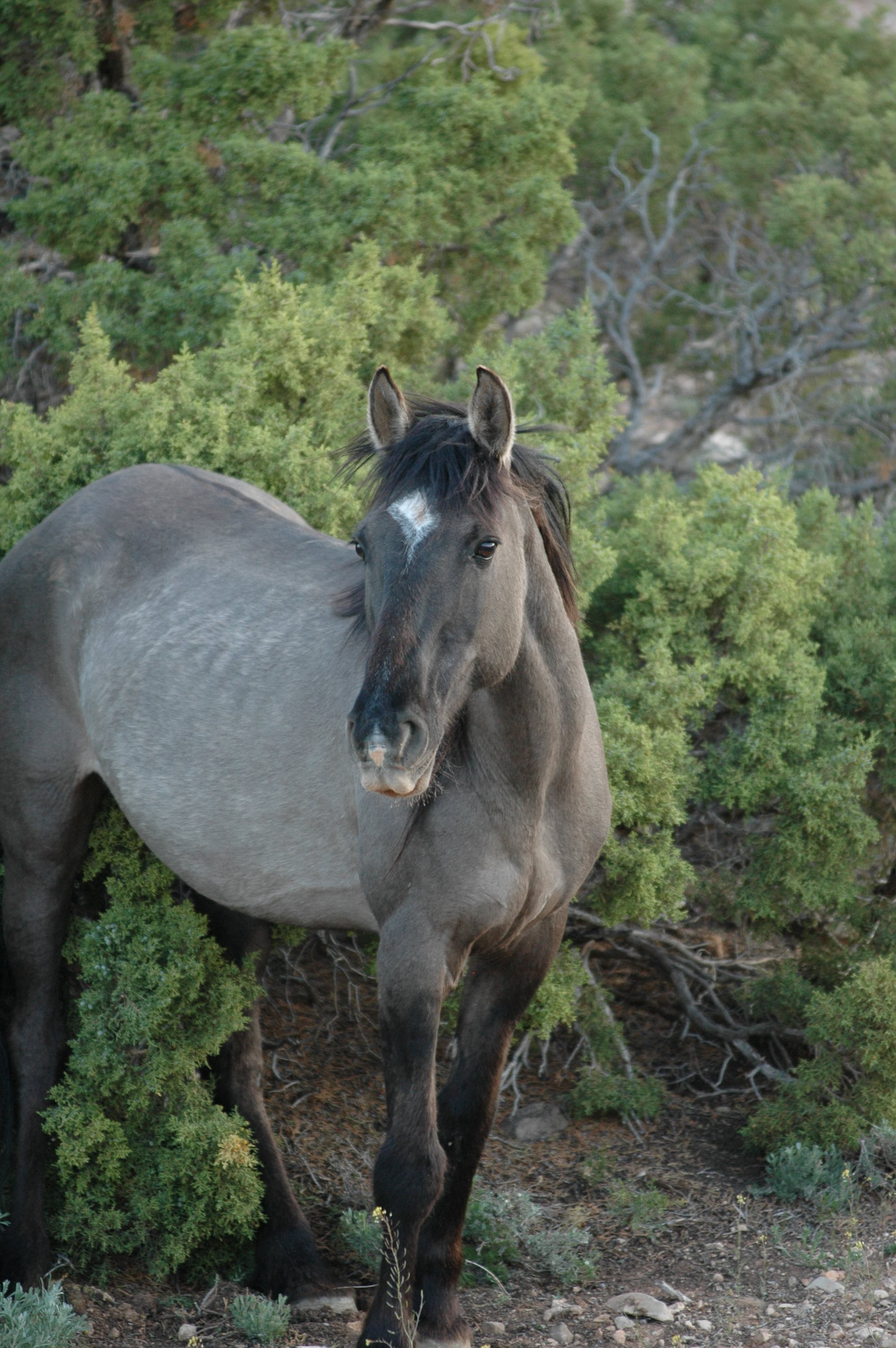
Some folks find it painful to accept that pioneering Paleo-Indians, the predecessors of Native Americans, actually drove aboriginal animals like horses over cliffs by the thousands and ultimately to an early extinction. Now, Washington’s Yakima tribe wants to send their wild horses (brought back to the continent and inadvertently released by early Spaniards) to modern-day slaughterhouses, like the introduced cows they raise on their reservations.

A Seattle news article entitled, “Yakamas Urge Feds to Consider Horse Slaughter,” quotes Yakama Nation Chairman, Harry Smiskin, who said in a March 29 letter to President Barack Obama and Agriculture Secretary Tom Vilsack: “We don’t understand why it is OK to slaughter many animals in this country – certainly the White House and the USDA have meat on their cafeteria menus every day – but for some reason horses are considered sacrosanct.” One of the absurd excuses Smiskin presents for pushing horse slaughter plants is that they are a “humane” way to deal with unwanted horse herds. I’m sorry, but being crowded into a windowless building of an industrial slaughterhouse that reeks of blood and reverberates with the sound of saw blades cutting bone and the cries of terrified animals being butchered alive is anything but humane for domestic cows—let alone wild horses!

This is just the latest instance of an autonomous Washington State tribe undermining federal protections for animals. The Makah mocked the Marine Mammal Protection Act by blasting a grey whale to death with a 50 caliber rifle, the Colvilles instated the first and only wolf hunt in the state since wolves started to make a comeback and now the Yakimas are pushing back advancements made for wild horses.

Ironically, the captains of animal industry are using our politically correct attitudes toward Native Americans to further their agendas and squelch the perception that any other species besides Homo sapiens has intrinsic value. After all, only a misanthropist or an animal rights extremist would dare to question the stated objective of an American Indian.

Text and Wildlife Photography ©Jim Robertson, 2013. All Rights Reserved

Text and Wildlife Photography ©Jim Robertson, 2013. All Rights Reserved

Hardly a “Terrorist”

In his foreword to my book, Exposing the Big Game: Living Targets of a Dying Sport, Captain Paul Watson wrote:

“There is only one vicious creature stalking the wilderness and that is the hominid primate that has become a divine legend in its own mind. The enemy is us and the real challenge is to subdue the destructive urges within each of us and to channel those urges in the direction of affirming life and not taking it. The primitive man is a killer ape, the evolved man or woman is a shepherd protecting life.

“The cruelty and destruction that humans have inflicted upon each other is surpassed only by the cruelty and destruction humans have inflicted upon the non-human citizens of this world. …

“It’s time to make peace with our fellow citizens, to live in harmony with them and to understand that those who today club seals, harpoon whales, shoot bears, trap beaver, hook a shark, or blast a goose with a shotgun will be viewed in the future in the same light as we now view slavers, warlords, gangsters and politicians.”

Hardly the words of a dangerous terrorist, though perhaps the words of someone who could be considered a danger to a corrupt and vicious system. We need people like Paul Watson to shine the light on the real criminals of the world and expose their crimes against the thousands of voiceless victims of an over-consumptive society.


A new petition is circulating asking the President senate and congress to stop treating Sea shepherd as terrorists:

Sea Shepherd Conservation Society advocates a no whale hunt policy and is often labeled terrorist because they stand up for the whales against government policies that support Japan

Please sign the petition here:

http://www.change.org/petitions/the-president-senate-and-congress-to-stop-treating-sea-shepherd-as-terrorists

Wildlife Photography ©Jim Robertson, 2013. All Rights Reserved

Wildlife Photography ©Jim Robertson, 2013. All Rights Reserved


Save the Animals—For Their Sake, Not Mine

Anthropocentricism is so deeply imbedded into the human psyche that these days it’s even hard to find a wildlife-related action alert which doesn’t focus on how some group of people might benefit from the continued existence of a given species. The well-being of the individual animal—let alone its species—so often takes a back seat to the ways humans benefit or profit from them.
Take wolves, for example. When Montana’s wildlife lawmakers were considering closing a few small areas around Yellowstone to wolf hunting and trapping, the primary reasons given by most wolf proponents for wanting the exclusion zones had to do with the value wolves have as tourist attractions and as part of a scientific study. To the majority of those who testified, the facts that the wolves themselves are sentient beings and/or are essential elements in nature’s design—who don’t deserve to be shot on sight as vermin—seemed secondary to the ways in which watchers and biologists were affected by the wrongful deaths of Yellowstone wolves.

Similarly, a petition to force Facebook to remove the page, Wolf Butchering, Cooking, and Recipes reads, “To protect the Wolves, and the Sensitivities of Native Americans. It is offensive, and a discrimination against the Religious Beliefs of Native Americans.” Of course I signed the petition, but I did so for the sake of the wolves, not because of anyone’s purported religious beliefs. I’m against cannibalism as well—for the sake of the victims of such barbarity, not because the culinary choice is considered a cultural taboo. At the same time, I don’t want migratory waterfowl habitat set aside just so I can go bird watching, or to save the whales so I can go whale watching. It’s about them, not about our perception or enjoyment of them.

As we’ve all heard, ad nauseam, “sportsmen” help wildlife by hunting—or so they would have us believe. As James McWilliams blogged in a timely post entitled Hunting, Land Conservation, and Blood Lust, “This land preservation defense of hunting is a common one. Get enough people who like to blow away animals on board and you can prevent undeveloped land from becoming a Walmart,” dispelling this myth with, “The vast majority of conservation-driven hunting policies are designed not to improve the quality of a particular ecosystem but to improve the quality of the hunt.”

Westerners didn’t know okapis or orangutans even existed until around a century ago. Were the lives of such unutilized and therefore unappreciated animals meaningless up until the day they were “discovered”? You or I may never get the chance to see a black rhino or a snow leopard, but that certainly doesn’t diminish their intrinsic value.

Text and Wildlife Photography ©Jim Robertson, 2013. All Rights Reserved

Text and Wildlife Photography ©Jim Robertson, 2013. All Rights Reserved

Commercial Whalers, Slave Traders…and Wolf Hunters

Now that I broke the ice, tested the waters and hopefully cleared the air by answering a reader’s question on a touchy subject in my last post, It’s Hard to Be Ethically Consistent While You’re Tap-Dancing on Eggshells, It’s my turn to ask a question:

Text and Wildlife Photos Copyright Jim Robertson

Text and Wildlife Photos Copyright Jim Robertson

Why is it that when members of the Wedge wolf pack were being killed in Washington State, people throughout the environmental community were up in arms, but now that the Colville Tribe has announced plans to initiate the first hunting season on wolves in the state on their northeastern Washington Reservation, folks are staying mostly silent about it?

People are fond of saying that the Native Americans believed this…, or did that…, as though all tribes were of one mind and every individual felt the same way as each other about everything, regardless of which tribe they were with or what part of the continent they lived in. For example, I’ll never forget this line that made me scoff out loud during a lecture: “Native Americans never ate anything that died in fear.” What? How does an animal pursued and shot with arrows not experience fear?

European Americans have gone from thinking of the Native Americans as barbaric savages to egalitarian angels. Neither impression is based on a scientific understanding of human nature. And neither is the revisionist notion that all tribes were like-minded on every issue (case in point are the different attitudes on wolves expressed by the Colvilles, who plan to hunt the few wolves who have returned to their reservation, and the Ojibwe of the Great Lakes region who respect wolves.   .

On a related issue, the following is an article I wrote while the Makah tribe were shoring up plans to kill whales off the Washington coast…

Commercial Whalers and Slave Traders

In a May, 1995 letter to the U.S. Commerce Department, Dave Sones, the Makah nation’s “fisheries” manager revealed the tribe’s intent “to harvest whales not only for ceremonials and subsistence, but also for commercial purposes.” This sentiment was recently echoed by Canada’s Nuu-Chah-Nulth tribe, who also hope to get into the commercial sale of whale products.

Despite continued public support for whales, our IWC delegates struck a five year deal with the Russians to get the Makah a back-door quota of whales. In 1997, defying an international treaty on trade in endangered species, they traded 20 of the Alaskan Inuit’s bowhead whales (down to only 13 percent of their original population) for 20 gray whales from the Russian Chukotkas.

The Chukotkas were happy to trade up for the more palatable bowhead. Very few of them will even eat gray whales, which are said to have the texture of gum erasers and are known in their language as “the one that makes you poop fast.” (The real source of the gray whale’s nickname “Devilfish”?)

Seeing as how the Clinton administration is assisting the Makah in their effort to return to whaling, wouldn’t it be a nice, symbolic gesture for the President to join them in their ceremonial whaling preparations? These included prayer and self-flagellation, as well as fasting and sexual abstinence.

Other rites that were part of their whaling ceremonies are kept secret from “outsiders;” they are “nobody’s business.” Are there skeletons in the closet they don’t want exhumed? The media have depicts a Disneyized version of the historic Makah: a simple, sharing people, unique in their reverence for the Earth’s creatures. Summon the image of the Plains Indians, substitute whale for bison. But the coastal Makah were different, killing more prey then they could ever eat themselves.

Whales were rendered into oil to be traded along the Pacific. They were a source of great wealth for the tribal elite, who thought themselves superior to other Indians, including buffalo hunters. Although the primitive Makah’s ability to conquer massive sea mammals without motor boats or heavy artillery was impressive, it was also excessively cruel. And, according to European witnesses, so were some of the related rituals: “Since it was the first whale of the season, special ceremonies we involved…When it was brought ashore, a slave was sacrificed, and the corpse was laid beside the whale’s head, which was adorned with eagle feathers…” observed Haswell and Boit, eighteenth century writers. Boit understood that cannibalism was also occasionally practiced.

Slave trading was an integral part of the Makah socioeconomic structure. Slaves were considered chattel, a thing of less than human status, one step below “worthless people” in their caste system. Possession of slaves was prestigious; to sacrifice a slave on a formal occasion demonstrated an arrogant disregard of wealth. Unfortunately for their lower castes, this was before the United Nations Decade of Education in Human Rights.

In order to capture new slaves and acquire new territories, the Makah frequently undertook military expeditions to distant villages. Relying on the element of surprise, they would attack and kill all of the adult males in the unsuspecting tribe. Women and children were taken as slaves; infants and elderly were left for dead. Slain members of the conquered tribe were decapitated, their heads brought back to be displayed as trophies. Clearly, the killing of whales is not the only bygone tradition that modern society would condemn or reject if given a voice. The Makah continued to capture and trade slaves well after the 1855 treaty prohibited it.

Meanwhile, Japan, in their ongoing effort to promote the backslide into commercial whaling, discovered a crisis situation in 1995. They learned the number of their young people who had never tasted whale was on the rise! In answer to that shocking trend, their “fisheries” agency began a slick marketing campaign that included a home delivery service for whale meat. A quarter-pounder there now goes for $55.00 U.S. That’s without cheese. Or a bun. But a word of warning to those planning to stop by the Moby Dick’s franchise (coming soon to your neighborhood) for a juicy double-devilfish burger: Don’t forget the Kaopectate!

Love the Country, Hate the People

“Love the country, hate the people.” I heard that thought first put into words by Sea Shepherd’s Captain Paul Watson and I’ve never forgotten it—no doubt because I’ve so often shared that sentiment myself.

Captain Watson was referring to coastal New Brunswick, Canada (where he grew up) and the type of people who club seals to death without a second thought. I have had the same kind of reaction many times over the years I’ve spent living in rural America, especially this time of year when camo-clad, orange-vested A-holes troll up and down the roads hoping some hapless deer or elk will step out of the lush, verdant forest and into their kill zone.

I had another kind of love-the-country, hate-the-people moment just yesterday during a walk with my wife and our dog on a dike that doubles as a narrow road bordering a river when a small, rattletrap freight truck pulled out of the driveway at a neighbor’s property. Unaware of the insidious, horrific evil the occupants of the vehicle had just been involved in, I raised my hand in friendly greeting (hoping they might stop so I could tell them their rig was leaking oil profusely).

Never again will I give someone driving by the benefit of the doubt. They waved back exaggeratedly and wore overstated smirks that bordered on malevolent. As it turns out, I’m glad they kept on going. When they passed by we noticed the cartoon drawings of a happy cow and pig and the name of their business, “Patriot Packing,” that were hand-painted on the back of the truck.

We knew instantly what kind of vehicle it was—a mobile slaughter service. Travelling abattoirs are an increasingly popular method among ruralites for killing the cows they supposedly took great care in raising. My wife then remembered she had heard cows bellowing (like they do when their young are taken away) and the sound of a power saw, but hadn’t put two and two together.

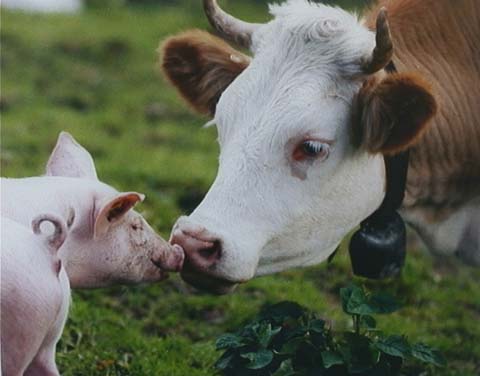
Touted as a more humane alternative to factory farming and conventional slaughterhouses, the down-home practice of “growing” your own cows is deceitful and in its own way horrendously cruel—especially when herd mates are forced to bear witness to such butchery right in front of them in their own pasture.

Though it’s an accepted part of country living for people to embrace or personally partake in the butchering of animals, it can hardly be called a “way of life;” it’s more a way of death—a culture based on killing.

Holocaust survivor and founder of Farm Animal Rights Movement (FARM), Alex Hershaft, made this recent fitting statement:

“I see a striking parallel between the deceptive bucolic images of pigs cavorting in green meadows on Farmer John’s murals and the cynical inscription ‘Work makes you free’ over the gate to Auschwitz.

“And, I do see a striking parallel in the mindsets of both sets of oppressors: their self-image as upstanding members of their communities, their abject objectification of their victims, their callous use of cattle cars for transport, their continuous refinement of killing line technology, their preoccupation with record keeping and cost-effectiveness, their eagerness to hide and masquerade their horrendous deeds.”

Author Farley Mowat, another selfless Canadian animal advocate in league with Captain Paul Watson, ultimately came around to the “love the country, hate the people” sentiment in A Whale for the Killing. The 1972 book is an autobiographical account of Mowat’s moving to Newfoundland because of his love for the land and the sea, only to find himself at odds with herring fishermen who made sport of shooting at an 80-ton fin whale trapped in a lagoon by the tide. Although he had started off thinking folks around there were a quaint and pleasant lot, he grew increasingly bitter over the attitudes of so many of the locals who, in turn, resented him for “interfering” by trying to save the stranded leviathan.

Mowat writes, “My journal notes reflect my sense of bewilderment and loss. ‘…they’re essentially good people. I know that, but what sickens me is their simple failure to resist the impulse of savagery…they seem to be just as capable of being utterly loathsome as the bastards from the cities with their high-powered rifles and telescopic sights and their mindless compulsion to slaughter everything alive, from squirrels to elephants…I admired them so much because I saw them as a natural people, living in at least some degree of harmony with the natural world. Now they seem nauseatingly anxious to renounce all that and throw themselves into the stinking quagmire of our society which has perverted everything natural within itself, and is now busy destroying everything natural outside itself. How can they be so bloody stupid? How could I have been so bloody stupid?’”

Farley Mowat ends the chapter with another line I can well relate to: “I had withdrawn my compassion from them…now I bestowed it all upon the whale.”

Travesty of Justice

Over the weekend, Sea Shepherd’s Captain Paul Watson was arrested in Germany on a warrant issued by Costa Rica for a bogus ten-year-old “violation of ships traffic” that allegedly occurred when Sea Shepherd encountered a shark finning operation run by a Costa Rican ship. Arresting someone like Paul Watson, who has dedicated his entire life to defending the life of our oceans against illegal and destructive acts, calls into question the very notion of justice in today’s world.

In his foreword to my book, Exposing the Big Game, Captain Watson writes:

“There is only one vicious creature stalking the wilderness and that is the hominid primate that has become a divine legend in its own mind. The enemy is us and the real challenge is to subdue the destructive urges within each of us and to channel those urges in the direction of affirming life and not taking it. The primitive man is a killer ape, the evolved man or woman is a shepherd protecting life.

“The cruelty and destruction that humans have inflicted upon each other is surpassed only by the cruelty and destruction humans have inflicted upon the non-human citizens of this world. …

“It’s time to make peace with our fellow citizens, to live in harmony with them and to understand that those who today club seals, harpoon whales, shoot bears, trap beaver, hook a shark, or blast a goose with a shotgun will be viewed in the future in the same light as we now view slavers, warlords, gangsters and politicians.”

Obviously not the words of a dangerous criminal, though perhaps the words of someone who could be considered a danger to a corrupt and vicious system. We need people like Paul Watson to shine the light on the real criminals of the world and expose their crimes against the thousands of voiceless victims of an over-consumptive society.

For updates and information on how you can help:

http://www.seashepherd.org/

And to sign the petition to free Captain Watson:

http://www.thepetitionsite.com/663/009/291/release-paul-watson/