A Utah buck deer in the wild. The Utah Division of Wildlife Resources uses GPS tracking to monitor deer populations throughout the year. (Utah Division of Wildlife Resources)
As deer hunting season draws to a close, the Utah Division of Wildlife Services is optimistic about the future of hunting — and its impact on Utah’s environment.
“When populations decline due to factors like a severe winter or prolonged drought — we adjust permit numbers to account for those impacts,” Dax Mangus, Big Game Coordinator for the Utah Division of Wildlife, said. “When populations are growing and the number of excess males in the population increases, we will recommend increased hunting permit numbers.”
While deer populations are mostly regulated by natural predators, many of Utah’s wildlife species are dependent on hunting to keep them in check, Mangus said. Doing so provides efficient, targeted relief to overpopulated habitats and over-foraged plants.
A Utah hunter holds a rifle. The Utah Division of Wildlife Resources has partnered with Cabela’s, Bass Pro Shops and the International Cartridge Corporation to provide hunters vouchers with lead-free bullets. (Utah Division of Wildlife Resources)
“It’s a win-win in many regards as hunters are happy to pay for the chance to pursue big game animals with family and friends to harvest organic meat, while at the same time helping keep populations at a healthy level on the landscape,” Mangus said.
When done properly, hunting is a positive practice with few environmental detriments, Mangus said. Science-based practices, such as GPS systems and data analysis, help game wardens create management and preservation plans.
The Division of Wildlife Services also educates hunters about proper treatment and disposal of animal remains to avoid perpetuating disease.
This September, the division launched the Hunters Helping Condors program to incentivize and educate hunters across the state.
“Over the years, many of these enormous rare birds have been inadvertently sickened and killed by lead poisoning. Lead poisoning is, in fact, their leading cause of death,” the program website said.
To encourage hunters to limit lead use, the Division of Wildlife Services partnered with the International Cartridge Corporation, Bass Pro Shops and Cabela’s to extend vouchers for lead-free bullets, according to the website.
While the Division of Wildlife Services encourages positive change, it also responds to harmful practices, Mangus said. Catching and prosecuting poachers, enforcing game laws, and educating the public are all part of this effort.
Additional measures, such as excise taxes on firearms through the Pittman-Robertson Wildlife Restoration Act and hunting-based conservation fundraisers throughout the state, support wildlife research and environment preservation projects, Mangus said. Several programs are designed for individuals.
An elk bull stands near Panguitch Lake, UT. Elk and deer hunting seasons overlap in the autumn. (Utah Division of Wildlife Resources)
“Hunters pay for wildlife disease management efforts, wildlife capture and transplant projects and contribute more money directly to habitat improvement projects than other natural resource user groups,” Mangus said.
Mangus believes these projects are an effort to not only preserve the environment but the future of hunting itself.
“For many hunters, their top priority is the sustainable management of wildlife so that they can continue to enjoy it the rest of their life and pass that enjoyment along to their posterity,” Mangus said. “The recruitment and retention of younger hunters is something that hunters regularly focus on and work towards.”
Deer season closes in November and overlaps with several other hunting sessions, including elk and bobcat. Mangus — and the Division of Wildlife Services as a whole— hope hunters will be sensitive advocates to the public and participate in ongoing education efforts both within and outside of the hunting community.
“We want to pass along our wildlife heritage to future generations,” the Division of Wildlife Services website said, “and we want it to be in better shape than when it was passed to us.”
KENTUCKY (FOX 56) — A new case of chronic wasting disease (CWD) will likely throw a wrench in some people’s hunting plans. Signs of the disease are weight loss, brain lesions, and zombie-like behavior.
The illness is common in deer and was recently found in a dead one from a facility in Breckinridge County.
“And we’ve tried to put together the very best plan that we can to make these recommendations to mitigate the disease,” said Gabe Jenkins, deputy commissioner for the Kentucky Department of Fish and Wildlife Resources.
Harris and Cheney stump in battleground states
volume_off
-00:00
sd
closed_captions
fullscreen
On Tuesday, the state approved a CWD surveillance zone in Breckinridge, Hardin, and Meade counties.
While deer hunting is still allowed, hunters cannot bait deer with items such as corn, grain, or mineral blocks. Deer killed inside the zone cannot be taken outside of it.
Some meeting attendees were not happy with these restrictions, saying several local hunters have already put a lot of time and money into their hunting properties.
“A lot of hunters do not use woodsmanship anymore like they used to,” said one attendee. “They’re hunting straight over a feeder or some kind of mineral, and they’ve hung their stands there and everything. The concern now is if we stop that today, we’ve ruined them for the rest of the season.”
Kentucky Fish and Wildlife officials said an investigation is now underway that will allow them to check the deer population to determine if there are any other CWD cases, but some say banning bait won’t be effective.
“I think it’s going to potentially impact the underparticipation and harvest rates, which is going to be counterintuitive to getting more deer there to sample to see what the prevalence rate is,” said Matt Rhodes, the 3rd District Representative for the Kentucky Fish and Wildlife Commission.
Jenkins said this is necessary to limit the spread of the disease among Kentucky’s deer population.
“We know the disease is on the landscape and we know modes of transportation of that disease from an animal to an animal and how that looks. So, there’s a high probability it’s in the environment. It’s on there. And so, anything we can do right out of the gate to decrease the chances of infection and the spread of the disease is paramount for us.”
No CWD infections in people have ever been reported, but the CDC notes that if CWD could spread to humans, it would most likely be by eating meat from an infected animal.
Anyone with questions or concerns can attend a public meeting set for Nov. 7 at the Breckinridge County Extension Office.
Wildlife officials have raised alarm over the continued threat of illegal bird trapping to the island’s avian population, with over 150 species known to have been caught in nets and limesticks.
Nikos Kasinis, a senior official at the Game and Fauna Service, told philenews that the term “collateral damage” aptly describes the unintended capture of non-target species in these indiscriminate trapping methods.
According to Kasinis, more than one-third of the affected species (58) are of conservation concern.
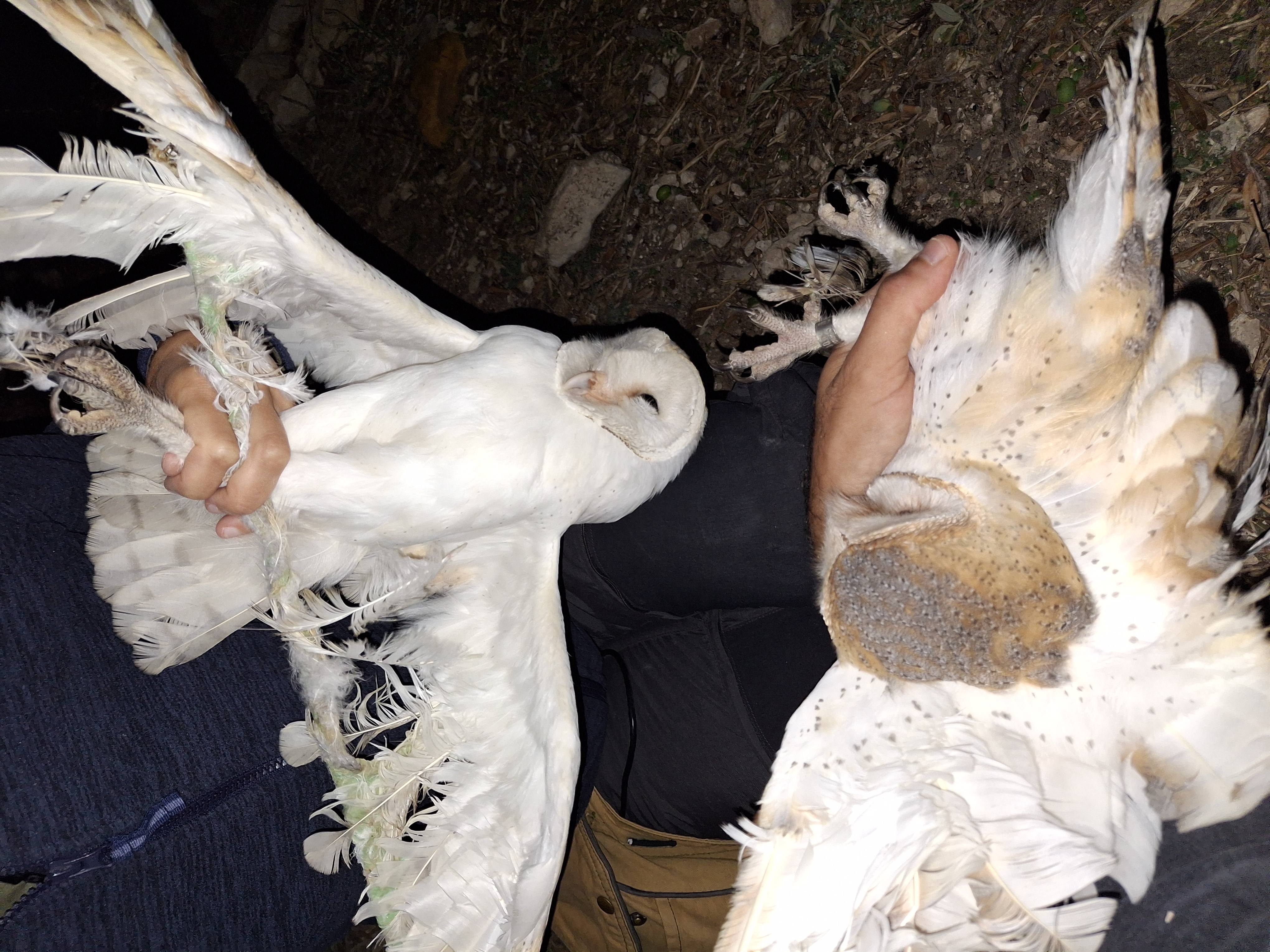
He cited a recent incident where two barn owls (Tyto alba) were found caught in limesticks in the Larnaca district. The birds were rescued, cleaned of the sticky substance, and released.
Kasinis highlighted the irony of the situation, noting that one of the rescued barn owls had been ringed by the Game and Fauna Service as part of conservation efforts.
These efforts include installing artificial nests across Cyprus to boost owl populations for natural rodent control.
The official revealed that all owl species nesting in Cyprus have fallen victim to these trapping methods.
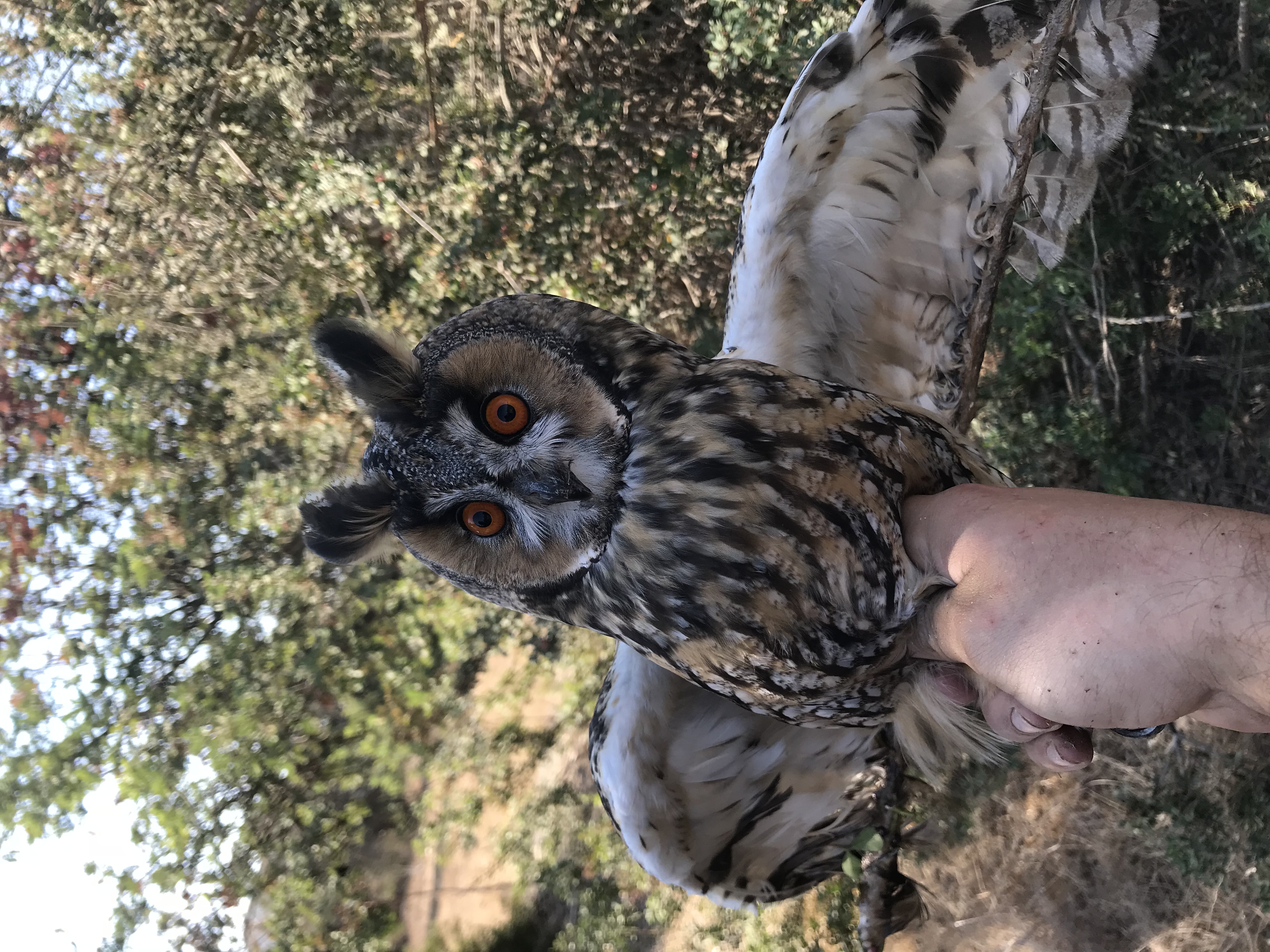
This includes the endemic Cyprus scops owl (Otus cyprius), the little owl (Athene noctua) – associated with the goddess Athena, and the long-eared owl (Asio otus).
Kasinis emphasised that this activity is not a “tradition” but an illegal practice driven by profit. He stressed that it poses a significant threat to Cyprus’s natural heritage and should be treated as such.
The most severe case reported was that of a young Bonelli’s eagle (Aquila fasciata) caught in a limestick in Larnaca. Despite care efforts, the bird did not survive due to stress and exhaustion.
Melvin, a licensed hunter who legally killed the animal on Tuesday in Kinnelon in Morris County, has gotten slammed on X, with users calling him a “coward and a loser,” “a waste of human space” and a “worthless piece of s–t.”
“Imagine the mental depravity of obsessing for years over killing a wondrous majestic black bear,” one said, referring to the fact that Melvin stalked the bear for two hunting seasons before the fatal encounter this week.
Many called the behemoth’s death “heartbreaking” and “disgusting.”
“Couldn’t we just let the big, majestic, successful bear live out its life in peace?” one asked.
But some praised Melvin for the act, saying it was beneficial to humans.
Many sympathized with the bear, calling its death “heartbreaking” and “disgusting.”Brian Melvin
“That was a huge bear! Great job man. It’s important to keep a balance in nature,” one said.
“That is a Massive Bear and a once in a lifetime thing to achieve,” wrote another. “The Black Bear population has gotten crazy and that’s going to taste good and look great as a rug or wall piece.”
Melvin had this to say to all the haters.
“I am a staunch advocate for the freedom of speech and everyone has the right to voice their opinion. Although wishing harm on a person because one doesn’t agree with a legal action that was taken seems a bit contradictory of their views,” he said.
“I would urge people to do a little research and educate themselves before passing judgment. We can all learn from each other.”
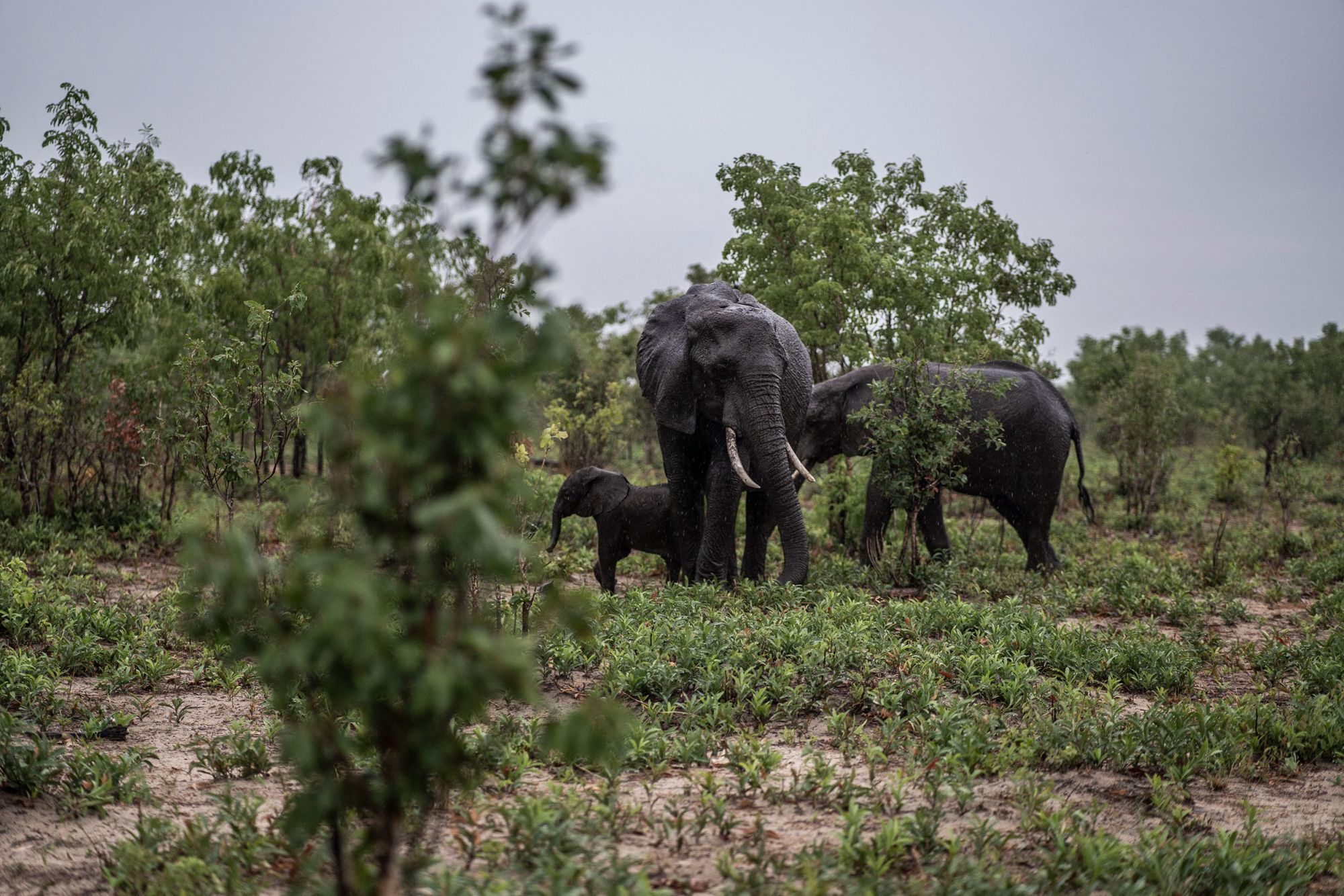
Elephants feed in Hwange National Park in northern Zimbabwe on December 16, 2023. Zinyange Auntony/AFP/Getty ImagesCNN —
Drought is now so bad in parts of southern Africa that governments say they must kill hundreds of their most captivating, majestic wild animals to feed desperately hungry people.
In August, Namibia announced it had embarked on a cull of 723 animals, including 83 elephants, 30 hippos and 300 zebras. The following month, Zimbabwe authorized the slaughter of 200 elephants.
Both governments said the culls would help alleviate the impacts of the region’s worst drought in 100 years, reduce pressure on land and water, and prevent conflict as animals push further into human settlements seeking food.
But it’s triggered a fierce argument.
Conservationists have criticized the cullings as cruel and short-termist, setting a dangerous precedent.
The decision to offer up some of Namibia’s elephants to trophy hunters — tourists, often from the US and Europe, who pay thousands of dollars to shoot animals and keep body parts as trophies — has further fueled opposition and raised questions about governments’ motivations.
For some supporters of the cull, however, critics misunderstand conservation at best, and are “racist” at worst — telling African countries what to do and valuing wildlife over people.
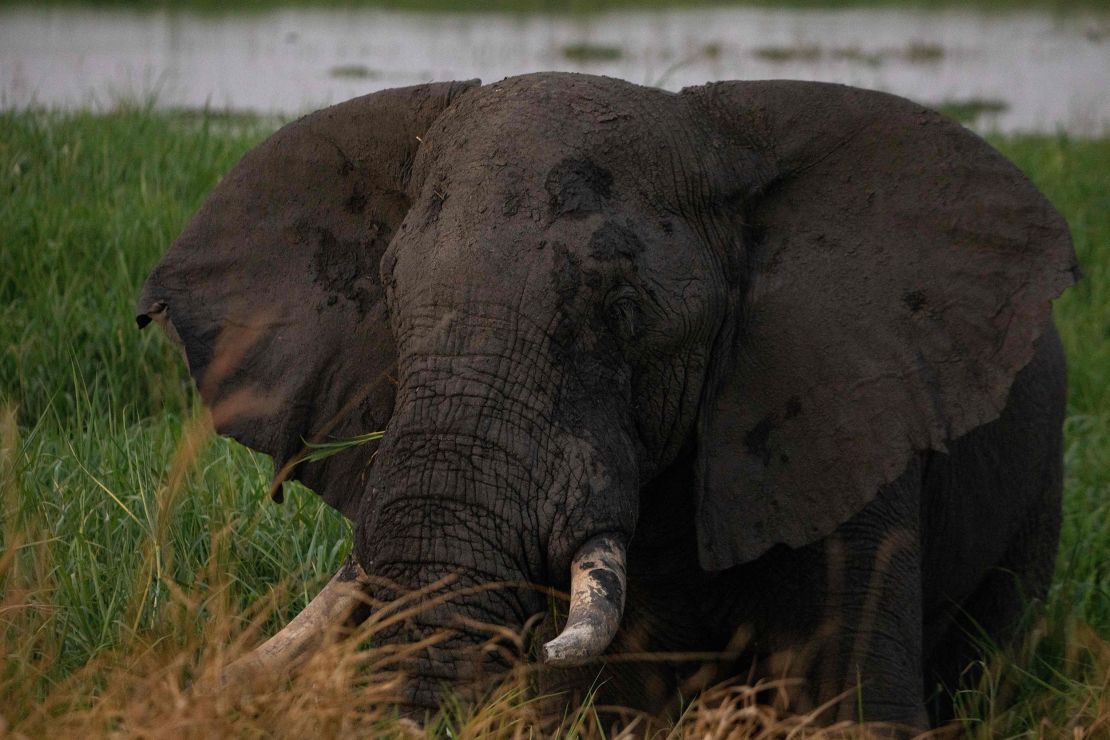
An elephant grazes inside the Murchison Falls National Park in northwest Uganda on February 20, 2023. Badru Katumba/AFP/Getty Images
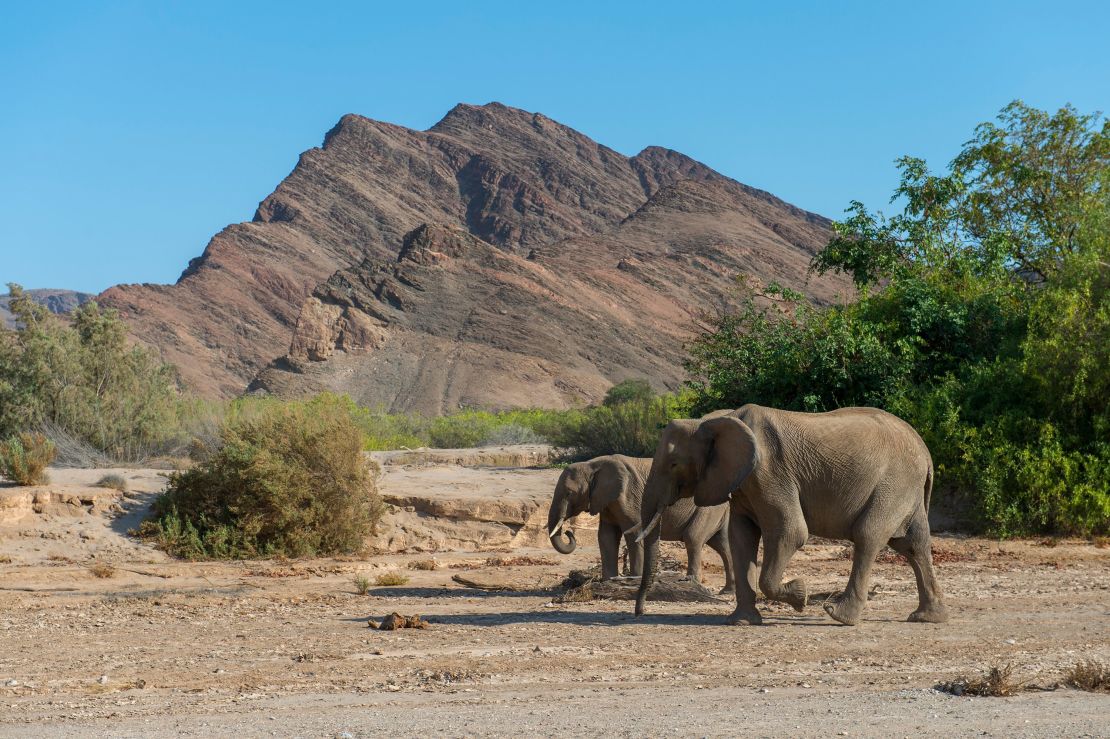
Elephants in the Huanib River Valley in northern Damaraland and Kaokoland, Namibia. Getty Images
It’s a heated debate that goes to the heart of what conservation looks like and how countries will deal with deep, devastating droughts that are only becoming more frequent as humans burn fossil fuels and heat up the world.
‘Immense suffering’
The situation facing southern Africa is dire. Crops have failed, livestock has died and nearly 70 million people are desperately in need of food.
The drought has been driven by El Niño — a natural climate pattern which has led to sharply reduced rainfall in the region — and exacerbated by the human-caused climate crisis.
“The reality is we are seeing an unprecedented increase in droughts,” said Elizabeth Mrema, deputy executive director of the United Nations Environment Programme. “There is immense suffering.”
Legal harvesting and consumption of wild game for food is common practice in cultures across the world, Mrema told CNN. “Provided the harvesting of these animals is done using scientifically proven, sustainable methods … there should be no cause for concern.”
Both countries say the culls won’t threaten the long-term survival of wild animal populations. They say it’s the opposite: reducing numbers will help protect remaining animals as the drought shrinks food and water resources.
All the animals in Zimbabwe and most in Namibia will be killed by professional hunters.
The animals will be shot, said Chris Brown, an environmental scientist at the Namibian Chamber of Environment, an association of conservation groups, which supports the cull. “Mostly it’s done at night with a silencer and an infrared spot so you can get very close to the animals. Headshot, animals drop,” Brown told CNN.
It’s “very humane,” he said, in contrast to farm animals squeezed into trucks before being killed in slaughterhouses. The meat will then be distributed to those in need.
Around 12 of the 83 Namibian elephants earmarked for the cull, however, will be killed by trophy hunters,Romeo Muyunda, spokesperson for Namibia’s Ministry of Environment, Forestry and Tourism, told CNN.
This has led to an outcry. A report by 14 African conservationists, who say they must remain anonymous due to the risks of speaking out, says courting trophy hunters raises questions about “the real motive.”
Muyunda said none of the money would go to the government, instead the aim is to generate money for communities affected by human-wildlife conflict.
‘Cruel and misguided’
Elephants may be a prized sight on safari, but they can be dangerous for those living alongside them.
In Namibia, which has around 21,000 elephants, according to a 2022 survey, some areas have so many they have become “almost intolerable for people,” Brown said, with elephants destroying crops, harming livestock and even killing people.
The country has attempted to offload elephants before. In 2020, it announced an auction of 170, but only managed to sell a third of them. They cannot be sold or given away, Brown said, “the truth of the matter is that no one wants elephants.”
But others don’t buy the overpopulation argument.
“Namibia’s wildlife have survived but diminished over the last 12years of droughts,” said Izak Smit, chairperson of Desert Lions Human Relations Aid, a Namibian non-profit. This is especially true in areas of the country where the culls will take place, he told CNN.
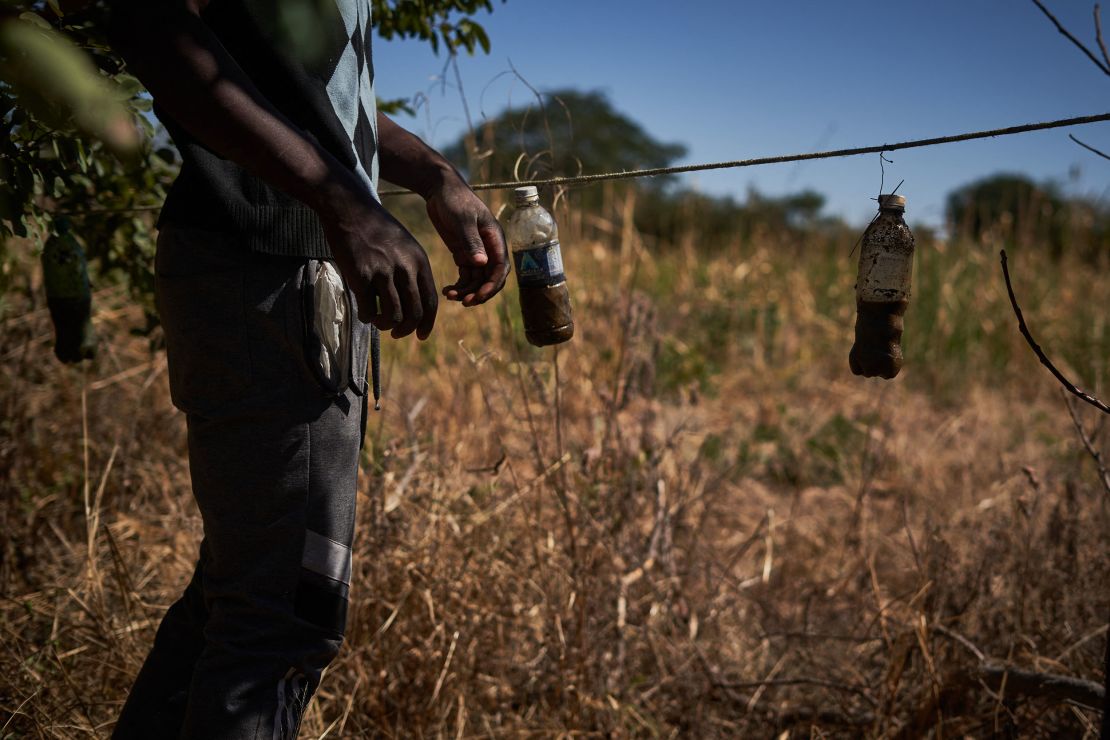
Bottles with homemade, non-lethal repellents around a perimeter fence at a homestead in Dete near Hwange National Park, Zimbabwe on May 25, 2022. Zinyange Auntony/AFP/Getty Images
In Zimbabwe, where the government says there are more than 85,000 elephants, some experts are concerns numbers have been overinflated.
It’s “a myth,” said Farai Maguwu, founding director of the Centre for Natural Resource Governance, because it takes no account of the fact elephants roam freely between countries in the region.
Safari operators in Hwange National Park in Zimbabwe, one of the areas earmarked for cullings, “are actually complaining about a declining number,” Maguwu said.
Elephants are not the problem, he argued, pointing to poor land management and the increase of human settlements next to national parks and in buffer zones designed to separate animals and people.
Conservationists are also concerned that killing these wild animals will push the delicate ecology of the two countries out of balance, making them even less resilient to drought.
It could also inadvertently increase human-elephant conflict, said Elisabeth Valerio, safari operator and conservationist in Hwange Park, Zimbabwe. The trauma of family members being killed can make elephants more aggressive, she told CNN.
Both Namibia and Zimbabwe say professional hunters will ensure entire groups are killed to prevent this.
Perhaps one of the biggest criticisms is that culls can’t do anything meaningful in the face of severe drought.
It’s a “false solution” when so many millions of people need food aid, Maguwu said. “A lot of us are hearing for the first time that elephant meat can be eaten,” he added, and expecting poor families to eat this meat is “an insult.”
The culls will do nothing to address hunger in anything but the most short-term way, said Megan Carr a senior researcher at the EMS Foundation, a South African social justice organization, calling them “misguided and cruel.”
Conservation biologist and natural resources consultant Keith Lindsay, also worries the culling could be used to push for a weakening of international rules on wildlife trading, such as selling ivory.
It could set up the narrative that “people who are opposed to wildlife trade, are opposed to starving people,” he told CNN.
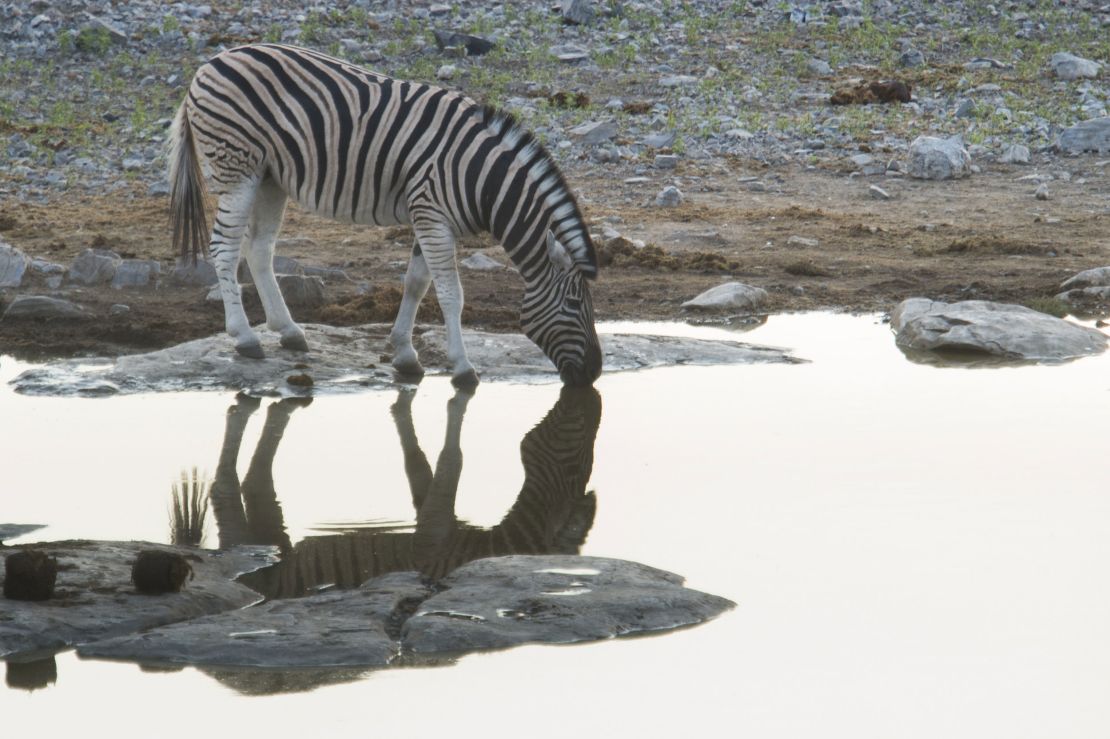
A zebra at a waterhole in May 2015 at Halali in Etosha park in Namibia. Martin Bureau/AFP/Getty Images
Namibian government spokesperson Muyunda said many of the criticisms ignore the suffering the drought is causing to both people and animals.
There is hypocrisy, too, he added, as Western countries have also culled animals. “Just because it’s Namibia and it’s an African country, then the decision is questioned.”
Brown, from the Namibian Chamber of Environment, went further: “It’s actually a racist thing: ‘Africa, they can’t manage their wildlife. We need to tell them how they should do it.’”
But as fossil fuel pollution helps drive increasingly severe and devastating droughts, many conservationists fear these culls will open the door to much more extensive wild animal killings.
The government may start something which they won’t be able to finish,” Maguwu said. “Something that will go on and on.”
Help keep One Green Planet free and independent! Together we can ensure our platform remains a hub for empowering ideas committed to fighting for a sustainable, healthy, and compassionate world. Please support us in keeping our mission strong.Pay
Trophy hunting, often framed as a controversial pastime, has long been a point of contention among wildlife enthusiasts and conservationists. While some argue that regulated hunting contributes to Conservation efforts, the grim realities behind certain hunts reveal a darker truth. Stories of creatures hunted for sport, often with little regard for their ecological importance or emotional impact, highlight the disturbing nature of this practice.
The ongoing global outrage over Walter Palmer’s killing of Cecil the lion highlighted serious ethical concerns regarding trophy hunting, particularly after investigations revealed he lacked a legal hunting permit. Critics argued that such practices, often defended as beneficial to Conservation, actually undermined efforts to protect endangered species and ecosystems. Palmer’s previous illegal hunting incident exemplified a troubling disregard for wildlife laws, suggesting that the purported Conservation funding from trophy hunting was often overstated.
According to this video, “many lions killed for “sport” in South Africa are captive-bred, making them habituated to humans and ultimately “easier” targets for trophy hunters.” PETA released video footage showing a group of hunters ambushing a captive-bred lion resting under a tree. After being shot and wounded by one of the hunters, the lion roared and charged, only to be met with four more shots from the hunter and his guides before he was finally killed.
American trophy hunter Tess Talley faced significant backlash after posting a photo of herself with a giraffe she killed, prompting her to defend the image. In a segment titled “Trophy Hunting: Killing or Conservation,” Jim Axelrod explored the controversy surrounding her hobby of hunting big game, which often involves animals kept in captivity. Talley drew criticism after the photo of her killing the giraffe went viral on social media. She claimed that the pictures were part of her effort to display respect for the animals, attempting to justify her actions amidst outrage.
A 12-year-old girl named Ariana Gordin ignited fierce outrage after posting photos of her trophy hunts on social media, revealing her passion for hunting exotic animals. Despite her young age, Ariana had already become a skilled sharpshooter and traveled abroad for big game hunts, including a recent safari in Africa with her father. While she defended her actions, expressing pride in her experiences, the online backlash was overwhelming, with many condemning her and even issuing death threats. Her father stated that they were offered the opportunity to hunt a problematic giraffe, which sparked further debate over the ethics of hunting.
The stories of trophy hunting show us the serious problems with this practice. They remind us how important it is to protect wildlife and the natural world. Each case highlights the need to rethink how we treat animals and work towards better ways to care for them. By standing against trophy hunting, we can help ensure that animals live freely and that future generations can enjoy the beauty of wildlife without the threat of unnecessary harm.
Being publicly-funded gives us a greater chance to continue providing you with high-quality content.
A Florida-based python hunter has shared a video of the heart-stopping moment a Burmese python lunged at him and his camera crew.
Invasive Burmese pythons are becoming a more frequent sight in the high grasses of South Florida, but a recent encounter shows these snakes are just as comfortable hiding in trees.
On Wednesday, hunting guide Mike Kimmel, known as the ‘Python Cowboy,’ shared a video on Facebook capturing a tense interaction with one of the snakes.
The video, filmed earlier this year, shows a python turning aggressive and lunging to bite after its hiding spot was discovered by Kimmel’s hunting dog, Otto.
‘We walked past this thing, like, three or four times,’ Kimmel said in the footage. ‘I would have walked right past it again if it were not for this (hunting) dog.’
+6
View gallery
A python hunter faces a heart-stopping moment as a Burmese python lunges at him
+6
View gallery
Hunting guide Mike Kimmel, known as the ‘Python Cowboy,’ shared a Facebook video on October 9th of a tense encounter with a Burmese python that lunged aggressively after being discovered by his dog, Otto
As the hunters, including a participant from the TV show Swamp People: Serpent Invasion, attempted to capture the snake, it lashed out several times and even tried to climb higher to evade capture.
Kimmel eventually grabbed the snake by the head, revealing it to be a younger python, around four feet in length.
‘The little guys are the tough ones (to catch) because where to grab them is so small and they’re quick,’ Kimmel added in the clip.
As the damage from Hurricane Milton is still being assessed, experts are warning of a potential increase in wildlife activity
+6
View gallery
Animals such as alligators, bears, snakes and manatees may have been displaced or agitated by the storm
Animals such as alligators, bears, snakes and manatees may have been displaced or agitated by the storm.
The Florida Fish and Wildlife Conservation Commission recommends staying alert and giving wildlife plenty of space. It’s important to avoid attempting to rescue or assist animals during or after a storm, as this could put you at risk.
Severe weather conditions, such as high winds and flooding, can displace and disorient wildlife, granting them access to unusual areas.
The stress and confusion caused by storms and hurricanes often result in wildlife behaving differently, potentially exhibiting more aggressive tendencies than usual.
While only six of Florida’s 44 snake species are venomous, the increased risk of encounters due to flooding makes it essential to maintain a safe distance. Snakes may seek shelter in debris or homes and can be found in unusual places.
Christopher Gillette, who works at Bellowing Acres Sanctuary, an alligator and exotic animal sanctuary, has warned that snakes who are displaced can often blend in among the debris or be found washed up in unusual places. He tells people to ‘keep a sharp eye.’
+6
View gallery
‘Keep in mind that the storm is going to send a lot of snakes on the move… there will be venomous snakes on the move as well. Watch your step, especially in those floodwaters,’ said Gillette
+6
View gallery
During storms, snakes can often be carried by flooding waters or cause them to seek shelter in debris, homes, sheds or barns
‘Keep in mind that the storm is going to send a lot of snakes on the move… there will be venomous snakes on the move as well. Watch your step, especially in those floodwaters. If you’re doing your clean up after the storm, picking up branches, definitely watch where you put your hands – watch for snakes,’ he added.
Snakes are not aggressive toward humans unless they feel threatened, and usually would much rather avoid encounters. To best avoid snakes, the FWC suggests avoiding tall grass and keeping hands and feet out of areas you can’t see.
Displaced wildlife, although not all pose a threat to humans’ safety, it is important to not attempt to rescue or help injured, orphaned or dead animals during or after storms if it endangers you.
Ballots will be mailed to 4.5 million Colorado voters today, and citizens can submit completed ballots at any time between now and Nov. 5.
Prop 127 is a major focus for animal welfare advocates and conservationists in the Rocky Mountain State and the nation because it seeks to halt Colorado’s unnecessary and ruthless practices of trophy hunting and commercial fur trapping of mountain lions and bobcats.
This very small segment of 2,000 trophy hunters and 700 fur trappers kills as many as 2,500 lions and bobcats for their heads, hides, and beautiful coats during a four-month assault, rigging the hunt with packs of dogs, bait, cage traps, and high-tech gadgetry. They even use drones.
As is typical in so many ballot issue campaigns, big-money opposition seeks to confuse voters and prompt them to opt for the status quo.
The biggest funder of the “No on 127” campaign is a Virginia-based Concord Fund, which focuses on federal judicial appointments and has no professional staff with any conservation or wildlife experience. The second biggest funder, if you add up donations from its chapters around the country, is Safari Club International, which has an elaborate awards program for its members who amass trophies of dead wildlife. Its best-known award is the “Africa Big Five,” requiring the shooting of an African lion, a leopard, an African elephant, a rhino, and a Cape Buffalo. A lesser-known prize is “Cats of the World,” and North American mountain lions and Canada lynx qualify as trophies for that awards category.
On Prop 127, these special interest groups have offered up a steady stream of misinformation to mislead and confuse voters so they can continue recklessly killing native wild cats. Today, I address false claims to set the record straight.
False Claim:Trophy hunting is already banned in Colorado. Fact: There is no statute or regulation in the state that says anything about banning trophy hunting. Trophy hunting is perfectly legal in Colorado, and there is a tiny segment of the larger hunting community obsessed with obtaining a nose-to-tail trophy of a lion. Most of the successful trophy hunters shell out $8,000 to a hunting guide, who maintains the dog packs, drones, and GPS equipment, and sets up a point-blank shot at a lion clinging to a tree branch.
Only California bans trophy hunting of lions, and it would have been big news had Colorado forbidden trophy hunting. But no one has even taken note of such a ban, because it doesn’t exist. It is a political fabrication, not a policy truth.
Trophy hunting of lions — in Africa and in the Americas — has been going on since the 19th century. Lion hunting is now banned in the vast majority of South American countries, and it’s tougher for Americans to hunt African and Asiatic lions overseas because the species are classed as threatened or endangered across their ranges. That means that a major reservoir of potential cat trophies exists in North America, and there are trophy hunting vendors who caters to this subculture and deliver the point-blank shot and then the trophy for mounting and display.
Indeed, it’s not hard to find promotions of “trophy hunting” by the network of professional hunting guides who offer “guaranteed kills” of trophy “toms” to their fee-paying clients, such as this one from Huntin’ Fool. The term “trophy” is ubiquitous among the non-purged sites whose owners charge wealthy hunters $8,000 or more to kill a lion in Colorado.
On the internet, and specifically on the websites of hunting guides, it’s plain as day that the purpose of the hunt is to secure a trophy: “We start our days very early driving roads looking for mountain lion tracks,” according to one guide on BookYourHunt. “Once we have a track located, we release hounds and catch your cat. Using GPS technology we track the hounds and precisely locate where they treed your trophy. We then determine the easiest route to take you into your trophy.” A different guide says cost depends on “the outfitter’s reputation for producing quality trophies.” A posting online by one lion-hunting guide talks of strapping a dead lion to a horse, with the caption “tying on the trophy.”
The animal welfare community didn’t invent the notion of “trophy hunting.” The trophy hunters coined it, and today’s trophy hunters are part of that tradition of wildlife exploitation. We draw the phrase directly from their literature, their promotional materials, and the celebrations.
And how would the taxidermy industry operate at all if not for trophy hunters?
False Claim:Packs of dogs are needed to allow for sex selection of male lions, so they don’t shoot the females. Fact: If it’s their game plan to reduce the number of females killed by eyeing the cat cornered in a tree, I can assure you it’s not working. During the 2023-24 lion-hunting season, 47% of the 501 lions shot by trophy hunters were females.
Many of the females shot from a tree had dependent young tucked away in a den or roaming on their own. The shooting of those females dooms the family group. Lions can breed at any time of the year, so there is no safe season for avoiding orphaning.
The truth is, dog packs are used to rig the hunt. Mountain lion guides just arrested in Utah and Idaho all used dogs in their orchestrating of commercial kills of lions. The trophy hunts happen just about the same way in all these states. Same guides, slightly different settings.
Dogs are not allowed for any other so-called big game — not for deer, elk, or bears. Just for lions and bobcats.
False claim:Wildlife experts decide wildlife policy in Colorado. Fact: It was the state Legislature that authorized mountain lion hunting in Colorado, and it’s the Colorado Wildlife Commission, a policymaking body appointed by seated governors, that approves annual hunting regulations that allow the use of dogs and high-tech gadgetry for lion hunting. These elected and appointed individuals are also the people who allow baiting of bobcat traps and the use of nooses and clubs to kill bobcats for their fur.
There are no requirements for either appointed wildlife commissioners or state lawmakers to have undergraduate or graduate degrees in any discipline of wildlife science or ecology. But even if they did — and precious few of these decision-makers do — it doesn’t mean that they have a monopoly on truth. Matters of trophy hunting and hunting methods are matters of values, ethics, and science. There are MDs, DVMs, and PhDs on both sides of just about every policy issue in America — from medical and veterinary research to health policy to criminal justice reform to agriculture policy. To cite the clearest example in our history of scientists getting it wrong, look at how the smoking industry trotted out experts and bamboozled policy makers for years and told the public that smoking posed no major health risks.
When representative government and political appointees at state commissions fail to do their jobs, then the citizens can opt to put a ballot question to the voters, given that the Colorado Constitution allows for a direct democracy.
There have been only two instances in Colorado history when citizen initiatives secured enough signatures to place measures on the statewide ballot to promote more humane and more responsible policies related to wildlife protection: 1) bear hunting, and 2) trapping.
By a lopsided vote of more than two to one, voters in 1992 banned spring hunting of bears and any bear baiting and hounding. It was the Colorado Wildlife Commission and Colorado state wildlife agency that allowed those atrocious hunting methods to be conducted for years until voters swatted them away as cruel and unsporting.
And four years later, voters also stopped the use of cruel and indiscriminate steel-jawed leghold traps and neck and body snares to kill animals for their fur and for recreation. And, yes, that’s because the Wildlife Commission and the state wildlife agency allowed those landmines for wildlife.
Citizens have always served as a check on reckless decision-making by state legislators and government agencies. In the case of wildlife policy, the process of creating humane treatment standards for wildlife by ballot initiative has been extraordinarily sparing. In every case, voters have adopted to stop inhumane, unfair, and commercial exploitation of wildlife, and there have been no serious attempts to revisit these policies.
False Claim:Mountain lion trophy hunting is “science-based” wildlife management. Fact: There is no research or scientific evidence to support the idea that trophy killing of lions achieves any valuable social or management purpose, whether to keep populations in check or to reduce occasional conflicts. Twenty-two wildlife scientists, many of them with field experience with lions, affirmed that notion in an open letter to Colorado voters. “Wild cats evolved in Colorado’s natural ecosystems and maintain stable populations,” reported the scientists.
Science is not an opinion, but an aggregation of information, often published in peer-reviewed journals, used to inform policy judgments. It is not an end in itself, but a means of evaluation. Good science gives us options, not answers.
Among the signatories was Dr. Rob Wielgus, former director of the Carnivore Conservation Lab of Washington State University. Dr. Wielgus did pioneering work to demonstrate that trophy hunting creates social chaos among surviving lions, with fellow scientists noting in their joint letter that “trophy hunting may also exacerbate human-lion conflicts by removing unoffending animals from the ecosystem, leaving the door open to younger cats who are more likely to be involved in conflict random recreational killing of lions.”
“These wild cat populations can and do regulate themselves, while providing a multitude of benefits to ecosystems,” commented Dr. Elaine Leslie, PhD, former chief of biological services for the National Park Service, who concluded that “the inhumane trapping and hunting of mountain lions and bobcats is not an ethical management tool.”
In addition to them, Dan Ashe has also weighed in and urged voters to approve Prop 127. Ashe was the top wildlife management official in the United States for years, with his role as director of the U.S. Fish and Wildlife Service from 2010-2016. He says trophy hunting of lions is wrong. He particularly underscores that using dogs and GPS gadgetry makes it unsporting, with the culmination of the hunt the shooting of a terrified animal in a tree.
It is an axiom of American politics that there is a bilge pump of misleading, false information washing over the public during election season. There’s no better example of this social science phenomenon than the “No on Prop 127” campaign.
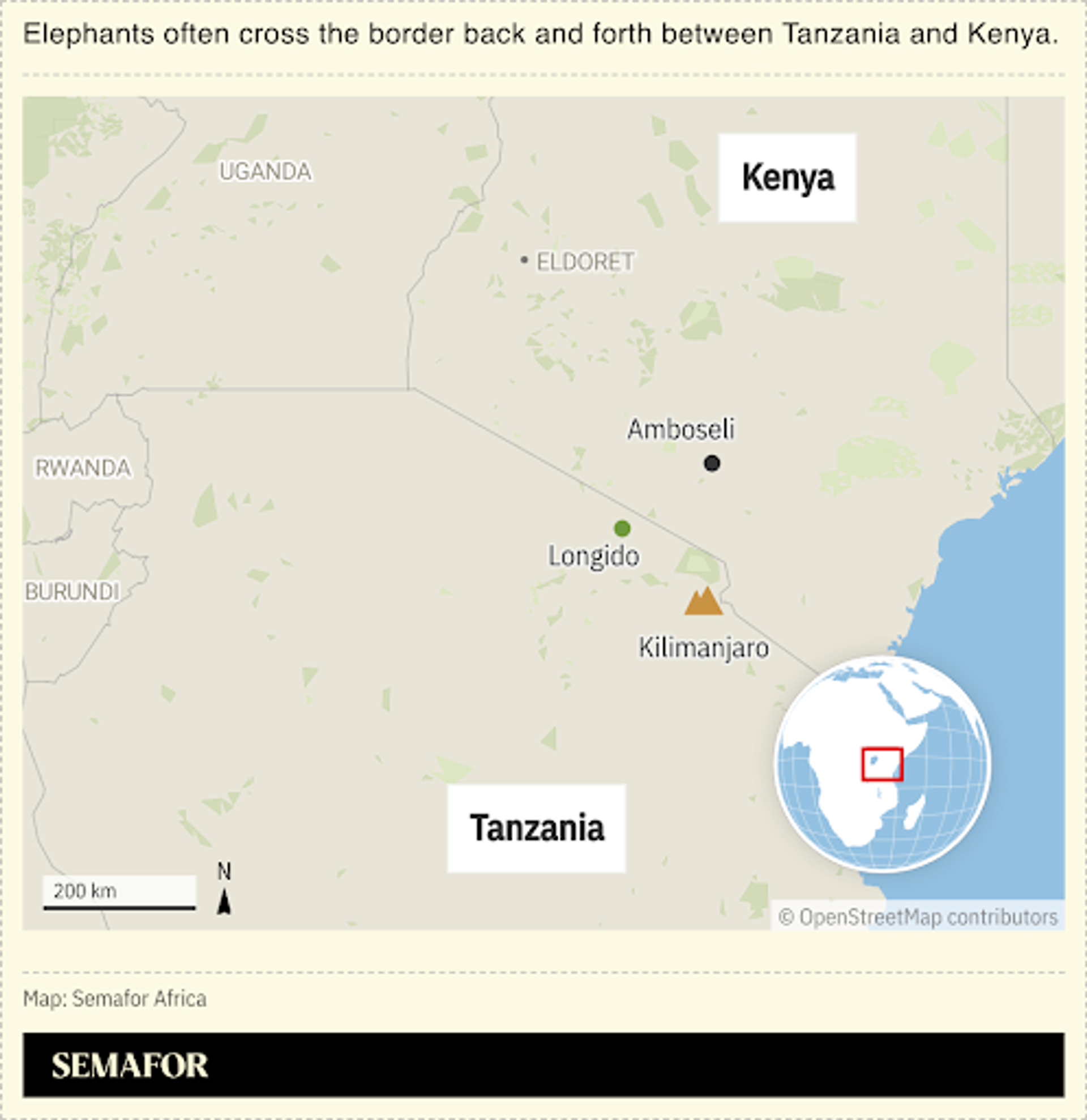
NAIROBI — Tanzanian authorities are keen on issuing more hunting permits despite mounting international pressure for the country to ban elephant trophy hunting in the areas surrounding its border with Kenya.
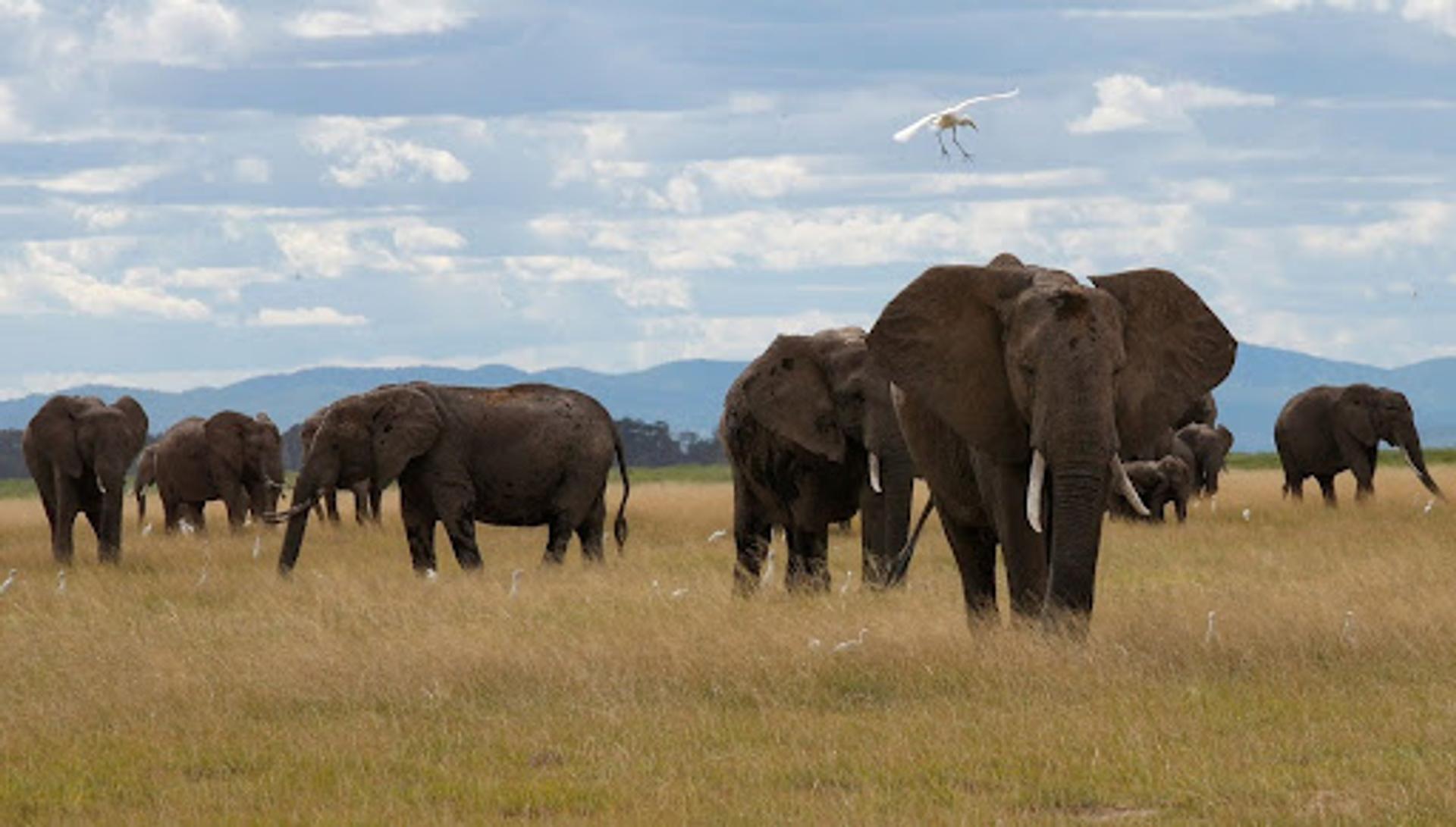
Legal killings of elephants for sport in northern Tanzania have risen over the last year prompting concerns over a dwindling elephant population. This has led to international conservationist groups calling for a ban on the hunting of cross-border elephants.
While elephant hunting is permitted in Tanzania, it has been illegal in Kenya since 1973. Elephants which roam freely between the border areas have traditionally been protected by a gentleman’s agreement between the two countries, but conservationists say this has been ignored in the past year.
AD
At least five elephants were legally targeted and killed by trophy hunters in northern Tanzania over the previous eight months, according to various conservation groups.
But, in a letter dated Sept. 18, seen by Semafor Africa, senior Tanzanian officials and researchers doubled down on allowing the hunting of elephants in the area. They cited human-wildlife conflicts and the economic benefits derived from hunting.
“Fourteen villagers in the Longido district and more than 500 acres of crops have been trampled,” it reads in part. “At the same time, trophy hunting brings in huge benefits, funding conservation, paying rangers’ salaries, and building water wells, schools and other critical infrastructure for the communities.”
AD
The letter’s authors, who include representatives of the Tanzania Wildlife Management Authority, Tanzania Hunting Operators Association and the MP for Longido, wrote that Tanzania has “transparent hunting regulation” geared towards protecting both wildlife and the communities living alongside them. It was addressed to the executive editor of Science Magazine.
The New York-based journal in June published a letter by more than 20 elephant biologists and conservationists calling for a stop to the hunting of elephants in the borderlands and a harmonized conservation strategy involving Kenya and Tanzania.
Know More
The greater Amboseli-West Kilimanjaro elephant population, spanning both sides of the Kenya-Tanzania border, is made up of approximately 2,000 individual elephants. Around 600 are males, of which 10 are super tuskers — elephants whose tusks weigh over 100 pounds each or touch the ground.
AD
In their letter, Tanzanian officials criticized Science magazine for failing to publish various responses submitted by Tanzanian researchers to the call by conservationists to stop elephant hunting in northern Tanzania. They accused the magazine of discrimination.
“The original letter you published, written predominantly by white authors, none of whom come from Tanzania (many instead from the Global North), only told one side of the story,” they insisted.
In response Science magazine told Semafor Africa that it had received numerous letters in response to a published letter calling for an end to elephant hunting in Tanzania and would not have space to publish all but would be publishing a subset of them.
A spokeswoman for the magazine also pushed back at suggestions of discrimination. “The Science family of journals is very focused on elevating the voices and concerns of authors based in Africa, through efforts including research, commentary, and news.”
Martin’s view
Unlike Kenya, Tanzania’s embrace of hunters has led to the development of a booming trophy hunting industry in the country. In 2022, Tanzania’s trophy hunting industry generated a reported 63.03 billion Tanzanian shillings ($23 million).
Earnings from hunting permits are a significant revenue source for the government. Hunting licenses cost around $60,000 a year, with additional fees for hunting elephants and lions.
Communities seriously affected by human-wildlife conflict could also be more likely to support hunting. However, the killings of elephants by hunters and the supposed economic benefits may not be sustainable in the long term. according to conservationists. They project that the remaining 10 super tuskers in the area could be dead in three years.
Kenya’s wildlife conservation strategy, anchored on tourism as opposed to trophy hunting, would also be affected by a dwindling elephant population in the famed Amboseli region. It is therefore important for authorities in both countries to devise effective joint strategies for conservation in the borderlands.
The View From Zimbabwe
Authorities in Zimbabwe last month decided to cull up to 200 elephants to help feed local communities facing acute hunger after the country’s worst drought in four decades. It would be the country’s first elephant culling since 1988 and take place in Hwange, Mbire, Tsholotsho and Chiredzi districts. Authorities said the culling would help towards decongesting the country’s main parks which can only sustain 55,000 elephants but the country is home to 84,000.
Notable
In April, the president of Botswana threatened to send 20,000 elephants to Germany in a dispute over conservation, reported the BBC.
Police are offering a reward of up to $20,000 for information about the suspect.
ByJon Haworth
Thursday, October 10, 2024 10:01AM
about:blank
A California sea lion was fatally shot on Bolsa Chica State Beach in Orange County, and a reward is now being offered to find the person responsible.
Federal officials are hunting for a suspect who they say shot and killed a 2-year-old sea lion while it was lying on a California beach, authorities said.
The National Oceanic and Atmospheric Administration’s Office of Law Enforcement is now offering a reward of up to $20,000 after the incident — which took place at Bolsa Chica State Beach in Orange County, California, on Aug. 7 — when the male California sea lion was found injured but alive between lifeguard stations 22 and 23 with a “fresh gunshot wound in its back,” according to a statement from the NOAA released on Wednesday.
“The Pacific Marine Mammal Center in Orange County rescued the male sea lion, but it died from its injuries the following day,” NOAA officials said.
Law enforcement is now actively seeking information on the person who shot the animal and any other details surrounding its shooting.
“The Marine Mammal Protection Act prohibits the harassment, hunting, capturing, or killing of sea lions and other marine mammals,” officials said. “However, the law allows for non-lethal methods to deter marine mammals from damaging private property, including fishing gear and catch, if it does not injure or kill an animal.”
Like all marine mammals, the California sea lion is protected under the Marine Mammal Protection Act which has helped their population to continue increasing since at least 1975, after protections were put in place under the MMPA.
“California sea lions are easy to view in the wild, but this puts them at higher risk of human-related injuries and death. Feeding or trying to feed them is harmful and illegal, because it changes their natural behaviors and makes them less wary of people and vessels,” the NOAA said. “They learn to associate humans with an easy meal and change their natural hunting practices-for example, they take bait catch directly off fishing gear. Sometimes they fall victim to retaliation (such as shooting) by frustrated boaters and fishermen.”
Anyone with information about the sea lion shooting should call NOAA’s 24/7 enforcement hotline at (800) 853-1964.











 Exposing the Big Game