Letter: Killing of birds continues at our state parks

216

http://www.issaquahpress.com/2015/07/09/to-the-editor-july-9-2015/

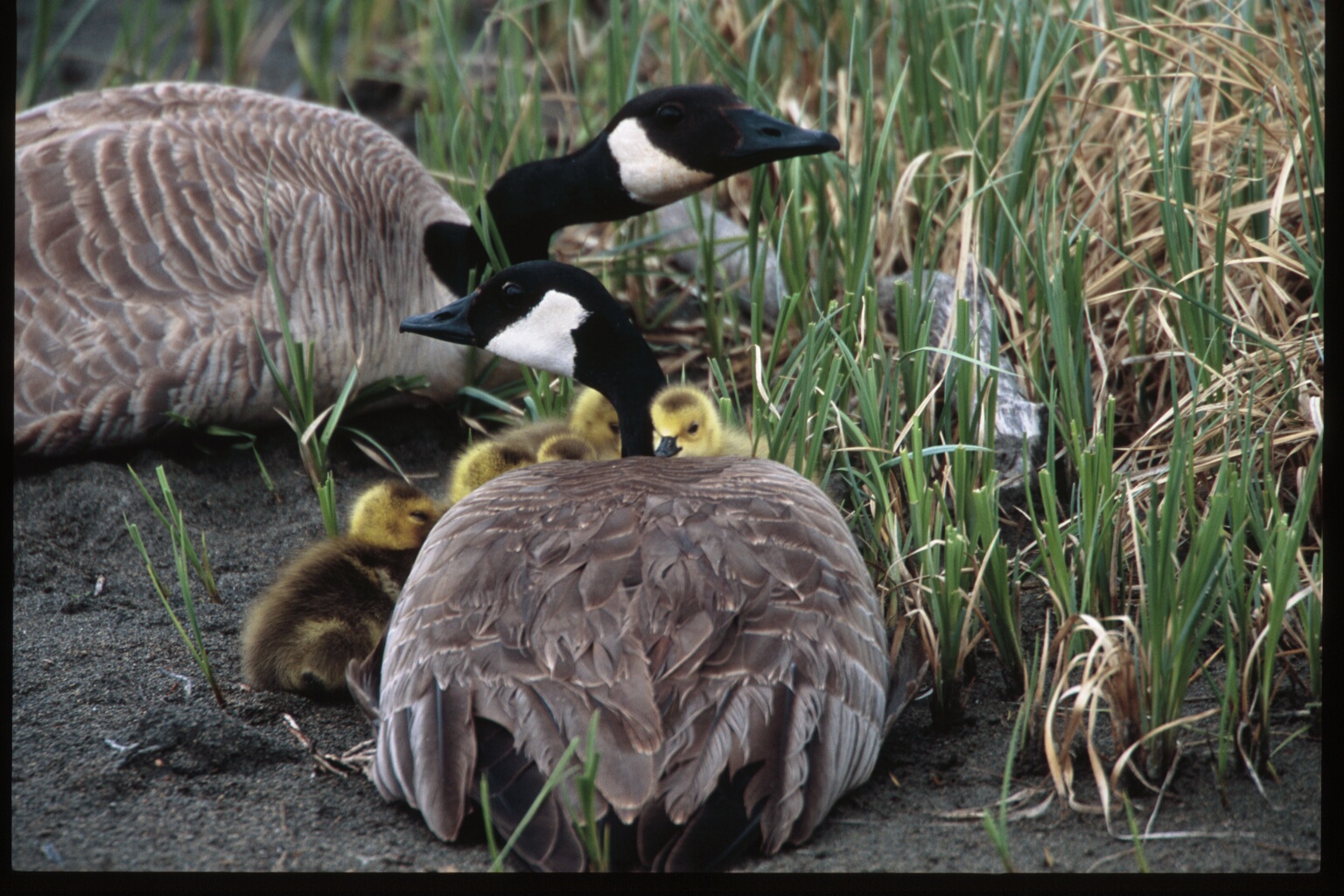
USDA Wildlife Services has continued killing geese in our local and state parks with a death toll of over 1,200 in 2014. The killing season for 2015 is now well underway. Most of this is being carried out under an interlocal agreement whose members include Seattle, Bellevue, Kirkland, Renton and others. Washington State Parks is the most recent member.

After hiring Wildlife Services in 2013 to kill geese at Lake Sammamish State Park, Washington State Parks stated it had no plans to kill geese in 2014 in any of our state parks. However, in 2014, they once again paid to have geese killed at Lake Sammamish and Deception Pass state parks.

In addition to inhumanely killing geese, Wildlife Services has an apparent recordkeeping problem. In a report to members of the interlocal agreement, Wildlife Services stated that it killed 1,213 geese in King County in 2014. However, it could only provide a detailed report with the date, location and method of killing for 19 geese. Where, when and how were the other 1,194 geese killed? One has to question, why is there such a discrepancy?

When asked about the number of Canada Geese in the areas covered by the agreement, Wildlife Services’ response was, “No records exist that estimates the number of geese in the areas covered by the agreement in 2014.”

Although Wildlife Services is required to keep detailed records, they have no idea of how many geese exist in the area and almost no records concerning the killing.

Interlocal agreement members need to stop the killing and implement a management plan that includes proven humane measures. Also, they need to be held accountable for accepting obvious omissions and inaccuracies in the recordkeeping and reporting provided by Wildlife Services.

Diane Weinstein

Issaquah

Wildlife Services kills 5 wolves

Wolf

Wolf

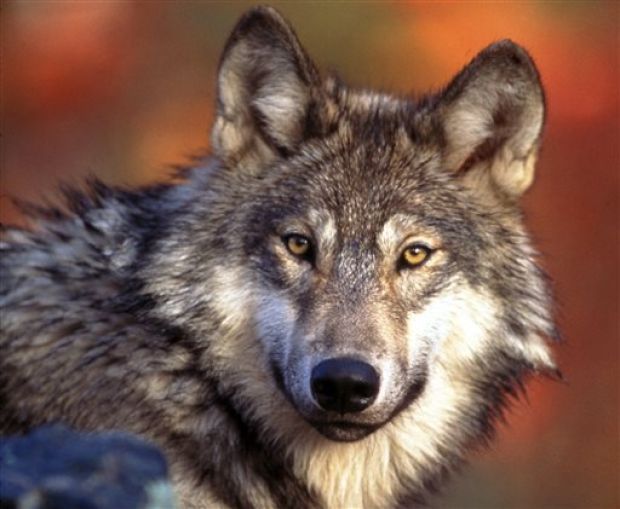
A gray wolf patrols its territory in the mountains of Idaho.

 http://www.mtexpress.com/news/environment/wildlife-services-kills-wolves/article_2e2ac646-2507-11e5-b966-c32dd2a28611.html

Wednesday, July 8, 2015 4:00 am

Idaho Wildlife Services has killed five wolves due to two incidents of sheep depredation that occurred on BLM land at the head of Croy Canyon and two incidents of cattle depredation that occurred on private land about 10 miles northeast of Fairfield.

Wildlife Services director Todd Grimm said the Idaho Department of Fish and Game confirmed that wolves had killed a ewe and a lamb on May 26 and a second ewe on June 3. He said the department confirmed a wolf kill of a calf on June 24 and a probable wolf kill of a cow on July 3.

Grimm said three wolves were shot on May 28 and two were shot on June 4.

He said the sheep were attended by herders and guard dogs, but said he did not know whether any scare devices were employed. He said the agency does not release the names of livestock producers whose animals are involved in depredation incidents.

Local wolf advocate Lynne Stone, director of the Boulder White Clouds Council, said the wolves were part of the Red Warrior pack, which had been viewed by people this winter on the hillside opposite the Warm Springs base area. She said that at that time, the pack consisted of nine wolves, though the alpha female died before the depredation incidents occurred.

“These wolves were in a great place with lots of wild country,” she said. “Then in came the sheep and we lose the wolves.”

Stone contended that Wildlife Services was “jumping the gun” by using lethal means before giving other methods a chance to scare off the wolves.

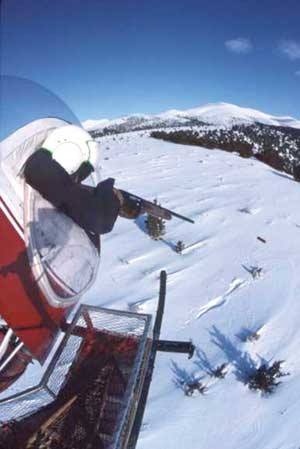
“When one ewe and one lamb get killed, they go in with their airplanes and shoot the whole pack,” she said. “We’re not going to have wolves in Blaine County if this is what the sheep industry and Wildlife Services are going to continue to do.”

Grimm said that elsewhere in the state this season, Wildlife Services killed three wolves due to depredation incidents in the Pahsimeroi Valley and three near Cascade. In February, the federal agency killed 19 wolves in the Lolo zone in northern Idaho at the request of the Department of Fish and Game to boost a declining elk population there.

D.C. screening of “EXPOSED” a huge success

x


I’m thrilled to report that we had a standing-room-only crowd in D.C. on Monday at the Congressional screening and briefing of our whistle-blowing film, “EXPOSED: USDA’s Secret War on Wildlife.” According to lobbyists who know, this kind of turnout for a briefing of this sort is unprecedented.

At least 80 of the people in the room were staffers for members of Congress. And we got significant interest from a well-connected Senate staffer who wants to bring “EXPOSED” to the administration’s attention.

When introducing the film we made sure to frame it as not being a Democrat or Republican issue. We let them know it is actually a public safety issue, a financial transparency issue, a legal issue, a ecological issue, and an animal cruelty issue. They seemed to get it. We are optimistic that Representative Peter DeFazio (D-Oregon) will be introducing a bill in the next several weeks.

Thank you to those of you who contacted your Congresspeople and asked that they attend this event. It worked. Now we move forward with more screenings of “EXPOSED” around the country and, we hope, legislation to reform Wildlife Services will be introduced very soon.  We will keep you posted.

We extend a special thanks to our event co-sponsors, without which it would not have happened: Representative Peter DeFazio, the Congressional Animal Protection Caucus, the Animal Welfare Institute, Born Free USA, The Humane Society of the United States, Natural Resources Defense Council, and the International Fund for Animal Welfare.

If you’re interested in having a screening of “EXPOSED” in your area please contact me. And if you’d like to see photos from the D.C. screening, visit our Facebook page by clicking on the icon below.

Brooks Fahy
Executive Director
brooks@predatordefense.org
(541) 937-4261 Office
(541) 520-6003 Cell

PREDATOR DEFENSE
Helping people & wildlife coexist since 1990
www.predatordefense.org copyrighted Hayden wolf walking

Who Really Are the Predators?

by Rosemary Lowe

A quote from this article:  https://exposingthebiggame.wordpress.com/2015/06/11/ranchers-mourn-wildlife-employees-killed-in-plane-crash/,  clearly indicates just how wide spread the massive slaughter of native carnivores is all over NM:
“Ranchers across New Mexico are mourning the two men, who were working for the U.S. Department of Agriculture’s Wildlife Services branch at the time of the crash. Ranchers say they would often turn to Hobbs and Tunnell for help in protecting their cattle and sheep from predators.”
As a dedicated wildlife activist, I will never back down from my belief (from years of witnessing  the decline of native wildlife due to ranching and hunting activities), that if we truly wish to save native wildlife, here is what we must work for:
1. Dedicate our efforts to Abolishing NM Game & Fish.  Sorry, reform or restructuring will not be sufficient, due to the intrinsic corruption in this agency.
2. Work tirelessly to End Livestock Grazing on Public Lands. If the Mexican Wolf “recovery program” is anything, it is a failed project.Why? Any wildlife reintroduction or protection plan that includes the infamous “Wildlife Services” as a lead player in such programs, is bound to failure, and the wolves will continue to die, under the this barbaric approach, which works for the livestock industry.
3. Wolves, and other so-called “predators” must be given priority for protection,, over any livestock grazing, with clear emphasis on Preservation of these species, along with their habitats. Ranchers will just have to get along with grazing on private lands.
I plan to be at the Saturday Taos, NM Game Meeting and Rally. But, I do not plan to appease these game biostitutes, ranchers or hunters.
Those who would like to get serious about this issue, let’s plan to get together. I have been before these agencies for many years. Things are only getting worse for the wildlife. Isn’t time we do something different?
For The Wild Ones,
Rosemary Lowe   www.foranimals.org

Ranchers mourn wildlife employees killed in plane crash

3 hours ago  • 

ALBUQUERQUE, N.M. (AP) — The single-engine plane came in low as the seasoned pilot maneuvered to give his gunner a clear shot at a coyote on the ground below. They were on a mission to hunt down predators that had been killing livestock in northeastern New Mexico.

A spotter less than a mile away had his binoculars trained on the coyote. He heard two or three gunshots as the plane passed over its target and through his field of view. Moments later, he heard a crash and looked up to see the plane planted in the ground.

Pilot Kelly Hobbs and his gunner, Shannon “Bubba” Tunnell, were killed. A preliminary report by the National Transportation Safety Board released late Wednesday says the impact pushed the engine into the cockpit.

No strangers to the risks of aerial gunning missions, the men left the Raton airport just after dawn on June 5. After passing over the edge of a mesa and spotting the coyote, the pilot began to descend. At one point, the plane was flying just 42 feet above the prairie, according to GPS data.

After Tunnell took his shots, Hobbs began to climb to the left. The last reading showed the plane was nearly 100 feet off the ground and its speed had dropped to 62 mph through the turn.

Ranchers across New Mexico are mourning the two men, who were working for the U.S. Department of Agriculture’s Wildlife Services branch at the time of the crash. Ranchers say they would often turn to Hobbs and Tunnell for help in protecting their cattle and sheep from predators.

“It hit me pretty hard when I heard about it. It was just like a punch in the stomach,” said Candy Ezzell, a state lawmaker who worked with Tunnell just weeks earlier to address coyote problems on her ranch in southern New Mexico.

Funeral services for both men were planned Friday.

Their deaths bring to 12 the number of public employees killed during Wildlife Services1920332_613143138754489_331154733_n aerial gunning operations in the U.S. since 1979. Many of the aerial missions happen in the West, where sheep and cattle ranchers regularly report problems with predators.

Hundreds of thousands of hours have been logged by Wildlife Services pilots over the decades. Agency officials stand behind their safety record, but environmentalists argue that the costs are too great and the federal government should end aerial gunning. They pointed to the fatalities along with more than 100 crashes and dozens of injuries.

“In no uncertain terms, putting agents into the air so they can gun wildlife from low-flying aircraft is so inherently dangerous and reckless,” said Wendy Keefover of The Humane Society of the United States.

A review of accident investigations shows pilots have flown into power lines, trees and land formations, Keefover said. Some also have flown back into their air turbulence and in several instances, gunners have shot their own aircraft or bullet casings have become lodged in mechanical workings.

The call to halt the practice stretches back to the last deadly crash in 2007 in Utah. At the time, Wildlife Services responded by launching a safety review.

As for the potential of another review, agency spokeswoman Lyndsay Cole said the focus now is on helping investigators determine what caused the latest crash in New Mexico.

The preliminary report states the weather was calm and there was no apparent evidence of any mechanical malfunctions or failures that would have caused engine problems.

Flying low and at relatively slow speed is risky, but Ezzell and other ranchers say aerial gunning operations are invaluable since controlling predators across such large swaths of land can be difficult. Trapping and coyote-calling contests have also come under fire, leaving ranchers with fewer options.

“With folks in the city wanting to end trapping and calling, it has become a real issue for the ag community and has affected the state’s ability to manage wildlife,” said David Sanchez of the Northern New Mexico Stockmen’s Association.

Aerial operations were used by Wildlife Services last year to kill more than 35,000 animals in two dozen states. That included more than 21,000 coyotes.

The agency targets animals that prey on livestock and other wildlife as well as nonnative species that damage crops or cause problems at airports. A total of 2.7 million animals, the majority of them birds, were killed last year.

Help Make Wildlife Services’ Worst Nightmare Come True

It’s finally happening–the last thing in the world USDA’s Wildlife Services wants!
Members of Congress and their staff have been invited to see our award-winning, whistle-blowing film, “EXPOSED: USDA’s Secret War on Wildlife,” at a special screening and panel discussion in D.C. It will be held:
Monday, June 15, 3:00-4:00 p.m.
2168 Rayburn Building (the Gold Room)
U.S. Capitol, Washington, D.C.
The panel discussion after the film will enable folks in D.C. to hear directly from a Wildlife Services’ whistle-blower, a victim, and proponents of reform.  It is our hope that legislation to reform this barbaric, unaccountable, and utterly misnamed predator control program will be introduced by Representative Peter DeFazio (D-OR) in the coming weeks.
I’ve attached the invitation we sent to the Hill.  Please forward this email to your members, friends, and anyone you think would be interested.  Let them know that this is the film Jane Goodall wants millions to see and urge them to ask their Representative to attend this important event.
I’d like to extend a special thanks to our event co-sponsors, without which it would not have happened:  Representative Peter DeFazio, the Congressional Animal Protection Caucus, the Animal Welfare Institute, Born Free USA, The Humane Society of the United States, Natural Resources Defense Council, and the International Fund for Animal Welfare.
Working together, we can expose the secret war against wildlife being waged on the taxpayer’s dime and hold Wildlife Services accountable at last.
Best,
Brooks

Brooks Fahy
Executive Director
brooks@predatordefense.org
(541) 937-4261 Office
(541) 520-6003 Cell

PREDATOR DEFENSE
Helping people & wildlife coexist since 1990
www.predatordefense.org

WS Killls Thousands of Protected Birds Killed Annually

Excerpts from:

Shot and Gassed: Thousands of Protected Birds Killed Annually

Sunday, 24 May 2015 00:00
Written by 
Rachael Bale and Tom Knudson By Rachael Bale and Tom Knudson, Reveal from The Center for Investigative Reporting

http://www.truth-out.org/news/item/30956-shot-and-gassed-thousands-of-protected-birds-killed-annually

-Even in the best of times, migratory birds lead perilous lives. Today, with climate change and habitat loss adding to the danger, wildlife advocates say the government-sanctioned killing is a taxpayer-funded threat that the birds should not have to face, one that is hidden from the public and often puts the needs of commerce ahead of conservation.

-The total body count for a recent three-year period came to 1.6 million, including more than 4,600 sandhill cranes. Four populous species – brown-headed cowbirds, red-winged blackbirds, common grackles and Canada geese – accounted for two-thirds of the mortalities.

But many less common birds were killed, too, including 875 upland sandpipers, 479 barn owls, 79 wood ducks, 55 lesser yellowlegs, 46 snowy owls, 12 roseate spoonbills, three curlew sandpipers, two red-throated loons and one western bluebird.

-California, where American coots were killed by the thousands to protect golf courseimagesQB1DEJIT greens and fairways. Usually the birds are shot, but sometimes they’re fed bait laced with a chemical that makes them fall asleep. Then they’re rounded up and killed in portable carbon dioxide chambers in the backs of pickup trucks. In California, some robins also were killed to protect vineyards.

No. 3 was Arkansas, where more than 22,000 double-breasted cormorants and thousands of other fish-eating birds were killed at fish hatcheries and aquaculture facilities.

Most of the killing is carried out without public notice. Even many conservationists are unaware of it. But those who are familiar with the permit program mostly don’t like it. They say that nonlethal options – such as scaring birds away or making the landscape less bird-friendly – are not given enough consideration and that lethal action is too often the default option.

“Nonlethal methods should always be given preference in these kinds of situations,” said Mike Daulton, vice president of government relations for the National Audubon Society, one of the nation’s oldest and most powerful conservation organizations. “The Migratory Bird Treaty Act is one of America’s most important wildlife conservation laws, and it should be strongly and reasonably enforced to maintain healthy wild populations of America’s native birds.”

Allen at the Fish and Wildlife Service said allowing the killing of nuisance birds protected by the Migratory Bird Treaty Act isn’t antithetical to the service’s mission of conserving wildlife populations.

See the data: Birds killed under depredation permits in the United States

Birds and humans have clashed for generations, of course. That’s why farmers put out scarecrows. But as cities and agriculture have grown, the scope of the conflicts has expanded. Today, even green industries sometimes kill birds. The government estimates that wind farms will take the lives of 1 million birds every year by 2030. To make that legal, the Fish and Wildlife Service is considering a new permit system for the “incidental” killing of birds protected by the Migratory Bird Treaty Act.

That act, a cornerstone of U.S. conservation history, grew out of an era of excess and slaughter at the turn of the 20th century. Many of North America’s migratory birds were being decimated, not for food but for feathers and other body parts that were used to make ladies’ hats, which had become signs of luxury and sophistication. In 1916, the United States and Great Britain, on behalf of Canada, signed the Migratory Bird Treaty Act. It became illegal to kill or capture migratory birds, as well as to buy or sell them.

The U.S. government, however, later made an exception. If a migratory bird is causing economic damage (such as destroying crops), posing a risk to humans (airports) or doing some other type of damage, a landowner can ask the Fish and Wildlife Service to approve the “lethal take,” or killing, of the problem birds.

For generations, Wildlife Services has long specialized in killing wildlife – including migratory birds – that are considered a threat to agriculture, commerce and the public. In recent years, the agency’s practices have drawn volleys of criticism from wildlife advocates and some members of Congress, who say they are scientifically unsound, heavy-handed and inhumane.

The agency relies on traps, snares and poison that kill indiscriminately. In 2012, the Sacramento Bee reported that Wildlife Services had killed more than 50,000 animals by mistake since 2000, including federally protected bald and golden eagles; more than 1,100 dogs, including family pets; and several species considered rare or imperiled. The investigation also noted that a growing body of science has found the agency’s killing of predators “is altering ecosystems in ways that diminish biodiversity, degrade habitat and invite disease.”

The U.S. Department of Agriculture’s Office of Inspector General now is conducting an audit to determine if the agency’s lethal control is justified and effective.

“Wildlife Services depends on killing predators and depredating migratory birds for its existence. When that’s what you do for a living, you tend to encourage people to adopt that solution,” said Daniel Rohlf, an environmental lawyer and professor at Lewis and Clark Law School in Oregon.

When landowners do get a permit to kill birds, Wildlife Services often is contracted to do the work. That contributes to a tendency to look to lethal control, rather than find more creative, nonlethal solutions, Rohlf said.

More: http://www.truth-out.org/news/item/30956-shot-and-gassed-thousands-of-protected-birds-killed-annually

Wildlife Photography ©Jim Robertson

Wildlife Photography ©Jim Robertson

400,000 Coyotes Are Killed in the U.S. Each Year…

10532560_825644414156550_8088582058644950130_n

400,000 Coyotes Are Killed in the U.S. Each Year… The Reason Why Will Make You Livid

At least 400,000 coyotes are killed each year in the United States. That’s an average of nearly 1,100 individuals a day.

So why isn’t the government doing something to stop it? Well, mainly because they have been orchestrating a discreet mass slaughter of coyotes for nearly a century.
Read more at http://blog.therainforestsite.com/killing-coyotes/#g4cx4aXjKm7uwMDO.99

Also, know that a “reality” show, in its third season, http://deaddogwalkin.com
is a testament to just how low society has stooped in its ongoing backslide to hitherto unattainable depths. Next stop? Hell itself.

Happy Today … Gassed Tomorrow

IDA geese FB post ‏

https://www.facebook.com/indefenseofanimals/photos/a.10150796907537346.439113.5956327345/10153262971307346/?type=1&theater

 “Where do the wild geese go when they go away …?”

When Greg Brown wrote his song wondering where the wild geese go when they go away, he, as we do, probably had the image in mind of a group of these beautiful birds flying high up in the sky in their characteristic v-shaped flight pattern and their familiar crackling voices that always seem to have something to say.

Tragically, many Canada geese families currently nesting near ponds in parks, airports and even in and near wildlife refuges, will be rounded up by USDA Wildlife Service agents (WS) during their molting period when they cannot fly. Entirely helpless, they will be separated from their goslings, causing shock and panic among the parent geese and goslings, who frantically call their loved ones in a final futile attempt to find each other.

Instead, these highly intelligent birds, in a terrifying state of confusion and panic, will be either mercilessly thrown into mobile gas chambers, left struggling for their lives over a long period of time while fighting for oxygen in vain, or packed into crates and trucked to a slaughterhouse to be brutally hung upside down with their throats slashed for their flesh.

Please stay tuned for our upcoming alerts to ask for your active involvement to help save Canada geese from a certain horrific death! Please make sure you have provided your state, as many of our alerts are regional in nature.

https://www.facebook.com/indefenseofanimals/photos/a.10150796907537346.439113.5956327345/10153262971307346/?type=1&theater

Other Evils of the Livestock Industry

1011767_10152168496128769_1859093580_n
The following is by Rosemary Lowe:

Thinking Beyond the Animal Factories to Save This Planet

 
 Those out there who are concerned about this planet, the wildlife, the wild places, really need to understand how very destructive the Livestock Industry is, and not just for the factory farming aspects (as horrendous as they are).
Even many Vegans, who rightly abhor  what goes on in animal factories,  ignore, (or are unaware of), the plight of billions of native wild species in the U.S. and around the world. Wild species’ populations are in severe decline , some near extinction, due to livestock grazing on the last open, wild places.
Since the 1880’s the western livestock industry in the U.S., has been responsible for the slaughter of Billions (not millions) of coyotes, bears, wolves, prairie dogs, birds of prey, mountain lions, bobcats, beavers, ferrets, and other wild fauna and flora. This industry is also killing our rivers, streams,  forests, not to mention increasing the volatile gas, methane, that is a by-product of grazing, &  increasing global climate change.
So, while most people are now at least aware of the evil animal factories,  the horror of what goes on “out there” on the range– the vast expanses of our public lands– is hardly mentioned or thought about. It is crucial to also understand that western public lands–wilderness areas, BLM, National Forests, National Grasslands,  National Wildlife Refuges, and state lands–are becoming Domesticated Feed Lots because of the ranching industry. These public lands are the last refuge for wildness, in this Climate Change world!
 No matter how livestock grazing is packaged, it is an industry which is  removing what is wild and replacing it with  Domestication. Every so-called “wildlife problem” west of the Mississippi is really about The Livestock Industry, whether it be actual  grazing, or the raising of crops used for grazing domestic sheep and cattle. The western livestock interests are powerful, vocal, and determined to keep wolves, coyotes, mountain lions, wild horses, & thousands of other species “controlled/managed” with emphasis on aerial shooting, roundups, poisoning, trapping, hunts,  subsidized by taxpayers.
Now, some misguided animal groups, like IDA, and HSUS are falling for the PZP “birth control” method for horses, deer and other wild ungulates–which means more “taming” of the wild west.
What does this trend mean for the future of The Wild, when even so-called “animal people” start Sleeping with The Enemy?
 The great naturalist, professor, author, John A. Livingston, wrote, in Rogue Primate that: “to domesticate…is to amputate its wildness, to tame it; to train or otherwise coerce it into living with, and being of use, to us; to make it a part of our (human) infrastructure.”

We who care, still have a chance to save what is left of wildness, but we don’t have much time. Worse yet, the other living beings–wild non-humans-are fast running out of time.
      __________________________________________________
And John A. Livingston also wrote (and ahimsaforever commented), One of my favorite quotes of Livingston catalogs why he and other people (including me) who care about animals can be misanthropic:

“In the alchemist’s dungeon that is almost any well-appointed shopping center in the “developed” world, you can buy cosmetics, transmission fluid, and pet food made from whales; you can buy the hide of lynx in the form of a hat, or gloves made from the skin of an unborn lamb; you can buy a coat made from seal whelps; you can buy a tropical finch in a metal cage and a Siamese fighting fish in a plastic bag; you can buy firearms and whammo ammunition and multiple hooks with barbs on them; you can buy sharkskin shoes and the unspawned eggs of a sturgeon; you can buy the pulverized enlarged liver of a force-fed goose and the testicles of a bull and the brain of a calf . . . . You can buy the sterile eggs of an untrod chicken and the tongue of a feed-lot steer that spent its last weeks hock-deep in its own manure; you can buy medicines made from the blood and viscera of living laboratory animals . . . . You can also buy the Holy Bible and the Declaration of Human Rights.” The John Livingston Reader (2007), p. 149.