A grizzly bear was shot and later killed after chasing a hunter up a tree in Montana, authorities said.
The animal, a mother bear with two cubs, charged the unidentified man while he was hunting by the Hidden Lakes in Gallatin County, Montana, the sheriff’s office said in a news release. He shot the bear with a pistol before climbing a tree, but the wounded bear remained in the area.
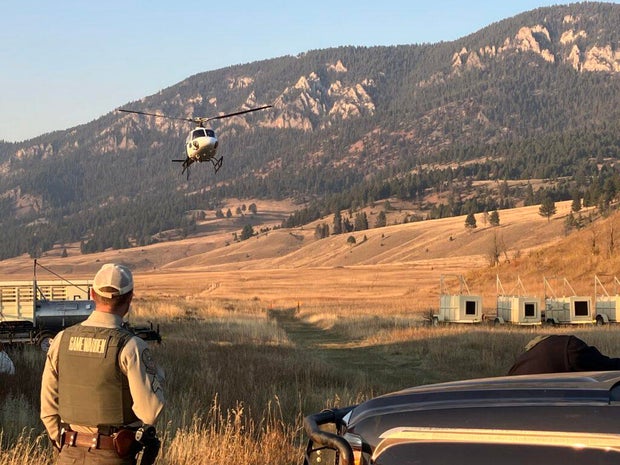
County dispatchers received a 911 call from the hunter at 2:08 p.m. on Saturday. The man waited in the tree until a Montana Fish, Wildlife and Parks helicopter arrived on the scene.
When the Fish, Wildlife and Parks personnel arrived, they “dispatched the wounded grizzly,” the sheriff’s office said, and rescued the hunter. He was not injured, and was transported out of the area on the helicopter. The Gallatin County Sheriff’s Office assembled a search and rescue team, but it was not needed to find the man.
A Montana Fish, Wildlife and Parks helicopter meets a search and rescue team after rescuing a hunter.Gallatin County Sheriff’s Office
The Hidden Lakes are a series of eight lakes on the west side of the Gallatin Range, a part of the Rocky Mountains. The area is home to grizzly bears and wolves. Gallatin County Sheriff Dan Springer said that the incident should serve as a reminder for hunters to be aware of their surroundings, to carry bear spray, avoid signs of bears, and hunt in groups and carry a communication device to call for help if necessary.
Multiple bear attacks have been reported in Montana in recent months. In late September, a man was attacked by a bear and injured, then walked over a mile to reach a rescue helicopter. In mid-August, a three-year-old girl was attacked by a black bear while she was in a tent at a private campground just north of Yellowstone National Park. A bear believed to be involved was captured and euthanized hours after the incident.
In July, a man shot and killed a grizzly bear after it charged him while he was picking berries. Another grizzly bear was killed by Montana Fish, Wildlife & Parks officials that same day after it broke into a home.
Propositions with three numbers (e.g., Proposition 127, Proposition 128, etc.) are measures amending state statutes.
Proposition 127 is a grassroots citizens initiative that would make it illegal to hunt, shoot at, or trap bobcats, lynx, and mountain lions in Colorado. The only exceptions are for the protection of human life, property and livestock. Violation would be a Class 1 misdemeanor punishable by a fine and limiting of the violator’s wildlife hunting privileges.
The measure is supported by Cats Aren’t Trophies, and is endorsed by animal welfare societies, wildlife sanctuaries and rescues, Audubon Societies, Wild Earth Guardians and the Sierra Club, among others.
Maliyah Mounce’s first buck during Wisconsin’s youth deer hunt season (Photo: Lukas Mounce)
1
BROWN COUNTY (WLUK) — This weekend marked the youth deer hunt season across Wisconsin, bringing families out together in the wilderness.
While the 2024 deer hunting season will be out in full force later this year, early October presents a great opportunity for hunters like Ty Rabas and his 10-year-old son, Mack.
“It brings me a lot of joy and excitement to pass on what my dad showed me to him and my other little guy and the other one behind him,” said Ty Rabas.
The father and son duo were trekking on public land in Brown County on Sunday during the youth deer hunt, hoping to find the perfect buck.
Mack already harvested a buck last month in Michigan.
“At the end of the day it’s like, it feels like you’re not gonna get anything but then like they come in like right before the sun sets,” said Mack Rabas.
Wisconsin’s youth deer hunt offers hunters 15 years and younger the chance to learn the techniques of hunting.
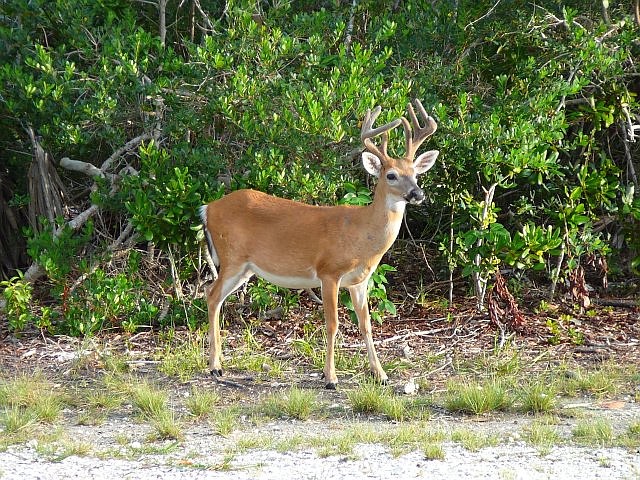
Lukas Mounce’s 7-year-old daughter, Maliyah, harvested this eight point buck on Saturday in the Fox Valley, her first in her young hunting career.
“I’m really proud that I got that buck, and my little brother, he really really wants to go hunting with me,” said Maliyah Mounce.
For Lukas, he’d describe that moment with his daughter as special.
“Her eyes said it all when she found it. I mean, she just whipped around and her eyes were as big as pie plates and, I mean, that was the most exciting part for me,” said Lukas Mounce.
JOIN THE CONVERSATION (1)
Whether you come home with a trophy buck or empty-handed, hunting is all about the memories you make along the way.
Three men were arrested in the Dhekelia area on Monday morning after a Sovereign Base Area Police anti-bird trapping raid discovered them in an orchard using active mist nets.
During the raid, between the villages of Ormidhia and Xylophagou, the dedicated Bird Trapping Action Team working alongside the Committee Against Bird Slaughter, released 69 live Ambelopoulia (Black Caps) which had been snared in three mist nets.
The police have also confirmed that a bird imitating device used to attract migrating Ambelopoulia was seized, along with three loudspeakers, 100 metres of electric cabling, one car battery and a vehicle used by the men.
All three are from the Xylophagou area and police are now in the process of tracing the owner of the orchard used for the crime.
Sergeant Yiannis Louca, who ran the operation, said the men are now all facing prosecution for their crimes.
He explained: “Firstly, this is a really good result and sends out a very strong message that despite our success in heavily reducing this crime over the years, we remain committed.
“We are still investigating this crime but the men will face prosecution in the SBA Court as we operate a zero-tolerance policy on bird trapping.”
Inspector Fanos Christodoulou, who oversees the team, warned trappers his officers were now better resourced and more prepared than ever before.
He said: “We have assembled a team of 10, full of experience with officers that are keen to make a difference in tackling this crime.
“We will have the capacity to call on up to 10 members of the military to assist us in our operations when working on military land and on top of that, we will once again work very closely with Bird Life Cyprus and CABS to combat bird trapping.
“As always, we will continue to develop our technology, with drones, hidden cameras and any other modern means of detection.”
Natural Resources Commission member Patrick Early (left), department Director Dan Bortner and commission Chair Bryan Poynter at a commission meeting on Tuesday, Sept. 17, 2024. (Leslie Bonilla Muñiz/Indiana Capital Chronicle)
Indiana’s Natural Resources Commission on Tuesday approved preliminary rules for a new, lawmaker-mandated bobcat trapping season, and finalized statewide river otter trapping regulations.
Commission leader Bryan Poynter called the bobcat work a “heavy lift,” speaking from the ballroom at the Fort Harrison State Park Inn in Marion County.
The Department of Natural Resource’s proposed changes would include establishing a bobcat trapping season in 40 southern Indiana counties, with a bag limit of one bobcat per trapper and a season quota of 250 bobcats. It would run November to January.
Public comments can be submitted here by clicking on “Comment on this rule.”
Biologist Geriann Albers said the department based the limits on a data model created in collaboration with Purdue University.
Department of Natural Resources Biologist Geriann Albers speaks at a commission meeting on Tuesday, Sept. 17, 2024. (Leslie Bonilla Muñiz/Indiana Capital Chronicle)
The model’s assumptions were “very conservative,” she said.
“We’re very confident that that number is sustainable and is not going to negatively impact our bobcat population,” Albers told the commission.
The season is limited to “established” populations in the south, for example, because bobcat populations further north are still considered “emerging.”
The department also recommended other amendments: letting legally acquired bobcats and parts to be sold, letting bobcats found dead to be kept for personal use with a permit, and more.
Traps would be limited to cage, foothold and cable device traps.
“We know those three types have been tested on bobcats, and they’re humane, efficient and selective for bobcats,” Albers said.
She told the Capital Chronicle that the department’s efforts related to bobcat trapping go back at least four years. Rulemaking for a brand-new season is complex, she said, because it involves plenty of data and other moving parts.
In 2019, the department weighed a bobcat season but dropped the idea after public backlash. Lawmakers stepped in earlier this year to require a season.
The department’s Fish and Wildlife Division aimed for balance.
“People like to participate in hunting and trapping, but we also want to strike that balance of (bobcats) still being available for people to view or photograph and things like that,” Albers said. “So we’re trying to maximize the outdoor activity that’s available, but in a sustainable way.”
Fort Benjamin Harrison State Park’s inn on Tuesday, Sept. 17, 2024. (Leslie Bonilla Muñiz/Indiana Capital Chronicle)
The commission approved preliminary adoption of the amendments by voice vote. Public comment comes before a final vote.
Animal rights activists decried the move.
Samantha Chapman, Indiana state director for the U.S. Humane Society, said the group was “deeply disappointed” in the initial approval.
“While the Commission was given no choice on proposing such an unpopular season, we urge them to recognize Hoosier’s overwhelming opposition to this inhumane and scientifically unjustifiable treatment of Indiana’s only remaining native wildcat, whose population is still recovering,” Chapman said in a Wednesday statement.
She pushed the commission to set a quota of zero bobcats, noting it has the discretion to do so.
Swimming out of extinction
Commission members separately O.K.’d final rules for an expanded river otter trapping season, a development that Poynter dubbed “one of the biggest success stories that we’ve had in Indiana in a long time.”
Hoosier river otters were few and far between by the 1900s, and were even classified as extinct in Indiana in 1942, according to Purdue University.
The department began a reintroduction program in 1995, releasing 303 river otters into the state before the new millennium, according to its website. Most came from Louisiana, per Albers.
By 2005, the population had recovered so much that river otters were removed from the state-endangered list. The department opened its first limited season for the creatures in 2015.
Now, the department estimates there are upwards of 8,000 river otters in Indiana.
“As … otters have kept expanding, we’ve upped that quota once, and we started adding more and more counties, and we were kind of at a tipping point where most of the state was already open and there was only some counties that weren’t,” Albers said.
And, Hoosiers having “otter issues” can take them during the season instead of having to get other permits. River otters commonly get into small ponds stocked with fish, she said.
“Otters see those kind of as buffets,” she remarked.
The changes establish a statewide trapping quota of 750 river otters with an individual bag limit of two. The season extends from mid-November to mid-March.
Note: This article has been updated with comments from Indiana’s chapter of the Humane Society.
THE long-extinct dodo could be brought back from the dead by 2028, nearly 350 years after humans hunted them into extinction.
Either that, or the long-lost Tasmanian tiger, the CEO of a landmark gene-editing company told The Sun.
Sign up for The US Sun newsletterSign up
Your info will be used in accordance with our Privacy Policy
In an interview, CEO Ben Lamm said the woolly mammoth wouldn’t be the first extinct species to be born by 2028Credit: Colossal BiosciencesDodos only lay one egg per year, which became food for new incoming species, and significantly accelerated their extinctionCredit: SWNSScientists hope to merge the genes of the woolly mammoth with its closest living relative, the Asian elephantCredit: GettyWhile these animals are expected to visually resemble the extinct species they’re modelled on, they will be genetically engineered versionsCredit: Getty Images
Colossal Biosciences, understood to be the world’s first de-extinction company, is trying to bring the woolly mammoth, tasmanian tiger (thylacine) and dodo back from the dead.
Some 4,000 years after extinction, the woolly mammoth species is on track to have its first baby born via an artificial womb by 2028, thanks to a recent breakthrough.
But in an interview, CEO Ben Lamm said the woolly mammoth wouldn’t be the first extinct species to be born by that year.
“I don’t believe the mammoth will be the first species,” he said. “You know, it’s 22 months of gestation (incubation).”
Lamm, instead, reckons the dodo or the Tasmanian tiger might be born first, due to their shorter development times.
How is it done?
While these animals are expected to visually resemble the extinct species they’re modelled on, they will be genetically engineered versions.
For example, scientists hope to edit gene cells taken from a well-preserved woolly mammoth that was found frozen.
They will then combine those genes with the genes of an Asian elephant, the woolly mammoth’s closest living relative.
Scientists will also isolate the cold-resistant traits of a woolly mammoth, such as its thick hair, to insert into the Asian elephants genome.
Essentially, Colossal will create a cold-resistant version of the Asian elephant to exist in the Arctic Tundra.
Similar techniques will be used for the Tasmanian tiger and the dodo.
While there is some dispute over how exactly the dodo went extinct, the species thrived on the island of Mauritius until the arrival of settlers in the late 1500s.
The dodos were easy to catch because they had not yet learned to be afraid of humans, and lived together in small wooded areas of the island.
While accounts say they did not taste very nice, they were often caught and stewed by arriving sailors.
Gruesome way humans killed 12-ton woolly mammoths in Ice Age finally revealed as scientists squash spear-hunting ‘myth’
But anyone wanting to replace their turkey with a dodo for future Christmas’ will be sorely disappointed.
Trophy hunting woolly mammoths in the Arctic Tundra, or Tasmanian tigers in Australia and the US will also be strictly prohibited.
“We aren’t bringing animals back to hunt them and we aren’t bringing animals back to eat them,” Lamm explained.
“It would be sad [if they were hunted], but we’d hope that the governments and partners that we’re collaborating with would help us in the enforcement of those protections.”
While just one dodo, tasmian tiger or woolly mammoth born in the 21st Century would be considered a triumph to any layman – Lamm’s vision goes further.
“I don’t define that as a success,” he said, adding “I think that you have to engineer in enough genetic diversity so you have small populations.”
Lamm doesn’t just want one or two of each species resurrected, but fully, self-sustainable populations across various different regions.
“Our conservation partners have found success in rewilding, or rebounding populations from as many as five to ten individuals (animals),” he said.
“I think that we will probably engineer small herds of mammoths, thylacine and dodos and others to help spur that.
“But then we probably have multiple different breeding populations would be the goal.
“So, you know, our goal isn’t to make one. I’ll tell you, the second one’s a lot cheaper than the first one. So, I think we’ll probably make as many as possible.”
by HAILEY HILL Staff Writer | October 5, 2024 1:07 AM
This year’s deer hunting season will look a little different for North Idaho wild game processors after cases of chronic wasting disease were confirmed in the Bonners Ferry deer population.
CWD is a neurological disease found in deer, elk and moose that causes degeneration of the animal’s brain, resulting in emaciation, abnormal behavior, loss of bodily function and eventually death.
Woods Meat Processing in Sandpoint still plans to process wild game — however, the shop will not accept any carcasses from CWD zones, which are designated by Idaho Fish and Game. Additionally, a negative CWD test is required for harvested, boneless meat.
ADVERTISING
“If anybody tells you they’re not doing anything different, that’s not a good thing,” said Jody Russell, co-owner of Woods Meat Processing.
Mike Edgehouse, who operates a mobile meat processing business called Primal Edge Pursuits, believes working exclusively with wild game — and one animal at a time — is what will allow him to avoid potential for contamination.
“I think those who do both domestic and wild game are in a much tougher position,” Edgehouse said.
Such was the case for Mountain View Custom Meats, a Coeur d’Alene shop that stopped processing wild game meat two years ago when the first case of CWD was confirmed in Idaho.
Since the shop is located on private property, owner Kevin Trosclair explained, they did not want to risk CWD prions getting into the property’s groundwater and infecting nearby wildlife and livestock.
“We decided from a safety standpoint that we don’t want to have that in our shop,” Trosclair said.
Idaho Fish and Game has designated Units 14, 18 and a portion of unit 1, the portion of Boundary County east of the Selkirk Mountains crest, as CWD Management Zones as of Oct. 1. Fish and Game prohibits the transport of whole deer, elk or moose carcasses out of these zones.
Mandatory sampling is required for all mule deer and white-tailed deer harvested in units 14, 18, 23, 24, 32A and the same portion of unit 1, according to IFG 2024 CWD Hunting Rules.
Any-weapon hunting for white-tailed deer opens Oct. 10.
Arunachal Pradesh’s East Siang District cracks down on firearm misuse, targeting gun owners aiding hunters. Efforts align with wildlife conservation and anti-drug initiatives.
Arunachal Pradesh’s East Siang District Deputy Commissioner, Tayi Taggu, has alerted the public, especially firearm license owners in Seram and other villages that anyone who lends their guns to hunters will be treated as a hunter and will face the same penalties, including imprisonment.
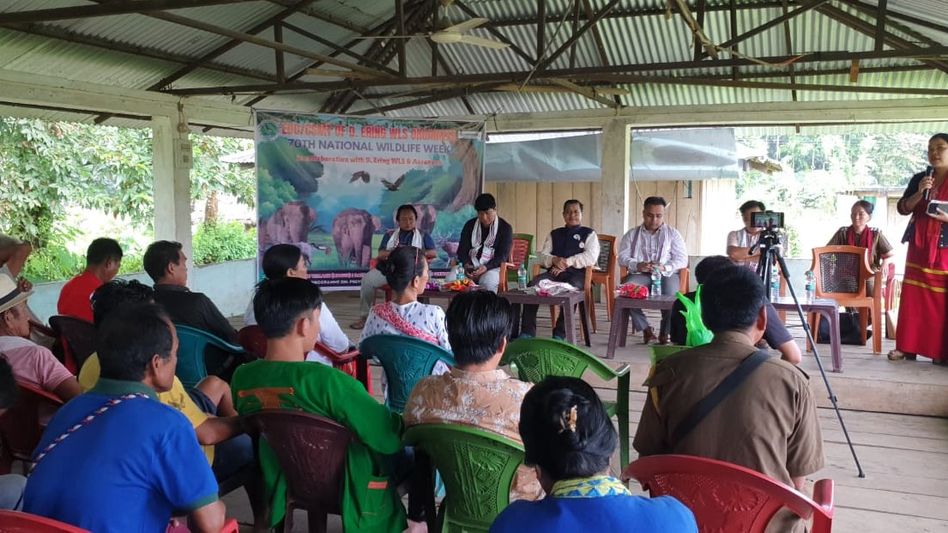
Taggu stated this during a programme which was held as part of the National Wildlife Week at Seram village under Mebo Sub-Division on October 5.
The DC was the chief guest at the event which was organised by the Eco-Development Committee-cum-Community Surveillance & Monitoring Team (EDC/CSMT) of D. Ering Wildlife Sanctuary in collaboration with D. Ering Wildlife Sanctuary and Aaranyak, a reputed NGO based in Guwahati.
The program on the prevention of wildlife crimes and anti-drugs was held during the Wildlife Week celebration, featuring East Siang District Deputy Commissioner Tayi Taggu, Superintendent of Police Dr. Sachin Kumar Singhal, Additional Deputy Commissioner Mebo Sibo Passing, Divisional Forest Officer D. Ering WLS Smty Kempi Ete, Nodal Officer of the Government Rehabilitation Centre Pasighat Dr. Oson Borang, and East Siang District Anti-Drug Warrior Chairman Gumin Mize as guests and resource persons.
A plantation programme was also held before the commencement of the awareness programme where the DC, SP and other guests planted some tree saplings provided by the RO Mebo Range under Pasighat FD, Domek Koyu.
Welcoming the attendees at the celebration, Amit Modi, President of the EDC/CSMT of Borguli WL Range fringe villages, expressed his gratitude on behalf of the EDC/CSMT. He expressed hope that the messages delivered by the district and sub-division heads, along with the management of D. Ering WLS and resource persons on anti-drug efforts, will be heeded and followed by the villagers in their commitment to wildlife conservation and in combating the growing drug menace.
Range Officer Sibiyamukh/Namsing Range of D. Ering WLS, Oyem Mize said that the hunting incidents in the sanctuary from fringe villages are reducing gradually, further appealing to the village elders and GBs to support the sanctuary management in restricting hunting of wildlife in and around the sanctuary.
DFO, D. Ering WLS, Kempi Ete said that the wildlife week is celebrated by organising several events of awareness programmes, essay competitions, among others for the students in the school.
She also informed that the process of relocating and translocating rhinos in the sanctuary is underway, the completion of which will make the sanctuary a noted tourist destination.
Meanwhile, EDC/CSMT Chairman, Maksam Tayeng said that the D. Ering WLS is rapidly regaining its lost glory owing to hard and dedicated efforts made in the last 5-6 years to secure the sanctuary from hunting by taking drastic actions against the habitual and notorious hunters.
“Due to improved protection and the gradual increase in wildlife populations, which creates a conducive environment for new initiatives in the sanctuary, the reintroduction process for Rhinos and Tigers is underway with the active support of 39th Mebo MLA Oken Tayeng and Chief Minister Pema Khandu. Once completed, this initiative will economically benefit the fringe villages through eco-tourism. I also urge the government to accommodate unemployed youth from the fringe villages of the sanctuary by providing them with employment opportunities that will arise following the reintroduction of Rhinos and Tigers,” added EDC/CSMT Chairman Tayeng.
Anti-drug Chairman, Gumin Mize and Nodal Officer of Government, Rehab Centre, Dr. Oson Borang as resource persons together emphasised that the youth should be adequately made aware from getting spoiled by the drug addiction.
Meanwhile, Tayi Taggu referenced his recent executive order banning the misuse of guns that were issued to various individuals in the villages for self-defense and other purposes, adding, “Any gun owner who lends or gives their guns to hunters or their relatives involved in hunting activities will also be treated as a hunter and will face the same penalties, including the permanent seizure of their firearms,” he warned.
Furthermore, he noted that most of the hunters arrested from D. Ering WLS for hunting were using guns belonging to others, including retired government servants and politicians. He criticised the greed of some individuals in the community who are felling large trees that are essential for maintaining moisture and ecological balance and advised the villagers to be vigilant against such wrongdoings and to assist the government in preserving and protecting forests and wildlife.
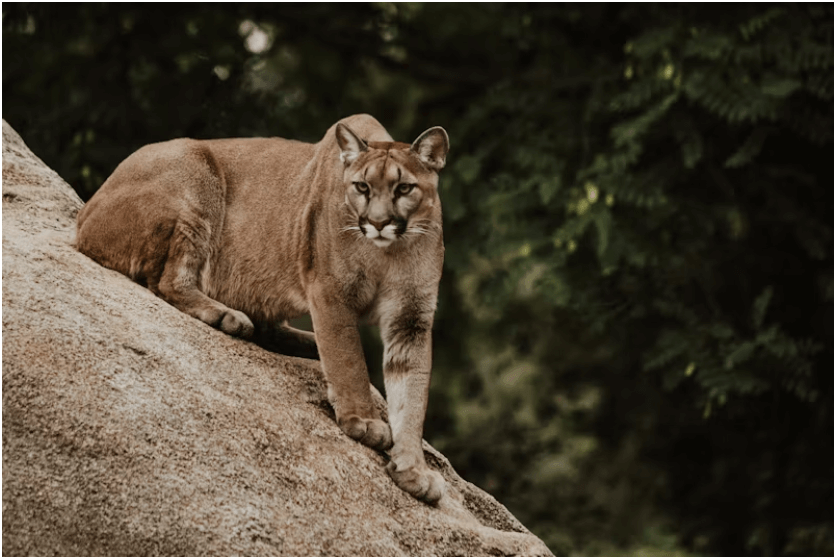
Instagram user Patrick Montgomery recently shared additional details related to the killing of a mountain lion in Colorado, with some of this information said to address what took place from the side of the person who killed the animal. Montgomery’s post about the situation is accompanied by numerous photos of the big cat (warning: graphic in nature), along with the shovel presumably used to kill the animal.
In case you missed initial reporting on the situation, Colorado Parks and Wildlife detailed how a man was at a campground west of Cañon City on September 26 when a mountain lion was being abnormally aggressive toward the man and his dog. As the mountain lion approached the pair and shortened the distance to about 10 feet, wildlife officials say the man’s dog engaged the animal, with the man then striking the lion with a shovel and killing it. Officials noted that the preliminary investigation pointed to justified self-defense.
The post from Montgomery claims to provide additional detail on the matter, noting that the man involved was a friend of a friend who is a raft guide living in a camper near the Royal Gorge. The post explains that the incident took place around midnight, with the lion said to have targeted the man’s husky. The guide reportedly grabbed the shovel and whacked the big cat to get it to leave, but when it returned, he struck it again, ultimately killing the animal in order to protect himself and his dog.
While officials aren’t considering this to be a mountain lion ‘attack’ on a human because the man involved wasn’t injured and didn’t come in direct contact with the mountain lion, the additional information related to the encounter is enough to send chills down any outdoor recreator’s spine. Mountain lions are rarely seen and aggressive behavior toward humans is even more rare, but this situation goes to show that dangerous encounters are still a very real possibility.
This incident took place weeks before Coloradans are set to vote on whether or not the hunting of mountain lions (and other wild cats) should be allowed in Colorado, with hunting often considered to be a key method of population management.
The ballot item that will be voted on is Initiative 127, with proponents for the ban claiming that hunting causes animals unjust pain and trauma, also positing that mountain lion (and bobcat) populations are able to naturally self-regulate without a need for involvement in Colorado’s hunting program. It’s also worth noting that those who support this ban would still be agreeing that self-defense killings are justified.
Meanwhile, those who oppose the initiative argue that the measure would restrict the abilities of Colorado Parks and Wildlife to use their expertise to make science-based decisions related to the management of the local mountain lion population, also noting that the current approach toward management of the species seems to be working as the state’s mountain lion population is quite healthy. Additionally, those against proposition 127 have noted that increased mountain lion numbers could mean more frequent damages sustained by ranchers due to depredation of livestock, with these ranchers also losing the ability to seek reimbursement for damages should the initiative pass.
This ballot initiative comes a few years after wolf reintroduction was narrowly approved by Colorado voters via a similar method. That approval has since been questioned countless times by those who opposed the measure with the term ‘ballot box biology’ often linked to the program – this term being a reference to voters making decisions related to the management of the state’s wildlife instead of allowing those decisions to be made by wildlife experts hired by the state.
As it relates to this recent Cañon City encounter, some of those leaving comments about the situation online have expressed concern that this type of encounter could happen more frequently if the local mountain lion population is left unchecked. Additionally, concern has been expressed related to what an increased mountain lion population could mean for Colorado’s prey animals, such as deer.
Those wondering whether or not hunting may have an impact on Colorado’s mountain lion numbers may want to consider the impact of a mountain lion hunting ban that was put in place in California, where lions haven’t been hunted since 1972, with cougars later classified as a ‘non-game’ species in 1990 (it’s a different state with different factors, but perhaps the most comparable example of a similar situation in the US). In a study related to the population of California’s mountain lions that spanned years of 1906 to 2018, the population was estimated to be at its highest around the start of the 1900s, dipping to a low around the time that the mountain lion hunting ban was enacted. Since the ban, the population has continued to grow, approaching levels much closer to those seen 100 years ago by 2018 (chart seen on page 75 of this document). This presumably points to a ban on hunting having the potential to mean a larger mountain lion population.
And then there’s the question of what a larger mountain lion population might mean for local ungulates.
As it currently stands, around 500 mountain lions are killed via hunting each year in Colorado. With adult mountain lions killing approximately one deer per week for consumption, the absence of 500 cats means that roughly 26,000 additional deer have a chance to escape death (napkin math, I know). It’s estimated that there are around 400,000 to 450,000 deer statewide, with this 26,000 number representing about five to seven percent of that population. It’s also worth noting that the average lifespan of a mountain lion in the wild is about eight to 13 years, thus multiple years of survival in the absence of death via hunting would need to be taken into account if the 500 mountain lions killed by Colorado hunters each year were to keep predating on ungulates for years to come. There’s debate over whether or not this additional predation would impact the stability of the deer population or help qualm concerns related to chronic wasting disease, which plagues local cervids and thrives when high population density is present.
While Initiative 127 is heavily tied to hunting, a large part of the proposal also seems to boil down to whether or not one believes that wildlife experts should have a hand in the population management of big cat species.
Full details related to this initiative can be found here. Scroll down to page 39.
A weekly newsletter featuring the biggest ideas from the smartest people
Fields marked with an * are required
Crows and ravens, which belong to the corvid family, are known for their high intelligence, playful natures, and strong personalities. They hold grudges against each other, do basic statistics, perform acrobatics, and even host funerals for deceased family members. But we keep learning new things about the savvy of these birds, and how widespread that savvy is among the corvid family.
Featured VideosThe video player is currently playing an ad. You can skip the ad in 5 sec with a mouse or keyboard
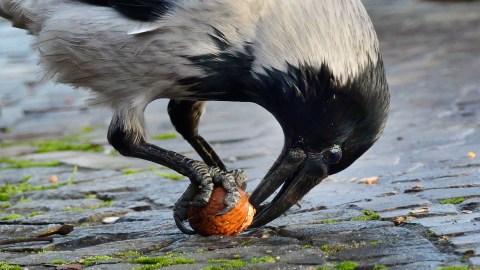
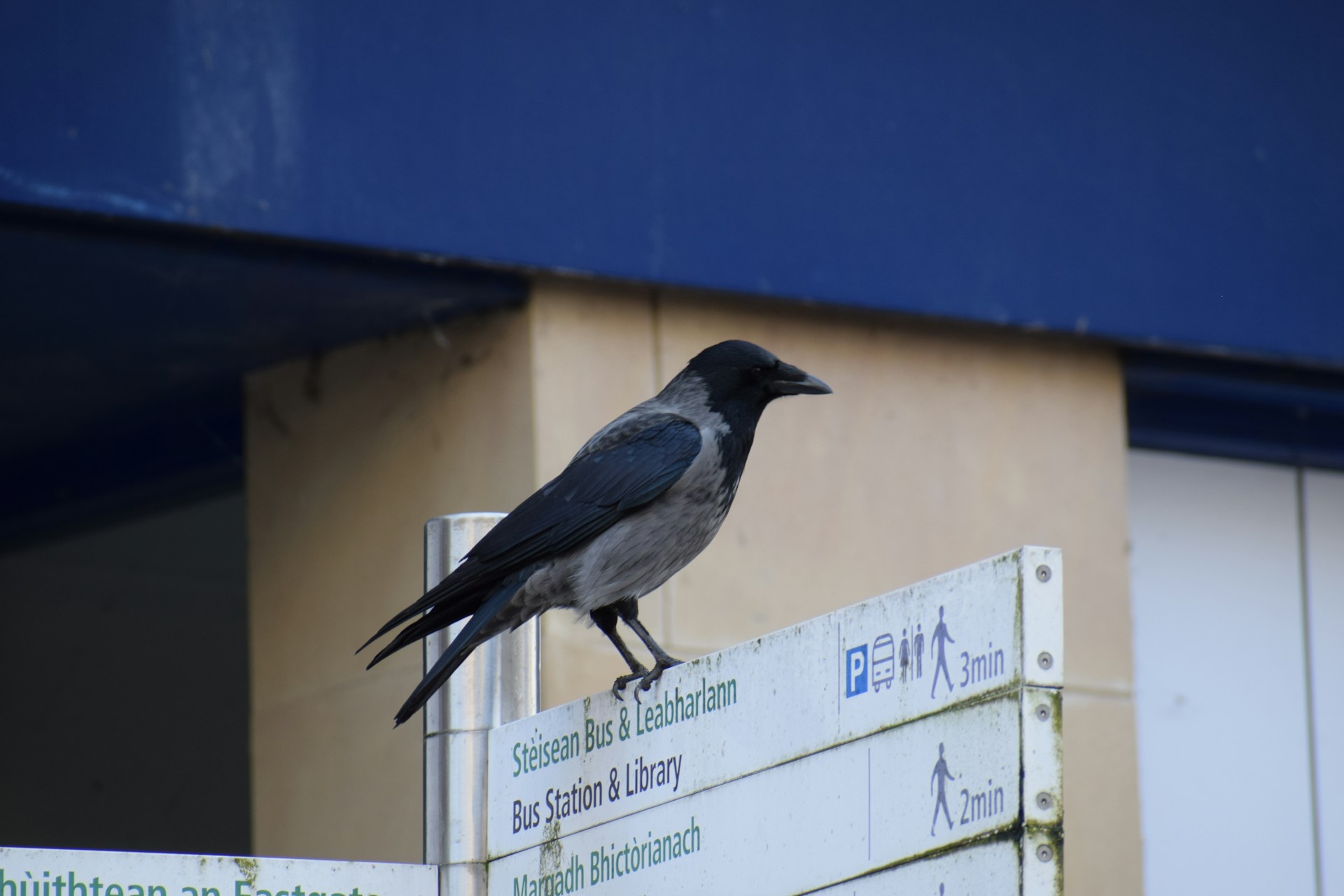
Earlier this year, a team of researchers from Lomonosov Moscow State University in Russia and the University of Bristol found that a species of crow called the hooded crow—which has a gray bust and black tail and head feathers, making it look like it is wearing a “hood”—is able to manage a mental feat we once thought was unique to humans: to memorize the shape and size of an object after it is taken away—in this case a small piece of colored paper—and to reproduce one like it.
This kind of feat, according to animal behavior researchers, requires the ability to form “mental templates.”Essentially, a mental template is an image in the mind of what a particular object looks like, even when that object is not present. Mental templates allow animals to create tools, which can be used to get food or make a stronger nest, both ultimately leading to a better chance of survival. They might also make it possible for individuals to learn about tool making from other members of their species—and to pass along improvements in tool making over time, often called “cumulative culture,” which so far seems rare among non-human animals.
We have been looking for evidence that different corvid and other bird species can create mental templates since at least 2002. That year, researchers published findings showing that Betty, a captive New Caledonian crow, was able to spontaneously bend a piece of wire to create a hook that she could use to grab a hard-to-reach treat. Betty had successfully used a pre-made hook to obtain the treat in earlier trials but in follow-up tasks didn’t seem to fully understand how hooks work. The researchers decided she must have formed a mental template of the hook, which she then reproduced. So far, researchers have found that Goffin cockatoos, a kind of parrot, can also create tools spontaneously, which could indicate similar mental agility.
But the new hooded crow findings suggest that the ability to learn this way could be more widespread than we thought, says Sarah Jelbert, a comparative psychologist who studies animal behavior at the University of Bristol and is one of the authors of the study. Creating and using mental templates might be a skill that evolved in the ancestor of all corvids, the “Corvida” branch of songbirds, or perhaps it is even shared more broadly across the animal kingdom, she says.
For their study, Jelbert and her colleagues first trained three hooded crows—Glaz (15 years old), Rodya (4 years old), and Joe (3 years old)—to recognize pieces of paper of different sizes and colors. To do this, they exposed the birds to “template” pieces of paper in different colors and sizes for several minutes before removing them—and then rewarded the birds for dropping scraps that matched these templates into a small slit.
The crows were next given the opportunity to manufacture versions of these objects in exchange for a reward. The researchers found that all three crows manufactured objects that matched the original template object they had been rewarded for in both color and size—even though the treats in this second stage of the experiment were awarded at random. The researchers also observed that Glaz, the oldest of the three hooded crows, seemed to be the most proficient at making scraps that looked like the ones the bird was trained on. This finding suggested to them that mental templates may be linked to experience garnered with age.
“Unlike humans, who regularly copy each other’s behavior … we don’t have much evidence that crows will watch each other and deliberately copy what another crow is doing,” Jelbert says. However, they will steal each other’s tools—in particular, juvenile crows often steal their parents’ tools when they are young. So it’s possible that young crows learn how to make different types of tools from experience stealing their parent’s tools, using them, remembering what these tools look like, and then trying to create something similar, Jelbert says.
What qualifies as a mental template, and how flexible these templates are, seems to be up for some debate. Research suggests birdsong and mating practices may rely on certain kinds of mental templates, which can backfire if a bird memorizes behavior from the wrong species. “For example, if a song sparrow gets imprinted on the song of a swamp sparrow and sings a song from a different species rather than its own, it will have difficulty finding mating partners,” explains Andreas Nieder, a professor of animal psychology at the University of Tübingen and a lead researcher on corvid neuroscience, who was not involved in this study. “Similarly, if one finch species gets sexually imprinted on another, it may show courtship displays to the wrong species in adulthood.”
Nieder says this kind of imprinting can become fixed in the bird’s brain, and is not changeable even in new environments. “In this case, templates may no longer represent intelligence but rather the opposite,” he adds. Researchers have not yet determined whether mental templates related to tool making remain flexible, though there is some evidence in New Caledonian crows that they may evolve.
For biologists and comparative psychologists, understanding the ways corvids use mental templates can help to illuminate not just the nature of bird intelligence, but of intelligence across the animal kingdom and evolutionary time.







 Exposing the Big Game
