As attitudes toward wild predators shift, Colorado voters weigh a ban on hunting mountain lions

KEVIN CROOKS
Colorado State University

Published: September 25, 2024

(THE CONVERSATION) Hunting large carnivores is a contentious issue in wildlife management and conservation. It’s on the ballot in fall 2024 in Colorado, where voters will consider Initiative 91, a proposed ban on hunting and trapping of mountain lions, bobcats and lynx in the state.
Wildlife agencies often use regulated hunting as a tool for controlling carnivore populations, reducing their impacts on vulnerable wildlife or minimizing the risk of conflict between carnivores and people, pets and livestock. But scientific studies have questioned how effectively recreational hunting achieves these goals. And public attitudes are shifting as participation in hunting declines.
We direct Colorado State University’s Center for Human-Carnivore Coexistence and Animal-Human Policy Center. Together with our colleague Benjamin Ghasemi, we recently surveyed Colorado residents about their perceptions of hunting mountain lions and black bears in the state.
We found that support for hunting depended on the purpose, with most Coloradans disapproving of hunting for trophies or sport. Gender, age and other demographic factors also played roles.
Meet the neighbors
Mountain lions, also known as cougars or pumas, live primarily in the western U.S. and are legally hunted in all western states except California. Black bears, which live mainly in mountainous and forested regions across the continental U.S., are hunted in the majority of states in which they are found.
The Colorado Parks and Wildlife agency estimates that roughly 3,800 to 4,400 adult mountain lions and 17,000 to 20,000 black bears live in Colorado. They are found mainly in the Rocky Mountains, with the eastern edges of their ranges near more human-populated areas in the Front Range.
According to state data, hunters in Colorado killed 502 mountain lions during the 2022-2023 hunting season and 1,299 black bears during the 2023 season.
Both species come into conflict with people in the state. The most common situation is when bears wander into mountain towns in search of garbage or other foods left by humans. Mountain lions are occasionally sighted in urban areas, and on rare occasions have attacked people.
Varying views of hunting
Our study gathered responses from Colorado residents through two public mail surveys. Samples were weighted to be representative of state population demographics, including age, gender, urbanization level, geographical region and participation in hunting.
Respondents’ views on legal and regulated hunting of mountain lions were evenly split, with 41% approving and 41% disapproving. This was also true for black bears: 46% approved of hunting them, and 46% disapproved.
Large majorities disapproved of hunting either animal for trophies, hide or fur, or for recreation. For mountain lions, 78% of respondents disapproved of trophy hunting; for black bears, 86% disapproved of trophy hunting. People also generally disapproved of hunting either species for meat.
Respondents were more supportive of hunts for other reasons. They approved of hunting mountain lions and black bears to protect human safety by 63% and 57%, respectively. And 56% approved of hunting mountain lions to reduce harm to livestock.
Large majorities disapproved of hunting mountain lions with dogs (88%) or recorded electronic calls (75%). Most mountain lions hunted in Colorado are legally taken with the aid of dogs, which chase and then tree or corner the cats. Using electronic calls to attract the cats was permitted in some parts of western Colorado until 2024, when the practice was banned for hunting mountain lions. It remains legal for hunting other carnivores, such as bobcats and coyotes.
Women, younger people, urban residents and people who identified as or leaned Democratic tended to be less supportive of hunting than men, older people, rural residents and Republicans. A study we published in 2022 on the reintroduction of wolves to Colorado found a similar political split, with stronger support for restoring wolves among people who identified as Democratic than among Republicans.
How to coexist with carnivores?
Although Coloradans were generally supportive of using hunting to reduce human conflict with black bears and mountain lions, studies suggest that it might not be the most effective tool to do so.
For example, a recent experimental study in Ontario, Canada, concluded that increased hunting of black bears did not result in less conflict – particularly during years when the bear’s natural food sources, such as nuts and berries, were limited in the wild. A long-term study on bears in Durango, Colorado, also found that availability of natural foods in the wild, and the lure of human food within the city, were the main drivers of clashes with bears.
Conversely, another study in New Jersey – which is more densely developed than Colorado, so bears may be more likely to encounter people – found that well-regulated hunting of closely monitored black bear populations could help reduce conflict.
Similar to its policy with bears, Colorado uses hunting as a management tool for mountain lions. There is limited scientific evidence that hunting mountain lions may prevent conflict with them. A recent study found that juvenile mountain lions from a hunted site in Nevada tended to avoid developed areas. In contrast, young cats from a site in California without hunting did not show any preference for or against areas with people.
Yet, other correlative studies in Washington, California and Canada have suggested that hunting may make the problem worse. According to these researchers, hunting might disrupt the social dynamics and age structure of mountain lion populations, causing young cats seeking new territory to roam into populated areas, increasing their chances of encountering people.
Overall, we believe that more reliable scientific information is needed to guide carnivore management and test assumptions about how effective hunting is at addressing these problems. Continued focus on proactive, nonlethal strategies to prevent conflict is essential.
Ultimately, promoting coexistence between humans and carnivores is often much more about managing people than about managing predators. Changing human behavior is key.
For example, failing to store garbage securely attracts bears. So does filling bird feeders in spring, summer and fall, when bears are active. Steps to reduce encounters with mountain lions include hiking in groups and making noise; keeping dogs leashed in the backcountry; keeping pets indoors at home; and not landscaping with plants that attract deer, the cat’s main prey.
Big cats on the ballot
Colorado’s Initiative 91 would ban hunting and trapping of mountain lions, bobcats and lynx in the state. It would allow for lethal removal of problem animals to protect human life, property and livestock.
Hunting and trapping of bobcats, mainly to sell their pelts in the fur trade, is currently legal in Colorado. On average, hunters and trappers have killed 880 bobcats annually over the past three years, the majority of which were trapped. Hunting and trapping are currently prohibited for lynx, which are listed as endangered in Colorado and threatened nationally, but the proposed ban would protect them if their populations recover.
Coloradans have voted to limit carnivore hunting in the past. They passed a ballot initiative in 1992 to ban bait, hounds and a spring hunting season for bears, and another in 1996 to ban the use of leghold traps, poison and snares.
Our research adds to growing evidence that public views toward hunting and carnivores are shifting. An increasing share of Americans believes humans should coexist with carnivores and opposes lethal control for human benefit. Studies also suggest that ballot measures like Initiative 91 may become more common as public attitudes evolve and more diverse groups seek to influence wildlife management.
It will be challenging for wildlife managers to adapt to these changing values. Agencies may have to consider more participatory methods that engage diverse stakeholders in decision-making, develop new funding mechanisms that are less reliant on hunting and fishing license fees, and reexamine how and for whom they manage wild animals.
This article is republished from The Conversation under a Creative Commons license. Read the original article here: https://theconversation.com/as-attitudes-toward-wild-predators-shift-colorado-voters-weigh-a-ban-on-hunting-mountain-lions-238265.
19-year-old hunter shoots wolf to defend himself and fellow hunters amid pack encounter near St. Germain

https://trinitymedia.ai/player/trinity-player.php?pageURL=https%3A%2F%2Fwww.wjfw.com%2Fnews%2F19-year-old-hunter-shoots-wolf-to-defend-himself-and-fellow-hunters-amid-pack-encounter%2Farticle_83671a54-7acc-11ef-8f4b-d35a97259d14.html&partner=Flex&FAB=1&textSelector=I2FydGljbGUtYm9keQ%3D%3D&unitId=2900003117&userId=d87d6c70-698d-425c-a490-50e59507f6c4&isLegacyBrowser=false&isPartitioningSupport=1&version=20240925_1816a3f5dfad16eae13ac3cdc77597a010b7bd6f&useBunnyCDN=0&themeId=140&unitType=tts-player

Saturday morning at approximately 6:15 AM near St. Germain, a young 19-year-old hunter from Sugar Camp had to make an instinctual decision to shoot and kill a wolf to protect himself and two younger hunters from a pack of brazen wolves.

“We pulled up to the spot at like 3:45 in the morning to get our spot because it was opening morning. We got to the spot we built our blind. A little bit before shooting light, we threw our decoy outs we had some goose silhouettes some mallards and some teal,” said Chase Melton the 19-year-old hunter.

But come daybreak, that normal opening morning quickly became a nightmare.

LATEST VIDEOS

Tom’s Drawing Board Studio (9-24-24)5pm Newscast

Powered by

“The one kid next to me he was 14 years old said ‘hey you have a deer coming down on your left side,’ so I stood up and looked over at it was a wolf,” said Melton.

Melton said it was hard to identify at first whether it was a wolf or coyote.

“I tried making some noise, I was clapping, stomping, breaking some sticks, whatever. This wolf turned at me and we locked eyes, and it started to come at us not like a walk but like a jog almost and it was at about 40-50 yards. So, I started to panic a little bit they started panicking because they’re younger kids and they’re like oh my god we’ve got wolves around us,” said Melton.

“So, I grabbed my gun just in case something would happen,” said Melton. “Then, the 13-year-old who was two people down from me said ‘Chase right behind you!’ I looked, and we had a wolf at about five yards – I probably could have touched it with my hand, that was extremely scary. So now, we’re really panicking were like alright were surrounded we have a wolf charging us right now.” Said Melton.

A witness that was hunting 300 feet away reported seeing at least five wolves surrounding the young hunters’ blind and another four in the general area. The witness also reported hearing barks, growls and howls coming from the wolves surrounding the young hunters’ blind.

“This wolf got within 15 yards and I’m like he’s still coming, he’s still coming, he got withing 8-10 yards and it’s not what I wanted to do but to protect us and to protect them we felt harmed, so I pulled the trigger,” said Melton.

Melton fired one shot, close range at the wolf’s face using a 12-gauge loaded with non-toxic waterfowl load.

“This wolf that was five yards behind us went off into the woods, came down, and then grabbed this wolf that I shot by the neck and started dragging it off. I’ve never witnessed something like that.”

Melton said he’s witnessed wolves in this spot once before but never an encounter like this.

“So after this wolf grabbed the one that I shot by the neck, they were yipping super loud, beyond scary,” said Melton

Melton said he contacted the DNR immediately after the encounter occurred after the wolves retreated into woods. A DNR official confirmed the incident.

“They reported that incident to DNR right away that morning. A DNR conservation warden and biologist were able to follow up that morning to investigate and confirmed that it was a wolf. At this time the investigation remains open so unfortunately, I’m unable to share any more details at this time,” said Randy Johnson, Large Carnivore Specialist for the Wisconsin Department of Natural Resources.

As for Melton – an avid outdoorsman – it’s a day he won’t forget.

“Even just being out in the woods in the future it might have an impact on me its just hard to say,” said Melton.

David Attenborough Netflix documentary: Australian scientists break down in tears over climate crisis

https://www.theguardian.com/environment/2021/jun/04/david-attenborough-netflix-documentary-australian-scientists-break-down-in-tears-over-climate-crisis

Breaking Boundaries: The Science of Our Planet shows the toll the demise of the Earth’s natural places is having on the people who study them

Graham Readfearn@readfearnThu 3 Jun 2021 13.30 EDT

One of Australia’s leading coral reef scientists is seen breaking down in tears at the decline of the Great Barrier Reef during a new Sir David Attenborough documentary to be released globally on Friday evening.

Prof Terry Hughes is recounting three coral bleaching monitoring missions in 2016, 2017 and 2020 when he says: “It’s a job I hoped I would never have to do because it’s actually very confronting …” before tears cut him short.

The emotional scene comes during the new Netflix documentary, Breaking Boundaries: The Science of Our Planet, and shows the toll the demise of the planet’s natural places is having on some of the people who study them.

The film visits scientists working on melting ice, the degradation of the Amazon, and the loss of biodiversity, and looks at a 2019/2020 “summer from hell” for Australia that featured unprecedented bushfires and the most widespread bleaching of corals ever recorded on the Great Barrier reef.

The 70-minute film features another Australian scientist, Dr Daniella Teixeira, walking through a blackened landscape where she was working to conserve endangered glossy black cockatoos.

“There’s no sign of any wildlife at all,” says Teixeira, with footage of twisted and burnt animals and trees turned to charcoal. “There’s nothing left.”

The documentary, fronted by Attenborough, is centred on the research of Swedish scientist Prof Johan Rockström, whose work looks at the concept of tipping points and boundaries in different systems around the planet, such as the polar regions, the Earth’s biodiversity and the climate.

Netflix says the film documents “the most important scientific discovery of our time – that humanity has pushed Earth beyond the boundaries that have kept Earth stable for 10,000 years, since the dawn of civilisation.”AdvertisementBiden provides details on plan to share 80m Covid vaccine doses globally – liveNetanyahu attacks ‘dangerous’ coalition seeking to topple himClimate tipping points could topple like dominoes, warn scientistsUnited Airlines aims to revive Concorde spirit with supersonic planesUS DoJ investigating postmaster general over political fundraising‘Mind-blowing’: tenth of world’s giant sequoias may have been destroyed by a single fireClimate tipping points could topple like dominoes,warn scientistshttps://imasdk.googleapis.com/js/core/bridge3.462.0_en.html#goog_109985475https://imasdk.googleapis.com/js/core/bridge3.462.0_en.html#goog_1728788371https://imasdk.googleapis.com/js/core/bridge3.462.0_en.html#goog_1797282270Climate tipping points could topple like dominoes, warn scientists

Hughes has become a high-profile scientific figure in Australia for his research on the complex impacts of global heating on the world’s biggest reef system and his monitoring flights to document mass bleaching.

“In big thermal extremes like we’ve been seeing during mass bleaching events in recent decades [corals] can actually die very very quickly. They cook,” he says in the documentary.

Hughes told the Guardian that “if anything I think the emotional response has lessened over time” and that the 2016 bleaching event in the north of the reef “was the most confronting”.

“But it’s still deeply saddening,” he said.

He said Rockström’s research, which he has collaborated on, was “simple and powerful” and showed how the world was on a “trajectory that is not sustainable”.

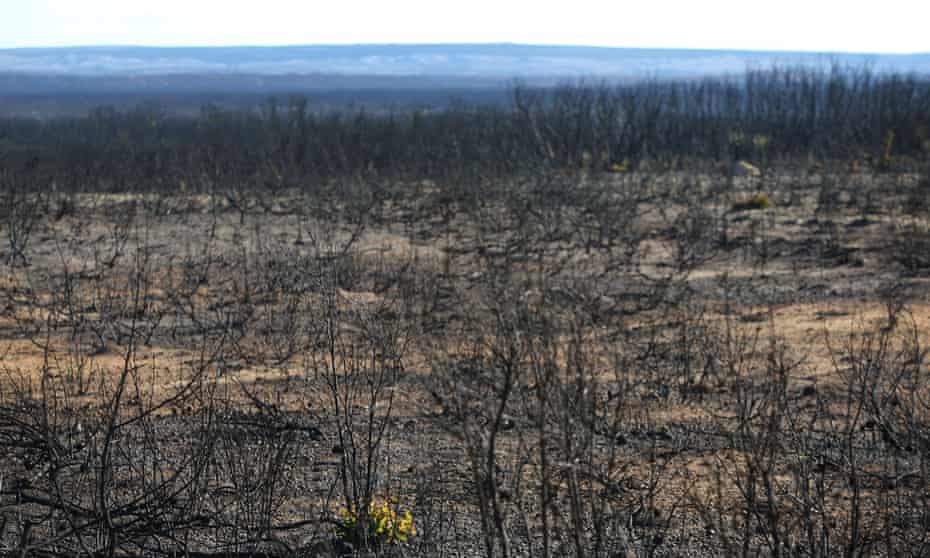
a landscape of thousands of blackened and burnt trees
Australian scientist Daniella Teixeira revisits Kangaroo Island after the devastating black summer bushfires in Sir David Attenborough’s new Netflix documentary. Photograph: Lisa Maree Williams/Getty Images

“You can easily transgress a tipping point and not notice it for a couple of decades,” he said, adding he thought the amount of CO2 in the atmosphere had probably reached a tipping point for coral reefs in the 1980s.

Hughes, of James Cook University’s Centre of Excellence for Coral Reef Studies, said the black summer bushfires and coral bleaching “points to Australia’s vulnerability”.

In the documentary, Attenborough says: “We are heading for a future where the Great Barrier Reef is a coral graveyard.”

He describes Australia’s 2019/20 summer as “a summer from hell, fuelled by record-breaking temperatures and drought”.

Texeira, from the University of Queensland, is filmed in February 2020 returning to sites on Kangaroo Island off the South Australian coast where she was studying endangered glossy black cockatoos.

She finds one of the nests erected to help the birds on a fallen tree with an iron plate around the trunk to stop possums climbing up and attacking the young.

With the iron buckled from the heat and the nest melted, Texeira says: “They weren’t enough to save them.”

She told the Guardian: “There are days when I still get overwhelmed. At the end of the day, we’re humans and we have emotions.”

She had been visiting the island for four years and the fires had come just as she was completing her PhD.

“I have come out the other side now but it has really made me more focused on the urgency of the problems and how we as scientists can make changes now.”

  • Breaking Boundaries: The Science of Our Planet is available on Netflix on 4 June

Throwing money at biodiversity schemes is ineffective

https://www.bbc.com/news/science-environment-57071514

By Victoria Gill
Science correspondent, BBC NewsPublished18 hours agoShare

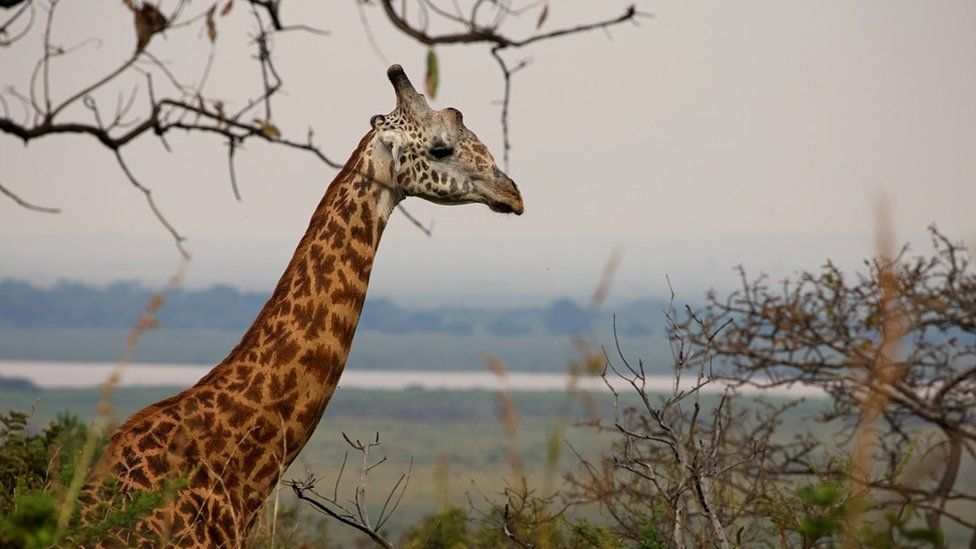
Giraffe
image captionThe economic status quo is continuing the drive the destruction of nature, the report concludes

Rich countries “throwing money” at schemes designed to enhance biodiversity is ineffective, a report by charity Third World Network says.

The report calls for “a profound re-organisation of the global post-pandemic economy to prevent further harm to the planet”.

It recommends nothing less than a “change in our entire economic model”.

Cancellation of debt owed by the poorest, most biodiverse countries would be the place to start, it adds.

Developed nations in the global north should pay for their “vast ecological debts”, said lead author Dr Patrick Bigger from Lancaster University.

“There need to be no strings attached payments to those countries,” said Dr Bigger. “Otherwise we just continue to dig this hole and try to fill the hole with money.”https://buy.tinypass.com/checkout/template/cacheableShow?aid=tYOkq7qlAI&templateId=OTBYI8Q89QWC&templateVariantId=OTV0YFYSXVQWV&offerId=fakeOfferId&experienceId=EXAWX60BX4NU&iframeId=offer_0e763acc7b457c03340a-0&displayMode=inline&widget=template

This study of the economics of biodiversity loss sets out how the current model by which money flows from rich, developed nations into schemes to enhance and protect nature in poorer nations can exacerbate the problem.

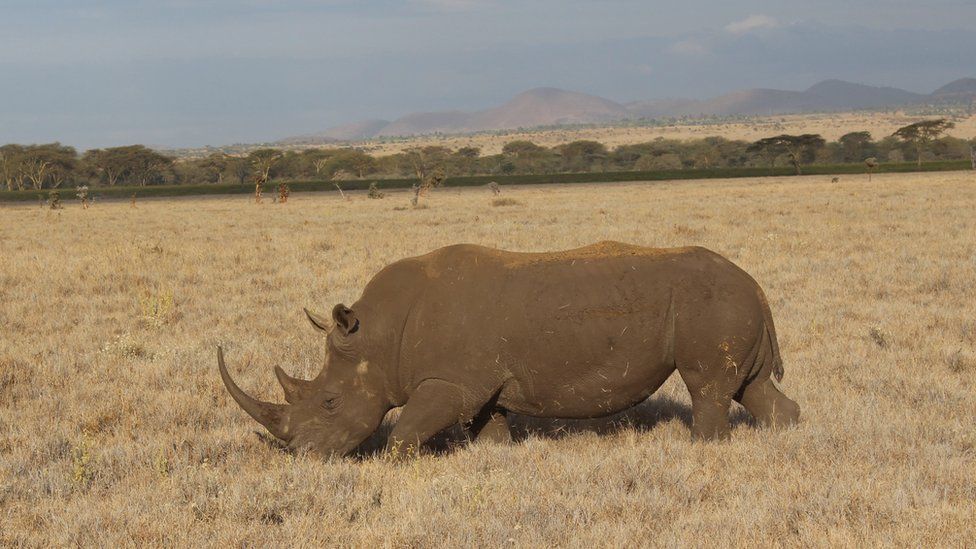
Rhino (c) Patrick Bigger
image captionConservation efforts in Kenya, and around the world, have been hindered by debt and austerity, the researchers say

Investment in activities like large-scale agriculture and resource extraction, it points out, continue to drive the destruction of natural habitats.

The gap, the researchers say, “between those who live with the environmental consequences of [resource] extraction and those who benefit from financing these developments”, is widening.

“In 2019, 50 of the world’s largest banks underwrote more than $2.6 trillion into industries known to be the drivers of biodiversity loss, an amount equivalent to Canada’s gross domestic product,” the report states.

Making things worse?

There are a number of international schemes designed to protect nature that this report deems “ineffective and underfunded”.

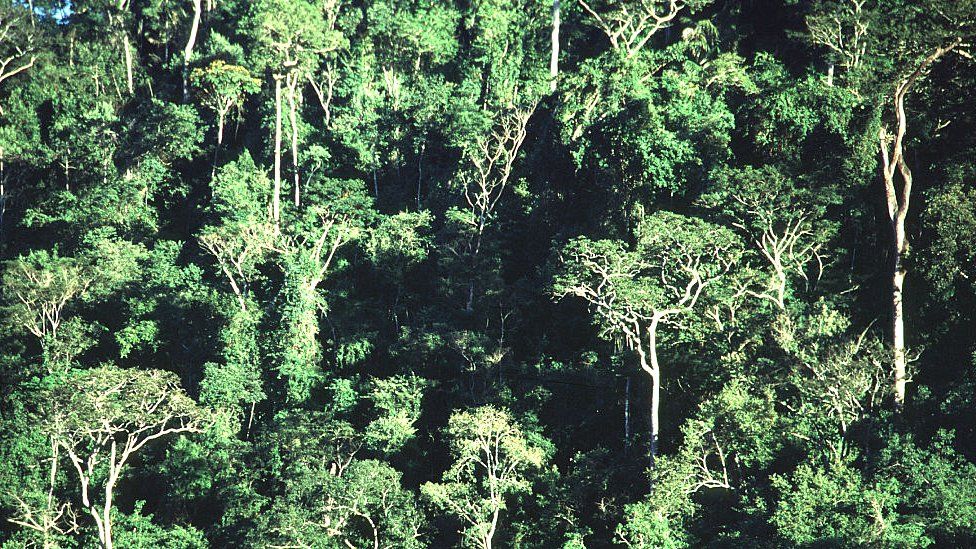
Brazil's Atlantic Forest
image captionBrazil’s Atlantic Forest: Second in biodiversity only to the Amazon

It points specifically to a UN programme that was designed to pay communities that live in valuable, biodiverse forests for “actions that prevent forest loss or degradation”. Essentially, it pays those communities in credits for activities that protect the forest.

That scheme paid out about 160 million US dollars in 2019. “While that may sound like a large number, it is far less than the monthly increase of Jeff Bezos’ fortune since the beginning of the Covid-19 pandemic,” said Dr Bigger.

In some cases, these market-driven schemes can do more harm than good.

One study of a scheme in Costa Rica, which was designed to incentivise tree-planting, revealed that it had subsidised commercial forestry, resulting in more “plantation forests” of a single non-native tree species used in the production of wooden shipping pallets.

“We need a broader rethink about how the rules of the economy are driving the sixth extinction,” said Dr Jessica Dempsey from the University of British Columbia, Canada, a researcher on the report.

“We need to take a hard look at things like tax and intellectual property policy, and even entire ideas that guide how the global economy works – like what it means for governments to be ‘financially responsible’ when austerity has such a poor track record of delivering good environmental outcomes.”

Wild horses flourish in Chernobyl 35 years after explosion

Wild horses flourish in Chernobyl 35 years after explosion (msn.com)

AFP  14 hrs ago


Indonesian Navy Fears Missing Submarine Might Have Collapsed From Too…A 78-year-old woman was murdered and raped 36 years ago. Her suspected…

Down an overgrown country road, three startled wild horses with rugged coats and rigid manes dart into the flourishing overgrowth of their unlikely nature reserve: the Chernobyl exclusion zone.a brown horse standing next to a forest: Przewalski's horses wander near a forest road in the Chernobyl zone© Sergei SUPINSKY Przewalski’s horses wander near a forest road in the Chernobyl zone

Thirty-five years after the world’s worst nuclear disaster — an anniversary commemorated in the ex-Soviet country on Monday — surging flora and fauna have taken over deserted tower blocks, shops and official buildings topped with communist icons.a large brown cow standing on top of a grass covered field: A potential candidate species for introduction to the Chernobyl area is the European bison© Jean Christophe VERHAEGEN A potential candidate species for introduction to the Chernobyl area is the European bison

Ukrainian authorities say the area maybe not be fit for humans for 24,000 years, but for now this breed of wild horse has thrived.

“It’s really a symbol of the reserve and even the exclusion zone in general,” said Denys Vyshnevsky, head of the scientific department of the Chernobyl nature reserve created in the area five years ago.a brown horse standing next to a forest: Chernobyl has also become a haven for elks, and other fauna including wolves© GENYA SAVILOV Chernobyl has also become a haven for elks, and other fauna including wolves

The explosion in the fourth reactor at the nuclear power plant in April, 26, 1986 left swathes of Ukraine and neighbouring Belarus badly contaminated and led to the creation of a no man’s land within a 30-kilometre (19-mile) radius of the station.

Dozens of villages and towns were evacuated, turning the area into a giant reserve unprecedented in Europe by its size.

More than three decades after the incident there has been an influx of visitors to the area, spurring officials to seek official status — and protection — from UNESCO.

– A ‘unique’ chance to save biodiversity –

Since the disaster, the area has become a haven for elk, wolves — and the stocky endangered breed of wild horse native to Asia, Przewalski’s horse.

The breed, named after Russian scientist Nikolai Przewalski who discovered it in the Asia expansive Gobi desert, became all but extinct by the middle of the 20th century, partially due to overhunting.a herd of cows walking down a dirt road: Przewalski's horses were at one time extinct in the wild but are now thriving in Chernobyl© Sergei SUPINSKY Przewalski’s horses were at one time extinct in the wild but are now thriving in Chernobyl

It was reintroduced by scientists to areas of Mongolia, China and Russia as part of preservation efforts.a herd of cattle grazing on a lush green field: Thirty-five years after the world's worst nuclear disaster surging flora and fauna have taken over deserted tower blocks© Aleksndr Sirota Thirty-five years after the world’s worst nuclear disaster surging flora and fauna have taken over deserted tower blocks

In a different program, 30 of the horses were released into the Chernobyl zone in 1998, replacing an extinct horse native to the region, the Tarpan.

The experiment in Ukraine was soon halted but the horses remained and now number around 150 in parts of the exclusion zone, with around another 60 over the border in Belarus.a large brown elephant walking through a forest: Down an overgrown country road, three startled wild horses with rugged coats and rigid manes dart into the flourishing overgrowth of their unlikely nature reserve: the Chernobyl exclusion zone.© Andriy PERUN Down an overgrown country road, three startled wild horses with rugged coats and rigid manes dart into the flourishing overgrowth of their unlikely nature reserve: the Chernobyl exclusion zone.

“Paradoxically, this is a unique opportunity to preserve biodiversity,” Vyshnevsky said.

Under the right conditions, the Ukrainian herd could eventually increase to 300 or even 500 animals, said Sergiy Zhyla, Senior Researcher, Chernobyl Biosphere Reserve.

Researchers at the Prague zoo participating in the conservation efforts now say the global population of Przewalski’s horses has grown to some 2,700.Play VideoWild horses flourish in Chernobyl 35 years after explosionClick to expand

Kamala Harris sitting at a table: 'We stand with you': Harris to Asian Americans after Atlanta attacks
AFP Logo
Kamala Harris sitting at a table: 'We stand with you': Harris to Asian Americans after Atlanta attacks
AFP Logo
Joe Biden wearing a suit and tie: Biden says 100 million US vaccines target will be met "tomorrow"
AFP Logo

Following the success in Chernobyl, there is discussion over introducing other endangered species to Ukraine’s zone.

Vyshnevsky sees one potential candidate in the European bison — which already roams over the border in Belarus — and discussions are currently underway with the World Wildlife Fund, a global environmental NGO.

“We’ll be able to recreate the landscape that was here before humans began intensely exploiting the region,” he said.

Wild horses flourish in Chernobyl 35 years after explosion (msn.com)

ant-dg/jbr/pvh/rbu

No evidence Covid leaked from a lab but probably emerged from wildlife trade, say WHO scientists

Pandemics threat must be treated with same seriousness as terrorism, warn experts

Jane Dalton@JournoJane1 day ago 5 comments

https://www.independent.co.uk/news/world/asia/covid-cause-lab-evidence-wildlife-trade-b1815915.html?fbclid=IwAR0wLd5AygEnM06vxA8m9GLeVig5zlyQ6ZrIWoDmIcHsKb5c-XpbozNZaCA

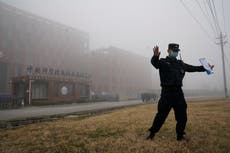
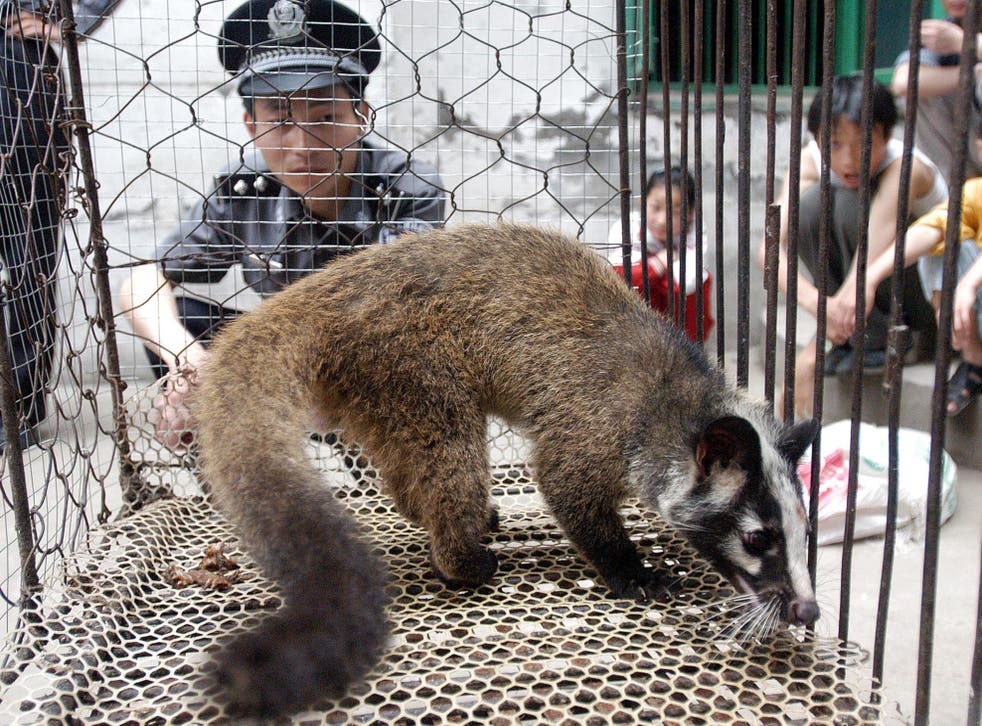
The experts believe the virus probably crossed from wildlife into farmed or domesticated animals in the Wuhan market, and from there to people
The experts believe the virus probably crossed from wildlife into farmed or domesticated animals in the Wuhan market, and from there to people (AFP via Getty Images)

https://buy.tinypass.com/checkout/template/show?displayMode=inline&containerSelector=.above-article-prompt-donations&templateId=OT5K0SE6GQ3U&offerId=fakeOfferId&showCloseButton=false&trackingId=%7Bjcx%7DH4sIAAAAAAAAAFWQy26DMBBF_8VrggDz3qEWtU0rkSopSrpzyATMwyBjA03Vf69BSavMbubcM4v7jQg9oRBt44vzECWHrzXSUEdySCmMLzOpGu_SMBMHtBldUWeKw9QBp8AyWBLxPt6vcfr2_BildzSeIJOCtmyJmb7hDRxLWa0MNZY0M3qWsgRxzMuyoGcOQXvnR9mf3BftuIOmq4mAz8BPsBcd4s3GdbEyCtLfGAoFl6Ahcd0XOdk5r8Y2dp_e8Qf6ZynhlDAxR5isaw1lpOkIzVl_Owy0pwtHw-raw7G0uT1ZY6Ue0U4RF-umbemW4enYVkfZA49yYEKx0zjXJUSNQtM1HQ_7OAh-fgGiOFSqdAEAAA&experienceId=EXEXJ3VLHDAV&widget=offer&tbc=%7Bjzx%7D0hRl93QRmnQWEMayU4HVECNTirPe62qePhDM8ZA03-tKIBO2aJ-CUudwgTb8BGWxDznyWfY0j_DZOiWsb9e3Xg&iframeId=offer-0-aIrrr&url=https%3A%2F%2Fwww.independent.co.uk%2Fnews%2Fworld%2Fasia%2Fcovid-cause-lab-evidence-wildlife-trade-b1815915.html%3Ffbclid%3DIwAR0wLd5AygEnM06vxA8m9GLeVig5zlyQ6ZrIWoDmIcHsKb5c-XpbozNZaCA&parentDualScreenLeft=0&parentDualScreenTop=0&parentWidth=1139&parentHeight=537&parentOuterHeight=607&aid=SEz5CAOYyJ&tags=article&contentSection=News&contentAuthor=Jane+Dalton&contentCreated=2021-03-12T00%3A22%3A03Z&pageViewId=km7zmn139imw6tlc&visitId=v-km7zmn1bj4r4x2wk&userProvider=publisher_user_ref&userToken=&customCookies=%7B%22_pc_show_register_prompt%22%3A%22true%22%7D&hasLoginRequiredCallback=true&width=624&_qh=182fb92b9c

World Health Organisation (WHO) scientists say they have found no evidence that Covid-19 leaked from a Chinese laboratory, and instead it was probably caused by the wildlife trade.

The four WHO experts who carried out a month-long investigation in China insisted there was nothing that proved the disease was deliberately developed.

And they called for the threat of pandemics to be treated with the same seriousness as terrorism after the 11 September 2001 attacks.

Read more

The scientists said in a Chatham House briefing that they found links between the live-animal market in Wuhan, where people first fell ill, and regions where bats had viruses.Apes At San Diego Zoo Receive COVID-19 Vaccinehttps://imasdk.googleapis.com/js/core/bridge3.446.1_en.html#goog_1418780697

Peter Daszak, a zoologist and president of EcoHealth Alliance, which works to prevent pandemics, said: “There was a conduit from Wuhan to the provinces in South China, where the closest relative viruses to [the coronavirus] are found in bats.”

Dr Daszak said the wildlife trade was the most likely explanation of how Covid-19 arrived in Wuhan.

The WHO scientists and their Chinese counterparts considered the most likely explanation was that the virus crossed into domesticated or farmed animals, he added.Please enter your email addressPlease enter a valid email addressPlease enter a valid email addressSIGN UPI would like to be emailed about offers, events and updates from The Independent.Read our privacy notice

The world will find out “fairly soon, within the next few years” what started the pandemic, he predicted. It typically takes many years to pinpoint the animal reservoir of outbreaks.

The team are due to release a report next week on the initial conclusions of their mission to Wuhan.

Read more

Marion Koopmans, head of viroscience at University Medical Centre Rotterdam, said they visited the three laboratories closest to the Huanan market in Wuhan, and scrutinised their protocols and research, among other issues.about:blankabout:blankhttps://bd45e420140dbb8b103b0796f2feb7dd.safeframe.googlesyndication.com/safeframe/1-0-37/html/container.htmlhttps://bd45e420140dbb8b103b0796f2feb7dd.safeframe.googlesyndication.com/safeframe/1-0-37/html/container.htmlSkip in 5about:blank✕Skip in 5about:blank

“We concluded that it’s extremely unlikely there was a lab incident,” she said.

China has faced claims that the Wuhan Institute of Virology could be the suspected source of the Covid-19 virus.

Dr Daszak called for the threat of pandemics to be treated with the same seriousness as terrorism after the 9/11 attacks. and working out where the next ones are going to come from and what it might be, whereas we do that with hurricanes and typhoons and all the rest of it,” hesaid.

He added: “After 9/11, we put in place a mechanism to track every single phone call into the US, and the minute there’s a rumour on the web or on these phone calls of an attack, the network is disrupted prior to the attack.

“That’s the kind of change or shift in thinking we need for pandemics, I believe.”

Dr Daszak said: “Let’s look at where wildlife are interacting with livestock and people, and see what is out there and try and find out what threats could emerge in future.”

Test drilling for oil in Namibia’s Okavango region poses toxic risk

Test drilling for oil in Namibia’s Okavango region poses toxic risk (msn.com)

Jeffrey Barbee  4 hrs ago


Colorado and Wyoming brace for severe snowstorm and potential blizzard conditions this weekendBrazil plunges into crisis as a second wave and deadly new variant overwhelm hospitals

The Canadian oil and gas company ReconAfrica began exploratory drilling in Namibia upstream of the wildlife-rich Okavango Delta in January. According to the company’s aerial imagery and an independent review, they don’t appear to have taken what experts say is an environmentally responsible measure to protect the local water supply from contamination.a group of giraffe standing on top of a grass covered field: Botswana. Okavango Delta. Khwai concession. Pack of African wild dogs (Lycaon pictus) looking out for prey.© Photograph by Danita Delimont, Alamy Stock Photo Botswana. Okavango Delta. Khwai concession. Pack of African wild dogs (Lycaon pictus) looking out for prey.

Namibia is a water-scarce country, and when news of the company’s project became more widespread, communities expressed concern that contaminants from drilling would seep into shallow aquifers that supply drinking water and irrigation for crops.https://www.msn.com/en-us/news/us/test-drilling-for-oil-in-namibia-s-okavango-region-poses-toxic-risk/ar-BB1ewtEC?ocid=msedgdhp

Conservationists also worry that contamination from the test drilling could affect wildlife in the vicinity—elephants, Temminck’s ground pangolins, African wild dogs, martial eagles—and in the UNESCO-recognized Okavango Delta some 160 miles downstream.

A large waste, or reserve, pit next to the first test well appears in a video that ReconAfrica posted on its website on January 10. Such pits are for storing the mud, fluids, and other materials—which may contain dangerous chemicals or be hypersaline—that come up when drilling for oil or natural gas. In British Columbia, Canada, where ReconAfrica is based, it’s standard industry practice to line these pits with an impermeable barrier that prevents chemicals from seeping into the earth and groundwater.a train is parked on the side of a dirt field: tktk© Photograph by John Grobler tktk

ReconAfrica spokesperson Claire Preece told National Geographic in October 2020 that drill cuttings would “be managed in lined pits.” She also said that “ReconAfrica follows Namibian regulations and policies as well as international best practices.” According to Namibian law, the company must “control the flow and prevent the waste, escape or spilling” of petroleum, drilling fluid, water or any other substance from the well.

In the company’s video, no lining is visible.

Namibian journalist John Grobler, who visited the site on January 23, confirmed to National Geographic that the reserve pit was unlined and had liquid pooling in it.

“From an environmental aspect this is grossly unacceptable, and from a social aspect [it] is reckless and disgraceful,” says Jan Arkert, a consulting engineering geologist based in Uniondale, South Africa, who has worked for decades on drilling-related projects. “The communities are totally dependent on groundwater for domestic and agricultural purposes, and any contamination to the aquifer will be all but impossible to contain and clean up.”

Video: Radioactive contamination (AFP)

a man and a woman looking at the camera: WH: Microsoft Exchange hack 'significant'
Associated Press Logo
a man wearing a suit and tie
FOX News Logo
Andrew Cuomo looking at the camera
FOX News Logo

Arkert says that if the company chose to line the pit now, after drilling has started, it would be complicated. It would involve multiple steps, including removing the waste already there and disposing of it at a suitable facility, preparing the underlying gravel layer to ensure it won’t puncture the liner, and then installing the liner itself, which might have to be imported. Each step, Arkert says, is time consuming and likely would take at least three to four weeks.

“It looks to me like drilling fluids from the rig are being discharged into the unlined reserve pit,” says Matt Totten, Jr., a former exploration geologist for the oil and gas industry who has worked on projects in the United States, after he examined ReconAfrica’s video and still images. “Notice the dark brown discolored areas in the pond next to the rig where drilling fluids would be discharged.”

After reviewing another aerial video from drill site published by the German news program VOX on March 4, Totten confirmed that the now very full pit still “appears unlined and likely filled with a mixture of rainwater and drilling fluids.”

ReconAfrica did not respond to multiple requests for comment about its reserve pit.

To get permission from the Namibian government to drill exploratory wells, ReconAfrica had to do an assessment of their environmental impacts. The company’s resulting report referred to a waste “pond” and noted that it would “scrape all waste that has collected in the pond and dispose of these and the pond lining at a suitable site.”

Arkert, who joined a Zoom conference on oil and gas development in Africa on February 17 hosted by the European Association of Geoscientists and Engineers, asked Scot Evans, the CEO of ReconAfrica, why the company didn’t line the pit.

Evans didn’t answer the question directly but said that in Canada the fluid “is used as fertilizer.” He added, “We are going to have a little experiment when we are done with the local [agriculture] people to introduce fertilizers to the community.”

According to Arkert, that answer “can only be described as bizarre,” because Evans is referring only to the drill fluid. But what’s particularly dangerous are naturally occurring compounds such as benzene, ethylene, toluene, and zylene, as well as radioactive water, which come to the surface if petroleum is discovered. The “brew that is stored in the unlined containment pond will be a cocktail of toxic liquid waste, fit only for disposal in a hazardous landfill site,” Arkert says.

Other experts agree. Water coming up the well when drilling into oil and gas formations “is typically saline, contains oil and grease, and can contain toxic organic and inorganic compounds, and naturally occurring radioactive materials,” says Surina Esterhuyse, a geohydrologist with the University of the Free State, in Bloemfontein, South Africa. Some of those chemicals have been proven to cause cancer, birth defects, and reproductive disorders in people, according to a 2016 study in the journal Environmental Health Perspectives.

According to a 2009 U.S. Fish and Wildlife Service report, reserve pits can contaminate farmland, streams, and drinking water sources and “can entrap and kill migratory birds and other wildlife.”

It is unclear what protocols ReconAfrica has followed for its first Namibian test well reserve pit to protect the area’s fragile ecosystem.

Wildlife Watch is an investigative reporting project between National Geographic Society and National Geographic Partners focusing on wildlife crime and exploitation. Read more Wildlife Watch stories here, and learn more about National Geographic Society’s nonprofit mission at nationalgeographic.org. Send tips, feedback, and story ideas to NGP.WildlifeWatch@natgeo.com

Climate-Driven Extreme Weather Is Imperiling Wildlife Conservation Efforts

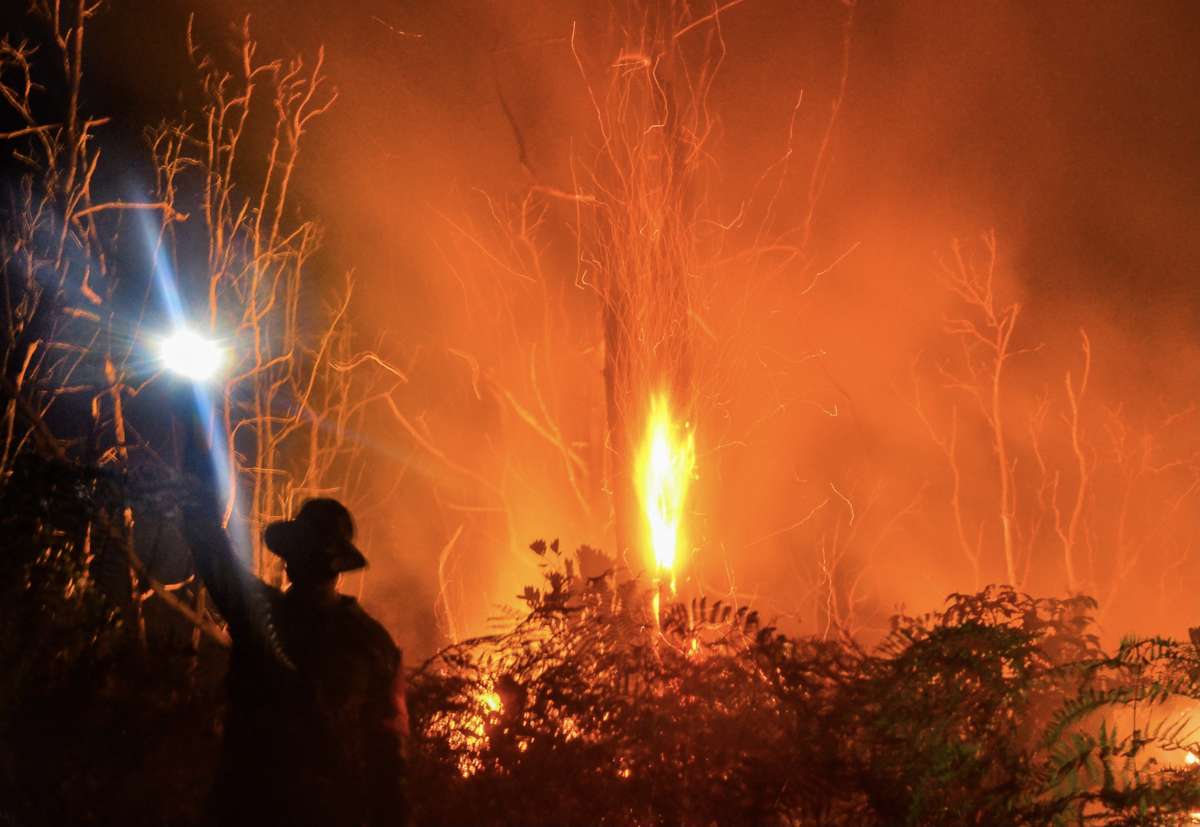
Firefighters battle a forest fire in Pekanbaru, Indonesia's Riau province on March 2, 2021, amid an increase of hotspots in the region.
Firefighters battle a forest fire in Pekanbaru, Indonesia’s Riau province on March 2, 2021, amid an increase of hotspots in the region.

BYTara LohanThe RevelatorPUBLISHEDMarch 7, 2021SHAREShare via FacebookShare via TwitterShare via Email

This story was originally published by The Revelator.

Ahailstorm in South Texas. Tornadoes in Tennessee. Wildfires across the West. A barrage of Gulf Coast hurricanes. Those are among the record 22 weather and climate disasters that each topped $1 billion in damages last year in the United States.

In all, the price tag for 2020 hit a whopping $95 billion — and that’s just in the United States. Reinsurance firm Swiss Re put global economic losses at $175 billion last year, including $32 billion for floods in China and $13 billion in damages from Cyclone Amphan across India and Bangladesh.

The worst news? Our profligate burning of fossil fuels means we’re in store for more.

Studies show that climate change is supercharging some weather and climate events and will lead to more severe and longer-lasting heat wavesstronger hurricanes, an increased wildfire risk and a longer wildfire season. We can also expect more heavy rain events and severe droughts, not to mention other extreme events like February’s polar vortex.

“You can’t attribute any particular storm to climate change, but what we do know is that climate change tips the odds of making many of these events more severe,” says Bruce Stein, chief scientist and associate vice president at the National Wildlife Federation.

While experts tabulate the economic losses — homes destroyed, crops ruined, businesses shuttered — ecosystems and wildlife can also sustain damage that’s harder to quantify.

Many plants and wildlife evolved with and have adapted to dealing with large-scale disturbances, but we’re beginning to see “megadisturbances” at levels beyond what we saw in the past, says Stein.

And that can take a toll. Extreme weather can kill animals directly — or indirectly, like by destroying food sources, contaminating water or altering habitat, forcing a species to move into areas where there may be more competition, fewer resources or a greater risk of predation.

“What we begin to find when you get some of these mega disturbances is that it’s beyond the ability of a species — or their adaptive capacity — to bounce back,” says Stein.

The Research

The effects of climate change on the natural world are being felt at two speeds. One is more gradual, referred to by scientists as “ramping” — shrinking glaciers, rising sea levels. The second is quick, like extreme weather events.

Both are problematic, says Sean Maxwell, a postdoctoral research fellow at the University of Queensland’s Centre for Biodiversity and Conservation Science. But, he adds, “I think the changes to acute events have the greatest potential to devastate local populations or ecosystems, and the impacts of these events are often more difficult to plan for or avoid.”

Maxwell was the lead author of a 2018 study published in the journal Diversity and Distributions that examined how changes in the frequency and intensity of extreme weather and climate events affected wildlife. The researchers looked at 519 studies of ecological responses to extreme events — including cyclones, droughts, floods, and heat and cold waves — that took place from 1941 to 2015. They found that the response was negative 57% of the time. (And in those instances where species benefited, they were mostly invasive species.)

“Some of the negative responses we found were quite concerning, including more than 100 cases of dramatic population declines and 31 cases of local population extinction following an extreme event,” says Maxwell. “Populations of critically endangered bird species in Hawai’i, such as the palia, have been annihilated due to drought, and populations of lizard species have been wiped out due to cyclones in the Bahamas.”

Plant species, the researchers found, had the highest number of negative responses to extreme events, followed by reptiles and amphibians.

“Collectively, the studies in our review suggest that extreme weather and climate events have profound implications for species and ecosystem management,” the researchers concluded.

The Most Vulnerable

Species that are already threatened or endangered are of course especially at risk.

Take the Attwater prairie chicken. A million of these birds once ranged across the prairies of Texas and Louisiana.

Today fewer than 100 remain in the wild and scientists have sought to bolster their populations with captive breeding programs. But when Hurricane Harvey walloped Texas with 130-mile-per-hour winds and record rainfall in 2017, the birds were right in harm’s way.

“The Attwater Prairie Chicken National Wildlife Refuge tracked 29 individual birds, mostly hens. Post-hurricane, staff confirmed only five of them still alive,” Texas Climate News reported. “The hurricane also killed roughly 80% of a prairie chicken population on private property in Goliad County.”

Other species with limited ranges, like those on islands, also face big threats.

“If a species is well distributed, then if one part of its range gets hit, there’s the ability for it to recover,” says Stein. “But if essentially all its eggs are in one basket, and that particular place gets hit by one of these big disturbances, that’s when you have a real concern.”

In 2017 Hurricane Maria cut the population of just 200 Puerto Rican parrots in half. The year before, Hurricane Matthew was believed to have wiped out the last Bahama nuthatches (Sitta insularis). It took two years before a few of the birds were found — and then Hurricane Dorian struck in 2019, making their survival unlikely, according to Diana Bell, a professor of conservation biology at the University of East Anglia.

“In fact, Dorian may have not only sealed the fate of the nuthatch but also severely impacted other birds endemic to these islands, particularly the Bahama warbler and the Abaco parrot,” Bell wrote in an essay for The Conversation. “Also known as the Bahama Amazon parrot, this subspecies uniquely nests in limestone cavities on the ground which are likely to have been flooded by the storm surge.”

Compounding Crises

The risk to wildlife from extreme storms can be compounded by the ramping effects of climate change, too.

“If you have increasingly severe hurricanes where you’ve also got sea-level rise essentially providing a higher lodge point for the storm surge, then you start seeing impacts beyond the historical record,” says Stein.

In other places, extreme weather is an extra blow to species already struggling with other environmental pressures, like habitat loss, invasive species or pollution.

Last year the world watched in horror as land-use management, climate change and drought helped push Australia’s bushfires to a terrifying new level, killing 34 people and burning 37,500 square miles.

In the immediate aftermath, one expert put the death toll for wildlife at 1 billion animals lost. Since then the figure has been revised to 3 billion killed or displaced by the blazes.

study published in Nature Ecology and Evolution found that the fire impacted the critical habitat of 832 native species, with 70 species losing more than 30% of their natural range. Twenty-one of those were already at risk of extinction.

Those that survived could find themselves hard-pressed in future climate disasters. “Multiple extreme events are likely to act in synergistic ways to exacerbate risk of species’ extinction,” wrote Maxwell and the other researchers of the 2018 study.

Australia already has one of the highest extinction rates, and the wildfires could limit the capacity of some species to recover — like the endangered Kangaroo Island dunnart and the long-footed potoroo — and threaten others. Australia’s record blazes last year could push the number of endangered species in the country up by 19%, the study in Nature Ecology and Evolution found.

Solutions

When Hurricane Irma sacked the Florida Keys in 2017, the storm tossed boats ashore, destroyed more than 1,000 homes and left a trail of debris across the islands.

It also endangered one of the region’s beloved endemic species, the tiny Key deer, which today primarily live on Big Pine Key. Some deer were killed in the storm, and surviving animals faced threats to their already limited freshwater supply as the storm surge dumped saline ocean water into freshwater pools.

Island residents responded the way folks often do after a disaster — they offered help to their neighbors.

“What you saw during and shortly after Irma is that these Key deer were coming up to houses looking for fresh water,” says Stein. “And people were putting out kiddie pools of water for them.”

Following Australia’s bushfires last year, the country’s government jumped to the aid of wildlife by dropping 4,000 pounds of carrots and sweet potatoes to starving brush-tailed rock-wallabies who lost their food source in the blazes.

“There’s a lot of things that we can do to help human communities as well as wildlife after these acute disturbances,” says Stein.

But beyond immediate food and water relief, there’s a much bigger task ahead: reducing greenhouse gas emissions to address the ongoing dangers of climate change and the ability of ecosystems to adapt. Key deer, for example, also face a long-term threat to their drinking water supply from rising seas, something no number of kiddie pools can repair. And more severe hurricanes are likely in their future, too.

“As climate change continues to ensure extreme climate and weather events are more and more common, we now need to act to ensure species have the best chance to survive,” says Maxwell. “Wherever possible, high-quality and intact habitat areas should be retained, as these are the places where species are most resilient to increasing exposure to extreme events.”

If such intact habitat doesn’t exist, ecological restoration efforts can be used to help species adapt, his study found.

And the more we know, the better.

“Incorporating extreme events into climate change vulnerability assessments and adaptation plans will be challenging,” the researchers of the 2018 paper concluded. “But by doing so we have a greater chance of arriving at conservation interventions that truly address the full range of climate change impacts.”

And that could give more species a fighting chance in a changing climate.

Former FWP Director Appointed To U.S. Fish And Wildlife Service

Montana Public Radio | By Nick MottPublished January 20, 2021 at 5:55 PM MST

Former Montana Fish, Wildlife and Parks Director Martha Williams was appointed on Wednesday as second-in-command at the U.S. Fish and Wildlife Service in the Biden Administration. William’s replacement within Montana Gov. Greg Gianforte’s cabinet was also named today.

As principal deputy director of FWS, Williams will oversee a federal agency tasked with managing wildlife and habitat across the country, and  in charge of more than 150 million acres of land in the National Wildlife Refuge System. The agency also administers the Endangered Species Act.

At FWP, Williams was at the helm of fishing and hunting policy in Montana. That agency also guides how the state deals with federally-protected species like grizzly bears, bull trout and Canada lynx, andother thorny wildlife issues such as managing the spread of chronic wasting disease and brucellosis.

Williams was the first female director of Montana FWP. She was appointed to that position in 2017 by former governor Steve Bullock. On Wednesday, Gov. Greg Gianforte nominated the agency’s new director — Hank Worsech, a 17-year FWP employee who most recently served as license bureau chief.