Exposing the Big Game

Forget Hunters' Feeble Rationalizations and Trust Your Gut Feelings: Making Sport of Killing Is Not Healthy Human Behavior

Exposing the Big Game

‘We can’t blame animals’: how human pathogens are making their way into vulnerable wildlife

 Two little blue penguins (Eudyptula minor), the world’s smallest penguin species, on the rocks of St Kilda breakwater. Photograph: Douglas Gimesy/Photography Doug Gimesy, or, Picture: Doug Gimesy

Australian scientists have found evidence of antibiotic-resistant bacteria in about a dozen species, including bats, penguins, sea lions and wallabies

by Graham Readfearn Photography by Doug GimesySupported byAbout this content

Sat 18 Jul 2020 16.00 EDTLast modified on Sat 18 Jul 2020 20.11 EDT

Shares63Comments3

For 13 years now, scientist Michelle Power has been grabbing samples of human waste and animal poop from Antarctica to Australia to try and answer a vital question.

Has the bacteria in humans that has grown resistant to antibiotics – an issue considered to be one of the world’s greatest health challenges – made its way into wildlife?

The answer, it seems, is a resounding yes.

Associate Professor Michelle Power from Macquarie University Department of Biological Science.
  • Associate professor Michelle Power from Macquarie University Department of Biological Science.

“I don’t think there’s been an animal where we haven’t found it,” says Power, an associate professor at Macquarie University in Sydney.

The sorts of animals Power has chosen to look at most live close to humans or are urbanised – like possums – or animals that spend time with humans either in wildlife care facilities or in conservation breeding programs.

So far, Power says she has found evidence of antibiotic-resistant bacteria in about a dozen animals, including bats, penguins, sea lions and wallabies.
Human impact on wildlife to blame for spread of viruses, says study

 Read more

“You have organisms moving from us, to animals, and then potentially back to us again,” she says. “At the moment it’s hard to track what’s coming back and forth, but we know humans have driven this emergence of antibiotic-resistant bacteria.”

Power’s work on the issue started in 2007 when she looked at faeces samples of endangered brush-tailed rock wallabies being raised in captivity in New South Wales as part of conservation efforts.

About half the wallabies had antibiotic-resistant bacteria in their faeces. Those animals were released back into the wild.

In late 2009, Power fulfilled a romantic 20-year-old dream of travelling to Antarctica to do scientific research. The rather less romantic goal was to sample the human sewage from a research station there, and to “sneak up behind penguins and seals” and take their poo.
Penguins, Antarctic Peninsula
  • Penguins on the Antarctic Peninsula.

Advertisement

But again, her findings revealed that bacteria from humans was making its way into the Antarctic wilderness, including antibiotic-resistant bacteria.

Between 2017 and 2019, Power’s scientific colleagues together with wildlife carers have collected 448 poo samples from the little penguins of Philip Island and St Kilda, and from the penguins in zoos (one method to collect samples from wild penguins is to leave a piece of card near the entry to a nesting box because, Power says, they “like to poo out the door”).

Almost half the little penguins in captivity have antibiotic-resistant bacteria, compared with 3% of the wild population.
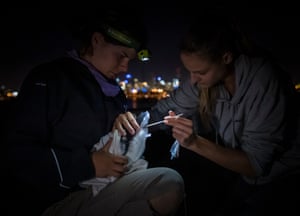
Researcher Ida Lundback, right, with the assistance of volunteer Naomi Wells, left, takes a faecal sample from a captured little blue penguin (Eudyptula minor) before returning it back to its burrow.
  • Researcher Ida Lundback, right, with the assistance of volunteer Naomi Wells, left, takes a faecal sample from a captured little blue penguin (Eudyptula minor) before returning it back to its burrow.

Power has also been part of an ongoing citizen science project encouraging others to do the faeces collecting – this timer the secretions of possums.

After analysing abut 1,800 samples so far, Power says the Scoop a Poop project has shown about 29% of Australia’s brush-tailed possums are carrying antibiotic-resistant bacteria.

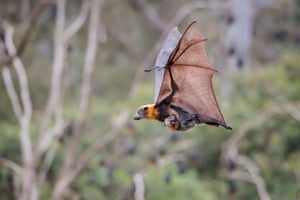
In 2019, Power was part of a study that found antibiotic resistance in grey-headed flying foxes – a species listed as vulnerable.

In research yet to be published, Power says she has found evidence of antibiotic-resistant bacteria in wild populations of Tasmanian devils.

So how did our bacteria get into the animals?

Power says about three-quarters of the antibiotics that humans take are actually excreted, ending up in wastewater systems. Places where antibiotics are manufactured are also potential avenues for escape of antibiotics.

And then there are the times when animals are taken into care, or raised in captivity and exposed to humans, and then released into the wild.

“We are seeing a variation in the prevalence [of antibiotic-resistant bacteria] across different wildlife species but why that is the case, we are not sure,” Power says.
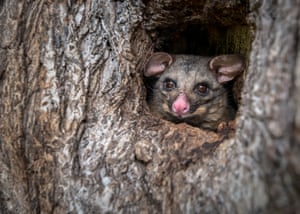
An urban brush-tailed possum, Trichosurus vulpecula
  • Clockwise from top: An urban brush-tailed possum, a female grey-headed flying fox and an Australian sea lion.
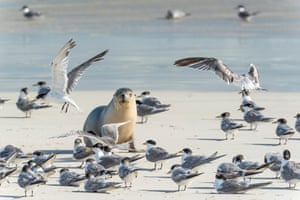
An Australian sea lion (Neophoca cinerea), Sandy Bay, Kangaroo Island, South Australia.
A female grey-headed flying foxes (Pteropus poliocephalus) Yarra Bend Park. Kew, Victoria.

Advertisementhttps://3a19b14f435b66a70fed7272384cb84e.safeframe.googlesyndication.com/safeframe/1-0-37/html/container.html

Possums are a species that are highly urbanised, sometimes feed on the ground, and live and eat close to humans – close enough that many find homes in the roof space of Australian houses. But they tend to be solitary.

Flying foxes on the other hand hang around in trees in tightly packed camps that can run into the thousands. About 5% of wild grey-headed flying foxes had antibiotic-resistant bacteria in their excretions, compared with 40% of those in care facilities.

Power says: “Maybe the possums are getting closer to our organisms, but also they’re solitary species. Flying foxes on the other hand live up in trees but live in higher densities.”

According to the World Health Organisation, the emergence of bacteria resistant to antibiotics is one of the world’s greatest health challenges facing humans, making treatment of dangerous diseases ever more challenging.

But the impact of this bacteria on wildlife, Power says, “is the big unknown” and she says there’s no direct evidence yet that it’s doing harm.
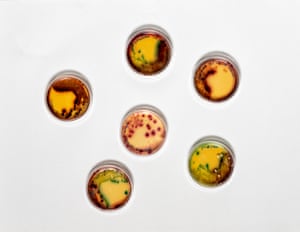
Faecal sample from Australia Sea Lions (Neophoca cinerea) that has been plated on Chromacult media - a selective differential media that makes E. coli visible by showing it as dark purple.
  • A faecal sample from Australian sea lions (Neophoca cinerea) that has been plated on Chromocult media – a selective differential media that makes E coli visible by showing it as dark purple.

Advertisementhttps://3a19b14f435b66a70fed7272384cb84e.safeframe.googlesyndication.com/safeframe/1-0-37/html/container.html

She says: “The gene transfer of endemic bacteria could alter microbial communities and know more and more each day about the significance of friendly microbes to healthy immunity.”

Dr Wayne Boardman is a wildlife veterinarian at the University of Adelaide and the former head vet at London Zoo who has been collaborating with Power on research.

One big concern Boardman holds is that the antibiotic resistance could make it harder for vets to care for sick animals.

But also, he says, the bacteria and the genes associated with them that are being passed from humans to animals could then evolve and come back into the human population.

“It’s in the bacteria’s interest to try and protect themselves,” he says. “Whilst the risks are relatively small, they could be compounded over the years because we have more of these antimicrobial resistant genes occurring and then we get further and further into the mire.
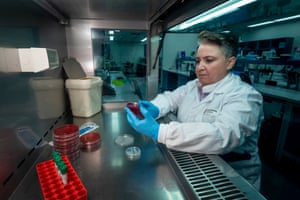
Associate Professor Michelle Power from Macquarie University Department of Biological Science plates out a culture of E.coli taken from facial samples from Antarctic marine life (Wedell seal - Leptonychotes weddellii).
  • Michelle Power with a culture of E.coli taken from faecal samples from Antarctic marine life (Weddell seal – Leptonychotes weddellii).

“It’s a human induced issue. We can’t blame the animals. It’s only humans using antibiotics.”

Prof Clare McArthur, a behavioural ecologist at the University of Sydney, says Power has answered the first important question – are human bacteria being passed into our wildlife?

“The next questions is, does it matter,” she says. “I think of this from a gut perspective. We know that the gut biome is important and we know from humans that if you tweak it then things can go pear shaped in terms of our health.
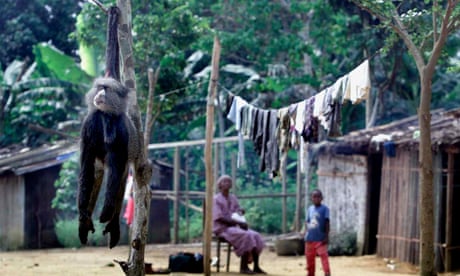
‘Tip of the iceberg’: is our destruction of nature responsible for Covid-19?

 Read more

“In the back of my mind is the question – if they’re picking up antibiotic-resistant bacteria, is that altering their gut biome? We don’t have an answer for that yet.”

As for Power, she’s worried that wildlife picking up human pathogens could be another pressure on species already vulnerable.

“These bacteria are pathogens and they can cause diseases in us. I’m worried about wildlife health and what some of these resistant bacteria might mean for wildlife species, many of which are already vulnerable.”

Wildlife corridors don’t trap prey, University of Alberta research finds

Wildlife corridors don’t trap prey, University of Alberta research finds

Study captured thousands of images of mammals using structures in Quebec

Madeleine Cummings · CBC News · Posted: Jul 14, 2020 5:16 PM MT | Last Updated: July 14

https://www.cbc.ca/news/canada/edmonton/wildlife-corridors-do-not-trap-prey-u-of-a-study-finds-1.5649272

One of the research team’s remote photos shows a North American red squirrel carrying nest-building materials through a wildlife underpass in Quebec in the summer of 2014. (Submitted by April Martinig)

Wildlife crossings like those in Banff National Park are meant to help animals cross highways safely, but ecologists have long been asked about possible unintended consequences of the structures.

New research out of the University of Alberta disproves a common theory that predators could exploit the corridors by using them to trap prey.

Researchers tested the prey-trap hypothesis by placing remote cameras in 17 wildlife passages in the Laurentides Wildlife Reserve in Quebec between May of 2012 and August of 2015.

They measured how often some small and medium-sized predators and prey — such as weasels, mice, moles and raccoons — appeared on the passages. A camera at each entrance, when triggered by heat and movement, took a series of photographs.

An aerial view of a wildlife overpass in Banff National Park. (Parks Canada)

The cameras captured more than 11,000 mammals using the wildlife underpasses but did not capture a single predation episode or attempt. 

The researchers also found no photo evidence of any larger predators, like wolves, coyotes or lynx, using the wildlife passages.

Based on the images gathered, predators did not follow prey into the passages and prey tended to avoid the paths after predators had used them. “This study is showing that one of our biggest concerns, which was predators catching on to the prey using the passages, isn’t actually as much of a problem as we thought it would be,” April Martinig said Tuesday in an interview with CBC’s Radio Active.

Martinig is a PhD candidate in ecology at the U of A and lead author of “Temporal clustering of prey in wildlife passages provides no evidence of a prey-trap,” which was published Monday in the peer-reviewed journal Scientific Reports.

Martinig said she found the results reassuring since she often hears from members of the public who worry wildlife crossings could be putting smaller animals directly in predators’ paths.

Scientists will still need to monitor wildlife passages in case predators eventually catch on, she said, but for now, building structures that exclude predators should not be a concern.

Study captured thousands of images of mammals using structures in Quebec

Madeleine Cummings · CBC News · Posted: Jul 14, 2020 5:16 PM MT | Last Updated: July 14

One of the research team’s remote photos shows a North American red squirrel carrying nest-building materials through a wildlife underpass in Quebec in the summer of 2014. (Submitted by April Martinig)

Wildlife crossings like those in Banff National Park are meant to help animals cross highways safely, but ecologists have long been asked about possible unintended consequences of the structures.

New research out of the University of Alberta disproves a common theory that predators could exploit the corridors by using them to trap prey.

Researchers tested the prey-trap hypothesis by placing remote cameras in 17 wildlife passages in the Laurentides Wildlife Reserve in Quebec between May of 2012 and August of 2015.

They measured how often some small and medium-sized predators and prey — such as weasels, mice, moles and raccoons — appeared on the passages. A camera at each entrance, when triggered by heat and movement, took a series of photographs.

An aerial view of a wildlife overpass in Banff National Park. (Parks Canada)

The cameras captured more than 11,000 mammals using the wildlife underpasses but did not capture a single predation episode or attempt. 

The researchers also found no photo evidence of any larger predators, like wolves, coyotes or lynx, using the wildlife passages.

Based on the images gathered, predators did not follow prey into the passages and prey tended to avoid the paths after predators had used them. “This study is showing that one of our biggest concerns, which was predators catching on to the prey using the passages, isn’t actually as much of a problem as we thought it would be,” April Martinig said Tuesday in an interview with CBC’s Radio Active.

Martinig is a PhD candidate in ecology at the U of A and lead author of “Temporal clustering of prey in wildlife passages provides no evidence of a prey-trap,” which was published Monday in the peer-reviewed journal Scientific Reports.

Martinig said she found the results reassuring since she often hears from members of the public who worry wildlife crossings could be putting smaller animals directly in predators’ paths.

Scientists will still need to monitor wildlife passages in case predators eventually catch on, she said, but for now, building structures that exclude predators should not be a concern.

Breaking news: U.S. House passes major infrastructure package with key provisions for wildlife corridors, horse transport

By Kitty Block and Sara Amundson

July 1, 2020 1 Comment

Breaking news: U.S. House passes major infrastructure package with key provisions for wildlife corridors, horse transport

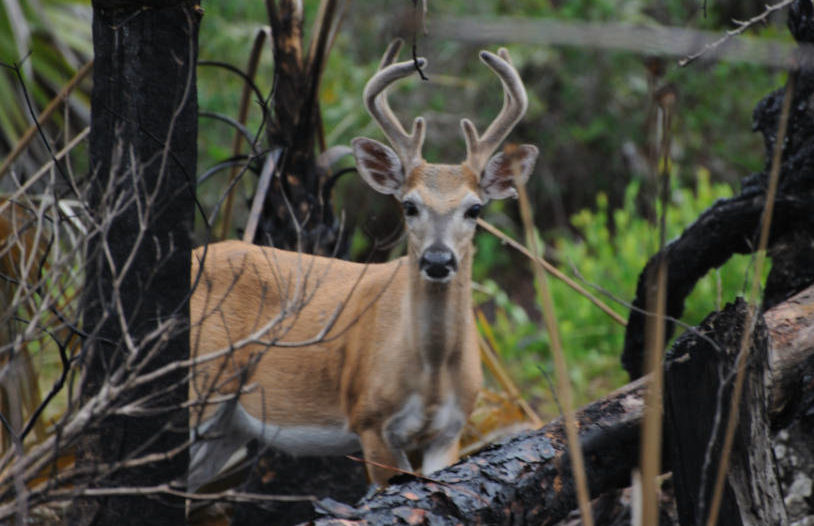
The reforms passed today will help mitigate significant declines in the populations of threatened and endangered animals like the Florida panther, bighorn sheep and Key deer. Photo by the U.S. Fish and Wildlife ServiceShare323TweetRedditEmail323SHARES

The U.S. House has just approved provisions that would make highways safer for wildlife to cross and create safer conditions to transport horses across the country, as part of the Moving Forward Act, a package of reforms designed to restore America’s aging infrastructure.

The measures approved today would create safe passageways for native wildlife species to migrate in order to find food, water and shelter, to adapt to changing environmental conditions, and to reach breeding or wintering areas. This is a crucial investment toward our nation’s ecological health because scientists estimate that two in 10 animal and plant species in the United States are at risk of extinction, largely as a result of habitat loss due to growing human populations and residential, commercial and energy activities in and around important wildlife migration corridors.

A national wildlife corridors systems such as the one proposed in the package would connect fragmented habitats with bridges or tunnels on federal lands—including national parks, national wildlife refuges, national forests and other conservation areas—and participating state, tribal and private lands, and would protect natural pathways to allow wildlife to move between isolated patches of habitat. The animals would no longer have to cross highways, where they are highly likely to get hit by vehicles, or pass through other human developments.

Such corridors would also create more resilient landscapes and are known to increase wildlife movement between habitat areas by approximately 50% compared to areas not connected by corridors. They also make our nation’s roads safer for people, by reducing the risk of vehicle-wildlife collision. The reforms passed today will help mitigate the 725,000 to 1.5 million large-animal-wildlife-vehicle collisions that occur in the United States each year—collisions that result in more than 200 human fatalities, over a billion dollars in property damage, and significant declines in the populations of threatened and endangered animals like the Florida panther, bighorn sheep and Key deer.

These measures in the package that passed today were incorporated from two other bills, including the Wildlife Corridors Conservation Act, H.R. 2795, introduced by Reps. Don Beyer, D-Va., and Vern Buchanan, R-Fla., and the INVEST in America Act, H.R. 2. We applaud Reps. Beyer and Buchanan for taking the initiative to make our roadways safer for both people and animals, and we are grateful to the House leadership for including the national wildlife corridors system in the Moving Forward Act.

The package also includes key provisions from the Horse Transportation Safety Act, H.R. 1400, introduced by Reps. Steve Cohen, D-Tenn., and Peter King, R-N.Y., that makes it unlawful to transport horses across state lines in double decker trailers built for transporting shorter farm animals, such as hogs and cattle. We are grateful to Congress for recognizing the great safety risk this practice poses, for both horses and humans. The horses are at risk of serious injury because there is not enough space overhead for them to stand upright, which can cause them to fall during transport. Cramming them into trailers not meant to carry animals this size can greatly increase chances of major accidents on the roads.

Two more key provisions for animals were adopted during the amendment process today. The Bird-Safe Buildings Act, offered through amendment by Rep. Mike Quigley, D-Ill., would advance bird-friendly practices in the construction of federal buildings to help prevent the deaths of a billion birds killed each year in the United States when they fly into buildings. Another bill, to establish the Western Riverside County National Wildlife Refuge providing habitat for 146 plant and animal species in California, was offered as an amendment by Reps. Ken Calvert, R-Calif., and Mark Takano, D-Calif.

Both provisions will not only enable the federal government to reduce negative impacts on animals, but they will also serve as models for other sectors.

The provisions for animals approved today underscore how deeply connected human and animal interests are, and how benefiting one can help the other. The package now moves to the Senate and we’ll be pushing to secure passage of these measures there, with your help. Please contact your Senators to encourage their support for the Moving Forward Act and for making our highways safer for wildlife and horses. It’s a worthy investment in the future of our nation.

Sara Amundson is president of the Humane Society Legislative Fund.

How fireworks harm nonhuman animals

Fireworks and other explosive materials, whose reactions can produce sparks, flames, and fumes, cause various harms to nonhuman animals. These often affect animals who are human companions, and whose reactions we can easily see. They also harm the other animals who are around us, both in urban environments and outside them, as well as those who are on farms or confined in other spaces.

Physical damage to the hearing organs of animals

The hearing of many animals is much more sensitive than it is in humans, so the explosions of fireworks are not only more disturbing to them, but they can damage their hearing more severely. Fireworks can emit sounds of up to 190 decibels (110 to 115 decibels above the range of 75 to 80 decibels where the damage to the human ear begins). Fireworks generate a higher noise level than firecrackers, gunshots (140 decibels), and some jet planes (100 decibels).

Noises caused by fireworks and firecrackers can lead to loss of hearing and tinnitus. Dogs are known to suffer irreversible hearing loss caused by proximity to the noise of gunfire.

Fear and stress

In addition to these harms, the noises caused by fireworks harm animals by causing fear. In fact, repeated exposure to unexpected, unpredictable loud noises can cause phobias in many animals, increasing panic reactions to loud noises in the future.1

It is estimated that one-fifth of disappearances of animals who are companions to humans are due to very loud sounds, mainly fireworks and storms.2

The effects of fireworks on animals can be observed very clearly in zoos.3 It has been shown that the noise of fireworks makes animals such as rhinos and cheetahs very nervous, also visibly affecting others such as elephants, while rodents continue running minutes after the noises cease.4

Harmful effects by chemical particles

In addition, firecrackers are poisonous, and their explosion releases harmful particles such as fine dust (PM10) that is toxic to inhale. It can worsen existing diseases and cause others. Therefore, fireworks represent a danger both to animals who live in areas where they explode, or in relatively distant locations when the wind transports the particles.5 There is also a risk of ingestion of the residue of fireworks and firecrackers.6 The proximity of the animals to the areas where the firecrackers are made often causes burns and damage to the eyes.

The chemicals are also dangerous for cats and dogs, just as they are for humans with respiratory diseases such as asthma. Careless use of fireworks can also cause mutilations and fatal accidents in animals near the event, as well as causing fires that harm animals. When accidents of this type occur that affect humans, it is common for us to talk about it, but we must remember such things often affect animals of other species even when humans aren’t badly affected.

Ways different animals are affected by fireworks

Dogs

Dogs are able to hear up to 60,000hz, while humans can’t hear anything above 20,000hz, which is only a third of the capacity of dogs. This auditory acuity of dogs is one of the reasons the sound of fireworks can be so harmful to them. They show signs of overwhelming anxiety as they are unable to escape from the sound.7

Dogs, like many other animals, also suffer from other phenomena that produce loud sounds, such as storms. However, in the case of storms, the noises are accompanied by previous warning signs, so that animals can perceive them in advance. This can cause them anguish in anticipation, but it does not cause them the unexpected fright caused by fireworks, which are sudden and not identifiable.8 The fear of noise among older dogs is more common.9

Many urban dogs suffer negative symptoms from the explosions of firecrackers. Common reactions are freezing or paralysis, uncontrolled attempts to escape and hide, and tremors. Other more intense signs may also be present, such as salivation, tachycardia, intense vocalizations, urination or defecation, increased activity, hyper alertness and gastrointestinal disorders. All these signs are indicative of great discomfort.

It has been pointed out that the reaction of dogs to the sound of fireworks is similar to post-traumatic stress in human animals. However, this effect could be much more harmful in dogs, because they do not have the ability to rationalize their anxiety, or the possibility of an immediate cognitive response that allows them to respond to their fear. It is likely they experience a deeper and more intense form of terror. This is in addition to the noise phobia which can be greater in some dogs due to personality differences. It is important to keep in mind that in the first years of their lives, dogs are especially vulnerable to the development of phobias, and exposing them to sounds like fireworks contributes to future fear responses that they might not otherwise have had. It has been estimated that one in two dogs has significant fear reactions to fireworks.10

Cats

The effects of fireworks on cats are less obvious, but their responses are similar to those of dogs, such as trying to hide or escape.11 However, regardless of the fear they have, they have a higher risk of being poisoned. Many cats who are near areas where firecrackers are made ingest them or their parts. In addition, they can go blind or be seriously injured by the explosions of firecrackers.12

Horses

Horses can easily feel threatened by fireworks due to their hypervigilance since they are constantly on high alert due to possible predators.13 Horses also act quite similarly to dogs and cats, showing signs of stress and fear, and trying to flee or escape. It is estimated that 79% of horses experience anxiety because of firecrackers, and 26% suffer injuries from them. Sometimes they react to fireworks by trying to jump fences and flee to dangerous areas where they can be run over by cars.14

Birds

The noise of firecrackers can cause birds tachycardia and even death by fright. The high degree of stress birds experience is indicated by the fact that birds may temporarily or permanently abandon the places where they are.15

In areas that are ​​aircraft flyover zones, Creole ducks grow more slowly and have a lower body weight than Creole ducks who live in areas with little noise. Snow geese affected by these noises spend less time eating during the day and try to compensate during the night, which entails shortening their period of rest and sleep, gradually reducing their survival rate.16

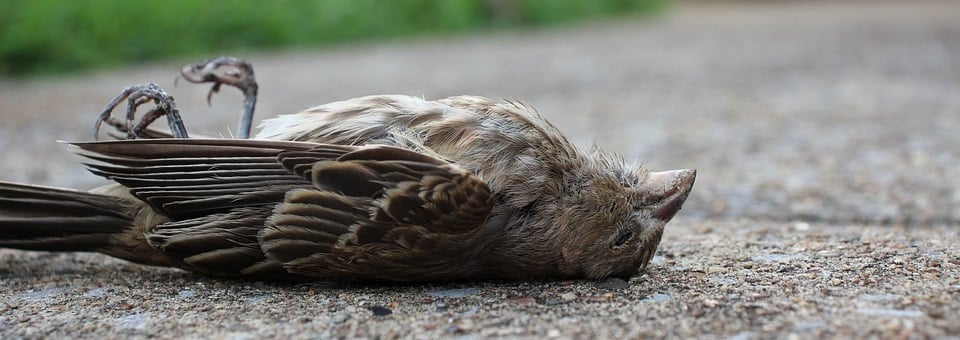
Disorientation and panic from fireworks can cause birds to crash into buildings or fly towards the sea. The colonial species of birds who nest in high densities, such as silver gulls, are at greater risk of this during explosions of firecrackers. Many birds who flee from their nests due to the sounds do not know how to return to their nests once the noise ends, which leaves many of their young helpless.

Invertebrates and small vertebrates

The harms caused to invertebrates and small vertebrates have been evaluated much less than those caused to the animals discussed above. Presumably, these animals can do little to avoid harm if the explosions occur in areas near where they live. Keep in mind that for these animals fireworks are very large explosions, so the harms to them can be much greater than in other animals.17

Alternatives to the use of fireworks

There is a growing acceptance of alternatives to fireworks, such as laser light shows. One notable case is in the city of Collechio (Italy), one of the first to program silent fireworks, with the message that it is possible to enjoy fireworks without causing panic among the nonhuman inhabitants of the municipality.18 However, there is the possibility that this type of show may affect birds negatively.

Some might think that administering a soothing drug to animals could be the solution, but this proposal isn’t satisfactory for two reasons. First, the use of drugs to calm animals could cause harmful side effects. Second, we wouldn’t be able to reach almost all of the animals affected by fireworks. The animals who live with human beings are not the only ones harmed. Even if we only consider domesticated animals in urban areas, there are animals who live in the street or are alone. In addition, domesticated animals are the minority of animals affected. We must take into account all animals who live outside the reach of humans, whether in the wild or in urban environments, as well as those on farms and other places where they are exploited. For this reason, the only really satisfactory solution is to reject the use of fireworks.


Further readings

Asociación de Veterinarios Abolicionistas de la Tauromaquia y del Maltrato Animal (2017) “Informe técnico veterinario sobre los impactos de la pirotecnia en los animales”, AVATMA [accessed on 13 January 2019].

Bowen, J. (2015) “Prevalence and impact of sound sensitivity in dogs”, Vet Times, October 19 [accessed on 18 June 2019].

British Veterinary Association (2016) “Policy statement: Fireworks and animal welfare”, Policy, March [accessed on 24 April 2019].

Brown, A. L. & Raghu, S. (1998) “An overview of research on the effects of noise on animals”, Acoustics Australia, 26, pp. 63-67.

Dale, A. R.; Walker, J. K.; Farnworth, M. J.; Morrissey, S. V. & Waran, N. K. (2010) “A survey of owners’ perceptions of fear of fireworks in a sample of dogs and cats in New Zealand”, New Zealand Veterinary Journal, 58, pp. 286-291 [accessed on 25 April 2019].

Gahagan, P. & Wismer, T. (2012) “Toxicology of explosives and fireworks in small animals”, Veterinary Clinics of North America: Small animal practice, 42, pp. 361-373.

Overall, K. L.; Dunham, A. E. & Frank, D. (2001) “Frequency of nonspecific clinical signs in dogs with separation anxiety, thunderstorm phobia, and noise phobia, alone or in combination”, Journal of the American Veterinary Medical Association, 219, pp. 467-473.

Shamoun-Baranes, J.; Dokter, A. M.; van Gasteren, H.; van Loon, E. E.; Leijnse, H. & Bouten, W. (2011) “Birds flee en mass from New Year’s Eve fireworks”, Behavioral Ecology, 22, pp. 1173-1177 [accessed on 30 March 2019].

Shannon, G.; McKenna, M. F.; Angeloni, L. M.; Crooks, K. R.; Fristrup, K. M.; Brown, E.; Warner, K. A.; Nelson, M. D.; White, C.; Briggs, J.; McFarland, S. & Wittemyer, G. (2016) “A synthesis of two decades of research documenting the effects of noise on wildlife”, Biological Reviews, 91, pp. 982-1005.

Simpson, S. D.; Radford, A. N.; Nedelec, S. L.; Ferrari, M. C.; Chivers, D. P.; McCormick, M. I. & Meekan, M. G. (2016) “Anthropogenic noise increases fish mortality by predation”, Nature Communications, 7 [accessed on 12 May 2019].


Notes

1 British Small Animal Veterinary Association (2019) “Fireworks”, BSAVA [accessed on 18 June 2019].

2 American Society for the Prevention of Cruelty to Animals (2015) “Independence Day can be perilous for pets”, ASPCA [accessed on 27 February 2019].

3 In one case, the noise caused by nearby works were a cause of stress for snow leopards kept in zoos. They withdrew to the most remote parts of their exhibition area, and spent more time sleeping than on the days when there was no noise. We can imagine the harm caused by much more thunderous sounds, such as those caused by fireworks. Sulser, E.; Steck, B. L. & Baur, B. (2008) “Effects of construction noise on behaviour of and exhibit use by snow leopards Uncia uncia at Basel zoo”, International Zoo Yearbook, 42, pp. 199-205.

4 Rodewald, A.; Gansloßer, U. & Kölpin, T. (2014) “Influence of fireworks on zoo animals: Studying different species at the zoopark erfurt during the classic nights”, International Zoo News, 61, pp. 264-271.

5 Greven, F. E.; Vonk, J. M.; Fischer, P.; Duijm, F.; Vink, N. M. & Brunekreef, B. (2019) “Air pollution during New Year’s fireworks and daily mortality in the Netherlands”, Scientific Reports, 9 [accessed on 11 June 2019].

6 Stanley, M. K.; Kelers, K.; Boller, E. & Boller, M. (2019) “Acute barium poisoning in a dog after ingestion of handheld fireworks (party sparklers)”, Journal of Veterinary Emergency and Critical Care, 29, pp. 201-207.

7 Blackwell, E. J.; Bradshaw, J. W. & Casey, R. A. (2013) “Fear responses to noises in domestic dogs: Prevalence, risk factors and co-occurrence with other fear related behaviour”, Applied Animal Behaviour Science, 145, pp. 15-25.

8 Franzini de Souza, C. C.; Martins Maccariello, C. E.; Martins Dias, D. P.; dos Santos Almeida, N. A.; Alves de Medeiros, M. (2017) “Autonomic, endocrine and behavioural responses to thunder in laboratory and companion dogs”, Physiology & Behavior, 169, pp. 208-215.

9 Storengen, L. M. & Lingaas, F. (2015) “Noise sensitivity in 17 dog breeds: Prevalence, breed risk and correlation with fear in other situations”, Applied Animal Behaviour Science, 171, pp. 152-160.

10 Hargrave, C. (2018) “Firework fears and phobias in companion animals – why do we let owners take the one in two chance?”, The Veterinary Nurse, 9, pp. 392-392.

11 Ibid.

12 Especismo Cero (2011) “Pirotecnia y sus consecuencias en los animales”, especismocero.org [accessed on 2 April 2019].

13 British Horse Society (2018) “Fireworks”, BHS [accessed on 30 April 2019].

14 Gronqvist, G.; Rogers, C. & Gee, E. (2016) “The management of horses during fireworks in New Zealand”, Animals, 6, 20 [accessed on 2 January 2019].

15 Schiavini, A. (2015) Efectos de los espectáculos de fuegos artificiales en la avifauna de la Reserva Natural Urbana Bahía Cerrada, Ushuaia: Centro Austral de Investigaciones Científicas [accessed on 26 June 2019].

16 Conomy, J. T.; Dubovsky, J. A.; Collazo, J. A. & Fleming, W. J. (1998) “Do black ducks and wood ducks habituate to aircraft disturbance?”, Journal of Wildlife Management, 62, pp. 1135-1142.

17 Morley, E. L.; Jones, G. & Radford, A. N. (2014) “The importance of invertebrates when considering the impacts of anthropogenic noise”, Proceedings of the Royal Society B: Biological Sciences, 281, 20132683. Studies have also been conducted on the effects of noise on marine invertebrates, due to their economic interest. Hawkins, A. D.; Pembroke, A. E. & Popper, A. N. (2015) “Information gaps in understanding the effects of noise on fishes and invertebrates”, Reviews in Fish Biology and Fisheries, 25, 39-64; Nedelec, S. L.; Radford, A. N.; Simpson, S. D.; Nedelec, B.; Lecchini, D. & Mills, S. C. (2014) “Anthropogenic noise playback impairs embryonic development and increases mortality in a marine invertebrate”, Scientific Reports, 4, p. 5891.

18 Venzel, S. (2016) “Town in Italy keeps animals calm with silent fireworks”, Wide Open Pets [accessed on 13 March 2019].

Woman encounters black bear in southwest Calgary: ‘I thought my dog was going to be torn apart’

ByCarolyn Kury de Castillo Global NewsPosted June 27, 2020 4:58 pm Updated June 27, 2020 8:32 pm

WATCH: A woman in southwest Calgary is thankful her dog is still alive after an encounter with a bear on Wednesday. Carolyn Kury de Castillo reports.

Descrease article font size-AIncrease article font sizeA+

Some people living in the southwest Calgary community of Springbank Hill are being a bit more cautious as they walk outside after video of a black bear in the area was captured on Wednesday.

The video shows a bear walking on a front driveway and scampering onto a front lawn and into a treed area.

Stephanie d’Obrenan grew up in Springbank Hill and loves walking her dog Todd there.

“We’ve seen moose here before and never bears,” d’Obrenan said Saturday.

READ MORE: Southwest Calgary residents on alert as bear spotted in area

But on Wednesday afternoon, Todd darted ahead of her while they were walking on Slopeview Drive.

“He goes flying after something. I look and I see these big brown ears and this big brown face and I am like, ‘My dog is going right towards a bear,’” d’Obrenan recalled.STORY CONTINUES BELOW ADVERTISEMENThttps://4ffefaa3e129f5e476542c1b7698326f.safeframe.googlesyndication.com/safeframe/1-0-37/html/container.html

A black bear popped out of the trees and came within two metres of Todd, according to d’Obrenan.

“I was screaming bloody murder. I was pretty frantic. I’ve never been so terrified. I thought my dog was going to be torn apart and eaten right in front of me,” d’Obrenan said.TWEET THIS

Her first reaction was to save her pet.

“It was absolutely terrifying and I go sprinting after him and I am very aware that I am running towards a bear at this moment. This is probably not the best idea,” d’Obrenan said.

A bear was caught on camera in southwest Calgary this week.
A bear was caught on camera in southwest Calgary this week. Courtesy: Manoj Sharma

She scooped up Todd in her arms while the bear went down into the ravine. At that point, neighbours called her to come inside.

“It’s hard to imagine how you can come face to face with a bear and try to save your pet, which is just like a child,” said Manoj Sharma, who urged d’Obrenan to get in his house to stay safe from the bear.STORY CONTINUES BELOW ADVERTISEMENThttps://4ffefaa3e129f5e476542c1b7698326f.safeframe.googlesyndication.com/safeframe/1-0-37/html/container.html

READ MORE: Black bear dines on bird seeds in Calgary backyard: ‘He’s just doing bear stuff’

The bear ended up coming back, crossing the road and slipping into Sharma’s backyard. That’s when Sharma caught the bruin on camera.“Every time I look at the video, it’s [scarier] because now if my kids come out to play, I don’t let them come out by themselves,” Sharma said.

Calgary Fish and Wildlife officers have received several reports of a cinnamon phase black bear travelling around the area by Lower Spring Bank Road.

READ MORE: Doorcam video: Mother bear, spotting opportunity, breaks into minivan at B.C. resort

According to Fish and Wildlife, officers tracked the bear and determined it has mostly been staying within the green spaces and has not been showing signs of habituated or defensive behaviour.

As of Friday, a spokesperson for Fish and Wildlife said the last confirmed sighting was near Discovery Ridge and Lower Spring Bank Road on June 24 at 4 p.m. There have been no additional reports since.

Officers are continuing to monitor the situation but a provincial Fish and Wildlife spokesperson said there are no public safety concerns at this point.STORY CONTINUES BELOW ADVERTISEMENT

READ MORE: White grizzly named by Bow Valley residents

As for d’Obrenan, she is thankful her French bulldog is still with her after his big adventure.

“I think anyone who loves their dog would probably do the same and try to get their dog. He’s my baby,” d’Obrenan said.

Residents who encounter a bear that may be a public safety concern are advised to report the incident to the nearest Fish and Wildlife office at 310-0000 or the 24-hour Report a Poacher line at 1-800-642-3800.RELATED NEWS

Snakebit

My yellow lab, Honey, is recuperating from being bit by a rattlesnake yesterday early evening (after the vets’ offices were closed around here). She was curious about it, but a little wary, so it must have only reached her with one fang. Her face swelled up and her eyes were sunken and she laid in the first patch of grass she saw when we got home (rather than running around). But she is much better (considering) and finally ate something this morning.

Because of my hearing issue (tinnitus) I couldn’t hear it rattle, but I’m pretty sure she did since she reacted to that snake much more aggressively than she does to the bull snakes we see closer to home. It was hotter than usual that day, and because we were just going to go down and splash off in the creek, she was off-leash. I called her back from what I at first thought was a harmless bull snake, forgetting we were 10 miles further into the mountains, where ‘timber-rattlers’ are more common than bull snakes. She must have been half-heeding my warning calls and half-afraid of the snakes rattling warning. Still, it grazed her and drew some blood and gave the dog the message it was not a snake to be trifled with…
I think the poor snake may have been hurt by one of the cars in the nearby campground, or by a car or 4-wheeler using the old forest service road going along the creek it was coiled 5 feet from. That could explain why Honey didn’t seem to get a full dose of venom and was already recovering within an hour of being bit. Her main symptom was lethargy and a swollen face and leg. Her face was so puffy she looked more like a bull terrier (like Spuds Mackenzie) than a yellow lab.
Anyway, she’s laying low and taking it slow today, which is probably a good plan since it’s another hot one…

Rattlesnake den photo copyright Jim Robertson

It’s OK to feed wild birds – here are some tips for doing it the right way

Costa’s Hummingbirds are frequent visitors at feeders in Arizona and southern California. Julian AveryCC BY-ND

Millions of Americans enjoy feeding and watching backyard birds. Many people make a point of putting food out in winter, when birds needs extra energy, and spring, when many species build nests and raise young.

As a wildlife ecologist and a birder, I know it’s important to understand how humans influence bird populations, whether feeding poses risks to wild birds, and how to engage with birds in sustainable ways.

There is still much to learn about the risks and benefits of feeding birds, particularly through large integrated national citizen science networks like Project FeederWatch. But we now have enough information to promote healthy interactions that can inspire future generations to care about conservation.

A long-term relationship

Birds have been taking advantage of human civilization for thousands of years, congregating where grains and waste are abundant. This means that people have been influencing the abundance and distribution of species for a very long time.

Studies show that providing food has myriad effects on birds’ decisions, behaviors and reproduction. One significant finding is that winter bird feeding increases individual survival rates, can encourage birds to lay eggs earlier in the year, and can also improve nestling survival.

All of these factors alter species’ future reproductive performance and can increase total bird abundance in later years. It’s not always clear how increased abundance of feeder birds impacts other species through competition, but rarer and smaller species can be excluded.

This interactive diagram, based on citizen science data, shows how North America’s top 13 feeder species fare when they compete at feeders. Credit: Cornell Lab of Ornithology

Supplemental food has also led to reduced reproductive success in a few species. This may happen because it improves survival odds for less healthy birds that otherwise would be unlikely to survive and reproduce, or because it leads birds to eat fewer types of natural foods, making their diets less nourishing.

Changing bird behavior

Research also shows that birds are extremely promiscuous. One review examined 342 species and found that in approximately 75%, birds had one or more side partners in addition to their nest mate.

It’s not always clear why birds cheat, but several studies have found that supplemental feeding can reduce the amount of infidelity in certain species, including house sparrows. This hints that feeding birds might alter their behavior and have an effect on genetic variation in urban populations.

For birds that provide pollinating services, like hummingbirds and lorikeets, there is some evidence that providing them with sugar water – which mimics the nectar they collect from plants – can reduce their visits to native plants. This means they will transfer less pollen. Since much bird feeding happens in densely populated urban areas, it’s unclear how much impact this might have.

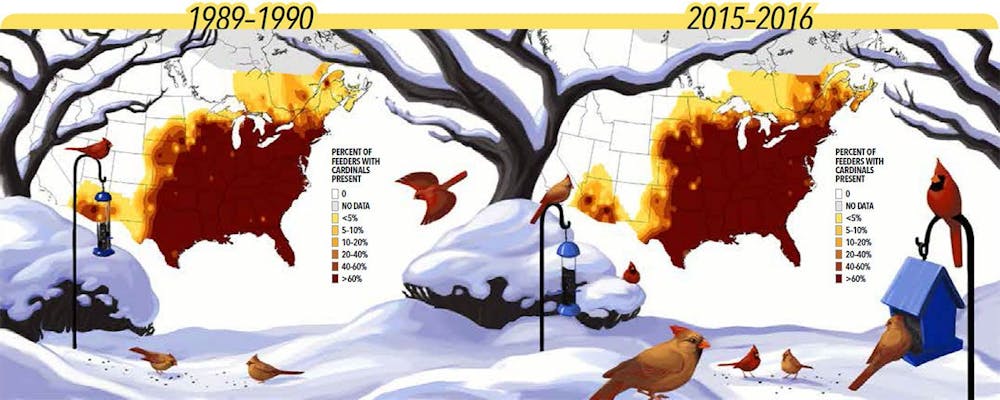
Some bird populations depend completely on feeding and would collapse over the winter without it. For example, Anna’s hummingbirds in British Columbia rely on heated feeders. Other species, such as hummingbirds in the southwest U.S., have become more locally abundant. Northern cardinals and American goldfinches have shifted and expanded their ranges northward with the availability of food.

Data from Project FeederWatch show Northern Cardinal populations expanding into the upper Midwest, northern New England, the Southwest and southeastern Canada. Virginia Greene/Cornell Lab of OrnithologyCC BY-ND

In one incredible instance, garden feeders seem to have played a role in establishing a new wintering population of migratory blackcaps in the United Kingdom. This group is now genetically distinct from the rest of the population, which migrates further south to Mediterranean wintering grounds.

Don’t feed the predators

Scientists still know little about how bird feeding affects transmission of pathogens and parasites among birds. It is not uncommon for birds at feeders to carry more pathogens than populations away from feeders. Some well-documented outbreaks in the U.S. and U.K. have shown that feeding birds can increase problems associated with disease – evidence that was collected through feeder watch citizen science projects.

Because we still have a poor understanding of pathogen transmission and prevalence in urban areas, it is extremely important to follow hygiene guidelines for feeding and be alert for new recommendations.

Feeding can also attract predators. Domestic cats kill an estimated 1.3 to 4 billion birds in the U.S. every year. Feeders should not be placed in settings where cats are present, and pet cats should be kept indoors.

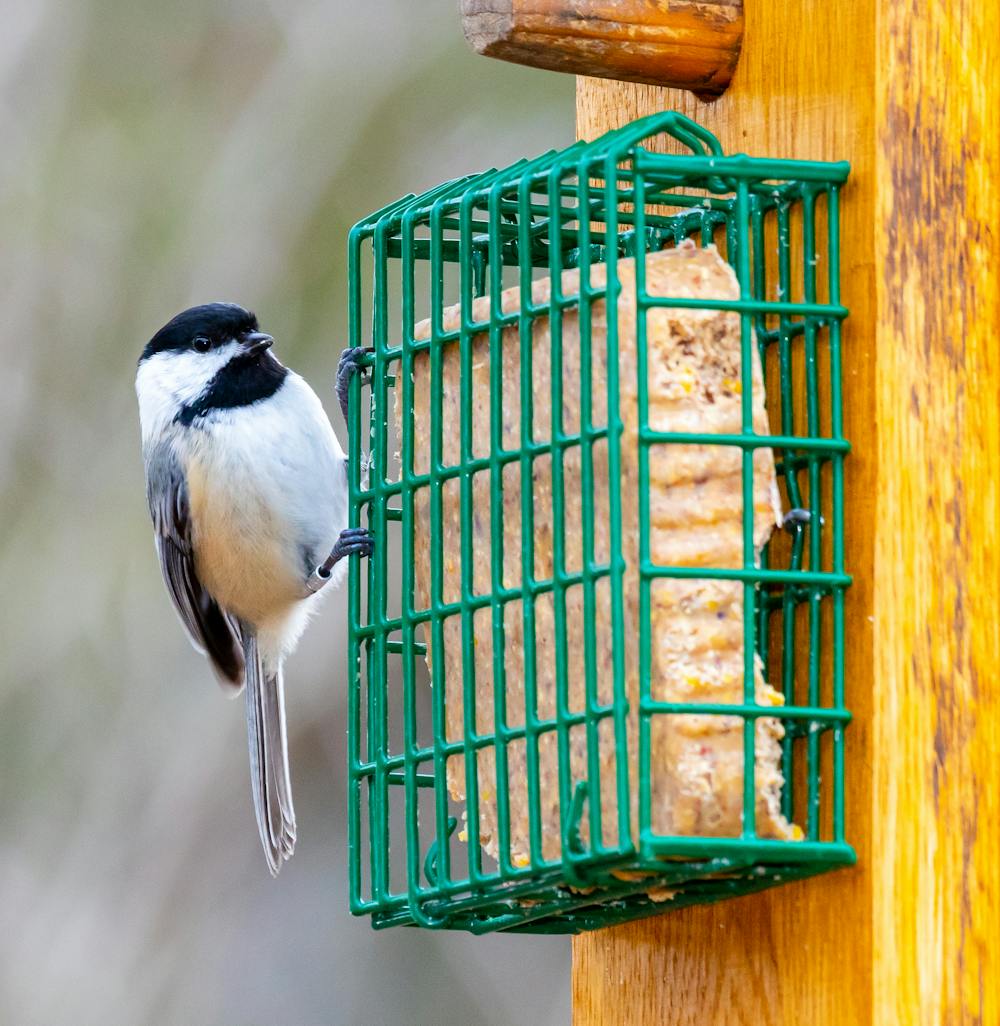
The band on this black-capped chickadee’s right leg assigns the bird a unique number. Scientists band birds to study their ranges, migration, life spans and other questions. The feeder holds suet, a high-energy food made from animal fat. Julian AveryCC BY-ND

Feeders can also support both native and introduced birds that outcompete local species. One study found that feeders attracted high numbers of crows, which prey on other birds’ chicks, with the result that less than 1% of nearby American robin nests fledged young. In New Zealand, bird feeding largely benefits seed-eating introduced species at the expense of native birds.

Clean feeders and diverse diets

The good news is that studies do not show birds becoming dependent on supplemental food. Once started, though, it is important to maintain a steady food supply during harsh weather.

Birds also need access to native plants, which provide them with habitat, food and insect prey that can both supplement diets and support species that don’t eat seeds at feeders. Diverse food resources can counteract some of the negative findings I’ve mentioned related to competition between species and impacts on bird diets.

Good maintenance, placement and cleaning can help minimize the likelihood of promoting pathogens at feeders. Initiatives like Project FeederWatch have recommendations about feeder design and practices to avoid. For example, platform feeders, where birds wade through the food, are associated with higher mortality, possibly through mixing of waste and food.

Treatments on this window at Shaver’s Creek Environmental Center prevent birds from thinking they can fly straight through the building and colliding with the glass. Julian AveryCC BY-ND

It’s also important to manage the area around feeders. Be sure to place feeders in ways that minimize the likelihood that birds will fly into windows. For instance, avoid providing a sight line through a house, which birds may perceive as a corridor, and break up window reflections with decals.

There are lots of great reasons to bring birds into your life. Evidence is growing that interacting with nature is good for our mental health and builds public support for conserving plants and wildlife. In my view, these benefits outweigh many of the potential negatives of bird feeding. And if you get involved in a citizen science project, you can help scientists track the health and behavior of your wild guests.

[You’re smart and curious about the world. So are The Conversation’s authors and editors. You can get our highlights each weekend.]

Support our coronavirus coverage

This new and deadly pathogen is confusing enough for medical and scientific experts to understand. For the public, it’s even more so. At The Conversation, my colleagues and I are dedicated to finding academic experts who can best sort through the confusion and explain developing coronavirus science. Your donation of $5, $50 or $500 will help us distribute factual, responsible analysis, free of charge, to readers everywhere.

TV preview: Dr Jane Goodall remains relentless in her pursuit of a better understanding of the natural world

Jane Goodall in Gombe

Picture: PA Photo/Jane Goodall Institute

Jane Goodall in Gombe Picture: PA Photo/Jane Goodall Institute

https://www.heraldscotland.com/arts_ents/18388662.tv-preview-dr-jane-goodall-remains-relentless-pursuit-better-understanding-natural-world/

Dr Jane Goodall talks to Gemma Dunn ahead of her latest National Geographic documentary, Jane Goodall: The Hope.

One of the most important figures in wildlife conservation, Dr Jane Goodall remains relentless in her pursuit of a better understanding of the natural world. And she’s hopeful for lasting change, she tells Gemma Dunn.

When Dr Jane Goodall arrived on the shores of Tanzania in 1960, she hadn’t envisaged where it may lead.

Aged just 26, the keen ethologist had set her sights on Gombe Stream National Park and it was there, with her mother in tow, that she began her field research on the little-known world of wild chimpanzees.

Equipped with little more than a notebook and binoculars, Dr Goodall – who immersed herself in their natural habitat – would observe the primates, coming to understand them not only as a species, but also as individuals with emotions and long-term bonds.

Among her findings was the discovery that chimpanzees make and use tools – a breakthrough that remains one of the greatest achievements of 20th-century scholarship.

Understandably, Dr Goodall, now 86, describes those days as ‘the best time of her life’.

“I knew those chimps; they were like part of my family,” she reasons. “I was joyful with them when they had a baby and I was grieving when one of them got sick or died. Being out in the forest, it was an amazing time.

“Then in 1986, realising that the chimps across Africa and the forest were in trouble, in captivity, I knew that my time had come to pay back.”

Her decision to embark on this journey was to be the marker of her groundbreaking legacy; a plea that’s seen her go on to transform environmentalism, non-human animal welfare and conservation; and redefine the relationship between humans and animals in ways that emanate around the world.

Yet today, Dr Goodall DBE, much like the majority of us, is at home.

It’s a forced break from her usual 300-plus days spent abroad each calendar year.

“I’m actually busier; it’s more exhausting than being on the road to be honest!” she whispers down the phone, having retreated back to her family home in Bournemouth during the Covid-19 pandemic.

“I hate the airports, the aeroplanes, but now I’m busy all day trying to get out on social media [Dr Goodall boasts in excess of 3.5 million followers across the board], trying to make up for not being able to travel!

“We’ve had pandemics before, but we’ve never reacted quite like this,” Dr Goodall follows.

“But having lived through the Second World War, through other pandemics and through nasty situations in Africa, I know that we will get through this.

“I guess I’ve learned from being battered,” she muses. “There’s a poem [Invictus, by William Ernest Henley] that says, ‘My head is bloody, but unbowed’. I like that.”

As for what we can learn from this crisis, “It’s our messing with nature, cutting down forests, hunting animals, eating them and selling them, that’s led to these viruses spreading from animals to people,” warns the primatologist-cum-anthropologist.

“I’m hoping what will emerge from this is a better understanding of our relationship with the natural world.”

One offering likely to inspire such thinking – and our reason for chatting today – is her latest National Geographic venture, Jane Goodall: The Hope.

“Well, isn’t it amazing that a film called The Hope should come out right now, when we desperately need hope!” she says with a chuckle.

“If we don’t have hope, we all give in, right? There’s no point in planning anything for the future, if you don’t have hope.”

The two-hour documentary special – released in conjunction with the 50th anniversary of Earth Day – charts Dr Goodall’s rise to worldwide icon, from her days in Gombe and the 1977 formation of the Jane Goodall Institute (JGI) to her Roots & Shoots youth empowerment programme, founded in 1991, and beyond.

“It’s in 24 countries – nearly 25,” she announces of JGI, which has a strong base in the UK, and was set up to inspire hope through action across the globe.

“And Roots & Shoots is in 65 countries and growing. It’s all over the world – kindergarten, university, rich children, poor children and children in different environments. It can grow on any soil, in any place, in any culture.

“What I’ve learned of young people,” she continues, “is once you give them the tools to understand the problems, you empower them to take action to solve them. Listen to their voices, don’t dictate to them. They’re so dedicated, determined and passionate and hopeful.

“We are going to change the world; we will slow down climate change.”

Achieving lasting change is in the approach, Dr Goodall – a mother and grandmother herself – has learned.

“You know, when I first began talking to the scientists in the medical research labs – these awful 5ft by 5ft cages – there were animal rights people who refused to speak to me,” she recalls.

“They said, ‘How can you sit down with those evil people? How can you talk with them?’ And I said, ‘But if you don’t talk, how on earth do you think you’re going to change them?’

“I think sometimes at the beginning of a movement, this kind of aggressive approach may be necessary to wake people up, but I couldn’t do that,” says Dr Goodall. “My way has always been to go and talk to the people quietly.

“The way I have of dealing with people, that’s why Roots & Shoots is all over China,” she adds. “We have one of the very few registered foreign NGOs, the Jane Goodall Institute China, endorsed by the government.

“Certain cultures, you must not make people lose face,” she counsels. “You want to change their heart.”

Through her travels, Dr Goodall has certainly done just that, unwavering still in her relentless commitment and determination to spread a message of hope.

It’s brought her a plethora of fans from every corner of the globe, she admits.

“I have to say, my email is overwhelmed with everybody wanting me to stay alive, [asking] ‘Am I taking care?'” she shares. “It’s heartwarming, because they all promise – grown-ups and children – that they’re going to do their bit.

“Those who’ve lost hope say, ‘You’ve given me hope, I promise I’ll do my bit’.”

It’s what keeps her on the road.

“I can’t slow down, can I? Obviously I’ll never get done all that needs to be done. But I’ll just go on, struggling till the end,” she realises.

“I want to grow Roots & Shoots in every country; I was going to go to India. I hope I still can, but who knows? There are a lot of places I want to try and make a difference in – that’s what I want to do now.

“I hope this film inspires people,” she finishes. “I hope it gives them hope – it’s title should, if nothing else!”

Jane Goodall: The Hope, National Geographic and National Geographic WILD on Wednesday, 6pm.

Shops across Scotland are closing. Newspaper sales are falling. But we’ve chosen to keep our coverage of the coronavirus crisis free because it’s so important for the people of Scotland to stay informed during this difficult time.

However, producing The Herald’s unrivalled analysis, insight and opinion on a daily basis still costs money, and we need your support to sustain our trusted, quality journalism.

To help us get through this, we’re asking readers to take a digital subscription to The Herald. You can sign up now for just £2 for two months.

If you choose to sign up, we’ll offer a faster loading, advert-light experience – and deliver a digital version of the print product to your device every day.

Click here to help The Herald:

https://www.heraldscotland.com/subscribe/

World Health Organization says nations should end wildlife trade

Calendar Icon April 14, 2020

The World Health Organization is calling on nations to end wildlife markets because of the high risk they pose for the spread of pathogens like the coronavirus that can jump from animals to humans.

This week, David Nabarro, a medical doctor and the special envoy on COVID-19 and special representative of the United Nations secretary general for food security and nutrition, told the BBC that 75 percent of emerging infections come from the animal kingdom.

“This is dangerous. We have similar concerns about bushmeat. Really, be very, very careful when you’re basically eating wild animal meat or killing wild animals. All these things are higher risk,” he said.

Nabarro’s statements on behalf of the WHO, which has 192 member countries, including China, Indonesia, Thailand, Malaysia and Vietnam—where many of these markets exist—came this week even as media reports circulated about wildlife markets beginning to reopen in China. The WHO does not have the authority to require governments to close down such markets, but, Nabarro said, “what we have to do is offer advice and guidance, and there’s very clear advice from the Food and Agriculture Organization and WHO that said there are real dangers in these kinds of environments.”

In recent weeks, Elizabeth Maruma Mrema, the United Nations’ acting head of biodiversity, and Dr. Anthony Fauci, director of the U.S. National Institute of Allergy and Infectious Diseases, have made similar calls to end live wildlife markets around the globe. Fauci has called wildlife markets “a superhighway” for transmission of disease.

The Humane Society family has been urging the WHO to take a stand against wildlife markets and we are pleased to see the global health body do so. Earlier this month, Humane Society International along with 240 organizations around the globe, sent a letter to the WHO urging it to recommend a permanent ban on wildlife markets and the use of wildlife in traditional medicine to governments worldwide.

The Humane Society Legislative Fund lobbied support for a letter co-signed by nearly 70 U.S. Senators and Representatives to the WHO, the Organization for Animal Health and the Food and Agriculture Organization of the United Nations, urging them to take aggressive action to shut down live wildlife markets and ban the international trade in wildlife that is not intended for conservation purposes.

Earlier this month, HSI released a white paper detailing scientific evidence of the link between COVID-19 and the wildlife trade that has been sent to 188 governments worldwide. HSI also sent an open letter to governments around the world asking them to ban wildlife trade (including wildlife markets), transport and consumption.

While we have expanded our efforts to move lawmakers and global organizations to take action because of the urgency created by the coronavirus pandemic, this is not a new fight for us. We have been calling for the closure of wildlife markets for many years now not only due to animal welfare concerns but because these markets often trade in endangered and at-risk animals or exploit captive bred animals.

Wildlife markets are filthy, crowded places where sick, injured and scared animals are displayed in small cages. Once purchased, they are often slaughtered on-site, creating a perfect breeding ground for transmission of disease from animals to humans. Moreover, many of the animals traded and killed at the markets are threatened with extinction. In fact, global wildlife experts say trade in live wild animals is one of the biggest threats to the survival of some species.

Health authorities have long cautioned the world about the risks these markets pose to human health: wildlife markets have been implicated in the spread of several disease outbreaks in recent years, including Severe Acute Respiratory Syndrome (SARS), bird flu, Ebola and Middle Eastern Respiratory Syndrome (MERS). The novel coronavirus pandemic was traced to a wildlife market in Wuhan, China.

Now, we hope to see decisive permanent action from key nations to end the wildlife trade and its connections to pandemic risk. China in February announced a ban on wildlife consumption as food, but it has not yet codified that ban into law. This week, the Wall Street Journal reported that Chinese authorities are offering tax breaks to the multibillion-dollar animal products industry for the export of wild animals.

Around the world, the trade in wildlife continues. The United States, where hundreds of thousands of wild animals are imported and commercially traded each year, is a WHO member state, and we urge the federal government here, as well as state governments, to crack down on the wildlife trade to minimize the likelihood of another pandemic. This trade causes tremendous suffering to millions of animals each year and now, with the novel coronavirus sickening nearly two million people worldwide and killing more than 120,000, the writing is on the wall. The wildlife trade is rife with dangers, and the sooner we put an end to it, the safer the world will be.

The post World Health Organization says nations should end wildlife trade appeared first on A Humane World.

Related Stories

Our Endangered Species Need This Law to Survive.

By latest estimates, over 1 million species are in danger of disappearing globally. Much of this is due to biodiversity’s arch-enemy, climate change. But there is another culprit that is also picking off our earth’s beautiful animal species one by one – the lucrative and illegal wildlife trafficking trade. Many of these animals end up part of the tourism industry like the orcas and dolphins of SeaWorld to which Expedia still sells tickets. Other animals, on the other hand, are not so lucky.

Animals like lions, tigers, chimpanzees, gorillas, and many more are the targets of organized crime syndicates that trade in their flesh and bone, killing them in unsustainable numbers and selling them for souvenirs, trinkets, and “medicine.”

Passing this bill could help endangered animals. Sign to ask the U.S. Congress to do so.

It is paramount that governments like the United States create strong legislation that works against these organizations and the destruction they cause. One such remedy could be the Rescuing Animals With Rewards (RAWR) Act. The RAWR Act was introduced in May of 2019 and would empower the United States State Department to offer financial rewards in exchange for information that leads to the disruption of the multi-billion dollar wildlife trafficking trade. Since the bill’s introduction by U.S. Senators Susan Collins and Jeff Merkley, it has lingered in the Senate chamber. Meanwhile, the House acted swiftly and passed it in July.

Unfortunately, that wasn’t good enough to make it law. Now, in order to make it a reality, both the Senate and House will have to reintroduce the bill for the 2020 session. Last year’s delay in the Senate is worrying. This is a bill that could save millions of animal lives and help stem the global extinction crisis but it was allowed to fizzle out. Will there be movement this year?

It is more important than ever to strengthen our nation’s laws against trafficking and that’s why the RAWR Act is so crucial.

Tell Congress you support this important bill and that it must be reintroduced and passed this year without delay. Please sign the petition and tell them to do so today.