Guatemala’s northern Peten region anchors the largest tropical forest north of the Amazon but as more people settle in the area, poaching and other threats to its biodiversity are rising fast.
For traffickers engaging in some of the world’s biggest black-market trades, Facebook Inc. is the enabler. The company serves as a vehicle for thousands of traffickers who sell illegal goods using Facebook, WhatsApp, and Instagram to market their goods, connect with and negotiate sales with buyers, and even receive payments.
Facebook, and other social media firms, mainly rely on algorithms and artificial intelligence to moderate harmful content. But investigations by the Alliance to Counter Crime Online (ACCO) show time and again how these algorithms actually connect traffickers faster than moderators can remove them. They suggest friends and recommend groups, putting illicit actors in touch with one another, continually expanding networks of users engaging in similar illegal activities.
When it comes to crime on social media, the enabler always walks free. It’s time for regulators to take steps to hold online platforms accountable for facilitating the illegal trafficking of wildlife.
This post is a commentary. The views expressed are those of the author, not necessarily Mongabay.
On a hot, muggy day in October, an exotic pet trapper in an Indonesian forest snatched a young Javan gibbon from its mother, stuffed the animal in a sack, and took to his heels. A day later, the gibbon, a protected species, was offered for sale on Facebook. A scroll down through the trafficker’s timeline reveals more gibbons, birds, and other endangered species on offer.
The sale of gibbons and endangered species is illegal under Indonesian law. In March of this year, traffickers in Indonesia were arrested and tried for the illegal sale of Komodo dragons on Facebook.
The same would not be true for another accomplice in this crime sequence: Facebook. When it comes to crime on social media, the enabler always walks free. It’s time for regulators to take steps to hold online platforms accountable for facilitating the illegal trafficking of wildlife.
The Javan gibbon offered for sale. The word ‘rekber’ in this sale ad refers to a system of payment that commonly operates amongst wildlife traffickers in Indonesia. Image courtesy of Daniel Stiles.
For traffickers engaging in some of the world’s biggest black-market trades, Facebook Inc. is the enabler. The company serves as a vehicle for thousands of traffickers who sell illegal goods using Facebook, WhatsApp, and Instagram to market their goods, connect with and negotiate sales with buyers, and even receive payments.
More than two decades ago, the U.S. Congress passed the Communications Decency Act (CDA), which included Section 230. The bill was meant to mitigate the risk for firms of hosting third-party content on Internet platforms. Senator Ron Wyden, one of the bill’s sponsors, said that CDA 230 was envisioned to provide a “sword and a shield.” The “sword” was meant to enable technology firms to self-police content on their platforms as they saw fit. The shield provided those platforms with sweeping immunity from liability for content posted by third-parties. As it turned out, the sword was made of rubber while the shield was Teflon.
Tech firms broadly — and Facebook in particular — failed to hold up their end of the bargain, however. Huge cyberspace marketplaces exist where buyers and sellers trade illegal products ranging from drugs, wildlife, antiquities, and human remains to human beings themselves. Facebook’s closed and secret groups provide insulated environments for transnational criminals to connect, advertise, and move material.
Facebook has a set of policies banning illegal activity, laid out in its Terms of Service and Community Standards. But these are only as effective as their enforcement, and the company’s content moderation leaves much to be desired.
Wildlife for sale on a Facebook page that has since been inactivated. Image courtesy of Daniel Stiles.
Facebook and other social media firms mainly rely on algorithms and artificial intelligence to moderate harmful content. But investigations by the Alliance to Counter Crime Online (ACCO), where I am a contributing member, show time and again how these algorithms actually connect traffickers faster than moderators can remove their accounts. They suggest friends and recommend groups, putting illicit actors in touch with one another, continually expanding networks of users engaging in similar illegal activities.
In response to increasing pressure from wildlife organizations, Facebook and Instagram banned the sale of all animals in 2017. But a cursory search on either platform will turn up countless groups and individuals still advertising domestic and exotic pets, even zoo animals, for sale. Ivory and rhino horn are sold, using code words, in closed groups. The same is true on other online platforms such as Alibaba, Taobao (owned by Alibaba), Google, Baidu, and more. Along with Facebook and Instagram, these platforms are all founding members of the Global Coalition to End Wildlife Trafficking Online. Launched in May 2018, the coalition’s stated goal is to reduce online wildlife trafficking by 80 percent by 2020. The technology companies involved in the Coalition are very far from achieving that goal.
The Convention on International Trade in Endangered Species of Wild Fauna and Flora (CITES) has 183 Parties, countries that represent a majority of the world’s nations. The organization, grappling with how to address wildlife cybercrime, recently introduced a revised resolution that included key recommendations to deal with these online issues. The amended resolution was accepted, making clear that CITES Parties recognize that it is up to them and not to the online platforms to develop measures to control the illegal trade in wildlife.
A crucial revision noted that the resolution recommends that Parties “identify key contacts at online technology and data companies that can facilitate the provision of information upon request from Parties in support of investigations.”
In November 2016, one such key contact emailed me after seeing an article in the New York Times regarding my work identifying the role of Facebook Inc.’s platforms in the rampant illicit ape trade. Max Slackman, Facebook’s animals policy manager, wrote to me, in part: “We would like to learn more about your investigation and if there are additional learnings you can share …. In the meantime, please send us over any Facebook and Instagram accounts, Pages, or groups that offer to sell endangered animals. We will investigate immediately.”
An ad on a Chinese social media site selling ivory tusks. Image courtesy of Daniel Stiles.
I sent him information and asked if there was any way that he or Facebook could help in the investigation of the dealers and assist in arrests and prosecutions. As ACCO researchers have pointed out time and again, closing accounts doesn’t stop the trafficking — traffickers simply set up new accounts with tighter privacy. Not only that, but Facebook’s practice of deleting accounts, rather than archiving and disabling them, erases years of valuable evidence that could actually help prosecute these criminals and impact the illicit trade.
Slackman’s response was one that we at ACCO have come to find typical of a company that is skirting responsibility for crime on its platforms: “We do work with law enforcement through the warrant process and… We try to make the process as easy as possible for law enforcement to produce legally sufficient warrants, but due to our privacy policy and requirements we are not able to share information about accounts with third parties.”
While hiding behind the company’s “privacy policy,” Slackman essentially confirmed that Facebook does not take proactive measures to counter crime. His response framed the company’s internal policies as a more powerful factor in their actions than the presence of activity that violates national and international laws.
An ad on a Chinese social media site selling a rhino horn. Image courtesy of Daniel Stiles.
Individuals selling illegal commodities online can be prosecuted, but there are not yet any legal pathways in the U.S. that formalize and regulate cooperation between online service providers and law enforcement, mainly due to privacy policies and regulations.
The crux of the problem in getting effective cooperation from the titans of Silicon Valley to push illegal and dangerous activities offline is the uncomfortable fact that such cooperation conflicts with their business model. The online service providers make their money from user engagement and ‘clicks,’ whether it be to purchase a commodity, to read an advertisement, or, in the case of online black markets, do business with a trafficker. Any actions that service providers take to reduce user engagement reduces their bottom line.
Big tech has made clear they aren’t interested in wielding their sword. It’s up to governments to enact legislation that compels social media firms to modify their algorithms to detect illegal activity instead of facilitating it. Facebook, Google, and other technology firms are sophisticated and rake in billions in annual revenue. They’re more than capable of combating the crime on their platforms, but there’s nothing in the law that requires them to do so. That needs to change. The U.S. Congress has started the discussion. Other countries where online platforms are based that engage in illegal wildlife trade, particularly China, need to step up their enforcement actions as well.
Legislatures will have to achieve the admittedly difficult task of assigning responsibility to online service providers to decide how to balance free speech, legitimate commerce, and user privacy against dangerous communications, illegal trade, and reporting user abuse to the appropriate national and international authorities. The current service provider response of simply removing posts or closing accounts does not solve the problem.
Daniel Stiles is currently an independent wildlife trade investigator. He has conducted numerous investigations into illegal ivory, rhino horn, pangolin, great ape and big cat trade, funded by various United Nations agencies, IUCN, TRAFFIC, and many wildlife conservation NGOs. He has lived in Kenya since 1977.
FEEDBACK: Use this form to send a message to the author of this post. If you want to post a public comment, you can do that at the bottom of the page.
The below comes from an acquaintance on Facebook, and is shared here because the info is valuable and we gotta support our prairie dog friends:
[a prairie dog was caught in a window well of one of these good humans, and got out after being offered a “ladder”]
Thank you so much for being such a compassionate soul and caring about this little dude…
As a prairie dog advocate, I just don’t understand the irrational hatred many people have for this animal. As a declining keystone species, prairie dogs are crucial for the health of our prairie ecosystem and provide food for many animals (hawks, owls, coyotes, badgers, foxes, eagles etc) and shelter (mice, amphibians, snakes, insects). Without the prairie dogs, black-footed ferrets and burrowing owls would go extinct. For millions of years, prairie dogs have aerated, churned and fertilized the soils and made this land what it is.
These humble little creatures really deserve so much respect, but people villainize them and humans continue to do atrocious things to prairie dogs and all the other the animals that are in the burrows (bulldozing them alive, poisoning them with cheap and cruel poisons, using them for target practice).
PORTLAND, Maine (FOX 13) – The tradition of releasing balloons at weddings, birthdays and memorials may soon get deflated by lawmakers in more than half a dozen states.
Critics say the helium-filled balloons pollute the environment, and threaten birds and other wildlife when they fall to earth. In Florida, if ten or more balloons are released at once, it could lead to a $250 fine.
“People don’t really realize that it’s littering. That’s why we want to bring attention to this,” said state Rep. Lydia Blume, who’s supporting a balloon bill in Maine. “It’s a common sense thing.”
Earlier last week, a baby dolphin was euthanized. Biologists said the found two plastic bags and a shredded balloon during a necropsy.
“This finding highlights the need to reduce single use plastic and to not release balloons into the environment,” explained the Florida Fish and Wildlife Conservation Commission in a Facebook post.
Nationwide, there’s a growing awareness of the problem, and it has energized legislation in state governments. Bills to limit the intentional release of large numbers of balloons are being aired in legislatures in Arizona, Connecticut, Massachusetts, New Hampshire, New Jersey, New York and Rhode Island, in addition to Maine, said Jennifer Schultz of the National Conference of State Legislatures.
Texas is also considering a study on windblown and waterborne litter that would include helium balloons, she said. A similar proposal was terminated while in committee in the Kentucky legislature last month.
These states would join California, Connecticut, Florida, Tennessee and Virginia – all of which already have laws that ban or restrict launches. California’s law applies only to foil balloons, while Connecticut is currently considering a stricter law, said Danielle Vosburgh, a Florida environmental activist who helped launch a nonprofit organization, Balloons Blow.
Maine’s proposal to ban mass balloon releases took flight at a town meeting last month in Unity. Penny Sampson, chairwoman of the Select Board, said she had witnessed a couple releases in person. Once was in 2000 when triplet boys died in a fire in Unity. Another time, balloons were released at the Wiscasset Raceway to memorialize someone who died.
“To pollute the environment and cause marine and wildlife issues is really not a good way to memorialize someone. There are plenty of other ways to do it,” Sampson said.
Critics are having some recent success in battling the feel-good tradition of releasing balloons. Clemson University stopped releasing balloons at its football games. The Indianapolis 500 and the Nebraska Cornhuskers have faced pressure to do the same.
And a growing number of communities are tackling the issue, too.
The New Jersey-based Balloon Council, which represents manufacturers, wholesalers, distributors and retailers, used to be opposed to bans on balloon releases because of the impact on small businesses. These days, the council still prefers education over legislation, but it is not opposing any of the legislative efforts to stop balloon releases.
“The balloon council feels that all balloons should be deflated and properly disposed of,” said spokeswoman Lorna O’Hara. “There is a heightened attention across the globe. We’re rising to what’s happening in the United States and globally.”
Some folks are getting the message – with or without legislative intervention.
At Fort Leavenworth, Kansas, officials at the Army installation quickly decreed there will be no more balloon releases after children released balloons on April 1 to mark the “month of the military child.” The balloon launch caused an uproar in the community.
“We’ve been beaten up on social media,” said base spokesman Jeffrey Wingo.
But the outrage sparked a discussion about environmental stewardship. “Is this the right thing to do? Is this environmentally sound, or not?” he said. “It is not.”
A recent report by the World Wildlife Fund for Nature showed that between 1970 and 2014 the vertebrate population declined by an average of 60 percent. While this was mostly due to habitat loss, the illegal trade in wildlife—whether rhino horn, tiger bone, or animals captured for the exotic pet market—poses a growing threat to many species’ survival. But as National Geographic contributor Rachel Love Nuwer writes in her new book Poached: Inside the Dark World of Wildlife Trafficking, many brave individuals and organizations are battling to expose the criminals—and save the animals.
Speaking from her apartment in Brooklyn, New York, Nuwer explained how superstitious beliefs in China and Southeast Asia are a driving force of the trade; how wildlife trafficking needs to be tackled by law enforcement, not conservationists; and how she disguised herself as a prostitute to go undercover at a tiger farm in Laos.
The global wildlife trafficking trade is worth an estimated $7 to $23 billion. Who runs it? Where are the hotspots? Who profits? What are the most affected animals?
COURTESY HACHETTE BOOK GROUP COMPANY
The most obviously affected animals are the big, charismatic megafauna, like rhinos, elephants, tigers, and even bears. In reality, though, we’re talking about millions of individual animals of thousands of species. It spans poaching for jewelry, pets, traditional medicines, trophies, or wild meat, which some cultures consider a luxury item. This is a global trade. However, much of the demand for illegal wildlife products is in Asia, especially in China and Vietnam. That’s predominantly because wealth in those places has been increasing over the past decades, so people who previously could not afford things like ivory jewelry or rhino horn carvings now can do so. There’s more demand than there is supply.
There’s a misconception, especially in the media, that there are these Pablo Escobar-like kingpins controlling everything. While there is some evidence that a few people like that do exist, much of this illegal trade is made up of disorganized, opportunistic criminals. The guy in Zimbabwe killing an elephant and running its tusks to the nearby village won’t know the guy in the town, who then sells those tusks to the corrupt airport official who, in turn, doesn’t know who exactly the tusks are going to in Malaysia or Hong Kong.
That’s one of the reasons that it’s so hard to tackle this thing. It’s not like you can just knock out a couple of big guys at the top and you’ve solved it. Even when you do make arrests of so-called kingpins, they’re oftentimes readily replaced by their colleagues.
Viral bear video shows dark side of filming animals with drones
Most of us could draw an elephant or a rhino. But fewer could say what a pangolin looks like. Introduce us to this shy animal and explain why it is so highly prized that it now faces possible extinction.
Pangolins are definitely my new favorite animal since writing this book. They are better known here in the U.S. and the U.K. as scaly anteaters, which is funny because they’re not that closely related to anteaters. They’re more closely related to cats and dogs. They look like walking pinecones with feet, or tiny, odd-looking dragons.
There are four species of pangolins in Asia and four in Africa. Unfortunately, because they look so strange, people tend to attribute magical or medicinal properties to them. Traditional societies all over the world have different uses for pangolins, especially their scales. The biggest source of demand is traditional Chinese medicine, a version of which is also practiced in Vietnam. Their scales are boiled, dried, then ground up into a powder and served to women who are having trouble lactating, for example. In Vietnam their meat is also considered a delicacy. You call up a wild meat restaurant in advance and then it will either be prepared for you, or its throat will be slit on the spot.
Tigers worldwide are also facing particularly vexing challenges. Give us a picture of the illegal trade and the ancient superstitions, often driven by male sexual insecurity, that fuel it. Is there enough being done to combat these primitive beliefs?
Definitely not! There are an estimated 4,000 tigers left in the wild today. There’s many more than that in captivity. When I say captivity, I mean in people’s backyards in the U.S. and elsewhere, which is a completely different issue—and then on so-called tiger farms in China and Southeast Asia. The tigers are bred, then slaughtered for their bones, meat, fur, teeth, and claws. Particularly sought after are the penises and bones, which are soaked in an awful-tasting rice wine and served, usually to men. They’re supposed to imbue men with the prowess and sexual energy of the tiger.
The Chinese have been really good about making a show of shutting down the ivory trade recently, but other than that there’s nothing going on to combat the illegal wildlife trade. President Xi has been cutting back on corruption, which means closing wild meat restaurants. But there’s no re-education campaign to discourage tiger use. In fact, investigations by conservation groups show that government officials are some of the most common purchasers of tiger bone wine in China and other Asian countries. They have no intention of closing this down.
0:24
|
4:03
WHY ELEPHANTS MAY GO EXTINCT IN YOUR LIFETIMENearly a hundred elephants are slaughtered each day in the wild, most for their ivory tusks. This killing of elephants by humans could wipe out the animals in the wild within a generation.
You visited a tiger farm in the Golden Triangle Economic Zone, in Laos, disguised as a prostitute. Tell us about that story and whether farms could be a solution to tiger trafficking.
[Laughs] I was quite nervous about visiting this place. It’s supposed to be a hotbed of crime, drugs, prostitution and yes, illegal wildlife trade. I had spoken with a woman named Debbie Banks, an excellent wildlife investigator working at the Environmental Investigation Agency in London, and she told me the only people who go there who are not Chinese, Vietnamese, or Thai are Russian or Ukrainian prostitutes, or else backpackers. I thought, okay, the former sounds a little bit more fun and I own some scanty clothes anyway, so I’ll go with that. I brought a friend and my husband from New York because I was nervous about going by myself. We wore ridiculous clothes and nobody seemed to notice or care about us, which was great. We could browse through these shops and look at huge quantities of ivory, rhino horn, and tiger products openly for sale, and we dropped by the Kings Romans casino where ivory and rhino horn were also openly displayed. We visited the tiger farm on the premises, where I was told clients can essentially go to shop for what animal they want to have for dinner at one of the on-site restaurants. This was an especially difficult experience for me; there were tigers pacing in small cages yowling mournfully, and a number of bears that were clearly suffering from cage-induced mania.
There’s definitely a constituency of people, especially in China and South Asian countries, who argue for what is called “sustainable use of wildlife products,” whether that’s selling ivory or raising tigers and rhinos for their body parts. But tiger farms have been closely linked with laundering of tigers illegally caught in the wild, then passed off as products. So tiger farms pose a critical threat to wild tigers. That’s not even to touch on the humane animal advocacy side of things. These animals live miserable lives.
It is estimated that 144,000 elephants were killed between 2007 and 2014 for their ivory, a drop in the overall population of 30 percent in just seven years. You attended an ivory burn in Kenya. Set the scene for us and explain the thinking behind this idea. Does it lower trafficking?
The first huge ivory burn took place in 1989. It was organized in Kenya by the paleontologist Richard Leaky. His idea was to create a spectacle that the world could not ignore. And it worked. A few months later it led to nations voting to give elephants the highest degree of international protection, which effectively banned commercial trade of ivory, which was an amazing accomplishment!
Whether the burns lower trafficking is not proven. But it’s not the primary goal of ivory burns; it’s an awareness-raising method to spread the word about the illegal wildlife trade. Another important purpose is to simply get the ivory out of circulation because a lot of the storehouses, particularly in developing countries, are notorious for leaking ivory and rhino horn out. You have 50 tons of ivory that you seize from some criminal and then a few weeks or months later that 50 tons has been reduced to 25, because of corruption. The big message is that ivory should never be traded. It has no purpose at all except for elephant tusks on elephants.
One of the many inspiring activists you met is a British woman named Jill Robinson. Tell us about her and the appalling trade in bear bile.
Jill is amazing. She was living in Hong Kong doing work on cats and dogs, when someone mentioned to her a bear farm for this bear bile trade, and her interest was piqued. She took a tour to a bear farm in mainland China and left the tour group at one point because she heard noises in the basement. She crept down these stairs to a dark room where she found cages and cages of bears in horrific condition, with open wounds. Jill had this moment of connection and wound up dedicating her life to ending bear farming for bile. Her organization, Animals Asia, has saved hundreds of bears from these farms and brought them to rehabilitation sites.
The thing about bear bile is that it’s one of the few traditional Chinese medicines that is efficacious. However, the active component, ursodeoxycholic acid, can be synthesized in a lab so you do not need bears to be put in these awful situations or kept in captivity. The problem is, users in China and Vietnam want this to be a wild, free animal, so they think they are absorbing the essence of this pure, strong thing.
At a conference in London earlier this month, it was suggested that the best way to curb wildlife trafficking, like the drugs trade, was to follow the money not, as is usual, the animal. What’s your view on this? Is enough being done to intercept these illicit funds?
That’s a great point! Definitely not enough is being done because virtually nothing is being done in terms of investigating the financial crime side of things. The problem with the illegal wildlife trade is that it’s so often seen as something in the purview of conservationists, biologists or ecologists. But that’s like giving botanists the job of tackling the cocaine and heroin trade. We need to get criminal experts involved, including money-laundering experts, because a lot of times the punishments that go with breaking wildlife laws are really weak. It’s a $100 fine for trafficking a rhino horn that might be worth $30,000! Money laundering laws would be much stronger. So I think crime is where we should be focusing. We need criminal experts, not wildlife experts, and we need to treat this like any other type of crime, not something special just because it involves wildlife.
There are bright spots in this story. Tell us about the Zakouma National Park in Chad, and what you think the future holds for trafficked animals.
The Zakouma National Park in Chad had an elephant population of around 4,000, one of the biggest herds in Central Africa, but in less than a decade that population fell to around 450. It was being absolutely hammered by Janjaweed poachers riding down from Sudan for this killing spree and taking the ivory back to sell. Everybody had resigned themselves to saying goodbye to those elephants. However, a spectacular non-profit organization called African Parks negotiated with the President of Chad to take over the park. Thanks to their efforts, poaching is virtually at zero, and the elephant population is once again growing. They’re even having new babies, which is huge!
There are other people who are giving it their all to save their countries’ wildlife. Thai Van Nguyen, the founder of Save Vietnam’s Wildlife, is a great example. He’s Vietnamese, his organization is entirely run by Vietnamese and he is the only person in Vietnam equipped to rehabilitate pangolins rescued from the illegal wildlife trade. Thai brings them back to his facility, rehabilitates them, and when they’re strong enough he and his colleagues take the pangolins to secret locations and release them.
People like Thai are buying time for the rest of us as we get our acts together and decide this is something we want to stop. And that animals are worth saving.
As Americans enjoy this long weekend of remembrance, many will find their way to a national or state park hoping to see wildlife in their natural habitats. Last year over 300 million people visited the national parks alone, the highest number on record. Tourists photographed bears and bobcats, bison and moose, foxes, wolves, prairie dogs, coyotes, eagles, owls, and more.
What most visitors didn’t see is the work that goes on behind the scenes to make sure that our wildlife is protected, and species on the brink of extinction don’t disappear. Project Coyote is just one of many organizations committed to protecting our public lands and public trust, ensuring that the wild animals visitors hope to see receive the protections they deserve, as outlined in the Endangered Species Act (ESA) decades ago.
One of the fundamental requirements of the ESA is that decisions about protecting wildlife are based on the best available science. This sounds obvious, but in order for science to be credible, it must be independent, which means free of political or commercial interests.
Unfortunately, respect for independent science within wildlife management ranks is as endangered as the animals we try to protect. One of many examples includes the Department of Interior’s alarming decision in 2014 to declare gray wolves recovered nationwide because the Fish & Wildlife Service (FWS) claimed the wolves occupied most of the remaining suitable habitat in the U.S. In truth, nearly two-dozen states in the historic range were, and still are, vacant. The FWS declared them unsuitable on grounds that human tolerance for wolves was low there and that wolves would be poached by citizens or killed by government agents seeking to protect livestock interests. This is the same year we witnessed wolves returning to their native home of California where they had not been seen since 1924. If FWS policy had been implemented, California might not have seen this important and historic return.
According to the ESA, our federal wildlife managers are supposed to address threats that may push a species to extinction, not circumvent the threat by redefining “suitable habitat.” It is required to combat threats and recover listed species, as the ESA states, “across all or a significant portion of range.” (ESA 16 USC § 1531)
Instead, FWS pointed to a non-peer-reviewed analysis suggesting the northeastern U.S. was not gray wolf habitat because a new species had lived there. The criticism that followed eventually led to an independent scientific review process that “unanimously decided that the FWS’s earlier decisions were not well supported by the available science.”
Project Coyote Science Advisory Board members Adrian Treves, Jeremy Bruskotter, John Vucetich, and Michael Nelson co-authored this study refuting these assumptions, and there are more examples of FWS ignoring science, including the department’s recent delisting decisions about wolverines and grizzlies that not only omitted independent scientific review, but rejected the recommendations of agency biologists.
If we look at the history of decisions about carnivores under the ESA, we see similar disregard for the best available science. Since 2005, the FWS has lost nearly a dozen federal court cases trying to remove protections for wolves, grizzly bears, and wolverines. In each case, the courts sided with plaintiff’s claims that the Department of the Interior misinterpreted the ESA or did not follow the ESA mandate to base its decisions on the best scientific data available.
Which is why the recent Endangered Species Day was the perfect occasion for me to join with members of Project Coyote’s Science Advisory Board in collaboration with the Union of Concerned Scientists, to compel Interior Secretary Jewell and Commerce Secretary Pritzker to enforce the ESA and serve the public trust by using the best available science. We submitted a petition with the signatures of nearly 1,000 US scientists and scholars, and our request was simple: respect the law and put the independent scientific community back in charge of determining the best available science.
All Americans can be proud of the cooperative vision that produced the Endangered Species Act in 1973, and protects the abundance of wildlife and beautiful landscapes that our federal agencies are charged to steward. Let’s not be the generation that allowed standards to slip so far that, for some species, it’s beyond recovery. When independent science is threatened, so are our keystone species, and the healthy ecosystems we all depend on to survive and thrive.
Kalahandi: A man was killed while another was injured after being electrocuted after coming in contact with high voltage wire laid by poachers as trap for wild animals at Thuamal Rampur block in Bhawanipatna.
The deceased has been identified as Kabi Nayak.
According to reports, both Kabi and his son had gone to nearby field and while returning both of them came in contact with the electric wire yesterday.
Following the incident, both Kabi and his son were immediately rushed to Thuamul Rampur hospital by local villagers. Later, Kabi died at the hospital while the condition of his son is still critical.
One of many videos of the flooding in Texas resulting from Hurricane Harvey shows a herd of deer looking disoriented as they move through the water. As I was watching that, in the background, the radio was reporting on Hurricane Irma. The location of Irma’s landfall is still a guessing game, with such places as Puerto Rico, Cuba and other islands, southern Florida, and anywhere up the east coast, clearly at risk. Friends of mine in British Columbia were being warned to be ready to evacuate at short notice due to raging wildfires, the largest such fire in its history.
It all paled in compared to the news from Sierra Leone, where floods and mudslides killed over a thousand people, the damage exacerbated by deforestation and lack of infrastructure. In southern Asia, the death toll from flooding and other ecological disasters was over 12,000 people!
It’s hard for many to muster concern for animals amid such staggering amounts of human misery, but there was that photo of a dead tiger killed by floods in India, and of an Indian rhinoceros swimming in floodwaters at the Pobitora Wildlife Sanctuary in Assam, on August 17. I’ve been asked several times these last few weeks about how wildlife copes with such disasters. I believe the short answer is that plants and animals evolve within their environments, independent of the kind of technological infrastructure humans depend upon. Individual animals will be killed, but the populations, and the species to which they belong, usually will survive… until now.
Now, so many other factors are at work, including the increasing incidence of such events, and warnings by scientists about climate change. In British Columbia, there is an effort to put a moratorium on at least bear hunting, as much of the range of the brown bear has gone up in flames. As I write, Hurricane Irma threatens the Florida Keys, home of the unique, pint-sized Key deer, which has already had its population severely reduced by collisions with cars. In the thousands of years those animals lived in the Keys they must have endured many very powerful storms, but not while also facing motor traffic and development.
In Cuba, there are 28 bird species found nowhere else in the world. Some, like the critically endangered Zapata rail, are found only in a small region—in its case, the marshes on the Zapata peninsula of southern Cuba. There are numerous other species of animals in the West Indies with similarly restricted ranges, like the beautiful little Montserrat oriole, with a population comprised of, at most, a few hundred birds found only in a small part of Montserrat, in the Lesser Antilles. Critically endangered, the Montserrat oriole has already lost much of its essential habitat from Hurricane Hugo, in 1989, and from the smothering effects of ash from volcanic activity between 1997 and 1997. The pretty little Barbuda Warbler, found only on the tiny island of Barbuda, may have ceased to exist last week when Irma’s full might swept the island.
Add in the talk of nuclear weapon proliferation and the increasing number of stories of so many forms of pollution, and it becomes clear that we must do all we can to protect both people and animals—and the world that supports us all.
Soon, the display of wild and exotic animals will no longer be allowed in Maine’s largest city.
The Portland City Council voted unanimously Monday to ban the use of big cats, elephants and a wide range of other circus animals because of “cruel” training and handling practices.
But Friday’s rodeo will go ahead as planned, since cattle, horses, swine, sheep and goats are exempt from the ban.
Portland joined over 100 municipalities nationwide to pass a ban on the display of wild and exotic animals, but is the first in Maine to do so, according to animal rights groups.
City Councilor Brian Batson first introduced the ordinance back in June. It was referred to the council’s Health and Human Services Committee, where it received a unanimous recommendation to the full council.
“We can all recognize the fact these practices are outdated,” Batson said. “They are not only cruel – they are inhumane.”
Nobody testified against the proposed ban, but more than a dozen supporters urged the council to adopt it, in hopes the state would follow suit.
“Tonight you have the opportunity to create history that Portland can be proud of,” said Melissa Gates of Animal Rights Maine, a group founded in Portland in 2009.
The ordinance will apply to a wide variety of animals. Prohibited animals include lions, tigers, zebras, giraffes, monkeys, elephants and kangaroos, as well as crocodiles, seals, walruses and sharks, among others.
The resolution explaining the ordinance cites the treatment and “draconian training that can be cruel and inhuman” toward the animals. It also describes how some exotic animals have escaped from their cages and “roamed in cities, threatening the safety of the residents and presenting a dangerous challenge to the police officers who must respond.”
It notes that two companies – Carson & Barnes Circus and Vincent Von Duke’s big cat act – that have been fined over their handling of animals have also been to Portland.
Violations of the city ordinance can result in a $500 fine.
The ordinance was supported by Animal Rights Maine, The Humane Society of the United States, and the Maine Animal Coalition.
Nearly two dozen people attended a rally prior to the meeting, including one person dressed as a tiger and another as an elephant.
According to the groups, four states and more than 125 municipalities have passed restrictions governing the use of wild animals in circuses and traveling shows.
Rep. Kim Monaghan, D-Cape Elizabeth, proposed a bill in the Legislature that would have banned the use of elephants in traveling animal acts in Maine, but it failed in May.
Monaghan presented a letter to the council from legislators who were disappointed that the state bill did not pass.
“We are pleased to see the city of Portland taking the lead on this issue,” she said.
Val Giguere, a member of the board of directors of the Maine Animal Coalition, applauded the council’s action. “We are hopeful that the passing of this ordinance in the City of Portland is the beginning of a trend towards ending the cruelty and exploitation of animals for entertainment in traveling acts throughout Maine,” she said in a statement.
Last spring, animal rights advocates staged protests outside the Cross Insurance Arena during the 64th annual Kora Shrine Circus, which uses elephants, lions and tigers in public performances. The Kora Shrine Circus defended the practice of using wild animals, arguing that their animals are not mistreated.
In May, Ringling Bros. and Barnum & Bailey Circus held its final performance, blaming the closure on declining attendance caused by its being forced to eliminate elephant acts.


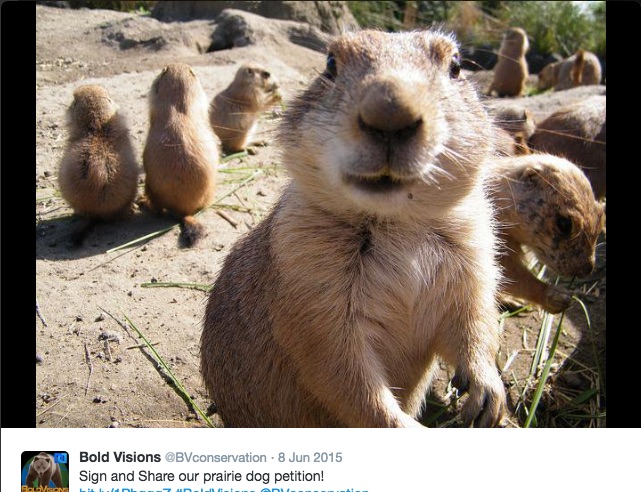


 Image: Zapata rail
 Exposing the Big Game