Exposing the Big Game

Forget Hunters' Feeble Rationalizations and Trust Your Gut Feelings: Making Sport of Killing Is Not Healthy Human Behavior

Exposing the Big Game

Wildlife Photography a Crime? Stop Wisconsin’s Right to Hunt Bill

https://takeaction.takepart.com/actions/worse-than-ag-gag-stop-wisconsin-s-right-to-hunt-bill?cmpid=tpdaily-eml-2015-11-4

About the Petition

The Wisconsin legislature is considering a bill that would potentially criminalize photography in the wild and could even make being in the proximity of a hunter a violation of the law.

The “Right to Hunt” bill expands on legislation designed to prevent the obstruction of hunting, fishing, or trapping in the state. Photographing, monitoring, or recording hunters and trappers would be prohibited under the law if passed as written. Even maintaining “visual or physical proximity” to those engaged in hunting or trapping would be criminalized.

The bill is so far-reaching that it could practically ban wildlife photography and expose hikers and other non-consumptive public land users to hundreds of dollars in fines or even jail time simply for being in the presence of a hunter or trapper.

Please sign the petition to the chair of the Wisconsin Committee on Sporting Heritage, Mining, and Forestry, and ask him to immediately table this bill and prevent it from becoming law.

To: Sen. Thomas Tiffany

I am alarmed to learn that the Wisconsin legislature is considering a bill that seeks to shield the actions of hunters and trappers from public scrutiny by grossly expanding the list of activities prohibited under existing law.

The bill, 2015 Senate Bill 338—or, as some are calling it, the “Right to Hunt” bill—would criminalize photographing or videotaping hunters in addition to maintaining proximity to or impeding a person engaged in hunting or trapping.

This proposed legislation is so expansive and restrictive that it could make criminals out of bird-watchers and wildlife photographers and put hikers, cross-country skiers, and other non-consumptive users of public land at risk of arrest. Public lands belong to all Americans, not just a chosen few that engage in activities favored by some politicians. This legislation appears not only designed to protect one class of citizens at the expense of another (in a likely unconstitutional manner) but also to prohibit public knowledge and scrutiny of activities on public lands that impact wildlife and wild places held in the public trust. Neither of these ends is a worthy goal for a state legislature to pursue.

The bill would also be bad for endangered wolves. One of the primary causes of human/wolf conflict in Wisconsin is depredation of bear hunting hounds by wolves defending themselves or their families from these packs of dogs. Criminalizing efforts to document this activity could lead to even greater conflict and more wolves killed in retaliation.

I urge that as chair of the Committee on Sporting Heritage, Mining, and Forestry, you exercise your authority to table this bill permanently and prevent it from becoming law.

Sincerely,

[Your name here]

Paul Ryan And Friends?

Just wondering… (with the KKK-type hoods, there’s no way to know for sure)…

Newly elected Speaker of the U.S. House of Representatives Paul Ryan wields the speaker's gavel for the first time on Capitol Hill in Washington October 29, 2015. REUTERS/Gary Cameron1384140_564330240283396_857016214_n

When Geraldo comes to town: KKK fight put Janesville in national spotlight – See more at: http://www.gazettextra.com/20150803/when_geraldo_comes_to_town_kkk_fight_put_janesville_in_national_spotlight#sthash.veQaCYNi.dpuf

  Related Stories:
Marcia Nelesen
August 31, 2015
 Janesville has found itself in the national spotlight repeatedly through its history.

The hometown boy is serving his ninth term representing the First Congressional District and is also the chairman of the powerful House Ways and Means Committee. He captured the world’s attention when he became the 2012 Republican vice presidential candidate.

Study finds locals less tolerant of wolves

When the wolves returned, they revived the same old anxieties that inspired the state-sponsored hunts and zealous poachers to originally drive the wolf out. Some locals in the wolf range, anxious about unchecked wolf populations preying on livestock and affecting deer herds, continue to grow less tolerant toward returning wolves.

Four decades ago, wolves were added to the Endangered Species Act, and the once expulsed gray wolf trickled back into the Wisconsin wilderness. Protected by federal law, wolves were allowed to grow and spread out among the wooded north, resulting in a resurgence of a species once considered extirpated from the state.

When the wolves returned, they revived the same old anxieties that inspired the state-sponsored hunts and zealous poachers to originally drive the wolf out. Some locals in the wolf range, anxious about unchecked wolf populations preying on livestock and affecting deer herds, continue to grow less tolerant toward returning wolves. It is a trend that even a state-sponsored wolf hunt could not break, according to a recent study conducted by researchers at UW-Madison.

Led by Jamie Hogberg, a researcher at the Nelson Institute for Environmental Studies, the survey looked at public opinion about wolves from before and after the 2012 inaugural wolf hunt. According to a statement made by the Wisconsin Department of Natural Resources, the hunt was supposed to improve social intolerance toward the maligned wolf. Yet, according to Hogberg’s study, the harvest may have had the opposite effect, at least among hunters in the wolf range.

“One of the stated goals of the harvest was to maintain social tolerance,” said Hogberg. “But in just that first year of the hunt, we didn’t see that among a key stakeholder group.”

The survey focused primarily on male hunters in the wolf range, outspoken community members who were surveyed in previous studies to see if their attitudes changed. Researchers also surveyed people who reported conflict with wolves and people who lived outside of wolf range, though the majority of respondents were self-identifying hunters living within wolf range.

Hunters fear that wolves, who primarily hunt a deer herd’s weakest members, could be impacting deer herds and reducing hunting opportunities. However, the wolves’ stake in Wisconsin’s deer herd is dwarfed by the 340,000 taken annually by hunters, according to the Wisconsin DNR.

Wolves have been delisted and relisted seven times since 2001, and are once again protected under the Endangered Species Act.   …[for now…]

Read more: http://host.madison.com/daily-cardinal/study-finds-locals-less-tolerant-of-wolves/article_d0db7198-0fdf-11e5-9d69-af762949aa54.html#ixzz3csLEdG23

528624c939a88_preview-620

Feds restore protected status for Great Lakes wolves!

http://www.detroitnews.com/story/news/local/michigan/2015/02/20/gray-wolves-endangered/23726317/?fb_ref=Default

Associated Press 6:58 a.m. EST February 20, 2015

Traverse City — Gray wolves in the western Great Lakes region are protected by federal law once more.

The U.S. Fish and Wildlife Service is publishing a rule Friday designating wolves in Michigan and Wisconsin as “endangered” and those in Minnesota as “threatened.”

The rule complies with a federal judge’s order in December that overruled the agency’s earlier decision to revoke wolves’ protected status and hand management authority to the states.

It means sport hunting and trapping of Great Lakes wolves is no longer permissible.

A spokesman says the agency hasn’t decided whether to appeal the court ruling. Legislation to overturn it has been introduced in Congress.

More than 50 scientists this week signed a letter to Congress saying wolves occupy a small fraction of their former range and still need legal protection.

copyrighted wolf in water

Bill in Congress would remove protections for Great Lakes wolves

http://www.twincities.com/localnews/ci_27312693/bill-would-remove-protections-wolves-4-states-including

By Steve Karnowski
Associated Press

01/13/2015 12:01:00 AM CST | Updated:  

A gray wolf in an April 2008 photo provided by the U.S. Fish and Wildlife Service. (AP Photo/U.S. Fish and Wildlife Service, Gary Kramer, File)

A gray wolf in an April 2008 photo provided by the U.S. Fish and Wildlife Service. (AP Photo/U.S. Fish and Wildlife Service, Gary Kramer, File)

Several members of Congress are preparing legislation to take gray wolves in Minnesota, Wisconsin, Michigan and Wyoming off the endangered list in an attempt to undo court decisions that have blocked the states from allowing wolf hunting and trapping for sport and predator control.

U.S. Rep. Reid Ribble, R-Wis., is leading the effort, his office confirmed Tuesday. Co-sponsors include U.S. Reps. Collin Peterson, D-Minn., Dan Benishek, R-Mich., and Cynthia Lummis, R-Wyo.

“I am pursuing a bipartisan legislative fix that will allow the Great Lakes states to continue the effective work they are doing in managing wolf populations without tying the hands of the Fish and Wildlife Service or undermining the Endangered Species Act,” Ribble said in a statement.

Ribble spokeswoman Katherine Mize said he hasn’t decided exactly when to introduce the bill, but the lawmakers are circulating a draft.

The legislation is in response to a ruling by a federal judge in Washington, D.C., last month that threw out an Obama administration decision to “delist” wolves in the western Great Lakes region, where the combined wolf population is estimated at around 3,700. That followed a similar decision by a different federal judge in September that stripped Wyoming of its wolf management authority and returned that state’s wolves to federal protections under the Endangered Species Act.

Ribble’s bill uses a strategy that succeeded in taking wolves in Idaho and Montana off the endangered list after court challenges by environmentalists blocked those efforts.


Congress took matters into its own hands in 2011 and lifted the federal protections for wolves in those two states, which then allowed hunting and trapping to resume.

“The language we are looking at would be narrow and would address the recent court decision. It would not seek to change the Endangered Species Act, but would be designed to meet the need in our region for responsible stewardship of the wolf population,” Benishek said in a statement.

Peterson, the most senior member of Minnesota’s congressional delegation, said he didn’t know what the prospects are for this legislation, but he said they’re probably better than they were in 2011 given that Republicans now control the Senate. He said he’s working to line up support from other lawmakers.

U.S. District Judge Beryl Howell said in her 111-page ruling that the delisting, which took effect in 2012, was no more valid than the government’s three previous attempts over more than a decade. While wildlife managers in the three western Great Lakes states say their wolf populations are no longer endangered and can sustain limited hunting and trapping, Howell criticized the states’ regulatory plans as inadequate. She also said wolves still need federal protections because they haven’t repopulated all of their historic range.

Peterson said he has asked the U.S. Fish and Wildlife Service to appeal her decision and was confident it would be overturned.

Fish and Wildlife spokesman Gavin Shire said no decision has been made on appealing Howell’s December ruling but said the agency did not appeal the Wyoming decision within the 60-day limit. He said the service wasn’t aware of any proposed legislation to delist wolves and couldn’t comment on it.

Under Howell’s ruling, wolves reverted to “threatened” status in Minnesota and “endangered” in Wisconsin and Michigan. Sport hunting and trapping is banned again in all three states, and Wisconsin and Michigan government officials can’t kill wolves for preying on livestock or pets — only to protect human life.

Doug Peterson, president of the Minnesota Farmers Union, said he believes the ruling is already affecting farms and ranches, particularly smaller family farms where the loss of a cow or calf or two puts a big dent in incomes.

“At some point people are going to do what they’re going to do to protect their livestock. That ends up being a problem,” he said.

Judge orders gray wolf back on endangered list in Wisconsin, 2 other states

TRAVERSE CITY, Mich. — A federal judge on Friday threw out an Obama administration decision to remove gray wolves in the western Great Lakes region from the endangered species list — a decision that will ban further wolf hunting and trapping in three states, including Wisconsin.

The order affects wolves in Minnesota, Michigan and Wisconsin, where the combined population is estimated at around 3,700. The U.S. Fish and Wildlife Service dropped federal protections from those wolves in 2012 and handed over management to the states.

U.S. District Judge Beryl Howell in Washington, D.C., ruled Friday the removal was “arbitrary and capricious” and violated the federal Endangered Species Act.

Unless overturned, her decision will block the states from scheduling additional hunting and trapping seasons for the predators. All three have had at least one hunting season since protections were lifted, while Minnesota and Wisconsin also have allowed trapping. More than 1,500 Great Lakes wolves have been killed, said Jonathan Lovvorn, senior vice president of the Humane Society of the United States, which filed a lawsuit that prompted Howell’s ruling.

“We are pleased that the court has recognized that the basis for the delisting decision was flawed, and would stop wolf recovery in its tracks,” Lovvorn said.

Fish and Wildlife Service spokesman Gavin Shire said the agency was disappointed and would confer with the U.S. Department of Justice and the states about whether to appeal.

“The science clearly shows that wolves are recovered in the Great Lakes region, and we believe the Great Lakes states have clearly demonstrated their ability to effectively manage their wolf populations,” Shire said. “This is a significant step backward.”

State officials acknowledged being caught by surprise and said they would study the judge’s 111-page opinion before deciding what to do next.

“It’s an unusual turn of events,” said Tom Landwehr, Minnesota’s natural resources commissioner.

The Wisconsin Department of Natural Resources said in a statement that it is disappointed by the decision, which it is reviewing along with Department of Justice legal staff to determine how it will impact the state’s wolf management program.

DNR said immediate implications of the ruling include: Permits allowing lethal removal of wolves issued to landowners experiencing wolf conflicts are no longer valid; the department is not authorized to use lethal control as part of its conflict management program; Wisconsin’s law allowing landowners or occupants of the land to shoot wolves that are in the act of depredating domestic animals on private property is no longer in force; landowners may not kill wolves in the act of attacking domestic animals.

Jodi Habush Sinykin, an attorney for Midwest Environmental Advocates, which supports science-based wildlife management, said the decision should serve as a clear signal of caution to people who would kill the nation’s wolves.

Hunters in Wisconsin killed 154 wolves in this year’s hunt that ended Dec. 5, exceeding the state limit for non-tribal hunters by four wolves. In 2013, 257 wolves were killed, six more than the limit. Hunters killed 116 wolves, one more than the limit, in 2012, the first year of the organized hunt.

The ruling is the latest twist in more than a decade of court battles over the gray wolf, which has made a strong recovery after being shot, poisoned and trapped into near-extinction in the lower 48 states in the last century. Only a remnant pocket in northern Minnesota remained when the species was added to the federal endangered list in 1974.

The wolf is now well-established in the western Great Lakes and in the Northern Rockies, where the minimum population is estimated at around 1,700.

Animal protection advocates repeatedly have sued over federal efforts to drop federal protections in both regions, arguing that the wolf’s situation remains precarious.

Meanwhile, ranchers and farmers complain of heavy financial losses from wolf attacks on livestock

Read more: http://host.madison.com/news/local/environment/judge-orders-gray-wolf-back-on-endangered-list-in-wisconsin/article_0e0cf872-e6c8-5450-b4a0-975e82e82f5e.html#ixzz3MSW2ZL9e

Hunters 4 wolves shy of Wisconsin kill limit; season could end before dogs are allowed

DNR: Hunters 4 wolves shy of Wisconsin kill limit; season could end before dogs are allowed

  • Article by: TODD RICHMOND , Associated Press
  • Updated: November 28, 2014

MADISON, Wis. — Hunters are four wolves shy of reaching Wisconsin’s statewide kill limit, raising doubts about whether anyone will be allowed to use dogs to hunt wolves once the gun season ends.

The 2012 Republican-authored law that created Wisconsin’s wolf hunt allows hunters to use dogs to trail and corner wolves on the day after the end of the nine-day gun deer season. That season wraps up Sunday, which means hunters could start deploying their dogs beginning Monday.

But Department of Natural Resources tallies show hunters had killed 146 wolves as of Thursday, just four animals short of the 150-wolf statewide kill limit.

The season will end as soon as they hit that limit or on the last day of February, whichever comes first. If hunters get the last four wolves before Monday, no one will be able to hunt them with dogs and one of the most divisive components of Wisconsin’s wolf hunt would fade away until next year.

Hunters aren’t allowed to let their dogs kill wolves — they can use dogs only to trail and corral them and must use a gun, crossbow or bow and arrow to actually make the kill — but animal rights advocates contend letting dogs chase wolves can lead to bloody confrontations because wolves will turn and fight rather than flee.

A coalition of humane societies tried to sue the DNR in 2012 to force the agency to impose tighter regulations on dog use but the effort failed. The DNR did examine 27 of the 35 wolves killed by hunters using dogs last year and didn’t find any evidence of fights or other illegal practices, but the evaluation was inconclusive since the wolf carcasses had already been skinned when the agency examined them.

Jodi Habush Sinykin, an attorney for the humane societies, didn’t immediately return an email message Friday. Neither did Melissa Smith, organizer of Friends of Wisconsin Wolves, a wolf advocacy group.

Al Lobner, president of the Wisconsin Bear Hunters Association, a key advocate for hunting wolves with dogs, didn’t immediately return a telephone message.

http://www.startribune.com/lifestyle/284145811.html

copyrighted wolf in water

Wisconsin boy shoots father while hunting illegally

http://www.jsonline.com/news/wisconsin/sheriff-wisconsin-boy-shoots-father-while-hunting-b99356343z1-275988771.html

By Meg Jones of the Journal Sentinel

Sept. 22, 2014

Marathon City — An 11-year-old boy hunting illegally mistook his father for a turkey and shot him on Sunday, authorities said.

The 42-year-old father was in stable condition after he was wounded in the upper chest with a .22-caliber rifle around 5:30 p.m. Sunday in the Town of Marathon.

That type of rifle is not authorized for hunting turkeys, and 11-year-olds are too young to hunt unless they’re monitored closely by an adult, Wisconsin Department of Natural Resources hunting safety administrator Jon King told Wausau television station WAOW-TV.

The boy’s mother was more than 50 feet away at the time and should have been “within arm’s reach,” helping the boy identify his target, for the child to be hunting legally, King said in a telephone interview from Madison.

“It is tough to call it a hunting accident,” King said. “Nobody had a hunting license. Nobody should have been out in the woods that day.”

The man was shot from about 100 yards away on private property. King told the Wausau television station that there’s a good chance citations will be issued.

“Ultimately, the adults in this case are responsible for this young man’s actions,” King said.

The Department of Natural Resources is investigating the shooting as well as two other shootings over the weekend — in Waushara and Douglas counties involving a woodcock hunter and bowhunter.

1511382_10202321999184077_3052141163000055719_n


Petition: Demand an end to trapping, hunting, and hounding Wisconsin wildlife

xVHAyLEawJsheWD-556x313-noPad

It is vital that you not only sign, but network this petition to summon support from all of your social network. Please help us – they are destroying our innocent family. We the human(e) citizens of the world, CHOOSE A LIVING WORLD and FUNDAMENTAL REFORM OF STATE AGENCIES TO A FIRST TIME DEMOCRACY IN FUNDING AND PARTICIPATION OF THE WILDLIFE LOVING PUBLIC (95% of us disenfranchised). Watch this video for incentive to act: https://www.youtube.com/watch?feature=player_detailpage&v=vWj8tYXdvtI

We the citizens of the world support Wisconsin in strengthening anti-cruelty laws to animals to INCLUDE WILDLIFE, who are as sentient as our cats and dogs. We declare that all wild animals have the right to exist, to not be harmed by humans, and fulfill their natural role in the natural world. We demand that Wisconsin democratize wildlife management by replacing killing license oligarchic funding and control of nature for killing with general public funds tied to fair representation for the humane public ( 90% who do not kill wildlife ) in our Natural Resources Board, staffing and humane education in our schools.

Hunters and trappers have lobbied to exempt wildlife, our natural commonwealth, from anti-cruelty laws. We want our wildlife safe from trapping, hunting, and hounding disruption of fragile ecosystems and a dying planet.

Wildlife creates the web of connection that supports human life. We are warned that ecosystems are at a tipping point of biodiversity collapse – and that we… more

http://www.thepetitionsite.com/takeaction/655/892/273/?taf_id=12618360&cid=fb_na


Wolf Hunting Reinforces Intolerance

Attitudes about wolves after 1st wolf hunt
 
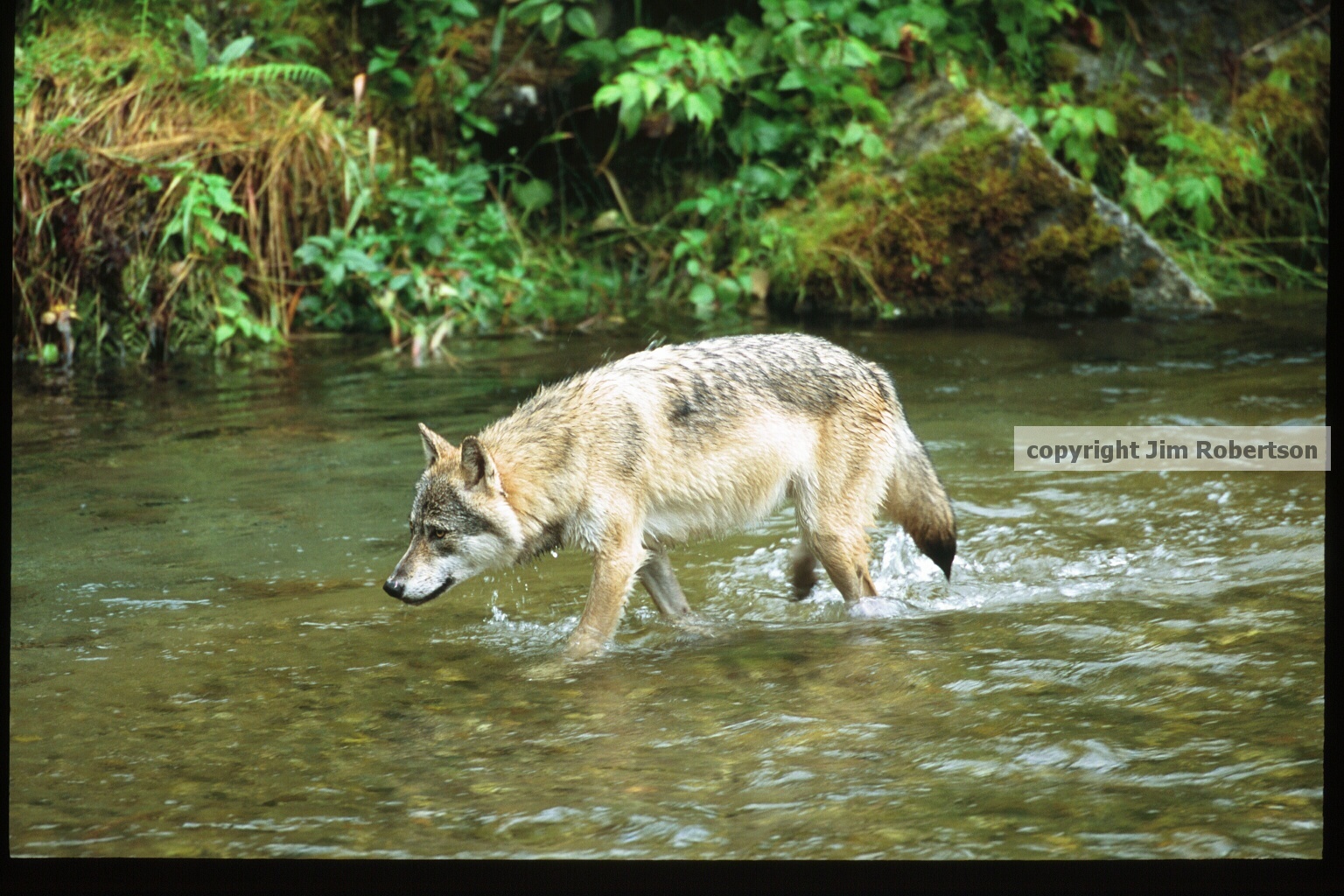
Hypotheses: Attitudes towards wolves and wolf policy among residents in wolf range since 2009, and since the wolf harvest, with increase in tolerance with hunt. (Note: this was one of the rationales the state used for establishing the legal hunt.)copyrighted Hayden wolf walking
Plurality of wolf range respondents  said tolerance would increase if people could hunt wolves in pre-hunt surveys.
Assumption: Making wolves a game species even in a limited number might make wolves part of the utilitarian culture of wildlife and provide rural residents with increased comfort.
Survey sample: 81% male, 19% females, 70% hunters. Most in “wolf range.”
Results: Significant change occurred: Tolerance decreased by 35% within the wolf range.
 
35% net shift towards agreement with the statement “killing wolves is the only way to protect people and pets.”
Conclusion: Wolf hunting reinforces social acceptance of intolerance, decreases tolerance for wolves in “wolf range” in Wisconsin.
Need to explore other publically acceptable, ecologically sustainable methods of carnivore conservation