WI Man to pay fine for killing bear

Photo Copyright Jim Robertson

Photo Copyright Jim Robertson

Wednesday, June 4, 2014 11:54 pm | Updated: 11:55 pm, Wed Jun 4, 2014.

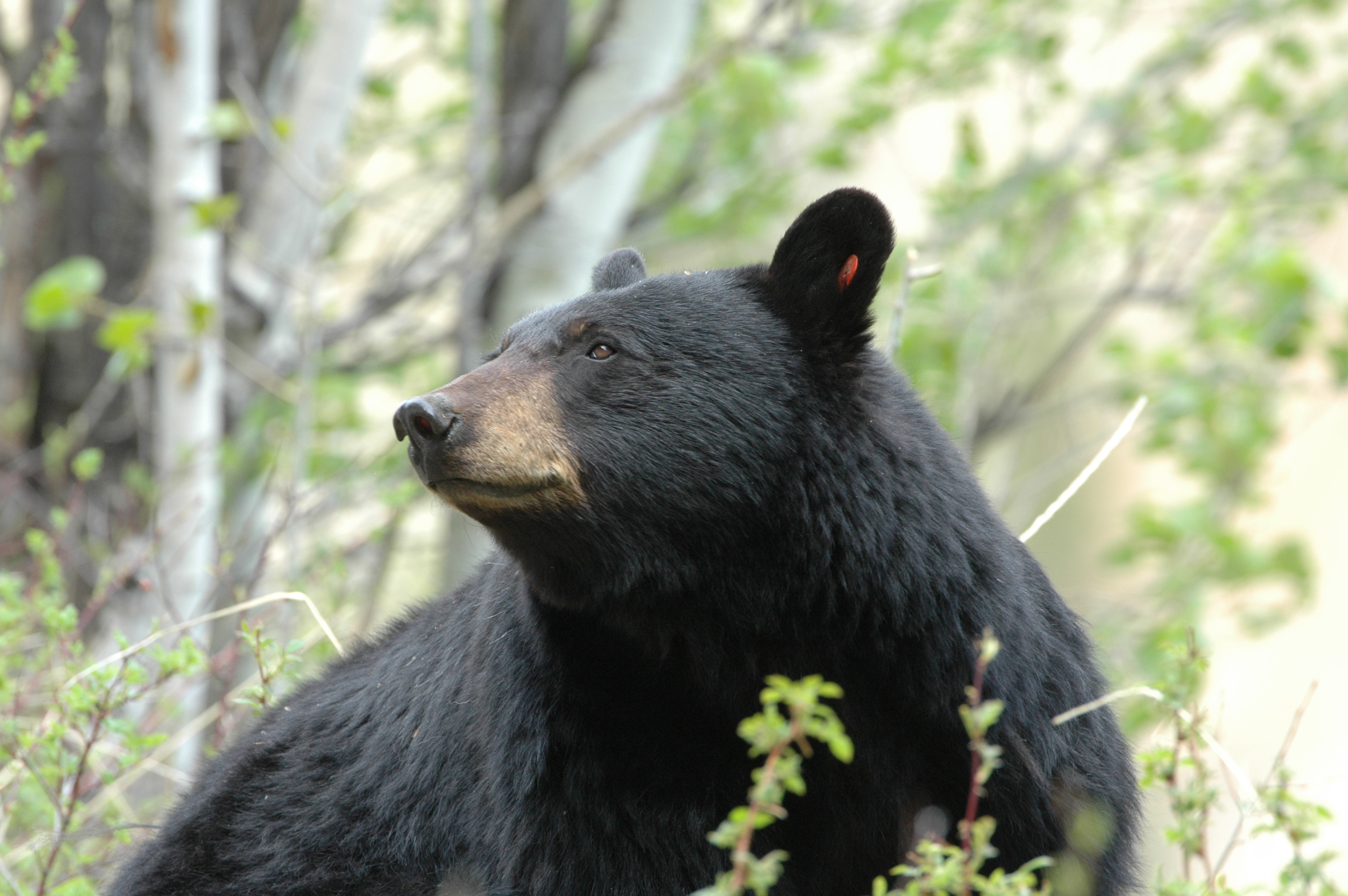
A Fall Creek man will pay a $2,443 fine for killing a bear in the town of Bridge Creek during last fall’s gun deer season.

Michael C. Mackey, 29, pleaded guilty in Eau Claire County Court to a misdemeanor count of killing a bear without a license.

Judge Michael Schumacher also revoked Mackey’s DNR license privileges for three years.

According to the criminal complaint:

A confidential informant told authorities a bear was killed Nov. 24 during a deer drive.

A second informant contacted authorities and said Mackey shot a bear and hid the carcass in the woods.

During a Nov. 29 interview, Mackey admitted to a warden that he shot a bear. He said he shot the animal in the town of Bridge Creek because it charged up a steep hill directly at him.

The warden, with Mackey’s help, retrieved the bear’s carcass from the woods.

After examining the carcass, the warden determined the bear wasn’t shot while charging Mackey. The bear was moving away from Mackey when it was shot.

Swan hunting among controversial issues before Wisconsin Conservation Congress


Wildlife Photography ©Jim Robertson. All Rights Reserved

Wildlife Photography ©Jim Robertson. All Rights Reserved

A proposal to allow the hunting of tundra swans, along with a rule to allow hunters to retrieve hound dogs on private property without landowner permission, are shaping up as two of the most controversial questions before state outdoors users Monday.

The annual meetings of the Wisconsin Conservation Congress (WCC) — held simultaneously in all 72 counties — will also ask attendees about creating a hunting season for the white deer and eliminating all trapping hours restrictions.

In total, 58 questions are on the WCC spring questionnaire and results will be used to advise the Department of Natural Resources and the Natural Resources Board on policy changes. State law mandates that WCC resolutions must be considered when new legislation is written.

Many conversation groups are already raising red flags about the tundra swan hunt. The issue there is that hunters may mistake the large birds for the once endangered trumpeter swans.

Earlier this month, the Madison Audubon Society Board voted unanimously against a swan hunt because of the “high probability that trumpeter swans will be mistaken for tundra swans and killed, after Wisconsin conservationists successfully worked for many years to re-introduce trumpeters.” They are now breeding in Wisconsin and were removed from the state endangered list in 2009.

The hunt would also disrupt the spring bird-watching season and the tourism dollars it provides, Audubon warns.

The hunting dog question is causing worries for those who say it’s a trampling of property rights in the name of a limited number of bear hunters and wolf hunters who rely on dogs to track prey. Dog owners are already compensated if their animals are killed during a hunt, a controversial issue in its own right.

“Allowing hound hunters unencumbered access to private lands just because they can’t control their dogs seems to me like it would raise the ire of the citizenry at large,” says Brook Waalen, a WCC delegate from Luck in Polk County.

Waalen is among a growing number of WCC delegates representing silent sports advocates and so-called “non-consumptive” outdoor enthusiasts.

Each county gets five delegates, who are elected at the meetings and serve two-year terms on a staggered basis.

Long dominated by the “hook and bullet” crowd, the WCC is now feeling pressure from a wider outdoors constituency that wants more of a say in DNR policy. A proposal to expand hunting and trapping in state parks, along with establishing a wolf hunting season, were flashpoint issues last year that brought many to the hearings for the first time.

Last year, more than 100 environmental advocates showed up at the Polk County meeting to help elect Waalen.

Dane County and Milwaukee County in the past have elected anti-hunting activists as delegates to the Conservation Congress. Last year, wolf defender Melissa Smith was elected as a Dane County delegate.

Jason Dorgan of Blue Mounds will be seeking election Monday night as a delegate at the meeting at Middleton High School’s Performing Arts Center at 7 p.m. Dorgan enjoys running on the trails in the state parks and was upset by the proposal to expand hunting in those public areas.

“This state has 6 million acres of land for hunters and trappers to use even before the recent expansion into the state park system,” he says. “There has always been limited hunting in state parks and that has always seemed reasonable to me. “

Dorgan says as he learned more about the WCC and its interests he became more disappointed in the direction it was leading the state.

“Whether it is some of the cruel practices they condone or the lack of true land stewardship, I would like to bring another perspective to the Congress,” he says.

The swan hunting issue is a particularly tricky one.

According to the WCC ballot question, tundra swan population numbers are rising, even with hunting in other states. Tens of thousands of them migrate through Wisconsin with population counts over 30,000 on the Mississippi River.

“Wisconsin could benefit from allowing a hunt unique to very few other states,” the WCC ballot says.

The WCC maintains there is little chance of mixing up the two birds because tundra swans tend to gather in big groups on large bodies of water whereas trumpeter swans gather in smaller groups and prefer ponds or marshes.

But the Sun Prairie-based Wisconsin Wildlife Public Trust says the push to expand hunting to more and more species runs counter to the ethic of famed conservationist Aldo Leopold.

“If Aldo were to look at the ballot questions today, our guess is that he would be greatly disappointed with the current trend of the WCC in wanting to ‘take’ from land & water resources versus ‘give’ or ‘restore’ ” the group says in a posting on its website.

Read more: http://host.madison.com/news/local/writers/mike_ivey/swan-hunting-among-controversial-issues-before-wisconsin-conservation-congress/article_f2cd95dc-c19e-11e3-bf13-001a4bcf887a.html#ixzz2yhBHD5HJ


Whither the Hunter/Conservationist?

By George Wuerthner On March 5, 2014

Many hunter organizations like to promote the idea that hunters were the first and most important conservation advocates. They rest on their laurels of early hunter/wildlife activist like Teddy Roosevelt, and George Bird Grinnell who, among other things, were founding members of the Boone and Crocket Club. But in addition to being hunter advocates, these men were also staunch proponents of national parks and other areas off limits to hunting. Teddy Roosevelt help to establish the first wildlife refuges to protect birds from feather hunters, and he was instrumental in the creation of numerous national parks including the Grand Canyon. Grinnell was equally active in promoting the creation of national parks like Glacier as well as a staunch advocate for protection of wildlife in places like Yellowstone. Other later hunter/wildlands advocates like Aldo Leopold and Olaus Murie helped to promote wilderness designation and a land ethic as well as a more enlightened attitude about predators.

Unfortunately, though there are definitely still hunters and anglers who put conservation and wildlands protection ahead of their own recreational pursuits, far more of the hunter/angler community is increasingly hostile to wildlife protection and wildlands advocacy. Perhaps the majority of hunters were always this way, but at least the philosophical leaders in the past were well known advocates of wildlands and wildlife.

Nowhere is this change in attitude among hunter organizations and leadership more evident than the deafening silence of hunters when it comes to predator management. Throughout the West, state wildlife agencies are increasing their war on predators with the apparent blessings of hunters, without a discouraging word from any identified hunter organization. Rather the charge for killing predators is being led by groups like the Rocky Mountain Elk Foundation, and others who are not only lobbying for more predator killing, but providing funding for such activities to state wildlife agencies.

For instance, in Nebraska which has a fledging population of cougars (an estimated 20) the state wildlife agency has already embarked on a hunting season to “control” cougar numbers. Similarly in South Dakota, where there are no more than 170 cougars, the state has adopted very aggressive and liberal hunting regulations to reduce the state’s cougar population.

But the worst examples of an almost maniacal persecution of predators are related to wolf policies throughout the country. In Alaska, always known for its Neanderthal predator policies, the state continues to promote killing of wolves adjacent to national parks. Just this week the state wiped out a pack of eleven wolves that were part of a long term research project in the Yukon Charley National Preserve. Alaska also regularly shoots wolves from the air, and also sometimes includes grizzly and black bears in its predator slaughter programs.

In the lower 48 states since wolves were delisted from the federal Endangered Species Act and management was turned over to the state wildlife agencies more than 2700 wolves have been killed.

This does not include the 3435 additional wolves killed in the past ten years by Wildlife Services, a federal predator control agency, in both the Rockies and Midwest. Most of this killing was done while wolves were listed as endangered.

As an example of the persecutory mentality of state wildlife agencies, one need not look any further than Idaho, where hunters/trappers, along with federal and state agencies killed 67 wolves this past year in the Lolo Pass area on the Montana/Idaho border, including some 23 from a Wildlife Service’s helicopter gun ship. The goal of the predator persecution program is to reduce predation on elk. However, even the agency’s own analysis shows that the major factor in elk number decline has been habitat quality declines due to forest recovery after major wildfires which has reduced the availability of shrubs and grasses central to elk diet. In other word, with or without predators the Lolo Pass area would not be supporting the number of elk that the area once supported after the fires. Idaho also hired a trapper to kill wolves in the Frank Church/River of No Return Wilderness to increase elk numbers there.

Idaho hunters are permitted to obtain five hunting and five trapping tags a year, and few parts of the state have any quota or limits. Idaho Governor Butch Otter recently outlined a new state budget allotting $2 million dollars for the killing of wolves—even though the same budget cuts funding for state schools.

Other states are no better than Idaho. Montana has a generous wolf six month long season. Recent legislation in the Montana legislature increased the number of wolves a hunter can kill to five and allows for the use of electronic predator calls and removes any requirement to wear hunter orange outside of the regular elk and deer seasons. And lest you think that only right wing Republican politicians’ support more killing, this legislation was not opposed by one Democratic Montana legislator, and it was signed into law by Democratic Governor Steve Bullock because he said Montana Dept of Fish, Wildlife and Parks supported the bill.

Wyoming has wolves listed as a predator with no closed season or limit nor even a requirement for a license outside of a “trophy” wolf zone in Northwest Wyoming.

The Rocky Mountain West is known for its backward politics and lack of ethics when it comes to hunting, but even more “progressive” states like Minnesota and Wisconsin have cow-towed to the hunter anti predator hostility. Minnesota allows the use of snares, traps, and other barbaric methods to capture and kill wolves. At the end of the first trapping/hunting season in 2012/2013, the state’s hunters had killed more than 400 wolves.

Though wolves are the target species that gets the most attention, nearly all states have rabid attitudes towards predators in general. So in the eastern United States where wolves are still absent, state wildlife agencies aggressively allow the killing of coyotes, bears and other predators. For instance, Vermont, a state that in my view has undeserved reputation for progressive policies, coyotes can be killed throughout the year without any limits.

These policies are promoted for a very small segment of society. About six percent of Americans hunt, yet state wildlife agencies routinely ignore the desires of the non-hunting public. Hunting is permitted on a majority of US Public lands including 50% of wildlife “refuges as well as nearly all national forests, all Bureau of Land Management lands, and even a few national parks. In other words, the hunting minority dominates public lands wildlife policies.

Most state agencies have a mandate to manage wildlife as a public trust for all citizens, yet they clearly serve only a small minority. Part of this is tradition, hunters and anglers have controlled state wildlife management for decades. Part of it is that most funding for these state agencies comes from the sale of licenses and tags. And part is the worldview that dominates these agencies which sees their role as “managers” of wildlife, and in their view, improving upon nature.

None of these states manage predators for their ecological role in ecosystem health. Despite a growing evidence that top predators are critical to maintaining ecosystem function due to their influence upon prey behavior, distribution and numbers, I know of no state that even recognizes this ecological role, much less expends much effort to educate hunters and the public about it. (I hasten to add that many of the biologists working for these state agencies, particularly those with an expertise about predators, do not necessarily support the predator killing policies and are equally appalled and dismayed as I am by their agency practices.)

Worse yet for predators, there is new research that suggests that killing predators actually can increase conflicts between humans and these species. One cougar study in Washington has documented that as predator populations were declining, complaints rose. There are good reasons for this observation. Hunting and trapping is indiscriminate. These activities remove many animals from the population which are adjusted to the human presence and avoid, for instance, preying on livestock. But hunting and trapping not only opens up productive territories to animals who may not be familiar with the local prey distribution thus more likely to attack livestock, but hunting/trapping tends to skew predator populations to younger age classes. Younger animals are less skillful at capturing prey, and again more likely to attack livestock. A population of young animals can also result in larger litter size and survival requiring more food to feed hungry growing youngsters—and may even lead to an increase in predation on wild prey—having the exact opposite effect that hunters desire.

Yet these findings are routinely ignored by state wildlife agencies. For instance, despite the fact that elk numbers in Montana have risen from 89,000 animals in 1992 several years before wolf reintroductions to an estimated 140,000-150,000 animals today, Montana Department of Fish, Wildlife and Parks does almost nothing to counter the impression and regular misinformation put forth by hunter advocacy groups like the Rocky Mountain Elk Foundation or the Montana Sportsmen for Fish and Wildlife that wolves are “destroying” Montana’s elk herds.

I have attended public hearings on wolves and other predator issues, and I have yet to see a single hunter group support less carnivore killing. So where are the conservation hunters? Why are they so silent in the face of outrage? Where is the courage to stand up and say current state wildlife agencies policies are a throw-back to the last century and do not represent anything approaching a modern understanding of the important role of predators in our ecosystems?

As I watch state after state adopting archaic policies, I am convinced that state agencies are incapable of managing predators as a legitimate and valued member of the ecological community. Their persecutory policies reflect an unethical and out of date attitude that is not in keeping with modern scientific understanding of the important role that predators play in our world.

It is apparent from evidence across the country that state wildlife agencies are incapable of managing predators for ecosystem health or even with apparent ethical considerations. Bowing to the pressure from many hunter organizations and individual hunters, state wildlife agencies have become killing machines and predator killing advocates.

Most people at least tolerant the killing of animals that eaten for food, though almost everyone believes that unnecessary suffering should be avoided. But few people actually eat the predators they kill, and often the animals are merely killed and left on the killing fields. Yet though many state agencies and some hunter organizations promote the idea that wanton waste of wildlife and unnecessary killing and suffering of animals is ethically wrong, they conveniently ignore such ideas when it comes to predators, allowing them to be wounded and left to die in the field, as well as permitted to suffer in traps. Is this ethical treatment of wildlife? I think not.

Unfortunately unless conservation minded hunters speak up, these state agencies as well as federal agencies like Wildlife Services will continue their killing agenda uninhibited. I’m waiting for the next generation of Teddy Roosevelts, Aldo Leopolds and Olaus Muries to come out of the wood work. Unless they do, I’m afraid that ignorance and intolerant attitudes will prevail and our lands and the predators that are an important part of the evolutionary processes that created our wildlife heritage will continue to be eroded.

Whither the Hunter/Conservationist?

copyrighted wolf in river

End all use of dogs on wildlife.

Petition to The Wisconsin legislature and Natural Resources Board of Wisconsin: End all use of dogs on wildlife.

https://secure.avaaz.org/en/petition/The_Wisconsin_legislature_and_Natural_Resources_Board_of_Wisconsin_End_all_use_of_dogs_on_wildlife/?fbdm

Posted February 13, 2014

Why this is important

Wisconsin coyotes, wolves, bears, bobcats, raccoons, foxes and all wildlife are being run by packs of dogs and mobs of armed men for killing recreation year-round. Since coyotes can be killed without reporting, any time day or night, statewide, year-round, all wildlife is on the move, terrorized and killed randomly. Dogs used as weapons is cruel to the dogs, wildlife, and to children taught this is fun. Please help us get dogs out of hunting. They are set against trapped animals who cannot defend themselves. No one can defend themselves against armed men and dogs and traps in combination.

Sign the petition here:
https://secure.avaaz.org/en/petition/The_Wisconsin_legislature_and_Natural_Resources_Board_of_Wisconsin_End_all_use_of_dogs_on_wildlife/?fbdm

photo Jim Robertson

photo Jim Robertson

Study sheds light on top causes of deer mortality in Northern Wisconsin

How much higher is the deer kill from human hunting than the other four causes?

Answer: More than four times higher than any other source. In fact, human hunting was responsible for about twice as much deer mortality in northern Wisconsin than the other four causes combined.

The rates of mortality were human hunting 43%, starvation 9%, coyote 7%, wolf 6% and roadkill 6%.

If you added poaching (8%) the human kill gets even more significant…

Full Story:

http://www.jsonline.com/sports/outdoors/study-sheds-light-on-top-causes-of-deer-mortality-b99190938z1-241992741.html

Photo Copyright Jim Robertson

Photo Copyright Jim Robertson

Phelps 5th Annual Predator Hunt for 2014

http://www.phelpswi.us/phelps-5th-annual-predator-hunt-for-2014

PHELPS 5TH ANNUAL PREDATOR HUNT

January 3rd, 2014 – January 12th, 2014

Meeting at Great Escape, Friday January 3rd, 2014, 7:00 PM
Hunting starts immediately after meeting and ends at noon on Sunday January 12th, 2014. Entry forms can be picked up at Great Escape.
Entry fee is $40.00 per 1 man or 2 man teams, plus 3 non-­‐perishable items. Please bring non-­‐perishable items to the meeting.

Entry forms can be mailed to:
Rick Brown, PO Box 133, Phelps, WI 54554

There will be a big dog contest; each team entering will pay $10.00.

Prizes awarded on Sunday, January 12th, 2014 at Great Escape with a lunch provided. Winners will be determined by total number of points.
Coyote: 20 points Fox: 15 points

Open to Wisconsin and Michigan hunters. 
Calling and stalking is allowed.
Baiting and running with dogs is not allowed.

All predators will be taken to Great Escape for weighing.
Bring all predators shot during the contest to Great Escape on Sunday.

Any questions call: Rick Brown 715-­617-­0196
or Ralph Spurgeon 715-891-2906

Photo Copyright Jim Robertson

Photo Copyright Jim Robertson

Over 250 Wolves Killed in Wisconsin as Season Ends

http://news.wpr.org/post/dnr-has-ended-wolf-hunting-season

DNR Has Ended Wolf Hunting Seasoncopyrighted wolf in water

The state has very nearly reached it’s wolf hunt quota of 251, which has prompted the DNR to end the season.

A flood of wolves killed by hunters prompted the Department of Natural Resources to close the state’s wolf hunting season at 5 p.m. on Monday.

Hunters stepped up their shooting of wolves in northwest Wisconsin over the weekend, and the state is now very close to its harvest quota of 251 wolves. Hunters using dogs are responsible for almost all the weekend kills, and the state says the number of wolf deaths where dogs did the chasing is about 30.

Tom Hauge of the DNR says dog use over the last three weeks apparently went pretty well. “[It] seems to have been performing within normal side bars as far as we know,” says Hauge. “If there are problems out there, they may not surface right away.”

Hauge rejects the rumor that the state rapidly shut down the hunt because it’s embarrassed by hunters posting more wolf kill pictures on social media. Some photos have hunters their arms around the wolves, holding the dead and bloodied with animals up for the camera.

Rachel Tilseth of the animal education group Wolves of Douglas County Wisconsin says it’s vital that independent experts can now verify that dogs didn’t illegally fight with wolves.

“I’d like to have those wolves examined by an independent veterinarian,” says Tilseth. “This is a very controversial subject – this wolf-hounding – and I believe we need to see all the evidence.”

Tilseth says she’ll continue to try to get dogs banned from future Wisconsin wolf hunts. Republican lawmakers have refused to allow a hearing on a recently introduced bill ordering such a ban.

2 Wolves Were Killed By Hunters Using Dogs This Week

December 06, 2013

By Chuck Quirmbach

The Department of Natural Resources reports that two grey wolves killed in Wisconsin this week were shot by hunters who used dogs to pursue the wolves.

The wolf deaths happened in Rusk and Washburn counties. The DNR’s Dave MacFarland says hunters registered the wolf kills by phone. MacFarland says it may take a while to learn more details about how the dogs were used during the wolf harvest.

“The hunters are required by the fifth day of the month after harvest – so for these animals, that would be Jan. 5 – to organize a registration meeting with one of the wardens,” says MacFarland. “So the warden registration component of the registration process has not yet occurred for these animals.”

MacFarland says most of the discussions between wolf hunters and DNR wardens happen fairly quickly.

Rachel Tilseth of the animal protection group Wolves of Douglas County says she’d like to hear more details of this week’s wolf deaths, and hear soon.

“I would like to see more wardens out there,” says Tilseth. “I would like to know how many wardens were out there, and I haven’t heard anything on that. Once I find that out, I would like to know if the dogs chewed up the wolf. I want to know the condition of the animal.”

The DNR says it remains committed to enforcing state law, which only allows hunters to use dogs to track the wolves, not fight with them. The DNR says wolf hunters are now 32 short of this season’s quota. The only remaining wolf hunt zone is one in northwest Wisconsin.


Traps method of choice in WI wolf hunt

http://www.leadertelegram.com/news/daily_updates/article_fc4bbdbc-5c3d-11e3-963d-001a4bcf887a.html

MADISON (AP) — Traps have apparently become wolf hunters’ weapon of choice in Wisconsin.

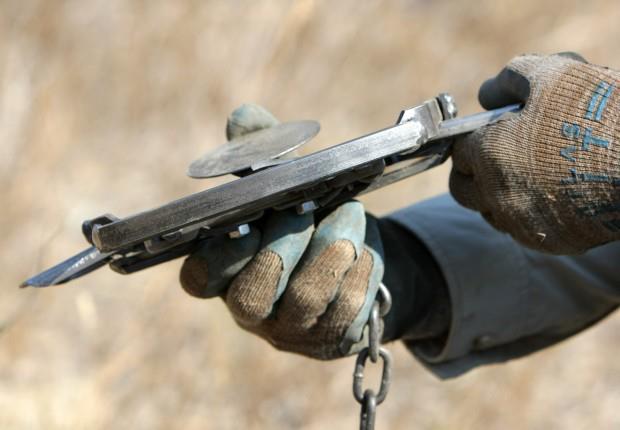
New state Department of Natural Resources data shows hunters used traps to capture 174 of the 216 wolves taken between the wolf season’s Oct. 15 opener and Nov. 30. Hunters shot 41 wolves with a gun and killed one wolf with a bow.

Monday marked the first day of the season hunters could use dogs to chase down wolves. DNR large carnivore specialist Dave MacFarland said no hunters using dogs had registered any wolves as of Monday afternoon.

All but one of the state’s six wolf hunting zones have closed after hunters reached their kill limits in the areas. Hunters were 37 animals shy of their kill limit in the last open zone as of Tuesday morning.

538458_532697610088640_841278349_n

Too Much Hunt: Actor and Wisconsin native died Saturday after day of hunting

Jay Leggett is seen giving an interview at the 2010 premiere of his documentary “To the Hunt” in Tomahawk.

Journal Sentinel files

Jay Leggett is seen giving an interview at the 2010 premiere  of his documentary “To the Hunt” in Tomahawk.

Read more from Journal Sentinel: http://www.jsonline.com/news/wisconsin/grant-county-hunter-accidently-shoots-himself-in-hand-b99149535z1-233220591.html#ixzz2lgQdr8DW Follow us: @JournalSentinel on Twitter

By Kevin Crowe of the Journal Sentinel

A Hollywood actor and comedian known in his native Wisconsin for his love of hunting died Saturday after participating in the first day of the state’s gun deer season in Lincoln County.

Jay Leggett, 50, collapsed and died Saturday afternoon, the Lincoln County Sheriff’s Department said in a news release.

Authorities also reported six people had been injured in hunting accidents around the state as of Sunday afternoon, double the number of injuries reported last year on opening weekend.

“It’s been high this year,” said John King, a conservation warden with the state Department of Natural Resources.

Leggett, a native of Tomahawk who lived in Los Angeles, co-wrote and acted in the 2004 film “Employee of the Month” starring Matt Dillon and Christina Applegate, appeared in the TV series “In Living Color” and “NYPD Blue,” and produced his own documentary about Wisconsin deer hunting culture, “To the Hunt.”

Emergency crews responded to a call shortly after 4 p.m. Saturday and found family members trying to revive Leggett in a cabin in the town of Tomahawk.

The Lincoln County coroner pronounced him dead at the scene.

Also on Saturday, a stray bullet struck a man while he sat at his kitchen table in Monroe County, the DNR said. The bullet traveled through a window and the back of the man’s chair before hitting him.

The man suffered some bruising, and the bullet broke the skin before falling to the floor.

The DNR is still investigating the incident and has not been able to identify a shooter.

A 52-year-old man was shot Sunday in the back of the leg while hunting in a stand in the Sheboygan County town of Lyndon. Cascade Fire Department members transported the man out of the hunting area using a 6×6 vehicle, the Sheboygan County Sheriff’s Department said.

The Cascade man was then taken to Aurora Medical Center in Grafton. His injuries did not appear to be life-threatening.

The other four injuries reported by the DNR involved hunters accidentally shooting themselves.

The DNR reported selling more than 615,000 gun deer licenses for this year’s season.

‘Favorite place on earth’

Leggett left Wisconsin decades ago to pursue a career as an actor and comedian, but he said in a 2010 Journal Sentinel interview he never lost his love of Lincoln County.

“It’s my favorite place on earth,” Leggett said at the time, during a trip to Tomahawk for the premiere of “To the Hunt.”

He shared a remote hunting camp with his family and friends on 360 acres in western Lincoln County, the article noted.

He had missed only two opening days since he was 12, once as a high school senior to participate in a state theater competition, the other time when he was directing a play in London.

Leggett told the Journal Sentinel his experience at the camp, known as Newwood Club, moved him to embark on a project to document the camps.

“Most people in America have no idea this exists,” he said.